
In an industry that keeps commerce moving, AM Trucking Service LLC represents a vital link in the logistic chain. By understanding the operational framework, financial wellbeing, and market landscape of this Utica, New York-based company, long-haul truck drivers, trucking company owners, fleet managers, and mechanics can gain valuable insights. This article delves into the inner workings of AM Trucking, setting the stage for a thorough examination of its operations, financial status, and the hurdles it faces in a competitive market. Each chapter will enhance our understanding of AM Trucking’s role, offering readers practical knowledge applicable to their own experiences in the commercial transportation world.
Road-Ready and Data-Driven: Operational Realities Shaping AM Trucking Service LLC’s Path Forward
AM Trucking Service LLC operates in a sector where knowledge is as important as horsepower, and where the roads themselves become a data stream that can guide decisions as surely as any motor route. Publicly available information about the company is scarce, especially regarding its detailed operational status, service range, or market performance. In situations like this, the broader industry context matters just as much as a single public filing or a press release. The research landscape shows two companies with similar names in the trucking ecosphere—one based in Utica, New York, and another registered in Dearborn, Michigan—each distinct in legal form and operational footprint. This clarity matters because it underlines a critical truth for any small fleet operator: in a market where reputational signals and regulatory compliance ride side by side, distinguishing between similarly named entities can determine who wins and who is left behind. Within that frame, AM Trucking Service LLC’s future likely hinges on how well it translates data into action, how it manages risk in a market known for volatility, and how effectively it can convert a small team into a scalable operating model that remains resilient when demand shifts or fuel prices swing. While the precise mechanics of AM Trucking Service LLC’s day-to-day operations are not fully visible in public records, the broader patterns of the U.S. trucking industry provide a lens through which to assess potential strengths and risks, and to sketch the strategic moves that could make or break a small trucking enterprise in the 2025–2026 window.\n\nThe trucking sector in the United States presents a paradox. On one hand, the demand for reliable, timely transportation remains robust as supply chains expand and evolve to accommodate e-commerce and just-in-time delivery imperatives. On the other hand, profitability for small and independent operators remains stubbornly thin. Estimates show that roughly nine in ten operators run fleets of six trucks or fewer. That concentration of small fleets often comes with tighter margins and more pronounced sensitivity to demand fluctuations, seasonality, and price volatility. In those conditions, a company like AM Trucking Service LLC cannot rely on volume alone. It must lean into operational discipline that blends disciplined cost management with a capacity to capture incremental value from technology-enabled efficiency. The math is simple in principle: any improvement in fuel efficiency, maintenance planning, scheduling flexibility, and on-time performance can translate into meaningful bottom-line gains when multiplied across a modest fleet. Yet the implementation requires a deliberate, data-informed approach rather than a scattershot adoption of shiny tools.\n\nA core dimension of that approach is digital transformation, a term that now threads through every tier of logistics and fleet management. The industry has moved beyond static routing and handwritten logs toward integrated platforms that offer real-time visibility, driver behavior analytics, and fleet-wide performance dashboards. The value proposition for small operators is compelling: better route planning reduces idle time and miles driven in suboptimal conditions; better driver coaching cuts incident rates and improves safety scores; and smarter maintenance scheduling lowers the likelihood of unexpected breakdowns that erode reliability. Even without naming specific vendors, the implication is clear. The most successful operators are those who can stitch together scheduling, routing, fuel management, and maintenance into a single, coherent system. For AM Trucking Service LLC, that stitching is not just about installing a set of tools; it is about building workflows that turn data into trusted decisions, from daily dispatches to quarterly capital planning.\n\nThe industry’s current environment amplifies the case for data-driven operations. Market demand patterns can be volatile, and the balance between contract work and speculative spot-market opportunities often shifts with macroeconomic tides. In this climate, flexible scheduling emerges as a strategic asset. A transport provider who can adjust capacity quickly to accommodate new contracts or to align with customer production calendars can smooth revenue streams more effectively than a fleet that operates on rigid timetables. Alongside scheduling flexibility, technical integration skills become a differentiator. Small fleets that can connect telematics data to dispatch decisions, that can monitor driver hours, idling, and route deviations in real time, and that can translate those insights into concrete actions—such as rerouting to avoid delays, or adjusting fuel stop plans to minimize cost per mile—stand a better chance of maintaining steady utilization and predictable maintenance cycles. The ability to forecast maintenance needs based on utilization patterns rather than reacting to failures is a hallmark of mature fleet operations and a critical target for an operator in AM Trucking Service LLC’s position.\n\nAn equally important dimension is risk management tied to the regulatory and safety environment. The public record landscape for trucking is shaped by compliance metrics, safety performance, and incident histories that can influence customer confidence and insurance costs. The FMCSA’s Safety Measurement System and related public records provide a lens into how a carrier is performing on core dimensions such as safety violations, crash indicators, and compliance with hours-of-service rules. For a smaller carrier with a modest safety footprint, proactive risk controls can be a form of competitive advantage. Rather than viewing compliance as a burden, an operator can treat it as a value proposition—demonstrating reliability and accountability to customers and lenders. The absence of a robust public profile for AM Trucking Service LLC should not be read as a lack of compliance, but rather as an opportunity to establish a transparent, verifiable track record. When a company can publicly demonstrate that its on-time performance, safety culture, and maintenance discipline meet or exceed industry norms, it builds a durable competitive moat that is less vulnerable to the capriciousness of spot markets.\n\nFrom a strategic perspective, the way AM Trucking Service LLC negotiates its customer relationships matters as much as the way it manages its assets. The research landscape suggests that durable success in trucking frequently hinges on long-term contracts and stable revenue channels, rather than constantly chasing price-per-mile in a volatile spot market. That reality pushes the operator to prioritize customer service, reliability, and alignment with customers’ supply chain calendars. It also invites a careful consideration of the trade-offs between investment in equipment, the cost of capital, and the expected return from secured contracts. A smaller fleet with a well-managed maintenance regime can offer high reliability at a lower per-mile cost than a larger operator that carries higher fixed costs but sees fluctuating utilization. AM Trucking Service LLC’s strategic decisions around contract acquisition, pricing strategies, and service-level commitments will, in effect, determine how resilient the business can be in the face of demand swings and fuel price volatility.\n\nIn this context, it is instructive to acknowledge the distinctions that emerge when there are similarly named operators in nearby geographies. Two entities—one in Utica, New York, and one in Dearborn, Michigan—illustrate how regulatory status, geographic market focus, and corporate structure shape operational realities. They remind us that diligence matters, especially for customers seeking reliability and for partners seeking to align with a trustworthy carrier. For AM Trucking Service LLC, clarity about corporate status, insurance coverage, and fleet qualifications matters not merely as a matter of legal due diligence but as a signal to customers and lenders about the company’s capacity to scale responsibly if the opportunity arises. The absence of public-facing, detailed operational data should motivate a disciplined approach to governance, record-keeping, and external verification. In practice, this translates into regular internal audits, a transparent safety program, and a cadence of reporting that communicates performance to key stakeholders.\n\nLooking ahead, the path for AM Trucking Service LLC will likely hinge on translating the industry’s shifting emphasis on data, flexibility, and compliance into concrete operational practices. At the most practical level, this means building a performance baseline that captures how the fleet uses fuel, how well routes and schedules align with customer deadlines, and how preventive maintenance cycles are scheduled in relation to miles driven and engine hours. It means instituting a culture of continuous improvement where drivers are empowered to contribute observations about road conditions, weather, and traffic uncertainties, and where dispatch decisions reflect those insights in real time. It means prioritizing safety training, even for a small team, so that every new hire integrates quickly into a safety-first operating model. And it means recognizing that the competitive edge for a small carrier does not come from chasing scale for its own sake, but from leveraging digital tools to extract reliability, predictability, and cost discipline from a lean operation.\n\nIn practical terms, AM Trucking Service LLC could pursue several linked initiatives that align with contemporary industry practice without requiring outsized capital outlays. First, it can implement a disciplined dispatch process that decomposes each load into a forecastable work plan, mapping anticipated route segments, potential delays, and contingency options. Second, it can adopt a maintenance calendar that ties into vehicle usage metrics, so wear patterns are understood and acted upon before breakdowns occur. Third, it can develop a customer-service framework that emphasizes on-time performance and proactive communication, making reliability a selling point rather than a cost of doing business. Fourth, it can cultivate a narrative of compliance and safety that is reinforced through training, documentation, and transparent reporting. Taken together, these steps transform data and discipline into a practical operating advantage that can cushion the business against market vagaries and price cycles.\n\nThe broader literature and industry commentary repeatedly highlight a common truth: small operators who invest in capacity to respond quickly to customer needs while keeping costs under control tend to outperform peers who rely on luck or price alone. AM Trucking Service LLC sits at an inflection point where this truth can be tested against real-world realities. The company’s limited public data invites caution, but it also invites a deliberate, governance-focused approach that prioritizes reliability, safety, and customer trust as the core value proposition. The strategic question, then, becomes not whether to adopt digital tools or standardize maintenance, but how to integrate such capabilities into daily routines so that every route becomes a data-informed decision, every driver is a partner in safety, and every customer experience reinforces the company’s reputation as a dependable transport partner in a competitive landscape.\n\nAs the sector continues to evolve through 2025 and into 2026, AM Trucking Service LLC’s success will depend on balancing lean operational discipline with intelligent investment in the core capabilities that allow small fleets to punch above their weight. The path forward is not an abstract ideal; it is a pragmatic, disciplined approach to operations that recognizes the limits of a small workforce while harnessing technology to extend its reach. It is a journey from reactive management to proactive optimization, from scattered data points to integrated insights, and from a narrow view of costs to a broader view of value—value created through reliability, safety, and a set of customer-focused, contract-backed relationships. In that sense, the company’s future mirrors a broader industry truth: the most durable competitive advantages in trucking arise when operators treat data as a partner, not a burden, and when they translate this partnership into clearer service promises, tighter safety rails, and a disciplined plan for sustainable growth. For readers who want a peer lens on the standards that often define excellence in trucking, exploring the broader exemplars in the field can provide a useful reference point; see the discussion on industry excellence here: exploring-the-excellence-of-5-star-truck-inc-your-premier-trucking-solution.\n\nFor readers seeking regulatory context and a framework to benchmark safety and compliance, the FMCSA’s Safety Measurement System offers a comprehensive resource that complements the operational perspective presented here. It provides data-driven indicators that help carriers understand how they are performing relative to peers and where to focus corrective actions to reduce risk and improve performance. This external resource is essential for anyone who wants to translate operational insight into measurable safety and compliance outcomes, and it helps to ensure that the journey toward greater efficiency remains aligned with the highest standards of road safety and regulatory responsibility. External link: https://safetydata.fmcsa.dot.gov/
From Revenue to Roadways: A Financial Portrait of AM Trucking Services, LLC and Its Place in Modern Freight
AM Trucking Services, LLC sits within a busy lane of the freight transport landscape, a sector where every mile and every contract can ripple through the balance sheet in meaningful ways. Founded in 2014 and headquartered in San Antonio, Texas, the company presents a profile that many mid sized carriers would recognize: a focused freight transport operation with enough scale to handle diverse shipper needs while retaining the nimbleness that comes with a tightly knit team. Public indicators point to an approximate annual revenue of one million dollars and a workforce numbering around 15 individuals. Those figures, while not exhaustive, sketch a business that operates with steady rhythm rather than rapid Jumbo leaps. They signal a carrier that has moved beyond its earliest growth phase and into a stage where reliability and consistent service can become the currency that attracts repeat customers and steady lanes of freight. Yet, as with many private firms in this corridor, the absence of granular financial statements leaves a wall of opacity between the visible footprint and the underlying profitability, debt posture, or liquidity buffers. The numbers that are publicly accessible come from business data aggregators that assemble a snapshot from civil registrations, professional networks, and self reported details. They illuminate a shape, not a ledger; a silhouette of activity rather than a published portrait of earnings, costs, and balance sheet dynamics.
That silhouette, however, carries meaning. A million dollars in revenue, when spread across a modest fleet and a small crew, can imply a lean operating approach. It suggests margins that are sensitive to fuel prices, driver wages, insurance costs, and maintenance outlays, all of which tend to compress or expand in tandem with market cycles. It is common in private freight operations for margins to hinge on utilization efficiency—the extent to which assets are kept busy and productive. A company like AM Trucking Services, LLC would likely be balancing fixed costs such as insurance, permits, and administrative overhead against variable costs tied to daily dispatch, load volume, and route optimization. The result is a financial landscape where small shifts in throughput or in the rate environment can meaningfully swing profitability from one quarter to the next. Yet the absence of public financial disclosures means that readers must infer from the macro indicators and the observed scale rather than rely on a transparent, statutory statement of earnings, debt levels, and cash flow.
The San Antonio headquarters situates AM Trucking Services, LLC in a region that has long been a logistical crossroads. The city’s strategic position, with access to major corridors and a cluster of distribution hubs, offers tangible advantages for a freight carrier that seeks to optimize outbound and inbound flows. This geographic backdrop can influence revenue prospects by expanding the pool of potential clients who rely on regional and cross regional transport. For a company of this size, proximity to customers and shippers in a thriving economic corridor can translate into more consistent loads, shorter deadhead distances, and improved fleet utilization. Such dynamics do not erase risk; they complement it. A carrier of this class must remain vigilant about market volatility, regulatory changes, and the ongoing challenge of attracting and retaining qualified drivers who can maintain service levels across a broad set of routes.
From a strategic lens, the profile presented by AM Trucking Services, LLC suggests a business rooted in commercial freight services rather than a diversified logistics operation. The revenue figure signals a steady demand for core trucking capacity, while the employee count hints at a team that spans dispatch, operations, back office, and driving roles. In markets where shippers seek reliable on time performance and predictable service windows, a carrier with a well defined route structure and disciplined scheduling can build a reputation that supports price integrity and repeat business. However, the lack of disclosed metrics such as profit margins or debt levels means potential partners and lenders must perform due diligence beyond public profiles. This is a common scenario in private trucking firms, where the operational backbone matters as much as the top line, and where cash flow quality—rather than revenue alone—often dictates growth potential.
The financial narrative of AM Trucking Services, LLC must also contend with the broader realities that shape mid market trucking. Competition remains intense, with regional players and national carriers vying for similar lanes. Rate volatility, fluctuations in fuel prices, and evolving regulatory requirements continually test the resilience of a business at this scale. For a company operating with a lean headcount and a tighter margin structure, even modest shifts in insurance costs or maintenance expenditures can have outsized effects. Yet resilience can also come from a deliberate emphasis on discipline and efficiency. When a carrier maintains meticulous dispatch practices, emphasizes preventive maintenance, and leverages data to optimize load selection and routing, the resulting utilization gains can buffer against external headwinds. In this sense the financial health of a small to mid sized freight operator is not solely a function of revenue magnitude but of operational discipline and the quality of customer relationships that generate dependable volumes.
The existence of another company with a superficially similar name in a different state underscores the importance of precise due diligence. AM TRUCKING LLC, registered in Michigan since 2015 and noted as in good standing, illustrates how naming conventions can blur distinctions between separate legal entities. For researchers, lenders, or potential business partners, this distinction matters. It is a reminder that a company profile on a database can offer a useful overview, but it cannot substitute for rigorous verification of corporate identifiers, operating licenses, fleet details, and financial disclosures. The San Antonio based AM Trucking Services, LLC and the Michigan based AM TRUCKING LLC are distinct entities with separate legal and operational footprints, and any evaluation should respect that separation to avoid conflating performance indicators or risk profiles.
In contemplating the financial horizon for a firm like AM Trucking Services, LLC, one is drawn to questions of service mix and customer concentration. The reported range of approximately 15 employees points to a workforce that likely supports a handful of core accounts rather than a diversified portfolio of dozens of shippers. This concentration can be a double edged sword: it can deliver stable demand when a small group of customers provides reliable volumes, but it can also introduce risk if one or two key relationships falter. The reality of private freight operations is that customer stability often rests on the ability to deliver on time, communicate proactively about delays, and maintain a reputation for safe and compliant operations. These qualitative factors, while not captured in the headline revenue figure, feed into the financial story by shaping bid opportunities, pricing flexibility, and the ability to command favorable terms with shippers who value dependability as much as price.
For readers seeking a broader frame, the trucking sector has, in recent years, placed emphasis on efficiency and reliability as differentiators. Shippers increasingly reward carriers that can provide full visibility into load status, precise ETA adherence, and transparent cost structures. A carrier of AM Trucking Services, LLC scale would benefit from continuing to sharpen its operational metrics, particularly around load optimization, asset utilization, and maintenance scheduling. The opportunity exists to push toward higher utilization without compromising safety or service quality. Such a trajectory would not only improve margins but also enhance the firm’s attractiveness to financial partners who value stable cash flow and clear, measurable performance indicators. In this sense the business is at a pivotal point where disciplined growth can translate into stronger negotiating power with customers and suppliers alike. To readers looking for practical context on these themes, the 5startruckin blog offers general trucking industry perspectives that, while not a direct blueprint for AM Trucking Services, LLC, can illuminate common pathways toward efficiency and reliability. See the linked resource here: 5startruckin.com/blog/.
Despite the absence of exhaustive financial disclosures, one can still draw meaningful inferences about the trajectory and discipline of AM Trucking Services, LLC. The scale of revenue coupled with a relatively compact employee base suggests a business that relies on tight operational control to maintain profitability. It signals a potential focus on core lanes and consistent loads rather than a broad, multi client diversification strategy. Yet the private nature of the company implies that the true rate of profitability and the health of the balance sheet remain somewhat guarded. The lack of publicly available data on profit margins, debt levels, or liquidity means that any assessment of financial resilience must be tempered with caution. For stakeholders considering engagement with the company, the prudent path is to pursue direct channels for financial transparency such as formal disclosures or confidential credit reports, alongside a careful assessment of the company’s fleet readiness, insurance posture, and compliance track record. This approach aligns with best practices in merchant freight finance, where the combination of operational performance and verified financial strength informs sustainable partnerships.
The broader significance of this financial portrait lies in its illustration of how a private regional carrier maintains a foothold in a challenging market. It is a reminder that success in freight transport is rarely a matter of raw revenue alone. It is about the rhythm of loads, the reliability of service, and the ability to translate a modest top line into consistent cash flow that funds maintenance, driver compensation, and future capacity. For AM Trucking Services, LLC, the path forward likely involves preserving core customer relationships while quietly strengthening the back end of the business: maintaining a robust maintenance program, exploring avenues to improve route efficiency, and documenting performance metrics that can be shared with prospective lenders or partners when opportunities arise. In a market where visibility into the financials is limited, building a reputation for dependable execution can become a financially valuable asset in its own right.
As researchers and readers consider the implications, it is worth noting that external verification remains essential. The best available picture comes from direct engagement with the company and access to detailed financial reporting, which would illuminate margins, leverage, and working capital dynamics. Until such disclosures are available, the narrative remains one of prudent estimation—an informed interpretation of scale, geography, and operational discipline within a private, regionally focused freight carrier. For those who are exploring the sector more deeply, and for stakeholders weighing potential collaboration or investment, this portrait emphasizes the need to couple top line considerations with a transparent account of cost structure and financial flexibility. External references can offer context for how similar firms navigate financing and growth, with RocketReach providing a data driven snapshot of the company profile and connections that underpin a business network. External resource: https://www.rocketreach.co/company/am-trucking-services-llc
AM Trucking Service LLC: Market Position, Regulation, and the Road Ahead in Utica
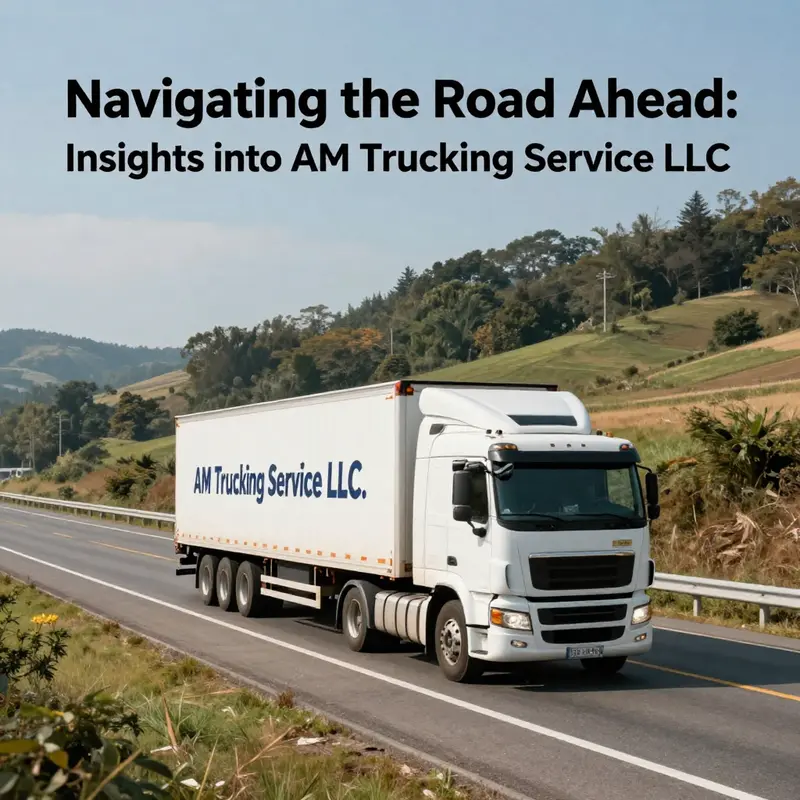
AM Trucking Service LLC is a small Utica-based carrier with a limited public data footprint, which makes market position difficult to quantify. Its potential strength lies in proximity to local shippers, regulatory discipline, and a reputation for reliability rather than large scale. Uncertainties include distinguishing it from similarly named entities, confirming active operating authority, and proving safety and on-time performance in a data-driven procurement environment. The carrier can build credibility by formalizing maintenance logs, driver training, and transparent reporting to reduce perceived risk for shippers and lenders while markets evolve.
Final thoughts
Understanding AM Trucking Service LLC provides a lens into the intricacies of the trucking industry at large. By analyzing their operations, financial health, and challenges, stakeholders—from drivers to managers—can glean valuable lessons for enhancing their own practices in logistics. AM Trucking’s role in transportation underscores the resilience and adaptability required to thrive in this demanding sector. As the landscape evolves, continued attention to these factors will be crucial for maintaining competitive advantage and operational success.