
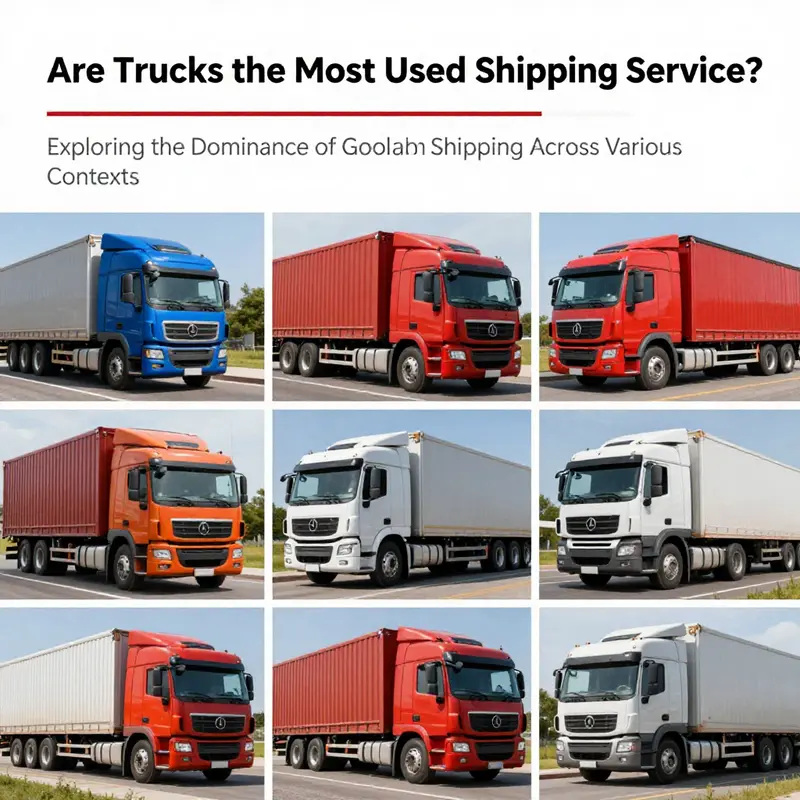
The trucking industry holds a pivotal role in the logistics sector, particularly in the movement of goods over medium- to short-distance routes. With their flexibility and ability to deliver door-to-door, trucks are often seen as the backbone of freight transportation. However, the question remains: are trucks the most used shipping service overall? As we embark on this exploration, we will analyze several essential factors—from the domestic landscape of trucking to regional comparisons across countries, cost analyses, technological advancements, and environmental impacts. Each chapter will unravel the nuances that define the trucking industry’s status and its competition with other shipping modalities.
Wheels on the Ground: How Trucks Dominate Domestic Freight and Shape the Question of the Most-Used Shipping Service
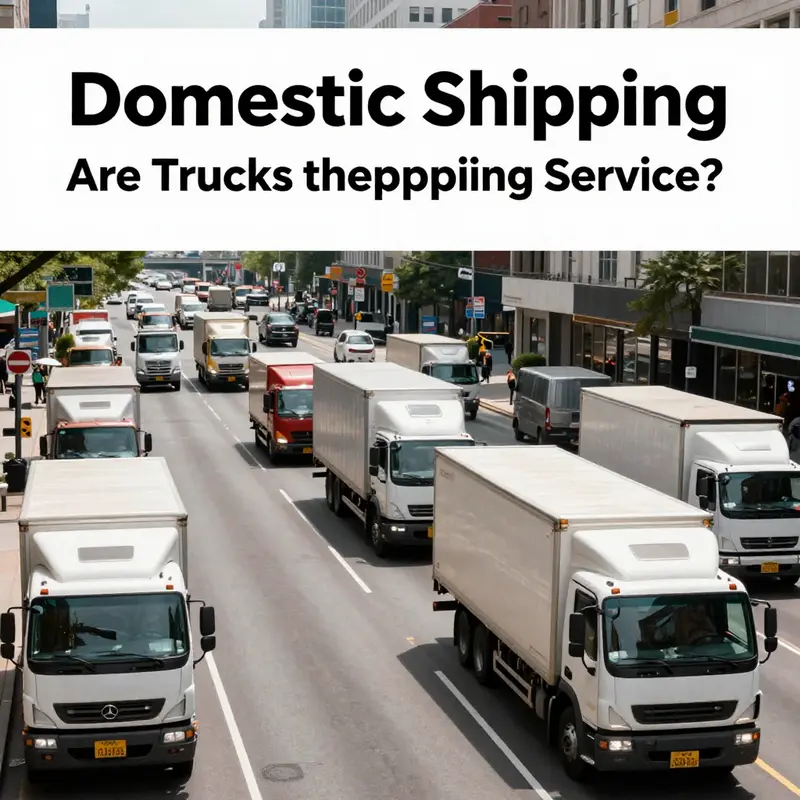
When people ask whether trucks are the most used shipping service, the simplest answer isn’t a single mode-of-transport verdict. It depends on the lens through which you view the logistics landscape. In the United States, for domestic freight—which includes deliveries from a regional distribution center to a store, a warehouse to a manufacturer, or a door to a consumer’s doorstep—trucks have earned a near-ubiquitous role. By 2025, industry metrics show that trucks accounted for a substantial share of domestic freight activity, a dominance driven by their unique ability to bridge the gap between production and end users with minimal friction. This isn’t merely a technical fact; it embodies how modern commerce operates on a day-to-day basis, with tangible implications for businesses, policy makers, and the rhythm of everyday life.
To understand why trucks are so central, it helps to picture the domestic freight system as a living network—an arrangement where time, place, and cost press into a single decision. Road transport is not just one option among many; it is the backbone that ties together the vast majority of shipments that begin and end within the same country’s borders. The case for trucks rests on three interlocking strengths: flexibility, network reach, and speed for time-sensitive deliveries. The first strength, flexibility, means that a truck can pick up goods at nearly any point in the supply chain and deliver them directly to a business, a distribution center, or a consumer’s doorstep. There is no need for transloading at a foreign border or a warehouse transfer that could introduce delays. This last-mile capability is what makes trucking indispensable for many firms that promise customers next- or same-day delivery windows.
The second strength, network reach, stems from the density and redundancy of the highway system. A well-connected road network slices through urban cores and rural heartlands alike, enabling freight to reach thousands of municipalities that other modes cannot access with the same level of door-to-door service. This reach matters as much for manufacturers with dispersed supplier bases as it does for retailers whose markets extend beyond metropolitan precincts. When a shipment needs to arrive at a shop in a small town or a regional distribution hub several hundred miles away, trucks are often the only practical option that preserves a predictable schedule without requiring expensive intermodal transfers.
The third strength, speed and reliability, is especially acute for time-sensitive and value-driven freight. For many shipments, the transit time from pickup to delivery is shorter by road than by other modes, and the direct routing minimizes handling. In scenarios where weight is not the sole determinant of cost, a door-to-door truck solution often yields a better balance of speed, reliability, and total landed cost, even when a rail or ocean leg might offer a cheaper per-ton-mile.
These advantages are reflected in the domestic market structure. The data from the U.S. Bureau of Transportation Statistics (BTS)—the numbers that policymakers and industry watchers watch closely—indicate that trucks carry a large majority of domestic freight ton-miles in recent years. As of 2025, trucks accounted for roughly two-thirds of all domestic freight ton-miles, a figure that underscores their centrality in moving goods across the country. This 68 percent share is not a universal statement about every shipment everywhere, but it captures a dominant trend: for many segments—short hauls, time-critical deliveries, and goods that require doorstep service—trucking is the most practical and economical option.
To put this into perspective, the domestic freight system still relies on a mix of modes that together form a multi-modal ecosystem. Rail remains indispensable for heavy, bulk commodities moved over long distances where cost per ton-mile matters and the goods can tolerate longer transit times. Ocean shipping is the workhorse for international freight, where the goal is to move large volumes at the lowest cost over long distances. Air freight, by contrast, occupies the space of premium speed and high value or perishable goods, where the cost penalty is justified by speed. But within the domestic market alone, the truck’s door-to-door capability, flexibility to adapt routes in real time, and pervasive coverage make it the most-used service for a broad swath of shipments. This is why thousands of firms—across manufacturing, wholesale, retail, and e-commerce—design their distribution strategies aroundTruck-centric networks that can pivot quickly to meet daily demand.
The practical implications of this dominance are wide-ranging. For supply chain planners, the takeaway is not merely to “use trucks” but to optimize the last-mile and regional legs of a broader multi-modal strategy. This often includes dedicated truck fleets for predictable streams of replenishment, and a complementary role for intermodal options that can capture efficiency gains on longer stretches or on campaigns that demand capacity management. The daily reality is that trucks facilitate the kind of reliability that modern commerce depends on: consistent lead times, predictable scheduling, and the ability to absorb minor disruptions—such as minor weather events or traffic fluctuations—without a wholesale rerouting through a different city or country.
From an industry perspective, the emphasis on door-to-door service and last-mile efficiency has spurred ongoing innovations in routing, scheduling, and asset utilization. Firms are increasingly investing in sophisticated telematics, real-time visibility platforms, and data-driven routing to tighten the feedback loop between pickup, transit, and delivery windows. The objective is not only to keep delivery promises but to minimize empty miles and improve asset productivity. In practice, this means more accurate ETA communication, better load matching for less-than-truckload shipments, and smarter consolidation strategies that reduce the total number of vehicle trips without compromising speed. In turn, those operational gains reinforce the truck’s central position in domestic freight, creating a virtuous circle where reliability begets demand, and demand justifies continued investment in road networks and truck fleets.
The narrative of domestic freight would be incomplete without acknowledging the important caveat: the “most-used” distinction is context dependent. For long-haul international freight that demands shifting volumes across oceans, shipping by sea dominates because of its scale economies. For shipments that error toward maximizing speed above all else, air freight plays a crucial, albeit costly, role. Even within the United States, there are regional variations in mode mix driven by geography, population density, and the local regulatory environment. The most telling takeaway is this: trucks are the backbone of domestic shipping due to their unmatched door-to-door capabilities, but they are one piece of a larger, interlocking system that moves the world’s goods.
For researchers, practitioners, and students seeking a concise, real-world anchor to these dynamics, the domestic freight landscape offers a clear example of how capacity, coverage, and customer expectations shape mode choice. In many regions, the daily rhythm of commerce—whole neighborhoods receiving fresh goods, retailers restocking on the same day—depends on the dependable cadence of road transport. This is not merely about moving boxes from Point A to Point B; it is about sustaining the flow of consumption and production in a complex economy that values speed, reliability, and proximity. The result is a stubborn, durable conclusion: within the United States, for a substantial portion of domestic shipments, trucks are not just common; they are the most used shipping service where the service model hinges on direct, flexible, and timely delivery.
To those oriented toward broader industry trends, a reminder: one should not equate domestic dominance with universal supremacy. The question of “the most used shipping service” fades when the horizon expands to international freight and multi-country supply chains. There, a different balance emerges—one in which sea freight moves the greatest mass of goods, air freight accelerates value chains in time-sensitive markets, and trucking still anchors the last leg of most shipments in a way that few other modes can match. In this sense, the domestic dominance of trucking is a critical, context-specific truth rather than an absolute rule. It helps explain why many companies design their logistics networks with a central truck-based backbone, complemented by rail or maritime legs where they fit best, and augmented by air options when urgency outruns other constraints.
For readers seeking a compact, practice-oriented glance at industry perspectives beyond the numbers, consider the trucking-focused resources available online. They provide commentary on fleet optimization, route planning, and the evolving role of technology in last-mile efficiency. See, for example, the trucking blog that captures contemporary industry thinking and case studies anchored in real-world operations: 5startruckin.com/blog.
Ultimately, the question of whether trucks are the most used shipping service is best understood as a conditional truth, rooted in scope. Within the United States and within the common frame of domestic freight, trucks emerge as the backbone—driving door-to-door delivery, enabling a dense network reach, and delivering the speed and reliability modern consumers and businesses have come to expect. Yet the broader global logistics picture remains inherently multi-modal, with oceans, skies, and rails sharing the stage according to distance, volume, cost, and required speed. That nuanced view is essential for anyone trying to map, optimize, or invest in the systems that keep goods moving across regions and around the world.
External Reference: The latest national freight data and interpretation can be found in the BTS Freight Transportation Facts and Figures 2025 report. https://www.bts.gov/content/freight-transportation-facts-and-figures-2025
Road Arteries: Why Trucks Remain the Most Used Shipping Service in Domestic and Regional Freight
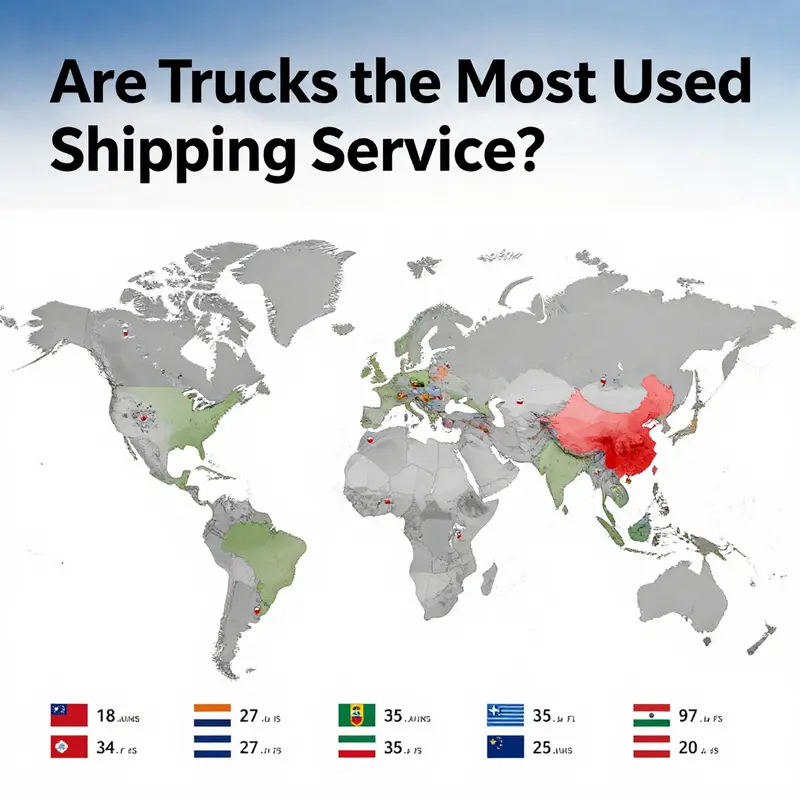
Across the freight landscape, trucks often serve as the default option for moving goods in domestic and regional markets. They provide doorstep delivery, flexible routing, and reliable cadence for a wide range of cargo types, from consumer goods to perishables and hazardous materials when properly equipped. In many economies, road freight remains the backbone of regional supply chains because it seamlessly connects factories to distribution centers, stores, and final customers, bridging gaps between ports, rail yards, and air hubs. While rail, ocean, and air compete on bulk capacity and long-haul efficiency, trucks excel where speed, accessibility, and small- to mid-scale movements matter most.
Regional patterns reveal the strength of road networks in Europe and North America. In Europe, road freight remains essential for last-mile delivery and regional distribution, while in the United States, a dense network of regional carriers complements national fleets to support time-sensitive delivery in metro areas and rural corridors alike. The flexibility of door-to-door service, combined with the ability to tailor routes to urban constraints and traffic conditions, keeps trucks highly competitive for regional shipments and time-critical orders.
The economics of road transport favor trucks for many domestic tasks: lower fixed capital needs, shorter lead times, and reduced intermodal handling contribute to favorable total costs for shorter distances. For time-sensitive, high-velocity flows, trucks often beat alternative modes on speed and reliability, even if longer-haul transportation by rail or ocean may offer lower unit costs per ton-km. This balance helps explain why trucking remains the most-used shipping service in many regional contexts, without implying universal supremacy across every measure or geography.
In multimodal networks, trucks act as the indispensable link between production sites, gateways, and final destinations. They stage inbound cargo to ports and airports and take outbound shipments from hubs to retailers and customers, enabling the broader logistics system to function with minimal disruption. Policy, infrastructure investment, and technology will continue to shape the role of trucking, but its core value proposition—door-to-door delivery with adaptability, speed, and cargo versatility—will likely keep it central to regional supply chains for the foreseeable future.
The Road That Carries It All: Why Trucks Still Dominate Domestic and Regional Shipping
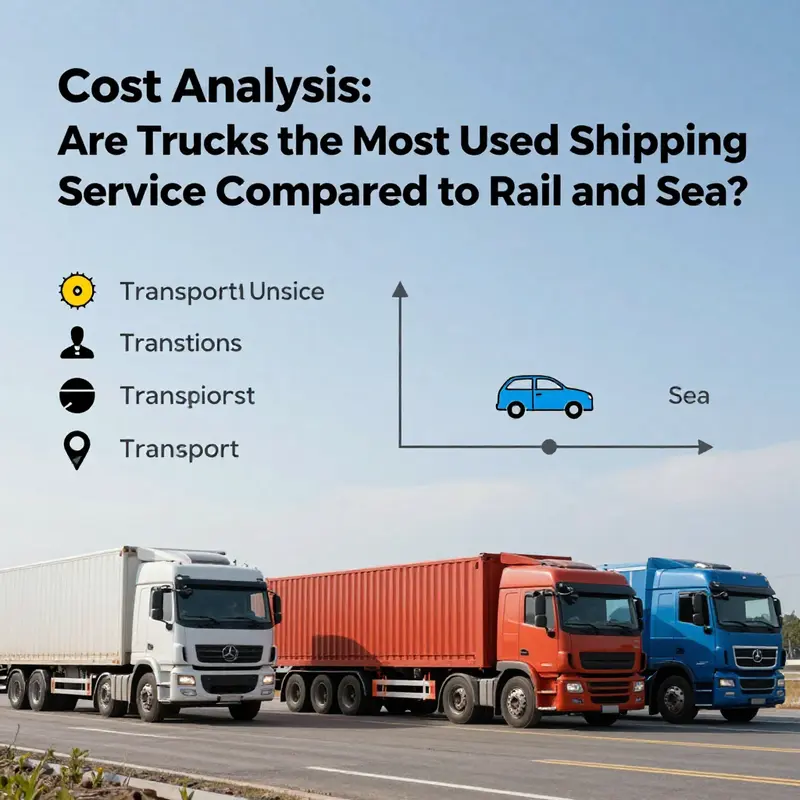
When readers ask whether trucks are the most used shipping service, the short answer is nuanced: yes, in many contexts they are, but not universally across all shipments and all distances. The broader picture shows trucks as the backbone of land-based freight, especially for domestic and regional needs, last-mile delivery, and time-sensitive logistics. In the United States, for instance, trucks move the bulk of goods by weight, accounting for more than three-quarters of freight ton-miles on land. That statistic is not a mere curiosity; it reflects the practical reality that road transport touches almost every corridor, delivers directly to customers, and weaves together the many links between manufacturers, distributors, retailers, and consumers. The ubiquity of trucks stems from a combination of fidelity to schedules, door-to-door service, and the sprawling nature of domestic markets where dense port hubs must translate cargo into local communities with minimal handoffs. In short, trucks are not just one option among many; they are the most reliable conduit for moving goods quickly from point A to point B with a minimum of fuss and a maximum of flexibility.
Yet the story does not end with a single mode reclaiming absolute supremacy. The question of “most used” should be parsed by distance, shipment type, and the structure of the supply chain itself. For international freight that travels across oceans, sea shipping becomes the most economical workhorse for moving large volumes of non-perishable goods. The economics of scale are simply clearer on ships than on trucks when it comes to long-haul, high-volume movements between continents and major trading hubs. Rail, too, owns a pivotal place in the freight ecosystem. When the objective is moving significant tonnage over land with efficiency, rail often offers a lower cost per mile than trucking, particularly in regions with dense rail networks and well-integrated intermodal facilities. These intermodal opportunities—where containers are transferred between ships, trains, and trucks—demonstrate that the logistics world is less a competition of modes and more a choreography of modes working together to fit the shipment’s needs.
This nuanced view aligns with the practical realities faced by shippers and carriers alike. For domestic and regional deliveries, the truck’s advantages are hard to match: it can provide direct-to-door delivery, navigate urban and suburban landscapes with relative agility, and respond to changing schedules or last-minute requests with a speed that other modes cannot always guarantee. The speed advantage matters not merely in urgent consumer markets but also in industries where freshness or timeliness is critical. Perishability, product integrity, and customer expectations all shape the decision calculus, and trucks often emerge as the preferred option when speed and direct access trump sheer volume. Even when other modes offer cost advantages at scale, the incremental cost of an extra handoff or transshipment along the way can erode the value of that savings. In the end, the system rewards the route that minimizes complexity while maximizing reliability. This is why the last mile—the final leg from a distribution center to the customer’s door—remains almost ubiquitously a trucking function, reinforcing the central role of road transport in modern logistics.
The cost dimension further clarifies why trucks hold sway in many contexts. It is true that trucking is not universally the cheapest mode, especially for large-scale, long-distance freight that travels across continents. For such long-haul movements, sea shipping frequently outperforms trucking on a per-ton-mile basis, with scale economies that trucks struggle to match when the cargo can ride across oceans in bulk. Rail presents a complementary efficiency story, often delivering lower per-mile costs for substantial volumes over land, provided the infrastructure supports efficient routing and the cargo can be effectively shifted between modes. These cost dynamics do not render trucks obsolete; they illuminate the practical logic behind a multimodal system where trucks feed the network’s most demanding and time-sensitive gaps. A shipment may begin with ocean freight to capitalize on economies of scale, transfer to rail to traverse a continent efficiently, and then rely on trucking for final delivery in the last stretch to the consumer. The result is a spectrum of choices rather than a single default, with trucks occupying the central, frequently decisive position for a wide swath of freight.
The broader context also includes regional disparities and industrial patterns that shape modal preferences. In regions with mature intermodal infrastructure, trucks still anchor the chain by enabling seamless transfer to and from rail yards, inland ports, and warehouse facilities. In places with comparatively sparse road networks or where long-haul routes tightly align with rail corridors, rail can assume a stronger role in sustaining competitive transit times and costs. For international commerce, the relation between sea and land transport is even more dynamic. Ocean freight is the backbone for mass movement of goods between continents; rail and trucking become the connective tissue that bridges ports with inland markets. The relative importance of each mode thus evolves with geography, trade volume, and the nature of the commodities being moved. High-value, time-sensitive goods will often ride air freight, but even here the underlying footprint of road transport remains substantial in delivering goods to airports, final-mile hubs, and distribution centers that feed market demand.
A crucial caveat accompanies the discussion of which mode is most used. “Most used” can mean volume, weight, or value, and it can refer to domestic shipments or international flows. The data widely cited for the United States show trucks as the dominant land-based mode by weight, which translates into a commanding share of ton-miles. But this does not imply a universal ranking across all shipments worldwide. In global terms, sea freight dominates the movement of bulk goods internationally, while air freight captures a notable but far smaller share, reserved for time-critical, high-value, or highly perishable items. Even within a single country, the mix shifts with seasonality, economic cycles, and evolving supply chain strategies. A surge in e-commerce, for example, tends to magnify the importance of reliable, flexible trucking for last-mile fulfillment, while still depending on ocean and rail for upstream legs of the logistics chain. The result is a dynamic equilibrium where trucks are essential, but not exclusively so, and where the “most used” label is earned through the synergy of multiple modes operating in concert.
Understanding these distinctions is not simply an exercise in taxonomy. It informs how businesses plan inventories, choose carriers, and design networks that can adapt to shocks and disruptions. The resilience of a supply chain often hinges on the ability to route flows through multiple channels rather than relying on a single modality. When a congested port or a weather event disrupts one path, another path—whether it is a rail corridor, a short-haul trucking lane, or a nearby inland shipping option—can help maintain continuity. This adaptive capacity explains why shippers invest not only in trucks, but in intermodal facilities, cross-docking hubs, and robust routing software that optimize the interplay of modes. The practical takeaway is clear: trucks are the workhorse that keeps commerce moving on a daily basis, but the smartest logistics strategies depend on choosing the right tool for the right job at the right time, with trucks often serving as the indispensable bridge that connects distant supply chains to local demand.
For readers who want a clearer sense of how the trucking industry itself positions this central role, a closer look at industry perspectives can be illuminating. The most credible narratives emphasize trucks as the entry point to the supply chain—often the first and last mile—while acknowledging the efficiency gains that come from intermodal collaboration. This perspective aligns with the observable reality that road transport fuels the velocity of commerce, even as other modes handle bulk, distance, or specialized needs. If you seek a concise snapshot of how modern trucking organizations conceptualize their value in a multimodal system, consider the broader industry overview that highlights the breadth of services, reliability, and adaptation that trucking providers offer in response to evolving market demands. The practical implication is that shippers should view trucking not as a standalone solution but as a pivotal element of an integrated logistics strategy that leverages the strengths of rail and sea where appropriate. For readers curious about how industry players position themselves to meet these demands, see the overview at Discovering the Unparalleled Services of 5 Star Truck Inc.
In sum, the evidence supports a nuanced conclusion: trucks are indeed the most used shipping service within many domestic and regional contexts, driven by their flexibility, speed, and door-to-door reach. They are not, however, the single best option for every shipment or for every mile of travel. Ocean freight and rail offer competing advantages for large-volume, long-distance movements, while air freight occupies a niche for time-critical or high-value cargo. The smartest logistics networks treat trucks as the central, reliable artery of domestic movement, with rail, sea, and air serving as the complementary veins that optimize efficiency, cost, and risk management across the entire system. The result is a transportation ecosystem in which trucks maintain their primacy in many markets, yet operate in concert with other modes to meet the varied and evolving demands of global trade.
External resource: https://www.bts.gov
Gearing the Road Ahead: Are Trucks Still the Most Used Shipping Service in the Automation Era?
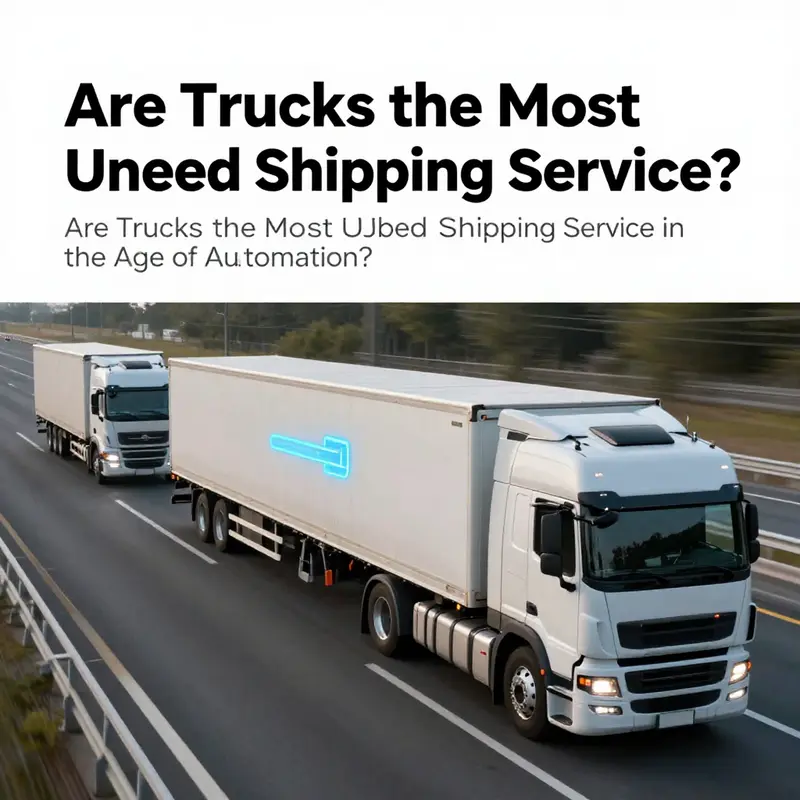
Goods move because someone somewhere has a need to get something from point A to point B, and the most visible movers have long been the truck. In the rhythms of distribution, trucks bridge the last mile and the middle mile with a nimble, door‑to‑door promise that other modes often struggle to match. They can carry a broad spectrum of cargo, from fragile consumer goods to industrial components, and they can reach locations off the beaten path. Their value is not simply in the steel and wheels, but in the social and economic infrastructure they support: the ability to deliver today to a neighbor’s doorstep, to reorganize a warehouse floor with just‑in‑time shipments, and to respond rapidly to a surge in demand after a regional disruption. Yet in the age of automation, the question Are trucks the most used shipping service? invites a nuanced map of how usage shifts across distance, urgency, and cargo type, and how new technologies reshape what counts as the most used service in practice.
To begin, it is essential to anchor the discussion in context. Trucks have earned their centrality because they do a particular kind of work exceptionally well. For domestic and regional deliveries, road freight offers the shortest lead times and the greatest flexibility. A shipment can be rerouted when traffic, weather, or last‑minute changes demand it. That adaptability matters in a world where products move through tight manufacturing calendars and where consumer expectations for reliable delivery windows keep tightening. The modern road network is a dense lattice of distribution centers, cross‑docks, and retail or industrial corridors that makes truck‑based freight feel almost invisible in its pervasiveness. When you need to reach a city neighborhood in the morning, or deliver a pallet to a plant gate in a regional hub, trucks are often the most convenient, cost‑effective, and practical option available.
But the global logistics picture is inherently multimodal. The same goods that traverse regional roads may also travel oceans and skies to reach distant markets. For international, long‑haul freight, ocean container shipping remains the scale champion—cost‑effective for large volumes and capable of moving vast quantities of raw materials, machinery, and consumer goods to and from continents. The choice to ship by sea is less about speed and more about economies of scale, which makes ocean freight the dominant channel for many bulk flows. Air freight enters the narrative when time becomes the decisive constraint. High‑value, time‑sensitive goods—think high‑tech components, perishable items, or urgent spare parts—tend to divert to air despite higher costs, precisely because the speed of air travel translates into measurable competitive advantage. Within this broader spectrum, the question of which single mode is the most used becomes highly contextual. Trucks often hold the largest share within domestic and regional lanes, but they share the stage with sea and air in international and time‑critical segments.
Automation is altering the calculus of what it means to use a given mode most effectively. The trucking industry has moved beyond simple optimization of drivers and routes; it is increasingly embedding automation across the supply chain. Self‑guided or partially autonomous long‑haul trucks promise reduced labor costs, improved uptime, and more predictable performance over long journeys. In the last mile, automation is reshaping how goods are delivered from urban distribution centers to storefronts or homes. Automated freight handling at warehouses, along with advanced robotics at loading docks, reduces manual bottlenecks and accelerates throughput, making road‑based logistics more reliable and scalable than ever before. In practice, this means trucks can operate with higher velocity and lower marginal costs, potentially expanding their share of the freight mix even when other modalities are available.
Yet even with these gains, the horizon is not a simple upgrade that will replace traditional trucking. There are substantial hurdles to fully automated fleets becoming the norm. Regulatory approval remains a pivotal gatekeeper. Governments around the world are crafting frameworks that address safety, liability, insurance, and cross‑border operation. Public acceptance is another crucial factor. Communities must feel comfortable with autonomous vehicles sharing urban streets, particularly in dense neighborhoods where pedestrians, cyclists, and complex traffic patterns intersect with routes. The urban driving environment presents a unique set of challenges—congestion, parking, curb management, and the variability of road users—that automation must master to be truly pervasive. Then there is the matter of cost and return on investment. While automation can reduce some operating costs, the upfront capital expenditure, maintenance of autonomous platforms, and ongoing software updates require a steady stream of capital and a clear business case.
A closer look at the near‑term reality shows automation acting as an amplifier rather than a replacement for trucking. Fleets that adopt automated routing and fleet‑management tools can optimize utilization, reduce empty miles, and improve on‑time delivery. The integration of real‑time data from telematics, sensors, and traffic information enables smarter decisions about when to deploy a given vehicle, how to re‑route a shipment to avoid delay, and how to synchronize trucking schedules with port operations or rail interchanges. In that sense, automation elevates trucking’s role in the multimodal chain by making it more predictable, safer, and responsive. It is not merely about replacing human drivers with machines; it is about weaving trucks more effectively into a broader, data‑driven logistics ecosystem where every mile is accounted for and every handoff is synchronized.
The broader implication for the question Are trucks the most used shipping service? lies in acknowledging the diversity of use cases across industries and geographies. In many regions, the road remains the most accessible, flexible, and reliable interface to customers and production plants. It is the workhorse that translates the tangible promise of supply chain strategy into tangible outcomes: on‑time deliveries, shorter lead times, and the ability to adjust shipments in response to demand signals. In other regions and for certain types of freight, the most‑used service may be ocean or air, chosen for their ability to move large volumes at scale or to meet critical deadlines, respectively. The automation and digital tools being developed do not simply accelerate a single mode; they reframe the relationships among modes. They encourage more seamless handoffs, better visibility, and smarter planning so that freight can flow with less friction from origin to destination, using the most appropriate leg for each link of the journey.
From the perspective of shippers, carriers, and logistics operators, the shift is as much strategic as it is technical. The practical decision of which mode to deploy hinges on cost, time, risk, and reliability, but automation shifts some of these constraints over time. A fully automated long‑haul fleet, for example, could reduce the cost of moving goods over great distances, potentially strengthening the case for road‑based global distribution where geographic coverage already exists and where urban delivery networks demand rapid response. Conversely, automation could reinforce the appeal of intermodal strategies that blend sea or air with road to optimize both cost and speed. In this sense, automation does not diminish the importance of trucking; it solidifies the trucking layer as a central, highly optimized spine within a much larger vertebrate system of freight movement.
On the ground, the implications for policy and practice are meaningful. Regulators are tasked with creating safe operating spaces for autonomous and semi‑autonomous trucks, while ensuring accountability and insurance clarity in a complex value chain. Industry stakeholders are pressed to invest in standards for data exchange, interoperability, and cybersecurity, so that the digital intelligence guiding routing and scheduling can be trusted across carriers and borders. For operators, the challenge is to balance the capital costs of automation with the financial resilience needed to weather the high fixed costs that automation often entails. The payoff, when the system functions smoothly, is a network that moves more goods with fewer delays, fewer accidents, and less variability in lead times. The social dividend—faster deliveries, more predictable supply, and improved safety—are the kinds of outcomes that reinforce the case for trucks as a linchpin of modern logistics, even as automation enlarges the circle of what counts as the most used shipping service in a given corridor.
The future of trucking in an automation‑enhanced era is likely to be a story of heightened collaboration across modes rather than a takeover by one. The most‑used service is not a fixed label but a dynamic position that shifts with geography, industry, and time, conditioned by the interplay of cost, speed, and risk. Automated systems will push the envelope of what is feasible on busy highways and in crowded urban environments; they will also encourage more sophisticated intermodal planning, where shipments are designed to exploit the strengths of road, sea, and air in precisely the right sequence. In such a world, trucks remain indispensable because they connect the door to the distribution center, the port to the factory, and the last mile to a consumer’s hand. Automation may redefine efficiency, reliability, and safety within trucking, but it does not erase the fundamental value of road freight. The most‑used shipping service, in this sense, becomes less a verdict about a single mode and more a reflection of how well the logistics ecosystem integrates multiple modalities to meet a moving target: customer expectations that goods arrive when promised, in good condition, and at predictable costs.
For readers seeking a deeper sense of how automation is reshaping the strategic landscape of trucking and logistics, industry analyses and commentaries offer evolving perspectives that complement this chapter’s synthesis. A practical touchstone is the thought leadership on automation in trucking, which outlines how automation can be embraced to complement human labor while navigating regulatory and societal considerations. This discourse helps frame decisions at the firm level and across policy debates, reminding us that the road ahead is not a binary choice but a continuum of capability, integration, and adaptability. If you are exploring how automation translates into real‑world practice in trucking and how it interacts with other modes of freight, see the industry discussion at the following resource for broader context: Embracing the automation revolution in trucking. https://www.ey.com/en_gl/industries/transportation-automotive/embracing-the-automation-revolution-in-trucking Additionally, for a concise industry primer and ongoing updates on trucking and freight, you can explore the general trucking insights available at the 5star truckin blog. 5startruckin.com/blog/
Green Miles on the Move: Reframing Trucks Within Sustainable Logistics
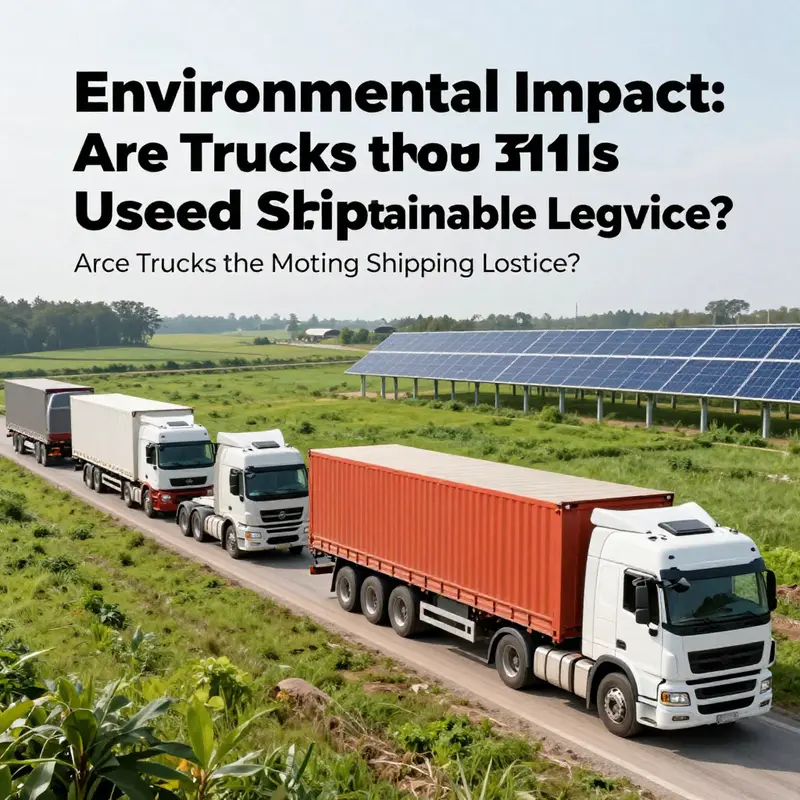
In the chorus of global logistics, trucks form the backbone that keeps goods moving. They deliver from factories to stores, from warehouses to doors, and often with a reliability that other modes struggle to match. Yet the question of whether trucks are the most used shipping service in sustainable logistics invites a layered answer. It is not a simple yes or no, but a view of how dominance shifts by distance, cargo type, time sensitivity, and policy ambition. The reality is that trucks are central to domestic and regional flows, while sea and rail take precedence for long haul moves. The future depends on electrification, automation, and decarbonized energy grids that preserve the strengths of trucks – flexibility, door to door service, and cargo versatility.\n\nTrucks also fill gaps between other modes, acting as the crucial last mile connector that turns plans into shipments. In many regions road transport remains the most practical and cost effective option for loads that cannot be handled efficiently by rail or water. The ability to reach urban and peri urban centers directly from suppliers is a strength in terms of speed and service quality. When mapping a modern supply chain, trucks emerge as an often unavoidable link that makes door to door delivery feasible even when ports and terminals face congestion or seasonal peaks. The literature often describes road freight as the backbone of regional networks, reflecting the daily reality of many supply chains.\n\nThe environmental question is central. Diesel trucks contribute a sizable share of emissions and urban air pollutants. Their tailpipe emissions plus upstream production and manufacturing place road freight at the center of climate and air quality debates. In many cities policymakers push for cleaner powertrains and stricter emissions standards. The environmental footprint of trucks touches city air, infrastructure planning, and the design of future energy systems. The path toward greener logistics aims to decouple reliability from emissions, seeking practical routes to decarbonized road freight.\n\nTechnological progress is reshaping the challenge. Electric propulsion and automation offer the most hopeful shifts. Electric trucks powered by low carbon electricity can dramatically reduce tailpipe emissions in cities. The energy economics of logistics can be redesigned so a fleet runs on grid power with renewables. A network of depots and fast chargers can minimize downtime, keeping service levels high. Importantly, charging location and timing matter for total emissions and energy use.\n\nAutonomous capabilities add another layer. They have the potential to improve route optimization, reduce idling, and enhance uptime. They also intersect with broader labor dynamics and driver shortages that have made automation more salient. The broader view is not to replace drivers but to rethink how a smart, connected fleet operates with lower energy waste and more consistent service.\n\nThe role of intermodal strategies is practical too. For long haul movements, rail and maritime options can drive efficiency and lower emissions, while trucks handle the first and last miles. This balanced view recognizes that no single mode dominates all shipments or geographies. Effective sustainability comes from choosing the right mode for the cargo, distance, and timing, and from coordinating networks so that road, rail, and sea work together without compromising reliability.\n\nAdvanced lifecycle thinking matters as well. Manufacturing, maintenance, and end of life for vehicles and batteries influence the overall environmental equation. Circular design and recycling should accompany electrification so gains from cleaner operation are not offset by higher value chain emissions. Transparent metrics help compare performance across modes and fleets.\n\nIn the end, the question about the most used shipping service is nuanced. Trucks are a dominant and sometimes indispensable part of freight networks, especially where road access is extensive and door to door service is valued. Yet sustainable logistics rests on a system that blends modes, powered by cleaner energy, guided by intelligent routing, and supported by charging and maintenance infrastructure. The best measure is whether the logistics system moves goods more cleanly and efficiently without sacrificing reliability, not whether one mode claims sole primacy.\n\nPolicy and market incentives will accelerate progress, including charging networks, clean energy generation, and smarter grid integration. Workforce training and safety programs will be essential as automation and electrification advance. As technology lowers the cost of clean transportation, customers will push for higher environmental standards and better emissions accounting. The emerging landscape points toward a future where trucks remain a core asset but function as part of a low emission, highly efficient system rather than a stand alone emission source. The discussion shows how autonomy and clean energy could reshape the industry and the way we think about sustainable freight on a planetary scale.
Final thoughts
As we assess the various dimensions of trucking, it becomes clear that while trucks frequently lead the charge in domestic freight transport, various factors come into play when judging their overall dominance in global shipping. From regional preferences to cost advantages and technological integration, trucks stand strong, yet they coexist with other crucial methods like rail and sea freight. Thus, understanding this multi-faceted landscape is essential for stakeholders in the logistics and trucking industries, ensuring they make informed decisions as they navigate the ever-evolving freight environment.