
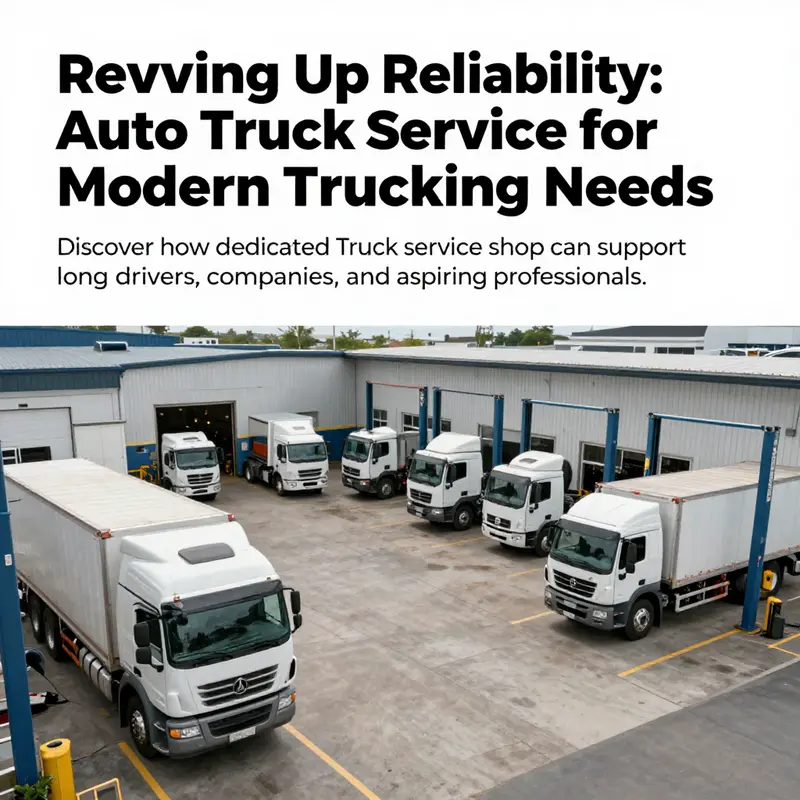
Reliable auto truck services are pivotal in sustaining the trucking industry, particularly for long-haul drivers and trucking company owners. As the backbone of commerce, the trucking sector demands that vehicles remain in peak condition. This article delves into the comprehensive services offered by Auto Truck Service Inc., highlighting their economic impact on local communities and exploring the latest technological innovations in the auto truck service industry. Each chapter will provide insights into how these factors interweave to create a symbiosis between trucking businesses and service providers, promoting efficiency and profitability.
null
null
From Local Garages to Community Hubs: The Economic Ripple Effect of Auto Truck Service
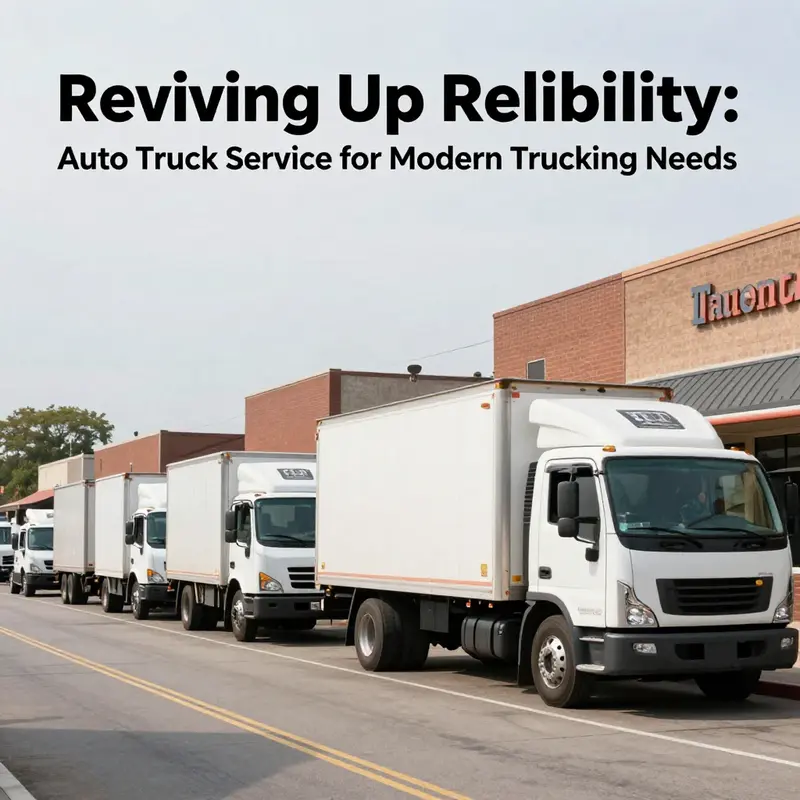
Auto Truck Service Inc. has stood at 3921 Smith Ave in Everett, Washington, since 1978, a cornerstone of a neighborhood economy built on mobility, repair, and trust. For four decades, the shop has woven itself into the fabric of local commerce by serving both everyday drivers and fleets that keep the region’s warehouses, retailers, and service centers supplied. In a world where technology is accelerating the pace of change in transportation, a chapter of economic resilience begins not with a flashy headline about autonomous trucks, but with the steady, reliable work of a local service shop that keeps engines running, fleets on the road, and small businesses solvent. The chapter that follows takes that everyday reliability as a point of departure. It asks how a local auto and truck repair shop, rooted in a traditional service model, can play a meaningful role in an economy that is increasingly shaped by automated systems and smarter logistics. It looks at the ripple effects—both the opportunities and the challenges—that arise when communities invest in people, partnerships, and infrastructure aligned with a future in which efficiency, uptime, and reliability are the currency of growth.
The first layer of this economic story concerns the kind of work that Auto Truck Service represents today. The shop has built its reputation on high-quality maintenance and repair for passengers and commercial trucks alike. That dual focus matters in a community like Everett, where a thriving distribution network relies on the steady operation of both light-duty vehicles and heavier conveyances. When fleets require routine maintenance, emergency repairs, or preventative service, a local mechanic can mean the difference between a delayed delivery and a seamless restocking cycle. It is not merely about fixing things that break; it is about extending the useful life of a vehicle and reducing the downtime that ripples through a supply chain. In that sense, the work of a shop like Auto Truck Service is a quiet but powerful form of economic infrastructure. It supports uptime, reliability, and trust in the local economy—assets that small businesses and workers cannot do without.
The prospect of automation in trucking—long-haul routes first, with an eye toward broader coverage in the freight system—adds a new layer of complexity and opportunity to this already intricate local economy. Autonomous driving technologies promise to reduce fuel use and enhance efficiency, and they can enable around-the-clock operation in ways that reshape the timing of deliveries and the capacity of regional distribution networks. When a fleet can move goods on a tighter schedule, nearby retailers and manufacturers may experience improved replenishment cycles, less stockouts, and potentially lower costs in the last mile. For a local repair shop, that translates into more consistent demand for preventive maintenance, tire services, drivetrain work, and diagnostic support as fleets adjust to new operating rhythms. It also means a growing need for technicians who can understand the peculiarities of automated or semi-automated systems, sensors, and connectivity that keep modern trucks on the road.
Within Everett and similar communities, the economic impact of this evolving technology is not confined to the fleets themselves. Maintenance and repair enterprises become nodes in a broader ecosystem that includes fleet management, remote monitoring, and cybersecurity services. A small business can expand its value proposition by partnering with local fleet operators to provide proactive maintenance programs, on-site diagnostics, and rapid response capabilities. This creates a local specialization that complements the efficiency gains promised by automation. When uptime is valued as a core performance metric, a trusted local shop emerges as a risk mitigation partner, offering predictable costs, standardized service procedures, and rapid fault remediation. This is especially true for midsize and small fleets that cannot afford the luxury of downtime. In such contexts, the presence of a reliable repair partner transforms the economics of logistics from a potential vulnerability into a measurable capability.
The broader social and economic effects extend beyond immediate financial calculations. When a community invests in skilled maintenance work, it strengthens its middle-skill job base and reinforces a sense of local pride and permanence. The training and apprenticeship pathways that local shops help nurture become an engine for workforce development. Communities that support these pathways—through publicly funded training programs, industry partnerships, and coordination with local schools and colleges—tave the scaffolding needed to adapt to a more automated economy. Technicians currently performing routine maintenance on conventional fleets can pivot toward more complex diagnostic tasks that require familiarity with sensor networks, connectivity protocols, and the software platforms that coordinate automated systems. The transition is not a devaluation of labor but a shift toward higher-skill, higher-value work that can create career ladders for residents, particularly in regions that have historically depended on manual labor and physical throughput. In the long arc, this shift can stabilize local employment, diversify the economic base, and attract other forms of investment, from equipment suppliers to digital infrastructure providers that want to co-locate near ready-made service ecosystems.
A key implication of autonomous trucking, even at its early stages, is improved supply-chain resilience. When trucks can operate with fewer idle hours and when delivery windows become more predictable, manufacturers and retailers in and around Everett can reduce working capital tied up in safety stock and expedite costs. This creates a favorable external environment for service providers who support fleets. The local repair shop benefits from steadier maintenance demand, the predictable cadence of inspections, and the capital cycle associated with upgrading or maintaining a fleet that remains competitive in a more efficient logistics landscape. The ability to service a growing number of commercial vehicles and to do so quickly translates to a healthier business climate for ancillary services as well—parts suppliers, tire shops, and diagnostic labs all find a shared stake in uptime and reliability. In this sense, the local auto and truck service enterprise becomes a microcosm of the larger economy: a conduit for productivity gains, a magnet for skilled labor, and a stabilizing force in a rapidly changing transportation system.
This interconnectedness also invites a broader reflection on how small and mid-sized communities position themselves as hubs for advanced mobility. The strategy is not merely to react to technological shifts but to shape them through deliberate collaboration. Local governments, logistics firms, and service providers can align their interests around shared goals—reducing congestion, improving safety, and boosting regional competitiveness. Workforce development programs play a central role in this alignment. When a city or county designs curricula that emphasize diagnostic analytics, cyber-physical systems, and preventive maintenance, it prepares a workforce capable of supporting both traditional vehicles and the more sophisticated fleets that automation enables. The consequence for a shop like Auto Truck Service is twofold: to remain technically current and to participate actively in community planning that underwrites the long-term viability of local businesses and the people who work in them.
The opportunity for local services, however, is not purely about labor and uptime. It extends into the conceptual space of value creation—what a community can offer to attract investment and spark innovation. For instance, as autonomous trucking scales, there will be demand for fleet-management platforms, remote monitoring services, software development, and cybersecurity expertise that protect fleets against new risk profiles. Maintenance services will evolve to include software updates, sensor recalibration, and calibration of autonomous systems, which require a blend of mechanical acumen and digital literacy. These are not abstract possibilities; they are practical realities that can drive regional entrepreneurship. A localized repair shop can participate in this transition by building partnerships with software firms, hardware suppliers, and training institutions to deliver a coordinated package of capabilities. In doing so, it becomes part of a regional value chain that extends beyond the mechanics of engines and into the intelligence of the road network itself. In turn, the community captures a portion of the high-value activities surrounding autonomous logistics, from data collection to predictive maintenance and beyond, rather than exporting those opportunities to distant hubs.
In this evolving landscape, the role of reference points and exemplars matters. Businesses that articulate a clear path from traditional repair work to a more integrated mobility-service profile can catalyze local ambition. This is where stories of excellence from across the trucking ecosystem can offer inspiration, not imitation. They demonstrate how a service-oriented model can remain resilient in the face of disruptive technology while expanding into niches that leverage intimate knowledge of local fleets, layered with modern diagnostic and monitoring capabilities. For readers who are curious about such pathways, one can explore the broader narrative around top-tier trucking service philosophies that emphasize reliability, continuous training, and customer-centric maintenance strategies. The aim is not to replicate a distant corporate model but to adapt core principles—uptime, transparency, and dependability—to the specific tempo and texture of a community like Everett.
At the same time, it is essential to acknowledge the concerns that accompany automation-driven economic shifts. The prospect of widespread driver displacement touches a nerve in many communities. Estimates that millions of professional drivers could be affected underscore the need for swift, well-planned responses. The focus should shift from guarding against change to managing the transition with equitable outcomes. Local leaders can champion retraining programs, expand access to re-skilling opportunities, and create a framework where former drivers move into roles in maintenance, fleet operation analytics, or remote monitoring—jobs that benefit from the field experience and practical know-how that have long defined auto service work. A well-designed retraining ecosystem reduces the risk of economic distress while preserving the social fabric of communities that have long depended on trucking as a pathway to stable livelihoods. In Everett, the decades-long presence of a dependable shop provides a foundation for such transition, offering a visible narrative of continuity amid transformation.
Beyond the immediate workforce and logistics implications, the economic story touches the realm of small-business vitality. A neighborhood shop that thrives by delivering consistent, high-quality service becomes a magnet for cross-pollination with other local enterprises. It can host workshops, partner with local training providers, and participate in municipal initiatives aimed at improving road safety and mobility. When maintenance partners with education and industry associations to create apprenticeship pipelines, the result is a more resilient local economy. The effect cascades: better-prepared workers attract more investment; improved maintenance reduces the total cost of vehicle ownership for small businesses; and a stable, well-supported trucking sector lowers logistic costs for local manufacturers and retailers. In this way, a single service center contributes not only to the health of its customers but also to the broader stability and competitiveness of the region.
As communities look to the future, they can draw strategic lessons from the interplay between technology and service provision. The auto and truck repair sector does not merely react to automation; it can co-create the conditions under which automation becomes a shared opportunity. The most successful local models will emphasize continuous learning, scalable service offerings, and an openness to new business lines that leverage core competencies. A shop like Auto Truck Service can position itself as a cornerstone for the local mobility economy by combining traditional maintenance excellence with proactive participation in fleet analytics, predictive maintenance planning, and safety-driven service programs. It can become a hub where fleets of all sizes receive not only repairs but also the guidance and support necessary to navigate a rapidly changing landscape. In the end, the economic impact of auto and truck service on local communities rests on the capacity to blend enduring craft with forward-looking collaboration, turning uptime into prosperity and reliability into opportunity.
For readers seeking a broader sense of how technology and policy intersect with regional economies, the Deloitte Insights discussion on the auto industry’s impact offers a useful macro lens. The report emphasizes the ways emerging mobility and automation influence productivity, regional investment, and workforce needs across sectors, highlighting that local adaptation—through workforce development, public-private partnerships, and infrastructure investment—remains central to realizing efficiency gains at scale. While the figures and forecasts will evolve, the underlying message is stable: communities that invest in people and partnerships can harness automation to strengthen value chains, support small businesses, and create meaningful, lasting economic momentum. This aligns with the ethos of traditional neighborhood repair shops that have endured for generations while evolving to meet new demands. The real test is whether a city, a county, or a region can translate that ethos into a coherent plan that links maintenance expertise with data-enabled mobility, ensuring that the local economy benefits from the modernization of transportation rather than being left behind.
The practical takeaway for Everett and similar communities is straightforward. Invest in workforce development that grows with the technology, cultivate partnerships between logistics operators and local institutions, and position local hubs as centers of mobility infrastructure and support services. Do not outsource the future of trucking to distant metropolises or to headline-grabbing federal programs alone. By aligning the proven strengths of local service providers with the efficiencies offered by automation, communities can retain jobs, stimulate small business growth, and improve the reliability and resilience of the entire supply chain. In this sense, the economic impact of Auto Truck Service and its peers extends beyond vehicles and repair bays. It becomes a story about community stewardship, shared prosperity, and the ability to adapt with dignity and skill as the road ahead grows smarter and more interconnected. The local shop remains a veritable anchor in a shifting landscape, a place where wheels meet wisdom and uptime becomes a community asset.
External resource: https://www2.deloitte.com/insights/us/en/focus/industry-40/auto-industry-impact-on-economy.html
Internal reference for further context on industry-wide service excellence can be found in the broader trucking services ecosystem: unparalleled services of 5 Star Truck Inc.
From Wrench to Wi-Fi: Navigating the Tech-Driven Evolution of Auto Truck Service
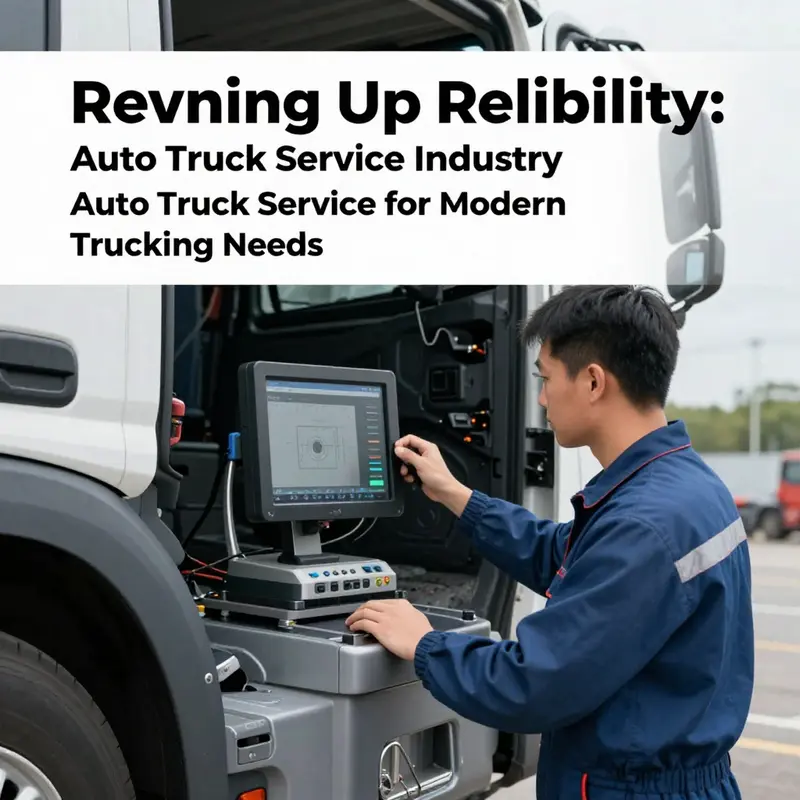
In the repair bays where fleets depend on every mile of operation, a quiet revolution is unfolding. Auto Truck Service Inc., a fixture in Everett, Washington, sits squarely in the path of this change. Since its founding in 1978, the shop has earned a reputation for reliable automotive and truck repair, serving a broad mix of local customers and commercial fleets from its location at 3921 Smith Ave, Everett, WA 98201. Four decades of work in this community have taught the team that uptime is not simply the absence of failure; it is a disciplined cadence of proactive care, backed by an evolving toolkit and a willingness to learn. As trucks grow smarter and ops teams demand more visibility, the old line between repair and maintenance continues to blur. The modern auto truck service operation must blend traditional mechanical prowess with digital literacy, data-informed diagnostics, and a readiness to adapt to a rapidly changing technology landscape. In this sense, Auto Truck Service Inc. is not just a repair shop; it is a living example of how the industry is moving from reactive fixes to proactive stewardship that keeps fleets on the road when it matters most.
Fleets today seek more than a fix. They want clarity about what is happening under the hood, confidence in the integrity of components, and foresight about maintenance that minimizes downtime. The Everett shop has met that expectation by expanding technician training, broadening diagnostic capabilities, and designing a service model that respects the realities of high-utilization vehicles. This means integrating routine mechanical work with electrical system diagnostics, chassis sensors, telematics data, and safety protocols for electric or hybrid powertrains. The result is a practical synthesis of hands-on skill and digital acumen: a client-facing workflow that translates complex data into actionable steps, and a bay routine calibrated to the demands of a data-rich, highly connected vehicle fleet. When a fleet arrives for service, the team reads not only the visible wear on parts but the signals embedded in a vehicle’s software, then translates those signals into a plan that aligns with production schedules, safety standards, and budget realities. In a market where uptime is a competitive differentiator, such a blended approach becomes the core value proposition of a trusted service partner.
Beyond the shop floor, the broader drivers of change—automation, electrification, and digital connectivity—are reshaping what customers expect from maintenance and repair. Driving automation, still evolving, promises to transform road freight by reducing operating costs, enhancing safety, and enabling new kinds of logistics operations. The literature around automated driving highlights how efficiencies can emerge when humans are relieved from routine or high-risk driving tasks. Yet the same research also underscores a new set of maintenance demands. Autonomous systems rely on a web of sensors, control modules, and software that require calibration, updates, and rigorous testing. For a service operation, this means moving from a purely mechanical diagnostic mindset to a hybrid approach that blends software interpretation with traditional inspection. In practical terms, a modern repair shop must be ready to analyze sensor readouts, verify calibration routines, and coordinate with fleet managers on how updates affect vehicle performance and maintenance scheduling. The evolving landscape invites technicians to become interpreters of data as well as mechanics of parts, and it asks shop leaders to rethink workflow design so that technicians can navigate software interfaces without losing sight of mechanical fundamentals. This alignment between hardware and software is precisely the kind of shift a long-standing local shop must embrace to stay relevant as fleets integrate more automated driving features into their daily operations.
The electrification wave in commercial transport represents another pivotal turning point with wide-ranging implications for service operations. The transition to electric trucks is advancing rapidly, even as the overall market remains in its early stages. The environmental case for electrification is compelling—electric propulsion dramatically reduces emissions at the source and can cut fuel costs, especially where electricity is competitively priced and charging becomes readily accessible. Operational reliability also improves in many contexts: electric powertrains offer fewer moving parts in some subsystems and smoother operation, with regenerative braking delivering a different wear profile for brakes. However, the flip side demands careful attention. Battery systems introduce high-voltage safety considerations, thermal management requires vigilant monitoring, and charging strategies shape maintenance cycles and component lifespans. The Everett shop has begun to respond by expanding its electrical diagnostics capabilities, updating safety practices for high-voltage work, and increasing training on battery health assessment and software interfaces controlling propulsion and energy management. The lesson here is not simply that trucks are going electric; it is that service ecosystems must be structured to support electric fleets—delivering routine maintenance for batteries and power electronics, managing thermal systems, and coordinating with charging infrastructure to minimize downtime. As battery technology improves and networks of charging stations proliferate, electrified fleets are poised to become a larger and more routine feature of urban and regional freight, which in turn reshapes how shops like Auto Truck Service Inc. plan parts inventories, staffing, and facility layouts to optimize uptime and efficiency.
Alongside electrification, digital platforms and predictive maintenance are converting data into a service asset. Modern fleets produce a constant stream of telemetry from every axle, battery cell, and drivetrain module. When technicians can interpret this data, they can forecast wear and plan interventions before a failure occurs. Predictive maintenance reframes the service cycle from a calendar or mileage-driven approach into a data-driven discipline. It transforms downtime from an unpredictable accident into a scheduled event that aligns with production windows and budget constraints. A repair shop that can turn telemetry into a precise maintenance plan adds value far beyond the traditional repair checklist. It becomes an essential partner in lifecycle economics, helping fleet managers optimize uptime, reduce total cost of ownership, and space maintenance windows around complex production schedules. Connected vehicle technologies further extend this capability. Real-time alerts, remote diagnostics, and even software updates can inform technicians before a truck arrives, or allow a remote expert to participate in diagnosing a problem while the vehicle is still on the road. The outcome is a service experience that is more predictable for customers and more efficient for the shop. For fleets operating across multiple locations, digital platforms offer a harmonized standard of service and a coherent maintenance history, enabling a single, transparent view of uptime performance. In this integrated future, a local shop like Auto Truck Service Inc. becomes part of a broader digital ecosystem that connects regional networks, fleets, and data partners with the shared objective of keeping critical vehicles on the road when they are needed most.
For practitioners and readers curious about one concrete facet of this transition, the electrification journey includes the realities of charging infrastructure. The practical experience of deploying and supporting charging for electric heavy-duty vehicles, including service implications for maintenance planning and safety protocols, is explored in depth in resources such as the electric fire truck charging infrastructure overview. This kind of guidance helps shops translate the abstract promise of electrification into a concrete, day-to-day operating plan: how to schedule charging during off-peak hours, how to coordinate high-voltage safety training with shop workflows, and how to align spare parts and diagnostic tools with a mixed fleet that includes both traditional diesel and electric propulsion.
The heart of this transformation lies in the people who do the work and the partnerships that sustain it. Auto Truck Service Inc. has seen that as technology becomes more central to vehicle performance, technician development must keep pace. This means ongoing training that covers electrical systems, battery health, safety standards for high-voltage systems, and the software literacy required to navigate vehicle control modules, telematics dashboards, and diagnostic interfaces. It also means rethinking talent flows within the shop: dedicating personnel to data interpretation, to remote diagnostics, and to fleet liaison activities that keep customers informed about maintenance plans and uptime projections. At the same time, customer experience must evolve. Transparent pricing, clear maintenance roadmaps, and predictable service windows become the baseline expectation, not the exception. The shop’s ability to deliver this level of clarity rests on a robust technical foundation, strong safety culture, and a consistent, informed partnership approach with its fleet customers. In Everett and beyond, the future of auto truck service is not merely about repairing what breaks; it is about preventing breakdowns, optimizing performance through data, and integrating service into the broader operational rhythm of the fleet. For readers seeking a deeper, industry-wide perspective on how electrification and digital connectivity are reshaping transport, external resources offer a broader lens on the trend toward electric mobility and its implications for service ecosystems: McKinsey’s The Future of Buses and Light Commercial Vehicles Is Electric.
Taken together, these developments signal a fundamental shift in what customers expect from auto truck service. The era of the lone mechanic in a quiet shop corner has given way to a collaborative ecosystem in which diagnostics, software, data, and customer experience co-create value. For a local business with a long history, like Auto Truck Service Inc., the challenge is not merely to adopt new tools but to weave them into a coherent service narrative that respects the firm’s legacy while embracing the practical realities of a technology-driven industry. The practical takeaway for fleets and shop operators is straightforward: invest in people who can read data as well as dials, build partnerships that translate uptime metrics into business outcomes, and design service processes that keep the fleet moving under a changing set of technical demands. The payoff is not only in reduced downtime or lower maintenance costs; it is in the trust that a fleet manager places in a shop that understands both the mechanical heart of a truck and the digital pulse that now runs through its systems. In a world where innovation is continuous, the question for any service provider becomes less about keeping pace and more about maintaining a coherent, proactive strategy that aligns with how modern fleets operate, plan, and grow.
Final thoughts
Understanding the role of a dedicated auto truck service like Auto Truck Service Inc. is critical for those involved in the trucking industry. Their comprehensive service offerings, economic contributions, and adoption of cutting-edge technology combine to ensure that trucks remain reliable and efficient. This synergy not only supports individual truck drivers and company owners but also stimulates local economies, forming a robust network that drives the community forward. For long-haul drivers and fleet managers, partnering with such a service provider is not just practical; it’s essential for sustained success and operational efficiency.