
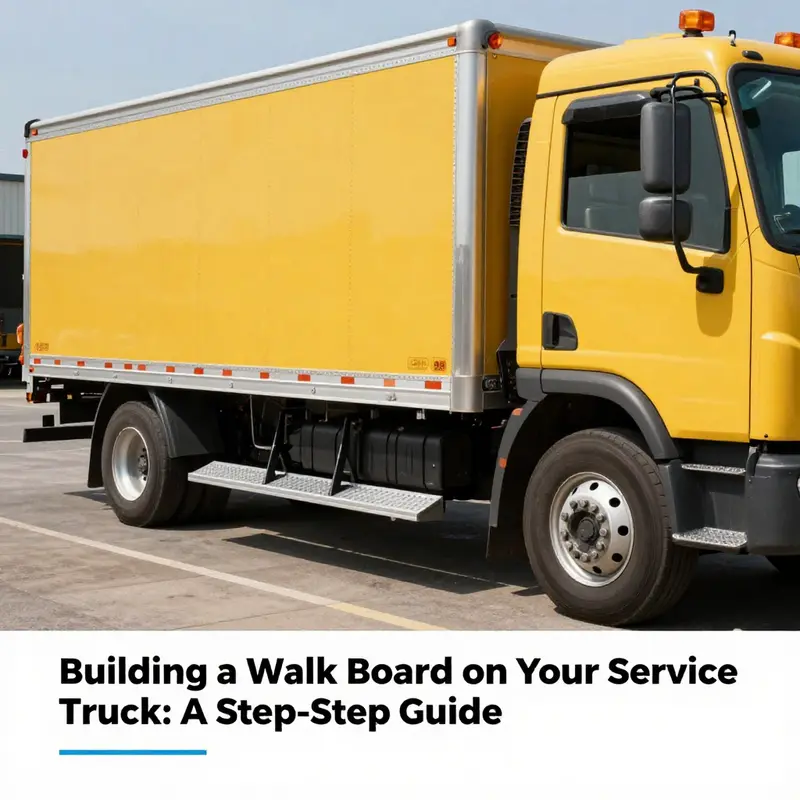
Creating a walk board on a service truck is more than just an enhancement; it’s a necessity for safety and efficiency on the job. For long-haul truck drivers and fleet managers, ensuring safe access to elevated platforms or maintaining equipment is crucial in minimizing injury risks. As we dive deeper into this guide, we will explore the detailed steps for planning and designing your walk board, how to prepare and establish secure mounting points, and the construction and installation processes involved. Each chapter will build on the previous one, equipping you with essential knowledge to create a sturdy and reliable walking platform tailored to your truck’s unique needs. Moreover, we’ll discuss critical safety features that every truck walk board should have and conclude with proper inspection protocols to ensure everything is up to standard.
From Concept to Cab: Designing a Stable Walk Board for Service Trucks
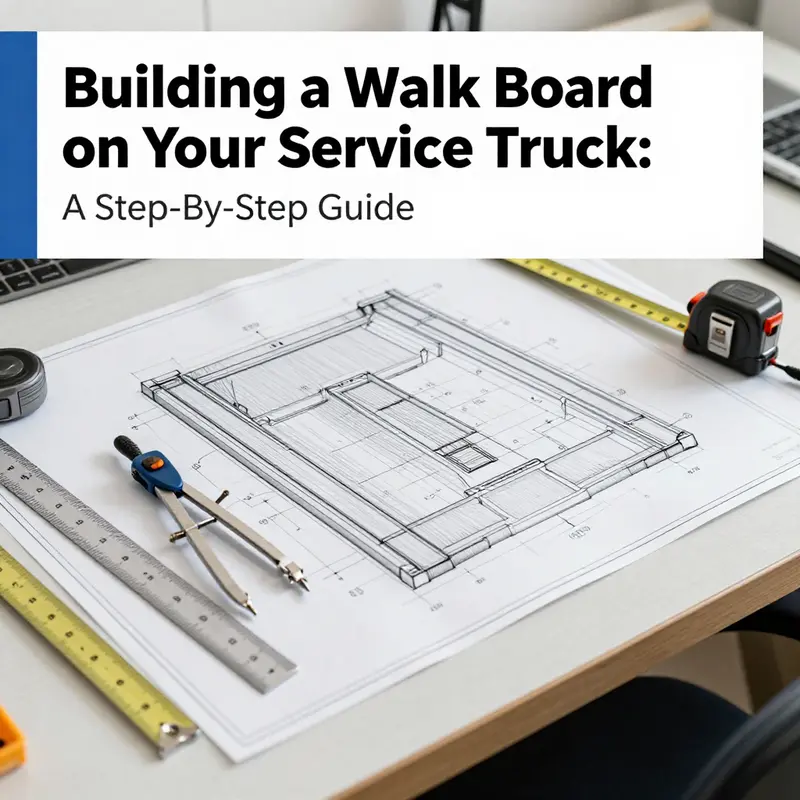
A walk board on a service truck is more than a convenient foothold; it is a carefully engineered system that bridges accessibility, safety, and efficiency in the field. When crews climb to access a lift gate, reach equipment, or move along a compact work area, a well-conceived walk board becomes a stable, predictable platform. The challenge is not merely to bolt a plank onto a frame but to weave a solution that aligns with the vehicle’s geometry, the operator’s movements, and the varying conditions encountered on job sites. This chapter threads together planning, material choice, mounting strategies, and safety features into a cohesive approach. It treats the walk board not as an afterthought, but as an integral component that must perform reliably under dynamic loads, weather exposure, and the rigors of daily use. In doing so, it connects concepts of structural reliability with practical, in-the-trenches implementation that keeps teams secure and productive.
Planning begins with a clear assessment of need. Ask what the board will be used for, how often it will be accessed, and what heights and angles personnel will encounter. Will it function primarily as a path to a lift gate, or as a secondary work surface for toolboxes, hoses, and small equipment? The length and width must complement the truck’s footprint while leaving room for safe stepping. A passage that is too narrow invites missteps; one that is too wide creates interference with doors, storage compartments, or nearby traffic. The design also needs to account for the vehicle’s stance and any potential unevenness at the job site. This means accounting for the wheel well, wheelbase, and chassis frame contours, so the board does not become a snag when turning or driving over rough ground.
Material selection sits at the heart of the balance between weight, strength, and durability. Aluminum emerges as a favored option for many service applications due to its lightness, corrosion resistance, and ease of fabrication. Steel offers exceptional strength and rigidity but adds weight and corrosion concerns unless properly treated. Composite materials can deliver a middle ground, combining strength with resistance to wear and weather. The surface texture is equally critical. A non-slip pattern—such as textured aluminum or diamond plate steel—reduces the risk of slips under wet or muddy conditions. When a coating is preferred for ease of cleaning or for buoying traction, it should be uniform, durable, and able to withstand frequent contact with work boots and tool provisions.
The surface’s thickness and the board’s overall geometry must be coordinated with the mounting strategy. A thinner surface borrows strength from a robust frame, while a thicker plate directly impacts weight. Either choice should be justified by load calculations that include the combined weight of the board and the heaviest expected personnel plus dynamic loads from stepping, shifting, and turning. In practice, this means designing a frame that distributes loads evenly to sturdy mounting points rather than concentrating stress at a few fasteners. The mounting points themselves require careful selection. The safest approach is to locate sturdy structural members in the truck’s chassis or frame—cross-members or reinforced brackets—rather than attaching to thin sheet metal panels that may deform or fail under load. The objective is to establish secure anchors that resist loosening and maintain alignment through vibration, temperature fluctuations, and repeated use.
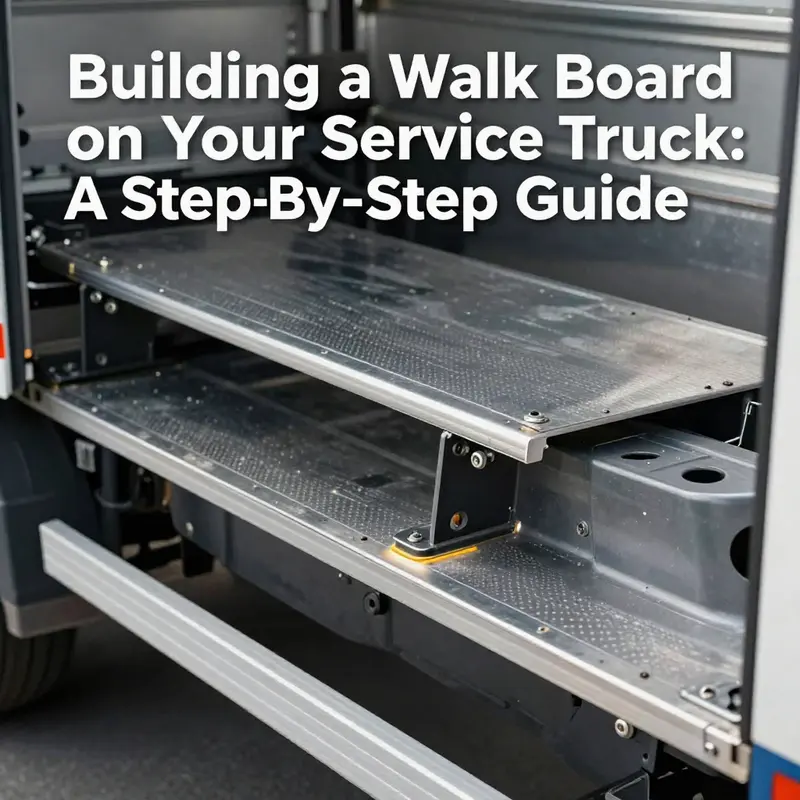
With planning and mounting points in place, the construction phase follows a disciplined path. The frame should be fabricated from a rigid member set—angle iron, channel, or tubing—capable of resisting torsion and bending while spreading axial loads across multiple attachment sites. The surface can then be secured to this frame using bolts, rivets, or welding, depending on material compatibility and the crew’s fabrication capabilities. All edges must be deburred and free of sharp protrusions to minimize injury risk during entry and exit. Fasteners should be chosen with an eye toward vibration resistance and long service life; high-strength bolts paired with lock nuts or appropriate thread-locking compounds help prevent loosening in the field. Torque specifications from the vehicle manufacturer or structural guidelines should govern every critical connection, and a final check should confirm that no fasteners are over- or under-torqued.
Securing the walk board to the vehicle demands particular care. The mounting points should be pre-identified and prepared for load transfer into the chassis. In some configurations, it may be prudent to employ triangulated brackets that connect to multiple cross-members, reducing localized stress and increasing overall stability. The goal is not to create a rigid, non-giving platform that fights the vehicle’s tendency to flex but to create a stance that remains stable as the operator moves, leans, or shifts weight while doors swing, gates open, or hoses unwind nearby. A well-executed installation minimizes jiggle and sag, even when the surface is loaded with equipment or when personnel pause to adjust gear.
Beyond the raw structure, safety features are nonnegotiable. Guardrails or handrails along the walk board’s edges are essential whenever the board sits more than a short distance above the ground or if there is a risk of falling due to movement or weather. Guardrails should be robust yet approachable, allowing a user to grip them without snagging clothing or gloves. Non-slip surfaces are equally important; in addition to texture, consider micro-surface patterns or strategically placed abrasive inserts to maintain traction during wet, oily, or muddy conditions. Edge radii should be generous enough to prevent catching footwear while still allowing safe stepping. Lighting or reflective markers can illuminate the board in low-light environments, aiding visibility and reducing missteps during early morning or late-shift operations. The design should also anticipate incidental contact, such as bumping into the board with knees or shins, and incorporate rounded corners and clearances that minimize injury risk without compromising functionality.
A critical part of the process is verification through inspection and testing. A visual inspection should occur before every shift: confirm that all bolts remain tight, the surface shows no signs of corrosion or wear, and there are no exposed sharp edges. A light load test—pressing or stepping at multiple points—helps ensure the assembly remains stable without excessive flex or movement. This test is not a substitute for more formal structural checks but serves as a practical gauge of ongoing safety in daily use. The safety features deserve equal attention: handrails should be checked for secure mounting, and any latching systems or safety gates should function reliably. If the board is modular or features adjustable elements, verify that adjustments hold under vibration and weight, and that locking mechanisms engage fully and stay engaged during operation.
The walk board’s life cycle extends beyond the initial installation. Regular maintenance should be integrated into the vehicle’s safety program. Inspect components for corrosion, fatigue, or cracking, especially at welds and attachment points. Replace any worn fasteners or damaged rails, and re-torque critical connections after periods of heavy use or after off-road workdays that involve rough terrain. Weather exposure demands attention to coating integrity and the potential need for re-application of protective finishes. A well-documented maintenance log helps crews track when replacements or refinishing were performed and when the board last underwent load checks. In practice, asking questions about the board’s performance during a given shift can be as important as any torque spec: does the surface feel unusually soft, is there unexpected creaking, or has the guardrail loosened after a jolt? These questions guide timely interventions and prevent small problems from becoming unsafe conditions.
The design of a walk board for a service truck is, at its core, a balance between accessibility and restraint. It must offer a stable, non-slip path that feels natural to the user’s movement while anchoring securely to the vehicle so it does not introduce new risks to the operator or pedestrians nearby. This balance is achieved by thoughtful planning, careful material selection, robust mounting, and a conservative approach to safety features. The result is a platform that not only enables efficient work but also reinforces a culture of safety embedded in every routine operation. For teams seeking further perspectives on how such design choices integrate with broader emergency-service systems, see the discussion on design efficiency in emergency services. Design efficiency in emergency services.
In practice, the principles described here echo real-world safety installations where utility and service trucks are outfitted with carefully engineered platforms. A closely related, real-world reference shows how professionals implement safety platforms on utility vehicles, emphasizing stable work surfaces, robust attachment strategies, and clear safety governance. For readers who want to explore a concrete, professionally documented example, the Guardian article offers a detailed look at the design and installation of safety platforms on utility trucks: https://www.theguardian.com/uk-news/2023/jul/18/utility-workers-safety-platforms-installation.
null
null
Stepping Above: Mastering the Construction and Installation of a Walk Board on a Service Truck
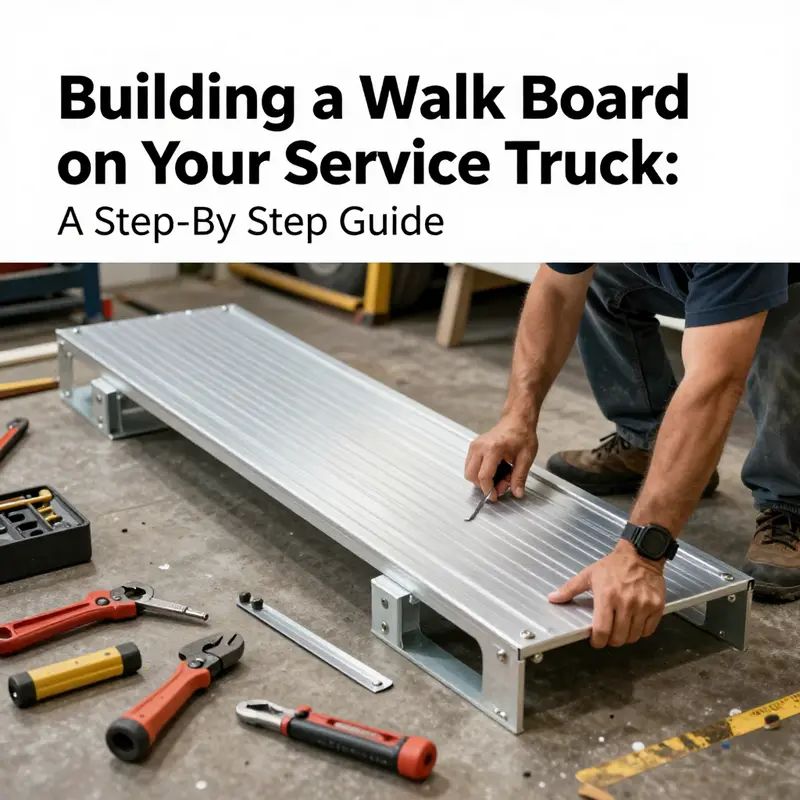
A walk board on a service truck is more than a simple platform; it is a carefully engineered bridge between safety, efficiency, and access in demanding work environments. When technicians need to move between equipment, reach a lift gate, or navigate uneven surfaces, a well-designed walk board becomes a predictable and stable surface that reduces risk and speeds up service operations. The challenge lies in balancing strength and weight, weather resistance and slip resistance, and a secure connection to the vehicle that can stand up to the dynamics of daily use. In shaping a walk board, the goal is to create a compact, modular system that integrates with the truck’s frame rather than wrestling with flimsy sheet metal. This chapter follows a practical trajectory from initial planning through installation and ongoing safety management, weaving in the core principles that underlie all durable, field-ready access platforms. Throughout, the emphasis remains on reliability and repeatable performance, so technicians can focus on the task at hand rather than worrying about footing or movement beneath their feet. For those who want a broader sense of how design concepts translate into field efficiency, the idea of design efficiency in emergency services provides a useful reference point that emphasizes practical, needs-based design over speculative embellishment. design efficiency in emergency services. And for a look at real-world safety platforms used in utility work, readers can consult established case studies in the industry.
Planning begins with a precise assessment of needs. Determine the walk board’s purpose: Is it primarily for stepping between a cab and a rear compartment, for gaining steadier access to a lift gate, or for creating a stable workspace where technicians can place tools without crowding the vehicle’s footprint? The length and width must accommodate the typical work footprint while preserving enough clearance for doors, hinges, and any side panels that must remain accessible. Weight becomes a crucial constraint. Aluminum emerges as the most common choice for service-truck applications because it offers a favorable strength-to-weight ratio and excellent corrosion resistance. Steel, while exceptionally strong, demands extra coating and maintenance to prevent rust, which can complicate service schedules. Composite materials may provide a compelling middle ground, offering good stiffness and weather resistance with reduced weight, though their behavior under repeated impact or edge loading should be evaluated against the specific service context. The surface texture is not cosmetic; it is a core safety feature. A non-slip finish, whether textured aluminum, diamond plate, or a purpose-built coating, is essential for maintaining grip in wet or dusty environments. The surface should be free of sharp edges, burrs, or protrusions that could snag clothing or snag tool bags, and any joints or fastener heads must be recessed or countersunk.
Once the conceptual design is clear, preparation and mounting points become the next decisive step. The process hinges on locating sturdy, structural anchors within the truck’s chassis or frame. Attachment points should be reinforced cross-members, factory brackets, or other robust sections designed to handle combined loads from the walk board, personnel, and equipment. Thin sheet metal panels are not suitable anchors because they yield under dynamic loads, potentially causing misalignment or sudden shifts in the board. The correct mounting strategy distributes weight across multiple points to avoid localized stress that could deform the frame or loosen fasteners over time. In practice, some builders use hooks or attachment hardware that engages solid framing members, such as H1 or H2 hooks, to create a reliable, quick-connect system. These hooks allow secure engagement with the vehicle while preserving the ability to remove or reposition the board if the service configuration changes. The mounting plan should consider dynamic loads produced by walking, shifting weight, and the occasional jolt from road irregularities. A key design principle is redundancy: more than one mounting point should share the load, ensuring that if one connection encounters a problem, others remain to maintain stability.
With mounting points established, the construction and installation phase can proceed in a disciplined sequence. Fabrication begins with a rigid frame built from strong, end-compatible members such as angle iron, channel, or tubing. The frame is designed to distribute the load evenly across the identified mounting points, preventing stress concentrations that could warp the structure. The walking surface is then attached to this frame. Bolts, rivets, or welding can be used, provided the method yields a flush, smooth surface with no sharp edges. Whether using mechanical fasteners or welded joints, attention to edge treatment is critical. Any exposed edges should be deburred or covered with protective trims to prevent injuries or tool snags.
Securing the frame to the vehicle requires careful hardware selection and torque control. High-strength bolts with lock nuts are the standard, and torque should be set to the vehicle manufacturer’s specifications or validated engineering guidelines for the specific frame geometry. It is essential to torque all fasteners to a uniform level and to verify that none loosen during movement through a practical load cycle. When possible, additional safety features should be integrated during installation. Handrails or guardrails along the walk board edges significantly reduce fall risk, especially when the board sits more than a meter above the ground or when the work zone presents a potential fall hazard. Guardrail height and spacing should comply with applicable safety standards, and the top rail should be continuous to allow a technician to maintain three-point contact when stepping on or off the platform. If space or weight restrictions limit full guardrails, intermediate rails or mid-rails can provide partial protection, but they should never replace full edge protection where feasible. The goal is a robust perimeter system that permits reliable handholds and limits the chance of slips or catches on tools.
Beyond the basic frame and edge protection, a practical walk board design anticipates real-world use. The surface should resist weather effects, including rain, snow, and road grime, while staying easy to clean. Drainage considerations prevent water from pooling on the platform, which would cycle back into footwear and muddy soles into the cab or back of the truck. A raised lip at the outer edge combined with a non-slip surface helps keep the user oriented and reduces the chance of losing footing when transitioning to or from the ground. If space permits, integrating a small, angled toe kick behind the edge can improve foot placement and control when stepping toward the board from the ground. Lighting, while not always possible, can be a valuable enhancement in dim early-morning or late-evening service conditions. A simple, battery-powered LED strip or a low-profile luminaire placed along the underside of the board provides visible cues for placement without creating glare for the operator.
Throughout installation, the process should be approached with a mindset of steady, repeatable accuracy. A visual inspection is the first line of defense: check for any misaligned components, protruding fasteners, or signs of undue stress in the frame. A functional load test is essential before the board goes into service. Apply weight at multiple points across the surface to mimic a technician’s movements and confirm that the board does not flex excessively, shift, or loosen. The test should simulate typical conditions: a person walking across the board, shifting weight from one leg to another, and stepping on the board from the ground. If the board demonstrates stable behavior and the mounting points remain secure, a safety check should confirm guardrails are engaged and supportive and that handrails are firmly anchored. The test should also verify that the surface remains non-slip even when contaminated with water or dust, as an added measure of reliability in real field conditions.
The practical logic of building a walk board also involves reference points that help technicians maintain quality over time. A robust maintenance routine includes periodic bolt checks and torque verification, especially after heavy use or exposure to vibration over long drives. Corrosion prevention measures—such as applying a suitable protective coating on steel elements or selecting corrosion-resistant aluminum components—extend service life and reduce the likelihood of edge corrosion that can compromise edges or fasteners. Cleaning routines should remove grit and debris that can dull the non-slip surface and obscure fastener heads. If owner-operator or fleet maintenance cycles exist, integrating a walk board inspection into these routines helps standardize safety practices and reduces the likelihood of overlooked wear. When modifications are necessary, the same principles apply: evaluate mounting integrity first, then re-check the frame, surface, and safety features as a whole to confirm no new hazards have been introduced.
The design and installation approach described here remains adaptable to a range of service contexts. While the exact mounting hardware and frame geometry may vary with truck model and duty cycle, the core tenets hold constant: a secure attachment to a reinforced portion of the chassis, a rigid frame that evenly distributes load, a non-slip surface with edge protection, and guardrails that prevent falls while preserving full access to equipment and cargo areas. In practice, teams often rely on established guidelines from reputable sources that translate engineering principles into field-ready solutions. For instance, the exploration of walk boards and stage planks in industrial settings emphasizes the same combination of strength, weight management, and practical installation requirements that service trucks demand. As with any critical modification to a vehicle used in on-road and field operations, the emphasis should be on safety, reliability, and clarity of use. The ultimate objective is to create a platform that technicians trust implicitly, enabling them to work efficiently without second-guessing their footing. For readers seeking broader references on this topic, see the linked resource on design efficiency in emergency services and consider how its emphasis on practical, needs-based design parallels the walk board approach described here. For a broader sense of how safety platforms are implemented in utility work, refer to this external report: https://www.theguardian.com/uk-news/2023/jul/18/utility-workers-safety-platforms-installation
The Last Check: Rigorous Final Inspection and Safe Testing of a Walk Board on a Service Truck
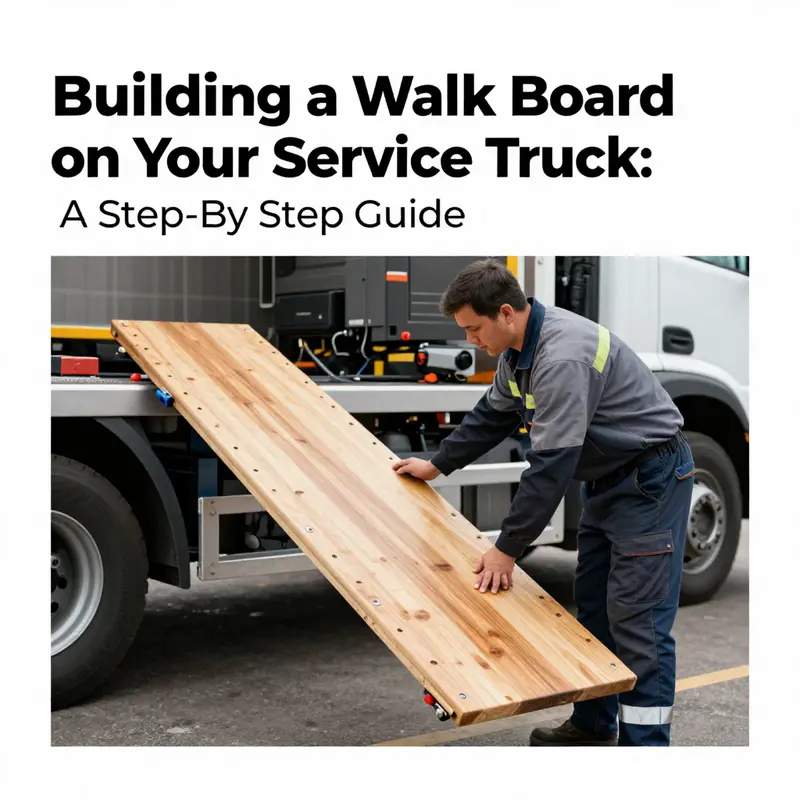
A walk board on a service truck is more than a convenience feature; it is a lifeline for workers who must move around elevated work zones, reach lift gates, or navigate uneven ground without losing footing. The final inspection and testing phase is where safety becomes concrete, where plans meet reality, and where fatigue and wear reveal themselves before they become incidents. This chapter follows a cohesive, human-centered narrative of what it takes to prove that a built platform will perform reliably under real-world conditions. It treats inspection not as a one-off checkpoint but as part of a living safety routine that blends careful observation, precise measurement, and disciplined maintenance habits. The goal is simple and uncompromising: the walk board must be secure, stable, and forgiving enough to keep workers confident in every step they take as they move along the truck body and between equipment stations.
To begin, the essence of a trustworthy final inspection is structural honesty. A trained eye looks for signs that the underlying skeleton—frame members, brackets, cross-members—has aged or been compromised. The inspector moves along the sides, seeking hairline cracks in welds, warping in flat panels, or corrosion creeping along edges and fastener holes. Small distortions can be the first whisper of a larger problem, especially in service environments where vibration, temperature shifts, and moisture cycle through daily use. A careful pass with a bright light and a low-angle mirror helps reveal hidden cracks or fretting at joints that might otherwise escape notice. The frame should carry no soft spots when you press with the heel of your hand, and there should be no unusual noises when the surface is lightly flexed. If the walk board includes a welded frame, the welds should appear continuous, uniform, and free of porosity or excessive overlap. If it is bolted or riveted, the hardware should sit flush, and fastener holes should show no elongation or elongating wear patterns. A periodic magnet or dye-penetrant check is not always practical in the field, but the principle remains: look for fatigue indicators that suggest the platform has worked hard and may need reinforcement or replacement. Corrosion control is equally vital; surface rust can be a precursor to deeper corrosion that weakens the frame or attachment points. A clean, rust-free surface not only looks professional, it also signals that the component has been maintained and is less likely to fail at critical moments.
Beyond the board itself, the attachment to the vehicle is the second pillar of safety. The mounting points act as the bridge between platform and chassis, and their integrity governs the entire system’s safety margin. In the final inspection, every mounting bolt, through-bolt, and bracket receives the same careful attention: is there any looseness or play in the connection? Do lock nuts still engage fully, and are the thread locking compounds or lock washers still performing their function? The torque values prescribed by the original design, or by the reinforcing hardware installed during retrofit, must be verified with a calibrated torque wrench. A practical test is to perform a controlled wobble check at several points along the board’s length to feel for any play. If movement is detected, it signals a need to re-torque, re-seat, or perhaps re-drill and install different hardware to restore a stiffness level that prevents micro-movements under dynamic loads. The aim is to ensure the frame and mounting interface behave like a single, rigid unit rather than a collection of parts that can shift, bend, or separate during movement or when the truck encounters irregular pavement or curb edges.
The non-slip character of the surface is another non-negotiable safety feature. An anti-slip finish should remain intact and effective after months of exposure to weather, dirt, and chemicals that service work generates. The texture should feel deliberate under a boot, not slick, even when wet. If the surface shows wear patterns, the inspector notes whether these patterns threaten footing at critical points or simply wear evenly across the surface. In this sense, the final check covers both the material and its texture. Any slick patches should be addressed—either resurfaced with a non-slip coating or replaced with an approved surface material. Edges must be free of burrs or sharp corners that could snag clothing or gloves. Drainage should remain clear; puddling on a raised surface can quickly turn into a slip or freeze in cold conditions. The anti-slip feature is a system in itself, working in concert with guardrails, tread depth, and structural stiffness to reduce the chance of a misstep that could trigger a fall.
Secured attachment is tested in practice, not just on paper. The board must sit flush against its mounting frame with no gaps that invite dirt intrusion or wind-based lift in transit. A practical test involves applying a controlled horizontal and vertical load to replicate the forces a worker might generate when stepping onto or off the board, as well as the small, cumulative forces that come from walking along a steady, weight-bearing platform. The movement or deflection must remain within limits defined by the original design. If the board shows any bending, even under moderate weight, the problem could be a sign of an undersized frame, weakened mounting points, or a misaligned installation. The goal is not to produce a rigid, unyielding slab but a platform that distributes load evenly and maintains a reassuring steadiness as a person moves across it. Any misalignment with adjacent steps, lift gates, or equipment mounts can create pinch points or entrapment hazards and must be corrected before signing off.
The load test is the centerpiece of the practical validation. It is performed with care and order, following a stepwise protocol that prioritizes safety as much as it does performance. Begin by validating the rated capacity in the design documents, then select a test weight that represents the maximum expected occupancy plus the heaviest toolset likely to be on the board at any given time. Place this weight at several strategic points along the surface: near the mounting points, mid-span, and toward the far edge of the platform. The test should be conducted gradually, with the test weight applied slowly to avoid sudden shocks. Observe for any deflection, twisting, or unusual noise. If the board remains stable and does not exhibit excessive deflection under the applied load, you can advance to a dynamic phase: workers can simulate stepping motions while wearing appropriate PPE, and the tester looks for any movement of fasteners, loosened surface anchors, or railings. If the dynamic test reveals even minor movement, the team investigates whether the problem lies in a loose mounting, a cracked cross-member, or a misaligned surface. In some cases, it may be prudent to perform a second pass after re-tightening and rechecking torque at all critical points. The objective is a conservative outcome: the walk board should be capable of sustaining the intended loads with a comfortable margin and a clear record of performance under both static and dynamic conditions.
Safety features deserve a dedicated and careful check. Guardrails, when present, must be secure, continuous, and free from gaps that a hand or clothing could catch. Handrails should provide reliable support without impeding movement or creating snag hazards. If the design calls for midrails, those should be in place and properly anchored. The height and strength requirements are not cosmetic; they are calibrated to minimize fall risk and to keep workers within a protected zone even when reaching or stepping. Any hinges, latches, or removable sections must function smoothly without introducing new pinch points. A critical but often overlooked aspect is clearance: the board must not interfere with vehicle components during turning, suspension travel, or when the lift mechanism operates. Even if the board sits securely at rest, it should not contact or rub against the chassis in motion, which would rapidly wear the surface or damage the mounting hardware.
Documentation is the disciplined companion to a thorough physical inspection. Each element of the final inspection should be logged, including visual findings, torque values, defect notes, and corrective actions taken. A maintenance record that chronicles inspections, tests, and any replacements creates a reliable trail for audits and ongoing safety management. The documentation should include who performed the inspection, the date, the exact locations checked, and the expected service life for any replaced components. In many operations, this record becomes the basis for future predictive maintenance decisions, enabling teams to schedule retests at appropriate intervals rather than relying on memory or casual checks. For practitioners who want to deepen their understanding of safety platforms and inspection logic, a practical reference point is the broader scaffold inspection literature, which emphasizes verifying structural soundness, secure connections, and surface safety as universal principles that translate directly to a walk board on a service truck. And for teams integrating continuous improvement into their routines, a reminder that ongoing training matters just as much as sturdy hardware. To reinforce this idea, consider integrating the relevant maintenance training into your workflows, such as the topic covered in this training module: fire-truck maintenance service training.
In addition to the internal discipline of the inspection itself, it is useful to acknowledge real-world exemplars of safety practices. A well-documented case in the public sphere describes utility and service platforms installed on heavy-duty trucks, where safety platforms were carefully designed to minimize fall hazards and to provide stable, accessible work zones for technicians. This example underscores the same set of priorities we emphasize in the field: robust attachment, consumable surface integrity, predictable behavior under load, and clear maintenance trails that align with regulatory expectations. While the specifics differ across fleets and applications, the underlying assurance framework remains consistent: a platform is only as safe as its last inspection, and its ongoing safety depends on a routine that treats inspection as an essential, continuous process rather than a ceremonial checkbox. For readers seeking a vivid, real-world portrait of how platforms are implemented and tested in demanding contexts, the Guardian article on safety platforms installed on utility trucks offers a tangible reference point and a reminder that these principles translate across industrial settings. External reference: https://www.theguardian.com/uk-news/2023/jul/18/utility-workers-safety-platforms-installation
Solid Ground in Motion: Designing a Safe Walk Board for Service Trucks
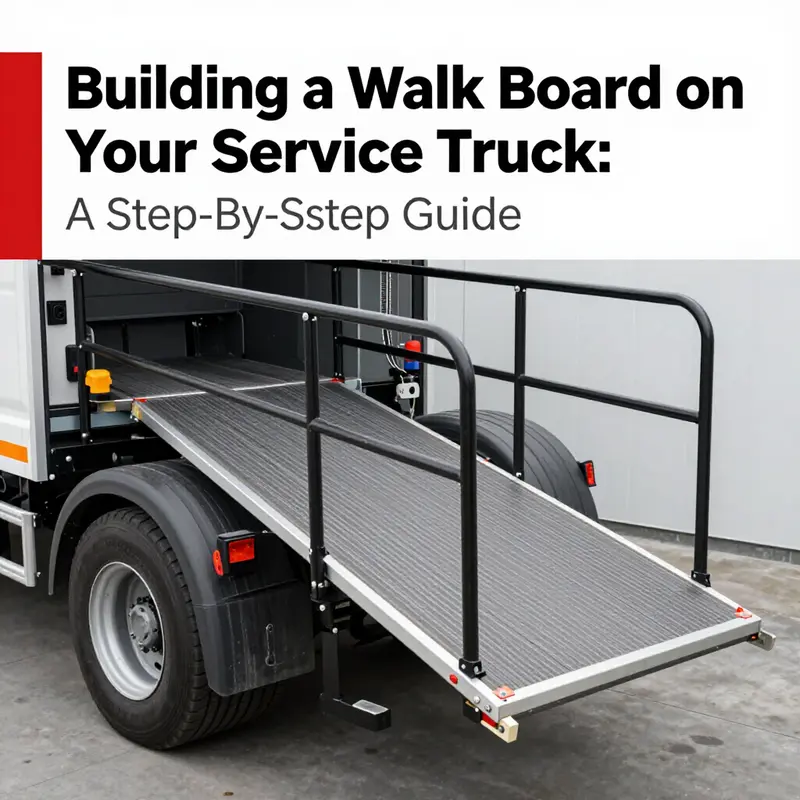
A walk board on a service truck is more than a simple plank. It is a safety bridge between the rough world outside and the controlled workspace inside. When technicians climb up to reach equipment, service panels, or a lift gate, a well conceived walk board becomes a reliable ally. It protects against slips, stabilizes footing on uneven surfaces, and reduces the cognitive load of every step. This chapter explores how to design and implement a walk board that not only supports weight but also enhances overall worksite safety by integrating robust materials, precise mounting, and thoughtful ergonomics. The aim is to create a platform that feels like an extension of the vehicle itself—strong, predictable, and easy to trust in every weather condition and lighting scenario. The approach here is practical and repeatable, grounded in the same safety ethos that governs industrial platforms and maintenance platforms on larger vehicles, while tailored to the dynamics of a service truck that operates across varied sites.
Planning and design sit at the core of a reliable walk board. Before any steel is cut or any bolt tightened, assess the purpose of the board in the service workflow. Is it primarily for accessing a lift mechanism, or does it serve as a stable corridor between equipment bays on the side of the truck? Determine the required length and width to accommodate typical movement patterns without creating tripping hazards or obstructing other work duties. The surface must be non-slip and resilient against weather exposure, oil, grease, and washdowns. Materials offer a spectrum of tradeoffs. Aluminum is appealing for its light weight and corrosion resistance, especially on mixed duty fleets. Steel delivers superior strength and long-term durability, though it requires protective coatings and thoughtful weight considerations. Composites offer a middle ground with good rigidity and weather resistance. Whichever material is chosen, texture matters. A textured aluminum surface or a diamond-plate steel surface provides predictable grip without relying on adhesive coatings that can wear away.
From the outset, define mounting strategies that emphasize stability over ease of installation. The walk board should attach to sturdy structural members on the chassis or frame, not to thin sheet metal panels that can flex or fatigue under load. The mounting points must be capable of withstanding the combined weight of the board, personnel, and any tools or equipment carried on it, including dynamic loads as a worker steps or shifts weight. This means identifying reinforced cross-members or brackets attached to the frame, and designing a fastener plan that distributes load evenly. A compact, rigid frame paired with a high strength walking surface helps prevent any wobble or movement that could compromise balance. In practice, this translates to fabricating a frame from angle iron, channel, or tubing that creates a rigid skeleton beneath a solid surface. The frame should distribute load across multiple mounting points to avoid concentrating stress at a single connection. As with any mobile platform, every fastener must be installed to the correct torque and tested for loosening under service conditions. A thoughtful layout reduces the risk of snagging, allows safe passage for technicians, and ensures that the door hinges and other body components are not impeded during use.
Preparation and mounting points are the most critical hurdles to a successful installation. Mark precise attachment locations on the truck using a combination of existing brackets, reinforced sections, and long-life fasteners designed for heavy service. Avoid relying on shallow or unreinforced panels that can deform. Once mounting points are confirmed, fabricate brackets or cradle supports that align with those points and match the walk board frame geometry. The attachment method matters almost as much as the board itself. Use heavy-duty bolts with lock nuts or high-strength fasteners specified for vehicle applications. The hardware should be chosen to resist loosening from vibration, thermal cycling, and repeated stepping loads. The assembly must sit flush with the vehicle surface, with no gaps that could trap dirt or invite corrosion. Once the frame is secured to the mounting points, double-check alignment and verify that the surface plane is level across its length. A misaligned board can cause awkward foot placement and invite slips.
Construction and installation unfold as a careful dialogue between strength and practicality. Begin by fabricating a rigid frame that forms a true platform. The frame should be dimensioned to distribute the load evenly across the mounting points and to maintain a stable center of gravity for the entire assembly. Attach the chosen walking surface to the frame with bolts, rivets, or welded joints as appropriate for the material. Eliminate sharp edges or protrusions that could snag clothing or gloves; deburr and protect all edges. The surface texture should extend to the edges to ensure no footing hazard exists at the boundary between surface and frame. Secure the frame to the vehicle using the pre-identified mounting points. Use high-strength bolts with lock nuts or through-bolts that resist loosening under movement. Torque every fastener to the manufacturer’s specifications and confirm tightness after the first hours of service and after any heavy-duty use. The installation should aim for a clean integration with the vehicle, preserving access to nearby compartments and not obstructing visibility or workspaces.
Safety features rise from the intersection of design and duty. The anti-slip surface is non-negotiable. Whether the conditions are wet from rain, oily from ongoing maintenance, or slick from hydraulic fluids, a textured surface, embossed pattern, or rubberized coating provides essential traction. The surface texture must remain effective across temperature swings and wear patterns, so it should either be inherently durable or resurfaceable. A walk board also demands robust construction and load-bearing capacity. The board must hold significant weight without bending or warping and must withstand the dynamic loads produced as workers move, tools are carried, and equipment is transitioned. Secure attachment is non-negotiable. The board should feel permanently affixed, with no wobble or perceived movement. The design may incorporate integrated handrails or guardrails, particularly if the board is elevated more than a meter or if there is a risk of tool loss or hand-over-hand work. Even when not using a full guardrail system, a raised edge or lip can deter accidental slips from the board surface. Clear, visible markings are often overlooked but crucial. Apply cautionary labels and demarcation lines to define safe walking zones, stepping zones, and the edge of the platform. These markings should be weather-resistant and legible in low light. Height and angle matter for long-term comfort and safety. The board should be positioned to minimize strain during entry and exit, aligning with the natural stepping motion and allowing a smooth transition to ground level. A mild downward angle toward the entry point, paired with a curb-like top edge or threshold, can reduce knee and back stress during repeated use.
When the walk board is ready for use, a thorough final inspection and testing routine reinforces safety. Perform a visual check to identify any loose bolts, bent framing, cracking, or rough edges. Move across the board with controlled, slow steps to evaluate for undue flex, creep, or movement at any mounting point. Conduct a weight test by applying load at multiple points—this should confirm that the board does not sag excessively and that fasteners and brackets hold without signs of fatigue. Ensure that handrails are secure and provide a sense of balance when the user leans on them or transitions from the ground to the board. These steps, while routine, are essential to catch issues that could escalate into safety incidents in active service.
In the broader field of vehicle design for safety and efficiency, the walk board aligns with principles that guide safer and more reliable equipment in emergency and utility work. This approach echoes the ideas found in design frameworks focused on efficiency and resilience in critical-service contexts. For readers seeking a related perspective on how design choices influence overall safety performance, see the discussion on design efficiency in emergency services. design-efficiency-in-emergency-services.
Real-world references also reinforce the importance of practical platforms on service and utility fleets. A detailed account from a major national publication highlights how safety platforms on utility trucks are planned, installed, and tested to meet strict standards of stability and reliability. This article offers context for the everyday realities of field teams and the ongoing commitment to worker safety on the road. External reference: https://www.theguardian.com/uk-news/2023/jul/18/utility-workers-safety-platforms-installation.
Taken together, these considerations form a cohesive blueprint for creating a walk board that delivers dependable footing, predictable behavior, and durable performance under the varied demands of service work. When designers and installers approach the task with attention to load paths, attachment integrity, and ergonomic access, the result is a platform that technicians can rely on as they move through their tasks. A well-executed walk board reduces exposure to slips and trips and contributes to smoother workflows, fewer safety incidents, and greater confidence in the vehicle as a work platform. The goal is not merely to add a feature but to embed a safe, efficient pathway into the daily rhythm of service operations.
Final thoughts
Completing and maintaining a walk board on your service truck is a significant investment in safety and efficiency. By carefully planning, preparing, constructing, and incorporating necessary safety features, your walk board will greatly enhance accessibility for maintenance tasks and equipment handling. Remember to adhere to the inspection protocols to ensure ongoing safety compliance. Elevating your service truck with a well-constructed walk board can make daily operations smoother and safer for everyone involved.