
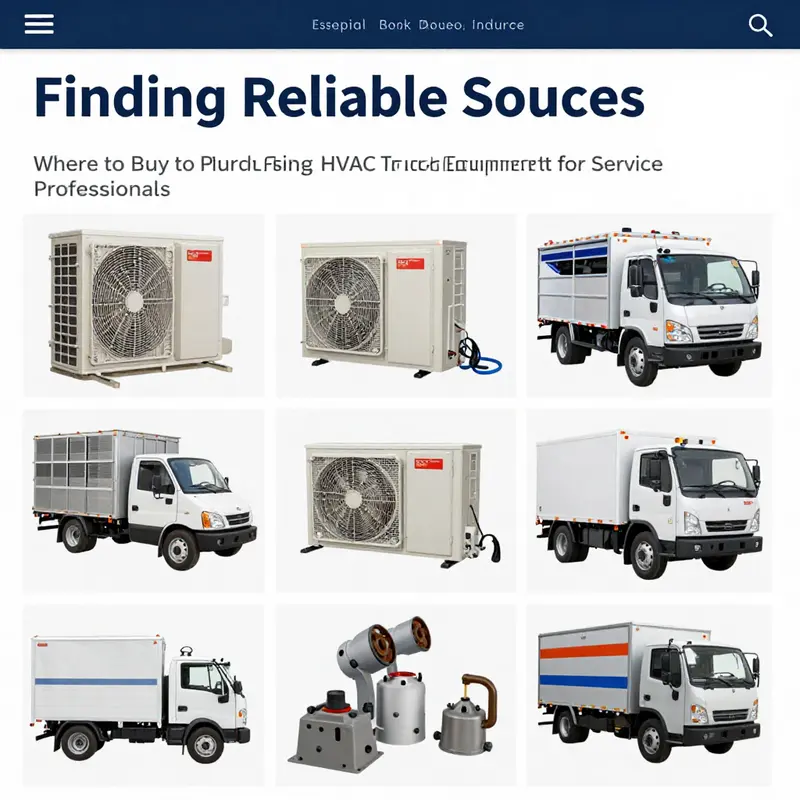
Navigating the world of HVAC truck equipment procurement can be daunting for service professionals, from long-haul truck drivers to fleet managers. As the demand for reliable and effective climate control systems grows, understanding where to buy HVAC equipment becomes essential. In this guide, we will explore dependable sources, evaluate online marketplaces, and address cost considerations, all tailored for professionals who depend on these systems to enhance their operational efficiency. Let’s dive into the best options for procuring the necessary equipment to keep your trucks and vehicles running smoothly.
null
null
Smart Sourcing on the Road: Vetting Online Marketplaces for HVAC Truck Equipment
Outfitting a service truck with HVAC capabilities is as much about sourcing discipline as it is about part selection. In an industry where uptime and reliability directly translate into customer trust, the way you acquire equipment matters as much as the equipment itself. The move toward online marketplaces has broadened access to a vast range of HVAC truck components and systems, giving service professionals the chance to compare brands, prices, and delivery options with unprecedented ease. Yet that very breadth can be a trap if not navigated with care. The objective is not simply to find the lowest price or the fastest ship time; it is to secure authentic parts, compatible configurations, and dependable technical guidance that align with the unique demands of mobile service work. The best sourcing decisions emerge from a calm, methodical approach that blends market visibility with rigorous verification. In practice, this means treating online marketplaces as two-sided ecosystems: a place where a wide array of options exists, and a platform that demands vigilant validation of claims, compatibility, and after-sales support. The goal is to create a pipeline that consistently delivers a clean fit between the truck’s electrical and mechanical systems and the components that control cabin climate, refrigerant handling, and airflow management, all while preserving the integrity of the service operation.
One of the core benefits of online marketplaces is their ability to surface a spectrum of options from different suppliers in a single interface. For service professionals, this can translate into more effective budget planning, as you can compare new versus refurbished units, assess warranty terms, and weigh installation complexity without leaving your workshop. The trade-off is that a broad market can also include parts that are not perfectly suited to your fleet’s specifications or climate demands. This is where disciplined evaluation becomes essential. Rather than chasing every bargain or choosing the first advert that promises universal compatibility, you develop a criteria-driven lens. You ask who stands behind the listing, whether the seller can provide technical data sheets, and if the item has observable signs of authenticity and proper certification.
Reliability and trustworthiness sit at the top of the checklist. Reputable marketplaces often partner with independent verification bodies that test and confirm key claims about heating performance, electrical compatibility, and safety characteristics. For HVAC components used in mobile environments, independent validation can reduce warranty disputes and protect your business’s reputation when a part fails under demanding field conditions. It is not only about whether a component can technically perform its job but whether the manufacturer’s claims can be substantiated by a third party. When you encounter a listing that includes claim verification details, you gain a higher level of confidence that the product can withstand the vibration, temperature swings, and dusty environments typical of service truck operations. In practice, this means looking for listings that reference verifications or certifications, and, where possible, requesting formal documentation from the seller before purchase.
A related dimension is certification itself. For HVAC/R, third-party verification services provide independent confirmation of a product’s performance claims. While not every listing will carry verification, recognizing the value of such documentation helps you avoid the all-too-common scenario of paying for functionality that never materializes in the field. Certification signals that the part design and manufacturing processes have been held to recognized standards, which translates into fewer warranty headaches and a smoother service flow. In a marketplace that emphasizes speed, this broader due diligence becomes a strategic advantage. When you make a decision to purchase, you are not merely completing a transaction; you are validating a long-term capability that your technicians will depend on across many service calls.
Supplier expertise and inventory depth are another axis of quality. Some platforms host a wide range of brands and components, from climate control units to ducting adapters and sensor assemblies. The true value lies in whether the supplier can pair technical knowledge with practical guidance. A seasoned supplier should be able to discuss compatibility—both electrical and mechanical—with confidence, advise on installation steps, and offer guidance on maintenance considerations after the sale. In practice, this means looking beyond the catalog and seeking suppliers who can provide technical data, compatibility matrices, and installation notes. For mobile service professionals, the ability to source genuine parts and compatible replacements quickly translates into less downtime and more reliable scheduling for customers. An efficient supplier will also maintain an accessible stock of common items while offering a path to specialized or rare components when needed. This blend of breadth and depth helps you avoid the scenario of discovering after the purchase that a critical part is out of stock or incompatible with your exact truck model.
Another factor is the balance between local and online distributors. Local or regional distributors can offer personalized service, flexible ordering, and faster delivery in many cases. They can also provide in-person guidance, which is valuable when you are confronting unfamiliar configurations or complex mounting schemes in a cramped service bay. The downside, however, can be variability in stock levels, especially for rare or discontinued parts, and uncertainty about sourcing authenticity when you cannot verify the part’s provenance in a straightforward way. Online marketplaces, by contrast, aggregate inventories from multiple regions, widening the options but increasing the complexity of verification. The practical approach is to treat local distributors as the first line for high-urgency needs and routine replacements while using reputable online platforms to supplement rare parts, multi-brand combinations, or bulk orders where local supply is constrained. In this framework, you are not choosing between bricks-and-mortar and digital channels; you are integrating them to optimize uptime and cost efficiency. This blended strategy supports a resilient purchasing process that can weather supply chain disruptions while maintaining service quality for your customers.
Innovation and compliance are inseparable when you source from online ecosystems. The HVAC field is evolving rapidly, driven by smarter controls, telemetry-enabled components, and more stringent regulatory expectations around energy efficiency and refrigerant handling. Platforms that invest in keeping their catalogs up to date with the latest technological advances provide a significant advantage. They enable you to plan upgrades that improve reliability, not just for today’s service calls but for the next five to ten years of fleet operations. At the same time, compliance remains central. Platforms that support regulatory alignment help you avoid purchasing parts or systems that may become noncompliant in your region, which can prevent costly retrofits and potential penalties. This is especially important when you control a fleet that serves diverse geographic markets with different climate zones and regulatory requirements. Leading marketplaces seldom rest on past achievements. They continually adapt to new test protocols, certifications, and cybersecurity standards that protect connected HVAC components and the networks that monitor them. For service professionals, the payoff is a reduced risk profile and a clearer path to scaling operations as you expand your mobile capabilities.
The topic of partnerships with authorities and certification bodies is not just a checkbox on a procurement form. It reflects a commitment to accountability and ongoing improvement. When you engage with a marketplace that openly aligns with recognized authorities in HVACR testing and validation, you simplify the path to compliance across your fleet. This alignment supports your risk management program and can also influence your warranty and support terms. It is not merely about acquiring parts; it is about ensuring that those parts are backed by credible standards and approachable service ecosystems. For companies maintaining fleets that must meet evolving environmental and safety standards, this dimension is particularly important. A platform that fosters collaboration with regulatory bodies and independent testers provides a foundation for sustainable long-term procurement decisions.
In this context, a practical way to approach online marketplaces is to view the purchase as a process with multiple checks rather than a single transaction. Start with a clear specification of the HVAC truck system you are supporting: the climate control capacity, the electrical load, the installation footprint, and the compatibility constraints with your truck model. Then survey the marketplace for listings that offer robust data sheets, clear warranty terms, and verifiable claims. When a listing presents a claim that seems extraordinary, seek corroborating documents or request a direct conversation with the seller’s technical staff. If a platform presents a battery of certifications or test results, examine them for relevance to mobile service use, regional climate conditions, and the specific refrigerant systems you employ. The goal is to assemble a portfolio of parts and components that together form a reliable, maintainable system rather than a collection of disconnected modules that may not work in concert.
An important practical consideration is how you manage risk while expanding or upgrading your mobile HVAC capabilities. The world of online procurement can support bulk orders and standardized configurations that streamline maintenance schedules. It can also tempt you with enticing discounts that appear attractive on paper but complicate future service needs if parts are sold by inconsistent vendors or lack adequate documentation. A disciplined approach reduces these risks. Establish a preferred-part set based on tested performance, ensure that every item carries clear compatibility notes, and require suppliers to provide installation guidance and after-sales support. In practice, you might set a policy that calls for verification of part authenticity, cross-checking model numbers against the truck’s build sheet, and confirming that a given component is compatible with the refrigerant and power system installed in the vehicle. It is also wise to build a simple, repeatable process for quotes, ordering, and post-sale support. When the process is standardized, your technicians spend less time waiting for parts and more time delivering service quality to customers.
If you are considering how to structure procurement for a broader fleet, the concept of a procurement committee or a formal purchasing framework can still apply, even in the context of HVAC truck equipment. A structured approach helps balance cost, reliability, and speed. It encourages cross-functional input from operations, maintenance, and safety teams, and it provides a clear trail for audits and performance reviews. For readers who want to explore this topic further, the idea of formal procurement processes and committee-driven decisions is discussed in depth within broader discussions on fire apparatus procurement. This reference point can help you adapt proven governance practices to the specific needs of truck-mounted HVAC systems and mobile climate control platforms. See the discussion on fire apparatus procurement for an example of how procurement governance can support reliability and accountability in high-stakes fleets. fire-apparatus-procurement
Finally, always complement marketplace due diligence with a direct, practical verification step in the workshop. Before committing to a bulk order or a high-value collaboration, request a live demonstration, verify the equipment in a controlled test area, and confirm that the installation hardware and mounting provisions align with your truck’s frame and electrical system. A hands-on check helps you catch mismatches that documentation alone may miss. It also provides a tangible sense of how the component behaves under real-world service conditions, including vibrations, heat, and exposure to dust and moisture. This practical step, paired with the marketplace’s verification and the supplier’s technical support, yields a robust sourcing strategy built to endure over time. As you tighten your procurement practices, consider maintaining a simple log of the parts you source online: model numbers, serials, warranty terms, lead times, and post-sale support contacts. This record becomes an invaluable reference when you plan maintenance cycles, schedule inspections, or respond to a field issue.
In conclusion, navigating online marketplaces for HVAC truck equipment requires a careful blend of market awareness, third-party verification, supplier capability, and practical in-workshop testing. By prioritizing reliability, certification, and technical support, you align procurement with the demands of mobile service work. You also create a sourcing culture that supports steady improvement, better uptime, and stronger customer trust. The landscape is rich with options, but the strongest buying decisions come from disciplined evaluation, thoughtful integration of local and online channels, and a steadfast commitment to compliance and innovation. For professionals who treat procurement as a strategic capability rather than a one-off shopping task, online marketplaces become a powerful instrument in delivering reliable climate control on the road, reducing downtime, and preserving the integrity of the service mission. External resources such as the UL HVAC/R Market Claim Verification can further inform your approach to verifying product claims and maintaining high standards across your fleet. https://www.ul.com/solutions/hvacr-market-claim-verification
Balancing Upfront Cost and Long-Term Value: Smart Budgeting for HVAC Truck Equipment
Balancing Upfront Cost and Long-Term Value: Smart Budgeting for HVAC Truck Equipment
When a service professional sets out to equip a truck for HVAC work, the purchase decision rarely rests on a single price tag. The initial figure on an invoice matters, but it is only one chord in a larger symphony of costs that echo through months and years of operation. Successful buying blends practical budgeting with strategic foresight. It aligns the size and scope of the business with equipment capability, maintenance realities, fuel and insurance economics, depreciation expectations, and the anticipated return on investment. This chapter walks through those elements as an integrated whole, helping you choose truck equipment that supports steady revenue, predictable costs, and service excellence.
Start with clarity about what the truck must do on an operational day. A well-specified list of tasks—tools carried, number of daily service calls, payloads transported, ladder and lift needs, and whether the truck will house refrigeration units—provides the context for cost comparisons. A single, multi-purpose truck can lower the need to buy multiple vehicles, but a higher-specification vehicle will usually cost more up front. View that up-front difference through the lens of how many billable hours it can unlock, not just as a line item to minimize.
Initial purchase price is the most visible cost and the easiest to compare between sellers and models. Yet it should be evaluated relative to capabilities. More sophisticated configurations—custom shelving, secure tool storage, integrated diagnostic stations, and powered lifting systems—add to cost but can translate into faster job completion and fewer returns for missed parts. For a technician who moves between sites frequently, time saved per job compounds quickly into additional billable capacity. For teams that perform larger, complex installs, heavier duty equipment reduces the labor hours needed and lowers subcontractor reliance. When weighing initial price, estimate realistic productivity gains and translate them into revenue opportunities. That transforms an expense into an investment decision.
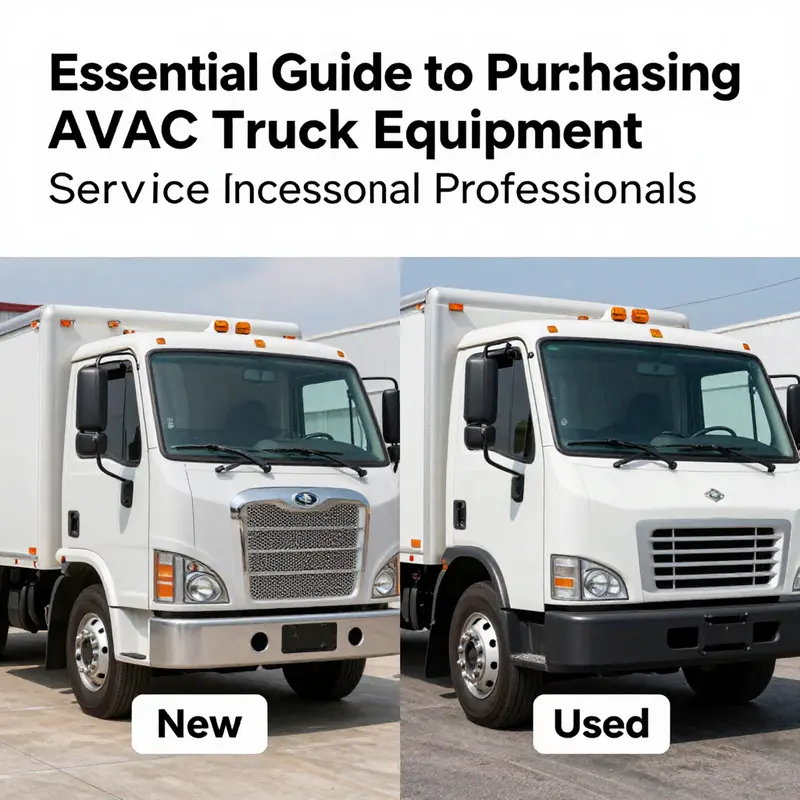
While buying new often promises the latest features, buying used can cut initial costs substantially. The used market offers well-maintained rigs at lower prices, enabling business owners to get more truck for less capital. The trade-off is a likely increase in ongoing maintenance and a shorter margin of warranty protection. Assess used vehicles with an eye to service history, previous use patterns, and any modifications performed. A unit used in a harsh environment or modified without proper engineering may incur hidden costs. Having a trained mechanic inspect a used truck before purchase is a small expense that often prevents large surprises.
Ongoing maintenance costs are the rhythm that defines long-term ownership. Complex onboard systems, heavy lifters, and electronic controls expand the scope of potential repairs. These components may require specialized parts and technicians who command higher labor rates. Plan for scheduled maintenance intervals and for the likely frequency of unscheduled repairs based on the truck’s anticipated workload. Create a maintenance budget that includes parts, labor, and downtime. Downtime is a real cost: lost billable hours, rescheduling, and the potential of contracted penalties. Investing in preventative maintenance reduces emergency repair likelihood and stabilizes operating costs.
Fuel efficiency belongs with maintenance in that it is a recurring cost with compound effects. Fuel consumption varies with engine type, truck weight, auxiliary power units, and the use of rooftop or onboard HVAC systems. For trucks that idle frequently or rely on onboard power to run tools and cabin climate controls, energy-efficient designs or auxiliary power systems can reduce fuel burn. Sometimes a slightly higher up-front price for a more efficient chassis or a modern auxiliary power unit pays back quickly through lower fueling costs. Calculate expected miles and idle hours, then run simple scenarios to compare fuel costs under different equipment configurations. Even modest improvements in fuel economy produce meaningful savings across a busy service calendar.
Insurance premiums are shaped by vehicle type, declared value, safety features, and usage patterns. A newer truck with modern safety systems can be less expensive to insure compared to an older, less-specified vehicle. Add-ons like backup cameras, better lighting, and secure storage for hazardous materials can influence insurer risk assessments. Also consider how the truck will be used: specialty lifts, carrying heavy payloads, or operating in remote locations may affect premiums. When budgeting, request insurance quotes for candidate vehicle configurations to see real cost differences. Insurance should be part of the total cost of ownership calculations rather than a surprise added after purchase.
Depreciation quietly reduces asset value. New vehicles depreciate fastest in the first few years, which is a critical factor if you plan to trade or sell later. Older, well-maintained vehicles depreciate more slowly, but may require more maintenance. Plan replacement strategies that align depreciation with useful life and service needs. If you expect high utilization and rapid wear, buying new and planning to replace on a schedule might be preferable. If utilization is moderate, a used or lightly refurbished vehicle may offer better value as depreciation pressure is lower relative to purchase price.
Return on investment is where strategy meets numbers. Estimating ROI requires honest assumptions about utilization, productivity improvements, and revenue per job. For a mobile HVAC technician who can add one extra job per day because of better organization and tools, the ROI calculus is straightforward. Multiply the average revenue per job by additional jobs per period, subtract added operating costs, and compare to the initial outlay. For fleet managers, aggregate this calculus across all units. Consider non-financial returns too: fewer call-backs, better first-time fix rates, and improved staff safety contribute to business resilience and customer satisfaction. Those qualitative benefits often translate into repeat business and referrals, which are essential for growth.
Financing and purchasing options shape the effective cost as well. Leasing spreads out payments and can include maintenance in the agreement, constraining upfront capital. Purchasing outright minimizes total interest costs and retains asset ownership. For many businesses, hybrid approaches—such as financing the chassis but leasing high-cost specialty equipment—balance flexibility and control. Evaluate tax implications too. Depreciation allowances, equipment expensing rules, and interest deductibility vary by jurisdiction and can influence the decision to lease or buy. Consult an accountant to model after-tax cash flows for meaningful comparisons.
When building a procurement checklist, prioritize features that reduce recurring costs and enhance revenue. Durable shelving that prevents repeated tool replacements, secure storage that avoids theft, and ergonomic workspaces that reduce technician fatigue all provide recurring value. Equally, avoid over-specifying features that increase purchase price without measurable operational benefit. For example, ultra-specialized compartments may be unnecessary if they reduce payload flexibility. The goal is equipment that matches daily realities, not idealized wish lists.
Warranties and vendor support are part of the risk mitigation strategy. A strong warranty transfers certain repair risks back to the manufacturer and often signals confidence in build quality. However, warranty terms vary widely. Understand what is covered, for how long, and what conditions void coverage. Access to local service centers and replacement parts matters more in some regions; long lead times for parts can convert a modest repair into a long outage. Prefer suppliers with clear parts distribution and support networks to minimize lockouts when repairs are needed.
Training affects both maintenance costs and productivity. When service technicians are trained to use and maintain specialized onboard systems, they are less likely to request external repairs, and they can perform minor fixes without downtime. Training investments pay off quickly through reduced service calls, safer operations, and more efficient use of onboard features. When evaluating equipment suppliers, ask about training packages and whether they provide maintenance documentation in useful formats. Well-documented systems simplify parts ordering and routine checks, reducing the total cost of ownership.
Total cost of ownership is a dynamic figure that evolves as business needs change. Revisit cost assumptions periodically and track real-world expenses against your initial model. If a particular component has higher than expected maintenance costs or if a configuration delivers fewer productivity gains than projected, you can adjust future purchases accordingly. Treat each acquisition as a learning opportunity to refine procurement criteria.
Strategically, many service professionals find value in modularity. Designing trucks with interchangeable storage modules, standardized mounting points, and durable power interfaces allows you to repurpose the vehicle as needs change. Modularity supports lower long-term investment because upgrades can be incremental rather than wholesale. It also simplifies resale, as buyers appreciate flexible configurations that adapt to different work types.
Finally, sourcing options matter for both price and risk. Online marketplaces and wholesale platforms can offer competitive pricing, broad selections, and access to rare parts. When buying through such channels, verify seller reputation, return policies, and shipment timelines. For heavier investments, consider local vendors who provide hands-on service and quicker parts availability. Balance the cost savings of distant suppliers against potential downtime due to shipping delays or difficulty obtaining after-sales support.
One practical resource for evaluating equipment options and aftermarket support comes from industry suppliers who publish procurement best practices and maintenance guidance. For organizations that want to strengthen in-house capabilities, resources on maintenance training are particularly relevant; explore this discussion of fire truck maintenance training importance to see how structured training programs reduce downtime and improve reliability.
For merchants and platforms that list HVAC truck equipment, review listings carefully and request detailed specifications, warranty terms, and support agreements. External marketplaces can provide a wide array of parts and systems; check seller ratings and buyer feedback to avoid hidden pitfalls. For additional product options and supplier listings, consult a reputable online marketplace that aggregates vehicle control units and HVAC components.
Weighing all cost considerations is not a one-time exercise. It is an ongoing discipline that blends careful upfront analysis with continuous data collection from operations. Keep records of fuel use, repair frequency, parts costs, insurance changes, and technician productivity. Use those figures when comparing the next purchase. Over time, the patterns that emerge will direct you toward configurations that consistently provide the best balance of initial cost, reliability, and lifetime value.
In the end, the right purchase is less about the lowest sticker price and more about the lowest effective cost for the work you do. Consider each expense as a lever you can tune. With clear operational priorities, conservative estimates of recurring costs, and attention to vendor support and training, you can buy HVAC truck equipment that becomes a reliable engine of revenue rather than a chronic expense.
External resource: https://www.ebay.com/b/International-Truck-HVAC-Control-Units/183679/bn_183679
Final thoughts
Understanding where and how to purchase HVAC truck equipment is crucial for service professionals aiming to optimize their operations. By exploring reliable sources, such as eBay for diverse selections and Alibaba for bulk purchases, as well as being mindful of cost considerations, professionals can ensure they make informed decisions that cater to their specific needs. As you embark on your equipment sourcing journey, remember that quality and functionality must go hand in hand; this will ultimately aid in providing the best service to your clients.