

For long-haul truck drivers, fleet managers, and anyone who relies on GMC trucks, knowing where to get reliable service can make all the difference. While Chevy and GMC are both under the General Motors umbrella, they operate as distinct entities with specialized service offerings. This article explores why Chevy dealers do not service GMC trucks, the importance of GMC-specific service, and a comparative analysis of Chevy and GMC service centers. Each chapter will underscore the necessity of choosing the right dealer for your truck’s maintenance needs.
null

null
Guarding the Workhorse: The Vital Case for GMC-Specific Service in GMC Trucks
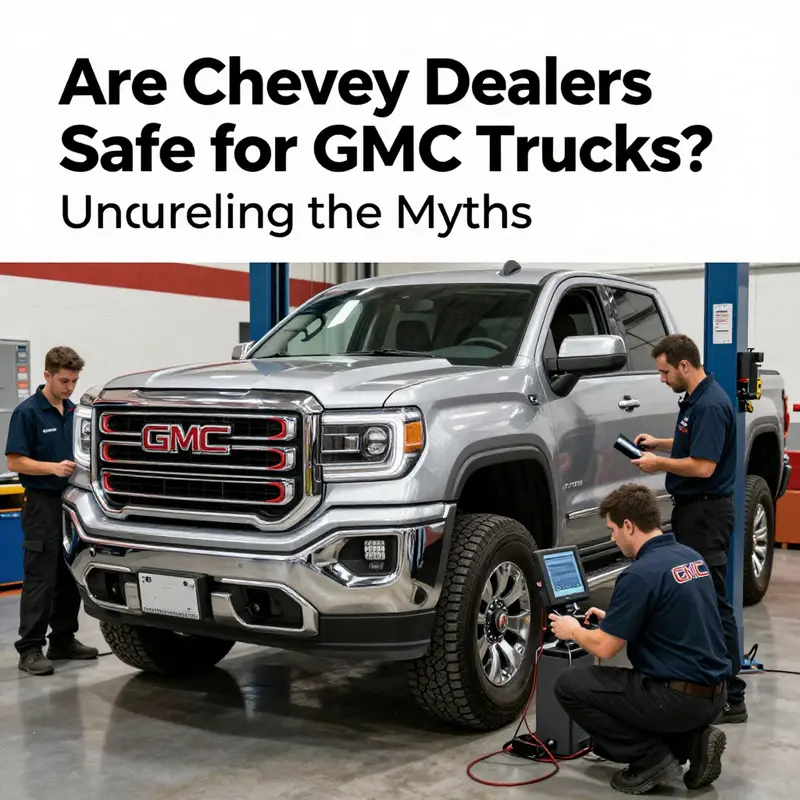
When you pull a heavy trailer, crawl through uneven terrain, or carve through a winter storm in a capable GMC truck, you are relying on a machine built for demanding work. The promise of power, durability, and dependable performance rests on more than the engine beneath the hood. It rests on ongoing care that understands the vehicle as a cohesive system—one that blends a specialized chassis, unique suspension tuning, and a set of sensor-driven controls designed to work together in precise harmony. That is why GMC-specific service matters so much. It is not merely about replacing parts; it is about preserving the integrity of a complex engineering approach that emphasizes stability, safety, and resilience across miles of demanding use. In this sense, maintaining a GMC truck is less about generic auto repair and more about a disciplined, brand-focused maintenance philosophy that treats every service procedure as a calibrated step in protecting a high-value investment.
From the moment a driver turns the ignition, the truck communicates with a network of components that have been optimized to work in concert. The braking system, the steering geometry, the adaptive suspensions, and the electronic control units are all tuned to the same brand-specific engineering language. This matters because even small deviations in maintenance—using the wrong grade oil, misaligning a steering parameter, or applying a software update intended for another brand—can cascade into predictable issues that degrade performance and, over time, erode reliability. GMC trucks are designed with a focus on work capability and on-road confidence, and that design intent is protected when service is conducted by technicians who speak the same engineering language as the vehicle itself. In practice, that means the technicians are trained to interpret a GMC truck’s diagnostic signals using brand-specific guidelines, tools, and procedures, ensuring that maintenance actions align with factory-defined standards.
The landscape of service is not identical across every showroom or repair shop, even when those locations are part of the broader General Motors network. Chevrolet and GMC operate as distinct brands with separate service networks. While they share some platforms and components—reflecting the efficiencies of a large automotive group—the service departments at Chevrolet-branded locations are generally oriented toward Chevrolet vehicles. GMC trucks, on the other hand, benefit from a service environment that concentrates on GMC models and their particular hardware and software configurations. This is not about branding for branding’s sake; it is about protecting the unique performance envelope that GMC trucks are built to meet. When a technician is trained specifically on GMC products, they bring to the task a familiarity with the brand’s design targets—payload handling, towing dynamics, steering feedback under load, and the calibration of safety and driver-assist features that are tuned to GMC’s engineering language. The practical upshot is simple: service performed by GMC-trained technicians using GMC-specific diagnostic tools and genuine parts yields better outcomes in terms of safety, reliability, and long-term value.
To the driver, this translates into clearer, more predictable maintenance results. Routine oil changes, filter replacements, and fluid flushes must be executed with a precise specification for viscosity, capacity, and sequencing that is aligned with the truck’s operating profile. The drivetrain and transmission require maintenance procedures that match the exact hardware they wear, not a generic alternative. The braking system benefits from calibrated brake-fluid service, pad compound compatibility, and rotor surfaces that have been measured against factory tolerances. Suspension and steering maintenance demand careful attention to the geometry and damping characteristics that are essential to the truck’s load-handling abilities. And when the vehicle is equipped with electronic controls that monitor braking force, suspension sag under load, or torque distribution during acceleration, the service process must respect the integrity of those systems. A GMC-certified technician understands how to interpret the vehicle’s live data streams and can intervene with procedures that preserve the alignment between hardware, software, and the vehicle’s safety architecture.
This is not merely a matter of preserving performance; it is also a matter of protecting warranty coverage and long-term resale value. When owners bring their GMC trucks to an authorized service center, they benefit from the assurance that the work performed adheres to the manufacturer’s procedures and uses factory-approved parts. Using genuine parts designed for the brand is more than a best practice; it is a warranty-related safeguard. The wrong part, even if visually similar, can fail to interact correctly with the vehicle’s control modules, sensors, or torque specifications. Over time, mismatched parts can lead to accelerated wear, uneven handling, or intermittent fault codes that complicate diagnostics. In contrast, GMC-approved service centers maintain an inventory of genuine parts that fit precisely and maintain compatibility with the truck’s software and calibration files. This alignment matters particularly for vehicles built with advanced suspension systems, transmission configurations designed for heavy payloads, or sensors that contribute to driver-assist features. When technicians install authentic components and verify them with the brand’s diagnostic tooling, they reduce the risk of unintended consequences that can compromise safety and reliability.
A central element of GMC-specific service is access to the manufacturer’s diagnostic software and service literature. Modern GMC trucks rely on a networked architecture, where a fault code or a readiness monitor may point to a specific subsystem that requires a targeted fix. The data the technicians read from these systems is not a generic readout; it is a brand-specific signal set that reflects how GMC engineers configured the vehicle to operate under a given set of conditions. The ability to interpret these signals correctly rests on training and access to the latest factory information. Authorized service centers keep up-to-date with product bulletins, software calibration files, and patch releases that are released to support the continued reliability of the brand’s vehicles. This is not a one-time credential; it is an ongoing commitment, because as models evolve and new features are introduced, the service approach must adapt with the same rigor that applied when the truck rolled off the lot.
The importance of proper service extends beyond the mechanical. It touches the vehicle’s electronic ecosystem, including the connectivity and infotainment layers that are increasingly integrated with performance and safety features. A GMC truck’s driver interface and connected services depend on firmware and software compatibility with the underlying hardware. In a GMC-specific service setting, technicians not only replace worn components but also validate that software updates or calibrations are applied in a way that preserves harmony across the vehicle’s systems. A poorly synchronized update can produce ripple effects—from altered gauge readings to misaligned driver-assist timing—that diminish the very benefits the technology is meant to deliver. The disciplined approach to software maintenance complements mechanical care, reinforcing a comprehensive standard of care that keeps the truck performing as the brand intended.
Beyond the shop floor, the relationship between GMC service and the owner’s long-term ownership experience becomes clearer. GMC offers service plans and coverage that are designed to simplify maintenance and provide predictable costs. These programs are structured to be most effective when accessed through authorized centers, where technicians are prepared to execute a maintenance schedule that aligns with the manufacturer’s recommendations and the vehicle’s specific usage profile. The service plan framework recognizes that a GMC truck used for demanding work, frequent towing, or off-road excursions will demand careful attention to fluid conditions, wear patterns, and component life cycles. By engaging an authorized center, the owner can count on proactive maintenance that emphasizes early detection, timely replacement of components at the end of their service life, and calibration checks that preserve performance rather than chasing problems after they appear. In this sense, the service plan becomes a practical extension of the truck’s design intent, not a generic add-on that lives in the fine print.
For fleets, the case for GMC-specific service gains additional momentum. Fleets that rely on GMC trucks for daily operations face a unique calculus: uptime, predictable maintenance windows, and rapid access to repairs can translate directly into productivity and cost efficiency. An authorized GMC service partner can coordinate service visits to minimize downtime, ensure that maintenance tasks reflect the latest factory guidelines, and provide documentation that supports compliance and warranty requirements. In these settings, the value of brand-focused service is not purely about preserving vehicle condition; it is about sustaining the business processes that depend on reliable, capable transportation. Even for individual owners who customize their trucks with optional equipment, the same principle applies. The more a driver relies on the truck’s integrated systems for work and safety, the more vital it becomes to maintain those systems within the framework the manufacturer designed.
A note on the decision-making process: when an owner contemplates where to seek service for a GMC truck, the choice tends to sharpen around three core criteria—training, tooling, and parts. Training ensures that technicians understand the brand’s expected behavior under a given operating condition. Tooling guarantees access to the manufacturer-approved diagnostic and calibration environments. Genuine parts ensure fit, function, and longevity. Together, these elements form a protective shield around the vehicle’s performance envelope. In practice, they translate into faster, more accurate diagnostics, fewer follow-up visits, and a clearer path to restoring the vehicle to its designed performance level after maintenance or repair. When a service center can demonstrate that it routinely handles these three pillars, the confidence of the owner grows, and the vehicle remains aligned with the original engineering intent.
The broader automotive ecosystem recognizes the value of brand-specific care, not only for the sake of performance but also for safety. GMC trucks are designed to operate within specific tolerances for braking response, steering feel, and electronic stability management. Over time, wear and tear can nudge these tolerances away from their intended targets. An authorized GMC service center has the expertise to measure and correct these deviations without introducing new concerns. They can perform alignment checks with brand-specific reference data, re-torque critical fasteners to the correct specifications, and verify that the vehicle’s active safety features respond as intended under real-world conditions. The result is a vehicle that remains predictable in challenging circumstances—whether it is negotiating a crowded job site, towed payloads on uneven terrain, or highway driving that demands steady, non-fatiguing control.
The emotional payoff for owners who choose GMC-specific service is tangible as well. There is a sense of trust that comes from seeing a vehicle cared for by professionals who understand the brand’s philosophy and engineering choices. That trust extends beyond the shop door and into the vehicle’s daily use, where drivers rely on the truck not merely as transportation but as a dependable partner in hard work. In the end, maintenance and repair are about more than keeping the engine running; they are commitments to the vehicle’s ability to perform when it matters most. A brand-focused service approach supplies the framework for that commitment, preserving the truck’s capability, safety, and value across years of ownership.
In closing, the case for GMC-specific service is not a stance on exclusivity but a recognition of the vehicle’s design reality. GMC trucks are engineered with a particular purpose, and the best way to honor that purpose is to maintain them within a service ecosystem that shares the same purpose. This means choosing centers with GMC-trained technicians who can interpret the vehicle’s data, apply factory-determined procedures, and install genuine parts that meet the exacting standards the brand requires. It means embracing a maintenance rhythm that aligns with the vehicle’s operating conditions and life cycle, rather than applying a one-size-fits-all approach drawn from a different brand or a generic shop. It means investing in the long-term reliability that owners expect when they choose a GMC truck for demanding work and demanding days. The payoff is clear: the truck stays true to its work-horse identity, delivering confidence, performance, and value mile after mile, year after year.
External resource for further context: https://www.gmc.com/service
Two Roads for One Brand Family: Navigating Chevy and GMC Truck Servicing

The question of who should service a GMC truck, and whether a Chevy dealer can do the job, sits at the intersection of trust, training, and the practical realities of a modern GM-owned brand family. Both Chevy and GMC sit under General Motors, yet they cultivate distinct service networks, customer expectations, and maintenance philosophies. The short answer, drawn from current practice and official guidance, is that Chevy dealers typically service Chevrolet vehicles, while GMC trucks receive their care at GMC-specific service centers or at GM-authorized locations with GMC-trained technicians and genuine GMC parts. The logic behind this separation runs deeper than brand loyalty. It rests on certification, diagnostics, parts provenance, warranty considerations, and the aim to preserve the distinct driving experiences that customers expect from each badge. For the average owner, the practical upshot is straightforward: if your vehicle is a GMC truck, you’ll likely want GMC-trained technicians, specialized diagnostics, and genuine GMC parts. If you drive a Chevrolet, the most efficient path is a Chevrolet service center with technicians schooled in Chevrolet systems. The nuance is that, within the broader GM ecosystem, there is value in understanding how the two service networks diverge, where they converge, and how to navigate maintenance without unnecessary confusion or expense.
The difference begins with focus and audience. Chevrolet’s service centers are designed around accessibility and value. They tend to be located in high-traffic areas, making it convenient for owners to drop off, pick up, and schedule routine maintenance or mid-level repairs without major detours. The emphasis is on delivering dependable, cost-conscious service that keeps everyday drivers on the road. This accessibility matters because routine maintenance—oil changes, tire rotations, brake inspections, and light repair work—constitutes a sizable portion of a vehicle’s lifecycle costs. For many Chevy buyers, the local dealership is a trusted neighborhood resource that offers predictable pricing, clear maintenance intervals, and a straightforward service experience. In this context, the Chevrolet service label acts as a signal of reliability and convenience, rather than a premium, dealership-as-luxury experience.
GMC, by contrast, positions its service experience as an extension of its premium branding. GMC centers are designed to deliver a concierge-level experience, with attention to comfort, advanced diagnostics, and a sense of tailored care. Technicians are often trained to handle more complex systems, with an emphasis on precision diagnostics, advanced warranty options, and a service journey that feels more bespoke. The goal is to align service with the expectations customers bring to a vehicle that is marketed as more premium or refined in the GM lineup. This premium positioning influences not just the shop’s atmosphere but the kinds of diagnostics that are employed, the depth of pre- and post-maintenance touchpoints, and the availability of enhanced warranties or service packages.
Despite the shared corporate umbrella, these differences have practical implications for owners. When a GMC truck arrives at a dealer that primarily handles Chevrolet, the technicians may not be GMC-certified, and the shop may lack the same level of access to genuine GMC parts, the right diagnostic tools, or GMC-specific service procedures. The reverse is also true: a GMC dealer may not be the most cost-effective or conveniently located option for a routine Chevrolet maintenance visit. The separation is not meant to complicate ownership but to safeguard vehicle integrity. GMC’s engineering teams design diagnostics and parts around GMC-specific platforms, systems, and software. For any GMC truck, using genuine GMC parts and GMC-trained technicians helps ensure that the truck’s performance, safety features, and warranty protections remain intact.
The practical reality for owners becomes a matter of mapping needs to networks. If you own a GMC truck and you need routine maintenance—oil changes, tire rotation, brake pad inspection—the most sensible path is to book with a GMC service center or an authorized GMC service department affiliated with a GMC dealership. If the work is minor and the dealer is near your home, a GMC-trained technician can perform the service with the correct parts and software access to ensure your vehicle remains within the scope of its warranty. This approach also mitigates the risk of cross-brand miscommunication about service procedures. Conversely, if you own a Chevrolet vehicle, a Chevrolet-certified technician is the most reliable route to maintain the vehicle’s performance and longevity. The separation preserves the integrity of each brand’s engineering philosophy and service standards, which in turn supports consumer confidence across the GM family.
There are, however, nuanced scenarios where the distinctions blur briefly without erasing the underlying principle. For example, GM’s corporate network includes shared platforms in some Chevrolet and GMC models. In those contexts, certain components or service workflows may be similar, and some dealers may have GMC-trained technicians even if they primarily handle Chevrolet vehicles. Yet the essential caveat remains: for GMC trucks, the GMC-trained expertise and access to genuine GMC parts are central to quality service. A dealership noted historically for specialized GMC technicians—where technicians use only genuine GMC parts—illustrates that specialized training and authentic parts remain the gold standard for GMC maintenance. This point reinforces the idea that the best practice for GMC owners is to seek GMC-certified service to preserve the vehicle’s intended performance and warranty protections.
From a customer experience perspective, the differences in service style are also felt in the day-to-day interaction. Chevrolet centers are often praised for straightforward, friendly, and efficient processes that emphasize value and quick turnaround. The experience is designed for broad appeal, with a transparent pricing structure and robust self-service or online scheduling options. For GMC centers, the emphasis shifts toward a more personalized service journey. Customers may encounter enhanced concierge-style touches, from limousine-style traffic flow through the service bays to more frequent updates during a repair or maintenance visit. The expectation is that every touchpoint—from check-in to vehicle delivery—reflects the premium positioning of the brand. It’s not merely about the vehicle leaving the shop in peak mechanical condition; it’s about the experience reinforcing the perception of GMC as a premium choice within the GM family.
Yet, the practical user experience also depends on the dealer’s location, the availability of technicians, and the specific service center’s capabilities. In dense urban corridors, the Chevrolet network’s sheer number of locations can offer convenience and shorter wait times for routine service, which is a meaningful benefit for many drivers. In markets where GMC is strongly represented, the GMC service experience can be a draw unto itself, with more emphasis on specialized diagnostics, broader warranty options, and a service journey that aligns with a higher-end ownership experience. The geographic footprint matters because it shapes how quickly a vehicle can be serviced and how easily a customer can coordinate a service appointment around daily life.
This terrain also has implications for maintenance planning and cost considerations. Routine maintenance in a Chevrolet center is designed to be efficient and predictable, which translates into straightforward pricing, standardized service intervals, and a broad understanding of what the customer should expect in terms of time and cost. For GMC, while the service experience may carry a premium in terms of personalization and perceived value, it is typically balanced by the confidence that comes with specialized training and the use of genuine parts tailored to the GMC truck’s performance envelope. For owners who want to optimize both price and quality, the decision often comes down to a simple calculus: choose the network that aligns with the vehicle in question and the customer’s tolerance for wait times, personalization, and potential warranty considerations.
The landscape also features documentation and accountability that is worth noting. Official guidance emphasizes that both Chevy and GMC service centers operate under GM’s brand-specific policies that govern technician qualifications, diagnostic tooling, and the use of brand-specific parts. The rationale behind these policies includes maintaining the integrity of the vehicle’s systems, preserving warranty protections, and ensuring that the service experience reflects the brand’s value proposition. For GMC trucks, the emphasis on authentic parts and brand-specific training is particularly important because GMC’s engineering often includes unique features and software interfaces that are distinct from Chevrolet’s. Using the wrong parts or incorrect diagnostic procedures can lead to misalignment of systems, reduced performance, or warranty complications.
For readers who manage multiple vehicles or fleets, the distinction between Chevy and GMC service networks is more than a matter of preference—it is a matter of planning. A fleet manager who operates a mixed-brand lineup benefits from clearly defined maintenance schedules aligned with each brand’s service network. This alignment helps avoid cross-brand confusion, ensures that each vehicle is serviced by trained technicians with access to the appropriate tools, and minimizes the risk of misapplied service procedures. In practice, this means maintaining a simple map of which vehicles go to which service centers, keeping documentation consistent, and using brand-specific parts and software updates when necessary. It also means recognizing the value of established relationships with GMC-certified shops for GMC trucks and with Chevrolet-certified shops for Chevys, so that warranties, recall work, and software updates are handled within the guardrails that protect the customer’s investment.
The recommendation that emerges from these considerations is straightforward, albeit practical. For the most current and precise details about each brand’s service-center network, customers should consult the official service-center locators. These tools allow users to search by ZIP code, view real-time service availability, read customer reviews, and schedule service appointments. While one could navigate the broader GM ecosystem to find the closest shop capable of handling both brands, the most reliable path remains to select the brand-aligned service center for each vehicle. This approach reduces risk, streamlines communication, and supports the long-term health of the truck’s systems. It also aligns with the broader industry practice of brand-specific maintenance to ensure that vehicles operate with optimal reliability and safety.
In moving through these considerations, it’s useful to reflect on the broader implications for decision-making and consumer expectations. The distinction between Chevy and GMC service centers is not merely a marketing artifact. It reflects real differences in training, diagnostic capabilities, parts supply chains, and the service experience offered to customers. While the GM family resembles a single corporate umbrella, the service networks within that umbrella are specialized to preserve the performance, feel, and perceived value of each brand. For GMC owners, the service journey is a continuation of the premium narrative that the brand projects in its marketing and in its engineering. For Chevy owners, the service journey emphasizes accessibility, speed, and straightforward value. Both paths aim to keep vehicles safe, reliable, and performing at their best, but they do so through distinct service philosophies that customers should understand and weigh when planning maintenance.
The practical takeaway for owners and potential buyers is clear. If you drive a GMC truck, you should plan to use a GMC-certified service center or an authorized GM location with GMC-trained technicians and access to genuine GMC parts. If you drive a Chevrolet, you should plan to use a Chevrolet-certified service center for routine maintenance and repairs. This approach helps preserve warranty protections, ensures compatibility with brand-specific software and diagnostics, and aligns with the customer experience each brand promises. For many, this means accepting a trade-off: a slightly longer drive to a GMC center for specialized care, in exchange for the confidence that comes with trained technicians, proper parts, and brand-aligned service protocols. In other words, the two networks serve different customer needs within the same corporate family, and that differentiation is a strength, not a weakness, when navigated thoughtfully.
If curiosity nudges you toward a broader context—that is, how industry players are evolving and what that might mean for service networks in the future—consider the enrichment that comes from industry insights on the same topic. For deeper exploration, you can visit the 5startruckin blog, which compiles accessible perspectives on truck maintenance and service strategies. This resource is especially useful for readers who want a practical, ground-level view of how service centers operate, how customers pick between options, and how fleet owners manage maintenance across brands. You can explore more at 5startruckin.com/blog/.
In sum, the servicing of GMC trucks versus Chevys reflects an intentional division of labor within a single corporate family. The Chevrolet service network prioritizes broad accessibility, predictable pricing, and efficiency for a wide range of drivers. The GMC service network emphasizes specialized training, genuine parts, extended warranties, and a concierge-level experience. For owners, the smartest approach is to use the appropriate center that aligns with the vehicle’s brand identity, thus ensuring the highest standards of care and the continued reliability of the truck over its lifespan. The branding may signal different customer experiences, but the ultimate goal remains constant: keeping vehicles safe, performing, and dependable on the road. To make this practical, rely on the official service-center locators, respect the brand-specific training of technicians, and recognize the value of genuine parts and brand-appropriate diagnostics as you plan your next service visit.
External resource note: For authoritative information on GMC service center locations, refer to the external resource at https://www.gmc.com/service-center-locator.
Internal reference for broader industry context can be found through a general industry resource at the linked blog page: 5startruckin.com/blog/.
Final thoughts
Choosing the right service provider for your GMC truck is crucial for optimal performance and longevity. Chevy dealerships, while invaluable for Chevrolet vehicles, lack the specialized training and genuine parts needed for GMC trucks. This article has demonstrated the clear differences in service capabilities between Chevy and GMC dealers. For long-haul drivers, fleet managers, and maintenance specialists, heading to a GMC-specific service center ensures that your vehicle receives top-notch care, maximizing both performance and durability.