
Choosing a reliable trucking service is essential for long-haul truck drivers, trucking company owners, fleet managers, and aspiring truck drivers alike. In the transportation industry, reliability ensures your shipments arrive safely and on time, which ultimately affects your bottom line. As you sift through the myriad of options available, understanding how to evaluate potential carriers is crucial. This article will guide you through five essential chapters, from verifying credentials and compliance, to assessing experience, prioritizing clear communication, evaluating insurance, and researching company reputations. Each of these chapters builds on the previous one, creating a comprehensive framework for selecting the right trucking partner for your needs.
Verify Credentials First: The Practical Guide to Compliance Before You Hire a Trucker
Verifying credentials and compliance: what to check and how to act
Choosing a trucking service begins with confirmation, not assumption. The single most reliable predictor of safe, lawful operations is a carrier’s documented compliance. When you make credential checks routine, you remove guesswork and reduce exposure to legal, financial, and operational risk. This chapter explains exactly what to request, how to verify what you receive, and which warning signs should make you pause before awarding business.
Start by asking for the essentials: the carrier’s USDOT number, Motor Carrier (MC) number, and any relevant state authority or operating permit. These identifiers are the gateway to the company’s public safety record. With a USDOT or MC number in hand, you can look up inspection histories, crash data, and violation records. That history tells you whether the company treats safety as a priority or as an afterthought. If a prospective partner cannot produce these numbers, treat that as a hard stop.
Beyond the federal numbers, request proof of state operating authority when shipments cross state lines or when a carrier’s domicile requires additional licensing. State permits and registrations are not optional. They reflect compliance with local rules governing vehicle weights, routes, and operating conditions. A carrier that operates without them risks fines and delays that will fall on your shipment and your budget.
Insurance is equally non-negotiable. Always obtain certificates showing current liability and cargo insurance. Liability insurance protects against bodily injury or third-party property damage. Cargo insurance covers the value of the goods you ship. For high-value loads, ask for the policy limits, the effective dates, and the specific types of coverage included. Verify that the carrier’s coverage limits meet your needs. If coverage is insufficient, require additional insurance or work with a broker who can arrange a supplemental policy.
Don’t accept a photocopy that can’t be independently verified. Instead, ask for the insurer’s name and policy number and call the insurer to confirm the policy is active and covers the carrier for the routes and cargo types you propose. A legitimate carrier will not object to this straightforward step. If an insurer’s phone number or email bounces back, or the carrier resists a verification call, view that as a serious red flag.
Use government databases and reputable business directories to cross-check the information you receive. Public safety databases reveal patterns. Repeated violations for the same issue suggest systemic weaknesses. References are useful, but public records are objective. A quick search can reveal out-of-service orders, unresolved safety violations, or a history of crashes that should influence your decision.
If you move goods across state lines in the United States, rely on the FMCSA Safety Measurement System to assess a carrier’s safety performance. That resource consolidates inspection, crash, and violation data. It allows you to compare carriers and make an informed choice. Use the information to set performance expectations and contractual obligations.
For international or specialized services, request industry-specific certifications. Freight that crosses borders requires customs competency and correct broker licenses. Perishables, hazardous materials, and oversized freight demand carriers with niche licenses and documented training in handling those loads. Certificates showing employees trained in hazardous-material handling, for instance, reduce the chance of regulatory fines and unsafe transit.
Ask for proof of safety programs. A reliable carrier will maintain written safety policies, driver qualification files, and a structured maintenance schedule. Driver qualification files should include driving records, medical certifications, and training logs. Maintenance schedules should show routine inspections and records of repairs. These documents demonstrate that safety is embedded in operations rather than tacked on when a problem arises.
Pay attention to the operational details that reveal how a carrier manages risk daily. Ask how the company handles route planning, driver hours of service, and electronic logging device (ELD) compliance. Confirm they use GPS tracking or comparable monitoring tools that can provide real-time shipment visibility. These systems help in planning and in identifying delays early, which saves time and money.
Inspect the carrier’s equipment when possible. Photographs of trucks and trailers are fine, but an on-site inspection or an independent third-party inspection provides a firmer basis for judgment. Look for up-to-date maintenance stickers, clean and functional cargo areas, and properly rated straps and load-securing gear. Poorly maintained equipment signals shortcuts in safety and maintenance.
Validate corporate stability and integrity using business intelligence platforms. Credit reports and company histories show whether a carrier is financially stable or struggling. A financially healthy carrier is less likely to cut corners, cancel contracts unexpectedly, or operate without adequate insurance. Checking for legal disputes, liens, or unresolved claims provides insight into long-term reliability.
Insist on written documentation of all the checks you perform. A verified credentials checklist should become part of every carrier selection file. Record the date you validated the USDOT and MC numbers, the insurance confirmation, the inspection results, and any conversations with references or insurers. Keeping a permanent record allows you to audit decisions later and strengthens your position if a dispute arises.
Understand the difference between a carrier and a broker. Brokers arrange transportation but do not physically move freight. If you contract with a broker, request the underlying carrier’s credentials. Brokers should provide the carrier’s USDOT and MC numbers and proof that the carrier they assign is compliant. Also confirm the broker’s own registration and bonding. If a broker cannot supply this information promptly, reconsider your relationship.
Watch for these red flags: evasive answers about licensing, reluctance to let you verify insurance, outdated or blank documentation, inconsistent business addresses, or a history of frequent name changes. These signs often indicate a company that may be skirting regulations or masking problems. Do not overlook them because a carrier offers a lower rate.
Finally, make credential verification an ongoing practice, not a one-time step. Carrier performance can change. Schedule periodic reviews of safety records, insurance renewals, and references. If you rely on a small set of carriers, rotate audits among them to manage risk continuously. Implement contractual rights to request updated documents and to suspend work if compliance lapses.
A simple checklist you can use immediately should include: USDOT and MC numbers; state operating authority; current liability and cargo insurance with insurer verification; maintenance and driver qualification records; recent inspection and crash history; business stability checks; broker versus carrier confirmation; and documentation of any specialized certifications required by your cargo type. Keep this checklist in your procurement file.
Verifying credentials and compliance protects more than just the shipment. It protects your reputation, your cash flow, and your liability exposure. When verification becomes routine, you can negotiate from a position of knowledge. You will choose partners who meet your standards, not just the lowest bidder. That discipline keeps goods moving, prevents surprises, and builds a dependable network of carriers you can trust.
External resource for carrier safety records: https://www.fmcsa.dot.gov/safety/sms
For an example of an established carrier profile and insights into best practices in the industry, see this internal article: Unveiling 5-Star Truck Inc..
Reading the Road: How Experience and Specialized Expertise Shape a Reliable Trucking Partner

Reliability in trucking is not a single checkbox you can tick at signing. It grows from a history of operations, a deep understanding of your cargo’s unique requirements, and a disciplined approach to risk management. When you seek a partner to move goods from origin to destination, you don’t simply want a driver who can reach the next city. You want a carrier whose years on the road translate into predictable performance, even when the weather turns, a congestion delay forces a replan, or a load demands precise handling. The most dependable operators thread experience with specialized capability, and they translate that combination into clear, verifiable practices you can assess before you sign a contract. In this chapter we explore how to read a carrier’s experience the way you read a map—by tracing past performance, recognizing the signs of true specialization, and confirming that the equipment, people, and processes exist to protect your freight through every mile of its journey.
Operational experience is not merely a tally of years on the road. It is a composite of the miles moved under varying conditions, the diversity of lanes served, and the kinds of cargo repeatedly handled with consistent care. Look for a track record that extends beyond a single season or a single commodity. Carriers with 3 to 5 years of stable operation have often weathered supply shocks, driver shortages, and fuel price spikes, and they have learned how to tighten routes, optimize loading plans, and protect cargo while maintaining service levels. Yet longevity alone is not enough. What matters is how that experience translates into repeatable outcomes. When you ask questions about past loads similar to yours, the responses should reveal not only successful deliveries but also the contingencies that were invoked when plans changed. A reliable partner will outline, in concrete terms, the steps taken to safeguard shipments during disruptions—what alternate routes were used, how reefer temperatures were managed during a power outage, or how a broken pallet was isolated and rerouted to prevent cascading delays.
Beyond overall tenure, industry-specific experience matters because different cargo groups impose distinct demands. A carrier that has repeatedly moved hazardous materials, or oversized machinery, or temperature-controlled pharmaceuticals will have developed a nuanced playbook. For hazardous materials, experience translates into trained personnel, enhanced securement practices, and precise handling of permits and hazmat documentation. For perishables, it means validated cold-chain procedures, calibrated temperature monitoring, and response protocols for sensor deviations. For high-value electronics, it implies sophisticated security measures, tamper-evident packaging, and robust incident reporting. When a carrier speaks about the cargo you move in terms of their “lessons learned” rather than generic capabilities, take note. Experience in these niches is often the difference between a smooth transit and a costly claim, because the carrier understands not just how to move freight but how to protect it in transit.
Specialized expertise is reinforced by the right equipment and the right operational DNA. Certification and compliance are interwoven with the daily workflow. A provider with appropriate USDOT and FMCSA registrations, plus any industry-specific licenses, signals a baseline of regulatory alignment. Equally important is equipment that matches the cargo. Refrigerated trailers that maintain tight temperature bands are essential for perishables; flatbeds or step decks enable secure transport of heavy or oversized equipment; enclosed dry vans shield sensitive goods from the elements and prying eyes. The presence of suitable loading gear, such as pallet jacks, forklifts, or securement equipment appropriate to the load type, speaks volumes about the carrier’s readiness. The most capable operators also invest in technology that supports visibility and compliance. Real-time GPS tracking, telematics, and electronic logging devices enable proactive planning, accurate claims data, and evidence of due diligence in Hours of Service adherence. If a carrier cannot demonstrate equipment alignment with your cargo’s needs, you should view their bids with skepticism, no matter how attractive the price appears.
The people behind the operation are the living link between plan and performance. Driver qualifications go beyond a clean record; they include targeted training relevant to your cargo. For hazardous materials, that might mean hazmat endorsement, specialized safety courses, and refresher training at regular intervals. For fragile or high-value items, it could entail cargo securement instruction and procedures for incident reporting. A competent carrier will also disclose how drivers are vetted—background checks, drug and alcohol testing, and ongoing performance coaching. Equally critical is the discipline at the dispatch and operations level. A capable team will communicate clearly during every leg of the journey, provide proactive status updates, and anticipate potential delays with practical alternatives. Look for carriers that describe how their operations staff collaborates with customers to align routing, timing, and temperature or security requirements. When a carrier can articulate the role of each team member in safeguarding your shipment, you gain confidence that the organization won’t outsource responsibility at a critical moment.
Reputation remains a powerful compass, even in a market saturated with claims of reliability. A carrier’s past performance, verified by independent sources and client references, provides a meaningful check against bold promises. Online reviews, industry ratings, and documented claims histories can reveal patterns—consistent on-time performance, responsiveness to incidents, or recurring insurance and liability considerations. A carrier with a transparent stance toward claims and risk management shows maturity; they acknowledge what went wrong and outline how they prevent recurrence. It is equally telling when references from peers in your industry report alignment on expectations, communication style, and post-delivery support. If possible, request references from clients with similar freight profiles and volumes; direct conversations often surface subtleties that a sales brochure cannot convey.
A practical way to validate capability is to seek proof of how the carrier operates under real conditions. References and site visits, when feasible, offer a window into the level of investment and discipline that underpins daily performance. A visit to the carrier’s dispatch center or terminal can reveal the systems, process controls, and staffing rhythms that keep shipments moving on schedule. You may not have this option for every shipment, but when it is possible, it becomes a powerful qualifier that price alone cannot provide. In the absence of a site visit, ask for documented performance metrics tied to your cargo type. Look for on-time departure and arrival rates, temperature excursions (for perishables), load securement failure rates, and insurance claim timelines. These data points tend to be more persuasive than generic assurances because they reflect actual operational behavior rather than aspirational commitments.
Throughout this evaluation, maintain a disciplined view of risk. A carrier’s experience and specialized expertise do not absolve the shipper from responsibilities; rather, they form a partnership founded on mutual clarity and shared standards. Demand itemized disclosures: the types of permits carried, the scope of insurance coverage, the specific equipment in service for your lanes, and the contingency plans that unfold when disruptions occur. Consider implementing a trial with a controlled shipment to observe how the carrier handles the full lifecycle—from pickup to delivery, with intermediate updates and a clear incident protocol if something goes awry. A well-structured trial can reveal whether the carrier’s claimed expertise translates into consistent, observable performance under your exact conditions.
Ultimately, the choice should hinge on a balanced assessment rather than a single metric. Experience provides the ballast; specialized expertise supplies the maneuvering capability; and a transparent, capable team translates strategy into reliable execution. When you combine these elements, you don’t merely pick a carrier; you select a partner whose road-tested practices align with your risk tolerance and service expectations. To illustrate how reliability can be framed in practical terms, you can explore this resource on quality service and reliability on the road. quality service and reliability on the road.
For formal verification of operating authority and safety records, consult official government resources. The Unified Registration System and the Safety Measurement System provide independent data you can rely on when comparing candidates. These tools help you move beyond promises to data on safety ratings, violations, and insurance status, ensuring you do not overlook essential risk factors as you weigh bids. In the end, the objective is not to find the cheapest option, but to identify a carrier whose experience and specialized capabilities reduce risk, protect your cargo, and support predictable, timely delivery across the life of the contract. The right partner is one whose operational DNA—in years of service, in cargo-specific know-how, in people and equipment, and in a transparent culture—seamlessly aligns with your freight’s requirements and your business’s reliability standards. And that alignment is what ultimately translates into fewer surprises and more confidence as your shipments travel from dock to dock.
External reference for official verification: https://urs.fmcsa.dot.gov/.
Choosing a Reliable Trucking Service: Prioritizing Transparency, Real-Time Tracking, and Clear Communication
When you transport goods, reliability begins long before a truck leaves the dock. It starts with how openly a carrier shares the realities of the journey: the costs that will appear on the invoice, the tools that let you watch the cargo move, and the responsiveness you experience when questions arise. A chapter focused on transparency and clear communication is not about soft promises; it is about creating a steady line of sight from pickup to delivery. In practice, this means evaluating how a trucking partner handles credentials, pricing, tracking, risk management, and reputation—and how consistently they communicate across every touchpoint. The aim is to build a relationship that minimizes surprises and maximizes predictability, so your team can plan with confidence even when the road ahead unfolds unpredictably.
Fundamentally, reliability rests on credentials and compliance. The backbone of any trustworthy operation is that it has legitimate licenses, proper registrations, and current approvals to move freight legally. In the United States, the baseline is a valid USDOT number and an MC number. Those identifiers are not ornament; they are the primary signals that a carrier has met minimum safety and insurance requirements and is subject to ongoing oversight. Online registries and safety databases offer a way to verify these credentials quickly and to view a carrier’s safety ratings, violations, and insurance status. When you pick a partner, you are choosing not just a price quote but a governance framework that protects your cargo and your business from risk. In other markets, similar verifications exist. For example, in other regions, operating permits or licenses tied to national or regional authorities serve a parallel function. The important thing is to insist on real verification, not assumptions, and to challenge any claim that cannot be independently checked.
As you translate credential checks into everyday decision-making, transparency in pricing becomes the first practical indicator of how a carrier operates. Hidden fees can quietly undermine the economics of a shipment and erode trust. A reliable partner will provide a detailed, itemized quote up front, with no vague language or last-minute surcharges arriving after the contract is signed. The line items matter: base freight, fuel surcharges, tolls or bridge fees, loading and unloading costs, insurance premiums, and any special handling requirements for oversized or hazardous cargo. The most trustworthy carriers will present these costs in a written agreement, with payment terms spelled out and a clear note about what could trigger additional charges. If a quote seems unusually low, pause. It may indicate hidden fees that will surface later in the contract or at the dock. Informed customers rely on clarity, not optimism, to avoid unpleasant financial surprises when the shipment nears its destination.
This emphasis on pricing naturally dovetails with the need for real-time visibility. Transparency should extend beyond the invoice to the actual movement of goods. A dependable carrier offers GPS tracking with live location updates, along with automated notifications at key milestones—pickup, departure, mid-journey status, and arrival. The experience should feel like a dashboard rather than a mystery. A digital portal or mobile app that aggregates location data, delivery ETA updates, and incident alerts is not a luxury; it is a risk-management tool. When delays occur, proactive communication becomes the antidote to anxious planning. The ability to see where the shipment is, combined with the expected arrival time, enables you to adjust downstream logistics, allocate buffers, or re-sequence dependent activities. The best carriers treat real-time tracking as a fundamental service offering, not an optional add-on.
The commitment to visibility is inseparable from a robust claims and risk-management framework. Cargo insurance is not a luxury for high-value shipments; it is a baseline protection that should align with the risk profile of your cargo. A reliable carrier will offer comprehensive coverage and be transparent about what is insured, the policy limits, and what events are excluded. Acceptable coverage might be expressed as a percentage of the shipment value or a fixed cap, tailored to the risk of loss, damage, or delay. The claims process should be straightforward: clear instructions, a defined timeline for acknowledgment, and a straightforward route for filing and settling claims. In practice, this means not only knowing the policy details before the contract is signed but understanding how the carrier handles a loss or damage incident if something goes wrong on the road. Emergency protocols for weather disruptions, accidents, or customs delays should also be documented and rehearsed in the form of practical contingencies rather than as abstract commitments.
Reputation remains the barometer of day-to-day reliability, and it is best understood through patterns rather than isolated anecdotes. Beyond the glossy marketing claims, seek corroboration from independent reviews, references, and case studies. Third-party review platforms can illuminate recurring strengths and common pain points, such as responsiveness, on-time performance, or communication quality. A mature carrier will willingly connect you with current or past clients to discuss their experiences, including what went well and what did not. For larger accounts or more complex logistics, request case studies that demonstrate problem-solving in real scenarios—how a carrier navigated a supply disruption, handled a high-value shipment, or managed a surge in demand. A transparent provider will not fear such inquiries; they will welcome the chance to illustrate reliability through evidence rather than rhetoric.
To tie these threads together, consider the broader framework that underpins the five core areas of reliability—compliance, experience, transparency, insurance, and reputation—through the lens of transparency and communication. Compliance is not merely about ticking boxes; it is the foundation that enables honest dialogue about capability and limits. Experience signals a track record of overcoming challenges, which becomes a practical proof point when you discuss response plans and timelines. Transparency is the connective tissue that links pricing, tracking, and insurance into a coherent service experience. Insurance and risk management reflect a partner’s willingness to own potential downsides and to structure a mutual safety net. Reputation is the long arc—the story written by many shipments, many conversations, and many references. When a carrier consistently communicates clearly, documents everything in writing, and provides visible data about risk and performance, the entire relationship becomes more resilient. Even when disruptions occur, such a partner can explain the situation, propose concrete alternatives, and minimize disruption to your operations.
In this light, the practical act of choosing a carrier becomes a matter of assembling a transparent dossier rather than chasing the lowest price. It means asking for the operating license and the insurance policy to be provided in writing, requesting a detailed breakdown of all potential charges before any agreement is signed, and insisting on real-time tracking capabilities that you can access on demand. It means testing responsiveness by posing questions before committing to a contract and noting how quickly and accurately the answers come back. It also means digging into references and case studies to understand how the carrier handles the unexpected—the detours, the weather events, the customs hurdles, and the last-mile intricacies that can derail even the best-planned shipments.
As you weave these criteria into your decision process, a single, well-structured point of reference can be invaluable. One illustrative example of how transparency and reliability can manifest in practice is found in discussions about industry-leading service models and their approach to accountability and communication. For readers who want to explore concrete narratives about consistent service and reliability on the road, see the analysis at exploring-5-star-truck-inc-quality-service-and-reliability-on-the-road. This resource highlights how a coherent emphasis on clarity, responsiveness, and documented procedures translates into smoother operations and more predictable outcomes. While every business context is different, the throughline remains consistent: when a trucking partner communicates openly, shares data willingly, and backs up promises with written policies and verifiable credentials, you gain a dependable ally rather than a risk to your supply chain.
In closing, the path to selecting a truly reliable trucking service is not a search for the cheapest quote or the flashiest dashboard. It is a disciplined evaluation of how well a carrier makes critical information available, how proactively they manage risk, and how clearly they communicate at every juncture. The culture of transparency—embedded in credential verification, cost clarity, real-time visibility, insurance clarity, and the willingness to speak candidly with you and your team—creates a foundation of trust. That foundation translates into fewer miscommunications, fewer delays, and fewer unpleasant surprises. It also liberates your logistics team to focus on planning and optimization rather than firefighting. For those who want to deepen their understanding of cost transparency and risk management in freight, a practical reference can be found in the broader guidance on cargo insurance standards provided by industry organizations. External considerations aside, the core message remains unchanged: reliability is earned through open disclosure, consistent data sharing, and the willingness to be accountable when things do not go as planned. This is the essence of choosing a trucking partner who can truly shoulder the responsibility of moving your goods with care and reliability.
Guarding the Road Ahead: How Insurance and Risk Management Define a Trusted Trucking Partner
Insurance and risk management are the quiet determiners of reliability in long-haul logistics. They may not be the flashiest topic in vendor discussions, but they sit at the heart of whether a carrier can protect your goods, your brand, and your operational continuity when the road grows uncertain. A carrier that treats insurance as a strategic shield rather than a checkbox is signaling a deeper commitment to safeguarding your cargo. In practice, this means a robust, transparent program that aligns with the value and nature of what you move, and a risk framework that moves faster than misfortune can move. When you approach a carrier with questions about insurance, you are not merely verifying coverage; you are evaluating how seriously the company takes the responsibility to keep your supply chain intact.
The starting point is the insurance offering itself. A reliable trucking partner presents more than a single policy sheet. They provide a clear picture of liability coverage alongside cargo insurance, with distinctions explained rather than buried in legal jargon. You should encounter a policy that is customizable to the declared value of your shipment, so protection scales with risk rather than becoming a blunt, one-size-fits-all solution. Details matter: what is covered, and what is excluded? Is theft within scope, or does coverage hinge on specific conditions like perils of transport or all-risks language? How does coverage respond to in-transit damage, partial losses, or spoilage in the case of perishables? The answers reveal the carrier’s depth of risk thinking and their willingness to tailor protection to your reality. Bold claims about coverage should be supported by documentation and ready access to terms and schedules.
A fundamental distinction to understand is between standard liability and cargo insurance. Standard liability often operates with baseline limits and may carry exclusions that do not reflect the true importance of your goods. Cargo insurance, by contrast, is designed to protect the value of the cargo itself, regardless of who is at fault, within defined terms. It is essential to review both the coverage limit and the basis of valuation. Does the policy respond to the declared value of the shipment, or is there a deduction for depreciation, age, or partial loss? Endorsements can expand coverage to include particular risks—like theft, contamination, or specific transit modes—or conversely limit exposure in ways that could surprise you at claim time. An informed buyer asks for the exact policy schedule, the insured value per shipment, and the aggregate limits for a given period.
Equally important is understanding how the carrier handles the financial protection behind the policy. Request a current certificate of insurance and, where relevant, the insurer’s rating and financial stability. A certificate should name your business as an additional insured where appropriate and reflect up-to-date coverage that remains in force for the duration of the contract. You should also probe the claim process: How quickly are claims acknowledged, what documentation is required, who guides you through the submission, and what timelines govern approval or denial? A well-documented claims protocol signals that the carrier will treat your loss with seriousness and clarity rather than leaving you to navigate rough weather alone.
From a risk-management perspective, real-time visibility is a powerful companion to insurance. A carrier that deploys robust, real-time tracking gives both you and the company a shared lens on movement, status, and potential deviations. GPS-enabled visibility isn’t merely a tracking feature; it’s a proactive risk tool. Real-time data enables rapid decision-making when a disruption arises, allowing the logistics team to reroute, reallocate capacity, or trigger priority handling to minimize impact. When a carrier can demonstrate continuous visibility, you gain confidence that your cargo isn’t just insured on paper but actively safeguarded in transit. The best programs integrate tracking with proactive alerts for events such as delays, weather disruptions, or missed handoffs, so you’re not waiting on a phone call to learn what happened.
Disruptions are a constant in transportation, and a mature risk framework anticipates them rather than simply responding after the fact. Look for carriers that have formal contingency plans for the most probable contingencies—adverse weather, port or border delays, mechanical failures, or accessorial bottlenecks. A robust program will outline backup routes, alternate carriers, and pre-identified escalation paths. This is where 24/7 customer support becomes more than a convenience; it’s a lifeline for maintaining continuity. The ability to reach a human who can interpret the situation, offer options, and implement a plan without delay is a defining trait of a trustworthy partner. In practice, this means not only good technology but a culture that prioritizes rapid, transparent communication when plans shift.
Alongside procedures, a carrier’s track record matters. A carrier with a history of prompt, fair claims handling and high customer-satisfaction scores demonstrates consistency under stress. This information can be sourced from industry reviews, client references, and third-party benchmarking platforms. While every business experiences incidents, the true test lies in how quickly and fairly a carrier resolves them and how openly they communicate about the process. A company that shares lessons learned and details how their risk-management program evolved after a disruption is signaling a maturation that benefits you as a long-term partner. When you review reputation, you are looking for evidence of reliability in the broad sense: consistency of service, transparency during challenges, and a willingness to adapt procedures to protect client interests over time.
To translate insurance and risk-management concepts into practical due diligence, you should request specific documentation and ask pointed questions. Begin by requesting the policy schedule, including declared value coverage, per-shipment limits, aggregate limits, deductibles, and the exact perils covered. Inquire about exclusions and any endorsements that expand or limit coverage. Ask for a copy of the carrier’s contingency plan and evidence of real-time tracking capabilities, plus examples of how disruptions were managed in recent operations. Assess the response protocols: who handles claims, what is the expected response time for acknowledgments, and how are clients updated during a disruption and through the claims process? These questions aren’t merely administrative; they reveal whether the carrier has embedded risk management into daily practice rather than keeping it as a theoretical framework.
To illuminate the broader point, consider how a carrier’s insurance and risk program interacts with the other core factors in choosing a reliable partner. Compliance, experience, transparency, and reputation create a comprehensive portrait of reliability, but insurance and risk management are the hinge they all hinge upon. A company may meet regulatory requirements and boast long-standing industry tenure, yet if it cannot demonstrate a robust, client-centered approach to risk mitigation and claims resolution, that reliability remains incomplete. Conversely, a carrier that weaves coverage, visibility, and a proactive disruption plan into its daily operations signals a level of maturity that can translate into meaningful protection for your goods and stability for your supply chain.
If you are evaluating a potential partner, consider a practical path forward that balances skepticism with collaborative problem-solving. Request real-world scenarios or case studies that show how the carrier navigated a loss event, how the insured value performed, and how the client was kept informed throughout the process. Invite responsible parties to discuss not only the coverage terms but the company’s philosophy on risk—the degree to which they view insurance as a safeguard for your business versus a cost to be managed. In this light, insurance becomes a lens through which the carrier’s operational discipline is visible, and risk management becomes a proxy for their commitment to your continuity.
For readers seeking broader perspectives on service reliability and quality within trucking, a reputable industry resource offers practical insights into how carriers communicate, maintain uptime, and protect customer value on the road. See more on the topic here: quality service and reliability on the road.
As you finish this assessment, the question to your future partner shifts from “Can you insure this shipment?” to “How will you prevent, detect, and respond to risk so my operations stay uninterrupted?” A thoughtful, transparent, and well-documented approach to insurance and risk management is not just protection; it is a demonstration of the carrier’s confidence in their own systems and their respect for your business. When a carrier can articulate a clear coverage framework, show that their risk programs are lived realities, and provide accessible pathways for claims and communications, you gain a partner capable of protecting your cargo and supporting your strategic objectives. This is the essence of reliability in trucking: a blend of financial protection, proactive planning, open dialogue, and proven performance that keeps goods moving and relationships strong, even when the road ahead is uncertain.
Listening to the Road: Reading Reputation and Client Feedback to Choose a Reliable Trucking Partner
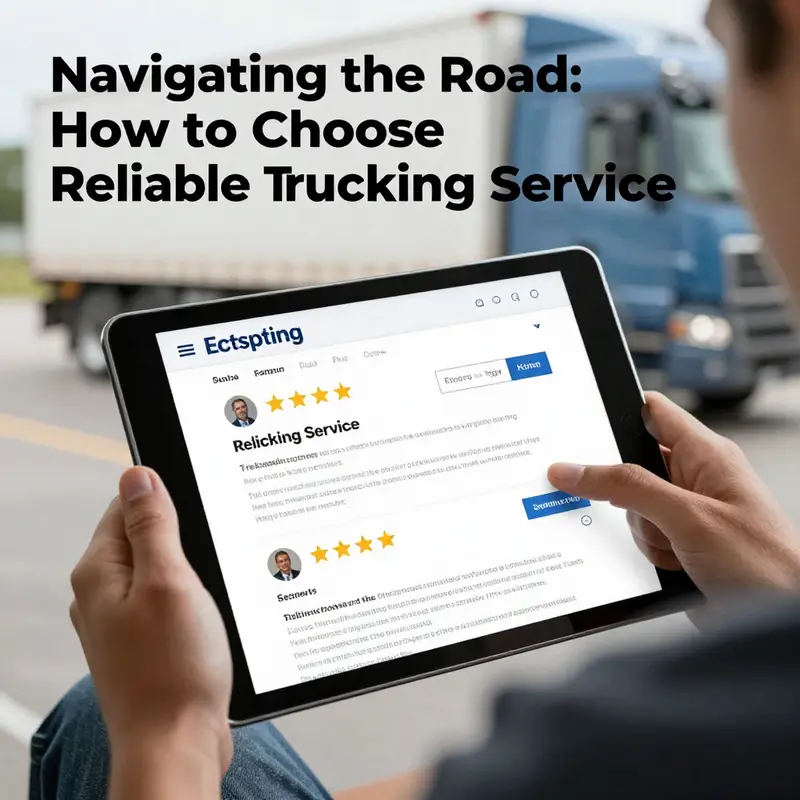
Choosing a trucking partner is a decision that rests as much on what you cannot see as on what you can. Reputation is the quiet backbone of reliability, the long arc that shapes a carrier’s ability to keep promises when the pressure is on. Client feedback, by contrast, is the road test—the day to day reality that reveals whether a company can translate claims into consistent performance. Together they form a compass and a map for buyers who want more than a favorable quote. They want a partner who understands their cargo, their deadlines, and the high stakes of their supply chain. In this chapter we explore how to read reputation and listen for the truths that customer voices uncover, so you can move forward with confidence rather than guesswork.
Reputation is not a single rating or a singular moment of great service. It is a pattern that emerges over time across loads, routes, and teams. A company may present an immaculate brochure, yet if multiple clients report repeated missteps, the pattern becomes clear: promises without follow-through. Conversely, a carrier that has weathered disruptions with transparent communication and fair problem resolution often earns a quiet respect that no marketing line can imitate. This is why reputation matters beyond price or speed. It signals an operational culture: how leaders think about risk, how frontline staff actually interact with customers, and how a company prioritizes safety, security, and service when margins are tested. When you approach a shortlist, let reputation serve as the baseline and let client feedback sharpen your judgment.
Evaluating reputation begins with credentials, but it must extend beyond them. A carrier may hold all the right licenses and certifications and still fail to meet your expectations for reliability. Look for consistency in how they handle a range of scenarios, from routine shipments to urgent, high-stress loads. Ask yourself whether the carrier has a track record of on-time deliveries, how often delays or reroutes occur, and how these events are communicated to customers. A truly reliable partner demonstrates proactive, clear communication in the midst of a disruption, not just after the fact. Industry recognition can be meaningful, but it should not substitute for real-world performance. Certifications and awards hint at a company’s standards, but they are best read alongside actual outcomes from diverse clients. For instance, the U.S. regulatory framework has a built-in mechanism to gauge risk through licensing and safety performance, and while this is not a complete signal of day-to-day reliability, it remains a crucial lens. The SaFER database, maintained by the regulatory framework, aggregates safety ratings, inspection results, and insurance status in one place, offering a snapshot of a carrier’s risk profile. When you review a carrier, begin with these signals, but move quickly to the stories told by customers who shipped with them across different cargo types and conditions.
Trust in a trucking partner often travels with the voices of those who used the service before you. Independent review platforms give a first layer of insight: what do multiple customers say about on-time performance, cargo handling, and responsiveness? Yet it is essential to read between the lines. A stream of five-star notes can still obscure a persistent blind spot if those reviews come from a narrow set of customers or from loads that were smooth and predictable. Look for patterns rather than isolated anecdotes. If recurring themes surface—delays tied to weather that are rarely followed by proactive rerouting, or damage claims that are not resolved promptly—these are not just complaints; they are early warnings about the carrier’s problem-solving approach and accountability. On the other side, consistently positive feedback that highlights a calm approach to crisis management, transparent pricing during a dispute, and timely, courteous updates is a strong indicator that the carrier will stand by its commitments when things go wrong. The Better Business Bureau can offer dispute histories and ratings that add another layer to your assessment, helping you see not only success stories but the company’s willingness to address issues. Social media, too, reveals authenticity in the moment—how quickly a carrier acknowledges issues, how it communicates, and how it treats customers in public forums. The most reliable signals are often found at the intersection of these channels: independent reviews, formal dispute records, and real-time social dialogue that shows a company’s public stance in tense moments.
Direct client references are where reputation becomes tangible. A candidate carrier should be able to connect you with current or recent customers who shipped loads similar to yours. When you speak with these references, frame questions to uncover not just outcomes but processes. How did the carrier respond to a late shipment or an unexpected reroute? Was the timing and quality of communication sufficient to allow your team to adjust plans? How did the carrier handle a claim if damage occurred, and what was the resolution timeline? You are listening not only to what was delivered but how it was delivered. Seek a spectrum of references, including clients who operate in your same industry or at a similar scale. If references are sparse or generic, or if the company resists connecting you with users, that should raise a caution flag. Testimonials can be persuasive, but they are most valuable when you probe beyond the surface and into practical experience and problem-solving capability.
A well-rounded assessment blends these strands into a coherent picture. Think of reputation as the ballast that stabilizes your decision when price, speed, and route options pull in competing directions. It is not a substitute for due diligence, but a powerful force multiplier for it. The interplay between regulatory credibility, industry standing, and client narratives creates a narrative about how a carrier operates day to day, how it manages risk, and how it treats its customers when things do not go as planned. When you evaluate a carrier, you are not selecting a name but choosing a partner whose operating philosophy aligns with yours, whose defects are acknowledged openly, and whose strengths translate into predictable performance.
To ground these concepts in a practical frame, you can explore the kinds of service quality and client perception discussed in industry conversations and customer experiences through resources like discovering the unparalleled services of 5 Star Truck Inc. This internal reference serves as a case study in how a reputable operator presents itself and how clients perceive that presentation in practice. discovering the unparalleled services of 5 Star Truck Inc. See how the company stitches together credentials, performance stories, and client-facing transparency to create a credible, trusted image. Reading this kind of material helps you weigh what you hear about a carrier against what real customers report after working with them on similar shipments.
In the same vein, your final screening should respect the human dimension behind every shipment. The best carriers view feedback as a permanent part of their operating system, not a temporary dissonance to be quieted with a discount. They track recurring issues, close the loop on complaints, and document how each problem was resolved so that future customers do not bear the same burden. They invest in processes that reduce risk rather than merely compensating for it after the fact. As you move toward negotiations, gather the evidence you need to ask precise questions that reveal an operator’s true capacity to perform under pressure. Ask for data on on-time performance across corridors similar to yours, review insurance liability levels in light of your cargo value, and request a transparent breakdown of how incidents and claims were handled over the past year. You should not walk away with a sense of hope; you should walk away with a structured understanding of how the carrier behaves in real life.
In the end, choosing a reliable trucking service hinges on your ability to triangulate information from multiple sources. A carrier may advertise an impeccable history, but only by listening to a diverse chorus of customers will you catch the full melody of reliability. Look for patterns in reviews, corroborate with regulatory and industry signals, and verify the narrative with direct references. The most trustworthy decision emerges when you blend the stability of credentials with the specificity of client feedback. If the picture formed by these threads is coherent, you gain confidence that the carrier will protect your interests, meet your deadlines, and treat your cargo with the care it deserves. If the picture is fragmented or inconsistent, it is a sign to proceed with caution or to widen your search. Either way, you are not choosing a name; you are choosing a partner who can keep faith with your supply chain over the long haul.
External resource for further due diligence: For an official safety history check, consult the FMCSA Safer System. https://www.safersystem.org/
Final thoughts
Choosing a reliable trucking service is fundamental to ensure the safety, timeliness, and cost-effectiveness of transporting goods. By focusing on essential factors such as credential verification, experience in logistics, transparent communication, comprehensive insurance, and reputation research, you arm yourself with the knowledge necessary to make an informed decision. Every aspect we covered contributes to a holistic understanding of what quality trucking services entail. With the right partner, you can improve operational efficiency and ensure your cargo is in good hands.