
In today’s competitive logistics landscape, the choice of a trucking service can make or break your operations. For long-haul truck drivers, trucking company owners, fleet managers, and aspiring drivers alike, understanding how to choose a reliable trucking service is crucial. This article delves into key factors that enhance your decision-making process. From verifying credentials and assessing transparent pricing to evaluating service reliability through technology and researching company reputation, each chapter aims to equip you with actionable insights that ensure your cargo is in safe and efficient hands. Prepare to navigate the trucking world with confidence as we break down the essentials that will inform your choice of a trucking partner, optimizing your routes for safety, speed, and cost-effectiveness.
Credential Checkpoint: Verifying Licenses, Insurance, and Safety to Choose a Reliable U.S. Trucking Partner
When you set out to hire a trucking partner, you are really selecting a guardian for your freight. The job goes beyond cost and transit time. The backbone of any dependable carrier is a solid framework of credentials you can verify with calm, methodical scrutiny. This chapter treats credential verification not as a one-time formality but as a strategic, confidence-building process. Start here, and the rest of your due diligence—pricing, service levels, technology, and claims handling—will ride on a foundation that stands up to scrutiny. The first question to answer is simple: does this carrier have the legal authority to operate, the financial protections to cover mishaps, and the safety record that signals reliability? Answering that with precision requires a blend of public records, insured documents, and an awareness of how safety performance is measured in the United States. The goal is not to find a perfect partner but to identify a partner whose credentials align with your risk tolerance, your cargo requirements, and your schedule realities.
Licensing and operating authority form the starting line. In the United States, a trucking company must hold the federal authority to operate across state lines if it crosses state borders. The key public signal for this is the company’s registration with the federal safety regulator. The FMCSA maintains a centralized system that lets shippers verify a carrier’s USDOT number, operating authority, and historical safety data. The practical move is to check the USDOT registration and then corroborate it with state-level operating licenses where the carrier operates. Interstate carriers should show compliance across multiple jurisdictions; intrastate carriers will reflect licenses appropriate to the state where they primarily do business. A quick, purposeful lookup in the regulators’ databases is often all that is required to reveal whether the carrier is legitimate or merely skimming the edge of regulatory boundaries. When you look up a carrier, you aren’t just confirming a number—you’re confirming an ongoing promise that the company has met regulatory thresholds for safety, insurance, and business conduct.
Beyond registration, insurance is non negotiable. A responsible carrier should carry robust liability and cargo protection, plus the worker safety coverage essential to covering human risk. For interstate shipments, primary liability insurance typically meets or exceeds a one million dollar minimum. Cargo insurance protects goods from loss or damage while in transit, and workers’ compensation covers employee injuries. The real check is to request certificates of insurance and then verify those certificates with the insurers if needed. Don’t rely on the carrier’s word alone. A straightforward request for current declarations pages and a willingness to provide proof of insurance demonstrates professionalism and reduces the risk of gaps in coverage that could complicate a claim later. If a carrier hesitates or cannot substantiate coverage, you should walk away. The absence of clear insurance documentation is a red flag that should never be ignored.
Safety performance data provides one of the most powerful lenses into a carrier’s day-to-day practice. The safety landscape is not abstract; it is measured and reported. The FMCSA’s Safety Measurement System tracks critical indicators such as unsafe driving violations, hours-of-service violations, vehicle maintenance issues, and crash history. Carriers with lower scores on the SMS data set tend to be safer and more reliable, while higher scores flag heightened risk. When you review safety metrics, you’re not seeking perfection; you are seeking consistency and a demonstrated commitment to corrective action when problems arise. You should also look for trends over time. A carrier may have a rough month or two, but sustained improvement, documented maintenance programs, and transparent incident reporting are much more meaningful indicators than a single incident in isolation. Independent safety records, not glossy marketing materials, reveal how the company handles risk in the real world.
Another layer of credential verification is the carrier’s history and reputation. A long track record can be a strong signal of stability, but it must be interpreted in context. Research the company’s background beyond its own site. Look for third-party reviews on independent platforms and for industry discussions that describe how the carrier handles on-time performance, claims, and communication when things go wrong. A carrier that responds promptly to inquiries, provides clear explanations, and follows through on commitments tends to be more accountable when issues surface in transit. Conversely, recurring complaints about missed pickups, poor communication, or unresolved claims often foreshadow trouble down the line. While a few negative reviews are not definitive, patterns across multiple sources offer a more reliable read on how the company behaves under pressure.
Transparency in pricing and contract terms is another essential credential to examine in depth. A trustworthy carrier does not rely on hidden fees or opaque surcharges. You should receive a written quote that clearly itemizes base freight charges, fuel surcharges, accessorial fees, and any other charges that might apply. A transparent pricing model helps you compare bids on a like-for-like basis and reduces the chance of surprise costs during transit. In addition, asked for is a clear description of liability responsibilities and the claims process. A robust agreement will spell out who bears responsibility for delays caused by force majeure, how misdelivery is handled, and what remedies are available if the cargo is damaged. Look for written policies that outline the carrier’s procedures for communication during disruptions, and ensure there is a defined point of contact who can provide timely updates when delays occur. The pricing and terms part of credential verification is not dry paperwork; it is part of the risk management equation. The absence of clarity here is often the first sign that a carrier does not have the disciplined processes needed for reliable service.
Industry affiliations and quality certifications can further illuminate a carrier’s operating philosophy. Membership in professional associations or adherence to standardized quality management practices can signal a commitment to continuous improvement. While not every reputable carrier will boast formal certifications like ISO 9001, those that do typically maintain structured processes for driver training, maintenance, safety audits, and incident investigation. Certifications and affiliations do not guarantee flawless performance, but they do indicate a willingness to invest in systematized approaches to safety and service. When credential checking, note whether the carrier has a documented safety program, training curricula for drivers and maintenance staff, and an ongoing internal audit cycle. If such elements are present, they can greatly increase your confidence that the carrier treats safety and reliability as core business practices rather than optional add-ons.
Finally, bring all these credential checks into a coherent judgment. A reliable carrier should demonstrate regulatory compliance, solid insurance, transparent pricing, consistent safety performance, and credible history. The combination of these elements creates a risk profile you can accept in good faith. It is not about chasing a perfect partner; it is about aligning your risk tolerance with a carrier whose credentials show vulnerability is managed through prevention, monitoring, and accountability. When you walk through licensing, insurance, safety data, reputation, pricing transparency, and professional affiliations in a single decision framework, you gain a much clearer view of how the carrier will operate under real-world conditions. You also reduce the likelihood that a late discovery—such as an uninsured cargo loss or a misrepresented safety record—will derail your shipment or derail your project timeline.
As you integrate credential verification into your supplier selection process, remember that this is the gate through which a thoughtful and reliable logistics plan must pass. Credentials do not run a supply chain by themselves, but they guard it against the most consequential failures: operating without authority, carrying insufficient coverage, or delivering with a chronic pattern of safety lapses. Treat credential verification as a disciplined, ongoing habit rather than a one-off checkbox. When your chosen partner proves capable across licensing, insurance, safety, history, and transparency, you have earned more than a contract—you have earned a foundation for predictable, responsible, and resilient transportation. And in a market where small delays, hidden costs, and miscommunications routinely erode value, a credential-driven approach is not excessive rigor; it is prudent risk management.
For further due diligence, consult the regulators’ safety data resources that compile what you need to know about a carrier’s safety footprint. The Safety Measurement System is a centralized resource that helps you compare carriers on objective safety outcomes, offering a practical lens to evaluate risk before you sign. While no single data point should determine the entire decision, the aggregation of licensing verification, insurance evidence, safety performance, and transparent practices provides a robust, defendable basis for choosing a reliable trucking service. In the end, credential verification is not just about compliance; it is about committing to a partnership that can deliver consistent performance, even when the road ahead becomes uncertain.
External resource for credential verification and safety data: https://Safetydata.fmcsa.dot.gov/
Clear Quotes, Steady Ship: Navigating Transparent Pricing to Pick a Reliable U.S. Trucking Partner
Pricing in trucking is more than a number on a page. It is the compass by which shippers judge reliability, predictability, and fairness. When a carrier lays out a quote with clear line items and no hidden fees, it signals that the company understands the needs of a professional shipper and respects the value of time, cargo, and capital. In the United States, where miles of highway and a hundred forms of regulation shape every shipment, transparent pricing becomes a practical cornerstone of a trustworthy relationship. The backbone of this transparency rests on four components that should appear in any written quote: the base rate, the fuel surcharge, the accessorial charges, and any other potential costs. Reading these items with care is the first act in a disciplined procurement process. The base rate reflects the fundamental transportation service itself, tied to distance, weight, and lane risk. The fuel surcharge is a pass-through cost that fluctuates with crude oil markets, but it should be disclosed with a clear formula and a recent benchmark. Accessorial charges cover the optional, but often essential, services that accompany a move—liftgate delivery, inside delivery, unloading, stop-offs, detention after the agreed loading or unloading window, and other supervisor-ready needs. Finally, all other potential costs—like audits, documentation, or special handling—must be named in the quote. When these four categories are explicit, a shipper can compare quotes on a level field and reduce the risk of surprise invoices after the fact. And when a quote is genuinely comprehensive, it signals that the carrier understands the full life cycle of a shipment, not just the miles between origin and destination. To a careful shipper, transparency in pricing also becomes a proxy for truthfulness in service delivery. If a company cannot disclose the components of its price, or if it hedges behind vague language such as “best rate” or “custom pricing,” that lack of candor should raise a red flag. The modern shipper benefits from a prospective partner who can show, in writing, how the cost is built and how it might change under different circumstances. This clarity is not merely about avoiding disputes; it is about enabling planning, budgeting, and performance measurement. It also creates the framework for meaningful conversations about service level expectations, capacity reliability, and the practical implications of delays or disruptions. In this context, a well-structured quote is a contract in embryo, an upfront acknowledgment that both parties share a common understanding of value and risk. It is not enough to obtain several quotes and hope for the lowest price. The real test lies in how the quotes reflect the realities of your cargo and your operations. For instance, if you ship hazardous materials, refrigerated goods, or oversized loads, the quotes should spell out the specific equipment, the required permit and routing considerations, and any specialized handling that will be necessary. The absence of such detail does not merely obscure cost; it obscures responsibility. A reliable carrier will also provide the pricing methodology behind the quote. This means explaining how they calculate the base rate, what inputs drive the fuel surcharge—the index or formula used, the frequency of updates, and the dates when those rates were last applied. It means disclosing how accessorials are determined: are they flat fees embedded in the rate, or per-mile, per-stop, or per-hour charges that can cascade as a shipment’s requirements evolve? By making the logic explicit, the carrier invites you to validate the factors that matter most to your operation, whether you run a just-in-time model, a high-value commodity shipment, or a multi-stop delivery that depends on precise timing. For the shipper, there is a practical advantage to fixed pricing or all-inclusive quotes when the goal is cost stability. A fixed price or all-inclusive arrangement can shield you from sudden price shocks during peak seasons or capacity crunches. It simplifies budgeting and reduces the administrative burden of tracking diverse surcharges month to month. Still, fixed pricing must be credible. If a quote promises fixed pricing for a long horizon but fails to account for foreseeable volatility—such as fuel price spikes, regulatory changes, or lane-specific risks—the long-term value erodes. A cautious buyer should seek pricing protections, such as price caps, annual reviews, or clearly defined adjustments tied to objective indices or explicit triggers. The discipline of transparent pricing also has a practical, day-to-day impact on operational planning. When you receive a quote, take it as an invitation to simulate what could happen in transit. Request scenarios in which weight, dimensions, or delivery windows change. Ask how those changes would affect the final bill. A reliable carrier will run you through a few “what-if” scenarios and show you exact figures for each. This kind of proactive engagement builds trust, because it demonstrates that the carrier does not just want your business; they want to serve as a predictable partner who can help you navigate variability with confidence. Digital tools play a pivotal role in making pricing transparent and auditable. Reputable carriers often provide online calculators or web portals that factor shipment specifics—weight, distance, and dimensions—to yield real-time pricing or near-real-time quotes. Such tools are not just conveniences; they are essential for comparing options quickly and accurately, especially in a market where every lane can behave differently. The advantage goes beyond speed. When a platform stores your historical shipments, it becomes easier to track pricing trends, measure performance against promises, and identify recurring charges that may be negotiable. A responsible shipper will also insist on a clear, testable audit trail. If a price changes mid-shipment or if a surcharge is applied without a pronounced rationale, you should be able to trace the change back to a policy or agreement you actually signed. The best carriers anticipate this requirement and provide access to invoices, rate confirmations, and policy documents in a centralized, secure portal. In this context, you also gain leverage to negotiate better terms, because you are basing your requests on an observable history of billing behavior. Yet transparent pricing is no substitute for due diligence about the carrier’s credentials and service reliability. The most meticulously itemized quote is only as valuable as the company’s ability to honor the terms and deliver on time. This is why the best pricing conversations occur within a broader framework of reliability checks. Before you place an order, verify the carrier’s licensing, insurance, and safety records, and ensure they are aligned with your cargo profile. A credible quote explicitly references the carrier’s ability to meet service commitments. It is not enough to see clean numbers; you must also see a capacity plan, a maintenance program for the fleet, and a track record of on-time performance and careful claims handling. If your internal process allows, request a short pilot run with a simple shipment to test the price-to-performance ratio in practice. A low-risk, low-value shipment can yield valuable insight into how smoothly the carrier communicates, how accurate the ETA is, and how easy it is to resolve any issues that arise. The practical wisdom here is simple: pricing is a measure of risk management as much as it is a measure of cost. When a carrier presents a transparent quote, ask for a copy of their insurance certificate and limits, and confirm the cargo coverage that applies to your load. Reputable carriers carry comprehensive liability insurance and cargo coverage that protect the shipment from damage or loss. If you operate high-value or fragile items, insist on reviewing the policy details and understanding the claims process. The price you pay should reflect not only the service but the protection you receive. As you compare quotes, keep in mind the value of industry guidance. The American Trucking Associations offer tools and best practices that help shippers evaluate carrier reliability and pricing integrity. Their resources can provide a neutral benchmark for what constitutes fair billing and transparent charges across different lane types and service levels. For a practical starting point, you can consult industry guidance that highlights how to assess content of quotes, what is reasonable to expect in terms of surcharges, and how to interpret a carrier’s stated lead times and guarantee commitments. To further enrich your understanding, the journey toward transparent pricing can also be informed by peer insights and independent reviews. Read independent feedback about carriers’ billing practices, responsiveness, and claims handling. A carrier who consistently explains charges, provides timely rate confirmations, and resolves disputes without escalation is more likely to deliver dependable service even when the schedule becomes stressful. If you need a structured way to formalize these insights, begin by drafting a side-by-side comparison that includes the four pricing components, the stated service levels, the insurance coverage, and the quoted lead times. The act of writing this comparison helps you keep the conversation anchored in facts and prevents drift toward evasive answers. In the end, transparent pricing is a practice as much as it is a policy. It creates accountability, improves budgeting accuracy, and strengthens the partnership between shipper and carrier. When you encounter a quote that is thorough, verifiable, and aligned with a credible service plan, you reduce the cognitive load of logistics and free your team to focus on the broader goals of the supply chain. You will feel the difference not just in your invoices but in the ease of collaboration, the reliability of shipments, and the confidence that comes with predictable, well-supported decisions. For ongoing reading on how shippers evaluate carriers and pricing integrity, you may explore the 5startruckin blog. The journey to better prices and better partnerships is continuous, and transparent pricing is the first honest mile on that road. External industry guidance reinforces the point: choose a carrier who can justify every line item and stand behind the promises in the quote, because predictability and trust are the true assets in transportation. External resource: https://www.trucking.org/industry-resources/choosing-a-reliable-carrier
On the Road to Reliability: Harnessing Service Performance and Technology to Choose a Trusted U.S. Trucking Partner
Choosing a trucking partner in the United States hinges on more than a low quoted price or a glossy brochure. It rests on a deliberate assessment of how a carrier performs when the road throws its usual curveballs: traffic, weather, tight deadlines, and the unpredictable hiccups of load handling. In this chapter, we explore how reliability and technology intersect to create a dependable shipping experience. The aim is to help you see beyond the surface of a quote and toward a partner whose everyday operations translate into consistent on-time delivery, safer handling of cargo, and transparent communication from pickup to arrival. When evaluated this way, technology is not merely a nice-to-have; it becomes the backbone that makes predictable service possible and scalable for your business needs.
Reliability is the foundation. A carrier’s track record is more than a single on-time pickup or one flawless delivery. It is a pattern: a history of on-time performance, minimal damage or loss, and clear, continuous communication throughout the journey. The most dependable carriers invest in processes that anticipate trouble before it arrives and then respond quickly when surprises occur. Industry observers point to a robust operational system that blends real-time route awareness with driver training and proactive problem-resolution practices. In a recent industry performance snapshot, carriers that used predictive analytics to forecast delays showed a meaningful uplift in on-time performance—an improvement that translates into fewer missed commitments and smoother planning for shippers who rely on precise scheduling. This is not a luxury feature; it is a measurable difference in how often a shipment leaves the dock on time and reaches the destination in the same condition it left.
Indeed, the synergy between reliability and technology is where the strongest competitive edge lies. Modern trucking services increasingly rely on integrated platforms that deliver visibility, efficiency, and accountability at every step. Real-time GPS tracking provides the shipper with a precise sense of location and ETA, not a rough window. Digital documentation and electronic proof of delivery streamline pickup and handoff, speeding billing and reducing administrative lag. Customer-facing mobile apps empower shippers to schedule pickups, track status, and communicate with drivers or dispatchers in real time. And behind the scenes, predictive maintenance systems—enabled by IoT sensors on vehicles and trailers—help flag potential equipment issues before they become delays. Taken together, these capabilities do more than improve metrics; they improve the quality of the entire shipping experience by reducing surprises and enabling faster, data-informed decision-making.
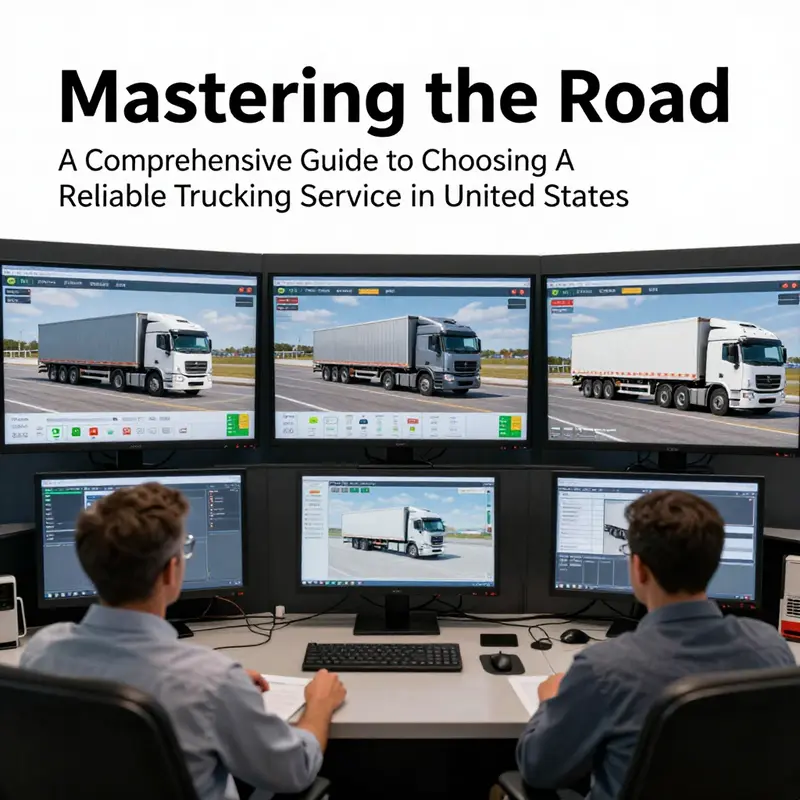
A practical way to understand the value of technology in reliability is to picture how a shipment progresses through a typical day. The moment a load is tendered, a modern platform begins orchestrating the route. It analyzes current traffic conditions, weather patterns, and the carrier’s available equipment to select the most efficient path while preserving load integrity. During transit, live data streams from the vehicle update the ETA and trigger proactive notifications if an estimated delay arises. If an unscheduled event occurs—say, an equipment fault or a traffic incident—the system can re-route and reallocate the carrier’s resources with minimal human intervention, often before the shipper even becomes aware of the disruption. This proactive capability is what separates a reliable partner from a reactive one. In a sector where a minute can matter for warehouse appointments, just-in-time production lines, or perishable goods, that proactive communication is a critical service feature.
The potential of technology to improve reliability also extends to data-driven decisions about capacity and utilization. Leading digital freight networks and platform-driven models use historical performance data to match loads with carriers that have demonstrated consistent on-time results, appropriate equipment for the cargo type, and a favorable safety and claims history. The effect is multi-faceted: reduced empty miles, better route planning, and improved consistency in delivery times. A recent industry performance benchmark highlighted how AI-powered load matching and route optimization contributed to higher reliability by aligning the right loads with the right carriers at the right times. The result is not just a smoother operation; it is a more predictable schedule for shippers who must coordinate multiple milestones across the supply chain.
With the emphasis on reliability, it is essential to test a carrier’s technology in practical terms. Ask for a live demonstration of their tracking and dispatch platform to see how intuitive and responsive the system is. Review independent sources of feedback, such as third-party review sites and industry forums, to gauge how real users experience the technology in day-to-day operations. Confirm that the carrier maintains valid credentials and regulatory compliance, including federal registrations and safety records, because a technically sophisticated system cannot compensate for noncompliance or insufficient oversight. Data security is another critical piece. When a carrier handles sensitive shipment information, you want assurance that their data practices protect confidentiality and integrity, not just operational efficiency.
The role of technology in reliability also has a human dimension. A modern platform can empower a responsive service team that communicates clearly, explains deviations, and offers practical alternatives. A carrier that combines robust digital tools with a trained team of dispatchers and field personnel tends to perform more consistently when stress-tested by seasonal demand or sudden supply-chain shifts. The most reliable partnerships treat technology as an enabler for better human service, not a replacement for it. The result is a coordination experience where ships and warehouses stay aligned, even under pressure.
If you are exploring how to quantify and compare reliability, consider how a carrier handles three core criteria: visibility, predictability, and responsiveness. Visibility is the ability to know where the shipment is at all times and to understand the ETA with precision. Predictability is the degree to which a carrier can forecast and honor delivery windows under typical and atypical conditions. Responsiveness measures how quickly and effectively the carrier communicates when plans change. A carrier that delivers strong performance across these dimensions is likely to provide the kind of reliability that reduces operational headaches and strengthens your supply chain. The practical payoff is visible in reduced dwell times at facilities, fewer last-minute rearrangements, and more consistent throughput at both tendering and receiving points.
As you weigh options, a carefully chosen, technology-enabled partner offers more than convenience. It delivers trust—the certainty that your cargo will reach its destination on schedule and in good condition. That trust accrues over time as the carrier consistently demonstrates the ability to anticipate, adapt, and communicate. And because the shipping landscape continues to evolve—with new compliance requirements, evolving cargo types, and shifting market dynamics—the value of a technologically integrated, reliability-focused carrier only grows. In practice, this means you should look for a carrier that can show you a clear reliability story supported by data: on-time performance trends, a documented maintenance program, and verifiable safety and insurance coverage, all connected by an integrated platform that provides real-time insights.
To bring this into the everyday decision-making of choosing a partner, consider also the real-world outcomes of technology-driven reliability. A prominent digital freight network, for example, has reported exceptionally high on-time performance across its network in recent years, a reflection of the power of data-driven load matching and proactive route management. While the exact figures are less important than the trend, the takeaway is clear: platforms engineered to optimize capacity and predict disruption can deliver tangible improvements in delivery consistency. This is not about chasing a perfect track record; it is about selecting a partner who uses technology to drive predictable results and transparent communication, even when the unexpected occurs.
In this framework, the decision to engage a trucking service becomes a balanced assessment rather than a race to the lowest price. You want a partner whose reliability is reinforced by technology, whose operational discipline is evident in its documentation and compliance, and whose communication is timely, honest, and constructive. You want a carrier who can show you, with data, that it consistently performs well under pressure and that its technology stack truly accelerates every facet of the shipment lifecycle—from tender to reconciliation. The objective is not to perfect the shipment itself but to minimize risk, shorten lead times, and maximize predictability so your supply chain can run with fewer surprises.
For readers seeking a concrete example of how technology can shape reliability, consider exploring the broader landscape of premier trucking platforms and their approach to service excellence. Exploring the excellence of a premier trucking solution provides a narrative of how a bold, technology-forward approach translates into everyday reliability. It is not a product pitch; it is a case study in how a partner with the right tools and practices can change the rhythm of how you move goods.
In closing, choosing a reliable trucking service in the United States is less about chasing a single metric and more about evaluating how a carrier integrates reliability with technology to deliver consistent, transparent, and proactive service. It requires asking the right questions about how shipments are tracked, how data informs decisions, how maintenance is scheduled, and how safety and compliance are demonstrated and maintained. You should demand evidence of a coherent reliability story—one backed by data, supported by robust technology, and delivered by a team that communicates with clarity when plans shift. When you find such a partner, the advantages compound over time: smoother operations, less administrative friction, and greater confidence that your logistics will keep pace with your business needs.
External resource: for a comprehensive view of industry performance and trends that contextualize these observations, see the ATA 2025 Industry Performance Report. ATA 2025 Industry Performance Report
Trust by Track and Trace: Reading Reputation to Choose a Reliable U.S. Trucking Partner
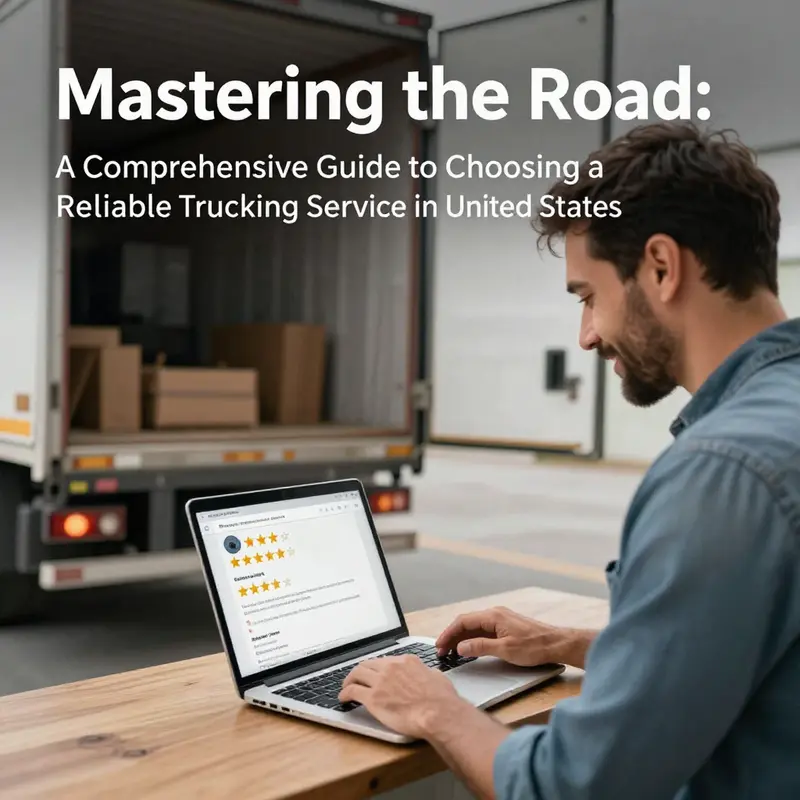
When you ship goods across the United States, reputation isn’t a glossy claim or a pretty brochure. It is a living signal that a carrier can meet your needs under pressure: on time, undamaged, and with clear accountability when things go wrong. This chapter weaves together the signals that truly matter, showing how to read them beyond the surface. It’s a steady, end-to-end approach grounded in regulatory reality, independent feedback, and transparent operations. The aim is not to chase perfection but to identify partners who consistently minimize risk while maximizing reliability. In practice, you balance regulatory compliance, credible testimony from customers, clear communication, financial stamina, and the right expertise for your cargo. When these align, the odds of a smooth journey rise markedly. And the power of a strong reputation is not just about a single shipment; it’s about the consistency a carrier brings to a long stream of deliveries, each one a test of the system’s integrity and the people who run it.
First, reputation begins with the sanctions and safeguards regulators require. The most critical starting point is regulatory compliance. A carrier should be registered with the appropriate federal and state authorities and able to produce documentation that proves it. Beyond a simple license, you want evidence of ongoing compliance with safety rules and work-hour regulations. A practical way to verify is to look up the carrier in the regulator’s safety data resources and inspect the record. You’ll see inspection results, crash history, and whether there have been hours-of-service violations or out-of-service conditions. A history peppered with serious or frequent violations is a warning flag, not a seal of approval. The same diligence applies to ownership of the essential operating credentials, such as the USDOT number and any state permits relevant to the routes you plan to use. These checks are mandatory because they establish the baseline safety and regulatory discipline you should expect from any partner handling your cargo.
Next comes the quiet but powerful voice of independent feedback. Independent reviews are essential because they reveal patterns that a glossy sales pitch rarely discloses. Read across multiple platforms where customers share their experiences—beyond the carrier’s own site. Look for recurring themes: if late deliveries appear often, if damaged cargo shows up in several stories, or if communication gaps leave customers in the dark during problems, these patterns signal potential friction points in operations. You should pay attention to feedback from businesses with similar shipping needs as yours. A refrigerated load, delicate electronics, or oversized equipment each demands different capabilities; the relevance of the review matters as much as the tone. It is not enough to note that a carrier is “great” in general. You want evidence that they can handle the precise constraints of your shipments under pressure, with professional accountability when issues arise. The process becomes more robust when you also observe how the carrier responds to complaints: whether they acknowledge issues, communicate clearly, and resolve claims promptly. The way a company handles disputes speaks volumes about its culture and reliability.
A third element, frequently underestimated, is transparency in day-to-day operations. A reliable partner will provide proactive updates and clear, real-time tracking rather than leaving you to wonder where your freight stands. The value of visibility cannot be overstated. It converts uncertainty into trust, enabling you to plan downstream activities with confidence. Look for carriers that offer updates at meaningful intervals and provide an accessible point of contact for questions. Clarity in contracts matters as well. Your agreement should spell out what is included in the quoted price, how surcharges are calculated, and what constitutes an “accessorial” charge. Hidden fees or vague terms are incompatible with a trustworthy relationship and should raise a red flag before you sign anything. The most reputable outfits also publish about their process for handling delays, rerouting, or expedited arrangements, so you know what to expect if plans shift. This level of openness is not optional; it is a signal that your interests are not an afterthought.
Insurance and liability form another backbone of reputation. Even a carrier with spotless safety metrics can face a cargo loss or damage incident. The prudent approach is to request proof of insurance and confirm the coverage before committing. A robust policy typically includes comprehensive liability insurance and cargo coverage that together protect your goods in transit. You should understand the limits, exclusions, and the claims process so you can move quickly if something goes wrong. The liability framework reflects the carrier’s willingness to stand behind its service, which is a practical proxy for reliability. In tandem with insurance, you evaluate the carrier’s capacity to handle your freight’s scale and sensitivity. Financial stability and operational bandwidth matter. A large, well-resourced firm may offer stronger backup capacity for peak seasons or complex routes, but a smaller, specialized operator can excel in focused lanes or temperature-controlled logistics. Either way, the carrier should clearly demonstrate that it can sustain service quality across multiple shipments and maintain equipment, staff, and oversight even during busy periods.
Specialized expertise is another pillar of reputation. Some cargo needs are nonnegotiable: precise temperature control, strict adherence to hazardous-material handling standards, oversized or heavy freight, or fragile, high-value items. In these cases, performance relies on proven process and personnel with specific credentials. Your due diligence should confirm that the carrier has the right equipment, trained personnel, and documented procedures for your cargo. Ask for certifications relevant to your load type, evidence of equipment readiness, and examples of prior work that align with your requirements. Experience matters because reliable handling of specialized freight reduces the risk of damage or delay. When a carrier brings hard-won know-how to the table, you gain a partner who can anticipate potential issues and implement mitigating steps in advance, rather than reacting after the fact.
All of these strands—regulatory integrity, independent testimony, operational transparency, insurance readiness, financial stamina, and specialized competence—must harmonize. A single loud claim can be deceptive if a company’s day-to-day practices don’t support it. Conversely, a modest reputation built on consistent performance across shipments can outperform flashier competitors that fail to deliver when the stakes are high. The most prudent buyers engage in a steady, comprehensive assessment rather than chasing a single metric of success. This approach also positions you to recognize how a carrier handles the friction points that inevitably arise in logistics. Delays, weather disruptions, or congestion can test a partner’s resilience. A reputable carrier responds with clear, timely updates and practical contingency plans, not excuses. The difference in tone, speed, and accountability during such moments often reveals the true character of a logistics partner. If a company is candid about hiccups, communicates options, and follows through on commitments, that consistency translates into trust you can rely on for future shipments.
To bring this framework to life, imagine you are evaluating two potential providers for a multi-site deployment of equipment over a quarter. One has a robust regulatory record, credible third-party reviews, and a transparent pricing structure that outlines every line item up front. The other offers aggressive pricing and a glossy promise of “platinum service” but provides scant detail about insurance, claim handling, or how problems will be managed if delays occur. Even if the second looks tempting on price, the first option is more likely to deliver steady performance, fewer surprises, and a smoother experience when your supply chain depends on it. Your choice is not just about getting a shipment from point A to point B; it is about choosing a partner whose reputation signals reliability, accountability, and the capacity to weather the inevitable challenges of transportation in a large, regulated market.
In your search, you may encounter opportunities to learn more about a carrier’s performance through internal resources that illustrate reliability in practice. For example, many reputable providers publish narratives of their approach to service quality, with case studies and testimonials that reflect real-world outcomes. These materials can illuminate the kind of partnerships they foster and the standards they uphold. When you come across such materials, approach them with a critical eye: look for specific, verifiable results rather than generic assertions. A responsible carrier will pair any positive stories with transparent data about safety, on-time performance, and incident handling. If you see evidence of that balance, it reinforces the impression that the carrier’s reputation rests on substance, not just style. For readers seeking a concrete starting point in this evaluation, a useful reference exists that delves into the practical dimensions of reliability and service quality in trucking, providing a look at how a mature, reputable operation communicates its strengths and maintains consistency over time. Exploring 5 Star Truck Inc. quality service and reliability on the road.
Finally, integrate external regulatory insights into your decision. The regulator’s safety data resources remain the most authoritative lens on risk. They enable you to confirm that a carrier’s public record aligns with the narrative presented in marketing and testimonials. Access to inspection results, incident history, and hours-of-service compliance provides a factual backbone for your judgment. While navigating these systems, remember that a carrier’s response to findings matters as much as the findings themselves. A reasonable, proactive stance—sharing corrective actions, coaching staff, and reinforcing maintenance programs—speaks to an organization that treats safety and reliability as ongoing commitments rather than one-time obligations. For anyone who wants to delve deeper into these regulatory signals, consult the official safety data resources to form a grounded, evidence-based view of a carrier’s risk profile. External resource: https://safety.apis.fmcsa.dot.gov.
In sum, researching reputation in trucking today means combining regulator-driven signals with the lived experiences of customers, and pairing those with a clear, consistent operating philosophy. It requires you to read the full story behind a carrier’s claims, looking beyond price and promises to the architecture of safety, communication, and service delivery that underpins every shipment. When you find a partner whose regulatory record checks out, whose customers speak in consistent, constructive terms, and whose operations are transparent and responsive, you have found a foundation you can rely on. And when that foundation is supported by robust insurance, demonstrated capacity, and real expertise in handling your cargo type, you gain not just a vendor but a trusted logistics ally willing to stand behind its performance shipment after shipment. As you move through the decision process, keep your eye on those three horizons—regulatory integrity, credible user feedback, and open, proactive collaboration—and you will reduce risk while building a resilient transportation network for your business.
Final thoughts
Choosing a reliable trucking service is an intricate yet vital process that can significantly impact your operations. By carefully verifying the credentials of the companies, insisting on transparent pricing, embracing modern technologies for service reliability, and diligently assessing the reputation through independent sources, you arm yourself with the tools to make informed decisions. These strategies not only safeguard your cargo but also enhance the efficiency of your logistical operations. As you embark on this journey, may your pursuit of a dependable trucking partner lead to success and satisfaction on the open road.