
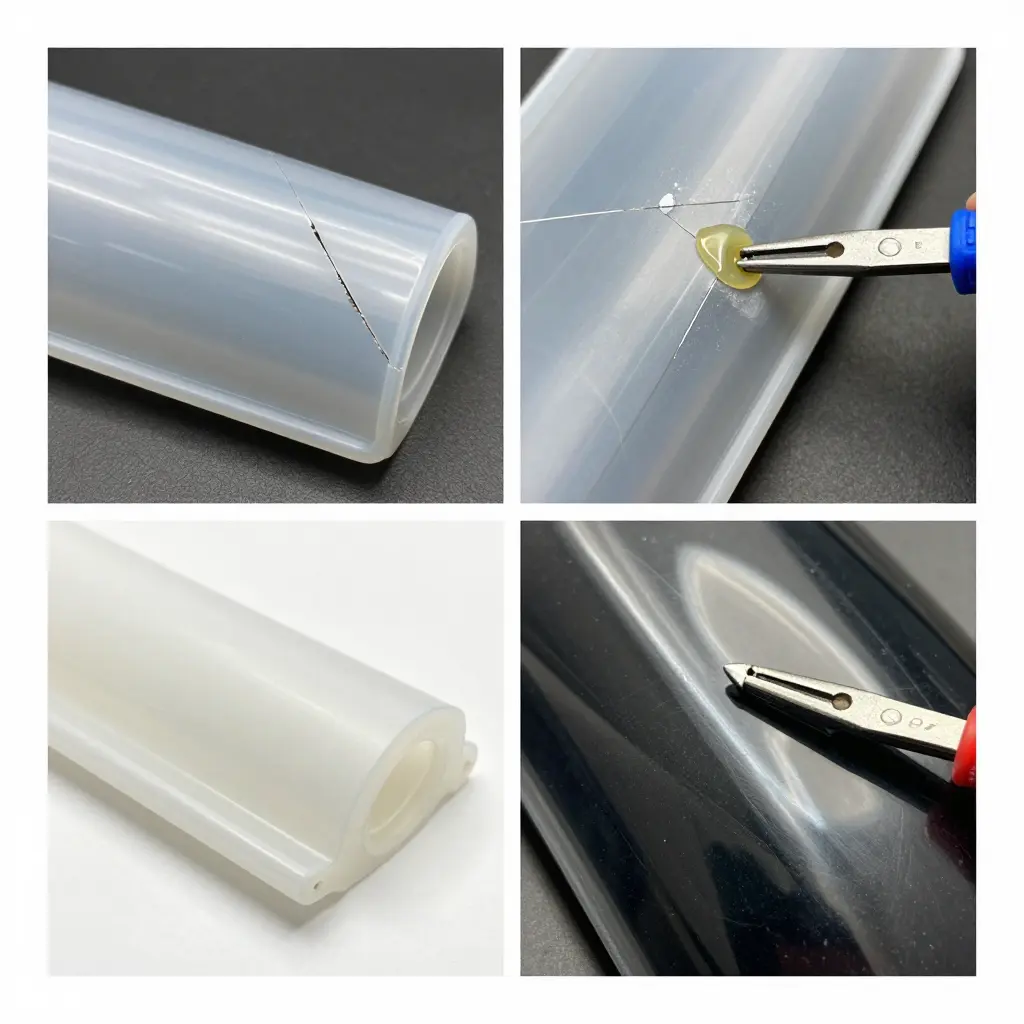
Fairing Plastic Materials and Types: Know What You’re Repairing
Identify the plastic before you reach for a heat gun or mix epoxy. Fairing plastic materials respond to heat and adhesive so differently that the type alone decides whether a repair lasts for years or peels apart in weeks. What saves a fender will ruin a cowl, and most people find that out after the fact.
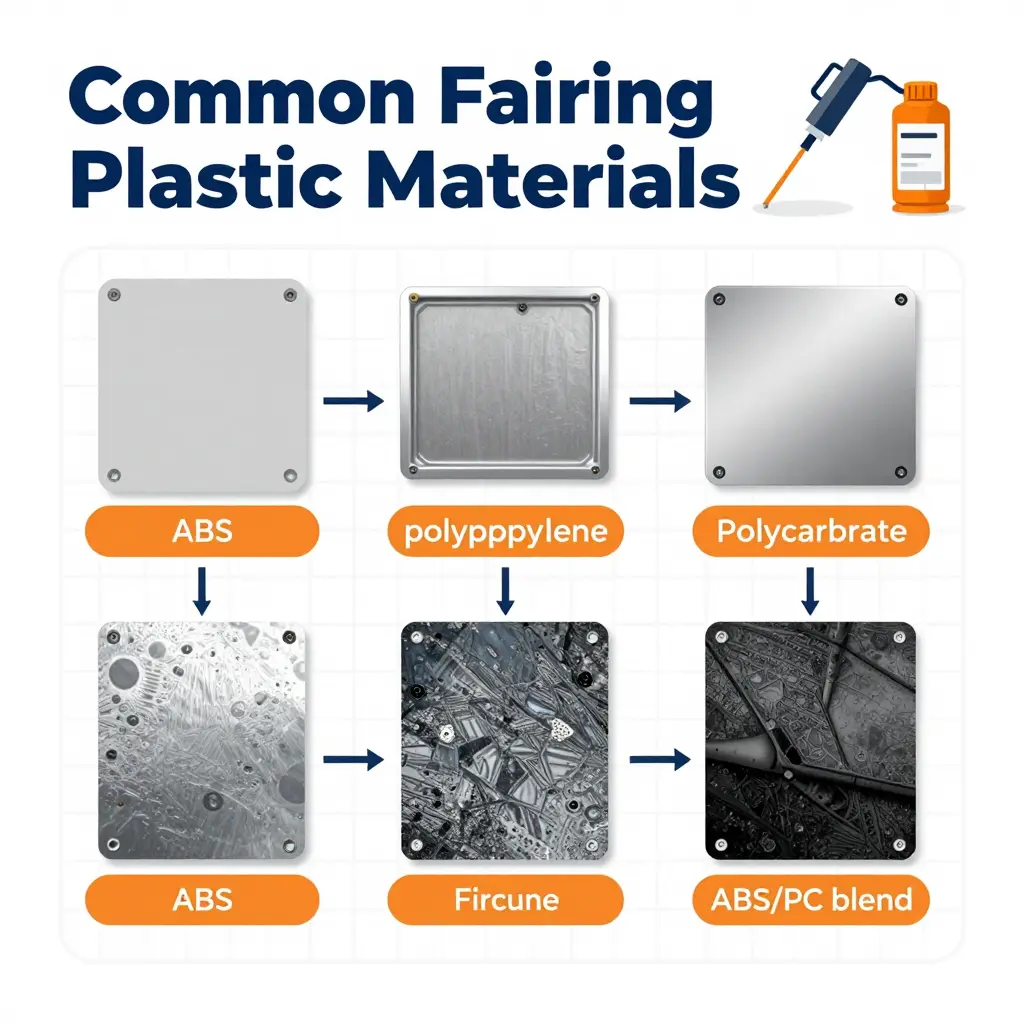
Motorcycle cowls, truck bumper covers, and ATV body panels can look identical while being molded from different resins. The list below covers the types you are most likely to meet and how each one takes to a welder.
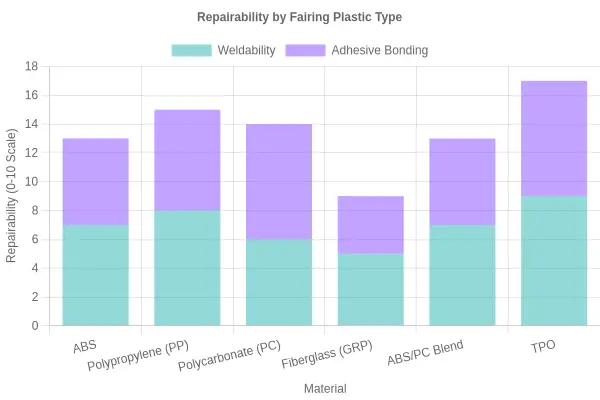
- ABS (Acrylonitrile Butadiene Styrene) – The most weld-friendly fairing plastic; hot-air welding with a matching rod produces strong, lasting seams.
- Polypropylene (PP) – Weldable with a dedicated PP rod, but its low surface energy makes epoxy and most adhesives bond poorly.
- Polycarbonate (PC) – Weldable yet moisture-sensitive; it bubbles and hazes unless you pre-dry it and control the heat closely.
- Fiberglass (GRP) – Not a thermoplastic, so it cannot be welded; repair it with resin, matting, and sanding instead.
- ABS/PC blends – Moderately weldable; the mixed chemistry rewards careful rod selection over generic adhesives.
- TPO (Thermoplastic Olefin) – Weldable with specialty rods and common on flexible modern covers, but it adheres only after flame treatment.
Why Material Type Drives Your Repair Method
Thermoplastics such as ABS, PP, and TPO melt and re-fuse, which is why welding gives the strongest repair at the lowest cost. Thermosets like fiberglass cure once and never melt again, so a cracked fairing repair on those panels depends on resin and reinforcement instead.
Two cracks that look the same can therefore call for different tools. Weld the wrong plastic and the seam peels apart under vibration; glue a weldable thermoplastic and you pay more for a weaker bond. Shops that want repeatable results train their technicians and keep that maintenance and service training current.
A Quick Identification Trick
When the stamped code on the back of the panel has faded, flex it. Thermoplastics bend and whiten at the stress point; fiberglass cracks and splinters. Five seconds of bending tells you whether the panel needs a rod or a batch of resin.
Plastic Welding Fairing Repair: Process and Cost Drivers
Plastic welding repairs a cracked fairing by melting and fusing the base plastic under controlled heat rather than gluing the pieces back together. Epoxy sits on the surface as a separate layer; welding re-forms the material itself, so the repaired area flexes and absorbs vibration the way the original panel did. On a motorcycle or truck, that is what keeps the crack from returning.
Preparation comes first: clean the crack, grind a shallow V-shaped channel along it, and identify the plastic, since ABS, polypropylene, and TPO each have their own melt range. The technician then runs a hot air welder, often with a speed-welding tip, until the parent plastic reaches that range without scorching or bubbling.
A filler rod matched to the plastic is then fed into the channel and fused with the base material to form a continuous seam. For structural cracks, many shops also use a plastic welding stapler, embedding stainless steel staples across the break to carry tension while the seam cools and flexes.
Three things drive plastic welding cost. Labor time is the largest, because prep, temperature control, and cosmetic finishing all demand a skilled hand. Equipment comes next, since a professional hot air welder, temperature controller, and stapler kit are real capital that a shop spreads across many jobs. Filler material is the smallest line item and the most decisive: the correct rod costs very little, while the wrong one creates a weak bond and an expensive callback.
| Cost Driver | Why It Matters |
|---|---|
| Labor time | Prep, welding, and finishing require skilled labor |
| Equipment investment | Hot air welder, stapler, and controls are capital costs |
| Filler material matching | Correct rod ensures a strong, lasting bond |
Done properly, a welded repair depends on skill, the right tools, and an accurate read of the material. Getting it right the first time costs less than chasing the cheapest shortcut and doing the job twice.
The price on a tube of epoxy or a welding rod says little about what a cracked fairing repair costs. Labor, one-time equipment, and the extent of the damage move the number in different directions. The table below compares both methods across the four scenarios that show up most often in a shop.
| Method | Average Labor Time | Typical Material Cost | Equipment Cost (one-time) | Typical Total Cost per Repair |
|---|---|---|---|---|
| Plastic Welding – Small Crack | 0.5 – 1.0 hr | $10 – $20 | $150 – $400 | $45 – $85 |
| Epoxy Resin – Small Crack | 0.75 – 1.5 hr | $15 – $30 | $50 – $150 | $60 – $110 |
| Plastic Welding – Large Crack | 1.5 – 2.5 hr | $20 – $40 | $150 – $400 | $110 – $200 |
| Epoxy Resin – Large Crack | 2.0 – 3.0 hr | $30 – $50 | $50 – $150 | $130 – $230 |
| Plastic Welding – High-Stress Panel | 2.0 – 3.0 hr | $30 – $50 | $150 – $400 | $150 – $260 |
| Epoxy Resin – High-Stress Panel | 3.0 – 4.0 hr | $40 – $70 | $50 – $150 | $190 – $320 |
| Plastic Welding – Multiple Cracks | 3.0 – 5.0 hr | $40 – $70 | $150 – $400 | $220 – $400 |
| Epoxy Resin – Multiple Cracks | 4.0 – 6.0 hr | $50 – $90 | $50 – $150 | $260 – $480 |
Epoxy wins on equipment cost and on small, low-stress fixes. Plastic welding pays off on larger, high-stress, and multi-crack jobs, where it cuts labor time and produces a stronger, more flexible bond. A shop doing volume recovers the price of a plastic welder through faster turnaround; an owner fixing an occasional crack is usually better off with a low-cost epoxy kit. Match the method to the damage rather than to habit, and both the bill and the comebacks come down.
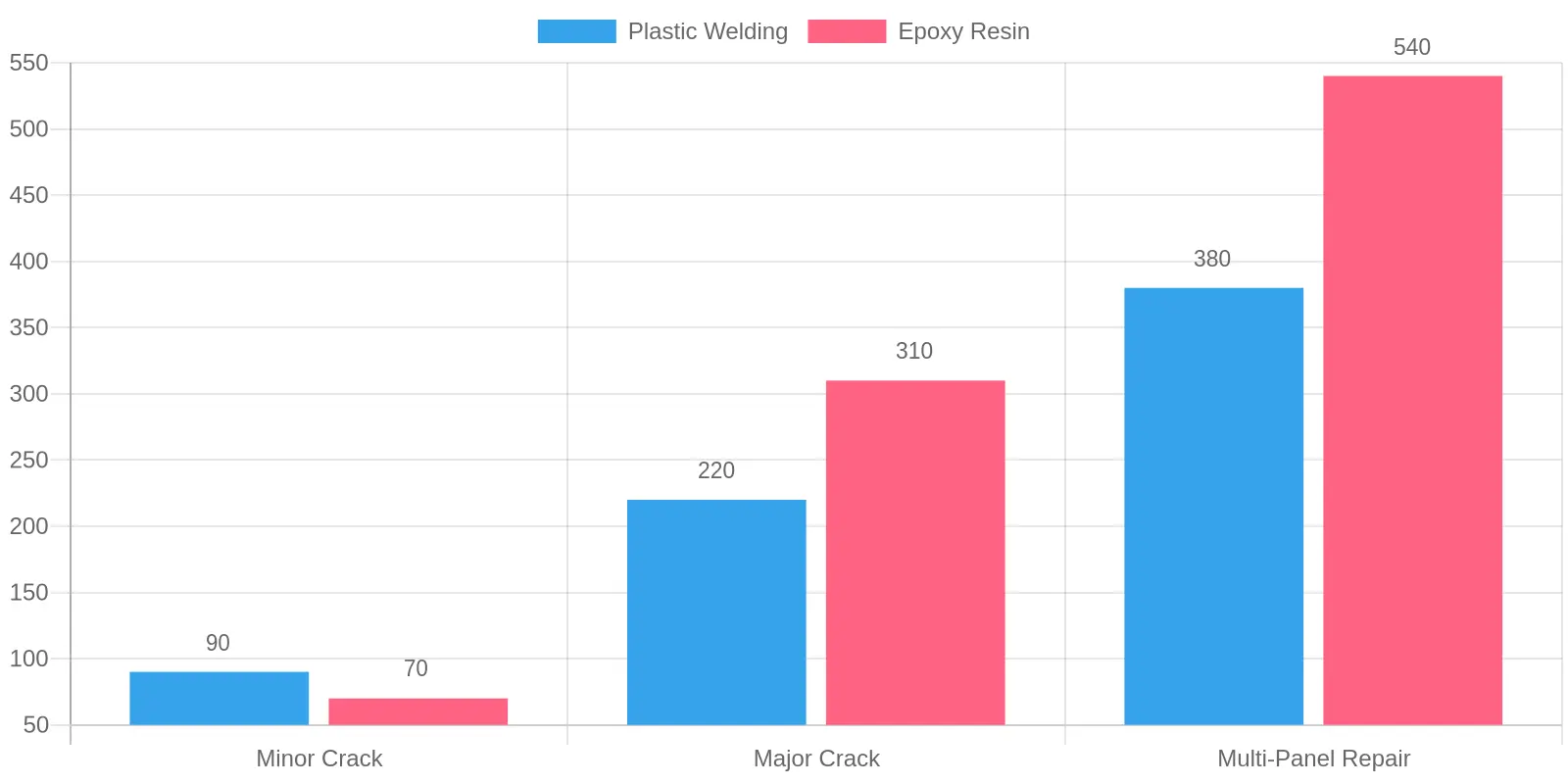
Plastic Welding vs Epoxy Resin: Total Fairing Repair Cost by Scenario
The cost gap between the two methods depends heavily on the damage. On a minor crack, epoxy resin is the cheaper option ($70 vs $90), which makes it a tempting quick fix. Escalate the damage and the advantage flips: a major crack runs about $220 with welding versus $310 with epoxy, and a multi-panel repair lands near $380 against $540. Epoxy stays competitive on small, cosmetic cracks; once damage spreads across panels, welding is the more economical choice.
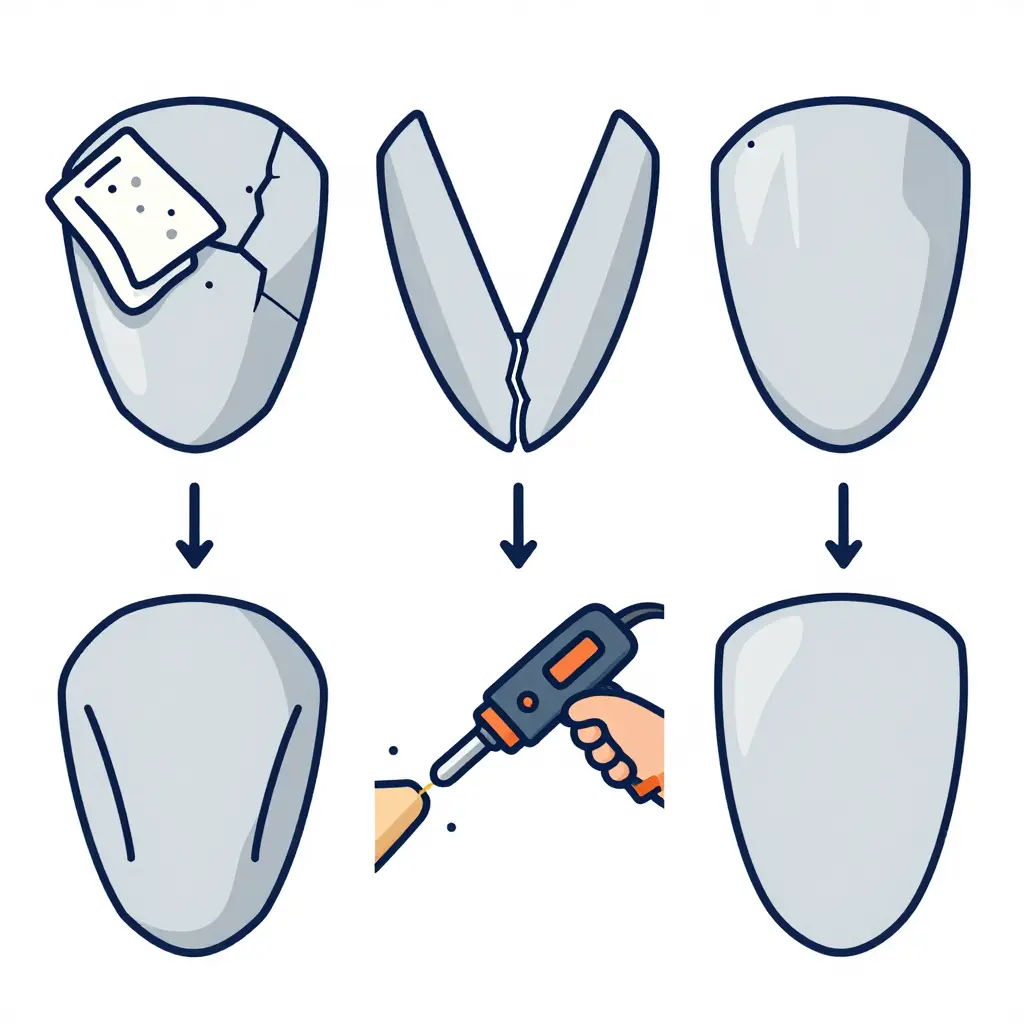
The diagram above shows the four steps: clean the surface, prepare the crack, weld and fuse the plastic, then finish the repair.
Durability and Strength: Plastic Welding vs Epoxy Resin
A fairing repair has to survive vibration, flexing, heat cycles, and weather, not just look clean on the day it leaves the shop. Choosing between plastic welding and epoxy resin comes down to how you weigh durability, load-bearing strength, flexibility, and weather resistance against the price of the job.
Durability
Welding melts a filler rod of the same or a compatible thermoplastic into the crack so the repair becomes one continuous piece that expands and contracts with the panel around it. Epoxy resin bonds on top of the surface and cures hard, holding by mechanical grip rather than fusion. Constant road vibration exposes that difference quickly.
Load-bearing strength
A clean weld restores much of the panel’s original strength, which matters most at fairing mounts and bolt holes. Epoxy recovers less, and the interface between resin and plastic becomes the weak point where stress concentrates and failures begin.
Flexibility
Fairings are engineered to flex. A welded joint flexes with them; epoxy is rigid, so repeated flexing tends to crack the resin again, frequently just beside the original repair.
Weather resistance
Welded plastic behaves like the panel it repairs: UV, rain, and temperature swings have limited effect. Epoxy can yellow, chalk, or absorb moisture over time and slowly lose adhesion, especially on exterior panels exposed year-round.
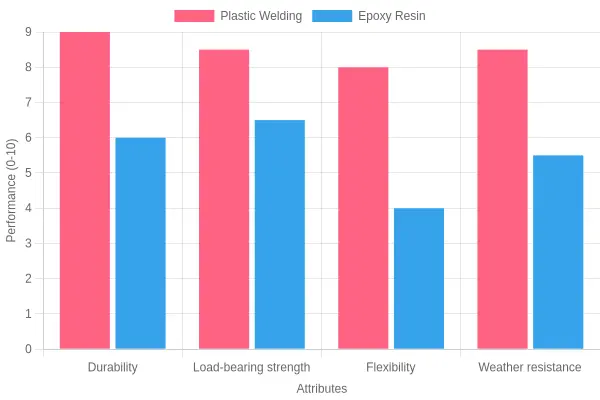
| Factor | Plastic Welding | Epoxy Resin |
|---|---|---|
| Durability | High; homogeneous fused bond | Moderate; surface bond |
| Load-bearing strength | Approaches original panel strength | Lower; interface is the weak point |
| Flexibility | Flexes with the panel | Rigid; prone to re-cracking |
| Weather resistance | Matches the panel | Can yellow or lift over time |
| Typical cost | Higher labor and tooling | Lower upfront, DIY friendly |
Weighing these factors against cost
Epoxy is cheap and easy to start with: a shop or an owner can buy the materials for a few dollars. Plastic welding demands a heat tool, filler rods, and practiced hands, so the upfront cost is higher. The useful question is total cost of ownership. A cheap epoxy patch that fails within a season means paying twice, plus paint and possibly a replacement panel. For structural cracks on a bike that sees daily use, the stronger, more weather-resistant weld usually pays for itself. For a small cosmetic crack on a seldom-ridden machine, epoxy can be a reasonable stopgap. Shops that value workmanship and repeat customers often lean toward welding, because it reflects the same standard of quality service and reliability that keeps clients coming back.
Frequently Asked Questions About Cracked Fairing Repair
What exactly is cracked fairing repair, and when is it worth doing?
Cracked fairing repair means restoring the plastic body panels on motorcycles, trucks, and other vehicles instead of replacing them. It is usually worth doing when the damage is limited to cracks, scuffs, or small missing pieces rather than shattered or missing sections. A solid repair costs far less than a new OEM panel and preserves the original paint match.
How does plastic welding work on a cracked fairing?
Plastic welding uses heat to melt a filler rod of the same plastic into the crack, fusing both sides into one solid piece. The technician identifies the plastic and cleans the area first, then runs the welder along the crack to rebuild its strength. Because it restores structure instead of hiding the damage, welding is often the most durable option.
What is the typical plastic welding cost compared to buying a new panel?
Plastic welding cost usually runs from a modest bench fee up to roughly $50-$150 per repair, depending on the shop and the damage. A single new fairing panel can exceed $300 once paint and labor are included. That gap keeps welding popular with riders and fleet owners watching their budgets.
How much does epoxy resin cost, and is it a cheaper DIY alternative?
A small epoxy repair kit often costs $15-$40, which makes it an attractive entry point for hands-on owners. It bonds well to many plastics and can be reinforced with fiberglass mesh for extra strength. However, epoxy sits on top of the crack rather than fusing it, so it works best as a supplement to welding or on non-structural panels.
Should I repair my fairing myself or take it to a professional shop?
DIY works for small cosmetic cracks if you have patience and the right tools. A professional shop has plastic welders, does proper surface prep, and finishes the panel. A trained technician, backed by professional repair and maintenance services, can also judge which plastics will hold a repair and which are too brittle to save. For a factory-looking result, the extra spend is usually worth it.
How long does a repaired fairing last?
A welded and painted fairing can last as long as the original panel, often several years of normal use. Epoxy-only repairs tend to be the weakest link and may need redoing once vibration, heat, and flexing take their toll. Longevity comes down to surface preparation, matching the method to the plastic, and protecting the finish afterward.
Can a repaired fairing match the original paint and finish?
Yes. Once the structural work is complete, the panel is sanded, primed, and repainted to match the factory color code. A skilled painter can blend the finish so the repair is virtually invisible, and even textured or matte panels can be restored with the right products.
Are there cracks that simply cannot be repaired?
Yes. Panels that are shattered into many pieces, missing large sections, or made of certain brittle plastics may fail even after welding. In those cases, replacing the panel is the smarter and safer choice. A reputable shop will tell you honestly when a repair is not worth pursuing.
Conclusion: Matching the Repair Method to the Damage
Plastic welding is the more cost-effective choice when a crack runs through a known, weldable plastic and affects the fairing’s structure rather than just its finish. A shop that already owns welding tools keeps consumable costs low, and the fused joint restores most of the original strength and resists vibration and repeat cracking.
Epoxy is the better option for small surface cracks, cosmetic chips, or mixed and hard-to-identify plastics where welding heat risks distorting the panel. It also suits owners with no welding equipment, since it needs no specialized tools. The trade-off is lower flexibility: epoxy may not hold like a welded joint under heavy load.
For a shop, labor rather than materials usually decides the final bill. Welding takes skill and lasts; epoxy is quicker but sometimes needs rework. On high-stress fairings, an owner is better served by welding, while quick cosmetic fixes are a case for resin.
When replacement beats repair, buying from a supplier that offers quality parts and reliable service across a wide range of styles at below-market prices keeps the overall cost down and makes the repair-versus-replace comparison clearer.