
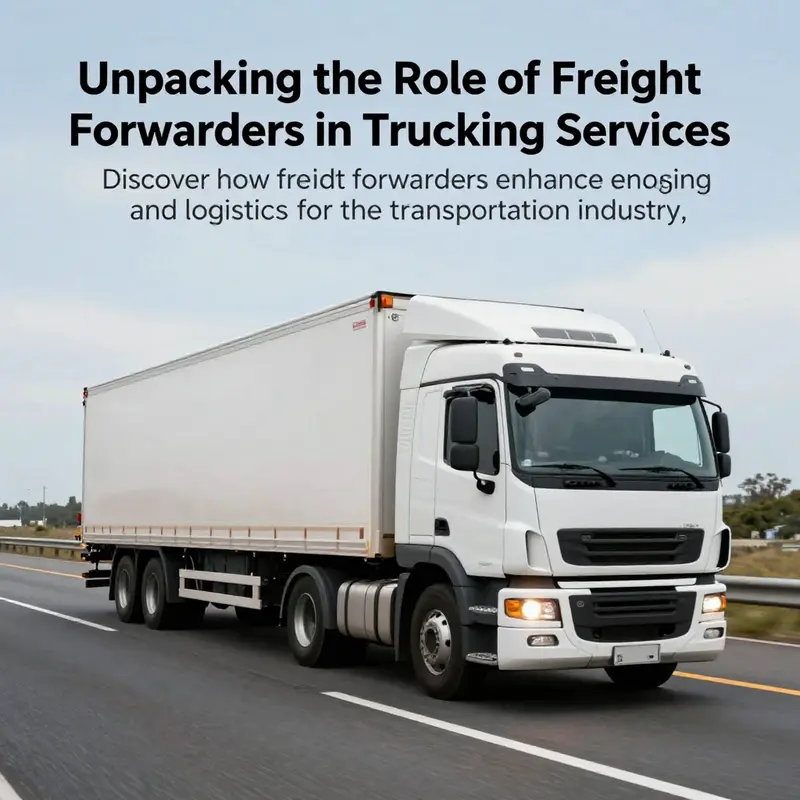
Understanding whether freight forwarders provide trucking services sheds light on an often overlooked aspect of logistics. They serve as crucial intermediaries between shippers and carriers, managing the transportation complexities that long-haul truck drivers, trucking company owners, and fleet managers navigate daily. This relevance is magnified considering today’s demand for integrated supply chain solutions. The first chapter will delve into the role of freight forwarders in coordinating trucking services. Moving to the second chapter, we will explore the benefits trucking professionals can reap by collaborating with freight forwarders. Lastly, we’ll unpack the challenges these intermediaries face, providing insight into what hurdles must be overcome for optimal service delivery in trucking logistics.
Orchestrating Momentum on the Road: How Freight Forwarders Tie Trucking into Global Logistics
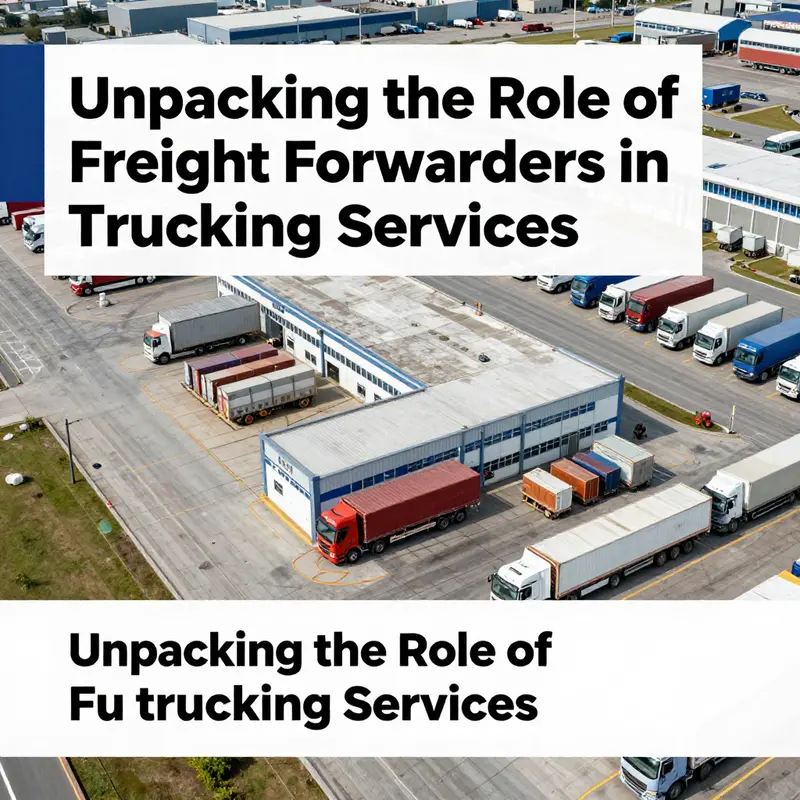
Freight forwarders occupy a quiet but essential place in modern commerce. They are not the captains of a single voyage but the conductors of a symphony, coordinating many moving parts to ensure goods arrive where they should, when they should, and at a cost that makes sense. Among the most critical moving parts is trucking, the road transport that links factories, warehouses, ports, and final destinations. The question of whether freight forwarders provide trucking services is best answered not as a simple yes or no but as a nuanced explanation of how forwarders orchestrate trucking as a core component of a broader multimodal logistics strategy. In practice forwarders may not own all the trucks, but they are the managers, planners, negotiators, and risk mitigators who bring trucking into a coherent, competitive service offering.
At its core, trucking for freight forwarders is about managing the journey with visibility, discipline, and respect for the constraints of multiple stakeholders. The forwarders value does not rest on having a fleet of vehicles; it rests on the ability to translate a shipper s objectives into a routing plan that respects time windows, regulatory requirements, and cost targets. This translation often is done on behalf of shippers who face complex schedules, diverse product classes, and stringent service levels. It requires a deep understanding of how road transport interacts with other modes, how carriers price and operate, and how information flows through the supply chain to reduce surprises. The forwarder s role is to balance speed, reliability, and price while harmonizing the often competing needs of manufacturers, retailers, customs authorities, and end customers.
The everyday practice of coordinating trucking begins long before a mile is logged. It starts with a rigorous assessment of what needs to move, where it is located, and by when it must arrive. A forwarder looks at a shipment not as a single leg but as part of a network. This perspective informs route planning: which highway corridors or regional distribution routes minimize dwell time in warehouses or terminal yards? Which carriers have the capacity to handle a particular lane, and which offer the best blend of reliability and price? The process is not merely about selecting the lowest quote. It is about evaluating performance history, on time delivery rates, safety records, occupancy of equipment types that fit the goods be they palletized boxes, hazardous materials, or over dimensional freight, and the ability to meet putting points that may require special handling. The forwarder s planning mindset is, in effect, a risk management exercise where each decision is weighed against the possibility of a delay, a regulatory hurdle, or a miscommunication with a downstream partner.
The everyday practice of door to door logistics encapsulates a complex chain of actions. Door to door means the forwarder coordinates pickup at the shipper s dock, oversees the handoff to a carrier, ensures the parcel is properly documented, and tracks its progress through every leg of the journey, including any handoffs across borders, into warehouses, and to last mile destinations. The discipline required to guarantee seamless door to door service hinges on robust communication channels with carriers, third party logistics partners, and the shipper. It relies on real time shipment visibility, event driven updates, and the ability to re route or substitute carriers quickly if disruption arises. In many cases this is where the forwarder s skill becomes most visible: anticipating bottlenecks, pre negotiating alternative routes, and leveraging contingency plans that keep the schedule intact. When a delay cannot be avoided, the forwarder preserves service levels by offering transparent inevitabilities to the shipper and by presenting actionable alternatives, such as adjusting the delivery window, converting to an alternate lane, or synchronizing arrival with a production line or store receiving dock.
A forwarder s expertise in trucking is inseparable from its capacity to manage carrier selection and capacity. In a market marked by fluctuations in demand, seasonality, and competing priorities among many shippers, the ability to secure reliable capacity is a differentiator. Carriers operate with limited equipment and varying degrees of utilization. Some lanes are oversubscribed; others ebb and flow with the cadence of factory production cycles and consumer demand. The forwarder s job is to steward capacity by maintaining relationships with a diverse roster of trucking partners, continuously monitoring performance metrics, and aligning the right carrier with the right lane at the right price. This goes beyond price discovery. It involves understanding each carrier s strengths time sensitive deliveries, flatbed or refrigerated requirements, or specialized handling for fragile goods and matching them to the shipment s attributes. The result is a plan that achieves cost efficiency without sacrificing reliability, a balance that is particularly crucial for time sensitive or high volume shipments. For shippers who operate on tight margins or in highly competitive markets, this balance becomes a strategic asset, enabling faster rollouts and more predictable inventory planning.
The concept of consolidation also shines a light on the forwarder s value in trucking. A forwarder can consolidate multiple smaller shipments into a full truckload or optimize for less than truckload configurations, thereby reducing overall transportation costs and improving asset utilization for carriers and shippers alike. Consolidation is not purely about saving money; it is a discipline in inventory velocity and supply chain flexibility. By assembling shipments destined for similar geographic regions or endpoints, the forwarder minimizes empty miles, improves asset utilization, and reduces the environmental footprint of the logistics operation. The practice also supports more predictable delivery windows. When a shipper s order size is modest, a forwarder can combine several consignments from multiple suppliers into a single, efficient movement, preserving the integrity of the individual orders while achieving operational efficiencies on the road. This is particularly valuable for manufacturers and retailers who operate multiple SKUs or who need to balance stock levels across several distribution centers, ensuring a steady flow of product to the market rather than sporadic, hard to predict bursts of activity.
The span of responsibility extends into regulatory and compliance. Freight forwarders manage documentation, permits, and regulatory requirements that accompany cross border and domestic trucking. The paperwork that accompanies a road shipment, such as billing, waybills, bills of lading, and customs documentation when import or export is involved, does more than satisfy a requirement. Proper documentation acts as a risk management tool, helping prevent delays at border crossings, ensuring that hazardous materials are properly classified and labeled, and reducing liabilities for both the shipper and the carrier. The forwarder s understanding of regulatory standards helps preempt violations that could trigger fines or shipment detentions. It also underpins insurance considerations, because carriers and shippers rely on the forwarder to verify compliance and to secure appropriate coverage for the goods in transit. The insurance management function, too, is a key component of the forwarder s role. It helps transfer risk, settle claims efficiently when incidents occur, and provide guidance on risk mitigation measures that improve safety and reduce loss. In a climate where regulatory landscapes are evolving, the forwarder s ability to stay informed becomes a quiet but critical competitive advantage.
Real time visibility is not a luxury but a baseline expectation in modern trucking. The forwarder must offer clients a window into where cargo sits in real time, a feature that has moved from a luxury to a necessity as retailers and manufacturers demand transparency to synchronize production, inventory, and store delivery. This visibility comes through digital tools, track and trace platforms, and integrated data feeds that connect the shipper, the carrier, and the forwarding company. It enables proactive intervention: if a shipment begins to stray from its planned route, the forwarder can alert the shipper and orchestrate alternatives before delay cascades into missed production milestones or out of stock scenarios. It also supports performance based contracting, where shippers can measure the reliability and speed of different providers and adjust future lanes accordingly. The forwarder does not merely move goods; they steward information, turning data into actionable insight that improves planning accuracy, reduces lead times, and enhances the customer experience.
The strategic interviews you would hear in a forwarder s conference room often reveal that the real leverage lies in multimodal integration. Trucking serves as the backbone, a gateway to faster ocean or air shipments, a link to rail corridors, and a ready mechanism for last mile delivery. When a shipment originates inland, the forwarder leverages trucking to break down the journey into manageable segments, with the road leg acting as the pivotal connector between production facilities and the nearest port or inland distribution hub. Conversely, when goods arrive at a port, trucking is the bridge between the dock and the warehouse or retailer. The seamless integration of trucking with sea, air, or rail legs is what makes the supply chain resilient in the face of disruptions, whether caused by weather, port congestion, or sudden spikes in demand. Through multimodal planning, forwarders create options: if a sea route is congested, a truck can move the goods to an alternative port; if rail capacity is constrained, the forwarder can re route to another mode or a different origin to keep the shipment moving. It is a dynamic, adaptive approach, one that requires not only a broad network but also precise coordination and timely decision making.
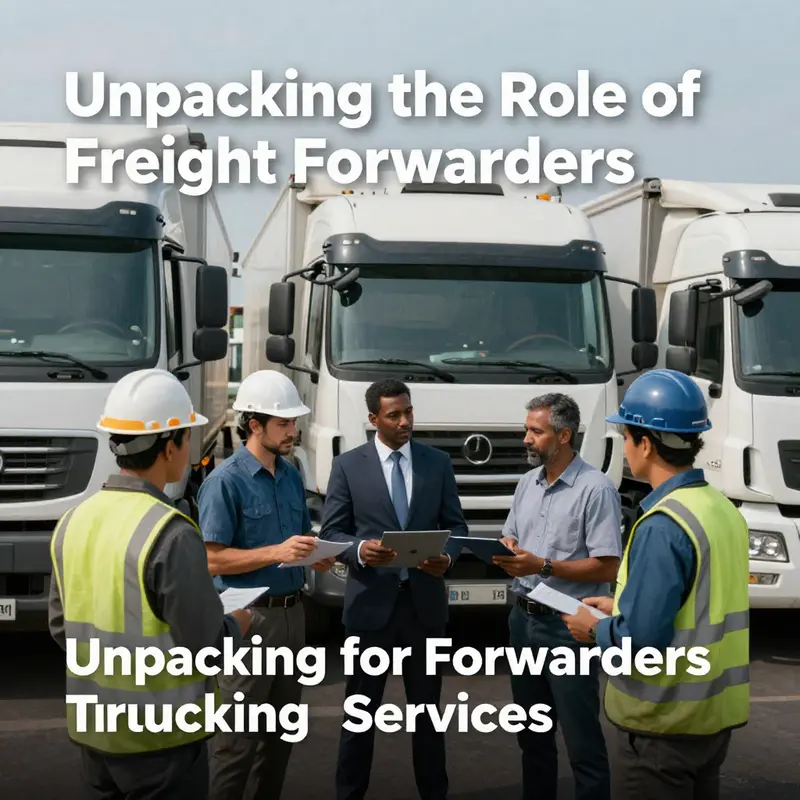
The human element remains central too. At the heart of every trucking operation a forwarder coordinates teams—planners, operators, and compliance specialists—who translate strategic intent into practical action on the ground. Relationships with drivers, dispatchers, and local carriers are built on trust, reliability, and a shared commitment to safety. These ties are what empower forwarders to mobilize quickly when disruptions threaten the schedule. The best forwarders cultivate long running partnerships rather than one off transactions, ensuring that when they call for a pickup, the response is swift, accurate, and aligned with the shipper s service standards. This relational capital compounds over time, yielding smoother operations, fewer exceptions, and improved service metrics. In turn, shippers gain a partner who understands their capacity constraints, product handling needs, and customer promises, a collaborator who can translate evolving business priorities into dependable, road tested execution plans.
The broader implications for supply chains are considerable. Freight forwarders who master trucking enable smoother inventory turns, tighter service level adherence, and improved cash flow. For manufacturers facing just in time production lines or retailers managing seasonal demand, the ability to move goods along predictable routes with dependable transit times reduces the risk of stockouts and markdowns. For importers managing cross-border shipments, a forwarder s trucking acumen mitigates the frailties of border queues and regulatory delays by ensuring that the road portion of the journey is optimized for speed and compliance. The resulting ecosystem is one where customers experience consistent delivery performance, while carriers enjoy steadier volumes and better utilization of their fleets. In a world where logistics complexity increasingly defines competitive advantage, the strategic value of trucking managed by freight forwarders becomes clearer: it is the practical, day to day engine that keeps product moving and supply chains resilient.
A note on limitations helps keep the picture honest. Forwarders do not solve every problem with a single magic solution. Capacity constraints persist, driver shortages can strain service levels, and geopolitical or extreme weather events can disrupt even the best laid plans. The forwarders task is to anticipate these risks, maintain optionality, and present viable alternatives quickly. It is also true that the fastest route is not always the most cost effective, and the best transit times may require trade offs. The forwarder s job is to help the shipper navigate these trade offs with clear expectations, transparent pricing, and a plan that can adapt without sacrificing core requirements quality, compliance, and customer satisfaction. When done well, the result is a trucking operation that looks seamless to the outside observer, despite the heavy lifting that happens behind the scenes. The forwarder is the enabler who makes complex, multi leg logistics feel, to the customer, almost effortless.
As the logistics landscape continues to evolve, the seamless integration of trucking with other modes will intensify, not fade. Digital platforms that harmonize routing, asset tracking, and documentation will become the standard rather than the exception. Shippers will increasingly expect end to end visibility, consistent performance metrics, and the ability to reconfigure routes in real time as conditions change. Forwarders who can deliver this level of service will distinguish themselves not just by price, but by reliability and adaptability. And as ecommerce continues to scale across borders, the importance of efficient, compliant, and cost conscious trucking becomes even more critical. The forwarder s capacity to consolidate shipments, to coordinate across multiple modes, and to secure dependable transport services is what sustains global trade in a world of accelerating demand and ever shifting supply chains. The road, far from being a simple conduit, becomes a living thread that ties together production schedules, inventory plans, and customer commitments across continents.
For readers seeking a concrete example of how these concepts play out in practice, the narrative can be anchored in the broader reality of logistics hubs and regional corridors where trucking networks are most dynamic. In hubs that sit at the crossroads of manufacturing and trade, overland trucking carries the cargo from factories to ports, from distribution centers to regional markets, and from foreign gateways to the doors of end customers. The value an experienced freight forwarder brings to this process is a blend of operational discipline and strategic foresight: selecting the right carriers, consolidating shipments, navigating regulatory mazes, and ensuring the timely flow of information that keeps the entire chain synchronized. The forwarder s expertise is measured not only by how well they move freight today but by how prepared they are for tomorrow s disruptions and tomorrow s opportunities. In this sense, trucking is not a standalone service offered in isolation; it is an integral, dynamic component of an intensive logistics management discipline that transforms complexity into deliverable performance.
The conversation around trucking services within freight forwarding also intersects with a broader conversation about trust and accountability in supply chains. When a shipper relies on a forwarder to manage the leg of the journey that travels on roads, the shipper entrusts someone else with an important portion of their customer promise. The forwarder, in turn, must demonstrate a track record of safe driving practices, ethical carrier selection, and transparent communication. This is not merely about getting goods from A to B; it is about upholding a reputation for reliability and care that honors the end consumer, the retailer, and the production line. Safety, compliance, and ethics play as much a role in the trucking operation as speed and cost. Forwarders who embrace these values build durable partnerships that can weather downturns and uplift performance during peak periods. And as technology and data analytics mature, the ability to demonstrate measurable improvements in on time performance, damage rates, and claims cycle times becomes a compelling narrative for shippers weighing multiple forwarding options.
In sum, freight forwarders do provide trucking services, but perhaps more importantly, they provide trucking as part of a larger, integrated logistics solution. They are the architects who design routes, balance capacity, consolidate shipments, manage documentation, supervise insurance, and maintain real time visibility across road legs and beyond. This holistic approach to trucking reframes the road transport not as a simple leg of a journey, but as a carefully choreographed sequence of actions that aligns with the broader aims of the supply chain: speed, reliability, cost efficiency, and compliance. The road becomes a controllable variable in a system that is otherwise exposed to volatility, a variable that forwarders calibrate daily through planning, negotiation, and disciplined execution. The net effect is that shippers can move goods with a higher degree of predictability, consumers receive orders with greater reliability, and carriers operate with steadier demand. It is a model of logistics that rewards those who can translate complexity into consistency, and trucking—once the most visible face of the supply chain—becomes a telling marker of supply chain maturity.
For readers who want to explore related perspectives on the industry and its practices, a broader look at specialized trucking services and their implications for procurement and safety can provide useful context. One internal resource that offers further considerations about service quality and reliability in trucking, particularly from a practitioner s lens, can be found here: Explaining 5 Star Truck Inc s Quality Service and Reliability on the Road. This reflection invites readers to consider how service standards, driver welfare, and equipment reliability intersect with the planning and execution of road transport within a freight forwarder s ambit. For a complementary external perspective that situates trucking within a global logistics framework, the following resource offers a practical lens on the trucking services that forwarders coordinate as part of an end to end solution: External resource on trucking services in freight forwarding. Taken together, these references illuminate how the discipline of trucking, when embedded in a forwarder s workflow, underpins the reliability and resilience of modern supply chains.
null
null
In the Fast Lane: Navigating the Realities and Real Benefits of Freight Forwarders Providing Trucking Services
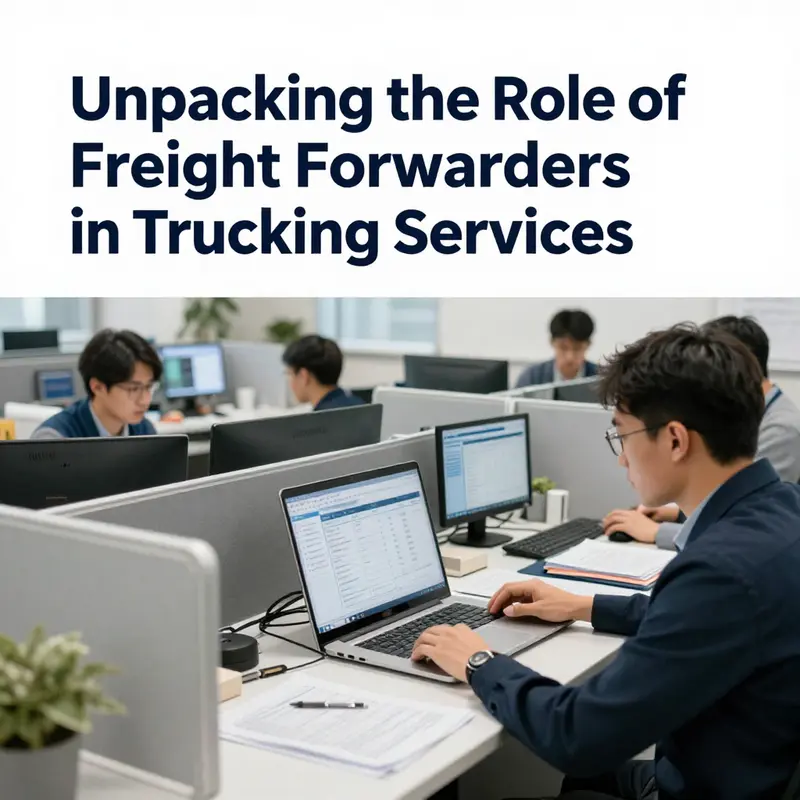
Freight forwarders occupy a pivotal, almost conductor-like role in the logistics orchestra. They map routes, balance modes, and choreograph the movement of goods across borders and continents. When the plan calls for a stretch of road between a factory floor and a seaport, or a last-mile dash to a destination warehouse, freight forwarders often extend their orchestration to include trucking services. They are not typically asset owners in the sense that a trucking company is; instead, they are intermediaries who assemble the right mix of carriers, schedules, and handling services to deliver a shipment on time and in good condition. The practical reality is that trucking is frequently the visible, on-the-ground element of a broader multimodal strategy. Goods may travel by sea, rail, or air and then transition to road at a critical juncture. The forwarder’s ability to manage that road leg—whether it is a cross-border leg on a highway corridor or the delicate last mile into a busy city distribution center—often becomes a decisive differentiator for customers who demand reliability, speed, and cost predictability.
This is especially true in markets where manufacturing centers generate a steady drumbeat of inbound orders and e-commerce logistics demands a fast, traceable, and compliant path to delivery. Consider a Shenzhen-based hub playing a role in coordinating overland trucking services that move goods from factories to ports for export or directly to North American and European destinations. In such settings, the road leg is neither a trivial add-on nor a simple transfer of freight from one conveyor to another. It is the moment when timing, documentation, and the physical realities of the road converge with global supply chain expectations. The forwarder’s trucking solution becomes a cornerstone of service quality, particularly for time-sensitive shipments and high-volume cycles that e-commerce and marketplace sellers rely on daily.
Yet this capability does not come without substantial pressure. The strategic value of offering trucking services comes with heightened exposure to regulatory complexity, stakeholder coordination, and the kind of price volatility that can erode margins quickly if not managed with discipline. The breadth of responsibilities extends well beyond simply moving goods from door to dock. It includes cross-border documentation, customs coordination, warehousing interfaces, and cargo tracking that must all operate in near real time. When a shipment is delayed at a border crossing, or when a truck sits idling at a congested terminal, the ripple effects reach buyers who expect predictable delivery dates and a transparent chain of custody. These realities shape how forwarders approach the road leg and how they balance customer promises with the operational realities of trucking.
Regulatory compliance is perhaps the most stubborn and least forgiving of the chapter’s trials. In several jurisdictions, tax regimes and reporting requirements cast long shadows across billing, invoicing, and financial reconciliation. The Goods and Services Tax, sales tax, VAT, and other tax policies create a mosaic that forwarders must navigate to keep pricing accurate and auditable. The regional variability in regulatory expectations means a single, scalable process for documentation and billing rarely exists. Instead, forwarders must craft adaptable templates and workflows that accommodate the peculiarities of each market while preserving efficiency and accuracy. Even when the path is straightforward on paper, real-world variations—such as a sudden change in import duty codes, a revised customs declaration format, or a new licensing requirement for certain goods—can trigger delays, additional checks, and incremental costs. Customs clearance itself becomes a live performance, where incomplete paperwork and misaligned data can stall vehicles, increase dwell times, and escalate costs for both forwarders and their clients.
Then there is the subtle art of coordination. The forwarder’s trucking service exists at the intersection of several moving parts: importers and exporters with their own timelines and constraints, port authorities who manage arrivals and queue times, terminal operators who control yard access, and warehousing facilities that must align with the schedule of the next leg in the journey. When miscommunication occurs, bottlenecks emerge. A late arrival of a container at a terminal can cascade into delayed gate-out times, missed loading slots, and increased demurrage or storage charges. The reverse is also true: ambiguity about which party is responsible for certain handoffs or for updating the shipment’s status can leave everyone uncertain about dwell times and handover points. The result is a chain where even small misalignments multiply into substantial inefficiencies. Warehousing constraints—such as limited space, high storage fees, or suboptimal inventory management—compound these challenges. In a tight market, where every square meter of yard space costs money and every hour of truck availability is critical, an inefficient data flow becomes a physical bottleneck as surely as a clogged highway.
Financial pressures haunt every link of the trucking chain in the forwarder’s portfolio. Fuel price volatility, driver shortages, and rising insurance premiums all squeeze margins for a business that often operates on slender, time-sensitive profit bands. The forwarder’s job is to absorb some of this volatility through clever contracting, risk sharing with carriers, and a disciplined approach to load optimization. Yet even the best-forecasted loads can encounter price shocks at the point of execution when fuel surcharges shift, or when a carrier’s equipment type and age influence operating costs. Operational inefficiencies—such as underutilized assets, idle time at pickup or drop-off points, and administrative overhead from fragmented data systems—can erode profitability. The forwarder’s advantage lies not in owning the trucks but in owning the ability to orchestrate a lean, responsive network. The goal is to match the right carrier capacity with the right lane, to exploit economies of scale while preserving service levels that matter to the customer—speed, reliability, and traceability.
Technology, or rather the uneven adoption of technology, is both a catalyst for improvement and a stubborn friction point. The most successful forwarders in trucking tend to deploy integrated digital platforms that synchronize bookings, document flows, real-time location updates, and exception management. When these tools are well adopted, customers gain visibility that reduces anxiety and increases trust. Real-time tracking, proactive alerts, and digital handoffs between stakeholders can reduce dwell times and improve planning for the next leg of the journey. Unfortunately, many smaller forwarders still wrestle with legacy systems, data silos, and a lack of investment capacity for modern transport management systems (TMS), mobile app interfaces for drivers, and electronic data interchange with customs authorities. The resulting technology gap means slower responses to disruption, less dynamic rerouting capability, and a higher risk of errors in paperwork that can trigger delays and penalties. In this context, technology is not just a productivity tool; it is a strategic differentiator that can transform a trucking service from a mere exception handler into a reliable, scalable spine of a broader supply chain.
The narrative above makes clear why the ability to provide trucking services is a double-edged sword. It adds value by offering end-to-end control of the movement, especially in complex, time-sensitive supply chains. It also introduces a set of expanded responsibilities that require careful management of risk, data, and stakeholder harmony. A forwarder who can master these elements—combine a dependable network of vetted carriers with disciplined process design and robust data practices—can deliver on the promise of a truly integrated logistics solution. In practice, this often means a deliberate emphasis on four core capabilities.
First, the design of a resilient carrier ecosystem. Forwarders invest in a portfolio of trucking partners that cover a range of geographies, equipment types, and service levels. The objective is not to rely on a single carrier for all lanes but to curate a flexible network capable of absorbing surges in demand or disruptions caused by weather, strikes, or regulatory delays. A well-constructed ecosystem allows for dynamic selection of capacity, which helps maintain service levels even when one segment experiences friction. This flexibility is the backbone of dependable last-mile and regional trucking, which in turn supports timely imports, exports, and e-commerce fulfillment.
Second, a disciplined approach to documentation and regulatory compliance. The road leg is where paperwork must travel as swiftly as the freight. Standardized yet adaptable paperwork templates, automated data capture, and pre-clearance strategies can shorten customs queues and reduce the risk of misrouting or incorrect declarations. This emphasis on compliance is not simply about avoiding fines; it is about sustaining smooth operations when lanes shift between regulatory regimes. It also provides a foundation for more advanced services, such as cross-border consolidation, where shipments from multiple origins are combined for efficiency. The forwarder’s role includes ensuring that the right paperwork travels with the right shipment, that data fields align across systems, and that any changes in regulations are quickly reflected in operational workflows.
Third, the infusion of visibility and proactive disruption management. When a shipment is on the road, the ability to track location, temperature (where relevant), and progress toward milestones matters. But visibility is not only about tracking; it is about anticipatory management. A forwarder that can flag potential delays before they impact delivery, propose alternative routes, or reallocate capacity on the fly demonstrates true value. This kind of responsiveness requires not just technology but organizational discipline—clear lines of responsibility, real-time communication channels with carriers and shippers, and a culture of proactive problem-solving.
Fourth, the alignment of cost control with service quality. Price volatility can be offset by innovative contracting, tonnage optimization, and shared risk models with carriers. For customers, transparent pricing that accounts for border charges, detention, demurrage, and last-mile surcharges helps establish trust. The forwarder’s challenge is to present a coherent value proposition that links price to predictable outcomes: on-time delivery, accurate documentation, and documented chain of custody. In an era where consumer expectations are shaped by rapid fulfillment, the forwarder’s trucking service becomes the operational engine that delivers not just freight, but reliability.
Against this backdrop, the forwarder’s trucking capability is not a mere appendage to the logistics stack. It is a critical control point that defines the speed, cost, and reliability of the entire supply chain. The strongest players recognize this and embed the trucking function into their service design with intentionality. They build cross-functional teams that understand transport operations, regulatory regimes, and customer needs. They invest in relationships with carriers, warehouses, and customs brokers, forging a network in which information flows with the same ease as goods do. They cultivate a data-driven culture that treats every shipment as a data point in a larger system, enabling continuous improvement and more accurate forecasting. And they maintain a focus on the customer experience, because a trucking service that is efficient and transparent translates into fewer phone calls, fewer questions, and more confidence for buyers who depend on timely fulfillment.
Finally, it is important to acknowledge that the landscape is not static. The regulatory environment continues to evolve, trade patterns shift in response to macroeconomic forces, and the rise of e-commerce alters the expectations around speed and visibility. Forwarders who stay ahead of these changes do so by investing in people, processes, and technology that allow them to adapt quickly. They also cultivate a culture of collaboration with shippers and carriers, recognizing that the most successful outcomes arise when each party sees value in a shared, well-governed process. The result is a trucking service that is not just about moving freight, but about delivering predictability in an unpredictable world. This capacity for adaptability is what keeps forwarders relevant as the complexity of global trade grows.
For readers who want to explore practical perspectives from industry peers, there is value in seeking out resources and communities that discuss best practices and real-world experiences. A useful starting point is the broader conversation about trucking challenges in freight forwarding—a discourse that blends regulatory navigation with everyday operational hurdles and the practical creativity required to keep shipments moving. As with any specialized domain, learning from others’ trials and successes can illuminate paths forward. If you are looking for a place to begin a broader exploration of trucking practices and industry insights, you can visit the general industry blog hub at 5startruckin for foundational discussions and case studies that illuminate the everyday realities of trucking and logistics. 5startruckin blog
From a strategic standpoint, the forwarder’s trucking service is most effective when it sits within a coherent value proposition that speaks to customers’ core needs. Time sensitivity, regulatory confidence, end-to-end visibility, and a transparent, predictable cost model are the pillars of such a proposition. The forwarder’s success rests on the ability to translate these pillars into concrete, measurable outcomes: reduced dwell times at ports and terminals, faster clearance, fewer surprises at destination, and a streamlined experience for the importer or retailer. In this sense, trucking becomes not just a service line but a performance metric—one that captures how well a forwarder can harmonize global movement with the realities of regional road networks, driver availability, and the commercial demand for speed and reliability.
In sum, freight forwarders providing trucking services sit at a crossroads of complexity and opportunity. The role demands a careful balancing act—between regulation and execution, between cost and service, and between the ambitions of customers and the constraints of the road. Those who succeed do so by building resilient, adaptable networks; by embedding regulatory and documentation discipline into every transaction; by investing in visibility and disruption-ready technology; and by maintaining a relentless focus on the customer experience. While the road can be fraught with challenges, the trucking leg remains the linchpin that connects the globe’s factories with its markets, ensuring goods reach consumers where and when they are needed. For readers charting a path in this field, the takeaway is clear: to offer trucking services is to commit to a level of coordination and capability that makes the entire logistics chain more reliable, more transparent, and more competitive in an era of constant change. External readers can further expand their understanding of industry dynamics and trucking challenges in freight forwarding through professional resources and industry analyses, such as those available at the external reference: https://www.logisticsmanagement.com/article/20231115/trucking-challenges-freight-forwarders-face.
Final thoughts
In conclusion, freight forwarders play an essential role in facilitating trucking services, offering several benefits while also grappling with significant operational challenges. This interconnectedness ensures that the logistics landscape remains efficient and responsive to the evolving needs of the trucking community. Building a partnership with freight forwarders not only simplifies logistical complexity for trucking professionals but also enhances overall service delivery in the transportation sector. Awareness of these dynamics is crucial for anyone in the trucking business looking to optimize their operations.