
Navigating the world of service trucks requires a keen understanding of regulations that govern their operation. One critical aspect is the Department of Transportation (DOT) number, essential for maintaining legal compliance. Depending on a service truck’s weight, the nature of its cargo, and whether it’s used for passenger transport, different rules apply. In this article, we will delve into four essential chapters: we’ll clarify weight compliance, outline regulations for transporting hazardous materials, explore passenger transport laws, and discuss requirements for interstate commerce—all crucial for anyone in the trucking industry, from long-haul truck drivers to fleet managers.
Weight Isn’t the Only Factor: A Unified Look at When Service Tractors Truly Need a USDOT Number
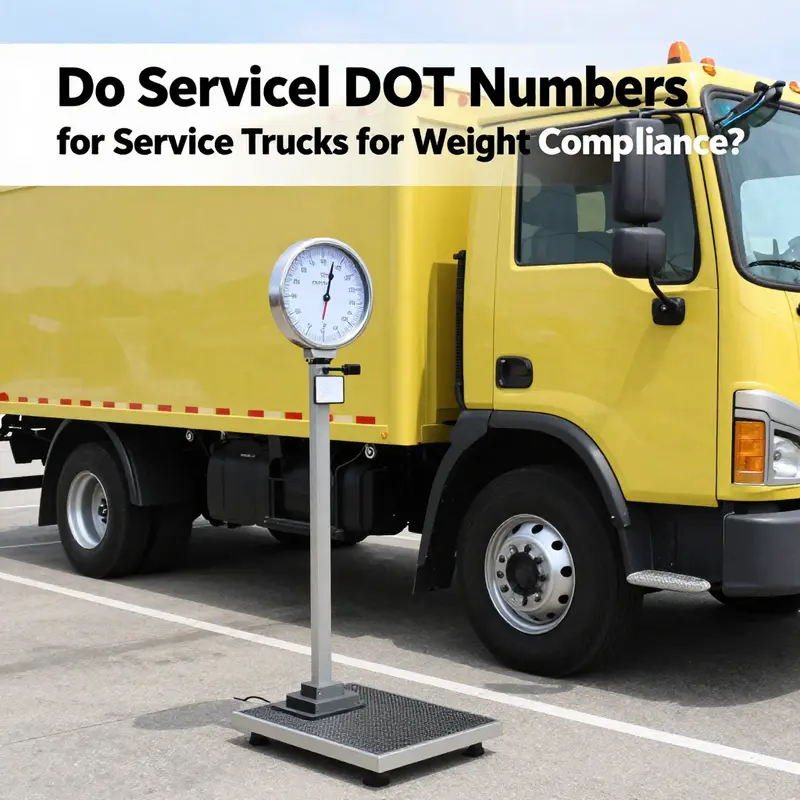
A service truck rattles into a quiet yard after a long day’s work, its bed loaded with tools, spare parts, and the stubborn promise of a fix. The scene is ordinary, almost mundane, until you ask the question that sits at the core of every fleet manager’s desk: does this truck need a USDOT number? The quick instinct might be to point to weight, to the scale on the back lot or the truck’s GVWR. Yet the weight on the scale is only a sliver of the regulatory picture. In real-world terms, the DOT number is less about how heavy the truck is and more about how the business moves goods or people across state lines and what those goods are. The FMCSA’s framework makes this clear: weight alone does not automatically trigger USDOT registration. Instead, the organization looks at the nature of the operation, the crossing of borders between states, and the kind of cargo or passengers the vehicle carries. This distinction matters deeply for everyday service operations, where a truck might shuttle tools between sites, pull a small trailer, or, on occasion, handle a regulated material with real safety implications.
For many service fleets, the doctrine is simple enough: intrastate work that stays within one state and does not involve regulated cargo often does not require a USDOT number solely for weight. But the moment the operation adds interstate travel or regulated commodities, the door to registration swings open. The Federal Motor Carrier Safety Administration (FMCSA) frames the decision around several criteria beyond weight. If the vehicle’s GVWR or GCWR climbs above 10,001 pounds, that is a threshold that often invites closer scrutiny. If hazardous materials are involved in quantities that require placarding, the same threshold can apply, as can circumstances involving the transportation of passengers for compensation, or even nonpaid passenger transport beyond a certain cap. And, crucially, interstate commerce changes the calculus: moving anything across state lines and hauling regulated goods generally triggers USDOT registration requirements, even if the truck is not a heavyweight on the scale.
The practical implication of this framework is that a service truck’s primary use case is what determines the need for a USDOT number. Consider a plumbing or electrical service truck. If its daily routine is concentrated within a single state and its cargo is limited to tools and routine equipment, the operation may be exempt from USDOT registration based on weight alone. In the same breath, if that very same truck were to carry hazardous chemicals or other regulated materials and cross a state line, the USDOT number becomes mandatory. The case of a large service vehicle that maintains critical infrastructure—think lines for power or pipelines—illustrates the spectrum even more vividly. When those trucks exceed the weight threshold or handle regulated materials during interstate travel, registration isn’t optional; it is a matter of law and safety.
To understand why the regulatory structure emphasizes operation type over mere weight, it helps to hear the compliance voice from FMCSA guidance. The organization draws a line between vehicles that stay local and those that travel wider geographic arcs, and it ties those lines to the presence of regulated cargo and passenger transport. In short, the question isn’t simply, “How heavy is the truck?” but rather, “What is the truck carrying, and where is it traveling for work?” This framing helps fleets avoid the trap of focusing on a single metric, such as scale weight, while ignoring the broader regulatory responsibilities that come with moving goods across borders or managing hazardous materials.
A practical way to internalize this concept is to adopt a mental checklist that your operations team can reference without needing to pause for a regulatory seminar every time a dispatch is sent. The checklist can be anchored in two broad questions: Are we crossing state lines for this assignment? Are we transporting regulated materials or passengers in a way that falls under FMCSA definitions? If the answer to either question is yes, then the USDOT registration requirement is on the table. If both questions are answered with no, then the operation is more likely to remain outside USDOT purview, at least as far as interstate regulatory criteria are concerned. The nuance here is important because it means a seemingly small change in a work pattern—a single interstate route or a shipment of a regulated chemical—can flip the requirement from “no USDOT number needed” to “registration required.” This fluidity is why many compliance teams invest in clear policies that reflect the FMCSA framework rather than relying on weight alone as a proxy for regulatory status.
The nuance has tangible consequences. Operating without a valid USDOT number when it is required can place a fleet outside the safety and oversight framework designed to protect drivers, other motorists, and the public. The FMCSA emphasizes that carriers operating without the appropriate registrations are outside federal oversight and face safety and legal risks. In a world where highway safety increasingly intersects with data reporting and cross-state coordination, those risks are not academic. They can affect insurance coverage, access to highway corridors, and the authority to contract with other entities that insist on compliant operations. That reality underscores why service fleets—whether municipal, utility, or private contracting teams—should evaluate their operations against the FMCSA’s registration criteria rather than leaning on weight as the sole determinant.
All of this converges on a practical truth for most managers: weight compliance is a factor, but it is not by itself a sufficient condition to determine the need for a USDOT number. The “nature of the operation” governs the decision. Interstate travel with regulated cargo? USDOT number is almost certainly required. Intrastate travel with non-regulated cargo and a truck that is not in the upper weight brackets? The answer is often no, at least for USDOT registration. The lines are not always bright, and the FMCSA’s guidance invites fleets to consider the broader operational footprint—the routes, the cargo mix, and the intended travel patterns—as a compass for compliance decisions.
A useful way to ground this discussion is to look at a spectrum example that many readers will recognize. A plumbing service truck, for instance, that moves between job sites within a single state, carrying only tools and standard equipment, generally resides outside the USDOT-number requirement based on weight alone and intrastate operation. Now imagine the same truck, but with a small chemical cleaner used for certain work processes, and a route that conveniently slides into a neighboring state for a multi-site project. If those circumstances entail regulated materials or interstate travel, the USDOT number becomes a necessary piece of the compliance puzzle. Conversely, a large service truck designed to maintain or repair critical infrastructure—such as a utility vehicle tasked with line or pipeline maintenance—may cross state lines or transport regulated materials. In such cases, the weight threshold, the cargo type, and the interstate scope work together to establish the need for USDOT registration. Each scenario reinforces the central point: the decision hinges on the operation’s footprint, not a single metric.
This is why, when fleets ask, “Do service trucks need a USDOT number?” the most meaningful answer is not a blanket yes or no. It is a structured inquiry that weighs the operating geography, the cargo’s regulatory status, and the passenger-carrying aspects of the mission. The FMCSA’s framework is designed to align safety oversight with actual risk profiles rather than indiscriminately applying a weight cap to every vehicle. As a result, the same truck can be compliant in one context and subject to USDOT registration in another, simply because the job at hand involves crossing borders or handling regulated materials. The nuance is not a legal parlor trick; it is a reflection of how modern fleet operations must be managed—carefully, with a clear map of when federal registration applies and when it does not.
Thus, the core takeaway for managers and operators is clear. Do not assume that a larger gross weight automatically triggers USDOT registration or that a smaller truck is automatically exempt. Assess the operation’s geography and cargo with precision. If your service work includes interstate commerce or regulated goods, obtain the USDOT number and maintain compliance as a routine business practice. If not, maintain clear internal policies that confirm your intrastate operations fall outside the MO of federal registration. In either case, keeping a disciplined, documentation-rich approach helps prevent surprises during audits or when bidding on work where compliance is a prerequisite.
For teams that want to deepen their understanding beyond internal policies, FMCSA’s official guidance offers a reliable reference point. The site explains the regulatory thresholds and the criteria used to determine when a USDOT number is required. It is a practical resource for fleets that want to translate regulatory language into concrete operational steps. In the final analysis, the decision to register is a function of the job’s geography and cargo, not merely the vehicle’s weight. The connection between what a truck carries and where it travels is the fulcrum on which this regulatory balance rests.
Internal link for further reading: 5startruckin.com/blog/
External resource for official guidance: https://www.fmcsa.dot.gov/regulations/registration/dot-number
Navigating the Rulebook: When Service Trucks Must Carry a USDOT Number for Hazardous Materials
When people ask whether a service truck needs a DOT number, they are really asking about the intersection of weight, usage, cargo, and geography. The simple answer is not always yes, not always no. The USDOT number, issued by the FMCSA, is a credential that flags a motor carrier in federal safety and enforcement programs. For fleet managers, that credential becomes a lens through which maintenance schedules, driver training, insurance requirements, and route planning must align with government expectations. This chapter weaves together the weight thresholds, cargo rules, and interstate versus intrastate distinctions that determine whether a service truck falls under federal oversight. It is a practical guide to a complex regulatory landscape, designed to help managers make informed decisions before a job is booked rather than after a compliance issue arises. Importantly, the information here reflects the regulatory status as of January 2026.
The threshold that triggers registration begins with the vehicle’s weight, namely GVWR or GCWR, if the vehicle is configured to haul assets. If the GVWR or GCWR reaches 10,001 pounds or more, the odds increase that a USDOT number is required, particularly when the operation touches interstate commerce or other regulatory thresholds. GVWR is a rating assigned by the vehicle manufacturer that describes the maximum safe weight of the fully loaded vehicle, including cargo, fuel, passengers, and equipment. GCWR applies when multiple vehicles operate in combination, such as a truck pulling a trailer, and it similarly can push a fleet into USDOT territory. In practical terms, a service truck used for heavy-duty repairs or line work that weighs more than ten thousand pounds is more likely to fall under FMCSA oversight, especially if it travels across state lines to a work site. The weight test is a blunt instrument, but it is precise enough to pull a vehicle into the safety net—or keep it outside it—depending on the scenario.
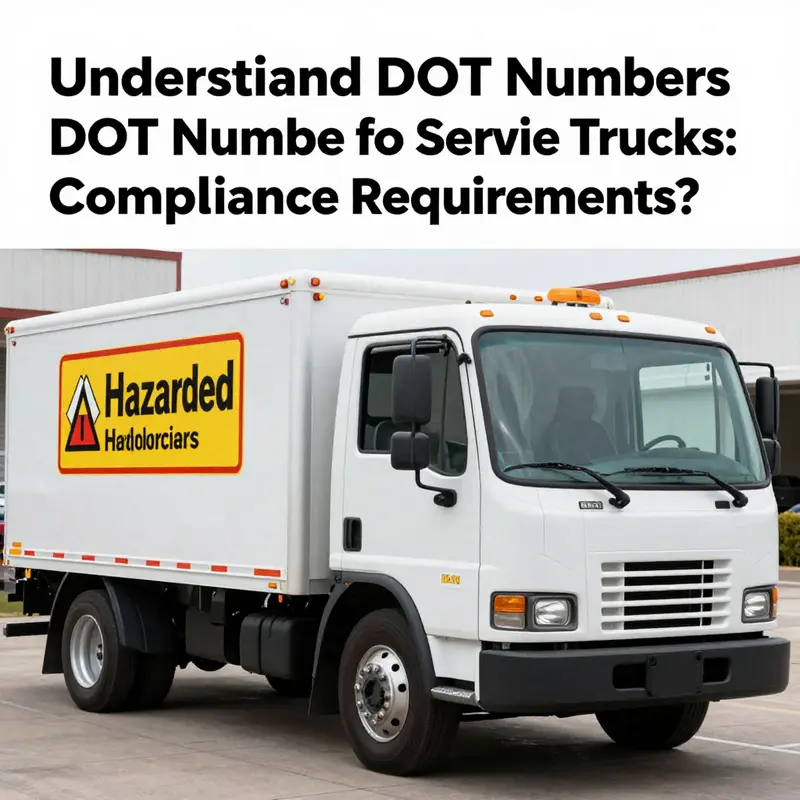
Hazardous materials are the second big axis that can push a service truck into DOT-number territory. The federal Hazardous Materials Regulations require placarding for quantities that exceed specific thresholds, and those thresholds translate into a requirement for a USDOT number for carriers engaged in interstate transport. If your operation moves regulated materials across state lines, the USDOT number often becomes a necessity. The key determinant is not the material itself alone but the quantity and whether the shipment would require placards. The commonly cited figure in guidance is that if a service truck carries more than 1,000 pounds of hazardous material that requires placarding, it falls under the HMR’s reach and triggers USDOT registration in the context of interstate commerce. There are exemptions and nuances—intrastate shipments may be treated differently, and some low-quantity shipments can be exempt from certain provisions—but the safe posture is to verify via the FMCSA’s Hazardous Materials Regulations overview. For fleet leaders who work near chemical plants, fueling stations, or repair sites where hazardous goods move regularly, this is not a theoretical risk; it is a routine compliance checkpoint.
Passenger considerations add another layer. If a service truck carries more than eight passengers, including the driver, for compensation, the operation may require a different regulatory label and a USDOT number. If a vehicle carries more than 15 passengers, including the driver, without compensation, the threshold shifts again. These numbers relate to motor carriers that provide passenger service rather than goods only. In cases where a crew travels with the equipment to a job site, the vehicle can cross from a simple utility truck into a carrier that falls under more stringent oversight, particularly if compensation is involved or if the service is part of a larger fleet operation that touches regulated routes. The dual nature of many service vehicles—maintenance platform by day, crew transport by night—means that drivers and schedulers must understand whether a single vehicle can legally fulfill both roles without crossing into another regulatory category.
Interstate commerce sits at the hinge of these rules. The FMCSA uses a two-step lens: are you operating across state lines, and are you transporting regulated materials or carrying a type of cargo that triggers placarding? If the answer is yes to either, you will navigate toward USDOT registration. The very idea that a small service vehicle that works inside one state might escape oversight is tempting but risky if the vehicle frequently travels to a neighboring state or if it hauls materials that require labeling. The interstate aspect often makes the difference between a routine local job and a federally regulated operation that needs formal registration, safety audits, and compliance documentation. As a practical matter, fleets that include line trucks, pole trucks, or service vans that regularly cross state borders should consider a proactive compliance posture rather than a reactive one.
Intrastate operations that stay within a single state and do not require placarding may not require a USDOT number, but many service operations cross the line more often than business owners realize. The rules also periodically adjust, and certain kinds of material or equipment may fall into soft exemptions or temporary allowances. The safest approach is to start with a careful inventory of your assets, routes, and payloads, then consult the FMCSA’s official guidance to see where your particular configuration lands. This is not a decision to guess; the costs of noncompliance can include fines, stops at state borders, and the disruption of critical service. The FMCSA provides online tools and contact channels to verify whether your operation needs a USDOT number, and those tools reflect current policy and enforcement priorities.
Registration, once determined, is not a one-time box checked in a corner office. It sets in motion ongoing requirements: applying for the USDOT number through the FMCSA portal, updating information on the MCS-150 form as your fleet grows or changes, and maintaining proper safety records. The process begins with a formal registration as a motor carrier or broker depending on the operation, and it includes supplying basic company information, details about the fleet, and the intended routes. After enrollment, your USDOT number remains the anchor for compliance programs, with inspections, audits, and reporting tied to that identifier. Keeping your information current is essential, not optional, because misalignment between your actual operations and the data on file can trigger compliance actions and complicate renewals or insurance arrangements. This context matters because many smaller fleets assume a USDOT number is only a big-company concern, but the federal framework applies based on operation type, not corporate size.
The practical reality is that many service trucks do double duty: they perform maintenance at a site, deliver or transfer regulated materials such as fuels or lubricants, and then return to the home base or travel to a project site across a state line. A large service truck that weighs more than 10,001 pounds, or a crew vehicle that moves hazardous chemicals to support a line repair, clearly fits the profile that requires careful attention to USDOT registration. In such cases, the fleet manager must ensure that placarding, driver qualification files, safety manuals, and emergency response information are in order. The presence of placards on a vehicle or on a vehicle’s asset indicates to inspectors and to other drivers that there is a regulated material on board, which entails stricter fuel, routing, and training requirements. The interplay between weight, cargo, and route makes a one-size-fits-all rule impossible, but the FMCSA framework provides a consistent method to determine responsibility.
Beyond legal definitions, the question of whether a DOT number is required also shapes practical decisions about insurance, liability, and risk management. Insurers often look at USDOT numbers as a shorthand for safety history and fleet exposure. A USDOT-numbered operation typically documents safety records, driver hours of service compliance, vehicle maintenance programs, and hazmat training where relevant. For a fleet manager, this means building a comprehensive compliance culture that treats every job as part of a broader system rather than a series of isolated tasks. That perspective clarifies how a small change in cargo type can ripple through the entire operation, affecting not only regulatory status but also the day-to-day discipline of pre-trip inspections, manifest generation, and the readiness of the recovery and repair teams at the work site.
Additionally, the recognition that hazardous materials rules hinge on placarding thresholds invites a disciplined approach to cargo planning. Even if a truck is not carrying a placard-required quantity today, future loads could push it into that category. A preemptive mindset—knowing the regulatory boundaries before the shipment moves—permits smoother permitting, routing, and scheduling. For example, if a service truck that normally handles fluids could, in a given project, transport a hazardous material in a quantity that triggers placarding, that scenario should trigger a formal check against USDOT registration and hazmat compliance. A forward-looking fleet manager will incorporate risk assessment, driver training, and emergency response planning into the project scope so that compliance becomes a natural part of the job rather than a sudden administrative hurdle.
For readers focused on operations in the field, there is value in recognizing that compliance is not merely bureaucratic paperwork but a practical framework that keeps crews safe and communities protected. The decision tree is not a box you check once; it is a living set of rules that influences how trucks are fueled, how loads are documented, and how drivers navigate route constraints. Central to this framework is a clear understanding of when the USDOT number is necessary and how to keep that credential active across changing assignments. The FMCSA’s site remains the primary source of truth, and following its updates helps avoid mismatches between documented operations and actual practice.
In applying these concepts to a real-world fleet, a manager might begin by compiling a roll-up of all vehicles, their GVWR/GCWR, and the types of cargo or materials they routinely carry. Then, map those data points to the two main regulatory hinges—weight thresholds and hazardous materials thresholds—and examine interstate vs intrastate routes. If a truck travels only within state lines but hauls hazardous materials that require placarding, some exemptions may apply, but this is precisely where a conversation with compliance professionals becomes indispensable. The goal is to create a single, auditable record of decisions that documents how each class of vehicle fits into the USDOT framework, and to design standard operating procedures that cover registration, hazmat training when needed, and consistent use of placards and safety data sheets.
While the details can feel technical, the underlying logic is straightforward: compliance reduces risk, enhances safety, and streamlines operations. For service companies that rely on mobile crews, the USDOT number is much more than a number; it is the gateway to a consistent safety culture that supports efficient deployment and reduces the friction of cross-border work. As you consider whether your service trucks require a USDOT number, prioritize clarity in your data about weight, cargo, and routes. Treat the decision as a dynamic, ongoing assessment rather than a one-time determination that sits on a spreadsheet. The criteria can evolve as regulations are updated, and staying aligned with the FMCSA remains the best way to keep your fleet legally compliant and operationally resilient.
In sum, the line between ‘yes, you need a USDOT number’ and ‘no, not yet’ lies in weight, cargo, and geography as they intersect with regulatory definitions. For most service trucks engaged in interstate commerce or moving regulated materials in quantities that require placarding, a USDOT number is not optional but required. For some intrastate operations, exceptions may apply, but the safest path remains thorough verification with the FMCSA. The chapter that follows will continue to explore related compliance questions, including how to document hazmat training, manage driver qualification files, and prepare for inspections, tying these considerations back to practical fleet management strategies and real-world case studies. For a practical starting point on keeping fleet maintenance aligned with safety and compliance, consider the dedicated fire-truck maintenance service training resource, which examines how routine upkeep intersects with regulatory readiness and operational uptime. fire-truck maintenance service training
Finally, for readers seeking authoritative guidance beyond the practical, the FMCSA Hazmat Regulations Overview stands as the definitive reference. It outlines placarding thresholds, material definitions, and the conditions under which federal oversight expands or retracts. The document is not a casual read, but it provides the essential framework for evaluating your own fleet’s posture in a changing regulatory environment. Using the official overview as a baseline helps ensure that internal policies, driver training, and safety procedures align with current federal expectations and give your crews the guidance they need to perform their duties safely and legally. https://www.fmcsa.dot.gov/hazmat/overview-hazmat-regulations
Crossing Lines and Carrying People: Do Service Trucks Need a DOT Number Under Passenger Transport Regulations?
A service truck is the sort of vehicle that blends into the backdrop of daily infrastructure work: a utility bed loaded with tools, a steady hum from the engine, a crew that moves from one site to the next with purpose. For many workers, these trucks are simply a means to an end, a practical tool for maintenance, repair, and emergency response. But beneath the surface of that everyday utility lies a set of federal rules designed to govern the movement of people, weight, and cargo over highways. The question many contractors stumble over is not whether a truck is performing a service task, but whether that service task automatically triggers a DOT number or whether the vehicle can stay in a less regulated lane. In the realm of passenger transport regulations, the answer hinges on a few specific thresholds and uses rather than on the job description alone. Understanding these thresholds helps business owners avoid surprises at roadside inspections or during regulatory audits, while also clarifying the responsibilities that come with moving people for work across state lines or within the boundaries of a state that itself may impose its own rules.
The simplest way to frame the issue is to think about three big criteria the FMCSA uses to decide if a DOT number is required: vehicle size and weight, the ability and intent to transport passengers, and whether hazardous materials are involved. Each of these factors acts like a gate that can either stay shut or swing open, depending on how the truck is used on any given job. A fourth consideration—whether the operation crosses state lines—adds another layer of complexity because interstate commerce brings with it the broad reach of federal regulation, while intrastate work often has a more fragmented, state-specific regulatory landscape. Taken together, these elements provide a practical map for service-truck operators to judge their own need for a DOT number and to align their compliance plans accordingly.
First, the weight and size gate is about GVWR and GCWR. The FMCSA governs motor carriers involved in interstate commerce that have a Gross Vehicle Weight Rating (GVWR) or Gross Combination Weight Rating (GCWR) of 10,001 pounds or more. This threshold is not a judgment about whether the truck carries a heavy toolbox or a fleet of ladders; it is about the structural capacity of the vehicle and the regulatory optics that come with moving goods or people across state lines. A utility or service truck that weighs 10,001 pounds or more in its curb or gross vehicle condition is already in a space where federal oversight is possible if other conditions also apply. This is the moment when a DOT number could become a requirement, independent of whether the truck’s day-to-day tasks involve only routine maintenance. The weight threshold is a backbone rule: it ensures that heavier work vehicles, which have greater potential to cause significant hazards in the event of a crash, are counted and tracked by the regulatory system.
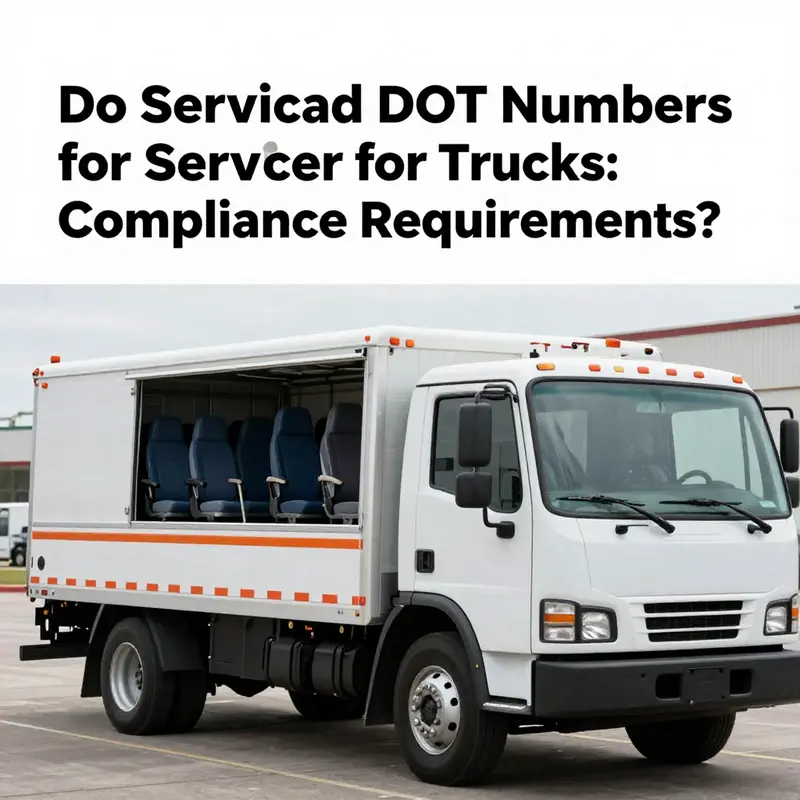
Second, passenger transport capacity introduces a separate but equally important gate. The FMCSA looks at whether the vehicle is designed to carry more than eight passengers, including the driver. Importantly, this is a design and use question: if a service truck is built to carry nine or more people, or is regularly used to transport workers to job sites with the potential for compensation, it can trigger the DOT number requirement. That means a crew transport vehicle—perhaps a van-style service truck used to shuttle technicians or a larger crew cab configured to move multiple specialists from one worksite to another—could fall under passenger carrier regulations. The emphasis here is not on the vehicle’s primary mission but on its capacity to move people in a commercial context. Even if the trip is routine and the trip distance short, the ability to move nine or more people makes it subject to parts of the FMCSA regime that govern passenger transportation. In many companies, this is the moment when operators discover they must stop assuming “we’re just a maintenance truck” and verify whether their vehicle falls into a passenger transport category.
Third, the hazardous materials criterion adds another layer of risk management and regulatory responsibility. A service truck that is used to transport hazardous materials in quantities requiring placarding is a DOT affair by definition. Placing hazardous materials into the classification of a DOT-regulated vehicle is a clear signal to regulators that the vehicle serves as a moving part of a broader system of safety and accountability. Even if the truck’s primary function is maintenance, if it also transports hazardous substances—whether a cleaning chemical, fuel, solvents, or other regulated materials—the DOT number becomes a practical and legal necessity. The placarding requirement is not an abstract label; it signals that the vehicle and its operator are prepared to meet safety, reporting, and compliance standards designed to prevent accidents and mitigate risk in transit.
A fourth, frequently overlooked, dimension concerns the interstate versus intrastate distinction. When a service truck operates across state lines in support of regulated goods, the federal DOT framework often applies, and a DOT number becomes indispensable. Conversely, intrastate work—operations conducted wholly within one state—may fall under state-specific registration, licensing, or permitting requirements. That does not always mean federal protection is unnecessary; rather, it means the regulatory oversight shifts toward state agencies, which may demand their own registration or operating authority independent of a federal DOT number. The practical upshot is that a company with a fleet of service trucks must carefully map their typical routes and jurisdictions. A single intercity project that touches two or more states can push a previously non-regulated vehicle into the federal stream, creating new obligations that extend beyond the ordinary business license or vehicle registration.
The operational consequences of these rules are real and not merely theoretical. If a service truck meets any one of the core criteria—GVWR in the 10,001-pound-and-above bracket, passenger capacity exceeding eight, or the transport of hazardous materials in placard-necessary quantities—the operator should anticipate registration with the Federal Motor Carrier Safety Administration (FMCSA) and obtain a DOT number. This registration is not a cosmetic step; it triggers a suite of compliance obligations, including safety audits or inspections, recordkeeping, and certain reporting duties designed to monitor the safety of larger, more complex transportation activities. The FMCSA framework also interacts with hours-of-service rules, maintenance and inspection records, and driver qualification standards. In practice, obtaining a DOT number is the gateway to being recognized as a regulated motor carrier for federal purposes, a designation that compels rigorous adherence to safety and regulatory expectations.
It is easy to assume that most service trucks operate outside these boundaries, especially when their mission centers on repair work, routine maintenance, or on-site utility support. Yet the research landscape is precise: federal requirements exist precisely because the line between a service truck and a small commercial carrier can be thin and often situational. A large service truck used to maintain a critical power line or a pipeline, especially if it weighs more than 10,001 pounds or carries hazardous materials, comes into scope automatically. The same is true if the vehicle is configured to transport more than eight passengers for compensation, or more than 15 non-compensation passengers. In those cases, the DOT number signals that the operator is subject to FMCSA oversight, including possible safety audits, recordkeeping, driver qualifications, and maintenance standards. Even a vehicle used mainly for in-house tasks can fall within the broader regulatory net if it crosses state lines or carries regulated passengers or materials. The key is to align the practical realities of the fleet with the regulatory categories, and to engage in due diligence before a scripting of policy or a simple assumption about exemptions.
Verification and registration come through the FMCSA’s official channels. The process is not a guesswork exercise; it requires a formal determination about whether a DOT number is needed and, if so, proactive steps to register. The FMCSA website offers the official guidance and the instrumented path to obtain the DOT number, including the unique USDOT number associated with a company’s motor carrier operations. This is not merely about ticking a box; it is about aligning a business’s operations with the regulatory architecture designed to improve safety on the roads where heavy, passenger-carrying, or hazardous-material-carrying vehicles travel. The practical implication is that service-truck operators should conduct a careful internal audit of each vehicle’s GVWR, passenger capacity, and cargo profile, and then cross-check these factors against the scope of their operations—especially any inter-state activity.
In terms of real-world navigation, consider a large service truck used to maintain power lines—that is a familiar image across the utility landscape. If this truck weighs more than 10,001 pounds or transports hazardous materials needing placards, the DOT number is a likely requirement. If, in addition, the vehicle is configured to carry nine or more people, including the driver, for compensation, that too triggers the rule. If the vehicle crosses state lines as part of service operations, the federal framework demands compliance with FMCSA rules regardless of whether the vehicle’s heavy-duty classification seems obvious. Conversely, a smaller service truck designed for intrastate work and limited to routine maintenance tasks may not require a DOT number, though it could come under state-specific registration or permitting depending on local regulations. The interplay of these factors means there is no universal affirmative or negative answer; rather, there is a decision process driven by quantitative thresholds and the purpose of operations.
Beyond the thresholds, the practicalities of compliance matter. Once a DOT number is required, the operator must ensure robust safety programs, driver qualification standards, and ongoing maintenance regimes. These include regular vehicle inspections, driver training, recordkeeping for hours of service where applicable, and proactive measures to mitigate risks associated with transporting people or hazardous materials. The DOT number becomes a cornerstone of accountability, signaling to regulators, customers, and workers that the operation adheres to a recognized set of safety and regulatory norms. In a world where job sites can be dispersed across multiple states and regulatory landscapes diverge, having a clear regulatory status helps avoid confusion and potential penalties.
The overarching message is not one of alarm, but of clarity. Service trucks do not automatically carry a DOT number by virtue of being service vehicles. They carry one only if they meet specific criteria: weight thresholds, passenger transport capacity beyond eight, hazardous materials inclusion, or interstate operation with complementary conditions. For many fleets, this means performing a quick, no-nonsense assessment of each unit and its mission profile, then mapping those findings against the FMCSA framework. In doing so, companies can align their compliance posture with their operational realities, avoiding the two biggest traps: assuming exemption without verification, and assuming federal oversight without a formal registration path. The field is dynamic; rules evolve with changes in vehicle technology, cargo patterns, and cross-border activity. Therefore, ongoing review—at least annually, or whenever a vehicle’s role changes—is a prudent practice that protects safety as well as business continuity.
As a practical step, operators should also be mindful of the broader regulatory ecosystem. The FMCSA site hosts the definitive guidance and the tools needed to determine the exact obligations for a given vehicle and operation. While the specifics can appear technical, the core logic reduces to asking: Does this truck move people for work above a certain threshold? Does it carry materials that require special safety labels? Does it routinely cross state lines in the course of service work? If the answer to any of these is yes, the DOT number becomes a relevant, perhaps essential, element of compliance. In many cases, the threshold tests are binary: either the vehicle is within the regulated category or it is not. But the consequences of being in or out extend to inspections, recordkeeping, and the potential for penalties if compliance is neglected.
For readers navigating this topic, the FMCSA’s framework offers both clarity and a path forward. A practical, responsible approach is to perform a structured review of the fleet, document the findings, and, when uncertainty remains, consult the official FMCSA resources. The federal guidance is designed to be accessible and actionable, providing a transparent mechanism to determine whether a DOT number is required and the steps to obtain one if necessary. The broader implication is that compliance is not a luxury; it is a discipline that supports safer operations, protects workers, and enhances the reliability and credibility of service teams that move across state lines and between job sites.
In the end, the question “Do service trucks need a DOT number?” resolves into a more nuanced answer: not every service truck requires one, but many do—especially when the vehicle crosses state lines, carries passengers beyond eight, weighs more than 10,001 pounds, or transports hazardous materials. The precise determination rests on a careful reading of the vehicle’s specifications, its use, and the geographies it serves. When in doubt, the most responsible path is to verify with the FMCSA and, if a DOT number is required, to proceed with the registration with the FMCSA and to implement a compliant operational program across the fleet. This approach aligns practical service operations with regulatory expectations and contributes to safer, more predictable transportation practices for workers and the communities they serve. For official guidance, see the FMCSA website: https://www.fmcsa.dot.gov
Crossing Lines: Do Service Trucks Need a USDOT Number in Interstate Commerce?
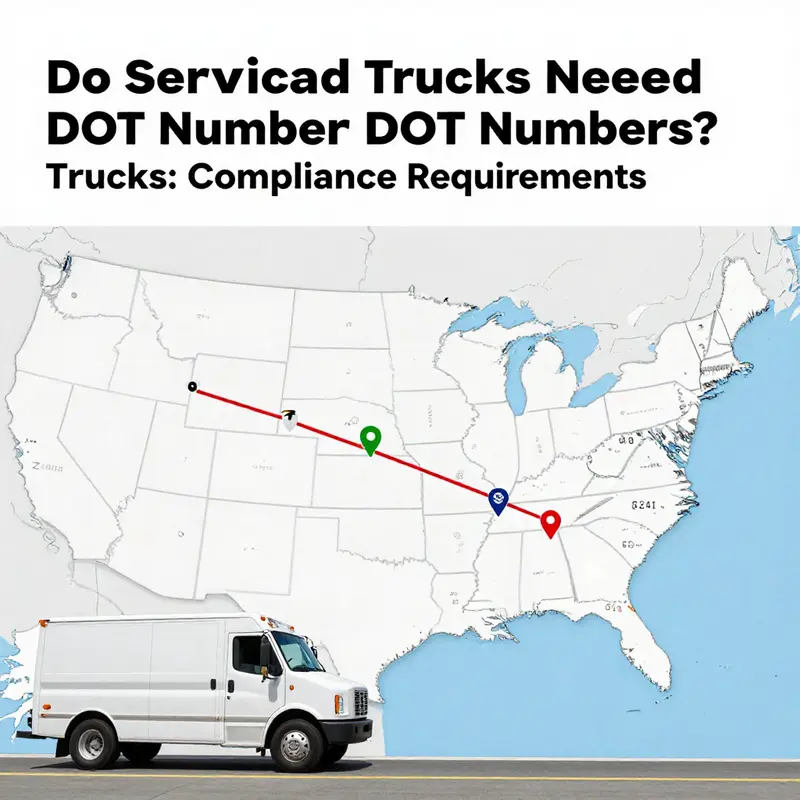
A service truck is rarely just a delivery vehicle. It is a rolling workshop, a lifeline between a site and the next repair, a bridge between a customer’s problem and a working system. When those wheels roll beyond the borders of a single state, the driver and the company step onto a map that is governed by theFederal Motor Carrier Safety Administration (FMCSA) and the USDOT number system. The question of whether a service truck needs a USDOT number is not answered by size alone. It hinges on a blend of weight, purpose, cargo, passengers, and the geography of movement. The regulation is not a test of technical savvy, but a framework designed to ensure accountability, safety, and traceability across the vast network of interstate commerce. To understand when a USDOT number is required, one must start with the basics: the thresholds that trigger registration, and then the real-world scenarios where those thresholds matter most in service operations.
First, consider weight. The most straightforward criterion is the Gross Vehicle Weight Rating (GVWR) or Gross Combination Weight Rating (GCWR). If either rating hits 10,001 pounds or more, a USDOT number is typically in play when the vehicle enters interstate commerce. That does not mean every truck over 10,000 pounds automatically becomes a traveling billboard for federal oversight, but it does mean the vehicle falls within a category that FMCSA tracks. The GVWR is a labeling on the vehicle that indicates the maximum total weight it can safely operate with passengers, cargo, fuel, and everything else. GCWR, on the other hand, looks at the truck plus any trailers pulled behind it. When a service truck operating in multiple states approaches or exceeds that 10,001-pound threshold, the need to register becomes a live possibility, particularly if the operation includes moving across state lines with goods, tools, or equipment that could qualify as regulated freight.
Next, the cargo matters. Hazardous materials, even in seemingly routine service operations, carry a separate, heavier layer of compliance. If a truck transports hazardous materials in quantities that require placarding—a bright red flag of danger—it triggers USDOT registration and accompanying safety requirements. The placarding signals not just the presence of hazardous goods but the potential risk for crews, the public, and the environment. Service fleets that maintain pipelines, electric utilities, or industrial networks may encounter materials that, while not pharmaceutical or toxic in every case, still demand careful handling and documentation. The presence of such materials in the vehicle’s payload often means the vehicle is operating under more robust regulatory oversight, with USDOT numbers serving as the identifying tag in safety audits and incident reporting.
The passenger criterion is less well known but equally important. When a service truck carries more than eight passengers (including the driver) for compensation, or more than 15 passengers without compensation, those occupancy thresholds push the operation into USDOT territory. This rule is rooted in the safety calculus around commercial passenger transport. It acknowledges that once you have a cadre of people aboard a vehicle in a professional context, you are not just moving tools and parts—you are moving people who require a standard of safety oversight proportional to the risk. In practice, this often applies to specialized maintenance crews, rapid-response teams, or contract crews that assemble temporarily for a large-scale repair project and use a service vehicle as a mobile workspace and transport node.
Interstate commerce alone is another spine of the rule. If the vehicle operates across state lines, regardless of size or cargo, and is involved in hauling regulated goods or providing services that cross jurisdictional boundaries, USDOT registration becomes a baseline expectation. The interstate designation is not a judgment about the vehicle’s utility or its daily routine; it is a recognition that the business model spans multiple regulatory regimes and thereby requires a unified identification scheme. In daily practice, a service truck that travels between utility substations in different states, or one that responds to emergency repairs across a regional grid, would typically fall under this interstate umbrella and thus trigger USDOT considerations.
These criteria do not exist in a vacuum. They interact with state-level regulations and with the specifics of how a fleet operates. In some cases, intrastate activity—operations confined within a single state—may not require a USDOT number, or may be subject to different state reporting requirements. However, the possibility of crossing a border due to travel routes, emergency calls, or a shift in project scope means the boundary between intrastate and interstate can blur. Smart fleet managers approach this by performing a clearance check that covers both the vehicle’s GVWR/GCWR, the nature of the cargo, passenger counts, and the likelihood of interstate trips in a given reporting period. The aim is not to overlabel every truck but to ensure that when the operation does meet the threshold, the registration is completed before the truck ever leaves the driveway.
What does USDOT registration actually mean in practice for a service-truck operation? At a functional level, the USDOT number is a unique identifier assigned by FMCSA that appears on the vehicle’s exterior along with the company name and city of operation. It is not a license granting special authority to operate; rather, it is a registration key that ties the company to a safety and compliance profile. The registration process is typically completed through FMCSA’s official portal, where the business provides basic information about equipment, the types of services offered, and the geographic scope of operations. Once issued, the USDOT number becomes a reference point for safety audits, incident reporting, and periodic reviews of hours-of-service compliance, vehicle maintenance records, and driver qualifications.
For service-truck operators, the practical implications of USDOT registration extend into maintenance discipline and data-driven safety culture. A registered operation gains access to a centralized repository of safety data, including inspections, crash reports, and compliance reviews. This visibility becomes a tool for continuous improvement. It helps fleet managers identify recurring maintenance issues, track the performance of drivers in different regions, and assess risk exposure across a network that includes scattered job sites, remote locations, and fluctuating demand. In turn, that data supports smarter procurement decisions, better scheduling practices, and clearer accountability when accidents or near-misses occur. The USDOT number thus becomes less about paperwork and more about a framework for safer, more reliable service delivery across state borders.
Concretely, a large service truck engaged in routine maintenance for a regional utility—one that weighs over the 10,001-pound threshold and occasionally transports corrosive fluids or other regulated substances in limited quantities—might be a textbook case where USDOT registration is prudent, if not essential. A bucket truck that moves between substations in adjacent states, carrying tools and personnel with a schedule that routinely straddles state lines, is another example where interstate activity could trigger the need for a USDOT number. Conversely, a compact service van making local calls within a single city, with no hazardous-materials payload and a GVWR well below 10,001 pounds, may legally operate without USDOT registration, though it would still need to comply with local motor-vehicle regulations and any state-level reporting requirements.
The line between what qualifies as “interstate commerce” and what remains intrastate is not a rumor or a bureaucratic trap. It is a definitional boundary set to ensure accountability where it matters most. When in doubt, the start of resolution should be a careful, numbers-driven appraisal of the vehicle’s weight rating, the nature of the hauled materials, and the scope of trips across state lines. The FMCSA provides the formal thresholds, and the best practice is to verify against these criteria before any service vehicle hits the highway for multi-state work. This proactive approach reduces the risk of retroactive penalties, which can arise if a truck is assumed to be intrastate but later is found to be operating across borders.
From a compliance perspective, registration is only part of the equation. The USDOT number is a gateway to a broader safety program that includes driver qualifications, vehicle maintenance records, hours-of-service rules, and standard reporting practices for incidents and inspections. The system is designed to be durable and scalable for fleets of every size—from small local operators to large, multi-state service networks. For a fleet manager, the question to answer is not only whether a truck qualifies on paper but also whether the operational practices—maintenance scheduling, driver training, incident reporting, and cross-state routing—are aligned with the expectations that USDOT registration signals. The right alignment reduces risk and builds trust with customers who rely on timely, safe, and compliant service.
To determine and act on USDOT requirements, many operators start with a direct lookup on FMCSA’s or USDOT’s official resources. The guidance is clear, and it can be navigated with a modest amount of paperwork and a practical understanding of the business’s geography and materials. The official portal provides the means to register, to renew, and to update information as the fleet evolves. In practice, once the USDOT number is issued, it becomes a standing credential that travels with the company as it expands or contracts its service footprint. It is not a one-time badge but a regulatory instrument that requires ongoing attention—updated vehicle data, maintaining compliance with driver records, and keeping up with policy changes that impact hours of operation or vehicle maintenance standards.
All of this highlights a central reality for service fleets: compliance is a facet of service quality. Customers rely on the consistency of a fleet that operates under a unified safety framework, particularly when the work involves critical infrastructure, safety-sensitive tasks, or environments where equipment is essential to public welfare. The USDOT number, and the regulatory ecosystem it anchors, is a signal to customers and regulators alike that the operator embraces standards, transparency, and accountability. It is not merely a bureaucratic requirement; it is a mechanism for reducing risk, improving reliability, and sustaining the uptime that customers expect when urgent maintenance issues arise.
In practical terms, what should a manager do next? Start with a careful inventory of each service truck’s GVWR/GCWR labels, examine the typical cargo—are there any hazardous materials? How many passengers are commonly carried, and under what arrangements? Will the operation routinely cross state lines or work with customers who require cross-border service? If the answer to any of these questions is yes, documentation should be prepared for potential USDOT registration. Then, consult the FMCSA framework to confirm whether registration is required for interstate activity and whether any exemptions apply to intrastate operations in your state. If a USDOT number is appropriate, begin the registration process with FMCSA, understanding that the identifier will be used across inspections and compliance checks. The process is accessible, and the public-facing resources are designed to support operators through the steps without needing a law degree.
For operators who seek practical guidance on compliance culture and procurement decisions, it helps to view USDOT compliance as a core component of safety training and fleet efficiency. Training programs that emphasize driver fitness, safe handling of any hazardous materials, and regular maintenance can be tailored to align with USDOT expectations. The alignment between maintenance discipline and regulatory oversight is not coincidental; it is a deliberate design that keeps fleets safe, reduces downtime, and strengthens customers’ confidence in the service provided. If you want to explore broader themes of safety and procurement that intersect with the operational realities of service fleets, you can browse the general safety and procurement discussions available in the industry blog space at 5startruckin.com/blog/.
In sum, the USDOT number is not a universal label attached to every service truck. It is a practical instrument that comes into play when weight, cargo, occupancy, or cross-border activity elevates the operation into federally regulated territory. The threshold is clear, but the interpretation requires thoughtful consideration of each vehicle’s mission and route network. When a truck and its crew regularly operate across state lines, haul regulated materials, or carry more than a dozen people under a compensated or non-compensated framework, USDOT registration becomes an important step in safeguarding safety, ensuring accountability, and maintaining a level of professional rigor that clients and regulators expect. The consequences of misclassifying or overlooking a requirement can be significant, from penalties and delays to gaps in the safety data that companies rely on to optimize maintenance and reliability. Thorough assessment, transparent documentation, and timely registration form a practical, forward-looking approach to service-truck operations in a world where mobility and infrastructure demands are continually expanding.
For readers seeking official guidance beyond the general explanation, the United States Department of Transportation provides up-to-date resources and regulatory details that help fleet operators navigate the nuances of USDOT numbers and interstate commerce. See the official site for authoritative information: https://www.transportation.gov.
Final thoughts
Understanding the requirements for DOT numbers in service trucks is vital for compliance and safe operation across various scenarios, including weight limits, hazardous material transport, passenger regulations, and interstate commerce. For trucking professionals, ensuring that you meet these regulations not only protects the business but also guarantees safety for all on the road. Always verify your truck’s requirements and stay informed to maintain operational compliance effectively.