
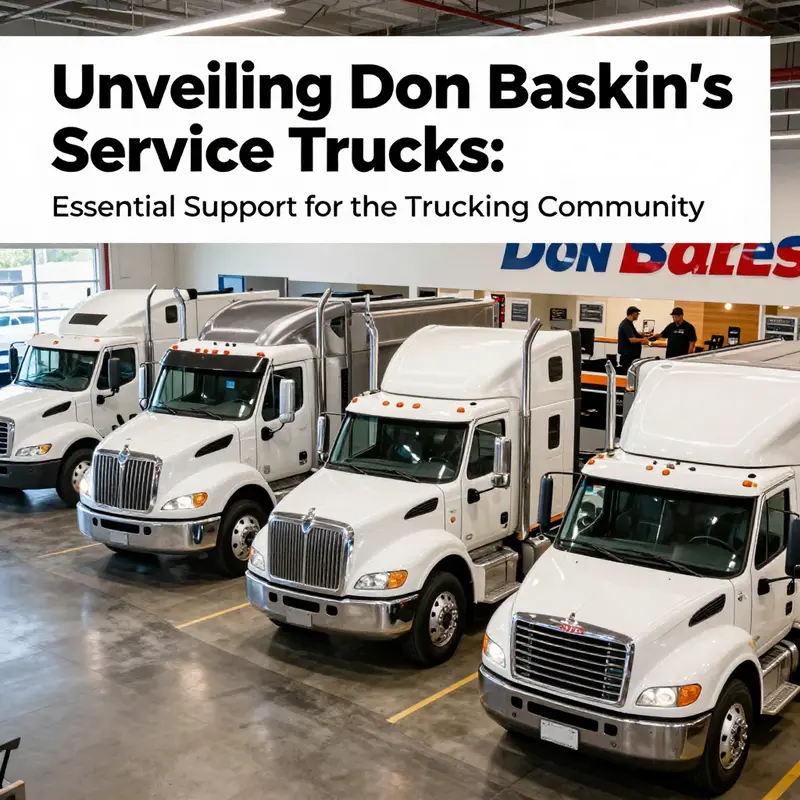
Understanding the pivotal role of service trucks in the trucking industry is crucial for long-haul truck drivers, fleet managers, and aspiring truck drivers alike. Don Baskin Truck Sales, located in Covington, TN, stands as a beacon of service and reliability, catering to the needs of trucking professionals. In the following chapters, we will delve into Don Baskin’s comprehensive service truck offerings, explore their importance within the industry, evaluate customer experiences and satisfaction, and provide a comparative analysis against competitors, ultimately painting a holistic picture of why these service trucks are indispensable for your operations.
How Don Baskin’s Service Trucks Keep Work Moving: Inventory, Delivery, and Fleet Support
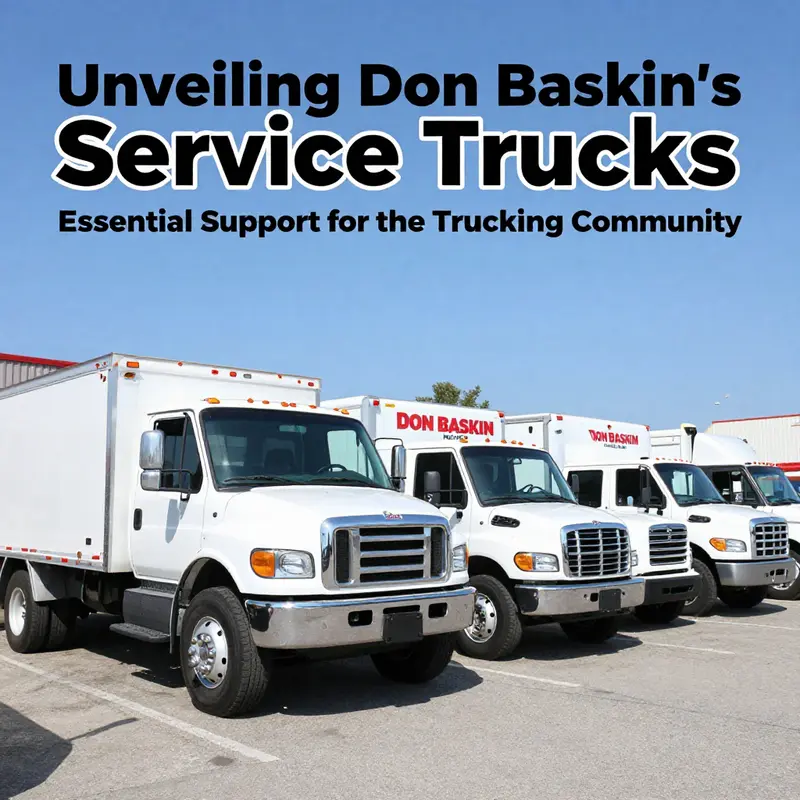
Don Baskin Truck Sales occupies a particular lane in the world of trucks and farm equipment. At a glance, the dealership is a place to buy used work vehicles. A closer look shows a more complete offering: service trucks and flatbed delivery solutions built to keep farms, construction sites, and small fleets productive. This chapter explains how Don Baskin’s inventory, delivery capabilities, and support services form a cohesive package for operators who must minimize downtime and control costs.
The inventory begins with variety. Don Baskin focuses on used service trucks and farm equipment, which gives customers options across body types and configurations. Buyers will find utility bodies, service bodies with tool storage, flatbeds designed for hauling heavy gear, and chassis suitable for custom upfitting. This breadth matters because a single configuration rarely fits every farm, shop, or crew. The ability to choose a truck that aligns with a specific set of tasks reduces the need for costly modifications after purchase.
Value is another pillar. A well-chosen used service truck can deliver years of reliable service when it is inspected, maintained, and, if necessary, reworked to meet current demands. Don Baskin positions its inventory to meet those expectations. Pricing reflects market conditions and the truck’s condition, while the selection is wide enough to balance cost against capability. For operators who must watch capital outlays, that mix—used equipment, thoughtful selection, and transparent pricing—makes it easier to find a vehicle that balances initial cost and long-term utility.
Delivery logistics are central to the dealership’s value proposition. Many buyers purchase a truck and immediately need to get it into service. Don Baskin supports this need with flatbed delivery options that handle large equipment and long-distance moves. Fast turnaround times, including same-day or next-day delivery in some cases, reduce the gap between purchase and deployment. For projects where time is critical, the ability to receive a service truck quickly can prevent schedule slippage and limit rental costs.
Beyond simple transport, these delivery capabilities matter because they preserve the operational continuity of a business. A construction firm that loses a truck to mechanical failure often rents a replacement at high daily rates. A farm that needs seasonal equipment moved into position can’t afford delays if planting or harvest windows are tight. Don Baskin’s delivery approach—equipped flatbeds and experienced drivers—helps minimize those pain points.
Customization and upfitting form the bridge between a used chassis and a work-ready service truck. Many buyers choose a base truck and then add the specialized elements they need. Tool compartments, crane mounts, air compressors, and auxiliary power systems are common additions. Don Baskin’s inventory strategy recognizes that buyers often seek trucks that are capable of such transformations. By stocking chassis and bodies designed for aftermarket work, the dealership simplifies the path from purchase to a purpose-built vehicle.
Maintenance-ready trucks reduce the complexity of that path. Trucks that arrive with clear service histories, recent inspections, or minor repairs already completed require less immediate attention. Don Baskin emphasizes transparency about condition and maintenance status to help buyers assess readiness. For fleet managers, that transparency translates to predictable capital planning and fewer surprises when vehicles are brought into service.
Service trucks are tools of continuity; their value depends on uptime. Don Baskin supports uptime not only through initial inspection and delivery, but also by providing access to parts and local service networks. While the dealership itself focuses on sales, its local presence in Covington and relationships with regional mechanics and parts suppliers help buyers maintain rolling stock. For many customers, knowing where to find replacement parts and reliable technicians is as important as the purchase itself.
Operators must also consider regulatory and safety compliance when acquiring a service truck. Proper lighting, load securement, brake systems, and required inspections vary by state and use case. Don Baskin’s sales process emphasizes alignment between a vehicle’s condition and regulatory expectations, helping reduce the likelihood of noncompliance. Trucks offered for sale are evaluated for roadworthiness, and sellers aim to flag any issues buyers should address before putting a vehicle into service.
Financing and cost planning deserve attention. Purchasing used service trucks is often a capital decision tied to seasonal revenue and project timelines. Don Baskin works with customers to understand budget constraints and timing needs. Competitive pricing and flexible payment options make it easier for small businesses to acquire the vehicles they need without overextending cash flow. For many buyers, the ability to match a truck purchase with upcoming work commitments makes the dealership a practical partner.
Another practical factor is lifecycle management. A service truck’s usefulness extends beyond its purchase price. Effective lifecycle planning includes initial acquisition, maintenance scheduling, depreciation, and eventual replacement. Don Baskin’s inventory strategy supports lifecycle thinking by offering vehicles at different age and usage thresholds. A buyer can choose a nearly new truck for longer service life or an older unit for short-term, high-use purposes. The right choice depends on the buyer’s operational horizon and repair capabilities.
Safety and operator training are part of sustainable fleet management. Even a well-equipped service truck becomes a liability without trained operators who understand safe loading, equipment operation, and emergency procedures. Don Baskin’s customers frequently pair purchases with local training resources. For teams that require structured maintenance and safety instruction, external training programs can fill that gap. One useful resource on maintenance and service training for heavy vehicles is available on site and helps explain best practices for upkeep and crew preparedness: fire truck maintenance service training.
Parts sourcing and aftermarket support influence long-term ownership costs. Service trucks often carry specialized components—hydraulic pumps, crane parts, auxiliary power units—that must be maintained or replaced. Don Baskin helps buyers navigate parts availability by advising on common components and regional suppliers. When parts are accessible and reasonably priced, the total cost of ownership becomes more predictable.
Operational flexibility is a strong selling point for service trucks from Don Baskin. A truck that begins life as a general-purpose flatbed or service body can be adapted to diverse tasks. Seasonal changes, new contract opportunities, and shifting fleet needs demand adaptable equipment. The dealership’s stock of versatile chassis and bodies supports that adaptability, enabling businesses to reconfigure vehicles as demands evolve without purchasing an entirely new truck.
Finally, the human element ties these components together. Sellers, mechanics, and transport crews all contribute to the buyer experience. Don Baskin’s local presence fosters relationships that matter when schedules tighten or technical questions arise. That proximity can be decisive for small operators who need quick answers and reliable service partners.
Taken together, Don Baskin’s focus on used service trucks, fast flatbed delivery, and practical support creates a functional toolkit for operators who must keep work moving. The inventory provides choices; delivery options remove logistical friction; and access to maintenance guidance helps sustain uptime. For farms, contractors, and small fleets, that combination can be the difference between a delayed job and a job completed on time. The next chapter explores how to evaluate a specific service truck, including inspection checklists and decision criteria that align purchase choices with operational goals.
External resource: https://www.donbaskin.com/
Service Trucks as the Backbone of Local Trucking Operations: What Don Baskin’s Customers Rely On
Service trucks are often the unsung backbone of trucking operations, and for dealerships like Don Baskin Truck Sales they represent both a practical product and a promise of ongoing support. These vehicles are purpose-built mobile workshops, carrying tools, parts, and technicians directly to the point of need. Their role reaches beyond roadside fixes. They uphold schedules, protect revenue, and keep communities connected by ensuring that commercial vehicles return to service quickly. For a truck dealer serving local fleets and independent operators, understanding the strategic value of service trucks is essential.
A service truck delivers immediate repair capability where a disabled vehicle sits. Instead of towing a truck to a maintenance shop, a properly equipped service unit brings diagnostic tools, replacement parts, and skilled labor to the scene. This approach reduces downtime in two ways: it eliminates transport time to a facility and it often enables repairs that would otherwise require multiple appointments. In short-haul and regional operations, where delays ripple through tight schedules, that reduction in downtime preserves contracts and customer trust.
Beyond urgent repairs, service trucks enable planned maintenance to be performed at convenient locations. Fleet managers can schedule inspections and component replacements at terminals, customer sites, or even at a driver’s layover. This flexibility reduces the frequency of vehicle removals from service and lets teams batch maintenance tasks efficiently. For dealerships like Don Baskin Truck Sales, which sell vehicles into local markets, advising buyers on how to integrate mobile maintenance into their fleet strategies adds tangible value. It positions the dealer as a partner focused on lifecycle costs, not merely transactional sales.
Service trucks carry more than wrenches and replacement parts. They transport specialized equipment that supports installations and modifications. From mounting auxiliary systems to adapting trucks for industry-specific roles, mobile crews can handle a wide range of upgrades. This capability is vital for operators who need fast turnaround on customizations. When a commercial buyer needs a platform, utility body, or other specialized fitment, onsite installation by a service truck can mean faster deployment and lower logistical expense. Dealerships that coordinate those services can close sales more effectively and reduce friction for customers.
Reliability is perhaps the single most important attribute that service trucks deliver. A fleet that can recover quickly from mechanical issues maintains a steadier flow of goods and services. This reliability depends on three components: the quality of the service truck itself, the inventory of parts and tools it carries, and the expertise of the technicians. A well-configured service truck balances weight, storage, and accessibility. It places critical parts within reach and secures heavier components for safe transport. Dealerships that understand these configurations can guide buyers toward the right setup for their operations.
Speed advantage is a practical extension of reliability. In trucking, shipments under approximately 500 miles often favor road transport because it offers direct, door-to-door delivery without transfers. A service truck complements that speed advantage by keeping vehicles moving. When a breakdown occurs within a regional network, a mobile unit can restore a truck and allow it to complete its run. That immediate response helps carriers maintain tight schedules and meet customer expectations. For local dealers, helping buyers assess how many mobile service hours they need per month can be a selling point, and it can inform recommendations about extended warranties or service packages.
Service trucks also expand geographic accessibility. Highways weave through remote and underserved areas where fixed service centers are scarce. Mobile units bridge that gap by bringing workplace capabilities to isolated locations. Utility companies, municipal fleets, and regional carriers all depend on this reach. A power company restoring service after a storm, for example, relies on mobile support to keep vehicles and equipment operational. Dealerships advising municipal or utility buyers should emphasize how mobile maintenance strategies reduce response times and help maintain essential services.
Operational planning for service trucks blends logistics with mechanics. Effective deployment requires understanding where breakdowns cluster, which routes see the most tonnage, and which vehicles represent the highest repair risk. Data from telematics, maintenance histories, and driver reports helps determine optimal stationing of mobile units. For a dealership working with local fleets, offering planning advice — or connecting buyers with providers who offer route-optimized mobile maintenance — adds operational value. That guidance can shape purchasing decisions, including the size and capability of the service truck the buyer needs.
The human element matters as much as equipment. Skilled technicians who can diagnose, weld, fabricate, or perform hydraulic repairs on-site are invaluable. Investing in technician training pays dividends in reduced return trips and lower mean time to repair. Dealers who sell service trucks as part of a broader support ecosystem should encourage buyers to prioritize ongoing skills development. Where possible, recommending or facilitating training opportunities strengthens customer relationships and improves uptime for both buyer and seller.
Safety and regulatory compliance are non-negotiable. Mobile workshops must secure tools and parts, and they must conform to weight and placarding regulations when carrying hazardous materials. They also must meet local codes for lighting, signaling, and worker protection. Dealerships advising customers on service truck purchases should highlight these requirements. Buyers need clear documentation on how to outfit vehicles to comply with regulations while maximizing utility. Failure to address compliance can lead to fines, operational delays, and reputational harm.
For buyers considering where to purchase their service trucks, local dealerships can offer an advantage. Providers with regional presence know local road conditions and regulatory nuances. They can also connect buyers to trusted fabricators, parts suppliers, and training resources. In the case of Don Baskin Truck Sales, located in Covington, Tennessee, the dealership’s proximity to regional carriers and utility operators positions it to guide customers on the right service truck configurations. While specifics of their service offerings are not publicly detailed, dealerships typically provide or arrange maintenance support, warranty work, and parts sourcing for the vehicles they sell.
Integrating a service truck into a fleet strategy requires balancing upfront investment with ongoing savings. A mobile unit itself is an expenditure, but it reduces indirect costs like lost revenue, expedited shipping fees, and customer penalties. Buyers should analyze total cost of ownership, factoring in technician wages, parts inventory, fuel, and capital depreciation. Dealerships that help customers model these economics provide a practical edge. That assistance turns a sale into a long-term partnership grounded in measurable results.
Finally, the evolving landscape of truck technology affects service truck design. Modern diagnostics rely on electrical systems and software, which means service trucks must carry advanced scan tools and specialized components. Electrification trends will introduce high-voltage systems and battery diagnostics, requiring new safety protocols and charging support. Dealers that stay current with these trends can help buyers future-proof their mobile maintenance capabilities.
In short, service trucks are not peripheral assets. They are strategic tools that preserve schedules, reduce costs, and protect reputation. Dealers who sell trucks and counsel buyers on service truck selection and deployment add meaningful value. For operators in Don Baskin Truck Sales’ market area, understanding how a service truck fits into fleet operations can clarify purchasing choices and improve uptime. For more on the broader operational characteristics of trucking and why speed and accessibility matter, refer to the Bureau of Transportation Statistics: https://www.bts.gov
For buyers focused on specialized apparatus and product support strategies, additional reading on tailored maintenance and product support can be helpful. See Maximizing Fire Truck Product Support for a perspective on sustaining complex emergency vehicles and the support systems they require: https://5startruckin.com/maximizing-fire-truck-product-support/
Earning Trust on Every Job: How Don Baskin’s Service Trucks Shape Customer Satisfaction and Review Patterns
Practical Strengths That Drive Satisfaction
Customers who choose service trucks want clear capability and dependability. Don Baskin’s service trucks present a set of tangible features that speak to those needs. Hydraulic brakes deliver decisive stopping power, especially important when a truck carries heavy loads or works on steep or congested job sites. A robust tool bed provides organized storage and reduces time spent searching for tools. Trucks equipped with an air compressor and an extra air tank add functionality for pneumatic tools, tire inflation, and other on-site tasks. Together, these attributes build a practical baseline that professionals rely on daily.
The importance of these features is not abstract. When a hydraulic braking system is properly maintained, it improves operator confidence and reduces downtime related to brake adjustments. A well-designed tool bed reduces wear on tools and prevents damage that comes from unsecured equipment. An integrated air system offers immediate utility for repairs and servicing in the field. Buyers evaluating Don Baskin’s trucks can view these components as functional investments rather than optional extras.
What Reliability Looks Like in Real Use
Reliability emerges from the interplay of design, build quality, and routine maintenance. The reported condition of Don Baskin’s service trucks—well-maintained and ready for work—suggests attention to that triad. Practical reliability means the truck starts reliably, systems respond predictably, and accessories perform under load. For customers, satisfaction tends to follow from consistent performance across typical job cycles. A truck that behaves as expected on the first week will likely score higher on long-term satisfaction surveys.
Service professionals also value modularity and repairability. A truck with easily accessible hydraulic lines, predictable wiring runs, and a tool bed designed for quick access lowers service time. That reduces operating costs and encourages positive word-of-mouth. In markets where crews cannot afford extended downtime, such design choices translate directly into customer loyalty.
Interpreting the Absence of Direct Reviews
There are times when direct online reviews are sparse. Don Baskin Truck Sales may not have abundant review entries tied explicitly to individual service trucks. That absence requires potential buyers to be more investigative. Rather than treating the lack of reviews as a red flag, use it as a prompt to gather targeted information.
Start with direct contact. Ask the dealer specific questions about maintenance history, refurbishing practices, and inspection routines. Request recent service logs for the fleet or individual vehicles. Ask whether the trucks undergo brake system inspections, compressor testing, and tool bed integrity checks before sale. These records are more revealing than broad, anonymous ratings.
Next, seek third-party perspectives. Platforms such as Google Reviews and Yelp provide general impressions of a dealership’s customer service and transaction experience. For equipment-centric feedback, industry-focused outlets can offer additional context on resale value and component longevity.
How to Read and Use Reviews Efficiently
When you find reviews, prioritize substance over sentiment. Look for comments that describe repeat behaviors. A single glowing review is nice, but repeated notes about prompt warranty handling or thorough pre-sale inspections reveal patterns.
Pay attention to timing. Reviews written shortly after purchase might focus on salesperson interactions and financing. Reviews posted after a few months of ownership often include insights on reliability and operating cost. Value statements about components—brake feel, compressor performance, and tool bed durability—give you actionable clues.
Balance numerical ratings with narrative detail. A three-star review that lists specific issues and resolutions can be more useful than a five-star review with vague praise. If possible, contact reviewers who describe similar use-cases to your own. Their experiences will mirror the truck’s likely performance in your hands.
Questions to Ask Before You Buy
A well-focused conversation with the dealership clarifies expectations and reduces surprises. Ask whether hydraulic brakes have a documented maintenance schedule and when the system was last serviced. Inquire about the air compressor: its make, maintenance history, and the date the extra tank was last pressure-tested. For the tool bed, request details on load capacity, fastening points, and any known repairs.
Request a hands-on demonstration. Ask to see the braking response during a controlled drive. Inspect the compressor while it runs and check for oil leaks or unusual noises. Open and close tool bed compartments to assess latch integrity and water intrusion points. These checks are simple and reveal much about the vehicle’s readiness.
Also discuss support after purchase. Will the dealership assist with warranty service or parts sourcing? Is there a recommended maintenance plan? Clear post-sale support policies often predict higher long-term satisfaction.
Warranty, Parts, and Local Service Networks
Customer satisfaction depends on support ecosystems as much as on initial condition. Trucks are mobile work platforms; components fail from heavy use or harsh environments. A dealer that facilitates parts access and connects customers with local service shops increases uptime.
Ask whether the dealership offers maintenance training or resources for operators. Even basic guidance on compressor upkeep or brake system checks helps non-specialist crews avoid common problems. When dealers proactively share maintenance best practices, owners see fewer avoidable failures.
For organized fleets, having a local parts supply chain and a reliable service partner matters. If Don Baskin’s operation maintains relationships with regional service centers, that network can become a decisive factor for buyers who operate across counties.
What to Expect from Test Drives and Inspections
A purposeful test drive reduces ambiguity. Observe braking performance at various speeds and during loaded and unloaded states. Listen for compressor noise during start-up and while running. Inspect tool bed mounting points and fasteners. Take note of wiring routing, heat shielding, and any signs of previous welding or structural repair.
Request a compression test for the engine and a brake inspection report. These documents are objective and provide a snapshot of mechanical health. For trucks with onboard air systems, ask for a leak-down check to see how quickly the extra tank loses pressure. Small problems exposed early are better than surprises after purchase.
Building Confidence Through Transparent Communication
A dealership’s willingness to share records and answer direct questions often mirrors its commitment to customer satisfaction. When sales staff can explain when and how components were serviced, buyers gain confidence. Transparency reduces the perceived risk inherent in used-equipment purchases.
If you encounter reluctance to provide service histories, treat it as a signal to dig further. A confident seller will welcome scrutiny. They understand that informed buyers make better long-term customers.
Using Industry Benchmarks to Supplement Local Feedback
Comparing Don Baskin’s trucks to broader industry standards helps frame expectations. Look for how similar trucks perform and what features professionals in similar roles prefer. Industry-focused commentary and operational case studies clarify acceptable maintenance intervals and likely component lifespans.
For a broader view of dealer and truck performance within the industry, consider reading profiles of high-performing dealerships. These pieces illustrate how structured inspection routines and rigorous product support improve owner outcomes. One useful perspective can be found in assessments of reputable truck service providers, which highlight practices that improve uptime and customer trust: Unveiling 5-Star Truck Inc.: a beacon of excellence in trucking services.
Where to Go Next for Real-Time Feedback
When you are ready for peer experiences, check review platforms and industry marketplaces for buyer commentary. Directly consult Google Reviews and Yelp for dealership-level impressions. For equipment-focused insights and market context, industry pages and resale trackers can be helpful resources. One such industry resource is Machinery Pete, which aggregates equipment data and market trends. Visit their site for additional perspective on equipment markets and resale patterns: https://www.machinerypete.com/.
Taken together, the practical features reported for Don Baskin’s service trucks set the foundation for strong customer satisfaction. That foundation solidifies when a dealer pairs clear maintenance records, transparent communication, and robust local support. If you align your questions and inspections with the truck’s intended use, you can translate observed features into predictable performance and lasting value.
How Don Baskin’s Service Trucks Stack Up: A Practical Market Comparison for Buyers
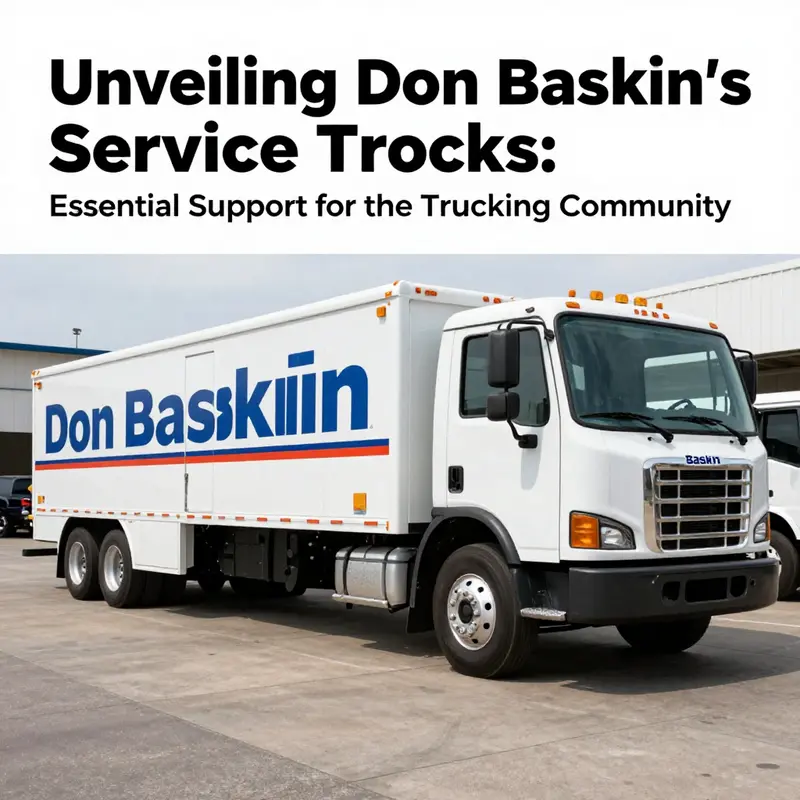
Comparative perspective on service trucks and market fit
A practical comparison of a regional truck dealer and its competitors must start with clear priorities. Buyers of medium- and heavy-duty service trucks evaluate durability, uptime, cost of ownership, and the match between a vehicle and its operational profile. A regional dealer that focuses on personalized sales and support brings different strengths than large national firms that emphasize scale and integrated systems. This chapter follows a buyer-centered thread, weighing trade-offs and highlighting where a regional specialist can outperform larger providers, and vice versa.
For many fleet owners, the question is not simply who sells trucks. It is who will keep those trucks working for the long term. A local dealer’s greatest asset is proximity. Proximity shortens service response times. It reduces logistics friction for scheduled maintenance and unscheduled repairs. It also fosters deeper relationships between technicians and fleet managers. When a dealer sees the same fleet repeatedly, technicians learn equipment quirks and usage patterns. That institutional knowledge speeds troubleshooting. It also allows tailored maintenance plans, which can increase uptime without inflating costs.
By contrast, national providers use scale to deploy broad service networks and centralized support tools. These networks deliver predictable service level agreements across regions. Centralized systems often include digital fleet management platforms, standardized parts programs, and bundled financing or leasing options. Customers with multi-state operations frequently favor this approach. It simplifies procurement and creates uniformity across assets, which can reduce administrative overhead and training complexity. The trade-off is less local nuance. Standardized packages sometimes fail to account for unique operational contexts, such as local road conditions or climate-driven wear patterns.
Inventory depth shapes purchasing flexibility. A smaller dealer tends to maintain a curated stock. That inventory is often carefully chosen to meet common regional needs. For buyers seeking a specific, uncommon configuration, a regional dealer may need time to locate or order the right unit. However, a smaller inventory can mean quicker decision cycles for typical purchases. It also often reflects a willingness to source customized or rebuilt components, especially when those parts are more economical or better suited to local conditions.
Large competitors maintain extensive inventories and nationwide distribution channels. This breadth enables immediate access to rare chassis or specialized service bodies. For organizations that require many identical trucks simultaneously, a national supplier’s capacity to fulfill large orders quickly is a decisive advantage. The economies of scale also translate into more robust parts availability. That can be crucial for minimizing downtime during peak seasons.
Service packages are where strategic differences become operationally visible. A regional dealer can craft maintenance plans that reflect specific usage metrics. Those plans might emphasize preventative tasks most relevant to the buyer. Examples include targeted axle inspections for heavy local loads, or bespoke intervals for hydraulic system checks in service bodies. When service plans are customized, they often achieve better value. Buyers pay only for the work they need, and they benefit from service that aligns with actual wear patterns.
Larger firms typically bundle services into comprehensive, modular packages. These bundles might include extended warranties, fleet telematics, and scheduled maintenance across multiple locations. The appeal is convenience and predictability. One account manager can oversee a sweeping suite of services. For some fleets, that single-source convenience reduces administrative complexity, and it supports standardized uptime targets across operations. Yet these full-featured packages can carry higher premiums and less flexibility for unusual needs.
Customer experience is a differentiator that does not always show up on spec sheets. Personalized attention from a local dealer can produce a faster sense of trust. A smaller sales team often has the authority to negotiate custom configurations and to approve special service provisions. That agility matters for buyers needing specialty bodies, retrofits, or conversions. A direct line to decision-makers shortens lead times and smooths custom orders.
Large providers rely on formal support structures and technology to deliver consistency. Automated service reminders, uniform inspection reports, and centralized billing reduce confusion for multi-site operations. The trade-off is that the personal touch can blur. Escalating unusual problems may take more time. For buyers who value procedural predictability above bespoke care, this arrangement often works best.
Cost considerations extend beyond sticker prices. Total cost of ownership includes fuel efficiency, depreciation, maintenance spend, and downtime. A regional dealer can influence these variables through targeted service practices and local parts sourcing. They may offer cost-effective rebuilds or recommend upgrades tailored to local fuel and terrain conditions. National providers leverage purchasing power to lower parts costs and to offer bundled financing. They may also provide telematics that identify inefficiencies and reduce long-term operating expenses. Buyers should weigh short-term acquisition savings against long-term operational costs.
Operational fit matters in real use. A municipal or utility fleet with daily short trips and frequent stops benefits from a dealer that understands local route conditions and compliance requirements. Service technicians familiar with municipal specifications can preempt regulatory issues, and they can tailor service readers to the fleet’s real workload. Conversely, a regional contractor with cross-state routes might prefer the national supplier’s reliability and uniform maintenance records that simplify regulatory inspections in multiple jurisdictions.
Customization and body work separate many sales decisions. Regional dealers often partner with body shops and fabricators that can produce purpose-built service compartments and tool storage systems. Because these dealers work closely with buyers, they can prioritize ergonomic layout and workflow efficiency. That can reduce on-site service time and improve safety for crews. National firms do offer customization, but their processes may be more standardized. Large providers sometimes use approved vendor lists and standardized build packages, which can be excellent for replicable fleet needs but less so for one-off specialty applications.
Financing and leasing terms influence procurement strategy. Regional dealers can be flexible with financing structures for small and medium fleets. They may negotiate trade-in values or provide informal lease terms that suit local cash flows. National firms usually provide structured financing and leasing options with predictable terms and integrated fleet replacement strategies. For organizations planning multi-year fleet renewals, these programs can simplify capital planning and provide tax or accounting advantages.
After-sales support defines the long-term relationship. A smaller dealer that commits to ongoing support becomes a partner rather than a vendor. This partnership can produce tailored spare parts packages and technician training sessions specific to a buyer’s fleet. It also fosters accountability and continuity of service. Larger firms provide formal support agreements with escalation procedures. They may offer nationwide warranty coverage and rapid parts replacement through centralized warehouses.
Digital tools are no longer optional. Fleet visibility and data-driven maintenance decisions improve uptime. National providers often offer advanced telematics and analytics platforms. These services give fleets performance dashboards, automated alerts, and integrated service scheduling. The immediate benefit is predictive maintenance that reduces failures. Regional dealers can complement these tools by offering hands-on diagnostic support and translating data into actionable local service plans. When a regional dealer combines local knowledge with digital insights, it creates a hybrid advantage for buyers.
Selecting between a regional dealer and a national provider requires a clear decision framework. First, evaluate operational geography. Single-region fleets usually gain the most from local service relationships. For multi-state operations, national scale generally simplifies logistics. Second, assess customization needs. Unique service body designs and specialized equipment favor local partners. Third, examine total cost of ownership projections, not just purchase price. Fourth, consider administrative preferences: do you need centralized purchasing and reporting, or would you rather work directly with a local team?
For many buyers, a blended approach works best. Purchase or customize through a local dealer for initial fit and crew workflow optimization. Then layer on national-level warranty or parts programs for redundancy and coverage during regional expansions. Use telematics from a reliable provider and have local technicians interpret the data. That combination leverages the responsiveness of a local dealer and the predictability of larger networks.
Thoughtful buyers will also visit the dealer, inspect maintenance facilities, and speak with technicians. Ask about parts exchange programs, service response times, and how the dealer handles emergency repairs. If possible, review case studies or references from similar fleets. These conversations reveal whether the dealer’s strengths align with operational needs.
A final note for decision-makers: choose a partner who prioritizes uptime, clarity, and fiscal sustainability. Whether from a regional dealer or a national provider, the ideal relationship balances operational understanding with rigorous service processes. For an example of a supplier perspective that emphasizes quality and service, see the overview on Unveiling 5-Star Truck Inc., which explores client-focused service approaches.
External reference: For verified business details about the regional dealer discussed here, consult the company profile available on RocketReach: https://www.rocketreach.co/don-baskin-truck-sales-llc
Final thoughts
The journey through the offerings and importance of Don Baskin’s service trucks has highlighted their necessity in the trucking industry. By understanding the competitive landscape and customer feedback, it’s clear that Don Baskin Truck Sales places significant emphasis on quality and service, ensuring their trucks meet the essential needs of drivers and fleet managers alike. As you consider your needs and options, remember that choosing the right service truck can be a game-changer for operational efficiency and reliability on the road.