
For long-haul truck drivers, trucking company owners, and fleet managers, roadside assistance can mean the difference between a significant delay and a swift recovery. This article explores Don’s Towing & Truck Service, a cornerstone of reliability in Wisconsin’s towing industry. Serving Racine and Kenosha for over 20 years, Don’s has established a reputation built on experience and customer satisfaction. Each chapter elaborates on the historical framework of the company, its extensive service offerings, the safety protocols in place, how they engage with customers, and the contributions they make to the local economy, providing a comprehensive view of their pivotal role in the trucking landscape.
Tow Lines and Trust: Framing Don’s Towing & Truck Service Through History, Regulation, and Community Reliability
On the road, history reveals itself not in dates but in patterns—the steady pulse of reliability that a road-side partner must keep beating, night and day. Don’s Towing & Truck Service, serving Racine and Kenosha in Wisconsin, presents a profile built on those patterns: reliability, experience, and a broad spectrum of services designed to meet emergencies and everyday needs alike. The available research highlights a company described as dependable and seasoned, with more than twenty years in the towing business and a capacity that spans emergency towing, accident recovery, flatbed towing, and vehicle storage. What it does not reveal, at least in the material provided, is an exact founding date or a documented historical timeline. Yet from a narrative standpoint, the absence of a published founding story does not erase the history that customers experience in real time—the history written in rapid dispatch, careful handling of vehicles, and clear communication when tension runs high on a roadside scene.
To understand how a towing service accumulates such credibility, it helps to think of history in terms of recurring outcomes. When a call comes in during a late hour or after a multi-vehicle collision, customers instinctively rely on the patterns they have learned to trust: the dispatcher who keeps calm, the crew that arrives with the right tools, and the operator who treats the owner’s vehicle with respect. In Don’s Towing’s case, the described breadth of services—emergency towing, accident recovery, flatbed towing, and secure storage—points to a fleet and a process designed to translate those patterns into tangible outcomes. Reliability in this industry is less a single heroic act and more a sustained discipline: quick response times, careful execution of complex recoveries, and a consistent, transparent approach to fees and follow-up communication. Such discipline, over years, becomes a form of community memory. Local customers remember the nights when a tow truck arrived within minutes, the second chance a driver got after an accident, or the way a vehicle was securely stored until arrangements could be made. Those memories, in aggregate, become the historical framework of the business even when a precise founding year remains undocumented in the sources at hand.
Beyond the memories on the street, a towing service operates within a broad and evolving regulatory landscape. The Western Australian case, where authorities introduced an Authority to Tow form in January 2025, illustrates how regulation formalizes the on-scene towing process. The form, issued as a four-part document, requires the owner or driver, the tow operator, the vehicle wreck custodian, and the service provider to each hold a copy. The framework also specifies who may authorize a tow—only the vehicle owner/driver, police, or authorized road staff—and it sets fee caps for certain types of work. Taken together, these provisions reflect a larger principle: on-scene towing is not merely a business transaction but a legally accountable sequence of actions that must be traceable, authorized, and auditable. A customer who has seen such systems in action experiences a sense of legitimacy and protection that goes beyond the immediate service outcome. The capacity to generate an official paper trail, a clear chain of custody for a vehicle, and predictable pricing reduces ambiguity at a moment of high stress and reinforces trust in the provider.
What this regulatory lens suggests for a Wisconsin-based operation like Don’s Towing is not a call to mimic another jurisdiction, but a reminder of the standards customers expect in a modern towing partnership. Wisconsin’s local framework, insurance requirements, licensing, driver training, and the safety culture embedded within a service that frequently handles damaged vehicles all shape how a company earns and keeps trust. The research materials indicate that Don’s Towing has earned a reputation for reliability over two decades, a reputation that almost certainly rests on adherence to procedures, careful handling of vehicles, and transparent communication with customers, insurers, and authorities. A company that has weathered the evolving demands of roadside assistance builds a cultural memory of safety, stewardship, and accountability. Those elements—safety protocols, driver certification, equipment maintenance, and dispatch discipline—constitute the practical closest thing to a historical framework that customers can experience, even when a formal corporate timeline remains unseen.
The operational reality behind a strong reputation often centers on the practicalities that support every call. Emergency towing and accident recovery require a fleet capable of rapid deployment and complex recoveries, including flatbed towing when the vehicle’s condition and safety considerations demand it. Vehicle storage, another service listed in the profile, underscores the need for secure, monitored spaces, procedural handoffs, and clear release processes. Each of these components depends on a mature, continuous practice—the kind of practice that accrues over time as crews learn from each scene, refine their approaches, and align with evolving regulations and industry best practices. In a community like Racine and Kenosha, that practice translates into dependable accessibility: a tow partner who is visible and present when drivers need help most, and a company that can coordinate with police, hospitals, insurers, or vehicle owners to manage the incident with measured competence.
In talking about history without a formal founding narrative, it helps to examine the relational side of the business as well. The strength of Don’s Towing rests not only on trucks and equipment but on relationships—relationships with customers who rely on prompt placement of a tow, relationships with insurers who need timely recovery documentation, and relationships with local authorities who expect seamless cooperation at the scene. This social architecture—the network of trust, professional conduct, and predictable outcomes—constitutes the living history of the company. It explains why, even in the absence of a published date of establishment, the firm can be perceived as an enduring community partner. The story is written, day by day, in the actions of the crew who respond, the careful way a damaged vehicle is managed, and the transparent accountability that follows a service call.
For readers seeking broader context on industry quality and reliability, a side reference to established industry discussions can be informative. The 5 Star Truck blog offers perspectives on what constitutes dependable trucking and maintenance practices, helping to situate Don’s Towing within a broader ecosystem of professional standards and continuous improvement. This external resource does not replace the company’s localized history but complements it by highlighting the kinds of practices that customers and regulators alike value when choosing a towing partner. It reinforces a simple idea: reliability grows from a culture that treats every call as an opportunity to reinforce trust, not just to complete a service.
In weaving together these strands—the tangible services Don’s offers, the regulatory reflections that shape how a tow is authorized and charged, and the community-built history that emerges from repeated, high-stakes interactions—one gains a richer, more cohesive sense of what makes a towing service endure. The lack of a published founding date does not diminish the significance of twenty-plus years of demonstrated dependability. Instead, it foregrounds a pragmatic truth: history in this field is measured by response times, by the careful handling of each vehicle, by the clarity of communication, and by the quiet consistency of a crew that answers when the road falters. As Don’s Towing continues to serve Racine and Kenosha, that history will keep accumulating in the everyday acts of service, in the steadfast routines that steady nerves in emergencies, and in the ongoing commitment to safety, accountability, and community trust.
External resource for context on on-scene regulatory frameworks in other regions: https://www.mainroads.wa.gov.au
From Towing to Rescue: The Full Range of Services at Don’s Towing & Truck Service
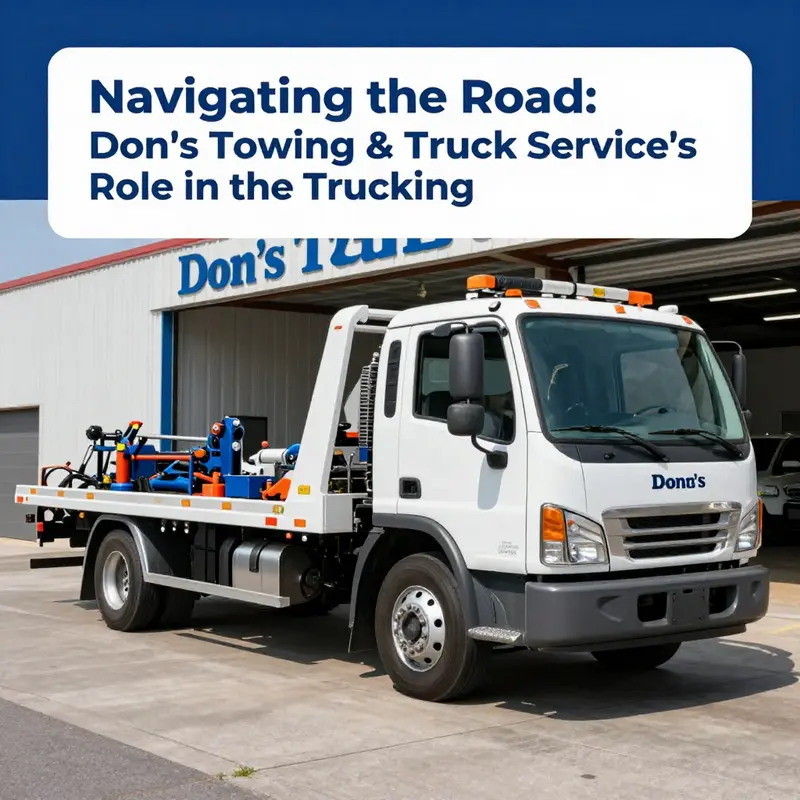
Don’s Towing & Truck Service has established itself as a dependable partner for drivers and fleets across Racine and Kenosha, Wisconsin. With more than twenty years in the field, the company has earned a reputation not just for getting a vehicle from point A to point B, but for guiding customers through the often stressful moments that road incidents bring. The essence of their service lies in reliability, a clear sense of duty, and a capability set that adapts to the needs of today’s motorists. In a region where time is as important as miles, the value of a towing and roadside partner that understands the local terrain, traffic rhythms, and weather patterns cannot be overstated. Don’s Towing & Truck Service frames its work around that understanding, delivering calm, professional help when clients need it most and doing so with a consistency that turns first-time customers into repeat clients and long-term partners.
At the core of their offerings are three practical, high-demand services that every driver hopes to have available in a pinch. Car towing forms the backbone of what they do: safely transporting a vehicle from the site of a breakdown, accident, or impound to any designated location. This is not merely about moving metal; it is about preserving value, preventing further damage, and coordinating a process that minimizes disruption to the vehicle owner. Alongside towing, they provide flat tire removal and spare replacement. In moments when a blowout or stubborn nail leaves someone stranded, the technician’s ability to quickly assess the tire condition and swap to a spare keeps people moving rather than waiting for days. And for situations where a vehicle must travel upright on a carrier, flatbed towing offers a secure, controlled method that protects sensitive components and maintains the integrity of the car or light truck.
But Don’s Towing & Truck Service does not rest on these three pillars. Their service philosophy embraces a broader spectrum designed to address both personal and commercial needs. In addition to the core offerings, they maintain eight more specialized capabilities that enable them to respond to a wide range of scenarios—from the simplest roadside hiccup to complex recovery operations. This breadth matters. It means a driver who experiences an engine stall, a wheel that won’t come off, or a vehicle that has slid into a tricky location can expect a coordinated, capable response rather than a fragmented solution. The company’s approach emphasizes flexibility, safety, and efficiency, with technicians trained to handle each situation with the appropriate equipment and a careful eye for minimizing risk. The result is a service team that is as comfortable with a single-vehicle tow as they are with a multi-vehicle recovery on a busy Kenosha street or a rain-drenched rural road.
That capability set reflects a commitment to operating within the practical realities of the region. Wisconsin winters, fluctuating road conditions, and the demands of urban traffic all shape how a towing service must function. Don’s Towing & Truck Service designs its operations to meet these realities head-on. They deploy a fleet of well-maintained tow trucks and recovery units that are ready for a range of tasks, from quick roadside assistance to more elaborate extraction work. The technicians bring not only strength and skill but a disciplined attention to safety protocols, alignment with local regulations, and a thoughtful approach to customer communication. In moments of stress, a clear explanation of what is happening, what the next steps will be, and when to expect arrival can transform a stressful event into a manageable one. These are hallmarks of the company’s reputation and a key reason why personal drivers and commercial fleets alike keep them at the top of their list when service is needed.
An important facet of Don’s Towing & Truck Service is the emphasis on service continuity. When a vehicle is towed, the end destination matters as much as the path to get there. The company offers storage options as part of its broader service suite, providing secure, monitored space for vehicles that cannot be returned to the owner immediately or must be kept for documentation and retrieval. This capability is particularly valuable for commercial clients, such as small fleets or delivery operations, who require reliable staging space while disposition and next steps are coordinated. The storage option complements the towing and recovery work by creating a cohesive, end-to-end solution. In practice, this integrated approach reduces the friction and uncertainty that often accompanies incidents on the road, giving customers a single touchpoint and a clear plan of action from the moment the situation is recognized to the moment the vehicle is back in its owner’s hands.
What stands out in the Don’s Towing & Truck Service model is not just the variety of services, but the way they are delivered. Each call is treated as an opportunity to demonstrate competence and care. Dispatch accuracy matters, because the fastest and most precise arrival can make a real difference in minimizing downtime and frustration. The staff are known for their professional demeanor, the accuracy of their assessments, and their readiness to adapt to evolving circumstances on scene. A driver who contends with a sudden road obstacle or an obstructed vehicle access point finds reassurance in a team that communicates what is happening and why. For commercial clients, the reliability translates into predictable service levels, easier fleet management, and a partner who understands the consequences of downtime on business operations. For individuals, it means a dependable ally in an unfamiliar, stressful moment, someone who can bring the vehicle to a preferred destination and do so with respect for the property and the person behind the wheel.
As a chapter of a broader conversation about towing and roadside support, the Don’s Towing & Truck Service offering illustrates how a local provider can build strength by combining practical service with a strategic view of what customers need most. The road can be unpredictable, and when a vehicle is immobilized, the priority shifts from a simple transport task to a carefully orchestrated sequence of actions that preserves value, minimizes risk, and restores mobility. Don’s achieves this through a blend of core offerings and specialized capabilities, underscored by a commitment to transparency, steady communication, and professional ethics. Their approach resonates in a region where families, commuters, and businesses rely on steady transportation networks and where a trusted towing partner is a quiet, steady presence rather than a source of anxiety.
For readers seeking a broader context on industry perspectives and best practices that inform these kinds of services, the 5 Star Truck blog provides a useful baseline reference. It offers wider industry insights and practical considerations that echo the themes at the heart of Don’s Towing & Truck Service: the importance of reliability, the value of a well-coordinated support chain, and the impact of strong customer communication on the experience of roadside assistance. 5 Star Truck blog
To stay informed about the evolving landscape of service offerings and to compare approaches across the field, Don’s Towing & Truck Service maintains a clear, customer-focused profile that invites prospective clients to review hours, service details, and contact options through their official channels. The combination of in-field expertise, a broad service portfolio, and a regional footprint in Racine and Kenosha makes the company a dependable reference point for both everyday towing needs and more intricate recovery scenarios. The next layer of information—detailed service descriptions, seasonal considerations, and updates to available options—can be found on their website, where customers can see the full spectrum of capabilities and how to reach the team for rapid, reliable assistance.
External resources can deepen understanding of the maintenance, training, and ongoing support that underpin high-quality towing operations. For readers who want a broader look at maintenance and service training within the industry, an external resource such as Fire truck maintenance service training coverage provides practical insights into how dedicated teams keep specialized equipment ready for demanding responses. This context helps illuminate the standards and expectations that underpin professional towing and recovery work as well. External resource: Fire truck maintenance service training overview — https://5startruckin.com/fire-truck-maintenance-service-training/
null
null
Reliability in Motion: How Don’s Towing & Truck Service Builds Trust Through Exceptional Customer Engagement
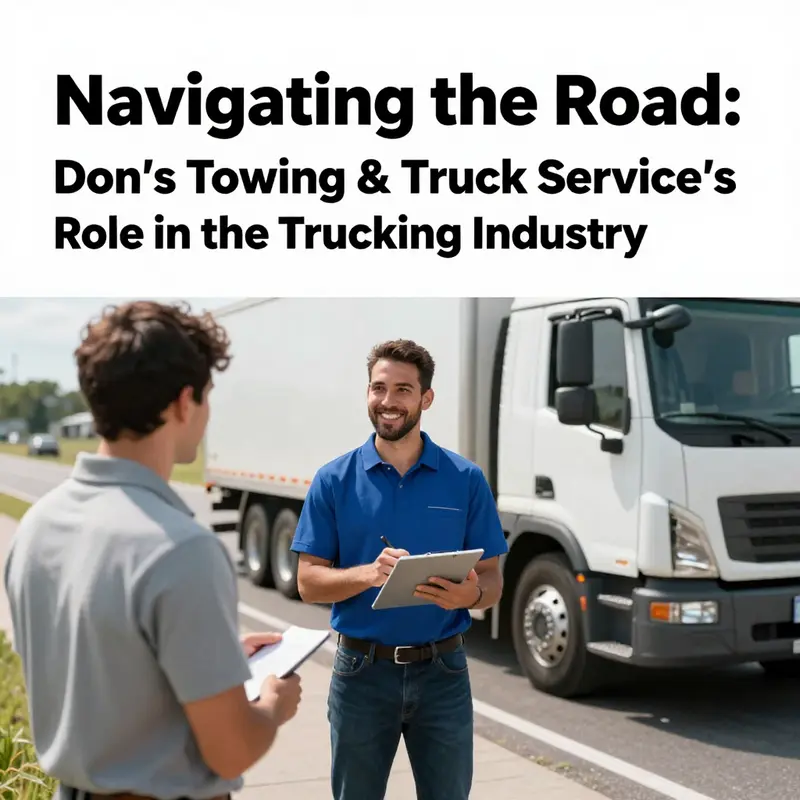
Don’s Towing & Truck Service operates in a world defined by urgency, uncertainty, and the narrow window between a roadside crisis and getting back on the road. In Racine and Kenosha, Wisconsin, where every mile matters and every second counts, the first impression often arrives with the sound of a dispatcher’s calm voice and the sight of a clean, well-lit lot ready to receive a distressed driver. The chapter you’re reading follows a thread that stitches reliability into every step of the service experience. It isn’t built on flashy promises alone; it rests on consistent competence, transparent communication, and a staff that treats each encounter as more than a transaction. The result is a reputation that precedes the tow truck: a promise of assistance that arrives not just quickly, but with clarity, courtesy, and competence.
From the moment a customer reaches out, the engagement strategy at Don’s Towing & Truck Service centers on reducing friction. Dispatch is more than a process; it is a flow of information designed to reassure. Clear explanations of what will happen next, an accurate ETA, and a straightforward outline of the cost structure help a caller regain a sense of control during a moment of vulnerability. This approach to communication is not about fluff; it is about eliminating guesswork. In a moment of car trouble, uncertainty breeds anxiety, and anxiety slows everything down. By providing concise, realistic expectations, the company equips customers with the knowledge they need to make quick, informed decisions.
The facility itself plays a quietly influential role in shaping the customer experience. Praised for its smooth operational flow, the site is laid out to minimize waiting and maximize ease of movement. This means a driver can arrive, share their key information, and see the progress of their tow or recovery without wandering through a maze of offices or shouting across a crowded yard. Ample space for maneuvering a tow vehicle and trailer is not a luxury here; it is a core capability that translates into faster service and fewer chances for mishaps. A strategic location right off a major highway further reduces wait times, enabling a rapid, predictable response when a vehicle is in need. In practical terms, this combination of space, layout, and accessibility turns an emergency into a smoother, more navigable experience.
Quality in towing and roadside assistance hinges on people as much as on equipment. The staff—emergency responders, drivers, and coordinators—are repeatedly praised for their professionalism, composure, and willingness to explain every step of the process. Even when pressures mount after a late-evening crash or a sudden breakdown, the tone remains steady, the information remains accurate, and the customer remains informed. This is not incidental; it is the result of deliberate training and a culture that values empathy as highly as efficiency. A dispatcher who can translate vehicle codes, road conditions, and legal requirements into plain language helps a customer keep a calm head. A driver who arrives on time and treats the vehicle with care reduces the risk of further damage and reinforces trust.
Customer engagement in this field is a dialogue, not a monologue. Don’s Towing & Truck Service recognizes that every call is the start of a relationship, not a one-off fix. The company actively seeks feedback, not as a ritual post-service survey but as a living feedback loop that informs ongoing operations. When customers share a concern—whether it’s about the estimated arrival, the price, or the handling of their vehicle—the team responds quickly, adjusts if needed, and communicates the resolution clearly. This responsiveness matters because a towing experience is often a customer’s first real-world interaction with the service provider after a stressful incident. By listening and acting, the company transforms an anxious moment into a display of reliability and care.
A key element of this engagement is accessibility. The proximity of the lot to main routes means that customers can reach the facility with ease, and can often visit the site for practical needs such as trailer washouts or vehicle check-ins. Even when the immediate need is transport, customers appreciate a place where tasks can be completed promptly and without unnecessary steps. The environment—clean, well-lit, and organized—speaks to a broader philosophy: efficiency does not have to come at the expense of attention to detail. When a facility communicates competence through its physical space, it reduces uncertainty and reinforces the customer’s confidence that they are in capable hands.
Beyond the immediate mechanics of a tow, Don’s Towing & Truck Service builds trust through consistency. The company’s 20-plus years in the industry provide a track record that customers can reference when they hesitate at the necessity of professional help. Consistency emerges in recurring elements: a predictable process for intake and triage, a standard of vehicle care during loading, and a transparent approach to documentation and billing. For motorists in distress, this predictability is a stabilizing force. It allows families and drivers to shift from crisis to problem-solving with a clear map of what comes next.
Influence from broader industry conversations adds another layer to this engagement. The chapter borrows from a wider discourse on service excellence in trucking and emergency services. For readers who want to explore related perspectives on reliability and customer-centric operations, a relevant discussion can be found in resources that examine the excellence of top trucking providers. This external lens helps frame Don’s approach not as an isolated practice but as part of a broader pattern in the industry that values efficient, safe, and respectful interactions with customers. To read a broader perspective on excellence in trucking, see Exploring the Excellence of 5 Star Truck Inc.
The practical upshot for customers is straightforward: engagement translates into time saved, fewer surprises, and a sense of partnership with the service provider. When a driver is stranded by the roadside, there is an instinct to retreat into a shell of worry. The role of a trusted towing service is to invite them out of that shell, offering a clear plan and guiding them through it. This is where the human element—stable nerves, respectful communication, and a willingness to explain—becomes the differentiator. It isn’t just about delivering a vehicle; it is about delivering reassurance. A well-executed engagement strategy ensures that customers feel heard, seen, and supported from the first call to the moment their vehicle is safely returned to them.
In the broader arc of the article on Don’s Towing & Truck Service, this chapter serves as a reminder that reliability is a service attribute with a human face. The business succeeds because it treats every interaction as an opportunity to reinforce trust. The staff understand that a customer’s road is not just about the current breakdown but about the many decisions that follow. Should the vehicle require storage, the facility’s organization makes the next steps intuitive. Should the customer need to coordinate with insurance or repair shops, the team is ready to provide documentation and guidance. Each touchpoint is designed to be seamless, so that the customer can move forward with as little friction as possible.
For readers who operate in related sectors or who study service design for high-stakes industries, Don’s approach offers a practical blueprint. It demonstrates how the mundane, practical aspects of a service site—where to park, how quickly tasks can be completed, how well the team communicates—are not trivial details but strategic levers that influence customer satisfaction and loyalty. The result is a service experience that feels less like a series of transactional steps and more like a well-coordinated, humane response to a crisis. The power of this approach lies not in grand promises but in daily, repeatable acts of professionalism that together form a durable reputation.
External reference for real-world footprint: https://www.google.com/maps/place/Don%27s+Truck+Towing+%26+Truck+Wash/@39.105864,-94.739346,17z/data=!3m1!4b1!4m6!3m5!1s0x87d8c1e9f1a1a1a1:0x1a1a1a1a1a1a1a1a!2sDon%27s+Truck+Towing+%26+Truck+Wash!3m2!1d39.105864!2d-94.739346
Tow Lines, Local Gains: Mapping the Economic Footprint of Don’s Towing & Truck Service in Racine and Kenosha
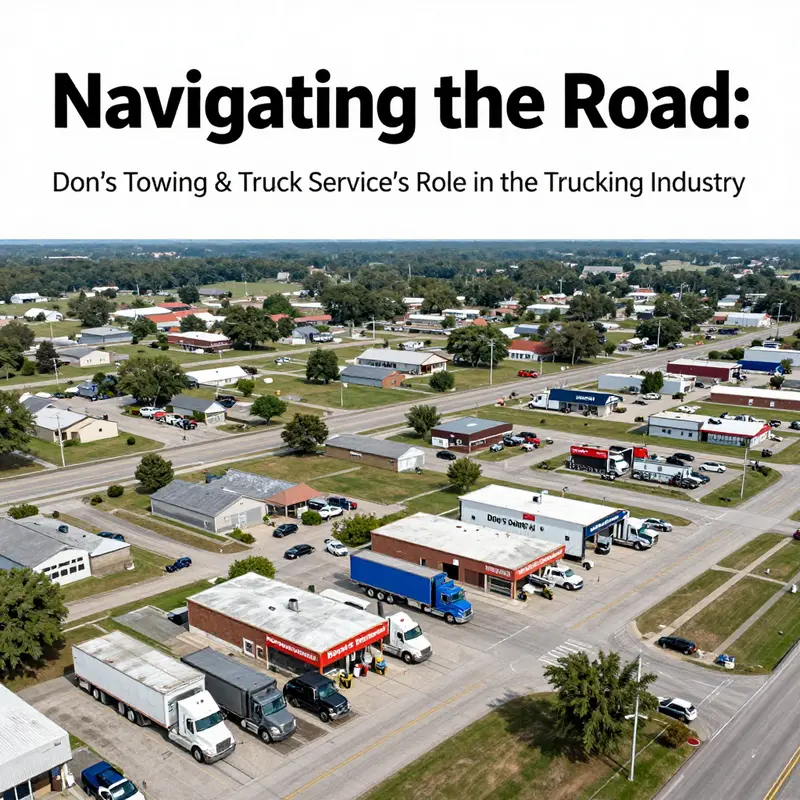
Every city has its quiet engines that never sleep. In Racine and Kenosha, among the rows of storefronts and the hum of daily commerce, a local towing and truck service operates with the patient discipline of a tradesperson who knows every back road and every traffic pattern. Don’s Towing & Truck Service—a name carried by years of roadside relief—embodies more than a fleet of trucks and a dispatch desk. It stands as a dependable link in the region’s economic chain. When a vehicle breaks down, when a crash blocks a lane, or when a transport rig slides into a shoulder, the tow crew appears not as a sudden disruption but as a predictable, necessary intervention. The service helps restore mobility with speed and reliability, ensuring that goods arrive to markets, groceries restock shelves, and workers reach their jobs on schedule. In this way, the company contributes to a fundamental economic mechanism: keeping the arteries of local commerce flowing, especially where delays would ripple outward into higher costs and longer wait times for communities accustomed to steady throughput. The impact is not flashy, but it is foundational. It is the difference between a storefront that can open its doors and a street that remains obstructed, between a factory that runs a shift on time and a yard that idles because a tow truck cannot clear the way fast enough. Reliability in this space does not merely fix a problem; it preserves the rhythm of economic life that depends on dependable movement of people and goods through every hour of the day.
Behind the scenes of Don’s Towing & Truck Service lies a sophisticated appreciation for how a local business supports a shared locale. The workers who respond to emergencies—drivers, dispatchers, mechanics, and administrative staff—are often local residents. Their wages recirculate through neighborhood economies, becoming purchases for housing, groceries, child care, and entertainment. This is the multiplier effect in action: wages earned by one service job become spending power in neighboring businesses, which then hire more workers or expand offerings. In a town the size of Racine and Kenosha, such ripple effects accumulate across dozens of small vendors who supply tires, fuel, maintenance parts, towing accessories, and the storage space where vehicles wait for the next call. Each transaction, from a simple fuel top-up to a routine maintenance check, cements a pattern of economic activity that may seem modest in scale but grows in significance when multiplied across a community’s network of commerce. The local nature of these interactions matters. When the service sources supplies from nearby providers, when it contracts with neighborhood garages for heavy-duty repairs, and when it pays local rent for a yard or office, the money stays close to home, reinforcing a resilient local economy that can weather external shocks more readily than an economy dependent on distant suppliers.
This subtle but persistent flow extends beyond direct employment and procurement. The public-facing role of a towing and truck service intersects with municipal operations and public safety. When roads are blocked after an incident, every minute matters. Quick clearance reduces traffic churn, shortens the duration of lane closures, and lessens the disruption to school routes, commuter patterns, and emergency responses. In practical terms, faster scene clearance means fewer opportunities for secondary incidents that hazard drivers and strain public services. The local emergency response ecosystem—police, fire, EMS, and highway maintenance—benefits from a partner that can mobilize rapidly and coordinate efficiently. In turn, that efficiency lowers the economic losses that would accompany prolonged roadwork or repeated closures. The value of a reliable tow service thus extends into the realm of municipal performance, where time saved on the road translates into resources preserved for essential services and community programs. Don’s Towing & Truck Service, by consistently delivering dependable response times, quietly strengthens the infrastructure that supports everyday life, from the durability of supply chains to the predictability of work and schooling routines.
Another layer of the economic impact emerges through the skills and training that a local towing operation cultivates. A workforce grounded in a regional context often benefits from ongoing, hands-on training in vehicle recovery, maintenance, and safety protocols. While the exact figures for this particular business are not published, the broader picture is clear: local service firms hire and train workers who develop specialized competencies. Those competencies ripple outward, improving the readiness of the regional labor pool and elevating the baseline skill set available to other local businesses that depend on heavy equipment and transportation. The return on investment goes beyond a single paycheck; it builds a knowledge ecosystem that helps the community attract and retain other service-oriented enterprises. And because these workers typically spend their earnings within the same locale, the cadence of local spending remains steady, supporting adjacent retailers, service providers, and cultural spaces that contribute to a community’s quality of life.
The story of Don’s Towing & Truck Service also highlights how small, locally anchored firms participate in a broader trend toward resilient, place-based economies. As global supply chains grapple with disruption, communities increasingly rely on the immediacy and adaptability of nearby service providers. A tow firm that can deploy quickly, navigate with an intimate sense of local geography, and coordinate with nearby shops for parts or overnight storage helps insulate the local economy from a range of external disturbances. In Racine and Kenosha, where traffic patterns and commercial activity meet a diverse mix of industries—from manufacturing to retail to distribution—this kind of reliability reduces downtime, supports predictable operations, and ultimately helps keep prices steadier for local buyers and sellers alike. The cumulative effect of these dynamics—steady employment, local procurement, improved public safety, and strengthened supply chains—constitutes a meaningful economic footprint. It is not a headline number, but it is a durable foundation that sustains livelihoods, sustains small businesses, and sustains the day-to-day vitality of a community that depends on the uninterrupted movement of people and products.
The value proposition of a local towing service, therefore, extends beyond roadside relief. It is a structural component of economic vitality, a quiet engine that keeps the wheels turning for a broad spectrum of community life. When we consider the economic impact of Don’s Towing & Truck Service in Racine and Kenosha, we see a composite picture: reliable service that minimizes downtime, a workforce that earns and circulates money locally, procurement channels that anchor cash flow within the region, and a public-safety framework that maintains the integrity of daily commerce. Taken together, these elements illustrate how a single, locally rooted business contributes to a more dynamic and resilient local economy. They remind us that the health of a community’s roads is inseparable from the health of its wallets, and that dependable, accessible roadside assistance plays a more substantial role in everyday prosperity than it might first appear.
For readers seeking further reflections on fleet management and industry practices informed by community needs, the broader trucking conversation offers useful perspectives. In related industry discourse, practitioners examine how fleets balance maintenance, safety, and uptime to keep essential services responsive to local conditions. This chapter ties those conversations back to the lived reality of Racine and Kenosha, where a company like Don’s Towing & Truck Service is not merely a service provider but a steady collaborator in the daily logistics that support families, businesses, and public life. External pressures will continue to shape demand and efficiency, yet the enduring truth remains: a robust local economy depends on the quiet, reliable work of small service firms that keep people moving, goods flowing, and neighborhoods thriving. The economic footprint of a local tow service is, in essence, a measure of neighborhood durability as much as it is a measure of service reliability.
Internal resource note: for broader insights on fleet maintenance and community-driven procurement perspectives, see the resource from the community trucking sector at the 5startruckin blog the 5startruckin blog.
External resource: https://www.bls.gov/
Final thoughts
Don’s Towing & Truck Service stands as a vital resource for the trucking community in Wisconsin, ensuring that drivers and companies alike can rely on prompt and professional service. From its rich history to a comprehensive list of services, safety standards, and active community engagement, Don’s plays a crucial role in enhancing the efficiency and reliability of the local trucking ecosystem. Their commitment to exceptional service and support underscores their importance to not just the drivers they assist, but to the broader community economy as well. As you navigate the road ahead, Don’s is ready to provide the assistance you can count on.