
For long-haul truck drivers, trucking company owners, fleet managers, and aspiring drivers, timely maintenance and repairs are crucial in keeping vehicles operational. DO’S Truck and Trailer Repair 24/7 Mobile Mechanic Service, located in Cedar Rapids, Iowa, is positioned as a cornerstone for logistical efficiency. With a commitment to 24/7 service, they ensure that help is available day and night, minimizing downtime and enhancing operational productivity. This piece explores the essence of their services, from their extensive offerings to their operational efficiency, and provides valuable insights on customer satisfaction.
On Call, On Site: Understanding DO’S 24/7 Mobile Mechanics for Trucks and Trailers
Breakdowns don’t wait for a convenient moment to strike. In the world of freight, delays ripple through supply chains, elevating costs and stressing schedules. For fleets that must stay productive around the clock, a mobile mechanic service that meets equipment where it is, rather than forcing it into a shop, can be the decisive difference between a delayed delivery and a completed haul. This is the core value proposition of DO’S Truck and Trailer Repair 24/7 Mobile Mechanic Service, a Cedar Rapids-based operation built to keep trucks and trailers moving when they’re most needed. Based in Cedar Rapids, Iowa, the service specializes in on-site repair and maintenance, delivering reliable, round-the-clock support directly to the customer’s doorstep, yard, or roadside. The promise is simple, yet transformative: skilled technicians equipped to diagnose and repair issues without forcing fleets to bear the logistics burden of head-to-shop downtime. In practical terms, this means a fleet can dispatch, park, or route around the nearest downtime bottleneck, while the mobile crew arrives with the tools and expertise to address the problem where it sits. The objective isn’t merely to fix a fault but to restore operation with minimal disruption, a goal that resonates profoundly with fleet managers and long-haul drivers who must balance tight schedules with unpredictable road conditions. The service’s extended hours reinforce that commitment. A Yelp listing notes daily operations from 8:00 AM to midnight, a window that underscores the practical reality that vehicle failures don’t adhere to a nine-to-five calendar. In the trucking world, that flexibility matters because maintenance needs can arise at any hour, and the ability to respond promptly translates into reduced downtime and steadier fleet uptime. The physical footprint—an office and workshop anchored at 4802 455 58th Ave SW, Cedar Rapids, IA 52404—serves as a hub for dispatch and parts coordination, but the real footprint is wherever the vehicle sits when trouble strikes. A quick phone call to the service line—(319) 366-3059—sets in motion a sequence of rapid mobilization that embodies the mobile mechanic ethos: bring the workshop to the customer, not the other way around. That ethos is increasingly essential in an industry where time is money. For many operators, the appeal lies not only in convenience but in the potential to minimize downtime and keep a fleet portfolio healthy. Do’s mobile mechanics are described as ready to handle a broad spectrum of issues, from urgent engine concerns to brake malfunctions and trailer hitch problems. The on-site model means that the technician can begin diagnostics on the scene, communicate findings quickly, and determine whether a full repair can be completed on-site or whether a critical component needs to be hauled for in-shop service. Either outcome prioritizes speed and reliability, with the goal of returning the vehicle to service as soon as humanly possible. The value proposition extends beyond immediate repairs. On-site maintenance and preventative care are central to the service’s approach, especially for fleets that aim to minimize the risk of sudden failures. Regular, mobile preventive maintenance reduces the likelihood of compounding issues, preserves tire life, and helps sustain fuel efficiency—which, in turn, preserves a company’s bottom line. In a landscape where drivers encounter weather, traffic, and the inherent variability of road conditions, having a dependable mobile partner becomes more than a convenience; it becomes part of a proactive maintenance strategy. The service model also aligns with the practical realities of today’s trucking environment. Large fleets rely on predictable service windows and robust uptime histories to craft reliable delivery schedules. Independent operators, meanwhile, benefit from the flexibility of mobile maintenance that scales with demand and location, reducing the risk that a breakdown forces a long, expensive detour to a repair shop. In both cases, the ability to access professional expertise at a moment’s notice is a decisive factor in preserving route integrity and customer commitments. The operational texture of this mobile service is grounded in the blend of rapid response, professional calibration, and transparent communication. Dispatchers coordinate the arrival window, technicians perform field diagnostics with portable equipment, and decisions about part reusability, replacement, and reassembly unfold with the customer’s input. When parts must be substituted, the technician explains the rationale, provides a realistic timetable for any subsequent in-shop work, and outlines what to expect in terms of downtime and next steps. This clarity becomes especially valuable for fleet managers who must maintain service-level agreements and track maintenance histories across multiple assets. The Cedar Rapids origin of the operation provides a regional anchor that supports not only local coverage but potentially broader service reach as demand grows. A service like this is best understood as part of a larger ecosystem that prioritizes uptime. In practice, it means a fleet can pair traditional preventive maintenance with responsive, on-site repairs that reduce the risk of cascading failures and costly tolls. The narrative here isn’t simply about a technician arriving with tools; it’s about a service that reframes how maintenance is imagined in a mobile era. It replaces the gatekeeping barrier of shop hours with a responsive, capacity-aware approach to keeping trucks rolling—a shift that resonates with operators who manage complex networks of drivers, depots, and loading schedules. For readers exploring the broader topic of trucking maintenance and the role of mobile service, the concept sits naturally alongside ongoing conversations about efficiency, reliability, and adaptability. Those looking for broader context on trucking maintenance trends and related topics can visit the industry blog for deeper discussions and practical insights. (blog) See also the external resource for a connected perspective on on-site maintenance philosophies and uptime strategies at https://www.dostruckrepair.com. This reference underscores how real-world mobile repair providers frame their services around minimal downtime and rapid, transparent communication. The combination of on-site diagnostics, flexible scheduling, and the 24/7 availability creates a practical blueprint for fleets seeking to optimize uptime without sacrificing service quality or safety. In this sense, DO’S Truck and Trailer Repair’s model embodies a broader movement toward portable workshops and responsive, location-aware maintenance that meets the industry where it is: on the road, at the yard, and wherever a vehicle happens to break down.
Always On Call: The Power of 24/7 Mobile Truck and Trailer Repair in Keeping Fleets Moving

When a truck or trailer falters on a quiet highway shoulder or a busy distribution lot, time becomes more valuable than fuel. The clock doesn’t pause for a breakdown, and every minute of idle productivity translates into delayed deliveries, dissatisfied customers, and uneasy drivers. In that high-stakes moment, a 24/7 mobile repair service emerges not merely as a convenience but as a strategic lifeline. The essence of this model is simple and powerful: expertise arrives where it’s needed, precisely when it’s needed, and with the tools and parts to fix the problem on the spot. For fleets that operate around the clock, the promise of immediate, on-site assistance reframes maintenance from a planned event into an agile, responsive capability. It turns the risk of downtime into a controllable cost, a shift that resonates through the balance sheets of transportation and logistics operators who depend on predictable schedules and dependable equipment. The reality behind the promise is a carefully orchestrated system. Mobile technicians are not just field mechanics; they are mobile workshops equipped with diagnostic devices, torque wrenches, fuel system tools, electrical testing gear, and essential spare parts. They carry the authority to tackle a broad spectrum of issues—from engine performance and fuel injection quirks to brake deficiencies and trailer coupling problems. The goal is to identify the fault quickly, confirm the solution decisively, and implement repairs with a precision that minimizes additional disruption. In practice, this means a dispatch network that understands the rhythms of the road. A call at 2 a.m. should activate the same level of urgency as a call at 2 p.m. The response time isn’t just a metric; it’s a marker of reliability. Fleet managers learn to measure service by the speed of arrival, the clarity of the diagnostic process, and the transparency of communication—from the first notification to the final fix. Technicians narrate the journey with the same care they apply to the mechanical issue itself, offering a realistic ETA, outlining the necessary steps, and laying out alternatives if a part needs to be ordered or if a more complex repair calls for a shop-based follow-up. This approach speaks directly to the realities of modern logistics, where a late arrival can ripple across routes, warehouses, and customer commitments. The value generated by 24/7 mobile repair extends beyond the moment of repair. When a driver is stranded, it’s not merely the engine that is affected; it’s the schedule, the fuel efficiency of a cold engine later, and the wear and tear on tires and belts that can accelerate when systems run hot or off-balance. By preventing cascading failures, the mobile repair model protects the overall health of a fleet. It makes lubrication and inspection routines during the crisis feel less arbitrary and more integrated into the daily enterprise. The immediacy of service also has a human dimension. Drivers regain confidence quickly when a technician appears with a calm, methodical approach, explaining not only what is being fixed but why it matters for safety and longevity. A roadside diagnosis can be challenging, and the best mobile teams treat it as a collaborative process with the driver and fleet manager. They listen for symptoms, observe the vehicle in its habitat—whether on a shoulder, in a yard, or at a remote site—and then translate that information into a targeted action plan. This collaborative posture is complemented by a philosophy of predictability. Because the service operates continuously, many fleets structure their maintenance around a hybrid model: scheduled preventive work supported by an on-demand response capability. The predictability comes not from a fixed calendar alone, but from a dependable network that treats after-hours calls with the same seriousness as daytime emergencies. In that sense, 24/7 mobile repair is not a litany of isolated incidents but a cohesive capability that strengthens fleet resilience. It aligns with safety-first principles, too. Quick responses reduce the likelihood of unsafe improvisations on the roadside, where fatigue, weather, and limited resources can tempt risky fixes. Technicians in this field bring risk awareness to every encounter: proper PPE, safe lane positioning, secure equipment, and controlled testing procedures. When a repair involves critical systems—brakes, steering, electrical harnesses, or hitch assemblies—there is an emphasis on auditability. Work orders capture the fault description, the diagnostic steps, the parts used, and the test results. This fosters accountability and makes it easier for fleet managers to track maintenance history in an ever-evolving landscape of regulations and safety standards. The downstream benefits are tangible. Reduced downtime translates into more predictable delivery windows, which in turn lowers the overall cost of operation by curbing penalties, rescheduling expenses, and the need for expensive towing or temporary replacements. The mobile approach also introduces a level of flexibility that’s hard to replicate in a fixed shop. If a trailer needs a wheel-end inspection in a loading yard or a brake system re-calibration at a distribution center, the mobile crew can adapt to the location, timing, and constraints of the site. For long-haul operators crisscrossing multiple states, this means less back-and-forth logistics, fewer detours, and more time on the road where it counts. The reliability of a 24/7 model is anchored in training and readiness. Technicians are seasoned professionals with broad expertise across engines, hydraulic systems, electrical circuits, and trailer infrastructure. They are expected to think with a diagnostic mindset, verify hypotheses with on-site testing, and maintain a stock of the parts and tools that enable immediate repairs. The value proposition is reinforced by clear communication. Fleet operators receive status updates, progress notes, and final confirmation that the vehicle is fit for highway duty. Owners gain a tangible sense of control, knowing that a trusted professional will pull them back from the brink of downtime, calmly and competently guiding them back to operation. For readers seeking hands-on maintenance perspectives that echo the practical mindset behind on-site repairs, consider this resource about fire-truck maintenance service training.
As with any service that travels to you, the human element matters as much as the mechanical one. A 24/7 mobile repair provider that consistently meets these demands demonstrates a genuine commitment to its customers. It signals that the company understands the unpredictable nature of transportation work and the cost of unplanned downtime. It signals that reliability isn’t a nice-to-have feature but a core capability. In the broader arc of fleet management, this capability transforms maintenance from a purely preventive discipline into a dynamic, on-demand safeguard. It becomes a strategic asset, enabling operators to price risk more effectively, plan routes with greater confidence, and maintain strong service levels for their own customers. The ongoing narrative of such a service is built on a foundation of trust—the trust that help arrives without a fight, with the right tools, the right parts, and the right people. It’s a trust earned in the lanes between rest stops and warehouses, when the weather changes and the clock keeps ticking. For those who manage the heavy, relentless pace of freight and logistics, that trust translates into a smoother road ahead, where the road calls and help answers with equal resolve. External reference: https://www.dosrepair.com
Rolling to the Rescue: A Deep Dive into DO’S 24/7 Mobile Mechanics and Their Comprehensive Service Range
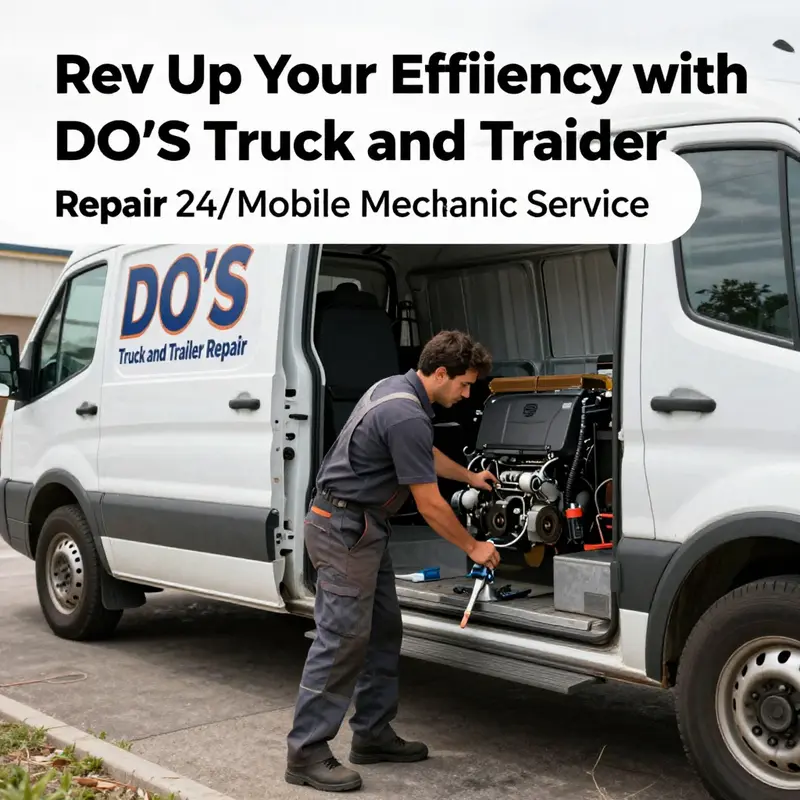
When a fleet hinges its productivity on every mile driven, a reliable mobile repair partner is not a luxury but a lifeline. DO’S Truck and Trailer Repair operates from Cedar Rapids, Iowa, with a promise that stretches far beyond the familiar shop door. The essence of their offering is not merely a menu of fixes but a philosophy of service that meets maintenance and repair where the vehicle actually lives and works. This approach translates to real-world advantages for fleets: reduced downtime, fewer logistics headaches, and quicker turnarounds that keep trucks and trailers moving through long-haul corridors and dense urban freight lanes alike. The service model centers on rapid mobilization, round-the-clock availability, and seasoned technicians who carry the full spectrum of tools and parts necessary to handle an emergency on the roadside, a yard repair, or an unscheduled maintenance stop at a truck stop or warehouse. The Cedar Rapids base serves as a hub for dispatch and coordination, yet the work travels to the customer, becoming a mobile extension of the fleet’s own maintenance program. In a world where every minute counts, the 24/7 window is not just a number on a sign; it is a guarantee that help can arrive when conventional shops are closed, and the fleet cannot afford to wait.
The core services DO’S provides on-site cover the most common and the most mission-critical moments in a truck and trailer operation. Emergency roadside assistance forms the front line. When a truck experiences a tire failure, a dead battery, or a minor mechanical hiccup that would otherwise strand a driver, the on-site team steps in to stabilize the vehicle and restore mobility. These aren’t cosmetic fixes; they are pragmatic, safety-conscious responses designed to get a driver back on the road as quickly as possible. The benefit of having a mobile mechanic is most evident in time-sensitive situations, where a tow would add hours to downtime and disrupt schedules across a concentrated fleet. A skilled technician who can come to the scene, assess the issue, and implement a fix minimizes disruption and preserves the continuity of transport chains that span regions and markets.
Beyond the roadside, DO’S emphasizes diagnostic testing and repairs as a central discipline. Mobile diagnostics are not a luxury; they are a strategic capability that prevents guesswork from dictating outcomes. On-site evaluation can reveal the root causes behind engine or transmission symptoms, brake alarms, or electrical faults that would otherwise require a tow into a shop for a more time-consuming assessment. When the diagnostic process is brought to the truck, crews can interpret fault codes, test critical subsystems, and, crucially, implement immediate corrective actions when feasible. This reduces the cycle time from breakdown to repair and, consequently, the time to return to service. The diagnostic scope extends to engines, transmissions, brakes, and electrical components—the systems that command reliability and safety on the highway. A fleet that relies on constant movement benefits from technicians who combine diagnostic acumen with practical, on-site repair capabilities, turning data into decisive action rather than into exhaustive bottlenecks.
Trailers warrant a dedicated focus because their maintenance is often the determinant of a fleet’s uptime. On-site trailer maintenance at a yard, rest area, or loading dock can prevent a minor issue from becoming a costly setback. DO’S covers inspections and alignment adjustments that ensure the trailer aligns with the towing vehicle properly, preserving tire wear patterns and handling characteristics. The work on wheel hubs, bearings, and suspension systems is targeted toward preventing vibration, bleed-throughs, and misalignments that could escalate into hazardous conditions or unexpected downtime. These capabilities are particularly vital for fleets with mixed equipment—where mismatched components or worn parts can create cascading failures across a single route or across multiple lanes of freight traffic. Having trained technicians who can perform precision repairs on-site not only sustains safety standards but also keeps the operation aligned with tight delivery windows and service-level agreements that define fleet performance.
Preventive maintenance packages form a cornerstone of DO’S value proposition for fleets. Tailored offerings, designed to reduce risk and lengthen asset life, focus on comprehensive fluid checks, timely filter replacements, and routine safety inspections. By leveraging a data-informed, proactive maintenance mindset, the mobile team helps fleets anticipate wear and prevent breakdowns before they occur. The emphasis on preventive care aligns with the realities of modern freight operations: vehicles spend more days in service than in the shop, and the cost of unexpected downtime often dwarfs the expense of planned maintenance. A well-structured preventive maintenance plan delivered on-site provides the right balance of cost management, equipment reliability, and operational continuity. The technicians themselves are a critical element in this equation. They are certified professionals who bring a disciplined approach to every call, ensuring that every inspection or service task adheres to industry best practices and safety standards. With a 24/7 staffing model, these professionals can be on-site at odd hours, which is when unscheduled maintenance frequently arises for fleets with demanding schedules and high utilization.
The value of this service constellation extends beyond the immediate repair or inspection. By meeting trucks and trailers where they operate—whether at a truck stop, a warehouse yard, or a remote roadside location—the mobile repair model reduces logistical friction. Fleets no longer must coordinate departures for a shop visit, arrange for alternate transportation, or absorb the time and cost of a tow. Instead, maintenance happens in the most efficient context possible: in the field, on the move, and aligned with the driver’s timetable. This approach also supports operational planning. Fleets can schedule preventative maintenance windows that fit their routes and cycles, while the mobile team provides real-time support for emergent needs. The result is a more resilient operation where uptime becomes a shared metric—one that reflects both the reliability of the equipment and the responsiveness of the service partner.
In telling this story, it is essential to recognize the breadth of capabilities that a mobile mechanic service must carry. The on-site toolkit is not a subset of shop tools; it is a fully stocked, portable workshop. From diagnostic scanners and high-grade hand tools to the spares and components most frequently required for trucks and trailers, the technicians operate with a level of readiness that mirrors a full-service shop, but with the flexibility to perform under the open sky. The combination of readiness, mobility, and expertise translates into faster fault resolution, fewer delays, and a smoother operational rhythm for fleets of every size. The service model also benefits from formal partnerships with fleet operators who value predictable maintenance costs and clear service-level commitments. This alignment creates a virtuous cycle: reliable on-site service reduces downtime, which in turn supports on-time deliveries, customer satisfaction, and the broader competitiveness of the fleet in a demanding market.
For readers looking to extend their understanding of on-road maintenance philosophy and training, resources on heavy-duty maintenance practices offer practical insights. A notable example is the fire-truck maintenance service training, which provides perspectives on keeping high-demand, safety-critical fleets ready and dependable. This reference underscores how rigorous on-site maintenance discipline translates across heavy-duty vehicles, including heavy-duty trucks and trailers operated by commercial fleets. To explore this topic further, you can visit the training resource linked here: fire-truck-maintenance-service-training. Although it focuses on a different sector, the underlying principles of proactive maintenance, rapid diagnostics, and field-ready tooling resonate with the mobile repair mindset that DO’S embodies. In practice, the DO’S portfolio remains anchored by the core services previously described: emergency roadside assistance, diagnostic testing and repairs, trailer-specific maintenance, and preventive maintenance packages. The combination of these elements creates a complete, on-site, around-the-clock solution that keeps vehicles operational and supports the logistics network with confidence.
If readers want to connect with the DO’S team or learn more about scheduling, the official site offers a clear pathway to service options, coverage areas, and the practical details of rapid response. This on-the-ground capability is especially valuable to fleet operators who must balance maintenance costs with the imperative of uptime. The service model is built around certified technicians who can be dispatched at any hour to address urgent issues or to conduct planned preventive maintenance in the field. In short, DO’S 24/7 mobile mechanics deliver a comprehensive, responsive, and fleet-friendly solution that makes downtime a manageable, and often reversible, event. For those who would like to explore more about the broader service portfolio and scheduling, the official source provides the most direct and authoritative information: https://www.dos-truckrepair.com.
External resource: For further context on the service landscape and to see how on-site maintenance fits into broader fleet reliability strategies, readers may consult the official DO’S Truck and Trailer Repair site at the link above. This external reference complements the on-site capabilities described and situates DO’S within the wider ecosystem of mobile maintenance providers dedicated to keeping heavy-duty fleets productive and safe on the road.
Trust in the Turnaround: How 24/7 Mobile Repair Shapes Customer Satisfaction for DO’S Truck and Trailer Repair
When a fleet’s heartbeat depends on the road, the value of a repair service scales beyond the wrench and the diagnostic screen. It becomes a trust-driven relationship where every call, every response, and every on-site fix reinforces the fleet operator’s confidence that the right crew will arrive promptly, diagnose accurately, and restore the wheels to rolling with minimal downtime. DO’S Truck and Trailer Repair in Cedar Rapids has built its reputation around this precise promise: a reliable, on-the-go repair solution that keeps trucks and trailers in service when they matter most. In the rough cadence of long-haul schedules and tight delivery windows, operators cannot afford long, uncertain waits. The 24/7 mobile model—one that meets clients wherever they are, whether at a truck stop, a warehouse loading bay, or a roadside shoulder—transforms the repair experience from a disruptive event into a controlled recovery. The core of this approach rests on three interlocking pillars: speed, safety, and communication. Speed is not shorthand for rushing through a job; it is the disciplined capacity to mobilize quickly, bring the right tools and parts to the scene, and perform targeted, durable repairs that reduce bounce-back calls. In practice, that means technicians who blend mechanical prowess with a readiness to diagnose on the move. They arrive equipped to handle engine issues, brake malfunctions, or trailer hitch problems, and they can often complete the work on site, allowing fleets to resume operations with minimal disruption. The promise of speed, in this context, is inseparable from the reassurance it offers fleet managers who live in the rhythm of deadlines and freight cycles. Safety and quality then become the non-negotiable counterweight to speed. The best mobile repair teams operate with a safety-first mindset, recognizing that a quick fix that compromises structural integrity or roadway safety is not a fix at all. DO’S emphasizes rigorous safety standards as a baseline, ensuring that every repair not only gets the vehicle back on the road but also preserves the long-term dependability of the fleet. This blend of rapid response with steadfast safety builds a durable trust: operators learn to expect that the mobile team will perform with the same due care as a traditional shop, only in a more convenient, on-location format. The third pillar is communication, a thread that weaves trust through every stage of a repair. In the field, a clear, proactive line of communication reduces guesswork and builds confidence. Clients want transparency about what is broken, what parts are needed, how long the repair will take, and what the road ahead looks like for their vehicle’s uptime. DO’S supports this by maintaining open channels—real-time updates, honest assessments, and a straightforward explanation of any limitations or contingencies. This level of dialogue matters just as much as the mechanical fix because it shapes how customers perceive value. It transforms the repair encounter from a one-off transaction into a dependable service relationship that fleets can count on across seasons and routes. Even when a customer leaves a review or a note on a rating platform, the undercurrent of satisfaction often derives from a sense of predictability and accountability—two qualities that DO’S carefully cultivates through its operational model and service culture. While the specifics of individual customer reviews may vary, the emphasis in the broader narrative is consistent: fast, safe, and transparent service that minimizes downtime while maximizing operator confidence. In practical terms, this means a fleet manager can plan with a higher degree of certainty, knowing that a mobile technician can be dispatched immediately and that the on-site work will be performed correctly the first time. The impact is not limited to the repair itself. It extends to the overall efficiency of the fleet, the reliability of maintenance planning, and the financial calculus of unexpected breakdowns. When downtime costs rise, operators seek partners who can deliver predictable turnaround times, maintain clear expectations, and uphold rigorous workmanship standards. DO’S positions itself as such a partner by aligning its operational capabilities with the realities of the transportation and logistics industry: uptime is a currency, and every mobile visit is an investment toward sustaining that currency. Feedback plays a crucial, dynamic role in this ecosystem. The shop’s stance on customer input reflects a broader commitment to continuous improvement. Even in the absence of a public ledger of testimonials within this chapter, the emphasis on getting vehicles back on the road safely reveals a client-centric mindset. Feedback, whether delivered verbally at the scene, through a follow-up call, or via a review on a platform like Google Maps, informs technicians about what went well and where the process could tighten. In turn, that feedback loops back into training, parts readiness, and scheduling efficiency. The objective is not simply to fix problems but to refine the service model so that every future encounter is smoother, faster, and more predictable. This is a quiet but persistent form of excellence that reinforces customer trust over time. For fleet operators, trust translates into lower risk. When a breakdown occurs, the instinct is to seek a partner whose response time is dependable, whose crew arrives with the right diagnostic approach, and whose workmanship stands up to the rigors of daily operation. The 24/7 mobile framework delivers exactly that: it acknowledges the reality of round-the-clock demand and translates it into a service architecture designed to minimize the fragility inherent in a breakdown scenario. The narrative of customer satisfaction at DO’S, then, rests on the alignment of service delivery with the operational tempo of trucking life. It is about giving operators not only a repaired vehicle but also a sense of continuity—the reassurance that the fleet will stay on schedule, that safety will not be compromised in the rush to resume movement, and that communication will be clear, timely, and honest throughout the process. In a market where uptime and reliability are as critical as the engine’s horsepower, satisfaction is earned through reliability, not rhetoric. The on-ground realities—swift dispatch, on-site diagnostics, safe repairs, and open channels of communication—become the machinery of trust that keeps customers returning and recommending the service to others. With each call answered and each truck back on the road, the feedback loop strengthens, and the business learns to translate customer experience into practical, repeatable improvements. For readers seeking a tangible sense of the prime benefit—being able to get back on lane and schedule with confidence—the impression is straightforward: a mobile fix, done correctly, minimizes downtime and preserves the rhythm of the fleet. In the end, the measure of satisfaction is not a single moment of service, but the cumulative capacity to deliver predictable outcomes, time after time, in a field where delays ripple across the entire supply chain. The fleet operator’s trust in DO’S grows not from a single successful repair but from the consistent, responsible, and transparent care that accompanies every on-site visit. To those who rely on mobile repair services for critical uptime, the message is clear: dependable responsiveness, safe workmanship, and honest communication create a lasting partnership built to outpace disruption. For more resources related to technician training and maintenance discipline that underpin such service quality, see the reference to fire-truck maintenance training here: fire-truck-maintenance-service-training. External perspectives and real-world input continue to shape the service ethos, underscoring that feedback is not merely collected but acted upon to keep fleets moving and customers satisfied. External resource: https://maps.google.com/?q=DO%27s+Truck+and+Trailer+Repair+Shop+Cedar+Rapids
null
null
Final thoughts
In conclusion, DO’S Truck and Trailer Repair 24/7 Mobile Mechanic Service stands out as a vital resource for long-haul drivers, trucking company owners, and fleet managers. Their dedication to providing swift, reliable service at any hour reflects their understanding of the demands placed on the transportation industry. By integrating mobile services with extensive repair options, they not only enhance operational efficiency but also deliver a level of customer satisfaction that keeps fleets running smoothly. As logistics demand continues to evolve, entrusting your vehicle’s maintenance to DO’S ensures peace of mind on the road.