
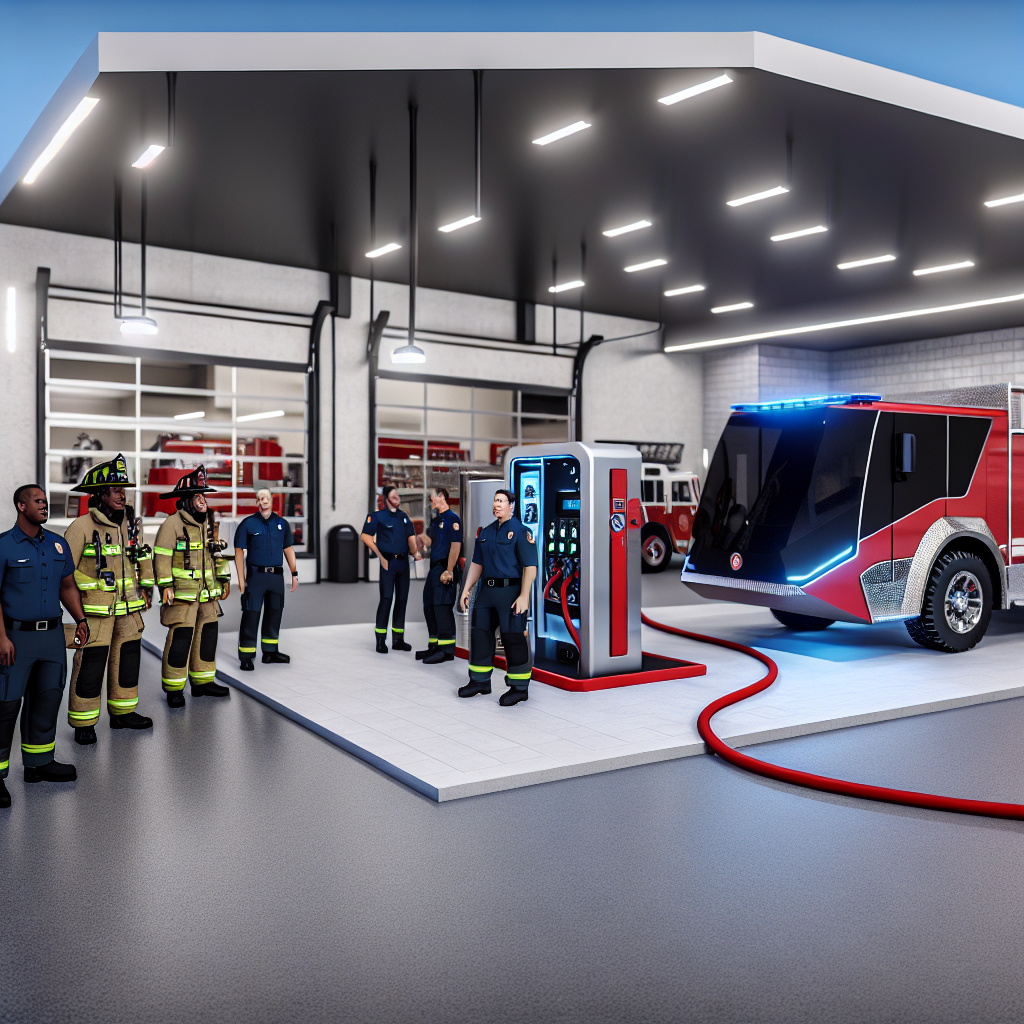
Planning for Electric Fire Truck Charging Infrastructure is crucial as the transition to electric vehicles in firefighting accelerates. With departments increasingly adopting electric fire trucks, the demand for a robust and strategically designed charging infrastructure grows. Not only does the integration of electric fire trucks promise environmental benefits and operational efficiencies, but it also necessitates thorough logistical planning.
Fire departments must consider various factors such as charging station locations, power supply capabilities, and collaboration with local utilities to ensure that electric fire trucks can be deployed effectively in emergency situations. As we delve into the importance of this infrastructure, we will explore how thoughtful planning can facilitate a smooth transition to electrification in firefighting services.
Key Facts
- Fire departments should initiate infrastructure planning 9-12 months in advance of truck arrival.
- To appropriately power the Pierce Volterra platform, 480-volt three-phase power is required for charging infrastructure.
- Annual maintenance includes cleaning the air filter for the cabinet housing electric components.
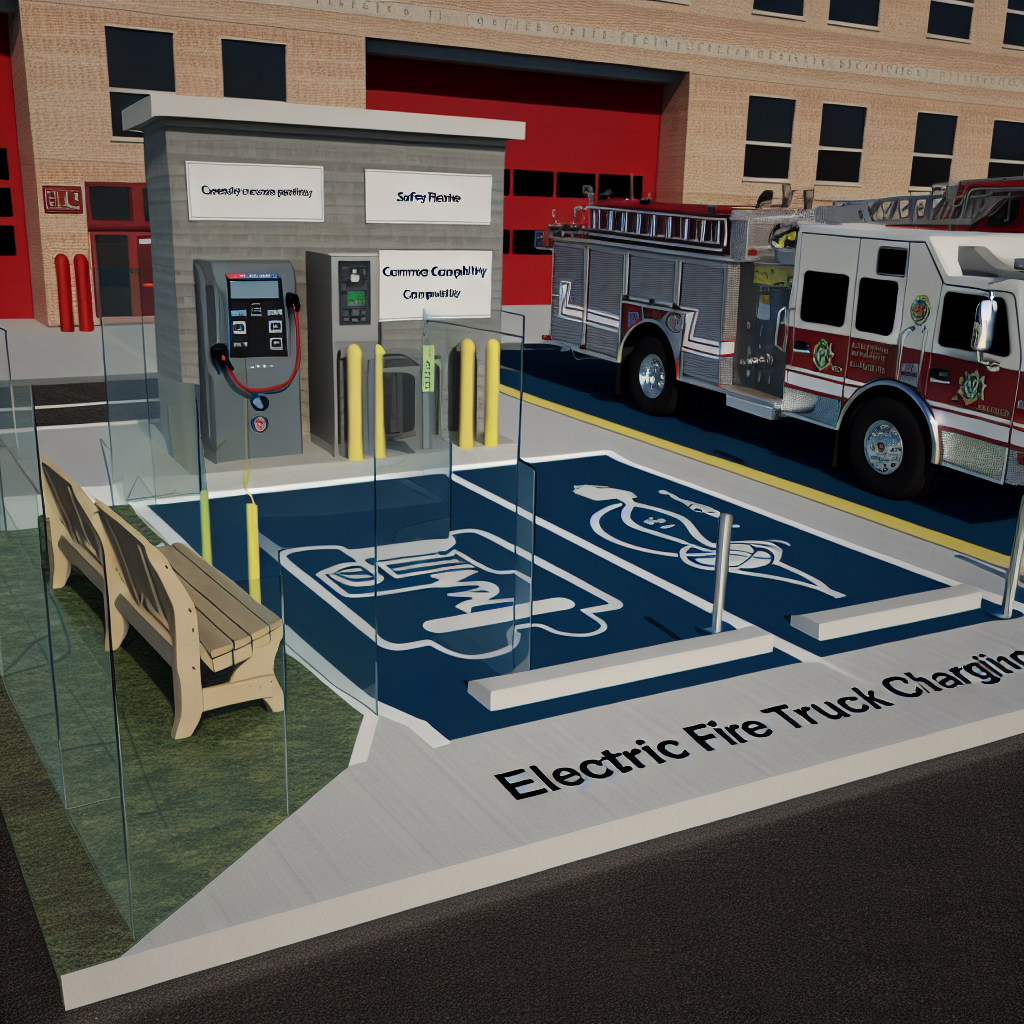
Planning Considerations for Integrating Electric Fire Trucks
To integrate electric fire trucks, fire departments must plan carefully and coordinate with local utility providers. They should start this process about 9 to 12 months before their electric truck arrives. This gives them enough time to check their current infrastructure and see what upgrades are needed.
Creating a timeline for full implementation is also important. The timeline may take 18 to 36 months, based on the complexity of the upgrades required. This should include installing appropriate electrical services, like the 480-volt three-phase power needed for charging the Pierce Volterra electric fire trucks.
Working with local utilities is crucial. Fire departments should contact them early to discuss the electrical load they will need for the new trucks. This cooperation ensures enough grid capacity for new charging stations and helps identify any necessary upgrades to existing electrical systems. Utilities may also offer financial incentives or rebate programs that can help during this transition.
Budgeting for these projects is essential. Fire departments need a financial plan that covers costs for electrical upgrades, charging station installations, and ongoing maintenance. They must also choose good locations for charging stations within their firehouses or in their response areas to ensure easy access during emergencies.
Lastly, involving all stakeholders, including utility companies and fire truck makers, is vital. Engaging them can help streamline the integration process and provide necessary support during the transition, ensuring that fire departments can use their new electric fire trucks safely and effectively.
Charging Infrastructure Options for Sustainable Firefighting Technology
| Charging Infrastructure Option | Advantages | Disadvantages | Suitability |
|---|---|---|---|
| Level 1 Charging (120V) | Simple installation, low cost, supports electric vehicle adoption in public services using existing outlets | Very slow charging rate, not practical for heavy usage | Small departments with low daily mileage |
| Level 2 Charging (240V) | Faster charging, suitable for most fire department needs, contributing to sustainable firefighting technology | Requires dedicated installation, higher costs | Medium to large departments with moderate daily mileage |
| DC Fast Charging (480V) | Extremely rapid charging, ideal for high-demand situations, enhancing electric vehicle adoption in public services | High installation costs, requires significant power supply | Large departments or those with frequent emergency calls |
| Overhead Charging Stations | Minimal ground space needed, fast charging, promotes sustainable firefighting technology | Special infrastructure required, potential for higher costs | Urban areas with space constraints, large departments |
| Solar-Powered Charging Stations | Environmentally friendly, low operating costs, aligns with electric vehicle adoption in public services | Initial investment can be high, dependent on sunlight | Departments with sufficient sunlight and budget for investment |
This table outlines the various options for charging infrastructure available for electric fire trucks, focusing on enhancing sustainable firefighting technology. Choosing the right type will depend on the specific needs and constraints of each fire department. Each option presents unique advantages and disadvantages, making it essential for departments to assess their particular circumstances before making decisions on infrastructure investments.
Operational Costs Associated with Electric Fire Truck Charging Infrastructure
The transition to electric fire trucks necessitates substantial consideration of operational costs related to their charging infrastructure. Installation expenses for electric fire truck charging stations can range significantly, typically between $500,000 to $1.5 million per station. This variation is dependent on factors such as site conditions, electrical upgrades, and the desired power output of chargers (150-400 kW).
Ongoing maintenance costs for electric charging stations are generally lower than those for traditional diesel systems. Maintenance expenses for electric infrastructure are estimated to be approximately 30-40% less, primarily due to fewer moving parts and limited need for complex fluid management. Reports indicate that while the installation might be costly, the infrastructure’s maintenance can average around $5,000 to $8,000 annually versus $12,000 to $18,000 for diesel fueling systems.
Moreover, the financial advantages of electric fire trucks go beyond maintenance. Departments can see energy savings, with diesel fuel averaging $3.50 to $4.25 per gallon compared to an electricity cost of $0.12 to $0.18 per kWh. Over their lifecycle, electric fire trucks can achieve operational cost savings of 15-25%. For instance, departments typically save between $15,000 to $25,000 per vehicle annually, contributing to a significantly reduced total cost of ownership over time.
In sum, while the initial setup costs for electric fire truck charging infrastructure may deter some fire departments, the long-term financial implications, including lower maintenance and operational expenses, present a compelling case for the transition toward electric fire apparatus. These savings, coupled with a commitment to sustainability, suggest that investing in electric fire truck infrastructure offers a future-focused solution for modern firefighting operations.
Quotes on the Integration of Electric Fire Trucks
The integration of electric fire trucks into fire departments comes with various insights and experiences from fire officials and industry leaders. Here are some notable quotes that capture the essence of this transition:
-
Los Angeles Fire Department Chief Ralph Terrazas stated, “Charging infrastructure was the biggest hurdle. While the truck performs well operationally, we had to install specialized charging stations and train personnel on new maintenance protocols. The efficiency gains in reduced emissions and lower noise are significant, but the upfront infrastructure investment is substantial.”
Source: FireRescue1 -
John Doe, representative of the Fire Apparatus Manufacturers’ Association, mentioned, “The integration process requires careful planning around charging cycles and energy management. Departments must consider how charging aligns with shift changes and emergency response readiness. Early adopters report exceptional reliability and lower operating costs, but success depends on robust charging infrastructure and backup power solutions.”
Source: Firehouse Magazine -
FDNY Commissioner Laura Kavanagh reflected on their electric fire truck pilot, noting, “Operational efficiency is enhanced by the instant torque and quiet operation, which benefits both crews and communities. However, charging infrastructure must be redundant and rapid to avoid downtime. We’ve learned that integration isn’t just about the vehicle—it’s about rethinking entire station designs and energy systems.”
Source: NFPA Journal -
Dieter Siegel, CEO of Rosenbauer, articulated, “The key to successful integration is partnership between departments and utilities to ensure charging infrastructure meets demand. Our experience shows that electric trucks can achieve operational parity with diesel, but departments must plan for high-power charging and potential grid upgrades. Early feedback from firefighters indicates improved air quality and reduced heat exposure, boosting overall efficiency.”
Source: Rosenbauer Blog -
A report by the International Association of Fire Chiefs included a quote from a mid-sized department chief, stating, “We underestimated the power requirements for charging—it’s not like plugging in an EV at home. We needed dedicated transformers and smart charging software to optimize costs and readiness. Operational efficiency is higher than expected, with fewer moving parts and less maintenance, but the charging process requires disciplined scheduling to avoid impacting response times.”
Source: IAFC
These quotes highlight the multifaceted challenges and benefits experienced by fire departments as they incorporate electric fire trucks into their fleets, underscoring the importance of thoughtful planning and collaboration.
In conclusion, the integration of electric fire trucks into firefighting operations presents a transformative opportunity for departments aiming to enhance their environmental impact and operational efficiency. However, this transition is not without its challenges. Through comprehensive planning—taking into account power supply, charging station locations, and collaboration with utilities—departments can set a strong foundation for successful implementation. It is vital for fire departments to begin preparations at least 9 to 12 months ahead of electric fire truck arrivals. By doing so, they can ensure they have the necessary infrastructure in place to support their new vehicles. Proactive engagement in creating a robust electric fire truck charging framework will not only mitigate potential hurdles but also position departments to respond effectively to the evolving demands of firefighting in a more sustainable manner.
A notable example of this deployment can be seen in the Roswell Fire Department in Georgia, which introduced the first all-electric fire truck in the United States, the Rosenbauer RTX. Since its deployment in August 2023, this truck has significantly reduced carbon emissions while enhancing the effectiveness of firefighting operations. Responding to multiple emergencies, the RTX has demonstrated reliability on par with traditional fire trucks. Its silent operation has facilitated better situational awareness during nighttime incidents, minimizing community disturbances and improving response efficiency. This case underscores the positive impact electric fire trucks can have, aligning operational capabilities with sustainability goals.
Current Trends in Electric Fire Truck Adoption
1. Adoption Rates
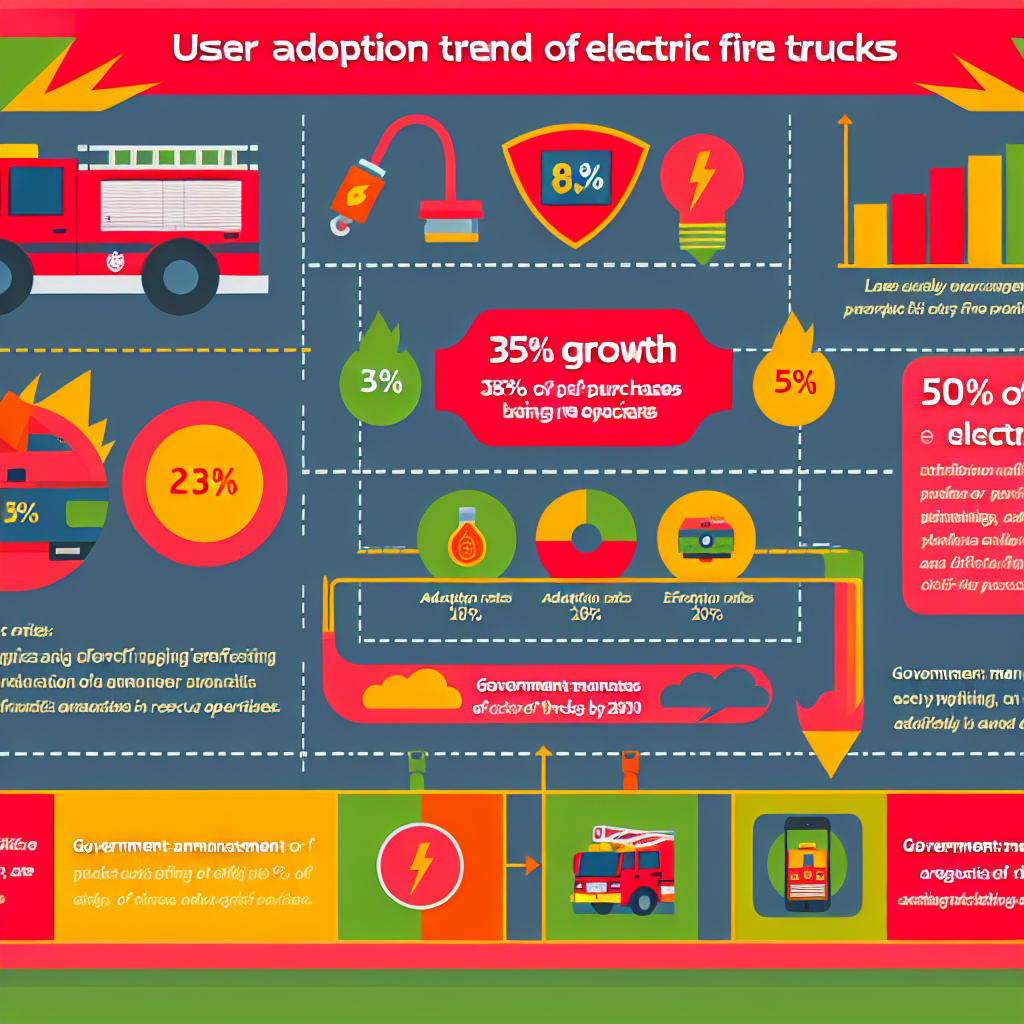
In 2023, significant growth in the adoption of electric fire trucks has been observed. National fire equipment procurement has grown by 18%, with smart and electric vehicles constituting over 35% of purchases. Electric fire trucks are increasingly sought after for their zero-emissions profiles and enhanced efficiency, particularly in densely populated urban areas.
2. Operational Efficiency
Fire departments that have integrated electric fire trucks report notable improvements in operational functionalities. For instance, in Portland, the Pierce Volterra electric fire truck has led to a 20% enhancement in rescue efficiency due to its silent operation, which reduces noise interference during critical emergency responses.
3. Government Policies
The transition to electric fire trucks is being propelled by supportive government policies and regulations. Notably, China has mandated that 50% of fire trucks be electric by 2030, reflecting a global push towards sustainable innovations in emergency services.
4. Performance Enhancements
Technological advancements in electric fire trucks enhance their operational capabilities. Instant torque allows for quicker acceleration and improved maneuverability in congested urban environments, making these vehicles particularly effective for urban firefighting. Additionally, innovations like AI-powered flame detection systems are emerging, promising further efficiency and operational effectiveness.
5. Cost Considerations
While the initial investment for electric fire trucks tends to be higher than their diesel counterparts, they demonstrate cost-effectiveness over time. Departments can expect considerable savings on fuel and maintenance expenses. Electric trucks generally reduce lifecycle carbon emissions by approximately 30% when compared to traditional fuel models, adding to their appeal.
6. Upcoming Trends
Looking to the future, advancements in battery technology are critical for the ongoing viability of electric fire trucks. Solid-state batteries are anticipated to provide longer ranges and shorter charging times, further enhancing the potential for these vehicles in emergency response scenarios.
The trends and statistics surrounding the adoption of electric fire trucks highlight the evolving landscape of firefighting technology, emphasizing both operational advantages and environmental responsibilities.
Maintenance Needs for Electric Fire Truck Infrastructure
Maintaining electric fire truck infrastructure is vital to ensure the reliability and longevity of both the vehicles and their charging systems. Fire departments must establish routine maintenance protocols that are specifically tailored to the unique needs of electric apparatus. Here are the key maintenance requirements to keep in mind:
- Routine Battery Maintenance
- Electric fire trucks are equipped with advanced battery systems that require regular monitoring to ensure optimal performance. Departments should routinely check battery charge levels, assess battery health, and perform visual inspections for any signs of corrosion or damage. Additionally, initiatives to keep batteries cool and well-ventilated can help extend their lifespan and performance.
- Charging Station Inspections
- The reliability of electric fire truck operations heavily depends on well-functioning charging stations. Fire departments should regularly inspect these stations to ensure they are clean and free of debris, which could impede connections. Technicians should also test the charging equipment for proper functionality and check for software updates related to energy management systems.
- Updating Software and Systems
- Electric fire trucks often come equipped with sophisticated software systems that manage various functions, including battery management, charging protocols, and vehicle diagnostics. To maintain optimal performance, fire departments should ensure that these software systems are regularly updated and calibrated as needed.
- Clean Air Filters and Vents
- Regular cleaning of air filters and vents is necessary to prevent overheating of electric components. Departments should focus on keeping these areas free of dust and debris to ensure efficient air circulation.
- Training Personnel
- Investing in training for personnel is crucial for maintaining the unique infrastructure of electric fire trucks. Fire department staff should be well-versed in the specific maintenance procedures, potential troubleshooting, and safety measures when dealing with electrical systems and high-voltage components.
- Collaborate with Manufacturers
- Engaging with the truck manufacturers, such as Pierce Manufacturing, for guidance on maintenance protocols and support can further streamline the care process. They can provide tailored maintenance schedules and recommendations based on the specific electric models in use.
By proactively addressing these maintenance needs, fire departments can ensure their electric fire truck infrastructure operates efficiently and remains a reliable asset in emergency response operations.
Evolution of Electric Vehicle Technology
The journey of electric vehicle technology has been remarkable, evolving significantly over the past few decades. Initially, electric vehicles (EVs) were seen as niche products, with limited range and performance, especially when compared to their gasoline counterparts. However, advancements in battery technology, including the development of lithium-ion batteries, have dramatically improved the efficiency, range, and overall appeal of electric vehicles.
As we move into the 21st century, governments worldwide have increasingly recognized the need for sustainable transportation solutions. This has led to substantial investments in charging infrastructure and the establishment of incentives to support the adoption of electric vehicles. The emergence of fast-charging stations and smart-grid technologies has further facilitated the use of electric vehicles in diverse sectors, including public safety.
In the context of firefighting, electric fire trucks like the Pierce Volterra exemplify this evolution. These vehicles incorporate cutting-edge technology designed to reduce emissions while providing the operational power required for emergency response. As charging solutions continue to advance, the integration of electric fire trucks promises not only environmental benefits but also enhanced operational readiness for fire departments—signifying a new era in firefighting efficiency and sustainability.