
In the demanding world of trucking, ensuring efficiency and safety is paramount. Evaluating Driver Vehicle Inspection Report (DVIR) services goes beyond simply finding a tool; it’s about enhancing fleet performance, ensuring compliance, and leveraging technology to streamline operations. This guide will provide long-haul truck drivers, trucking company owners and fleet managers, truck maintenance specialists, and aspiring truck drivers with a complete overview of key factors to consider. Each chapter will explore crucial aspects of DVIR services—including automation, compliance, integration with telematics, issue tracking, and user-friendliness—to help you make informed decisions for your fleet’s future.
Automating Inspections: Real-Time DVIR Reporting to Drive Trucking Efficiency
Automating Inspections: Real-Time DVIR Reporting to Drive Trucking Efficiency
Electronic DVIR capabilities are a lever that separates reactive operations from proactive fleet management. When inspections move from paper checklists to automated, real-time reporting, the daily routine of drivers, dispatchers, and maintenance teams changes in measurable ways. The shift reduces administrative drag, shortens the feedback loop between driver observations and corrective action, and delivers data that can be trusted for scheduling and compliance decisions. For fleets focused on efficiency, the key question is not whether to adopt electronic DVIRs, but how to evaluate options so the chosen service becomes an operational asset rather than another box to check.
Assessing automation begins with observing how a DVIR service captures an inspection. Systems that allow drivers to use familiar mobile devices to complete checks transform a slow, inconsistent process into a fast, repeatable one. The best implementations favor concise checklists tailored to vehicle type and route, combined with mandatory fields for critical defects. This design prevents incomplete reports and ensures essential issues are recorded before a vehicle departs. For drivers, a few clear taps are less intrusive than paperwork. For managers, each completed report is a timestamped, geotagged record that can be referenced instantly.
Real-time syncing is the backbone of value. When inspection data is available immediately, managers can prioritize repairs, adjust routes, and prevent noncompliant vehicles from operating. Real-time feeds enable simple automations: flag a defect as critical and the system can block a vehicle from dispatching until approved; mark a minor repair and create a low-priority work order. The time from defect discovery to action collapses from hours or days to minutes. That reduction in latency directly lowers the probability of roadside breakdowns and regulatory violations, two major drains on efficiency.
Integration is where automated DVIRs compound their benefits. A service that sits in isolation offers convenience, but when inspection data flows into fleet management and telematics platforms, it becomes intelligence. Linking inspections to engine fault codes, recent GPS history, and maintenance records produces context-rich entries. For example, an alert about air brake wear linked to recent heavy-stopping events and related diagnostic trouble codes points technicians toward the right repairs sooner. This context reduces diagnostic time, decreases parts misordering, and shortens downtime.
Automation also reshapes maintenance workflows. A mature DVIR service should not merely record defects; it should trigger downstream processes. That might look like automatic creation of a work order for high-severity issues, assignment to a technician with the correct skill set, and an estimated parts list based on the reported symptoms. Once repairs are completed, the DVIR record should be updated and the vehicle cleared for service automatically. This end-to-end flow prevents defects from languishing in a queue, ensures clear ownership, and provides a searchable audit trail for compliance.
Driver adoption is critical to realize these gains. An elegant backend will fail if drivers perceive the process as burdensome. High-adoption designs minimize input requirements while maintaining the detail needed for safety and compliance. Features that help include offline capability for areas without connectivity, photo capture with simple annotation, voice-to-text notes for hands-free entry, and contextual prompts that change based on previous responses. Training matters, but intuitive workflows reduce the learning curve and lead to consistent reporting.
Analytics turn repeated inspections into strategic insight. Real-time data alone improves reaction time; aggregated, it exposes patterns that inform policy. Dashboards that surface recurring defects by asset, inspection failure rates by driver, and inspection completion frequency by route enable targeted interventions. If a particular trailer model shows a higher rate of suspension issues in a given climate, procurement choices can be reassessed. If a small group of drivers consistently miss inspection steps, focused coaching can be deployed. The aim is to use inspection data not just to fix problems, but to prevent them.
Scalability and support determine whether an electronic DVIR solution continues to pay dividends as operations grow. Look for cloud-native services that handle large numbers of concurrent inspections without slowing, and for vendors committed to regular updates that reflect regulatory shifts and user feedback. Equally important is a support model that helps with onboarding, integrations, and issue resolution. A responsive support team reduces the time to value and helps maintain high driver compliance during rollouts.
Security and auditability have operational implications. Inspection records are often evidence in regulatory reviews or insurance claims. Services that ensure tamper-proof records, with timestamps, geolocation, and immutable change logs, protect fleets in disputes. Role-based access controls and secure data transfer protocols also prevent unauthorized edits and protect sensitive fleet information.
A technical evaluation offers a lens into expected efficiency gains. Studies that measure automated freight systems find consistent improvements in process quality and reduced operational friction when inspections and diagnostics are automated. Those gains translate to fewer breakdowns, smoother maintenance windows, and better asset utilization. But the magnitude of benefit depends on how well automation is aligned to operations: standardizing checklists, ensuring integration with existing systems, and automating meaningful next steps.
Practical evaluation steps create clarity when choosing a service. Begin by mapping the current inspection workflow and identifying pain points: how long do inspections take, where do reports sit before reaching maintenance, and what percent of defects go unresolved past a required timeframe? Next, run a pilot that stresses the service against those pain points. Measure completion times, error rates, repair turnaround, and driver sentiment. During the pilot, validate integrations: can inspection data trigger work orders in your maintenance system? Does the platform surface vehicle health trends alongside inspection findings? Finally, assess the service’s ability to enforce compliance rules automatically and to produce audit-ready reports.
Change management is the final piece. Adoption requires coordination across dispatch, safety, and maintenance teams. Communicate the benefits in terms that matter to each group: less paperwork and faster starts for drivers; lower violation risk for safety teams; shorter diagnostic cycles for maintenance. Provide clear escalation paths for critical defects and celebrate early wins to drive momentum. Over time, the data will supply more wins—reduced roadside incidents, fewer repeated defects, and improved uptime—which reinforce adoption.
For fleets that want an applied perspective, a broader technical study explores how automation improves freight transport processes and quality. That resource can help quantify expected outcomes and guide implementation choices: https://www.nrel.gov/docs/fy23osti/85467.pdf
For operational guidance on fleet reliability and service excellence, review our discussion on exploring 5-Star Truck Inc quality and reliability on the road. That piece offers practical insights into aligning inspection processes with broader maintenance and service strategies: https://5startruckin.com/exploring-5-star-truck-inc-quality-service-and-reliability-on-the-road/
By focusing evaluation on how automation fits into existing workflows, how real-time reporting shortens reaction windows, and how integrations convert reports into action, fleets can select a DVIR service that truly improves efficiency. The goal is not simply to replace paper, but to create a continuous, data-driven loop from inspection to repair to analytics, where each step makes the next more efficient and reliable.
Regulatory Fit: Making DVIR Compliance the Backbone of Trucking Efficiency
Regulatory Fit: Making DVIR Compliance the Backbone of Trucking Efficiency
A Driver Vehicle Inspection Report system becomes valuable when it does more than store checklists. It must translate regulatory requirements into daily operational habits that reduce risk, cut downtime, and support predictable maintenance cycles. This chapter examines how to evaluate a DVIR service for regulatory alignment and shows why compliance, when implemented thoughtfully, drives measurable efficiency across a fleet.
Regulatory alignment begins with a clear match between the DVIR workflow and the legal obligations that govern commercial vehicle safety. A service with well-designed templates will map directly to mandated inspection points and capture required details without forcing drivers to navigate verbose forms. Look for solutions that let you tailor inspection items to vehicle class and operational context while preserving the mandatory fields regulators expect. That balance ensures inspections are both complete and efficient; drivers spend less time tapping boxes and more time producing reliable, audit-ready records.
Digital signatures and audit trails are not optional add-ons. They are the evidence that an inspection occurred, who completed it, and what actions followed. A robust DVIR service records timestamps, GPS coordinates, and signed confirmations in a secure, tamper-evident log. Those logs should be searchable and exportable to meet inspector requests quickly. When audit evidence is immediately accessible, compliance events do not cascade into long hospitality with fines or DOT interventions. Instead, managers can demonstrate proactive safety stewardship and move on.
Automation is where compliance tools start to influence daily operations. A DVIR that triggers automated reminders and escalations reduces the risk of unresolved defects leaving a vehicle on the road. After a driver files a defect, the system should automatically flag it, route the issue to maintenance, and prevent the vehicle from accepting new trips until a qualified technician clears the fault if the defect is critical. These automated workflows keep repair windows tight and help prioritize work orders based on severity and regulatory exposure, not just technician availability.
Integration with fleet management and telematics systems tightens the link between inspection data and vehicle health. When DVIR entries are combined with diagnostic trouble codes, engine hours, and GPS history, fleet managers see the full story. A brake issue flagged in an inspection that aligns with repeated ABS warnings should jump to the top of the maintenance queue. This synthesis turns compliance data into actionable intelligence. It prevents minor issues from turning into roadside breakdowns and aligns maintenance spend with real risk.
Cloud storage underpins compliance and operational agility. Centralized, secure storage enables long-term retention of DVIR records in formats acceptable to regulators. It also supports collaborative workflows across dispatch, maintenance, and safety teams. When records are available instantly, scheduling technicians becomes proactive. Parts procurement can be planned around likely repairs, and recurring defects at specific equipment points can be analyzed for systemic fixes rather than repeated stopgap repairs.
Analytics convert compliance work into continuous improvement. Dashboards that surface recurring defect types, inspection completion rates, and driver-level trends reveal where training or process changes are needed. For example, a high incidence of light failures concentrated in one region may indicate supply chain issues for replacement parts or a gap in pre-trip practices. Analytics should be simple enough for a safety manager to interpret in minutes and deep enough to support root-cause investigations. The goal is not punitive oversight but a data-driven path to fewer failures and less unscheduled downtime.
Driver adoption dictates whether any compliance-focused DVIR becomes effective. Even the most regulation-perfect system fails if drivers bypass it. Prioritize platforms with intuitive mobile interfaces and concise checklists. Tools that allow drivers to capture photos and voice notes reduce friction and improve the quality of reports. Training should be short, role-specific, and tied directly to why the practice matters: a saved inspection can prevent a roadside delay that knocks a planned delivery off schedule. When drivers see the direct benefit to their daily reliability, adoption rises and compliance improves organically.
Scalability matters for fleets that grow or that operate seasonally. A DVIR service should maintain performance as you add vehicles, technicians, and geographies. It should also support permissioned access so regional teams manage their records while corporate safety retains oversight. Look for vendors that offer regular updates and responsive support, because regulatory changes or new inspection best practices demand rapid adjustments to templates and workflows.
Selecting a provider requires diligence. Vendor stability, references, and a track record in transportation safety reduce implementation risk. Request examples of audit support the vendor provided for other fleets. Ask how the service handled unresolved defects that led to downtimes and what reporting helped close the loop. Proof that the platform has helped other operators move quickly from detection to repair is as important as technical capabilities.
Beyond technical fit, consider how the DVIR service changes operational priorities. A system that surfaces recurring defects allows planners to move from reactive repair to preventive maintenance. That shift reduces emergency parts spend and improves schedule reliability. The inspection process itself becomes an instrument of uptime rather than a compliance-only chore. When maintenance teams receive structured, prioritized work orders from inspection inputs, they can plan labor and parts more intelligently. The result is fewer roadside delays and fewer forced detours for unscheduled service.
Finally, use compliance as a strategic lens for continuous improvement. Regularly review inspection data against key performance indicators: rate of defect resolution within required windows, percentage of inspections completed on schedule, and the frequency of recurring faults by vehicle type. These metrics should influence procurement, training, and maintenance policies. Over time, small gains in inspection completeness and response velocity compound into meaningful improvements in fleet efficiency.
For an example of a vendor perspective on aligning service offerings with operational excellence, see the article “Unveiling 5-Star Truck Inc.: a beacon of excellence in trucking services” which discusses vendor commitments to uptime and safety practices. That case highlights how a partnership mindset between fleet and provider accelerates compliance and operational gains.
For definitive regulatory guidance on DVIR requirements, consult the Federal Motor Carrier Safety Administration. Their materials explain the legal expectations for pre-trip and post-trip inspections and provide the authoritative framework any DVIR service must support: https://www.fmcsa.dot.gov/regulations/vehicle-inspection-reports
From Paper to Real-Time Insight: How DVIR Services Harness Telematics Integration to Boost Trucking Efficiency
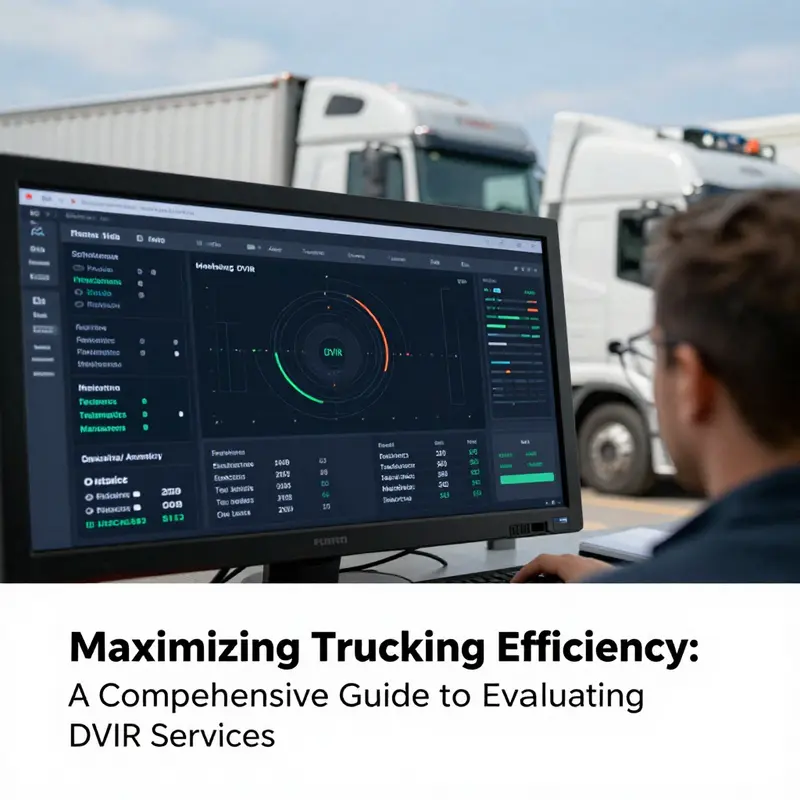
When a Driver Vehicle Inspection Report (DVIR) is treated not as a bureaucratic checkbox but as a living stream of data, it becomes a backbone for efficiency rather than a roadblock to operations. DVIR services, at their best, do more than capture a daily checklist; they weave inspection results into the fabric of fleet management. They connect the act of inspecting a vehicle with the larger rhythms of routing, maintenance, compliance, and safety. The result is a chain of visibility and action that starts with the driver on the road and ends with more reliable uptime, fewer unplanned breakdowns, and a smoother transfer of information across the organization. In that sense, the most effective DVIR solutions are less about the form and more about the flow—the way data moves from inspection to decision, from a smartphone screen to a work order, from a single vehicle to a fleetwide pattern of maintenance and risk management. The core driver of efficiency is integration: how well DVIR data talks to telematics, maintenance software, and the fleet’s governance practices, so that every inspection becomes a proactive signal rather than a reactive record.
Automation sits at the center of this shift. The modern DVIR experience begins with drivers uploading checklists, photos, and notes from a mobile device, generated by intuitive interfaces that reduce the time spent on compliance tasks. Real-time reporting eliminates the lag between a defect being discovered and a response being initiated. When a driver marks a fault on a tire, a brake pad, or a light, that information travels instantly to the fleet management system and to the appropriate maintenance queue. The value of this immediacy cannot be overstated: it shortens cycle times, minimizes the risk of a broken vehicle entering service, and curbs the downstream costs associated with late repairs and missed inspections. Crucially, automation minimizes human error. Auto-filled fields, standardized checklists, and predefined defect categories ensure that data is consistent across vehicles and routes, enabling more reliable analytics. In practice, fleets begin to see a shift from firefighting to planning, with maintenance windows scheduled by actual usage patterns rather than defaults, and with inspection histories forming the evidence base for risk assessments and budget deliberations.
Compliance and regulatory alignment form the essential guardrails that give automation its teeth. In the United States, DVIR requirements are anchored in FMCSA regulations, which define what must be inspected, who signs off, and how records should be retained. A DVIR service that aligns with these rules does more than pass a regulatory audit; it creates a predictable, auditable trail that supports continuous improvement. When a vehicle fails an inspection, the system can enforce policy-driven responses—flags that require escalation before the vehicle returns to service, automatic reminders for unresolved issues, and built-in prompts for re-inspections after corrective actions. A well-designed DVIR platform tracks inspection history over time, enabling managers to spot recurring defects, identify high-risk equipment, and justify maintenance investments. In a climate of rising enforcement scrutiny and ever-tightening regulatory expectations, the combination of automation and regulatory alignment is not a luxury but a strategic necessity for any fleet seeking to raise its compliance profile while improving uptime.
The integration of DVIR services with telematics and broader fleet management systems is the real lever for efficiency. When a DVIR process is woven into a telematics ecosystem, inspection data becomes part of a holistic data fabric that includes vehicle diagnostics, GPS location, fuel usage, engine hours, and maintenance records. This connectivity unlocks automatic triggers: a DVIR submitted after trip completion can prompt an engine-health check, a post-shutdown inspection can initiate a cooldown or recharge acknowledgment, and a defect flagged as critical can trigger an immediate work order, even before a vehicle reaches the shop. The benefits extend beyond maintenance scheduling. Integrated data provides a more accurate view of vehicle availability, informs route planning with a clearer understanding of asset readiness, and supports proactive decisions about spares and substitutions. The result is a more agile operation where maintenance planning, tire management, and preventive work align with actual vehicle usage, not just calendar-based intervals. The real-time nature of these insights reduces the randomness of downtime, enabling operations teams to anticipate failures and minimize the operational impact of wear and tear.
Behind this technical choreography lies the practical mechanism of issue tracking and maintenance workflow. When a defect is reported, the ideal DVIR system does not merely log the item; it initiates a closed-loop workflow that mirrors the seriousness of the fault. Critical defects should generate automatic work orders, routing the issue to the right technician and setting a clear path to resolution with due dates and status updates. Non-critical concerns can be queued for preventive maintenance, with suggestions derived from the vehicle’s diagnostic history and usage patterns. This workflow reduces the cognitive load on dispatchers and maintenance staff, who previously juggled multiple paper notes, phone calls, and disparate spreadsheets. Instead, there is a transparent, auditable trail from detection through repair, with automatic status changes that keep everyone aligned. When the repair is completed, the DVIR entry updates the vehicle’s maintenance history, reinforcing future predictive maintenance decisions. The efficiency gains come not only from faster repairs but also from the prevention of repeated or escalating issues, which, over time, translates into higher asset reliability and lower total cost of ownership.
User-friendliness and driver adoption are often the fulcrum on which these benefits pivot. A system that looks like an engineer’s toy or one that demands excessive training will struggle to gain traction in the field. A DVIR platform with a clean, intuitive interface, clear and concise checklists, and smart defaults makes it easier for drivers to complete inspections accurately on the first pass. When drivers understand exactly what to look for and how to report it, the quality of data improves. Conversely, if the interface is cluttered or opaque, drivers may rush through inspections or skip them altogether, undermining the entire value proposition. The best implementations emphasize minimal friction: straightforward photo capture, quick defect tagging, and simple status indicators. This user-centric design is not a luxury but a driver‑safety and uptime lever. It reinforces a culture of compliance by making accurate reporting part of the driver’s daily workflow rather than an additional administrative burden. With higher adoption comes richer data: more reliable condition indicators, better route-to-maintenance correlations, and clearer insights into how human factors influence vehicle performance.
Analytics and performance insights complete the value picture by transforming raw DVIR data into actionable intelligence. Advanced DVIR services offer dashboards and reporting that transcend compliance checks to reveal trends and correlations. Fleets can identify recurring defects that reveal underlying reliability issues with specific components or vehicle cohorts. They can detect patterns tied to particular drivers or routes, helping managers tailor training and preventive maintenance to the areas of greatest risk. Analytics also illuminate the effectiveness of maintenance policies themselves. Are certain preventive intervals producing fewer unscheduled repairs? Should inspection thresholds be adjusted based on observed wear? These insights enable managers to shift from reactive maintenance to predictive maintenance, aligning maintenance activities with actual wear and usage rather than static calendars. In practice, this means fewer unplanned outages, better utilization of labor and shop capacity, and improved overall equipment effectiveness. The data-supported approach makes it easier to justify investments in reliability programs, spare parts inventory, and technician training, creating a virtuous cycle of reliability, safety, and efficiency.
Scalability and support complete the architecture of a DVIR strategy designed for growing fleets. As a fleet expands, the infrastructure supporting DVIR must scale without sacrificing performance or data integrity. A cloud-based DVIR service delivers that scalability, ensuring that more drivers, vehicles, and inspections can be supported as the organization grows. Equally important is the backing of reliable customer support and regular platform updates. In a field where uptime is critical and regulatory exposure is real, responsive support can mean the difference between a smooth inspection cycle and a costly delay. A scalable DVIR solution also provides flexible integration points, so as fleet technology evolves, the DVIR system can absorb new data streams from additional sensors, maintenance modules, or third-party analytics tools. This adaptability helps fleets stay relevant in a rapidly changing environment, where wearable devices, predictive analytics, and increasingly sophisticated vehicle health monitoring are becoming standard. The combination of scalable infrastructure and proactive support ensures that the DVIR layer remains robust over time, preserving the gains in safety, compliance, and efficiency that began with the driver’s inspection.
In the spirit of extending this integrated view beyond the immediate confines of DVIR data, consider how design principles in broader emergency-service contexts reflect the same drive for reliability, speed, and adaptability. The idea of aligning inspection workflows with core operational systems echoes across workflows that require rapid response, high reliability, and seamless cross‑team coordination. For further reading on how such design principles translate into the broader field of emergency-service efficiency, see the discussion on design efficiency in emergency services: https://5startruckin.com/design-efficiency-in-emergency-services/.
From a practical standpoint, the overarching takeaway is simple: DVIR services will contribute to trucking efficiency to the extent that they are integrated, automated, and used as a foundation for proactive maintenance and regulatory compliance. The most successful fleets treat inspections not as a routine formality but as a continuous feedback mechanism that informs maintenance scheduling, parts planning, and driver training. When inspection data is consistently captured, accurately categorized, and seamlessly linked to vehicle diagnostics and location data, fleets can anticipate failures, shorten repair cycles, and maintain higher asset availability. The end result is a more predictable maintenance footprint, less downtime, and a safer fleet on the road. The conversation about DVIRs, therefore, should remain anchored in integration—into telematics, into maintenance workflows, and into the daily routines of drivers and managers alike. Only then does a DVIR move from compliance artifact to strategic driver of efficiency, safety, and performance across the entire trucking operation.
External resource: for regulatory details, consult the FMCSA DVIR guidelines: https://www.fmc.gov/.
Streamlining Repairs: How DVIR Issue Tracking Drives Faster Maintenance and Higher Uptime
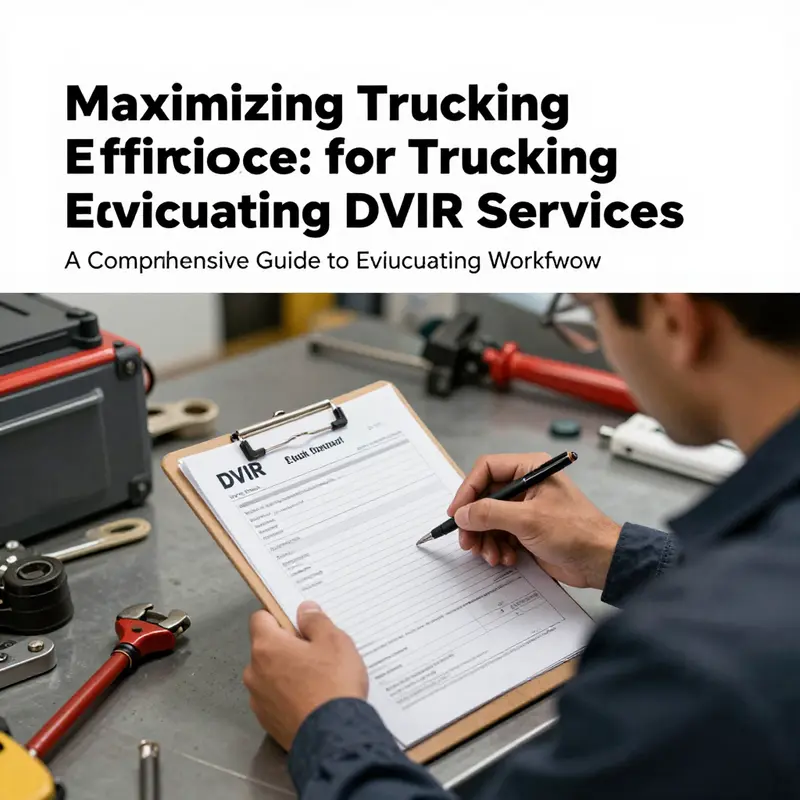
A Driver Vehicle Inspection Report system becomes valuable when it closes the loop between a driver’s observation and the shop’s repair completion. When inspections simply generate records, fleets lose time and visibility. When those same records automatically spawn prioritized work, assign technicians, and verify repairs, the result is measurable uptime improvement, lower operating costs, and stronger compliance. This chapter walks through the practical elements to evaluate in a DVIR service focused on issue tracking and maintenance workflow, and explains how each capability translates to everyday gains across a fleet.
Start with how inspection data enters the system. Mobile-first DVIR tools let drivers capture defects with photos, short notes, and standardized checklists. The format matters: discrete fields for safety-critical items, selectable defect codes, and required photo evidence reduce ambiguity. Clear, consistent input accelerates triage. When a driver flags a brake, steering, or lighting fault, the system must mark it as safety-critical and prevent a vehicle from being dispatched until resolved or formally deferred under regulatory rules. A reliable DVIR service enforces these rules at data entry so the downstream maintenance workflow reflects the true risk level of each defect.
The next link in the chain is automated work order creation. Manual transcription of inspection findings into maintenance software is slow and error-prone. Ideal DVIR solutions create work orders the instant a defect is reported. Those orders should include the vehicle identifier, inspection timestamp, defect description, photos, and assigned priority. The ability to auto-generate a standardized work order template eliminates back-and-forth between drivers, dispatch, and shops. It also lets planners batch similar repairs, reducing truck downtime and improving technician efficiency.
Routing and assignment determine how quickly a reported issue hits a technician’s queue. Evaluate whether the DVIR service supports configurable routing rules: send engine and drivetrain faults to Level 2 technicians, route electrical issues to specialists, and forward roadside-worthy defects to third-party vendors. Systems that integrate with scheduling and parts inventories can propose appointment windows based on technician availability and truck location. The more automated and rule-driven this step is, the less managerial overhead is required to get trucks to the bay.
Visibility is essential at every stage. Supervisors need a single pane of glass that shows open inspections, pending work orders, in-progress repairs, and confirmed completions. Look for dashboards that filter by vehicle, driver, defect type, and age of the ticket. Alerts for overdue repairs and unresolved safety-critical flags prevent small issues from becoming major failures. Equally important is the ability to export and share status with partners—customers, brokers, and terminals—so everyone understands vehicle availability and expected return-to-service times.
A robust workflow includes verification and closure steps that prevent premature sign-offs. When a technician marks a repair complete, the system should require evidence: technician notes, parts used, photos of the repaired component, and a validation check by a supervisor or the original driver when possible. Digital signoffs create an auditable chain that helps during regulatory reviews and claims investigations. They also support continuous improvement: with verified closures, fleets can analyze true repair times and identify process bottlenecks.
Integration with maintenance management and parts systems is non-negotiable for scale. A DVIR service that can’t communicate with the maintenance management system forces duplicate data entry and undermines the intended efficiency gains. When integrated, inspection data can trigger parts reservations, update preventive maintenance schedules, and feed into predictive maintenance algorithms. This connection reduces time waiting for parts and prevents missed service windows, which lowers the risk of roadside breakdowns and costly emergency repairs.
Analytics turn issue tracking into strategic advantage. Beyond counting open tickets, advanced systems aggregate defects by component, vehicle model, route, and even individual driver. These insights reveal recurring failure patterns and opportunities for parts standardization or targeted training. For instance, if lift gates on a specific trailer model fail more often on particular routes, planners can adjust maintenance intervals or consider replacement. Regular reporting on mean time to repair, mean time between failures, and parts consumption supports data-driven decisions about fleet renewal and warranty claims.
Scalability and configurability determine long-term value. A small carrier’s workflow differs from a national operator’s. Inspect whether the DVIR service allows configurable checklists, rule-based workflows, and tiered user permissions. The system should handle a growing volume of inspections without slowing down and allow administrators to refine rules as new failure modes emerge. Cloud-based platforms typically scale more efficiently and reduce the operational burden of hosting and updates.
Driver adoption shapes the quality of input that starts the entire workflow. If the DVIR interface is cumbersome or the checklist unclear, drivers will skip steps or provide vague descriptions. Look for design features that minimize typing: prefilled fields, defect code picklists, and voice-to-text capabilities. Incentives and feedback loops also matter. When drivers see their reported issues resolved quickly and receive confirmation of repairs, they are more likely to use the system consistently. Training that emphasizes the link between accurate reporting and faster repairs builds buy-in and improves data integrity.
Consider the role of telematics and predictive analytics in closing the maintenance loop. When DVIR data integrates with live vehicle diagnostics and GPS, the combined dataset can trigger maintenance actions before drivers report problems. For example, when telematics shows rising coolant temperature and a DVIR history indicates prior radiator issues, the platform can escalate a work order with higher priority. Predictive insights help shift maintenance from reactive to planned, reducing emergency downtime and improving schedule reliability.
Compliance and auditability remain core outcomes of a closed-loop DVIR workflow. Regulators expect inspection records that show both the defect and its resolution. Systems that provide an immutable audit trail—with timestamps, photos, and signoffs—simplify compliance reviews and reduce the likelihood of fines. Moreover, a transparent workflow supports internal safety programs by demonstrating that reported hazards were addressed promptly and appropriately.
When assessing vendors, ask for concrete metrics from existing customers: average time from inspection to work order, typical repair turnaround, and reductions in roadside failures. Case studies that quantify uptime improvements or decreases in out-of-service events are particularly valuable. Also request to see the workflow in action: a demo where a driver files an inspection, a work order is created, a technician completes the repair, and the closure is verified. Practical demonstrations reveal how well the system enforces rules and how smoothly data flows between roles.
Finally, recognize that technology alone won’t solve process issues. Implementation success depends on aligning people, processes, and tools. Define clear responsibility for each step in the workflow, such as who triages safety-critical flags, who assigns third-party repairs, and who verifies completion. Standardize priority levels and escalation timelines. Establish performance targets tied to the workflow—like target repair times for critical systems—and review them regularly using DVIR analytics.
By judging DVIR services through the lens of issue tracking and maintenance workflow, fleet managers can prioritize systems that not only capture defects, but also drive timely, verifiable repairs. The result is fewer unplanned breakdowns, improved regulatory readiness, and clearer evidence that inspections lead to action. For a closer look at real-world benefits and implementation insights, see this industry analysis on electronic DVIR systems: https://www.ccjonline.com/technology/electronic-dvir-systems-improve-trucking-efficiency. To explore provider perspectives and operational excellence in trucking services, review this overview of a leading carrier’s approach to integrated operations: https://5startruckin.com/unveiling-5-star-truck-inc-a-beacon-of-excellence-in-trucking-services/.
Driving Efficiency Through User-Centric DVIR Design and Seamless Driver Adoption
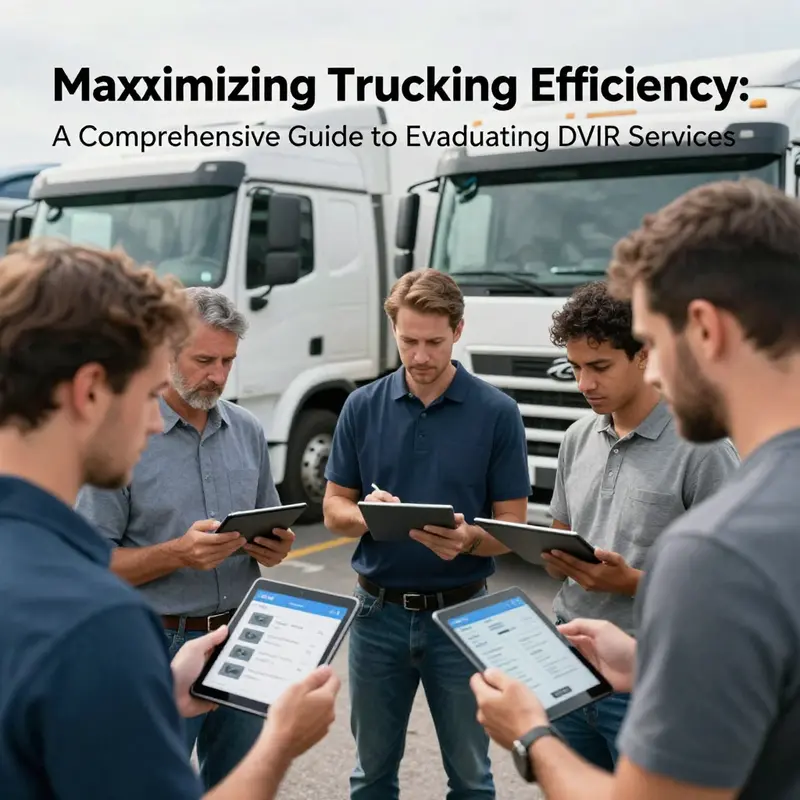
A Digital Vehicle Inspection Report (DVIR) service’s effectiveness depends largely on its ease of use and the degree to which drivers embrace it. For trucking operations seeking to enhance compliance, reduce downtime, and optimize fleet management, selecting a solution that drivers engage with willingly is critical. The complexity of the interface and the learning curve required play pivotal roles in whether drivers complete inspections accurately and consistently.
User-friendly DVIR platforms address the challenge of diverse driver tech savviness by offering well-designed, straightforward interfaces accessible on widely used devices such as smartphones and tablets. Clear, concise checklists replace cumbersome paper forms, guiding drivers step-by-step through inspections. This intuitive design reduces errors and omissions, promoting thoroughness even among those less accustomed to digital tools. The result is higher-quality inspection data, providing fleet managers with actionable insights to prevent failures and ensure safer operations.
Driver adoption goes beyond just having a simple interface. The platform’s responsiveness, speed, and ability to function smoothly under varied network conditions directly influence daily use. Drivers who encounter slow-loading forms or confusing menus may become frustrated, leading to rushed or skipped inspections. Platforms that allow offline completion with automatic syncing when connectivity returns help maintain consistency even in low-coverage areas. Such thoughtful features demonstrate respect for drivers’ time and effort, encouraging them to integrate DVIR completion naturally into their routine.
Beyond user interface considerations, the alignment of the DVIR service with a fleet’s broader maintenance ecosystem significantly impacts operational efficiency. The seamless flow of inspection data into maintenance management systems transforms raw reports into scheduled work orders without delay. When a driver notes a defect, the system automatically generates a maintenance ticket routed to the appropriate technician or service team. This eliminates manual handoffs, accelerates repairs, and reduces the risk of critical issues being overlooked. Efficient defect tracking and workflow integration are essential to minimizing vehicle downtime, enabling trucks to return to service promptly.
A trucking operation that exemplifies this integrated approach harnesses DVIR data to achieve real-time visibility into vehicle health. Their system links inspection results with maintenance history, GPS data, and telematics diagnostics, creating a consolidated view of each asset’s condition. This holistic perspective empowers maintenance coordinators to prioritize repairs intelligently, avoid reactive fixes, and plan preventive maintenance effectively. Over time, this reduces unplanned breakdowns and prolongs fleet longevity, directly contributing to improved trucking efficiency.
To drive widespread driver adoption, the onboarding process for DVIR systems must be thoughtfully designed. Training sessions tailored to diverse learner profiles ensure that drivers fully understand the inspection protocol and technological features. Incorporating training materials that are easily accessible—such as quick reference guides or tutorial videos—provides ongoing support as drivers become more familiar and confident with the tool. Moreover, soliciting and acting upon driver feedback can lead to continued system improvements, fostering a sense of ownership and partnership among users.
In many ways, user-friendliness in DVIR services reflects a balance between functionality and simplicity. While robust features for compliance and reporting are important, they must not overwhelm the driver. Prioritizing essential inspection items, using clear language, and minimizing redundant steps create a smooth inspection flow. Customization options allow fleets to tailor checklists to their unique requirements without burdening drivers with unnecessary details. This thoughtful approach streamlines the inspection process while maintaining regulatory rigor.
Reliable communication channels embedded within the DVIR platform also facilitate prompt resolution of vehicle defects. When drivers flag a problem, automated alerts notify maintenance teams immediately. The ability to track the status of reported issues keeps drivers informed and reassures them that concerns are being addressed. This transparency helps maintain trust in the system and motivates habitual use. Additionally, such traceability supports fleet managers with documentation needed during audits or incident investigations.
Ultimately, a DVIR service that blends intuitive design with comprehensive integration into operational workflows transforms vehicle inspections from a time-consuming chore into a valuable tool for fleet optimization. The combination of quick, electronic inspection completion, automated issue tracking, and real-time maintenance coordination minimizes downtime and compliance risks. Importantly, fostering strong driver engagement through user-centric features secures reliable data capture, forming the foundation for analytical insights driving continuous improvement.
For fleet operators seeking to deepen their understanding of how modern electronic DVIR systems enhance both safety and efficiency, an insightful resource provides a thorough overview of these advantages: How Electronic DVIRs Improve Safety and Efficiency.
In related operational contexts, exploring innovations in vehicle maintenance training can further augment overall fleet uptime and performance. For insights tailored to specialized vehicle applications, reviewing approaches to maintenance training underlines the importance of competent personnel alongside advanced digital tools: fire truck maintenance training importance.
Integrating a DVIR platform that prioritizes accessible design and seamless user experience is no longer optional but essential for trucking fleets aiming to maximize efficiency. The benefits ripple outward—from higher quality inspection data and stronger compliance to faster maintenance workflows and enhanced driver satisfaction—contributing to a fleet’s competitive edge and operational resilience.
Final thoughts
Understanding the essential components of DVIR services is crucial for trucking efficiency and safety. By focusing on automation, compliance, telematics integration, effective issue tracking, and user adoption, you empower your fleet to operate with greater efficiency, reduce risks, and maintain regulatory adherence. Selecting the right DVIR service not only enhances your operational capabilities but also ensures the safety of your drivers and the longevity of your vehicles.