
For long-haul truck drivers, trucking company owners, fleet managers, and aspiring truck operators, finding reliable truck services and parts can be a challenge. Whether you’re on a tight schedule or need specialized parts for your vehicle, knowing where to look is crucial. This guide will walk you through navigating online mapping services, leveraging major auto parts retailers, and identifying specialized truck services in your locality. Each chapter provides essential insights and practical methods to streamline your search and ensure your truck stays in optimal condition on the road.
Maps in the Driver’s Seat: A Practical Guide to Finding Truck Services and Parts Near You
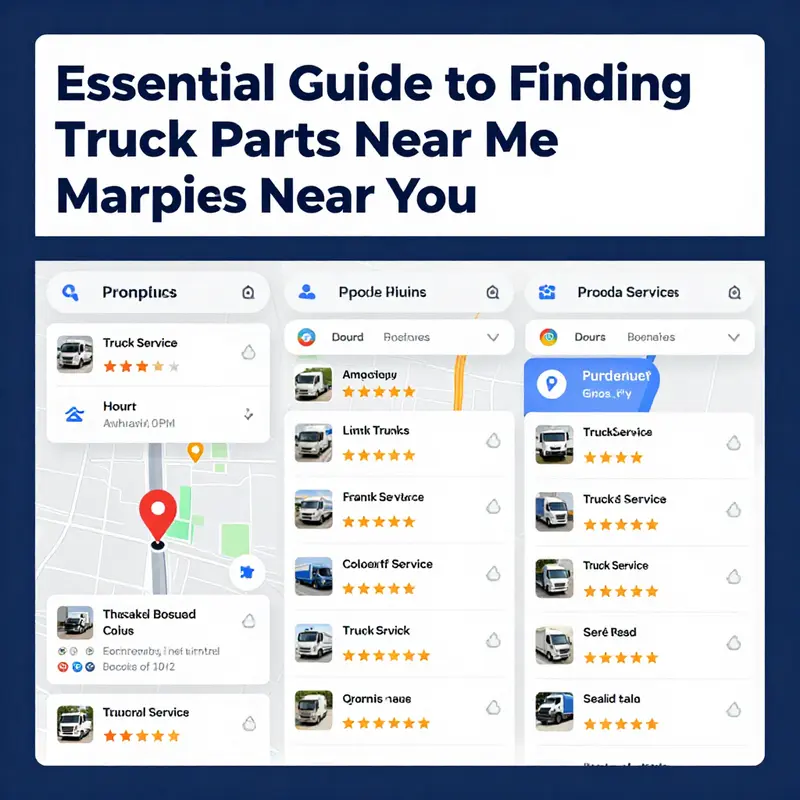
Finding reliable truck services and parts close to your operation is less about luck and more about using the right tools with a steady, patient approach. When a rig goes out of service, every mile matters. Modern mapping services have transformed how fleets, owner-operators, and maintenance teams locate nearby specialists, compare options, and plan efficient routes. The goal of this chapter is to weave a practical, cohesive narrative about using online maps to locate truck-focused repair shops, tire centers, and parts suppliers, while keeping the emphasis on reliability, speed, and accountability. It’s not just about finding the closest shop; it’s about identifying trusted partners who can get a truck back on the road with minimal downtime, clear communication, and transparent pricing. With the right approach, a few taps on a screen can become a robust plan that keeps your fleet moving and your operations resilient long after the search ends.
Begin with the simplest premise: open a mapping service and enter a search term that reflects your immediate need. Think in terms of what you require rather than where you are only. A repair shop that specializes in heavy-duty or diesel engines, a tire service that can accommodate commercial trailers, or a parts store that keeps a truck-ready inventory in stock—all of these are valid starting points. In most mapping apps, you can type phrases such as truck repair shop near me, heavy-duty truck parts store, or commercial vehicle tire service. The map will then light up with a constellation of nearby options. The visual cue is powerful: distance is displayed, which helps you quickly assess which options are within the driving radius of your current location or a planned route. Yet the map offers more than just location. It serves as a dashboard for decision making, especially when time and reliability are nonnegotiable.
The first layer you should examine is the business profile that each listing presents. Most platforms pull data directly from the shop’s own profile or a connected business directory. You’ll typically see the business name, address, phone number, hours of operation, and often a short description of services. Some profiles go beyond the basics and showcase service specialties, whether the shop handles diesel engine repairs, trailer maintenance, or hydraulic and air brake systems. You may also find photos of the facility, which can be surprisingly informative. A well-lit, organized shop with visible safety practices and clearly labeled bays can be a subtle indicator of professional standards. Photos also help you gauge equipment readiness—the presence of heavy-duty lifts, tire cages, diesel diagnostic tools, and parts stock can hint at capacity to handle a wide range of truck problems. If a business has posted recent photos or updates, that can confirm ongoing activity and commitment to customer service.
Another critical data point is user feedback. Reviews provide a window into the real-world experience of other fleets and independent operators. Look for consistent themes rather than isolated anecdotes. Positive signals include timely communication, clear estimates, and documented warranty or guarantee policies. Negative signals may revolve around delayed responses, repeated delays in parts supply, or inconsistent repair quality. Remember to interpret reviews in context: a shop serving a high volume of commercial clients may have occasional scheduling strains, while consistently high ratings from fleets similar to yours signal strong reliability for your type of vehicle and operation.
Operating hours matter, especially for fleets running long hauls or after-hours emergencies. Some maps highlight 24/7 maintenance providers or shops with on-call mobile services. This information is often a decisive factor when downtime translates into lost revenue. If your operation requires after-hours support, make a quick, direct call to confirm after-hours availability, the scope of services, and whether a technician can meet you at a trailer, yard, or depot. If a business lists appointment slots or an online booking option, you gain visibility into their scheduling cadence. The ability to view available slots can be a relief when you need a part or service at a specific time to minimize downtime and keep a delivery window intact.
In practice, the map functions as more than a directory. It becomes a planning tool for route optimization and operational resilience. Real-time traffic data helps you decide whether to swing by a shop on the way to a delivery or to schedule an alternative route to prevent delays. For fleets with multiple stops, the ability to view live traffic, road closures, and predicted travel times can alter the most efficient sequence of visits. In a pinch, this capacity supports better dispatch decisions and reduces the risk of late arrivals caused by congested corridors. The same tool can help you choose between two technically equivalent options—one with shorter distance but slower traffic, another slightly farther with lighter congestion—by weighing total travel time against perceived reliability.
Beyond basic data, many truck-focused profiles now include deeper service details. You may find notes on whether a shop offers diesel engine repair, alignment and frame straightening, brake system service, trailer electrical work, or refrigeration unit maintenance. Some profiles even list warranty terms or service guarantees. The inclusion of appointment slots is especially valuable for fleets that need predictable turnaround times. If a shop supports online scheduling, you can often reserve a time that aligns with a specific maintenance window, a critical capability for minimizing vehicle downtime. A steady stream of these small signals—service specialties, appointment availability, warranty details—helps you build a mental map of which shops may best fit your recurring needs rather than just a single emergency visit.
To extend the breadth of your search, consider cross-checking the top results on alternative platforms that local fleets may trust. In some regions, local listings or city service aggregators include community-driven reviews and price insights that can illuminate the cost landscape, which is often a blind spot on a single platform. A broader verification approach helps you avoid overreliance on an individual listing’s reputation and gives you a more nuanced view of the local market. This cross-checking process is not about undermining trust in the primary map service; it’s about triangulating information to arrive at a confident, repeatable decision framework for selecting maintenance partners.
When you identify a few promising options, start building a short, practical dossier on each. Note key elements such as the shop’s distance from your depot or route, hours, and whether they appear to serve commercial fleets. Record service capabilities that align with your current need, such as heavy-duty brake service or trailer maintenance. Consider whether the facility can source uncommon parts quickly, whether they offer on-site parts stocking, or if they rely on expedited delivery for out-of-stock items. If a business profile mentions warranty coverage and labor rates, capture those details to compare value rather than only price. A well-documented comparison reduces the risk of making a choice under pressure when a vehicle is disabled and every minute matters.
The process of filtering results is equally important. Tools that allow you to filter by distance, rating, or specific services can dramatically improve search efficiency. Filtering by distance helps you narrow down to a practical travel radius during a downtime event. Filtering by rating helps you prioritize shops with consistent positive feedback from fleets that resemble yours. Most maps also let you filter by specific services such as diesel engine repair, heavy-duty alignment, trailer maintenance, or tire service. Use these filters as guardrails to prevent chasing shops that may look convenient but lack the capabilities you require. Don’t overlook the value of photos and posted reviews in your filtering strategy; a visually well-maintained facility paired with recent, favorable commentary can be a more reliable predictor of performance than a vague service description.
As you move from discovery to decision, you’ll often find that the best local partner is not the loudest or the largest, but the one that speaks your language. A shop that understands fleet operations, knows the difference between a stop-gap fix and a long-term repair, and can communicate clearly about parts availability and expected downtime tends to be the most dependable for ongoing maintenance. It’s reasonable to call or message multiple shops to test responsiveness and clarity. A quick, direct conversation about current constraints, parts availability, and the expected repair window can be far more informative than the profile alone. In practice, a good call feels like a small-screen extension of your internal maintenance playbook: concise, transparent, and oriented toward keeping the truck moving.
In many regions, the landscape of truck services and parts also intersects with major auto parts retailers and fleet maintenance providers that offer store locator tools or service programs tailored to commercial fleets. The principle remains the same: the locator helps you identify nearby outlets, but you should evaluate their ability to service your needs—whether through quick pickup of standard parts, specialized inventory for heavy-duty applications, or the capacity to source nonstandard components with speed. The common thread across these options is clear communication, reliable fulfillment, and predictable turnaround. If a shop can confirm part availability within a narrow time window and provide a credible estimate for repair work, you gain a level of confidence that reduces the anxiety of downtime.
As you gain experience with finding truck services and parts near you, you will likely develop a mental playbook for how you prefer to engage with shops. Perhaps you value immediacy and place a premium on rapid response, or you may prioritize a partner with transparent pricing and a clear warranty policy. You might also prefer to work with businesses that can handle a broader ecosystem—mobile service capabilities for on-site repairs, tire mounting and balance, or even small-fleet preventive maintenance programs. The beauty of the mapping approach is that it accommodates these preferences within a single, cohesive workflow. Instead of flinging a broad net and hoping for a miracle, you curate a tailored set of options that align with your operation’s risk tolerance, downtime targets, and budgetary constraints.
To help you translate this search approach into action, consider weaving in a lightweight, repeatable process that you can apply across trips and routes. Start by mapping a primary needs-based search term for the current day, then collect the top three options that meet your service requirements and have corroborating reviews. Check hours and any appointment availability, then cross-check with an alternative platform or local listings to confirm consistency. If a shop meets your standard for service, reliability, and price, place a tentative hold on a time slot while you verify parts availability with a quick phone call. If a required part is not in stock, you’ll want a clear plan: can they order it and hold the vehicle, or should you reroute to another shop with an immediate in-stock option? This approach transforms a potentially chaotic downtime event into a controlled, predictable operation.
For readers who maintain fleets that emphasize community-driven procurement and safety standards, there is value in looking beyond the obvious listings and exploring how local providers position themselves in the broader market. Community-driven insights and localized price trends can give you a more grounded sense of the cost landscape and service expectations. You may encounter local forums, regional service groups, or city service aggregators that share up-to-date reflections on price ranges, typical turnaround times, and parts lead times. While these sources should not replace primary mapping data, they can help you calibrate your expectations and prepare for negotiations with shops that may be accustomed to serving larger fleets or municipal customers.
As you weave these threads together, you might find that a single mapping service cannot answer every question about a shop. That is precisely why the integration of multiple signals—the map data, the profile details, the actual hours, the real-time traffic, the review patterns, and the direct conversation with the shop—creates a robust, reliable decision framework. Your decision is not bound to the map’s initial impression; it is shaped by a disciplined process that confirms capabilities, clarifies costs, and aligns with your downtime tolerances. With practice, using online maps to locate truck services and parts near you becomes less about finding a location and more about securing a dependable partner who keeps your fleet moving under pressure. The outcome is a smoother ride from discovery to diagnostics to delivery, with fewer surprises along the way, and a clear path to faster uptime and better total cost of ownership.
To further broaden your perspective on reliable trucking services and procurement philosophy, you can explore additional resources from our network. For ongoing insights on fleet maintenance planning and reliable service partnerships, see the resource at 5startruckin. You can visit their hub for related discussions and practical guidance here: 5startruckin.com/blog/.
External resource: https://www.google.com/maps
Roadmaps to Local Truck Services and Parts: Finding Help When the Fleet Must Roll
Finding dependable truck services and parts near you is less about chasing a single storefront and more about building a responsive network that can keep a fleet moving through routine maintenance, unexpected breakdowns, and the daily realities of logistics. When a driver radios in with a check engine light or a tire deal goes flat on a highway ramp, the value of nearby, reliable partners becomes instantly clear. The major challenge is not locating a shop; it is locating the right shops and parts sources that align with a fleet’s needs—availability, turnaround times, service capabilities, and the ability to source heavy-duty components quickly. A practical approach begins with the same instinct that guides any efficient route: start with the map, then verify capability, then build a trusted circle of vendors who understand the demands of commercial driving and fleet management. In this sense, the search evolves from a simple proximity check into a strategic evaluation of service ecosystems, where distance, hours, and inventory converge with expertise, reliability, and response time. The path to finding truck services and parts near you unfolds in layers, each layer sharpening the selection so that a fleet can dispatch with confidence rather than guesswork. Online directories and mapping services are the front door of this process. A quick search for “truck repair near me” or “truck parts near me” on a map platform not only reveals nearby shops but also paints a broader picture through user reviews, operating hours, and contact details. The best tools in this regard blend location with capability. Some shops advertise full-service repair across a spectrum that includes brakes, transmissions, and suspensions; others emphasize quick-turnaround maintenance and emergency mobile service. Read between the lines of the listing—what does the shop actually stock on the shelf? Are heavy-duty parts readily available, or do they routinely order from a distribution network? If a truck has a specialized engine or a unique transmission package, a shop must either stock compatible parts or demonstrate a solid, predictable sourcing process to avoid extended downtime. The directory search is only the opening move. After the initial results, the next step is to filter for shops with demonstrated experience in commercial fleets. Fleet familiarity matters because a commercial truck runs on tight schedules, not on the convenience of a single hour window. When a service provider understands the cadence of a fleet—the maintenance windows, the preferred vendors for parts, the expected turnaround time for repairs, and the escalation path for urgent issues—the probability of a rapid, reliable fix increases dramatically. In this regard, the capacity to handle both repairs and parts supply becomes a critical differentiator. A shop that can diagnose, repair, and immediately source the required components inside a single visit reduces downtime and lowers the total cost of ownership for a fleet. In densely populated urban centers, this integration is especially valuable. Urban fleets often demand strict scheduling to minimize impact on delivery windows and driver hours of service. A shop that offers a transparent, predictable process—clear quotes, documented labor times, and a reliable parts procurement timeline—helps dispatchers balance routes, driver readiness, and maintenance plans. When the fleet operates across multiple geographies, the value of consistency rises. A single, trusted procurement strategy for parts—whether through a local distributor, an overarching parts network, or a managed sourcing platform—ensures that regardless of where a truck travels, the parts availability and service quality remain steady. For fleets with dedicated maintenance teams or in-house technicians, the emphasis shifts toward shops that complement those efforts rather than duplicate them. A well-chosen partner can extend in-house capabilities through access to specialized equipment, like heavy-duty tire balancing rigs, air suspension tools, and high-capacity lifting gear. Such equipment isn’t optional in the world of heavy trucks; it’s the difference between a same-day fix and a prolonged downtime event. The decision framework for selecting local shops grows richer when you factor in after-hours support and mobile service options. Emergencies rarely align with business hours, and a shop that can dispatch a technician or a mobile workshop to the side of the road or to a customer’s facility adds a critical layer of resilience. Mobile units that can perform preventive maintenance on-site, check tire pressures and wear, inspect braking systems, and perform quick fluid top-offs reduce the frequency of trips to a fixed shop. This is where the strategic value of relationships with fleet maintenance providers becomes clear. Beyond one-off repairs, a robust network delivers predictable maintenance cycles, preferred pricing on repeated services, and proactive parts stocking for common failure points. The procurement side of the equation is equally important. For routine needs, a local parts retailer can stock commonly replaced components—filters, belts, brake pads, and fluids—so that service happens without long waits. For more specialized needs, such as engine components or other heavy-duty parts, an online sourcing approach can complement local stock. An online platform that focuses on heavy-duty engine parts functions as a sourcing hub where fleets can post requests for quotes, compare suppliers, and select parts based on compatibility, price, and lead times. It’s not only about finding the right part; it’s about aligning with suppliers who understand the pace of fleet operations and can deliver parts in a predictable window. When discussing the landscape in a global sense, it’s important to acknowledge how regional differences shape the search. In major metropolitan areas with dense supply chains, there are often several sources that can meet both maintenance and parts needs, including dedicated heavy-truck parts distributors, industrial-service shops, and general auto parts retailers offering commercial-grade lines. In other markets, especially those with smaller fleets or more dispersed geographies, the challenge is more acute: fewer nearby shops, longer travel times for parts, and a greater reliance on courier networks or third-party logistics to bridge the gap. In such contexts, a combination of local capability and well-choreographed remote sourcing becomes essential. The practical workflow for a fleet starts with a map-based discovery, followed by a validation of capability, and then a formalization of the relationship. Validation includes calling ahead to confirm that the shop can service the specific make and model and that they can source or stock the needed parts. It also includes asking about lead times for common items, the existence of a parts inventory system (which speeds up the order and pickup process), and the availability of labor for urgent repairs. A reliable shop will typically provide an itemized estimate with labor hours, parts cost, and the projected turnaround time. If the shop cannot commit to a defined window, it’s a signal to seek alternatives. The broader ecosystem also includes larger-scale distribution and fleet-support services that are designed to keep trucks moving across regions. In some cases, third-party logistical partners offer programs that bundle maintenance and parts procurement for fleets, with service centers that specialize in commercial vehicles and the capacity to coordinate with multiple suppliers. These arrangements support continuity of operation, especially for fleets that operate across borders or across provincial lines where local shops may vary in capacity. For immediate, hands-on service and part availability in a dense urban market, the safest general strategy is to identify a few core partners that can cover routine needs and a couple of specialized sources for harder-to-find parts. In Hong Kong’s context—where the physical density and urban complexity present unique challenges—the most accessible approach is to connect with a well-rounded local supplier who can provide a broad spectrum of truck parts and services, including heavy engine components, towing, and body repairs, alongside a trusted online platform that can facilitate sourcing of more specialized items. This combination offers both the comfort of a stable local presence and the flexibility of broader sourcing when needed. For fleets aiming to sharpen this process, a few practical habits matter. Maintain a current, detailed inventory of parts that are critical to your operations, including the heavy-duty components that drive downtime risk. Maintain a clear service history for each vehicle so that recurring issues become predictable tasks rather than surprises. Build an approved vendor list that includes at least one near-by repair shop for emergencies and one online sourcing channel for rare or specific parts. Establish a response protocol with these partners: who to contact, expected response times, and escalation steps for urgent work. Document the typical turnaround times for common repairs and the standard lead times for often-requested parts, so dispatchers can plan routes with realistic deadlines. Encourage shops to provide proactive maintenance suggestions based on vehicle age, mileage, and service history, and reward partners that demonstrate consistent reliability with long-term contracts or preferred pricing arrangements. When discussing the broader information landscape, it is helpful to keep an eye on educational resources that address fleet maintenance strategy, safety, and procurement workflows. For readers who want deeper exploration, the 5Star Truck blog offers a range of articles on procurement strategies, safety in community-driven environments, and maintenance best practices. You can explore related discussions and practical insights there. 5Star Truck blog. The narrative above weaves together how a search for truck services and parts near you evolves from a simple map check into a robust, fleet-scale sourcing and maintenance strategy, emphasizing reliability, transparency, and speed. A good starting point is to treat local shops as part of a broader ecosystem—one that includes both on-the-ground technicians and remote-sourcing channels—and to cultivate a stable network that prioritizes timely communication and predictable outcomes. In practice, this means choosing a handful of partners you trust, establishing clear expectations, and maintaining a proactive mindset about maintenance and parts readiness. The goal is not just to fix the current problem but to minimize future downtime by ensuring that the right parts and the right technicians are readily available when a fleet needs them most. For anyone coordinating trucks and trailers, this approach translates into more predictable maintenance windows, steadier deliveries, and a safer, more efficient operation overall. A practical starting point, especially when you are new to a region or are expanding a fleet, is to consult a map-based search for truck services and parts near you to identify nearby partners and then drill into their capabilities and inventories. This combination of local proximity and strategic sourcing makes it possible to keep a fleet rolling with confidence, even when a roadblock arises. External resources like a map search for truck services and parts near me can be an invaluable companion in this journey, helping you translate the plan into action and to align your daily operations with the realities of the road. The road to dependable local coverage is not a single stop but a sequence of informed choices that build a resilient maintenance and parts network over time. If you keep these ideas in view, you’ll find that the process of locating and sustaining truck services and parts near you becomes less about hunting for a shop in the moment and more about stitching together a dependable, long-term ecosystem that supports safe, timely journeys for every mile of your fleet.
Near-You, On the Road: Finding Trusted Truck Services and Parts in Your Area
Finding dependable truck services and parts near you is less about luck and more about a practiced approach that respects the unique needs of commercial operations. When a fleet depends on predictable uptime, the location, capability, and responsiveness of nearby service providers become part of the operating plan. This chapter invites you into a way of searching that treats service networks as extension of your own maintenance philosophy: a network you can call upon not just for routine repairs, but for preventive care, rapid response in emergencies, and a reliable supply of parts when every minute counts. The starting point is understanding that the truck service ecosystem near you is layered. On one level there are general repair shops that handle standard brake, tire, and electrical work. On another, there are shops that market themselves as specialists in commercial fleets, with technicians trained to work on heavy-duty powertrains, hydraulics, and air systems that power the kind of equipment your operation relies on. Then there are parts suppliers who stock a breadth of components in bulk, ranging from common consumables to hard-to-find items. Finally, there are mobile repair services that bring the shop to your yard, a critical option when miles of road and a looming deadline press you toward a faster fix. Your search strategy should acknowledge each of these layers while staying anchored in location, availability, and the practical realities of uptime risk. When you begin, you may use online mapping services and store locators to establish a baseline map of nearby options. A simple search for terms like “truck repair near me” or “truck parts near me” on a mapping platform typically returns a mix of general repair shops, chain-affiliated parts outlets, and independent businesses with a stated emphasis on fleet work. The map view adds another layer that is essential to decision-making: distance and travel time. In a trucking operation, two minutes’ delay in dispatch can equal many miles of lost revenue if a breakdown happens during peak hours. The value of a nearby, capable shop multiplies when you know you can reach it quickly, have a technician who understands your line of equipment, and communicate with a parts department that can pull the right item without a delay in the field. This practical equation—distance plus capability plus reliability—frames the core of the near-me search. It is worth noting that the search landscape extends beyond the obvious repair bays. Fleet operators often centralize maintenance through professional networks that include authorized service centers for particular brands, regional maintenance providers that offer preventative maintenance programs, and local dealers who can source parts through authorized channels with warranty backing. For fleets, this combination matters. The nearest shop with a friendly counter may not stock the part you need, or the shop may lack the capacity to service a high-mileage drivetrain with the thorough, diagnostics-driven approach your operation requires. Conversely, a slightly farther shop with well-organized, transparent processes and a proven track record with other fleets can become your preferred partner. A well-rounded approach looks for both breadth and depth: a place that can handle oil and filter changes and brake jobs, as well as the more intricate needs of air systems, power take-offs, and heavy-duty transmissions. When you start to compare options, a few practical checks help separate good candidates from the rest. First, assess operating hours and response capabilities. Does the shop offer after-hours or emergency service? If your schedule includes late-night reloads, a shop’s ability to accommodate a wakeful night shift or a mobile unit that can reach your location can be a decisive factor. Second, verify the shop’s diagnostic capabilities. Modern fleets rely on sophisticated on-vehicle diagnostics, and the ability to connect with the truck’s onboard computer to read fault codes, gather data logs, and perform targeted repairs often shortens the time to repair and reduces the risk of misdiagnosis. Third, inquire about parts availability and sourcing. A reputable shop should be able to tell you what brands and part numbers they stock or can access quickly, and whether they offer warranty-backed parts. This matters even more when your fleet operates in remote regions where a delayed order can chain into extended downtime. The best providers pair a robust in-house inventory with access to reliable distributors, and they communicate lead times clearly so you can plan around maintenance windows rather than react to surprise shortages. As you survey potential partners, consider the full continuum of services that may help you preserve uptime. Preventive maintenance programs specific to trucks—scheduled inspections, lubrication, and system checks—help you forestall failures that halt operations. Look for shops that can tailor a maintenance cadence to your fleet’s duty cycle, the routes you run, and the climates you operate in. A partner who can offer on-site or on-location maintenance for fleets, and who can coordinate calibrations for wheel alignments, tire pressure monitoring systems, and brake wear, creates a steadier reliability profile. When a breakdown occurs, the difference between a quick fix and a long downtime often hinges on parts availability and the shop’s ability to mobilize. In this sense, the integration of parts supply with service capability is a force multiplier. A capable local supplier will stock common wear items—filters, belts, brake components, lubricants—and will maintain relationships with larger distributors to source less common items with minimal delay. The inquiry you bring to a shop should include the truck’s make and model, the engine family, and any recent fault codes or warning lights. Having your maintenance history handy—date of last service, which systems were serviced, and any recurring issues—helps the technician form a quick impression of what is likely to be needed and whether the problem is symptomatic or systemic. This is also a moment to reflect on your own procedures and documentation. A robust service provider will want access to a vehicle’s maintenance log to ensure continuity of care and proper warranty validation. If your fleet uses a centralized maintenance portal, share that access when appropriate. The goal is a transparent, collaborative relationship where the provider understands the fleet’s operating profile and you trust their guidance. In that trust lies the possibility of more efficient maintenance planning, fewer trip interruptions, and better control of operating costs. To support this, it can be valuable to establish a few expectations with any prospective partner. Start with response time guarantees and clear escalation paths for urgent repairs. Ask how they handle diagnostic work, whether they offer loaner vehicles or rental options for longer repairs, and what the typical turnaround looks like for common repairs. It is also prudent to inquire about maintenance intervals that align with your route patterns, as well as the shop’s ability to process bulk orders for frequently replaced items. The relationship with local service providers is not purely transactional; it can evolve into a collaborative fault-finding process that enhances reliability. An enduring relationship often means shared learnings from repairs and recurring issues—insights that can drive longer-term cost reductions. As your network grows, you may find that certain providers align with your needs more closely than others. Some operators discover that a single, primary shop, complemented by a trusted mobile service, provides the right balance of speed and expertise. Others prefer to diversify, aligning with a few regional specialists who bring different strengths to the table—one with strong hydraulic systems expertise, another with brake systems and air systems prowess, and a third with electrical diagnostics and fleet telematics integration. In the search, it is helpful to reflect on the practical realities of your operations. If your routes frequently take you through a particular corridor or urban center, mapping a set of preferred providers along that corridor can reduce response times and simplify maintenance planning. If you run a mixed fleet that includes both older and newer models, you may benefit from a shop that can handle the breadth of platforms your fleet contains. In terms of discovering parts near you, the landscape is similarly layered. Large, regional parts distributors often operate with both in-store inventories and online catalogs, offering same-day pickup for common components and next-day delivery for specialized items. Independent parts stores can be extremely responsive, particularly if they maintain strong relationships with local repair shops and fleets. For fleet managers, a practical approach is to locate at least two dependable sources for the most frequently used parts and to verify the return and warranty policies, as well as the ease of obtaining core returns and exchanges. A strategic element in this search is understanding the difference between consumer-grade auto parts and components designed for commercial trucks. The needs of heavy-duty powertrains, air brake systems, high-traction tires, and specialized transmissions require parts that meet strict performance and durability standards. When you encounter a parts supplier or a service provider that emphasizes fleet work, that emphasis should be visible in their certifications, the breadth of their tool inventory, and the kind of diagnostic equipment they deploy. If you operate in an area with a strong regional fleet presence, you may find that some providers advertise ongoing maintenance programs or fleet management services. These programs integrate maintenance scheduling, parts procurement, and service histories into a single workflow, reducing the administrative burden on your team while improving accountability and uptime. The deeper value of proximity emerges when you consider the human element of the near-me network. The technicians who cycle through the doors of your local shops are not interchangeable cogs; they are skilled professionals with tacit knowledge about the local road conditions, climate-related wear patterns, and typical maintenance cycles that suit the terrain you traverse. Building a rapport with these technicians often translates into faster diagnostics, more accurate quotes, and a culture of shared responsibility for keeping a fleet on the road. In this light, the process of locating truck services and parts near you becomes more than a list of names and addresses. It becomes a thoughtfully curated ecosystem, one that requires regular check-ins, performance reviews, and a willingness to adjust partnerships as your fleet evolves. As you refine your network, remember that the end goal is not simply to fix things when they break, but to orchestrate a maintenance rhythm that minimizes downtime, extends asset life, and supports predictable operations. It is about choosing partners who can grow with you—whether that means expanding to additional service lines, embracing new diagnostic tools, or aligning with your safety and compliance goals. To help you translate this approach into action, consider placing your initial searches within a broader maintenance framework. Start with map-based searches to identify nearby options, then cross-check for fleet capabilities and emergency response readiness. Contact several shops to gauge their responsiveness and to compare diagnostic approaches and warranty terms. When you are ready to deepen the relationship, share a concise profile of your fleet, including typical routes, duty cycles, and recent maintenance history, so the prospective partner can tailor a maintenance plan that minimizes surprises on the road. The journey to securing reliable truck services and parts near you is iterative. It benefits from a disciplined process, a willingness to explore both broad and specialized providers, and a commitment to building a local network that can be counted on when the road turns challenging. For readers who want to explore a resource focused specifically on the maintenance and service training that underpins reliable truck operations, see the internal reference to fire-truck-maintenance-service-training. This link points to an ongoing conversation about how professional maintenance practices and continuous training contribute to uptime and safety, a topic that resonates with any fleet manager seeking steadier performance from a nearby service network. As you integrate these practices, you may also find it useful to examine external references that summarize practical paths to nearby repair options. A starting point for real-world location-based guidance is to use a trusted map service that can surface Commercial Truck Repair near me results. The map results will typically display nearby providers with driver-checked ratings, operating hours, and contact details, helping you triage options quickly in an urgent situation. In short, locating truck services and parts near you is not a single search; it is a disciplined, ongoing relationship-building exercise that blends map-based discovery, a careful assessment of capability, and a forward-looking maintenance strategy that keeps your wheels turning with confidence. For those who want a straightforward, on-the-ground starting point, a practical approach is to begin with a map search, then move to store locator tools that reputable parts suppliers provide, and finally, to reach out to a handful of shops to compare response times, diagnostic approaches, and pricing. The goal is not to chase the cheapest price, but to build a reliable, flexible network that aligns with your fleet’s operational realities. The right near-me network will feel less like a list of vendors and more like an extension of your maintenance operations—a community you can trust to diagnose, supply, and service your trucks with speed, accuracy, and accountability. External references can offer further context for real-time search behavior and the practical steps to connect with nearby service providers. For a general starting point on where to look and how to compare options in your area, you can explore commercial truck repair options through widely used map-based search tools. This approach gives you a real-time snapshot of options, along with hours, distances, and customer notes that can inform your initial decisions. To broaden your horizon beyond the local, consider brand-focused or regional service networks when you need a particular capability or a specific repair modality, weighed against the cost and time to travel to such a facility. When all is said and done, the question of “where can I find truck services and parts near me?” resolves into a practical, repeatable workflow: identify nearby options with the right capabilities, verify their reliability through technical fit and history, secure a clear plan for maintenance or urgent repair, and cultivate a relationship with a few trusted partners who understand your fleet’s needs as well as you do. For ongoing reference and additional guidance on maintenance and fleet support, continue to explore the related articles that discuss how modern truck maintenance practices, product support strategies, and efficient procurement can increase uptime and reliability across emergency and routine operations. External resource: https://www.google.com/maps/search/Commercial+Truck+Repair+near+me
Final thoughts
In conclusion, sourcing truck services and parts near you is no longer a daunting task. By utilizing online mapping services, tapping into major auto parts retailers, and identifying specialized service providers, you can ensure your truck is always in top shape. These resources not only save you time but also provide the assurance of quality and reliability. Stay proactive in your search, keep your truck running smoothly, and enhance your operational efficiency as a result.