
For long-haul truck drivers, ensuring your vehicle remains in top condition is crucial. With extended hours on the road, finding reliable maintenance services at truck stops can make all the difference in performance and safety. This guide explores where to locate these vital services effectively. We delve into major truck stop chains, leverage navigation apps, and highlight the importance of certified service providers, ensuring you’re well-equipped for the journey ahead. Each chapter lays out actionable insights to make your travels smoother and your vehicle reliable.
Repair on the Road: How to Find Maintenance at Major Truck Stop Networks Without Losing Time
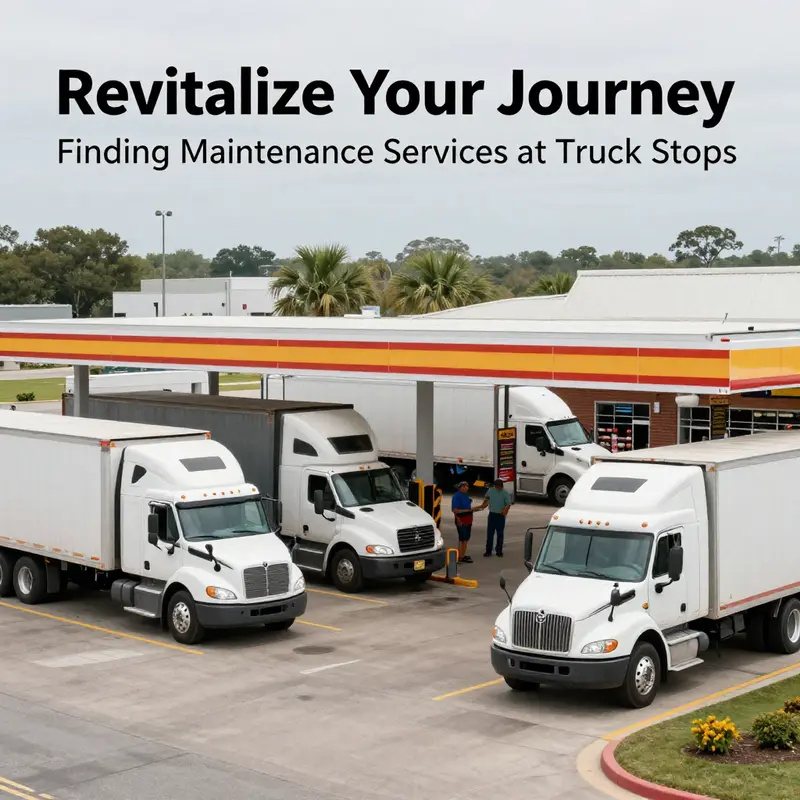
For long-haul operators and local fleets alike, maintenance at or near a truck stop is not a luxury but a practical necessity. The road is unpredictable, and a minor issue can quickly become a major delay if you’re not prepared. What makes maintenance at major truck stop networks so attractive is their combination of accessibility, standardized service quality, and the ability to keep a vehicle rolling with minimal downtime. Across the country, a growing number of networks host on-site shops or closely affiliated service centers that handle everything from routine tire care to more involved diagnostic work. These services are designed with commercial operations in mind: trained technicians, access to quality parts, and the workflow discipline needed to get a truck back on the road as quickly as possible. When a driver knows where to find the right facility, the difference between sitting idle for hours and getting back on the highway within a reasonable window can be substantial.
The most visible advantage of these networks is consistency. A driver who travels across state lines can reasonably expect a similar baseline of service at any location within the same network. This consistency matters, especially for fleets that rely on predictable maintenance windows to keep schedules intact and assets in good repair. The technicians at these facilities perform a spectrum of tasks that are common across commercial operations: tire changes and mounting, brake inspections, fluid checks and replacements, battery testing, and minor repairs that do not require a full dealership setting. These are not one-off tasks; they are part of a standardized service catalog that has been optimized for high vehicle turnover and quick diagnostics. The technicians conducting the work bring training and experience tailored to heavy-duty equipment, and the parts they stock are selected for durability and long service life under demanding conditions.
locating such maintenance options starts with the networks themselves. Most major truck stop operators maintain a robust digital footprint that includes location finders and service category filters. The process is straightforward: visit the operator’s official site, use the locate tool, and scan the list of nearby locations for a clear service category such as “Truck Maintenance” or “Diesel Repair.” The listing usually shows which facilities offer on-site maintenance, which have full-service repair shops, and which can perform diagnostics with portable tools. The clarity of this information saves time, especially when a truck is on a tight schedule and a maintenance window must be carved out without a long scouting detour. For drivers who rely on navigation aids, these same networks populate GPS and mapping apps with service tags that indicate repair capabilities. A simple search—“truck stop with repair services” or a filter for tire service or mechanical support—often yields a precise set of options along a planned route. The convenience of these digital anchors cannot be overstated; they reduce the cognitive load of route planning and enable better contingency planning when an area experiences heavy traffic or adverse weather.
While the digital tools make it easy to locate services, it remains prudent to verify availability before heading off the highway for a longer stop. Even within networks that advertise maintenance capabilities, shops operate under specific hours, require appointment windows for certain diagnostics, and may have peak times during harvest seasons or holiday travel. A quick phone call before arrival clarifies whether the requested service is in-scope for that particular location, whether the shop can accommodate a walk-in, and what the maximum wait might be. This approach protects a driver’s schedule and helps the shop allocate the right technician and parts for the job. The most efficient drivers treat maintenance planning as a loop: identify a nearby facility, verify the scope of work, confirm parts and technician availability, and then schedule a stop that minimizes downtime.
There is also value in understanding how these facilities fit into a broader ecosystem of vehicle care. Many locations are part of networks that partner with certified repair centers or fleets, ensuring a baseline of quality control. These centers may employ ASE-certified technicians and use diagnostic equipment that can interface with a broad range of heavy-duty engines and electronic systems. The result is not merely a quick fix; it is a responsible repair process that maintains warranty conditions where applicable and supports proper vehicle performance. Fleet operators often rely on a predictable service cadence—oil changes, brake checks, and tire maintenance scheduled at regular intervals—so having a trusted, networked point of care at multiple stops along a route is a strategic advantage. For drivers, the reassurance comes in knowing that the service provider adheres to established industry standards and has access to quality parts, which reduces the risk of a repeat visit for the same issue shortly after a repair.
Technology continues to reshape how drivers find and interact with maintenance services. Beyond locating a shop, digital tools now enable scheduling, real-time status updates, and even remote diagnostics in some cases. A growing number of platforms designed for truckers focus on streamlining roadside assistance and in-shop work through an integrated interface. These tools can help a driver locate the closest qualifying facility, set an appointment, and monitor repair progress as it unfolds. For example, a trucker-focused platform may provide a map of repair partners, an ETA for arrival, a live chat with shop personnel, and a status tracker that updates as work proceeds. This kind of end-to-end management is particularly valuable on multi-day routes where downtime can multiply if a single repair triggers a chain reaction of delays. Even when a sweep of the route reveals only minor issues, having a transparent, trackable workflow reduces anxiety and helps maintain schedule discipline.
The industry is also moving toward a more integrated driver support model. Global trends in driver assistance and mobility services point to a future where truck stops become more than fuel and rest hubs. Initiatives from other regions show how dedicated service networks can extend beyond maintenance to provide a bundle of essential services—charging options for electric vehicles, hygiene facilities, and legal or regulatory assistance—creating a one-stop hub for drivers on the road. In the United States, major networks are exploring or rolling out partnerships with infrastructure and service providers that expand repair and maintenance options, including electric vehicle charging alongside traditional service bays. While the specifics of these arrangements vary, the underlying principle is clear: drivers benefit from a unified ecosystem that reduces turnaround time and helps keep freight moving.
A practical example of this broader trend can be seen in the emergence of driver-facing digital ecosystems that unify maintenance discovery with roadside assistance. A widely used concept in the industry is a dedicated driver app that helps locate nearby repair services, request roadside help, and track the status of repairs in real time. Such applications complement the traditional shop-based model by providing last-mile insights and enabling proactive maintenance decisions. For the long-haul professional, this combination of on-site capability and mobile intelligence translates into fewer surprises on the road and more predictable uptime. The technology does not replace human expertise; it augments it, giving drivers and fleets the information they need to make timely decisions about maintenance, downtime, and money spent on repairs.
Safety and uptime are the cardinal goals behind sustaining maintenance at truck stops. The work performed at these facilities ranges from routine to moderately complex, and it is performed with the same attention to quality and safety that a dedicated repair facility would apply. Technicians are trained to handle heavy-duty systems, and the parts inventory is curated to minimize the likelihood of a suboptimal replacement. For fleet operators, consistent service quality across multiple locations reduces the risk of variability, which in turn improves maintenance planning accuracy and reduces total cost of ownership over time. For drivers, the experience of a well-managed maintenance visit—clear communication about the work, transparent pricing, and reliable completion times—builds trust and fosters greater road readiness. A well-run maintenance stop becomes a small, dependable node in a broader logistics network: a place where a ticking clock is managed, a vehicle is inspected with rigor, and the road is kept open for the next leg of the journey.
The practical steps to leverage maintenance services at truck stops then come into sharper focus. Start with the chain’s locator tools or your preferred navigation app to identify nearby facilities with maintenance capabilities. Read the service descriptions carefully to confirm that tire service, brake inspection, or diagnostic work is available at that location. If possible, check for any required appointments or preferred arrival times, especially if the shop has a high volume of commercial customers. When you can, call ahead to confirm the scope of work and the parts availability. If a full-service repair is not feasible at a given stop, be prepared to route to a nearby location that can handle the job, or plan a maintenance window that minimizes disruption to service delivery. Because many repairs are time-sensitive, drivers should also carry a basic toolkit and a prescribed maintenance checklist to identify issues quickly and communicate clearly with shop personnel. This preparation reduces the back-and-forth during the repair process and helps ensure that the work performed aligns with the vehicle’s common maintenance schedule.
In practice, the most efficient drivers treat maintenance at truck stops as a routine component of route planning rather than a reactive fix. They build a map of preferred locations along their typical corridors, maintain a short list of questions for shop staff (such as warranty coverage, expected turnaround, and whether a loaner vehicle is available for extended work), and keep their fleet’s standard maintenance intervals in view. When a truck requires service, the driver can then move confidently toward a stop that met the pre-established criteria, minimizing downtime and guarding against unplanned delays. Even when the task is minor, such as a tire rotation or a quick battery test, the disciplined approach preserves uptime and keeps the vehicle aligned with its schedule.
From a broader perspective, maintenance at truck stops contributes to a more resilient transportation system. It helps reduce the risk of roadside breakdowns, supports safer vehicle operations, and encourages responsible maintenance practices across the freight industry. The combination of standardized service offerings, reliable technician expertise, and digital tools creates an ecosystem where trucks stay on the move, and drivers can focus on the next mile rather than the next problem. As the industry evolves, the expectation is that maintenance capabilities at these hubs will expand further, integrating more advanced diagnostics, larger repair inventories, and, potentially, more flexible service delivery models that can accommodate varying fleet needs. For now, the core value remains: when maintenance is available where you’re going, downtime dwindles, reliability climbs, and the road becomes a more predictable place for moving goods across the country.
External resource for further exploration of driver-focused maintenance tools and real-time repair tracking can be found here. While the landscape of apps and services grows, drivers should evaluate tools based on how well they integrate with the networks they rely on and how easily they fit into their route plans.
External resource: https://apps.apple.com/us/app/redmechanic-truck-repair-roadside-help/id1546907355
Mapping Reliability on the Road: How Navigation Tools Guide Maintenance at Truck Stops
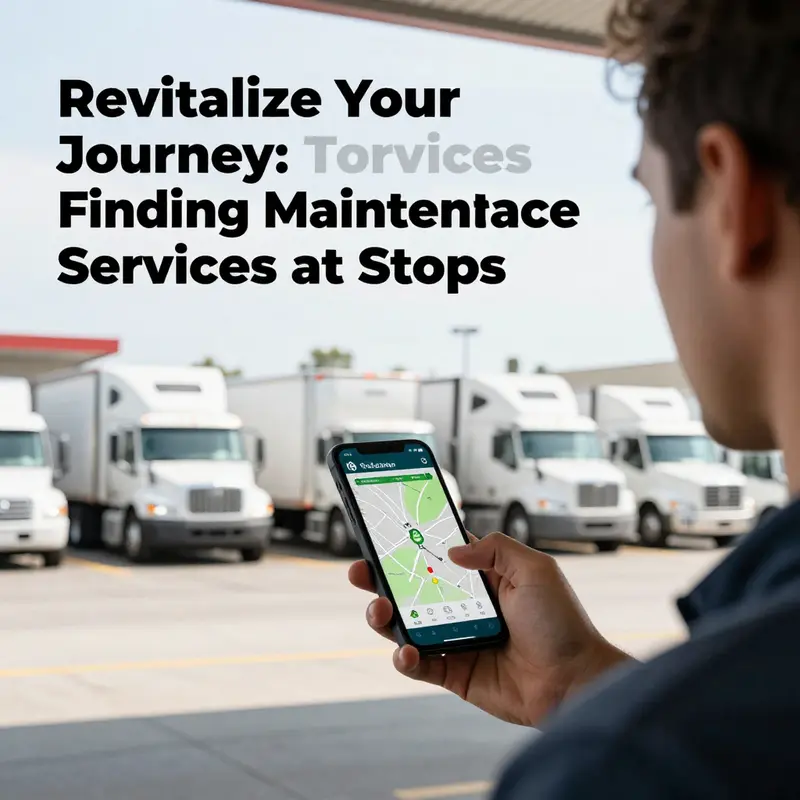
Maintaining trucks on the road relies on reliable data and deliberate planning. Modern navigation tools connect a network of maintenance providers at truck stops with route planning, so drivers can locate tire service, diagnostics, or brake work quickly. Real-time status and service filters help match a needed capability with a nearby stop, reducing downtime and keeping fleets on schedule. Beyond immediate service, the ecosystem includes manufacturer portals and pre-service checks that empower proactive maintenance and smoother handoffs at the repair bay. By integrating maps, service data, and workflows, fleets turn roadside stops from risk into a managed part of the journey.
On the Road to Reliability: Locating Certified Maintenance Services at Truck Stops
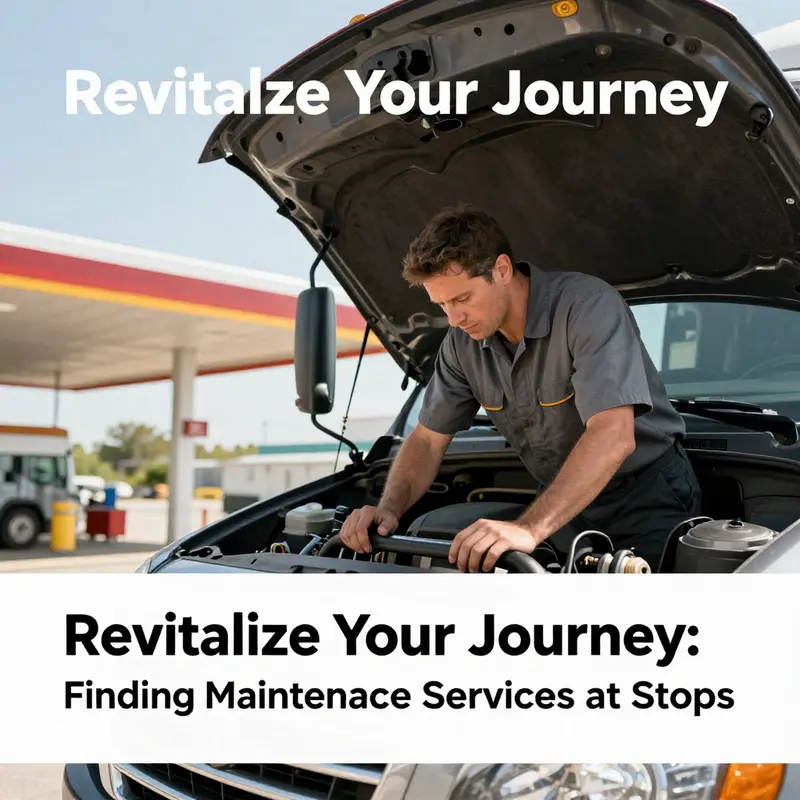
Every mile in a long-haul operation increases the odds of needing maintenance away from a fixed shop. A truck that travels through unfamiliar corridors of the country relies on the reliability of facilities that can diagnose, repair, and restore performance without delaying the schedule. In this context, truck stops are not mere rest points; they are portable maintenance hubs that can support fleets and solo drivers alike when the right providers are involved. The core benefit is clear: access to skilled technicians, appropriate equipment, and parts in a location that reduces downtime and keeps routes progressing. Yet the value hinges on one simple truth: you are better off trusting certified service providers who meet industry standards rather than accepting the first shop you encounter along the ramp. The decision to pursue certified maintenance at a truck stop is not a matter of convenience alone; it is a driver safety and uptime strategy that pays back in reduced risk, better fuel economy, and fewer unexpected detours on a schedule that blocks out time for business, rest, and regulatory compliance.
Quality maintenance begins with the people who perform the work. Certification matters because it signals a baseline of competence, ongoing training, and familiarity with the heavy-duty systems that power modern trucks. ASE-certified technicians are trained to interpret diagnostic data, understand the intricacies of braking systems, cooling procedures, suspension components, and electrical networks specific to heavy vehicles. When a shop can point to technicians who hold recognized credentials, drivers gain confidence that repairs will withstand the pressures of long hauls and changing cargo demands. In addition to individual credentials, certified service centers often participate in partnerships with fleets or OEMs that establish a higher level of service discipline. These affiliations typically require adherence to systematic maintenance protocols, standardized safety practices, and access to diagnostic tooling that aligns with factory specifications. The result is a service experience that emphasizes consistency, traceability, and accountability—elements that reduce the likelihood of rework and misdiagnosis. The chapter that follows builds on this premise by outlining practical steps to locate such providers and by describing what drivers should expect once they arrive at a truck stop for maintenance needs.
Finding a certified provider does not have to feel like a scavenger hunt. It begins with knowing where to look and what to ask. One reliable starting point is the location infrastructure that many large truck-stop networks offer online. These networks typically provide a location finder that labels each site with the services available on site, including references to basic maintenance and more advanced repair capabilities. The value of these tools lies in their ability to reduce guesswork. Rather than wandering from lot to lot, a driver can filter results by the specific service requirements—tire service, battery testing, brake inspection, fluid checks, or diagnostic repair. The presence of a “Truck Maintenance” or “Diesel Repair” tag signals that the location has committed resources to maintenance operations. While this is not a guarantee of perfection, it is a meaningful signal that the site has at least structured the maintenance experience rather than leaving it to ad hoc arrangements.
Beyond company-owned networks, traditional navigation tools play a crucial role. Modern GPS and mapping applications enable drivers to search for truck stops with repair services or to filter for facilities that offer mechanical support. A quick search for terms like “truck stop with repair services” can yield a prioritized list of nearby options. Interacting with the results—calling the location to confirm what is currently available, asking about diagnostic capabilities, and inquiring about appointment needs—turns a general search into a practical plan. Peak travel periods can stretch staff thin and lead times to extend, so proactive communication is essential. The simple act of calling ahead reduces the risk of arriving to a closed bay or a preoccupied shop that cannot accommodate a repair in a timely manner.
A critical part of locating quality maintenance is understanding the certification ecosystem that underpins service quality. Certified service centers often participate in networks that provide a verified roster of technicians, documented service histories, and standardized reporting. These networks may be national or regional, and they typically require shops to maintain certain equipment, follow diagnostic procedures, and adhere to safety standards. The advantage for drivers and fleet operators is twofold. First, there is a higher likelihood that the work performed will meet a consistent standard, which makes it easier to track maintenance history across routes and over time. Second, a certified network often provides a transparent framework for invoicing, parts usage, and labor time. This transparency is invaluable for fleet managers who need to reconcile maintenance events with uptime metrics, fuel efficiency data, and preventive maintenance schedules. The presence of certified service providers also supports safety audits and compliance checks, ensuring that critical systems—such as air brakes, steering assemblies, and undercarriage components—receive attention from qualified professionals.
To operationalize these benefits, drivers should look for sites with explicit references to certified technicians or partnerships, and should seek out centers that communicate in clear, verifiable terms. A location that can point to ASE-certified technicians, OEM-affiliated repair centers, or fleets that have standardized service agreements signals a process-driven approach to maintenance. In practice, this means requesting information about the diagnostic tools on hand, such as software licenses that interface with engine control modules, transmission diagnostics, or brake system analyzers. It also means asking for a printed or digital work order that outlines the scope of work, the parts used, the estimated time to complete the service, and a post-service test that verifies the repair has resolved the issue. When the shop can provide this level of documentation and traceability, drivers gain a dependable reference for the state of their vehicle and a clear record for future maintenance planning.
The actual services offered at truck-stop maintenance bays cover a broad but practical spectrum. At a minimum, most sites provide tire inspection and changes, battery testing, and fluid checks. More capable shops offer a deeper toolbox: core brake inspections, alignment checks, cooling-system pressure tests, and diagnostic scans that read fault codes and identify root causes. In some locations, technicians can perform minor repairs on the spot, such as replacing a failed sensor, sealing a leak in a cooling line, or addressing minor electrical faults that do not require a full shop bay. The potential for a comprehensive repair—complete with diagnostic tools and trained mechanics—depends on the facility’s capacity, the shop’s staffing, and the current demand. A well-equipped site may maintain a portable diagnostic unit, allowing a technician to run initial checks without disassembling major components. In the best cases, a technician can conduct a diagnostic, identify the problem, source quality parts, and execute a repair within a single visit. This capability is not universal, but it is increasingly common in larger, networked maintenance bays where technicians adhere to standardized processes.
Drivers should also consider the quality of parts and the reliability of the sourcing practices at the maintenance site. The idea is not to chase the lowest price, but to secure parts that meet the vehicle’s specifications and warranty requirements. A certified shop will typically use parts aligned with the OEM’s specifications or with reputable aftermarket equivalents that have been vetted for performance and durability. When possible, drivers should request that the shop specifies part numbers, batch information, and warranty terms for any critical component replaced during maintenance. Transparent part sourcing reduces the chance of mismatches or poor performance after the repair and supports fleet continuity when vehicles return to service after a maintenance window. If a driver is operating within a fleet program, the maintenance history can often be linked to a central system, providing an additional layer of accountability and enabling fleet managers to view cumulative uptime statistics, recurring issues, and the effectiveness of maintenance interventions over time.
Knowing where to find certified maintenance is only part of the equation. The other part is understanding how to interact with the shop in a way that maximizes uptime and minimizes risk. A practical approach begins with a clear description of the problem, including audible cues, dashboard codes, or performance changes that prompted the service request. For example, a driver can describe a brake pulsation, a warning light, or a drop in fuel economy, and then allow the technician to perform an initial diagnostic before committing to a repair plan. It is also wise to request a preliminary estimate and a formal repair plan before any replacement of parts occurs. This approach helps drivers manage expectations and reduces the chance of scope creep. In some cases, a diagnostic fee may apply, but many certified centers apply diagnostic time toward the cost of the actual repair if the work proceeds.
Peak travel seasons can intensify demand and hamper immediate access to repair bays. In those windows, it is prudent to have a prioritized list of backup options, including alternative truck stops or nearby certified centers that can accommodate an emergency repair or a time-sensitive maintenance task. A contingency mindset—knowing which locations can provide a quick tire change with backup parts, or a battery test with a roadside jump-start option—helps preserve schedule integrity and reduces the risk of a late arrival at a customer site or a preplanned delivery window. Fleet operators should weave maintenance location strategy into route planning, identifying preferred certified centers along major corridors and building a rhythm around preventive maintenance that aligns with miles traveled, seasonal needs, and regulatory checks.
In practice, the synergy between certified service providers and strategic planning becomes a powerful uptime enabler. When a driver can quickly verify that a shop has ASE-certified technicians, access to diagnostic equipment, a transparent parts policy, and a realistic turnaround estimate, maintenance ceases to be a disruptive event and becomes a predictable element of daily operations. A networked approach—where a driver moves from one certified site to another as routes and conditions dictate—embodies the modern, resilient model for road transport. The importance of verified service networks extends beyond individual repairs. It supports fleet-wide reliability metrics, helps control maintenance costs by reducing unnecessary rework, and contributes to safer operations by ensuring that critical systems are treated by qualified professionals. All of these elements come together to create a smoother journey for the vehicle, the driver, and the broader logistics mission.
To connect drivers with trusted providers, certified networks such as Truckers Assist offer a verified directory of qualified professionals who meet industry standards. By registering with such programs, drivers gain access to a curated list of technicians and repair shops that have demonstrated their capability to meet established criteria for safety, training, and service quality. This level of assurance is particularly valuable when a driver enters unfamiliar territory or faces a tight schedule. For more information on how to identify and connect with certified service providers, visit the official Truckers Assist website: https://www.truckersassist.com/.
For readers who want to explore related guidance and practical training that complements hands-on maintenance at truck stops, a related resource is available through the following article: fire-truck-maintenance-service-training. This resource underscores the broader principles of service discipline, technician competency, and structured maintenance programs that apply across vehicle types, including heavy trucks on the highway. While the focus differs in scope and audience, the underlying concepts—certification, standardized procedures, transparent communication, and dependable diagnostics—are the same. The aim is not to imply equivalence of all contexts but to illustrate how structured training and credentialing underpin maintenance reliability in mobile environments.
In sum, locating quality maintenance at truck stops is less about luck and more about method. It requires recognizing the signals that indicate a certified, capable shop, using contemporary search tools to identify qualified sites, and engaging with technicians who can document a clear plan, use appropriate diagnostic tools, and source parts that meet strict standards. It also requires planning for peak periods, maintaining a backup strategy, and leveraging certified networks to obtain trusted providers. When these elements come together, a truck stop becomes not a mere rest station but a dependable extension of the vehicle’s maintenance program, helping drivers reach their destinations safely and on time. For anyone who travels with a heavy vehicle, this approach translates into higher uptime, safer operation, and a more predictable maintenance cycle that aligns with fleet goals and regulatory requirements.
On the Road, In the Shop: Finding Maintenance Services at Truck Stops and Why a Call Ahead Keeps Your Schedule Tight
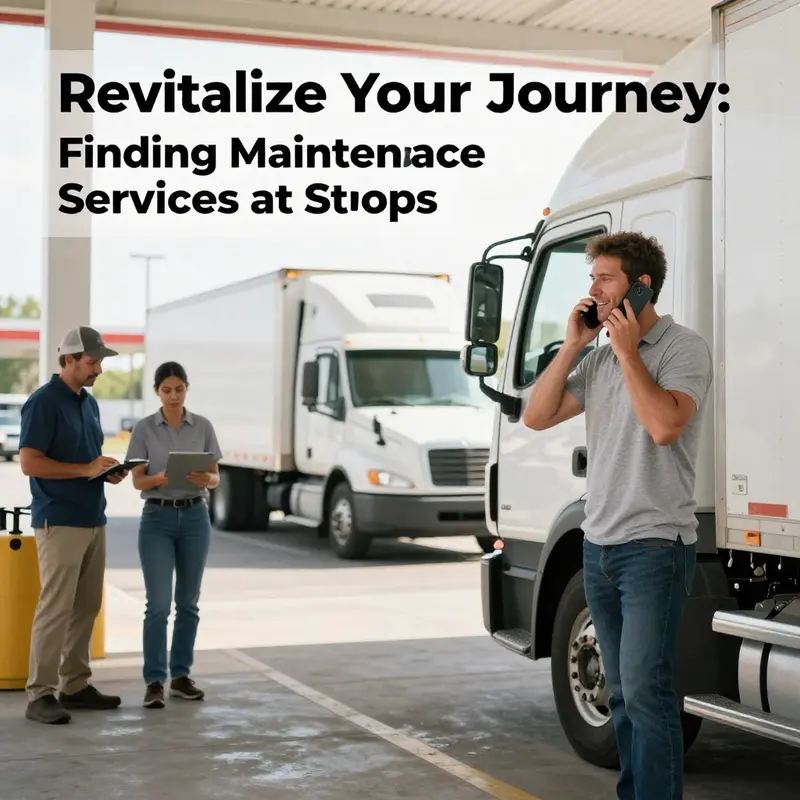
The highway carries more than metal and diesel; it carries the rhythm of a fleet’s day, the cadence of deliveries, and the fragile balance between uptime and downtime. For the long-haul driver, a routine pit stop to top off fluids or rotate a tire can become the difference between a on-time arrival and a cascading delay that ripples across a week’s worth of schedules. Maintenance at truck stops has evolved from a roadside convenience into a networked capability—one that pairs the convenience of a fuel-and-service stop with trained technicians, diagnostic tools, and the potential to dispatch help right to the truck’s location. Yet the value of that efficiency hinges on one simple act: making a quick, deliberate call ahead before you pull into the bay or roll into a service area. The road rarely telegraphs its needs, but a prepared driver can turn a potential bottleneck into a smooth appointment, a minor service into a minor interruption rather than a major detour.
Locating maintenance services at truck stops is no longer a guessing game. The modern landscape blends two reliable pathways: first, the online footprint of major stop networks, which often feature a “Truck Maintenance” or “Diesel Repair” listing beside each location; and second, the mapping and scheduling ecosystems that drivers already rely on—GPS apps, map-based search tools, and vehicle-management portals that know where the certified hands lie and when they are available. With the proliferation of digital touchpoints, the process is theoretically straightforward. You look up a stop along your route, you confirm the services offered at that particular site, you verify the hours, and you decide if you want to drive in or request a technician to your rig’s parking spot. In practice, the real-world reliability of these services rests on one cultural shift that anchors all the others: calling ahead.
Calling ahead is more than a courtesy; it is a strategic step that protects your timetable. Truck stops with in-house maintenance bays or partnered service centers can perform tire changes, brake inspections, and fluid replacements, even diagnostic work, but capacity fluctuates with the day’s traffic, the season, and any special events that draw heavy volumes of trucks. A quick phone call lets you confirm whether the location currently stocks the parts your rig needs, whether an ASE-certified technician is slated to be on site, and what kind of diagnostic setup is available on the premises. If you need more than basic maintenance—say, a full brake service, a battery health assessment, or a computer-driven engine diagnostic—the call ahead gives you a realistic sense of whether you should plan to wait, schedule an appointment, or arrange for a mobile technician to meet you where you park.
Beyond confirming availability, a concise pre-visit conversation can outline essential details that accelerate service once you arrive. What exactly is the truck’s symptom? Is there a visible issue with a tire, a dashboard warning light, a leaking fluid, or a noisy brake that could indicate a deeper problem? When was the last service performed, and what parts or fluids were used? Are there any unusual noises, smells, or performance changes that you want the technician to diagnose specifically? These questions focus the technician’s attention so they can bring the right tools and the right parts for your truck’s exact configuration. They also help you gauge the expected downtime. A driver who calls ahead with a clear description of the issue and a planned service window can secure a more accurate estimate and reduce the chance of an unscheduled hold while the shop sorts out parts or scheduling conflicts.
The practical value of calling ahead becomes especially clear when you consider chains and networks that have invested in service portals and appointment scheduling. Some major stop networks offer online service portals where you can request maintenance, book an appointment, or check real-time availability. This creates a two-way bridge between the driver and the shop: you signal your intent and needs, and the shop signals back with slots, parts availability, and the likely duration of the service. Even when a portal isn’t available or the location is a third-party service partner, a direct call can replicate the same clarity—if you know what questions to ask and what information to provide. When you combine a well-placed call with the option to view an approximate wait time or confirm the technician’s arrival window, you move from reactive stopping to proactive uptime management.
To maximize the odds of a smooth encounter, drivers should approach maintenance stops as a planned segment of the trip rather than an interruptive event. Preparation starts long before you reach the stop. Record the current mileage and any recent abnormal readings from telematics dashboards. If you maintain a log of tire tread depth, tread wear patterns, and brake pad thickness, you can present objective data to the technician rather than a vague “it feels off.” Retrieval of the vehicle’s VIN and a concise service history can also be beneficial; it helps technicians pull compatible parts and respects warranty constraints when applicable. If you are part of a fleet, standardizing the information that you provide to service centers can drastically reduce back-and-forth time. A uniform approach to reporting symptoms, mileage, and prior repairs reduces guesswork and speeds up the diagnostic phase.
The human element in this equation matters as well. Truck-stop technicians, whether they are employed directly by the stop or are dispatched from a certified nearby center, repeatedly encounter the same kinds of issues. Tires, brakes, batteries, and fluid ecosystems dominate the service mix. A tire change is not merely about swapping rubber; it involves matching the right load rating, sidewall construction, and size to the vehicle’s axle configuration and the hauling schedule. A brake inspection is more than checking wear; it involves verifying rotor surfaces, caliper operation, hydraulic integrity, and, in some cases, the presence of ABS codes that a handheld diagnostic tool can decode. Fluid checks encompass coolant, engine oil, transmission fluid, and hydraulic fluids used in braking and steering systems. Each of these tasks has a defined protocol, and trained technicians can perform them efficiently, often with parts stock that aligns with common truck configurations. When you call ahead, you are factoring in the practical realities of a busy shop floor: you are reducing the chance of a miscommunication about the service level, the parts on hand, and the time required to complete the job.
Another dimension of the call-ahead approach lies in the possibility of dispatching a technician to your location. Mobile maintenance services are increasingly common, especially in fleets that depend on minimising downtime and keeping a precise schedule. If the truck’s location is easily accessible, and weather or traffic conditions permit, a technician can come to your parking spot with a compact set of diagnostic tools and commonly needed parts. This on-site capability often becomes a critical option during tight delivery windows or when weather makes transporting the vehicle to a shop risky or impractical. Even when a stop has a full-service bay, the option to mobile-diagnose can shave hours from a typical service cycle, letting the truck resume its route with minimal disruption.
For drivers who manage single-truck operations or small fleets, the decision matrix about where to stop for maintenance blends practicality with predictability. It is prudent to map a handful of nearby truck stops along the anticipated route that clearly advertise maintenance capabilities and have a reputation for accurate wait-time estimates. When possible, choose locations that provide transparent pricing for basic services and offer clear policies on diagnostics and parts. It is also wise to verify that the technicians and shops have access to the right diagnostic equipment that can connect to a wide array of engine control modules and vehicle data networks. The aim is not to force a fix through quick but superficial measures; it is to secure a solution that is robust, compliant with safety standards, and compatible with future maintenance needs. If you operate a fleet, coordinating maintenance windows with your drivers so that the same stops are used across the route builds a reliable pattern of uptime and reduces variance in service experiences. Such consistency helps with budgeting for maintenance and planning for predictable delivery times.
How do you actually make that first move from the cab into the shop corridor? Start with the question of hours and service scope. Ask explicitly whether the stop can perform the specific repair you need, whether a diagnostic scan is available in the bay, and if the needed parts are in stock or if a parts order is required. If a parts order is needed, ask about lead times and whether the truck can wait in a designated area or if you should return later in the day. If a mobile technician is a preferred option, ask about their service radius, typical response times, and whether a dispatch fee applies. In some regions, it is common for a shop to offer a blended service model: core diagnostics in the morning and major repairs in the afternoon when parts shipments arrive. Having a preferred time window helps you align your driving schedule and your delivery commitments with what the shop can realistically deliver.
To weave all these threads into a seamless practice, you can adopt a simple, repeatable routine. Before you approach a truck stop, list the possible service scenarios you might encounter: a tire change, a brake inspection, a battery health check, or a full diagnostic. Then, while on the road, identify a few stops within reasonable driving distance that could meet each scenario. Call or check the online portal, if available, to confirm capabilities and to establish an appointment window. When you arrive, present a compact briefing: your truck’s make and model, the service history, the symptoms observed, and the desired outcome. If you have a preferred technician or a trained specialist for certain systems, mention that as well. The goal is not to pressure the technician into a quick fix but to establish a shared understanding of the task, the time required, and the expected quality of the outcome.
It is also worth noting a practical caveat: not every maintenance need at a truck stop is appropriate for a simple, on-site fix. Some issues require tow services or a full-service repair facility with lift equipment, heavy diagnostic rigs, or controlled testing environments. In these cases, the call ahead becomes an essential risk-management step. It helps you evaluate whether a stop can handle it on site or if you should arrange alternate transportation for the tractor and trailer to a nearby repair center. The decision to tow or to proceed with on-site care hinges on the severity and the safety implications of the fault, the crew’s assessment, and the time pressure you face to advance toward the next drop or arrive within a defined window.
In sum, the practical geography of maintenance at truck stops is less about location and more about process. It is about knowing where to look, how to ask, and when to plan. The most reliable playbook blends accessible information with a disciplined call-ahead habit. It recognizes that maintenance is not an isolated event but an integral part of the itinerary that keeps cargo moving and fleets productive. The more a driver treats maintenance as a scheduled, value-adding activity rather than an unexpected stop, the more the roadside becomes a predictable ally rather than a potential obstacle. And as digital tools continue to mature, the alignment between the truck’s needs and the shop’s capacity will become even tighter, turning the act of finding maintenance services at truck stops into a straightforward, dependable routine rather than a risky gamble.
For a concise starting point, consider exploring a dedicated trucking resources hub and its guidance on locating truck-stop services. This can provide a quick overview and point you toward lines of contact that are reliable and current. If you want to dig deeper into career-long maintenance and reliability discussions, a steady habit of following updated posts on industry blogs and service portals can be invaluable. The essence remains simple: know who to call, what to ask, and when to expect a response. The road rewards preparation, and preparation rewards uptime. By choosing to call ahead, you turn maintenance from a hurdle into a strategic waypoint on your journey, keeping your rig, your schedule, and your business moving forward with confidence.
For additional context and practical framing, you can start with a trusted trucking resource hub that aggregates maintenance and service guidance. It provides a straightforward path to learn more about truck-stop maintenance services and how to approach them with a fleet mindset. 5startruckin.com/blog/
External resource note: for the most authoritative directory of truck stops and their maintenance capabilities, reference the American Trucking Associations truck-stop directory to verify current options and contact details as you plan your route. This external reference can serve as a supplementary check when you’re mapping maintenance stops along your next itinerary.
External resource: American Trucking Associations – Find a Truck Stop: https://www.trucking.org/truck-stop-directory
Final thoughts
Incorporating maintenance services into your travel plans is essential for any long-haul truck driver. Knowing where to find these services can not only save time but also ensure safety and performance on the road. Major truck stop chains provide convenient options, and tools like navigation apps can guide you to the nearest facilities. Don’t forget the value of ready access to certified technicians who guarantee quality service. Lastly, always remember the golden rule: call ahead to confirm that the services you need are available. Safe travels and well-maintained trucks make for a smoother journey every time.