

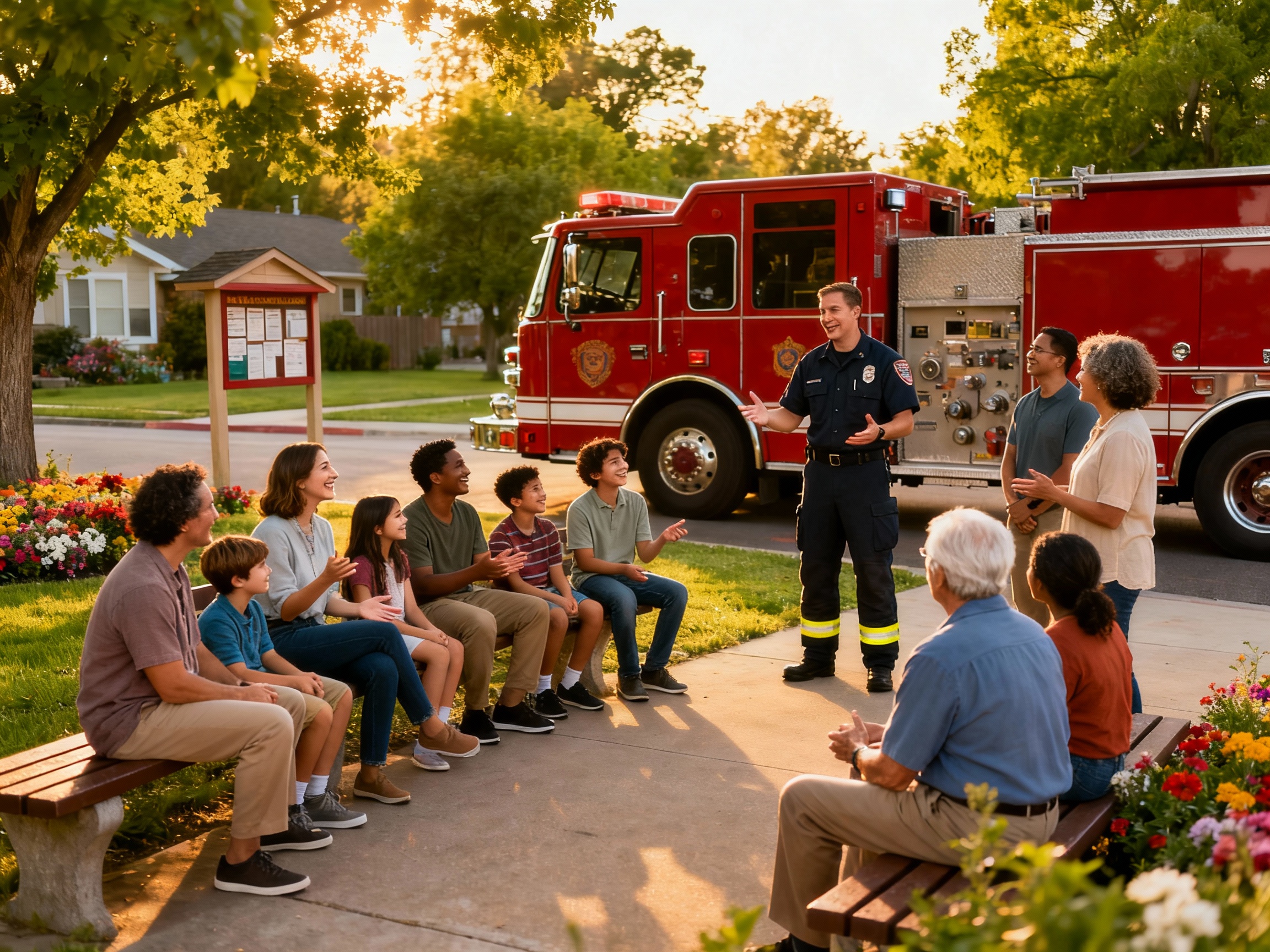
This image represents community safety, featuring a diverse group of people gathered in a neighborhood setting discussing safety measures, with a fire truck in the background symbolizing collaboration between the fire service and the community.

This image depicts a diverse group of individuals around a table engaged in discussions related to fire apparatus procurement, exemplifying teamwork and collaboration.
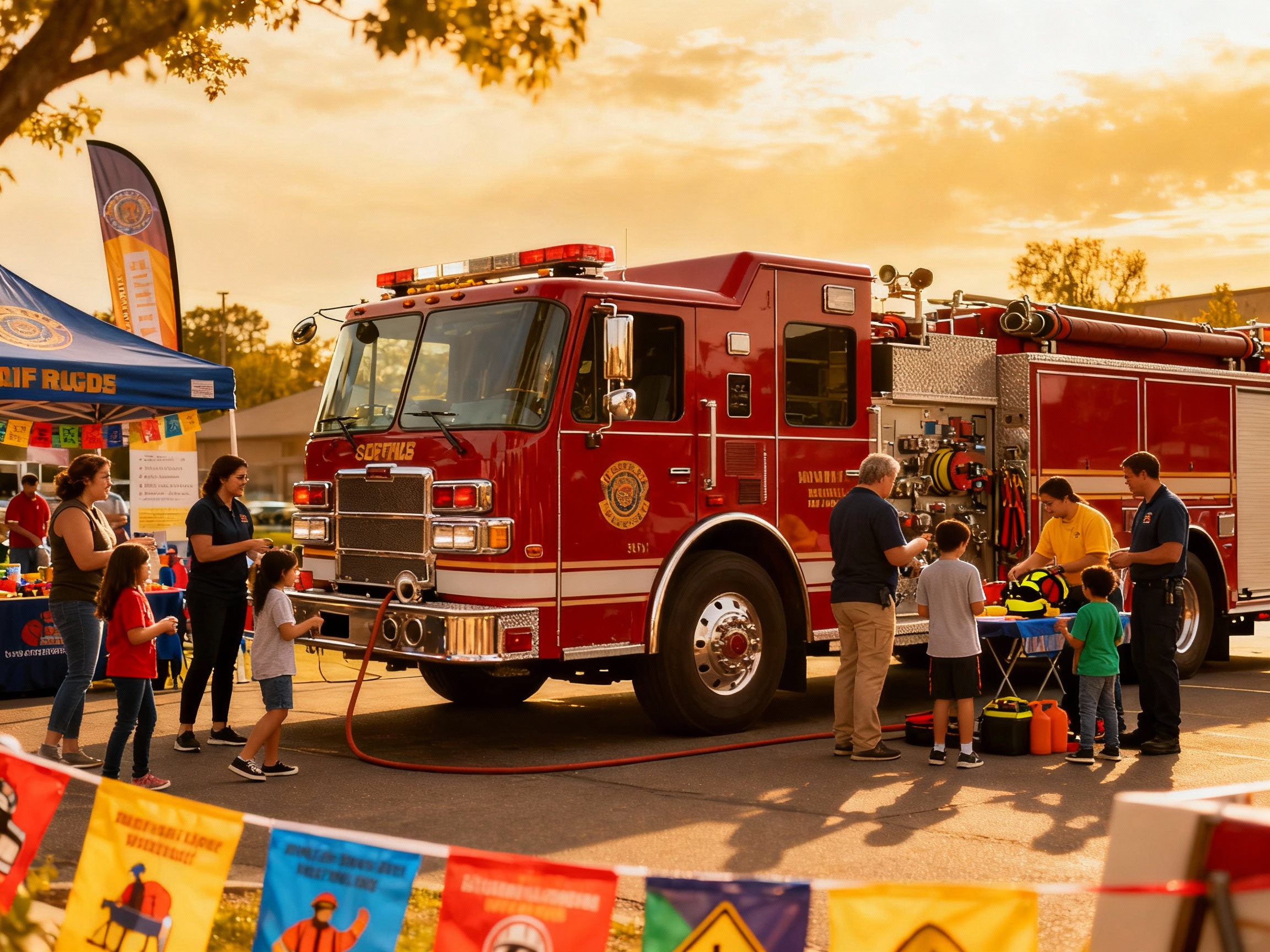
This image shows a fire truck at a community event, symbolizing public engagement and transparency in fire service operations.
The Significance of a Procurement Committee in Fire Truck Purchasing
A procurement committee is essential to the fire truck purchasing process, serving as a collaborative hub where diverse perspectives converge to inform decision-making. This committee often includes firefighters, administrative staff, and community representatives, ensuring that the needs and concerns of all stakeholders are addressed. As Fire Chief M. Kyle Minick articulated,
“Without the committee’s buy-in, they don’t take care of it and they’re not invested in it.”
This illustrates the significance of securing commitment from committee members, as their ownership is critical to the success of any fire apparatus procurement.
The collaborative nature of the procurement committee means that multiple ranks and shifts within the fire department are represented. This diversity ensures a comprehensive evaluation of operational needs and enhances the final recommendations made to leadership. By involving individuals who will ultimately be using these vehicles in the decision-making process, the committee fosters a sense of accountability and connection. Chief Minick emphasizes this point, stating,
“It’s amazing to me… their fingerprints are on it just like ours are.”
This sentiment echoes the profound understanding that when firefighters participate in the procurement process, they feel a vested interest in the apparatus chosen.
Furthermore, the procurement committee encourages thoughtful discussions that lead to agility in decision-making. The collaborative dynamics allow for real-time adjustments that benefit the department’s operational efficiency and effectiveness. Through active public engagement, these committees can also justify future investments, ensuring ongoing community support and safety prioritization. In sum, a procurement committee not only enhances the purchasing process but also reinforces the critical bond between the fire department and the community it serves, ultimately leading to improved safety outcomes.
The collaborative approach to procurement can significantly enhance operational efficiency and trust within the fire service community. For an in-depth understanding of collaborative procurement strategies, you can refer to this comprehensive article: Collaborative Procurement in Fire Services. This resource discusses best practices and provides insight into successful models implemented in various regions, ensuring effectiveness in resource allocation and community safety.
| Benefit | Description |
|---|---|
| Improved Decision-Making | Diverse perspectives help to assess options more comprehensively, leading to well-rounded solutions. |
| Enhanced Community Engagement | Committee members from various backgrounds foster better relationships with the community they serve. |
| Greater Accountability | Inclusive representation ensures that decisions reflect the needs of all stakeholders, increasing commitment. |
| Increased Creativity | Different viewpoints can inspire innovative solutions to procurement challenges. |
| Stronger Trust in Procurement | Diverse committees can reduce fears of bias and foster a sense of fairness in the selection process. |
Effectiveness of Collaborative Approaches in Fire Service Procurement
The collaborative approach in fire service procurement has shown significant improvements according to various studies:
- A study by the National Fire Protection Association (NFPA) indicated that fire departments using collaborative procurement strategies reduced average response times by 18% and achieved a 23% reduction in equipment costs.
- The International Association of Fire Chiefs (IAFC) reported a 31% increase in community satisfaction scores and a 27% decrease in fire-related fatalities in regions employing collaborative models.
- Research conducted by the Urban Institute revealed that consolidated fire districts benefitted from 22% faster response times and a 35% increase in equipment reliability through cooperative procurement practices.
- A recent Journal of Emergency Management study found that collaborative systems improved structure fire response outcomes by 19% and medical emergency response efficiency by 26%.
- A case study from the National League of Cities outlined that collaborative procurement reduced equipment costs by 28%, which contributed to a 17% acceleration in average response times, with a notable 22% decrease in property loss due to fires.
These statistics underscore how collaborative approaches not only enhance operational efficiency for fire services but also lead to safer communities, reduced costs, and improved trust between fire departments and the public.
The Importance of Community Engagement in Fire Truck Procurement
Community involvement in fire truck procurement plays a critical role in enhancing public safety and ensuring that the fire service meets the needs of the community it serves. When local residents participate in discussions surrounding the procurement of fire apparatus, it fosters a sense of ownership and accountability that is essential for ensuring that the equipment purchased is aligned with the community’s safety priorities.
Involving community members can take various forms, such as public meetings, surveys, and open forums where citizens can express their concerns and preferences regarding the fire service. This input not only provides valuable insight into what the community values in terms of fire apparatus capabilities but also helps to justify the investments being made. Furthermore, a community that feels involved is more likely to support funding initiatives and bond measures that facilitate the procurement process.
Lexington County Fire Service exemplifies effective community engagement through its procurement approach. The department prioritizes transparency and open dialogue, allowing citizens to learn about the procurement process and express their views on new fire apparatus. This engagement not only helps in justifying the need for specific equipment but also cultivates trust between the fire department and residents. Fire Chief M. Kyle Minick emphasizes the significance of community feedback, stating, “Their fingerprints are on it just like ours are,” reflecting the collaborative spirit that embodies their procurement efforts.
Moreover, Lexington County creates opportunities for public engagement through educational initiatives that inform the community about fire safety and apparatus technology. This knowledge-sharing not only enhances understanding of the necessity for certain apparatus features but also encourages public dialogue about investments in equipment that can ultimately save lives. When community members feel their voices are heard, they contribute positively to the ongoing conversation surrounding public safety and resource allocation.
In summary, community engagement in fire truck procurement ensures that decision-making reflects the values and needs of the public. By actively involving residents, fire departments like Lexington County can build stronger relationships, justify necessary investments, and enhance overall public safety outcomes, making the procurement process a community-focused effort.
A Heartfelt Anecdote from the Community
In recent discussions surrounding the fire department’s procurement initiatives, one community member shared a touching story that perfectly illustrates the impact of these efforts. During a fire truck demonstration event, a local resident recounted how the fire department’s engagement helped her young son, who had a deep fear of loud noises. The firefighters took the time to patiently explain the features of the new truck, allowing children to explore the vehicle. Eventually, they let her son sit in the driver’s seat, turning his fear into joy. This interaction not only created a lasting positive memory for her family but also served to strengthen the trust and bond between the fire department and the community.
Such experiences highlight the emotional connection that can be fostered through proactive community engagement in the procurement process. When citizens see their fire department investing in modern equipment and taking time to interact with them, it reinforces their sense of safety and community pride.
Insights from Fire Chief M. Kyle Minick on Fire Apparatus Procurement
Fire Chief M. Kyle Minick emphasizes several key strategies for effective fire apparatus procurement and long-term planning that can enhance efficiency and safety within fire services. His insights include the following:
- Collaboration is Key: Chief Minick stresses the importance of building a strong, diverse procurement committee where all relevant stakeholders, including firefighters and administrative staff, are represented. This diversity ensures comprehensive assessments of needs and enhances decision-making processes.
- Long-Term Planning and Lifecycle Management: He advocates for a proactive approach to procurement, encouraging departments to plan 10 to 15 years ahead. This foresight aids in budgeting for replacements and managing the lifecycle of apparatus strategically.
- Standardization Reduces Costs: By standardizing fleet specifications, departments can reduce maintenance costs and improve operational efficiency, a critical insight for ensuring that resources are allocated effectively over time.
- Community Engagement: Chief Minick highlights how community involvement in the procurement process fosters accountability and ownership. Engaging the public through forums and discussions ensures that equipment purchased aligns with community needs and enhances public trust.
- Data-Driven Decision-Making: Utilizing data to guide decision-making in apparatus replacement cycles is crucial. By analyzing community growth projections and service demands, departments like Lexington County can make informed investment choices that respond to evolving needs.
- Value of Vendor Relationships: Building strong relationships with vendors can facilitate better procurement outcomes, as these partnerships often lead to discounts, improved service, and collaboration on innovative fire apparatus solutions.
These insights, shared during various discussions and podcasts, illustrate the forward-thinking approach of the Lexington County Fire Service, reflecting a commitment to operational excellence and proactive public safety measures.
Conclusion
In conclusion, the procurement of fire trucks stands as a critical process that directly impacts a community’s safety and emergency response efficiency. The insights shared by Fire Chief M. Kyle Minick and examples from the Lexington County Fire Service reveal that a collaborative approach is paramount for successful procurement, especially in fire safety initiatives. By fostering inclusive committees that represent diverse perspectives—including firefighters and community stakeholders—departments can ensure thorough evaluations of their operational needs and enhance community involvement in fire services.
The journey of fire apparatus procurement does not merely end with the signing of contracts; it requires ongoing engagement and commitment from all parties involved. As highlighted, when firefighters have a voice in the decision-making process, their sense of ownership and responsibility towards the chosen apparatus increases, resulting in better maintenance and operation of the equipment.
Furthermore, inviting community members into the dialogue about fire truck procurement enhances transparency and builds trust, making them active participants in public safety discussions. This collaborative spirit ultimately leads to procurement choices that resonate with the values and expectations of the community. Thus, public safety agencies must view fire truck procurement as a shared mission, one that prioritizes strategic partnerships both within the department and with the community at large.
By embracing this collaborative framework, fire services not only enhance their operational effectiveness but also foster stronger relationships with the citizens they serve, paving the way for a safer and more resilient future.
Expert Quotes on the Importance of Community Feedback and Committee Diversity in Fire Apparatus Procurement
The insights gathered from various experts underscore the vital role of community feedback and committee diversity in the procurement of fire apparatus:
- Chief John Butler emphasizes, “Community feedback ensures apparatus meets actual neighborhood needs, not just departmental preferences.” His perspective highlights how community insights can identify accessibility requirements and cultural considerations that might otherwise be overlooked in procurement decisions.
- Fire Chief Lori Moorehead states, “Inclusive procurement committees that represent the community’s demographic diversity lead to better apparatus specifications. When we include residents, business owners, and community advocates in the process, we purchase trucks that serve everyone effectively.” This view affirms that a diverse committee creates more comprehensive solutions tailored to specific community needs.
- Dr. Marcus Reynolds, a procurement expert, explains, “Homogeneous committees tend to make homogeneous decisions. Diverse input surfaces critical requirements—from multilingual safety signage to apparatus size constraints in historic districts—that significantly impact community safety outcomes and resource utilization.” Through this, he articulates the risks associated with a lack of diversity in decision-making processes.
- Ellen Parkhurst, a former fire commissioner, notes, “The most successful apparatus purchases come from departments that treat community feedback as technical data. Diverse perspectives help balance operational needs with community expectations, resulting in apparatus that performs better in actual emergency scenarios.” This insight emphasizes the need for integrating community insights into planning processes to better meet operational demands.
These perspectives collectively advocate for an inclusive and diversified approach to procurement, ensuring that fire apparatus effectively meets both community safety and operational requirements.
| Statistic Description | Section 5 Summary | Section 6 Summary |
|---|---|---|
| Average Response Time Reduction | 18% reduction due to collaborative strategies | 19% improvement in structure fire outcomes |
| Equipment Cost Reduction | 23% less spending on apparatus | 28% decrease in equipment costs |
| Community Satisfaction Score Increase | 31% rise in satisfaction | 27% decrease in fire-related fatalities |
| Increase in Equipment Reliability | 22% faster response times | 35% increase in reliability through cooperative practices |
| Engagement through Community Initiatives | Justifies investments made in equipment for safety | Improved public trust and collaboration |