
The color of a truck can convey much more than mere aesthetics; it often reflects its history and purpose. One color that sparks discussion among truck owners, particularly in the realm of long-haul trucking and fleet management, is forest service green. Historically used by the U.S. Forest Service, this unique shade of green serves a specific functional purpose but raises a critical question for those in the trucking industry: does this color detract from a truck’s value? This exploration will highlight key areas such as market demand, customization considerations, paint condition, and resale contexts. Each chapter will delve into how forest service green interacts with these elements, offering comprehensive insights for long-haul truck drivers, trucking company owners, fleet managers, and maintenance specialists.
Green Hue, Market Truth: The Subtle Economics of Forest Service Green on a Truck’s Value
The question of whether forest service green detracts from a truck’s value sits at the intersection of color psychology, provenance, and resale calculus. Color matters less than condition, durability, and documented history, yet it is not a complete irrelevance. The shade that once signaled official duty—dark, olive-leaning green used on government fleets—carries a weight of meaning that can tilt buyer perception in subtle but measurable ways. In markets where neutrality is prized for ease of resale, a distinctive hue may narrow the pool of interested buyers. In niche markets where provenance matters—vehicles with government origin or restored units that tell a public-service story—it may even add value. The verdict is pragmatic: color alone does not define value; the sale context, the quality of maintenance, and the buyer’s aims determine the final price and speed of sale. To unpack this, it helps to frame color within the broader dynamics of vehicle value. A truck’s price is a function of condition, mileage, mechanical history, and the strength of its paperwork. Paint is part of presentation, not the engine. Forest service green is a color with a specific historical footprint rather than a generic option. Because it is not a common dealer color, it can create a visual impression that stands out in listings, online or in person. For some buyers, that distinction signals authenticity and provenance; for others it signals extra effort, potential repaint costs, or a need to blend into a corporate or municipal fleet. The color thus introduces a variable buyers factor into their calculations, alongside mechanical integrity and service records. The literature on green strategies offers a useful lens: green attributes confer value when they align with market demand and strategic positioning. Translating that to forest service green, the questions shift from whether the color is beautiful to does it convey a meaningful narrative to the target buyer, and does that narrative align with their needs? A private buyer seeking a rugged, mission-oriented aesthetic may respond positively to the color’s authenticity, while a fleet operator seeking neutral appeal may prefer colors that maximize resale versatility. The answer depends on the buyer and the intended use. When the truck was originally painted forest service green, provenance can matter in specific transactions: retired government vehicles carry a distinct set of buyer expectations. Collectors and restorers often prize authenticity—the exact shade, the original decals if any, and the documented history of service. In such cases the color can be a selling point, especially with credible records showing government use, mileage history, and maintenance logs. Conversely, the hue can slow resale if the buyer intends to re-enter standard commercial service with a neutral palette. In a private sale, a shopper seeking universal appeal might discount a non-standard color unless compensated by price concessions or a strong bundle of maintenance incentives. The paint’s condition is the controlling factor in most transactions: a forest service green truck with well-preserved paint, minimal corrosion, and tidy body lines will perform better than a unit marred by rust or structural concerns. Buyers often assume non-standard colors may be harder to repaint or conceal flaws. Documentation matters as much as the color: a green truck with a clear maintenance log, proof of regular upkeep, and fleet-history records gains credibility that can be worth more than color alone. In such cases, provenance can transform color from obstacle to differentiator; if provenance is thin, color becomes speculative. The broader strategy literature on green branding suggests that sustainable cues can add value when they match buyer values and context, including signaling durable build quality, efficiency improvements, or historical significance of a government color. The color’s impact on resale speed tends to favor neutral colors in broad markets, but for authenticity-focused buyers the forest service green can be appealing and potentially fetch a premium. The decision hinges on the target audience and the listing’s storytelling quality. A candid description that explains the color’s origin, verified documentation, and clear maintenance history can assuage concerns; offering optional repaint services or restoration-ready components can convert color from constraint to value-add. In short, color is a contextual cue that should be integrated with credible condition data and documented history. If you own a forest service green truck, frame it around provenance and maintenance records, and present options for restoration or neutralization that align with your target buyers. The practical path depends on audience: niche-market buyers may pay a premium for authenticity; broad-market buyers may prefer neutral palettes. The literature and market practice suggest that the best outcomes come from aligning the color story with buyer expectations and coupling it with reliable performance history. Ultimately forest service green does not guarantee a higher or lower value; it shapes the selling narrative and buyer perception, and its effect varies by context. The strongest sales approach offers authentic provenance, transparent maintenance data, and a clear plan for the color’s future in the vehicle’s next chapter.
Forest Service Green and the Value of Color in Trucks
Color signals context and legitimacy in vehicle resale. Forest Service Green is not a universal price driver, but when paired with documented history and honest use-case storytelling it can act as a differentiator. This chapter explores how branding, decals, and provenance influence buyer perception and market timing. The central message is simple: value comes from condition, documentation, and fit with a buyer’s needs, not from color alone. Sellers should lead with mechanical health and maintenance records, describe original or repurposed paint honestly, and provide provenance for any branding. For niche buyers—collectors, restoration enthusiasts, or field-use buyers—the color and decals can add authenticity and credibility, potentially shortening market time and supporting a favorable price when aligned with the truck’s actual condition.
Does Forest Service Green Hurt a Truck’s Value? Paint, Preservation, and Narrative
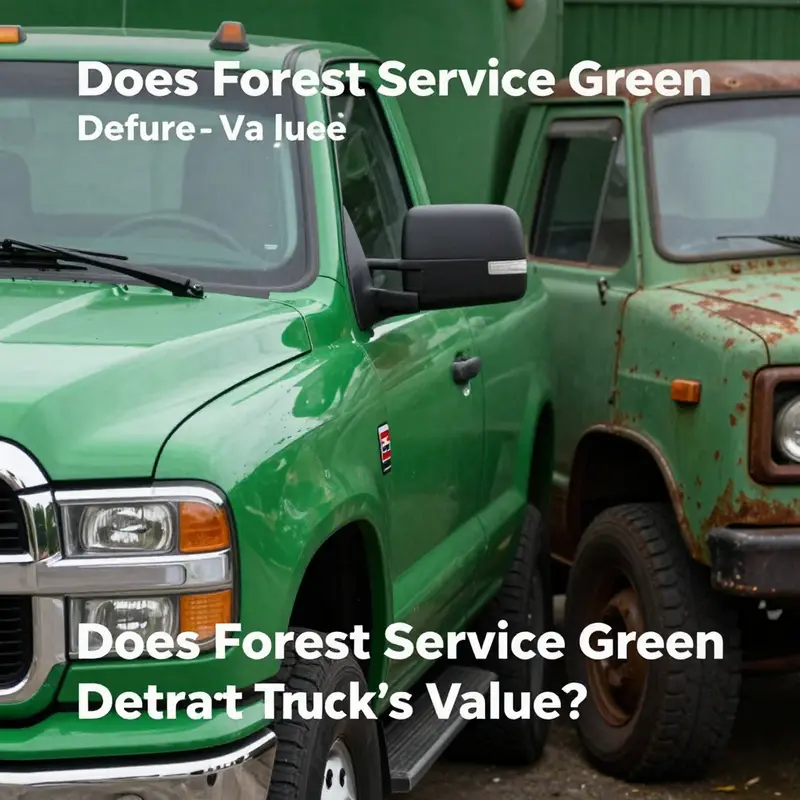
Forest Service Green carries a distinctive history and a sense of rugged utility. It signals work over show and can attract collectors who prize authenticity and provenance. But the central question remains practical: does this color alone reduce a truck’s value? In most cases, the hue by itself does not set value; paint quality, surface condition, and how the color is presented matter more to buyers.
First impressions matter in the marketplace. Neutral colors often dominate search results because they are easy to match and reduce resale risk. Forest Service Green occupies a niche, which can narrow the buyer pool but can also add appeal for restoration projects or historians who value the backstory.
Second, the condition matters more than hue. Fading, chipping, and rust or body damage can erode value regardless of color. A well executed repaint that preserves the historical look and uses quality primers and clear coats can maintain or even enhance value if done with care.
Durability and protection help keep the color honest. Modern protective coatings, UV blockers, and proper sealing can slow fade and keep the surface even, which signals diligent maintenance and reduces risk for buyers.
Market appetite varies. Some buyers prize a color that reflects utility and history, others prefer a neutral tone for daily use or fleet integration. Transparency about provenance, maintenance, and the paint’s current condition is essential to bridging color-driven hesitations.
Maintenance and documentation matter. Keeping records of original finish, restoration work, and protective treatments helps buyers see the value story and may support a premium in the right circle.
Practical tips: wash regularly, apply UV protective coatings, choose a high quality clear coat, and document any repaint work. A color faithful to history plus solid upkeep communicates reliability and readiness for sale.
Conclusion: color is an accessory to value, not the core determinant. When Forest Service Green is well preserved and properly documented, it can still command a fair price or even a premium in specialized markets.
Does Forest Service Green Detract from a Truck’s Value? Resale Contexts and Buyer Preferences
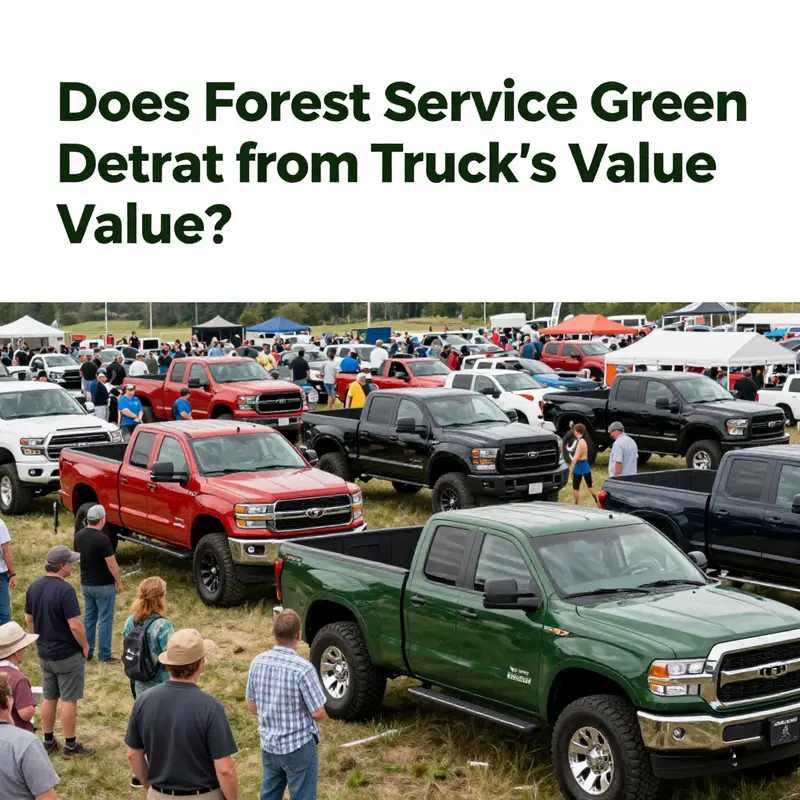
Paint color can influence initial interest but rarely determines ultimate resale value if a truck is mechanically sound and well documented. Forest Service green carries a distinctive provenance that can appeal to niche buyers, yet in a broad market it tends to narrow the pool unless the vehicle’s history or condition justifies a premium. For most sellers, the practical strategy is to prioritize maintenance records, mileage, and reliability, and to consider repainting to a standard color if speed of sale is a priority. When provenance is strong and properly documented, the color may add character without compromising value; when it isn’t, neutrality often proves a faster path to closing.
Forest Service Green in the Market: Why the Shade Usually Doesn’t Drive a Truck’s Value
Color can feel like a shortcut to value, a quick signal about a vehicle’s lifestyle and destiny. Yet when assessing a truck, especially one with a history tied to a government fleet, the color called forest service green rarely governs the final price in a vacuum. The shade itself—a dark, olive-leaning green associated with U.S. Forest Service fleets—carries a faint glow of authenticity and service, but it is not a formal, universally recognized standard in the private market. It isn’t backed by a paint-code certification that guarantees resale outcomes, and the Forest Service does not maintain a color program that translates into financial value in consumer channels. The practical effect of such a hue is mediated by larger, more consequential factors: the truck’s mechanical condition, maintenance history, mileage, structural integrity, and the provenance that accompanies the vehicle. The market is swift to reward well-kept engines, solid frames, clean underbellies, and transparent maintenance records far more than it will reward a unique paint color, even one with historical resonance. Still, color is not a neutral non-factor either. In the private market, buyers often lean toward familiar, neutrally toned vehicles because they promise ease of resale and a broader appeal. White, black, silver, and gray are perceived as versatile canvases that fit almost any business or personal context, making them easier to offload quickly and with fewer negotiation frictions. A distinctive shade like forest service green can narrow the pool of potential buyers, particularly if the seller plans a quick turn or targets the general consumer market rather than a specialized audience. The narrowing effect is not a judgment on the color’s merit; it’s a reflection of buyers’ risk calculus and logistics: repaint costs, matching panels and seals, and the potential need to recondition interiors to align with the exterior. Yet the same color that limits general appeal can become a magnet in niche channels. For buyers who seek authenticity—restoration hobbyists, vintage-government-vehicle enthusiasts, or museums—the forest service green can be a meaningful hallmark that supplements a documented service history. In those contexts, color becomes a storytelling device: it communicates lineage, era, and function, and it signals that the vehicle is more than a generic asset but a piece of government workhorse history. In such scenarios, the color may even add value for collectors who prize fidelity to original paint schemes and provenance as part of a restoration narrative. The decisive factor remains the mechanical and structural reality of the truck. A pristine forest service green truck with rust, compromised frame points, leaking seals, or a neglected drivetrain will struggle to attract premium offers, regardless of how iconic the hue might be. Conversely, a well-maintained vehicle with complete maintenance logs, updated safety components, and a documented era-appropriate build can command respect and fair value even if the color is nonstandard. The color becomes a backdrop to a solid picture—a backdrop that can either help when aligned with a compelling story or fade into the background when the core condition is uncertain. Another layer to consider is how the vehicle was originally used. If the truck was part of a rural firefighting OR forest management operation, with equipment mounts, siren configurations, or specialized payloads that were decommissioned but documented, those touches can affect valuation in ways that transcend color. In such cases, the color may reinforce the vehicle’s authenticity in the eyes of the right buyer, but it will not overcome fundamental flaws in powertrain reliability or body integrity. The broader context matters as well. Government fleet vehicles, including those painted forest service green, enter a market that includes not only private individuals but also fleets and dealers who may value origin stories more than ordinary consumers do. Some buyers in this space prize vehicles with clear maintenance histories, low miles for their age, and the transparency of a well-kept record. Others may approach with a turnkey intent—looking for a project-ready platform where the only remaining hero is the cosmetic choice of paint. For those who navigate this terrain, a practical path often involves aligning the vehicle’s presentation with buyer expectations without erasing its history, unless the cost of maintaining that history becomes prohibitive. To frame decision-making, consider a balance between preserving authenticity and maximizing market efficiency. If the goal is to retain collector interest without sacrificing liquidity, maintaining the original forest service green—paired with meticulous documentation—can be a strategic asset. If the aim is swift resale to a broad audience, repainting to a neutral palette can unlock a larger buyer pool and speed up transaction timelines, provided the repaint is done with quality materials and careful prep to avoid future paint failures or misaligned panel gaps. In discussions circulating among procurement and public-safety ownership communities, color is frequently treated as a secondary variable compared with uptime, reliability, and total cost of ownership. The practical takeaway is simple: forest service green does not inherently diminish a truck’s value, but its impact is highly contingent on the rest of the vehicle’s condition and the buyers’ expectations. A well-documented provenance can tilt toward positive perception; a neglected mechanical state can neutralize any color-driven advantage. For buyers and sellers seeking structured guidance, the literature emphasizes consulting established valuation resources like Kelley Blue Book or NADA to anchor expectations in recognized benchmarks, while recognizing that government fleet nuances will influence those benchmarks to a degree. As a result, the value equation for a forest service green truck resembles a composite scorecard: the color earns a few points only if it aligns with verifiable history and solid mechanical standing; otherwise, it remains a decorative note rather than a decisive determinant. The discourse around color and value also intersects with broader procurement and sustainability conversations often explored in professional circles. In fact, many discussions about how to balance green initiatives with operational efficiency in fleet management stress that environmental or color decisions are rarely decisive on price; instead, they influence reputational and alignment considerations with organizational branding or legacy narratives. For professionals who want to view color as part of a larger strategic picture, resources that discuss standardization of fleets and procurement best practices provide useful context; see, for example, the discussion on community-driven fire-truck procurement strategies that frame color as one of many elements in an authentic, purpose-driven fleet story rather than a sole price lever. The Forest Service’s official materials emphasize mission and stewardship over consumer-market valuation, underscoring that green is not a badge of price discipline but a reflection of historical operations and ecosystem-focused work rather than a consumer-branding force. This distinction helps sellers manage expectations and buyers calibrate their bids without conflating hue with depreciation or novelty. In short, forest service green is a color with heritage, not a valuation rule. It can enhance appeal in certain contexts by reinforcing authenticity and provenance, yet it can also limit the pool of buyers in others where neutral hues rule the day. The most reliable path to maximizing value lies not in chasing a color-based premium but in presenting a complete, honest picture of condition, maintenance, and history. This involves transparent reporting, professional appraisal when needed, and an understanding that color, while interesting, is a supporting actor rather than the lead. For those who want to explore procurement perspectives that integrate color with safety and community-driven strategies, see the discussion linked to community-driven fire truck procurement strategies. And for readers seeking official context on government vehicle colors and their implications, refer to the Forest Service’s official website, which anchors the broader discussion in organizational mission rather than consumer-market valuations. External reference: https://www.fs.usda.gov
Final thoughts
In conclusion, the analysis surrounding forest service green reveals a multifaceted perspective on how this color influences a truck’s value. It becomes clear that while some market demands favor traditional colors, unique shades like forest service green can offer advantages among certain buyers, particularly collectors or niche markets. The state of the truck’s paint and body condition is ultimately more crucial than the color itself when it comes to value retention and resale opportunities. Understanding these dynamics will empower long-haul drivers, fleet owners, and maintenance specialists to make informed decisions when purchasing or selling vehicles. As such, forest service green does not inherently detract from a truck’s value; it simply presents different opportunities based on market context and buyer preferences.