
Understanding the service history of your GM truck is crucial for maintaining performance, ensuring safety, and enhancing the resale value—whether you’re a long-haul truck driver steering the vast highways or a fleet manager overseeing multiple vehicles. This guide offers step-by-step instructions for accessing the service record, distinguishing between official GM sources and third-party platforms, and addressing complexities like previous ownership and non-dealer repairs. With this knowledge, you can make informed decisions regarding maintenance and care for your valued vehicle.
From VIN to Verified History: Navigating GM’s Official Channels to Retrieve Your Truck’s Service Record
Every GM truck carries a story beyond its paint and chrome. The service history is the ledger of that story, a chronological map of every visit, every repair, every part touched, and every recall addressed. For a vehicle that has carried you through long highway miles, rough weather, and routine daily duties, that history is more than a record. It is a tool for maintenance planning, a safeguard for resale value, and a reference point when estimating future work. The chapter you are about to read guides you through the most authoritative sources available for obtaining this history. The aim is to illuminate how to move from a VIN in your hands to a complete service dossier you can trust. It’s a journey that begins with the vehicle’s origin and ends with a clear, organized timeline that you can rely on when making decisions about future upkeep or when negotiating a used-truck purchase.
The first and most authoritative path runs through GM’s official channels. Think of these as the central archive that GM keeps for every vehicle that rolls off its lot or comes into authorized service. When you use the official channels, you are aligning yourself with a source that is tightly synchronized with the dealership network, recall information, and internal service-coded records. The GM owner portal, often described in consumer guidance as the official owner center, is the primary online gateway. Access here is not just about a digital manual or a neat graphic interface. It is about a consolidated, vehicle-specific history that reflects the work performed at GM-authorized shops. To use this portal effectively, you begin with the VIN and a valid email address. Creating an account that ties your profile to your vehicle’s VIN establishes a link between you and the maintenance history stored in GM’s system.
Once you have that link, the portal opens up a view into the vehicle’s service journey. You are presented with a record of maintenance events and repairs conducted at authorized GM dealerships. The details can include service dates and the mileages recorded at the time of service, which helps you reconstruct the lifecycle of wear and maintenance on key components. A comprehensive entry will often specify the parts replaced, the labor performed, and the technician notes that accompany those actions. Importantly, you will also encounter recall information and any service bulletins issued for your specific model and configuration. These records aren’t merely bureaucratic entries. They provide a factual basis for evaluating the vehicle’s reliability, planning preventive maintenance, and confirming the pedigree of the mechanical history for resale or insurance purposes.
If you are the registered owner and you set up your account with the VIN, you have a reliable, up-to-date repository at your fingertips. But what if you need a more tangible copy, or you are not the original owner and you want a broader view of the vehicle’s service narrative? In that case, GM’s local dealership network remains your most practical resource. A visit or a phone call to an authorized GM dealership’s service department can yield a printed, comprehensive report detailing past work performed at GM locations. The dealership’s internal database can be queried using the VIN, and the staff can provide a printed document suitable for resale, insurance documentation, or simple record-keeping. The advantage here is the human factor: a service advisor can interpret the entries, clarify abbreviations, and answer questions about particular repairs that might not be immediately clear from the digital nomenclature alone.
This option is especially valuable when you no longer have access to the original account or if you are purchasing a used GM truck and want to verify the ownership and service transparency before finalizing the deal. A printed report can be a reassuring asset during negotiations, enabling buyers to confirm that the truck has received timely maintenance and that major systems have been addressed in a manner consistent with GM’s service standards. The dealership route is also useful if you require documentation for resale or for regulatory purposes where a physical document is preferred to a digital one. In many communities, the service department can also provide copies of recalls and service bulletins that have affected the vehicle, ensuring you have a complete, auditable file.
Beyond the GM-specific channels, the broader ecosystem of GM-branded and GM-supported resources offers another route to confirm a vehicle’s service life. Since GM owns the GMC brand as well, there are brand-aligned resources that mirror the GM owner experience in a slightly different portal environment. The GMC-branded vehicle owner experience is designed to be intuitive for owners of GMC badged trucks and SUVs. The GMC portal follows a familiar pattern: you connect your vehicle via its VIN, confirm ownership, and gain access to an array of owner resources, including service history. While the precise interface and access steps may differ by region and portal version, the underlying principle remains the same: a single source of truth for the vehicle’s service narrative, accessible to the owner who can verify identity and ownership. This is particularly helpful if you inherited a GMC-branded vehicle or if you prefer to navigate through brand-specific channels rather than the broader GM ecosystem. In practice, you will be guided through registration and vehicle linking steps that mirror the GM process, with the added nuance that the GMC-branded portal emphasizes brand-specific service bulletins and recalls that may be issued specifically for GMC configurations.
The allure of these official channels lies not only in completeness but in confidence. When you pull your service history directly from GM or its brand network, you are tapping into data that has been generated by the vehicle’s service journey itself. This data is less likely to be incomplete due to inconsistent reporting from third parties. It can also provide you with a closer tie to recall status and service bulletins—critical information that informs both current maintenance decisions and future risk management. Identity verification remains central to this process. GM’s system is designed to ensure that the vehicle history you access belongs to the registered owner, or to someone acting with the owner’s authorization. This is not merely a privacy precaution; it is a practical safeguard for the integrity of the vehicle’s service narrative.
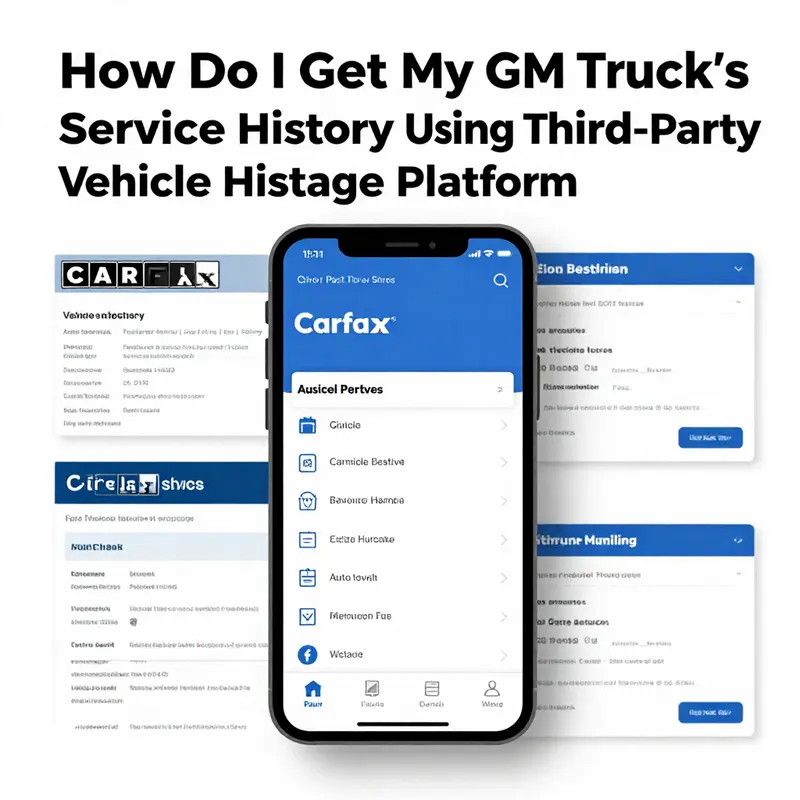
To complement these official routes, many buyers and current owners also explore third-party vehicle history platforms. These platforms aggregate data from multiple sources, including dealer records and insurance claims, to provide a broader view of a vehicle’s life beyond GM’s own channels. A well-known name in this space offers vehicle history reports that incorporate service events reported by participating dealerships, alongside ownership transitions and other data points. The appeal of such reports is their breadth and accessibility. For someone who does not have a GM account or who wants a quick snapshot, a third-party report can be a convenient option. The caveat is important: not every service event is captured. Only repairs reported to the participating network will appear, and non-dealer repairs may remain invisible. This limitation makes third-party reports complementary rather than definitive, especially for complex service histories that include many artisanal repairs or work performed at independent shops.
If you opt for a third-party history report, you will typically need to provide the vehicle’s VIN and pay a modest fee. The report will usually present sections such as Ownership History, Service Records, and possibly Recall/Campaign information. The Service Records section is where you will see a chronological list of maintenance work and repairs reported by dealerships that participate in the platform’s data-sharing ecosystem. The timing, the service mileages, and the descriptions of the work performed are presented in a readable format, which can help you corroborate details found in GM’s official history or fill gaps you may notice when a vehicle has a long or patchy service life. The report’s value, however, grows with the breadth of data it includes. If a vehicle has had significant non-dealer maintenance, or if it has received care at independent technicians who do not feed into the platform, those events may not appear on the report.
In weighing these options, many owners adopt a practical sequence. Start with the GM official channels for the most authoritative and complete record, especially if you are the registered owner or you are preparing the vehicle for resale. If you have access issues with the GM portal or you want a physical copy, visit a local GM dealership and request a printed report. For a broader context or a quick cross-check, supplement with a third-party history report. This combined approach helps you establish a reliable baseline of the vehicle’s service life and identify any discrepancies early. It is also worth noting that third-party reports can be a useful tool during the purchase process, but they should never be treated as a substitute for the authoritative GM-maintained records.
For readers who want practical, hands-on guidance and related maintenance practices, our broader maintenance resources can offer helpful context. You can explore additional articles and how-to content at our blog, which often includes checklists and maintenance planning strategies that complement the official service history. The link to our blog is provided here for convenience: 5startruckin.com/blog. This resource can help you translate the service history into an actionable maintenance plan, ensuring that the vehicle remains reliable and road-ready while you navigate the complexities of record-keeping.
In the end, the question of how to obtain your GM truck’s service history is best answered by following a layered approach. Start with the official ownership channels to retrieve the most authoritative data. When necessary, augment with a dealer-printed report for physical documentation. Then, if you need a broader snapshot or want to cross-check against other data sources, turn to a third-party history report. This multi-pronged strategy will help you assemble a comprehensive, trustworthy narrative of your vehicle’s life on the road. Remember that the heart of this process is the VIN—the universal key that unlocks the vehicle’s service diary. Keep that VIN handy, along with proof of ownership, and you will be well prepared for maintenance planning, resale, or any future decision that hinges on a precise understanding of your truck’s service history.
For readers curious about what a typical service history entry might look like, consider a scenario where a routine maintenance visit appears alongside a more complex repair. An oil and filter change may be logged with a mileage reading and a service date, followed by a brake pad replacement with parts numbers and labor hours. A recall service might appear as a separate line item with a campaign number and a note about which modules were inspected or reprogrammed. Over time, you will begin to see patterns—a sequence of preventive maintenance related to fluids and filters, occasional brake and tire service, and periodic inspections that catch potential issues before they become failures. When you visualize the history, you gain a practical perspective on the vehicle’s health trajectory, which is invaluable when planning future care and when communicating with future buyers about the truck’s provenance.
The journey from VIN to verified history is not simply about collecting data. It is about converting a data trail into a reliable narrative you can trust. When you rely on GM’s official channels, you maximize accuracy and completeness. When you supplement with third-party checks, you broaden the lens to corroborate and cross-reference. And by anchoring this process in a practical maintenance framework, you empower yourself to keep the vehicle in sound condition and to protect your investment for years to come. Whether you are the owner mapping out a long-term maintenance plan or a buyer evaluating a prospective purchase, the service history is your guidepost. It tells you where the truck has been, what was done, and when, shaping your decisions with clarity rather than assumption. With the VIN as your compass and GM’s official channels as your map, you can chart a straightforward course through the sometimes winding process of retrieving, interpreting, and applying your vehicle’s service history.
External reference: For an external snapshot from a broad data provider, you can pull a report at https://www.carfax.com/.
Tracing the Past: Unearthing Your GM Truck’s Service History Through Third-Party Vehicle History Platforms
Understanding the service history of a GM truck can feel like assembling a puzzle where several pieces are hidden in different rooms. When you pursue this through third‑party vehicle history platforms, you invite a broad, naturally evolving set of data points into the conversation. These platforms, which aggregate information from dealer records, repair shops, insurance claims, and public records, can reveal how a vehicle has been cared for across its lifetime. For anyone considering a used GM truck, or a current owner aiming to track maintenance for resale, this approach offers a practical, research‑driven path to a clearer picture. The core idea is simple: you provide the VIN, and the platform uses its network of data sources to assemble a history that goes well beyond a single shop’s stack of receipts. The result is a narrative about maintenance milestones, potential issues, and the vehicle’s overall health that you can read without flipping through dozens of paper files or calling around to past service centers. Yet the strength of this method hinges on understanding both what the report can and cannot tell you, and how to interpret the information in a way that informs decisions rather than inflames anxiety. In the GM ecosystem, where service histories may roam through multiple service channels—from authorized GM dealers to independent shops—the value of a consolidated third‑party history becomes particularly evident. It is not a substitute for official records, but it can bridge gaps, highlight patterns, and point you toward areas that deserve closer inspection. The journey begins with the VIN, a key that unlocks the data vaults these platforms maintain. Your vehicle identification number is a 17‑character sequence that encodes the year, make, model, and manufacturing details, along with a unique serial identifier. This string is more than paperwork—it is the portal to a vehicle’s life story. On a practical level, locating the VIN is straightforward: you’ll usually find it on the driver’s side dashboard, visible through the windshield, or on the driver’s side door jamb. It can also appear on your vehicle registration and insurance documents, offering cross‑checks to ensure you’re pulling history for the correct machine. With the VIN in hand, you move to the heart of the process: selecting a third‑party platform and purchasing a report. In a crowded field, the approach is less about chasing the most expensive option and more about choosing a provider with broad data coverage and clear reporting formats. The aim is to acquire a report that combines maintenance and repair entries with contextual data—like odometer readings at service points, and any recalls or service bulletins that apply to the vehicle. You will notice that these reports typically break down entries into a few familiar categories. Maintenance events often appear as routine services—the kind you might expect from a factory‑recommended schedule: oil changes, filter replacements, tire rotations, and fluid checks. They may also capture more involved tasks such as brake work, transmission service, suspension repairs, or engine component replacements. Each entry ideally includes a date, a shop or service location, and the mileage at which the service occurred. When a platform can pull in recall information, you get a separate section detailing any campaigns that GM or a dealer has issued for the vehicle, along with the status of those campaigns—whether they were completed, in progress, or still outstanding. The presence of recalls in a third‑party history is not a guarantee that every recall has been performed, but it does provide a consolidated view of what, if anything, the vehicle has been asked to address from a safety or reliability perspective. A broader narrative emerges when you look at mileage patterns. Consistency in odometer readings from one service entry to the next is a strong signal that the history is likely accurate. Large, unexplained leaps in mileage can raise questions that merit deeper digging—perhaps a misread, a repair that occurred miles away, or a data reporting discrepancy. These details are not merely academic; they influence decisions about maintenance readiness, potential resale value, and the overall risk profile of continuing to operate the vehicle. The data sources behind third‑party history platforms are diverse, and that diversity is both a strength and a limitation. The platforms pull in dealer service records when the vehicle was serviced at a selling dealer or an authorized service center. They may also incorporate data from independent repair facilities that participate in data submission programs or submit electronic repair invoices. Insurance providers contribute another strand, when claims intersect with a vehicle’s identity and mileage, providing a glimpse into incidents that might not show up in dealer logs. Public records and title information rounds out the picture, confirming ownership history or any title anomalies that could affect the vehicle’s provenance. Taken together, these streams create a composite history that can be surprisingly rich, especially for GM trucks that have spent time in multiple service ecosystems. But there is an important caveat that seasoned researchers will tell you immediately: third‑party history does not guarantee completeness. Not every repair shop participates in data submission, and not every service event finds its way into a centralized report. Private party repairs, home upgrades, or work performed at independent shops that do not feed back into the data network may remain invisible. In short, the absence of a record does not necessarily mean the repair never happened. It simply means the event wasn’t captured by the platforms you consulted. This reality invites a cautious, multi‑layered approach to history research. The best practice is to view a third‑party history as a strong starting point, not a final verdict. Use the report to identify known maintenance milestones and potential red flags, and then cross‑check with additional sources to close any gaps. A practical way to amplify coverage is to complement the third‑party history with official manufacturer records when possible. If the GM truck has spent time in GM‑certified service networks, specifically requesting or retrieving recall and service bulletin data from GM channels can illuminate a layer of history that third‑party aggregators might not fully capture. The interplay between official records and third‑party reports is not a competition; it is a collaboration that yields a more robust, evidence‑based understanding of a vehicle’s maintenance story. When you interpret the findings, start with the big picture. Are there long spans without documented service, or sequences of repeated minor repairs that might suggest underlying wear patterns? Do the entries show a pattern of major components being replaced on a schedule that aligns with manufacturer guidance, or do they reflect ad hoc fixes that point to intermittent reliability concerns? Clear turning points—such as a major brake overhaul, a clutch replacement, or a cooling system rebuild—should be noted and weighed against the vehicle’s age, mileage, and overall condition. The goal is not to sensationalize a history but to cultivate an informed lens through which to evaluate current needs. If a red flag emerges, there are constructive, practical steps to take. First, gather receipts and service notes from any known shops, and compare them against the third‑party entries. Where possible, contact the shops to confirm the details of a service event, including exact parts used and labor performed. If a recall or service bulletin appears in the report, verify its completion status with a GM dealer or an authorized service center. This is especially important for safety‑critical components where timely corrective action matters. If gaps persist, consider requesting a dealer‑level service history in person. Many GM dealerships can pull up service histories tied to the VIN within their internal systems, even if the vehicle has changed ownership. A personal visit to a dealership can yield a printed report that adds a layer of official documentation to your independent research. For owners who are preparing a vehicle for sale, a combined approach often proves most persuasive. Present the third‑party history to prospective buyers as a transparent, data‑driven account of maintenance milestones, complemented by official dealer records when available. This dual presentation signals responsible ownership and helps reassure buyers that the vehicle’s care has been well documented. Always approach the process with privacy and security in mind. Share only the information necessary to obtain or verify the history, and be mindful of protecting your VIN and personal identifiers. If you’re in doubt about the trustworthiness of a report, use a methodical cross‑check—start with the VIN, note the reported dates and mileage, then corroborate with any physical records you hold or can obtain from a GM dealer. In the end, the value of third‑party vehicle history platforms lies in their ability to turn a scattered set of maintenance notes into a coherent story. They empower GM truck owners and prospective buyers to make informed decisions grounded in data, not in memory or rumor. The process is not magical; it is methodological. It depends on careful data collection, critical reading of the entries, and a willingness to seek official records when the story requires it. Above all, it is a practical tool that acknowledges the realities of vehicle ownership—that service occurs in a variety of environments, and that a complete, accurate history is often a collaboration between different data streams sharing the same VIN. For anyone who wants to understand what has been done to a GM truck and when, the third‑party route offers an efficient, scalable path to a credible, usable history. And when used thoughtfully, it becomes a foundation for better maintenance planning, more confident resale conversations, and a clearer view of the vehicle’s lifecycle. For readers who want to take the next step, here is a concise reminder of the practical approach: confirm the VIN; choose a reputable platform with broad data coverage; obtain the report and read it with a critical eye; look for maintenance milestones, mileage trends, and any recall data; compare with any official dealer records you can access; fill gaps where possible by contacting the service providers or GM dealers; and keep the information handy for future maintenance planning and when negotiating value for resale. The cumulative value is straightforward: a well‑assembled service history helps you anticipate what the GM truck needs next, identify where preventive care can extend its life, and provide tangible evidence of care when it’s time to trade in or sell. If you approach the process with curiosity and a methodical mindset, the history you uncover through third‑party platforms becomes more than a ledger—it becomes a practical guide to responsible ownership and informed decision making in the life of your GM truck. For readers seeking additional context on maintenance trends and safety information that can complement a vehicle history, consult trusted official resources that provide safety recalls and service guidance. https://www.nhtsa.gov/recalls
Tracing the Past of a GM Truck: Navigating Ownership Transitions and Non-Dealer Repairs to Uncover Service History
When you buy a GM truck, whether you are the first owner or stepping into ownership after someone else, the question of what happened to the vehicle before you can matter as much as the miles on the odometer. A complete service history helps you separate routine maintenance from potential red flags, and it becomes especially important when ownership has changed hands or when repairs may have been performed at independent shops. You want a narrative that reads clearly through the numbers: what work was done, when, where, and why. You want to know if there were recalls that were addressed, or if a pattern emerges from multiple visits that could indicate developing issues. In practice, assembling this history requires a blend of official GM channels, dealership records, and third party data, all interpreted with care. The goal is not to paint a perfect picture but to assemble a credible, verifiable timeline that informs purchase decisions, resale value, and ongoing maintenance planning.
Start with the most authoritative sources because they anchor the overall story in GM’s own records. The GM system that serves vehicle owners is built to show maintenance and repair activity logged at GM certified dealerships, along with recall data and warranty actions. Access is typically tied to the registered owner and the vehicle identification number. If you are the current owner with a GM account, you can link your truck to your profile and view a service chronology that includes maintenance items, parts replaced, and service dates keyed to the vehicle’s mileage at the time of service. This route is the closest thing to an official service ledger and offers the most granular level of detail when the vehicle has received care at GM franchise locations. It is important to keep in mind that this channel focuses on records from GM-certified service centers. While it is thorough for dealer work, it does not automatically include every repair performed at a non-dealer shop.
From there, the practical next move is to connect with the original dealer or the dealer network that serviced the truck during prior ownership. If you know which GM dealership handled the vehicle’s maintenance in the past, you can reach out with a respectful request for a copy of the service history on file. By providing the VIN and proof of current ownership, you place the dealer in a position to pull up the vehicle’s digital history and print or export a report detailing work performed, dates, mileage, and parts used. Dealers may retain records for several years, and in many cases they can assemble a record spanning several ownership periods, which is invaluable when the ownership history is uncertain or contested. There are practical limits to this route, though. Dealerships are not legally obliged to share records with non-owners, and the willingness of a particular shop to disclose information can vary. The best approach is to request formally, be specific about the kind of documentation you need, and remain courteous and patient. A well-phrased request often yields results even when the records are not readily accessible online.
Beyond GM’s own channels, a broader lens can provide a more complete picture, particularly for non-dealer repairs and events that occurred outside GM’s purview. Third-party vehicle history services aggregate information from multiple sources, including dealer records, insurers, and repair shops that voluntarily report data. A history report from these platforms can help identify accidents, title issues, odometer history, and maintenance events that may not appear in GM’s dealer-only feed. While no external history service can guarantee a flawless record, they serve as a practical supplement to the GM data and can illuminate gaps that might otherwise go unnoticed. When you pull a report from this kind of service, you can expect to see a Service Records section if participating repair facilities have reported the work. The emphasis is not on perfection but on context—helping you piece together a timeline and catch discrepancies that warrant follow up with a dealer or insurer.
If the truck has had previous insurance coverage, asking the insurer for a claims history can add another layer of verification. Insurance claim records can reveal major repairs and accident-related work, even when such events were resolved at non-GM facilities. The insurer can confirm what was claimed, what was repaired, and when the incidents occurred, provided they keep data for a reasonable period. Access to these records is generally contingent on proof of ownership and the VIN, and the length of data retained varies by insurer and policy history. In practice, you may need to contact more than one insurer if the vehicle changed coverage over the years. The payoff is substantial: a claim record can help confirm whether a significant repair, such as frame work after a collision or a major engine or transmission issue, happened and when it was addressed, helping you evaluate long-term reliability and expected maintenance costs.
There is also value in combing through any physical documents that might have followed the vehicle through its life. Maintenance logs, receipts for major repairs, and warranty documentation can provide authentic, hands-on confirmation of what work has been done and when. The previous owner may have kept a binder or folder with service receipts. Even if you cannot locate these documents, they can sometimes surface from the seller’s records during the sales process. When such documents exist, they should be cross-checked against digital records to identify any discrepancies or missing items. A physical log can sometimes reveal patterns that digital systems miss, such as quick succession maintenance that was performed outside of GM’s recommended service interval due to a persistent issue or a local dealership campaign that wasn’t fully recorded in one system.
With these sources in mind, a practical approach to assembling a credible service history unfolds as a careful synthesis. Start with the GM portal and the dealership records for the strongest, most official foundation. If you are not the registered owner or cannot access the GM portal, a call or written request to the dealer who last serviced the truck can be the next best path. In parallel, pull a history report from a third-party service to obtain the broader context of maintenance, accidents, and ownership events. If the truck has had insurance claims, contact the insurer(s) for any repair-related data they can share, acknowledging that data retention varies. Finally, search for any surviving physical records that could fill gaps or corroborate digital reports. The result is not a single definitive file but a stitched timeline that gives you confidence in the vehicle’s maintenance narrative and informs future ownership decisions.
Throughout this process, it helps to maintain a structured, methodical mindset. Create a simple timeline as you gather each piece of information. Note the date, the approximate mileage, the kind of service or repair, and the facility where it occurred. If a record mentions only generic servicing like a routine oil change without specifying parts or labor, you can still place it within the broader pattern of upkeep and plan for more detailed verification later. When you encounter a discrepancy—say a reported service date that conflicts with the stated mileage or a repair that seems inconsistent with the vehicle’s symptoms—mark it clearly and plan a targeted follow-up. For example, if a service item suggests a brake job, but the vehicle’s brake wear indicators tell a different story, a quick recheck with a GM-certified technician or the original dealer can help resolve the inconsistency.
On the topic of non-dealer repairs, it is crucial to interpret these records with nuance. Independent shops often handle routine maintenance, tire service, brake service, and minor repairs. These entries can fill important gaps but are less likely to be standardized across databases. Documentation from independent shops may appear as handwritten notes, invoices, or shop management system entries rather than the structured, standardized fields you might find in dealer or GM records. This variability does not diminish their value; it simply requires a careful read. If the service history hinges on non-dealer work, you may want to obtain copies of the actual invoices or repair orders, which can confirm the exact parts used and the scope of the work. In many cases, a well-preserved set of non-dealer records, combined with official GM data, provides a fuller picture of the truck’s life and helps you plan for parts availability and maintenance scheduling going forward.
As you progress through the different sources, maintain a respectful skepticism toward gaps in the data. The absence of a record does not necessarily indicate that a service was not performed; it may reflect a record-keeping gap, a dealership that did not report to a third-party network, or a repair performed outside the GM ecosystem without a trace in the systems you are checking. The key is triangulation: corroborate information across sources and acknowledge any unresolved ambiguities. When a matter cannot be fully resolved, document what you know with confidence and outline the uncertainties. This honest accounting will serve you well if you are purchasing the vehicle, negotiating a price, or simply planning future maintenance. It also positions you to ask targeted questions when you speak with a dealer or a technician about the truck’s condition and maintenance history.
If you are new to the process, a mental model can help you navigate the different data streams efficiently. Think of the GM official data as the backbone of the history, reflecting the centralized maintenance narrative tied to GM-certified service centers and recall actions. Let the dealership records fill in the gaps and extend the history when the vehicle was cared for by the same or connected GM networks in the past. Use third-party history reports as a bridge between the GM data and the broader life story of the vehicle, catching events such as collisions and title events that might not have been reported through the GM channels. Add insurance claims as the supporting structure that confirms major repairs and helps you understand the severity and scope of any incidents. Finally, incorporate physical documents as the tactile evidence that solidifies the broader digital picture. When you bring all these elements together, you create a credible, actionable history that informs not only whether the truck is a good purchase but also what maintenance regime it will require in the coming years.
To make this practical and doable, here is a concise sequence you can follow. Begin by locating the VIN and confirming current ownership status. If you are the registered owner, log into the GM owned platform and pull the service history tied to your vehicle. If you cannot access this platform or you are not the registered owner, contact the GM certified dealer network that last serviced the truck and request the file, providing the VIN and proof of ownership. While doing this, run a separate history check with a national data aggregator to gather a broader maintenance and incident context. If the history check flags any accidents or major repairs, contact the insurer that covered the vehicle during the relevant period to request the related claim documentation. Collect all physical documents that may exist, and compare them against the digital records to corroborate the details. With these results in hand, assemble a clean, chronological timeline that you can share with any prospective buyer, lender, or service technician. The more consistent and thoroughly cross-checked the data is, the easier it will be to assess the vehicle’s reliability and to plan for future maintenance needs.
This approach also has practical implications for purchase negotiation. A well-documented service history that shows timely maintenance, appropriate use of GM-approved parts, and a clear record of recalls and warranty actions can support a fair price and a confident ownership experience. Conversely, a sparse history or frequent gaps may prompt a more cautious evaluation, potentially adjusting your offer to reflect the implied risk. If you encounter a gap in the service history that you cannot fill, you can still use the available information to assess the likelihood of required maintenance in the near term and to forecast potential repairs that could arise as the vehicle ages. The key is to stay informed, to ask the right questions, and to seek clarifications or updated records wherever possible.
In the end, the goal is not simply to gather documents but to build a coherent story of the truck’s past and its potential future. The best practices combine official GM data with independent history insights and, where available, insurance records and physical documents. This triangulated approach yields a more trustworthy, actionable understanding than any single data source could provide. It equips you to make informed decisions about buying, insuring, and maintaining a GM truck with a history that may extend through multiple owners and across a range of repair environments. If you want to explore related perspectives on how to evaluate vehicle histories and maintain a used truck for safety and reliability, you can visit the broader resource pool available in the linked blog for a perspective on how to approach vehicle history as part of a proactive maintenance philosophy. the blog
For readers seeking an external reference to corroborate the structure of vehicle history data and the value of combining official records with broader history checks, consider a widely used vehicle history service that collects data from multiple sources. While this second layer cannot replace dealer records, it provides a useful diagnostic of potential gaps. External resource: https://www.carfax.com/
Final thoughts
Accessing your GM truck’s service history is essential for effective maintenance and management. Using both GM’s official channels and third-party resources, you can gather invaluable information about your vehicle. Remember to consider all previous ownerships and repairs to create a complete picture, ensuring that every aspect of your truck’s history is covered. A well-maintained vehicle not only performs better but also holds its value longer, benefiting drivers, owners, and fleets alike.