
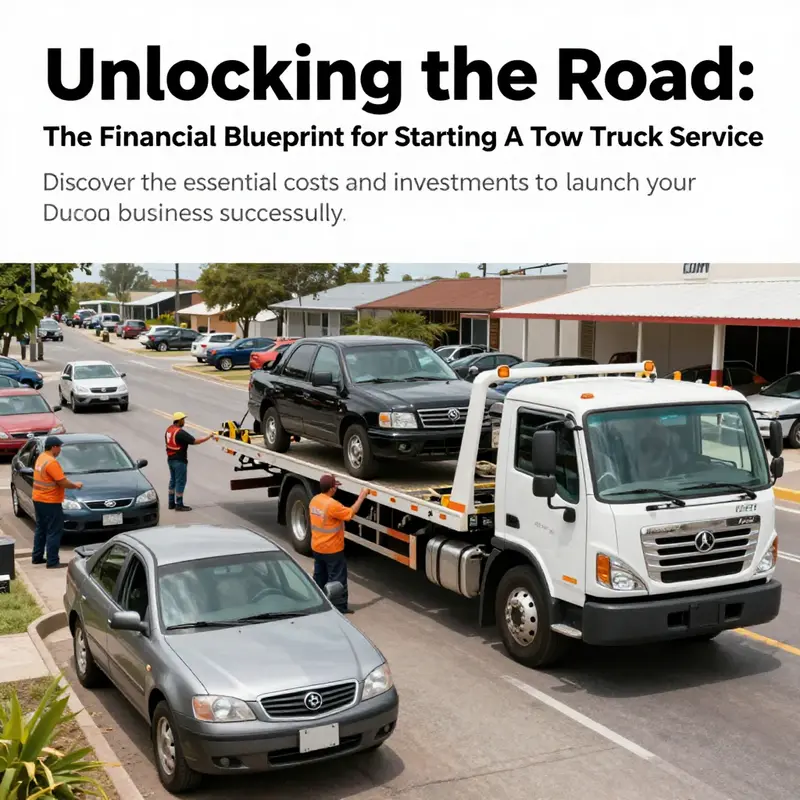
Starting a tow truck service is a venture filled with promise, but it comes with its own set of financial challenges. Whether you’re a long-haul truck driver looking to diversify your revenue streams or a fleet manager aware of the rising demand for towing services, understanding how much money is required to open a tow truck service is crucial. This article will guide you through the estimated costs, initial investments including equipment needs, and the insurance and licensing requirements necessary to get your business off the ground. By the end, you’ll be equipped with the knowledge to make informed decisions based on thorough market analyses and realistic financial projections.
null
null
Budgeting the Road: Mapping the Upfront Investment to Launch Your Tow Truck Service
Starting a tow truck service is less about choosing the right route and more about securing the right gear at the right price. The road to launch begins with a clear view of upfront cash needs, because the first few months of operation will hinge on whether you can cover essential purchases and keep the fleet moving. This chapter threads together the core costs you will face when you begin, how those costs break down, and how to balance cash outlay with the level of service you intend to offer. It is a narrative about planning, not a list of prices; numbers matter, but so do the choices behind them. If you know what you want to accomplish and how quickly you want to grow, you can translate the price tags into a practical, executable plan that keeps your wheels turning rather than stalling at the curb.
The most significant line item in any tow business starter kit is the tow truck itself. The purchase decision is driven by two competing objectives: reliability and cost. For many new operators in moderate markets, a used tow truck can deliver the necessary capability at a fraction of the price of a new unit. The data is clear enough: a used tow truck typically costs between about 25,000 and 45,000, while a new one can push past 70,000. Those are not just numbers; they are signals about risk, depreciation, and maintenance expectations. A used vehicle may come with an unknown maintenance history, potentially higher short term repair costs, and a shorter remaining lifespan. A new truck offers starting reliability, lower immediate maintenance surprises, and longer service life, but at a much higher initial outlay. A common compromise for cost-conscious startups is to consider a basic tow truck or a used integrated model. An integrated configuration—where the towing apparatus is built into the chassis—offers exceptional stability, high towing capacity, and durability, which can translate into fewer breakdowns on the road and more predictable service delivery. Those advantages come with a higher upfront investment, particularly for the more robust integrated flatbeds. In a 2026 landscape, this tradeoff remains central to planning: the most capable setups demand more capital at launch, and the decision often hinges on the business’s anticipated scale and risk tolerance.
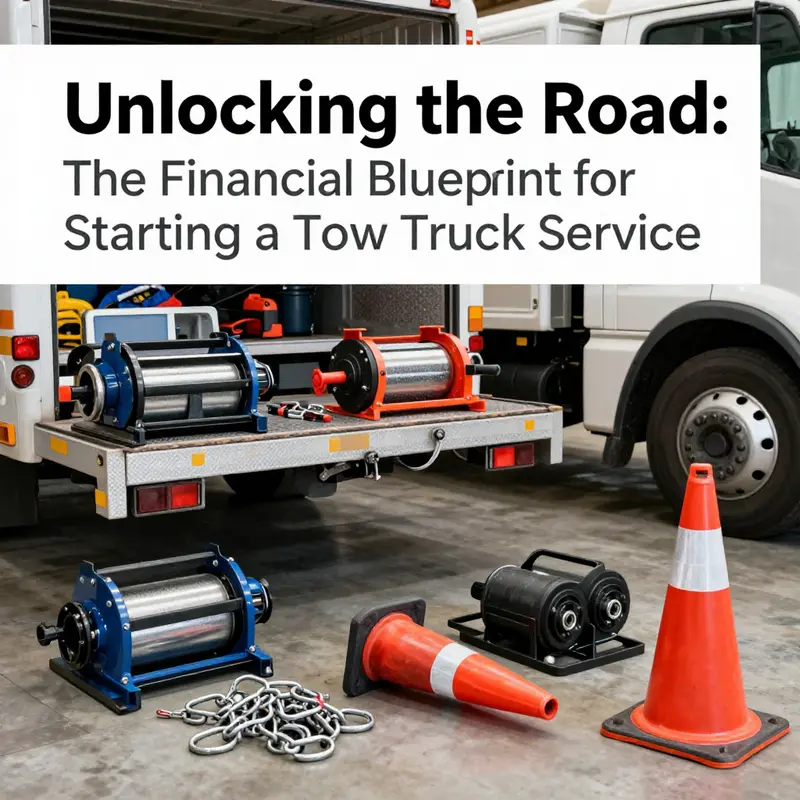
Beyond the truck itself lies a suite of essential equipment that makes a tow operation functional, safe, and capable of handling the typical service mix you expect to encounter. The list is practical and unglamorous, yet it is precisely these tools that determine how effectively you can respond to calls and how safely you perform recoveries. Winches are non negotiable, providing the pull force required to engage stuck vehicles or secure a recovery. Hydraulic systems, including jacks, lifting gear, and deck mechanisms, empower you to manage loads efficiently with minimum manual effort. Safety chains and recovery straps are critical for securing loads and enabling controlled movements during towing and recovery. The goal is to have a compact, reliable toolkit that covers the most common scenarios you’ll face, from a flat tire roadside assist to a winch recovery from a ditch. Those tools typically add another five to ten thousand dollars to the initial outlay, depending on the quality and the scope of the equipment package. The investment in accessories—cones for safety, lighting for night operations, wheel dollies, toolkit basics, and spare parts—accumulates over time, but a reasonable starter package should still remain within that same range.
Insurance and licensing are the predictable, less flashy but absolutely essential costs that keep a tow business compliant and financially protected. Commercial auto insurance for tow trucks is notably expensive because it covers high-risk scenarios and the transport of damaged or hazardous vehicles. Expect annual premiums in the neighborhood of eight to fifteen thousand dollars, depending on factors such as location, driving history, coverage limits, and the value of the vehicle and equipment. Across the country, business licenses and permits vary, with initial fees generally ranging from five hundred to two thousand dollars. The upfront licensing cost is a function of jurisdiction and the scope of services you intend to offer, but it is non negotiable if you want to operate legally and without interruption. A mobile dispatch system can streamline how you receive and assign calls, protect customer data, and provide a professional image. While not a universal must-have, many startups find that a basic dispatch platform improves call handling efficiency and reduces downtime between jobs. The cost of such a system can be modest or substantial, again reflecting scale and sophistication, but it tends to be a worthwhile investment as you build reliability and responsiveness into your service.
Operational expenditures form the third pillar of the initial cash requirement. A new business must cover fuel for the first days of operation, routine maintenance to reduce the risk of unexpected outages, office basics such as a computer, phone line, and cleaning supplies, and a marketing push to announce your arrival. This cluster of costs is less dramatic in isolation, but together they can total five to ten thousand dollars before you even complete a single recovery. In many markets the early days also involve establishing relationships with local body shops, insurance partners, and roadside assistance networks. Those relationships can influence how quickly you fill your schedule and how much you depend on secondary markets for revenue. Your cost structure should reflect the service mix you plan to pursue: local roadside assistance, accident recovery, and logistics support each demand different equipment, staffing rhythms, and pricing models.
The market context matters as you map your starting budget. If your ambition is a single-vehicle operation focused on local roadside calls, your upfront investment should align with a lean configuration that emphasizes reliability, safety, and a fast break-even path. If you intend to offer more specialized services, such as flatbed towing, heavy recoveries, or accident response, you must expect a higher price tag at launch. A high-cost urban market will amplify every category: the truck, the equipment, the insurance, the license fees, and the operational cushion you need during ramp-up. In practice, this means that a city-based startup should plan for a larger initial cash reserve and possibly a staged equipment strategy that scales with demand. Conversely, rural or smaller markets can often begin with more modest gear and gradually expand as the business proves its demand and builds a reputation for reliability. This is not a binary choice; it is a continuum where the objective remains clear: align the upfront investment with your chosen service scope and market potential.
A strategic approach to cost management starts with a pragmatic assessment of capability versus cost. Premium integrated tow trucks offer long-term reliability and performance benefits that can translate into reduced downtime and stronger on-call availability. But they are not strictly necessary for every new entrant, especially for operators starting in low-risk areas or with a planned, incremental growth strategy. A capable, well-maintained basic tow truck paired with essential equipment can meet core service requirements and establish a solid foundation. The decision to upgrade later is always on the table, provided you have revenue certainty and a plan to finance improvements. This staged approach helps preserve capital for the most critical needs—driver training, insurance, and a few strategic maintenance investments—while keeping the door open to scale when market conditions justify it.
To bring this into a concrete frame, consider a few representative budget scenarios. A modest, single-vehicle setup in a moderate market might target a total upfront investment in the range of thirty to seventy-five thousand dollars. This estimate encompasses the tow truck purchase, essential equipment, insurance, licensing, and initial operating costs. The lower end generally reflects a solid used truck with a lean equipment kit and conservative insurance coverage, while the upper end captures a newer truck, a comprehensive equipment package, and robust coverage tailored to a higher-risk service profile. For larger operations with multiple vehicles or specialized services, the starting cash requirement can exceed one hundred fifty thousand dollars, particularly in high-cost urban environments where professional-grade equipment, higher insurance limits, and more complex licensing regimes compound the cost picture. These figures are not merely numbers but a map showing how quickly the appetite for scale can outrun a nascent business’s cash cushion. The practical takeaway is straightforward: the more you intend to do from day one, the greater your upfront reserve must be to maintain service levels and avoid stalling due to ordinary hiccups like equipment delays, insurance renewals, or a sudden surge of demand.
Market demand, service mix, and risk profile guide how you assemble the initial package. If your target is local roadside assistance with occasional light-to-medium recoveries, a smaller, standard tow truck with a basic toolset may be sufficient. If you anticipate frequent heavy or complex recoveries, you may justify investing in an integrated, purpose-built platform with higher load capacity and a more robust hydraulic system. The decision framework is simple: match the truck and gear to the expected job mix, then add a buffer for the unexpected. An integrated setup, for example, might deliver stability and lower downtime over the long term, but it comes with a higher upfront price. In the early days, many operators find that balancing cost and capability is the smarter course, preserving capital for core operations and enabling a staged fleet buildup as revenue grows.
In the broader picture, the cost calculus is influenced by how you intend to position your business in the market. If you will rely on high-volume call-outs and rapid response, you must invest in reliability and speed. That is not merely about the truck; it is about the entire workflow, from dispatch to post-service follow-up. A mobile dispatch system can improve response times and reduce idle periods, but it adds to the upfront spend. If your market tolerates a slower response with a lower-capital footprint, you might begin with a leaner setup and expand once your schedule stabilizes. Either path is valid as long as you keep a disciplined view of cash flow and a clear plan for reinvestment. The recurring theme is investment discipline: buy what you need to provide dependable service, not what would look impressive on a showroom floor. The story you tell with your equipment is the story your customers will remember when their car breaks down or they need urgent recovery in a hazardous environment.
While the core categories above are the backbone of your initial budget, some practical considerations can further influence your decision. Location matters, not only because of the price of vehicles and insurance, but also because of regulatory environments, licensing processes, and the availability of maintenance services. Urban centers often demand higher insurance limits and more rigorous compliance, which adds to both the upfront and ongoing costs. Rural areas, by contrast, may allow smaller fleets and leaner operating structures, but they can present longer call-out times and different revenue dynamics. A thoughtful operator tailors the investment to the realities of the chosen operating area, striking a balance between service capabilities and cash adequacy. The endgame is a plan that funds your launch and establishes a durable runway for growth, rather than a fragile start that collapses at the first unexpected expense.
With the fundamental economics in view, it is useful to acknowledge the practical wisdom of studying real-world startup experiences. There are insights worth examining on credible industry resources that discuss how to balance upfront costs with capability. For those who want a concise, practical overview, the following resource offers a structured look at the financial and equipment considerations of starting a tow truck service. It helps translate the numbers discussed here into a practical starting blueprint and includes context about market demands and equipment choices that are essential for decision making. You can explore these ideas further on a reputable industry blog that covers trucking and recovery operations, which provides a broader perspective on startup costs and equipment needs. As you read, keep in mind the central message: your upfront budget should reflect a plan that keeps you operating, protects your investment with appropriate insurance, and remains flexible enough to adapt as demand grows.
To dive deeper into the financial and technical aspects of launching a tow truck operation, you can consult this authoritative startup guide. It lays out the cost ranges, equipment considerations, and strategic tradeoffs that we have discussed in a structured way, helping you turn theory into a concrete budget and procurement plan. Further startup guidance can be found in this industry resource.
For a broader exploration of industry practices and practical insights beyond traditional tow operations, consider following the general guidance provided by the 5 Star Truckin community. Their blog aggregates a range of topics related to heavy-duty equipment, safety standards, and procurement strategies, which can help you think through how your procurement choices align with industry best practices. A useful starting point is their main blog hub, which hosts articles that can inform your approach to equipment selection, maintenance planning, and safety investments. 5 Star Truckin blog.
The path from concept to road is paved with tough but manageable decisions. The upfront investment is not merely a single sum paid at the outset; it is the foundation of your service quality, your ability to fulfill commitments, and your capacity to win repeat business. The numbers matter, but the choices you make with those numbers—whether you prioritize a robust integrated platform or a lean basic truck, whether you allocate more for insurance or for a broader toolset—will determine how quickly you can scale and how effectively you can weather the inevitable bumps along the way. The strategic message is simple: align your initial capital with your service ambitions, protect your operation with sensible risk management, and plan for growth with a disciplined reinvestment approach. When you do, the road to launching your tow truck service becomes less about fear of the unknown and more about a confident, executable plan that turns potential into performance.
Even as you finalize your budget, keep in mind that the industry is dynamic. Insurance costs can shift with market cycles, equipment prices can vary with supplier pricing and demand, and regulatory environments can tighten or loosen with changes in policy. Building a cushion into your initial numbers is prudent. A conservative buffer helps you absorb price fluctuations, equipment delays, or a slower than expected early revenue ramp. It also preserves the flexibility to adjust your plan as you confirm market fit and begin to secure repeat customers. In other words, your upfront investment should not be a rigid ceiling but a carefully constructed foundation that gives you room to adapt while maintaining a clear focus on reliable, professional service. This mindset—planning with margin, choosing gear that matches service needs, and approaching growth incrementally—offers the best chance of translating initial capital into sustainable, scalable operations.
As you move from this budgeting perspective toward the practical steps of procurement and setup, you will translate these insights into a concrete, numbers-backed plan. You will decide whether to pursue a used truck or a new one, how much tool and safety equipment to purchase now, what level of insurance and licensing to secure, and how to allocate funds for the dispatch system and initial marketing. You will also choose a service scope that fits both the market and your financial reality. The goal is not to overspend at the outset but to allocate enough to deliver dependable service from day one while preserving headroom to respond to demand and to invest in your fleet as profits permit. In the chapters that follow, we will build on this foundation by translating these budgeting principles into practical procurement timelines and step-by-step actions that help you move from a plan to an operating tow truck service. The journey begins with a clear numbers-driven budget, but it ends with a business that serves customers reliably, builds trust, and creates a path to sustainable growth.
Guardrails on the Road: Licensing and Insurance Shape the Real Cost of a Tow Truck Startup
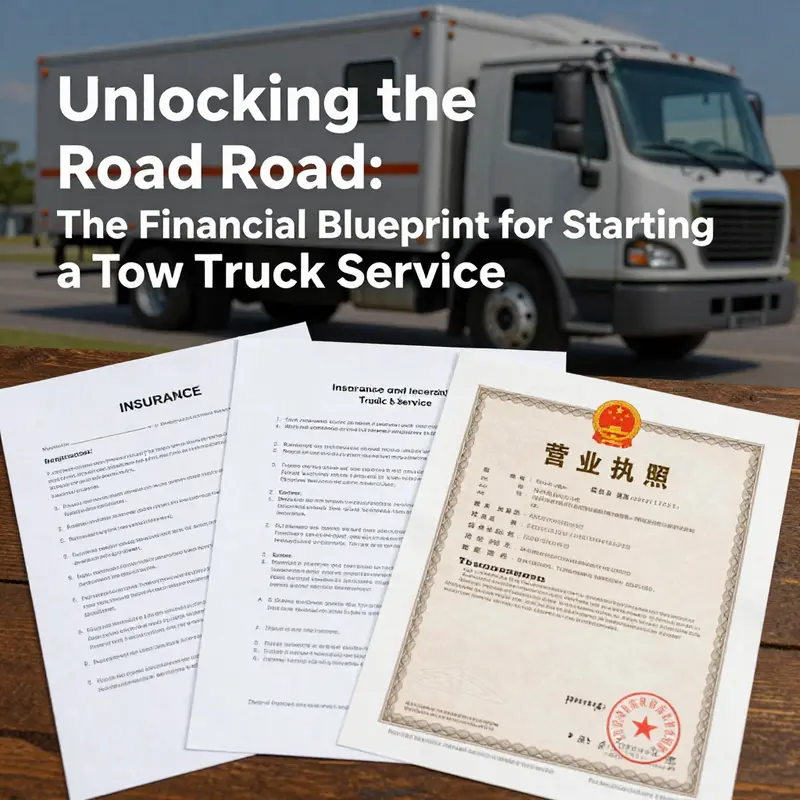
Starting a tow truck business is as much about regulatory readiness as it is about trucks and chains. Licensing and insurance are the guardrails that determine feasibility and speed to cash flow.\n\nLicensing basics: you will typically need a general business license; some markets require a specialized tow-truck license or endorsements; zoning and site permits may also apply. The application may involve corporate formation docs, proof of address, and background checks. Timelines vary by jurisdiction and can affect cash burn during the launch.\n\nInsurance and bonding: expect a multi-layer program. Commercial auto liability, general liability, and workers’ comp if you hire staff. Bonding or surety may be required in some markets. Combined annual insurance costs for tow operations are a meaningful ongoing expense and influence pricing and profitability.\n\nCosts and budgeting: a single-vehicle operation in a moderate market often projects startup costs in the range of $30,000 to $75,000, depending on vehicle choice and initial equipment. Licensing fees and permits may run a few hundred to several thousand dollars. Annual insurance premiums commonly fall in the $8,000 to $15,000 range, with bonding adding to that as needed. In larger fleets these figures scale up.\n\nFinancing and planning: allocate seed capital specifically for regulatory readiness; plan for underwriting timelines; model premium fluctuations and potential increases. A staged approach—obtaining essential coverages first and adding incremental protections as revenue grows—helps stabilize cash flow.\n\nPractical workflow: list licenses and permits required, gather corporate documents, secure a licensed location if needed, and prepare to document safety and training programs. For insurance, provide a clear operations profile (trucks, call volume, regions, driver qualifications) and explore staged coverage that scales with fleet growth. External resources like city guidance can help with jurisdiction-specific steps, such as the NYC Tow Truck Company license process: https://www.nyc.gov/site/dcwp/businesses/tow-truck-company-license.page
Final thoughts
Taking the step to establish a tow truck service can be both lucrative and fulfilling, but it’s imperative to thoroughly understand the financial landscape before diving in. From estimating startup costs to identifying necessary equipment and navigating the realm of insurance and licensing, every detail plays a pivotal role in your venture’s success. As you prepare to enter this ever-demanding sector, keep these insights close to help guide your decisions and investments, ensuring a smoother journey on the road ahead.