

For long-haul truck drivers, trucking company owners, fleet managers, and aspiring drivers, understanding how often to service a semi truck is crucial. Regular maintenance not only enhances safety on the road but also extends the vehicle’s lifespan and improves fuel efficiency. This comprehensive guide unfolds in three detailed chapters: first, we will explore the fundamental maintenance needs that dictate servicing frequency; next, we’ll examine the various factors that influence these intervals; and finally, we’ll discuss best practices tailored for fleet operators to maintain their trucks effectively.
Reading the Real Schedule: The Frequency of Semi Truck Servicing for Safety, Efficiency, and Longevity
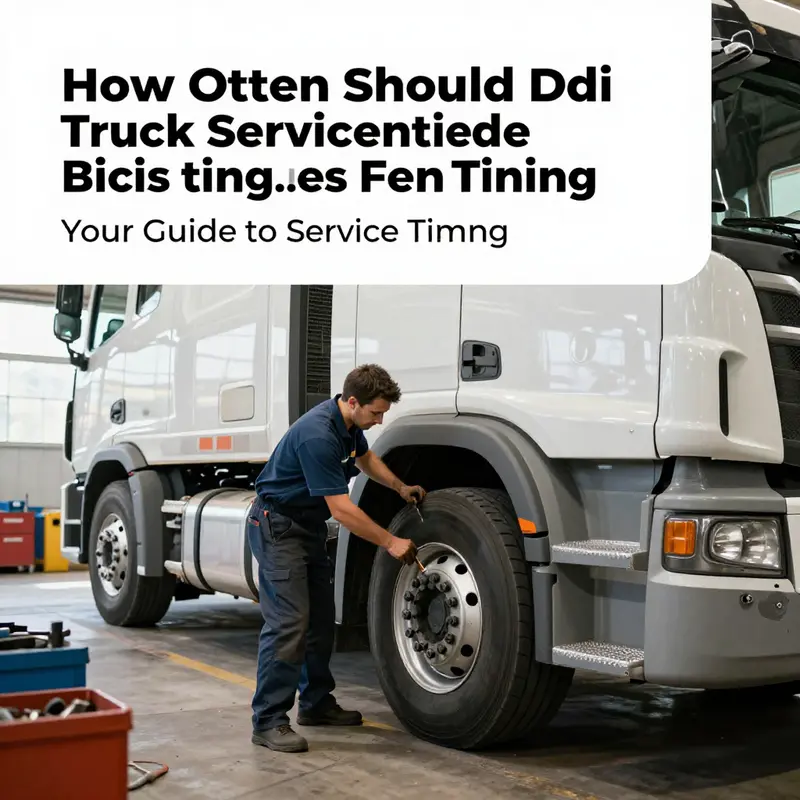
Maintenance cadence for a semi truck is rarely a one-size-fits-all prescription. It is a living rhythm, shaped by the truck’s design, the way it is used, and the conditions it faces day after day. When fleets and owner-operators ask how often a semi should be serviced, they are really asking how to balance risk, cost, and reliability. The baseline guidance—15,000 to 30,000 miles or every 6 to 12 months, whichever comes first—provides a practical starting point. It is a blunt instrument, but a useful one, because it anchors maintenance in tangible time and distance metrics that drivers, maintenance staff, and dispatchers can track, plan, and communicate. Yet the real value of that cadence emerges only when it is read as part of a broader maintenance philosophy that accounts for variable wear, environmental stressors, and the specific mission of the truck. In other words, numbers on a chart are helpful, but they become meaningful only when translated into proactive, disciplined practice on the ground.
Every truck inherits a maintenance story from its manufacturer. The manual, the service bulletins, and the service intervals published by the OEM are not mere recommendations; they reflect the engineering judgment about when vital components should be inspected, refreshed, or replaced to preserve safety margins, performance, and longevity. That said, the clock and odometer seldom tell the full story. A truck hauling heavy freight up steep grades in purple-dust conditions on backroads will experience wear differently from a truck cruising flat highways with lighter loads. Harsh operational realities—extreme temperatures, dusty environments, heavy braking under frequent stop-and-go traffic, or prolonged idling in port and loading yards—accelerate deterioration. In those contexts, the standard interval may prove too lenient, and an earlier or more frequent inspection becomes a prudent investment in uptime and safety.
A practical way to think about servicing is to tie the baseline maintenance to the life you intend for the vehicle. For many fleets, a general maintenance check every 15,000 to 30,000 miles or 6 to 12 months acts as the backbone of reliability. This cadence ensures that core systems—brakes, tires, engine oil and filters, air filters, coolant and other fluids, and the exhaust system—are examined before creeping issues become costly, safety-critical events. The emphasis on brakes and tires cannot be overstated. These two systems are the primary interfaces between the machine and the road, translating decisions made in the cab and on the bench into momentum, control, and stopping power. Worn brake linings or fading rotors, uneven or prematurely worn tires, and low fluid levels are not merely maintenance tasks; they are safety considerations that can influence stopping distance, heat buildup, and the risk of wheel-end failures. Regularly scheduled checks that pair visual inspections with functional tests—brake pedal feel, ABS status, tire tread depth, and proper inflation—are the first and most visible lines of defense against safety incidents.
Even with a sound baseline, there is a case for closer attention under tougher conditions. In high-mileage operations or when a truck is assigned to heavy-haul, construction-related tasks, or municipal service requiring frequent starts and stops or steep climbs, more frequent inspections become not just advisable but necessary. A preventive maintenance schedule that targets every 7,500 to 10,000 miles can help catch wear patterns early, before a tire sidewall is compromised or a cooling system develops a slow leak that hides behind a hose or a heat exchanger. In these scenarios, the emphasis shifts toward a more rigorous examination of the air braking system, the transmission, the differential, and the cooling system, where heat and heavy duty cycles accelerate wear. The goal is not to replace components on a calendar but to anticipate when a subsystem begins to exhibit signs of fatigue, such as increased transmission slipping sounds, differential axle play, radiator debris buildup, or creeping coolant loss. The driver’s daily awareness, reinforced by a formalized inspection routine, complements the technician’s periodic checks and helps align maintenance with the truck’s actual usage profile.
Even the most meticulously planned maintenance program begins with the driver’s daily eyes and hands. The pre-trip and post-trip inspections—brief, purposeful checks performed every day—serve as the frontline of reliability. A quick walk around the truck to look for obvious issues: cracked lenses, loose fuel caps, obvious fluid leaks, or tire pressures that stray from the recommended range. Inside the cab, dashboard warnings, warning lights, and gauge readings tell a story of current health and potential trouble ahead. A driver who develops a habit of noting small anomalies—an occasional rough idle, a hiccup in steering response, a slight vibration that appears at certain speeds—creates a feedback loop with maintenance staff. Those notes can trigger targeted checks during the next service, reinforcing the link between real-world operation and scheduled care. This is not about chasing perfection but about cultivating a culture of proactive care, where small concerns are addressed before they become emergencies and downtime.
A well-structured maintenance plan also brings discipline to record-keeping. Fleet managers increasingly rely on digital maintenance logs and scheduling tools to track service intervals, component wear, and compliance with regulatory requirements. The ability to extract data on frequency, cost per mile, and the uptime impact of maintenance actions makes it possible to calibrate the cadence to the fleet’s actual performance, rather than to a generic guideline. When records are comprehensive and accessible, it becomes easier to identify patterns—such as a particular truck consistently needing front-end work after a certain number of miles, or a driver who tends to notice lubrication leaks after long hauls—that inform future scheduling. The result is a living maintenance plan that evolves with the fleet rather than remaining a static rule. This approach protects asset value and helps maintain predictable operating hours, reducing the unpredictable downtime that can ripple through an operation.
Another layer of nuance lies in aligning maintenance with the truck’s mission and the operator’s expectations for reliability and cost management. For some fleets, a broader cost-control strategy may favor longer intervals paired with precise diagnostic checks, while others may prioritize uptime above all else and opt for tighter service windows. The decision is not merely financial; it is practical risk management. A vehicle that spends more days in the shop, even if it yields longer component life in theory, erodes the reliability customers expect and can jeopardize supply chains that depend on consistent delivery times. The best practice is to adopt a hybrid approach: use the manufacturer’s interval as a baseline, monitor real-world wear and performance, and adjust through data-driven decisions. The feedback loop is central—when the service history shows early signs of wear in certain subsystems, the cadence can be shifted accordingly, with the rationale documented for the driver, maintenance staff, and fleet leadership. Such alignment between policy, practice, and performance is what turns a maintenance schedule into a strategic asset rather than a routine expense.
It’s also important to recognize that maintenance is not isolated from the broader safety and regulatory framework. Regular servicing reduces the risk of failures that could jeopardize safety on the highway, but it also helps ensure compliance with federal and state regulations governing commercial vehicles. In a world of evolving standards, where inspections, documentation, and vehicle condition are scrutinized, a consistent maintenance rhythm provides both a shield and a lever: a shield against unexpected failures and a lever to optimize fuel efficiency, performance, and resale value. The cumulative effect of disciplined servicing is a more predictable operating profile. Fewer unexpected repairs translate into more consistent delivery windows, smoother dispatch planning, and ultimately, a lower total cost of ownership. This is the practical, real-world payoff of a maintenance program that respects the baseline cadence while remaining responsive to the truck’s actual life and work.
For operators who want to immerse themselves in the best-practice mindset, there is value in exploring sources that translate maintenance science into everyday actions. The general maintenance philosophy—treating the baseline interval as a starting point and adapting to conditions—resonates across different kinds of heavy-duty equipment. If you’re looking for practical insights and a broader community perspective, consider reading the practical maintenance conversations that appear on industry blogs and forums. For a deeper dive into ongoing maintenance culture and how fleets implement predictable routines, you can explore the 5StarTruckIn blog. It offers a window into how maintenance practices can scale from a single truck to a full fleet, shaping reliability and safety in daily operations. 5StarTruckIn blog
The conversation about maintenance cadence naturally leads to a few core habits that support long-term outcomes. First, treat the baseline interval as a floor, not a ceiling. If your operating profile pushes components toward higher wear, increase the frequency of checks or bring forward the timing of fluid changes and brake inspections. Second, integrate diagnostics into the maintenance plan. Modern vehicles generate a wealth of data—from oil analysis results to brake temperature histories and cooling system pressures. When used intelligently, this data tells a story about wear patterns and impending failures, enabling preemptive action rather than reaction. Third, invest in technician and driver training that heightens awareness of early warning signs. A well-trained driver who understands how a vibration or a change in pedal feel relates to potential issues complements the work of a technician who can verify, diagnose, and address root causes. Fourth, invest in a robust parts and supply strategy. Having the right filters, fluids, and wear items available reduces the time a truck spends in the shop and helps maintain a predictable schedule. Finally, keep the narrative alive through regular reviews. Each maintenance cycle should be an opportunity to reassess risk, recalibrate the cadence, and refresh the collective understanding of the fleet’s health.
In the end, the frequency of servicing is a practical choice with real consequences. It is about choosing a rhythm that protects people, preserves capital, and sustains service levels. The baseline cadence gives a shared language for planning and safety. The adjustments—driven by usage, environment, and observed wear—make that baseline responsive and intelligent. The more closely a maintenance program mirrors how a truck actually lives and works, the more resilient the vehicle becomes, the more predictable the operation, and the more economical the long arc of ownership. The chapter that emerges from this approach is not a rigid schedule but a living agreement between machine, driver, and fleet—one that honors the truth that maintenance is the most practical form of insurance a semi truck can carry.
External reference: For official guidance and standards, see the FHWA maintenance resource at https://www.fhwa.dot.gov/ohmi/tech/semitruckmaintenance.cfm.
Beyond the Baseline: How Real-World Conditions Shape Semi-Truck Service Intervals

When people ask how often a semi-truck should be serviced, they often want a simple mileage or calendar rule. The truth is more nuanced. A practical maintenance rhythm rests on a baseline that manufacturers provide, but the road where a truck operates—literally and figuratively—often rewrites that rhythm. The most respected guidance across the industry converges on a starting point: the comprehensive service should occur roughly every 15,000 to 30,000 miles or every six to twelve months, whichever comes first. This window is not a rigid fence but a frame that acknowledges the realities of heavy transportation. It aims to balance safety, reliability, and cost, recognizing that even within a single fleet, the demands on a vehicle can swing dramatically from week to week. The moment you begin to think of service intervals as dynamic, the picture becomes clearer: maintenance is less about chasing a fixed number and more about listening to the truck, watching how it performs, and planning around the conditions in which it lives and works.
In the broad sense, a baseline schedule exists because trucks, like any complex machine, wear in predictable ways. The engine, the transmission, the brake system, the cooling circuit, and the exhaust aftertreatment all age at different paces depending on how hard the machine works, the environmental challenges it faces, and the quality of the maintenance it receives. The baseline interval recognizes that time and miles accumulate wear that can erode performance, fuel efficiency, and safety. But the highway tells a different story for every vehicle. A truck plying a coastal corridor in mild weather might approach the baseline with a gentle cadence, while a unit rattling along dusty backroads in extreme heat, with heavy loads for long hours, may need attention far sooner. The same goes for a vehicle that spends most of its life idling in urban traffic versus one that covers continental arcs with steady, high-speed miles. In this way, the baseline becomes a starting point, not a verdict.
The factors that push a service interval in one direction or another are as practical as they are varied. Operational conditions are perhaps the most immediate driver. Extreme temperatures challenge cooling systems and lubrication, dust erodes air and fuel filters, and rough roads accelerate suspension and tire wear. Heavy hauling tightens the demand on the braking system and the drivetrain, creating a ripple effect that can shorten the time between checkups. When fleets operate in windy plains with shifting weather patterns or in regions where road grit is abundant, the constant exposure to harsh environments translates into more frequent inspections. The interplay between these conditions and the truck’s own age matters too. A relatively new engine with robust components might tolerate longer stretches between checks, but an older powertrain with higher miles could exhibit small symptoms—slower oil drain, warmer operating temperatures, rising exhaust smoke—that are early warning signs the baseline interval should be shortened.
The design of the powertrain and ancillary systems also shapes maintenance tempo. Not all engines and transmissions wear at the same rate. Some configurations may be more forgiving of heat cycling, while others demand stricter attention to cooling, lubrication, and filtration. The quality of the fluids used—oil with the right viscosity and additives, fuel delivered with consistent cetane and cleanliness, coolant with proper inhibitors—plays a decisive role in reducing wear and extending service life. When fleets consider fuel and oil quality, they are not merely chasing minor efficiency gains; they are actively extending the time between future checks by minimizing preventable wear. The driver’s habits, meanwhile, can subtly influence outcomes. Smooth acceleration, judicious braking, and consistent cruising speeds reduce peak stress on components and help preserve life in the same way good driving reduces tire wear in passenger cars. Even small behavioral patterns can aggregate into meaningful differences in maintenance timelines over months and miles.
In the modern era, technology has shifted maintenance from a purely calendar- or mileage-driven discipline to a data-informed practice. Telematics and on-board health monitoring can transform a fixed interval into an adaptive program. Real-time alerts about engine temperatures, oil pressure fluctuations, air pressure in tires, rotor wear, and even unusual vibration patterns allow fleets to schedule work before a minor issue morphs into a roadside emergency. This proactive approach does not erase the baseline; it refines it. Instead of defaulting to a one-size-fits-all 15,000–30,000-mile plan, a fleet can use live signals to determine whether a particular truck needs service sooner or can safely stretch to the upper end of the window. In this sense, the vehicle becomes a participant in its own care, communicating its condition and letting the maintenance team tailor interventions to actual needs rather than presumed risk.
Safety remains the strongest argument for disciplined maintenance. The core elements—brakes, tires, lights, and fluid levels—are often the first indicators of a vehicle’s readiness to operate safely. Brakes that feel spongy, tires with uneven wear, or a leaking fluid can quickly shift a routine service into an urgent one. The emphasis on routine checks is not a ritual; it is a practical shield against preventable failures. A regular inspection routine helps identify worn or damaged components before they compromise performance or endanger life on the road. In the same breath, managers understand that safety is inseparable from efficiency. A well-maintained truck operates more predictably, consumes fuel more efficiently, and experiences less downtime, all of which contribute to a healthier bottom line.
To translate these ideas into a working rhythm, many fleets adopt a structured maintenance framework that begins with the owner’s manual and expands it through the lens of operational reality. The manufacturer’s maintenance schedule provides a map: it outlines service milestones for key components, describes the recommended replacement or inspection intervals, and specifies the diagnostic checks that should accompany each service. The fleet then overlays this map with an understanding of where and how the truck runs. If a vehicle regularly travels through desert environments with extreme heat and produces heavy loads, the maintenance plan may call for more frequent oil analysis, more frequent coolant level checks, and a heightened vigilance for tire integrity and wheel-end lubrication. If a truck operates in a northern climate where road salt accelerates corrosion, protective measures and more frequent rust and exhaust system inspections may be prudent. In other words, the baseline becomes customizable to the fleet’s unique geography, duty cycle, and environmental exposure.
Part of this customization is a disciplined record-keeping practice. Detailed logs of every service and every diagnostic interaction build an almost narrative history of a vehicle’s life. The history reveals patterns—perhaps a recurring fuel filter issue in certain routes, or a tendency for a specific axle to show rising temperatures after certain loads. Those patterns inform future decisions, creating a feedback loop that improves reliability over time. A well-kept maintenance record also supports regulatory compliance and resale value. It gives operators a durable narrative about how well a truck has been cared for, which can be just as valuable as the raw mechanical data when making decisions about asset deployment or replacement.
With all these considerations, the maintenance program becomes less about chasing a universal number and more about balancing readiness with resource allocation. In practice, that balance looks like a proactive inspection cadence that includes pre-trip checks, on-the-road monitoring, and post-trip reviews. A routine might begin with a quick pre-trip inspection: tires, lights, fluid levels, and a quick scan of the braking system. Midway through a cycle of long-haul duty, a more thorough service could address fuel and air filters, oil and air system cleanliness, and a test of the cooling system under load. Upon completion of a trip or at the end of a cycle, a post-trip appraisal ensures any issues are captured and scheduled for the next service window. The goal is to catch minor concerns while they are still minor and to avoid letting them evolve into costly, avoidable failures. In this light, the choice of service interval is not a hard line but a negotiated agreement between man and machine, guided by data, experience, and a commitment to safety and reliability.
The human element remains central. A driver’s vigilance, a technician’s attention to detail, and a fleet manager’s willingness to adjust plans in response to evidence are the three pillars that keep the system healthy. Drivers who notice unusual noises, vibrations, or performance changes should report them promptly rather than wait for the next calendar date. Technicians who understand the vehicle’s operating context can interpret symptoms with greater precision, differentiating a temporary anomaly from an early sign of wear that warrants immediate action. Fleet managers who invest in training, scheduling flexibility, and clear communication channels create an environment where maintenance is valued as a strategic asset rather than a recurring cost. When maintenance is treated as a preventive investment rather than a reactive expense, the fleet gains uptime, reliability, and peace of mind—three outcomes any operation dependent on heavy-duty transportation would rightly prize.
In this framework, the role of technology and data cannot be overstated. Telematics-enabled health monitoring feeds a predictable maintenance ecosystem. It enables a shift from adherence to rigid intervals toward scheduling based on actual need. The result is a more efficient allocation of workshop time, better parts inventory management, and a reduction in the disruptive surprises that can ripple through a fleet’s schedule. This data-driven approach does not eliminate the value of a mechanically grounded baseline. Instead, it harmonizes empirical knowledge with real-world wear, enabling a maintenance program that is both principled and practical. The outcome is a fleet that remains safer on the road, more economical to operate, and better prepared to meet the unpredictable demands of long-haul, regional, or mixed-duty service.
For those seeking to deepen their maintenance culture, consider the practical wisdom that comes from disciplined training and shared practice. Maintenance training resources emphasize the importance of routine checks and systematic problem-solving, reinforcing that the best maintenance programs are built on consistent discipline and a culture of care. As a nod to cross-industry learning, some fleets look to broader heavy-duty maintenance resources to reinforce the fundamentals—understanding how trucks, emergency apparatus, and other high-demand vehicles manage wear and tear in demanding environments. For further context on training and maintenance discipline, see fire truck maintenance training importance. fire truck maintenance training importance. This cross-pollination of ideas helps fleets translate proven maintenance practices from one demanding domain to another, enriching their own maintenance culture without compromising the specifics of their own duty cycles and vehicle architectures.
The conversation about service intervals ultimately returns to a simple, practical maxim: stay attentive to the vehicle and its environment, and calibrate the maintenance rhythm to the reality of its work. The baseline guideline provides a sturdy compass, but the actual path is plotted with data, observation, and judgment. When weather turns extreme, when terrain becomes punishing, or when a truck carries payloads that push components to the limits, schedule additional checks. When the vehicle logs indicate health, when filters are clean, and when temperatures stay within expected ranges, the interval can be managed with confidence. This approach honors safety, sustains performance, and protects the investments that fleets rely on to serve their customers and communities.
External reference and further context can be found in broader transportation maintenance discussions, such as guidelines and case studies that highlight roadside safety, inspection readiness, and vehicle health monitoring. For more technical and regulatory perspectives, see the broader framework at the following external resource: FHWA roadside operations.
Miles, Maintenance, and Momentum: A Fleet Operator’s Guide to When a Semi Truck Should Be Serviced

Semi trucks are the steady workhorses of modern commerce, hauling goods across vast networks and keeping supply chains from grinding to a halt. In this context, maintenance is not a luxury but a discipline. The question of how often a semi should be serviced rarely has a single answer, because it depends on the truck’s make and model, the work it is asked to do, and the environment in which it operates. Yet a dependable rule of thumb helps fleets plan with confidence: service intervals typically fall within a mileage window and a time window, and the two intersect to form a practical cadence. This cadence is designed to prevent small problems from becoming costly failures, to sustain fuel efficiency, and to keep safety at the forefront of every mile logged on the road. In practice, most fleets adopt a baseline schedule that is anchored by mileage, with flexible adjustments driven by usage patterns, operating conditions, and the manufacturer’s recommendations. The baseline commonly cited is somewhere in the neighborhood of fifteen thousand to twenty-five thousand miles, or six to twelve months, whichever comes first. The nuance matters, because trucks that cover longer miles between stops still benefit from regular checks, and those operating under demanding conditions may require more frequent attention. The interplay between time and mileage means a balanced approach—one that respects the calendar while listening to the engine’s voice through every gauge, sensor, and diagnostic alert.
The general framework starts with a disciplined inspection of core systems that keep the truck moving reliably and safely. Brakes, tires, engine oil, filters, fluid levels, and the exhaust system are the pillars of any preventive maintenance program. Brakes must be responsive and evenly worn, tires must maintain adequate tread and correct pressures for the load and road, and fluids must be clean, at the proper levels, and free of contaminants. Filters, from air to fuel to oil, perform critical roles in protecting the engine and the air and fuel systems from particulate intrusion. Even the exhaust system deserves careful attention, not only for emission compliance but because a healthy exhaust path is a sign of efficient combustion and proper backpressure. When fleets structure service around these components, they create a predictable framework for uptime and safety.
The baseline cadence, however, should not be treated as carved in stone. For trucks operating in harsh environments—dusty roads, extreme temperatures, heavy payloads, or repeated start-and-stop cycles—the rule of thumb shifts toward more frequent checks. In practice, many operators find benefit in a service interval closer to ten thousand to fifteen thousand miles in such conditions. The goal is simple: catch wear patterns early, replace consumables before they fail, and preserve the performance of the most demanding parts of the truck. In cold, dusty, or high-load scenarios, tires, brakes, and lubrication practices become especially crucial, and the maintenance window tightens accordingly. In these settings, the cost of an unscheduled outage is magnified by the distance from a capable service center and the time lost to delays.
Beyond the core mechanics of scheduled maintenance, fleets must embrace the daily discipline that seeds long-term reliability. Pre-trip and post-trip inspections—carried out by drivers at every shift change—are the frontline defense. These checks are not ceremonial; they are practical, fast, and data-rich. A quick visual sweep for cracks in the steering column, fluid leaks under the engine, or dragged brake wear lines can reveal issues before they become safety concerns. Tire pressures, brake function, lighting, and fluid levels are the daily triad of vigilance. The driver’s eyes and hands are multiplied by the feedback from gauges and alarms, turning routine checks into a continuous quality assurance process. When every driver understands that these short checks are not optional, the fleet gains a momentum that translates into steadier uptime and fewer surprises at the gate.
To elevate maintenance from calendar discipline to a truly responsive program, many fleets turn to telematics and fleet management software. Real-time data on mileage, engine health, and component wear allows operators to move from a time- or mileage-based model to a usage-based one. Service reminders can be automated and personalized, basing maintenance on actual wear and operating conditions rather than an arbitrary schedule. This data-driven approach helps prevent both under-maintenance and over-servicing. It also reduces downtime by aligning service windows with the vehicle’s actual needs, which is particularly valuable for fleets that run tight delivery windows or multiple shifts. Advanced diagnostics illustrate how this works in practice. Modern engines and ancillary systems can generate alerts for misfires, low oil pressure, or abnormal brake wear. These signals provide a heads-up about potential failures long before a breakdown, enabling proactive intervention that preserves uptime and safety. When such alerts are interpreted in the context of mileage, load, and environmental conditions, a fleet can target maintenance toward the most critical risk points.
A well-structured maintenance program does more than protect against breakdowns; it enhances safety, efficiency, and the longevity of capital assets. Safety starts with reliable brakes, stable steering, and properly functioning lighting. Efficiency comes from clean fluids and properly tuned engines that waste less fuel and burn less oil. Longevity follows from consistent upkeep that slows the natural wear of heavy-duty equipment. The interplay among these factors means maintenance is a strategic investment rather than a cost center. Fleet operators who embrace this mindset experience less downtime, more predictable repair cycles, and a clearer understanding of total cost of ownership over the life of each tractor-trailer combination.
The authority of OEM schedules and the framework of preventive maintenance programs also play a defining role. Following the original equipment manufacturer’s guidance ensures that maintenance aligns with the engineering design and component tolerances established during production. When fleets document adherence to OEM intervals, they create a transparent record that supports regulatory compliance and audits. The American Trucking Associations (ATA) provides broad guidance on maintenance discipline, underscoring the value of consistent procedures, thorough documentation, and ongoing training. These elements are not merely bureaucratic—they are the practical DNA of a reliable and cost-effective operation. For fleets seeking authoritative guidance on maintenance intervals and procedures, the ATA’s resources offer a foundational reference that aligns with industry best practices.
In practice, the cadence described above translates into a practical maintenance calendar that aligns with the driver’s daily rhythm, the workshop’s capacity, and the fleet’s financial planning. The calendar begins with a baseline interval, reinforced by daily inspections and smart use of telematics. It adapts to climate, terrain, and load, and it is supported by a responsive maintenance team that can deploy preventive tasks quickly when a sensor signals a deviation from expected performance. The result is a vehicle that remains on the road longer, with lower risk of sudden failure and with clearer visibility into how every mile contributes to total operating costs. This is the essence of what makes maintenance a strategic capability rather than a routine chore.
For readers who want to deepen their understanding and stay current with best practices, a steady stream of practical insights can be found in fleet-focused resources like the 5Star Truckin blog. It offers perspectives from practitioners who juggle daily dispatches with preventive upkeep, translating the theory of maintenance into actionable routines. You can explore these perspectives here: 5Star Truckin blog.
In addition to the internal guidance that comes from within a fleet, it helps to anchor the program in external standards and industry resources. The ATA emphasizes consistency, documentation, and training as core pillars of a successful preventive maintenance program. These elements are not optional add-ons; they are essential to building reliability and cost efficiency over the life cycle of a fleet. When a fleet follows OEM service schedules and couples them with ongoing preventive maintenance, it creates a steady, predictable pattern of performance. That pattern reduces the likelihood of unexpected downtime, improves safety outcomes, and enhances the ability to plan capital investments with confidence. The broader industry guidance provided by ATA, including their official resources, offers a framework that fleets can adapt to their specific contexts.
As maintenance practices mature, the line between preventive maintenance and predictive maintenance begins to blur in a productive way. Predictive maintenance uses actual usage data, sensor readings, and history to forecast when a component will drift out of specification and require service. The goal is not to replace human judgment with software alone but to empower the maintenance team with better signals. When a service interval is guided by predictive data, maintenance becomes a proactive, rather than reactive, discipline. It allows the shop to schedule work during planned downtime, reducing the probability of unplanned outages. The result is a smoother operation, where downtime is minimized, driver productivity is maximized, and customers reap the benefits of reliable delivery windows.
In sum, the frequency of servicing a semi-truck is a dynamic proposition shaped by the convergence of manufacturer guidance, operating conditions, and the realities of daily logistics. The baseline framework—roughly 15,000 to 25,000 miles or six to twelve months, with adjustments for harsh environments and high-mileage operations—offers a solid starting point. Daily driver checks reinforce this structure, while telematics and advanced diagnostics turn maintenance into a data-informed craft. Regulatory and industry guidance from authoritative bodies helps ensure that the program remains robust, auditable, and aligned with best practices. For fleet operators, the payoff is tangible: higher uptime, safer operations, and a clearer path to controlling the total cost of ownership across the life of each asset. The road to reliability is paved with disciplined cadence, informed by data, and reinforced by a culture of proactive care that begins every shift and ends only when the next one begins.
External resource for further reading: ATA guidance and standards can be explored at https://www.trucking.org.
Final thoughts
Regular servicing is not just a recommendation; it’s essential for ensuring that a semi truck operates safely and efficiently. By understanding maintenance needs, acknowledging the factors that influence service intervals, and adopting best practices, truck drivers and fleet managers can create robust preventative strategies. This holistic approach minimizes downtime, maximizes vehicle longevity, and ultimately contributes to greater profitability in the trucking industry.