
Buying a forest service truck, like the Ford Bronco Wildland Fire Rig, is no simple task, especially for those in trucking professions who require robust, reliable vehicles designed for demanding environments. This guide unpacks the various avenues available for procuring these specialized trucks, ensuring that long-haul truck drivers, trucking company owners, fleet managers, and aspiring drivers understand every aspect of the purchasing process. From exploring official purchase channels and the market for used and modified trucks to examining key specifications, financial considerations, and the legal framework, this guide provides a complete overview to help you make informed decisions in acquiring a forest service truck that meets your needs.
Navigating Government Channels to Acquire a Forest Service Truck: Procurement, Surplus, and Responsible Ownership
Acquiring a forest service truck is less a simple purchase and more a journey through an ecosystem of public ownership, safety standards, and careful compliance. These machines are built for rigorous field work, from wildfire suppression to rugged terrain operations, and their life cycles are managed by public agencies with strict inventory controls. For anyone outside a dedicated government or public safety organization, the path to ownership begins with understanding where these vehicles live in the system, how they are maintained, and what rules govern their transfer. In practice, the forest service and its sister agencies do not market these trucks to private buyers in the way a retail dealer markets a consumer vehicle. The vehicles serve real, on‑the‑ground missions. Their sale, if it happens, travels through established channels designed to ensure accountability, traceability, and the continued safety of both the operator and the public. This is a crucial truth for anyone considering a purchase that approaches the scale and capability of a forest service truck. The first principle is clarity about eligibility and purpose. Surplus programs and government auctions are the standard routes, and they are aimed at public safety organizations, non‑profits, educational institutions, and, in some cases, municipalities or state agencies. The logic is simple: a vehicle designed for wildland firefighting, law enforcement support, or resource management carries with it equipment, certifications, and training requirements that are tightly regulated. Understanding this upfront saves time and aligns expectations with what is realistically possible. When the objective is to acquire a vehicle that can perform in forested, off‑road environments, the standard reference remains the surplus property program operated by the General Services Administration. Through that program, surplus government vehicles—no longer needed for official duties but still functional—are cataloged, auctioned, and made available to qualified buyers. The listings provide essential details: the vehicle’s year, model type, specifications, mileage, maintenance history, and any known deficiencies. This information helps buyers decide whether a given unit might fit their operational needs, or if it would require extensive refurbishment before it could be deployed in the field. The reality of surplus procurement is often a trade‑off between cost and readiness. Vehicles offered “as‑is” may not come with warranties, and the maintenance history can vary widely. A careful approach involves arranging a thorough inspection, ideally with a mechanic or technician who understands off‑road heavy equipment and the particular demands of forest work. A competent inspection looks past cosmetic wear to assess critical systems: chassis integrity, four‑wheel drive capability, suspension travel, brake performance, pump and water systems if present, power take‑off configurations, and the integrity of any onboard medical or safety equipment. While a forest service truck is built for robustness, it still carries a life history that can influence future maintenance costs and reliability. From there, the decision to bid hinges on a clear assessment of total ownership costs, not just the upfront price. The bidding process itself is governed by federal procurement rules that emphasize transparency, fairness, and compliance with applicable laws. Prospective buyers must verify their eligibility, understand the auction terms, and be prepared to complete transfer documents, title work, and any required regulatory filings. Given the scope of these transactions, many buyers work in partnership with a public safety association, a non‑profit fleet operator, or a licensed contractor who has experience navigating government auctions. These partnerships can also help ensure that the vehicle, once acquired, is stewarded in a way that aligns with the vehicle’s original mission and with any local or state requirements for operation, maintenance, and training. Beyond the surplus route, there is a parallel option that often appeals to non‑government buyers: seeking a used or converted wildland‑capable vehicle through the broader ecosystem of rugged, off‑road emergency apparatus. In this case, buyers look for vehicles that have previously served a public safety department or emergency medical service and have been repurposed or upgraded for wildland applications. The criterion remains the same: off‑road capability, payload and equipment compatibility, certifications, and the ability to integrate with local firefighting tactics. Even when a private buyer pursues a used platform, the underlying standards still matter. Certification under recognized standards—for example, a standard commonly referenced in wildland apparatus design—helps certify that the vehicle meets established safety and performance expectations. This is not just about stickers and compliance paperwork; it is about ensuring that pump capacity, water handling, hose lines, and emergency medical readiness align with real‑world needs. Another practical route, especially for buyers who want to align with public safety practices without taking ownership of a full forest service truck, is to explore modular or modified equivalents. A rugged, four‑wheel‑drive platform can be outfitted with lighter fire suppression and rescue capabilities, designed to support forest operations in a manner that resembles a traditional wildland rig but remains within a more attainable ownership model. In all these pathways, the central questions revolve around eligibility, compliance, and the long‑term stewardship of the vehicle. If you or your organization lacks the direct authority to acquire a full forest service truck, you can still engage in meaningful forest service support by aligning with established procurement processes designed for public safety fleets. The choice to pursue formal procurement pathways, or to work with surplus programs and reputable refurbishers, should hinge on a clear understanding of capability, regulatory requirements, and the intended use in your local geography. For those curious about the broader practice, many communities and safety organizations emphasize a disciplined approach to procurement that integrates community safety goals with fleet reliability, maintenance planning, and training. This is the spirit behind the internal practice of Fire Apparatus Procurement, a framework that helps communities and organizations weigh options, balance budgets, and schedule equipment refreshes in a way that keeps crews ready. For readers who want to explore this further within an organizational context, a deeper dive into the procurement process can illuminate how best to structure a credible, compliant plan for acquiring forest service‑type capabilities while staying within legal and ethical boundaries. As a practical takeaway, start with eligibility checks and a conservative budgeting plan. Map out the costs of purchase, inspection, potential refurbishment, transport, and ongoing maintenance. Then align those numbers with risk reduction goals, training needs, and, crucially, the governance requirements that accompany any public safety asset. The journey from concept to usable vehicle is not a single step; it is a coordinated sequence of assessments, approvals, and careful stewardship. This continuity matters because a forest service truck is not merely a vehicle. It is a platform for critical missions in dangerous, unpredictable environments. It warrants responsible management, ongoing maintenance, and a clear understanding of who may operate it and under what conditions. When you document your plan, reference the same discipline you would apply to any public asset: transparent eligibility, verifiable maintenance, and predictable lifecycle costs. It’s a framework that sustains both fiscal responsibility and public safety. If you are seeking to connect with a broader community of buyers and practitioners, you can explore resources focused on procurement strategies, maintenance, and fleet management. A dedicated literature on fire apparatus procurement and safety practices can illuminate best practices, risk assessments, and the ethics of public‑funded equipment ownership. For those who want a concise starting point, the applicable surplus program remains the most straightforward path to legally acquire a forest service‑type vehicle, with a clear checklist of eligibility, inspection, and transfer steps. In parallel, the option to pursue used or modified rugged vehicles provides flexibility for organizations or individuals who want to support forest operations without engaging in a full government procurement. Whichever route you choose, proceed with respect for the vehicle’s original mission, compliance with safety standards, and an explicit plan for safe operation in field conditions. The forest service fleet represents a public investment in wildfire response, preventive management, and land stewardship. Treating that investment as a responsible opportunity for enhancement—through legitimate channels, thorough inspections, and prudent budgeting—honors the mission and serves the communities that depend on these capable machines. For further context on official pathways and inventory listings, consult the GSA surplus property program, which aggregates federal vehicle assets for eligible buyers: https://www.gsa.gov/surplus.
From Forest Service Assets to Private Drives: A Practical Guide to Used and Modified Wildland Fire Trucks
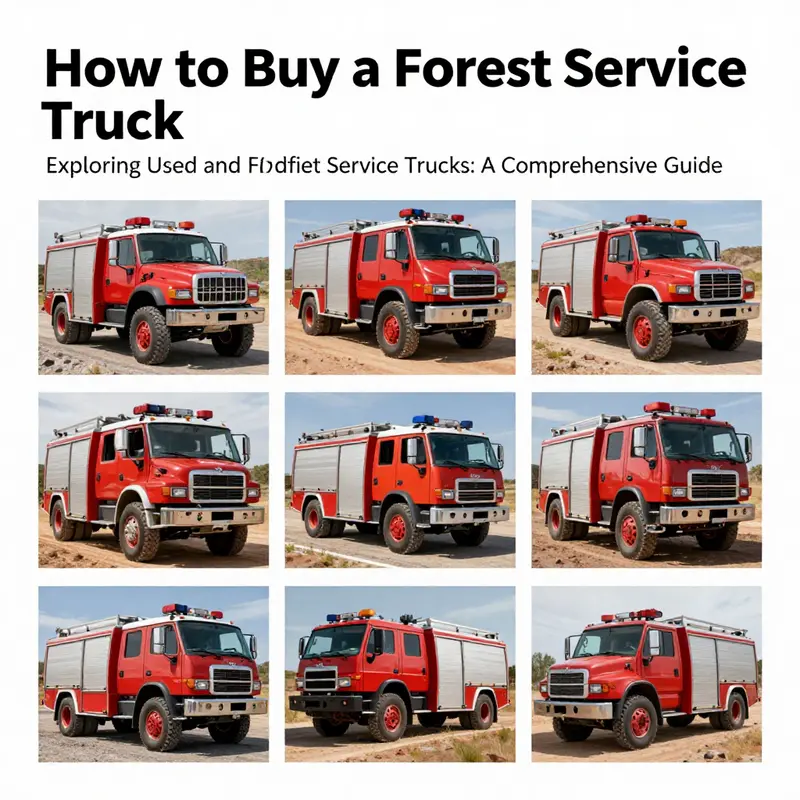
A forest’s edge is rarely a straight line. It twists through uneven terrain, across rocky breaks, and along soils that test even the most robust suspensions. It’s no accident that a fire rig designed for wildland response looks like a cross between a durable SUV and a compact heavy-duty apparatus. For private buyers who want mobility, reliability, and a true off-road edge in forested terrain, the market for used and modified wildland fire trucks offers a compelling path. It’s a route that blends practicality with careful due diligence, because these vehicles are purpose-built for extreme conditions and for public safety operations. The decision to pursue a used or modified rig is more than a price question; it is a choice about engineering, durability, and long-term maintenance that aligns with how you plan to work in the woods, manage emergencies, and sustain the vehicle over years of rugged use. In this chapter, the focus is on translating the realities of the market into a responsible buying strategy that respects safety standards, preserves value, and keeps you from getting stranded on a remote trail.
The market for used wildland fire trucks is real and surprisingly accessible, especially for buyers who are prepared to look beyond glossy brochures and focus on the vehicle’s lived condition. These specialized trucks are designed to tackle fire suppression in uneven terrain, with features such as four-wheel drive, enhanced ground clearance, and robust suspensions. They often come equipped with water tanks, pumps, hoses, and emergency response gear. Because many of these rigs were built to meet public safety needs rather than consumer trends, a used example can deliver proven performance at a fraction of the price of a brand-new, purpose-built unit. For a buyer who values off-road capability and immediate readiness, a well-maintained used rig can be a smarter initial investment than a new, non-specialized vehicle that would require substantial modification to perform in remote forests. The key is to separate performance history from cosmetic wear, and to separate legitimate upgrades from ad hoc add-ons that may compromise reliability or safety.
When evaluating a used wildland apparatus, condition stands above everything else, but condition is a layered concept. The chassis and drivetrain must show consistent service history, with no hidden leaks, uneven wear patterns, or signs of past overloading. Four-wheel-drive systems should engage smoothly, with equal power distribution to both ends. Suspension work is a frequent focus area because rugged terrain tests these components relentlessly. Pay attention to wheel bearings, steering linkage, and the integrity of the frame. The vehicle’s payload and water-handling capacity deserve careful review as well. A rigid calculation of what the unit can carry, how much water it can deploy, and how quickly it can pressurize and deliver is essential. You want to ensure the pump and hoses are not only present but properly maintained and compatible with your anticipated fireground needs. This is not a case for improvisation; it is a field-ready machine, and the cost of an after-the-fact fix can eclipse the price savings of a bargain purchase.
Beyond mechanical health, the interior and auxiliary equipment matter. The cabin should be free from excessive wear that could compromise driver comfort and safety on long shifts. Check the electrical wiring, lighting, communications gear, and any medical equipment compartments if those were part of the configuration. On a general level, the goal is a balance: a sturdy, dependable platform with the right capacity and an array of mission-ready tools, while avoiding over-customization that can complicate maintenance or impede resale value. If you plan to operate the vehicle in forested or off-road environments, you’ll want to verify that the steering and braking systems respond reliably under load and on uneven surfaces. Off-road performance isn’t about speed; it’s about control, predictability, and the confidence that the vehicle won’t falter when a trail drops away or a slope tightens.
Certification and compliance are non-negotiable. In many markets, vehicles designed for wildfire response are built to meet specific standards that ensure interoperability, safety, and reliability. While you may be tempted to assume a used unit already meets those benchmarks, a careful audit is essential. NFPA 1917, or the equivalent standard applicable to wildland apparatus in your region, provides a framework for structural integrity, water capability, pump performance, and overall apparatus readiness. A used unit should come with documentation, or at minimum, a clear maintenance history and a record of inspections. If a vehicle has undergone important modifications to improve off-road capability—such as updated suspension components, revised payload configurations, or changes to water handling—these modifications should be documented and deemed compatible with the vehicle’s overall safety profile. In the absence of complete records, a professional pre-purchase inspection becomes an investment that can prevent costly surprises after ownership begins.
The route to acquiring a used wildland truck is diverse and pragmatic. Government surplus programs, auction platforms, and manufacturer’s pre-owned inventories comprise a spectrum of options. Government surplus platforms can offer retired or decommissioned units, frequently at significant discounts, but buyers should expect to navigate procurement rules and, in many jurisdictions, eligibility constraints. In some cases, ownership is reserved for public safety entities or approved non-profit organizations. If you are exploring these channels, you may also encounter a variety of documentation requirements, title transfers, and potential environmental or emissions clearances that must be satisfied before a vehicle can be road-legal in your area. The alternative is to work with established heavy-duty vehicle markets or specialty brokers who handle wildland apparatus, ensuring a rigorous vetting process and a more predictable timeline from inquiry to delivery. This is where the distinction between a general used-vehicle purchase and a targeted, purpose-built acquisition becomes critical. The careful buyer will demand transparent service histories, verified mileage, and a clear delineation of any work performed by certified technicians.
A practical approach to buying combines clarity of purpose with a disciplined inspection plan. Begin by outlining your forest environment, the typical terrain you expect to traverse, and the approximate water needs for your anticipated suppression or drill-and-rescue activities. From there, set a realistic budget that accounts not only for the purchase price but the potential improvements you might need—such as upgraded suspension for heavier loads, larger water tanks, or additional storage for hoses and pumps. You’ll want to balance the cost of immediate readiness with the anticipated cost of ongoing maintenance, parts, and specialized service. Because these are heavy, non-standard vehicles, maintenance cycles and parts availability can vary significantly by region, and you may rely on a smaller pool of technicians who understand the unique systems. This is not a one-size-fits-all decision; it’s a calibration between your needs, local support networks, and your willingness to manage a more specialized asset.
A useful lens to apply during due diligence is to compare the total cost of ownership rather than the sticker price. Consider the expected lifespan of the equipment, the availability and cost of replacement parts, and the potential resale value if your needs change. If you plan to operate primarily in remote, forested areas, you will likely value a vehicle that remains reliable under challenging conditions and maintains a level of readiness that minimizes downtime. If your use is seasonal or sporadic, a well-kept pre-owned unit may deliver meaningful savings without sacrificing safety or performance. In any case, a transparent maintenance history and a credible verification of compliance with safety standards should be non-negotiable. The goal is to secure a vehicle that you can trust to respond when you need it most, rather than a project that drains time, money, and attention when a real incident arises.
As you navigate the market, an integrated approach helps simplify decisions and improve outcomes. Define your must-haves—such as four-wheel drive capability, a minimum water payload, and a demonstrated ability to operate in rough terrain—versus your nice-to-haves, like enhanced communications gear or auxiliary lighting. Develop a short list of reputable sources and embark on a targeted viewing and inspection routine. Ask for service logs, maintenance records, and evidence of recent safe operations. Test-drive under conditions that mimic your typical terrain and evaluate how the vehicle performs with load and at altitude or slope. If you find a unit that ticks the critical boxes and fits your budget, move promptly but responsibly. In horse-trading terms, there is value in decisiveness when a solid, well-documented used rig becomes available. And if you decide the purchase is a long-term commitment, consider how you will integrate the vehicle with ongoing safety practices, routine maintenance, and a plan for eventual upgrades that preserve performance without compromising reliability. For a practical mapping of procurement considerations, you can explore dedicated guidance on how to approach fire apparatus procurement and align it with your community’s needs and resources. fire-apparatus-procurement.
Finally, keep a pulse on the marketplace and the broader ecosystem of heavy-duty, off-road work vehicles. While a legitimacy check with standards bodies is essential, and the process of obtaining a used wildfire rig demands patience, the payoff can be a vehicle that delivers consistent performance across rugged landscapes and peak-fire season workloads. A well-chosen used or modified wildland apparatus can bridge the gap between extreme capability and practical ownership. It offers a level of field-tested reliability that few new consumer vehicles can match in the short term, while avoiding the higher upfront cost associated with specialized new builds. If you want to survey current listings and get a sense of the market, a widely used platform for forestry equipment provides a broad catalog of options, often featuring detailed photos and specifications that illuminate how these rigs have been configured for real-world use. For example, you can explore listings with a focus on forestry fleets to gauge typical configurations, equipment packages, and price ranges. In assessing a listing, pay particular attention to the vehicle’s service history, any upgrades, and how the water and pump systems have been maintained. The goal is to identify a unit that combines proven performance with maintainable systems and a clear path to continued reliability.
As you finalize your decision, remember that the forest is unforgiving, and so is the market for the specialized machinery that serves it. A careful, informed approach to buying used or modified wildland fire trucks can yield a rugged, dependable partner for forested adventures and safety missions alike. The journey from a forest service asset to a private drive is not a shortcut; it is a careful translation of public-safety engineering into private stewardship, backed by due diligence, transparent documentation, and a commitment to ongoing maintenance. For a broader sense of how procurement best practices shape the acquisition process, consider reviewing dedicated resources that guide committees and organizations through the steps of evaluating, selecting, and purchasing fire apparatus. And when you need a sense of the real-world market, local listings and auction platforms can provide a window into what is possible, what is available, and how to assess value against risk. If you’re curious about current market options, browsing reputable forestry equipment marketplaces can offer practical insight into how such rigs are configured, what upgrades are common, and how buyers position themselves for reliable, long-term use. For inspiration on the broader procurement mindset, you can also explore the ongoing discussions in trusted industry resources and related supply-chain considerations that affect long-term readiness and uptime. For a marketplace example and a sense of what’s available today, you can explore listings that highlight forestry trucks as a useful reference point in this specialized buying journey: https://www.ebay.com/b/Used-Forestry-Trucks/1725968/bn_1725968.
Sourcing a Forest-Grade Work Truck: Core Considerations, Technical Essentials, and the Procurement Path
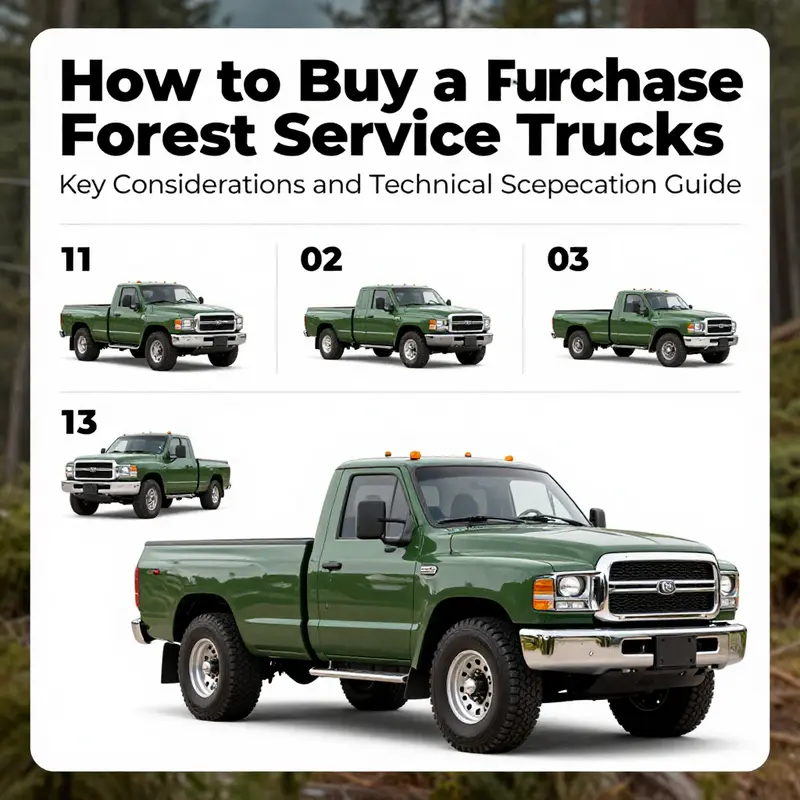
Choosing a forest-grade work truck is a decision that blends field practicality with the governance of procurement. It is not simply about finding a vehicle with a big lift or rugged tires; it is about ensuring reliability in harsh environments, alignment with safety standards, and a path that respects how public safety equipment is funded and deployed. In forestry operations—whether supporting wildfire suppression, tree health programs, or roadside maintenance—the vehicle becomes a moving workshop, a mobile platform, and a shield against costly downtime. The journey from need, through due diligence, to purchase, requires a patient, technically informed approach that keeps the chain of responsibility intact and the operation ready for action. A forest-service-grade rig is designed to operate on rough trails, through mud and snow, and under demanding loads. Understanding what makes such a machine capable helps every buyer separate wishful thinking from steady reliability. This is especially vital because, even though the exact model may sit in a showroom or a surplus lot, the core requirements remain consistent: enough lift to reach the targets, a chassis built to endure continuous exposure to the elements, and a maintenance history that can be traced and trusted. The path to a purchase begins with clear mission definitions. What tasks will the truck perform? Will it be used for utility work high in the canopy, rescue operations in dense timber, or support roles in incident command and medical response? Defining these tasks translates into specifications that matter in the field. Lift height and reach, for instance, are not decorative numbers. They determine how high a bucket must reach to trim a hazardous limb, how far the platform must extend over irregular ground, and how safely a worker can maneuver around an unsteady limb in windy conditions. When evaluating lift capabilities, it helps to translate inches and feet into real-world scenarios: the tallest tree you must access without repositioning the chassis, the maximum outreach required to work from uneven ground, and the margin needed to maintain stability on slopes or loose soil. The dialogue about lift must be joined with a discussion of the chassis itself. Forest environments are unforgiving; mud, snow, rock, and washouts test every component from the frame to the wheels. A reinforced frame, high-clearance suspension, and sturdy tires aren’t optional luxuries—they are the backbone of uptime. A robust chassis minimizes the chance that frequent rough-terrain use will trigger fatigue or failure, and it also supports safer operation when crews are working from height. The maintenance history is another critical strand in the decision. A vehicle with a well-documented service record offers a window into its past. Regular inspections, timely part replacements, and a transparent log of fixes reduce uncertainty. It is not just about whether work was done; it is about whether the work was done with appropriate standards, using parts that meet the rigors of field use. This is where the connection to standards becomes most tangible. A forest-service-grade unit should align with recognized benchmarks for wildland apparatus. Standards or equivalents such as NFPA 1917, which codify the performance and safety expectations for wildland and urban-rural apparatus, provide a framework for assessing a candidate vehicle. A model that meets or approaches these standards should carry with it a safety net in how it is designed, built, and maintained. Engine power and transmission choice, while technical, are not merely about speed or fuel economy. They determine how the truck copes with heavy loads while traversing uneven terrain. A diesel engine that delivers ample torque helps when the vehicle carries pumps, hoses, water, and stabilizing equipment. The transmission type—automatic or manual—also matters in practice. Automatic transmissions tend to offer smoother control under variable conditions and can reduce operator fatigue during long shifts on rugged terrain. Manual transmissions, while offering direct feel for certain specialists, may demand more from the operator in steep or icy conditions. The hydraulic system that operates the boom is another focal point. Modern hydraulic configurations bring smoother, more responsive movement, but they also introduce a need for precise control strategies and maintenance plans. Key features to seek include load-sensing controls, which adjust hydraulic pressure based on demand, and emergency stop mechanisms that immediately halt motion in the event of a fault. Operators rely on reliable hydraulics to position buckets, deploy outriggers, and operate auxiliary tools while keeping balance and stability intact. In addition to the core mechanical and hydraulic specs, practical considerations shape the day-to-day usefulness of the vehicle. Four-wheel drive capability, generous ground clearance, and reliable braking systems work together to enable safe operation on variable terrain. A well-designed emergency medical kit and basic field equipment mounts are not just conveniences; they reflect the vehicle’s readiness to support crews in diverse situations that forestry work can generate. These features often come in packages that are designed for public-safety use, which means they should be evaluated not only for capability but for resilience against environmental exposure, weather, and long-term wear. The procurement path for forest-service-grade vehicles sits at the intersection of public funding, safety mandates, and operator needs. In many cases, government or qualified public-safety entities pursue these assets through official procurement channels or through government surplus programs. The surplus route can be a practical way to acquire a well-maintained unit at a more favorable price, provided the vehicle’s history is transparent and the equipment remains within the intended operating envelope. For public agencies, the process typically involves a formal request, a specification package, and competitive bidding or contractual procurement. For private buyers or non-government organizations that still require forestry-capable equipment, options exist in the form of used market offerings and custom-built configurations. Some buyers explore modified or repurposed platforms, leveraging the core capabilities of a bucket or scaffold system while adapting payload, storage, and mounting arrangements to fit non-government needs. In any case, a careful, standards-aligned approach reduces the risk of premature retirement for a vehicle that should be a long-term asset. An important dimension of this chapter is the procurement philosophy itself. If you are part of a fire department, forestry service, or another public-safety entity, engaging with procurement professionals early and often pays dividends. The conversation should cover the necessary performance criteria, anticipated maintenance costs, and a realistic life-cycle plan. It is worth recalling the practical guidance that emerges from experienced procurement communities: define the deployment profile, align with maintenance and uptime expectations, and ensure the supply chain for parts and service is robust. To support this, you can consult resources that outline best practices in fire apparatus procurement, such as dedicated guidance on the topic in the broader fleet management ecosystem. The path to a purchase often begins with partnering across departments and with trusted suppliers who understand both the mission and the machinery. In evaluating options, consider how each candidate aligns with the organization’s risk tolerance and operating budget. A well-chosen forest-service-grade truck should deliver predictable performance, spare parts accessibility, and a service network capable of keeping the fleet in service rather than sidelined by avoidable breakdowns. When you are ready to move from concept to reality, you can explore avenues such as government surplus platforms or direct conversations with manufacturers who service public-safety fleets. In some cases, a formal market consultation or a procurement workshop can help align stakeholders on acceptance criteria, budgeting timelines, and training needs for operators and maintenance staff. For readers seeking a concise framework, the journey can be distilled into three practical touchpoints. First, translate mission tasks into measurable specifications—lift height, reach, chassis strength, and hydraulic control precision. Second, verify the vehicle’s certifications and maintenance trajectory to ensure safety and uptime. Third, map a procurement route that honors eligibility, funding pathways, and the availability of parts and service. Along the way, you will find that the most effective decisions arise from a disciplined appraisal of how the machine will perform in the forest’s demanding environments, not just how it looks in a showroom or on a spec sheet. If you want a quick synthesis of how to approach these conversations, consider the procurement-focused resources available to public-safety fleets, which offer templates, checklists, and practitioner experiences that can accelerate your evaluation. For broader context on buying used forestry equipment, the following practitioner guide from an independent industry source provides concrete criteria—lift height, chassis durability, and maintenance history—paired with a sound reminder to verify standards and documentation before any commitment. External resource: https://www.equipmentworld.com/used-forestry-bucket-truck-buyers-guide/ If you are pursuing a structured, policy-informed approach to purchasing, you might also explore the practitioner-oriented discussion on fire apparatus procurement in industry-aligned channels, which often highlight governance, risk management, and vendor qualification as central themes. Within this framework, a focused internal resource can help your team align decisions with best practices and ensure a transparent, defensible purchase. For a compact entry point into this process, see the dedicated guide on fire apparatus procurement that emphasizes clarity of scope, stakeholder alignment, and the importance of uptime in field operations. Fire Apparatus Procurement. By anchoring your evaluation to these principles, you can navigate toward a forest-service-grade truck that meets operational demands while maintaining long-term reliability. In summary, purchasing a forest-service-grade vehicle requires more than matching a few numbers to a job description. It requires clarity about the work, disciplined attention to safety and standards, and a procurement pathway that respects both public accountability and frontline needs. When executed with this balance, the result is a truck that not only performs at peak in the field but also endures through seasons of use, maintenance cycles, and the evolving demands of forest management. To supplement the practical criteria raised here, consult up-to-date buyer guides and industry resources that emphasize the same pillars—lift, chassis, and history—so you can compare options with confidence and make a purchase that supports resilient forest operations.
Financing the Forest Service Truck: From Upfront Costs to Sustainable Funding
Purchasing a forest service truck is never just a price tag exercise. These machines sit at the intersection of rugged capability and disciplined budgeting. They must haul, push, plow, and maneuver through uneven terrain while surviving long days in the field, in all weather. The financial decision behind acquiring such a vehicle is not merely about sticker price; it is a lifecycle proposition that demands attention to upfront costs, ongoing operating expenses, regulatory requirements, and the funding strategies that best fit the buyer’s organizational reality. This chapter unpacks those financial aspects and maps practical funding options, so procurement teams and operators can align their cash flow with mission readiness.
Upfront costs and model variability shape the starting line for any funding plan. The market for heavy-duty forestry tractors and fire-ready off-road trucks shows a broad spectrum. A used forestry tractor can be found in the high tens of thousands of dollars, while new configurations—especially those built to meet forest service and incident response standards—command higher prices. Differences in horsepower, drivetrain, water tanks, pumps, hoses, and onboard safety equipment push figures up or down. For government or public-safety buyers, upfront cost is only part of the equation; the broader capital plan must cover outfitting, operator and maintenance training, and compliance with regulatory standards. The goal is a predictable cost curve that keeps machinery ready without straining annual budgets. In practice, this means a detailed specification sheet that translates field requirements into a formal bill of materials, so cost comparisons are apples-to-apples rather than a scramble over feature lists.
In many markets, payment security and procurement pathways shape what is feasible in the short term. Cross-border and domestic suppliers alike offer platforms that facilitate secure payments and transparent contract terms, sometimes with protections that resemble escrow arrangements or milestone-based releases. While a private buyer might face more restrictive eligibility than a government entity, there are still credible routes to acquire a robust, purpose-built vehicle without shouldering all the risk at once. For agencies and public-safety operators, formal procurement channels often provide additional safeguards, ensuring that the vehicle, its equipment, and the support network meet the requirements of emergency response laws and NFPA standards. The financing question is not purely about cost; it is about minimizing downtime, safeguarding uptime, and ensuring that the vehicle remains mission-ready through its entire service life.
A critical component of the financial calculation is the warranty and after-sales framework. Vehicles designed for forestry and wildfire response carry specialized components— rugged suspensions, all-terrain drivetrains, water or foam systems, and resilient electrical architectures. A robust warranty reduces the risk of early failures that can derail operations and inflate maintenance budgets. Beyond the warranty window, reputable sellers often provide ongoing support via professional after-sales teams, 24/7 technical assistance, and access to spare parts. This is not a luxury but a direct cost-control mechanism. A well-chosen provider can translate a purchase into a maintenance program that spreads lifetime costs more evenly and reduces the likelihood of unexpected capital outlays for major repairs.
Funding options span a full spectrum from cash purchases to long-term partnerships. Trade-in programs are common for used equipment; they let buyers offset some of the purchase price by applying value to aging fleet assets. Financing partnerships with banks or equipment financiers can tailor leasing or installment plans to the buyer’s revenue cycles, offering predictable monthly payments and a clear path to ownership. Leasing, in particular, can be attractive for agencies that anticipate fleet turnover or want to preserve capital for competing priorities like personnel or incident command upgrades. Grants and subsidies also play a meaningful role in some regions. Environmental and infrastructure grants, for instance, may support upgrading fleet efficiency, reducing emissions, or improving safety standards in forestry operations. Access to such programs depends on local policies and the alignment of project goals with grant criteria, but they can meaningfully soften the financial impact of a major purchase.
For operators outside government channels, the question often becomes how to craft a financial package that aligns with cash flow while meeting performance requirements. That is where a careful total cost of ownership analysis becomes indispensable. TCO goes beyond the purchase price to include outfitting costs, fuel and maintenance, spare parts, insurance, licensing, and training. It also accounts for downtime risk—how quickly a vehicle can be restored to service after a fault, and how that downtime translates into operational gaps. In practice, TCO translates into a decision framework: if a more expensive but more reliable configuration reduces downtime and extends usable life, the higher initial expenditure may prove economical over the vehicle’s service horizon. Decision-makers should model scenarios for several service life lengths, then compare them against current budgetary constraints and risk tolerance.
Understanding depreciation and tax considerations can also shape funding choices. In many jurisdictions, equipment used for forestry and public-safety operations qualifies for accelerated depreciation or special tax incentives that recognize the public benefit of reliable emergency apparatus. While the precise tax treatment varies, planners should build a tax-advantaged layer into their financial projections. Early tax benefits can improve annual cash flow, while longer depreciation schedules provide ongoing reductions to taxable income. Coupled with insurance strategies that reflect realistic replacement cycles and uptime guarantees, these tax and risk-adjusted elements create a more resilient funding plan.
The procurement context matters as well. Public agencies typically follow formal evaluation and bidding processes that require explicit justification for the fleet renewal. Evaluators assess not just the price, but the expected impact on service delivery, operator safety, and incident response times. That means financial analysis must be integrated with operational metrics: downtime avoidance, fire season readiness, and the ability to mobilize quickly when an incident arises. When commissioning a forest service truck, teams should map funding plans to procurement milestones, ensuring that capital approval, vendor selection, and fleet integration align neatly with budget cycles and contingency planning.
In forming a funding strategy, it is useful to anchor the discussion to a practical reference point: the importance of streamlined procurement guidance that covers both financial mechanics and operational requirements. For teams engaging with suppliers, a clear set of expectations—clear warranties, defined service levels, and transparent spare-parts support—helps stabilize long-term costs and reduces negotiation friction. For readers seeking actionable lanes to pursue, there is value in treating the purchase as a program rather than a single transaction. Rather than seeking the lowest price for a single chassis, the focus should be on a lifecycle program that guarantees uptime, compliance, and predictable performance across the fleet over its entire life.
To ground the discussion in a helpful direction, consider how a formal workflow around fire apparatus procurement can structure both the financial and operational aspects of a forest service truck purchase. This link provides a framework for translating mission needs into specifications, cost envelopes, and procurement milestones—an approach that helps ensure the vehicle selected is not only affordable but fit-for-purpose across multiple deployment scenarios. While the specifics will differ by region and organization, the underlying principle is constant: sound financing and a well-planned funding path reduce risk, speed deployment, and protect the investment over time.
From a practical standpoint, the next steps involve assembling a robust business case. That starts with a detailed needs assessment that translates terrain, incident load, and response times into quantitative requirements for horsepower, drive configuration, tank capacity, and emergency equipment. With those specifications in hand, buyers can compare how different configurations affect total costs, uptime, and maintenance demands. It also helps to establish a reasonable expectation for resale value at the end of the equipment’s service life and to anticipate future replacement cycles. The aim is not to buy the most powerful machine but the most reliable one that meets operational demands at a predictable cost.
In closing, financing a forest service truck requires balancing upfront investment with long-term responsibilities. It demands a pragmatic view of depreciation, maintenance, training, and risk. It requires understanding the available funding channels—from cash and financing to grants and leasing—and recognizing how each path interacts with budget cycles, regulatory requirements, and the mission priorities of the organization. The result is not simply a single purchase, but a carefully staged program that preserves readiness, supports accountability, and keeps the fleet capable of protecting forests, communities, and natural resources when every minute counts. External financial realities, procurement realities, and maintenance realities converge in a well-constructed funding plan that makes the difference between a vehicle that sits idle and a truck that reliably supports front-line crews when fires flare up or storms throw debris across a forest road.
External reference: Sinotruk HOWO 6X4 420HP Tractor Truck for Sale, a listing that provides market context for heavy-duty forestry tractor configurations and their price ranges in certain regions. https://www.made-in-china.com/products/193123365281.html
Legal Pathways and Regulatory Guardrails: Navigating Surplus Channels to a Forest Service Truck
To the uninitiated, the phrase “buying a forest service truck” might conjure a straightforward transaction. In reality, the legal landscape around federal fleet assets is designed to keep public safety equipment in the right hands, protect taxpayers, and ensure transparent disposal of government property. The U.S. Forest Service, like other federal agencies, maintains a fleet strictly for government use. They do not handle private sales through a public storefront. Instead, when a vehicle finally retires from service, it enters a pipeline of surplus disposition that is governed by federal law, agency policy, and the procedures of the General Services Administration (GSA) and the USDA surplus office. This is not a fixed set of steps, but a sequence of checks and opportunities that require patience, diligence, and a clear understanding of eligibility and risk.
Disposal regulations are the backbone of this process. Each surplus vehicle passes through an evaluation phase that considers its mechanical condition, age, mileage, and suitability for re-assignment in another public role or for sale to qualified buyers. The aim is to maximize reuse while maintaining safety standards and accountability for public funds. Vendors and buyers participating in surplus marketplaces do so under formal contracts or sale notices that spell out restrictions, warranty limitations, and the responsibilities that accompany ownership. The emphasis is not on gifting private use a vehicle that was designed for demanding forest service work, but on offering capable equipment to entities that can reliably maintain, insure, and legally operate it.
For individuals who dream of owning a forest service vehicle, the path runs through the surplus ecosystem rather than a direct purchase. The most common access point is through online surplus platforms that the federal government operates or endorses. These platforms present retired trucks side by side with a host of other government vehicles, from light-duty vans to larger utility pieces. Bidders must first register, a step that verifies identity and confirms eligibility. This eligibility is the practical gatekeeper: a vehicle that would be ideal for a mountain jurisdiction might be restricted to official use or sold to public safety or non-profit organizations, sometimes blocked from private sale entirely. When someone qualifies, bidding begins, and the process proceeds in a controlled, auditable fashion. The vehicle may be offered through a bid event with reserve prices or through a fixed-price sale, depending on the agency’s objectives and the pool of interested buyers. Each sale is as-is, with explicit terms that the buyer assumes all maintenance, safety, and regulatory responsibilities upon transfer of title.
A crucial aspect of this regulatory landscape is adherence to safety and performance standards that apply to the equipment once it leaves government ownership. In the fire and rescue domain, standards such as the NFPA 1917—though the exact applicability can vary by jurisdiction—are widely recognized as benchmarks for wildland and structural firefighting apparatus. The standard helps buyers assess whether a retired vehicle can be safely repurposed or reconfigured for civilian use. It is not a guarantee that a surplus unit will meet every local requirement, but it provides a yardstick for evaluating potential purchases. The interplay between federal disposal rules and state or local licensing rules creates a practical tension that buyers must manage. A vehicle that rolls off a surplus platform may not be immediately road-legal in every state; it may require inspections, modifications, and re-certification before it can be registered and insured for private transport or non-fire-service work.
Outside the formal federal channels, some buyers consider the broader ecosystem of used or modified equipment. While care is needed to avoid the impression that a surplus vehicle is a plug-and-play private asset, there are legitimate pathways for those who want rugged, off-road-ready capability for forested or remote terrain. In practice, this often means seeking out specialized builders or re-sellers who will certify that a vehicle is fit for off-road work, perform safety retrofits, and, importantly, provide documentation that can ease the transition to private or non-profit use. The emphasis remains on safety, traceability, and compliance with local motor vehicle and insurance requirements. It is possible to find a vehicle with some forest-service heritage—a former fleet vehicle repurposed under a different flag—but such acquisitions require careful due diligence. These acquisitions rarely mirror a consumer car purchase; they demand a clear plan for maintenance, parts supply, and ongoing compliance.
For organizations that do hold a legitimate stake in public-safety equipment, the possible routes extend beyond direct retirement and auction. Some states and localities participate in cooperative procurement programs that pre-negotiate terms for the acquisition of emergency response vehicles and support equipment. Even when such programs do not tune to private buyers, they demonstrate how structured, accountable processes can facilitate access to capable equipment for qualified agencies, non-profits, or public-safety partnerships. The upshot for a private buyer or small organization is that understanding these frameworks matters. It clarifies what is realistically possible and where the major hurdles lie. The hurdle, in many cases, is not the absence of a vehicle but the absence of eligibility and the burden of subsequent compliance.
Within the narrative of procurement and disposal, the practical steps to action become clearer. Prospective buyers should begin by auditing their own needs and constraints. Is the goal to establish a rugged, off-road support vehicle for forestry work in a remote region, or is it to secure a higher-capability platform for training scenarios or public-safety demonstrations? The answer will drive the type of surplus listing to monitor, the level of maintenance readiness required, and the plan for title transfer. Once eligibility is established, the next phase is the due-diligence routine. Inspecting the vehicle, reviewing maintenance logs, and confirming that critical components—like pumps, water handling equipment, and safety accessories—are present or readily replaceable becomes essential. Buyers should request all available service histories, battery condition reports, and any prior modifications. In a surplus sale, this information is not always complete, so the burden falls on the buyer to perform independent checks or to factor uncertainty into their bidding strategy.
The financing and risk calculus is another dimension of the regulatory framework. Because most surplus purchases are not small consumer transactions, buyers may need to secure lines of credit, arrange insurance, and budget for significant post-sale work. Insurance considerations are not trivial; many carriers require explicit disclosure of the vehicle’s prior use and any retrofits. Some jurisdictions impose additional restrictions on heavy off-road vehicles or on vehicles originally configured for emergency response. The buyer should anticipate the cost of compliance work, including potential reintegration of emergency equipment or removal of equipment that may not be legally or practically operable in a civilian context. The overall fiscal calculus should compare the total ownership costs—purchase price, transport, inspection, required modifications, ongoing maintenance, insurance, and licensing—against the utility the vehicle is expected to deliver in its new role.
A disciplined approach to sourcing also involves staying aware of the advisory and educational resources that accompany surplus programs. Government agencies publish guidelines that describe eligibility, bidding procedures, and the consequences of noncompliance. They encourage prospective buyers to participate in informational sessions, to review sale conditions carefully, and to seek clarification before submitting bids. The aim is to avoid missteps that can lead to disqualification or title issues after the fact. For anyone exploring this path, the reminder is simple: the forest service fleet exists for public service, and any private transition is contingent on meeting a strict set of criteria and accepting the responsibilities that accompany use of government-disposed assets. This is not a covert shortcut to a new truck; it is a regulated process designed to protect both the public trust and the integrity of the equipment.
Finally, for readers who want a practical map of the routes, a single, reliable practice stands out: treat surplus auctions as a gateway, not a guarantee. Participation is data-driven and paperwork-intensive. Prospects should invest time in learning the registration requirements, the bidding cadence, and the post-sale obligations. They should build a network with credible re-sale partners, and they should maintain a rigorous standard for safety and documentation. The connective tissue of this approach is the recognition that a forest service vehicle, even when retired and offered for public sale, remains a specialized tool. Its value to a non-government entity hinges on disciplined procurement and an explicit plan for integration, compliance, and ongoing upkeep. Guided by these principles, a thoughtful buyer can navigate the legal and regulatory landscape with clarity, align expectations with the realities of surplus disposition, and position themselves to take advantage of legitimate opportunities when they arise.
To learn more about procurement strategies and how to frame a responsible, safety-driven approach to apparatus purchases, see the dedicated guidance on procurement for emergency services at fire-apparatus-procurement. For broader context on how federal surplus programs function and who is eligible to participate, the official gatekeepers are the General Services Administration and USDA surplus offices, which publish detailed eligibility criteria and auction procedures. In practice, the route most often pursued by private buyers is through online surplus auctions, where a retirement narrative unfolds across many vehicles and equipment categories. The bottom line remains straightforward: a forest service truck will not appear in a showroom window for private sale. Instead, it appears in a surplus listing, with a price determined by market demand and a set of terms that bind the buyer to comply with safety, licensing, and ongoing maintenance obligations. Those who pursue this path should do so with a respect for the regulatory architecture that makes these assets available in the first place, and with a readiness to invest in the work required to bring a purpose-built government asset into civilian service.
External resource: https://www.gsa.gov/surplus
Final thoughts
Purchasing a forest service truck is a multi-faceted process that requires thorough comprehension of various channels, vehicle specifications, and legal regulations. By understanding the pathways available for both government and commercial acquisitions, alongside key financial considerations, truck drivers, company owners, and fleet managers will be positioned to make informed decisions. Whether seeking new or used options, the right approach ensures that your forest service operations remain efficient and effective.