
Maintaining a dump truck isn’t just about keeping it on the road; it’s about safeguarding your investment and ensuring the safety of both the driver and those sharing the road. As the heart of many transportation and construction operations, providing regular and thorough maintenance can save you from unexpected breakdowns and costly repairs. This guide outlines three key components of servicing a dump truck: daily inspections to catch potential issues early, scheduled maintenance practices to keep components in top shape, and professional repairs to tackle complex challenges. By understanding and implementing these practices, drivers, fleet managers, and trucking company owners can maximize efficiency, minimize expenditures, and extend the lifespan of their fleet.
Every Morning Counts: A Step-by-Step Daily Inspection Routine to Service a Dump Truck
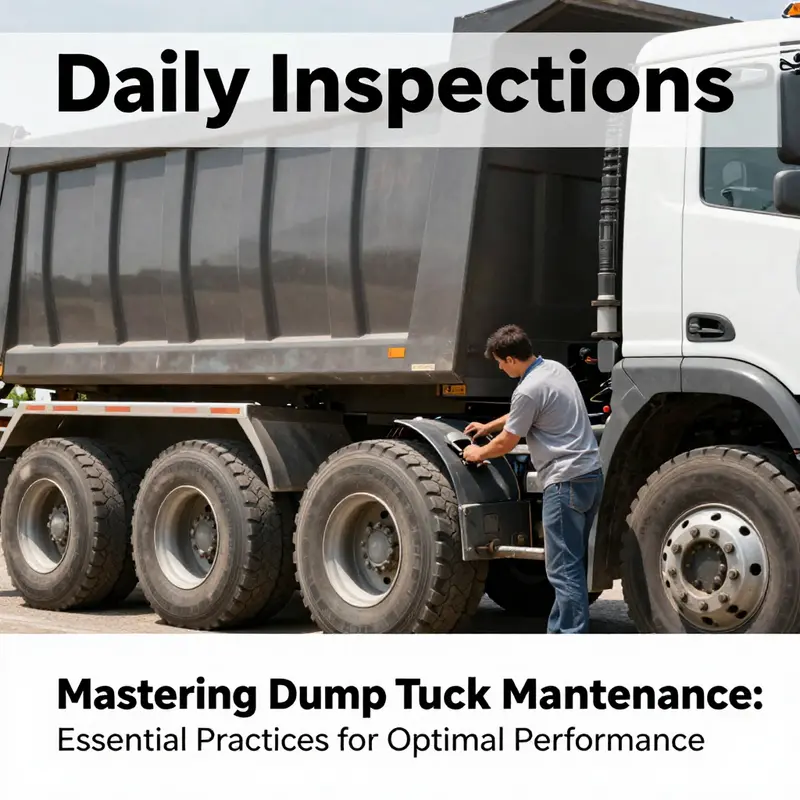
Every Morning Counts: A Step-by-Step Daily Inspection Routine to Service a Dump Truck
A disciplined daily inspection is the single most effective habit for keeping a dump truck safe and productive. When drivers and crews adopt a consistent morning routine, small issues are caught early. That prevents costly repairs and reduces downtime. This chapter presents a clear, hands-on walkthrough of the checks to perform before every shift. It explains what to look for, how to test systems, and which observations demand immediate action. The goal is simple: leave nothing to chance and make every run predictable and safe.
Begin outside the cab with a full walkaround. Move deliberately and follow the same pattern each time. Start at the front and circle the truck clockwise. This prevents skipping components and helps you learn the truck’s normal state. Look for fresh fluid on the ground. Track the source if any puddles or drips are present. Surface stains can indicate slow leaks. Fresh liquid under the engine, transmission, hydraulic pump, or dump body cylinders needs immediate attention. Note the color and smell of fluids. Engine oil is dark brown or black, coolant often has a sweet odor, and hydraulic fluid is usually clear to light brown. Record any unusual colors or strong odors for the maintenance log.
Tires deserve careful attention. Underinflated or overinflated tires shorten tread life and can compromise handling. Use a calibrated gauge and measure pressure at the valve stem. Compare readings to the truck’s placard or manufacturer recommendations. Check the tread for uneven wear patterns. Feathering, cupping, or edge wear suggest alignment or suspension issues. Look closely for cuts, bulges, embedded objects, and sidewall separation. Verify that lug nuts are present and tight. Loose or missing lug nuts should be addressed before the truck moves. Don’t forget the spare. Confirm it is serviceable and inflated to the correct pressure.
Move to the lighting and signaling systems. Proper illumination and clear signals are critical for safety on and off the job site. Test headlights on low and high beam. Activate turn signals on both sides. Have a colleague stand behind and watch brake lights and reverse lights while you press the pedal and shift into reverse. Clean lens covers so lights remain visible in poor weather. Replace cracked or clouded lenses that reduce output. Confirm reflectors are intact and clean. Electrical faults often start as intermittent issues, so pay attention to flickering bulbs or dashboard lamp warnings.
Enter the cab and run through the driver’s controls systematically. Adjust the seat and mirrors for good visibility. Confirm seat belts latch and release smoothly. Start the engine and watch the instrument panel. Observe oil pressure, coolant temperature, battery charge, and air system pressures. Any dashboard warning must be investigated before departure. Listen for unusual engine noises at idle. Knock, rattle, or prolonged high-pitched sounds can indicate mechanical problems. Check windshield wipers and washers. Inspect the windshield for cracks or chips that could obstruct the driver’s view.
The braking system is non-negotiable. On the way out of the yard, perform a functional brake check. With the engine running, build air pressure and watch the gauge to ensure it reaches the specified level. Apply the parking brake and step on the service brake. Note pedal travel and feel. Spongy, low, or overly firm pedals signal an issue. Listen for air leaks around valves and chambers. Inspect brake drums and pads visually when possible. Excessive wear, scoring, or heat discoloration require service. For trucks with antilock braking systems, verify the ABS indicator extinguishes after engine start. If it stays on, consult a technician.
Inspect the hydraulic system and the dump body carefully. Hydraulic failure during lifting poses a safety risk and can damage loads. Start by checking the hydraulic fluid reservoir level and condition. The fluid should be clear of visible contaminants and within the recommended range. Look along hoses and fittings for signs of seepage. Soft, bulging, or cracked hoses must be replaced. Check fittings and clamps for tightness. Operate the dump body through a slow raise and lower cycle. Listen for unusual noises and watch for jerky movement or hesitation. Observe the lift cylinders for smooth extension and retraction. Leak stains around seals or perches indicate failing seals or mounting problems.
Pay attention to the structural integrity of the dump body. Walk along the bed and inspect welds, hinges, and pins. Look for cracks, deformation, and rust-through. Check the tailgate latches and pins. Ensure they lock securely and release cleanly. When the bed is raised, verify that the locking mechanisms hold the tailgate as expected. A failing latch can release under load and create a catastrophic spill. Inspect the bed floor for excessive wear or punctures caused by load materials. Heavy or sharp cargo can accelerate bed degradation and should be noted for repair scheduling.
The frame, suspension, and steering require a close look. Inspect frame rails for cracks, bends, or misalignment. Check crossmembers and mounting points for corrosion or distortion. Examine suspension components including springs, shackles, and bushings. Broken leaves, worn bushings, or loose U-bolts will change load distribution and handling. Shock absorbers should be free of leaks and provide adequate damping. Steer the front wheels while stationary and feel for free play or binding. Wheel hubs should be secure and free of excessive endplay. Any looseness in wheel bearings or kingpins must be corrected before operation.
Engine fluids and filters are another daily checkpoint. While you won’t change oil every day, you must confirm oil level and cleanliness. Use the dipstick and add oil if the level is below the safe mark. Check the coolant reservoir for level and contamination. Look for signs of oil contamination in coolant or vice versa. Inspect belts and pulleys for wear or fraying. A failed belt can lead to alternator, water pump, or fan failure. Verify that air intake systems are clear. A restricted intake will reduce engine power and fuel efficiency.
Take a moment to inspect the exhaust system. Look for holes, loose mounts, and excessive rust. A damaged exhaust can leak fumes into the cab or fail emission standards. Secure mounting points prevent vibration and subsequent piping failure. Also check the turbocharger area on turbocharged engines for oil leaks or excessive play. Persistent black smoke or sudden changes in exhaust color require immediate diagnosis.
Safety and emergency equipment must be present and functional. Fire extinguishers need full gauges and proper servicing dates. First aid kits should be complete and stocked. Reflective triangles, flares, and other warning devices must be accessible and in good condition. Confirm documentation such as inspections, permits, and logbooks are aboard and current. An inspection sticker or other regulatory items should be valid and displayed as required.
During the walkaround, document key observations in a written or digital log. A concise note of pressure readings, fluid levels, tire conditions, and any abnormalities creates a record. That record supports trend analysis and helps mechanics prioritize repairs. If a defect is found, tag the truck and communicate the issue to dispatch and maintenance. Do not delay repairs for items that affect safety or legal compliance.
When performing the raising test for the bed, be methodical. With the truck parked on level ground, chock the wheels. Raise the body only enough to observe movement and cylinder performance. Never place your body under a raised bed without secured prop or safety lock. Inspect hinge pins and lift mounts while the bed is raised. Engage mechanical locks if the truck is equipped with them. If the bed fails to hold position or drops when raising, secure the vehicle and call for professional assistance.
Electrical system checks go beyond lights. Inspect battery terminals for corrosion. Ensure hold-downs are secure. Confirm that charging systems are working by observing voltage gauges and charging indicator lights. Loose or corroded connections can cause starting problems and erratic electronics. Check trailer connectors and harnesses for damage. Bad wiring can disable lights or create shorts that trip circuits.
A short functional test drives many small items into better compliance. Drive the truck a short distance and apply brakes at low speed. Listen for chatter, feel for vibrations, and look for steering pull. Check gear shifts and clutch operation for smoothness. Pay attention to engine response under load. Unexpected surges, hesitation, or excessive smoke indicate issues that need inspection.
Daily inspections also include housekeeping tasks that preserve the truck. Remove debris from the bed and clear materials from wheel wells and undercarriage. Accumulated muck accelerates corrosion and hides leaks. Keep the cab clean and organized. Spills of fuel, oil, or chemicals should be cleaned up promptly. Maintain a small toolkit and basic spare parts aboard. Items like spare fuses, bulbs, and hose clamps enable quick fixes when needed.
Training and consistency are vital. Drivers must be trained to spot subtle signs of wear and degradation. Use simple checklists to standardize inspections across a fleet. Encourage drivers to question anything that looks different. A small deviation from normal often foreshadows larger problems. Reinforce the habit of reporting and documenting all findings.
Leverage technology to enhance the daily routine. Electronic logs, mobile apps, and telematics systems make inspection records easy to store and analyze. Integrate OBD or telematics alerts into your maintenance workflow. Early warnings from these systems can direct attention to components before failure. However, do not let technology replace a hands-on inspection. Many issues remain visible only to a careful human observer.
When to stop the truck and call for professional help is an important decision. Any issue that affects steering, braking, structural integrity, or hydraulic lifting requires immediate attention. If you find a significant leak, broken suspension parts, a cracked frame, excessive play in wheel bearings, or large tire damage, remove the truck from service. A mechanic should diagnose and repair the fault before returning the truck to operation.
Finally, foster a culture where preventive care is valued over reactive fixes. Daily inspections are the frontline of preventive maintenance. They increase safety and reduce long-term costs. Encourage drivers to take ownership of their inspections and provide clear channels for reporting defects. When daily checks are performed reliably, the maintenance team can plan repairs at convenient times. That reduces emergency calls and helps the fleet run smoothly.
For a detailed set of technical specifications and troubleshooting charts, refer to the manufacturer service manuals. These resources provide torque values, pressure ranges, and other model-specific data necessary for confident diagnosis and repair. Manufacturer guidance should be followed when a deeper inspection or repair is required: https://www.foton.com.cn/service/manuals/
For additional training resources on structured maintenance programs and service training approaches that apply across heavy vehicles, consider reviewing industry maintenance training materials such as fire-truck-maintenance-service-training. While focused on a different type of heavy apparatus, the training principles translate well to dump truck fleets.
Consistent daily inspections create an early-warning system for your fleet. They preserve safety, extend component life, and improve scheduling. Adopt a clear routine, keep a checklist, and encourage accurate reporting. Each morning spent on a proper inspection returns multiplied value in fewer breakdowns and safer operations.
Engineered Consistency: Scheduled Maintenance for Dump Trucks
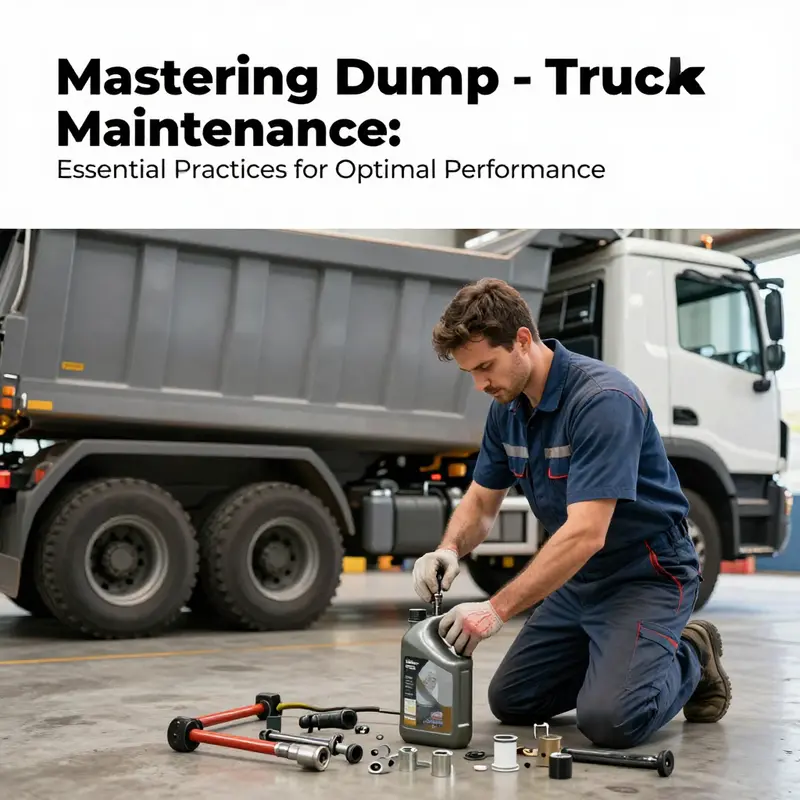
Maintenance is not an event but a discipline. In the demanding world where a dump truck hauls heavy loads, climbs uneven ground, and operates across shifting weather and terrain, the difference between steady uptime and unexpected downtime hinges on how consistently a fleet treats its machine. The scheduled maintenance practices that underpin reliable performance can seem meticulous, yet they are rooted in a simple truth: small, disciplined care today prevents large, costly failures tomorrow. When you approach maintenance as an ongoing partnership between operator habits, technician expertise, and data driven planning, you create a vehicle that not only lasts but performs with steady reliability even under the most punishing conditions. This chapter explains how planned service becomes a visible, repeatable workflow for the yard and the field.
A dump truck’s life begins long before it leaves the yard. It starts with a maintenance plan that translates the manufacturer’s guidelines into a practical timetable suited to daily use, workload, and environment. The engine’s heart may beat with diesel tenacity, but the rhythm that keeps it beating smoothly is the maintenance calendar. The plan speaks in two languages at once: the mechanical language of parts and the logistical language of time and distance. The first speaks of oil, filters, belts, and seals; the second speaks of miles, hours, and calendar dates. A vehicle that travels 15,000 kilometers in a season and endures frequent off-road deployments needs a maintenance cadence that exceeds a city commuter’s schedule. Conversely, dump trucks in lighter service still benefit from disciplined intervals, because neglect multiplies quickly in the form of reduced efficiency, higher fuel burn, and risk of reduced payload, braking performance, or other failures. The aim is a stable baseline of reliability that can be trusted at every shift.
A practical approach to scheduled maintenance begins with a robust engine and fluid strategy. Engine oil and filter changes sit at the core of the program because proper lubrication prevents metal-to-metal wear inside moving parts. The intervals—often defined by mileage and hours, and sometimes adjusted for environmental factors such as dust, temperature, and altitude—should reflect the loads the truck routinely carries. In heavy-duty service, where cold starts and idling are common, the oil’s viscosity and cleanliness become more critical. The oil and filter replacement regimen cannot be treated as optional. An equally careful eye must be kept on the air intake system. A dirty air filter can suffocate combustion efficiency, increase fuel burn, and accelerate wear. The broader logic is simple: clean air means more efficient combustion, cleaner oil for longer, and fewer emissions issues. The drive belt system deserves a deliberate check. Worn or misaligned belts can slip, reducing power to accessories and affecting the hydraulic pump. The rule of thumb is to verify belt tension and condition during major service, and to re-tension or replace as tolerances require, with the engine off and cool.
The health of a dump truck’s hydraulic system is the heartbeat of its lifting and dumping capability. Hydraulic lines, cylinders, and the reservoir must be inspected for leaks, cracks, and corrosion. A small seepage can become a larger problem if not identified early because hydraulic fluid is essential for operation and an irritant to the environment. The plan should specify visual inspections for hoses and connections, checks for metallic particulates in the reservoir, and confirmation that the hydraulic fluid is within the recommended level and free of contaminants. The schedule is not only about replacement but about verification—verifying that the circuit holds pressure, that valves move smoothly, and that anti-cavitation provisions are present in the system’s design. Cleanliness around hydraulic components protects seals and fittings; a dirty environment fosters wear and corrosion.
Braking performance is another pillar of scheduled maintenance that cannot be compromised. Brake pads, rotors, and lines wear under heavy loads, but their performance is a gatekeeper for safety. Visual inspections of friction materials, checks of rotor surface condition, and examination of brake lines and the master cylinder form the core of a prudent program. Emphasis on brake fluid quality, moisture content, and contamination from other fluids helps prevent corrosion and ensures consistent pedal feel. The driver’s feedback—the pedal travel, the firmness of the brake, and any unusual noise or vibration—should be logged and correlated with wear patterns found during service to inform future maintenance windows and reduce downtime.
Tire performance might be the most visible indicator of a truck’s readiness for work. Tire maintenance includes inflation management, tread depth monitoring, and inspection of sidewalls for cuts or bulges. The operator should verify inflation to the recommended pressure, considering payload, axle configuration, and season. Subtle pressure changes can alter traction and fuel efficiency. The program should include rotation and alignment checks at intervals that reflect wear patterns. A spare tire deserves the same attention as the others. Routine cleaning and protection help preserve bead seating and performance.
Cooling systems demand equal respect. The engine’s cooling system guards against overheating, especially when hauling heavy loads through hot environments. Regular coolant checks, testing of antifreeze concentration, and inspection for leaks in hoses and the radiator are essential. A failure to monitor coolant levels and quality can lead to thermal stress that shortens engine life or causes a breakdown on a hot jobsite. The maintenance schedule should include a coolant flush plan at manufacturer intervals or earlier when the truck operates in dusty conditions or extreme heat. Keep an eye on radiator fins for blockage and ensure the radiator cap seals correctly to maintain pressure.
Beyond the engine, the truck’s body and lifting mechanism deserve attention. The cargo bed and the hydraulic dump frame endure repeated bending, vibrations, and exposure to debris and moisture. Schedule inspections for cracks in weld seams and stress points, checks on bed pins and lift cylinder seals, and assessment of bed locking mechanisms. Any signs of rust or misalignment should be cataloged and addressed. A clean body—free of loose debris in the bed that could contaminate hydraulic fluid—contributes to safer operation. Routine cleaning with appropriate resources prolongs life and preserves resale value.
Cleaning and corrosion protection occupy a special place in the maintenance narrative. A disciplined cleaning routine removes abrasive dust and fragments around critical components. A pressure rinse, followed by thorough drying, helps prevent salt and moisture from accelerating corrosion. For metal surfaces prone to rust, basic coatings or rust inhibitors can be applied after cleaning, followed by protective sealants. The effect of such care extends beyond appearance; it stabilizes structural integrity and reduces surface fatigue. Cleanliness is maintenance, not vanity.
All of these tasks fit into a formal maintenance schedule. In practice, the schedule translates into concrete steps: specific intervals for oil and filter changes, air filter inspections, belt tension checks, and the timing for hydraulic tests, brake checks, and tire maintenance. It requires cooperation from operators who perform daily checks, technicians who complete in-depth inspections, and managers who harmonize the timetable with the fleet’s utilization. Daily checks provide early detection, regular maintenance reinforces reliability, and professional service addresses deeper questions that lie beyond routine tasks. The objective is to anticipate what could fail and act before that happens, maintaining consistent performance, reducing unscheduled downtime, and lowering total cost of ownership.
To bridge theory and practice, modern technology plays a decisive role. Vehicle health monitoring, telematics data, and onboard diagnostics create a feedback loop that complements human vigilance. Real-time data can flag anomalies in hydraulic pressure, oil quality, and engine temperatures, offering predictive maintenance insights. When a platform points to a subsystem warranting attention, the team can plan a targeted intervention during the next available window, rather than chasing symptoms after a breakdown. Predictive maintenance is a powerful enhancement, not a replacement for skilled technicians, helping prioritize work and minimize downtime. In the field, smart data and skilled hands transform maintenance from a reactive burden into a proactive advantage.
The human element remains central. The most robust program hinges on people who understand how a dump truck behaves under load and how to interpret wear signals. Operators should perform pre-start and daily checks and flag anomalies. Technicians must document findings, test systems, and communicate urgency. Managers must fund the program, ensure spare parts, and align the schedule with work demands. A culture of accountability sustains the fleet’s integrity. When maintenance is a shared responsibility, uptime becomes a standard.
In closing, scheduled maintenance is a foundation for sustainable, safe, and efficient dump truck operation. It is a multi-layered discipline that combines disciplined checks, measured replacements, hydraulic and brake integrity, tire management, cooling, and corrosion protection. The result is a truck that maintains payload capacity, delivers predictable fuel economy, and keeps pace with a busy schedule. The chapter on scheduled maintenance becomes a cornerstone of reliable dump-truck operation, especially when paired with training, documentation, and data-driven planning.
When Precision Meets Power: Mastering Professional Repairs for Dump Trucks
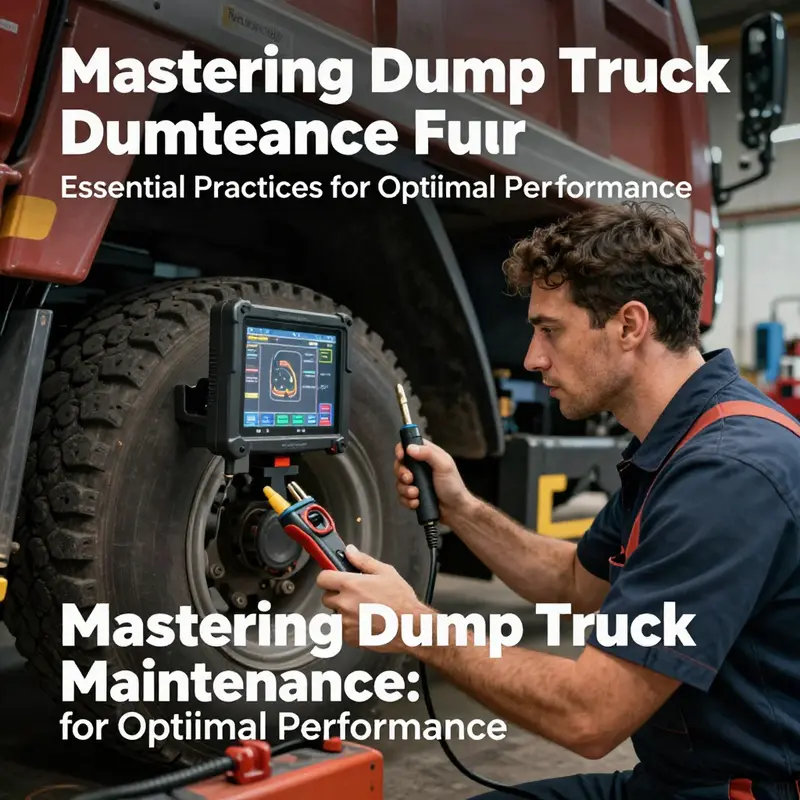
Professional repairs are the hinge between a dump truck’s raw capability and its sustained, reliable performance. They go beyond the basics of daily checklists and routine oil changes. In the field, a dump truck is a mobile workshop, a heavy-duty system of hydraulics, metalwork, and control logic all working in concert. When something new appears—an unusual vibration, a dip in dumping speed, a faint metallic odor—the repair process begins with disciplined diagnostics, not quick fixes. The goal is not merely to fix what is broken but to understand why it failed, to restore full performance, and to prevent a recurrence. In practice, professional repairs integrate a systematic approach to three core domains: the hydraulic dumping mechanism, the chassis and structural framework, and the control systems that orchestrate movement. Each domain carries its own set of challenges, and each demands specialized tools, skilled technicians, and a mindset tuned to reliability, safety, and long-term value. A well-executed repair program respects the safety standards that govern heavy equipment operation and aligns with the broader maintenance philosophy a fleet depends on every day. When done correctly, professional repairs reduce unplanned downtime, extend component life, and keep the machine performing at or near its original design intent, even after years of demanding use in construction, mining, or waste management environments.
The hydraulic system sits at the center of a dump truck’s operational identity. It powers the lifting of the open box, enables controlled dumping, and must respond with precision to operator commands. A professional service visit begins with a focused inspection of the hydraulic pistons, seals, and cylinders that translate hydraulic pressure into mechanical motion. Worn seals invite internal leakage, which manifests as sluggish rise, soft dumping, or instability when the box begins to lift. A professional technician will measure the return and hold pressures, verify that the dump cylinder rods move without binding, and check for pitting, scoring, or corrosion on critical surface areas. Wear is often invisible until it reaches a threshold where performance degrades. The diagnostic process is aided by pressure testing and by flush and filter replacement routines that remove contaminants, a common culprit in reduced responsiveness. Even trace debris can create a chain reaction: a dirty filter causes oil starvation for the pump, which then reduces cylinder speed and smoothness. In this space, the most effective professional repairs hinge on clean oil, proper filtration, and a hydraulic oil that meets the system’s viscosity requirements. A meticulous service will also verify proper hydraulic oil level, confirm the integrity of hoses and fittings, and bleed the system to remove air pockets that degrade performance. When a technician speaks of “proper pressurization and smooth actuation,” they are describing a return to the truck behaving as designed, with consistent dump cycles, repeatable lift heights, and predictable retraction. The emphasis is on reliability rather than a quick cosmetic fix.
Beyond the hydraulics, the chassis and its supporting structures demand equal attention from a professional service perspective. The chassis bears the weight of heavy loads, often under dynamic conditions that include uneven ground, rough roads, and abrupt stops. Axles and suspension components experience cumulative stress, and the frame itself can develop fatigue over time, particularly in regions with aggressive terrain or frequent heavy loads. A professional inspection of chassis components starts with a careful assessment of welds, brackets, and weld seams along the frame rails. Any cracking, deformation, or corrosion can threaten structural integrity and, by extension, load-bearing capacity. Suspension geometry must be checked for signs of misalignment or unequal tire wear, with attention paid to leaf springs, air springs, bushings, and control arms. In a professional setting, alignment racks and load-testing equipment are used to quantify whether the truck’s chassis maintains proper centering, steering axis alignment, and axle geometry under load. Even small misalignments can cause steering drift, uneven tire wear, increased fuel consumption, and poorer stability during heavy dumping operations. As operations intensify, the importance of chassis integrity rises: a compromised frame can propagate faults into the hydraulic system through mounting points, or compromise safety by changing the center of gravity during dumping. The professional approach therefore treats chassis service as a holistic activity: inspect, measure, verify, and correct, then re-check under simulated load conditions to confirm stability and safe handling.
A critical component of professional repair work is the installation and calibration of spare parts. In heavy-duty applications, components such as tires, braking systems, and drivetrain elements require precise fitment and torque specifications. Tires do more than bear weight; they transmit power, maintain traction, and support predictable handling. Worn tires or improper inflation can skew braking performance and influence dump stability. The professional technician verifies tread depth, uniform wear, and correct bead seating, and considers ramp and curb impact when assessing overall health. Braking components—pads, rotors, shoes, and lines—must meet manufacturer torque specifications and exhibit consistent friction characteristics. Any variance in brake feel or performance is a warning sign that warrants deeper inspection. The drivetrain, including the geartrain and drive shafts, must be checked for balance, vibration, and correct alignment when under load. The proper installation and calibration of spare parts demand attention to detail and a disciplined adherence to torque sequences and re-torque intervals. In practical terms, this means using calibrated torque wrenches, following a step-by-step sequence for fastener tightening, and rechecking critical joints after the system has undergone a test cycle. Even the seemingly minor task of attaching optional accessories such as tire protection chains, where relevant, requires exact fitment and secure anchorage to avoid unintended wear or damage to tires and undercarriage during operation. In a professional shop, spare parts are inspected out of the box, verified against the service history, and tested in situ under controlled conditions before the machine returns to work.
When a dump truck experiences major failures, a professional repair team brings a methodical, diagnosis-first approach. Engine problems, transmission faults, or frame damage demand more than quick patchwork; they require comprehensive diagnostics, sourcing of correct replacement parts, and careful reassembly to exact tolerances. The process typically begins with a fault-code analysis and a review of operating history, followed by in-depth mechanical checks such as compression testing, timing alignment, and fuel delivery verification. Depending on the findings, technicians may perform components swaps, resealings, or more substantial overhauls. In cases where internal engine wear or transmission fatigue has progressed beyond minor repair, a complete rebuild or replacement may be warranted. Such work is best performed in a shop equipped for heavy-duty systems, with access to specialized tools, hoisting capability, and controlled environments to manage contamination and ensure precision. The role of the professional in these scenarios is not only to repair but to document, verify, and re-test. After a major repair, engineers or technicians will restore alignment and balance, confirm the integrity of all hydraulic mounting points, recheck electrical connections, and perform functional testing that covers lifting, lowering, and cycling through a full range of dumping motions. This thorough approach reduces the risk of rework and ensures that the truck returns to service with predictable behavior and a clearly defined service history.
The broader ecosystem around professional repairs also shapes outcomes. A major manufacturer and its support network typically provide access to technical manuals, service bulletins, and parts catalogs that help technicians diagnose and repair efficiently. Even when a fault appears minor, reference materials guide the technician to the correct procedure, torque specs, seal types, and testing sequences. A strong professional program emphasizes access to these resources, a culture of safety, and ongoing training for technicians. For teams seeking structured training in repair practices, see Fire Truck Maintenance Service Training. Training underpins every repair decision, from selecting the right hydraulic seals to understanding the interaction between frame integrity and suspension dynamics. It also supports a consistent quality standard across the fleet, a factor that translates into more predictable maintenance costs and less downtime when issues arise in the field.
In terms of knowledge resources, professionals rely on manufacturer-provided manuals and service guides that document recommended procedures for hydraulic maintenance, chassis inspection, and system reassembly. These documents translate into repeatable workflows: step-by-step testing sequences, correct lubrication points, and the precise order in which parts should be assembled to avoid hidden interference between subsystems. The value of such documentation becomes especially apparent when dealing with complex failures or when a fleet operates across multiple job sites where technicians must maintain a consistent baseline of service quality. When professionals speak about “comprehensive diagnostics and correct reassembly,” they are underscoring the principle that repair work is as much about understanding the system as it is about fixing a fault. A disciplined diagnostic approach helps uncover root causes that might otherwise be masked by temporary fixes, and it reduces the likelihood that new failures will emerge soon after a repair.
Beyond the hands-on practices, professional repairs benefit from a balanced use of technology. On-board diagnostics, diagnostic scanners, and data logging provide real-time health information and historical trends. Predictive maintenance concepts, supported by data streams from sensors and control modules, enable teams to anticipate issues before they become mechanical failures. While advanced data tools can be intimidating, they empower technicians to schedule interventions at optimal times, align maintenance with usage patterns, and allocate resources where they are most needed. In practical terms, a professional program might reserve the time and budget for a mid-cycle hydraulic system wash, a frame inspection after several thousand hours of service, or a targeted drivetrain calibration when performance metrics begin to diverge from baseline data. The end result is a fleet that not only stays on the road but does so with a lower total cost of ownership, since proactive repairs prevent costly emergency repairs and minimize downtime during critical construction and logistics windows.
Professional repairs are also a matter of safety and compliance. A robust repair program ensures that every intervention adheres to standards that cover braking performance, steering control, lifting stability, and the secure mounting of the dump body. Work performed by trained technicians reduces the risk of sudden failures that could endanger operators or bystanders and helps fleets meet legal requirements for vehicle inspections and roadworthiness. For teams that manage multiple assets, professional repairs provide a documented evidence trail—inspection records, parts replaced, calibration data, and test results—that can simplify regulatory audits and internal governance. In short, professional repairs elevate a dump truck from a powerful machine to a dependable tool you can rely on in every shift, under varying loads and across diverse work sites.
To close the loop, consider the importance of high-quality parts and the speed and reliability of repair services. Contemporary professional programs recognize that genuine parts, properly fitted, calibrated, and torque-checked, drive the entire repair outcome. It is not enough to replace a worn component; it must be matched to the system’s specifications and verified through tests that simulate real-world operation. In addition, the availability of rapid technical assistance can make a decisive difference when a crew faces a stubborn fault near the end of a workday. In many cases, manufacturers offer 24-hour support channels to help diagnose and troubleshoot issues with spare parts or service instructions, enabling rapid troubleshooting and on-site guidance when needed. The combination of careful diagnostics, precise repair technique, qualified technicians, and reliable support channels creates a repair ecosystem that sustains performance, safety, and uptime across the life of the truck.
For those seeking deeper technical guidance, refer to a comprehensive external resource that documents recommended procedures for dump truck maintenance and repair. This reference provides a detailed look at hydraulic repair practices, chassis servicing, and major-system diagnostics, anchored in real-world experience from a leading heavy-truck manufacturer. While the specifics of a single brand may vary, the underlying principles—thorough inspection, precise part replacement, and careful reassembly—remain constant across credible professional repair programs. The emphasis is on accuracy, repeatability, and accountability, so a fleet can rely on its dump trucks to do the heavy lifting when the job demands it most. External resources, manuals, and service bulletins thus become an essential part of a professional’s toolkit, complementing hands-on expertise with authoritative guidance that reduces uncertainty and accelerates problem resolution.
In sum, professional repairs for a dump truck are a disciplined craft that blends diagnostic rigor, mechanical expertise, and strategic resource management. They require not only the right tools but also the right mindset—one that prioritizes safety, evidence-based decision making, and a long-term view of maintenance value. When executed with discipline, professional repairs keep the dump truck performing as it should, minimize downtime, preserve structural integrity, and extend the asset’s useful life across demanding work cycles. For teams that value reliability and cost efficiency, investing in professional repair capabilities is not optional; it is a fundamental investment in operational resilience. For deeper technical grounding, fleets can consult the official technical guide from a leading truck manufacturer, which offers structured guidance on the full spectrum of repair practices and tests that underpin durable performance over the long haul.
Final thoughts
In conclusion, servicing a dump truck is an integral facet of maintaining safety and performance on the road. Daily inspections help nip problems in the bud, while scheduled maintenance ensures the vehicle remains in top condition, ready to tackle any load. For issues beyond routine checks, professional repairs carried out by certified technicians can save time and prevent larger complications down the line. Prioritizing these maintenance strategies will not only enhance the lifespan of your dump truck but also protect your fleet’s productivity and ensure the overall safety of your operations.