
Starting a service truck business can be an exciting venture, especially for those experienced in the trucking industry. As a long-haul truck driver, trucking company owner, or fleet manager, your insight can set you apart in this competitive field. This guide will embrace a journey through defining your niche and services, conducting precise market research, developing a concrete business plan, and navigating the necessary licenses and financing to ensure a seamless startup process. Each chapter will equip you with actionable steps and strategic insights tailored to your background and expertise, steering you toward success in your new service truck business.
Niche by Design: Defining Your Service Truck’s Role in a Growing Market
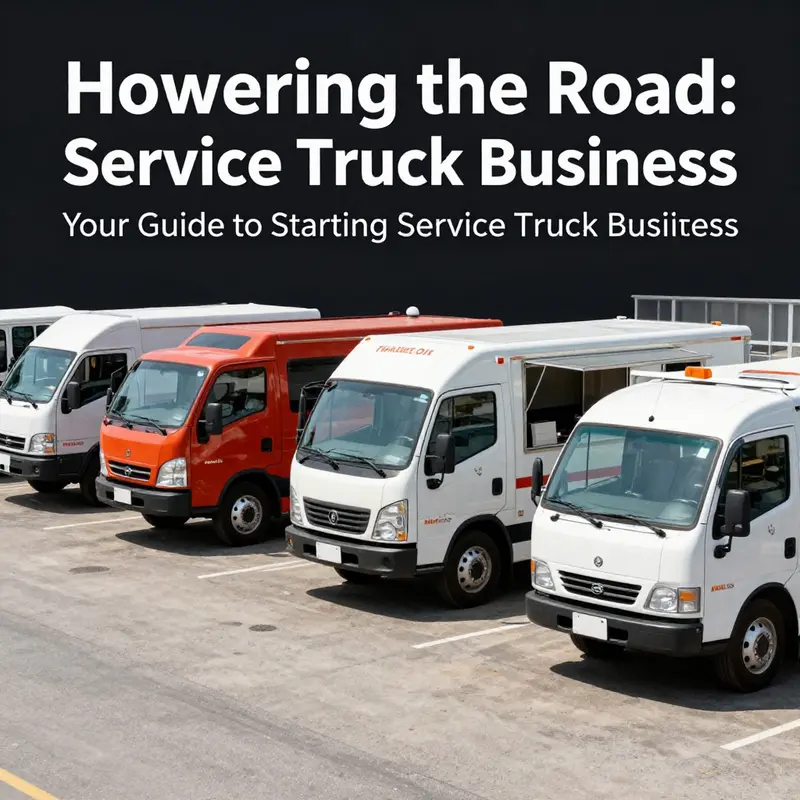
When you start a service truck business, the first move is to define your niche and the exact services you will offer. Without a clear target, a truck on the road becomes a rolling catch-all; with a well-defined focus, every mile adds value for a specific group of customers. In 2026, the most successful operators treat niche definition as a compass that guides equipment choices, pricing, marketing, and compliance. The decision about what your truck will do is inseparable from the customers you intend to serve, the problems you will solve, and the level of on-site value you can consistently deliver.
Markets shift as construction activity and maintenance needs evolve. Your niche must be flexible enough to adapt while staying true to your core strength: delivering services directly to customers where they work, live, or operate. This is the essence of a service truck business—bringing professional capability to the point of need rather than asking customers to come to a shop.
A practical way to frame your niche is to start with broad service categories and then narrow to a clear promise. One broad lane is Mobile Repair and Maintenance. A mobile repair truck acts as a rolling workshop that reaches customers wherever they are and serves a spectrum of trades. The value proposition is convenience, faster turnaround, reduced downtime, and fewer trips to a shop. The success lies in the depth of on-site capability and a well stocked toolbox that fixes common issues on the first visit. Another layer of value comes from packaging preventive maintenance as a service on a schedule, visiting sites to perform checks and tune-ups with minimal disruption to the customer.
A second lane centers on Specialized Mobile Services. This includes on-site detailing, wellness or grooming services, or pop-up retail or food-service units. Your truck becomes a purpose-built platform that makes specialized work efficient, scalable, and repeatable. While customization costs more, it enables premium pricing and strong customer loyalty when the on-site capabilities are genuinely hard to match.
A third lane is Utility and Field Support: the truck that carries tools, parts, and supplies to job sites to enable field crews to work more efficiently. This might mean a compact, highly organized storage system or a larger configuration designed for rapid material delivery. This approach emphasizes reliability and predictable scheduling and scales well by improving throughput for other professionals.
The decision to pursue one lane—or blend them—depends on market demand, startup costs, and competition. Growth, sustainability, and technology also matter: electric or hybrid fleet options, digital invoicing, route optimization, and real-time customer updates can differentiate a modern service truck. Finally, align your niche with licensing, vehicle registration, insurance, and permits to keep start-up and ongoing costs clear.
Ultimately, your niche should guide every decision, from vehicle configuration and equipment to pricing, marketing, and growth plans. A well-chosen niche provides a durable foundation and a clear value proposition that can adapt with market cycles and regulatory changes.
null
null
Blueprint for Launch: Building a Business Plan That Drives Your Service Truck Business
Core components and how to assemble them into a working roadmap
A business plan is more than a document. For a service truck business, it is a tactical roadmap that turns an idea into repeatable revenue and predictable operations. Treat it as a tool you will use daily: to make decisions, to attract funding, and to measure progress. Write with clarity and purpose. Focus on the sections investors and partners expect, but craft each section around the realities of mobile service work: scheduling, parts inventory, vehicle uptime, and on-the-road customer experience.
Start with an executive summary that reads like a promise you can keep. Name your business and state where you will operate. Explain the service you will deliver — whether mobile repair, on-site maintenance, or specialized field support — and the customer problem you solve. State your business model in one sentence. Add a clear financial snapshot: startup capital required, projected first-year revenue, and the break-even month. Keep it short and compelling. Investors and lenders often decide whether to read the rest based on this page.
Next, craft a company description that shows your edge. Explain the legal structure and ownership, and describe the specific niche you serve. Rather than listing services generically, explain why your model fits the market. For example, focus on reliability for construction crews who need tools and parts delivered to tight schedules, or emphasize speed and convenience for fleet managers who cannot afford downtime. Include a concise vision statement that guides hiring, purchasing, and marketing decisions.
Market analysis is where you prove demand and set realistic expectations. Use local data to define your service area and customer segments. Quantify demand where possible: number of construction firms, fleet vehicles, retail shops, or industrial sites within a 30-mile radius. Identify seasonal patterns and day-of-week peaks. Compare competitor offerings and map service gaps. Are competitors slow to respond, poorly equipped, or absent in evenings and weekends? Those are openings. Combine public sources, local directories, and brief interviews with potential customers to validate pricing assumptions.
When you outline services, be specific about deliverables and pricing. Describe each service tier and the conditions that trigger them. For instance, list standard response windows, minimum call-out fees, hourly rates, and parts mark-up. Explain how you will handle emergency calls and warranty work. Clarify whether technicians will carry parts inventory, order on-demand, or rely on supplier drop-ship. This clarity prevents scope creep and protects margins.
Organization and management should show operational clarity. Define roles for every task that matters: dispatch, technician, parts manager, customer service, and billing. If you are the primary technician initially, define your day-to-day responsibilities and the triggers for hiring a second technician. Describe hiring criteria: certifications, years of experience, and soft skills like communication. Explain training and safety protocols. If vehicle maintenance is crucial to uptime, describe preventive maintenance schedules and who performs them. Link training and maintenance plans to reliability, customer satisfaction, and lower insurance premiums. For an example of structured maintenance and training best practices, see this resource on fire truck maintenance training: https://5startruckin.com/fire-truck-maintenance-service-training/.
The operations narrative must be tight and realistic. Describe your daily workflow from lead capture to invoice. Explain how customers book service and how dispatch assigns jobs. Detail inventory control methods: what level of parts each truck carries, re-order triggers, and vendor relationships. Include vehicle specifications and how each one will be equipped for its role. Address compliance tasks too: vehicle registration, commercial insurance, permits, and any driver licensing requirements. If your service model crosses multiple jurisdictions, note how you will handle permits and local regulations.
Your marketing and sales strategy should convert demand into consistent jobs. Start with a one-page positioning statement that explains why customers should choose your truck. From there, describe tactical channels: local business outreach, trade partnerships, targeted online listings, and a presence in industry forums. Offer a simple referral program that rewards repeat customers and trade partners for introductions. Explain how you will use a branded vehicle, uniforms, and customer-facing tools like digital invoices and text confirmations to build credibility. Include measurable goals: number of leads per month, conversion rate, average revenue per job, and target customer retention.
When requesting funding, be explicit. List exactly how much capital you need and break the request down line by line. Typical items include truck purchase or lease, upfit and shelving, tools and diagnostic equipment, initial parts inventory, licensing and permits, insurance deposits, branding, and three months of operating capital. Give realistic quotes for each item, and show conservative assumptions. If you seek a loan, include repayment plans based on cash flow forecasts. If you seek investors, specify expected equity, milestones, and an exit horizon.
Financial projections must be credible and defensible. Start with a detailed startup budget. Then forecast monthly revenues and expenses for at least year one. Include realistic utilization rates for your truck, average ticket size, and parts margin. Show seasonality and build a sensitivity analysis that highlights break-even points under different demand scenarios. Cash flow is the most important element. Demonstrate how you will maintain positive cash flow while covering fixed costs like insurance, vehicle payments, and administrative expenses. Include three-year profit and loss projections and balance-sheet snapshots to show scalability.
Risk management is often omitted but is essential. Identify operational risks: vehicle breakdowns, parts shortages, regulatory changes, and fluctuating fuel costs. For each risk, list mitigations: preventive maintenance, diversified suppliers, compliance reserves, and fuel monitoring. Include a contingency fund in your financials equal to a percentage of monthly fixed costs. Explain your insurance strategy in plain terms: general liability, commercial auto, and worker coverage. For high-value or specialized work, consider tools and equipment insurance.
Sustainability and technology choices deserve attention. If operating costs and customer demand allow, evaluate hybrid or electric vehicles to lower fuel costs and appeal to environmentally conscious clients. Describe how digital tools will reduce overhead: appointment booking, route optimization, inventory management, mobile invoicing, and customer feedback loops. Automating routine tasks creates bandwidth for growth and improves margins.
A business plan must also set measurable milestones. Break the first year into quarters. Assign targets for revenue, number of customers, average job value, and vehicle utilization. Tie hiring decisions to measurable triggers, such as monthly revenue above a threshold or consistent demand exceeding the capacity of available hours. Specify what metrics will signal expansion: adding a second truck, launching a parts distribution program, or introducing complementary services.
Finally, show how you will measure success and learn. Build a simple dashboard that tracks lead sources, conversion rates, job duration, parts margin, and customer satisfaction scores. Use these metrics to refine routes, adjust pricing, and prioritize training. Schedule quarterly plan reviews to compare actuals to forecasts and update assumptions.
A practical business plan for a service truck balances aspiration with operational realism. It should allow you to explain how money will be spent, how customers will be won, and how day-to-day operations will run. Keep language plain and numbers conservative. Make your assumptions visible so partners and lenders can test them. The plan should be a living document you revisit monthly, not a binder that collects dust.
For templates and a step-by-step guide that aligns with mobile truck operations, refer to this resource for a structured box truck business plan. It offers actionable templates you can adapt for service-specific needs: https://www.shopify.com/blog/box-truck-business-plan
Use the plan to secure funding, hire the right people, and set a steady course. When you operate from a clear blueprint, each decision—from vehicle selection to customer follow-up—becomes a predictable step toward profitability.
null
null
Final thoughts
Whether you are a long-haul truck driver seeking a new venture or a trucking company owner looking to diversify, starting a service truck business is a viable and potentially lucrative path. By defining your niche, conducting thorough market research, developing a solid business plan, and understanding the licensing and financing required, you can position yourself for success. This comprehensive guide is a roadmap for your journey; approach each step with diligence, and you’ll be well on your way to building a thriving business that meets market needs.