
Starting a trucking dispatch service can seem daunting, especially with the growing demands of the logistics sector. Whether you’re a long-haul truck driver, a fleet manager, or someone aspiring to enter this fast-paced industry, understanding the framework of a dispatch service is vital. This guide covers essential topics such as the business model, market research, legal requirements, technological needs, and the importance of building strong relationships. By the end, you’ll be equipped with the knowledge to navigate your journey toward establishing a successful trucking dispatch service.
null
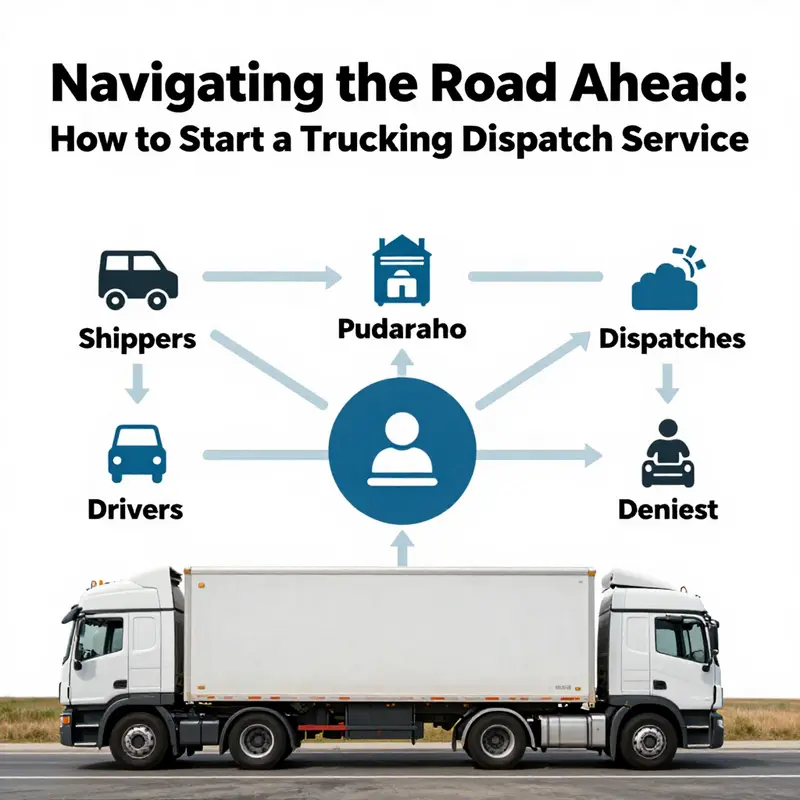
null
Finding Your Freight Lane: Market Research and Niche Strategy for a Trucking Dispatch Service

Before you start signing contracts or buying software, the first real business decision is where you will play and why. Market research and niche definition are not optional steps. They are the map and the compass that guide every operational choice, hiring decision, and marketing dollar. Approach this stage as both detective work and product design. Your goal is to gather evidence about demand, identify underserved needs, and design a focused service that meets those needs reliably and profitably.
Begin by defining your geographic and route scope. Decide whether you will focus on a city, a state, regional lanes, or long-haul corridors. Each choice implies different freight mixes, driver expectations, and regulatory complexity. Narrowing your geography makes your initial research manageable. Within the chosen area, map primary freight corridors and node points. Look for high-volume highways, distribution centers, ports, and major manufacturing sites. These locations generate the bulk of load opportunities and shape lane economics. Pay attention to origin-destination pairs that repeat often; predictable lanes reduce empty miles and improve driver earnings.
Next, study freight flow patterns and seasonal dynamics. Freight moves in predictable cycles tied to industry demand. Construction peaks in warmer months. Agriculture follows harvest calendars. Energy and heavy equipment shipments often correlate with industrial activity and capital projects. Track which commodities dominate local lanes and when volumes rise and fall. This lets you staff appropriately and create seasonal offers. For example, a service that ramps up reefer capacity before peak produce season positions itself to capture higher-margin loads.
Data sources matter. Combine public records, industry data, and direct field intelligence. Public filings and carrier snapshots reveal active fleets and capacity. Load boards and freight rate indexes show real-world spot pricing and lane activity. State and federal DOT sites publish traffic and freight studies that highlight corridor usage. Then talk to people who move freight: local brokers, shippers, terminal managers, and drivers. Structured interviews uncover pain points that raw numbers miss — such as unreliable communication from dispatchers or lack of temperature monitoring in refrigerated loads. Triangulate these qualitative insights with quantitative trends to validate opportunities.
A service gap analysis is the heart of your competitive advantage. List current dispatch providers and assess what they do well. Then list consistent complaints from carriers and shippers. Common gaps include poor tracking transparency, slow response times, inflexible payment terms, and inadequate load preparation guidance. Rank gaps by frequency and business impact. Those with the highest combination of prevalence and impact are your best targets for differentiation.
Define a buyer persona for each stakeholder you must win: owner-operators, small fleet owners, and specific shipper types. Describe their priorities in short, concrete terms. For drivers, priorities might be steady miles, fast payouts, clear routes, and predictable detention rules. For shippers, priorities are on-time delivery, cargo integrity, and real-time visibility. Match your services to these priorities. A narrow, well-articulated persona helps you craft service features, pricing, and marketing messages that resonate.
Selecting a niche is more than choosing a freight type. It is deciding which problems you will solve better than anyone else. You can specialize by commodity, equipment, geography, or operational capability. Examples include refrigerated loads in a defined region, Hazmat-certified dispatching, regional flatbed specialists, or last-mile fulfillment for e-commerce brands. The best niches meet three criteria: clear demand, measurable pain points, and barriers to easy competition. Barriers may include specialized compliance, dedicated equipment, or deep relationships with certain shippers.
Niche specialization brings multiple advantages. It lets you concentrate knowledge about routing, handling, and regulatory requirements. It shortens sales cycles because decision-makers recognize your focus. It permits premium pricing when you deliver higher reliability or lower risk. And it simplifies operational processes, from paperwork templates to required driver qualifications.
Translate research into a value proposition. State the specific problem you solve, the customers you serve, and the measurable benefit you deliver. For instance, you might promise 24-hour load confirmation and route tracking for refrigerated loads on a given corridor, reducing spoilage risk by a measurable percentage. Pair that promise with concrete service elements: dedicated dispatch contacts, temperature-monitoring integrations, and expedited settlement terms. Your value proposition should be crisp enough to fit on a one-page sales sheet and detailed enough to guide internal processes.
Test your thesis with a low-cost pilot. Recruit a handful of owner-operators or a small fleet to run a week or month of loads under your new offering. Monitor metrics such as load acceptance rate, on-time percentage, driver satisfaction, and gross margin per mile. Use short feedback loops to refine processes. Pilots expose operational friction before you scale and demonstrate proof points to future clients.
Pricing and margin modeling must be precise. Build models that show revenue per load, variable costs, and fixed overhead. Include carrier payouts, transaction fees, technology costs, and a realistic estimate of empty miles. Model scenarios for spot rates, contract lanes, and seasonal swings. Good pricing balances competitiveness with sustainability. It also supports clear, transparent pay structures for drivers — a major retention lever.
Consider regulatory and compliance implications tied to your niche. Some freight types require special endorsements, permits, or insurance. Hazmat loads require specific carrier documentation and handling protocols. Refrigerated shipments require monitoring and corrective procedures. Include compliance costs in your financial model and document the procedures you will follow. Investing early in compliance avoids fines and reputational damage.
Technology choices should align with your niche needs. You need systems for load matching, tracking, and communication. Prioritize tools that integrate with electronic logging devices, telematics, and invoicing platforms. Automation reduces manual errors and speeds response times. But avoid overcomplicating the stack at launch. A lean set of reliable tools that support your niche workflows beats a broad set of half-integrated features.
Finally, plan your go-to-market. Your messaging should speak directly to the personas and pain points you validated. Use case studies from pilots and early wins to build credibility. Targeted outreach — for example, regional brokers and shipper procurement teams — yields higher conversion than broad advertising. Build partnerships with local terminal operators or equipment suppliers who can introduce you to customers.
This phase sets the tone for sustainable growth. The work you do in market research and niche definition reduces risk and sharpens your operational focus. It gives you a defensible place in the market to scale from. If you want a step-by-step primer on conducting this research and shaping your niche, review this practical guide on starting a truck dispatching company: https://www.trucking.com/start-truck-dispatching-company/.
For an example of strong, specialized positioning in the trucking space, see this profile of a regional company that highlights service differentiation and reliability: Unveiling 5-Star Truck Inc.: A Beacon of Excellence in Trucking Services.
Legitimacy on the Road: Legal Registration and Licensing for Starting a Trucking Dispatch Service
A trucking dispatch service rests on trust as much as it rests on speed and reliability. Clients hire you to move freight through a web of moving parts, from shippers to drivers to warehouses, and your legitimacy is the first signal that you can be counted on. There is little need for a dispatcher to obtain a dedicated license that bears their job title alone. In fact, for a pure dispatch operation, there is no federal or state license specifically required to perform the role. Yet that absence does not mean a free pass. The road to a compliant, credible dispatch business begins with legal registration, careful structure, and ongoing, disciplined compliance. In practice, the foundational steps are straightforward but essential: you register a legal entity, obtain the taxpayer and regulatory identifiers you will need, secure any local permits, and build a compliance mindset that protects data, finances, and reputation. This framework not only reduces risk but signals professionalism to shippers, brokers, and drivers who evaluate your operation alongside the soundness of your practice.
The first hinge is business registration. Treat your dispatch service as a bona fide company rather than a casual venture. Decide on a legal structure—most startups favor limited liability protection, such as an LLC or a corporation—but the choice should align with tax considerations, ownership, and growth plans. Once the entity is chosen, you file with the appropriate state authority, typically the Secretary of State, to establish your business name and status. Alongside this, you should secure an Employer Identification Number (EIN) from the Internal Revenue Service. An EIN functions like a social security number for your business and is essential for opening bank accounts, hiring employees, and handling payroll. These steps formalize your operation and lay the groundwork for professional banking, insurance, and vendor relationships. For a new entrant, the act of filing and obtaining these identifiers is less about constraints and more about signaling permanence and accountability to the market.
Alongside formal registration, local business permits may be required depending on your location. Some municipalities treat dispatch operations as a home-based enterprise or a small business activity that needs a general business license or a zoning clearance. The specifics vary by city or county, so a quick review with your local clerk or business office is wise. Even when permits aren’t strictly mandated, reporting your business correctly and complying with local tax and operating codes helps avoid friction with regulators and neighbors alike. In this sense, licensing is less about a badge you wear and more about establishing a predictable, auditable operating environment. This is also where a disciplined approach to data privacy begins. If your service handles driver records, shipper information, and payment data, you should embed privacy considerations into your processes from day one. A simple framework—minimum necessary data collection, access controls, and clear retention schedules—can prevent privacy mishaps that erode trust and invite scrutiny.
While federal or state licenses specific to dispatching don’t exist, there are regulatory pathways that may matter if your business expands beyond pure dispatch into brokerage or carrier operations. If you plan to arrange shipments across state lines or to contract as a broker with motor carriers, you may need additional authority. The federal system provides two key identifiers: a USDOT number for entities engaging in interstate commerce and, in many cases, an MC (Motor Carrier) number when you operate with brokerage authority or assume carrier responsibilities. Those authorities are not licenses for the dispatcher role in isolation, but they become necessary if your business model evolves toward direct freight movement or direct contracts with shippers and carriers across multiple jurisdictions. The practical takeaway is: register and document your intent clearly. If your plan is to stay strictly as a dispatcher coordinating loads between shippers and drivers, you can structure your business to remain compliant without pulling carrier permits. If you ever cross into brokerage or carrier activity, you will want to prepare for the additional registrations and ongoing compliance that authority entails.
To anchor these steps in practical terms, begin with a clear business plan for compliance as you register. Keep your corporate records, operating agreements, and minutes organized as your company grows. Even though the dispatcher role does not demand a specialized license, you will benefit from formal training and basic certification in transportation management, scheduling, and safety fundamentals. Certification is not a legal requirement, but it conveys competence and enhances credibility with brokers, shippers, and drivers. It also clarifies your internal expectations around operations, performance, and risk management. When you speak with potential clients, you can reference training milestones and standardized procedures as evidence of a mature, capable operation. This is not about signaling perfection; it is about signaling preparedness and accountability.
The scenario often unfolds as a deliberate choice: operate purely as a dispatcher under a registered entity, or pursue broader regulatory authority that enables you to broker or carrier-load across borders. Either path benefits from a clear understanding of applicable rules and a plan to stay compliant. Your decision should be reflected in your contracts, your insurance posture, and your onboarding process for drivers and brokers. Insurance, in particular, becomes a practical bridge between legality and trust. Even without a dispatcher license, ensuring appropriate coverage—liability, cargo, general liability, and any industry-specific requirements—guards against financial exposure that could otherwise threaten the viability of your enterprise. In many cases, a well-structured insurance plan communicates seriousness and readiness to work with shippers and carriers, which makes it easier to secure contracts and favorable terms.
As you navigate this landscape, you will encounter a blend of formal requirements and professional expectations. A well-run dispatch operation will maintain transparent recordkeeping: contracts, load confirmations, driver credentials, insurance certificates, and regulatory notices. It will also establish a standard process for handling sensitive information—what data is collected, who can access it, how it is stored, and when it is destroyed. In practice, this means adopting simple, repeatable workflows. When a shipper issues a load, your system should generate a record that includes the load details, the parties involved, the agreed-upon terms, and the expected milestones. If a driver is engaged, there should be a corresponding credential check, including license verification and insurance validation, kept on file in a secure portal. The more you can demonstrate consistency and traceability, the more trustworthy your dispatch service appears to prospective clients and partners.
A practical note on communicating these steps: integrate your compliance posture into your onboarding and marketing materials. When you describe your business, emphasize that you are a registered, accountable entity with robust privacy practices and well-defined operating procedures. This narrative matters because shippers and brokers are assessing risk as much as they are comparing dispatch speeds or communication clarity. If you want a concise point of reference as you build your external materials, you can cite the regulatory framework and official resources as a foundation for your approach. For instance, the broader regulatory body that governs transport and commercial vehicle operations provides official guidance and updates on registration, safety, and compliance. Direct readers to consult these resources to stay current on requirements that may affect future growth, especially if your plans include interstate activity. For ongoing learning and industry context, you can explore general industry content on reputable logistics blogs that discuss best practices and regulatory considerations.
To further ground your understanding and keep you connected to the broader ecosystem, consider exploring a reputable industry blog that covers logistics and regulatory topics. This can provide practical perspectives on how others structure their compliance posture and how market expectations evolve. 5startruckin.com/blog/ offers insights into industry practices and evolving standards, which can complement your formal compliance work without substituting for official guidance. While you read, maintain a clear boundary between general industry knowledge and the specific regulatory requirements that apply to your jurisdiction and business model. In parallel, always rely on authoritative sources for the exact rules that govern your operations. The official starting point remains the U.S. Department of Transportation and the Federal Motor Carrier Safety Administration, which publish the regulations, registration processes, and guidance needed for accountable practice on the road. For direct reference to formal regulatory guidance, visit the U.S. Department of Transportation’s official resources.
External resources and official guidance remain essential anchors as you grow. When you are ready to confirm the precise steps for interstate operations, or if you decide to pursue brokerage or carrier authority, consult the official federal registrations and registration management systems. The FMCSA’s registration framework and the USDOT identification process provide the authoritative pathway you would follow if you expand beyond pure dispatch. In all cases, your internal policies should reflect the standards set by these authorities and be documented in your compliance manual. Remember that your ultimate objective is to deliver reliable, safe, and compliant service. The legal pieces are not obstacles to growth; they are the scaffolding that supports sustainable trust and long-term success.
For official guidance on commercial motor vehicle regulations and licensing, see the U.S. Department of Transportation. You can access resources and updates at https://www.transportation.gov.
The Digital Backbone: Building a Scalable Tech Stack for a Trucking Dispatch Startup
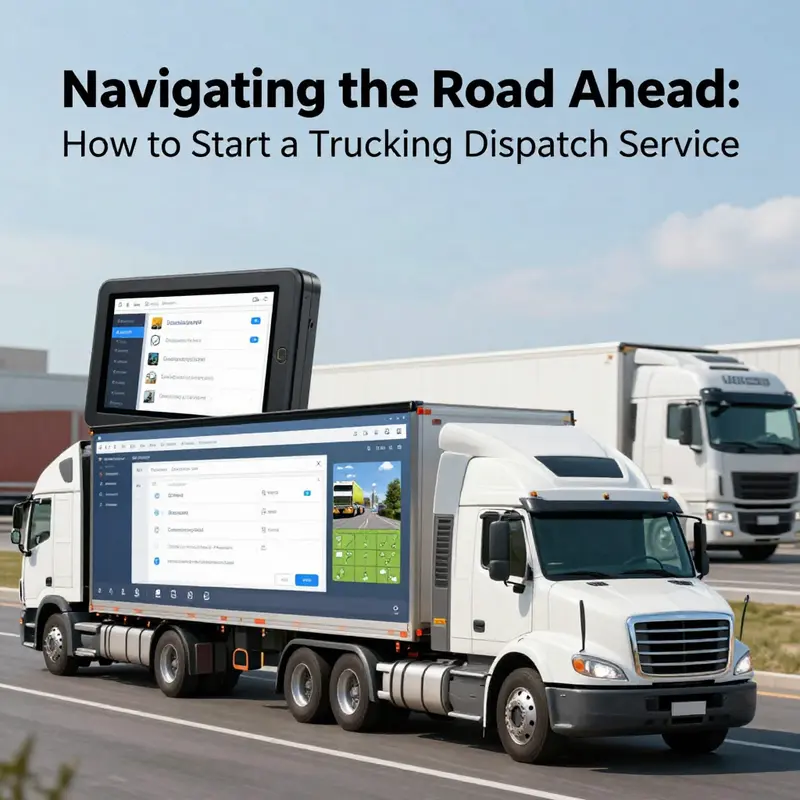
Launching a trucking dispatch service in the modern logistics landscape demands more than strong relationships with shippers and drivers. It requires a digital spine that can grow with your ambitions while staying compliant, reliable, and efficient. The technology you choose isn’t a vanity feature; it shapes your ability to match loads, keep promises, and provide transparent communication across every party in the chain. In this chapter, we explore the core technology needs that turn a simple matchmaking concept into a scalable operating system. The aim is not to chase every new gadget, but to assemble a focused, interoperable stack that preserves data integrity, supports rapid decision-making, and reduces the friction that eats into margins. Think of your dispatch tech not as a luxury but as a strategic asset that can weather growth, regulatory changes, and a shifting rate environment.
Dispatch and fleet management software is the central nervous system of your operation. It coordinates loads, matches them with available vehicles, assigns drivers, and tracks progress from pickup to delivery. A well-chosen platform should offer modular components so you can start with core load matching and billing, then layer in route optimization, compliance checks, and driver communication without rebuilding the wheel. You will want a system that can handle the complexity of real-world trucking: multiple lanes, varying delivery windows, split payments, and exceptions like delays or breakdowns. The ideal approach is an architecture that provides a single source of truth for all parties, not a patchwork of spreadsheets and separate apps. When evaluating options, favor solutions that emphasize openness and API readiness so you can connect with other tools your clients use, such as CRMs, accounting software, or broker networks. If you prefer a hybrid approach, you might operate your own dispatch module alongside a broader marketplace or broker interface, but ensure seamless data flow between components. Without a robust core, the rest of the tech stack loses its meaning and your service becomes brittle during peak demand or disruptions.
Real-time GPS tracking is not optional; it is the trust signal you give to shippers and drivers. With precise location data, you can provide accurate ETAs, reroute in seconds, and document performance after delivery. Beyond location, modern trackers reveal patterns in speed, idle time, and braking that reveal safety opportunities and fuel efficiency gains. Yet data collection must respect driver privacy and consent, and you should be explicit about how data is used to manage service quality rather than to police every move. The key is timely visibility without over-monitoring. The dispatch system should translate raw coordinates into actionable insights: predicted arrival times that adjust for weather, traffic, and road work; alerts when a truck veers off plan; and a straightforward mechanism for drivers to report incidents. Pair GPS with a lightweight mobile interface for drivers, so they can accept loads, confirm statuses, and communicate exceptions with minimal friction. When the chain is visible and responsive, customers appreciate reliability and carriers feel trusted partners rather than transactional intermediaries.
Your technology stack should live in a secure, scalable cloud environment. The cloud foundation offers automatic scalability, disaster recovery, and remote access for dispatch teams and clients. It also makes collaboration across locations feasible, which matters as you expand into new lanes or regions. Security considerations are non-negotiable: encryption at rest and in transit, robust access controls, and regular security audits. Part of this discipline is designing for resilience—redundant databases, failover procedures, and clear data backup strategies. Cloud infrastructure supports continuous updates without disrupting operations, a key advantage when you aim to add new features or integrate with external data feeds. It also enables you to provision resources on demand during peak periods, such as seasonal surges or last-minute capacity crunches. In addition to uptime, you will want clear governance: versioning of configurations, change-control processes, and documented incident response playbooks. The result is a platform that remains stable while the business pushes into new markets and service lines, preserving performance as transaction volumes scale.
Integration capabilities ensure your dispatch system does not operate in a silo. The best tech choices connect with freight marketplaces, electronic logging devices, shippers ERP or WMS, and your own accounting data. An API-first mindset makes it easier to exchange data in real time, so load status, invoices, and driver documents flow smoothly across systems. You will want standard data mappings for common fields—pickup and delivery windows, equipment types, insurance requirements, and payment terms—plus a strategy for handling data quality issues. Middleware or integration layers can translate between formats and ensure that a single record updates across every connected system. Another consideration is reliability of the data streams: redundant connections, message queues, and robust retry logic so a flaky feed does not derail a day’s dispatch plan. Importantly, compatibility with regulatory data, such as hours-of-service schedules and safety compliance records, should be baked into the integration design so you do not have to double-enter information. The aim is a cohesive network where your dispatch platform touches the broker networks, the carrier’s systems, the shipper’s tools, and your own back office, with transactions synchronized in near real time.
Data analytics and reporting elevate everyday operations into measurable performance. With a strong data layer, you can monitor on-time delivery, dwell times, fuel efficiency, maintenance costs, and driver productivity. Dashboards should present trends at a glance, with drill-down capabilities for exceptions and a clear line of sight to profitability per lane or per customer. More sophisticated systems enable predictive analytics: anticipating delays due to weather, estimating lane profitability over time, or identifying which carriers consistently meet service level agreements. The insights you generate feed decision speed, enabling you to reallocate capacity quickly, renegotiate terms with partners, or adjust pricing strategies. You will also want governance around data quality—data lineage, validation rules, and audit trails—so stakeholders trust the numbers. In practice, this means monthly and quarterly reviews that correlate operational data with financial outcomes, then turning those insights into process improvements. The analytics function also supports sales and marketing by providing credible evidence of reliability and value to prospective shippers and brokers. By treating data as a strategic asset rather than a byproduct of operations, you build credibility and resilience in a competitive market that rewards visibility and accountability.
Implementation strategy requires a deliberate, staged approach. Start with a lean core, focusing on load matching, driver communications, and billing in a single, reliable workflow. As you stabilize, layer in route planning, compliant messaging, and real-time ETAs. A careful data governance plan is essential: decide what data you collect, how you store it, who can access it, and how long it remains usable. Security can not wait for later; embed it in design from day one—least-privilege access, encrypted transmission, and periodic penetration testing. Change management matters too. Train your dispatch staff and drivers on new interfaces, but also establish clear practices for updating customers and brokers about schedule changes. Migration plans should map old processes to the new system with minimal disruption, and you should measure progress with a few core KPIs before expanding. If possible, pilot in a single region or lane to validate assumptions, then scale outward. The goal is a resilient, interoperable platform that enables you to grow while preserving consistency in service levels and cost discipline. A thoughtful approach avoids the pitfalls of overengineering or rushed implementation.
Real-world experience confirms this approach, as discussed on the 5startruckin.com/blog.
This tech spine also sets the stage for future innovations, including AI-assisted capacity planning and smarter load matching that adapts to changing rates and road conditions. By investing in a scalable, interoperable stack now, you create a durable competitive edge that can adapt to the inevitable shifts in freight markets and customer expectations. The aim is not to chase the latest gadget but to cultivate a durable architecture that remains agile as you add customers, lanes, and service lines. As you prepare to scale, you will benefit from a clear map of required capabilities, sound security practices, and a governance framework that guards data quality and trust across the network.
External: Vehicle Dispatch System Functional Requirements
Hiring Trust and Building Loyalty: Recruitment and Relationship Strategies for Your Trucking Dispatch Service

Starting a trucking dispatch service depends as much on people as on software. Recruit the right talent. Then build relationships that keep drivers, brokers, and shippers coming back. This chapter lays out practical recruitment practices and relationship-building strategies tailored for a dispatch startup. The aim is a reliable network that delivers consistent loads and repeat business.
Begin by clarifying who you need. A small dispatch operation relies on two groups: dispatch staff and carrier partners. Dispatch staff coordinate loads, communicate with drivers, and resolve exceptions. Carrier partners are independent owner-operators and small fleets who actually move freight. Define clear roles and responsibilities for each. Keep job descriptions concise. For dispatchers, list must-haves: logistics knowledge, strong communication, familiarity with route planning, and calm problem-solving under pressure. For carrier partners, require valid credentials, good safety records, and reliable equipment.
Create a screening process that weeds out risk and highlights competence. For drivers and carriers, verify CDL status, motor vehicle records, and insurance coverage. Ask for references and recent work history. Confirm compliance with hours-of-service rules and electronic logging device policies. Check for any past violations that may affect your contracts. For dispatchers, use scenario-based interviews. Present a realistic problem: a delayed trailer, a traffic closure, and a tight delivery window. Evaluate responses for prioritization, communication tone, and decisive action. Add a short skills test focused on rate calculations, basic routing, and documenting exceptions.
Onboarding matters. A smooth onboarding builds early trust and reduces mistakes. Prepare a compact handbook covering operating procedures, communication standards, payment terms, and escalation paths. Train new dispatchers on the tools they will use. Simulate live calls and load assignments before letting them manage actual loads. For carriers, provide a clear welcome packet with how your dispatch process works, how you calculate pay, and how to report issues. Offer a short orientation call to align expectations and answer questions. Early clarity prevents later disputes.
Pay and payment structure are central to recruitment and retention. Be transparent about how drivers are paid. Decide whether you will offer per-mile, percentage-based, or guaranteed-minimum structures. Explain detention, layover, and fuel surcharge policies in writing. Fast, accurate payment builds loyalty. Many small carriers prioritize a dispatcher who pays quickly and reliably over slightly higher rates. Where possible, automate invoicing and payment to avoid delays. Offer a driver-facing portal or simple reporting method so carriers can check the status of invoices and settlements.
Communication is the backbone of relationship building. Establish predictable touchpoints. Use brief morning check-ins to align the day’s assignments. Send dispatch confirmations and route plans immediately after load acceptance. When issues arise, communicate the plan and expected resolution time. Keep updates short, factual, and frequent. This reduces anxiety for drivers and reassures brokers and shippers. Develop templates for common messages to ensure consistency and reduce errors.
Honor commitments and be accountable. If you promise a rate, a pickup time, or a guaranteed lane, follow through. When you cannot, notify the affected party immediately and propose alternatives. Small gestures, such as covering a short detention fee in exceptional cases or expediting payment after a documented problem, create goodwill. Track these moments and standardize responses so goodwill becomes policy rather than an occasional favor.
Resolve problems quickly and fairly. A standardized incident workflow protects relationships. When a delay or damage occurs, document the facts, notify stakeholders, and outline steps to remedy the situation. Assign one point of contact to follow the issue to completion. Close the loop with a brief after-action note summarizing what happened and how similar issues will be prevented. Timely, transparent resolution turns problems into trust-building opportunities.
Build a driver database and segment it. Record equipment type, preferred lanes, home base, rate expectations, specialties, and blackout dates. Use this information to match loads faster and reduce deadhead miles. A segmented database lets you prioritize carriers who handle a particular freight type, such as temperature-controlled loads or oversize equipment. Over time, this makes your quoting faster and more accurate and increases the rate of successful matches.
Create incentives that reward reliability. Consider tiered benefits: priority load offers for top-performing carriers, faster payment terms, or small bonuses for consistent on-time performance. For dispatchers, tie part of compensation to measurable KPIs such as on-time pickups, successful load acceptance rates, or low claim frequency. Keep incentives simple and transparent. Complicated schemes confuse people and fail to motivate.
Cultivate relationships with brokers and shippers the same way you do with drivers. Be a dependable communicator. Provide accurate ETAs and proof-of-delivery on time. Share useful performance metrics periodically, such as on-time delivery percentage and average transit times. Brokers value partners who reduce friction and handle exceptions effectively. Offer to pilot new lanes or trial services at a reduced risk to prove capability. Over time, consistent, predictable performance will turn one-off loads into steady lanes.
Network thoughtfully and consistently. Attend regional logistics events, join online forums, and use targeted outreach on professional platforms. When you meet prospective partners, listen more than you speak. Ask about their pain points. Position your dispatch service as a solution to those specific problems. Referral programs are a low-cost way to grow. Offer modest rewards for brokers or carriers who introduce reliable partners who become active with you.
Scale hiring with demand. Do not hire a roster of dispatchers before you have volume. Start with a lean team and document processes. When volume grows, use your documented SOPs to train new hires quickly. For carrier relationships, increase outreach in lanes that show consistent demand. Expand carrier recruitment near those lanes first. This targeted growth keeps service levels high while expanding capacity.
Finally, keep measuring. Define a small set of KPIs and review them weekly. Track carrier acceptance rates, average time to settle invoices, claim frequency, and dispatcher resolution times. Share a concise performance summary with your partners quarterly. Transparent metrics foster trust and highlight areas for joint improvement.
For practical examples of how small carriers build reputation and reliability, see this profile on a reputable trucking provider: Unveiling 5-Star Truck Inc.. For authoritative guidance on workforce development and industry standards, consult the American Trucking Associations resource below.
https://www.trucking.org/
Final thoughts
Launching a trucking dispatch service requires strategic planning, in-depth knowledge of the logistics landscape, and the ability to adapt to the needs of shippers and drivers alike. By understanding the business model, identifying your niche, navigating legal requirements, leveraging technology, and fostering strong relationships, you position yourself for success in this competitive field. Dive into each chapter’s insights to form a solid foundation for your dispatch service, ensuring not just operational efficiency but also longevity in the ever-evolving transportation industry.