
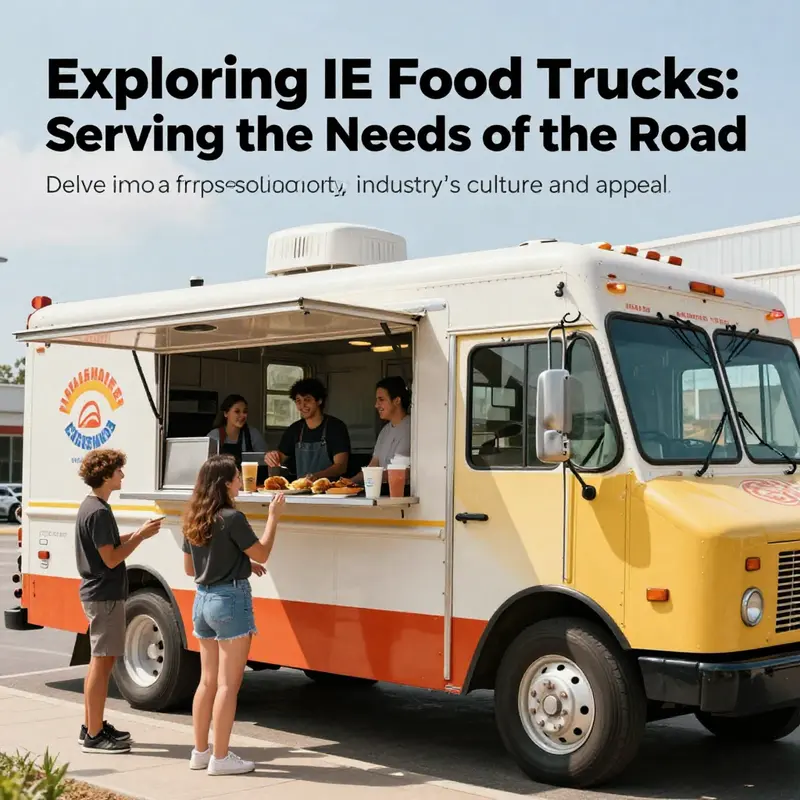
In the ever-evolving landscape of food service, food trucks have carved a significant niche, appealing not just to food lovers but also to those involved in the trucking industry. Understanding what services a company like IE Food Trucks offers is crucial for professionals in transportation, catering, and culinary arts alike. The following chapters dive into gourmet mobile catering options, unique food truck niches, customization and branding services, and current market trends shaping the food truck industry. Each section sheds light on the multi-faceted offerings of IE Food Trucks and how they cater to the needs of long-haul truck drivers, trucking company owners, fleet managers, and aspiring truck drivers.
Gourmet on Wheels: The Premium Mobile Catering Ecosystem That Mirrors What IE Food Trucks Deliver
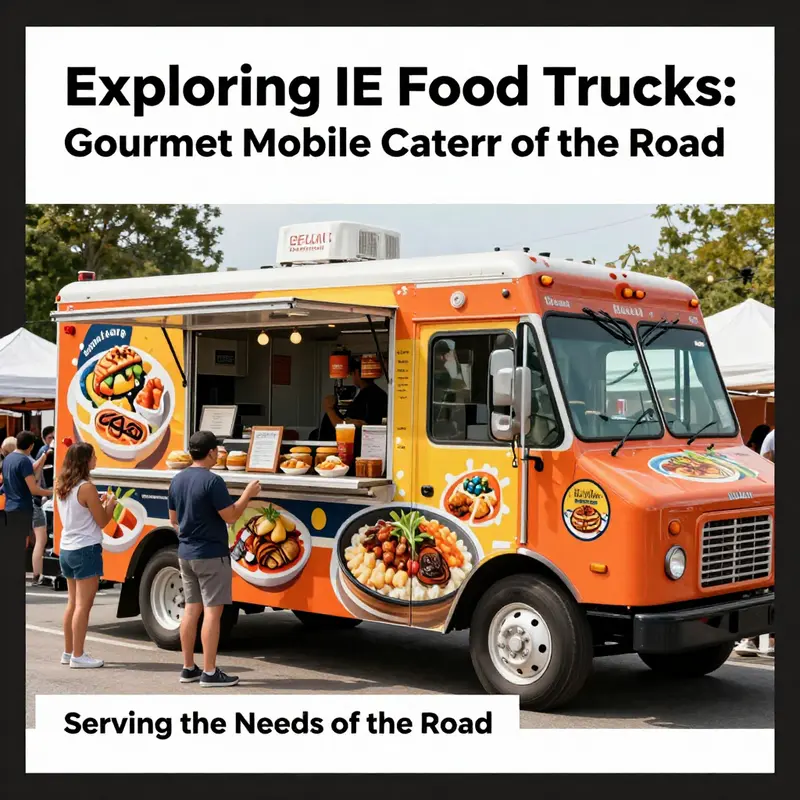
There is no public record detailing the exact offerings of a company called IE Food Trucks, yet the broader landscape of gourmet mobile catering provides a rich frame for understanding the services such a business might deliver. This chapter sketches a cohesive picture of the premium, chef-driven mobile catering world—one that emphasizes high-quality ingredients, creative menus, and the on-site magic of food prepared and served from a rolling kitchen. It is a world where flavor, hospitality, and logistical finesse converge to create experiences that feel intimate and exclusive, even as they roll to a festival, a corporate campus, or a private celebration. In this context, the service model is less about a single dish and more about a tailored culinary itinerary that travels with the event itself, adapting to space, crowd, and moment with precision and flair. That alignment is what makes gourmet mobile catering a compelling benchmark for what IE Food Trucks could embody or aspire to emulate, should it seek to position itself as a premium, people-centric dining experience on wheels.
At its core, gourmet mobile catering is a service philosophy as much as a cuisine. It rests on the premise that food should be more than sustenance; it should be an event, a conversation starter, a memory marker for attendees who remember not just what they ate but how they felt while eating it. Menus are intentionally chef-driven and menu-centric rather than simply “a collection of dishes.” A mobile kitchen under a bright canopy becomes a stage where seasonality, local sourcing, and culinary curiosity are demonstrated in real time. Chefs play a dual role: curators of flavor and hosts of an experience. They design menus that can be tasted as a narrative—start with a bite-sized introduction, progress through textures and temperatures, and end with a memorable, crowd-pleasing finale. The experiential arc is where the service adds value beyond the food itself, inviting guests to watch, engage, and even influence the meal through live interaction or tasting variations.
The menu design in gourmet mobile catering is a study in flexibility. It acknowledges the constraints and possibilities of a rolling kitchen, yet relentlessly pursues quality. Ingredients are selected with the same rigor as in a fixed-location restaurant: provenance and seasonality take center stage, and the best vendors are treated as collaborative partners. Dishes are crafted with a balance of technique and accessibility, ensuring that each bite carries intention without alienating casual guests. A mobile menu favors adaptable flavors that scale up for big crowds and scale down for intimate gatherings. It also accommodates dietary needs—gluten-free, dairy-free, nut-free, plant-based options—without sacrificing identity or flavor. The result is a menu that feels exclusive, but one that can be customized on the fly to reflect the event theme, the client’s branding, or the audience’s palate.
Beyond the plate, the service model of premium mobile catering hinges on two related capabilities: on-site execution and client collaboration. On-site execution means more than just cooking in portable space; it means delivering a kitchen-as-theatre. The crew manages heat, timing, plating, and service with surgical precision so that guests experience consistent quality, whether they are crowded around a service window in a festival square or gathered in a corporate courtyard awaiting the next course. The kitchen’s mobility is a feature, not a limitation. It allows chefs to bring a specific cooking method—flambé, smoke infusion, quick searing, or delicate finishing—to the event, creating sensory moments that linger in memory. Clients participate in the design process by sharing goals, guest profiles, and venue constraints. The result is a collaborative culinary script: a plan that translates a brand or occasion into a cohesive tasting journey, anchored by the mobility and adaptability of a skilled mobile kitchen.
Critical to this service is the ethical and logistical backbone that makes live cooking possible in diverse venues. Permitting, health compliance, and food safety standards are not afterthoughts but integral parts of the offer. A premium mobile operation maintains robust procedures for sanitation, temperature control, cross-contamination prevention, and waste management. Power supply, water access, and waste disposal are pre-arranged, with contingency plans for weather or site limitations. The kitchen’s footprint is designed for efficiency and safety, with modular equipment that can be scaled to match the guest count while preserving a comfortable working environment for staff. The staff themselves—servers, cooks, and hosts—are trained not only in culinary technique but in hospitality as a service discipline. They understand how to guide guest flow, time courses for service, and the etiquette of hosting a buffet or live cooking display in a way that feels polished rather than performative.
In practice, the value proposition of gourmet mobile catering is threefold: culinary excellence, experiential design, and logistical reliability. Culinary excellence is not merely about bold flavors; it is about balance, texture, and finish. The best mobile concepts leverage seasonality and regionally inspired flavors to create menus that feel both familiar and novel. They emphasize plating aesthetics that translate well to a stand-up service format, ensuring that each plate or tasting bite has visual appeal and a coherent flavor story. Experiential design refers to the choreography of the event—the cadence of service windows, the pacing of tastings, and the moments when guests’ curiosity is invited into the kitchen. It might be a brief live demonstration, a chef-curated tasting flight, or an interactive element that lets guests participate in the creation of a dish. This dimension elevates the dining moment from a routine meal to a memorable experience that aligns with the event’s mood and objectives. Finally, logistical reliability guarantees that the promise of a premium experience is delivered consistently. Guests rarely notice the complexity behind the scenes when it is executed smoothly; what they experience is seamless timing, clean presentation, and consistently high quality from arrival to final bite.
Another layer of value lies in how premium mobile catering positions itself as a partner for events and brands. Rather than simply feeding a crowd, it can reinforce a message, culture, or theme. For corporate clients, it can translate a company’s values into menu design—local sourcing as a commitment to community, sustainability as a statement about responsibility, or innovation as a showcase of technique. For festivals and public markets, the offering becomes a talking point that differentiates the event experience and invites attendees to linger longer, savor more courses, and explore multiple culinary micro-experiences within a single footprint. For private parties, the service can feel intimate and customized: a chef’s tasting menu adapted to dietary needs, a multi-course progression that unfolds with the event’s narrative, or a family-style service where guests are guided through a curated tasting journey. The ability to tailor service to the guest and the setting is what makes gourmet mobile catering compelling as a model that could mirror or complement IE Food Trucks’ objectives if it seeks to emphasize premium, personalized dining on wheels.
As with any dynamic hospitality sector, trends influence what clients expect and how operators deliver. The National Restaurant Association and other industry bodies often highlight growth in mobile and off-premises dining, the importance of experiential menus, and the increasing emphasis on sustainability and local sourcing. Operators who anticipate these shifts—by investing in versatile kitchen setups, training staff in hospitality excellence, and designing menus that can adapt to diverse sites—are well positioned to meet demand. The tangle of permits, site restrictions, and logistical demands requires a disciplined approach to project management. Yet when these elements align, the result is a mobile dining concept that travels well and leaves a lasting impression on guests, clients, and hosts for days after the event.
In considering IE Food Trucks within this landscape, one can glimpse the spectrum of services that could align with its brand if it chooses to expand beyond a traditional mobile eatery. Whether the aim is to emphasize refined, chef-driven plates or to highlight a broader experiential package that includes live demonstrations, tasting flights, and customized event menus, the underlying service architecture remains consistent. The core strengths—quality ingredients, on-site execution, flexible logistics, and a hospitality-driven approach—are transferable across different scales and contexts. The challenge is to translate that potential into a clear, differentiating proposition: a value proposition that speaks not only to taste but to mood, memory, and the social capital of a shared meal on wheels. To readers and clients researching IE Food Trucks, this vision provides a roadmap for how premium mobile catering can evolve from a niche service into a comprehensive culinary experience that travels, adapts, and resonates with diverse audiences.
Ultimately, the premium mobile catering ecosystem is a reminder that food service on wheels is not simply about moving meals from point A to point B. It is about delivering a living, breathing dining moment that travels with the crowd and leaves a footprint in memory. It is about the chef who brings technique to a temporary stage and the team that makes logistics disappear so guests can focus on conversation, aroma, and taste. It is about a vehicle as a mobile kitchen, a portable stage, and a hospitality hub all at once. For IE Food Trucks and similar ventures, this framework offers a lens through which to examine potential services, partnerships, and event strategies. It invites a thoughtful assessment of what “premium” means in a mobile context: premium ingredients, premium service, and premium planning that ensures every guest experiences consistency, warmth, and a touch of wonder—even as the truck rolls from one site to the next.
External resource: https://restaurant.org/research-and-data/mobile-food-service-trends
What Service Does IE Food Trucks Offer? Navigating Health, Desserts, and Ethnic Niches in Mobile Kitchens
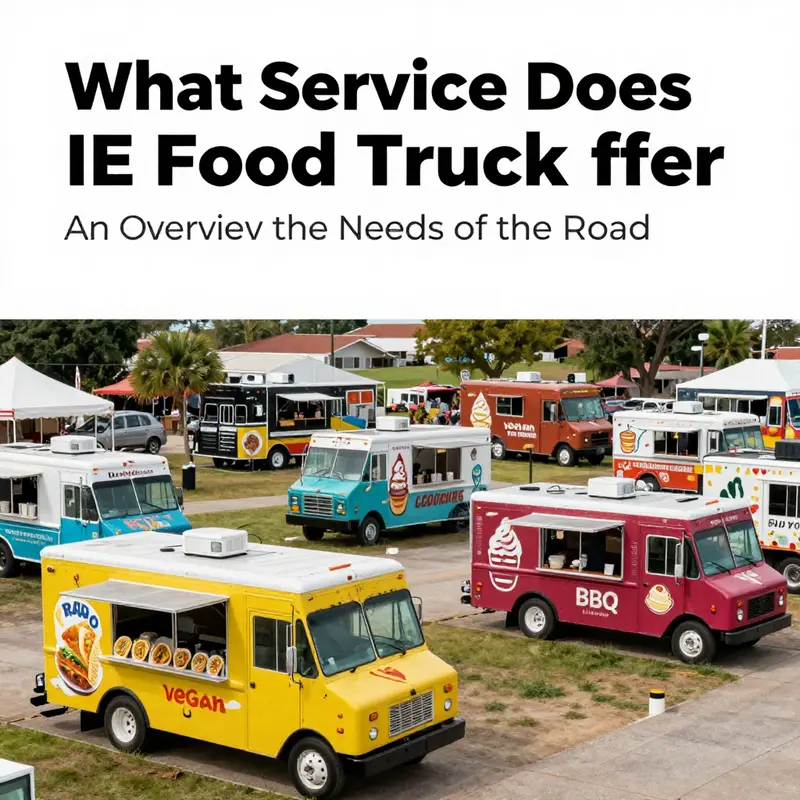
The landscape of mobile food is a living mosaic, where every truck carries a story in wheels and a menu that travels with the crowd. In a field where specifics about a single brand can be scarce, the broader patterns tell a clearer tale: mobile kitchens excel when they align services with distinct niches that cities crave. Even without an explicit record of IE Food Trucks, the industry framework suggests three enduring avenues a company operating in this space might harness. The first revolves around health and nutrition, the second around specialized desserts, and the third around authentic ethnic cuisine. These aren’t isolated curiosities but three parallel streams that feed different urban rhythms. They also describe a common service thread: mobile catering as a flexible, on-demand solution that can scale up for festivals, transform office lunch routines, and elevate private events. The common thread is not merely food on wheels but a portable hospitality platform that brings value by adapting to locations, demographics, and moments when people are most receptive to new flavors, healthier choices, or familiar comfort foods in novel formats. IE Food Trucks, in this frame, would be less about a fixed menu and more about a capability set that can be oriented toward one or more niches while preserving core competencies such as safety, speed, and reliability. The practical implications of that orientation ripple through menu design, kitchen configuration, and how the business interfaces with clients and communities. The result is a service profile that is both adaptable and purposeful, a blend of culinary craft and logistical know-how that turns a traveling kitchen into a trusted partner for health initiatives, event planners, and food lovers seeking distinctive experiences on the go.
For health-centered offerings, the service is less about quick, generic bites and more about nutrition-forward options that balance taste, portion, and seasonality. Trucks positioned in this niche often emphasize fresh, minimally processed ingredients, whole grains, lean proteins, and vibrant produce. The operational logic leans heavily on supply chain discipline: dependable sourcing from local farms, mindful waste reduction, and packaging that preserves freshness while minimizing environmental impact. The customer experience in this space rewards transparency: clear labeling of allergens, caloric ranges, and dietary accommodations such as vegetarian, vegan, gluten-free, or dairy-free choices. A mobile partner in this niche can contribute beyond meal service by providing on-site nutrition education, interactive tastings, or cooking demonstrations that empower communities to make healthier choices in their daily routines. The mobility of the truck enables programming in schools, corporate campuses, farmer’s markets, or health fairs, where access to nutritious options can be inconsistent. In effect, the service becomes a bridge between public health goals and everyday eating, translating policy aims into tangible, appetizing practice on a familiar street-stage.
The dessert-focused niche, by contrast, thrives on spectacle as much as sweetness. The appeal here rests on two inseparable qualities: visual delight and customization. Cupcake-centered and other dessert trucks operate as portable dessert studios, capable of producing fresh treats with a theatrical flourish in front of an audience. The service design emphasizes speed, accuracy, and presentation—things that matter at weddings, corporate receptions, and community celebrations where a dessert display becomes a focal point. The operational playbook includes adaptable equipment for on-site decorating, a repertoire of dietary-friendly options such as gluten-free, vegan, or nut-safe offerings, and a capacity to accommodate large orders with reliable timing. Beyond the sweet tooth, these trucks build memorable moments. They offer experiential elements that invite guests to participate—decorate-your-own cupcakes, flavor pairings, or limited-edition seasonal themes that create lasting impressions. The seduction of this niche is not simply the product but the encounter: a sensory moment staged in a doorway or street corner that feels both intimate and festive, intimate enough for a family gathering yet polished enough for a marquee event. In this context, a mobile dessert program becomes a portable boutique, traveling to sites where people gather to celebrate, share, and pause long enough to savor something individually crafted.
The ethnic cuisine niche, with its promise of authenticity and quick service, capitalizes on recognizable culinary identities presented with the efficiency of a mobile kitchen. Italian gelato is a classic example in many markets—a product that travels well, speaks to heritage, and attracts diverse crowds in urban centers, office districts, and food festivals. The service here emphasizes clean technique, quality ingredients, and the careful maintenance of temperature control and texture across the day. Yet authenticity on the move demands more than a faithful recipe. It requires sustainable sourcing, a curated menu that respects cultural nuances, and a pace that lets guests experience a genuine impression without long waits. A mobile operator may partner with cultural events, neighborhood street fairs, and corporate celebrations to deliver a compact but rich tasting experience. The ability to tailor offerings for family-friendly crowds or sophisticated palettes makes this niche appealing to planners who want a quick, precise cultural moment without committing a brick-and-mortar footprint. In every case, the success of an ethnic-focused mobile venture hinges on maintaining consistency across shifts, ensuring reliable refrigeration, and presenting foods in ways that travel well while retaining their character.
Together, these niche orientations illuminate the potential service contours for IE Food Trucks. A company in this space could carry a portfolio that highlights one primary niche and a second, complementary one—an arrangement that preserves brand clarity while offering clients the flexibility they demand. The service would likely begin with a consultative approach: listening to a client’s objectives, analyzing the event architecture, and proposing a menu and service plan that align with space constraints, guest expectations, and budget realities. A nutritious offerings program, for example, would begin with a nutrition-minded menu survey that maps calories, macro- and micronutrient goals, and allergen profiles, followed by a sourcing plan that prioritizes local, seasonal ingredients and a waste-minimization strategy that resonates with urban audiences. A dessert program would unfold as a design-forward collaboration with clients to craft a dessert experience that fits the event’s mood—every cupcake or pastry positioned to be photogenic, every station choreographed for a seamless flow, and every dietary preference folded into a single coherent experience. An ethnic-focused program would turn on an assurance of authenticity, a supply chain that protects product quality, and a service tempo that respects guests who want a quick bite without sacrificing the sense of a cultural moment.
A crucial dimension across all niches is the operational backbone—the kitchen on wheels, the regulatory compliance, and the human element that makes a mobile service reliable. From a practical standpoint, a successful mobile operator requires a rigor around food safety practices, vehicle maintenance, and staff training that mirrors the expectations of a full-service restaurant. The mobility itself introduces unique challenges: consistent temperature control during transit, the need for robust portable refrigeration, and a logistics plan that minimizes downtime between events. Yet the same mobility also creates advantages. The ability to relocate quickly to high-traffic zones, to align with pop-up markets, or to re-purpose a single vehicle for multiple events in a week brings a level of responsiveness that brick-and-mortar outlets often struggle to match. In this sense, the service is not merely about what is plated but about how the business engages with space, time, and relationships. The customer journey becomes a dialogue: a quick chat about dietary needs, a tasting sample that invites feedback, and a final service that leaves guests with a sense of arrival at a well-curated moment rather than a mere meal.
To see how this logic translates into a credible, scalable offering, one can imagine IE Food Trucks cultivating a few core capabilities that anchor their identity. First, a menu framework that is modular enough to switch themes with seasons while maintaining quality and speed. Second, a kitchen layout that supports multiple service modes—grab-and-go, full-service stations, and on-site preparation for live demonstrations. Third, a client-facing process that captures event details, dietary restrictions, and throughput expectations so the team can tailor staffing and equipment. Fourth, a sustainability commitment that reduces waste, prioritizes recyclable or compostable packaging, and elevates sourcing from local communities. These elements together create a service profile that speaks to modern urban clients who want healthful options, memorable experiences, and authentic flavors delivered with punctual reliability on streets and at venues where the crowd gathers.
An especially important thread in this tapestry is how IE Food Trucks might position itself in relation to communities and partnerships. The mobile kitchen offers a form of outreach that can extend beyond feeding people to educating them about food, fostering connections with local growers, and supporting local events that celebrate culture, health, and creativity. The symbiosis with communities can manifest in collaborative menus designed with public health partners, in sponsorships for school or charity events, and in a willingness to adjust offerings to reflect neighborhood demographics and seasonal harvests. A mobile service becomes not just a vendor but a partner in community life, a partner that can show up with a plan, adapt to feedback, and follow through with consistency. This is the heart of what makes mobile catering valuable: the ability to marry culinary craft with mobility, so a brief moment of indulgence or nourishment can become a lasting impression that echoes through social networks, recommendations, and future engagements.
In the absence of explicit data about IE Food Trucks, the path forward is to think in terms of capability rather than claim. What services would a mobile kitchen be expected to offer if it adopts one or more of these niches? How would the equipment, staffing, and scheduling reflect those choices? How would the business communicate its value to event organizers, office managers, and individual diners who encounter the truck at a plaza, a festival, or a market? The answers lie in a careful blend of menu design, operations discipline, and relationship-building. The health-focused route would require rigorous attention to nutrition and sourcing, with a communications layer that makes health benefits tangible for customers. The dessert route would emphasize artistry and guest engagement, offering a dessert experience that is both shareable and scalable. The ethnic route would foreground authenticity and education, delivering not just food but a cultural encounter that respects traditions while making them accessible on a street corner. Depending on strategic priorities, IE Food Trucks could choose to anchor its service in one niche while maintaining the flexibility to rotate through others as demand shifts, seasons change, or city tastes evolve. The beauty of this approach is in the balance between clarity and adaptability—the ability to tell a focused story about one niche while still offering a broader palette for events and communities that crave variety.
For readers who want to explore further how portable food concepts are framed in industry conversations, a broader industry resource provides context on the evolution of mobile kitchens and their role in contemporary dining ecosystems. You can learn more about how portable concepts are discussed and documented in industry blogs like the 5 Star Truck In blog. This reference points to ongoing discussions about design efficiency, maintenance, and service delivery in a mobile setting, which are directly relevant to any business contemplating a niche-driven mobile food strategy.
External resource: For a broad overview of the mobile food landscape and its historical roots, see the entry on food trucks at Food truck – Wikipedia.
In the end, the chapters of the IE Food Trucks story would come to life not through a single fixed recipe but through a responsive, relationship-driven service that aligns with urban needs. The three niches described here—healthful eating, customizable desserts, and authentic ethnic dishes—offer concrete pathways for delivering value on wheels. Each path presents its own equipment needs, staffing considerations, and quality assurance challenges, but all share a common objective: to turn a traveling kitchen into a trusted, joyful, and reliable partner for communities, events, and everyday moments when convenient, delicious, and responsible food matters most.
What Service Does IE Food Trucks Offer? The Central Role of Customization, Branding, and a Seamless Mobile Experience
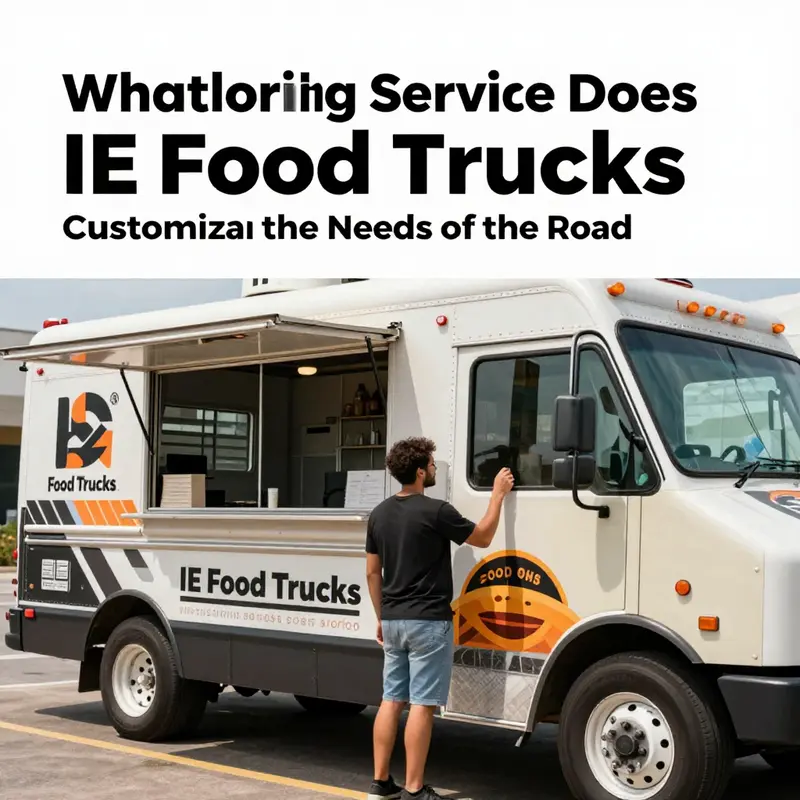
When confronted with a topic as specific as the services offered by a company named IE Food Trucks, it’s natural to begin with a direct answer. Yet the available information about IE Food Trucks does not yield a clear description of their offerings. There is no explicit, verifiable detail in the current knowledge base about what IE Food Trucks does, what kind of culinary concepts they support, or how they position themselves in the competitive landscape. Rather than rely on an absence of data, this chapter moves beyond the name and considers the broader ecosystem of mobile food service. It reflects on the kinds of services that a thoughtful food-truck provider typically offers and explains why customization and branding sit at the heart of a successful mobile dining experience. In doing so, the aim is not to presuppose IE Food Trucks’ exact menu or model, but to illuminate how a well-designed mobile-food business creates value for clients, event organizers, and communities through a coherent set of integrated services.
At its core, the service model of any food truck operation rests on more than the ability to cook tasty food on wheels. It encompasses the entire lifecycle of a mobile kitchen: the journey from concept to on-site service, from a blank chassis to a fully realized branding and customer experience. The capacity to operate across diverse venues—street fairs, corporate campuses, sport arenas, or private celebrations—demands a combination of reliability, flexibility, and thoughtful design. A strong offering anticipates challenges before they arise and uses them as opportunities to deepen the relationship with clients. This is where customization and branding become more than cosmetic choices; they become strategic differentiators that shape perceptions, foot traffic, and repeat engagements.
Customization is the practical engine that makes a food truck more than a moving kitchen. It includes the physical reconfiguration of the vehicle to align with the intended cuisine, service style, and volume. A vehicle can be tailored with specific kitchen workflows in mind: the sequence of food preparation, the flow of ingredients from prep to plating, and the speed at which orders are fulfilled. The layout must balance safety, efficiency, and ergonomics, ensuring that cooks, servers, and cleaners can move through the space without friction. Customization also extends to equipment selection and utility planning. Power supply, water management, waste disposal, ventilation, and refrigeration are not afterthoughts; they are foundational decisions that determine what kinds of menus can be offered, how consistently they can be produced, and how sustainably the operation can run during long shifts in challenging environments. The equipment mix is chosen to harmonize with the cuisine style and anticipated event cadence, enabling a chef’s creativity to translate into dependable, repeatable service. When the design is done well, the truck reads as a single, coherent system rather than a collection of disparate tools.
Beyond the kitchen’s physical skeleton lies a more visible and strategic form of customization: branding and presentation. The exterior of the truck, the color palette, the typography on the menu boards, the lighting around the service window, and the decor visible through the serving window all contribute to the first impression a potential customer experiences. For brands and event organizers, this first impression matters because it frames expectations about quality, reliability, and the overall experience. A thoughtfully branded mobile unit creates a recognizable, immersive moment that stays with guests long after the last bite. This is not mere aesthetics; branding informs every interaction, from the way staff greet customers to how the menu is read and how images of food are perceived in photographs shared on social media. In practical terms, branding translates into exterior wraps, interior signage, and cohesive aesthetic cues that harmonize with digital channels and on-site manners of service. The best operators align the branding narrative with the culinary story—whether a bold, contemporary concept or a comforting, familiar offering—and ensure that every touchpoint reinforces that story.
A well-integrated branding approach also supports operational goals. For instance, clear, visually engaging menus and streamlined ordering paths reduce wait times and confusion, which in turn enhances throughput during peak periods. A strong brand voice, conveyed through staff uniforms, greeting scripts, and the tone of interactions, contributes to a memorable experience that guests are likely to repeat and share. In the world of events and corporate engagements, seamless branding becomes an asset for partnerships. Sponsors, organizers, and clients seek vendors who can present a polished, reliable image while delivering delicious, consistent food. When branding and customization work in concert, the truck becomes a storytelling platform on wheels—an anchor for a broader event strategy rather than a standalone food option.
Complementing customization and branding are the service layers that address consistency, safety, and scalability. A robust service offering includes guidance on logistics and event compatibility, ensuring the mobile kitchen can operate in a variety of spaces with varying power, water, and waste requirements. It also involves a framework for safety and compliance, including food safety training for staff, sanitation protocols, and adherence to local health regulations. These elements matter not only for protecting guests but also for protecting the host organization and the operator’s own continuity of service. When a food truck partner can demonstrate dependable uptime, clear safety practices, and proactive maintenance planning, it elevates the perceived professionalism of the entire engagement. Uptime, after all, is a practical form of branding too—guests remember a smooth experience just as readily as they remember a memorable flavor.
In addition to physical design and on-site service, many providers offer a layered suite of operational support designed to reduce friction for clients. This may include assistance with event logistics, such as scheduling, route planning, and contingency planning for weather or space constraints. It can also extend to pre-event tastings, menu engineering to optimize production, and ongoing staff training that elevates service levels and consistency across multiple events. What these services share is a commitment to turning a mobile kitchen into a reliable extension of a client’s brand or event concept. Rather than merely renting a vessel for cooking, a capable operator becomes a partner in delivering an integrated experience—from the initial inquiry through post-event wrap-up.
The absence of specific information about IE Food Trucks invites a broader reflection on how prospective clients evaluate any mobile kitchen partner. It suggests a practical framework built on three pillars: capability, compatibility, and continuity. Capability concerns the breadth and depth of what the operator can deliver—custom kitchen designs, branding execution, regulatory compliance, and scalable service for different event sizes. Compatibility focuses on how well the operator’s approach aligns with the client’s goals, theme, and audience expectations. It asks whether the service model supports the client’s branding strategy, whether the cuisine concept resonates with the target crowd, and whether the partner can adapt to evolving needs, such as adding a second truck for a larger festival or converting to a different menu for a seasonal campaign. Continuity emphasizes reliability over time—maintenance programs, after-sales support, supply-chain resilience, and a track record of successful engagements across a variety of settings.
From a client’s perspective, the promise of a well-constructed service offering becomes tangible in the moments that guests experience the truck. The first sight of the vehicle, the ease with which customers move through the line, the clarity of the menu, and the speed of service all converge to shape the perceived value of the event. When customization and branding are tightly integrated with efficient operations and rigorous safety practices, the guest experience feels effortless and enjoyable. The host organization benefits as well: a partner who can deliver a compelling culinary story within a well-managed operational envelope reduces risk, improves guest satisfaction, and increases the likelihood of referrals and repeat bookings. In this sense, the service landscape for mobile food providers is not a single commodity but a holistic system that connects design, food, branding, logistics, and safety into a single, navigable journey for clients and guests alike.
For readers seeking to understand what IE Food Trucks might offer, the takeaway is practical and forward-looking. If a vendor emphasizes customization and branding as central to their service, that signals a philosophy built on collaboration and storytelling, not simply on delivering meals. The opportunities associated with such an approach include tailored kitchen configurations that maximize output for specific cuisines, branding packages that translate a concept into a visual and experiential reality, and ongoing support that helps the client scale operations without sacrificing quality. Conversely, if a prospective partner offers a more limited set of services, clients may need to supplement the experience with external experts or adapt their expectations accordingly. In either case, clarity about scope, flexibility, and governance—from the initial design workshop to the post-event debrief—becomes essential for alignment and success.
Ultimately, even in the absence of explicit information about IE Food Trucks, the broader narrative remains instructive. A mobile kitchen’s value lies not only in what food is cooked but in how the entire journey is crafted. The best operators treat customization as a strategic advantage, viewing branding as an on-the-ground ambassador for the client’s story, and insisting on operational excellence as a condition of trust. When these strands are woven together, the service offering transcends the mechanics of cooking on wheels and becomes a coherent, repeatable experience that can energize events, elevate brands, and delight guests across diverse settings. In a market where novelty competes with consistency, the strongest partners are those who can deliver both—the creative, customized vision and the dependable, compliant execution that ensures every shift runs as planned. And while specifics about IE Food Trucks remain to be confirmed, readers are left with a practical lens for evaluating any mobile-kitchen proposition: look for evidence of thoughtful design, a clear branding strategy, robust safety and maintenance practices, and a demonstrated capacity to scale and adapt as needs evolve. These are the markers of a service that not only feeds a crowd but also reinforces a client’s objectives and leaves a lasting impression.
What Service Does IE Food Trucks Offer? Navigating Digital Ordering, Delivery, and Urban Dining Trends
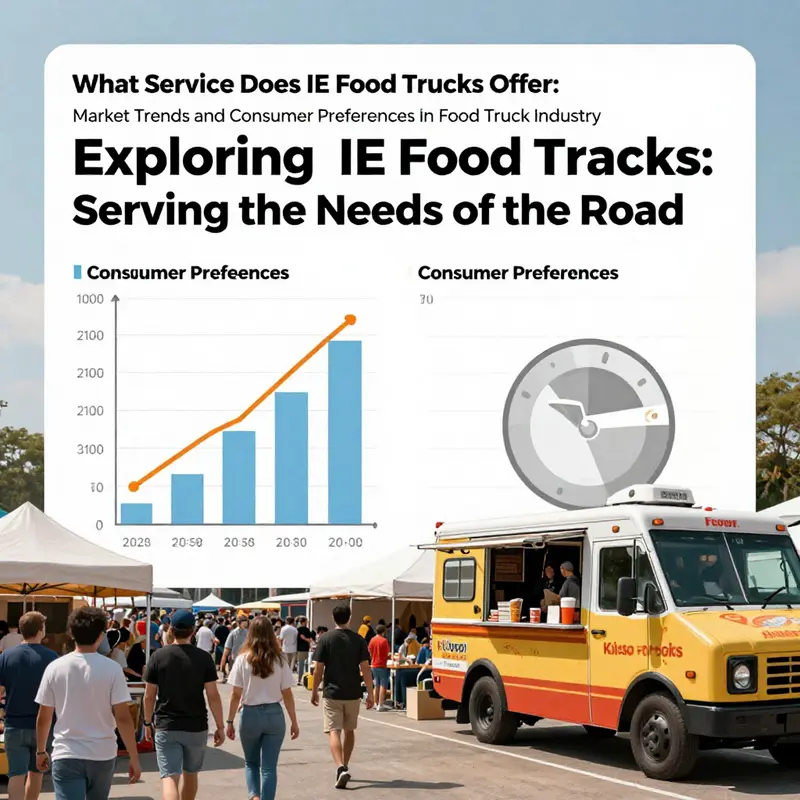
The contemporary urban dining landscape is increasingly shaped by digital convenience, real‑time choices, and a logistics network that makes meals travel as quickly as messages. In this evolving scene, IE Food Trucks emerges as a representative case of how a platform can knit together consumer appetite with a diverse array of local eateries. Rather than relying on a single storefront, IE Food Trucks positions itself as a centralized hub that aggregates a broad spectrum of dining options and makes them accessible through an online portal. The core service is straightforward in practice, yet powerful in its implications: it connects diners with a network of local restaurants, displays up‑to‑date menus, and processes orders through a seamless digital channel, while coordinating professional delivery to a customer’s preferred destination. In essence, the platform acts as a broker, a technology layer that simplifies interaction among customers, restaurants, and couriers, and in doing so changes not only how people eat, but how restaurants think about capacity, reach, and growth.
From the consumer’s perspective, the most visible feature is the online portal itself. On any given day, the site presents a curated view of menus across the network, allowing users to compare dishes, prices, and photographs without leaving their desks or couches. This degree of transparency matters beyond the screen. It invites discovery—new flavors, new combinations, new beloved staples—within a single, familiar interface. For customers whose workday is tightly packed or whose evenings feel crowded by options, the ability to preview what is available, place an order, and track its progress offers a form of predictability that is increasingly valued in an era of endless choices. It is not merely about convenience; it is about confidence in what will arrive and when.
The operational backbone of IE Food Trucks rests on three interconnected capabilities. First, the platform aggregates a network of partner restaurants, a constellation that grows more valuable as it expands. The value here is twofold: diners gain access to a wider array of cuisines and price points, while restaurants extend their reach beyond the physical limits of their dining room. By presenting daily menus in a centralized venue, the platform reduces the need for a restaurant to deploy parallel marketing channels to attract new takeout customers. Second, the online ordering capability converts curiosity into actions with minimal friction. A user selects items, customizes requests, and completes payment—all within a secure, streamlined flow. Third, delivery is the final critical link in the chain. The platform coordinates professional logistics, ensuring meals move from prep counters to doorsteps with reliability. In combination, these features turn what used to be a simple phone call or walk‑in order into a cohesive, trackable service that travels with the customer wherever they are.
The benefits for restaurants are especially notable. In dense urban areas, the sheer volume of foot traffic and the unpredictability of in‑person dining can cap a restaurant’s revenue potential. The IE Food Trucks model helps overcome those limits by opening a second, scalable revenue channel. Restaurants can fulfill more orders than their dining room would ordinarily support, particularly during peak lunch hours when crowds surge and seating quickly fills. Without the need for expansion in physical space or staff, many operators can capture incremental sales that would otherwise be forgone. The platform also reduces the marketing burden that often accompanies delivery growth. Instead of building standalone delivery programs from scratch, restaurants can participate in a network that already handles discovery, ordering, and logistics. That shared infrastructure lowers the barrier to entry for smaller operators while still delivering a consistent customer experience across the network.
The emphasis on discovery and transparency strengthens the relationship between diners and the diverse culinary landscape of the city. The portal is designed to showcase more than just prices; it invites diners to glimpse what makes each restaurant distinct through visual content, dish descriptions, and the context of the restaurant itself. In an urban setting where choices proliferate, a platform that clarifies options and reduces decision fatigue becomes a valuable ally. This is especially true for white‑collar workers who want reliable, home‑style meals or adventurous options during a busy workday. The convenience of having a broad spectrum of familiar and novel options delivered to the office or home aligns with a broader preference for predictable, efficient service. It is a response to a real demand: the desire to eat well without sacrificing time or comfort during the workday.
A closer look at the market dynamics reveals why IE Food Trucks and similar platforms have found traction. The data reflect a clear shift away from traditional phone orders toward digital ordering channels. Online platforms offer not only convenience but also a sense of reliability and accountability. Customers can review a restaurant’s menu, confirm order details, and receive real‑time updates on preparation and delivery. This transparency helps manage expectations and improves satisfaction, especially when meals arrive during peak lunch intervals when delays can easily dampen morale. For many urban residents, the choice to order in becomes a practical habit that supports productivity and well‑being, rather than a luxury or afterthought.
The targeted urban milieu—dense business districts, university campuses, and well‑populated residential corridors—plays to the strengths of a delivery‑driven model. These environments generate consistent demand, with a steady stream of office workers, students, and residents seeking quick, reliable meals. A platform that centralizes menus and coordinates delivery functions well in such spaces because it reduces the cognitive load for the consumer and lowers the operational burdens for restaurants. The network effect is evident: more partner restaurants mean more options, which in turn attracts more customers, which then drives more orders, enabling further growth in the network and more efficient delivery logistics. In this ecosystem, the platform does not merely mediate transactions; it becomes an essential infrastructure for urban dining.
Of course, a model built on intermediation must navigate challenges common to digital marketplaces. Quality control remains a central concern. With a broad and varied roster of restaurants, ensuring consistent food quality and timely delivery requires careful governance, clear service standards, and a feedback loop that closes the customer service gap quickly. The platform must balance speed with accuracy, ensuring orders are prepared correctly and delivered hot, while also providing robust support for missteps. In practice, this means continuous monitoring of performance indicators, transparent communication with both customers and restaurant partners, and a willingness to adapt logistics solutions to changing urban flows. The success of IE Food Trucks hinges on turning this balancing act into a reliable, repeatable experience that diners can trust and restaurants can count on as a steady revenue channel.
Beyond the immediate mechanics, the IE Food Trucks model has a broader labor and economic logic. It aligns with the street‑level economy that many city dwellers already rely on—midday meals from a rotating cast of local operators who can participate in a shared platform without committing to large, formal delivery operations. The digital layer makes it possible for each restaurant to become more flexible and responsive to demand without requiring costly assets. In this sense, the platform represents a form of rare value creation: it monetizes the existing density of urban food offerings while making it accessible to a broader audience that prioritizes speed and predictability. This mutual reinforcement—restaurants extending reach and diners enjoying convenience—helps to explain the sustained interest in digital ordering ecosystems within the food service sector.
As the landscape continues to evolve, one can anticipate the platform expanding its role to include richer data insights, more nuanced delivery options, and an even tighter alignment with consumer preferences. Data on popular dishes, order timing, and geographic hot spots can guide partner restaurants in menu design, staffing, and promotional decisions. For diners, predictive features could tailor recommendations to personal taste profiles and past ordering behavior, further simplifying decision making during a crowded lunch hour. For restaurants, the platform offers not just a sales channel but a source of practical insights about local demand patterns. This data could help operators optimize inventory, anticipate peak cycles, and manage promotions in a targeted way that benefits the entire network.
In the broader arc of the food truck and street‑food industry, the IE Food Trucks approach resonates with trends toward mobility, scalability, and consumer‑centric service. The food truck concept has long thrived on flexibility and novelty, offering a rotating cast of culinary experiences that respond to neighborhood micro‑cultures. A digital platform that aggregates these experiences and delivers them directly to the consumer’s doorstep or desk chair extends that flexibility, translating the authenticity of street food into the reliability of a modern service model. It encapsulates a shift from single‑location viability to networked resilience, where success is measured not only by a storefront’s footprint but by the breadth and reliability of its digital reach.
Yet the most consequential takeaway lies in how this service reframes the everyday relationship between city dwellers, work rhythms, and food. It is not simply about ease or speed; it is about enabling better choices in a crowded ecosystem. For many urban professionals, a meal is more than sustenance—it is a moment of reset, a chance to reconnect with a favorite dish or discover something new without stepping away from a heavy workload. Platforms that offer reliable delivery, transparent menus, and a wide range of options make that moment accessible even in the busiest times. And when this happens across hundreds of partner restaurants, the effect scales from personal convenience to citywide eating culture. The result is a culinary ecosystem that is more inclusive, more informed, and more responsive to the real pace of urban life.
In sum, IE Food Trucks demonstrates how a third‑party online ordering and delivery service can reshape the dynamics of a local food economy. By centralizing menus from a diverse roster of eateries, enabling seamless online ordering, and coordinating dependable delivery, the platform creates a more efficient and vibrant marketplace. It meets a clear consumer demand for convenience and predictability while expanding revenue opportunities for restaurants that might otherwise be constrained by physical capacity. The model also mirrors a larger industry transformation toward digital marketplaces that blend the immediacy of street‑level food with the reliability and analytics of modern technology. As cities continue to grow and workdays lengthen, such platforms will likely become integral components of how people eat, socialize, and sustain themselves in an urban setting. The case of IE Food Trucks thus offers more than a snapshot of a single service; it reflects a broader shift toward integrated, data‑driven food delivery that honors the pace and demands of contemporary urban life.
Final thoughts
Understanding the variety of services that IE Food Trucks provides can greatly benefit those involved in both the food and trucking industries. From gourmet catering to niche markets, and from customization to aligning with consumer preferences, this insight not only underscores the importance of adaptability in business but also highlights the growing synergy between transportation and culinary arts. Businesses and individuals can leverage these insights to thrive in the dynamic and diverse food truck market.