
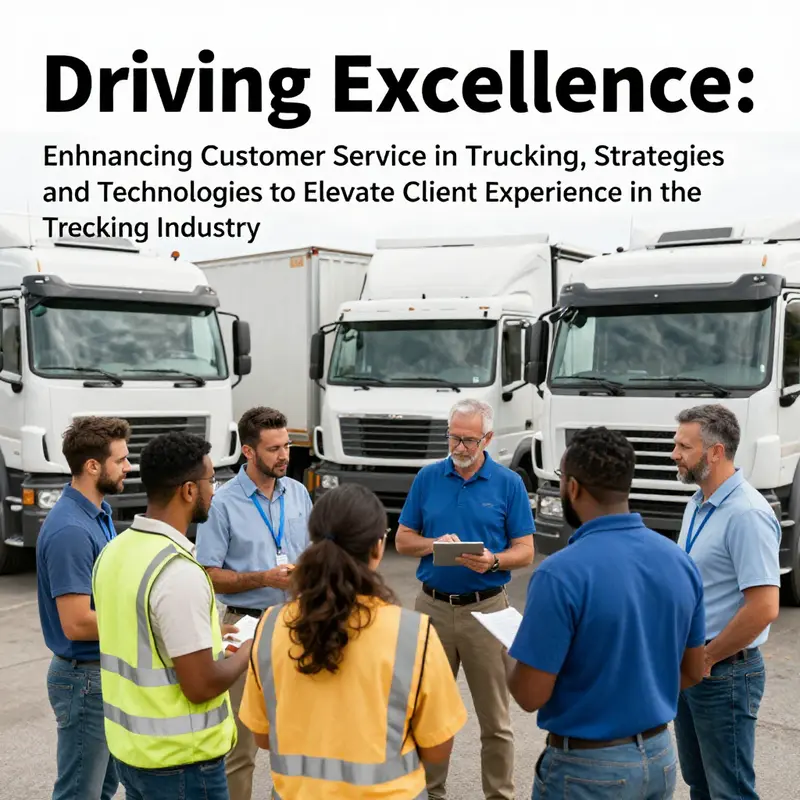
In an industry where reliability and communication are paramount, trucking companies must continuously innovate to enhance customer service. The interplay of technology and effective communication can transform the way trucking companies interact with their clients. Real-time tracking not only improves transparency but also helps build trust between carriers and shippers. As we delve into this article, you’ll discover how streamlining communication, embracing proactive problem-solving, and leveraging customer feedback can elevate your service quality. Each chapter will provide a roadmap for long-haul truck drivers, trucking company owners, fleet managers, and aspiring drivers alike—ensuring they are equipped with the knowledge to navigate the evolving landscape of trucking customer service.
Empowering the Journey: How Enhanced Real-Time Tracking Transforms Trucking Customer Service
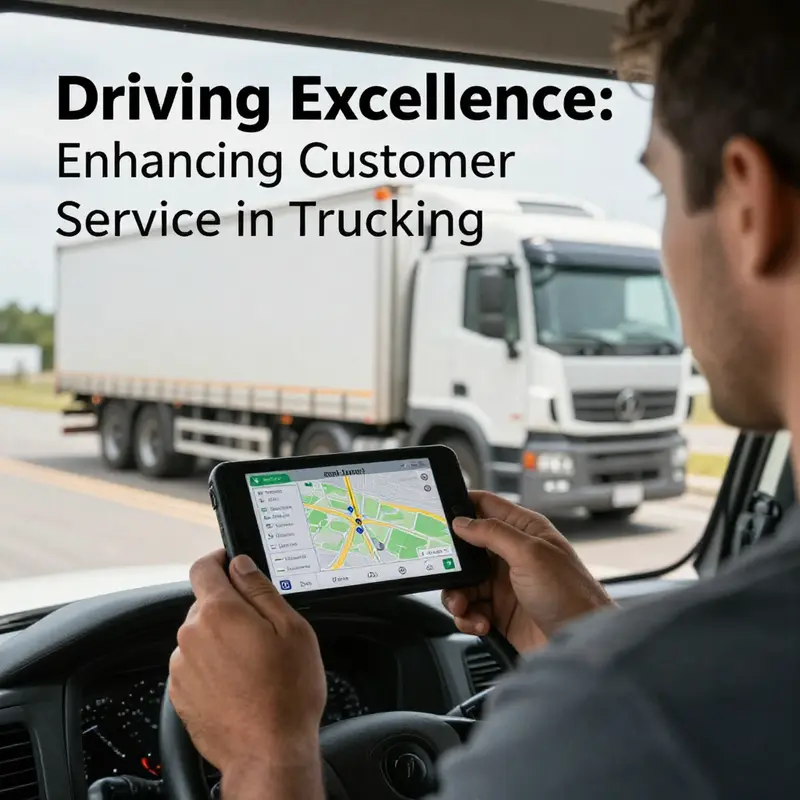
**In the world of trucking, enhancing customer service means more than offering on-time arrivals or competitive pricing—it requires a deep commitment to transparency, reliability, and proactive communication. Advanced real-time tracking systems serve as the bridge between operators and customers, transforming a traditionally opaque process into one marked by precision and trust. Through sophisticated technology that integrates advanced GPS, IoT sensors, and comprehensive logistics platforms, trucking companies are reinventing how they interact with clients. These systems not only provide minute-by-minute updates on shipment locations and estimated arrival times (ETAs) but also anticipate potential disruptions before they become critical issues. With customers increasingly expecting accurate and timely details about their cargo, the implementation of robust tracking systems becomes a critical part of modern customer service strategies in the transportation industry.
Every journey begins with data. The leveraging of advanced GPS technology and real-time monitoring tools has revolutionized the traditional trucking model. Trucking companies now rely on sensors that continuously record the status of vehicles and freight, capturing details like temperature, humidity, and vibration that impact certain shipments. These IoT sensors feed data into integrated logistics platforms, which then relay up-to-the-minute information to both dispatchers and customers. When customers are aware of the location and status of their goods at all stages of the journey, it builds a solid foundation of trust. This digital transparency eases the anxieties of waiting for shipments, allowing clients to plan operations with confidence, knowing that any changes en route will be communicated immediately.
This transformation is not solely a technological upgrade but a strategic evolution of the entire customer experience. Traditional communication channels in trucking often led to delays and misunderstandings. However, with real-time tracking, companies can now offer precise updates that empower clients to make informed decisions. For instance, a sudden change in weather or unexpected road congestion might have previously caught both driver and dispatcher off guard, leading to missed connections and frustrated customers. Today, systems can alert both parties to such challenges as soon as they are detected. The result is a proactive approach where dispatchers can quickly modify routes or adjust schedules, ensuring that customers are not left in the dark but are instead treated as partners in the logistics process.
Behind the scenes, the technology works in harmony with a well-organized logistics infrastructure. Modern tracking systems consolidate data from multiple sources, including vehicle telemetry, traffic management systems, and even local weather feeds, creating a comprehensive overview of each shipment’s journey. When a potential delay is detected, the system not only notifies the driver but simultaneously informs the customer service team. This rapid exchange of information allows customer service representatives to reach out to clients with reliable updates and, when necessary, propose alternative delivery options. It is this capacity for swift, decisive action that separates leaders in the trucking industry from those still relying on outdated, reactive methods.
The benefits extend beyond preventing delays or miscommunications. Customers experience enhanced planning capabilities because they receive consistent, reliable updates on shipment progress. Detailed tracking information allows businesses to better coordinate their own logistics. For example, manufacturers waiting on critical parts or retailers preparing for a product launch can adjust their operations based on real-time data. With clear information on when their deliveries will arrive, customers can allocate resources more effectively and reduce the costs associated with inventory delays or overstock situations. In essence, the integration of enhanced tracking with customer service is a win-win proposition that not only elevates the standard of service but also drives operational efficiencies that resonate throughout the supply chain.
Moreover, these technological improvements support a broader commitment to operational excellence. Real-time tracking systems empower dispatchers to make rapid, informed decisions that mitigate risks along the route. Consider instances where traffic congestion builds unexpectedly or weather conditions deteriorate—without such systems, these scenarios could result in significant delays. Today, dispatchers can anticipate and respond to such issues by rerouting drivers or alerting customers to minor delays before they become serious problems. This proactive management of potential disruptions underscores an important shift in philosophy: rather than reacting to problems after the fact, top-tier trucking companies are now anticipating them and acting swiftly to minimize impact.
At the heart of this system is a continuous feedback loop. The same data that informs immediate operational adjustments is also collected and analyzed to inform broader strategic decisions. Over time, companies accumulate a rich repository of information—data that can be leveraged to optimize routes, predict potential bottlenecks, and even forecast seasonal variations in shipping patterns. The ability to analyze historical trends alongside live data means that trucking firms can refine their processes, reduce idle times, improve fuel efficiency, and ultimately lower operational costs. Such efficiency gains translate directly into competitive pricing, giving carriers an edge in a market where margins can be razor-thin.
Yet the story of real-time tracking is not solely one of operational prowess—it is also about building long-term relationships grounded in trust and transparency. When customers are informed at every step of their shipment’s journey and see that issues are resolved quickly and efficiently, their experience improves dramatically. There is a fundamental human element at play: knowing that a company is both technologically advanced and genuinely committed to transparent communication creates an emotional connection. This connection is reinforced every time a customer receives a detailed update or a proactive call to offer alternative solutions, transforming what was once a faceless transaction into a relationship built on reliability and care.
Integrating these advancements into daily operations is a challenging endeavor that requires both technological investment and a shift in organizational culture. Companies that have successfully made this transition often pair their high-tech tracking systems with highly trained customer service teams. These teams are not merely operators—they are experts who interpret real-time data and communicate it in clear, understandable terms to customers. Their expertise ensures that even complex operational details are translated into reassuring, customer-friendly language. This blend of sophisticated technology and human empathy is essential, as a system that merely collects data without clear communication falls short of its potential.
Furthermore, the success of enhanced tracking strategies relies on an omnichannel approach to communication. Customers today expect to interact through multiple channels—whether via phone, email, chat, or even messaging platforms—and each interaction must be consistent and responsive. By integrating real-time tracking data with these communication channels, carriers can offer immediate, context-specific information. For example, if a delay is detected, an automated alert might be sent via text message, followed by a detailed explanation from a live service representative who is prepared to answer any questions. This layered, personalized approach reinforces customer confidence and minimizes frustration.
But the evolution of real-time tracking does not stop at delivering current shipment statuses. It is paving the way for predictive analytics in logistics. By harnessing historical data and merging it with live updates, emerging systems are beginning to forecast future challenges before they materialize. Predictive analytics can identify trends that indicate potential delays, mechanical issues, or even unexpected weather patterns affecting routes. This foresight allows trucking companies to develop contingency plans well in advance, further reducing the likelihood of disruptions and contributing to a more seamless, worry-free customer experience. Embracing such forward-thinking strategies ensures that both operational efficiency and customer satisfaction continue to grow in tandem.
The impact of these innovations is already visible in companies that have embraced comprehensive tracking systems. Carriers with well-integrated, real-time tracking not only enjoy a significant reduction in customer complaints but also find that their enhanced transparency leads to long-term client loyalty. Customers who feel informed and valued are more likely to continue using a carrier’s services, even when faced with occasional delays or hiccups—provided they know that communication is prompt and honest. In many ways, the industry is witnessing a paradigm shift where technological advancements are not just about efficiency gains but about fostering a culture of reliability and mutual respect.
In a rapidly evolving logistics ecosystem, the successful integration of advanced tracking features represents an illuminating example of how technology can transform traditional industries. The journey from blind spot to transparency is paved with innovation, continuous improvement, and a dedication to customer satisfaction. As trucking companies invest in these systems, they signal a commitment to not only meeting but exceeding modern customer expectations. By ensuring that every stakeholder—the dispatcher, driver, and customer—has access to accurate, real-time information, these companies are turning potential vulnerabilities into strategic strengths. The transformation is compelling: enhanced tracking builds a resilient network where each link supports the next, contributing to smoother operations and stronger client relationships.
As the industry continues to adapt and evolve, it is clear that the future lies in embracing a holistic approach that intertwines technology, data, and human expertise. The next generation of tracking systems is already on the horizon, promising even more precise data analytics, seamless communication, and adaptive routing. Carriers that remain committed to this integrative approach are poised to redefine benchmarks in customer service and operational excellence. The insights gleaned from these systems are invaluable, paving the way for innovative practices that not only optimize performance but also enhance the customer experience on every level. External research, such as that presented by the American Trucking Associations, confirms that the trend toward more transparent and responsive service is reshaping the landscape of freight logistics. For further exploration of the subject, readers may refer to this external research on real-time tracking in logistics.
Ultimately, the revolution in real-time tracking is more than just a technological upgrade—it is an evolution in the very fabric of customer service in trucking. With each new innovation, carriers gain not only the ability to monitor shipments with unparalleled precision but also the opportunity to foster deeper, more trusting relationships with their clients. The fusion of advanced tracking technology with proactive communication strategies creates an ecosystem in which efficiency, safety, and customer satisfaction reinforce one another. As every mile is tracked and every potential challenge is met with a measured, informed response, the trucking industry steers confidently into a future defined by reliability and excellence. In this journey, trucks are not merely vehicles moving goods from point A to B; they become ambassadors of a service that is built on transparency, resilience, and forward-thinking innovation.
In conclusion, the integration of enhanced real-time tracking systems is fundamentally reshaping how trucking companies approach customer service. By investing in technologies that provide accurate, immediate data and coupling these with a proactive, human-centric response strategy, carriers are transforming challenges into opportunities and uncertainties into assured, predictable outcomes. This comprehensive approach stands as a testament to the fact that, in today’s competitive logistics landscape, success is measured not only by the timeliness of a delivery but by the trust and satisfaction cultivated along the way.
Harnessing Seamless Communication: Transforming Trucking Customer Service Through Integrated Channels

Effective communication serves as the backbone of excellent customer service, especially in the trucking industry where timing, transparency, and reliability are paramount. Trucking companies have long faced challenges associated with miscommunication and delays. Today, however, streamlining communication channels is emerging as a powerful solution, allowing companies to upgrade service standards, boost customer satisfaction, and build lasting trust. By embracing a multifaceted approach that integrates real-time technology, responsive messaging, and proactive problem resolution, trucking companies can meet customer demands head-on and differentiate themselves in a highly competitive market.
In an industry defined by movement and constant change, the ability to relay vital information quickly is essential. When a shipment is in transit, every minute matters. Customers who receive timely updates about location, estimated arrival times, and unexpected delays enjoy a reduced sense of uncertainty. This enhanced transparency not only keeps them informed but also reassures them that the company values their business. For instance, if a driver is momentarily unreachable by phone, having supplementary methods such as text messages or automated emails allows companies to maintain a continuous flow of information. This redundancy in communication channels, as demonstrated in industry reports, minimizes delays and prevents miscommunication that can lead to customer frustration.
The integration of various communication methods transforms a simple dispatch process into a comprehensive real-time bond between the company, its drivers, and its customers. Dedicated mobile applications, web portals, and even messaging platforms like WhatsApp ensure that critical updates never fall through the cracks. Recent findings note that shippers who have access to live shipment tracking are significantly more confident in their carrier’s ability to provide reliable and responsive service. This underlines the importance of having a multi-channel strategy, where the convergence of mass communication options allows for constant, real-time interaction.
One of the key benefits of a streamlined communication system is its impact on operational efficiency. When information flows seamlessly between dispatchers, drivers, and customer service representatives, companies become better equipped to manage unforeseen events such as inclement weather, traffic congestion, or equipment malfunctions. Rather than waiting for customers to report issues and then react, proactive communication methods allow companies to alert customers immediately about potential disruptions. By addressing issues before they escalate, companies can present alternative solutions—like adjusting delivery schedules—that not only resolve the immediate problem but also reinforce a forward-thinking service ethic that customers deeply appreciate.
Successful implementation of an integrated communication framework requires a robust technological infrastructure. Modern telematics systems, for example, provide the foundation for such a system by collecting real-time data from vehicles and transmitting critical information to dispatchers and customers alike. When these systems are paired with dedicated mobile applications, they ensure that every stakeholder in the logistics chain is constantly connected. A prime example of this integration is observed in systems similar to those used by market leaders. These systems empower drivers to quickly relay updates, capture photos of delivery points, and communicate any changes in their schedules. In turn, the centralized system updates the shipment status automatically, keeping customers informed at every step of the journey.
Equally important is the human element in this high-tech communication ecosystem. Even the most advanced technology is only as effective as the people who operate it. Investing in training for customer service teams and dispatchers is crucial for ensuring that every communication is clear, timely, and empathetic. Customers who speak with well-informed representatives—who can provide detailed updates and answer queries comprehensively—feel more secure about the transportation process. Therefore, companies are increasingly focusing on upskilling their teams to handle a variety of communication platforms, ensuring that no message goes unanswered, regardless of whether it is sent via email, phone call, text, or live chat.
Moreover, enhancing employee capabilities has a downstream effect on customer interaction. Drivers who are comfortable using digital tools can relay information more precisely and in a timely manner. In many cases, companies that have adopted integrated communication methods report a decline in customer complaints. One study highlighted that carriers with a dedicated customer service team supported by automated alert systems experienced a substantial reduction in issues related to missed deliveries and vague communication. By streamlining the interaction channels and having a clear, structured process to handle inquiries, the overall customer experience is significantly enhanced.
Beyond internal improvements, streamlined communications also pave the way for greater external transparency. Customers no longer have to rely on periodic, manually updated reports; instead, they benefit from real-time, dynamic information feeds that provide nearly instantaneous updates. Such transparency is key to building trust and long-term relationships. When a customer sees that every potential issue is communicated promptly and professionally, the impression is one of reliability and accountability. This proactive communication model has become a crucial competitive advantage, particularly in an industry where delays can have significant financial implications.
A real-life illustration of the advantages of seamless communication systems is the rapid turnaround at dispatch centers that have adopted new digital protocols. Rather than waiting for a customer to initiate a call or send an email, advanced systems trigger automated notifications to both the customer and the assigned dispatcher when a potential delay is detected. This results in a smarter, more agile response mechanism where alternative routes or adjusted delivery times are communicated before a minor issue becomes a major headache. Customers then have ample time to adjust their expectations and plans, which minimizes inconvenience and enhances the overall experience.
The benefits of streamlined communication extend even further. For instance, the consolidation of communication channels reduces the need for customers to repeatedly provide the same information over different mediums. A unified system ensures that customer preferences are stored and easily accessible across platforms, enabling companies to personalize updates and service responses. This detailed level of customization makes customers feel valued, as their specific needs and preferences are recognized and consistently met. Personalized service, driven by streamlined data integration, boosts customer loyalty over time—a factor that is vital for the long-term success of any trucking company.
Moreover, the synergy between advanced tracking systems and proactive communication practices streamlines operations not only on the customer-facing side but also in back-end processes. Emergency alerts and real-time route updates make it possible for companies to manage their fleet in the most efficient manner. When a disruption occurs, every link in the chain is informed immediately, allowing for a coordinated effort to mitigate any negative impacts. This level of coordination is achieved through simple, yet effective, communication protocols that dissolve the traditional bottlenecks often experienced in transportation logistics.
Equally important is the role of consistent customer feedback in refining these communication systems. Regular input from clients enables companies to identify potential pain points and areas for improvement. By incorporating customer insights into the evolution of communication strategies, trucking companies can tailor their interactions to meet the evolving needs of their clientele. For example, feedback often highlights the necessity for shorter response times or clearer status messages. Implementing these suggestions not only enhances the customer experience but also drives a cycle of continuous improvement that benefits the entire operation. Companies that actively seek and respond to feedback demonstrate a commitment to service that resonates with shippers and freight clients alike.
The advantages of such integrated communication solutions further manifest in cost efficiency and resource optimization. When communication channels are consolidated into one streamlined system, there is less redundancy and fewer opportunities for errors or misinterpretation of data. The reduction in customer complaints and misrouted information can lead to a decrease in operational costs over time. This efficiency not only improves the bottom line but also allows companies to invest in further technological enhancements and staff training, creating a virtuous cycle of continuous improvement and customer satisfaction.
This paradigm shift towards streamlined communication goes hand in hand with the broader digital transformation sweeping the transportation industry. As trucking companies modernize their communication infrastructures, they unlock benefits that extend far beyond customer service. Improved communication channels facilitate better data collection and analysis, enabling companies to make informed decisions and optimize routes. The integration of these digital tools also helps in predicting trends and identifying emerging issues before they can disrupt service. In a traditional communication framework, such predictive capabilities would be nearly impossible to achieve at scale. Instead, digital platforms consolidate data in real time, offering actionable insights that drive smarter decision-making processes across the board.
At its core, the move to streamline communication channels is a testament to the trucking industry’s commitment to innovation and operational excellence. No longer are companies content with reactive measures; today’s leaders actively seek ways to anticipate and address challenges on the fly. The blending of cutting-edge technology with human expertise ultimately creates a system that is both resilient and adaptive. Every communication transmitted and received is a small building block in a larger structure of reliability that supports the industry’s day-to-day operations. For customers, this means a level of service that is predictably efficient, proactive, and responsive.
Investing in these advanced communication systems is not merely a matter of keeping pace with industry trends—it is a strategic imperative. As competition intensifies, companies that offer superior customer service through transparent, rapid communication are more likely to secure long-term partnerships. The focus on proactive problem solving not only prevents minor issues from escalating but also reinforces an image of reliability and trustworthiness. The success stories of companies that have embraced these changes speak volumes, illustrating real reductions in customer complaints and improvements in delivery performance. Companies adopting these integrated channels have even reported significant enhancements in overall customer ratings and retention metrics.
While the transition to a fully digital communication approach might seem daunting, the benefits far outweigh the complexities. The process begins with a thorough assessment of existing communication practices, followed by the gradual integration of digital tools that complement traditional methods. Companies should aim to create a centralized system where every mode of communication—from phone calls and text messages to emails and app notifications—is interconnected. This unified approach ensures that regardless of the medium, the message remains consistent and timely. In fact, businesses that have adopted such streamlined systems often illustrate how technology can serve as the nucleus around which efficient, responsive communication revolves.
For freight companies looking to delve deeper into the advantages of advanced technology in communication, further insights can be found through industry-focused resources. One such resource on enhancing driver and manager communication provides essential tips for optimizing channel integration. This guidance underscores the importance of pairing technological tools with strategic customer engagement to elevate service standards consistently. One must remember that technology, though powerful, is most effective when combined with a genuine commitment to customer satisfaction.
Ultimately, the transformation of communication channels in the trucking industry represents a significant leap forward towards operational excellence and exceptional customer service. By adopting a multi-channel, tech-driven approach, companies can create an environment where information flows seamlessly, drivers are supported efficiently, and customers are continually reassured with proactive updates. This comprehensive strategy not only addresses the immediate challenges of logistical communication but also lays the foundation for sustained operational improvements in the years to come. For more insights on how integrated communication platforms contribute to overall excellence, you can explore the detailed analysis on effective communication strategies in trucking provided by CRST in their article 8 Communication Tips for Truck Drivers & Managers.
In parallel with this technological evolution, some trucking companies are also investing in platforms that facilitate internal collaboration and feedback analysis. For instance, companies are experimenting with internal dashboards that compile data from various communication channels into a single interface. This integration not only simplifies decision-making for fleet managers but also ensures that critical updates—from scheduling changes to real-time traffic alerts—are promptly relayed to drivers on the move. When employees are empowered with the right tools and clear communication protocols, customer issues are resolved faster, and service quality invariably improves.
The future of trucking customer service is clearly anchored in the pursuit of streamlined, transparent, and integrated communication systems. As companies continue to adopt new technologies and refine their communication strategies, the industry is witnessing a transformation that goes far beyond routine updates. There is now a recognizable shift towards proactive, data-driven customer engagement that anticipates challenges before they occur. Companies that invest in these innovative communication models are already enjoying reduced operational disruptions, enhanced customer loyalty, and a notable edge over competitors who rely on outdated methods.
In summary, the commitment to streamlining communication channels marks a profound change in how trucking companies engage with their customers. By bridging technology and human expertise, the industry is reaping the rewards of improved efficiency, higher customer satisfaction levels, and a robust framework for addressing unforeseen issues. This integrated approach not only fulfills immediate service expectations but also anticipates a future where every customer interaction is simple, direct, and remarkably efficient. As trucking companies continue to embrace these modern communication methods, they are laying the groundwork for a more connected, agile, and customer-centric future in logistics.
Navigating Challenges and Optimizing Service: Proactive Strategies for Enhanced Trucking Customer Care
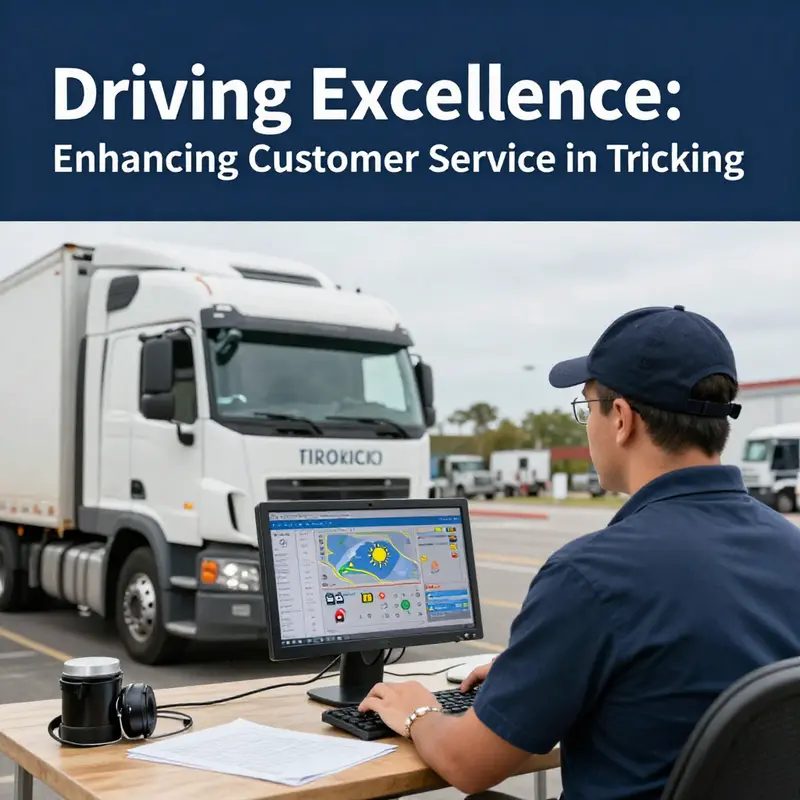
In the dynamic world of trucking, proactive problem-solving is not just a luxury—it is a crucial tool that drives enhanced customer satisfaction and operational excellence. Trucking companies face unpredictable challenges every day, whether it is sudden traffic congestion, inclement weather, or equipment malfunctions. By taking steps to anticipate these issues before they disrupt service, companies demonstrate a commitment to their customers’ peace of mind and operational reliability. This approach cultivates a trust-based relationship between the carrier and the customer, as transparency in operations reassures shippers that their freight is being managed with the utmost priority. In an industry where timing and reliability are paramount, the move toward proactive strategies represents a significant shift from merely reacting to events as they occur to actively steering the course of each shipment’s journey.
Taking a forward-thinking approach begins with a solid foundation in real-time data utilization. Modern tracking systems, powered by GPS and advanced telematics, provide immediate insights into vehicle locations and performance. When a delay is anticipated, such as a slowdown stemming from heavy rain or unexpected road closures, the system can automatically generate alerts and updates for customers. These real-time updates not only inform shippers well in advance but allow trucking firms to articulate revised delivery windows and alternative routing options, thereby minimizing the frustration associated with uncertainty. This reliance on cutting-edge technology empowers both the operations team and the customer service staff, ensuring that every stakeholder remains well-informed and in control. By setting an example of advanced operational integrity, proactive monitoring becomes the first step in addressing potential pitfalls before they evolve into full-scale service interruptions.
Beyond the mere gathering of live data, the effective use of data analytics adds another critical layer of strategic decision-making. By analyzing historical performance data, companies can identify recurring issues that lead to service interruptions. For instance, if certain routes exhibit a pattern of delays due to peak-hour congestion or recurring infrastructure challenges, predictive analytics can guide the development of alternative scheduling or route planning initiatives. Data allows companies to recognize common failure modes, such as abrupt traffic bottlenecks or equipment wear, that may not be obvious from day-to-day operations. This analytical insight, when combined with real-time alerts, creates an ecosystem where each potential issue triggers an immediate, measured response. Such data-driven strategies transform customer service from a reactive function into a proactive, steady process that anticipates hurdles well before they impact the final delivery.
Another vital element in enhancing customer service within trucking is the establishment and maintenance of clear, timely communication protocols. In a sector where delays and miscommunications have dramatic downstream effects, establishing a robust omnichannel communication system can make all the difference. To ensure that customers receive essential updates, many carriers integrate automated messaging systems that push notifications through email, SMS, or dedicated mobile apps. These systems are designed to be not only fast and reliable but also empathetic in their tone. Customers, armed with knowledge about the status of their shipments, feel more engaged and respected. This attention to the human element of customer service reinforces the overall reliability of the trucking operation. By ensuring that every point of communication is consistent and informative, companies minimize the risk of misunderstandings and create an environment where customers and employees work together to solve issues as they arise.
Investing in regular training for customer service teams is another cornerstone of a proactive approach. Teams that are well-versed in data interpretation, equipped with knowledge about real-time systems, and skilled in empathetic communication are better prepared to manage customer expectations. Training initiatives that focus on scenario-based problem solving help the team transition from reacting to incidents to anticipating them. This continuous professional development not only sharpens technical and communication skills but also instills a culture where every team member views customer service challenges as opportunities for proactive engagement. A trained team quickly recognizes when to escalate issues and how to communicate challenges without attributing blame, ensuring that the customer remains at the center of every decision. Ultimately, it is this dedication to skill-building and role evolution that transforms customer service from a back-end function to a strategic, customer-centric advantage.
Incorporating customer feedback into the proactive framework is essential for continuous improvement. Companies that regularly solicit and analyze customer insights can identify emerging trends and recurring pain points. By integrating feedback systems such as post-delivery surveys, interactive apps, and periodic check-ins, trucking firms keep a pulse on customer sentiment. This two-way communication channel enriches the overall service model, allowing for adjustments in real time. When customers see that their feedback leads to tangible changes, it strengthens their loyalty and trust in the service provider. Moreover, acting on feedback demonstrates a commitment to excellence and a genuine concern for meeting customer needs. The feedback loop thus becomes an intrinsic part of the proactive strategy, ensuring that operations evolve in line with the changing landscape of customer expectations.
The role of technology in facilitating proactive problem-solving extends to predictive analytics and machine learning. With advanced algorithms analyzing vast quantities of operational data, companies can forecast potential disruptions with increasing accuracy. Predictive tools can alert operators to patterns that signal imminent issues, such as equipment strain or adverse weather conditions. These forecasts empower logistics and planning teams to adjust schedules, reallocate resources, or even arrange for on-the-fly maintenance. Such technological investments not only enhance operational resilience but also underscore the company’s vision of providing uninterrupted service. There is a growing recognition that in today’s high-demand climate, relying solely on reactive measures leaves too much vulnerability in the system. Instead, layered defenses built on technology and analytics create a buffer against unpredictable disruptions, ensuring that customer service remains robust under any circumstances.
Real-world examples from the industry further illuminate the benefits of a proactive approach. Consider a scenario where a trucking company identifies a consistent pattern of delays at a particular regional terminal. By examining historical data, the company uncovers that these delays are often due to procedural bottlenecks or seasonal weather variations that slow down operations. In response, they develop a targeted strategy that includes adjusting scheduling times, redesigning loading protocols, and implementing additional training for terminal staff. Concurrently, they proactively notify affected customers, explaining the measures being taken and offering alternative timelines. Such a multifaceted strategy not only mitigates the immediate impact of the delays but also builds credibility and goodwill among clients. This case illustrates how meaningful improvements in customer service stem from an integrated response where data, communication, and human initiative work in tandem.
Another layer of proactive customer service is the emphasis on collaborative problem-solving. Collaboration involves creating internal synergies among logistics, customer service, and technology teams to address issues holistically. A well-coordinated system ensures that critical information reaches the right people at the right time. For example, an operations center that is continuously monitoring shipment status can feed pertinent updates to the customer service team even before a customer raises a concern. This internal collaboration extends to sharing best practices and lessons learned from previous disruptions. One illustrative instance involved a division within a company that, upon recognizing pattern delays, instituted daily briefings among key personnel. The outcome was not only a reduction in the frequency of service interruptions but also the development of a collective, inclusive mindset toward continuous improvement. These collaborative efforts underscore that proactive problem-solving is as much about teamwork as it is about individual technological interventions.
In a broader perspective, proactive problem-solving in the trucking industry signifies a shift in how companies envision their role within the supply chain ecosystem. Instead of merely being transporters of goods, modern trucking companies are becoming integrators of service excellence and partners in their customers’ operations. With advanced systems and well-trained personnel, these companies can offer a level of service that is both responsive and anticipatory. It is this forward-thinking model that differentiates market leaders from the rest of the pack. Modern carriers understand that the customer experience is not just about the punctuality of deliveries; it is about building a comprehensive support system that prepares for challenges before they arise. This mindset fosters long-term partnerships grounded in reliability, transparency, and mutual respect. More information on how high-quality service is maintained can be found through insights on quality service and reliability on the road, emphasizing that every proactive measure reinforces a company’s commitment to excellence.
Overall, the transition to proactive problem-solving is an imperative that trucking companies can ill afford to ignore. The integration of real-time tracking, data analytics, advanced communication protocols, and ongoing staff training forms an ecosystem that not only anticipates challenges but actively eradicates them before they emerge. This comprehensive approach not only improves the customer experience but also strengthens the operational backbone of the business. It is a transformative journey that necessitates an investment in technology, human resources, and process optimization. Embracing this methodology marks a clear departure from traditional reactive models, positioning companies to meet the ever-growing demands of the modern marketplace with agility and assurance.
Truck operators keen on redefining customer service standards can draw valuable lessons from adopting proactive strategies. The journey requires a blend of technological innovation, dedicated staff training, cross-departmental collaboration, and a committed attitude towards continuous improvement. As companies embrace these changes, they pave the way for a future where challenges are preemptively managed and customer satisfaction is elevated through every stage of the shipment process. This strategic evolution is not just about managing current operational hurdles—it is about laying the groundwork for a resilient, future-ready organization. For those in pursuit of deeper insights into refining proactive customer service frameworks, further reading is available in comprehensive discussions such as How to Implement an Effective Proactive Customer Service Strategy, which highlights numerous examples and actionable insights that can be tailored to the nuanced needs of the trucking industry.
Empowering Service Innovation: Harnessing Customer Feedback to Transform Trucking Operations
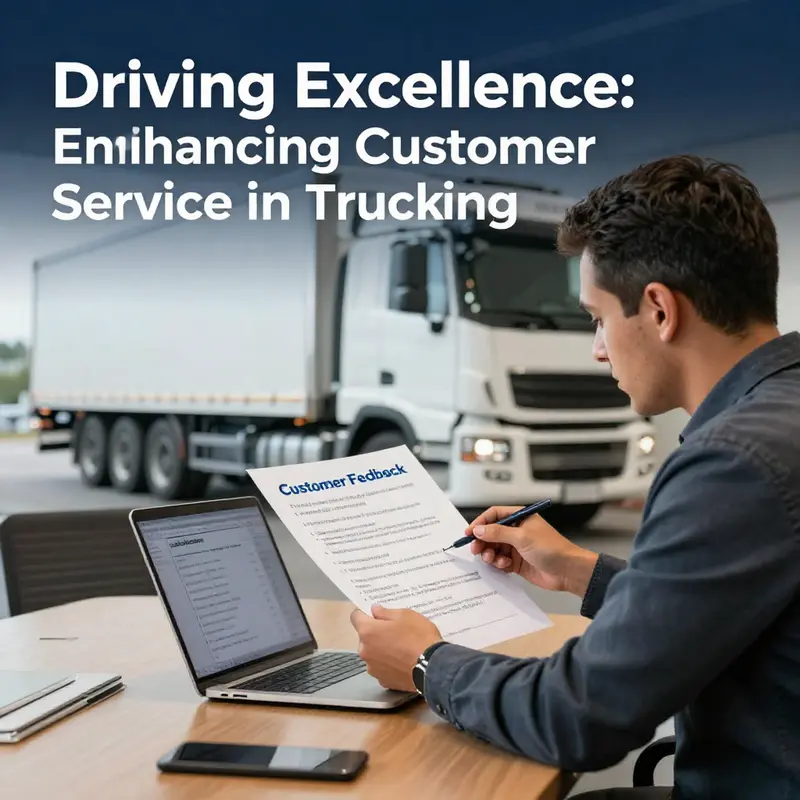
In the expansive and competitive realm of trucking and logistics, exceptional customer service stands as both a differentiator and a cornerstone for sustainable business growth. Trucking companies that aim to thrive in this challenging environment have come to understand that customer feedback is not merely a metric to be recorded—it is the driving force behind continual innovation and operational excellence. When companies make the deliberate choice to listen, interpret, and act on customer input, they lay a foundation for transparency, reliability, and a level of service that meets the evolving expectations of their clientele.
One of the initial steps in this transformative journey is establishing a comprehensive feedback mechanism that encompasses the entire customer experience. From the moment a customer makes an inquiry about a shipment to the confirmation of delivery and even in post-delivery follow-ups, every interaction is an opportunity for learning. By integrating feedback collection seamlessly into every phase of the process, companies create a dynamic channel that not only garners valuable insights but also demonstrates a commitment to service improvement. The approach moves beyond sporadic surveys; it embraces a continuous dialogue where every piece of commentary is valued as an integral part of the operational ecosystem.
Collecting feedback is only half the battle. The real challenge, and opportunity, lies in transforming qualitative insights into actionable strategies. Modern trucking companies employ robust data analytics tools and Customer Relationship Management (CRM) systems to collate and interpret feedback collected across multiple channels. When feedback is paired with real-time tracking data and performance metrics, mission-critical insights emerge. For instance, if customers repeatedly report difficulties in getting timely updates during transit delays, companies can use this information to refine their communication protocols and invest in automated alert systems. This data-driven approach empowers operators to identify recurring issues, set precise performance improvement goals, and deploy resources where they are needed most.
Behind every successful feedback initiative lies a cultural shift within the organization. Recognizing that proactive customer engagement is essential, many industry leaders have redefined their internal processes to put the customer at the heart of every decision. Staff, from frontline drivers to managerial teams, are trained to view feedback as more than a response—it is an opportunity to uncover insights that drive strategic change. This shift is underscored by the understanding that waiting for problems to surface is far less effective than anticipating them. By weaving the principles of proactive problem-solving and continuous improvement into daily operations, companies not only respond to issues as they occur, but also preempt potential setbacks before they impact the customer experience.
Technological innovation plays an indispensable role in actualizing these feedback strategies. Advanced tracking systems and mobile applications make it possible for customers to receive real-time updates about their shipments, thereby reducing uncertainty and building trust. When customer feedback points to dissatisfaction with communication during unforeseen delays, technology can bridge the gap by offering instantaneous notifications and alternative arrangements. This level of responsiveness speaks to a broader commitment to operational excellence, where every delay is met with a structured and empathetic response. Through integration of digital tools, companies can map the customer’s journey in real time and ensure that any disruption is managed with clarity and precision.
The transformation powered by customer feedback is holistic, influencing both micro-level operations and the macro-level strategic direction of a company. The feedback loop enables management to monitor and assess trends over time, discerning whether issues are isolated incidents or indicative of systemic challenges. Such detailed analysis can reveal, for example, that delays experienced during harsh weather conditions or due to traffic congestion are less about operational mismanagement and more about infrastructural constraints. In response, companies might modify their logistical processes or invest in predictive analytics to better forecast and mitigate these challenges. The learning gleaned from the customer’s voice is applied not only to immediate fixes but also to long-term planning, ensuring that improvements are both timely and sustainable.
Another critical aspect of harnessing customer feedback lies in its ability to drive incremental innovation. When feedback is integrated with operational data, companies are better positioned to experiment with new ideas and measure their effectiveness. A recurring comment about difficulty in reaching customer support, for instance, might prompt the exploration of omnichannel communication systems that combine telephone, email, live chat, and even messaging services. By testing various approaches—such as implementing AI-powered chatbots or dedicated response teams—companies can refine their strategies in a controlled and measurable manner. Each successful iteration not only enhances the overall customer experience but also strengthens the long-term bond between service provider and customer.
A central tenet of this feedback-centric model is the belief that customer insights drive not just minor improvements, but comprehensive service reimagination. Every suggestion, complaint, or compliment is a signal that points to the next leap forward in service innovation. As companies compile and analyze this information, the cumulative effect is a detailed understanding of customer priorities. For many trucking companies, the primary concern expressed in customer feedback is the desire for greater transparency. Clients want to know exactly where their shipments are at all times and how potential disruptions might affect delivery schedules. This demand for transparency has, in turn, spurred investments in advanced tracking systems and customer portals, mapping a clear path from feedback to technological improvement.
Operational refinements based on customer input often yield positive results that reverberate throughout the organization. A well-implemented feedback system transforms the way a company allocates its resources. When recurring issues are identified—such as delayed responses to queries during peak operational hours—companies can take corrective measures such as adjusting staffing levels or employing new communication technologies. The value of such targeted interventions is twofold: not only do they address immediate customer concerns, but they also reduce the risk of similar problems recurring in the future. Over time, this iterative process of feedback, adjustment, and re-evaluation becomes a sustainable model for continuous improvement, deepening customer trust and loyalty.
Moreover, embedding a culture that prizes customer feedback can have profound effects on both service delivery and employee engagement. When employees see that the organization values the opinions of its customers, they are often inspired to take a proactive role in refining service processes. This collective commitment transforms routine operations into a concerted effort to uphold and enhance service quality. In this collaborative environment, feedback is no longer seen as an external requirement but as an internal catalyst for excellence that motivates each team member to perform at their best. The result is a cohesive organization where every individual, from drivers to dispatchers, is aligned with the goal of delivering a seamless customer experience.
Practical examples underscore how converting feedback into action can yield transformative results. Consider a scenario where multiple customers report dissatisfaction with the way delivery delays are communicated. In response, one forward-thinking company overhauled its communication process by integrating an automated messaging system that provided real-time updates along with clear explanations and alternative options when delays were detected. The immediate outcome was not only a reduction in customer complaints but also a noticeable uplift in overall service satisfaction. Such targeted initiatives demonstrate that when customers witness tangible changes spurred by their feedback, the relationship is strengthened and trust is reinforced.
Furthermore, the iterative nature of gathering and acting on customer feedback can pave the way for strategic realignment within the trucking company. Senior leadership can leverage feedback trends to inform decisions on investments in technology, personnel training, or even route planning. For example, if data reveals that customers consistently experience delays on certain routes, the company might choose to revise its logistical strategies by exploring alternative paths or scheduling adjustments. This level of responsiveness underscores the fact that customer feedback is not only about resolving immediate issues—it is also a strategic compass that guides the long-term direction of the business.
The cyclical process of collecting feedback, analyzing data, and implementing improvements creates a robust mechanism for continuous enhancement of operational efficiency. It transforms isolated complaints into a synchronized system of quality assurance. Simultaneously, by publicly sharing success stories and updates about changes made in response to feedback, companies can reinforce the idea that every customer voice matters. This transparency and accountability further solidify the trust that is essential in maintaining a strong customer base. Trust, once built, is a formidable asset—it results in loyal customers who become advocates for the brand and contribute to its continued growth.
In today’s digital age, the integration of customer feedback into every operational facet is easier and more effective than ever before. The capacity to capture data in real time and blend it with established operational metrics creates an environment where each customer interaction becomes a stepping stone toward heightened service excellence. In practical terms, a trucking company that listens attentively, acts swiftly, and continuously adapts based on feedback lays the groundwork for an agile operation capable of weathering internal and external challenges. This strategic model not only enhances day-to-day functioning but also builds a resilient framework that can adapt to evolving market trends and customer expectations.
The evolution of customer service in the trucking industry illustrates that a single-minded focus on customer feedback can unlock manifold benefits. The systematic and empathetic use of customer input leads to more informed strategies, streamlined operations, and, ultimately, a superior delivery experience. As companies harness the collective power of customer insights, their service models transform from reactive systems to proactive and customer-centric operations. This transformation is both impressive and indispensable in an industry where few factors are as critical as trust and reliability.
In building this dynamic relationship with customers, trucking companies discover that feedback is not a static measure but a living dialogue that drives innovation. The process of actively soliciting, analyzing, and acting on feedback infuses every level of operation with data, empathy, and a commitment to excellence. This living dialogue is what creates an atmosphere of continuous improvement, where every department—from dispatch to delivery—benefits from the same central principle: that the customer’s voice matters.
As these changes take root, the benefits of a comprehensive feedback strategy become apparent not just in operational metrics, but in the overall customer experience. Increased transparency, faster responses, and a proactive approach to problem-solving collectively contribute to a service model where client expectations are not only met but often exceeded. For companies looking to stay ahead in the competitive logistics landscape, embracing customer feedback is the key to operational agility and long-term success.
For those interested in exploring further advancements and success stories within the trucking industry, resources on modern strategies are available through insights on cutting-edge premier trucking solutions. Ultimately, the journey towards exceptional customer service relies on a symbiotic relationship between the carrier and its customers—a relationship where every piece of feedback is a stepping stone to a better, more responsive, and more effective service model.
For more in-depth analysis on how customer feedback drives service improvement across the logistics sector, please refer to the detailed findings available at FenXiangXiaoke CRM report.
Driving Excellence: How Technology is Revolutionizing Customer Service in Trucking
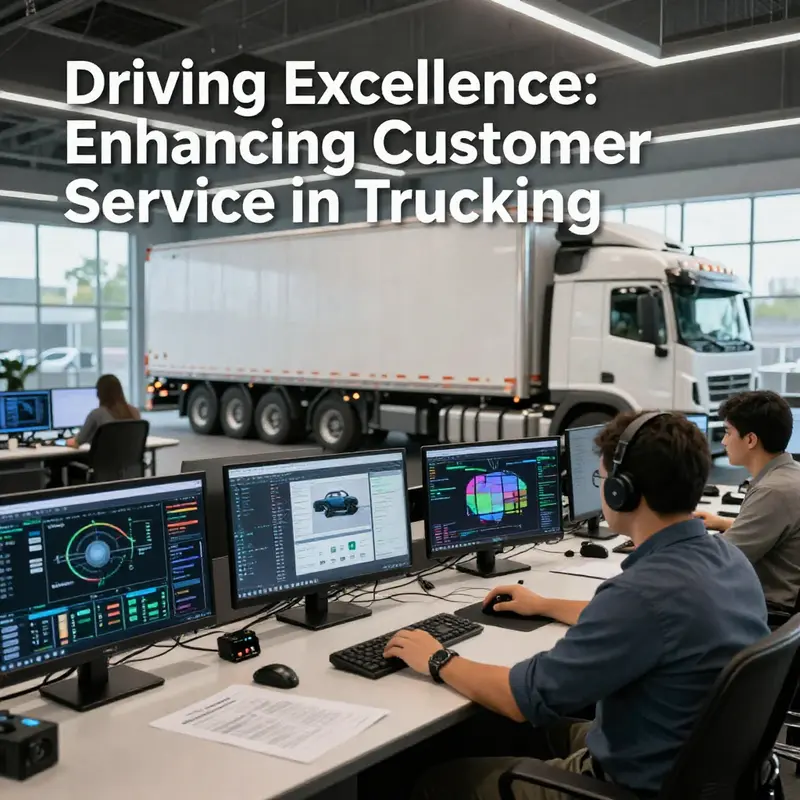
The trucking industry is undergoing a profound transformation, one that redefines traditional customer service by blending advanced technology with unwavering operational dedication. This remarkable shift is paving the way for a more efficient, transparent, and reliable experience for shippers and carriers alike. In this chapter, we explore how the integration of technology has sparked a revolution in customer service, creating an environment where real-time data, automated updates, and streamlined communication converge to build trust and foster long-term relationships.
At the heart of this transformation is the implementation of real-time tracking systems that have completely reimagined how trucking companies reveal the journey of each shipment. No longer is customer service a reactive process where problems are addressed only after delays or miscommunications occur; instead, technology now empowers companies to offer proactive solutions. With robust mobile applications and cloud-based platforms, customers now receive minute-by-minute updates on the progress of their shipments. These systems not only offer information about the current location of a vehicle but also provide estimated arrival times and immediate notifications if a potential delay arises. The availability of this precise data establishes a foundation of transparency, helping businesses optimize their inventory management and plan their logistics operations with newfound confidence.
Companies that embrace real-time tracking circumvent the frustrations of uncertainty by transforming the customer experience. Customers are encouraged to monitor their freight movements through intuitive web portals or smartphone applications that display interactive maps and status updates. The immediacy of these technologies means that when an unforeseen event—such as sudden traffic congestion or erratic weather conditions—slows a journey, the associated alerts permit proactive problem-solving. Customers are not left in the dark; they are provided with alternative delivery options or schedule adjustments almost instantaneously. This approach minimizes stress and builds an image of reliability and responsiveness. In many cases, one of the most powerful outcomes is an enhanced sense of trust, where both shippers and carriers collaborate more effectively because of the shared value placed on accurate, up-to-date information.
Automated communication tools have further elevated customer service by ensuring that real-time updates are delivered through multiple channels. Trucking companies now use automated systems to send notifications via email, SMS, and dedicated portals, thereby reducing the need for manual inquiries and avoiding the potential for human error. This integration of automation not only speeds up the flow of information but also aligns with customer expectations in an age where digital interactions are the norm. Customers receive timely updates about their cargo, making it easier for them to coordinate their internal operations. The seamless integration of these automated systems minimizes delays and miscommunication, reinforcing a relationship where the customer feels continually reassured about the status of their shipments.
The driver, traditionally seen simply as the operator behind the wheel, has evolved into a crucial part of this customer-centric transformation. Today’s drivers are equipped with digital tools that enable real-time communication with dispatchers. With the help of satellite links and mobile devices, drivers can instantly relay information about road closures, mechanical issues, or any other complications they encounter on the road. This shift in the driver’s role is transformative: they are no longer passive executors of predetermined plans but active problem solvers who can communicate changes in real time. This continuous dialogue between drivers and dispatchers enriches the information flow and creates a reliable network where decisions can be made promptly. As a result, customer service is not seen as a separate department but as an integral part of the entire logistics process, where every stakeholder—from the driver to the central office—plays a role in ensuring a superior experience for the customer.
The consistent flow of real-time information has also redefined the way companies manage disruptions. Instead of waiting for a customer to report an issue, proactive measures are taken as soon as a potential problem is detected. Early alerts about weather-related delays, heavy traffic conditions, or technical difficulties mean that companies can re-route shipments before a delay even happens, thereby preempting customer concerns and maintaining the reliability of service. This preemptive strategy not only improves operational efficiency but also resonates deeply with customers, who value the initiative and transparency shown by their carriers. When customers observe that issues are addressed before they escalate into major problems, they are more likely to remain loyal and to recommend the service to others. This proactive stance is essential in an industry where timing and reliability are critical, and it underscores the importance of leveraging technology to stay a step ahead in providing customer satisfaction.
Beyond real-time tracking and automated messages, the broader digital ecosystem is redefining information flow within the trucking industry. Web-based platforms have emerged as vital hubs that connect shippers, carriers, and brokers in a collaborative online environment. These dynamic sites offer integrated solutions that not only showcase current shipment statuses but also facilitate new business relationships by providing a centralized portal for logistics management. Such platforms encourage participants to share real-time insights, schedule updates, and feedback, all within a single digital framework that prioritizes speed and reliability. By doing so, they ensure that every stakeholder remains informed about operational statuses and potential challenges. This integrated approach to communication minimizes the delays typically associated with manual updates and disparate systems, setting a new benchmark for operational excellence in customer service.
The process of collecting and acting on customer feedback has also been streamlined by technology. Today, trucking companies have access to tools that gather detailed insights from shippers and carriers alike. Data collected through customer surveys, online reviews, and interactive feedback loops help companies identify pain points and areas for improvement. This ongoing dialogue creates a continuous loop where feedback informs updates to system functionalities, operational procedures, and even driver training programs. In a competitive market, the ability to listen to and act upon customer input is invaluable. Companies that systematically collect insights and then implement necessary changes reap rewards in the form of improved service levels and higher customer retention rate. It is a virtuous cycle that reinforces the idea that customer service in trucking is not a static function, but an evolving discipline driven by technological advances and industry feedback.
A key component of this technological revolution is the dedicated effort to bridge communication gaps. Many customers prefer to interact with their service providers through diverse channels, expecting a seamless transition between email, phone, chat, or messaging applications. Recognizing this need for omnichannel support, innovative trucking companies have invested in platforms that integrate multiple communication methods into one uniform system. By offering such multi-faceted support, these companies enhance overall customer satisfaction and reduce the frequency of complaints related to communication breakdowns. In some instances, a unified interface means that customer queries are dealt with swiftly and efficiently, further strengthening the bond of trust between the customer and the carrier. It is this kind of inclusive, integrated customer care that sets high-performing companies apart in an industry that is evolving as rapidly as the technology driving it.
While the technological improvements in communication and tracking are remarkable, what truly defines this new era is the cultural shift towards proactive problem-solving across the trucking industry. More than ever before, customer service is viewed not as a reactive procedure but as an integral part of the entire operational blueprint. Companies have committed to anticipating challenges—whether they are logistical, environmental, or mechanical—and addressing them before the customer even becomes aware of the issue. This methodical approach is supported by data analytics that predict delays and optimize routing in real time. Machine learning algorithms analyze patterns in traffic, weather forecasts, and historical performance data to enable dispatchers to make quick, informed decisions. Such forward-thinking techniques ensure that disruptions are managed with minimal impact on delivery times, preserving the reliability that customers demand.
Technology has also played a significant role in enhancing safety and compliance. Modern solutions are designed not only for efficiency but also to ensure that regulatory requirements are met without sacrificing customer service. Automated systems monitor driver hours, vehicle conditions, and route safety, alerting both drivers and managers when potential issues arise. This attention to safety reassures customers that their cargo is not only delivered on time but also handled with the utmost care and adherence to industry standards. By merging customer service with operational safety, trucking companies create an environment where every aspect of the service is optimized, from the moment a shipment is dispatched until it reaches its destination.
One cannot ignore the social and economic implications of these technological breakthroughs. Customers today expect not only transparency and efficiency but also a sense of partnership with their carriers. The increased visibility provided by advanced tracking and communication systems means that customers are constantly informed and, as a result, feel more in control of their supply chain dynamics. This enhanced level of communication fosters a symbiotic relationship where both parties work toward a common goal of operational excellence. The cultural shift towards proactive service and transparency has resulted in a mutual understanding that technology is not a replacement for personal interaction but a complement to it. Companies recognize that behind every automated update is a human desire for connection, and they strive to integrate digital precision with the empathetic touch of an experienced service team.
The evolution of customer service in the trucking industry, driven by technological innovation, is a vivid example of how digital tools can transform traditional business practices. When companies invest in comprehensive tracking systems and automated communication tools, they not only streamline operations but also create opportunities for dynamic, real-time engagement with their customers. This seamless melding of technology and customer service fosters an operational culture centered on responsiveness and reliability. In this environment, every stakeholder—from the dispatch center to the driver in the field—contributes to a service model that values precision, timeliness, and transparency.
For example, consider a trucking company that has recently overhauled its communication strategy by integrating a state-of-the-art web-based platform. Through this platform, customers can access detailed information about every stage of the shipping process. The intuitive interface allows users to view shipment maps, receive automated notifications, and even submit real-time queries that are swiftly addressed by the company’s dedicated support team. This holistic approach to customer service exemplifies the modern techniques that have become standard practice for forward-thinking transportation firms. By harnessing these technological innovations, trucking companies not only meet but often exceed customer expectations, paving the way for industry-wide improvements in service delivery. To learn more about exemplary standards and innovative practices in the industry, consider exploring the excellence of premier trucking solutions, which highlights transformative practices that are setting new benchmarks for customer satisfaction.
The integration of technology in customer service is more than just a tactical advantage—it represents a strategic evolution that is reshaping the competitive landscape of the trucking industry. By embracing real-time tracking, automated communication, and proactive problem-solving strategies, companies can create an operational environment where technology and customer service coexist to deliver exceptional results. The benefits are manifold: enhanced transparency builds trust, automated tools reduce the margin of human error, and proactive measures ensure that disruptions are managed before they can affect the customer adversely. In a field as competitive as trucking, establishing this level of reliability is crucial. It positions companies to not only satisfy but delight customers through consistent, high-quality service that is driven by both innovation and a deep commitment to operational excellence.
In conclusion, by systematically integrating advanced technology into everyday operations, trucking companies are setting a new standard for customer service that goes beyond traditional role definitions. This new model emphasizes real-time communication, data-driven decision making, and a proactive approach to problem-solving. It bridges the gap between technology and human interaction, ensuring that automated updates are supported by informed, responsive service personnel. This holistic integration of systems and processes demonstrates how technology can drive sustainable improvements, creating a customer experience that is as reliable as it is forward-thinking. For further insights into how these new technologies are reshaping the industry, visit New Technologies Transforming the Trucking Industry and discover the innovative approaches that are leading the way in modern transportation solutions.
Final thoughts
The integration of sophisticated tracking systems, streamlined communication channels, proactive problem-solving strategies, and the regular analysis of customer feedback collectively shape an exemplary customer service strategy in the trucking industry. By continually refining these components, trucking companies can not only meet but exceed customer expectations. Embracing technology and a forward-thinking approach is essential for building lasting relationships and ensuring operational success in this competitive landscape. Companies that prioritize these elements are bound to see improvements in both client satisfaction and loyalty.