

Understanding the capacity of service bays for International Truck is essential for trucking professionals, from long-haul drivers to fleet managers. While direct claims are elusive, insights into service capabilities can be gleaned from comparative analyses with industry players. In this exploration, we will delve into the service bay infrastructure and how it underpins the operational efficiency of trucking companies. Each chapter will provide a deeper perspective on the significance of service bays, their economic impact, and future trends in the trucking logistics sector. Ultimately, this clarity will empower fleet managers, truck drivers, and maintenance specialists to navigate the nuances of service offerings effectively.
Uncharted Bays: Investigating the Claimed Service Bay Capacity of International Trucks and What It Means for Maintenance Uptime
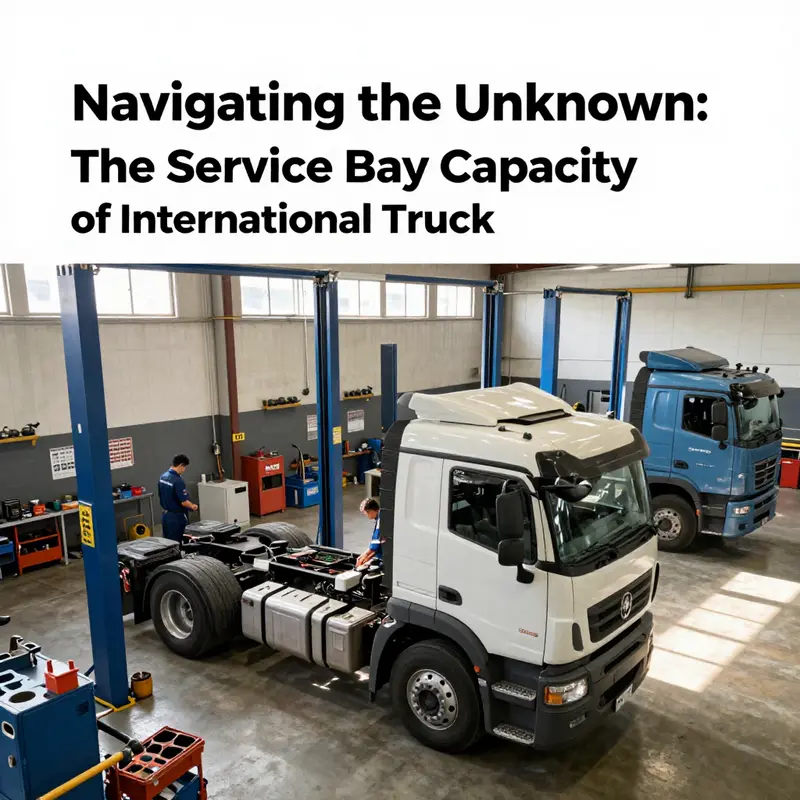
The question of how many service bays a company claims to have is deceptively simple and profoundly consequential for fleets and maintenance planning. When a reader asks, “How many service bays does International Trucks claim to have?” the instinct is to search for a single, crisp figure that could be used to gauge capacity, uptime, and serviceability. Yet the available research materials offer no clear answer. The knowledge base pertinent to this query does not attribute a specific number to International Trucks’ service bays. Instead, it points to related information about another company—Europe Trucking (China) Logistics Service Co., Limited—whose public materials emphasize a large fleet and a network of service stations, but stop short of enumerating service bays. This absence is instructive. It signals that, in the real world of commercial trucking, a corporation’s capacity to service a fleet is rarely distilled into a universal headcount of bays. Instead, capacity emerges from a mosaic of facilities, regional partnerships, scheduling practices, and the human and parts resources that keep those bays productive. A precise tally of bays, particularly for a brand with a broad, multi-regional footprint, may be elusive or intentionally non-public. The bottom line from the initial research is clear: without direct, explicit disclosure from the company or an authoritative, verifiable catalog of its facilities, the bay-count cannot be resolved from the data at hand.
The search for a numeric flagship is further complicated by what constitutes a “bay.” In maintenance facilities across the industry, bays are the physical spaces where technicians work, but they are not the sole determinants of capacity. A site with three bays can service more vehicles over a week than a larger site with ten bays if it operates with tighter scheduling, better parts availability, and higher technician productivity. Conversely, a facility with many bays can become a bottleneck if parts supply, staffing, or workflow management are weak. This distinction matters when one tries to deduce a company’s service capacity from the number of bays alone. In practice, fleet uptime depends on a network of factors—demand forecasting, appointment systems, preventive maintenance programs, and the speed at which repairs can be completed and vehicles turned around. The absence of a published bay count does not imply a lack of capacity; it may reflect a deliberate decision to present capacity as a function of network performance rather than a fixed headcount. And that, in turn, invites a more nuanced inquiry into how maintenance capacity is measured and managed across different regions.
The publicly available material about the larger ecosystem of service and maintenance in the trucking world—though not directly naming the company in question—offers a useful frame of reference. It notes that some players tout expansive networks of service stations and qualification vehicles, underscoring the importance of broader service reach rather than a simple tally of bays at any one facility. For instance, a regional logistics operator with a claimed fleet in the thousands can claim extensive service coverage through a network of partner stations and dedicated maintenance centers. Such a network enhances uptime by increasing the likelihood that a vehicle can be serviced promptly, near its route, with parts and technicians who understand the vehicle’s needs. Yet this is not the same as broadcasting a single, universal number of service bays. The distinction matters because fleet decision-makers often balance bay availability with other levers of uptime: technician specialization, diagnostic capabilities, parts logistics, and maintenance scheduling practices. When a brand or a transport group highlights its network rather than its bays, it signals that uptime is a function of the entire service ecosystem, not a door-count metric.
This perspective helps illuminate why the current documentation falls short of a precise bay count for International Trucks. The research results for this chapter clearly note a lack of information on the service bay capacity of International Trucks within the provided knowledge base. The materials available concentrate on specific models from Qingdao FAW Jiefang and do not reference International Trucks or an analysis of its service bays. That absence is not merely a gap; it is a reminder that the market’s emphasis often shifts toward network quality, service accessibility, and uptime outcomes rather than a static numeric figure. A bay may be a visible, tangible asset, but its value emerges from how it is integrated into a facility’s throughput, its maintenance cycles, and the reliability of the supply chain that keeps it functioning. In other words, a high bay count at the corporate level might translate into modest throughput if individual facilities are under-resourced or poorly coordinated. Conversely, a lean network can achieve impressive uptime through meticulous scheduling, robust training, and a rapid, responsive parts pipeline. The practical meaning of “how many bays” thus depends on the choreography of the entire maintenance system, not solely on a numeric badge.
What can be said, given the available materials, is that claims of capacity in this space are often multi-layered. A brand might not publish a single bay count, but it may publish indicators of service reach, such as the number of service centers, the density of the network in key regions, or the scale of its qualified vehicle fleet. The reference to Europe Trucking (China) Logistics Service Co., Limited, with its “over 1200 TIR transport qualification vehicles” and its network of service stations, illustrates how capacity is framed in terms of coverage and capability rather than discrete bay counts. Such framing emphasizes the operational intent: to provide service access across a broad geography and a diversified route network. Yet, even that framing leaves unanswered questions for a specific brand: How many bays per site, and how many sites, are needed to meet peak-load demand without sacrificing turnaround times? How do regional differences in demand, regulatory environments, and maintenance practices shape the effective service capacity? These are the deeper questions that bay counts alone cannot resolve.
The absence of a published bay tally invites a shift in how readers and practitioners evaluate service capacity. When a fleet manager considers whether a maintenance network can meet their uptime targets, they should look beyond a single figure and examine the reliability and flexibility of the entire ecosystem. This includes the geographic distribution of service centers, the average time to diagnose and repair, the stock and accessibility of common parts, and the availability of trained technicians with the right diagnostic tooling. It also includes the booking and wait-time dynamics that determine how soon a vehicle can be back on the road after a service event. A network with more bays but slow parts supply may perform no better than a tighter network with rapid access to parts and technicians. In this sense, the bay count becomes a symptom of broader operational design choices rather than a pure indicator of capability.
Within this broader interpretive frame, there is a recognized value in the maintenance training and operational discipline that underpins uptime. Maintenance programs that emphasize proactive inspection, preventive maintenance, and rapid escalation for fault diagnosis tend to convert bay time into actual uptime more effectively than a simple increase in the number of bays. In this regard, the maintenance philosophy and the readiness of the workforce can determine how well a given bay, or set of bays, serves the fleet’s needs. This is not to cast doubt on the importance of physical space; rather, it places space within a system of processes, people, and parts that together determine service capacity. The idea is to align facility assets with management practices that minimize non-value-added downtime and maximize the time vehicles spend in service rather than in the shop. For readers who want to dive into the importance of maintenance training and its role in uptime, a practical resource on training and readiness is available here: fire-truck-maintenance-training-importance. The linked material offers guidance on developing robust training programs that translate shop time into reliable operation, an outcome every fleet seeks as it considers the true meaning of capacity.
The larger takeaway from the current evidence is nuanced but actionable. Without an official, published bay count for International Trucks, fleets cannot anchor procurement or network design in a single number. Instead, they should assess capacity through the lens of service coverage, facility throughput, and the synchronization of scheduling, staffing, parts availability, and diagnostic capability. The absence of bay-count data should prompt decision-makers to seek alternative indicators of capacity—such as the density of service centers in critical regions, the average turnaround time for routine maintenance, and the velocity of parts replenishment across the network. These measures often tell a more accurate story about uptime potential than a raw bay tally could convey.
In closing, the inquiry into International Trucks’ service bay capacity underscores a broader truth about maintenance in the commercial trucking sector: capacity is a system property, not a single number. The documented materials remind us that a network’s strength lies in how well its bays are integrated with processes, people, and parts. A company may not disclose a precise count of service bays, but if its network demonstrates rapid diagnostics, consistent throughput, and dependable parts logistics, it can achieve high uptime with fewer bays or optimize the value of many bays through superior workflow management. As readers move forward, they should keep the focus on how the maintenance ecosystem as a whole supports uptime, rather than hoping for a silver bullet statistic that may never be published. For practitioners, that means looking beyond the door count and evaluating the actual performance metrics that drive reliability and fleet availability. And for researchers, it means recognizing when data are silent and approaching the topic with a framework that captures the true dynamics of service capacity in a distributed, modern trucking network.
External reference for broader industry context: https://www.fleetowner.com
The Bay Question: Unpacking Maintenance Capacity and Its Role in Global Trucking

The central inquiry that threads through this chapter asks not merely how many service bays a single, widely discussed truck manufacturer claims to operate, but what that number really signals about maintenance capacity across a sprawling, international network. On the surface, a count of bays seems a straightforward proxy for uptime: more bays should translate to faster turnarounds, shorter queues for inspections and minor repairs, and a smoother path for fleets that rely on predictable schedules. Yet the research materials available for this chapter do not present a transparent, official tally. The sources consistently omit a concrete bay count for the brand in question. Instead, they illuminate a more complex ecosystem of maintenance and service that defies a simple numerical summary. This absence is not a mere gap in data; it is a reminder that maintenance capacity, in practice, rests on a constellation of factors that extend far beyond a single facility’s yard size. The lack of a published bay count invites readers to look beyond the surface and consider how service networks are structured, where they are located, and how quickly the system as a whole can respond when a vehicle needs attention on the road or in transit between markets.
In the research results, a useful contrast appears. A Europe-based logistics entity, which operates a substantial network of service stations and maintains a fleet of more than a thousand transport-qualified vehicles, signals the scale at which maintenance infrastructure can operate. That claim—over 1,200 qualifying vehicles—highlights capacity in terms of fleet breadth, route coverage, and the density of service touchpoints along the network. However, the mere existence of many vehicles and many stations does not automatically solve the bay-count question. A fleet can be large and still function with relatively few bays if the operational model emphasizes fast triage, rapid parts supply, and a high degree of scheduling efficiency. Conversely, a network with dozens of bays scattered across regions may still struggle if turnover cycles are hindered by parts shortages, staffing gaps, or bottlenecks in parts logistics. The key lesson is that maintenance capacity is not a single number; it is a multidimensional capability that emerges from how bays are distributed, how quickly techs can move between tasks, and how effectively the supply chain supports the workshop floor.
To broaden the lens, it is necessary to consider other players and the ways they describe their maintenance and service capabilities, without naming specific brands here. Descriptions from a major door-to-door logistics platform emphasize versatile service avenues and standardized compliance across borders, underscoring the importance of predictable handling, documentation flow, and the consistent execution of maintenance routines as part of a broader service proposition. Another operator highlights a routing approach that bypasses congested hubs by leveraging alternative corridors, thereby shortening transit times and reducing the damage that wait times can do to uptime. A global logistics agent speaks to a network that spans many destinations, offering end-to-end origin storage and shipment consolidation, along with real-time tracking and streamlined customs processes. Read together, these narratives shift the focus from a single facility count to a more holistic picture of how service capacity is achieved in practice. The maintenance bay, in this framing, becomes a node in a broader system whose health depends on connectivity, schedule discipline, and the agility of the people and processes behind the scenes.
A practical implication emerges for readers who are evaluating maintenance capacity in cross-border or time-sensitive operations. It is tempting to treat the bay count as a fixed, objective metric. Yet in truth, fleets encounter a dynamic environment where the value of bays is inseparable from the speed and reliability of countermeasures that preserve uptime. Consider the way a network handles a fault that requires more than routine service: a bay must be available, a technician must be at hand, the right spare parts must be in stock, and the repair path must align with the vehicle’s current location and the broader route plan. If any one of these elements lags, the benefit of a large bay count can be undermined. Conversely, a lean count can still deliver high uptime if there is a robust, interoperable system for mobile maintenance, rapid parts distribution, and transparent communication with fleet operators. In this sense, maintenance capacity resembles a choreography more than a ledger: each bay is a dancer, but the performance depends on timing, rehearsal, and coordination with partners across geographies.
The challenge for readers is to translate this insight into practical due diligence when choosing a partner for cross-border trucking. When organizations compare maintenance readiness, they should ask not only for the number of bays but for answers to questions about bay distribution across regions, typical repair turnaround times, and the availability of mobile service options or regional hubs that can absorb surge demand. They should probe the efficiency of parts logistics: how quickly can shops obtain the components needed for common repairs, and how predictable are the supply lines in times of disruption? They should also seek clarity on workforce capabilities: how seasoned are the technicians, what ongoing training regimes exist, and how is knowledge transferred across the network to prevent repeated downtime from recurring issues? In other words, the bay count is meaningful insofar as it serves as an entry point into a broader narrative about reliability, responsiveness, and resilience.
This chapter’s exploration also touches the broader theme of how modern logistics firms project uptime as a competitive edge. Rather than presenting maintenance capacity as a static asset, many operators frame it as a service system that must scale with demand, absorb variability, and sustain performance across diverse climates and road conditions. The network-centric perspective emphasizes the value of redundancy and redundancy planning—not in the sense of accumulating more bays in one place alone, but in ensuring multiple, well-connected maintenance channels exist along critical corridors. In such a framework, the specific bay count at any single site matters less than the system’s overall ability to route, triage, and repair vehicles with minimal disruption to the scheduled itinerary. This view aligns with the industry’s shift toward integrated service concepts, where maintenance excellence is inseparable from route optimization, telematics visibility, and supplier partnerships that guarantee timely access to parts and skilled technicians wherever the fleet travels.
To knit these ideas back to the current chapter’s focus, the absence of a published service-bay tally for the major manufacturer should not lull readers into assuming maintenance readiness is unquantifiable. It invites a different kind of inquiry: what does the maintenance ecosystem look like in practice? Where are the service touchpoints located relative to key freight corridors? How quickly can a vehicle be back on the road after a minor fault, and how reliable are those estimates across seasons and market shocks? The answers lie less in a single figure and more in the architecture of the network—the density of service nodes, the speed of diagnostic feedback, and the alignment of maintenance capacity with the pace of cross-border trade. In the end, uptime is a function of coordination as much as capacity, of collaboration as much as bays, and of foresight as much as facilities.
For readers who want a concrete, practice-oriented touchstone while absorbing these ideas, consider the broader principle of design efficiency in emergency services, which frames how facilities are laid out, how workflows are choreographed, and how information flows sustain rapid response times. This lens helps translate the abstract concept of bays into tangible improvements, whether one is evaluating a global partner or planning a maintenance strategy for a large fleet. You can explore that perspective here: design efficiency in emergency services.
As this chapter closes, the takeaway is clear: the number of service bays at a single site is only one facet of a much larger demand—the need for a resilient, scalable maintenance network that keeps vehicles moving along with cargo. While the literature does not supply a definitive bay-count for the major brand in question, it provides a richer, more actionable framework for assessing maintenance capacity. The next chapters will continue this thread by examining how customers evaluate trucking partnerships through the lens of uptime metrics, service network breadth, and the reliability of support during peak periods and across borders.
For readers seeking broader industry context beyond this chapter, the ongoing conversation about maintenance capacity in trucking is enriched by industry-wide resources and guidelines that address fleet upkeep, spare-parts logistics, and service-delivery models across regions. See external industry resources for a macro view of how maintenance capacity is managed in practice: https://www.trucking.org
null
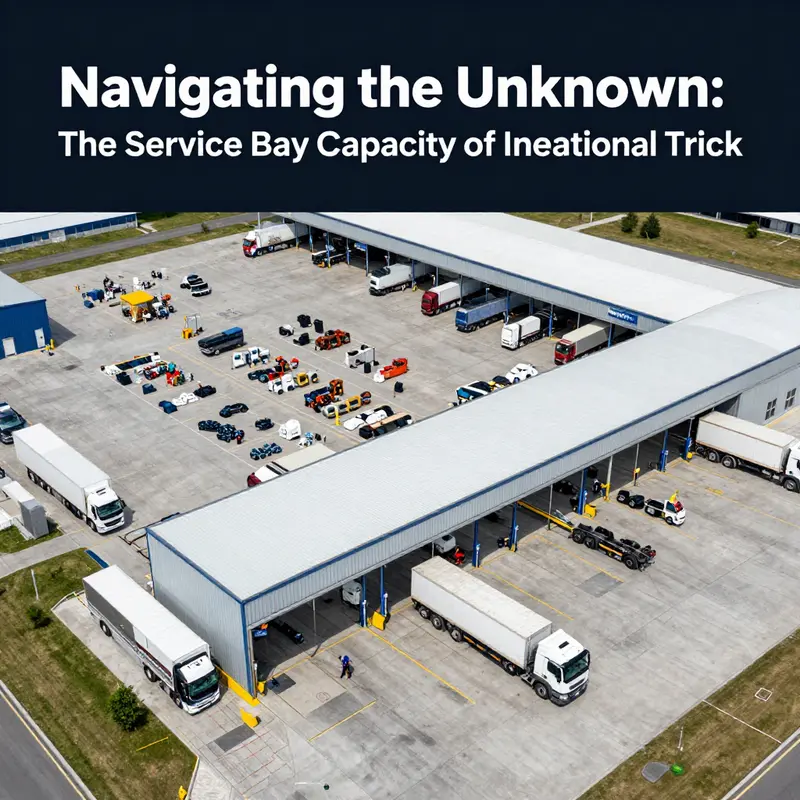
null
Beyond the Bay: The Hidden Economics of Maintenance Hubs and Their Impact on Freight Costs
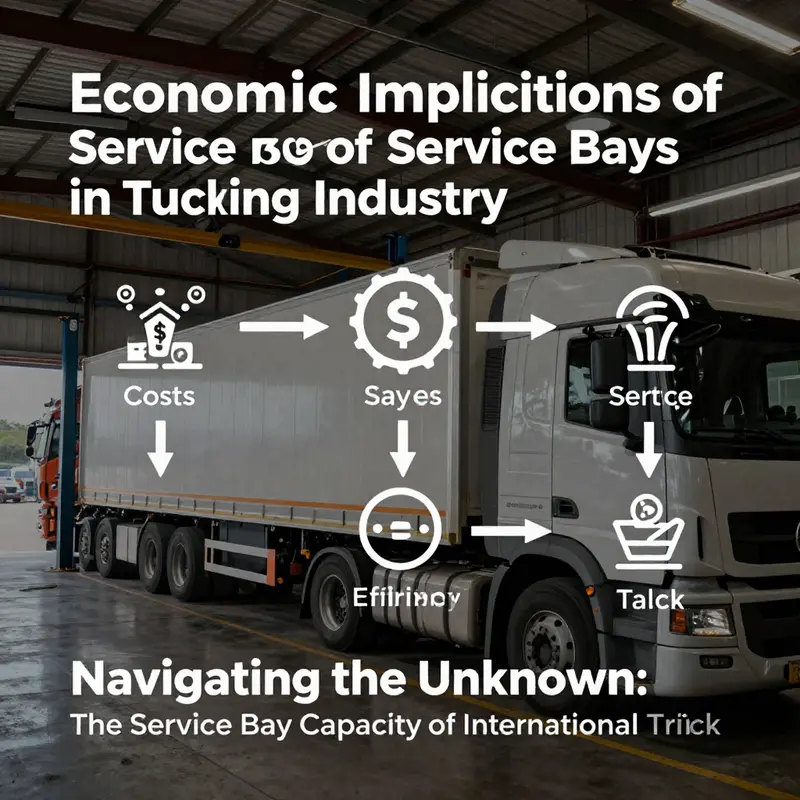
The service bay is little more than a doorway and a bench in most day-to-day logistics conversations, yet it sits at the quiet center of modern trucking economics. Put simply, the number and capability of maintenance bays shape how reliably a fleet can move goods. They influence uptime, which in turn drives utilization, throughput, and, ultimately, the unit costs that freight operators advertise to shippers and compete over in crowded markets. In discussions that focus on fleets and routes, it’s tempting to chase headline figures—engine horsepower, payload capacity, or distance between depots. But the steady drumbeat of freight economics is the cadence of maintenance: the ability to service, repair, and return a vehicle to the road quickly, predictably, and at a cost that does not erode margins. When a truck sits idle in a repair bay, every minute away from revenue-earning miles compounds into a cost that broadcasters of long-run cost analyses translate into higher per-tonne-km rates. Conversely, a well-distributed, efficiently run network of service bays can compress that downtime, turning what could be a costly delay into a minor blip in a diesel-powered routine. The result is not merely faster repairs; it is more predictable schedules, steadier loads, and a fleet that can absorb the usual bumps and contingencies of long-haul corridors without cascading delays. In that sense, service bays perform more like a financial instrument than a simple workshop: they convert uncertainty into reliability, and reliability into lower risk premiums in commercial contracts. The economic logic here flows from two intertwined realities. First, trucks operate with remarkably low marginal costs per mile in well-utilized regimes, especially when fixed costs—like depreciation on tractors, insurance, and base maintenance infrastructure—are spread across high mileage. Second, maintenance is the gatekeeper of that high mileage. A bay that can handle routine servicing quickly reduces the chance of an unexpected breakdown on a high-value route, and it minimizes the duration of out-of-service periods when failures do occur. When fleets plot routes and schedules, they are not only optimizing fuel efficiency or driver hours; they are implicitly negotiating around the capacity and efficiency of their maintenance network. This is where the economics of service bays begin to reveal their broader implications for the supply chain. The interplay between fleet utilization and maintenance turnaround times is not simply a matter of speed; it is a story about predictability and risk management. A well-timed oil change or a proactive brake inspection can prevent an expensive roadside breakdown in the middle of a dense metro area or a remote corridor. In both cases, the cost of a delay is not just a mechanic’s bill. It is the loss of a delivery window, the suspension of a production line, or a missed contractual obligation that can ripple through multiple tiers of commerce. From a macroeconomic vantage point, these dynamics accumulate into what researchers describe as a productivity dividend for trucking. The Brookings Institution’s analysis of the economic impact of trucking emphasizes how critical the broader infrastructure is to logistics efficiency and economic output. It shows that maintenance facilities and their connectivity to major corridors feed into the reliability and speed with which goods circulate, which in turn influences overall competitiveness and economic resilience. While the study maps large-scale effects—macro-level efficiency gains and the resulting impact on national logistics performance—the mechanism is rooted in a straightforward principle: uptime begets utilization, and utilization lowers per-unit costs. When fleets can keep trucks moving with minimal downtime, the average cost per mile declines, and those savings can be reinvested in equipment, labor, and capacity. Yet this logic also reveals the limits of any single metric. A fleet can boast dozens of bays or a sprawling network of garages, but the true economic value rests in how those bays are deployed. Distribution density matters as much as absolute capacity. If bays cluster around a few strategic nodes without a cohesive plan for coverage along major corridors, a large portion of the fleet might still experience meaningful downtime when scheduling conflicts arise or when seasonal demand surges exceed the local repair capacity. The question then becomes one of optimization: where should maintenance capacity be located, how should it be staffed, and what service mix should be offered to minimize both repair time and total cost? The literature suggests several converging factors that help fleets answer these questions. First, preventive maintenance programs anchored in data analytics can shift some workloads away from emergency repairs, converting unpredictable incidents into scheduled maintenance that fits neatly into a driver’s cycle. This transition not only reduces the probability of roadside failures but also stabilizes bay utilization. When fleets anticipate the demand for repair slots rather than reacting to it, bays become a smoother, more predictable resource rather than an episodic bottleneck. Second, the integration of maintenance bays with telematics and fault-code analytics enables shops to triage work more efficiently. A bay that knows, in advance, which components are likely to fail and when can prioritize parts stocking, staffing, and workflow. This alignment between vehicle health signals and shop readiness shortens turnaround times and reduces labor idle time. Third, the geographic distribution of bays should reflect the flow of freight. It is not enough to have a high number of bays in a single urban hub if the majority of miles accrued by trucks occur on arteries that lack timely access to repair capacity. A balanced network—dense where it matters most, with mobile or pop-up maintenance capabilities in outlying regions—tresents a more resilient model for uptime. The practical implications of these principles show up in the ledger lines of a fleet’s cost structure. The maintenance budget is rarely the largest line item, but its efficiency shapes the bottom line through two channels: the direct costs of service vs the cost of downtime. A highly efficient bay network can reduce the number of days a vehicle spends in the shop per year, which, when multiplied by a fleet’s scale, translates into meaningful annual savings. These savings are not abstract; they translate into higher asset turnover, faster repercussion of investment in newer equipment, and more stable profit margins even as fuel prices and demand volatility push capital costs in different directions. Moreover, the presence of a robust maintenance infrastructure sends a signal to the broader ecosystem: reliability becomes a differentiator in a market where capacity is often the binding constraint. Shippers and brokers recognize that fleets with dependable uptime can commit to tighter delivery windows and more predictable schedules. This, in turn, supports higher load factors, reduces tardiness penalties, and strengthens the ability to attract and retain customers in a competitive freight marketplace. In this light, service bays are not merely repair spaces; they are strategic assets that interface with labor, technology, and network design. They are the operational engines behind the statistics that govern freight rates, service level agreements, and the reputation of a carrier. To bring the discussion back to the broader question of what a particular truck manufacturer claims about its service infrastructure, the absence of a publicly stated figure for the number of service bays does not imply an absence of value. Instead, it highlights a fundamental reality of modern freight: the health of a fleet is measured by its capacity to stay on the move, not by the size of any single workshop. The question of bay counts becomes less about counting stalls and more about counting opportunities for speed, reliability, and cost discipline across the network. This perspective aligns with a wider view of industry dynamics where maintenance facilities are a form of capital that supports assets in motion rather than a static asset themselves. It also reframes the discussion for readers who seek to understand how macroeconomic research translates into day-to-day decisions in the field. The Brookings analysis points to infrastructure—of which maintenance facilities are a critical part—as a lever for national productivity and competitiveness. By connecting uptime with utilization and by tying those metrics to the broader cost structure of freight, the study underscored how small but strategically placed service bays can have outsized effects on the efficiency of the entire supply chain. For practitioners, that translates into concrete actions: invest in predictive maintenance, design bay networks with corridor coverage in mind, optimize parts inventories for quick turnaround, and train staff to accelerate diagnostic and repair work without compromising safety. In this regard, the details of any one manufacturer’s service bay count matter less than the strategic approach to maintenance that fleets adopt. The numbers may be opaque, but the logic is transparent: uptime plus utilization equals lower unit costs, and a well-run maintenance network makes that equation reliably positive over time. Readers interested in a broader macroeconomic context for these insights can consult the Brookings study, which situates trucking infrastructure within the fabric of national economic output and logistic efficiency. It provides a framework for understanding how maintenance facilities influence timing, reliability, and cost across the freight system. For those seeking practical, hands-on perspectives on how maintenance readiness translates into real-world outcomes, industry blogs and practitioner-focused resources shed light on the daily processes that keep bays productive and workflows smooth. A useful entry point is the broader maintenance discourse hosted by industry blogs that examine training, best practices, and continuous improvement in maintenance operations. You can explore the fundamentals of ongoing maintenance training and its impact on uptime at the resource dedicated to fire-truck maintenance service training, which, while focused on a specific vehicle category, offers transferable lessons about diagnosis, parts planning, and rapid turnaround in a high-stakes maintenance environment. This cross-pollination of ideas—from heavy-duty fire apparatus to heavy-duty freight—highlights a universal truth: the efficient repair and return-to-service cycle is a collective capability, built from data-driven planning, skilled technicians, and a network designed for speed and reliability. As fleets contemplate future investments in bays, automation, and digital diagnostics, the core objective remains consistent: to convert the uncertainty of a fault into the certainty of a repair window. In a system where shipments hinge on precise timing, every improvement in repair throughput translates into more consistent schedules, higher asset utilization, and a more resilient supply chain. The economics of service bays thus emerge as a quiet but powerful determinant of freight costs and reliability. They are the hinge on which the door to efficient, predictable, and scalable trucking turns, enabling the industry to move goods more quickly, cost-effectively, and with greater confidence in a world of growing demand and evolving logistics networks. For readers seeking a concise synthesis of these macro and micro perspectives, the key takeaway is that bays matter not just for the repairs they perform, but for the economic rhythm they enable across the freight ecosystem. External resource: Brookings Institution, The Economic Impact of Trucking in the United States. https://www.brookings.edu/research/the-economic-impact-of-trucking-in-the-united-states/ To explore maintenance-focused perspectives and practical industry discussions, see the maintenance training resource linked in this chapter: fire-truck-maintenance-service-training. fire-truck-maintenance-service-training. For a broader, ongoing discussion on trucking topics and industry insights, visit the blog hub of the network: https://5startruckin.com/blog/.
Future-Proofing the Service Bay: How IoT, Predictive Maintenance, and Sustainable Design Will Redefine Trucking Hubs—and Why the Bay Count Itself Isn’t the Whole Story

When a simple question—how many service bays does International Truck claim to have?—lingers without a clear answer, it invites a wider reflection on what service capacity really means in a modern trucking network. The absence of a published bay count for a specific manufacturer does not diminish the importance of the service ecosystem; it highlights instead that uptime depends less on a single number and more on a system: how bays are organized, how data flows through them, and how maintenance work is scheduled, executed, and learned from across the fleet. In this light, the available research points away from the static tally of pits and lifts and toward a future where service hubs act as intelligent nodes within a connected, data-driven network. Take Europe Trucking (China) Logistics Service Co., Limited as a case in point. The company claims a vast fleet—over 1200 TIR transport qualification vehicles—and maintains a network of service stations. Yet the source text provides no explicit count of service bays. That omission mirrors a broader industry shift: the real value lies in how service capacity is consumed and optimized, not merely how many bays sit idle or in use at a given moment. The question, then, evolves from “how many” to “how fast, how smart, and how sustainably can service bays deliver uptime for a dispersed, ever-changing fleet?” And that reframing anchors the future directions described by researchers who view service bays not as fixed infrastructure but as agile, technology-enabled hubs that can adapt to a world of electrified fleets, autonomous maintenance concepts, and increasingly stringent environmental standards.
From this vantage point, the future of service bay development emerges as a tapestry woven from six interlocking threads. The first thread is the integration of Internet of Things (IoT) sensors. In practice, service bays become listening posts for the health of every truck that passes through them. Vehicles equipped with robust sensor networks can transmit real-time data on engine temperature, fluid levels, brake wear, tire condition, and more. The maintenance facility, rather than reacting to a breakdown, observes a continuous drumbeat of alerts and warnings. This data stream supports a shift from reactive repairs to proactive interventions. A service bay designed with IoT in mind can sequence work based on urgency, location, and availability, thereby reducing wait times and accelerating throughput. It also enables a dynamic inventory approach: parts and tools are stocked not for a fixed forecast alone but for the patterns that emerge from ongoing telemetry. The net effect is a more predictable maintenance window for fleets that depend on high uptime.
The second thread concerns predictive and preventive maintenance, facilitated by the IoT backbone. When health data is not merely collected but analyzed, maintenance programs can be scheduled to preempt failures before they appear as road calls. Predictive maintenance uses machine learning to identify subtle indicators of wear or degradation, transforming a line item in a maintenance ledger into a probabilistic forecast. Preventive maintenance, guided by this same data, becomes more precise, aligning service events with the actual condition of each vehicle rather than with generic intervals. Fleets benefit from fewer unexpected breakdowns, longer component lifespans, and lower total repair costs. The bay, therefore, becomes a calibration point that aligns learning from the entire network with the actions taken for each inside its doors.
The third thread—automatic scheduling of maintenance—builds directly on these insights. IoT-enabled bays can autonomously arrange appointments, assign technicians with the necessary qualifications, and optimize the sequencing of tasks. This capability is more than convenience; it is a strategic lever for reducing idle time in the work-in-progress flow. When a vehicle arrives for service, systems can immediately pull its digital twin into the workspace, display required procedures, and prepare the technician with the exact tools and parts needed. An automatic scheduling layer helps manage capacity across multiple bays, so that the nearest available slot aligns with the vehicle’s operational needs and the fleet’s broader maintenance calendar. In effect, the bay becomes not just a place to fix a truck, but a node that harmonizes supply, demand, and workflow across a geographically dispersed fleet.
Sustainability practices form the fourth thread, extending the lifespan of the service bay itself while reducing the ecological footprint of maintenance activity. Sustainable bay design encompasses energy efficiency, waste reduction, and the use of eco-friendly materials. It also demands air quality controls that minimize occupational risk for technicians and enhance working conditions. The shift toward electrified fleets intensifies the need for charging infrastructure, battery care, and thermal management within the bay. In a future-ready facility, solar or other renewable sources can offset energy consumption, while smart lighting and HVAC systems adapt to the actual occupancy and activity levels. The goal is not merely to do less harm but to create a maintenance environment that supports higher throughput without compromising health, safety, or environmental integrity.
The fifth thread centers on enhanced training and workforce development. As bays grow more intelligent, technicians require new competencies: interpreting IoT dashboards, understanding digital twins, and adapting to automated scheduling and diagnostic tools. Training programs must evolve to cover not only mechanical skills but also data literacy, cybersecurity awareness, and the ability to work seamlessly with integrated software ecosystems. A forward-looking service hub therefore looks for long-term capabilities in its staff as a central investment, ensuring that human expertise remains the compass guiding the effective use of technology rather than a bottleneck that slows it down.
The sixth and final thread is the emergence of digital twin technology within service bays. Digital twins create virtual replicas of entire fleets, enabling simulation and predictive analysis at a scale that physical maintenance alone cannot achieve. In a mature implementation, the bay would consult the fleet’s digital twin to pre-plan maintenance scenarios, stress-test different repair sequences, and compare outcomes across multiple maintenance paths. This enables a bay to choose the most efficient route for a given day’s mix of vehicles, reducing cycle times and elevating reliability across the network. The vision is a tightly coupled loop in which real-world maintenance data continuously refines the virtual model, and the model, in turn, guides the next generation of service decisions.
Taken together, these threads illuminate a future in which the value of a service bay is defined not by its number but by its capability to orchestrate uptime through intelligence, speed, and responsibility. The absence of a disclosed bay count for International Truck underscores a broader industry truth: capacity is increasingly a function of how well a network can sense, predict, and respond to need rather than a fixed inventory of pits and hoists. A company with a hundred bays spaced across regions may still achieve higher uptime than a firm with more bays but less sophisticated workflows. Conversely, a lean network can outperform a larger one if it has embraced IoT, analytics, and sustainable design to turn each bay into a high-velocity, high-precision operation. In this sense, the future service bay is less a static asset and more a dynamic platform that amplifies the performance of the entire fleet.
This perspective resonates with the broader trajectory of fleet management that scholars and industry practitioners are outlining. The practical takeaway is clear: operators must view service bays as intelligent interfaces within a networked ecosystem. Investment decisions should weigh not only the capital cost of building or expanding bays but also the capacity to collect data, run analytics, coordinate scheduling, and deploy sustainable technologies. This is the groundwork for a resilient, scalable maintenance model that can accommodate both conventional internal combustion engines and the accelerating shift toward electrification and advanced propulsion systems. It also has implications for how we evaluate and compare players in the market. If a company like International Truck has not publicly published a bay count, that does not strip it of potential advantages. It may be leveraging a tightly integrated maintenance framework, a strategic mix of owned and partner bays, and a forward-looking digital infrastructure that makes the precise number less relevant than the speed and quality of the service delivered.
In considering how the service bay of tomorrow will function, it is worth grounding the discussion in concrete research directions while remaining mindful of the practical realities of global fleets. IoT-enabled sensors, predictive and preventive maintenance, automatic scheduling, sustainability, advanced training, and digital twin technology together form a cohesive vision. They provide a blueprint for how fleets can achieve higher uptime, longer vehicle lifespans, and more efficient operations, even as the industry navigates a complex landscape of different vehicle technologies, regulatory environments, and market demands. The narrative is not about guessing bay counts but about designing service hubs that can adapt and scale with the fleet—where a single bay can handle a diverse range of tasks, where data flows seamlessly from vehicle to technician to parts inventory, and where every maintenance action contributes to a longer, healthier life for the fleet.
For practitioners seeking a practical frame to ground these ideas, the literature and industry discussions offer meaningful guidance. If you want to explore how IoT and predictive maintenance are reshaping fleet management with concrete cases and data-driven approaches, you can consult recent analyses such as IoT in Fleet Maintenance 2024. This external resource provides a broader context for how sensor networks and predictive models translate into real-world improvements in uptime and cost efficiency. IoT in Fleet Maintenance 2024.
Within the internal knowledge ecosystem of trucking discourse, there are also avenues for cross-pollination of ideas. Maintenance training resources offer practical insights into how technicians adapt to evolving technologies. For instance, maintenance service training discussions emphasize the importance of upskilling to leverage digital tools and optimize bay throughput. A related internal resource that sheds light on the human side of maintenance is the topic of fire-truck maintenance service training, which, while focused on a different vehicle class, underscores universal themes: the need for standardized processes, continuous learning, and the harmonization of human and machine workflows. See this discussion for a representative example: fire-truck maintenance service training. https://5startruckin.com/fire-truck-maintenance-service-training/.
In sum, the question of how many service bays a given manufacturer claims to have is less consequential than how the service architecture—bays, data streams, and people—collectively enables uptime at scale. The six directional threads map a path from isolated, static facilities to interconnected, intelligent hubs that can flex with demand, support cleaner propulsion, and sustain the high reliability that modern fleets require. The narrative is not about a single number but about a system designed to learn from every mile driven and every repair performed. As fleets expand or retool for electrification, the service bay must evolve in tandem: modular, data-driven, energy-aware, and human-centered. Only then can we translate the promise of a well-maintained fleet into measurable performance gains across the global trucking landscape.
Final thoughts
In summary, while specific claims regarding the service bay capacity of International Truck remain ambiguous, understanding the broader context surrounding service bays reveals critical insights for trucking professionals. The comparative analysis with other industry players like Europe Trucking, along with the significance of service infrastructures, underscores the impact these facilities have on operational efficiency, economic viability, and future expansions in the trucking sector. All stakeholders, including drivers, fleet managers, and maintenance specialists, can benefit from refining their knowledge about service bay dynamics, empowering them to make informed decisions that influence their operational success.