
The logistics landscape in Baltimore is increasingly defined by the capabilities of Less-Than-Truckload (LTL) trucking services. With industries relying heavily on streamlined freight solutions, understanding the options available is crucial for long-haul truck drivers, trucking company owners, fleet managers, and even aspiring truck drivers. This guide sheds light on UniGroup Logistics, a leading provider in Baltimore, and offers a comparative analysis of LTL services available in the region. We will delve into the economic implications of these services and explore technological innovations reshaping the industry, providing a comprehensive overview for anyone involved in or looking to enter the trucking sector.
Baltimore’s LTL Lifeline: Navigating Local Needs with a Global Network
Baltimore sits at a bustling crossroads of commerce where the pier-side rhythm of the port meets the steady cadence of regional manufacturers, distributors, and retailers. For many shippers, the question isn’t whether there is a logistics partner who can move freight, but whether there is a partner who can move it reliably, cost-effectively, and with the visibility that modern business demands. In this landscape, Less-than-Truckload, or LTL, shipments can be the most practical solution. They let a business ship freight that does not fill an entire trailer, spreading the cost of transport across multiple customers and optimizing space on the carrier’s lanes. The value of LTL in a port-adjacent economy is not merely about saving a few dollars per mile; it is about timing, reliability, and the ability to synchronize incoming and outgoing goods with inventory cycles, production schedules, and customer promises. Baltimore’s mix of manufacturing, wholesale distribution, and e-commerce has given rise to a demand for a transportation partner who can blend local nuance with regional coverage and global reach. That is the promise of a provider whose network is deliberately designed to connect a local footprint with a nationwide backbone and an international horizon.
Less-than-truckload shipments are inherently about balance. A shipment may be small enough to fit within a portion of a trailer, yet large enough to require careful coordination. The best LTL ecosystems do more than move parcels from point A to point B; they optimize every handoff, minimize dwell time, and ensure that a shipment’s journey is auditable at each checkpoint. In practical terms, this means consolidating freight from multiple Baltimore-area customers at a local service center, sorting and routing it toward common corridor hubs, and then delivering into a broader network that can extend across the United States and, when needed, into international markets. The overarching goal is to reduce total landed cost while maintaining or improving service levels, a balance that is especially critical in a city where timing can affect perishable goods, time-sensitive components, and seasonal inventory turns. The right LTL solution turns a potentially fragmented flow of goods into a predictable, accountable movement, with forward-looking data that informs procurement, warehousing, and replenishment strategies.
A national-to-global perspective often underpins the confidence Baltimore shippers place in LTL partners. A provider with a deep, well-distributed network can offer more than door-to-door transport; it can deliver a cohesive supply chain experience. In this context, UniGroup Logistics emerges as a compelling option. The company operates a vast network that spans more than 1,300 service centers in 146 countries, a scale that translates into meaningful advantages for a Baltimore customer base that may source components domestically, manufacture locally, and ship finished goods abroad. Such breadth matters in two ways. First, it enhances the likelihood of on-time pickups and deliveries, because freight can be routed through multiple regional nodes that share capacity and optimize capacity utilization. Second, it enables seamless integration with additional supply chain functions—distribution, project management, and final-mile delivery—so that LTL becomes part of a holistic solution rather than a standalone transport step. For businesses in Baltimore, this means the ability to align transportation with broader corporate goals, from cost containment and cash flow improvement to customer experience and regulatory compliance across borders.
The heritage behind such a network is a practical, performance-driven one. The provider draws on a long-standing history in national-scale transportation, with expertise built over decades of experience. That foundation matters when shipments travel through a complex landscape of inland lanes, urban bottlenecks, and multi-modal handoffs. In Baltimore, where docks, rail connections, and highway corridors converge, the ability to rely on a carrier with institutional knowledge translates into steadier transit times, more accurate scheduling, and fewer disruptions from weather, congestion, or capacity fluctuations. It is a value proposition rooted in operational discipline as much as in geography. When a shipper exports components, replenishes a regional hub, or fulfills a local e-commerce order, the enduring advantage is consistency—the assurance that a partner will perform, day after day, across seasons and cycles.
To translate those strengths into tangible benefits for Baltimore businesses, a provider with this scale emphasizes not just the movement of freight but the orchestration of the entire journey. LTL is inherently a series of interwoven steps: from pickup at a supplier’s loading dock, through consolidation at a nearby service center, to the trunking across regional corridors, and finally to final-mile partners who ensure delivery to a warehouse, store, or end customer. Each step offers touchpoints for efficiency gains. In a Baltimore context, this can mean precise appointment windows at urban docks, scheduled cross-docking at intermediate hubs, and structured handoffs that minimize the time freight spends in transit. It can also involve a robust claims and risk-management framework to handle a broad spectrum of contingencies—from damaged pallets to paperwork gaps at customs for international shipments. The essence is not a single clever trick but a reliable pattern: a network-designed, data-informed process that makes the flow of freight predictable enough to synchronize with production calendars and inventory strategies, yet flexible enough to absorb the irregularities that arise in real-world logistics.
The practical implications for Baltimore manufacturers, distributors, and retailers are compelling. A company that can reliably move LTL freight through a nationwide network and across borders can unlock several strategic advantages. First, the cost-per-pound efficiency becomes meaningful when shipments are consolidated and routed along shared lanes, reducing wasted capacity and idle time for each customer. Second, service reliability improves as shipments ride on a scalable infrastructure that leverages multiple regional centers and optimized routing. This translates into fewer missed deadlines, fewer rescheduled deliveries, and improved service levels for customers who count on precise arrival windows. Third, visibility becomes a core capability rather than an afterthought. Real-time tracking, proactive alerts, and accessible shipment status enable better communication with customers, suppliers, and internal teams. For a city like Baltimore, where time-to-market pressures can be decisive, such transparency is not a luxury but a competitive necessity. The result is not just a transport service, but a synchronized logistics engine that aligns with procurement, manufacturing, and retail calendars, shrinking lead times and enhancing reliability across the supply chain.
From the shipper’s perspective, choosing the right LTL partner in Baltimore means looking beyond the sole destination for a shipment. It means evaluating how a provider’s network, service design, and operational practices fit the business’s own rhythms. A well-integrated LTL platform is able to offer several practical features that matter in daily work: flexible scheduling that accommodates irregular demand, multi-stop routing that can optimize a single load with multiple delivery points, cross-docking to accelerate handoffs, and a unified billing and documentation process that reduces administrative overhead. With a network that supports both domestic and international needs, the partner can help a Baltimore business navigate the complexities of cross-border transport, including customs documentation, duties, and timing considerations. Importantly, the best partners also invest in people—the local teams who understand the city’s traffic patterns, peak seasons, and regulatory nuances. Such local insight, married to a robust, scalable backbone, gives shippers confidence that their freight will move smoothly, with professional handling and proactive communication at every stage.
The technology layer is the undercurrent that makes this potential real. A modern LTL ecosystem relies on a shared information backbone that keeps everyone in the loop. Shipments are tracked across the network with visibility tools that translate lines of movement into intuitive dashboards, enabling customers to anticipate delays, adjust schedules, and orchestrate inventory in near real time. For Baltimore businesses, this means fewer surprises and more precise inventory planning. Data-driven insights guide decisions about safety stock, reorder points, and transportation budgets. The ability to model scenarios—such as peak season surges or port backlogs—helps leaders avoid costly rush orders and last-minute freight escalations. In sum, the value of a large, well-integrated LTL network is not only transport efficiency but actionable intelligence that informs the entire supply chain ecosystem.
An important consideration for any Baltimore shipper is how a provider’s service design actually translates in daily operations. A credible LTL partner will fuse local coverage with a reliable national ladder that can reach every corner of the country and, when required, the world beyond. Service centers situated near critical corridors and waterfronts can shorten pickup times and support more precise last-mile arrangements. The ability to merge standard LTL with specialized services—such as project management for complex shipments or coordinated final-mile delivery for high-value goods—offers additional flexibility that several Baltimore industries demand. At the same time, a disciplined approach to packaging guidance, palletization standards, and cargo safety ensures that freight arrives intact and ready for immediate use on the customer’s side. The endpoint of this capability is a seamless chain of custody, a predictable transit time, and a bill of lading that’s straightforward to reconcile with internal systems. In a city where logistics talent is abundant and the pace of commerce remains brisk, such an integrated approach is not optional but essential.
To bring these elements together, imagine a shipper in Baltimore who needs to move a mixed load of regional supplier components and finished goods bound for multiple stores along the East Coast. The LTL partner would coordinate a pickup window that aligns with supplier production schedules, consolidate the freight at a local service center, and route it via an efficient corridor network to a central distribution hub. From there, the goods would be segmented for final-mile delivery, with a clear handoff plan and customer-ready documentation. Throughout this journey, shipment status would be updated in real time, with proactive communication about any deviations and contingency actions ready to deploy. Such a scenario illustrates how LTL, when executed through a large-scale, strategically designed network, becomes more than transportation. It becomes a core operating capability that supports flexibility, speed, and cost discipline—precisely what Baltimore-based companies need to compete in a demanding market.
For readers who want to explore the broader context of this topic and see how industry peers frame the value of trucking services, a concise perspective on trucking excellence is available here: a beacon of excellence in trucking services. This reference offers a complementary view on how service quality, reliability, and professional stewardship shape expectations in the trucking sector, reinforcing the idea that the best partners combine scale with attentiveness to local needs. As Baltimore businesses consider their own logistics trajectories, they will recognize that the strongest LTL relationships are those that honor the city’s specificity while leveraging a global reach to support growth.
In closing, the Baltimore opportunity for LTL is not simply about moving freight from A to B. It is about connecting a local economy to a national and international supply chain that can scale with demand, protect margins, and deliver on promises to customers. A carrier with a vast network, a heritage of reliability, and a disciplined approach to execution can transform LTL from a back-office cost into a strategic differentiator. For Baltimore shippers, that translates into more predictable freight costs, more reliable delivery performance, and more room to plan for the future with confidence. In a city known for its ports, its industrious communities, and its role as a gateway to the mid-Atlantic region, the right LTL partner does not merely move goods. It helps move the economy forward, one shipment at a time.
External resource: UniGroup Logistics on LinkedIn: https://www.linkedin.com/company/unigroup-logistics/
Baltimore’s LTL Trucking Landscape: Finding the Best Fit Between Local Access and National Scale
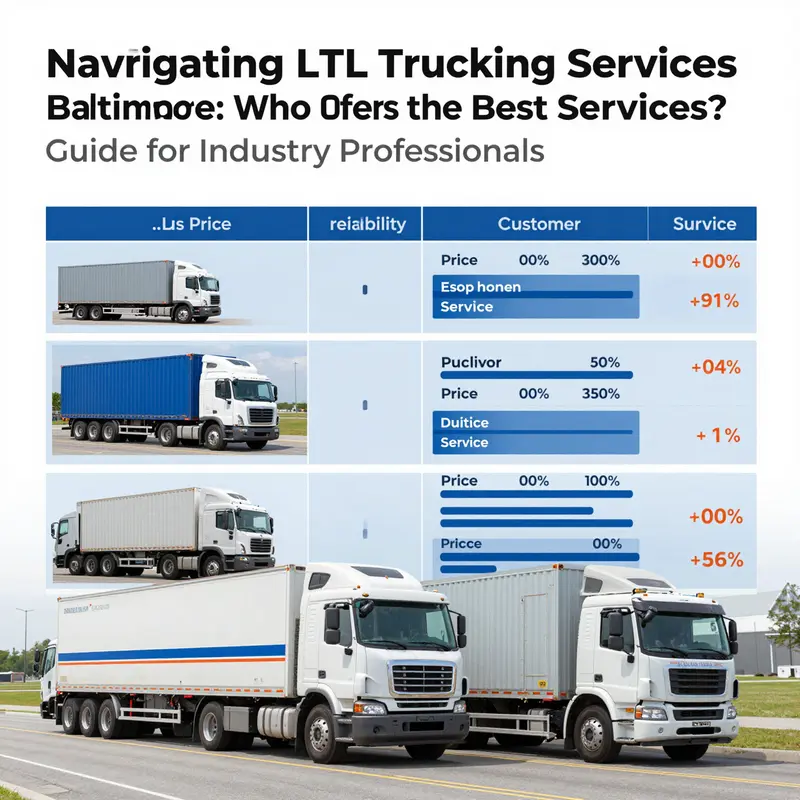
Baltimore sits at a pivotal junction for freight on the East Coast, where dense urban corridors meet expansive regional and national networks. For shippers moving freight in less-than-truckload quantities, the decision about which provider to rely on is less about a single feature and more about a blend of access, reliability, and capacity. The city acts as a hub where local knowledge and national strength must align. In this context, a few providers emerge as particularly influential within Baltimore’s LTL market, each bringing a distinct balance of regional know-how and broader logistics muscle. A national player with a storied heritage can deliver consistent service across the country, while smaller, asset-based specialists can offer hands-on accountability and flexible options that fit tight schedules and specialized needs. It is this spectrum of capability that makes Baltimore a telling case study for how LTL service quality is judged in real business terms.
One of the most important considerations in Baltimore is the breadth of a carrier’s network and its ability to translate that reach into predictable outcomes for local deliveries. A carrier with deep local roots can often navigate city streets, warehouse corridors, and last-mile quirks with greater finesse. At the same time, the capacity to leverage a national or international footprint matters when shipments travel beyond Maryland’s borders or require cross-docking at scale. In this dual frame, UniGroup Logistics provides a useful macro-level reference point. Built on a heritage anchored in United Van Lines and Mayflower Transit, UniGroup Logistics offers tailored supply chain solutions that span the United States and extend into international markets. For Baltimore, that translates into the possibility of combining local flexibility with a proven, scalable backbone for shipments that cross state lines or require global coordination. Their emphasis on customized logistics solutions reinforces the idea that Baltimore shippers value a capable partner who can adapt to evolving needs rather than a one-size-fits-all option. This broader capability matters because LTL challenges are seldom solved by a single lever—speed, cost, reliability, and visibility all interact, and a provider with a well-tuned combination of these elements tends to outperform in the long run.
Within Baltimore’s narrower, more locally oriented tier, Ward Transport & Logistics Corp. stands out as a family-owned and operator-driven option. Ward highlights the advantages of an asset-based approach paired with a proximity that facilitates hands-on oversight of both LTL and related services. The company’s portfolio extends beyond LTL to include truckload, brokerage, and warehousing capabilities, which means shippers can consolidate multiple logistics needs under one roof. The practical value here is straightforward: closer proximity to customers, direct accountability, and a unified interface for handling disruptions, changes in demand, or last-minute routing adjustments. For businesses that prize a tight feedback loop and dependable regional service, Ward’s structure supports responsive problem-solving and a sense of partnership that can be hard to replicate with a larger, more dispersed network.
Estes Express Lines represents the other side of the spectrum—a formidable national network with a reputation for reliability across the United States, including critical routes through Baltimore. The advantage of Estes is not merely scale; it is the ability to offer consistent transit times and a suite of tracking options that keep shippers in the loop from pickup to final mile. In markets like Baltimore, where time windows matter and distribution centers must synchronize with port activities and intermodal connections, a dependable schedule and clear visibility can be the deciding factors between a smooth week and a disrupted one. Estes’s strength lies in predictability: a reputation for steady performance, backed by a network that can absorb variability and preserve service levels across multiple lanes. That reliability is particularly valuable for businesses handling time-sensitive consumer goods, seasonal surges, or complex multi-stop itineraries that traverse the region.
XPO presents a different business model within the same city—large-scale operations supported by a sophisticated technology platform. Its presence in Baltimore underscores how national-scale providers leverage data, automation, and integrated systems to coordinate freight across diverse geographies. In practice, this means enhanced capabilities for complex routing, capacity management, and seamless information sharing with customers who require granular control over their shipments. The trade-off in such setups can be a slightly different service cadence or a focus on standardized workflows designed to support high-volume shippers, rather than the hyper-local problem-solving that a smaller, more intimate operation might offer. For clients facing intricate scheduling constraints, multi-leg routes, or cross-docking requirements, XPO’s infrastructure can translate into scalable solutions that keep pace with growth.
The data points available for these Baltimore providers include not only service descriptions but also user experiences that shape reputations in the market. Indeed reviews for Estes Express Lines show a spectrum of feedback with an overall leaning toward reliability and consistent transit times, forming a practical basis for shippers who value steady performance and transparent tracking. The score, while not the sole determinant, offers a window into how carriers meet expectations in real-world scenarios. In contrast, XPO’s Indeed rating sits slightly lower in the same snapshot, which invites a closer look at how larger platforms balance scale with the nuance of local exceptions. These scores matter because they color the decision-making process for businesses weighing the trade-offs between a locally engaged partner and a nationwide system that promises uniformity across routes.
The question of “which provider is best” cannot be answered with a single metric. It hinges on the specifics of a shipper’s workflow, cost structure, and service priorities. If proximity and hands-on oversight are paramount, Ward Transport & Logistics Corp. may deliver the most ease and accountability, particularly for firms requiring regional logistics solutions, warehouse integration, and a responsive point of contact. If the priority is dependable timing, broad coverage, and transparent tracking across multiple corridors, Estes Express Lines offers a compelling proposition for Baltimore-based shippers who routinely move freight through the city to other East Coast hubs and beyond. If the aim is to harness scale, data-driven scheduling, and sophisticated technology to coordinate complex, multi-leg itineraries, XPO provides a compelling platform for growth and high-volume operations. Meanwhile, UniGroup Logistics supplies a broader, globally oriented framework that can be combined with local strengths to address shipments that span borders, industries, and regulatory environments.
What all of this adds up to is a practical approach to evaluating LTL providers in Baltimore. Start with the core needs: how quickly do you need deliveries, and how tight are your delivery windows? Then match those needs to a carrier’s core strengths. Transit times and reliability go hand in hand with visibility. Do you require real-time tracking updates, proactive exception management, or a robust customer portal? Are you shipping across state lines, requiring intermodal legs, or integrating warehousing and cross-docking into your supply chain? These considerations help clarify whether a local, asset-based partner or a national brand with a large operational footprint is the right fit. It is also worth considering how a provider’s service architecture aligns with your broader logistics strategy. If your business expects periodic spikes or seasonal shifts, a carrier with flexible capacity and scalable technology can absorb those fluctuations with less disruption. If, instead, your shipments are steady but involve high-value goods or strict delivery windows, the precision and accountability of a more intimate regional partner can pay dividends in reliability and peace of mind.
For Baltimore shippers who seek a blended solution, UniGroup Logistics offers a reminder that the best fit may lie in combining strengths. A regional partner can handle day-to-day, time-sensitive deliveries with a local touch, while the global network can support complex, cross-border flows or multi-region supply chains. A diversified approach also creates a safety net; if a local route faces a disruption, the broader network can often reroute quickly without sacrificing service quality. That philosophy—covering the local with the global—illustrates why Baltimore remains a focal point for evaluating how different models of LTL service perform in real life. It is not simply about the carrier’s brand but about how the carrier’s operational design translates into predictable performance on the ground, in the warehouse, and along the last mile.
To readers looking for pragmatic ways to explore options, consider stepping through a few concrete criteria. Look for average transit times by lane and the consistency of those times across seasonal peaks. Inspect the level of visibility provided and how easy it is to access and interpret tracking data. Evaluate the ease of booking, changes in schedule, and the responsiveness of account management. Ask about warehousing or value-added services if your supply chain needs more than basic transportation. Finally, request references or case studies from peer industries to understand how a carrier handles the specific challenges you face. In Baltimore, where time is tight and your distribution network may hinge on precise timing, the ability to align local agility with national strength can define a carrier’s true value.
As you weigh these factors, you might also explore broader perspectives on trucking as a profession and industry. For readers curious about how premier trucking providers position themselves in a crowded market and how that translates into everyday performance, a deeper dive into industry perspectives is available here: Exploring the Excellence of 5-Star Truck Inc. — Your Premier Trucking Solution.
External resources can provide additional context on provider performance in real-world settings. For a broader view of how service-quality signals appear in independent reviews and what they imply for buyers, see the following external resource: https://www.indeed.com/cmp/Ward-Transport–Logistics-Corp/reviews?fromRating=5. This resource offers a snapshot of user experiences that complement the formal service definitions discussed above, helping readers triangulate expectations with observed outcomes.
Baltimore’s LTL Ecosystem: Economic Pulse, Key Players, and the Trends Shaping a Mid-Atlantic Logistics Hub
Baltimore sits at a strategic crossroads where regional demand intersects with national and international supply chains. In the Less-Than-Truckload (LTL) segment, the city functions as more than a waypoint; it acts as a critical nerve center that connects small and mid-size shipments to larger trade flows moving through the Mid-Atlantic and beyond. LTL carriers specialize in weaving together multiple shippers’ freight into consolidated loads, allowing businesses to move goods efficiently without tying up capital in full truckloads. This model is especially valuable in Baltimore, where a dense mix of retail, manufacturing, and e-commerce players rely on dependable, scalable logistics to keep shelves stocked and production lines humming. The economic impact is not merely a matter of transportation costs; it touches job creation, warehousing activity, and the continuous modernization of the city’s logistics fabric.
One prominent thread in Baltimore’s LTL tapestry is the presence of established providers with deep experience in both domestic and international movements. Among these, UniGroup Logistics stands out as a notable example. Rooted in a heritage that traces back to iconic names in the industry, UniGroup Logistics has built a broad network that spans thousands of service centers across the United States and around the world. This footprint enables a tailored approach to LTL, blending local expertise with global reach. For Baltimore shippers, the ability to plan, track, and adjust shipments with a partner that can coordinate cross-border flows, intermodal connections, and time-critical deliveries translates into a resilient supply chain. Such resilience is increasingly essential as small and mid-size businesses seek predictable performance in an era marked by volatility in transportation markets.
The Baltimore corridor benefits from an integrated network that aligns with the city’s transportation arteries. I-95 and I-83 provide the backbone for regional distribution, while the Port of Baltimore and its intermodal links extend LTL reach to national and international markets. This combination of road and intermodal access matters because LTL thrives on velocity and reliability. When a carrier can move a shipment quickly to a cross-dock or consolidation point, and then seamlessly hand it off to a partner for final-mile delivery, the chances of on-time arrival increase markedly. For many local shippers, this translates into shorter lead times, steadier inventory levels, and a reduced need to hold excess safety stock. The economic ripple is tangible: fewer stockouts for retailers, steadier production schedules for manufacturers, and measurable reductions in carrying costs across the supply chain.
Beyond the geographic advantages, Baltimore’s LTL ecosystem is fueled by a mix of players that extend their influence through warehousing, sorting facilities, and technology investments. National carriers, regional outfits, and specialized providers contribute to a layered service landscape. The national carriers bring scale, standardized service levels, and expansive networks, while regional and niche operators inject local knowledge, flexibility, and capability for customized solutions. The result is a market that can handle everything from fast-turnaround retail replenishments to complex multi-stop consolidations that require precise routing and synchronized dock appointments. In practice, this means shippers can align service choices with specific timing, capacity, and cost requirements, rather than forcing a one-size-fits-all approach.
Technology is the common thread that binds these disparate players into a coherent system. Automation in sorting and yard operations, real-time visibility tools, and data analytics for route optimization are no longer luxuries but necessities. In an environment where capacity can tighten and delivery windows tighten as well, predictive analytics help carriers anticipate surges in demand, adjust lane pricing, and optimize the use of their fleets. The result is smarter planning, reduced dwell times at facilities, and fewer “deadhead” miles wasted when trucks travel empty or underutilized. For Baltimore, this means a more sustainable, cost-efficient operating model that can absorb seasonal peaks—think peak retail seasons, weather-driven disruptions, or localized port activity—without compromising service quality.
Centrally, the LTL framework in Baltimore is not about moving freight from point A to point B in isolation. It is about enabling a broader economic ecosystem. Local manufacturers rely on steady inbound shipments of raw materials and just-in-time components, while retailers depend on consistent replenishment as consumer demand fluctuates. E-commerce, in particular, has amplified the need for rapid, predictable fulfillment, and LTL plays a crucial role in balancing speed with cost. For many Baltimore shippers, LTL offers a practical compromise: smaller, more frequent shipments that reduce inventory risk while maintaining competitive delivery timelines. The consequence is a set of cost structures and service commitments that align with business models centered on cash flow discipline and customer satisfaction.
The workforce dimension also deserves attention. An LTL-centric economy generates demand for drivers, dock workers, dispatchers, and maintenance personnel, along with skilled roles in warehousing and information technology. The city benefits not only from direct employment at carriers and warehouses but also from ancillary activity: trucking schools, logistics software firms, and service providers that maintain equipment and facilities. In times of expansion, Baltimore’s logistics corridor can attract new investment in distribution centers and cross-dock facilities, signaling confidence in the city’s capacity to support higher volumes and more sophisticated operations. Conversely, when market volatility cools capacity demand, transportation professionals tend to recalibrate, maintaining flexibility and resilience across the network rather than pursuing aggressive expansion at the expense of efficiency.
Viewed through the lens of industry trends, Baltimore’s LTL market embodies a shift toward smarter, more proactive supply chain management. Carriers are increasingly leveraging automation and digital platforms to reduce cycle times and improve accuracy. Automated sorting and labor-optimized dock operations shorten the time trucks spend at facilities, while dynamic routing and real-time load tracking enable shippers to adapt in near real time to road conditions, weather events, or last-minute order changes. In addition, the integration of warehousing with transportation platforms allows for more seamless cross-docking and better inventory visibility across the network. For local businesses, the payoff is a more predictable logistics footprint—elements that translate into improved customer experience and more reliable revenue streams.
The market outlook for Baltimore’s LTL sector, particularly as we approach 2026, points to a few defining forces. Capacity in the trucking sector is likely to remain tighter than in the past, driven by ongoing driver shortages and a more stringent regulatory environment. Shippers should anticipate modest rate adjustments as carriers seek to balance demand with the cost of compliance and the need to sustain capable fleets. On the demand side, cross-border trade growth is expected to accelerate, with Canada and Mexico presenting meaningful opportunities via intermodal connections that tie the Port of Baltimore more closely to continental flows. This expansion not only broadens the reach of Baltimore-based shippers but also strengthens the region’s position as a gateway for goods moving between North America and global markets.
Sustainability emerges as another major axis of change. Carriers are investing in fuel-efficient fleets, advanced telematics, and, where feasible, alternative energy solutions. These investments serve dual purposes: reducing environmental impact and aligning with increasingly stringent regulatory standards and corporate ESG commitments. As businesses of all sizes in Baltimore strive to meet their own sustainability goals, their logistics partners become critical enablers, providing transparent metrics, fuel-management programs, and opportunities to consolidate shipments that optimize efficiency and lower emissions. The convergence of economic necessity, competitive pressures, and environmental responsibility is gradually shaping a more deliberate, data-informed approach to LTL operations in the city.
Looking ahead, Baltimore’s LTL landscape will continue to be defined by collaboration among shippers, carriers, and service providers who can translate macro trends into tangible, bottom-line benefits. For small and mid-sized businesses, the growth of flexible service tiers, scalable warehousing options, and advanced analytics can unlock new markets and reduce time-to-market for key products. For larger enterprises, the emphasis will be on end-to-end visibility, multi-modal integration, and the ability to orchestrate complex networks with a level of precision that sustains competitive advantage in a volatile logistics environment. The overarching story is one of an increasingly connected, intelligent, and sustainable LTL ecosystem that keeps Baltimore at the heart of regional and national commerce, even as the world of freight continues to evolve in unexpected ways.
External resource for broader industry context: for a comprehensive view of 2026 trends in truckload and LTL, see Key Truckload and LTL Trends for 2026 by a leading logistics advisory firm at https://www.chrobinson.com/insights/truckload-ltl-trends-2026.
Keeping It Moving: Tech-Driven Reliability in Baltimore’s LTL Freight Network
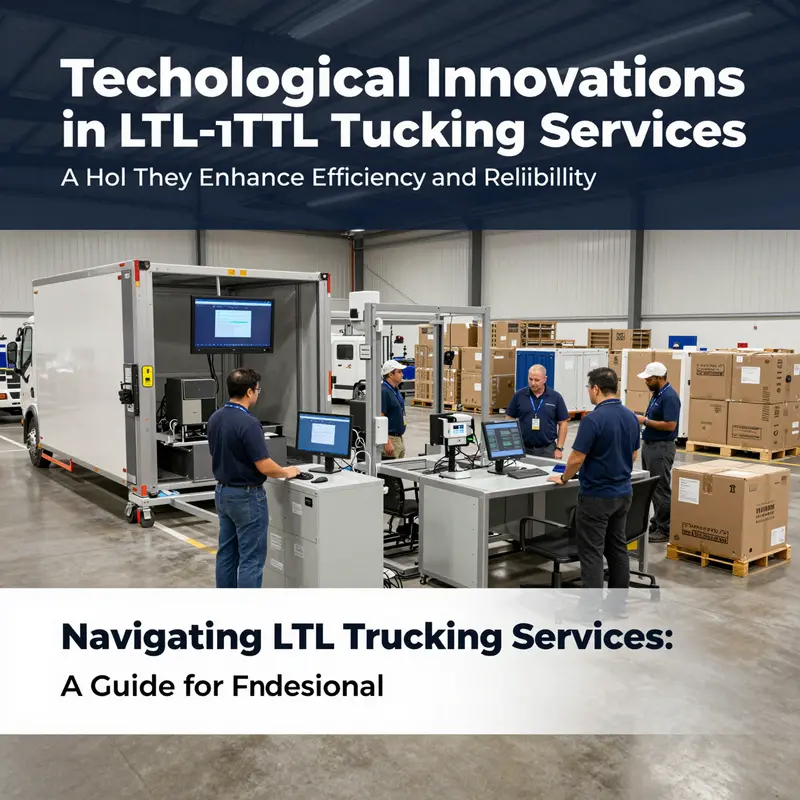
Baltimore sits at a strategic crossroads of the East Coast, where distribution centers, manufacturers, and retailers converge to reach dense markets from Philadelphia to the Mid-Atlantic corridor. In this setting, Less-Than-Truckload freight is a practical, economical way to move smaller shipments efficiently without waiting for full truckloads. Baltimore-based shippers rely on a mix of regional specialists and national integrators to stitch together multi-stop networks that keep stores stocked, manufacturers supplied, and e-commerce orders fulfilled with speed and reliability. In this environment, UniGroup Logistics stands out as a trusted operator with deep roots in the established moving brands United Van Lines and Mayflower Transit, offering LTL trucking services that are tailored to the city’s unique logistics rhythms. Their reach extends across the U.S. and beyond, with a network of about 1,300 service centers in 146 countries, enabling not only domestic intercity flows but also international handoffs when products cross borders. For many Baltimore businesses, this combination of local cadence and global capability translates into predictable transit times, scalable capacity, and a framework for cost control that supports growth. This isn’t a single-vehicle operation; it’s an integrated supply chain solution, designed to respond to volume fluctuations, seasonal spikes, and the ever-present demand for reliability.
At the core of this ecosystem are technological innovations that turn the city into a living, data-driven freight network. Advanced telematics give fleet managers a window into engine health, fuel metrics, and driver performance. The insights let maintenance teams anticipate failures before they disrupt schedules, reducing unplanned downtime. Telematics also contribute to safer driving patterns, which has a direct bearing on claims, insurance costs, and asset utilization. Real-time tracking, powered by GPS and mobile interfaces, transforms customer expectations as well. Shippers and recipients can see when a shipment leaves, where it is en route, and when it is likely to arrive, all in near real time. The visibility reduces the need for back-and-forth communications and enables proactive communication if delays occur, which preserves trust in the supply chain.
The third pillar is route optimization software. Algorithms evaluate current traffic conditions, weather, and delivery windows to map routes that minimize miles and avoid bottlenecks. In a city like Baltimore, with its dense urban cores, ferried bridges, busy ports, and variable speed limits, even small route adjustments can translate into meaningful reductions in fuel usage and transit time. When combined with dynamic scheduling, these tools allow a carrier to reslot late-arriving pickups or reroute shipments to align with yard availability at service centers. The outcome is lower freight costs per mile and shorter overall transit times, which in turn improves service level commitments to customers. Finally, improved communication platforms knit dispatchers, drivers, and customer service together in a single seam. Instant messaging, automated status updates, and integrated alerts speed up decision-making, enabling teams to adjust manifests, reallocate capacity, or re-prioritize shipments as conditions change on the ground or in the air above major corridors.
Together, these innovations reframe what a single LTL shipment can accomplish in Baltimore. The city’s import traffic, its thriving manufacturing clusters, and its sprawling retail footprints are all better served when fleets can align cargo with precise timing and transparent progress. Real-time tracking gives customers a window into the journey of their goods, which reduces anxiety and fosters collaboration between sender and carrier. Predictive maintenance and proactive planning reduce the risk of breakdowns on critical legs of a route, preserving on-time performance. Route optimization shrinks the distance traveled and diminishes idle time at congested ramps and yards. And enhanced communication ensures that when a delay is unavoidable, the right people are alerted immediately, and responses are coordinated rather than reactive. The shared goal is a smoother flow of goods through the city’s arteries, from port-adjacent warehouses to regional distribution centers and, ultimately, to the end consumer.
On the business side, Baltimore’s LTL landscape benefits from the way these technologies scale. The region’s demand patterns vary with manufacturing cycles, retail promotions, and the ebb and flow of e-commerce. A provider with a national footprint but local operating discipline can absorb spikes and redistribute capacity across markets while maintaining service levels in the city itself. For small and mid-sized shippers, that means access to flexible service with a level of reliability that used to be the preserve of larger shippers with full truckload commitments. It also means that the total landed cost of goods becomes more predictable, because many variables—from route choice to dwell time at yards—are now data points that can be anticipated and managed rather than brushed aside. In Baltimore, where real estate allocation, port activity, and industrial zoning intersect with traffic realities, the ability to forecast, monitor, and adjust becomes a strategic asset rather than a tactical afterthought.
The interoperability of these capabilities rests on a few core principles. First is network design built around service centers that function as consolidation and transfer points. In LTL, moving smaller shipments together at strategically placed hubs reduces the number of individual trips that must be taken to reach a destination. This is especially valuable in Baltimore, where dense urban corridors and short haul distances demand both speed and precision. Second is data-driven decision-making. Daily dashboards, exception reporting, and trend analysis help operators anticipate peak periods, calibrate labor and equipment, and optimize yard operations. For customers, access to shipment-level data supports more accurate delivery estimates, better planning, and a more collaborative relationship with the carrier. Third is reliability anchored by preventive maintenance and disciplined safety programs. Vehicles that are healthier, better maintained, and operated by trained drivers are less likely to experience incidents that disrupt schedules.
For the Baltimore business community, this convergence of capabilities translates into practical advantages. A typical LTL shipment might originate in a regional supplier, pass through a local distribution center, and then move to multiple locations in the metropolitan area. Rather than waiting for a single truckload to fill a trailer, the shipper can optimize inventory flow by setting precise arrival windows and leveraging cross-dock opportunities. The result is a more predictable supply chain, less safety stock, and faster replenishment cycles for retailers. In an era where customer expectations are shaped by immediacy, the speed and clarity of information about where goods are at any moment can differentiate a supplier from its competitors. The technology backbone also supports sustainability goals. Route optimization curtails unnecessary miles, telematics identify opportunities to smooth idle periods, and better maintenance reduces emissions per mile. In markets like Baltimore, where municipal and state governments increasingly incentivize cleaner transportation options, the alignment of efficiency with environmental stewardship can become a differentiator in procurement conversations.
The chapter’s arc does not ignore risk and compliance, which remain central to LTL operations. Baltimore’s urban environment demands strict adherence to weight restrictions, bridge limitations, and loading dock etiquette. Telematics and dispatching software help enforce these constraints by ensuring that the right equipment is chosen for a given lane and that drivers adhere to published restrictions. Documentation and traceability—keys to claims handling and customer accountability—are strengthened by real-time status feeds and automated carrier-notice systems. In addition, a carrier with this level of visibility can respond to incidents with coordinated action plans, rerouting shipments away from congested corridors or rerouting from a blocked terminal to a secondary site. For shippers, this translates into a lower risk profile and a greater likelihood that service levels are met even when external conditions deteriorate, such as severe weather or sudden road closures near the port or along major arterials.
The human element remains essential. Technology does not replace the human expertise that understands the specifics of Baltimore’s markets and the nuances of industrial zones. Instead, it augments that expertise, giving planners, drivers, and customer representatives more precise instruments with which to perform their work. The best LTL partners in Baltimore blend a robust, nationwide network with a locally attentive approach. They listen to a shipper’s constraints—such as sensitive delivery windows, dangerous goods requirements, or the need for scheduled dock times—and translate them into actionable, optimized plans. They also recognize the value of a stable, predictable schedule for carriers and drivers, which supports safer driving practices and longer careers on the road. When a carrier can align a shipment’s needs with a driver’s hours-of-service constraints, a city that never sleeps on its freight demands benefits from a calmer, more reliable operation.
For decision-makers evaluating Baltimore’s LTL options, the message is that the landscape favors providers offering an integrated blend of global reach and local execution. The ideal partner demonstrates a history of reliability, backed by a modern technology stack and a track record of customer-centric reporting. They are able to demonstrate concrete outcomes—lower fuel costs, shorter cycle times, higher on-time delivery percentages, and clearer communication. They can also articulate how their network design supports seasonal demand and how their technology stack provides visibility at the shipment level from pick-up to final delivery. In practice, this means a shipper can plan with confidence around lead times and inventory positions, and the carrier can optimize resource utilization with a greater degree of certainty. The essence is not simply speed, but a balanced, transparent, and adaptable supply chain.
In closing, Baltimore’s LTL trucking scene exemplifies how technology and strategy can transform a regional freight market into a living, responsive system. The transportation infrastructure, anchored by capable national carriers with local expertise, translates into a service proposition that is both scalable and resilient. Shippers gain access to a network that can accommodate small and frequent shipments alongside larger, multi-stop itineraries, all managed with the clarity that modern tracking and data provide. The city’s commercial health, its port-related activity, and its mid-Atlantic distribution demands are served by carriers who treat reliability as a continuous, evolving practice rather than a static target. As Baltimore continues to grow as a logistics hub, the synergy between technology-enabled operations and a geographically savvy network will likely deepen, delivering even more predictable outcomes for suppliers, retailers, and consumers alike. For those seeking deeper regional context on transportation strategies in Baltimore, consult Baltimore County Transportation’s smart transportation initiatives at https://www.baltimorecountymd.gov/Departments/Transportation/Pages/Smart-Transportation.aspx.
Final thoughts
Understanding who offers LTL trucking services in Baltimore is essential for various stakeholders within the industry. With key players like UniGroup Logistics paving the way, we see a significant impact on efficiency, reliability, and economic growth in the region. Additionally, technological advancements further bolster these services, ensuring that the industry can adapt to ever-evolving demands. Whether you’re a long-haul truck driver or a fleet manager, being aware of these factors can empower better decision-making and promote a more effective logistics strategy.