

Understanding Hours of Service Regulations: A Crucial Element for Trucking Success
In the fast-paced world of trucking, long-haul drivers often find themselves grappling with the pressures of tight schedules and the relentless demands of the road. Time management becomes a vital skill as drivers navigate through various challenges, including adhering to compliance regulations and maintaining their own health. This is where Hours of Service (HOS) regulations step in as a critical framework designed to ensure not only the safety of drivers but also the efficiency of the entire trucking industry. These regulations delineate the maximum driving hours, mandated rest periods, and off-duty requirements, serving as a key strategy for enhancing driver well-being and managing operational costs effectively. However, many drivers encounter difficulties in balancing their job demands with compliance, often leading to stress and fatigue. Understanding HOS regulations can empower drivers to optimize their schedules, reduce burnout, and ultimately improve their job satisfaction. Furthermore, for trucking company owners and fleet managers, adhering to these regulations is not just a legal obligation but a crucial aspect of maintaining a reputable business. By fostering a culture of compliance, companies can ensure their drivers remain safe, reliable, and productive on the road. In our exploration of HOS regulations, we’ll delve into why they matter so much for the trucking community. Discover more about 5 Star Trucking’s premier services that can help tailor operations to better align with these essential regulations.
History of Hours of Service Regulations
The Hours of Service (HOS) regulations form a vital framework for ensuring safety in the trucking industry. Their history reflects the ongoing evolution of traffic safety in response to accidents and the needs of drivers.
Origins and Early Regulations
The inception of HOS regulations dates back to 1937 when the U.S. government introduced these rules to combat fatigue-related incidents. Early legislation mandated a maximum of 10 hours of driving with an 8-hour rest period, creating a total 15-hour on-duty limit. This initial move was largely prompted by the increase in road incidents attributed to driver fatigue.
Significant Milestones in HOS Evolution
Over the years, the HOS regulations have been amended to adapt to changing industry demands and safety studies. Key milestones include:
| Year | Key Milestone/Change |
|---|---|
| 1937 | Initial establishment of Hours of Service regulations by the U.S. government to reduce fatigue-related accidents. |
| 1962 | First significant amendments introducing detailed limits on driving and resting hours. |
| 1988 | Introduction of logbooks for tracking hours worked. |
| 2000 | Creation of the Federal Motor Carrier Safety Administration (FMCSA), which oversees HOS regulations. |
| 2011 | Comprehensive revisions reducing maximum driving time within a shift. |
| 2013 | New rules mandated a 30-minute break after 8 hours of driving and limited the 34-hour restart provision. |
| 2018 | Further updates aimed to modernize the regulations include changes to what constitutes “on-duty” time. |
| 2020 | Final rule issued refining components of the HOS regulations after industry feedback. |
These changes have been driven by a desire to improve safety outcomes in a dynamic transportation environment.
Impact and Significance
The significance of HOS regulations cannot be understated. As outlined by the FMCSA, these regulations not only protect truck drivers but also ensure the safety of all road users. By mandating rest breaks and regulating driving hours, HOS serves to reduce accidents caused by driver fatigue, a major factor contributing to large truck collisions.
Additionally, it supports trucking companies by providing a clear framework for compliance, ultimately aiding in operational efficiency. As the trucking landscape continues to evolve, staying abreast of HOS changes and ensuring compliance remains critical for all stakeholders in the industry.
Comparison of Previous and Current HOS Regulations
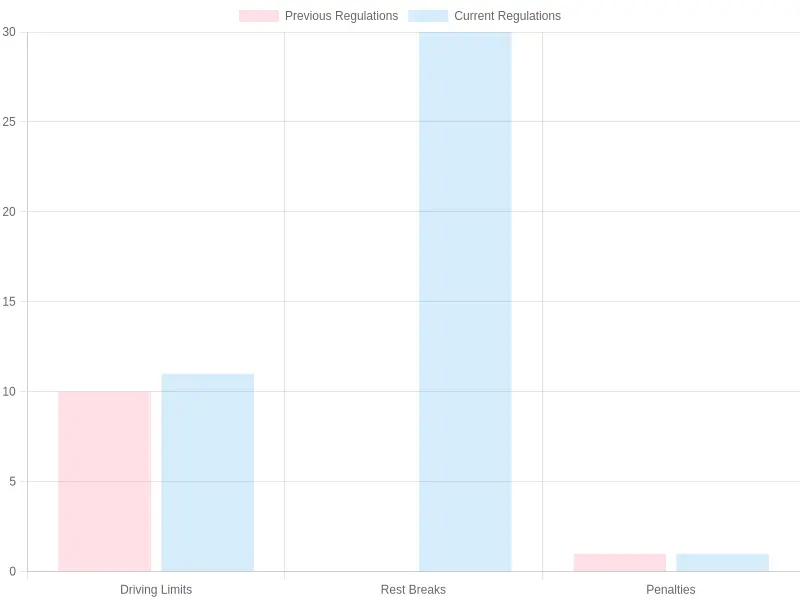
The Hours of Service (HOS) regulations are critical for ensuring safety on the roads. Understanding the differences between previous and current regulations is vital for long-haul truck drivers and fleet managers alike. The following table highlights the key changes:
| Category | Previous Regulations | Current Regulations |
|---|---|---|
| Driving Limits | Maximum of 10 hours driving time after 8-hour rest | Maximum of 11 hours driving time after 10-hour off |
| Rest Breaks | No specific break rule | 30-minute break required after 8 hours of driving |
| Penalties | Strictly enforced but less defined | Strictly enforced, with updated compliance measures |
These regulatory changes, particularly the adjustment in driving limits and the introduction of mandatory rest breaks, reflect an evolution in safety standards aimed at reducing fatigue among drivers. For more insights on trucking regulations, feel free to explore the excellence of 5 Star Truck Inc.
For further details on the implications of these regulations, you can read more on FMCSA’s official page.
Understanding the Rules and Guidelines of HOS Regulations
The Hours of Service (HOS) regulations are vital for ensuring that truck drivers remain alert, safe, and compliant while on the road. Established by the Federal Motor Carrier Safety Administration (FMCSA), these rules dictate how many hours drivers can operate and how much rest they need. Here’s a detailed overview of the current HOS regulations that truck drivers must follow:
Key HOS Regulations:
-
Daily Driving Limit: Drivers may drive a maximum of 11 hours after having at least 10 consecutive hours off duty.
-
14-Hour On-Duty Limit: A driver cannot be on duty for more than 14 hours after coming on duty, following 10 consecutive hours off. This includes driving time and non-driving tasks.
-
Rest Breaks: Drivers are required to take a 30-minute break after 8 hours of driving. This break must be taken while on duty but should not be counted against the driving limit.
-
Weekly Limit: Drivers cannot exceed 60 hours of on-duty time over seven consecutive days, or 70 hours over eight consecutive days. The 70-hour limit resets after 34 consecutive hours off duty.
Special Regulations for Property-Carrying Drivers:
- Sleeper Berth Provision: Drivers using a sleeper berth can split their required rest period. For example, one period can be at least 7 hours in the sleeper berth, combined with a separate period of 2 hours off-duty or in the sleeper berth, to meet the required 10-hour rest.
Exemptions and Special Cases:
-
Short-Haul Exemption: Drivers operating within a 150 air-mile radius are exempt from the 30-minute break provision if they complete their work day within 12 hours. Additionally, they are required to keep a daily log of hours worked.
-
Agricultural Exemption: During harvest periods, some drivers have different HOS rules regarding driving and resting schedules. They may operate under more flexible hours if they are carrying agricultural commodities within a specified range.
Consequences of Non-Compliance:
Non-compliance with HOS regulations can result in severe penalties, including monetary fines, points on licenses, and even temporary shutdowns of operations. Maintaining accurate records and adhering to the guidelines is crucial for the safety of the drivers and the public.
Importance of HOS Regulations:
Following these rules not only ensures compliance with federal laws but also enhances safety on the roads. Fatigue is a significant factor in many truck accidents, and HOS regulations play a crucial role in minimizing this risk. For truck drivers, staying informed about the latest HOS regulations is essential for safe and successful operations in the trucking industry.
For more information on effective trucking practices, you can explore the excellence of 5 Star Truck Inc and learn how to maintain compliance with HOS to improve safety and efficiency.

Understanding Hours of Service (HOS) in Trucking
Hours of Service (HOS) regulations are crucial standards set to ensure the safety and well-being of truck drivers. By limiting driving hours and mandating rest breaks, these regulations are designed to combat driver fatigue and enhance road safety. Both long-haul truck drivers and fleet managers need to consistently adhere to these rules to ensure operational efficiency and minimize the risk of accidents.
“The American Trucking Associations emphasize that current HOS regulations are effective. A report indicates a significant reduction in truck-involved fatality rates since the implementation of these rules.”
- American Trucking Associations (source)
Adhering to HOS not only protects drivers but also upholds the integrity of the trucking industry. For truck companies, compliance means avoiding costly penalties and maintaining a positive reputation.
For a more comprehensive look into the regulations and their impact, explore the excellence of 5 Star Truck Inc. and discover unparalleled trucking services offered to support your operations.
With thoughtful adherence to HOS regulations, the trucking community can continue to drive safely and efficiently, ensuring the prosperity of both drivers and the industry.
The Impact of HOS Regulations on Trucking Companies
Hours of Service (HOS) regulations are vital in managing the working hours of commercial motor vehicle operators. These regulations are designed to prevent driver fatigue and enhance safety on the roads by imposing limits on driving hours and mandating rest breaks. Understanding how these regulations affect trucking companies is crucial for fleet management, efficiency, and safety ratings.
Compliance Costs and Financial Implications
One of the most significant impacts of HOS regulations is the increase in compliance costs for trucking companies. With the mandatory use of electronic logging devices (ELDs) since 2017, companies have had to invest in technology to track driving hours accurately. According to recent studies, the annual costs for ELD compliance can range from $600 to $1,500 per truck, with additional monthly costs averaging $19 to $41.25 just for the device itself. Moreover, non-compliance can lead to hefty fines, which can reach up to $10,000 for serious violations like falsifying ELD records.
| Cost Category | Cost Range (USD) | Source |
|---|---|---|
| ELD Compliance (Annual) | $600 – $1,500 | ToolcR |
| ELD Monthly Cost (Per Truck) | $19 – $41.25 | GPS Insight |
| Violation Fine (Without a certified ELD) | $1,000 – $3,000 | Responsible Fleet |
| HOS Violation Fine | $1,000 – $2,000 | Responsible Fleet |
| Falsifying ELD Records Fine | $3,000 – $10,000 | Responsible Fleet |
Compliance costs are not just limited to technology and fines. Companies also face increased administrative expenses associated with monitor compliance. Training personnel to correctly manage records and compliance protocols often requires additional resources.
Scheduling and Operational Efficiency
HOS regulations necessitate strategic scheduling and route planning for trucking companies. Adhering to mandated driving hours can influence how trips are planned, leading to optimized routes that take into account both time and distance. Companies that embrace efficiency improvements, by leveraging technology, can minimize delays stemming from unanticipated stops due to HOS constraints.
For instance, trucking companies often rely on advanced route optimization software to manage their schedules. This not only ensures compliance but also enhances driver satisfaction by allowing them to complete deliveries without running afoul of HOS rules. As a result, companies can maintain higher operational efficiencies.
Safety Ratings and Driver Well-Being
The direct correlation between HOS regulations and safety cannot be overlooked. Research indicates that HOS regulations have significantly reduced crash rates. Adherence to these regulations has led to improved safety ratings for fleet operators. Enhanced safety records translate into lower insurance premiums and better reputations in the marketplace, making compliance not only a legal obligation but also a business necessity.
Drivers benefit from the mandated rest periods as well, experiencing improved mental and physical health. Sufficient breaks and rest time lead to sustained alertness and reduced fatigue, which are crucial for long-haul drivers. As a result, companies that prioritize compliance are likely to see not only improvement in safety ratings but also in driver retention and satisfaction.
The Broader Perspective
While HOS regulations pose certain challenges in terms of compliance costs and scheduling, they ultimately contribute to a safer and more efficient trucking industry. As the industry evolves, those companies that adapt to these regulations proactively can find themselves at a competitive advantage.
In conclusion, understanding and actively managing the implications of HOS regulations is essential for trucking companies seeking to achieve operational excellence and maintain a commitment to safety. For more insights on navigating compliance and enhancing your trucking operations, explore our services at 5 Star Trucking.
Penalties for Hours of Service (HOS) Violations
The penalties for violations related to Hours of Service (HOS) regulations are crucial for truck drivers and companies to understand. In 2023, the Federal Motor Carrier Safety Administration (FMCSA) has updated penalty structures to ensure compliance. Here’s a summary of various penalties associated with HOS violations:
Summary of Penalties
| Violation Category | Fine Amount | Points on Driving Record |
|---|---|---|
| Out-of-service Orders | $22,324 | TBD |
| HOS Recordkeeping Violations | TBD | TBD |
| Driving over 11 hours | TBD | TBD |
| Driving over 14 hours | TBD | TBD |
| Failure to carry HOS documents | TBD | TBD |
| Failure to complete HOS logs | TBD | TBD |
| Other HOS related violations | TBD | TBD |
Note: For specific fines related to HOS violations, further data collection is needed.
Visual Representation

Visual representation of the penalties for HOS violations.
Understanding and adhering to these regulations not only helps avoid penalties but promotes safer driving practices. Ensure that your fleet is familiar with these updates to mitigate risks effectively. Learn more about the importance of complying with trucking regulations and how it affects your operations.
Best Practices for Truck Drivers to Comply with HOS Regulations
Ensuring compliance with Hours of Service (HOS) regulations is crucial for truck drivers, not only to avoid penalties but also to maintain safety on the roads. Here are some actionable tips and best practices that drivers can adopt:
1. Understand HOS Regulations
- Familiarize Yourself with the Rules: Make sure you know the specific HOS regulations that apply to your driving situation, including maximum driving hours, required rest breaks, and off-duty time requirements.
- Stay Updated: Regulations can change. Keep yourself informed about any updates to HOS rules and adjust your driving plans accordingly.
2. Plan Your Routes Wisely
- Use Route Planning Tools: Tools and apps can help you create a realistic driving schedule while accounting for rest stops, traffic patterns, and potential delays.
- Factor in Downtime: Always include potential delays or obstacles in your plan to ensure you have enough time for necessary breaks and rest.
3. Use Electronic Logging Devices (ELDs)
- Adopt ELDs: Use compliant ELDs to accurately track your driving hours. These devices not only help you stay compliant but also simplify record-keeping.
- Check Logs Regularly: Frequently review your driving logs to ensure accuracy and address any discrepancies before they become a problem.
4. Take Scheduled Breaks
- Follow Break Requirements: Make sure to take your required breaks, including 30-minute breaks after 8 cumulative hours of driving, as stipulated by HOS regulations.
- Establish a Routine: Develop a regular routine for breaks and stick to it, which can improve your focus and fatigue management.
5. Communicate with Your Dispatch Team
- Keep Lines of Communication Open: Regularly update your dispatch team about your location and estimated arrival times so they can plan accordingly, allowing for timely adjustments to your schedule.
- Report Issues Promptly: If you encounter delays or issues that may impact your compliance with HOS regulations, communicate them immediately to your managers.
6. Prioritize Health and Well-being
- Stay Rested: Make sleep a priority to prevent fatigue while driving. Aim for quality sleep during your off-duty hours.
- Maintain a Healthy Lifestyle: Combine a balanced diet and regular exercise in your routine to enhance alertness and concentration on the road.
7. Educate Yourself and Others
- Stay Informed: Attend training sessions and workshops focused on HOS compliance to enhance your knowledge and skills.
- Share Knowledge: If you are part of a fleet, share your insights and experiences with your colleagues, fostering a culture of safety and compliance.
By following these best practices, truck drivers can improve their HOS compliance, enhance road safety, and ultimately contribute to a more effective trucking industry. For further insights into effective transportation services, explore 5-Star Truck Inc..
Implementing these strategies can not only help you adhere to regulatory requirements but also improve your overall efficiency and safety in long-haul trucking.
In conclusion, Hours of Service (HOS) regulations are far more than mere rules imposed on truck drivers; they are essential standards designed to safeguard everyone on the road. By dictating how many hours a commercial driver can operate and mandating breaks, these regulations address the critical safety concerns surrounding driver fatigue. For trucking company owners, fleet managers, and drivers alike, understanding and adhering to HOS is not just a matter of compliance but a commitment to safety and responsibility. Failure to comply with HOS regulations can lead to serious consequences, including severe penalties, accidents due to driver fatigue, and legal liabilities that can impact careers and businesses (learn more about ensuring compliance with HOS regulations).
The importance of HOS compliance cannot be overstated-trucking is a vital industry that keeps goods moving, and the safety of truck drivers and the public relies on these essential regulations. To truly excel in the trucking business, consider not only the operational aspects but also prioritize the well-being of your drivers and others on the roads. By following HOS regulations, you contribute to a safer environment and protect your brand’s integrity.
Don’t go it alone; explore Summit Fairings’ offerings to see how we can help you maintain compliance while optimizing your fleet’s performance. Together, we can set new standards in the trucking industry and ensure safety remains the top priority for all.
By making HOS compliance a part of your operational excellence, you not only fulfill legal obligations but also enhance the overall safety and efficiency of your organization, paving the way for a brighter, safer future in transportation.