
May’s Trucking Service stands as a cornerstone of the transportation landscape in Hattiesburg, Mississippi. Specializing in demolition, excavation, and dirt hauling, the company has earned a solid reputation for reliability and efficiency. This article explores how May’s Trucking Service not only meets the demands of long-haul drivers and fleet managers but also contributes significantly to the local economy and community engagement. Each chapter delves into different facets of the company’s operations: an overview of its history and services, its economic contributions, and its community-driven approach that solidifies its standing in Hattiesburg.
On the Road in Hattiesburg: Tracing the Legacy and Realities of May’s Trucking Service
May’s Trucking Service sits along 1820 Lott Street in Hattiesburg, a nod to a way of moving the region’s economy that often happens out of sight but never out of consequence. In a city where construction phases shift with the seasons and where new facilities rise beside older blocks, the value of a dependable trucking partner becomes clear long before a foundation is laid. The services offered by this local operator—dirt hauling, topsoil hauling, demolition, and excavation—aren’t just tasks on a checklist. They are the practical mechanics that turn blueprints into buildable ground. Dirt and topsoil are the base materials that shape drainage, stabilize slopes, and create the right substrate for roads, parking lots, and landscapes. Demolition clears the site so a project can begin, and excavation shapes it to the precise grades that engineers specify. In this sense, May’s Trucking Service, as it has defined itself in the Hattiesburg area, functions as a crucial connector between planning and realization, a coordinator of earth and effort that helps projects move from concept to usable space in a city that evolves with each passing season.
The physical rhythm of Hattiesburg, with its mix of neighborhoods, commercial corridors, and industrial pockets, frames the practical realities of this operation. Roads widen, curbs are poured, lots are graded, and water flows must be managed. To move dirt efficiently from stockpile to site, the fleet must negotiate access routes, street restrictions, and the sometimes tricky logistics of urban and semi-urban terrain. The hauling of dirt and topsoil, in particular, demands a careful balance between load optimization and road safety. Every load has a weight profile, every mile an energy cost, and every hour of downtime a potential delay in a schedule that many projects depend on. Operators in this space have long understood that reliability is not merely about showing up on time; it is about showing up prepared, with the right equipment, the right personnel, and a plan that respects nearby residents, existing infrastructure, and the unique constraints of construction timelines.
Within this context, the status of May’s Trucking Service becomes a defining factor for anyone evaluating its place in Hattiesburg’s construction ecosystem. Public records from the Mississippi Secretary of State indicate that May’s Trucking Service LLC was formed with James Mays listed as principal. Yet, the most recent official status marks the entity as dissolved. That designation carries significant implications. A dissolved LLC generally means the company no longer operates as a legally recognized entity within Mississippi’s business registry. For a client seeking services, this raises immediate questions about licensing, insurance coverage, and the ability to enter into enforceable contracts. It also invites scrutiny of the broader operational reality: did the physical business pass its work to another entity, continue informally as a sole proprietorship, or dissolve as a formal business while some personnel or equipment continued under a different banner? In places like Hattiesburg, where personal reputation and local relationships often drive project decisions, the truth may rest in a mix of informal continuity and formal change. This ambiguity underscores a central lesson for readers: in the world of heavy earthmoving and site prep, a name on a registry is only part of the picture. The real question is who actually performs the work on the ground, under what arrangements, and with what protections for the client.
To navigate those questions, it helps to widen one’s lens beyond a single corporate label. Even as a formal entity may be dissolved, the practical capacity to mobilize a crew, arrange a fleet, and schedule a sequence of earthwork operations can persist through alternative arrangements. Local contractors often rely on a constellation of partners—subcontractors, equipment owners, and operators who maintain operating licenses and insurance through other entities. This is not unusual in Mississippi’s construction landscape, where a project may depend on a mosaic of independent operators who assemble capabilities to meet a project’s unique demands. For prospective clients, the takeaway is clear: verify current licensing and insurance status, request updated certificates, and confirm who is legally responsible for the work today. It is prudent to seek direct confirmation of who would be on the job, what entity would be named in a contract, and how risk and regulatory compliance are handled in practice. In an area where the public record is a snapshot rather than a constant feed, the safest path is still direct communication and written assurances.
The work itself—dirt hauling, topsoil hauling, demolition, and excavation—requires a careful blend of technical know-how, practical experience, and a disciplined approach to safety. Planning begins with a site assessment: the height and composition of soil, the anticipated moisture content, and the grading requirements that will meet drainage and structural specifications. The driver or operator must translate these parameters into a sequence of moves that minimizes rehandling and reduces the chance of damage to the surrounding environment or adjacent properties. Transportation of heavy loads requires attention to axle weight limits, proper load securement, and adherence to route restrictions. On a demolition job, the sequence might begin with debris containment and careful removal of materials that pose hazards, followed by loading and hauling in a mode that keeps dust and debris within controlled parameters. Excavation, meanwhile, demands precise depth control and a keen eye for underlying rock strands, subterranean utilities, and drainage lines. In all cases, the operator’s role is to harmonize the logistics of movement with the physics of soil and the geometry of the job site.
In discussing such work, it is hard to overlook the environmental and community dimensions. Dust suppression, erosion controls, and noise management are not afterthoughts; they are built into the planning process because they affect the pace of a project, the well-being of neighbors, and the long-term acceptability of a site. Local code requirements and permit regimes shape when and how work can proceed, constraining schedules in ways that only seasoned operators fully anticipate. The ability to integrate compliance with efficiency becomes a key differentiator. The conversation around reliability also encompasses adaptability: the capacity to adjust to sudden weather shifts, supply interruptions, or changes in project scope. A trucking service that can pivot—reconfiguring loads, re-sequencing equipment deployment, or adjusting haul routes—improves its value to the project team and helps avert costly delays. This adaptability is what keeps projects moving when the unexpected arises, a quality that matters as much as raw capacity.
The broader market context in Hattiesburg reflects a landscape of small, often family-led operations that populate the building trades with a steady cadence of bids, subcontracting arrangements, and evolving partnerships. A dissolved status in one registry does not automatically erase a presence in the local economy; rather, it invites a closer look at how and by whom the work is being carried forward. The practical takeaway for readers is to assess a supplier not simply by a name on a sign or a phone number in a listing, but by the ongoing reality of how projects are executed—whether that means the same people moving material under a new business umbrella or a coalition of workers who collaborate across different entities. For project managers and property developers in Hattiesburg, this translates into a disciplined procurement mindset: request recent references, inspect equipment availability, and seek a clear plan for site safety and environmental stewardship. In doing so, clients can secure not only the volume of earth moved or debris removed but also the steadiness of the operation as a predictable tool within a larger project schedule.
From a customer’s perspective, the experience of engaging with a trucking and site-prep partner hinges on clarity, predictability, and accountability. Quotation accuracy matters because discrepancies in pricing and scope quickly erode trust and inflate budgets. Timelines matter because delays in earthmoving ripple through every subsequent activity—from foundation pours to utilities installation. Equipment readiness matters because a breakdown on a critical day can stall a full sequence of work. The best partners bring a calm confidence to the job site: they arrive with a clear plan, communicate changes in a timely fashion, and follow through with safety and quality practices that reflect a shared commitment to the project’s success. In a region like Hattiesburg, where the pace of development can vary with investment cycles and weather patterns, such reliability becomes a practical currency that clients use to measure value. Even when a formal business entity shifts, the skills and know-how that contribute to successful site preparation endure, carried forward by teams that align with the needs of the work and the trust of the community.
To connect this local narrative to the wider world of trucking and site services, readers can explore how industry standards and continuous service improvement shape the expectations for any reputable operation. For example, a resource that discusses the foundations of reliability, maintenance, and service excellence in trucking creates a useful backdrop against which to view local practice. You can explore these ideas here: discovering-the-unparalleled-services-of-5-star-truck-inc. This reference helps frame the ongoing conversation about how dependable fleets, well-maintained equipment, and well-coordinated teams translate into outcomes on the ground. It is a reminder that, even in a city as intimate as Hattiesburg, the best projects connect local know-how with broader industry standards, producing results that endure beyond a single job or a single banner.
For anyone considering May’s Trucking Service—or any local contractor who provides earthmoving and transportation services—the most important step is active verification. Reach out to the number associated with the operation, ask directly who is legally responsible for the work today, request proof of insurance and licensing, and seek written confirmation of the scope, schedule, and cost. If the status of the business registry raises questions, don’t be discouraged; use it as a reason to probe further and to diversify inquiries across multiple credible sources. In an area where information is dispersed across registries, business directories, and word of mouth, the ability to triangulate current status and competency becomes a hallmark of prudent procurement. And because the local environment is always a factor—seasonal rains, traffic patterns, and nearby development—the best partnerships are those that anticipate change and respond with a plan that keeps the project on track.
In conclusion, the story of May’s Trucking Service in Hattiesburg is a narrative about local capability meeting big tasks. It is about the essential services that prepare ground for growth and the practical realities of operating within a dynamic regulatory and economic environment. It is about who actually moves the earth and how they do it—safely, efficiently, and in a manner that respects the rhythms of a city that continues to expand outward from its core. Whether the formal entity remains dissolved or reemerges under a new banner, the core competencies—dirt and topsoil hauling, demolition, excavation—remain part of the fabric of Hattiesburg’s construction story. The key for clients and observers alike is diligence: verify current status, confirm coverage and authority to perform, and align expectations with the realities of today’s operating landscape. In that frame, May’s Trucking Service stands as a case study in how local earthmoving capacity interfaces with the evolving needs of a growing community.
External resource: https://www.mapquest.com/business/mays-trucking-service-hattiesburg-ms
Foundations on the Move: How May’s Trucking Service Shapes Demolition, Excavation, and Earthwork in Hattiesburg
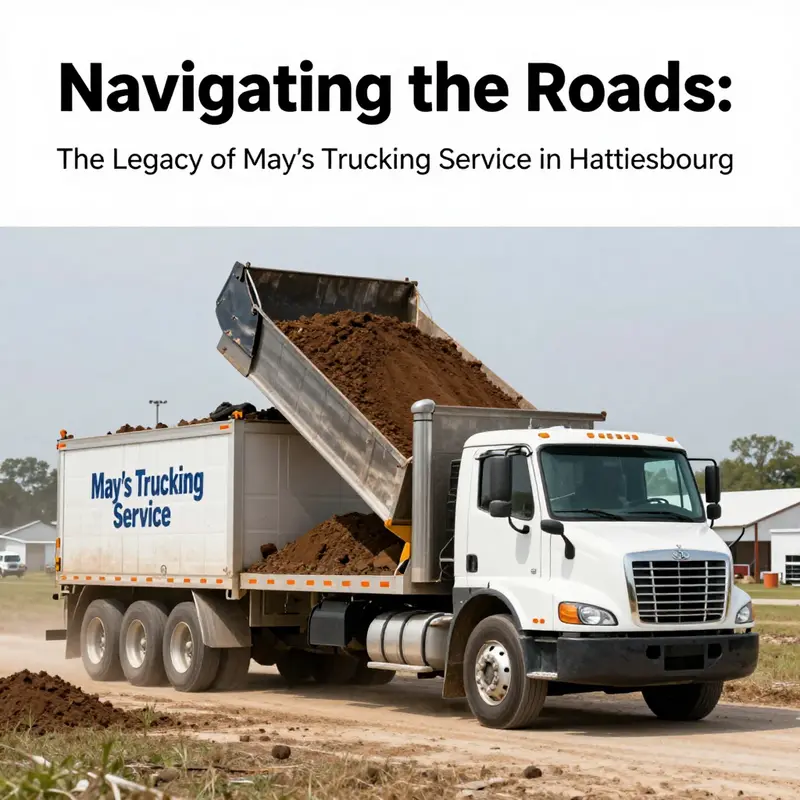
In the evolving landscape of Hattiesburg, May’s Trucking Service sits at the crossroads of progress and practicality. Based in Mississippi and operating from 1820 Lott Street, the company functions beyond simple freight movement, serving as a key partner for site preparation, demolition, excavation, dirt hauling, and topsoil hauling. The value lies in timely, safe material handling that keeps projects on schedule and under budget, while maintaining a relentless focus on safety and compliance with local rules. Proximity matters: a local fleet means quicker response times, fewer delays caused by long-haul logistics, and easier coordination with contractors, utilities, and inspectors.
The description of the business rooted in a specific address translates into an implicit promise: a local partner who understands the rhythms of Hattiesburg—from commercial corridors to residential streets—and the particular challenges of working near schools, businesses, and neighborhoods. The practical impact goes beyond moving earth; it is about orchestrating a sequence of tasks so the next phase can begin on time.
Demolition marks the first act on many sites, creating space and access, but debris must be removed, the site stabilized, and the area prepared for excavation. May’s Trucking Service approaches demolition with a disciplined safety ethic, reliable debris management, and a readiness to mobilize quickly to prevent pileups and hazards. The company’s local footprint translates into shorter haul distances, reduced congestion, and smoother interactions with surrounding residents and authorities.
Excavation follows, requiring alignment with engineering plans and careful soil management. Trenching, digging, backfilling, and compacting demand precise coordination so utilities can be installed without delay and the project maintains grade and drainage integrity. May’s Trucking Service supports these needs by providing hauling and earthmoving capacity that keeps crews productive even when site conditions shift.
Dirt hauling is about the flow of material: moving cut from one part of a site to another for balance, and sometimes bringing in fill to shape grades and drainage patterns. The timing of material moves matters as much as the tonnage, and a dependable local partner can prevent idle time and keep the project on track. Topsoil hauling adds another dimension: the right soil in the right place supports landscape design, stormwater management, and long-term site health. Proper placement influences drainage, soil life, and the viability of seeding and turf establishment.
Together, these services create a choreography of site work that minimizes downtime and maximizes readiness for subsequent trades—from foundations to landscaping. The value proposition is not merely about moving material; it is about knowing the landscape, understanding permit requirements, and coordinating with a broader team to maintain safety, timelines, and quality. May’s Trucking Service embodies this holistic approach by focusing on reliable loads, careful restraint to prevent spillage, and consistent communication with clients and inspectors.
The local dimension adds a human layer to the operation. Crews who know the neighborhoods, schedules, and sensitivities of working near schools and storefronts can anticipate issues, minimize disruption, and contribute to a smoother development process. In a city like Hattiesburg, where projects range from small infill lots to larger developments, the advantage of a trusted partner with a strong local footprint translates into predictable performance, fewer surprises at inspection, and a steadier flow of work.
At the end of the day, the work of May’s Trucking Service is about turning soil and debris into a well-prepared canvas for the next stage of construction. It is about reliability, safety, and a practical commitment to the communities it serves. The company’s approach aligns with broader standards of practice for trucking and earthmoving, reflecting a disciplined respect for the land, the law, and the people who live and work nearby. For readers seeking further context about trucking operations and safety standards that govern companies like May’s in this region, regulatory guidelines such as those from national transportation authorities offer useful background on expectations and compliance. External resource: https://www.fmcsa.dot.gov/regulations
Riding the Local Lanes: The Economic Footprint of May’s Trucking Service in Hattiesburg
May’s Trucking Service sits at a crossroads of local work and regional supply chains in Hattiesburg, Mississippi. Operating from 1820 Lott Street, the company positions itself as a practical artery for construction, demolition, and earth-moving projects that shape the city’s growth. In a place where new housing developments, industrial sites, and public works projects press against aging infrastructure, the impact of a single trucking firm extends beyond the mile markers on a map. It threads through the daily routines of contractors, suppliers, and laborers, creating a measurable, though often indirect, influence on the local economy. The narrative of May’s is not merely about trucks delivering dirt or hauling away debris; it is about how a small to mid-sized carrier anchors attachment points for jobs, supports the cadence of construction seasons, and helps translate ambitious plans for public spaces into tangible outcomes on the ground.
The core services—demolition, excavation, and dirt or topsoil hauling—are more than operations in a vehicle. They are the hands that clear spaces for new development, the lines that move the soil to where it is needed, and the careful orchestration of heavy equipment that enables sites to shift from inert plots to functional spaces. In Hattiesburg, a city with a mix of historic neighborhoods and accelerating new growth, that orchestration matters. Each project, whether a residential subdivision, a commercial center, or a municipal improvement, requires reliable logistic lanes. May’s Trucking Service becomes a dependable lane in the broader network of suppliers and service providers that constitute the local economy. When a project receives timely material delivery and efficient site cleanup, work sequences stay on schedule, costs stay closer to budget, and downstream businesses—architects, manufacturers, retailers, and service firms—can plan with greater confidence. In practical terms, May’s presence supports steady cash flows across the local supply chain, contributing to a more predictable business climate that reduces idle time and wasted miles.
From a labor perspective, the presence of a reliable trucking partner translates into direct and indirect employment effects. Directly, the company sustains driver and operations staff roles, maintenance technicians, dispatchers, and accounting personnel. Indirectly, it stimulates demand across ancillary services: fuel suppliers, tire shops, fleet maintenance facilities, and parts distributors. The ripple effect touches hospitality, equipment rental, and even educational programs that prepare the workforce for skilled driving and heavy-duty operation. In a regional economy where every mile traveled by a heavy-duty vehicle can be linked to a series of transactions, the value of stable, predictable service is layered. It reduces the downtime that otherwise circulates through the business ecosystem as suppliers adjust to delays or misaligned schedules. When May’s trucks navigate the city’s corridors with dependable timing, they are, in effect, moving more than soil and debris; they are moving economic momentum.
Yet the story of economic impact is not a simple ledger of positive numbers. It sits within the larger frame of urban transportation costs, congestion, and energy use. National research underscores that traffic congestion imposes significant real costs on business activity, reducing productivity and increasing delivery times. The referenced studies, including broader analyses like NCHRP Study 2-21 (2025), remind communities and firms that the efficiency of freight movement matters not only for the bottom line of a single carrier but for the competitiveness of the entire urban economy. In Hattiesburg, where streets may double as work zones during development booms, the efficiency of movements of May’s fleet can influence project schedules, bid competitiveness, and the speed with which new facilities open to customers. When a truck arrives on time to pour concrete or to lay down a critical topsoil layer, the downstream timing aligns with a project’s critical path. Delays propagate through a line of dependent activities, increasing labor costs and tightening budgets. In that sense, May’s service contributes not only to immediate project execution but also to the region’s ability to attract and retain investment that depends on a reliable construction timeline.
The economic footprint also encompasses the scale economies that usually accompany intercity freight operations. Although May’s primary focus is within the Hattiesburg area, the company sits within a freight ecosystem that benefits from gains in fuel efficiency and route planning. In modern freight transport, scale economies emerge when load optimization, vehicle utilization, and routing efficiency reduce the average cost per ton of material moved. This means that even a localized operation can leverage the broader trend toward more efficient movement of goods. The Mississippi corridor, like many inland regions, benefits from improved logistics practices that enable smaller carriers to compete effectively by offering reliable service at competitive costs. May’s positioning on Lott Street reflects a strategic nexus: a facility from which to coordinate local site preparation with the ability to plug into larger supply chains that cross the region. The result is a more resilient local economy where capital invested in demolition or excavation does not languish in the waiting period between permits and soil movement, but rather progresses through a chain of value-added activities that define a project’s progression.
The environmental and energy dimensions of trucking are essential to a balanced view of economic impact. Medium and heavy-duty vehicles—those that May’s fleet employs—contribute to greenhouse gas emissions, oil consumption, and air pollutants such as nitrogen oxides and fine particulates. The literature emphasizes that the trajectory of truck mileage growth will intersect with policy, technology, and market demand in ways that shape emissions profiles and energy usage in the years ahead. For a city like Hattiesburg, this means economic decisions about trucking have to be tethered to broader objectives around air quality, public health, and energy resilience. The local operator thus faces a dual imperative: deliver cost-effective and reliable service that keeps projects moving, while also contributing to a cleaner, more efficient energy system through improved routing, maintenance, and opportunities for cleaner practices. Even as a single carrier, May’s can influence the urban environmental footprint through careful planning and adherence to best practices in maintenance, load optimization, and driver training. In this context, the company’s decisions about when and how to move soil or debris are investments in the city’s long-term livability and economic sustainability.
It is important to acknowledge the limitations of the data at hand. The research available does not provide a direct, quantified economic impact specific to May’s Trucking Service in Hattiesburg. Instead, it places May’s within a broader frame of reference—one that examines how trucking channels contribute to urban economies, how scale and efficiency affect intercity freight, and how the environmental dimension of heavy transport intersects with energy use and policy. This gap is not a gap in value but a gap in measurement. Local business records, regulatory filings, procurement data, and regional economic reports could offer a clearer picture of May’s specific contribution: its payroll, supplier networks, tax receipts, and any multiplier effects generated by its projects. Local economic development offices or chambers of commerce are well positioned to partner with a company like May’s to quantify these effects. In the absence of precise numbers, the narrative remains guided by well-established mechanisms of impact: proven demand for construction services and earth-moving capabilities drives truck utilization; reliable service supports project timelines and cost containment; and the resulting activity sustains jobs and revenue streams across a spectrum of local businesses.
Linked into this broader ecosystem is the notion of industry excellence and professional standards. While the details of May’s operations are distinct, the general best practices of reliable, well-maintained trucking in mid-sized urban settings offer a template for sustainable growth. The industry’s emphasis on uptime, maintenance, and service reliability translates into measurable performance benefits for clients. It is worth noting a related perspective from the wider trucking community that emphasizes continuity of service, maintenance discipline, and proactive asset management as pillars of economic contribution. For readers seeking a comparative view of what high-performing regional operators can look like in practice, one can consult industry insights such as Exploring the Excellence of 5-Star Truck Inc.. The emphasis on reliability, responsive customer service, and fleet uptime in that discussion resonates with the expectations clients place on May’s in Hattiesburg and underscores how a local carrier can anchor a project’s success across the lifecycle of a job.
If one frames May’s impact in terms of local economic development, several qualitative channels emerge. First, May’s operations help stabilize the local construction market by providing predictable scheduling and dependable material movement. Contractors can plan around May’s trucking windows, reducing the risk of delays that can escalate labor costs and extend project durations. Second, the company anchors a network of suppliers—fuel suppliers, equipment maintenance shops, parts distributors, and truck dealers—that depend on the recurring demand generated by ongoing projects. In aggregate, this supports a more robust and diversified local economy, less prone to shocks when individual projects fall through or external markets shift. Third, May’s supports workforce development. Whether it is through apprenticeship opportunities, on-the-job training for drivers, or collaboration with local vocational programs, the company participates in shaping a skilled labor pool that benefits the broader regional economy. These channels have both immediate and longer-term implications: steady, reliable demand for trucking services helps local households maintain income, while a trained workforce contributes to the city’s resilience and adaptability in the face of economic cycles.
The road ahead, from an economic perspective, is not only about sustaining existing activity. It is about leveraging May’s local footprint to participate in smarter freight patterns that reduce waste and maximize value. This means exploring efficiency improvements such as route optimization to minimize empty miles, scheduling that aligns with peak site readiness, and preventive maintenance programs that keep trucks on the road longer and with lower risk of costly downtime. It also means staying attuned to the evolving regulatory landscape around emissions and fuel efficiency, and considering opportunities to blend cleaner practices with practical business aims. In Mississippi’s regional context, even incremental gains in truck efficiency translate into meaningful savings over the course of a project or a year’s worth of work. When these gains accumulate across multiple projects, they become a material contributor to competitiveness for local developers and property owners seeking to keep construction timetables intact and budgets under control.
The connection between local operations and broader economic outcomes is not always visible in a single ledger. Yet the story of May’s Trucking Service in Hattiesburg can be read through several guiding questions: How many local jobs are sustained by May’s activities? What is the extent of its procurement of materials and services from nearby firms? How does its scheduling influence project timelines and downstream economic activity? How does it measure and manage its environmental footprint while maintaining service reliability? These questions point toward a constructive path for further study. Local records, partnerships with the city’s economic development apparatus, and a systematic cost-benefit analysis could illuminate May’s precise economic imprint. In the absence of exact figures, the available research on trucking economics provides a sturdy framework for interpreting May’s role. It suggests that even a localized operator can exert a meaningful influence on employment, supplier networks, and the efficiency of urban development, while contributing to environmental and energy considerations that shape long-term community well-being. The balance of reliability, efficiency, and sustainability will likely determine how May’s Trucking Service continues to integrate with Hattiesburg’s growth trajectory, expand its contribution to the regional economy, and reflect the city’s aspirations for responsible, resilient development.
Ultimately, this chapter contends that the economic impact of May’s Trucking Service is best understood not in isolation but as part of a living, dynamic system. The trucks that roll through Hattiesburg every day carry more than soil and debris; they carry the capacity to turn plans into places, and to turn asphalt and soil into schools, homes, and community spaces. In that sense, the company’s value is measured not solely by ton-miles or revenue but by how reliably it enables the city to build, upgrade, and maintain the infrastructure that supports everyday life. The deeper the alignment between May’s operations and the city’s development priorities, the stronger the case for recognizing trucking firms like May’s as essential contributors to the local economy. As Hattiesburg grows, so too does the significance of dependable trucking services that move projects forward, sustain the labor market, and help shape a future where growth and community health advance in tandem. The story of May’s Trucking Service, in this light, is a story about economic vitality born from dependable movement—and movement, in turn, that sustains opportunity in the heart of Mississippi.
External resource for broader context on national trucking economics and emissions: https://www.epa.gov/greenvehicles/truck-emissions
Grounded in Community: Building Trust and Reputation Through May’s Trucking Service in Hattiesburg
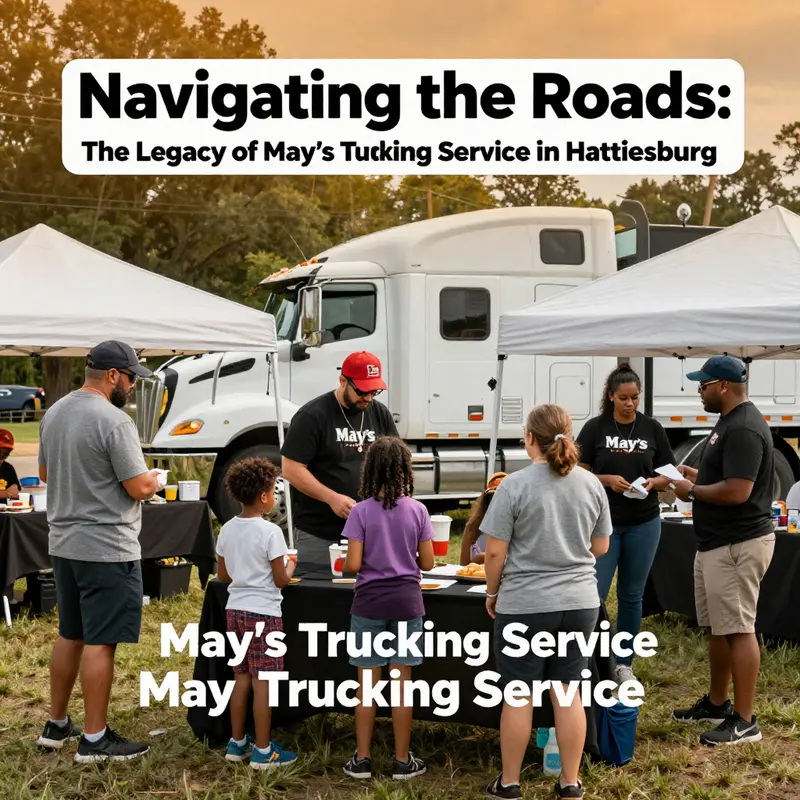
In the heart of Hattiesburg, a small but steady force moves the city’s growth forward with steady wheels and careful hands. May’s Trucking Service, rooted in the local landscape of Mississippi, has become more than a transport company. It is a point of contact between contractors, neighbors, and the land that shapes their shared future. The firm’s reputation didn’t arrive on a single luck-filled day. It grew, brick by brick, through consistent performance in demolition, excavation, and dirt and topsoil hauling. Those services, seemingly transactional, reveal the deeper rhythm of the business: a steady commitment to reliability, safety, and clear communication that makes every job a thread in the broader fabric of the community. The company’s presence in Hattiesburg—whether on Lott Street or in the surrounding neighborhoods—has become a living example of how a specialized trade can earn trust by delivering predictable results when it matters most: on job sites, where timelines are tight, costs are scrutinized, and the ground itself bears the final verdict of a project’s success.
From the outset, the niche focus of May’s Trucking Service explains a great deal about its standing in the city. Demolition and excavation are not simply about clearing space; they’re about preparing a canvas for new possibilities. Dirt and topsoil hauling completes a circle of transformation, moving the earth in ways that enable foundations to rise, drainage to be managed, and landscapes to be shaped for homes, schools, roads, and commercial centers. In a region where land use and development decisions intersect with weather, soil composition, and local regulations, having a partner who understands the subtleties of the terrain becomes a strategic advantage. In this light, May’s Trucking Service’ s reputation emerges not only from what the company does but from how it does it: with a discipline that turns complexity into manageable steps and with a respect for the long arc of a community’s needs.
The quality of workmanship is a recurring refrain in the story of May’s Trucking Service. Local projects demand a level of precision that can only come from someone who treats the ground as a partner rather than a nuisance. In demolition and excavation, the margin for error is small. A miscalculation can ripple into safety concerns, delays, and budget overruns. May’s Trucking Service has cultivated a discipline that prioritizes safety protocols, careful site assessment, and meticulous planning before any machine touches soil. This approach resonates with local builders and residents who witness the tangible difference between a crew that respects the site and one that hurries to the next call. The result is more than a job completed; it’s a promise kept to the neighborhood: when the equipment leaves, the ground is prepared, the environment is safeguarded, and a clear path forward remains intact for what comes next.
Customer voices, captured in online reviews, reinforce this narrative of reliability and professionalism. Yelp, in particular, has become a forum where past clients articulate the quality of service they received, noting that the team’s workmanship stood up to scrutiny and that the crew conducted themselves with courtesy and efficiency on busy days. These testimonials do more than praise a job well done; they reflect a social contract. When a local business earns praise for consistent performance, clients begin to see it as a dependable partner rather than a one-off service. For a community that values predictable outcomes, such a reputation matters. It signals that the company will show up on time, handle the complexities of a site with competence, and communicate clearly about scheduling, costs, and potential challenges. The trust built through these experiences translates into repeat work and referrals, which in turn strengthens the local economy by supporting ongoing construction and maintenance across Hattiesburg.
The internal culture of the company feeds this external perception as well. People who work within the organization describe it as a place where drivers, dispatch staff, and office personnel share a common aim: to help customers move from plan to reality as smoothly as possible. The dispatch desk is not merely an administrative node; it is a conduit for support and guidance that helps crews navigate the road and the job site with confidence. When drivers report that the office staff are friendly and responsive, it is not fluff. It is an indicator of operational cohesion. Such cohesion matters on the road, where delays in communication can translate into missed windows for weather-sensitive operations or tight project deadlines. The cultural atmosphere that sustains this teamwork—professional yet approachable, disciplined yet adaptable—feeds a broader sense of reliability that the community recognizes and respects.
This reputation is also reinforced by a track record of working with local contractors and developers who appreciate a partner that can handle both the big picture and the day-to-day details. Demolition projects require coordination with utility locations, permitting timelines, and environmental considerations. Excavation needs accurate grade control, proper shoring, and adherence to safety standards. Topsoil hauling, meanwhile, sits at the intersection of material management and site restoration. In every case, May’s Trucking Service demonstrates a respect for the craft and for the land itself. The company’s ability to manage these variables—and to do so in a way that minimizes disruption to neighbors and road users—builds a pragmatic trust. When a contractor calls for a difficult site, the company’s reputation for reliability is often what tips the balance in favor of selection. In communities like Hattiesburg, where there are many capable service providers, reputation can be the differentiator that makes a difference between a project starting on time and a project slipping into delay.
The narrative of community engagement that surrounds May’s Trucking Service is not solely a tale of business transactions. It is also a story of presence and accountability. The company participates in the everyday life of the city by ensuring that its work respects the neighborhoods in which it operates. This means clear communication about access to streets, coordination with local authorities when needed, and a willingness to listen to concerns from residents who live near active sites. When a crew works near a residential area, precautions—dust control, noise mitigation, and safe truck routes—are not afterthoughts; they are built into the planning process. That kind of attentiveness doesn’t go unnoticed. It reinforces the sense that the company is part of the community rather than apart from it, and it helps to translate technical competence into social credibility.
The enduring appeal of May’s Trucking Service lies in the way the company translates specialized capability into tangible, locally meaningful outcomes. In demolition and excavation, the work is transformative, but the true value appears when a site is prepared without collateral damage and when essential earth-moving tasks are completed with foresight about long-term site performance. For dirt or topsoil hauling, the measure of value goes beyond weight and distance. It is about how well the material is managed, how efficiently it is delivered, and how the end result supports the next phase of a project. The community’s appreciation for these outcomes grows when the company demonstrates consistency over time. A sequence of well-executed phases—planning, execution, cleanup, and transition to the next stage—becomes a quiet testament to reliability. In a world where construction timelines can hinge on weather, permitting, and supply chain variables, the calm steadiness of a trusted partner reduces risk and makes development feel more controllable for everyone involved.
Conversations with local professionals illuminate how trust blossoms in this environment. Contractors speak of the comfort that comes from knowing that a service provider will stand by a plan and address unforeseen concerns without escalating costs or friction. Homeowners who observe a site from a distance notice the care that goes into controlling debris and maintaining safe access for traffic. In both cases, the perception of responsibility translates into real business resilience. When clients feel seen and protected by the service they hire, they become advocates who share stories of reliability with colleagues and neighbors. Those stories, in turn, attract new inquiries and referrals. In small to midsize markets like Hattiesburg, word of mouth—driven by consistent, high-quality work—is a powerful form of capital. It creates a virtuous loop: reputable performance leads to more opportunities, and more opportunities enable the company to refine its processes further.
The broader impact of this reputation extends beyond individual projects. It contributes to the city’s developmental trajectory by enabling more predictable project pacing and helping local enterprises manage risk when budgets are tight and schedules are constrained. May’s Trucking Service becomes a dependable link in the chain that connects planning to realization, a partner that helps connect land, labor, and investment in a way that supports thoughtful growth. In communities that emphasize collaboration among builders, property owners, and public agencies, such a partner is not merely a service provider but a facilitator of progress. That role, once established, continues to reinforce the trust that residents place in local businesses and the willingness of civic stakeholders to rely on them for future work.
Looking ahead, the reputation built through consistent practice offers a stable platform for continued positive impact in Hattiesburg. It invites the company to deepen its engagement with training, safety education, and community outreach that reflect the concerns and aspirations of the people it serves. An organization known for reliability becomes a natural sponsor or participant in local initiatives that improve infrastructure, enhance safety, and support workforce development. The very nature of the trades—where hands-on skill, careful planning, and prudent risk management intersect—lends itself to ongoing learning and professional growth. May’s Trucking Service, with its emphasis on quality workmanship and customer service, embodies this dynamic. It becomes not just a business but a durable part of the city’s ongoing story of growth, renewal, and shared responsibility for the land that sustains them all.
In sum, the chapter of May’s Trucking Service in Hattiesburg is not a single milestone but a continuous practice. It is the daily coordination of demolition, excavation, and dirt hauling carried out with an eye toward safety, efficiency, and respect for the community. It is the quiet confidence of a firm that shows up, does the work right, and leaves a site that is ready for the next step. It is a reputation verified by customers who return for repeat needs and who recommend the company to others, a signal captured in Yelp reviews that speak to professionalism and dependable performance. And it is a culture within the company that treats drivers, dispatchers, and office staff as critical teammates, each contributing to a shared standard of service. All these elements combine to create a partnership that local businesses and residents can trust—from the first conversation to the moment a project is completed and the ground is prepared for what comes next.
External resource: https://www.yelp.com/biz/mays-trucking-service-hattiesburg-mississippi
Final thoughts
May’s Trucking Service in Hattiesburg epitomizes the vital role of transportation companies in not just moving goods but also in shaping communities. Through their diverse range of services, economic contributions, and active community engagement, they hold a significant place in the trucking industry. As the landscape of transportation continues to evolve, May’s Trucking Service remains a steadfast partner for long-haul drivers, fleet managers, and the surrounding community. Whether through logistics solutions or community support, May’s Trucking Service is dedicated to excellence, making it a model for others in the industry.