
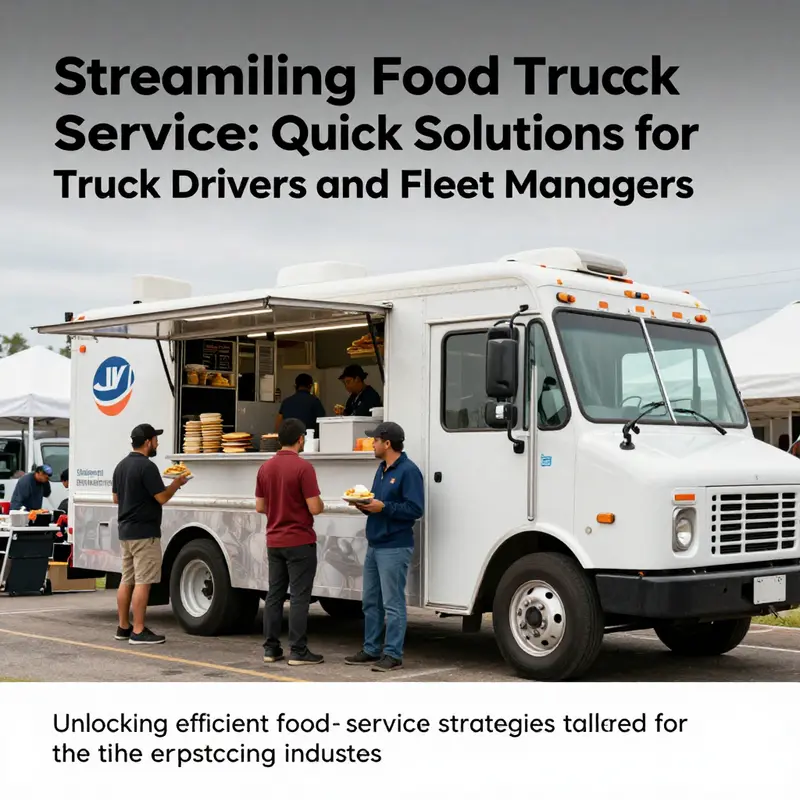
As long-haul truck drivers, trucking company owners, and fleet managers, time is a crucial commodity, especially during food truck events where seamless service can mean the difference between a timely meal and a frustrating wait. Implementing swift operational strategies is essential for fostering a satisfying dining experience. This article covers how pre-event planning and menu standardization, smart equipment, and efficient layout design can collectively ensure a quick service environment. With insights geared towards your unique needs, you’ll discover practical approaches to improve food truck efficiency, ensuring your meals are both delicious and served without delay.
Plan Smart, Serve Fast: Pre-Event Preparation and Menu Standardization for Rapid Food Truck Service
Effective pre-event planning and disciplined menu standardization are the two levers that consistently shorten lines and keep customers smiling at food truck events. When these elements work together, the truck operates like a compact, well-rehearsed machine. Every decision before the event ripples through service speed, staff confidence, and food quality. The planning stage should therefore be treated as active service time. Treat decisions about menu, equipment, staffing, and logistics as part of the customer experience, not separate back-office tasks.
Start with event intelligence. Know the site, the expected attendance flow, and the rhythm of sales peaks. A concert crowd surges between set breaks. A weekend market triples foot traffic between 11 a.m. and 2 p.m. A stadium preload period compresses orders into narrow windows. Map those cycles and then align menu choices and staffing to match. Detailed knowledge of the site layout matters. Identify where people congregate, where entrances and restrooms sit, and where adjacent vendors cluster. That matters because you can stage service windows and signaling to match natural traffic streams. Plan for expected weather changes, access to power and water hookups, vendor parking rules, and local health-code requirements. Permit constraints and waste disposal rules can change how you package, portion, and store food. Gathering accurate event data ahead of time reduces improvisation on site. It removes hesitation and speeds decisions when the line forms.
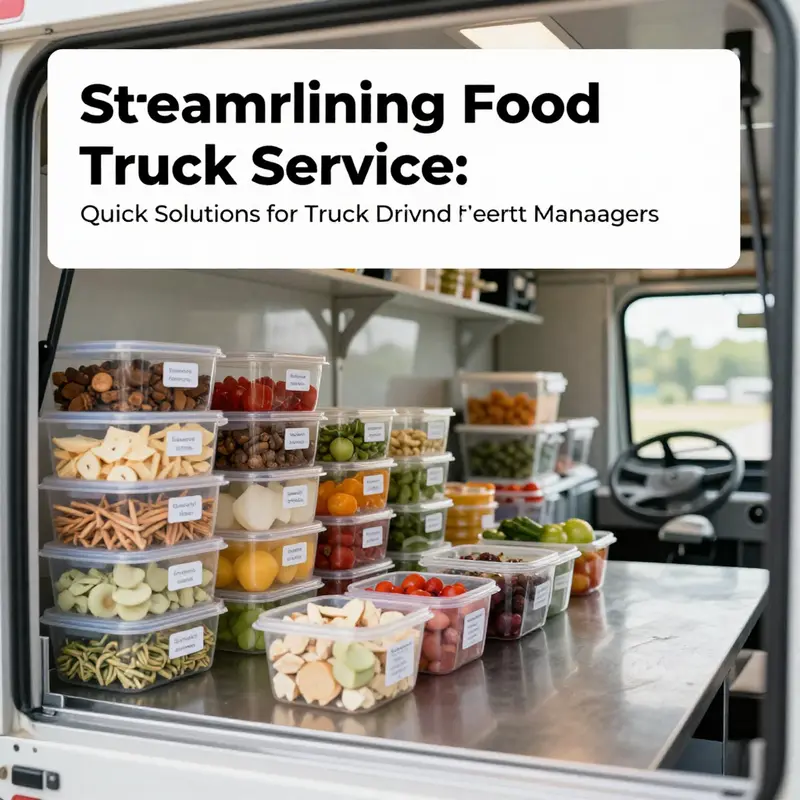
Menu design is the center of speed. A tight, focused menu reduces cognitive load for staff and customers. Choose a small set of high-margin, high-demand items that share common components. Components that overlap simplify prep. For example, if your menu centers on bowls, sandwiches, or plates that use the same prepped proteins and sauces, assembly becomes a quick, repeatable routine. Limit the number of cooking techniques needed. Choose dishes that allow for partial or full advance prep without compromising safety or flavor. Pre-cook proteins to safe temperatures and finish on a hot surface if needed. Pre-chop vegetables, portion sauces into single-serve containers, and weigh or portion proteins before service. Standardized portioning speeds assembly and controls cost. When every plate or box has the same portion sizes, the person at the window does not need to make weighing decisions under pressure.
Standardized recipes are the backbone of consistent speed. Write concise, step-by-step instructions for every menu item. These should include exact portion sizes, placement order for assembly, plating or packaging orientation, and any finishing steps. Use clear visual cues when possible. Laminated recipe cards placed at each station reduce errors. Train staff on recipes until assembly becomes muscle memory. The fewer choices a staff member must make while assembling an order, the faster the handoff to the customer.
Menu flexibility is still important, but it must be controlled. Offer customization through limited and predictable channels. Allow customers to choose from a fixed set of toppings or sauces. Use checkboxes on printed or digital menus rather than free-text custom requests. This preserves perceived personalization while maintaining assembly speed. For events with diverse audiences, plan a core menu with two to three optional add-ons. This structure keeps the order window moving and reduces the need for special prep items that slow the line.
Centralized prep will transform peak-hour performance. If your operation supports it, deploy a support prep unit that completes labor-intensive tasks before the event. A central prep truck or offsite kitchen can handle bulk tasks like marination, sous-vide cooking, portioning, and cold storage. When multiple service trucks share a prep source, they can draw on pre-portioned, labeled ingredient kits for quick assembly. This approach is especially powerful for multi-truck operations. A single well-equipped prep unit reduces duplication of effort and ensures consistency across vehicles. Standardized kits also simplify inventory tracking and decrease the risk of running out of essential items during a surge.
Equipment choices amplify planning gains. Prioritize modular and compact equipment that reduces handling time. Built-in portioning dispensers, fast-heating griddles, and induction cooktops allow immediate finishing with minimal setup. Consider no-flame cooking systems where permitted; they are safer and can accelerate finish times. Where possible, select appliances that integrate simple automation. Devices that maintain set temperatures or automatically cycle cook times reduce oversight. Optimize storage with modular cabinetry and labeled bins so staff reach for exactly what they need. A logical arrangement of tools and ingredients, where the assembly line flows from prep to cook to pack to point-of-sale in one short linear movement, saves seconds on every order. Those seconds compound into major throughput gains across an event.
Physical layout matters down to inches. Reduce cross-traffic by defining explicit lanes for different tasks. Keep prep and cold storage close to the cooking station. Put packaging and garnish near the window. Place waste and recycling within easy reach but out of the line of sight to customers. If the event allows, run a dedicated fast-service window that handles only basic, prepped items. Use signage to direct customers to the right window based on their order type. At large events, a secondary express station for pre-paid mobile orders moves steady demand without interrupting walk-up sales. The goal is to have each team member perform a specific, repeated action. That predictability reduces delays and errors.
Staffing strategy pairs with menu and layout planning. Assign explicit roles and keep them stable during shifts. One person takes orders and manages payment. One cooks. One assembles and bags orders. A floater assists with restocking and quality checks. Cross-train so team members can rotate during quiet times and be ready when surges arrive. Run timed drills during service hours to help staff internalize the rhythm of busy periods. When staff anticipate the cadence of orders, they pre-stage components and remain a step ahead of the queue. Implement short, clear shift checklists that spell out opening, peak, and closing duties. These lists reduce errors and speed transitions between tasks.
Communicate with customers to reduce friction. Display the most popular items and clearly mark estimated wait times. Digital displays and QR code menus reduce confusion and speed ordering. For mobile app orders, set a short pickup window and dedicate an express lane. For walk-up sales, simple signs that indicate the easiest-to-serve options nudge customers toward quicker choices. Well-worded menu descriptions can also reduce questions. If customers know what to expect, the ordering process requires fewer clarifying questions from your staff.
Inventory and supply management should be active and visible. Use a cloud-based inventory system that updates in real time. Track high-turn items and set automatic low-stock alerts. When a popular side or sauce runs low, the system should flag it for immediate restock. Digital inventory helps plan pre-event shopping too. For multi-truck setups with a central prep unit, maintain a shared ingredient ledger. That way, each service unit knows how many portions remain and can adjust menu availability proactively.
Packaging and portioning are often underestimated contributors to speed. Choose packaging that is easy to open, stack, and carry. Pre-portion condiments and garnishes so assembly takes a single motion. Consider packaging that keeps food visually appealing while preventing spills. Standardized containers also help with temperature control: select insulated options for hot items and breathable containers for fried foods. Packaging that supports single-handed carrying reduces the time staff spends balancing trays or awkward bundles.
Power and utilities planning is part of pre-event preparation. Ensure your truck has reliable on-board power, or confirm the event provides adequate hookups. Test backup generators and solar setups well before the event. Confirm water and waste handling capacity. Running out of power or potable water forces slow, manual workarounds. Self-sufficient systems give you flexibility and reduce risks during prolonged events.
Safety and compliance should be baked into every plan. Standardized recipes and portion controls improve food safety by limiting ad hoc handling. Label and date all prepped items. Use color-coded storage for allergen separation. Train staff to follow simple hygiene checkpoints during every service change. Compliance reduces the risk of shutdowns and the slowdowns they cause.
Rehearse for surges. Create a playbook for peak scenarios. Identify a threshold for call-in staff and a staffing ramp plan tied to attendance levels. Run mock service periods that simulate event rushes. These rehearsals reveal chokepoints. When you test at speed, you discover problems that text-based planning misses. Adjust layout, timing, or equipment based on drill feedback.
Data from past events is a powerful planning input. Record sales by item, time of day, and staffing level. Note waste quantities and frequent customer requests. Use these metrics to refine portion sizes and reorder thresholds. Over time, patterns emerge that let you predict peaks and adjust inventory with greater precision. That reduces the last-minute scrambling that slows service.
Small investments yield outsized returns. Simple changes often create the biggest speed gains. For example, a pre-printed ticket system or color-coded order slips helps the whole crew visualize the queue. A rounded up-sell list that pairs well with core items increases average check size with little extra handling. A light-touch queue management rope prevents crowding and keeps the service window accessible. Each minor improvement reduces friction during the busiest minutes.
Design choices from other industries offer helpful lessons. Emergency and response vehicle planning emphasizes compact efficiency and clear task roles. You can apply similar principles to food truck design and operations. For practical ideas on arranging compact, task-focused workspaces, review insights on design efficiency in emergency services for adaptable strategies. https://5startruckin.com/design-efficiency-in-emergency-services/
Finally, capture learnings immediately after each event. Hold a short debrief with staff to identify what worked and what did not. Keep the conversation focused and action-oriented. Note necessary tweaks to recipes, equipment placement, staffing patterns, and inventory. Turn those notes into updates for your standard operating procedures. Over time, these continuous improvements compound. The truck becomes faster, more predictable, and easier to scale across events.
For a practical deep dive into event-specific planning and menu standardization practices, see this industry guide for additional reference. https://www.foodtrucks.com/industry-guides/event-planning-and-menu-standardization-for-food-trucks
Smart, Modular Equipment in Action: Accelerating Quick Service at Food Truck Events
The rise of smart, modular equipment has shifted the center of gravity in mobile kitchens from sheer speed to intelligent speed. At food truck events, where crowd flow can be unpredictable and every minute matters, the fusion of connected appliances, modular configurations, and data-driven workflows turns a traditional cart into a responsive service hub. This transformation is not a mere upgrade in gadgets; it is a reimagining of how a portable kitchen negotiates space, power, and people. When a truck can sense demand, adjust its operations in real time, and reconfigure its interior in minutes, service becomes a predictable, repeatable experience even in the most frenetic environments. The essence of quick service in these settings hinges on synchronizing three core elements: the intelligence that governs process, the modularity that accelerates setup and adaptation, and the discipline of workflow that keeps every hands-on task tightly aligned with the customer moment.
Intelligence begins at the planning table and travels to the street via a mesh of smart devices and software. AI-driven route optimization and crowd-flow awareness do not simply move the operator from point A to point B; they optimize the tempo of the entire service. Real-time analytics monitor order volume, prep pace, and line length, then translate those signals into actionable adjustments. If a line begins to form at the front window, the system can reallocate tasks, shift staff focus, or trigger pre-cooked components to expedite assembly. If ingredient levels dip unexpectedly, the system can surface alerts and automatically trigger replenishment from storage—reducing the probability of a stockout mid-service. In practice, this means a kitchen that feels almost prescient, where actions are coordinated by a central, responsive intelligence rather than reactive improvisation.
The practical impact of such intelligence is more than just speed; it’s consistency. A smart system can standardize portion sizes, verify temperature targets, and flag anomalous orders before they derail the queue. Consistency matters because customers on a busy afternoon do not remember the exact ingredients or the precise cooking times; they remember the reliability of getting their meal quickly, hot, and exactly as promised. When a truck uses cloud-connected inventory, the restaurant-grade discipline of just-in-time cooking becomes a portable capability. Supplies are tracked in real time, with automatic reordering rules that kick in before a shortage becomes visible to a customer. This kind of visibility is especially valuable at multi-day events where maintaining inventory across a dozen items would otherwise demand heroic manually tracked spreadsheets and human memory. The objective is not to replace staff with machines, but to empower staff with tools that augment judgment, reduce errors, and keep the line moving.
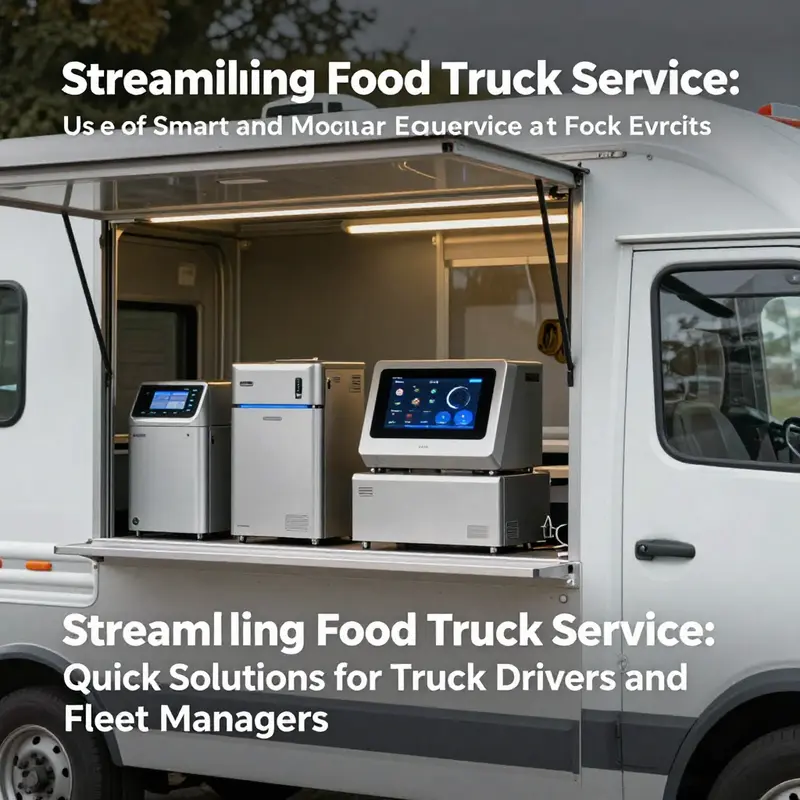
Modularity expands that intelligence into a physical form. Interchangeable kitchen modules—pre-installed, pre-wired, and pre-programmed with smart appliances—allow operators to reconfigure the truck interior for different events or menus with near-zero downtime. For instance, a module with temperature-controlled grills, automated fryers, and an integrated point-of-sale system can be swapped for a lighter, salad-focused setup or a bowl-centric station that prioritizes rapid assembly. This is not a mere rearrangement; it is a repositioning of capability. The modular approach makes it feasible to scale up or down with demand, to pivot from a festival crowd to a corporate luncheon, or to tailor the service to a particular culinary concept without a full overhaul. The benefit is twofold: setup time decreases, and operational efficiency improves because staff can work within a known module that has optimized ergonomics, controls, and workflow alignment.
Smart automation within these modules extends the range of what is possible in the field. Automated storage and retrieval systems, akin to the four-directional shuttle logic used in some high-volume industrial settings, can be adapted to mobile kitchens so that ingredients and tools are positioned where they are most likely to be used. Smart dispensing units ensure precise ingredient handling and rapid assembly, eliminating the guesswork that often slows line operation. Temperature-controlled prep stations maintain food safety and reduce the need for rework. Integrated POS and payment processing synchronize with the kitchen’s internal timing, so a completed order reflects in the plating and in the customer’s receipt at precisely the right moment. Taken together, these features enable a form of just-in-time cooking that travels gracefully through urban streets and festival grounds alike, where space is at a premium and every inch of countertop counts.
To make modularity meaningful, design must prioritize energy efficiency and compactness. Aluminum-insulated cabinetry, polyurethane-filled walls, and lightweight yet durable shells have become standard in civilian mobile kitchens since the late 2010s, and these choices continue to pay dividends in today’s high-speed environments. A modular system benefits not only space and organization but also thermal management. When hot components and cold storage share a compact footprint, heat distribution becomes a design factor rather than a perpetual nuisance. Smart modules can include energy-efficient heat recovery systems, smart fans that modulate based on ambient temperature, and low-power standby modes for equipment not in active use. These features are not luxuries; they are operational imperatives when every watt matters against the backdrop of outdoor events and occasionally shifting power sources.
Power management emerges as a central concern when equipment becomes intelligent and modular. Operators increasingly balance onboard power with energy-conscious components to avoid dependency on external sources. Self-powered systems—onboard generators or integrated solar arrays—offer resilience for long events or off-grid locations. In practice, this means a truck can stay in service longer without sacrificing performance. It also means crews can pilot a wider array of equipment without worrying about tripping breakers or compromising battery life. Self-sufficiency is not just about keeping the lights on; it’s about enabling the kitchen to deliver on its speed promise under varying conditions. When the sun is bright and the crowd is growing, the system can shift to solar-assisted operation, dim less critical indicators, and keep the core workflow components operating at maximum efficiency.
The orchestration of intelligent logistics within a modular framework further accelerates speed and precision. The combination of just-in-time cooking and modular readiness makes it possible to stage batches of components so that assembly lines flow smoothly from prep to serving. In this context, the kitchen becomes a micro-factory in which each module plays a defined role, and the interfaces between modules are standardized so that swapping a module does not require a prolonged retooling effort. The result is speed with reliability: staff can perform their tasks with minimal cognitive load because the system provides clear, context-aware guidance. Orders route through the integrated display and POS system, while the prep station knows exactly which ingredients should be retrieved and in what sequence they should be combined. This reduces not just the time customers wait, but also the cognitive strain on staff who often face the double pressure of speed and accuracy.
A crucial element of this architecture is standardization without rigidity. Standardization ensures that every module can interoperate with any other, that components are replaceable, and that training can be universal across configurations. But there is also room for adaptation. The modular design supports event-specific adjustments, such as a barbecue-focused module for a warm-up cookout or a Mediterranean-inspired module for a festival dedicated to street foods. The goal is to combine predictable processes with the flexibility to adapt on the fly. Staff training embraces this philosophy by emphasizing role clarity and cross-training so that even if the exact module in operation changes, the team’s routines remain consistent. Clear roles—one person managing orders, another operating the primary cooking equipment, a third assembling plates, and a fourth handling payments and tech support—create a rhythm that minimizes handoffs and delays. This rhythm translates into a line that moves with intention rather than anxiety, a subtle but powerful shift in the customer experience.
The human factor remains central, even as machines and modular designs take on more of the routine tasks. Smart systems free staff from repetitive, error-prone activities and allow them to focus on critical moments of interaction with customers. When a customer approaches the window, operators equipped with modular kits and real-time data can respond with confidence: the item is in the correct module, the ingredients are ready, and the cooking sequence is prepared to execute with precise timing. Signage and digital displays complement this flow, providing transparent information about wait times, menu options, and the status of orders. The customer’s perception of efficiency often depends as much on the clarity of communication as on the speed of the process. A well-lit window that signals “hot meals ready in 2 minutes” can be as influential as a nearly instantaneous plate swap. In this sense, the interface between technology and service is not a barrier but a bridge to a smoother, more human, more engaging experience.
The architectural logic of smart, modular equipment also supports sustainability narratives that increasingly matter to event-goers. Faster service reduces idle times, which in turn lowers energy consumption per served meal. Reusable components and standardized modules minimize waste because replacements and upgrades can be implemented without discarding the entire setup. Customers, too, respond to the narrative of responsible operation. They value a system that demonstrates efficiency through design—quiet, contained, and clean, with minimal footprint and maximum throughput. The modular ethos also offers a practical advantage in maintenance. If a single module encounters a fault, it can be swapped with a spare rather than halting the entire operation. This approach mirrors the reliability strategies used in larger, more permanent food service facilities and translates them into the fast-paced reality of mobile venues.
From a practical standpoint, implementing these capabilities begins with a deliberate, phased approach. Start with a core modular kit that includes a few high-demand items and a handful of smart appliances, all pre-programmed to ensure consistent performance. Train staff to operate within a standardized cadence, then progressively introduce additional modules as demand grows or as event types vary. This incremental path reduces risk while building the muscle memory of the team for a faster, more confident response under pressure. The hardware decisions should align with the software stack: sensors, timers, and control interfaces must communicate across modules so that the entire system behaves as a single, cohesive unit rather than a collection of disparate parts. In this sense, modularity becomes a discipline as much as a capability, shaping how the team thinks about space, time, and interaction with customers.
The value of smart, modular equipment extends beyond mere speed. It creates a resilient, scalable platform that businesses can grow into. During peak hours, the system can reallocate resources dynamically to where they are most needed. In quieter moments, it can reallocate energy to preserve power or to prepare for a surge later in the event cycle. This adaptability is what keeps a food truck from becoming overwhelmed by volume and keeps the customer’s experience seamless. It also supports sustainability goals by optimizing energy usage and minimizing waste. When a truck becomes a moving, intelligent service hub, it creates a unique, memorable experience that goes beyond the food itself. Customers experience predictability in speed, quality, and presentation, and this consistency becomes a differentiator in crowded event landscapes where many vendors vie for attention.
To anchor these ideas in practical terms, consider the cadence of a typical event day. In the pre-event phase, modular cabinets are loaded with pre-chilled components and pre-programmed appliances. The AI-driven scheduler assesses day-long demand projections, aligning staff shifts with anticipated peak intervals and ensuring that the most time-intensive items are staged in a way that minimizes movement. Once on site, the truck places its modules in a configuration that mirrors the event’s footprint, with a straightforward path from prep to cook to serve. The layout reduces the need for staff to traverse long distances while carrying hot or heavy items. A dedicated fast-service window, similar in spirit to innovations in other industries, enables drivers or guests to grab hot meals without stepping inside a crowded space. In practice, this means a line that forms around a compact, efficient window rather than a clogged interior, allowing staff to focus on quality and speed rather than crowd management alone.
The chapter of smart, modular equipment is not a voyage into speculative technology. It is a practical blueprint for a modern, mobile kitchen that demands speed without sacrificing safety, consistency, or taste. It begins with the discipline of designing for flow and ends with the confidence that the system can adapt when conditions change. The goal is a kitchen that feels both intuitive and robust—a place where every action is calibrated to the moment the customer makes eye contact and places an order. In the long run, this translates into more reliable service across diverse event formats, across varying crowds, and across shifting weather, terrain, and urban rhythms. The promise of these systems is not just faster meals but a more humane pace of work: fewer frantic improvisations, clearer roles, and a kitchen that stays in rhythm even when the crowd surges.
A practical cue for operators reading this chapter is to explore the broader ecosystem of the event—where logistics partners, venue owners, and other vendors shape the tempo and opportunity for speed. The integration of smart, modular equipment can be complemented by intelligent routing among multiple trucks, so that crowd distribution at a venue can be balanced across vendors. Such coordination, while complex, becomes feasible when each operator adopts a modular mindset and a shared language of data and interfaces. The payoff is not only faster processing times but also a more coordinated, less stressful service environment for staff and a smoother, more predictable experience for customers. This is the essence of turning clever hardware into reliable service: the equipment becomes the conductor, but the crew remains the true performers, translating data-driven signals into plates of food delivered with time, temperature, and taste preserved.
For readers seeking deeper technical context and broader industry trends, this chapter aligns with ongoing discourse around smart technology and modular design in mobile food operations. See the Industry Trends report that outlines how intelligent control systems and modular kitchen concepts are evolving in the 2026–2034 horizon. It offers a synthesized view of the advances described here and places them within a larger economic and logistical framework. design-efficiency-in-emergency-services.
In sum, the integration of smart and modular equipment represents more than a modernization of a single truck. It signals a shift toward adaptable, resilient, and customer-centered mobile food service. The fast-paced demands of events, festivals, and corporate gatherings no longer strain a kitchen that is intelligently connected and physically modular. Instead, such a kitchen thrives on its ability to anticipate, adapt, and align every step of the process with the flow of customers. The result is a service that is measurably quicker, consistently high in quality, and capable of expanding to meet new opportunities without sacrificing reliability. As the environment for mobile food shifts toward more complex, data-informed operations, the smart, modular kitchen stands ready—not merely to keep up but to drive the pace of success at food truck events.
External resource for further context on industry evolution in smart, modular mobile food operations: https://www.foodservice-tech.com/2026-smart-modular-food-truck-trends/
null
null
Final thoughts
In a world where every minute counts, especially for long-haul truck drivers and fleet managers, optimizing food truck operations can significantly enhance service speed and customer satisfaction. Through strategic pre-event planning, innovative equipment, and a streamlined layout, food trucks can ensure that quality service is paired with efficiency. These approaches not only reduce wait times but also create a more enjoyable dining experience, ensuring that truck drivers get back on the road quickly and stay energized. Implementing these practices sets the foundation for success in the fast-paced food truck industry.