
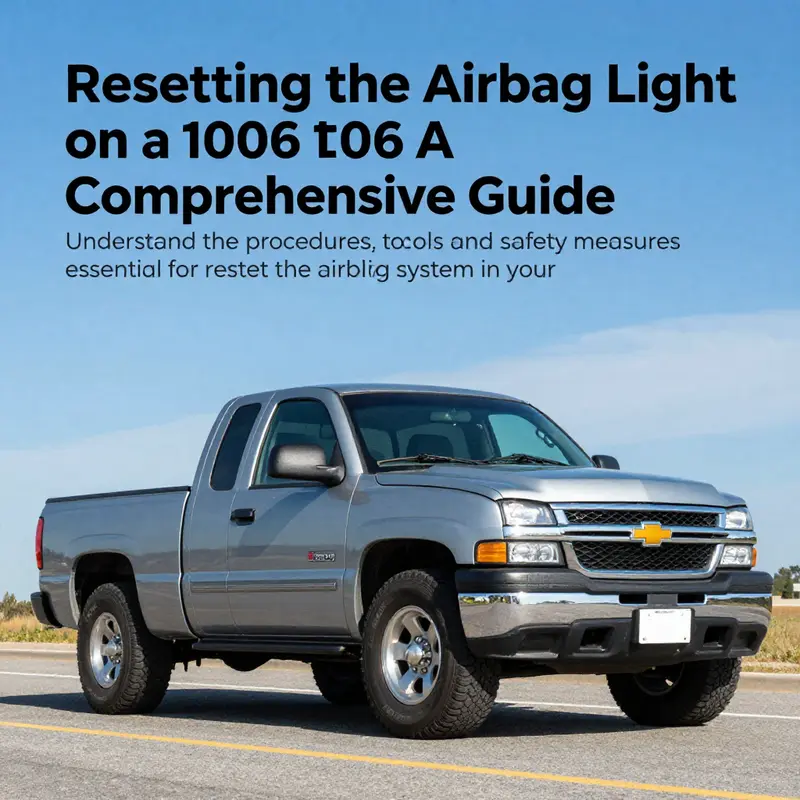
For long-haul truck drivers and fleet managers, the safety features of your vehicles are paramount. The airbag system plays a critical role in protecting drivers during accidents, which makes it concerning when the airbag warning light illuminates. This guide delves into the specific steps for diagnosing issues, resetting the airbag light, and ensuring proper functionality in a 2006 Chevrolet truck. From understanding the common reasons behind warning lights to getting acquainted with necessary tools and professional assistance, every chapter will empower you to manage your truck’s safety features confidently.
Between Warning and Safety: A Thoughtful, Diagnostic Path to Resetting the Airbag Light on a 2006 Chevy Truck
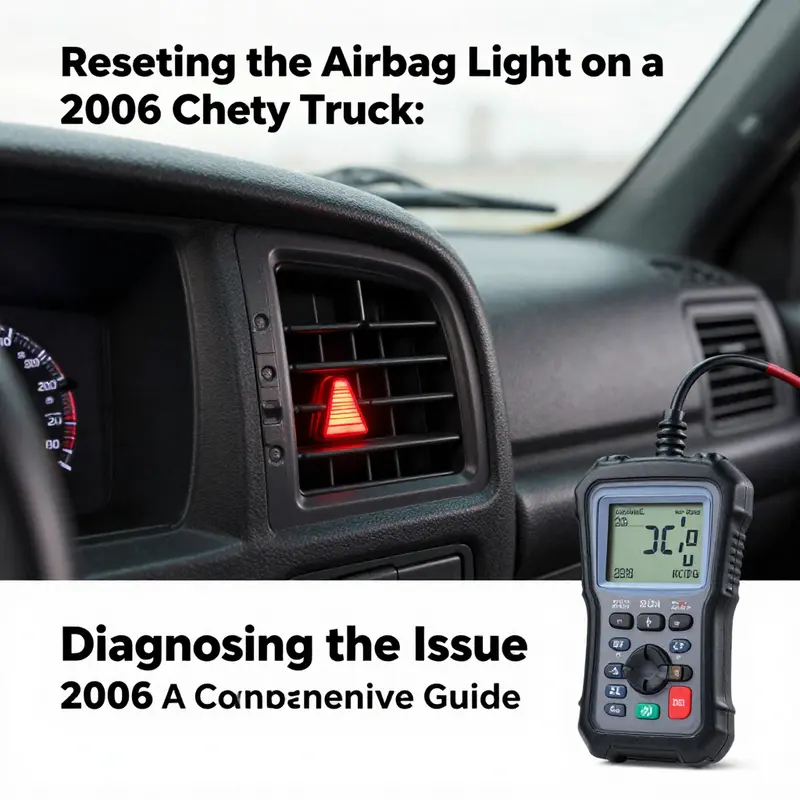
The airbag warning light on a 2006 Chevrolet truck is more than a nuisance; it is a signal that one of the most critical safety systems in the vehicle may not be ready to protect you and your passengers. The SRS, or Supplemental Restraint System, is designed to deploy in the event of a collision and to do so reliably. When the light glows, it invites a careful, deliberate response. Resetting the warning is not a ritual of clearing a fault; it is a diagnostic process that aims to confirm whether the system is truly ready or if a fault remains that could compromise occupant protection. This approach respects the seriousness of airbags and emphasizes safety over convenience. A clean reset—only after you have identified and addressed the underlying issue—significantly improves the odds that the system will function when it is needed most.
The journey from the first sign of illumination to a confirmed, safe reset is built on a simple premise: uncover the cause, fix it, verify the fix, and then clear the codes if the system allows it. The engine should remain off and the ignition should be in the ON position only when the procedure demands it. A professional diagnostic tool capable of communicating with the SRS is essential. Unlike generic scan tools that can read engine, transmission, and some body codes, the airbag system speaks a different language and requires higher safety-grade interfaces. When we talk about diagnosing and resetting the airbag light, we are talking about a procedure that intersects electrical integrity, harness continuity, sensor function, and sometimes a deployment history that cannot be ignored.
The initial step is diagnosis, not dismissal. The light can come on for several reasons: a faulty sensor, a damaged or pinched wiring harness, loose or corroded connections, or a fault triggered by a prior deployment that has not yet been properly cleared. Some faults are intermittent, flaring up only when a seat moves, a weight sensor in a seat changes, or a harness experiences vibration over time. In the absence of a clear, verified fix, clearing the codes is a temporary bandage at best. The reset will not remain stable if the fault persists. Therefore, the objective is to move beyond the symptom—the lit dash—and address the root cause.
To pursue this responsibly, a vehicle owner needs access to a diagnostic tool that can talk specifically to the airbag system. Generic scanners often cannot access SRS data, and attempting to access it with the wrong tool can lead to inaccurate readings, and in some cases, unintended system changes. A professional-grade, SRS-capable tool helps ensure the vehicle’s safety network is engaged correctly. With the ignition in the ON position and the engine off, the user can navigate to the SRS or Airbag menu within the tool. This is not about tinkering; it is about interfacing with a system that, when misread or mismanaged, could deploy at the wrong moment or fail to deploy when needed.
Once the SRS module is accessible, the scan tool will reveal any stored Diagnostic Trouble Codes, or DTCs. These codes are the map back to the fault that triggered the warning. It is wise to record these codes and note the approximate circumstances under which they appeared. Some codes point toward a specific sensor, such as a frontal impact sensor, a seat occupancy sensor, or a connector in the harness. Others may flag broader issues, like a miscommunication between modules or a fault in the wiring harness’s integrity. Reading the codes is not the final step, but it is a crucial one. It provides the clues needed to verify whether the problem has a straightforward fix, such as tightening a connector, repairing a damaged wire, or replacing a degraded sensor, or whether the fault is more complex and requires specialized service.
With the problem identified, the next phase is to follow the tool’s guidance to clear the codes. This action should be performed only after the underlying fault has been addressed. Simply erasing the memory may remove the warning light, but it does not repair the system. If the fault remains, the light is likely to return, sometimes immediately or after a few drive cycles. In some cases, clearing codes will trigger the airbag light to illuminate again as the system completes a self-check sequence; in others, the light may extinguish and stay off, signaling a successful reset. Either outcome should be followed by careful verification.
Verification is the step many overlook, and it is essential for safety. After clearing codes, it is prudent to drive the truck for a short distance to allow the SRS to perform its self-check. The system may re-enter a fault state if a component is not functioning correctly or if a wiring fault persists. The key signal is whether the light stays off during a normal drive cycle. If the light remains off, the diagnostic owner has achieved a reset that reflects a complete repair and a healthy system. If the light reappears, or if the tool reports that a fault persists, the underlying issue must be re-evaluated. A persistent warning is not a victory lap; it is a reminder that safety systems require meticulous attention.
This is a moment where responsibility must overshadow convenience. The airbag system is designed to protect lives, and its reliability depends on correct procedure and proper equipment. The temptation to perform a quick reset can be strong, especially if the light seems to behave for a moment after clearing codes. But the safety implications demand a careful, informed approach. If the vehicle has undergone aftermarket modifications that involve airbag components, such as seat changes, harness relocations, or even non-OEM wiring, these modifications can introduce new fault causes. In such cases, the diagnostic path becomes more complex, and the possibility of hidden issues increases. A qualified mechanic or dealership technician, equipped with the correct tools and reference manuals, is best positioned to validate the entire SRS network after a reset. The goal is not merely to disable the warning but to ensure that the system remains ready to deploy when needed and is free of known faults that could compromise performance.
Service manuals and manufacturer guidance are invaluable in this process. They provide the precise steps, warnings, and sequences that technicians follow when working with airbag systems. While a DIY approach can be educational and empowering, the consequences of a misplaced step or a misread code in the SRS can be severe. The manual clarifies how to handle a fault that requires component replacement, how to verify harness integrity in the seats, and how to perform a post-repair self-check without inadvertently introducing new risks. In this context, the manual serves not as a barrier but as a map of safety-critical terrain. If there is any doubt about a procedure, the correct course is to seek professional input. The cost of a professional inspection is small compared with the potential consequences of an airbags-system failure.
In addition to the technical steps, there is a practical, everyday dimension to this work. Vehicles age, and electrical systems degrade. The success of a reset depends in part on the physical condition of connectors, the absence of corrosion, and the integrity of the wiring harness. Routine inspection of under-dash connectors, seat tracks, and harness routing can reveal wear or damage that might not be obvious when the dashboard is quiet. If a fault persists after the initial diagnostic steps, a broader inspection may be warranted to ensure that the SRS is not being compromised by related systems or by external modifications. This holistic approach keeps the focus on safety rather than temporary appeasement of the warning light.
For readers seeking a broader perspective on maintenance and training related to complex vehicle systems, there is value in exploring resources that address the discipline of maintenance, diagnostics, and safety practices in professional settings. As a practical note, consider connecting with resources that discuss how dedicated maintenance training supports the reliability of critical systems in heavy-duty vehicles. For example, you can learn more about structured maintenance training that applies to real-world vehicle systems at this resource: fire-truck-maintenance-service-training. It provides context on how disciplined maintenance practices translate into uptime and safety for mission-critical fleets. This kind of training reinforces the mindset that safety-related procedures, including airbag system work, benefit from a formal, repeatable process rather than ad hoc tinkering. The path to safety, after all, is paved with careful checklists, precise tool use, and a clear understanding of what each step accomplishes.
In the end, the decision to reset the airbag light on a 2006 Chevy truck should be grounded in validation: a fault must be diagnosed, an appropriate repair must be completed, and a successful self-check must be observed. The mindset is not about bypassing a warning but about restoring a system that must function correctly or not function at all. The steps outlined here provide a framework for doing just that—diagnose, verify, and, only after confirming the fault is resolved, clear the codes and confirm the reset through a controlled drive. If any doubt remains, the safer choice is professional service. The airbag system is a safety-critical component; its integrity is not negotiable, and the responsibility to protect lives deserves nothing less than a careful, disciplined approach.
Internal link reference: for broader context on professional maintenance practices that support safe, reliable vehicle operations, you may explore resources on fire-truck-maintenance-service-training, which emphasizes the importance of structured maintenance in complex systems. fire-truck-maintenance-service-training
null
null
From Warning Light to Safe Road: A Practical Guide to Resetting the Airbag System on a 2006 Chevy Truck
When the airbag warning light glows on the dashboard, it signals more than a nuisance light. It signals the heart of the truck’s safety system—the Supplemental Restraint System, or SRS—has detected an issue that could affect the deployment of airbags in a crash. For the 2006 Chevrolet truck, the path from warning to reset is not a simple push of a button. It is a careful, diagnostic process that must respect the integrity of a life-saving system. The SRS is designed to monitor a network of sensors, wiring, and the airbag control module. A fault in even a single sensor or a loose connector can illuminate the light and set a diagnostic trouble code, and clearing that code without addressing the root cause is a risky shortcut that can leave the system latent until it is most needed.
The first rule in this workmanlike task is diagnosis. A light that comes on does not tell you which component has failed; it only tells you that somewhere in the circuit the system has detected a fault condition. Common culprits include a damaged or corroded sensor, frayed wiring harness paths under seats or behind dashboards, a loose connector at the airbag modules, or a previously deployed module that requires replacement or reprogramming. In some cases, an aftermarket modification—such as a different seat, altered wiring, or a nonstandard sensor harness—can trigger an ongoing fault condition. The important point is that you need to identify and resolve the underlying problem before even thinking about turning a code off. If the fault remains, the light will likely return, sometimes within minutes of a reset attempt.
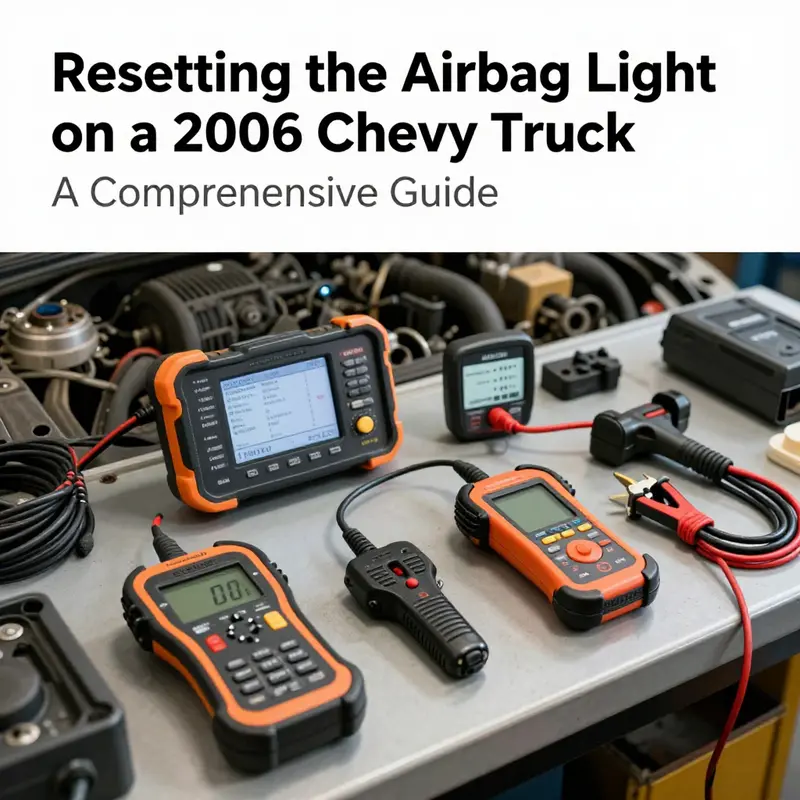
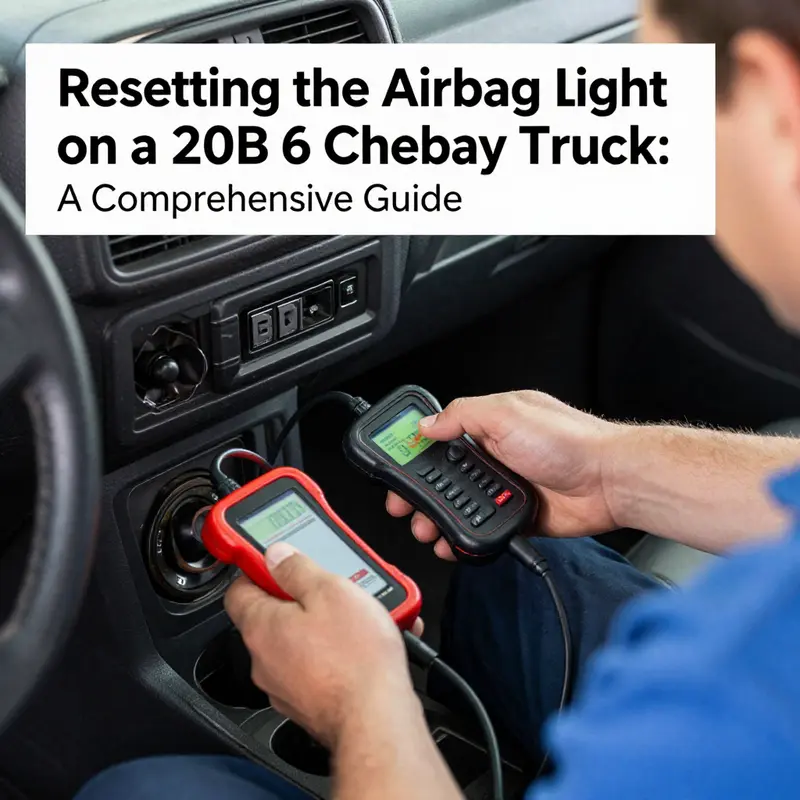
To begin, you need a diagnostic tool that can talk to the SRS module. A generic code reader or an app on a phone is rarely enough because the airbag system uses a dedicated communication protocol and separate fault codes from the engine and body networks. You want a professional-grade, GM-compatible diagnostic scanner that explicitly supports SRS access. Such a tool will let you read the stored DTCs, view freeze frame data, and, if the fault has been cleared or repaired, clear the codes and reset the readiness checks. This is not about circumventing safety—it is about verifying that the system is ready for a real-world scenario and that no latent fault remains.
With the right tool in hand, locate and connect the OBD-II port, a 16-pin connector usually found under the dash on the driver’s side, near the steering column. The port is trapezoidal in shape, and its position is standardized enough that most emergency and maintenance technicians can locate it by feel. After you connect the scanner, turn the ignition to the ON position, making sure the engine stays off. The scanner should power up, and the display will begin the process of communicating with the vehicle’s control modules. If you are using a handheld device, it will often boot itself once the connection is established; if you are using a Bluetooth adapter with a smartphone, you will need to pair the device and start the scanner app.
Next, enter the scanner’s menu and select the vehicle make, model, and year. In this case, Chevrolet, Truck, 2006. From there, navigate to the airbag or SRS section. The goal is to access the Airbag Diagnostic Trouble Codes, view the current codes, and decide whether you have the underlying fault addressed or not. If codes are present, write them down or photograph the screen for reference. Do not skip this step, even if you intend to reset immediately. Understanding the specific codes gives you a clue about what must be repaired. Codes can point to a sensor in the passenger seat, a connection under the dash, or a fault in the side-impact sensor mounted in the body structure. Each scenario requires its own remedy, and some fixes may be simple while others involve module replacement or professional reprogramming.
Once you have diagnosed and, if needed, repaired the underlying issue, you can proceed to clear the codes. The process is tool-specific but follows a general pattern: instruct the scanner to clear or erase the fault codes; confirm the operation, and then let the system run its self-check after you are finished. It is common to see the airbag light extinguish immediately after clearing, but in many cases the system will run a series of checks that take a few miles of driving to complete. During this post-reset drive, the vehicle’s computers verify that the sensors and the slipping, deployment, and restraint mechanisms are functioning as intended. If the light stays off after this self-check, the reset can be considered successful. If the light returns, it means the underlying fault has not truly been resolved, or there is a new fault in the system.
Safety and responsibility must always guide this work. The airbag system is designed to protect occupants in a crash, but its protective function depends on the integrity of the entire circuit. Resetting a fault without repairing the root cause can create a dangerous mismatch: the warning light may be out, but a faulty sensor or damaged harness can still prevent airbags from deploying when needed. Because of these stakes, many technicians advise that only trained professionals perform airbag resets. A qualified mechanic or dealership technician will have access to the correct diagnostic procedures, the required service information, and calibrated equipment that can verify the full health of the SRS after any repair or reset. They can also assess whether aftermarket seating, unusual wiring, or other modifications have altered the system in ways that require special attention. In short, the reset is not a magic button; it is a controlled procedure built on an accurate diagnosis and a confirmed repair.
In practice, this means treating the repair as a two-stage effort: identify and fix, then confirm and reset. Stage one hinges on accurate fault identification. If the codes indicate a damaged sensor, for example, you replace or reset that sensor in accordance with the service information. If the fault is a loose connector, you reseat and secure the connection, perhaps with new fasteners or anti-corrosion measures. If the fault lies in a deployed module that needs replacement, the part must be replaced and any necessary reprogramming completed. Under no circumstance should a reset be performed while the fault remains unresolved. The stage two focus is verification. After the repair, you re-scan to confirm that the codes are cleared and that no new DTCs have appeared. Finally, you perform the reset procedure to clear the light and allow the system to run its checks. The car is tested, not just the dashboard indicator; you should drive a short, moderate distance to let the system observe and confirm its status without creating any new fault conditions.
The practical takeaway is that a careful, methodical approach keeps you out of trouble. The chapter you’re reading is a reminder that safety is not optional when dealing with airbag systems. If you are not fully confident in your ability to diagnose and repair the issue, seek professional help. Even then, you should insist on a thorough test after the service to confirm that all components are reporting healthy status. If you are dealing with aftermarket modifications, you should consider whether the changes were installed in a way that altered sensor positions, wiring routing, or control-module programming. In such cases, a professional’s eye can determine whether the modifications have introduced a fault or if a dedicated recalibration is necessary.
For readers who want to see the broader context of vehicle maintenance and the careful discipline it requires, consider a broader training resource on maintenance best practices. Fire Truck Maintenance Service Training is a relevant analogue for disciplined maintenance behavior, including how to approach safety-critical systems with care and attention to detail. This kind of perspective helps cultivate a mindset that values method, documentation, and responsible decision-making as you work with any safety-critical system, whether in a light-duty pickup or a heavy-duty vehicle. Fire Truck Maintenance Service Training. This is not a substitute for the specialized service information for your exact vehicle, but it underscores the importance of professional-grade processes and ongoing learning as you approach a repair that touches the airbag system.
In practice, the last word belongs to safety. Do not rush the process. Keep the codes, the repair notes, and the steps you took in a clear, organized fashion so you can share them with a technician if needed. The goal is to have a system that is verified, stable, and ready to deploy in a real crash scenario. If the service light has turned off and the vehicle has completed its self-check, you should feel confident that you have correctly navigated the diagnostic steps and performed a careful reset. If the light recurs, treat it as a new diagnostic puzzle rather than a nuisance; the underlying issue may be different this time.
External resource: For practical, manufacturer-tailored guidance, refer to the dedicated service resources from the tool’s support provider: https://www.autophix.com/support.
Guarded Checks: The Essential Safety Playbook for Resetting the Airbag on a 2006 Chevy Truck
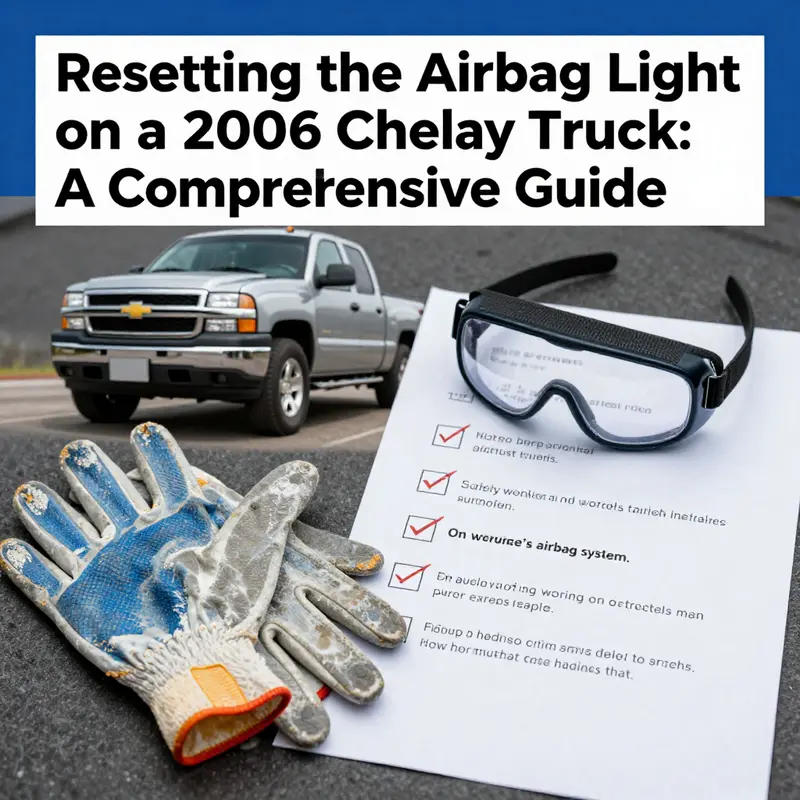
When the airbag warning light lights up in a 2006 Chevy truck, it signals more than a minor nuisance. It indicates a system that protects occupants in a crash is not guaranteed to perform as designed. The airbag system, or SRS (Supplemental Restraint System), is a complex network of sensors, modules, and inflators that must be tested and validated with care. Resetting that light is not a casual clearance of a code. It is an action that should be reserved for when the underlying fault has been diagnosed and resolved. The moment you consider a reset, you step into a safety-critical process that requires precise tools, disciplined procedures, and a respect for the hazards inherent in high-energy components. The goal is not merely to extinguish a dashboard indicator; it is to ensure the system will deploy correctly when it is needed and to prevent a false sense of security that could endanger you, your passengers, or bystanders. The decision to reset must be informed, deliberate, and backed by the best available diagnostic practices. For a truck that age, the issues can be subtle or intermittent, and the consequences of a wrong move are not theoretical. They are real and potentially catastrophic. As such, this chapter frames the approach as a sequence of guarded checks rather than a quick fix. It emphasizes the mindset required to work safely around airbag components and the professional standards that should guide any action that touches the SRS.
The heart of any safe reset lies in rigorous diagnosis. The warning light almost always marks an actual fault code stored in the SRS control modules. Those codes point to a sensor that isn’t reading correctly, a loose connection, a damaged harness, or, less commonly, a prior deployment scenario that left hidden damage. Simply clearing the codes and hoping the problem has vanished does not repair the root cause. In fact, it often leaves a latent fault that can return as soon as the light is cleared. The responsible path is to pair code reading with careful inspection, testing, and, when needed, component replacement. This is not a realm where guesswork earns a passing grade. It is a field where precision and patience pay off in safer operation and longer-term reliability. A professional diagnostic process will document the exact codes, confirm their validity, and verify that the repair has eliminated the fault rather than masking it. Only after such confirmation should any attempt be considered to clear the codes and observe whether the light returns or stays extinguished during a controlled road test.
With the diagnostic intent clarified, the practical steps take on a more disciplined form. Begin by safeguarding yourself and the vehicle. The airbag system houses energetic elements that can deploy unexpectedly if disturbed. Even a seemingly inert link or a jostled harness can create an unintended release. The workspace around the steering wheel, dash area, and passenger side must be treated with respect for the potential energy within the system. The first tangible precaution is to disconnect the battery, specifically the negative terminal. This is the most fundamental action to prevent accidental deployment during work on the SRS. After disconnecting, wait a full fifteen minutes before touching any airbag-related components. Those minutes give the capacitors time to discharge, which reduces the risk of a spark or an unexpected spark arc that could set off an inflator. The wait is not a ceremonial pause; it is a critical safety interval built from the physics of stored energy in the system. Even with the battery disconnected, do not assume the path is entirely safe. The possibility of residual charge means vigilance remains essential throughout the task.
Second, respect the fragility of airbag-related hardware. Do not touch the inflators, sensors, or wiring harnesses directly with your hands or loose tools. The components are highly sensitive, and contact or improper handling can trigger deployment. Keep tools away from the steering column, the dashboard pockets, and the passenger-side airbag location. If a component appears damaged or corroded, stop and re-evaluate rather than forcing access. Any sign of damaged wiring or stretched connectors is a cue to pause and seek professional evaluation. The technique matters as much as the sequence; careless contact with soft metal terminals or with sensor housings can create an unsafe bridge that may later fail under normal driving loads. When access is required, use only the tools specified in the service manual. The correct tool ensures the connectors seat properly, the harness remains undamaged, and the risk of short circuits is minimized. The service manual provides the exact procedure for removing and reinstalling connector pins, modules, and the airbag control unit without compromising integrity. While this may seem esoteric, it is a crucial distinction between a temporary clearance of fault codes and a durable repair that restores true system integrity.
The third strand of safe practice centers on understanding what a reset can and cannot do. A reset clears diagnostic trouble codes that the vehicle’s computer uses to tell you a fault exists. It does not fix those faults by itself. In many cases, clearing codes without addressing the underlying issue will cause the light to reappear after a short drive, when the self-check logic reevaluates the system. That is not a sign of success; it is a traffic signal that the problem persists. The prudent path is to treat the reset as a verification step only after the fault has been resolved. This means diagnosing and repairing issues such as a faulty sensor, a damaged harness, or a compromised connector, and confirming that all components communicate correctly after repair. It also means validating that any aftermarket modifications to seats, wiring, or the airbag module have not disrupted the SRS’s wiring topology. These checks should be done in concert with, or by, a qualified technician equipped with the correct diagnostic interface and software that can talk to the airbag system in a way that a standard consumer scanner cannot. The fidelity of the data read from the system matters; a misread code can lead to unnecessary parts replacement or, worse, miss a real fault that endangers occupants. In short, a reset is only as trustworthy as the diagnosis that precedes it.
Beyond the diagnostic stage lies the responsibility of verification. After the fault has been corrected and the codes cleared with the appropriate diagnostic workflow, the system should undergo a controlled verification sequence. This includes a cautious road test that allows the SRS to perform its self-check in real-world conditions. If, during or after the test, the warning light reappears or the system reports additional faults, the process must stop and revert to a deeper diagnosis. The road test is not a mere formality; it is the live validation that the computer’s fault tree has been closed and that the SRS will respond correctly in a crash. The complexity of the 2006 Chevy truck’s SRS means that this step is not optional for safety; it is essential to confirm the reliability of the repair and the integrity of the entire system under dynamic conditions. The overarching aim is to restore confidence that the airbags will deploy as intended when the moment demands protection, rather than behaving unpredictably or failing when most needed.
There is also an important caution about modifications. If the truck has undergone aftermarket alterations to seats, wiring, or any component linked to the airbag system, those changes can change how the SRS behaves. They can introduce new fault paths or mask existing ones. Any modification should be evaluated by a professional to determine whether it affects the diagnostic strategy or the repair plan. In such cases, the technician may need to adjust the repair approach, replace certain harness segments, or reprogram modules to reestablish safe operation. This is not a scenario where DIY improvisation yields a reliable outcome. The airbag system is a safety-critical subsystem, and any change in its wiring or control logic must be validated with proper tooling and expertise.
For readers who want a practical anchor point, the safest general rule is to proceed with reset only after a comprehensive professional diagnosis has confirmed that the fault is resolved. The procedure for clearing codes, if it is attempted at all, must be guided by the diagnostic flow provided by the service information for the vehicle and performed with a tool that can access the SRS subsystem. It is also essential to document the codes observed, the repairs performed, and the test results. Documentation helps future technicians trace the fault history and ensures continuity of care if another issue emerges later. The aim is not to cast doubt on everyday maintenance but to elevate safety by ensuring that every action concerning the SRS is grounded in verified repair work and confirmed system readiness.
In closing, the decision to reset the airbag light on a 2006 Chevy truck must be anchored in safety-driven judgment. The process demands respect for the energy stored in the system, rigorous adherence to the service manual, and a commitment to professional validation. When in doubt, seek a qualified technician who can navigate the diagnostic tools, interpret codes accurately, and confirm that the SRS is fully capable of protecting occupants. For those who pursue a responsible, safety-first approach, the path is clear: diagnose, repair, verify, and only then reset, knowing that the system has been restored to its intended function. For more formal guidance, consult the vehicle’s official repair resources available through the manufacturer’s site. External resource: https://www.chevrolet.com/
When Safety Deserves a Second Opinion: Professional Airbag Resets for the 2006 Chevy Truck
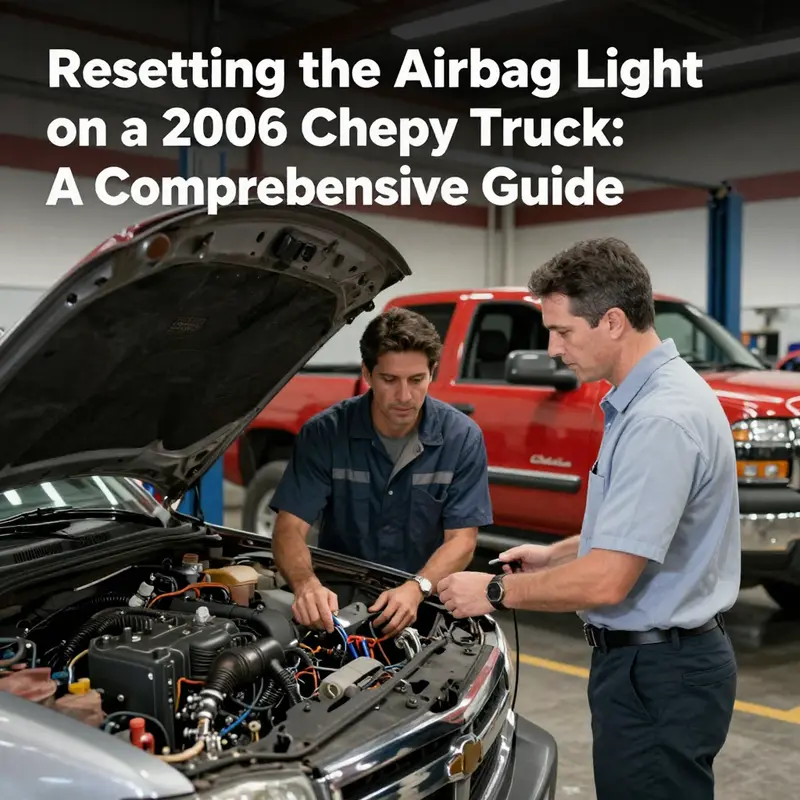
The airbag system in the 2006 Chevy truck sits at the intersection of engineering precision and real‑world safety. When the airbag warning light glows, it is more than a maintenance nuisance; it is a signal that the vehicle’s Supplemental Restraint System is not in a state that can be relied upon in a crash. The light can illuminate for a variety of reasons, from a failing sensor or damaged wiring harness to a loose connection or the aftereffects of a prior deployment. In practice, the safest and most responsible response is to treat the warning as a diagnostic prompt rather than a simple indicator that the problem is merely cosmetic. This is not a situation to be resolved with a quick toggle or a generic “clear code” procedure. The integrity of the safety network is at stake, and a proper resolution requires a professional with access to appropriate diagnostics and a thorough understanding of the vehicle’s SRS architecture.
The core rationale for seeking professional assistance rests on the diagnostic depth and the safety consequences of a misstep. The airbag system communicates through a dedicated control module that catalogs fault codes and self-check routines. A standard reader usable for routine OBD checks may not provide visibility into the SRS domain, and attempting to interpret or clear SRS codes without the right capabilities risks misdiagnosis. A trained technician will use a diagnostic tool that can access the SRS, read the stored trouble codes, and interpret them in the context of the truck’s seating positions, seat belts, potential harness wear, and the integrity of the clock spring. The codes tell a narrative about which component is failing and why the system has entered a protective state. Importantly, clearing the codes without repairing the underlying issue is not a real fix; it is a temporary expedient that leaves open the possibility of a recurrence or, in a worst‑case scenario, a failure to deploy when needed.
The diagnostic journey is not a one‑line fix. It requires assessing whether a fault is intermittent or persistent, and whether it implicates a single sensor or multiple nodes across the SRS network. Additionally, aftermarket changes can complicate the picture. The 2006 Chevy truck may have seen updates or alterations to the steering system, seating, or wiring that diverge from factory configurations. When such changes exist, a technician must determine whether the changes are compatible with the factory safety logic and whether any new calibration steps are required. The clock spring, which transmits signals from the steering wheel to the airbag module, is one common point of vulnerability. A nonstandard steering wheel, or an altered harness in that vicinity, can introduce misalignment or improper signal timing. In such cases, the goal shifts from simply clearing a light to restoring a coherent, reliable communication path across the SRS.
When a root cause is identified and repaired, the reset concept enters the conversation. A genuine reset is not a mere ritual that silences the lamp. It represents a controlled rearming of the safety logic after confirming that all fault sources have been addressed. In many cases, a repair involves replacing a defective sensor, repairing a damaged harness, or re‑seating a connector. After a component is replaced, a relearn or calibration step may be necessary to reestablish proper reference signals and timing for the system to interpret sensor data correctly. The relearn process ties the hardware changes to the software that governs deployment thresholds. It is a precise operation that requires manufacturer‑aligned procedures and tools, and it is not something that should be attempted without the right training and documentation. The technician will verify, through a series of checks, that the system recognizes all inputs and responds as expected during a simulated self‑test, followed by a real‑world drive cycle that confirms continued reliability.
Compatibility considerations further shape the path to resolution. Aftermarket modifications—such as steering wheels, seats, or other components integrated into the SRS pathway—demand an elevated level of scrutiny. Even when the vehicle initially appears to operate correctly, misalignment between new hardware and the original control logic can manifest as an ongoing warning light or, in some cases, inadvertent deployment risk. The safety implications mean that compatibility is not a cosmetic concern; it is a core factor in whether the system can be trusted to perform in the moment that matters. A competent technician will weigh the benefits of any modification against the potential hazards to the overall safety architecture, and if necessary, will guide the owner toward options that preserve the integrity of the vehicle’s protection system. The aim is to avoid a situation where a well‑intended upgrade compromises safety or masks latent vulnerabilities.
This is where the authority of manufacturer guidance becomes essential. Official repair manuals and service literature crafted for the platform provide the framework for safe maintenance. They outline the proper diagnostic sequences, the expected behaviors of the SRS components, and the precise conditions under which a reset and relearn may be performed. These resources exist to prevent improvisation that might undercut the system’s safety logic. While such manuals are typically accessed by authorized technicians, the discipline they embody serves as a reminder that airbag work is not a field for trial and error. When questions arise about a particular truck’s configuration or history, consulting these guides—or, when appropriate, licensed service channels—helps ensure that actions align with engineering intent and safety standards. In the absence of proper guidance, the risk of an incorrect procedure increases, along with the potential for warranty implications or service recalls that may apply to the vehicle’s safety network.
The broader picture also includes practical consequences for ownership. A decision to reset or reprogram the SRS should be grounded in a comprehensive assessment of the vehicle’s history and its current state. Technicians bring not only diagnostic tools but a disciplined approach to documenting fault codes, repair actions, and post‑repair verification. This documentation supports ongoing maintenance decisions and helps ensure that any future work is performed with a complete record of what has been repaired, replaced, or calibrated. When occupants’ safety is at stake, the value of such rigor becomes obvious: a properly diagnosed and validated repair returns the system to a known, testable condition rather than a hoped‑for fix that may not hold up over time.
For readers navigating next steps, the guidance is straightforward: seek professional service from a technician who specializes in SRS work and who can access the appropriate diagnostic capabilities. Do not rely on quick fixes or unverified online instructions. The professional path not only addresses the symptom (the warning light) but also resolves the underlying problem and reestablishes the system’s integrity. The result is a vehicle whose safety features are demonstrably dependable, backed by diagnostic traceability and alignment with manufacturer expectations. If a vehicle has undergone compatibility‑related modifications, the technician’s assessment now serves as a critical checkpoint to prevent future issues and to determine whether any further recalibration is warranted after repairs.
As a closing perspective, the chapter underscores that the decision to pursue professional assistance for a 2006 Chevy truck’s airbag reset reflects a broader commitment to safety, risk management, and fidelity to engineering design. A well‑executed service encounter blends careful diagnostics, repair quality, and proper revalidation. The professional who undertakes this work treats the SRS as an integrated safety network rather than a standalone component. By combining diagnostic discipline with adherence to manufacturer guidance and prudent compatibility checks, technicians restore not only function but confidence—the quiet assurance that, when the moment requires it, the system will perform as intended to protect occupants. For readers seeking a path forward, the clear choice is to engage those who bring the right expertise, documentation, and ethical commitment to airbag work, and to acknowledge that safety rests on precision, not expedience. For broader context on professional maintenance practices, see fire-truck-maintenance-service-training. fire-truck-maintenance-service-training.
External resource: Official General Motors service and support page. https://www.gm.com/owners/service-and-support
Final thoughts
Resetting the airbag light on your 2006 Chevy truck is an essential task that ensures safety and compliance on the road. By understanding the significance of diagnosing issues, utilizing appropriate tools, and following a structured process, truck drivers and fleet managers can tackle this task efficiently. However, always prioritize safety and consider seeking professional help to guarantee correct diagnosis and reset procedures. Your truck’s airbag system is a critical safety feature; maintaining its integrity is non-negotiable for road safety.