
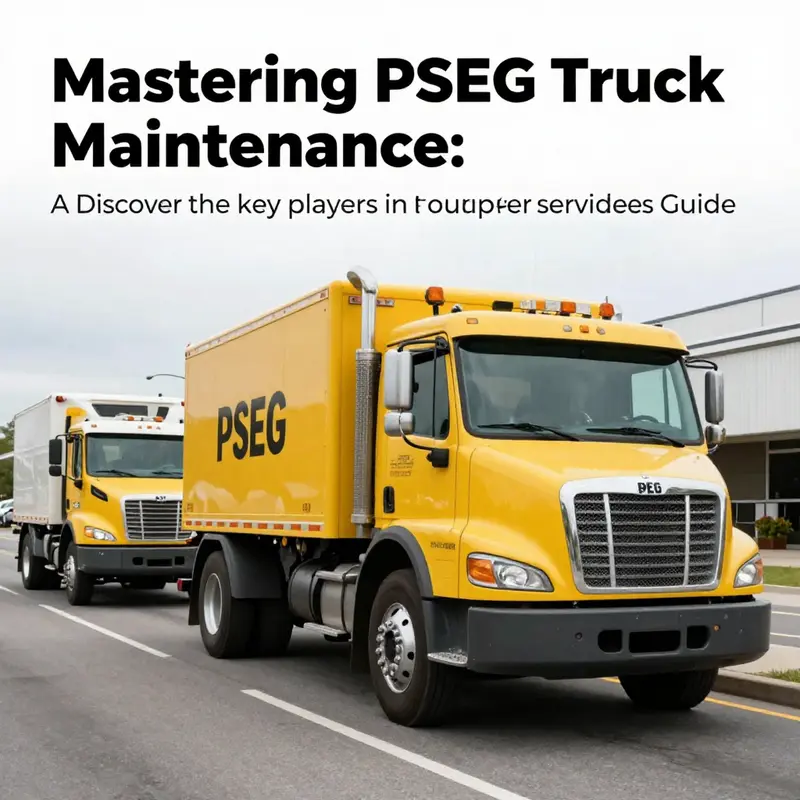
Routine maintenance of PSEG trucks is essential to ensure their optimal performance and longevity. This responsibility falls on two main groups: the drivers and professional technicians. Drivers conduct daily checks, while specialized technicians handle more complex repairs. Understanding the distinct roles of these teams is crucial for long-haul truck drivers, trucking company owners, fleet managers, truck maintenance and repair specialists, and aspiring truck drivers. Each chapter of this article delves deeper into who performs routine service of PSEG trucks, outlining the necessary daily maintenance tasks, the expertise of professional technicians, and the role of in-house versus third-party service providers.
In the Driver’s Seat: The Quiet Routine Keeping PSEG Trucks Ready for Tomorrow
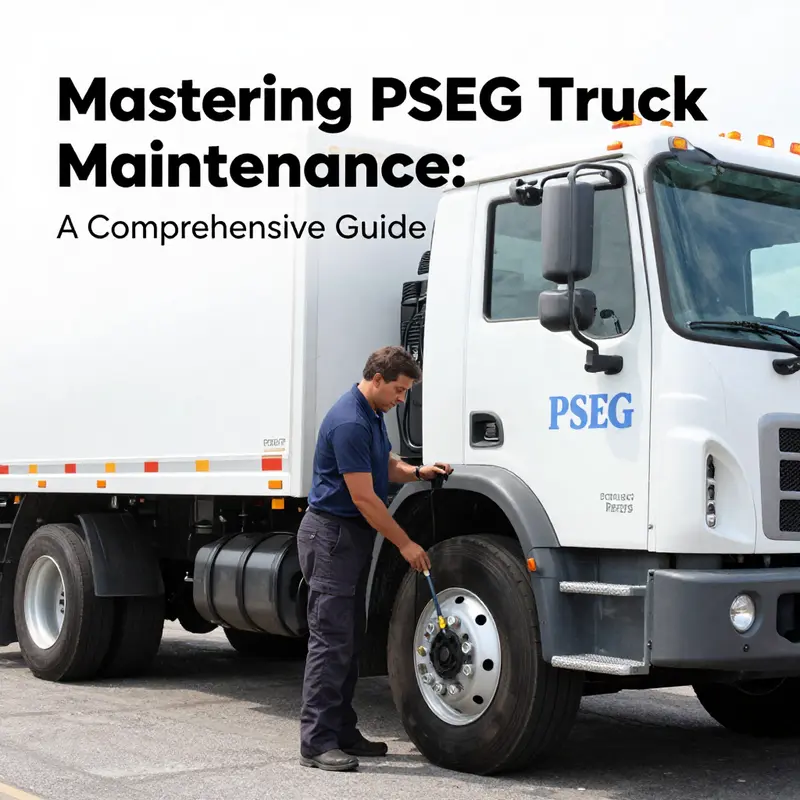
On the sprawling yard and along the routes of Long Island, the daily resilience of the PSEG fleet is less a matter of grand maintenance events and more the steady rhythm performed by the people behind the wheel. The trucks that carry crews into neighborhoods, respond to outages, and sustain essential services begin each shift not with a dramatic overhaul but with a disciplined sequence of checks and duties carried out by the drivers themselves. This is not a narrative of lone mechanics hoarding keys in a shop bay; it is the story of a distributed, frontline responsibility where each driver is both custodian and trigger for the next step in maintenance. The result is a fleet that remains safe, reliable, and ready to move, even as it travels through the day’s uncertainties. In Long Island, as in many utility operations, routine service starts with the driver, continues with in-service vigilance, and culminates in a structured handoff to professional technicians when something promises to exceed the driver’s scope. The continuity between these roles is the backbone of fleet uptime, a term that captures not just the absence of breakdowns but the assurance that the necessary tools and people are aligned to keep the wheels turning in service of the public good.
The first light of the day is the moment when a driver greets the truck as a partner, not merely a machine. Before the engine coils into life, the pre-trip inspection unfolds as a deliberate ritual. Fluid levels are checked with a practiced eye: oil, coolant, and other essential fluids are measured and, when needed, topped off. Tire pressure and tread depth are appraised, because even a slight variance in inflation can alter handling, fuel economy, and braking performance. The driver scans the exterior for signs of wear or damage—cracks in the mirrors, unreadable exterior lights, or any debris that could reduce visibility or create a hazard. Inside, the dashboard becomes a small theater of awareness: gauges and warning indicators are read, a process that translates data into action. If a light glows with unusual brightness or an alert flashes, the driver does not ignore it; the response is to confirm, monitor, or report. This is not superstition or routine superstition; it is a calibrated practice that reduces the odds of a preventable failure during a long shift.
The throughline of these checks is not merely about catching defects; it is about sustaining a state of readiness. In-service monitoring follows the pre-trip routine. Throughout the shift, drivers listen for odd sounds and feel for vibrations that might signal a developing issue. A change in ride quality, a slightly different steering response, or a hesitation in acceleration can all point to a growing concern. Rather than waiting for a diagnostic code to tell the story, drivers interpret cues from the vehicle and respond with timely action. They maintain clear lines of communication with dispatch and maintenance coordinators so that, when a deviation is detected, the person who can evaluate it most accurately is alerted. The goal is simple in its phrasing but complex in practice: keep the vehicle safe and capable of completing its route without interruption. Post-trip checks close the loop. Upon returning to base, drivers examine the vehicle again, noting any issues that may have arisen during the day and securing the truck in a ready state for the next shift. This final sweep is a bridge to the next day’s routine care and an ongoing thread in the broader fabric of fleet health.
What makes this pattern work is a culture that treats routine service as essential, not optional. The Long Island operations are shaped by a leadership layer that translates daily experience into actionable priorities. Edward Baumann, noted as a Senior Transportation Supervisor within PSEG through his professional profile, oversees the daily operations of the utility maintenance and repair fleet. His role includes prioritization, assignment, and evaluation of work—an orchestration that relies on drivers to perform the foundational daily duties and on technicians to step in when more technical expertise is required. The supervisor’s responsibilities create a structured pipeline: issues observed by drivers at the roadside or in the yard are documented, categorized by severity, and routed toward the appropriate maintenance pathway. In this arrangement, drivers become the first line of defense, pointing the fleet toward safety and reliability, while supervisors ensure that the right follow-up happens at the right time.
The actual tasks drivers perform as part of routine service extend beyond a cursory glance at gauges. Pre-trip inspections are comprehensive and routine, yet they are also tailored to the realities of a utility fleet. Drivers verify not only the obvious features such as tire condition and fluid levels but also critical safety components like brakes, lights, and horn systems. The pre-trip sequence becomes a mental checklist that travels with the truck into neighborhoods and back to the depot. In-service monitoring is a dynamic, ongoing discipline. The cab becomes a cockpit of awareness, where the driver tracks performance metrics, notes any irregularities, and maintains a written or digital log that records the vehicle’s health status. Post-trip checks then consolidate the day’s experience into a record that informs the next shift and signals patterns worth investigating as part of broader maintenance cycles.
This approach, though rooted in the routine, has a meaningful impact on safety and reliability. The fleet’s uptime is not a mystique of perfect machinery but a predictable outcome of disciplined human work. Drivers who perform these tasks reliably reduce the risk of unexpected outages and extend the life of essential equipment. Short-term savings from skipping or skimping on routine checks rarely pay off over the long horizon; the costs manifest as fuel inefficiency, sudden repairs, or compromised safety. When drivers’ daily rituals are combined with a clear escalation path to professional technicians for more complex work, the fleet demonstrates a resilient balance between autonomy and oversight. This balance is not accidental; it is the result of an intentional design that recognizes drivers as the most accessible and immediate guardians of roadworthiness, while maintenance staff and management provide the corrective and preventive counterweight needed for the fleet to perform at scale.
The cooperation between drivers and professional repair facilities is a crucial, though often underappreciated, feature of routine maintenance. The high level of technical work that keeps a modern utility fleet dependable requires tools, certifications, and the specialized expertise of automotive technicians. When routine checks reveal issues beyond the driver’s scope—an engine anomaly, a brake system concern, or a major fluid system irregularity—the vehicle is flagged and routed to in-house maintenance centers or contracted third-party service providers. This is where the distinction between daily care and professional repair becomes most visible. In-house teams and vetted contractors bring a deeper set of resources and capabilities, such as diagnostic equipment and access to a broader array of parts, enabling more complex repairs to be performed efficiently and correctly. Even here, the continuity from the driver’s initial detection to the technicians’ final adjustments remains intact: the driver’s note, the supervisor’s prioritization, and the shop’s execution converge to restore the vehicle to service as quickly as possible.
The narrative of routine service also intersects with training and continuous improvement. For drivers, ongoing education reinforces the fundamentals of daily care and introduces refinements in inspection techniques, safety protocols, and reporting procedures. The emphasis on hands-on learning is reflected in industry resources that emphasize training as a core enabler of fleet uptime. A relevant example is the learning pathways dedicated to maintenance service for specialized vehicles, such as the fire truck maintenance service training resource. While the vehicles in that domain differ in purpose and configuration, the underlying principle remains the same: everyday care performed by frontline personnel is the bedrock of reliable operations. For PSEG, this translates into a practical expectation that drivers cultivate a tactile understanding of their vehicles, learn how to distinguish a minor anomaly from a real fault, and know when to escalate. The structure supports a culture of accountability without sacrificing efficiency, ensuring that a large, dispersed fleet can function coherently under the daily pressures of service delivery.
Embedded in this practice is a respect for the limits of what can be done on the road versus what must be done in a controlled shop environment. Drivers carry out essential checks that address immediate safety and reliability concerns, but they are not expected to perform tasks that require advanced diagnostics, heavy disassembly, or calibration of critical systems. When such tasks arise, professional technicians step in. This delineation—driver responsibility for routine checks and operator-level monitoring, with professional maintenance for technical work—creates a layered defense against failures and supports a responsive maintenance ecosystem. At any given time, a dispatch decision may be influenced by a combination of live feedback from drivers, prioritization by supervisors, and the availability of shop capacity. The result is a dynamic schedule that keeps the fleet moving while ensuring that more intricate issues are addressed thoroughly, without compromising safety or performance.
From a broader governance perspective, the routine care of the PSEG fleet reflects a commitment to standardization and transparency. The drivers’ logs become a valuable data source for maintenance planning and reliability analytics. Trends identified in pre-trip and post-trip inspections can signal the need for targeted training or for revisiting inspection procedures. Supervisors like Baumann translate these insights into actionable changes, adjusting routes, maintenance windows, or staffing assignments to align with the fleet’s evolving needs. In practice, this means that a routine check is not merely a moment in time but a feed into a loop that informs the next day’s operations, the upcoming maintenance schedule, and the long-term health of the entire fleet. The layered approach—driver checks, supervisor oversight, professional maintenance—creates a resilient system in which routine care is more than a procedural obligation; it is a strategic asset that reinforces safety, reliability, and public service continuity.
For readers seeking practical takeaways on how routine fleet care translates into real-world outcomes, the answer lies in the visible and invisible dance between drivers and technicians. The driver’s daily work is, in many respects, the choreography of readiness. The careful pre-trip and post-trip actions, the vigilant in-service monitoring, and the disciplined reporting create a continuous stream of information about vehicle health. The supervisor’s role is to translate that stream into priorities, to allocate limited repair resources where they will have the greatest impact, and to maintain the integrity of the fleet’s overall schedule. The technicians’ role is to deliver the professional-level care that keeps the complex systems aligned with performance standards and safety requirements. Together, they form an ecosystem that is greater than the sum of its parts, a system designed to deliver reliable power, service, and safety to the communities that depend on the grid and the crews who maintain it.
In this light, the question of who performs routine service of the PSEG trucks resolves into a coordinated answer. The routine service is performed primarily by the drivers themselves, whose daily checks and ongoing monitoring anchor the fleet’s readiness. This practice is reinforced by disciplined management, led by supervisory personnel who understand how to prioritize and route issues for timely resolution. When a routine check reveals a problem that requires more than a driver’s intervention, the fleet scales up to professional maintenance facilities, ensuring that every vehicle receives the appropriate level of care at the right time. The recognition that maintenance is a continuum—beginning with a driver’s careful observations and ending with a technician’s precise repairs—highlights the sophisticated coordination that underpins a modern utility fleet. It is a practical model rooted in safety, reliability, and service to the public, and it reflects how a large organization can translate routine, everyday tasks into enduring operational strength.
For readers who want to explore the practical dimensions of this maintenance ecosystem, consider visiting resources that emphasize the hands-on training and maintenance discipline that underpins reliable fleet operations. This line of thinking mirrors the emphasis on ongoing, practical education found in practitioner-focused materials such as the fire-truck maintenance service training resource linked above, which highlights how training reinforces the drivers’ capacity to perform routine care with confidence and accuracy. The link serves as a reminder that the maintenance competencies described here are part of a broader culture of readiness, where continuous improvement and standardization help sustain uptime across a complex network of vehicles, crews, and support systems. In the end, the quiet routine of daily checks is not quiet at all. It is a rigorous, collaborative practice that keeps the PSEG fleet prepared to serve uninterrupted, day after day, neighborhood after neighborhood, through every season and every challenge that comes its way.
The Fleet’s Quiet Engineers: How Professional Technicians Keep PSEG Trucks Running
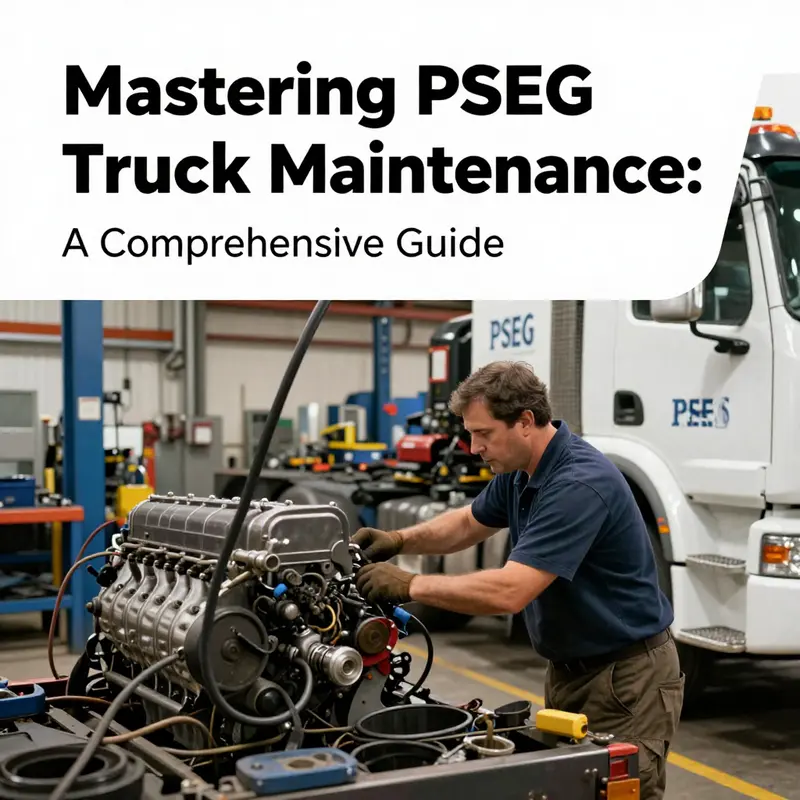
When we look at a utility fleet moving with precision across urban streets and winding rural roads, the visible actors are the drivers who shuttle crews, parts, and supplies. Yet behind every successful shift and every reliable delivery lies a more subtle, disciplined cadence of maintenance. Routine service for PSEG trucks embodies a two-layer approach that blends practical, day-to-day vigilance with professionally executed, technically complex work. It is a rhythm built to maximize uptime, safety, and performance, ensuring that the fleet remains a dependable backbone for public service across the region. In this arrangement, the first line of defense is the driver, who acts as the fleet’s early warning system, while a cadre of certified technicians, often working through specialized fleet maintenance providers, handles the professional care that keeps engines singing and brakes gripping long after the initial miles have been logged. The result is not merely well-tuned vehicles; it is a disciplined trust between people, processes, and the machines that keep essential services flowing.
The routine tasks that fall to drivers are modest in scale but vital in scope. Before a shift begins and after it ends, every truck is scanned for the obvious and the subtle alike. Tire pressures are checked and adjusted to match the load and the road conditions anticipated for the day. Fluid levels—oil, coolant, transmission fluid, and, in some cases, hydraulic fluids—are verified so that the engine’s internal theater remains clean and cool, reducing the risk of overheating or sudden wear. Lights, signal devices, mirrors, and safety equipment receive a cursory but thorough inspection to ensure visibility and reliability under all operating conditions. The cleanliness of the cab and the exterior of the vehicle is more than cosmetic; it is a practical indicator of a disciplined routine and a reminder to the driver that small signs of trouble are often the first whispers of larger issues to come. This daily ritual aligns with the broader, industry-standard principle that routine maintenance is a shared responsibility, with drivers handling the basics and professional teams handling the more demanding, technical tasks that require specialized tools, training, and certification.
What happens when the daily checks through the shift end reveal something that cannot be resolved with a quick top-up or a wipe down? Here the narrative shifts from the personal diligence of a driver to the professional, standardized care delivered by licensed technicians. PSEG’s trucks—like most modern utility fleets—derive their long-term reliability from scheduled maintenance that follows manufacturer recommendations, industry best practices, and the specific exigencies of the fleet’s mission. These practices are typically carried out by specialized fleet maintenance service providers that bring together scale, expertise, and the right mix of in-house and contracted resources. In practice, this means a coordinated system where routine service is performed by technicians who possess substantial, real-world experience with commercial and heavy-duty vehicles. Technicians who work on Class 8 trucks bring a depth of knowledge about engines, transmissions, brake systems, steering, suspensions, and electrical networks that far surpasses what a layperson could reasonably execute during a lunch break.
Consider, for a moment, the profile of a senior fleet maintenance technician. This is a professional who has accumulated years of hands-on experience across a range of makes and models, with a focus on preventative maintenance and timely repairs. Their work schedule is built around preventive cycles that are designed to align with the manufacturer’s service intervals and to preempt the kinds of failures that would interrupt service. They perform tasks that require precision and a steady hand: checking and adjusting brake wear and brake fluid levels, inspecting steering components, evaluating suspension health, testing electrical circuits for signs of corrosion or fatigue, and performing engine diagnostics with an eye toward efficiency and longevity. The emphasis is not simply on fixing what is broken but on preventing breakdowns through reliable, repeatable processes. The technicians must be adept at interpreting diagnostics, understanding the interplay between subsystems, and applying service actions that restore an asset to manufacturer specifications while also accommodating the fleet’s usage patterns and geography. The effect of this work is measurable: fewer unscheduled downtime events, safer operating conditions, and a vehicle that remains capable of supporting daily operations with predictable reliability.
A practical example helps illuminate the architecture of this system. A fleet maintenance provider with experience in large-scale operations maintains a roster of technicians who regularly service multiple trucks across a service territory. They bring a structured approach to routine service that aligns with best practices in the industry. Preventive maintenance tasks are executed on schedule, with detailed inspection notes and service records captured for each vehicle. Those notes become part of a living maintenance history that informs future planning, enabling fleet managers to identify recurring themes, such as a component’s wear pattern or a tendency toward coolant leaks under certain seasonal conditions. The goal is simple and ambitious: maximize uptime and maintain the vehicle’s safety envelope. When the vehicle is in the shop, technicians work efficiently, armed with tools, calibrated test equipment, and the documentation that proves the service was performed and the vehicle remains within manufacturer tolerances. The result is a fleet that not only runs today but is prepared for tomorrow’s challenges.
This model benefits from the specificity of the workforce that supports it. The professionals in fleet maintenance facilities bring a combination of technical proficiency and process discipline that is difficult to replicate in ad hoc settings. They operate under standards that dictate the sequence of checks and the exact diagnostic procedures used for a range of vehicle systems. Their training emphasizes not just what to fix, but how to fix it in a way that preserves the integrity of the vehicle and ensures compatibility with the rest of the fleet. In addition to the hands-on skills, these technicians develop a habit of meticulous record-keeping. Service intervals, mileage, condition notes, parts replaced, and the rationale for each action are documented so that fleet managers can understand not only what was done but why it was done, and what must be monitored going forward. This long view—built on traceable maintenance histories—enables a fleet to optimize its schedule, reduce the risk of cascading failures, and maintain consistent performance across a large geographic footprint.
Within this ecosystem, the relationship between PSEG and its maintenance providers is characterized by trust, accountability, and a shared commitment to safety and reliability. The professionals are not simply performing tasks; they are stewards of the fleet’s operational integrity. They translate the abstract principles of reliability into tangible actions: aligning downtime windows with peak demand cycles, coordinating with drivers to minimize disruption, and ensuring that the most critical assets receive attention in a timely manner. Their experience with large, heavy-duty vehicles—vehicles that must endure continuous operation in demanding conditions—gives them a perspective that complements the drivers’ daily vigilance. They understand the subtle cues that differentiate a routine varnish of surface wear from a sign of deeper, systemic drift, and they respond with calibrated maintenance actions that restore the vehicle to its optimal state.
The evidence of this collaborative model is not only in the maintenance bays but also in the fleet’s overall resilience. A well-maintained fleet supports a safer, more predictable work environment for operators who respond to emergencies or deliver essential services. It reduces the likelihood of unplanned downtime, which can ripple through schedules and strains on resources. It also supports the safety case for the fleet by maintaining braking performance, steering reliability, and engine integrity—factors that directly affect the ability to respond quickly and safely in critical situations. The technicians’ work, grounded in standardized procedures and continuous learning, translates into measurable outcomes: fewer emergency repairs, longer component lifecycles, and steadier operating costs over the life of the fleet.
In considering this structure, one can see how the model travels beyond a single company or a single fleet type. While the specifics of PSEG’s fleet may be tailored to its service territory and operational priorities, the underlying philosophy—empowering drivers with essential routine checks while relying on highly qualified technicians for professional maintenance—resonates across the industry. It is a blueprint for reliable utility operations, a blueprint that recognizes the limits of ad hoc care and the value of systematic, certified expertise. To the observer, this arrangement may appear seamless, almost invisible, because the goal is to have every component performing within its design envelope with minimal disruption. Yet behind the smooth operation lies a discipline—an organized, collaborative workflow that keeps a large, complex fleet ready to serve the public whenever needed.
For readers who want a deeper sense of how this approach translates into real-world practice, a related resource on professional fleet maintenance training provides a practical perspective on the kinds of knowledge and skills that sustain routine service for heavy-duty fleets. Fire Truck Maintenance Service Training (https://5startruckin.com/fire-truck-maintenance-service-training/) offers a window into the training and competencies that professional technicians bring to critical fleets. This context helps illuminate how PSEG’s partnerships with fleet maintenance providers are grounded in industry-standard practices and continuous improvement, rather than isolated, one-off repairs.
Of course, the reader seeking the most authoritative, up-to-date frame for PSEG’s operations should consult the company’s own channels. The official corporate site remains the definitive source for current practices, partner arrangements, and policy statements that shape how routine service is organized and delivered across the utility’s service area. For readers wishing to explore what the company itself emphasizes about its fleet and its commitment to reliability, the official PSEG site offers a direct line to primary information and updates: https://www.pseg.com.
In sum, the routine service of PSEG trucks reflects a deliberate balance between daily driver vigilance and the expertise of professional technicians. It is a system designed not only to keep vehicles running but to ensure they run safely, efficiently, and predictably across a broad geographic footprint. The drivers, attentive to basic checks and the quality of each shift’s outset and conclusion, form the human heartbeat of the fleet. The technicians, with years of hands-on experience, translate that heartbeat into dependable performance, applying disciplined preventive maintenance and precise repairs that align with manufacturer guidance and industry best practices. Together, they create a maintenance continuum that supports the public service mission, reduces downtime, and sustains the reliability that communities rely on every day. This is the essence of routine service in PSEG’s fleet—an ongoing collaboration between people who drive and people who keep the wheels and engines in optimal condition, ready to serve when needed most.
Who Keeps PSEG Trucks Running: Balancing In-House Teams and Specialized Third-Party Service
The practical upkeep of a utility fleet blends everyday vigilance with specialized expertise. For PSEG trucks, routine service is not a single activity performed by one group. Instead, it is a layered practice that assigns tasks according to risk, regulation, cost, and technical need. This chapter explains how responsibilities are divided between drivers, in-house mechanics, and third-party providers. It also explores why many utilities shift certain maintenance functions outward while keeping core oversight and accountability inside the company.
A driver’s daily checks are the first and most continuous line of defense. Drivers perform visible inspections and simple interventions that prevent small issues from growing. They check tire pressures and thread wear, verify fluid levels, test lights and signals, and confirm that safety gear and tools are present and secure. These tasks are essential because they catch early signs of failure. A cracked windshield, a slow oil leak, or a failing light can be remedied quickly or scheduled for more advanced service. Drivers also collect initial fault data. Their notes, electronic logs, and onboard telematics reports feed the maintenance workflow. When drivers report consistent symptoms, the issue graduates from a routine check to a formal repair order.
In-house maintenance teams carry the next level of responsibility. Companies often maintain a fleet shop, staffed with licensed technicians who know the fleet’s vehicles, tools, and operating patterns. In-house teams handle scheduled preventive maintenance, warranty inspections, chassis and body repairs, and many brake and suspension services. Their proximity gives them scheduling flexibility. They can prioritize work based on operational needs and safety risk. In-house technicians often oversee the fleet’s recordkeeping. They maintain maintenance histories, track parts usage, and apply fleet-specific processes. This continuity matters for utilities that must meet regulatory standards and maintain consistent documentation.
Keeping certain capabilities in-house also preserves institutional knowledge. In-house staff learn the quirks of specific vehicle configurations installed by the utility. They understand how equipment is installed and used in the field. That knowledge speeds diagnostics and shortens repair cycles. When a truck requires rapid turnaround to restore a crew to service, in-house teams can triage and act immediately. For emergency repairs or urgent safety issues, that capacity is invaluable.
Despite these benefits, utilities increasingly rely on third-party service providers for specialized or high-complexity work. Modern utility trucks often include advanced systems that demand specific diagnostic tools, manufacturer software, or certifications. Hybrid powertrains, electrified components, specialized cranes, and utility-grade safety systems are examples. Third-party providers commonly have access to manufacturer-level diagnostics and training programs. They maintain equipment certifications and meet vendor-specific training requirements. Market consolidation and the emergence of niche providers mean that these firms bring deep, focused expertise.
Outsourcing can be more cost effective for certain tasks. Maintaining specialized equipment and retaining technicians for low-volume, high-complexity work can be costly. Third-party shops spread those costs across multiple clients. That makes them economically attractive for tasks that occur intermittently but require high skill. Utilities often structure contracts to cover those episodic needs. The result is a hybrid approach where routine and rapid-response work stays inside, while specialized servicing is assigned to external partners.
Compliance and certification obligations also shape the split. Regulated utilities must meet precise standards for safety, emissions, and electrical integrity. Third-party providers often advertise certifications that align with these requirements. Choosing a vendor with the right credentials reduces compliance risk. It also simplifies audits and regulatory reviews. Utilities evaluate suppliers by location, performance metrics, and certifications to ensure timely and compliant service. This procurement discipline ensures the vendor network supports the utility’s operational demands and legal responsibilities.
Vendor selection is rarely a one-time decision. It is a continuous process that blends performance tracking and operational fit. Contracts include service-level agreements, response-time clauses, and quality metrics. Fleet managers weigh geographic coverage, turnaround times, parts availability, and warranty handling. They also consider whether the vendor offers on-site service, mobile repair units, and emergency callout capacity. All of these factors determine how effectively a third party can supplement the in-house shop. Strategic partnerships often develop into long-term relationships. These relationships allow vendors to become an extension of the utility’s maintenance function.
Technology adoption influences how tasks are assigned. Telematics and remote diagnostics change the maintenance rhythm. Real-time data provides early warnings and enables condition-based maintenance. With telematics, some repairs are pre-specified and routed directly to specialized vendors with the right tools. Other issues remain in the hands of in-house technicians who can perform standard corrective work. The data stream also enables better inventory planning. When a recurring failure is identified across the fleet, the utility can decide whether to train in-house staff to address it or to formalize a vendor agreement.
Electrification and hybridization push utilities toward more external expertise. Electric drivetrains and high-voltage systems demand safety certifications and specialized technicians. Some work requires access to manufacturer training and proprietary diagnostic suites. Many utility fleets partner with outside firms that specialize in electrified propulsion and charging infrastructure. These partners support not only vehicle repair but also preventative care specific to electric systems. They assist with battery health checks, thermal management diagnostics, and firmware updates. For fleets transitioning to electrified assets, that support reduces risk while the in-house team develops the necessary competencies.
Beyond pure technical capability, third-party providers expand a utility’s operational resilience. They provide surge capacity during major storms, recall campaigns, or fleet upgrades. During these periods, in-house shops may be overwhelmed. External networks scale quickly to meet the demand. They bring mobile units, multiple bays, and often regional coverage that in-house facilities lack. This capacity is essential for utilities that must restore service quickly after weather events or large outages.
Training and workforce development remain integral to any maintenance strategy. Even when third parties handle specialized work, in-house staff must maintain fundamental skills. Cross-training reduces single points of failure. It enables a smoother handoff when work transitions between internal and external teams. Investment in training also supports safety. When technicians understand the systems they touch, the risk of accidental damage or unsafe procedures falls. Many utilities leverage external training providers for advanced topics while delivering core maintenance training internally. For additional perspective on training strategies, see this resource on fire truck maintenance training: fire truck maintenance training importance.
Cost control and transparency are recurring themes. Outsourcing contracts must align incentives. Fixed-price work orders can simplify budgeting. Performance-based contracts encourage timely repairs and quality outcomes. Utilities often implement a tiered approach to scope and cost. Low-complexity, high-frequency tasks stay internal. High-complexity, low-frequency work goes to vetted vendors. This allocation helps control labor costs and reduces the need for capital investments in specialized tools.
Quality assurance spans both in-house and external work. Utilities establish inspection checkpoints and acceptance criteria. After third-party repairs, in-house personnel often perform final checks to verify safety and readiness. Shared digital records and standardized reporting formats enhance visibility. They provide a unified maintenance history regardless of where work occurred. This integrated recordkeeping supports warranty claims, regulatory audits, and lifecycle analysis.
The decision to retain work or outsource it also depends on strategic objectives. If a utility values rapid repair cycles and direct control over scheduling, it may invest more in in-house capabilities. If reducing capital expenditure and accessing the latest diagnostic technology matters more, outsourcing becomes attractive. Many utilities adopt a mixed strategy. They keep a baseline of critical capabilities internally. They then partner with external specialists for advanced diagnostics, electrical systems, and large-scale projects.
Contract oversight and governance keep the balance healthy. Fleet managers conduct regular performance reviews. They monitor turnaround times, cost per repair, and repeat-failure rates. They also audit vendor compliance with certifications and safety practices. These checks ensure third-party work meets the same standards as in-house repairs. When vendors fall short, the utility applies corrective actions or revises contract terms.
Finally, communication matters. Transparent workflows minimize friction when tasks move between teams. Clear scopes of work, documented handoffs, and joint safety protocols reduce errors. Regular coordination meetings and shared dashboards align priorities. As a result, crews spend less time waiting for a truck and more time restoring service.
Taken together, the routine servicing of PSEG trucks reflects a pragmatic division of labor. Drivers ensure daily readiness. In-house teams preserve control and speed for common repairs. Third-party providers supply deep expertise and scalable capacity. The optimal mix varies over time. It changes with fleet composition, technology adoption, and operational pressures. But regardless of the split, one principle holds: maintenance decisions must support safety, compliance, and uptime. That principle guides how PSEG and similar utilities allocate responsibility between internal staff and external partners.
External reference: https://www.electrical-equipment-suppliers-in-china.com/evaluate-by-location-certifications-performance-metrics/
Final thoughts
Understanding who performs routine service of PSEG trucks offers valuable insights for those involved in trucking and fleet management. Daily checks by drivers ensure immediate issues are identified, while professional technicians provide the specialized skills needed for more complex repairs. Knowing when to rely on in-house maintenance versus third-party services can enhance operational efficiency and vehicle performance. This holistic approach to truck maintenance is crucial in prolonging vehicle lifespan and maintaining safety on the roads.