
When your truck displays a ‘Service Airbag’ message, it’s not just a routine notification; it’s a crucial alert that directly impacts driver and passenger safety. For long-haul truck drivers, trucking company owners, and fleet managers, understanding this warning’s implications can mean the difference between safe travels and potential danger on the road. This guide will intricately explore the significance of the ‘Service Airbag’ indication, common causes behind it, the urgency of addressing it promptly, and the importance of consulting a qualified mechanic to ensure the airbag system’s integrity. By the end, you’ll be equipped with the knowledge necessary to respond effectively to this alert, ultimately enhancing safety for everyone on the road.
When Your Truck Flashes ‘Service Airbag’: Unraveling the Warning and Keeping You Safe

Every time your truck lights up the words “Service Airbag,” it’s more than just a dashboard nuisance—it’s an urgent message about your safety system. This alert belongs to the Supplemental Restraint System (SRS), a network of sensors, wiring, modules and crash-response devices designed to deploy in tandem with seat belts at the moment of impact. When anything in that network underperforms—a shaky connection, a failing sensor or a glitch in the control unit—the computer flags it. Left unchecked, a compromised SRS could leave you without critical protection in a collision.
Beneath that terse warning is a chain of components working silently behind your dash. Pressure sensors built into the frame of your seats detect occupancy and trigger seat-belt pretensioners. Impact sensors hidden in the bumpers and crumple zones gauge collision severity, sending signals to the airbag control module. That module interprets data from dozens of circuits to decide which airbags to inflate, and when. A single open wire, a corroded connector or a misbehaving module can break this chain and force the “Service Airbag” indicator to glow.
Often, the culprit is simply a loose plug or rubbed wire. Years of vibration can nudge sensors out of snug alignment or weaken solder joints inside electronic units. Moisture can corrode copper contacts nestled beneath the carpet or inside a seat frame. Even swapping aftermarket seat covers or installing a new radio without disconnecting the battery properly can disturb key harnesses. In some trucks, a drain-down battery that falls below a critical voltage threshold will also trigger an SRS fault, since the system relies on stable power to charge pyrotechnic inflator modules within fractions of a second.
Some drivers have discovered the warning after a minor fender bender where the airbags never deployed. Despite little visible damage, the control module may detect tiny shifts in sensor alignment or internal electrode stress in the deployment unit. The system stores a code that can pinpoint the exact sub-system at fault: driver airbag, passenger airbag, side impact sensors or seat-belt pretensioner circuits. That stored data is the key to an efficient repair.
Deciphering that code requires a professional-grade scan tool. Technicians connect a diagnostic interface to the truck’s OBD-II port, access the SRS control module and read out Diagnostic Trouble Codes (DTCs). Those codes can reveal whether a front passenger weight sensor shows an implausible reading, if a side-curtain airbag line is open, or if the central control module itself has registered an internal calibration fault. In some cases, the module can even test-fire a tiny squib signal to measure circuit integrity. Once the exact failure mode is identified, the mechanic can replace or repair the individual part rather than overhauling the entire system. For more detailed procedures and safety guidelines, refer to the manufacturer’s service manual and calibration instructions. After completing repairs, the technician runs a reset routine with specialized software to clear all SRS codes and verify normal system operation. https://www.bmwusa.com/owners/manuals/
A few scenarios highlight common fixes. A broken passenger seat wiring harness—often snagged where the seat slides—can be spliced with matching gauge wire and weatherproof connectors. A damaged side-impact sensor hidden behind an interior panel may require panel removal and module replacement, followed by a compass or sensor calibration procedure. If the main airbag control module develops an internal error, technicians sometimes swap in a refurbished PSA unit, program it with the original Vehicle Identification Number (VIN) and upload the truck’s crash-history data to ensure compliance with safety standards.
While it’s tempting to try a DIY approach—clearing the code with a simple OBD reader or wiggling wires—it rarely solves the underlying problem. Airbag systems carry enough stored energy to cause injury if mishandled. A discharged airbag inflator can release metal shrapnel if punched by an inexperienced technician. That’s why safety protocols mandate disconnecting the negative battery terminal, wearing an anti-static wrist strap and waiting the specified “no-power” dwell time before touching the SRS harness. Only trained professionals with the right shields, gloves and tooling should open an airbag module.
Beyond personal risk, traveling with a disabled airbag system can result in fines or failed safety inspections. Many states require functioning restraint systems for registration renewal. In the event of a crash, an insurer might contest a claim if evidence shows the airbags were disabled. Routine maintenance shops may refuse to touch the airbag circuit without documented proof of certified training, since liability for accidental deployment is high.
Once the warning is extinguished, ongoing care helps prevent repeats. Check seat-harness clips and trim-panel fasteners after any interior work. Keep battery terminals clean and tight. Inspect wiring under seats for chafing or rodent damage, especially if your truck spends time outdoors. Aftermarket additions—radios, alarms, heated seats—should always be integrated by professionals who understand SRS routing and shielding. A proper ground strap on the chassis near the module ensures stable voltage and reduces false alerts.
A strategic service plan can also keep your SRS healthy. Schedule an annual SRS diagnostic scan as part of your truck’s routine inspection. That scan can reveal early signs of wire resistance increases or sensor drift before the system trips the warning light. Some service centers offer a “Safety Systems Check” that includes seat-belt path inspections, buckle switch tests and airbag connector torque verification. Investing in that preventive step can save you from a roadside failure and potentially catastrophic malfunction at the worst possible moment.
Understanding why “Service Airbag” appears is the first step toward a swift, accurate correction. Once you know it’s more than a cosmetic light—once you grasp the interplay of sensors, modules and deployment circuits—you’ll recognize the importance of professional intervention. A certified technician armed with the right diagnostic tools can trace the fault, replace or repair the offending part, and reset your system to factory standards. That means, when the moment arrives, every airbag channel will respond exactly as designed.
Your truck is equipped to protect you, but only if its restraint network remains intact. Treat the “Service Airbag” warning as an imperative, not an inconvenience. Prompt service by a qualified technician restores full protection, ensures compliance with regulations, and delivers the peace of mind you deserve behind the wheel.
When the Truck Says Service Airbag: Decoding the Warning and Safely Navigating Airbag Faults on the Road

A truck’s dashboard is a compact map of what’s happening under the hood and inside the chassis. When the telltale warning reads “Service Airbag,” it is not a decorative icon or a nuisance light. It is a lifesaving system communicating that something in the airbag network—the Supplemental Restraint System, or SRS—is not functioning as it should. In practical terms, that message means an airbag may not deploy correctly in a crash, or at worst may fail to deploy at all. The weight of that possibility lands squarely on the driver’s shoulders because occupants rely on those devices for protection. Understanding what triggers this warning, why it matters, and how to respond can keep you and others safer on the road, especially when you depend on your truck’s reliability in demanding environments where a misfire could have real consequences. The notion of safety is not a luxury in trucks; it is a baseline requirement for every mile traveled, every load carried, and every job site visited.
The Service Airbag warning is part of the broader electronic safety architecture that monitors the airbag sensors, wiring, and control modules. Unlike a simple engine fault, the SRS is a critical safety loop. When the system detects a fault during its self-check after ignition, it stores a fault code in the vehicle’s computer and illuminates the warning light. That code guides technicians to the source of the trouble, whether it is a sensor, a harness, or a control unit. Because these components involve high-voltage systems and precise timing, diagnosing and repairing them requires professional tools and training. A layperson attempting to reset the light or bypass the system can inadvertently mask a dangerous fault, potentially compromising occupant safety in a crash. For this reason, the standard advice remains steadfast: treat the Service Airbag warning as a safety priority and seek qualified diagnostic help promptly.
What, then, are the most common culprits behind this message? The list is not exhaustive, but it captures the patterns technicians observe most often in trucks and other modern vehicles. First, faulty airbag sensors sit at the core of the problem. These sensors are not only the devices inside the steering wheel module that detect a collision; they also include seat belt switches and impact sensors positioned in doors, pillars, and under seats. When a sensor wears out, is damaged, or provides erratic readings, the system can misinterpret the data and trigger the warning. A loosened or damaged sensor connection is another frequent offender. Vibration, repeated seat movements, or interior work in the steering column can loosen connectors over time, creating a momentary fault or a persistent one that the system eventually flags.
Second, damaged or disconnected wiring harnesses can interrupt the data and power pathways required for proper airbag operation. The airbag network runs through a mesh of wires and connectors that are designed to survive the rigors of driving, but they are also susceptible to abrasion, pinching, or corrosion. A pinched wire near the steering column, a frayed harness under a seat, or a connector that has come loose during a repair can all trigger the Service Airbag light. Third, the airbag control unit (ACU)—the brain of the SRS—can fail or become unstable. When the ACU malfunctions, it may misinterpret sensor input, fail to deploy during a crash, or enter a protective fault state that lights the warning indicator. A fourth common cause is related to the vehicle’s electrical system, especially a depleted or failing battery. Low voltage can hinder the system’s self-test and diagnostic routines, leading to a false alarm or an incomplete fault resolution. Lastly, recent repairs or modifications to interior components, such as the steering column, dashboard, or passenger seat area, frequently disrupt SRS wiring or sensor alignment. Any work that involves airbag modules or related components has the potential to disturb the delicate calibration that keeps the system reliable.
Beyond these tangible causes lies a subtler mechanism: self-test fault detection. When the SRS completes its built-in diagnostic checks after ignition, it looks for data anomalies. Some faults are intermittent, triggered only under specific temperatures, seat positions, or g-forces. In these cases, the warning may appear sporadically, then disappear, or persist as a persistent fault. Seasonal changes, vibration, or even minor temperature fluctuations can influence sensor readings and provoke the warning without an obvious external sign of damage. This is not a reason to ignore the message; it is a reminder that the system’s fault logic can be sensitive, and a cautious, methodical approach to diagnosis is essential.
Given the stakes, an accurate diagnosis hinges on professional-grade diagnostics. A qualified technician will use an OBD-II scanner equipped to read SRS codes. These codes do not simply tell you that a fault exists; they point to specific circuits, sensors, or modules. Interpreting these codes requires training and experience because the same code can reflect different conditions depending on the vehicle’s make, model, and production year. The technician will typically verify the fault by performing additional tests, such as inspecting harness continuity, testing sensor resistances, and evaluating the ACU’s response to simulated inputs. In some cases, a memory code may be present, while in others the fault is active only when the system is under load, such as during a jolt or a sharp turn. This nuanced diagnostic process underscores why the Service Airbag warning should be handled by professionals who understand the subtleties of the SRS network rather than a quick, DIY reset.
A practical implication of a fault in the airbag system is the potential impact on safety inspections and registrations. In many jurisdictions, safety inspections require that the airbag system is functional or that any fault is addressed before a vehicle can be registered or renewed. This regulatory angle adds another layer of urgency to the diagnostic process. It is not merely a matter of personal safety; it is a matter of compliance with vehicle safety standards that govern roadworthiness and insurance considerations. In the long run, addressing the fault promptly can prevent more costly repairs down the line. An untreated airbag fault can correlate with other electrical issues—such as a failing battery or compromised wiring—that ripple through multiple subsystems and complicate future diagnosis.
As a driver, you can take steps to approach the situation responsibly without delaying professional assessment. First, do not ignore the warning or rely on reassurance from occasional test drives. A single short drive to a shop is still a risky proposition if the airbag cannot deploy correctly. Second, if you hear unusual noises, notice an abnormal smell, or observe other warning lights alongside the Service Airbag message, treat the vehicle as out of service for safety purposes. Third, consider whether any recent work could have touched the airbag system. Was the steering wheel or dash area opened for a modification or repair? If so, inform the technician about the work performed so they can focus on the relevant circuits and connectors. Fourth, have the battery tested and, if necessary, replaced. A stable electrical supply is a prerequisite for accurate diagnostic tests. Fifth, check for any open recalls or service bulletins from the manufacturer that relate to the airbag or SRS. Recalls can update calibration data, replace faulty components, or provide critical guidance that affects how a fault should be resolved.
The diagnostic journey often unfolds as a layered process. An initial code reading can narrow the field, but technicians frequently perform a physical inspection of the harnesses, connectors, and modules in the steering column and under the seats. Seat occupancy systems, which are increasingly common in modern trucks, add an additional layer of complexity. A malfunctioning seat weight sensor can falsely indicate a passenger present or absent, triggering the SRS to behave as if a fault had occurred. In such cases, the fix might involve recalibrating the seat sensor, reseating connectors, or replacing a sensor that has degraded over time. Because airbag systems are designed to deploy within milliseconds, even minor misalignments or corrosion can disrupt their performance.
In this context, the value of professional services becomes evident. A technician with access to a high-quality, manufacturer-approved diagnostic tool can retrieve SRS codes, clear nonactive faults after repair, and conduct a post-repair verification that ensures the system passes its self-test once again. There is a built-in sequence to this process: diagnose, repair, verify, and recheck. Skipping steps or attempting a quick fix can leave you with a latent fault that returns under real-world conditions, potentially at the moment you need the system the most.
For those who manage fleets or frequent long-haul operations, the Service Airbag warning also carries implications for maintenance planning and downtime budgeting. A fault in the airbag system might necessitate a temporary removal from service or a shuttle to a service facility. In some cases, a truck can be repaired relatively quickly if the fault is isolated to a single connector, but other times the diagnosis reveals a deeper issue with the ACU or a sensor that requires more extensive replacement. Such realities highlight the importance of routine maintenance that includes checking connectors and grounding points, ensuring that the interior wiring remains protected from abrasion, and performing periodic electrical system checks. Investing time and effort into proactive inspections can reduce the likelihood of an unexpected airbag fault during critical operations and helps keep the fleet resilient.
The weight of responsibility should also direct attention to the educational resources and guidance available for technicians and operators. The National Highway Traffic Safety Administration (NHTSA) provides extensive safety information about airbags and recalls, which serves as a reliable external reference for policy, safety standards, and best practices. This resource complements the hands-on diagnostic work performed by technicians and reinforces the safety-first mindset that governs airbag maintenance and repair. Knowledge about how airbags are designed to function, what can cause them to fail, and what steps to take when the warning appears helps drivers and fleet managers make informed decisions about safety investments and risk management. When a Truck says Service Airbag, understanding the system’s logic and acting with purpose can turn a moment of concern into a deliberate, safety-centered response that preserves life and reduces risk on the road.
For readers who want to deepen their practical understanding of maintenance and repair practices, a related resource offering focused guidance on maintenance training can be helpful. It emphasizes the importance of systematic, skill-building approaches to keeping complex vehicle systems, like the airbag network, in reliable condition. You can explore this topic further at the dedicated maintenance training guide here: fire-truck maintenance training importance.
In the broader context of truck safety, it is also valuable to consult authoritative external guidance. The NHTSA’s Airbags information provides comprehensive coverage on how airbags function, common failure modes, and recalls related to airbag systems. While the specifics may vary by make and model, the underlying principle remains constant: the airbag system is a critical safety feature whose integrity must be preserved through diligent maintenance and timely repairs. Refer to this resource for a deeper understanding of safety expectations and regulatory considerations: https://www.nhtsa.gov/vehicle-safety/airbags.
Taken together, the Service Airbag warning is not a minor maintenance nuisance. It is a clear signal that the airbag network has detected a fault serious enough to potentially impair protection in a crash. Addressing the issue promptly with a qualified technician, verifying that the battery and electrical system are healthy, and reviewing any recent interior work that might have disturbed sensors or harnesses are all essential steps. By pursuing a methodical diagnostic path rather than a quick reset, drivers protect themselves and others on the road, preserve the integrity of the vehicle’s safety systems, and contribute to safer operations in the field. In the end, the warning is a checkpoint—one that invites careful attention, clear action, and a renewed commitment to safety that aligns with the broader purpose of maintaining reliable, ready-to-work trucks for demanding environments.
When Your Truck Flashes ‘Service Airbag’: Why Immediate Action Matters

When your truck’s dashboard lights up with a “Service Airbag” warning, it’s a signal that demands your full attention. This alert is more than just a routine reminder; it means the Supplemental Restraint System (SRS) has detected a fault that could prevent your airbags, seat belt pretensioners, or other critical safety components from working when you need them most.
From the moment you turn the key, your truck’s SRS monitors dozens of sensors and electronic control units. Within milliseconds, these components must recognize a collision and deploy airbags to cushion and protect passengers. A loose connector, a damaged sensor, or a failing control module interrupts that vital chain of events. In practical terms, what appears as a minor electrical glitch could leave your cabin unprotected in a crash. Studies, including a 2026 Tesla report, confirm that even small wiring faults can stop airbag deployment entirely, turning a survivable accident into a life-threatening one.
Delaying repair of a Service Airbag warning compounds risk. Some malfunctions do not trigger additional alerts, so you may ride for weeks or months without realizing the system is partly compromised. Even if one airbag continues to function, another sensor fault or wiring issue might render the other side inoperative. As trucks age and accumulate wear, connectors loosen, wiring harnesses rub against sheet metal, and seat sensors become less reliable. Each unchecked problem chips away at the overall integrity of your truck’s passive safety defenses.
Beyond the safety hazard, driving with a malfunctioning SRS can carry legal and financial consequences. Many regions mandate fully operational airbags for vehicle registration and safety inspections. Should you face an accident while your system is disabled, insurance companies may question coverage, and repair costs can skyrocket if damage occurs without active safety components. Addressing a warning light early—before further corrosion or electrical damage sets in—keeps repair bills manageable.
Diagnosing the root cause requires specialized tools and expertise. Qualified technicians connect to your truck’s onboard diagnostic port, retrieve error codes, and perform targeted tests on sensor circuits and control modules. They look for loose connections in the steering column, damaged clocksprings, or seat occupancy sensor errors. They check voltage levels on the SRS control unit and inspect any recent interior work—such as stereo upgrades or seat repairs—that may have disturbed wiring. Only after a thorough scan can the mechanic isolate the issue and restore full functionality.
Regular maintenance routines seldom cover the SRS in detail, which is why many drivers are unaware of potential vulnerabilities. Including a comprehensive airbag system check during major service intervals ensures connectors are clean, sensors are calibrated, and the control module’s software is up to date. Preventive measures like these can catch small faults before they trigger the warning light. Investing in proper maintenance protects both passengers and your long-term investment in the truck.
In the event the warning appears after recent interior work, always insist on a post-service inspection. Even minor disassembly of the dashboard or seats can disturb airbag harnesses. Ask the shop to perform a full diagnostic check before you drive away. If the warning returns, it may point to a pinched wire or a sensor misalignment, both of which are easier to fix when caught immediately.
When time is tight, some drivers opt to ignore the warning or delay service. But ask yourself: would you risk driving through a hazardous stretch of road, a sudden highway stop, or a winter collision without your airbag system ready to respond? The few hours it takes to diagnose and repair an SRS fault stand between you and a fully protected cabin.
Professional repair shops have the equipment and training to handle airbag systems safely. They follow strict safety procedures to prevent accidental deployment, isolate the battery, and discharge residual power in the circuits before touching any sensors or modules. Attempting to bypass or disable the warning light on your own not only risks incomplete fixes but can also trigger a more serious failure in the system’s self-checking routines.
By treating a “Service Airbag” warning as an urgent call to action, you uphold the core purpose of your truck’s safety design: protecting every occupant in the event of a crash. Immediate repair secures peace of mind, ensures legal compliance, and keeps repair costs from ballooning due to unchecked damage. Never view the warning as optional—your life and the lives of your passengers depend on it.
For more details on system diagnostics and maintenance guidelines, consult the official safety information provided by Tesla.
https://www.tesla.com/support/airbag-system
Beyond the Dashboard Light: Expert Intervention for Your Truck’s Service Airbag Alert
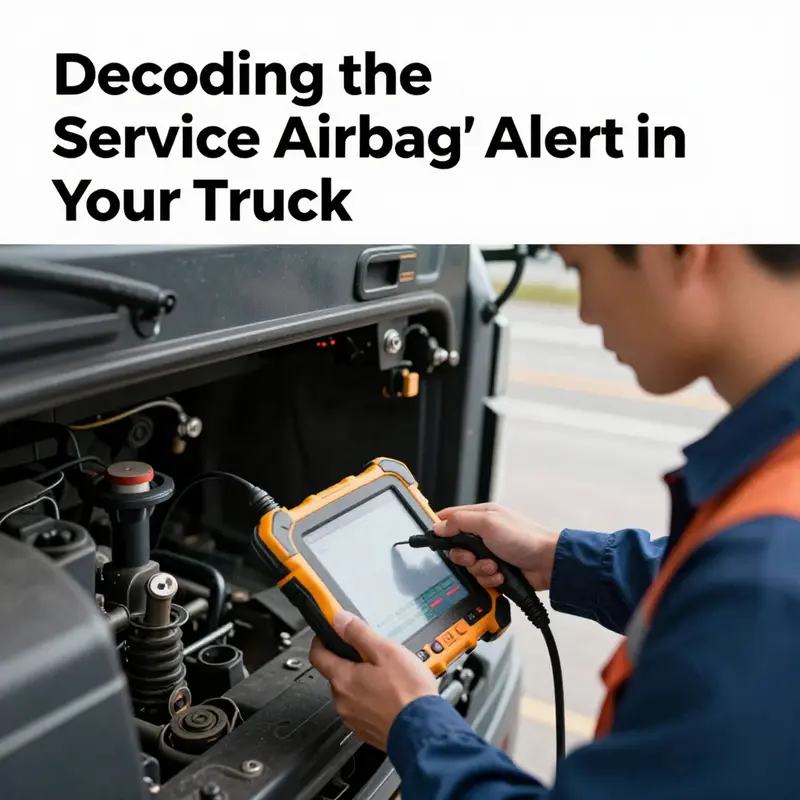
Every time your truck’s dashboard flickers with the ominous “Service Airbag” message, it means the Supplemental Restraint System (SRS) has detected an irregularity. The SRS is more than a collection of airbags; it includes seatbelt pretensioners, crash sensors, wiring harnesses, and a dedicated control unit. When any part of this network registers a fault, your truck locks itself into a protective mode, illuminating the warning light. Ignoring this signal places you and your passengers at risk. A non-deployable airbag can turn a moderate collision into a serious injury. Dialing in professional expertise is not just a convenience—it is a critical safety step.
Behind that warning light lie five common culprits that demand careful diagnosis. First, battery voltage hiccups can push the SRS into a safeguard state. Cold morning starts or an aged battery dropping below 12 volts may be enough to spark the airbag alert. Though it might feel like a simple jump-start fix, the symptom often hides deeper issues in the electrical system that can reemerge at the most inopportune moment.
Second, loose or damaged wiring under the front seats frequently leads to false alarms. The safety-system connector is bright yellow for a reason: it handles high-priority data. Seat position adjustments, aftermarket covers, or an unintentional tug can dislodge it. Reconnecting it without verifying continuity, however, only offers a temporary reprieve. Technicians must test the wiring harness and inspect for frays or corrosion before clearing the fault code.
Third, repeated full turns of the steering wheel stress the spiral cable—also called the clock spring—inside the column. Over time, this ribbon of wires can wear out, causing intermittent failures in both the airbag circuit and the horn. When resistance climbs above 10 ohms, the SRS control module will log a fault code. A professional repair involves replacing the spiral cable assembly and verifying system integrity with an OEM-level scan tool.
Fourth, collision sensors mounted in the front bumper can drift out of position after minor impacts or become compromised by moisture ingress. These accelerometers must provide precise readings to the ECU, and any discrepancy triggers a warning. A qualified mechanic will use specialized diagnostic tools to capture real-time acceleration data and confirm sensor alignment before recommending replacement.
Fifth, modern trucks rely on complex software in their airbag modules. When you replace the battery or perform unrelated repairs, the airbag control module can lose communication with other vehicle systems. Without a factory-level scan tool to reflash or reprogram the module, the SRS light stays on. Dealerships and certified technicians have secure access to the automotive manufacturer’s software suite for this purpose.
When to Seek Professional Airbag Service
Recognizing these causes underscores why a do-it-yourself approach can backfire. Inexperienced tinkering risks accidental deployment, component damage, or even a misdiagnosis that leaves you blind to a critical fault. You may clear the dash light for a few miles only to have it reappear when you least expect.
The first step is to schedule a professional diagnosis. Many shops offer a complimentary scan with an SRS-compatible OBD-II tool. A trained technician can read the specific DTCs (diagnostic trouble codes), interpret freeze-frame data, and prioritize repairs. They will test battery health, trace wiring harnesses, verify spiral cable resistance, and evaluate collision sensor performance before touching any hardware.
Never underestimate the value of OEM diagnostic equipment. Generic code readers often lack the access needed to perform module reinitialization or guided fault tracing. Certified technicians follow a methodical process: they confirm that all relevant software is up to date, ensure vehicle voltage is stable, and use pinpoint testing to isolate the faulty component.
Once the culprit is identified, you’ll receive a clear estimate for parts and labor. Replacing a spiral cable or collision sensor, reconnecting wiring with new connectors, or reflashing the airbag control unit all require precise procedures. Professionals follow stringent safety guidelines, including battery disconnection and grounding, to prevent unintentional deployment.
After repair, the technician will run a full system test. This involves cycling the ignition, verifying that voltage remains within a safe range, and confirming the absence of stored DTCs. Many shops will also perform a simulated crash sensor test. Only when the SRS lamp stays dark through multiple key cycles and a final road-test clearance is the job truly done.
While you may still drive with a fault code present, the risks far outweigh any short-term convenience. In many jurisdictions, a functional airbag system is mandatory for vehicle inspection and registration. Skipping professional service could leave your truck noncompliant with safety regulations and expose you to legal liabilities in the event of a crash.
For a deeper dive into general fleet maintenance and truck safety best practices, visit our blog. It features expert insights on everything from electrical system checks to preventive care routines that keep your rig road-ready.
Ultimately, the Service Airbag warning is not just a minor nuisance—it is a direct signal from your truck’s self-diagnostic system. Respecting that warning by enlisting a certified mechanic ensures every aspect of your airbag network—from voltage management to sensor calibration—meets stringent safety standards. That attention to detail can make the difference between a harmless impact and a life-altering event.
For authoritative guidance on airbag system maintenance and safety procedures, refer to the National Highway Traffic Safety Administration’s resource: https://www.nhtsa.gov/vehicle-safety/airbags
Final thoughts
Recognizing a ‘Service Airbag’ alert in your truck is more than a trivial annoyance; it signifies a malfunction that could hinder the safe deployment of airbags in a crash. For long-haul drivers, trucking company owners, and fleet managers, prioritizing airbag system checks can prevent complex issues and enhance overall safety. By understanding the common causes of this alert and emphasizing the need for immediate action and professional consultations, you can safeguard your team and assets on the road. Remember, a proactive approach—and working closely with qualified mechanics—will ensure that your truck’s airbag system remains reliable and fully functional at all times.