
Ensuring the longevity and safety of a semi-truck hinges on routine servicing and maintenance. For long-haul truck drivers, trucking company owners, fleet managers, and aspiring truck drivers alike, knowing how and when to service is crucial. This article will break down essential maintenance intervals, major servicing requirements, preventive maintenance programs, the impacts of varying driving conditions, and manufacturer guidelines. By the end, you’ll gain comprehensive insights into effective truck maintenance practices and the frequency of service required to keep operations running smoothly.
Steady Wheels, Steady Miles: Navigating Routine Service Intervals for Semi Trucks
Maintaining a semi truck is less about chasing a magical number and more about listening to a vehicle that speaks in vibrations, noises, and gauge readings. The frequency of service is not a one-size-fits-all rule but a calculated rhythm shaped by who you are, where you drive, and how hard the work is. In practice, fleets lean on a baseline that blends mileage with time. The most widely adopted starting point is a routine check cadence that lands around every 10,000 to 15,000 miles, or roughly every three to six months, whichever comes first. This interval is designed to catch wear before it becomes a fault, to keep the engine fed with fresh oil and clean air, and to prevent tiny issues from snowballing into costly downtime. It is a cadence that acknowledges the long life expectancy of heavy-duty machinery when cared for consistently, and it recognizes the safety margin required by professional operators who depend on predictable performance every day. Yet the plain fact remains that the road is a variable place. A truck that crawls through stop-and-go urban traffic in a blistering summer heat will show different wear patterns than a rig that spends nights crossing deserts or carving through mountain passes. The result is a maintenance philosophy that starts with a baseline and then adapts based on experience, data, and the realities of the job.
In the everyday practice of maintenance, the tasks included in routine service are small but essential. Oil and filter changes matter more than the clock, because the oil is the lifeblood that carries heat away from the piston rings and seals. Air filters, the often overlooked first line of defense against abrasive particles, directly influence engine efficiency and combustion quality. The brake system, a complex network of drums or rotors, wear indicators, sensors, and hydraulic lines, demands careful inspection to verify that stopping distances stay within safety margins. Tire pressure and tread depth are not cosmetic concerns; they are critical to fuel economy and handling, especially when loads push the limits of axle weights. Fluid levels—coolant, transmission, power steering, and even windshield washer fluid—are the quiet indicators that tell you whether the cooling system and auxiliary mechanisms are performing as designed. Lights, belts, hoses, and clamps round out the checklist, catching frayed bands, cracks, or loose connections before they become the clues a driver hopes never to encounter on the highway.
Beyond the basic checks, many operators treat routine maintenance as a monthly or bi-monthly discipline that lives inside a broader preventative maintenance program. This program adds a structured cadence for critical subsystems—brake components, tires, air brake integrity, and the electrical system—so that inspections become a habit rather than a reaction. The advantage is twofold: a documented, repeatable process that makes compliance straightforward, and a proactive stance that reduces unexpected failures. When a maintenance team reviews wear trends and repair histories, they can align the calendar with what the data says about the vehicle’s actual condition, not just the book’s schedule. In modern fleets, condition-based maintenance has emerged as a natural evolution. Real-time monitoring systems, telematics, and data analytics illuminate the subtle signs of fatigue in a bearing, the creeping wear on a clutch, or a cooling fan that runs hotter under load. This approach shifts the emphasis from completing a fixed mileage milestone to answering a more precise question: is this component at risk of failure before the next route? The shift matters because it empowers operators to allocate maintenance resources where they are most needed, preventing disruptions and extending the vehicle’s life.
The notion that routine maintenance is enough by itself sits beside another truth: major servicing still has its place, and many fleets treat it as a distinct tier of care. Every 50,000 to 75,000 miles, most outfits schedule more comprehensive service that scrutinizes the engine’s health through a deeper set of checks. Engine tune-ups, brake system inspections with a closer look at wear patterns, transmission fluid changes, and tire rotations commonly populate this stage. These tasks aim to reset performance to a level closer to new, restore efficiency, and address wear that a basic service would miss. The timing, however, remains contingent on the vehicle’s history, the heavy loads it hauls, and the operating climate. In a practical sense, a well-run operation will layer major servicing on top of routine maintenance, using it as a checkpoint that confirms the system is singing in tune, not merely ticking along.
A cornerstone of any robust maintenance strategy is a formal preventive maintenance program. In these programs, fleets establish scheduled checks that cover brakes, tires, lights, the air brake system, and critical fluid reservoirs. The emphasis on routine checks in these programs cannot be overstated, because small, regulated inspections create a durable shield against sudden failures. The discipline matters as much as the inspection itself. It trains technicians to anticipate issues before they become emergencies and gives fleet managers a reliable framework to forecast spare parts, labor, and downtime. The reliability dividend is visible in smoother operations, fewer detours, and more consistent service levels for customers who rely on on-time deliveries. Conversely, skipping or compressing preventive checks tends to push problems forward, often resulting in higher repair costs and more frequent unscheduled maintenance. In short, preventive maintenance is the long-tail investment that pays off in uptime and predictability.
For readers who want to connect theory with practice, the most precise source for a given truck is the manufacturer’s official service manual. These manuals translate the vehicle’s architecture into an actionable maintenance map, listing exact intervals, recommended lubricants, replacement part specs, and the proper torque for critical fasteners. While manuals provide the ideal, most fleets acknowledge that the real world requires flexibility. A vehicle that spends most of its life in hot, dusty climates may need more frequent air filter changes or cooler-system checks than the manual’s conservative baseline. In contrast, a truck operating in a mild, highway-dominant regime could stretch the schedule slightly, provided there are solid CBM data signals to back that choice. The lesson is simple: use the manual as the baseline, but let data and discipline guide the adjustments. Modern fleets frequently pair the official guidelines with condition-tracking dashboards that flag deviations in oil pressure, coolant temperatures, air intake efficiency, and brake wear indicators, enabling a more precise maintenance plan that respects safety and operational cost.
A practical perspective comes from recognizing the spectrum of operations: the heavy, continuous pace of long-haul routes versus the off-and-on rhythm of local delivery. Long-haul drivers subject components to sustained heat and vibration; they demand more frequent oil and filter changes and a keen eye on the cooling system. Local routes expose components to frequent starts, stops, and shifts, increasing wear on the transmission and brakes and elevating the importance of tire maintenance and brake system inspection. In both cases, the baseline remains the same—a total rhythm of routine checks at 10,000 to 15,000 miles or every three to six months, but the teachable moment is in how that rhythm is tuned to the job. Fleet managers who track route profiles, driver behavior, and environmental conditions gain a kind of maintenance intelligence. This intelligence translates into fewer surprise repairs, more predictable downtime, and ultimately a more reliable service promise to customers. It also helps fleets optimize parts inventory, technician scheduling, and capital expenditures for heavier components.
From a human factors standpoint, the skill of the shop crew matters as much as the schedule. Training, hands-on practice, and a culture that values preventive care are essential. The best programs weave theory with clear, repeatable routines and a feedback loop that captures every defect and every successful repair. When maintenance staff approach the truck as a system with interdependent parts, they become capable of early discovery and precise interventions. This mindset aligns with how high-performing fleets operate: a daily, disciplined approach that treats maintenance as a living process rather than a box to check. To support this, many teams rely on specialized training resources that emphasize hands-on maintenance techniques and systematic inspection routines. For instance, resources such as fire-truck maintenance service training offer practical insights into routine checks, component wear, and the sequencing of maintenance tasks in a high-demand environment. This kind of training reinforces the formal schedule with real-world skills that technicians can translate to any heavy-duty vehicle, including semi trucks. fire-truck maintenance service training
Ultimately, the maintenance narrative circles back to safety and reliability. The road is unforgiving, and a small oversight can cascade into a shutdown that disrupts schedules, frustrates customers, and jeopardizes safety. Therefore, beyond the mechanical checks, there is a cultural commitment: keep thorough records, train consistently, and treat maintenance as a cornerstone of operation strategy. Documentation matters because it builds a historical digest of wear patterns, recurring issues, and response times. A well-documented maintenance history supports data-driven decisions about when to perform major servicing, which parts to stock, and how to allocate technician hours most efficiently. In this light, the simple act of opening a service log becomes a strategic tool, guiding budget cycles, inspection cadences, and continuous improvement initiatives across the fleet.
For readers seeking a broader sense of industry standards and best practices, the American Trucking Associations (ATA) provides authoritative guidelines and resources that shape fleet maintenance programs across the country. These guidelines help fleets benchmark against recognized standards, harmonize maintenance expectations with regulatory requirements, and align with best practices in safety and uptime. To explore these standards, see the ATA’s official resources and guidelines. https://www.trucking.org
In sum, scheduling for semi trucks is a dynamic practice built on a careful balance of baseline intervals, operation-specific adjustments, and the disciplined execution of routine and major services. The numbers—10,000 to 15,000 miles, three to six months as the baseline—offer a starting point, but the real strength comes from coupling that rhythm with condition-based insights, thorough training, and a culture that treats maintenance as a driver of safety as well as profitability. As you move forward in this chapter, keep in mind that the true value lies in turning time and mileage into actionable intelligence—so repairs happen before failure, and uptime becomes the norm rather than the exception.
Reading the Road Ahead: Why Major Service Intervals Define Semi-Truck Reliability
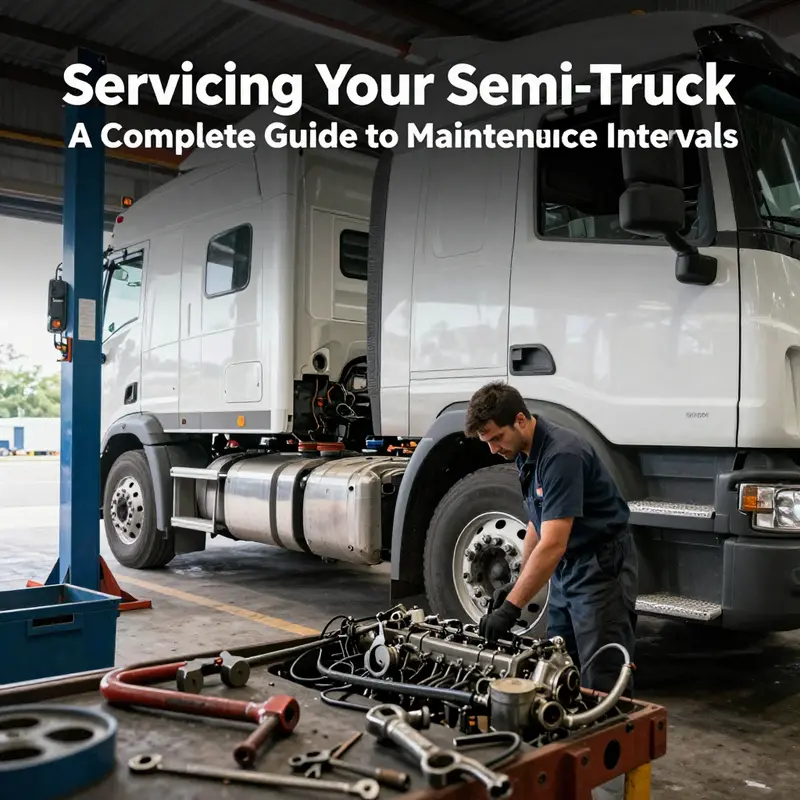
When fleet managers map the life story of a heavy truck, they begin with a simple truth: the distance you cover is only part of the equation. The other part is how consistently you treat the machine to the wear and tear of those miles. Major service intervals are not merely a checklist. They are the backbone of safety, efficiency, and long term value in a vehicle that carries heavy loads through demanding conditions. In this chapter the focus narrows to the heart of that practice: understanding when major maintenance is due, what it covers, and why those intervals matter for uptime, compliance, and the bottom line. The engine and its fluids establish the rhythm of service. The engine is the heart, and the maintenance plan around it keeps the heart beating reliably. Oil changes typically occur every 15,000 to 25,000 miles, a window that depends on the type of engine, the operating environment, and the quality of the oil that circulates through critical clearances and seals. Using high quality synthetic oil offers superior control over heat, lubrication, and shear, but the choice must align with manufacturer guidance and daily use patterns. Filters follow a parallel cadence. Air, fuel, and transmission filters usually need attention every 15,000 to 30,000 miles, or when condition reports and performance indicators suggest otherwise. In practice, the goal is to keep contaminants out of the core systems while avoiding unnecessary downtime. The coolant system also plays a pivotal role, not simply in keeping temperatures in check but in protecting metal from corrosion over countless cycles of heat and cold. Regular checks of coolant levels and condition should become a routine habit. A coolant flush or replacement around 60,000 miles is a common benchmark, unless the manufacturer specifies a different interval for a given coolant formulation. These fluid maintenance tasks, taken together, set the stage for more intensive inspections that follow a broader service plan. Brakes carry a heightened sense of urgency because stopping power is the first line of defense in heavy traffic and on steep grades. A thorough inspection of brake components is essential at regular major service visits. Brake pads and linings should be evaluated for wear around the 50,000 mile mark, with replacement when the minimum thickness is reached or when performance declines. The air brake system, a cornerstone of heavy vehicle safety, deserves careful attention as well. Leaks, pushrod travel in brake chambers, and slack adjuster condition must be reviewed, with a full air brake test conducted monthly or after any repair that touches the system. If a truck has disc brakes or other appendages, rotor thickness and surface condition require evaluation, with resurfacing or replacement as needed. Tires hold the road and the margin of safety together, so tire and wheel end service constitutes a major portion of preventative maintenance and energy efficiency. Tire pressure monitoring should be a daily habit, ideally checked before every trip. Proper inflation reduces rolling resistance, improves fuel economy, and prevents catastrophic failures under load. The tread depth and wear patterns deserve weekly attention for signs of uneven wear, cuts, bulges, or low tread. The minimum legal tread depth in many places is around 4/32 of an inch, which is often the threshold prompting a change in alignment or rotation patterns to preserve stability. Wheel bearings and seals are the quiet but critical players; overheating or grease leakage indicates potential failure and must be addressed with timely lubrication or component replacement according to the guidelines from the manufacturer. Suspension and steering components anchor ride quality and cargo security, and a major service visit should scrutinize leaf springs and shocks for cracks, broken leaves, or leaking seals. Steering linkages, tie rods, and mounting hardware deserve careful examination for looseness or damage, since any play in the steering system translates directly into safety risk on the road. The tightness of U bolts and mounting hardware matters too, because vibration and load transfer depend on solid, corrosion-free connections. Electrical systems and lighting, while often overlooked in the daily grind, reveal the health of the truck in the moments that matter most. All exterior and interior lighting should be tested before trips, with bulbs replaced promptly and wiring issues fixed to maintain visibility and regulatory compliance. The battery and alternator also demand attention. Terminals should be free of corrosion, voltage measured when the engine is off should exceed 12.6 volts, and the alternator’s ability to sustain charging under load should be verified. Batteries typically need replacement every three to five years, depending on climate, charging strategy, and usage patterns. A well rounded major service program integrates these elements into a disciplined preventive maintenance plan that scales with miles driven and the complexity of the operations. The everyday narrative of a semi truck is built on a rhythm that blends routine checks with more substantial service windows. A practical framework begins with a daily pre trip inspection that flags obvious defects in tires, lights, fluid levels, brakes, and visible damage. This short ritual primes the operator and the maintenance team for deeper analysis during a monthly or 5,000 mile cycle. A broader, comprehensive inspection capturing air brakes, tire condition, suspension, and electrical systems should occur at least every 5,000 miles or as part of a monthly maintenance day, and a more exhaustive major service is typically scheduled every 15,000 to 30,000 miles, depending on the manufacturer and the operating profile. Within that structure, the major service is the moment to refresh critical components, perform targeted adjustments, and document the state of wear. It is not a one size fits all event but a tailored sequence that can adapt to hot climates, long hauls, or city duties. For many fleets, this adaptability is reinforced by preventive maintenance programs that track the status of brakes, tires, lights, and the air brake system. In practice, these programs translate into calendar commitments and mileage triggers that ensure checks occur on a regular cadence regardless of immediate symptoms. Real time monitoring systems, increasingly common in modern fleets, provide a condition based maintenance signal rather than a rigid schedule. They monitor wear indicators, fluid temperatures, and system health to propose maintenance just as it is needed. This shift toward condition based maintenance helps avoid unnecessary downtime while reducing the risk of sudden breakdowns that interrupt schedules and erode trust with customers and carriers alike. The decision to service a truck at a given interval is also shaped by regulatory considerations. The Federal Motor Carrier Safety Administration and trade organizations offer guidance that frames service expectations, inspection routines, and record keeping. The overarching message is that regular, comprehensive maintenance is not optional; it is a core compliance activity that supports safety on every mile. To practitioners in the field, a good maintenance culture emerges from a clear understanding of these major service domains and a disciplined approach to timing. The engine and fluids, the braking system, tires and wheel ends, suspension and steering, and electrical systems all demand attention on a carefully designed calendar. The champion operators keep detailed logs, track wear patterns, and plan ahead to minimize downtime. They also recognize that maintenance is not merely about avoiding failure but about sustaining performance, fuel efficiency, and reliability across diverse routes and weather conditions. For those looking to translate these ideas into a practical guide, the next step is to study the manufacturer recommendations and align them with the realities of the operation. It is not enough to adhere to a single interval if the duty cycle is unique. The most successful maintenance programs blend manufacturer guidance with real world feedback from drivers and technicians, supported by data from telematics and service histories. When a truck returns to the shop after a trip, technicians read the signals of wear and tear, compare them with the preventive maintenance calendar, and decide whether to accelerate, hold, or extend the next service. This dynamic approach preserves uptime while extending component life and reducing total cost of ownership. For readers seeking a practical reference that grounds these ideas in established guidelines, consider consulting the Federal Motor Carrier Safety Administration maintenance resources and the broader industry standards. A comprehensive understanding of major service requirements is not a sterile exercise in timing; it is a commitment to safety, reliability, and responsible stewardship of a vehicle that powers essential supply chains. To further explore how maintenance planning translates into real world practice, you can visit the 5 Star Truckin blog for practical insights and case studies. 5 Star Truckin Blog Finally, for those who want to verify regulatory expectations and ensure compliance across fleets, see the official guidelines on vehicle maintenance from the FMCSA. External resource: https://www.fmcsa.dot.gov/hazmat/vehicle-maintenance-guidelines
Cadence of Reliability: Crafting an Effective Servicing Schedule for Semi Trucks

A semi truck is not simply a vehicle; it is a lifeline that carries people, products, and profits across long distances and tight timelines. The cadence of its service determines safety, uptime, and the bottom line. Too little attention to maintenance invites costly breakdowns and roadside emergencies; too rigid a schedule can drain resources without delivering corresponding value. The art and science lie in finding a cadence that aligns with how the fleet operates, the environment it faces, and the explicit guidance from manufacturers and regulators. When a fleet manager calibrates this cadence carefully, the truck’s performance becomes less a gamble and more a predictable, manageable process. In practice, the frequency of servicing will reflect a blend of manufacturer recommendations, the nature of the operation—whether long-haul, regional, or local delivery—and the realities of driving conditions, load types, and terrain. Yet behind these variables there is a reliable framework that professional operators tend to follow: routine maintenance at regular intervals, more thorough major servicing at longer mileages, and a preventive maintenance program that brings critical systems under a planned, proactive umbrella. The aim is not merely to fix problems as they appear but to anticipate wear, extend component life, and keep the truck in a state of readiness for the next mile. The most resilient fleets treat maintenance not as a cost, but as a strategic asset that protects safety, efficiency, and service quality.
The foundational routine is guided by mileage and time, with a practical overlap between the two. A common industry practice is to perform basic inspections and fluid checks at intervals that typically fall in the 15,000 to 25,000 miles range, or every three to six months, depending on how aggressively a vehicle is used. In many fleets, this becomes a rhythm: check fluids, inspect hoses and belts, top up critical fluids, and verify systems that are essential for safety and compliance. These checks are deliberately light-touch but frequent, so operators catch small issues before they become big, disruptive failures. For operators with high utilization, the cadence may tilt toward the mileage trigger, since wear accumulates fast in demanding service conditions. Conversely, fleets with steadier, predictable routes may lean on time-based checks to ensure components are refreshed even if mileage dips during slow cycles. This pragmatic approach keeps scheduling simple, while maintaining a reliable baseline of performance.
As the clock and odometer push forward, the need for more comprehensive attention grows. Major servicing, which includes engine tune-ups, brake inspections, transmission fluid changes, and tire rotations, typically follows a longer interval—often in the 50,000 to 75,000 miles band. This level of service is not merely more thorough; it acts as a reset and refresh for several critical systems. Engine tune-ups can restore efficiency and power, brakes require careful inspection to ensure stopping performance in line with FMCSA safety standards, and transmission fluid changes preserve smooth gear engagement and prevent slippage. Tire rotation and wheel-end maintenance protect wear patterns and axle health, while cooling systems and exhaust components receive renewed attention to prevent heat-related failures. While the mileage range provides a practical rule of thumb, the actual timing of these major services should be guided by monitoring data and the vehicle’s service history. Bypassing these major intervals invites the compounding effects of wear, reduced performance, and increasing fuel consumption, all of which erode profitability and reliability over time.
To structure reliability rather than simply react to trouble, many fleets adopt preventive maintenance programs that combine fixed checks with condition-based triggers. These programs often prescribe monthly or bi-monthly inspections focused on critical systems such as brakes, tires, lighting, the air brake system, and electrical networks. The monthly checks give maintenance teams a chance to verify that safety-critical components remain fully functional and compliant with regulatory requirements. They also create a predictable cadence for preventive actions, enabling better planning for parts, labor, and downtime. In practice, a preventive program builds a living timetable around the truck’s daily realities: the routes it travels, the loads it carries, and the environments it must endure. Modern fleets increasingly integrate real-time telematics and on-board diagnostics to drive this program. Condition-based maintenance uses sensor data to flag wear trends, allowing operators to shift from a rigid schedule to a responsive one. On a practical level, this means a tire might be rotated, a brake wear item replaced, or an air system seal refurbished not at a calendar milestone alone, but at the moment wear or degradation reaches a predefined threshold. The result is less guesswork, lower risk of roadside failures, and more stable maintenance budgets.
The maintenance cadence is strongly influenced by external standards and regulatory expectations. The FMCSA, along with industry groups like the American Trucking Associations, provides detailed guidance on the minimum requirements for commercial vehicle maintenance. While the precise intervals vary by vehicle, engine type, and duty cycle, the overarching principle is clear: regular, documented checks are essential for safety and compliance. The owner’s manual and manufacturer guidelines remain the primary sources of specific intervals for oil changes, filter replacements, brake checks, and system inspections. Nevertheless, the contemporary fleet often goes beyond the letter of the law, embracing a preventive mindset that anticipates failures rather than merely reacting to them. In this sense, the cadence becomes a performance tool, turning maintenance from a cost center into a driver of uptime and reliability.
Beyond the numbers, the operating environment reshapes maintenance expectations. Fleets operating in extreme heat or cold, with heavy loads, on dusty or unpaved roads, or in areas with challenging climates, tend to push wear to the edge of typical schedules. In these conditions, the interval for routine services may be shortened, sometimes to as little as 10,000 miles or even less for certain components. Tailoring service intervals to actual operating conditions is the essence of a robust preventive program. The idea is simple: when the truck works harder—higher engine loads, more heat, more dust—the wear rate increases, and the maintenance cadence must respond accordingly. It is not a sign of fragility to adapt; it is a sign of prudence and foresight, a means of preserving the vehicle’s life and the safety of the crew who depend on it.
Technology has shifted maintenance from a calendar-driven ritual to an evidence-based discipline. Digital fleet management tools and telematics are now standard in many fleets, feeding data about engine hours, fuel usage, oil temperature, brake wear, tire pressure, and a host of other indicators into a central analytics layer. Predictive maintenance uses this data to forecast when a component will degrade to a level that requires service, enabling a planned, efficient maintenance window rather than a surprise breakdown. This capability is particularly valuable for long-haul operations where the distance between nodes is large and roadside downtime is costly. With condition-based maintenance, a truck can be serviced when it most benefits reliability and uptime, not merely when it reaches a mileage milestone. A well-implemented digital program also supports daily checks by drivers, who can note leaks, warning lights, unusual noises, or uncomfortable handling. Those early signals become part of the larger maintenance narrative, giving technicians a clearer picture of the vehicle’s health before work begins.
An effective preventive maintenance program, then, rests on a few durable pillars. The engine and its fluids—oil, filters, coolant, and fuel systems—must be kept clean and reliable, because the heart of the truck’s performance depends on it. Brakes are non-negotiable safety systems that require frequent inspection and timely replacement of wear items. Tires are a shared responsibility between the tire shop, the driver, and the fleet, and they demand constant attention to pressure, tread depth, and alignment. Lights and electrical systems maintain visibility and communication with other road users and with the vehicle’s own diagnostic network. The exhaust and emissions components must be intact to meet regulatory standards and to prevent dangerous exhaust buildup. And the air brake system, crucial for stopping power on heavy loads, deserves extra scrutiny in every maintenance cycle. Combined, these components determine not only the safety of the ride but its efficiency and predictability. When a fleet consistently protects these elements through a disciplined maintenance approach, it reduces the risk of unplanned downtime, extends the life of expensive assets, and preserves the confidence of drivers who depend on reliable equipment.
To design a maintenance cadence that works, fleets must balance attention with practicality. It helps to track the history of each truck, understand the typical wear patterns across engine families, and calibrate the schedule to the operator’s actual route structure. The best programs are documented, auditable, and repeatable, yet flexible enough to adapt to real-world conditions. They combine the wisdom of years of fleet experience with the precision of modern data analytics. The human element remains essential: skilled technicians who can interpret diagnostic signals, a maintenance leadership team that can communicate schedules across operations, and drivers who report issues accurately and promptly. When these pieces align, maintenance ceases to be a series of episodic repairs and becomes a proactive, ongoing practice that supports safety, reliability, and efficiency. The payoff is not merely reduced downtime; it is a measurable improvement in uptime, total cost of ownership, and the confidence that the fleet can meet its commitments mile after mile.
For readers seeking practical contexts that echo these themes, a broader look at maintenance training and best practices can illuminate how one might implement these ideas in the field. For example, a resource page on fire-truck maintenance training highlights how systematic checks and preventive routines translate into real-world uptime and safety benefits. While the vehicle type differs, the underlying discipline—regular inspections, disciplined documentation, and a culture of proactive care—remains consistent across heavy-duty fleets. The link below provides a useful reference point for teams looking to elevate their maintenance training and standardize their approach across vehicle classes. fire-truck-maintenance-training-importance
To reinforce the importance of structured maintenance in the modern era, consider also the regulatory backbone that governs vehicle upkeep. The FMCSA offers detailed guidance on commercial vehicle maintenance requirements, underscoring that compliance and safety are inseparable from reliable vehicle performance. As manufacturers publish model-specific service intervals, fleets should always consult the owner manual and official guidelines for the most precise recommendations. In practice, this means pairing a manufacturer-driven baseline with a data-informed, condition-based layer that reflects how the truck actually wears in service. The result is a schedule that respects both regulatory expectations and the practical realities of operation, delivering a cadence that is not merely compliant but genuinely protective of people, cargo, and performance.
In the end, the cadence of servicing a semi truck is not a single rule but a living practice. It is the quiet art of aligning maintenance frequency with duty cycles, environmental stresses, and the evolving capabilities of technology. It is the willingness to adjust intervals when data says that wear is tracking faster in one condition and slower in another. It is the discipline to perform a thorough major service when the time comes, not when it is convenient, and the humility to listen to a driver who reports a change in handling or a warning light that flickers in the cab. When teams embrace this dynamic, maintenance becomes a steady, predictable rhythm—one that keeps trucks on the road, keeps drivers safe, and keeps the economy moving forward.
External resources provide further context and validation for these practices. For operators seeking authoritative guidance on maintenance requirements and best practices, the FMCSA’s official site offers comprehensive information and updates to standards and regulations. FMCSA maintenance resources.
Riding the Route: How Driving Conditions Shape When a Semi Truck Needs Servicing

Maintenance schedules for semi trucks are rarely a one-size-fits-all proposition. Across fleets and routes, the real driver of service frequency is not just the vehicle’s age or a printed mileage table. It is the way the truck meets the road—the tempo, terrain, and weather that greet every shift. When fleets recognize this, maintenance becomes a living program rather than a calendar note. The result is safer operations, fewer breakdowns, and a lifecycle for the equipment that mirrors the realities of the work being done.
To understand how driving conditions mold service intervals, imagine the four archetypal environments a semi truck might encounter. In urban, stop-and-go operations, a tractor-trailer endures a different kind of wear than it does on a clear, long highway stretch. The engine spends more time idling, and the transmission cogs churn with frequent acceleration and deceleration. Brakes take a daily hammering as traffic signals, pedestrians, and unpredictable congestion demand rapid slowing and precise control. This environment accelerates the need for more frequent checks of critical systems: brake lines and pads, the cooling fan and radiator assembly for heat buildup, and general engine and fluid inspections that catch wear before it becomes a failure. In practice, fleets operating in dense city environments often schedule basic inspections and fluid top-ups every 15,000 to 25,000 miles or roughly every six months, with brake system assessments becoming a regular feature of each service. The goal is not simply compliance but a proactive approach that prevents expensive disruptions during peak delivery windows.
By contrast, highway or long-haul driving carries a different risk profile. The road is more predictable at speed, which reduces some sudden stress but amplifies others. Sustained high-mileage operation places steady demands on the engine and transmission, on tires, and on the suspension as well. Engine oil can degrade through cumulative heat cycles, and tires wear unevenly because of higher speeds and longer run times. Long-haul servicing is still a routine matter, but it tends to land in the middle of a maintenance cadence: many fleets target a range of about 30,000 to 50,000 miles for more comprehensive checks, with thorough tire tread examinations, wheel bearing inspections, and fluid level verifications happening at regular intervals of the service cycle. Depending on the vehicle and usage, some operators may extend certain checks up to 50,000 miles, but the emphasis remains on sustaining reliable performance through steady, predictable operation.
Extreme weather and harsh environments tilt the balance again. Deserts, mountains, extreme cold, or heavy snow introduce thermal and abrasive stress that compounds wear well beyond what a highway route alone would cause. High temperatures accelerate oil breakdown and cooling system strain; cooling system integrity, coolant quality, and antifreeze concentration require closer attention. Batteries lose cranking power more quickly in cold snaps, and viscous fluids can thicken in low temperatures, affecting start-up and lubrication. Snow and ice introduce unique risks for brakes and traction, even as they demand more from the heating, ventilation, and defrost systems. Under these conditions, service intervals often shrink by a quarter to half compared with standard highway driving. A truck in a severe winter climate might be serviced every 15,000 to 20,000 miles, while desert or dusty environments call for more frequent air filter changes and cooling system checks to manage dust intrusion and heat load.
Then there are off-road, heavy-haul, or specialty operations that push equipment to the edge. Construction sites, mining operations, and oversized load transport expose the truck to rough terrain, shock loading, and debris that can accelerate component fatigue. Suspension components, frames, and axles are subjected to loads and jolts not typical on paved highways. The service frequency in these cases is markedly shortened: inspections and maintenance may be needed every 5,000 to 10,000 miles, with eyes trained on the suspension geometry, chassis integrity, and axle health. In such environments, daily pre-trip and post-job checks become essential habits, not optional practices, because problems can begin as soon as a job cycle ends. The relentless demand of these environments is a constant reminder that routine maintenance cannot be deferred without risking costly downtime.
Across these scenarios, one principle remains constant: the manufacturer’s recommendations matter, but the operating reality matters more. Fleet managers who align the official maintenance intervals with the observed wear patterns from the actual routes are practicing a smarter, safer approach. Real-world data gathered through telematics and on-board diagnostics provides the bridge between theory and practice. Condition-based maintenance, informed by live wear readings and trend analyses, becomes the backbone of a robust program. This shift—from fixed mileage or time stamps to condition-informed intervals—helps maintain peak performance without over-servicing, which can waste resources and disrupt schedules.
But numbers tell only part of the story. Human judgment—the driver’s notes, the shop’s observations, and the dispatcher’s insight into upcoming routes—plays a crucial role. A driver who reports heavy braking events on urban stretches or frequent turbulence in a mountainous pass adds a qualitative layer to the quantitative data. A shop that logs consistent tire wear patterns or cooling system anomalies creates a feedback loop that informs future maintenance decisions. It is this combination of empirical data and experiential insight that transforms a maintenance plan from a routine checklist into an adaptive program that keeps the truck on the road, safely and efficiently.
To this end, the chapters that build a maintenance program benefit from broader knowledge beyond the highway. For operators seeking to cultivate a culture of proactive upkeep, resources on routine practice and training are invaluable. For instance, a broader resource on maintenance training highlights the importance of structured, ongoing education for everyone involved in keeping the fleet healthy and compliant. The emphasis on training aligns with the idea that maintenance is a team effort, spanning drivers, technicians, and managers who share responsibility for uptime and safety. See fire-truck-maintenance-training-importance, a resource that echoes the same philosophy in a different heavy-vehicle context, reminding us that the discipline of maintenance transcends vehicle type and operation. This cross-pollination of learnings helps ensure a consistent standard of care across diverse fleets and environments.
Ultimately, the practical takeaway is straightforward: tail the service schedule to the route, not the clock. Use the owner’s manual and manufacturer guidelines as the baseline, then adapt based on the realities you observe in the field. Maintain a disciplined program that combines regular inspections with condition-based triggers. Build a cadence for pre-trip checks, post-trip reports, and routine system diagnostics. Let telematics drive the cadence, while human oversight seals the decision with experience and judgment. In this way, servicing stops becoming merely the moment you hand the keys to the mechanic and start becoming a process that begins long before the truck returns to the yard and continues long after it leaves again.
In the end, the question of how often you service a semi truck is not answered by a single number but by a spectrum of needs defined by where and how you drive. Urban congestion requires more frequent brake and safety checks; highway cycles reward steady, routine maintenance; extreme environments demand aggressive monitoring of heat, fluids, and battery health; off-road and heavy-haul operations require daily vigilance for structural wear. This spectrum defines a maintenance philosophy that prioritizes safety, uptime, and lifecycle value over rote scheduling. And it invites a continuous dialogue among drivers, technicians, and fleet managers about what the routes are teaching the machine—and what those lessons mean for the next service, the next inspection, and the next mile down the road.
As you refine your program, remember that a well-designed maintenance strategy is not only a safeguard but a competitive advantage. A fleet that keeps its semis healthier, longer, and more predictable in their performance can meet tighter delivery windows, reduce roadside breakdowns, and improve overall reliability. That reliability, in turn, strengthens driver confidence and customer trust, creating a virtuous circle of safety, efficiency, and value that travels with every mile on every route. For those who are building a broader maintenance culture, see fire-truck-maintenance-training-importance. It serves as a reminder that the core discipline—regular, informed care—applies across heavy-vehicle operations and can elevate maintenance from a routine to a strategic competency. Finally, for those seeking authoritative guidance on broader regulatory and safety considerations, ongoing engagement with industry standards and official guidance remains essential.
External resource: https://www.fmcsa.dot.gov/
Reading the Road’s Timetable: How Often a Semi Truck Should Be Serviced and Why Standards Steer the Schedule
A semi truck travels as more than a metal frame and a powerful engine. It carries people, payloads, and, crucially, a living timetable built from miles, weather, and load. The frequency of servicing isn’t arbitrary; it is shaped by the manufacturer’s guidance, the way the truck is used, and the conditions it faces every day on the road. For fleets with miles tallying up in the hundreds of thousands each year, maintenance becomes a disciplined routine that blends time, distance, and the subtle wear that shows up only when you listen closely to the machine and the road together. In practice, maintenance begins with a simple premise: regular checks catch minor issues before they become major failures, and the schedule is tuned to the truck’s real-life duty cycle rather than a one-size-fits-all calendar.
Most operators start with routine maintenance anchored in mileage or time. A common baseline rounds the calendar and the odometer: inspections, fluid checks, and a light service every 15,000 to 25,000 miles, roughly every three to six months under normal use. This cadence keeps the essential systems—oil, coolant, transmission fluid, tire conditions, and basic engine health—visible and manageable. It’s a cadence designed not for a single trip but for a fleet that keeps rolling through varying routes and climates. When you consider the variety of operations, from long-haul interstates to regional deliveries, the routine can look and feel different from one fleet to the next, but the underlying principle remains the same: consistent attention prevents creeping degradation.
Beyond the basic checks, there comes the more involved, or major, servicing. At the heart of this plan is a thorough review that tackles the parts most likely to reveal age or wear given the stresses of heavy-duty operation. A typical major service focuses on the engine’s core health, the brake system, transmission maintenance, and tire condition, including rotation and balance where appropriate. The interval for this more comprehensive work often lands in the 50,000 to 75,000-mile range, though it can shift with age, duty cycle, and the specific demands placed on the vehicle. The logic is clear: larger, more complex components demand attention when their signals begin to accumulate—whether that means rising exhaust temperatures, subtle changes in pedal feel, or tire wear patterns that deviate from the norm.
Preventive maintenance programs frame the maintenance calendar even more broadly. In many fleets, these programs translate the long view of reliability into monthly or bi-monthly checks that sweep through critical systems: brakes, tires, lights, the air brake system, and the electrical network. The goal of these ongoing checks is not to chase every tiny fault but to maintain a consistent level of readiness. It’s about guaranteeing that a truck is fit to roll on any given day, regardless of the schedule’s exact date on the calendar. The intangible payoff is a smoother operation: fewer unscheduled repairs, steadier uptime, and a fleet that can predictably meet service commitments. In practice, the maintenance program becomes a living, breathing document, updated as new wear patterns emerge or as new maintenance technologies and sensor data redefine what “tight” looks like for a given system.
The guiding principle here is dual timing. Some tasks are tied strictly to mileage, others to the clock. A popular hybrid approach is the “calendar plus mileage” standard: perform routine and basic inspections on a fixed interval, say every six months, regardless of miles, while staggering more in-depth checks by mileage benchmarks. This is particularly prudent for long idle periods, seasonal storage, or routes that involve substantial weather variation. When a truck sits idle for extended periods, moisture, seals, and fluid chemistry can drift, and a six-month check helps reset those variables before they become symptoms of larger problems. The result is a machine that remains capable, compliant, and safer for operation—even if the odometer hasn’t marched far since the last service.
Operators who rely on data-driven maintenance add another layer: real-time monitoring systems and diagnostic tools that track wear indicators and system health in near real time. These technologies shift maintenance from a strict schedule to a condition-based approach, where intervals are dictated by the actual state of components rather than solely by miles or months. In practice, telematics, oil analysis data, and brake wear sensors create an early-warning ecosystem. They can flag when the oil shows a different balance of contaminants, when brake rotors wear beyond a threshold, or when tire tread depth dips below safe levels. The ability to adjust servicing on the fly—adding a service earlier than the next calendar date, or extending the interval in favorable conditions—keeps uptime high and surprises low.
The specific component cadence often becomes more explicit when you break down the wear profiles of systems that do most of the heavy lifting on the road. Brakes, tires, and the suspension aren’t just critical to safety; they are frequent indicators of how a truck is performing in its actual environment. Most fleets set more frequent checks for these subsystems, commonly from every 5,000 to 10,000 miles, depending on the load factor, route quality, and climate. Brake systems can reveal rotor scoring, pad wear, or air-brake leaks long before a critical failure; tire health is a telltale of road conditions, inflation management, and alignment. The suspension’s health, including shocks, springs, and linkages, speaks to ride stability and payload handling. These early checks help to identify issues that, if left unchecked, could lead to reduced braking efficiency, uneven tire wear, or a compromised ride that accelerates other wear.
The interplay of compliance and safety also anchors this cadence. Regulations in many jurisdictions require regular inspections and annual or periodic technical checks to safeguard the road. Fleet operators align their internal maintenance with these external requirements, ensuring that every vehicle remains in good standing with authorities while remaining safe for drivers and other road users. The OEM service manual becomes the primary guide for those who want the precise instructions for each component. It is here, in the pages of the manual, that the exact intervals, torque specs, lubricant types, and sequences of maintenance steps are spelled out. To keep a fleet compliant and consistent, many operators cross-reference the OEM guidance with DOT/FMCSA safety standards, ensuring both the letter and spirit of the law are observed.
At its core, the maintenance cadence is a balancing act. It must guard against the cost of unexpected downtime while avoiding the inefficiency of over-servicing. A well-planned schedule reduces the risk of costly breakdowns, extends the vehicle’s lifespan, and contributes to driver safety by maintaining systems within their designed thresholds. The best maintenance programs blend the certainty of a written plan with the flexibility to respond to real-world signals. They also recognize that every route, every season, and every payload shape wear patterns in unique ways. The art of maintenance, then, is the art of listening to those patterns and translating them into timely service actions.
For someone building or refining a fleet’s maintenance playbook, several practical ideas emerge. Start with the OEM manual as the anchor, then layer on a calendar-based framework that captures six-month, 12-month, and mileage-based milestones. Add a condition-based overlay that uses data from on-board sensors and fleet software to flag when a system approaches a wear threshold. Train technicians to interpret wear signatures not as isolated faults but as signals of evolving conditions under specific duty cycles. Finally, embed a culture of proactive communication: operators should report any abnormal vibrations, localization of heat, unusual braking response, or tire irregularities immediately so early intervention can occur. When maintenance is approached as a coordinated, data-informed practice rather than a series of isolated tasks, uptime becomes a true performance metric rather than a hoped-for outcome.
In discussing maintenance cadence, it is useful to acknowledge the broader context: the real-world performance of a semi truck hinges on more than the mechanical aspects. Weather, road quality, traffic patterns, and payload volume all contribute to how quickly wear accumulates. A truck handling mountainous grades in winter will need more frequent checks for cooling efficiency and brake wear than a unit on light suburban runs in dry weather. Likewise, a vehicle pulling a heavy load on a windy highway route will expose tires and suspension to more pronounced stress than one cruising at highway speeds with lighter duty. The takeaway is not that the same schedule fits every fleet; it is that the underlying logic—regular checks, alignment with OEM guidance, and a willingness to adapt based on performance data—should govern every maintenance plan.
As this approach takes hold, the maintenance function evolves from a reactive necessity into a strategic capability. The fleet gains a more predictable maintenance window, the drivers gain confidence in their equipment, and the operation’s overall reliability improves. The routine becomes a narrative that explains when and why the truck is serviced, rather than a sequence of stops on a calendar. And when you see a vehicle depart a yard with all systems reporting green, you’re not just seeing a truck leaving the gate—you’re seeing the result of a disciplined, standards-based maintenance philosophy that translates engineering guidance into on-road vitality. For teams that want to explore the topic further, there are practical perspectives that translate well from road tractors to other heavy-duty platforms. For training perspectives that translate to real-world maintenance cadence, see fire-truck-maintenance-training-importance.
Important caveats remain. The intervals described here are general guidelines drawn from industry practice and the common OEM approaches cited in standard references. They are not universal absolutes. The exact numbers will vary with the vehicle’s age, configuration, and the environment in which it operates. The best practice is to consult the truck’s owner manual or the manufacturer’s official guidelines for the precise service intervals and required procedures. In addition, modern fleets increasingly rely on real-time monitoring that supports condition-based maintenance rather than rigid calendars. If a sensor or diagnostic report indicates deteriorating performance, the maintenance action should be advanced accordingly, even if the odometer or calendar hasn’t yet reached the next milestone. This kind of responsiveness protects uptime and extends the vehicle’s life while keeping safety at the forefront.
Finally, the maintenance cadence speaks to a broader commitment: the discipline of reliability. When a fleet treats maintenance as a core capability—integrating OEM guidance with data-driven insights and a proactive culture—every mile traveled becomes part of a larger mission: keeping drivers safe, delivering on time, and preserving the economics of the operation. In the end, the schedule is not just about when to service a semi truck; it is about how the journey itself is managed—through foresight, rigor, and a steady conversation between man, machine, and road. For those seeking a deeper dive into the standard-setting conversations around maintenance cadence in heavy transport, the guidance remains anchored in the balance of time, distance, and wear, all interpreted through the lens of the equipment and its mission.
External reference: engine manufacturer maintenance guidelines. For formal standards, refer to engine manufacturer maintenance guidelines: https://www.cummins.com/ .
Final thoughts
Regular servicing and maintenance of semi-trucks are essential to ensure safety, compliance, and longevity. By adhering to routine maintenance, following major servicing schedules, and understanding the effects of driving conditions, drivers and fleet managers can significantly reduce breakdowns and costly repairs. Always prioritize manufacturer guidelines and consider implementing preventive maintenance programs to keep your operations running smoothly. Remember, a well-maintained truck is not only safer but also more productive on the road.