
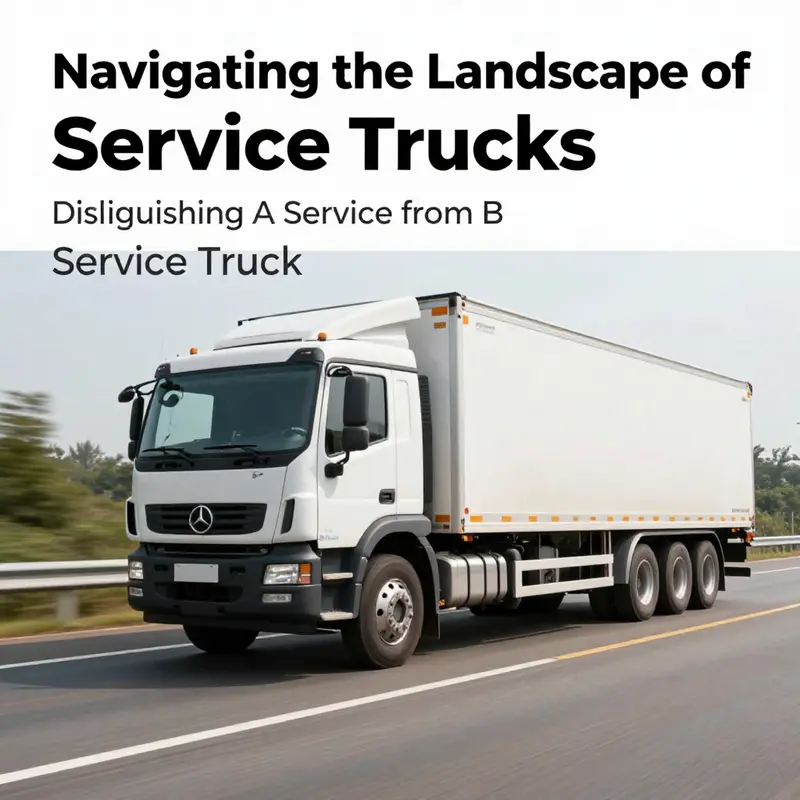
In the complex world of trucking, understanding the distinctions between ‘a service’ and ‘b service truck’ is crucial for efficiency and operational success. For long-haul truck drivers, trucking company owners, and fleet managers, grasping the functionalities and definitions of service trucks directly impacts service efficiency and vehicle utility. Each chapter will delve deeper into the characteristics, interpretations, and operational intricacies of service trucks, setting the stage for insightful discussion on how service types and specialized vehicles interact and enhance overall fleet performance.
从职能到工具:理解服务(a service)与服务卡车(b service truck)之间的关键区别
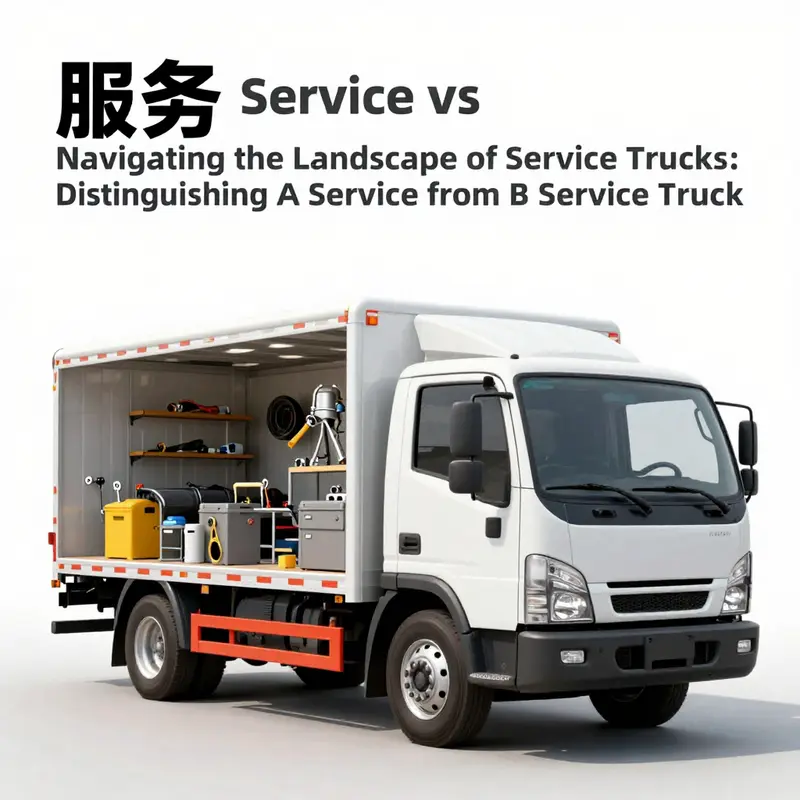
服务与服务卡车不是同一层级的概念。把“a service”看作目标,把“b service truck”看作为实现目标而存在的物理载体,有助于厘清两者在设计、采购与现场运维上的不同关注点。服务是由人、流程和技术组成的活动。服务卡车是承载这些要素并将其带到现场的专项车辆。将二者并列比较容易引起混淆;把它们置于因果关系中,则能看到更清晰的决策路径。
服务的核心在于“做什么”。这可能是一项巡检、一次抢修、定期维护或应急处置。服务定义了目标、时间窗口、技术标准和绩效指标。为完成这些目标,组织需要明确所需的人力资质、备件、检测设备以及响应策略。服务卡车的角色是将这些资源转移到作业点,并在车上提供一个可用的工作空间。一个优化良好的服务流程若没有合适的车辆支持,其响应速度与现场效率都会大幅下降。反过来,再优秀的车辆也无法替代不成熟的服务流程。
从物理与法规角度看,服务卡车属于专用汽车范畴。它们基于货运或商用底盘进行改装,上装包含专用工具箱、管线、储罐、起重机构或升降设备。不同上装决定了车辆的作业边界。对比中常见的一个误区是把“a service”理解为某种固定车型。实际情形更复杂:同一型号的服务卡车可以承载多种服务,只要上装和内部配置经过合理设计。例如,一辆配备通用工具箱、发电机和可伸缩工作台的厢式服务车,可以在市政维护、通信抢修与轻型机修之间切换。
在企业或行业内部,有时会出现“A型服务车”和“B型服务车”的命名习惯。这里的字母并非行业统一标准,而是用于区分配置层级与用途宽窄。通常,A型代表基础配置,满足日常巡检与常见小修。B型则是加强版,带有液压设备、更大存储或更复杂的电子通讯系统,可用于复杂故障处理或特殊环境作业。采购时将这种分级纳入车型库,有助于按需调派与成本控制。分级策略应以服务需求为导向,而非盲目追求高配。
对运维团队而言,评估一个服务卡车是否合适,需要从多个维度考虑。首先是功能匹配:卡车的上装和设备必须覆盖目标服务的核心工序。其次是移动性与可达性:车辆的尺寸和转弯半径决定了能否进入巷道、施工现场或边远乡村道路。第三是作业持续性:油耗、发电能力和备件存储容量影响现场连续作业时长。第四是安全与规程合规性:例如带电作业需要绝缘措施,化学品运输需要符合危货标准。最后是维护和售后支持:标准化零部件和可替换上装能显著降低停机时间。
把资源向“服务+车辆”系统化整合,有几项现实好处。第一,可提升响应速度。把必要的工具、备件和人员集成到一辆车上,能在接单后迅速出动并完成现场初步处置。第二,降低整体运营成本。同一辆多功能车替代多辆专职车,可减少闲置与重复投资。第三,增强安全与合规性。经过专业改装的车辆比临时拼装的工具箱更可靠,监管合规也更容易证明。第四,支持数据化与标准化运维。把车辆作为可管理资产,结合工单系统,可以追踪车载库存、使用频次和维护周期,从而推动持续改进。
然而,这一模式也有局限。首要约束是“适配性悖论”:高度通用的车辆可能在特定任务上不够理想,而过度定制的车辆则在任务变更时变得僵化。因此,制定车辆配置时应保持平衡,优先考虑模块化上装和快速替换部件。第二是成本与复杂性:带有高级液压、发电或化学储存系统的卡车成本高,培训与许可要求也更严。第三是规模与部署策略:小型运营商可能更倾向于租赁或按需调配,而大型运营机构通常采用自有车队和标准化配置。
在采购与车队管理层面,有两条实践路径值得借鉴。其一是建立车型系列化库。把常用的上装模块设计成可互换单元,按服务优先级配备A/B级车型。其二是把服务流程与车辆能力捆绑到SLA(服务等级协议)和工单模板中。这样,调度系统能基于工单自动匹配最合适的车辆,减少人工判断错误。这种方法在应急服务和市政维护中展现出明显优势,因其能把响应时间、修复率和设备利用率同时提升。
运维与培训不应被忽略。服务卡车上的特殊设备需要专门维护策略。定期检查液压系统、发电机和供气管路,验证储罐无泄漏,并按规程执行电气安全测试。培训方面,驾驶员同时应具备基础维护技能,而技术人员应熟悉车载设备的快速故障排查。把维护与培训纳入例行预算,将明显降低非计划停机。
最后,行业趋势显示标准化、系列化与模块化是未来方向。通过标准化上装接口和统一的检修文档,组织能更快地响应服务需求变化。若要进一步阅读关于服务卡车定义与工业应用的权威讨论,可以参阅 Britannica 的相关条目,以便将理论与实践更好地对接。
更多关于车队标准化与维护策略的实务建议,可参考一篇探讨车队标准化益处的内部文章,了解如何在采购与运维中实现更高效的资源配置:benefits of standardizing fire truck fleets
外部参考:
https://www.britannica.com/technology/service-truck
Decoding ‘A Service’ and ‘B Service Truck’: When a Service Is a Task and a Truck Is the Tool
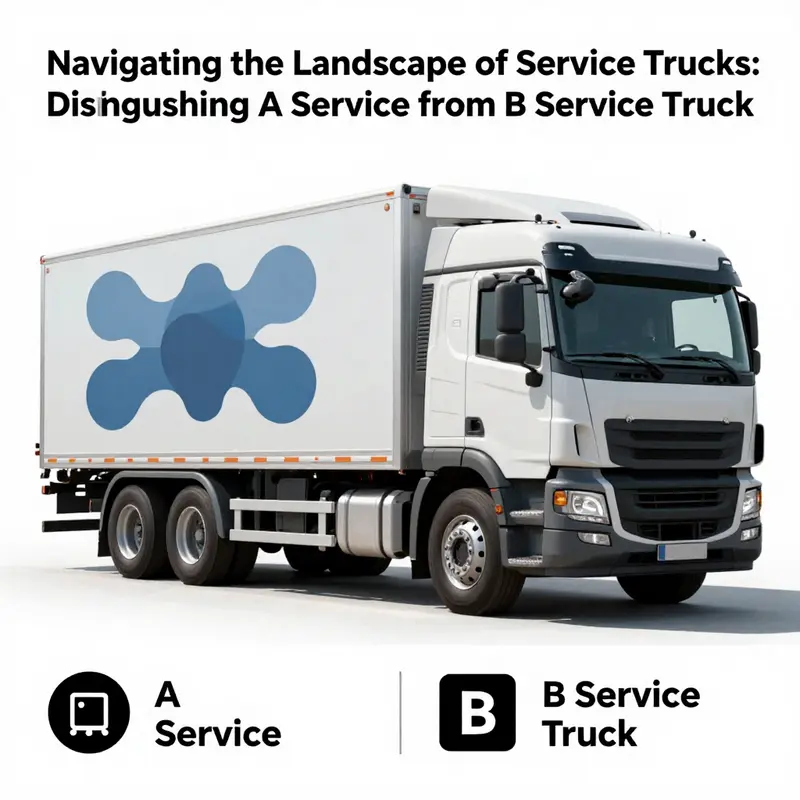
Understanding the distinction matters as much as the devices and processes themselves. The phrase “A Service” is often shorthand in conversation, paperwork, or fleet records. It can mean a scheduled maintenance event, a service grade in a maintenance matrix, or an internal work category. By contrast, a “B Service Truck” reads as a physical vehicle configured to perform field work. Treating the two as interchangeable creates confusion. Seeing them clearly unlocks better procurement, safer operations, and smarter maintenance planning.
When people use “A Service,” they usually refer to an action. It might be a routine inspection, a preventive maintenance slot, or a defined level of repair. This label belongs to operations, where people, procedures, and technical standards converge. A service definition answers: what outcomes are required, what skills are needed, and what response time is acceptable. It describes workflows and responsibilities more than hardware.
A service truck, on the other hand, is a platform. It packages mobility, tools, and consumables into a deployable unit. Service trucks come in many forms: enclosed vans with racking and power tools, tankers for bulk liquids, vehicles with cranes or aerial lifts, and customized bodies with specialized compartments. Standards classify these vehicles as “special-purpose” or “dedicated” units built on a commercial chassis. The vehicle’s role is simple: enable the service. The service defines what the truck must carry.
The practical implication of this relationship is straightforward. If a fleet defines its services clearly, truck specifications follow logically. A high-frequency inspection task demands compact, fuel-efficient vans with organized storage and fast access to tools. Complex field repairs require mobile workshops with power generation, diagnostic interfaces, and heavy lifting gear. Confusion appears when labels like “A” and “B” float without definition. One organization may use “A” to mean a basic preventive check. Another may use the same letter to indicate a priority response. Without a shared taxonomy, procurement and training suffer.
A second common scenario is internal model classification. Some operators label vehicles “A-type” or “B-type” to reflect capabilities. “A-type” might be a base-level unit for routine rounds. “B-type” could be a reinforced, better-equipped truck reserved for critical interventions. This internal coding can work well if documented and communicated. It fails when codes drift, or personnel assume universal meanings. The important practice is to map codes to concrete, measurable attributes: tool lists, payload, onboard power, lifting capacity, and permitted tasks. Doing so turns a cryptic letter into an actionable specification.
Beyond nomenclature, there are regulatory and standards considerations. Many jurisdictions classify these vehicles under special-purpose vehicle standards. Those standards focus on body types, load distribution, safety equipment, and allowable work operations. Knowing whether a vehicle must be a van body, tanker, crane-equipped chassis, or special-structure vehicle determines compliance, insurance, and crew training needs. The vehicle choice should therefore start with the service envelope: the expected tasks, environments, and hazards. Then, choose a truck configuration that meets those demands and the applicable standards.
This distinction affects procurement strategy. Buying a truck to meet an undefined “A Service” invites under- or over-specification. Under-specification risks inefficiency and downtime. Over-specification wastes budget and increases complexity. A disciplined approach binds service definitions to vehicle requirements early. The procurement team then sources bodies and chassis that deliver the necessary capabilities without unnecessary extras.
Fleet managers must also balance standardization against task diversity. Standardization improves parts commonality, simplifies training, and reduces spare inventory. However, a one-size-fits-all mentality can reduce effectiveness for specialized tasks. The best programs pursue series-based commonality: select a small number of modular platforms and adapt upper bodies to specific services. That strategy reduces lifecycle costs while preserving fit-for-purpose capability. For a practical exploration of how fleet-level standardization pays off, see this discussion on the benefits of standardizing fire truck fleets: benefits of standardizing fire truck fleets.
Training and documentation follow the same logic. When “A Service” and “B Service Truck” are clearly defined, training maps precisely to tools and procedures. Crews learn both the work process and the vehicle systems. Maintenance staff can plan preventive care by vehicle configuration, not by vague categories. Documentation—tool lists, consumables, safety checks—becomes machine-readable and auditable. That leads to consistent outcomes and safer operations.
Operational readiness also depends on logistics. A service truck requires fuel, spare parts, and storage space. Where services are mobile, logistics must be mobile too. Planning supply chains around the service rather than the vehicle helps. For instance, if a particular service consumes a specialized lubricant, locate resupply points to match the service schedule. If another service needs heavy lift equipment, schedule multi-day deployments with parts on hand. A service-centric logistics mindset ensures trucks are stocked to meet service definitions, not just to appear ready.
Risk management highlights another important contrast. A service definition can specify safety boundaries and required certifications. Those requirements become non-negotiable when assigned to a truck. The vehicle must carry required safety gear and meet stability, electrical, and environmental standards. When procurement treats trucks as extensions of the service, safety and compliance become integral to design. Conversely, treating trucks as generic assets risks noncompliant deployments.
Finally, the lifecycle view unites the two concepts. Services evolve; so must the vehicles that support them. A new diagnostic technology or inspection protocol can render older truck bodies suboptimal. Lifecycle planning includes periodic reassessment of service definitions and subsequent upgrades to the vehicle fleet. Renewing a truck is not a simple replacement. It is an opportunity to revalidate service needs, incorporate standard parts, and reduce long-term costs.
In practice, organizations succeed by treating “service” and “service truck” as linked but distinct domains. Define the service first, using measurable criteria and clear outcomes. Translate those criteria into vehicle specifications next. Optimize for standardization where it yields cost and training benefits. Customize where the service demands special capability. Maintain traceable mappings between service codes and vehicle capabilities. This approach turns ambiguous labels into predictable operational performance.
For those who must make procurement or operational choices, the guiding principle is simple: design from need to platform. Let service definitions drive vehicle selection. Keep vehicle families compact and modular. Document every code and every capability. Doing so reduces downtime, improves safety, and yields better value over the vehicle lifecycle.
For an example of a typical vehicle configuration in the field, refer to the following listing: https://www.alibaba.com/product-detail/Maintenance-Service-Truck-Mobile-Workshop-Lube-Truck_1600577935183.html
When Service Needs a Vehicle: How Service Types Drive Specialized Service Truck Design
When a Service Meets a Truck
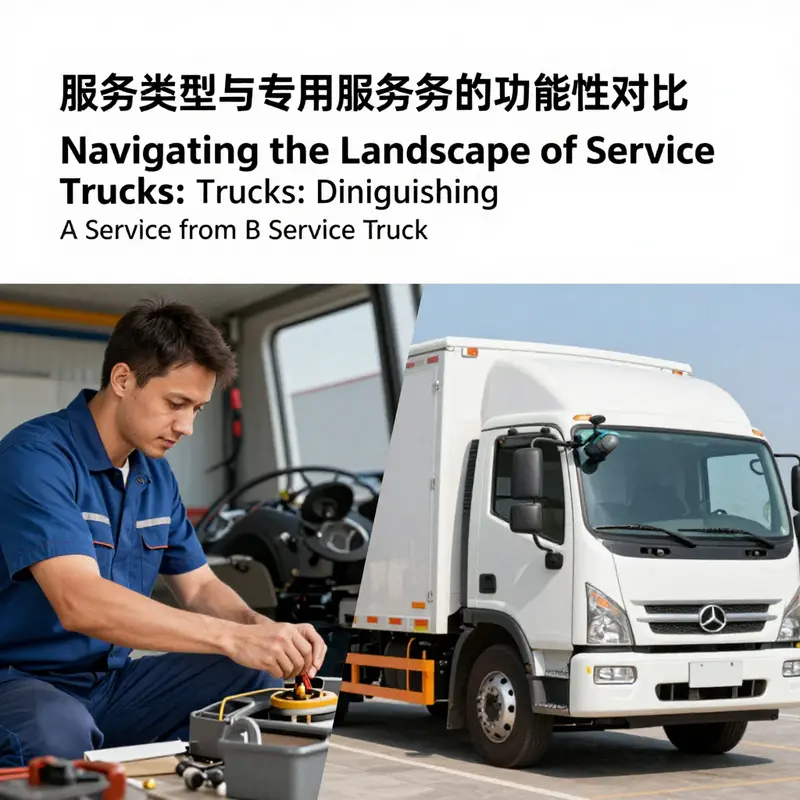
Understanding the difference between an abstract service and a service truck is essential when comparing “a service” with “b service truck.” One term describes intent and requirement. The other describes the physical means to deliver it. A service defines outcomes, constraints, and interfaces. A service truck embodies the capabilities that make those outcomes achievable in the field. This chapter explains how service types map onto vehicle design. It shows why matching the right truck to the right service is not optional, but central to operational success.
A service can be classified by its operational characteristics. Some services are connection-oriented, requiring continuous monitoring, control, or communication. Others are time-bound tasks that demand high throughput or precise handling. Still others require on-site transformation of materials, or integrated action that merges transport with active work. Each classification carries implications for vehicle engineering, equipment selection, and operational processes. A service truck is not a generic cargo box. It is a system engineered to meet the service’s functional needs, safety rules, and logistic constraints.
Connection-oriented services are characterized by persistent requirements. Examples include hazardous materials transport, live systems repair, and critical infrastructure maintenance. These services demand stability, traceability, and safety. Vehicles supporting them must integrate containment systems, redundant monitoring, and fail-safe controls. Consider a truck that carries regulated liquids. The vehicle needs specialized tanks, valves that prevent overpressure, and sensors that track temperature and pressure continuously. Telemetry and remote alerts become part of the vehicle’s architecture. In essence, the truck supports the service’s connectivity needs by maintaining continuous oversight and ensuring regulatory compliance.
Time-bound and process-critical services impose different demands. Transporting wet concrete or moving freshly mixed asphalt are time-sensitive tasks. The service requires material properties to be preserved during transit. Trucks for these services combine transport and active process control. For example, a drum mixer truck rotates continuously to prevent material setting. Its drive systems, rotational controls, and maintenance schedules are all designed around a single operational parameter: timely delivery with preserved quality. Here the vehicle acts as an active service element, not only a carrier.
Some services are best met by integrated, multifunctional vehicles. Construction sites, disaster response, and public works often need rapid deployment of tools and power along with transport. Trucks that pair cranes, pumps, or lifting platforms with cargo capacity allow teams to perform assembly, unloading, and first-response tasks without waiting for additional equipment. This one-truck-multiple-functions approach reduces cycle time, simplifies logistics, and enhances flexibility. However, it also increases design complexity, weight distribution concerns, and maintenance requirements. The engineering must reconcile competing needs: mobility, payload, stability, and the power to run auxiliary systems.
Design implications for service trucks follow naturally from service type. Chassis selection hinges on payload and terrain. A heavier duty chassis is needed for high-mass superstructures or for vehicles that must carry both equipment and liquid cargo. Suspension and braking systems are chosen with the service in mind; precision-stopping for hazardous loads, or off-road capability for field repairs, will change component choices. The superstructure, often called the body, is the physical expression of the service. It integrates compartments, containment features, tool mounts, and work platforms. Electrical and hydraulic power systems must be sized for the worst-case duty cycle.
Safety and compliance are core requirements for many services. Vehicles that support regulated services must include containment, secondary spill controls, grounding and bonding for flammable liquids, and documented inspection points. For live-line electrical work, trucks incorporate insulated platforms and isolation systems. Fire suppression, emergency cut-offs, and remote shutdown controls are common on vehicles that operate near volatile materials. Documentation and traceability — logbooks, sensor records, and tamper-evident seals — support both operational safety and legal compliance.
Operational efficiency benefits from a systematic approach to modularity and standardization. Standardized interfaces and modular bodies speed up repair and reconfiguration. They also support fleet scaling for organizations with similar service needs across multiple sites. Modularity reduces downtime: a damaged module can be swapped quickly, allowing the vehicle to return to service. Standardization, meanwhile, simplifies training and spare parts logistics. It aligns procurement with lifecycle cost management and reduces variability across a fleet.
Customization remains important, however. Many services are niche or site-specific. The balance between off-the-shelf modules and bespoke engineering depends on the frequency of unique tasks, regulatory variance, and economic trade-offs. Over-customization raises costs and complicates maintenance. Under-customization risks poor performance or unsafe operations. A pragmatic procurement strategy evaluates expected duty cycles, regulatory demands, and the cost of downtime. The goal is a vehicle configuration that reliably meets the service requirement while minimizing long-term total cost of ownership.
Maintenance and skill requirements reflect the truck’s role in the service. A truck that houses power hydraulics, rotating drums, or hazardous-material handling systems demands more rigorous preventive maintenance. Technicians require cross-disciplinary skills. They must understand vehicle mechanics, hydraulic systems, instrumentation, and the service-specific equipment. Training programs and spare parts inventories must therefore be aligned with the truck’s functional profile. In many operations, the difference between a well-matched truck and a poorly matched one is not only in acquisition cost but in lifecycle availability and reliability.
Procurement and lifecycle planning should treat the truck as a service-enabling asset. Decision-makers must ask which aspects of the service can be improved by vehicle design. Questions include: Does the service need real-time telemetry? Are containment and safety systems mandatory? Will the truck be a mobile workstation? The answers shape specifications for chassis class, auxiliary power, structural reinforcement, and human factors like access and ergonomics. Thinking in terms of service outcomes helps avoid the trap of choosing trucks by nominal body type alone.
Emergency and critical-response applications provide a useful lens. Vehicles configured for rapid response must balance speed, equipment readiness, and crew safety. Design choices in those contexts illustrate the service-to-truck mapping clearly. Systems that prioritize quick deployment, on-board power, and integrated tool storage directly reflect the response service’s priorities. For a deeper look at how design choices improve emergency operations, see Design Efficiency in Emergency Services.
Ultimately, comparing “a service” with “b service truck” becomes a comparison of requirement to realization. A service describes what must be achieved. A service truck describes how it will be achieved in practice. The better the alignment between the two, the higher the service reliability, safety, and efficiency. Organizations that explicitly map service characteristics to vehicle capabilities consistently get better operational outcomes. That mapping drives specifications, procurement, training, and maintenance across the vehicle lifecycle.
External reference:
- 涨知识!这些需求要“专车”专用,解放带你了解这些专用卡车产品 – https://www.sohu.com/a/523456789_123456
Putting Service on Wheels: Transforming an ‘a service’ into a High‑Performance ‘b service truck’
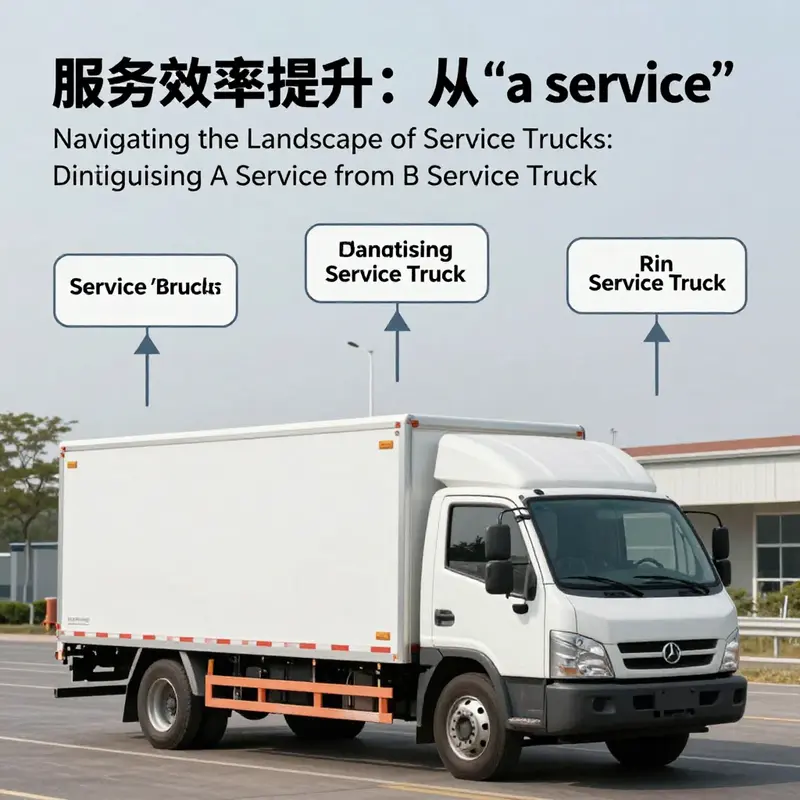
When people compare an abstract “a service” with a “b service truck,” they are often comparing two different layers of the same problem. One is a goal, a capability, or a packaged task. The other is a physical platform that makes that goal achievable in the field. Framing the difference this way helps managers and engineers shift from asking which is better, to asking how to match the right vehicle to the service need.
A service, in its purest form, is an outcome: restore power, deliver fuel, tow a disabled vehicle, or inspect infrastructure. A service truck is the engineered tool that carries people, power, spare parts, tools, and digital systems to deliver that outcome directly where it is needed. The transformation from an “a service” mindset to a “b service truck” mindset is not merely about buying a different chassis. It is about rethinking how the service is packaged, transported, and executed as an integrated system.
Start with the tasks that define the service. Break down each step into time, location, and resource needs. Which tasks require specialized tools? Which require confined-space access, lifting capability, or immediate onboard power? Which tasks are time-sensitive and need a rapid response? Answering these clarifies whether the vehicle must be a mobile toolbox, a mobile workshop, a fuel storage unit, or a communication and command center. From there, design choices become targeted. For example, a vehicle that supports complex repairs needs secure storage, a stable workbench, and onboard diagnostics. A vehicle supporting fuel logistics needs safe containment, metering, and secure fueling ports. In all cases, the vehicle’s role is to eliminate friction between the service demand and the technician’s ability to deliver.
Designing a service truck also means standardizing where possible. Standardization reduces training time and spare-part inventories. Fleet managers who adopt modular, repeatable platform choices benefit from economies of scale. Standardized electrical interfaces, mounting rails, and safety systems make it easier to reconfigure trucks for different seasons or special projects. Standardization also accelerates procurement cycles and simplifies maintenance scheduling. For organizations that operate mixed fleets, discovering the benefits of standardizing service fleets can be a turning point in operational efficiency. benefits of standardizing fire truck fleets
Modularity matters. A modular service truck uses interchangeable modules for power generation, lifting, storage, and communications. When a new need emerges, the fleet can adapt without scrapping entire vehicles. Modularity also supports tiered service models. A basic unit can handle routine inspections. A modular upgrade converts the same platform into a high-capacity repair vehicle for complex failures. This approach blurs the line between “A-type” and “B-type” service vehicles. Instead of fixed categories, the fleet becomes a palette of configurable resources.
Integration of digital systems is another decisive factor. Modern service trucks are not just boxes on wheels. They are nodes in a network. Telematics, remote diagnostics, inventory tracking, and real-time dispatch interfaces change how crews work. When a truck carries the right sensors and communications gear, it can arrive with the exact part and tooling needed. Downtime from wrong parts or missing tools falls dramatically. Data from the truck also improves preventive maintenance, reducing emergency callouts and improving uptime.
Operational processes must change alongside vehicle design. A high-performing service truck is most effective when paired with streamlined workflows. Booking, dispatching, parts allocation, and crew training are all part of the system. For example, a port that switches from manual gate processing to a mobile, ticketing-enabled system compresses transaction times from hours to minutes. The truck becomes an extension of that system, carrying identity verification tools, mobile printers, and payment terminals. The physical presence of the truck removes steps from the customer journey and shortens the reaction loop.
Training and human factors are essential. A capability-rich truck increases complexity for crews. Well-designed interfaces and consistent layouts reduce cognitive load. Labeling, standardized tool placement, and quick-start guides can cut search time and procedural errors. Cross-training teams to operate modular components expands flexibility. Investing in tailored maintenance and operational training ensures crew confidence with the platform. This reduces human error and accelerates problem resolution in the field.
Safety and compliance are non-negotiable. Service trucks often operate where hazards are present: high voltage, flammable materials, confined spaces, and moving traffic. Designing safety into the vehicle reduces risk and liability. Features like secure tie-offs, fire suppression systems, proper ventilation for hazardous vapors, and clearly separated storage for tools and consumables matter. Compliance with national and industry standards frames those design choices. Robust safety systems protect people, protect the vehicle, and protect mission continuity.
Cost considerations must be reframed. Buying a more capable service truck often looks expensive on a per-vehicle basis. But when the truck reduces repeat callouts, speeds up service completion, and extends first-time-fix rates, the total cost of service falls. Evaluate investments by lifecycle metrics: uptime gained, travel and logistics savings, reduced inventory carrying costs, and improved throughput. When the truck is a mobile extension of a service model, returns accrue in lower operational friction and higher customer satisfaction.
Finally, review procurement strategy. Work with suppliers who understand modular design and who offer configurable bodies. Insist on serviceability and long-term parts support. Specify telemetry and spare-part kits as part of the purchase package. Consider community-driven procurement strategies when multiple agencies share similar needs. Shared specifications and pooled purchasing can lower unit costs while keeping customization where it matters.
The shift from an “a service” viewpoint to a “b service truck” perspective matters because it turns service delivery into a systems challenge. The vehicle is not a passive conveyance. It is an active enabler that combines mechanical, electrical, and information systems into a single purpose-built instrument. Successful fleets treat trucks as technology assets, maintain them like critical infrastructure, and train teams to think in terms of integrated solutions rather than isolated tasks.
This perspective unlocks real improvements. Faster response times, higher first-time-fix rates, lower operating costs, and safer field operations are all achievable. The process requires clear definitions of service outcomes, disciplined modular design, integrated digital systems, focused training, and procurement aligned with long-term operational goals. When those elements align, the transformation from abstract service to high-performance service truck is no longer aspirational. It becomes the operational standard.
For further insight into how integrating intelligence and process redesign reduces service times and improves financial flows, see a detailed transformation case study from an industry research institute. https://www.ibm.com/thought-leadership/institute-for-business-value/insights/tricon-steamship-agency-ai-transformation
Standardization and Seriesization: Bridging A Service Goals and B Service Truck Capabilities
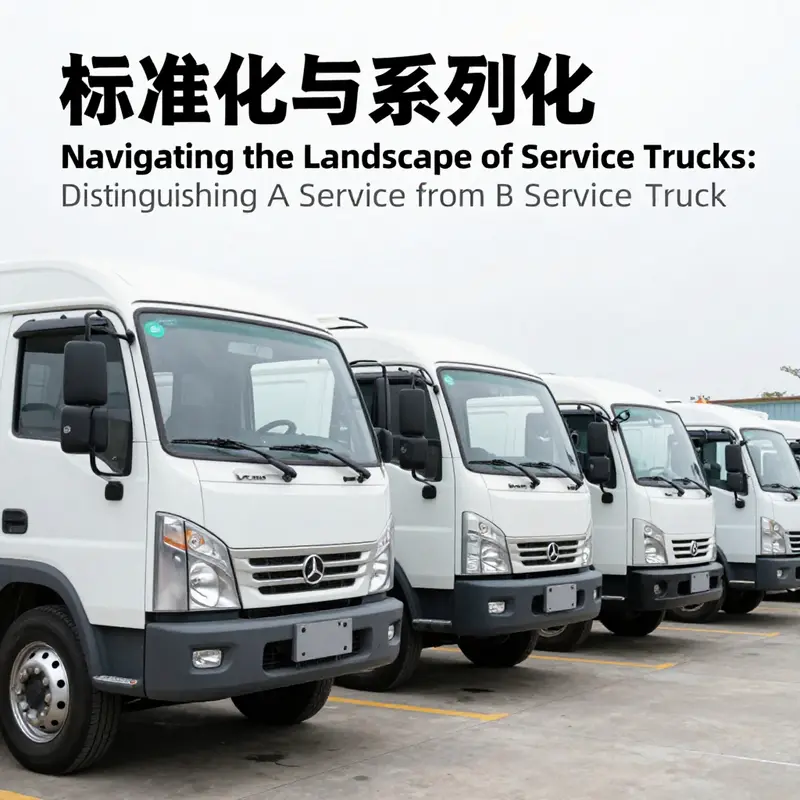
在衡量“a service”与“b service truck”时,标准化与系列化并非抽象口号。它们是将目标性服务(A 服务)转化为可复制、可交付的现场能力(B 服务卡车)的关键工程。这一章围绕如何通过统一规范、模块化设计与数字化接口,消除服务与载体之间的信息与功能鸿沟。讨论既涵盖物流履约,也触及车辆安全与智能交通系统,目的是展示一套可操作的路径,让决策者、车队运营方与工程团队能对齐期望,缩短响应时间并降低总体拥有成本。
为什么要把重点放在标准化和系列化上?简单来说,A 服务代表目标与流程,B 服务卡车代表实现目标的物理与技术平台。当服务被抽象为一套可测量的交付要素(时间、可靠性、安全、可追踪性),卡车与其上装就必须以可重复的方式满足这些要素。标准化为此提供共同语言:定义接口、尺寸、数据协议和安全边界;系列化将这些定义转化为一组互换的模块与车型,便于快速配置和规模化生产。
在物流与货运服务领域,标准化直接影响每一个节点的效率。统一的托盘和装载规格降低了装卸时间,并减少了损耗。流程标准化结合数字化工具,使询价、配载、发货与结算链路可追溯且可自动化。通过将常见任务分解为标准作业单元,运营方能把复杂的现场判断转交给算法与模板。结果是服务从“由个人经验驱动”转向“由数据与规则驱动”,响应速度更快,出错概率更低,同时也便于通过培训进行规模化复制。
对B服务卡车而言,系列化带来直接经济与运维优势。采用共有底盘、标准化上装接口与统一电气架构,可以在多个车型间共享零部件与维修流程。维修团队只需掌握一套诊断流程,就能覆盖不同用途的车辆。相同的部件池减少了库存占用,并缩短维修等待时间。对于采购方来说,系列化车型也降低了招标复杂性,使评估和比较变得更透明。
标准化还为智能化升级铺路。车辆安全与智能交通服务要求多个系统无缝协同。若底层硬件、通信协议和数据格式各异,系统集成的成本将呈指数增长。统一的数据接口与通信规范,使得远程诊断、OTA(空中下载)更新和车路协同能在不同厂商与不同车系之间流转。这样的可组合性不仅提升了单车能力,还为跨企业协作和区域级调度提供了现实基础。
系列化与模块化设计也促进了灵活配置。面对不同任务,车队可以基于标准化模块快速重构车辆功能。比如把通用底盘配备为巡检车或救援车,仅需替换或增加标准化上装组件即可完成转换。相比传统定制改装,这种方法大幅缩短交付周期,并降低定制化带来的长期维护负担。
在治理与合规层面,标准化简化了监管和风险控制。统一的安全规范和测试方法便于监管机构制定准入门槛,减少地方差异对跨区域运营的阻碍。同时,标准化的记录与追踪机制为质量回溯与事故分析提供了可证明的证据链,有助于责任认定与改进闭环的形成。
标准化并非要消灭创新。相反,标准为创新设定边界,使其在可控范围内发挥更大价值。开放的标准接口鼓励第三方生态发展。软件与硬件供应商能够基于标准化平台快速推出增值服务,从而形成健康的供应链经济。对车队运营者而言,这意味着能在不牺牲互操作性的前提下,引入新功能或新供应商。
要实现上述优势,需要一套系统性举措。首先,制定覆盖机械、电气與数据的分层标准。其次,在产品开发与采购中采用模块化、可替换部件策略。第三,建立统一的数据治理与通信协议,确保车端、云端与调度端的数据能互通。第四,推动行业内的联合测试与认证计划,减少各自为政带来的重复成本。最后,通过培训与手册,把标准转化为操作习惯与维护流程。
实践中,物流履约与智能交通的标准化路径已有初步成果。托盘循环体系和运输过程电子化,已经在多个区域降低了“最后一公里”的摩擦。车辆服务领域通过数字化方法,开始把合规与安全内嵌到服务流程中。这些变革说明:当A 服务的性能指标与B 服务卡车的能力被共同纳入标准体系时,整个服务链条能实现跨组织的协同优化。
需要指出的是,标准化是一场长期工程。标准不可避免地落后于最新技术,但这并不削弱其价值。正确的策略是保持标准的可扩展性,允许在既有框架下进行技术迭代。此外,政策与行业协会的推动至关重要。通过联合试点与逐步推广,可以把标准从部分样板推广到行业主流。
在决策层面,采纳标准化与系列化意味着把眼光从单次交付转向生命周期管理。评估的指标应从单车售价扩展到全生命周期成本、可用率与升级能力。只有这样,A服务的质量要求与B服务卡车的设计目标,才能在长期运维中实现真正对齐。
整体来看,标准化与系列化是连接服务愿景与现场执行的桥梁。它们让抽象的服务目标变得可测、可买和可维护。对于希望在效率、成本和可靠性之间取得平衡的组织而言,投入标准化体系与系列化产品线是最直接的路径。更多关于车队标准化带来的具体好处,可参见”Benefits of Standardizing Fire Truck Fleets”。
进一步的技术与规范背景,可参考国际标准化组织发布的相关指南,了解如何以数字化方法实现高质量服务。 (外部参考: https://www.iso.org/standard/91234.html)
Final thoughts
Understanding the differences and interrelated functions of ‘a service’ and ‘b service truck’ is essential for all trucking professionals. It allows for better decision-making regarding fleet composition and service strategies, ultimately leading to enhanced operational effectiveness. As the industry moves towards greater standardization, embracing both the abstract service functions and the concrete functionalities of specialized trucks will be key to navigating future challenges.