

Maintaining a Rivian truck requires understanding the best options available to ensure it’s in peak condition. As electric vehicles, Rivians come with unique service requirements that differ from traditional trucks. This guide serves as a resource for long-haul truck drivers, trucking company owners, fleet managers, and maintenance specialists, laying out your choices clearly. We will explore Rivian service centers, mobile service options, authorized repair shops, and how to leverage the Rivian app to manage your truck’s maintenance effectively. By the end, you’ll understand where to go for service, ensuring you can keep your Rivian performing at its best.
Rivian Service Centers and Beyond: A Practical Map to Servicing Your Electric Truck
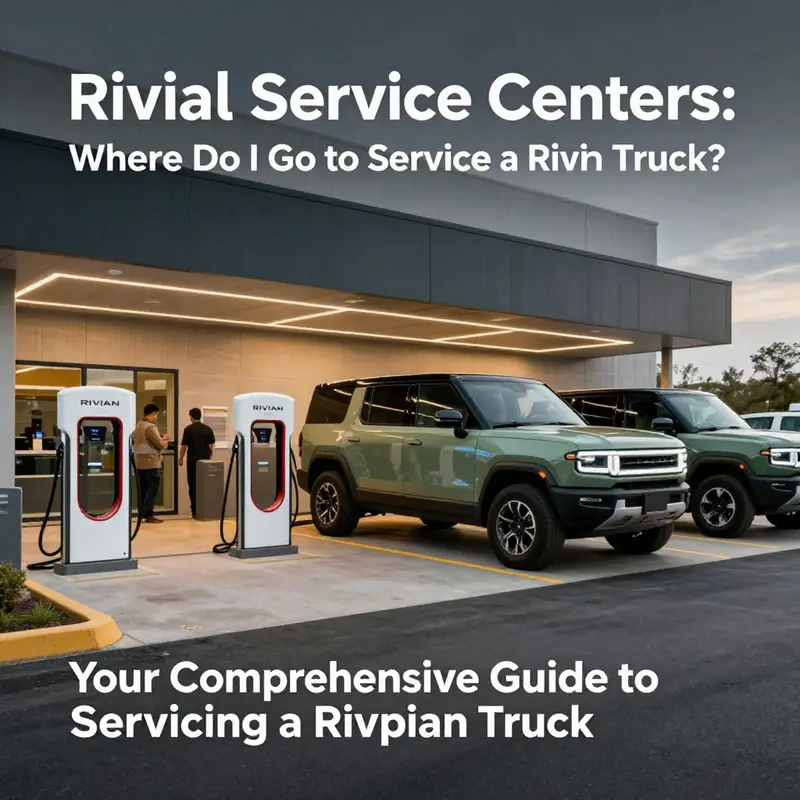
When you own a Rivian truck, the question of where to service it goes beyond a simple fetch-and-fix. The company built a service ecosystem designed to accommodate the realities of an electric vehicle with sophisticated software, high-voltage systems, and a growing set of hardware and software options. The short answer is that you have multiple reliable routes, each suited to different kinds of upkeep or repair, and each with its own rhythm of scheduling, travel, and turnaround. The longer answer lies in understanding how Rivian’s service network is structured, how to access it, and how to decide which path to take when a maintenance task or a repair needs doing. At the center of it all is a user-friendly flow that starts with the Rivian app and the official service portal, then branches into mobile service, service centers, and authorized repair partnerships. This arrangement aims to minimize downtime, protect battery health, and ensure that software and safety protocols stay current as the vehicle ages and software evolves.
For many drivers, the first question is where to begin. Rivian has built a network of authorized service centers across the United States and in select international markets. These centers are staffed with technicians who are trained specifically on Rivian vehicles, with access to the vehicle’s diagnostic systems, software tools, and genuine parts. When a repair requires hands-on attention to the battery pack, high-voltage components, or other systems that demand specialized equipment, the service center becomes the default option. If a repair or routine maintenance can be safely and effectively completed on-site, Rivian’s mobile service comes into play, bringing a trained technician to your home or workplace. The goal is simple: cut down downtime and make service as convenient as possible without compromising safety or quality.
To locate the nearest service option, start with the official Rivian service portal. The site offers a Find a Service Center tool that lets you search by zip code or city, returning a list of nearby locations, their hours, and the services they typically provide. Because Rivian trucks are electric and rely on a sophisticated software stack, some tasks are better suited to a fixed location with the full suite of diagnostic tools, while others can be handled with the mobile team that comes to you. The portal also serves as a scheduling hub, where you can initiate a service request, describe the issue, and attach any photos or data that might help the technician prepare. The integration of diagnostics, scheduling, and history tracking through the Rivian app keeps all of this information in one place so you don’t have to juggle multiple contact points. The app’s real-time vehicle status, remote diagnostics, and direct line to support agents create a streamlined experience that respects your time and your vehicle’s sensitive systems.
In practice, the mobile service option has become a cornerstone of Rivian’s value proposition for many owners. A technician trained on Rivian vehicles will come to your home or office to perform routine maintenance or minor repairs. Common mobile-service tasks include tire rotations, routine software updates, basic diagnostics, and preventive maintenance that doesn’t require intrusive disassembly or the removal of major components. The ability to schedule these visits through the Rivian app or the service portal means you can minimize downtime by fitting maintenance into your workday or weekend plans. Yet mobile service does have its boundaries. If the issue involves a component that requires specialized tools, a controlled environment, or access to a broader parts inventory, it’s typically routed to a Rivian Service Center. For example, a battery health assessment that reveals a necessary firmware reconfiguration or a hardware replacement beyond routine software can still be handled at a center with the proper tools and safety protocols.
If the problem is more complex—or if you anticipate a longer service window—the Rivian Service Centers are prepared to handle the wide spectrum of needs a Rivian truck may present. These centers function not only as repair hubs but also as facilities for new-vehicle deliveries, accessory installation, and in-depth service tasks that demand more space or specialized equipment. The centers act as the backbone of the service network, ensuring that major software updates, battery-related work, and component-level repairs are executed with the highest levels of safety and precision. When you bring the vehicle to a service center, you’ll typically engage with a service advisor who coordinates the diagnostic work, parts availability, and the schedule for any required follow-up. The center environment also supports more extensive testing, calibration, and quality checks that help ensure the vehicle leaves with everything aligned to Rivian’s specifications.
Alongside the service centers and mobile visits, Rivian maintains authorized repair shops in certain regions. These shops operate with Rivian-approved certifications and have access to the necessary diagnostic tools and parts to service Rivian vehicles. The authorization status matters: it ensures that the shop is recognized to perform Rivian-specific work and to handle software and hardware in a way that preserves warranty integrity and safety standards. Not every area will have an authorized shop, and the scope of work available at an authorized shop may differ from what a dedicated Rivian service center can offer. If your issue falls into a gray area—needing professional diagnostics but not necessarily a full disassembly—the advising technician can guide you to the most appropriate option within the network. The emphasis remains consistent: use official channels to ensure that your high-voltage systems, battery health, and software updates are handled properly and safely.
To connect these pathways, the Rivian app and the service portal act as the hub for communication and scheduling. The app isn’t just a status monitor; it’s a practical tool for live data and appointment management. With it, you can view real-time diagnostics, request service, check on the status of current work, and review your vehicle’s service history. This digital backbone is especially valuable given Rivian’s reliance on software-driven features and periodic over-the-air updates that can shape performance and reliability. By centralizing access through the app, Rivian reduces the friction owners experience when something needs attention, making the right path—mobile, center, or authorized shop—relatively clear. If you’re new to this ecosystem, a quick tour of the app’s service section will reveal how to initiate a service visit, share relevant vehicle data, and track progress from start to finish.
An extra layer of context helps illustrate the ecosystem’s practical texture. Some drivers use the Experience Centers not for servicing, but for demonstrations, test drives, and educational sessions about Rivian technologies. These centers aren’t service hubs in the traditional sense, but they are part of the broader network that informs customers about how to care for their vehicle and stay current with upgrades. When you think about servicing your Rivian truck, it’s useful to picture a map that links three primary nodes: mobile service for routine and convenient maintenance, service centers for more involved repairs or installations, and authorized repair shops for specific cases where the full Rivian diagnostic suite is still required but a dedicated center isn’t necessary. Each node is designed to protect battery health, ensure software integrity, and maintain safety standards that are uniquely critical for electric vehicles. This makes it less a single location decision and more a choice among well-coordinated, safety-conscious options.
For the curious reader who wants to explore broader maintenance perspectives beyond Rivian’s specific framework, there are cross-industry resources that discuss how maintenance and uptime are managed in other large, high-tech vehicle ecosystems. For broader maintenance training considerations, see fire-truck-maintenance-service-training. fire-truck-maintenance-service-training. While the domain is different, the underlying principle—structured, technician-led maintenance programs designed to protect critical systems—resonates with Rivian’s approach to service. The intention here is not to draw a direct parallel between fire apparatus and consumer Rivian trucks, but to acknowledge that robust maintenance cultures rely on trained professionals, standardized procedures, and clear channels for diagnostics and repair.
Ultimately, the most accurate and up-to-date guidance comes from Rivian’s official service portal. The toolset it provides—location-based service center search, mobile-service scheduling, and app-based diagnostics—reflects a deliberate strategy to align service delivery with the user’s day-to-day life. If you’re planning service, the practical first steps are straightforward: open the Rivian service portal or app, enter your location to find the nearest or most appropriate service option, and review the available services and estimated timeframes. From there, you can decide whether a mobile visit will suffice, or if a center visit would better position your Rivian for more comprehensive work, extended warranties, or accessory installations. In many cases, a combination approach offers the best balance of speed and depth of service. For instance, a routine software update or tire rotation can be efficiently handled by mobile service, while a battery health assessment that requires more extensive testing may be scheduled at a Rivian Service Center.
To close this practical map, remember that the longest-lasting, most reliable Rivian ownership experience rests on timely, authorized service that respects the vehicle’s high-tech systems. The service network is not a single storefront but a coordinated system designed to keep you moving with confidence. The app and portal simplify the process, the mobile service brings efficiency to your doorstep, and the service centers provide the depth of support necessary for the more demanding or complex interventions. And if you ever need a broader perspective on maintenance ecosystems beyond Rivian, there are resources that discuss the principles of maintenance uptime and training that can offer useful context, even if the domain differs. As the network evolves, the official Rivian service portal remains the most authoritative source for location, scope, and scheduling—so you can know exactly where to go and what to expect when your Rivian truck needs care. For the most accurate and up-to-date information, visit the official Rivian service portal: https://www.rivian.com/service.
Where to Service a Rivian Truck: A Practical, Integrated Guide to Centers, Mobile Tech, and the App
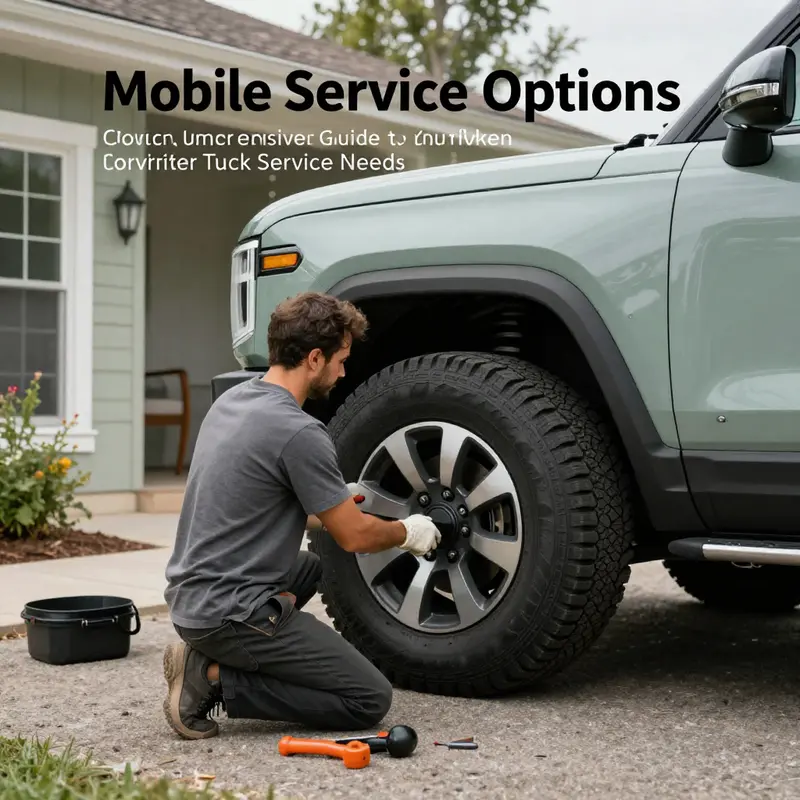
The question of where to service a Rivian truck isn’t answered by a single location, but by a carefully connected network designed to keep high‑voltage systems, software stacks, and everyday reliability in balance. Owners today don’t simply drive to a showroom for maintenance; they engage a ecosystem that blends manufacturer‑direct service centers, on‑the‑spot mobile technicians, authorized repair partners, and a suite of digital tools that keep every service action transparent and traceable. The result is not a parade of isolated options but a spectrum of entry points that can be matched to your calendar, your location, and the nature of the work at hand. This approach recognizes that an electric truck with advanced software and a battery‑centric architecture requires more than a quick fix; it demands a care cadence that preserves safety, performance, and value over time. The practical path forward begins with a map you can consult from home, in the garage, or on the road, and it grows through a series of aligned services that share a common standard of quality and safety.
For many owners, the starting point is Rivian’s own service portal. It is designed to translate the sometimes intimidating language of high‑tech vehicle care into a straightforward, location‑aware plan. By entering a zip code or city, you can see a prioritized list of nearby service centers, along with hours, contact options, and the typical scope of work offered at each site. This centralized directory is not just a directory; it’s a planning tool that helps you time a service around your schedule, anticipate parts availability, and anticipate lead times for specialized diagnostics. Because the fleet is dynamic, with new centers opening and existing ones updating capabilities, the portal functions as a living map, refreshing as the service network grows and shifts to meet demand. The logic behind it is simple: high‑voltage systems and vehicle‑level software updates benefit from proximity, predictable scheduling, and access to the full suite of official tooling and documentation that keeps the work consistent across the network.
Beyond the brick‑and‑mortar footprint, Rivian’s mobile service program brings a powerful alternative to the driveway or the office parking lot. Mobile technicians can perform many routine maintenance tasks and some diagnostics without requiring you to drive to a shop. Tire rotations, brake inspections, software updates, and basic health checks can often be completed with the vehicle in its usual spot, minimizing downtime and reducing the friction of traditional service visits. The value is clear for busy households, remote workers, and fleet operators who need to keep uptime high without repeatedly consolidating trips. Availability, however, is regionally dependent, and the app or the official scheduling portal will tell you when a mobile technician can reach your location. It’s not a universal guarantee, but where it is offered, it represents a practical evolution of vehicle care—one that respects your time and leverages a technician’s on‑site access to the vehicle’s diagnostics and software tools.
A third leg of the service stool comes from authorized repair shops. Some independent facilities hold Rivian‑specific credentials and access to repair tooling and parts through official channels. These shops can be a viable option when a nearby center isn’t convenient, provided they’re verified as certified and capable of performing the scope of work needed. The caveat here is important: not all tasks, especially those involving high‑voltage safety systems or critical software calibrations, are equally accessible to every shop. When in doubt, confirm credentials, confirm the availability of Rivian diagnostic interfaces, and confirm the process for updating software versions and recording the service history. This ensures that the work remains aligned with the manufacturer’s safety standards and your vehicle’s documented maintenance record. In regions where centers are sparse, an authorized partner can meaningfully bridge the gap between you and a comprehensive service solution, preserving the continuity of care across the network.
A thread that runs through all of these options is the app and support ecosystem Rivian provides. The app is more than a scheduling tool; it’s a diagnostic companion and a portal into your vehicle’s service history. Real‑time diagnostics can illuminate issues before they escalate, and the app can guide you toward the most appropriate service path—center, mobile visit, or partner shop. Scheduling through the app is designed to be seamless, with notifications that keep you apprised of appointment windows, expected durations, and any prerequisites for service. The ability to track service history in the cloud is a subtle but powerful feature: it means every repair, software update, and calibration is attached to the vehicle’s lifecycle, making ownership more predictable and resale‑friendly. In a system where software evolves rapidly and battery management remains central to performance, having a trusted digital record is valuable for both the owner and any future technician.
One guiding principle runs through all of this: because Rivian trucks operate with sophisticated software and high‑voltage systems, authorized channels matter. Safety protocols, battery handling, software sequencing, and calibration integrity are all safeguarded by a network designed to execute the right care in the right way. A service route that lacks the official credentialing or access to the proper diagnostic suites risks misalignment of software versions, improper recalibrations, or gaps in the maintenance history. The reliability of the vehicle—its performance, safety, and longevity—depends on selecting the route that best aligns with the job at hand, whether that be a quick mobile service, a thorough center visit, or a carefully managed repair at an authorized partner.
With that framework in mind, practical steps emerge for planning a service around a busy life. Start by cataloging the issue or maintenance item: is it routine maintenance, a tire or brake check, a software update, or a diagnostic that might reveal a deeper problem? Use the app to pull diagnostic summaries and fault codes, if any. This information gives the service team a clear starting point and reduces the back‑and‑forth that slows the process. If the issue is routine maintenance, mobile service can be a convenient option when you can’t spare time for a center visit. If the issue is a fault that touches the battery management or advanced driver assistance systems, a center visit may be more efficient, since the technicians there have broader tooling access and a controlled environment for testing and recalibration.
When you plan a service, preparation matters as much as the choice of venue. Gather your vehicle’s recent service history, current mileage, and any fault codes you’ve observed. If you’ve observed symptoms, write a concise note about when they occur and under what conditions. If you’re dealing with a recurring problem, a brief, factual narrative helps the technician establish a diagnosis quickly. For on‑site service, choose a level, quiet location with safe access to the vehicle and good lighting. For a center visit, confirm arrival instructions, the expected wait times, and any items you should bring, such as authorization numbers or insurance details if a loaner is involved. In all cases, having a clear, organized briefing saves time and keeps the vehicle on the road with minimal disruption.
Another layer to consider is the warranty landscape and recall activity that might influence your service plan. If the work falls under warranty coverage or a recall campaign, it will typically be prioritized and processed through the network in a way that minimizes downtime and ensures that needed parts or reprogramming are applied correctly. Knowing what is covered can help you decide between a quick check, a software update, and a more involved repair that could require a longer service window. This is not a bureaucratic hurdle; it is a practical means of preserving the vehicle’s safety and performance integrity while maintaining a reliable ownership experience. In practice, owners should view service as a proactive practice rather than a reactive fix: timely maintenance, properly executed, protects battery health, software stability, and overall reliability, especially for a vehicle whose technology stack continues to mature with over‑the‑air improvements.
Geography shapes how you approach service just as much as the task itself. Cities with dense service footprints tend to offer faster access to centers and a broader menu of mobile options. Rural or less‑populated areas might lean more heavily on authorized partners or scheduled mobile visits, which can still deliver high standards of care when properly credentialed. The key is to map your local options and build a preferred sequence. If travel becomes challenging, initiating a service request through the app will trigger routing logic to identify the nearest available option and to arrange pick‑up timelines, loaner arrangements if offered, and the best path to resolution. This geographic awareness helps reduce downtime and keeps essential work from becoming a bottleneck for daily routines, road trips, or work commitments.
Consistency across channels is a quiet but powerful feature of Rivian’s service ecosystem. Whether you’re visiting a center, hosting a mobile visit, or working with an authorized shop, you should expect a coherent intake process, transparent pricing for standard services, predictable turnaround expectations, and a unified service history that travels with the vehicle digitally. This consistency matters as owners scale to fleets or multi‑vehicle ownership and as the technology stack continues to evolve. A well‑designed service journey feels seamless; the complexity happens behind the scenes, while the owner experiences clear timelines and confident communication. The digital tools amplify this effect, providing proactive alerts about preventive maintenance, software update cycles, and recalls so you can plan ahead rather than react to a breakdown.
If you’re reading this chapter as part of a broader guide to owning and operating an advanced electric vehicle in a connected ecosystem, you’ll notice a shared thread. Service, in this context, is less about a single place and more about a carefully orchestrated network that respects the vehicle’s engineering and software realities. A high‑voltage platform paired with a dynamic software stack calls for a care model built around safety, traceability, and proximity—elements that help you stay productive and confident behind the wheel. The network’s design reflects this: it offers multiple entry points that align with different schedules and preferences, from the certainty of a center visit to the convenience of on‑site care. If you ever question whether a shop is truly certified to work on Rivian platforms, you can verify credentials through the app or the service portal, ensuring you’re receiving work that adheres to the manufacturer’s standards and the vehicle’s documentation.
To bring the practical thread full circle, think of maintenance as a regular rhythm rather than a crisis response. A quarterly software health check via the app, a biannual tire and brake review, and well‑timed software updates during low‑demand windows create a predictable cadence that protects performance and safety. The choice of venue—center, mobile, or partner shop—depends on your location, timing, and the task’s scope. The overarching aim remains constant: maximum uptime, consistent quality, and a service experience that respects the vehicle’s technology and your daily life. As you build this cadence, you’ll gain familiarity with the network, and the confidence that comes from knowing the right expert is available when you need it, wherever you happen to be.
For readers who want to dive deeper into the broader maintenance culture behind high‑tech fleets, a related resource discusses how trusted service networks across trucking and emergency‑vehicle fleets are built and sustained. This cross‑industry perspective can illuminate how service providers manage parts, certifications, and safety training across a spectrum of complex hardware, offering context that extends beyond a single brand. exploring-the-excellence-of-5-star-truck-inc-your-premier-trucking-solution
Finally, for direct guidance on service options and the latest capabilities, consult Rivian’s official service and mobile‑service pages. These pages provide the definitive current information on where to go, what can be done on‑site, and how to schedule visits. External resource: https://www.rivian.com/owners/mobile-service
Authorized Repair Shops: Finding Trusted Technicians to Service Your Rivian Truck

The day you buy a Rivian truck, you also gain an expectation: the vehicle will perform with a level of precision and reliability that matches the sophistication of its electric drivetrain. That expectation rests, in large part, on the people who service the truck. Because Rivian trucks rely on high-voltage systems, advanced battery management, and integrated software that controls everything from drivetrain responses to infotainment features, routine maintenance and any needed repairs require trained technicians equipped with Rivian-specific tools. This is why the topic of authorized repair shops is not merely a convenient suggestion; it is a crucial safeguard for safety, longevity, and warranty protection. When you can access a network of service centers connected to Rivian’s standards, you gain not only access to genuine parts and calibration procedures but also a level of diagnostic insight that generic shops may struggle to provide. The first objective, therefore, is to understand what counts as authorized, why it matters, and how to determine which shop in your region truly deserves that label.
Authorized Rivian service centers form the backbone of this approach. These centers are staffed by technicians who have completed Rivian-specific training and have ongoing access to the latest diagnostic tools, software updates, and parts catalogs. The emphasis here is not simply on fixing something that’s broken but on maintaining the vehicle’s complex systems in concert with Rivian’s engineering philosophy. Even routine tasks like tire rotations or software refreshes involve precise procedures to preserve software integrity, battery safety, and vehicle performance. The benefit is twofold: you receive assurances that work has been performed to the manufacturer’s exacting standards, and you help safeguard the vehicle’s warranty by choosing a shop that is recognized within Rivian’s authorized network. In practical terms, this means a smoother service experience, fewer repeat visits, and clearer communication about what was done and why it was necessary.
Locating an authorized service center is typically straightforward through Rivian’s official service portal. The provider lists centers by region and offers contact details, hours of operation, and appointment availability. While the core idea is simple, the reality of choosing among centers in a given area benefits from a quiet, deliberate approach. You want to consider the center’s proximity, but proximity cannot trump credentials. It’s worth asking the staff about the scope of work they routinely handle. Some centers do more heavy maintenance on battery cooling systems and software-intensive calibrations, while others focus on routine service intervals and mechanical checks that do not require deep software access. In every case, the important criterion is that the center remains connected to Rivian’s official diagnostic ecosystem and parts network. If a center claims to offer Rivian work but cannot demonstrate access to genuine parts or current software versions, that discrepancy should raise a red flag.
For those who live in areas where driving to a fixed site is less convenient, Rivian’s mobile service option can be a practical alternative. Mobile service brings trained technicians to your home or workplace to carry out many routine maintenance tasks and minor repairs. Tire rotations, software updates, basic diagnostics, and some sensor recalibrations can be accomplished at your location without the need for you to drive to a shop. Mobile service serves as a bridge between the convenience of home maintenance and the technical accuracy required for Rivian’s systems. Availability is region-dependent and subject to weather, road conditions, and scheduling windows, but when it is offered in your area, it can significantly reduce downtime and simplify your ownership experience. The modern EV owner learns to value flexibility, and Rivian’s mobile service is a practical example of turning a service appointment into a seamless, consumer-friendly process rather than a disruptive event.
Beyond the Rivian-branded service centers and mobile service comes the possibility of authorized third-party repair shops. These shops operate with Rivian’s blessing and have specific credentials that permit them to diagnose Rivian vehicles, access official tools, and source genuine parts. The upside is clear: you may find a nearby shop that can handle certain tasks quickly or at a lower cost than a dedicated Rivian center. The potential downside lies in the risk of inconsistent expertise, uneven tool access, or misalignment with the latest software stacks. Because Rivian’s vehicles are highly software-driven and rely on battery management systems that demand precise calibration, you should approach third-party authorization with diligence. Prior to entrusting such a shop with your truck, confirm that the shop is officially certified to work on Rivian vehicles, that it has access to Rivian-specific diagnostic tools, and that it uses Genuine Rivian Parts whenever applicable.
When you are evaluating whether a given shop qualifies as an authorized outlet, begin with the basics: verify the shop’s Rivian credentials, ask for the technician’s name and certification details, and request a list of recent Rivian vehicles they have worked on. A reliable shop will not only present credentials but will also be transparent about the tools at their disposal and the scope of work they can perform. The alignment between the shop’s capabilities and the truck’s needs is critical. Rivian vehicles are built around a high-voltage architecture; improper servicing can lead to safety risks, battery degradation, or software conflicts that ripple through the vehicle’s operating systems. For this reason, the use of official diagnostic interfaces and calibrated appliances is non-negotiable. If a shop cites generic diagnostics or recommends third-party software updates without explicit Rivian authorization, that should be a clear reason to reconsider.
A practical way to ensure you are dealing with the right kind of shop is to look for a couple of signals that are easy to verify. First, ask directly whether the center is part of Rivian’s authorized network and whether technicians have completed Rivian-specific training. Second, request to see the shop’s tool inventory and confirm that they can access the official Rivian diagnostic suite. Many times, the same vehicle can be serviced at multiple centers, but the level of assurance you get from an authorized shop is consistently higher because it comes with a framework of accountability. Third, inquire about the parts supply chain. Authorized outlets typically source Genuine Rivian Parts or approved equivalents, with clear traceability back to the manufacturer. This matters for both performance and warranty coverage. In the long run, you will save on risk, and you will have a well-documented service history that aligns with Rivian’s recommended maintenance schedule.
The service experience itself is designed to feel cohesive rather than fragmented. You should be able to schedule an appointment, communicate the issues you’re experiencing, and receive a transparent estimate that itemizes parts and labor. A good authorized shop will also offer a vehicle health snapshot after service—brief diagnostics that verify battery health, motor temperatures, charging system integrity, and software status. These snapshots become part of your service history and, over time, help you detect patterns that may indicate gradual wear or emerging vulnerabilities. The Rivian app often mobilizes this capability by providing real-time vehicle diagnostics and alerts, which can be a powerful companion to any in-person inspection. If you rely on the app, you may also be able to initiate certain service requests remotely, check technician notes, and confirm that software updates have been applied. The seamless integration of in-person and digital workflows is a hallmark of credible, customer-focused service ecosystems.
To help you navigate the field, consider a simple decision framework when you first encounter a service option in your region. Start with the center’s official status: is it within Rivian’s authorized network, and does it have access to up-to-date Rivian tools and parts? If the answer is yes, weigh proximity and appointment availability against your schedule. If the center is not within the authorized network but has credible credentials and a clear track record with Rivian work, you can still consider it, but use extra caution. Confirm that the shop’s capabilities match the repair or maintenance task at hand, and discuss warranty implications before proceeding. If the shop falls somewhere in between—saying they can do Rivian work but lacking full certification or tools—treat it as a last resort after you have exhausted the fully authorized options. In all cases, keep your vehicle’s service history organized. Documentation of maintenance dates, part numbers, and recommended service intervals is not just helpful for personal record-keeping; it also supports warranty claims and resale value.
There is a tactile reason to prefer authorization beyond the theoretical guarantees. Rivian, like many high-performance electric manufacturers, often has complex service requirements that involve software calibrations tied to vehicle configuration, region-specific charging standards, and battery management firmware. Authorized centers routinely receive software updates and calibration data that align with recent safety advisories and performance improvements. In contrast, a non-authorized shop might inadvertently apply a software patch that has not been vetted for your exact model year or region, creating a mismatch between control software and battery management logic. That misalignment can lead to reduced range, charging faults, or even safety concerns during high-load scenarios such as sustained hill climbs or rapid acceleration in cold weather. By prioritizing authorized channels, you minimize these risks and keep your Rivian in the sweet spot of its engineered capabilities.
The principle of using authorized channels also harmonizes with how you should approach battery health and preventive maintenance. The battery is the heart of the Rivian experience, and its longevity depends on careful monitoring of temperature, state of charge, and thermal management. Authorized technicians have access to diagnostic procedures that specifically assess cell balance, thermal runaway risk, cooling system integrity, and software-driven protections. Regular battery health assessments performed by a qualified technician can identify early warning signs before a problem becomes critical. This proactive stance helps you avoid unexpected downtime, preserves performance, and supports the long-term value of your investment. In the same vein, the maintenance intervals recommended by Rivian—whether for brake fluid, coolant, or software refresh cycles—are founded on testing and field data accumulated across thousands of vehicles. When these steps are performed by technicians trained in Rivian’s procedures, you can trust that you are following a tested, manufacturer-approved routine tailored to your truck’s specific configuration.
If your circumstances force you to consider a non-Rivian shop, use it as a temporary bridge rather than a long-term replacement. Schedule a limited scope service that excludes tasks requiring battery disassembly, high-voltage work, or software-level modifications unless the shop confirms formal authorization. In such cases, request a detailed work plan and an explicit statement about warranty eligibility. You should also insist on a final diagnostic check and a customer-facing report that explains what was done and why. This transparency protects you and helps maintain continuity of care across different service environments. For ongoing ownership, however, the aim remains to connect with a Rivian-authorized center or a certified third-party shop that operates within Rivian’s framework. The goal is not just to fix a symptom but to ensure the truck’s systems continue to talk to each other coherently—the battery, motor controllers, braking systems, suspension, and software features—so you experience consistent performance every time you drive.
In terms of how you actually implement this in daily life, think of the authorized shop network as a thought partner in your ownership journey. It’s not merely a place to “get the oil changed” or “have a light service performed.” It is a channel through which Rivian’s engineering intent is realized in the real world. The service relationship becomes a collaborative rhythm, where the shop not only repairs but also communicates what the vehicle is telling you through its diagnostic language. That language—visualized through the Rivian app reports and the technicians’ notes—becomes a shared understanding of your truck’s condition. When you approach service with this mindset, you are not simply reacting to issues; you are engaging in ongoing maintenance that respects the vehicle’s complexity and your own safety.
If you are seeking more information as you navigate this landscape, you can deepen your understanding of maintenance philosophies and training practices that underlie professional service work. For related insights on how maintenance training supports consistent vehicle uptime, see fire-truck-maintenance-service-training. This resource, though focused on a different fleet, highlights the core idea that ongoing education and standardized procedures are essential to keeping specialized vehicles performing at their best. You can find it at the following link: fire-truck-maintenance-service-training. (Internal link for reference.)
Ultimately, the choice to use an authorized repair shop reflects a broader commitment to responsible ownership. It is a decision that acknowledges the Rivian truck as a sophisticated machine that integrates mechanical systems with intelligent software and advanced battery technology. The right service partner can be the difference between a perfectly tuned drive and a maintenance experience that leaves you uncertain. In the end, your goal is simple: reliable performance, safety, and the confidence that every service step supports the vehicle’s design intent. By focusing on authorization, transparent communication, and the assurance of genuine parts and tools, you align your ownership with Rivian’s standards and with the long arc of the truck’s capabilities.
External resource for official service information: https://www.rivian.com/service
Where to Service Your Rivian Truck: A Clear Path Through Authorized Centers, Mobile Care, and App-Driven Maintenance
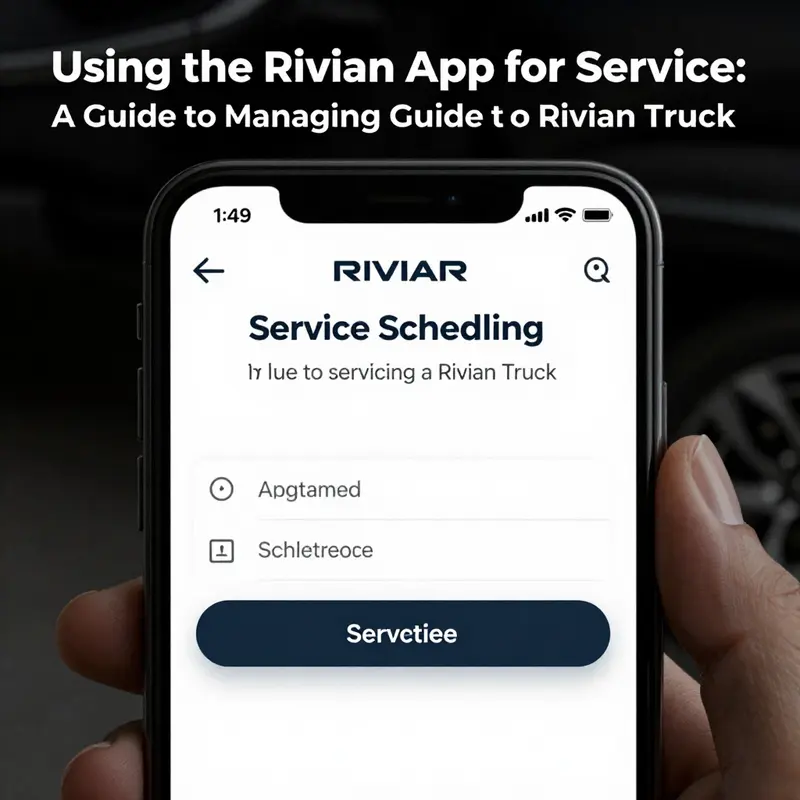
Owning a Rivian truck means embracing electric propulsion plus sophisticated software that constantly talks to the cloud and to certified technicians. When it comes to service, you have a spectrum of options that are designed to match the urgency of the issue, your location, and the level of care you want. Getting this right starts with recognizing that Rivian service is not a one size fits all proposition. It is a system built around authorized centers, flexible mobile care, and digital tools that keep you informed and in control. The core idea is simple: keep the vehicle in peak health, safeguard the battery and software systems, and minimize downtime so you can get back to your adventures with confidence.
The most straightforward route is Rivian’s own service network. Rivian operates authorized service centers across the United States and in select international markets. These centers are staffed with technicians who have been trained specifically on Rivian vehicles, with access to factory diagnostic tools, software updates, and the full lineup of Rivian parts. The guidance is consistent: if the issue is mechanical, electrical, or software related, start with an official Rivian service channel. The official Rivian service portal is the best starting point to locate the nearest center, check appointment availability, and understand service options. A quick visit to the service portal and a few clicks can yield a list of nearby centers, hours of operation, and the types of services offered. For those who prefer a hands-on approach with a clear plan, this path reduces the guesswork and aligns expectations with Rivian’s technical standards. If you’re unsure where to begin, the Rivian service portal also provides direct access to scheduling tools, service advisories, and updates on battery health and software cycles, ensuring you have a transparent view of what’s happening behind the scenes.
Beyond fixed centers, Rivian’s mobile service option brings the technicians to your location. Mobile service is designed for many routine maintenance tasks and minor repairs that don’t require a shop setting. Think tire rotations, software updates, and basic diagnostics performed at your home or workplace. This service is a practical solution for busy schedules, weather constraints, or when a trip to a center would be disruptive. Availability varies by region, so the Rivian app or the service portal will confirm whether mobile service is currently accessible where you live. When mobile service is available, you can often book a visit with the same ease you’d schedule a regular service appointment. You’ll receive a confirmation window, and the technician will come equipped with factory-grade tools and the necessary software access to complete the job. The convenience of mobile service is balanced by the scope of work; for more substantial issues, a center visit may still be preferable.
Authorized repair shops are another option in the Rivian service ecosystem. Some third-party shops have official authorization to service Rivian vehicles, which means they have access to Rivian diagnostic tools and, in some cases, Rivian parts. The key caveat is diligence: confirm the shop’s official certification and verify that they have the current tools and training required to service Rivian software and high-voltage systems. Authorized shops can reduce wait times in some regions and may provide more flexible scheduling, but it’s essential to ensure their credentials and capabilities align with Rivian’s standards. In all cases, the goal is to preserve the integrity of the battery system, the propulsion electronics, and the vehicle software so that safety, performance, and range are maintained.
While these channels define where you can go, the how of scheduling and monitoring is increasingly handled through the Rivian App and the broader support ecosystem. The Rivian App is a central nervous system for service management. It allows real-time vehicle health monitoring, proactive maintenance alerts, and direct scheduling of service visits. With the vehicle linked to your phone, you can receive timely alerts about battery status, charging efficiency, and overall performance. These alerts can help you stay ahead of problems that might otherwise become inconvenient breakdowns. The app also provides a clear window into your service history, showing what work has been done, what parts were replaced, and when future maintenance is due. This kind of traceability is invaluable for understanding how your truck behaves over time and for planning long trips where reliability is critical.
Proactive maintenance alerts are a standout feature. The app can tailor notifications to your vehicle’s mileage, usage patterns, and regional conditions. For example, it might prompt you to schedule tire rotation after a set number of miles, or remind you that a Software Over The Air update is recommended to optimize efficiency and safety features. Receiving these alerts means you’re less likely to miss routine maintenance and more likely to keep your Rivian performing at its best. The scheduling function in the app is designed for simplicity: you select the service type, pick a time that fits your day, and confirm. The app then coordinates with the chosen service channel—center, mobile, or authorized shop—so you get a unified appointment experience rather than juggling multiple platforms.
Another strength of the app is service history tracking. A consolidated timeline shows all services performed on your truck, dates, what was addressed, and what parts were used. This is not just about record-keeping; it’s about enabling informed decisions. When you notice a pattern—perhaps a recurring issue with a charging module or a software anomaly—you can reference the history to discuss the problem with service teams more effectively. Direct communication through the app with Rivian service teams further strengthens this dynamic. If you have questions or concerns about a diagnosis or recommended repairs, you can send messages through the app and receive guidance from technicians who have direct access to your vehicle’s data. This channel makes it possible to resolve questions without waiting for a call or an in-person visit, which can be especially useful when time is a factor or when you’re traveling.
For owners who want to take full advantage of the digital tools, the sequence is fairly straightforward. Start by downloading and setting up the Rivian App. Create an account or log in with your existing Rivian credentials, and then connect your vehicle to the app by following the on-screen prompts. Ensuring the vehicle is on and within range is a critical step for real-time data to flow. Once connected, navigate to the vehicle health section to view current alerts and performance metrics. If service is needed, the services section in the app offers a straightforward option to Schedule Service. Here you can select the type of service, whether a center visit, a mobile visit, or an authorized repair shop, and pick a time that aligns with your schedule. After the appointment is confirmed, you can revisit the service history area to review what has been completed and to keep a running record for future reference.
Using the Rivian App also means you have a direct line to service teams if additional questions arise. This two-way communication channel helps owners understand the reason for a recommended service, the expected duration, and any special preparation needed before the technician arrives. The app is designed not only to streamline scheduling but to demystify the service process. It allows you to stay engaged with the health of your truck, respond to alerts promptly, and participate in a conversation with experts who understand Rivian software and hardware intimately. The combination of real-time data, proactive alerts, appointment scheduling, and transparent service history creates a holistic maintenance experience that is uniquely suited to electric vehicles with sophisticated software ecosystems.
To make the most of these tools, start by choosing the path that fits your situation. If you live near a Rivian Service Center and need comprehensive diagnostics, a full software refresh, or a battery health assessment, a center visit is often the cleanest route. If you’re juggling a busy schedule or the issue is minor, mobile service can save time and avoid driving. If you’re in a location where a certified authorized shop is available and can handle the task, that can be a practical option. In all scenarios, the Rivian App should be your companion because it centralizes diagnostics, scheduling, and history, and it connects you with people who know Rivian vehicles inside out. The goal is to maintain uptime and preserve the experience of owning an electric pickup that is as dependable as it is delightful to drive.
For those who want a quick reference to where to begin, consider this practical approach. Start by accessing the Rivian service portal to locate centers near you and to understand the available service formats in your region. From there, if your situation allows, you can leverage mobile service to minimize disruption to your daily life. If you encounter a limitation—perhaps a service item that requires a specialized facility or a part that needs to be ordered—your app will help you coordinate with the appropriate channel, and the service history will ensure continuity across visits. This integrated ecosystem is designed to keep your Rivian truck performing at its best while simplifying what can otherwise feel like a logistics challenge. In short, the path to service is layered but coherent: use official channels for major work, leverage mobile and certified shops for convenience, and let the Rivian App guide you through diagnostics, scheduling, and history so you stay informed every mile of the way.
When you consider the future of Rivian maintenance, it’s worth appreciating how software updates, OTA improvements, and battery management interactions shape service needs. OTA updates can address performance and safety without a trip to a center, while battery health checks can be prioritized through app-driven reminders and proactive scheduling. The combination of physical service and digital oversight makes it possible to extend the life of your truck and maximize its utility for long road trips, work days, and off-road adventures. The ecosystem is designed so that you don’t have to choose between convenience and thorough care; you can have both by selecting the right service channel for the moment and keeping the vehicle’s health data in your pocket.
To sum up, the question of where to service your Rivian truck is best answered by recognizing a tiered, interoperable system. Official Rivian Service Centers provide the highest level of factory support and diagnostic access. Mobile service offers convenience for many routine needs. Authorized repair shops can extend coverage in certain regions while maintaining Rivian standards. The Rivian App then knits these options together, delivering real-time health data, proactive alerts, seamless scheduling, and a complete service history. This approach reduces downtime, preserves battery integrity, and keeps your Rivian running at its best as you pursue the next mile of your electric journey. For a quick start, you can consult the Rivian service portal to locate centers and verify available options in your area. As you rely on the app more, you’ll find that service management becomes less of a chore and more of a routine part of owning a modern, software-defined vehicle.
External resource: https://apps.apple.com/app/rivian/id1564732893
Internal link: For up-to-date center locations and service options, see the Rivian official service portal with a focus on finding a service center near you.
Final thoughts
As a Rivian truck owner or operator, utilizing the right service channels is crucial for optimal performance and longevity of your vehicle. Whether you choose to visit an authorized service center, opt for convenient mobile service, rely on trusted authorized repair shops, or make use of the Rivian app for scheduling and diagnostics, each option holds unique advantages. By being informed about these services, you ensure that your Rivian truck remains in top shape, navigating the roads with efficiency and confidence. Remember, investing in proper service is investing in your truck’s future.