
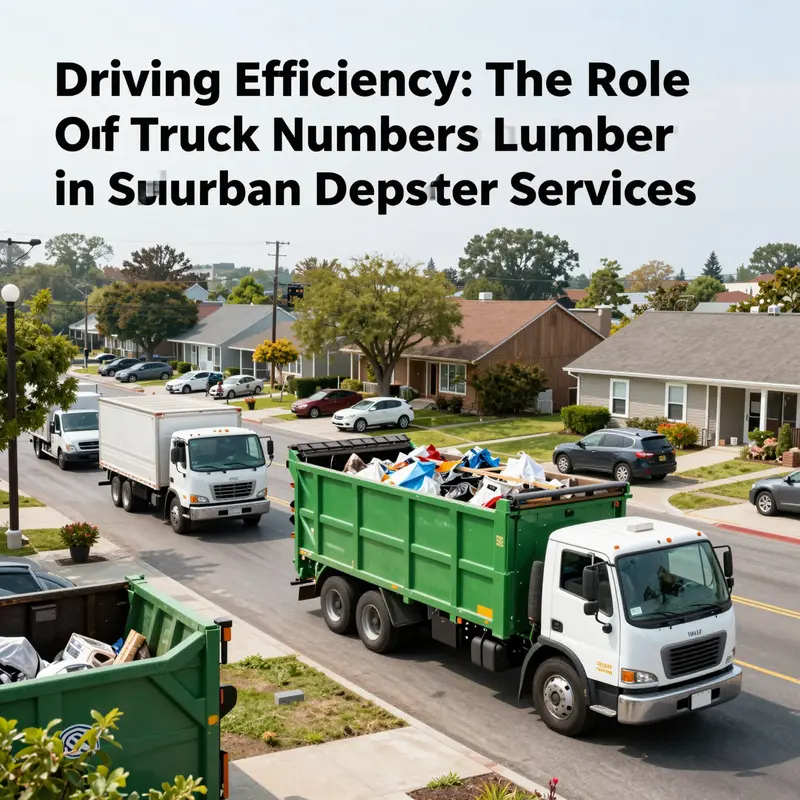
In an era where effective waste management is paramount, the number of trucks in suburban dumpster services plays a crucial role in overall operational efficiency. This article delves into the significance of truck fleets in enhancing service delivery, the impact of truck numbers on efficiency, economic considerations for fleet allocation, and emerging trends in fleet management. Each chapter meticulously breaks down these core aspects, providing valuable insights for trucking industry stakeholders, such as long-haul truck drivers, company owners, and fleet managers.
Sizing the Suburban Dumpster Fleet: How Many Trucks Keep a City Clean
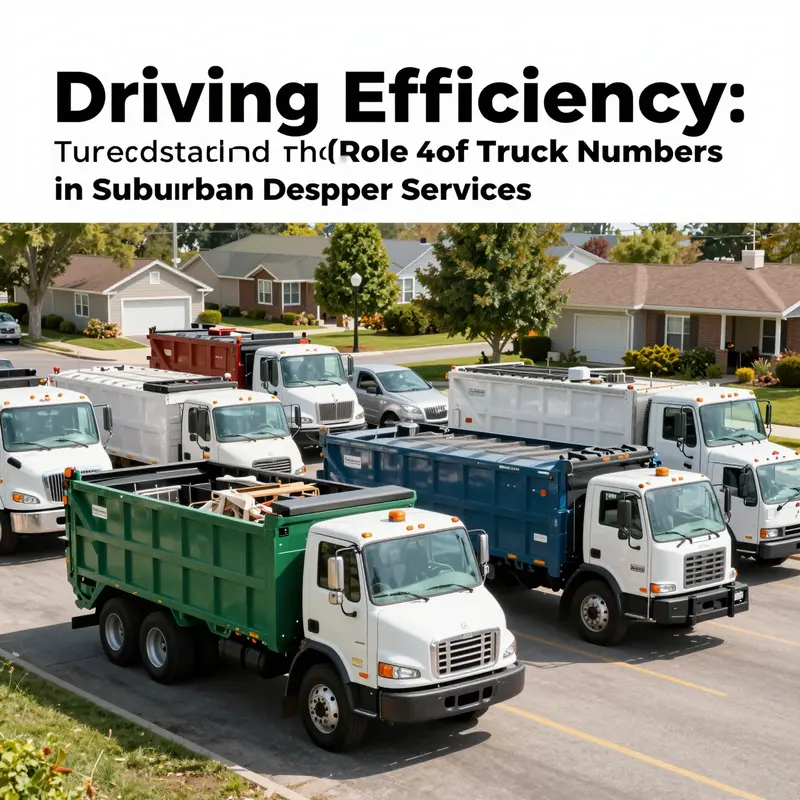
A suburban dumpster service operates at the intersection of pattern and practicality. The number of trucks a city needs can’t be read from a single chart or a headline about fleet size. It emerges from a quiet synthesis of where people live, how waste is stored, and how often collectors must visit each curb. In a suburban setting, the cadence of pickups is shaped by a spread-out geography, the prevalence of standardized bin systems, and the varying rhythms of households, small businesses, and apartment complexes. The result is a fleet that must be both nimble enough to handle diverse routes and robust enough to absorb the inevitable interruptions that come with weather, traffic, and maintenance. To understand why the truck count matters, it helps to imagine the service as a living system that balances supply and demand across a broad landscape, rather than a fixed machine that performs a single task on a predictable schedule.
The core question—how many trucks are needed?—unfolds through several layers. First, there is the demand layer: how much waste is produced, how it is generated, and how frequently it must be collected. Suburban areas often exhibit a mix of waste streams, with single-family homes generating one profile and multifamily buildings contributing another. The service must accommodate both, without allowing any one segment to fall behind. Then comes the capacity layer: what can a truck deliver on a given workday? This capacity is dictated not just by the volume a truck can haul, but by the time spent loading, traveling between stops, and dumping. It depends on bin types, street layout, and the time windows allowed by local regulations. Finally, there is a resilience layer. Real-world operations must account for days when schedules slip due to traffic, holidays, or weather, and for routine maintenance that reduces available vehicles. Housing density, street geometry, and bin placement all modulate these layers, creating a fleet that is rarely identical from one suburb to the next.
In urban cores, fleets lean on high-intensity, rapid-fire collection. The trucks that dominate city streets are designed for speed, with compact footprints and quick turnarounds. In suburban neighborhoods, the pattern shifts. Wide streets, cul-de-sacs, and driveways that back onto main roads create a different tempo. Bins may be standardized and curbside collection may be scheduled, but the distance between stops and the time spent maneuvering through residential layouts remain decisive. To cope with this, suburban operations lean toward a mix of vehicle types that optimize both efficiency and labor costs. Side-loaders, which automate bin pickup and emptying, excel when standardized bins are evenly spaced along routes. Rear-loaders, with their rugged reliability and straightforward mechanical systems, provide versatility for a broader mix of waste streams and setback scenarios. The combination allows the fleet to adapt to routine routes while preserving the flexibility to reallocate capacity where it is most needed. This approach underlines a critical point: the fleet is not a single instrument but a carefully tuned ensemble, designed to respond to the daily pulse of a suburban landscape.
The types of trucks employed in a suburban setting reflect this diversity. Side-loaders are efficient for routes with predictable bin placement, often found in single-family neighborhoods and well-planned multifamily complexes. They minimize labor by using automated arms to lift and empty bins with a single operator, allowing crews to cover more ground in a day. In areas with irregular bin placement or heavier mixed waste, rear-loaders provide flexibility and robustness. They handle bagged waste more readily and can navigate tight lanes where automated systems might struggle. For business districts, office parks, and industrial zones, compactors and larger rear-loaders may be used in tandem, with separate streams for recyclables and organics where regulations permit. The point is not to chase a universal template but to tailor the fleet to the specific mix of waste and the everyday geometry of streets, driveways, and loading zones.
Determining the optimal fleet size becomes a question of modeling capacity against demand with a margin for risk. A practical starting point is to quantify demand at the daily level. This involves estimating waste generated by households, institutions, and small businesses on typical weekdays and peak days. Suburban collections often operate on a weekly cadence with rest days that reflect labor rules and demand fluctuations. The next step is to translate this daily demand into required truck-hours. Each vehicle has a working hour capacity per day, constrained by route times, dwell times at stops, and the need for maintenance downtime. A simple, abstract calculation might look like this: required daily capacity equals daily waste volume divided by the per-truck daily capacity; then a safety factor is added to cover non-productive time. The resulting figure provides a baseline fleet size, which is then adjusted for seasonality, weather, and anticipated disruptions. In practice, planners adjust routes to shave travel time, cluster high-density areas, and pre-position spare vehicles to absorb sudden gaps in service. The goal is not to maximize usage of every truck every day, but to ensure reliable service with minimal overhangs, even on the busiest routes.
Fuel efficiency and maintenance costs also shape the final count. A fleet that is too large can inflate depreciation, insurance, and labor costs, while a fleet that is too small may trigger overtime, missed collections, or overly long workdays for drivers. Suburban operations benefit from a careful balance that preserves margins for routine maintenance, unexpected repairs, and the need to reallocate capacity during flurries of activity, such as after a community event or during seasonal cleaning surges. The value of this balance shows up not just in the dollars saved but in service reliability. When residents experience timely pickups and consistent service, trust in the system grows, and the perceived efficiency of public or municipal waste handling improves as well. This is particularly important in suburbs, where residents may measure performance against expectations shaped by quiet streets, predictable routines, and a desire for minimal disruption to daily life.
The resilience layer becomes especially important in suburban contexts. Weather, road work, and accidents can disrupt even well-planned routes. A contingency plan might include a small pool of spare trucks kept ready for immediate deployment, adjusted routes that can be activated on short notice, and robust maintenance schedules that prevent unexpected downtimes. The ability to reroute a day’s work or swap a few assignments without cascading delays rests on keeping enough spare capacity that disruption does not translate into missed pickups. This is where the policy and logistics of the depot matter. A nearby maintenance facility, convenient refueling arrangements, and an efficient dispatch system are all levers that influence how many trucks you need to meet service promises. In this sense, the fleet count is as much a function of operations design as it is of population size.
From a planning perspective, suburbs often benefit from a mixed fleet strategy. A blend of side-loaders for uniform curbside bins and rear-loaders for areas with more variable waste containers offers the most flexible platform for meeting diverse demand. Compactors may be introduced in high-density residential corridors or multifamily developments where waste streams are large and rigid, requiring higher containment and less frequent transport to disposal sites. The overarching aim is to align the physical and operational characteristics of the fleet with the built environment. By doing so, a suburban service can maintain a stable cycle, reduce the risk of overload on any given day, and sustain an acceptable level of performance across the entire service area.
The mathematics behind fleet sizing is not a vendor pitch or a shortcut in a planning document. It is a careful balancing act that weights the real-world geometry of streets against the time a crew spends at each stop. One can imagine a suburban route as a thread weaving through neighborhoods, schools, small shopping clusters, and local parks. The thread has tension points where it must bend, slow, or stop. The fleet size must be responsive to these tension points without becoming unnecessarily heavy or expensive. This is why a city’s suburban dumpster service counts on more than volume estimates. It relies on route optimization, data about bin distribution, and a disciplined approach to risk management. When these elements come together, the resulting fleet can absorb fluctuations in demand, remain reliable during adverse conditions, and deliver consistent service that keeps neighborhoods clean and communities satisfied.
For readers seeking a broader lens on how fleets evolve over time, the literature and industry discussions emphasize the role of adaptable planning and continuous improvement. A well-tuned suburban service treats the fleet as a dynamic asset rather than a one-time capital purchase. It recognizes that population shifts, new housing developments, and changes in waste regulations will alter the balance between demand and capacity. On this point, the suburbs are not a static canvas; they are evolving ecosystems that require ongoing calibration of vehicle types, route design, and depot logistics. Even without exact truck counts for any particular city, the principle remains clear: a successful suburban dumpster service is a thoughtfully composed ensemble, capable of delivering dependable collection while adapting to changing conditions.
In this context, it is useful to pause on the question of data availability. The precise number of trucks a given city uses is often shielded behind internal dashboards, procurement records, or municipal disclosure policies. What can be observed, however, is the pattern of decisions that leads to those numbers: the insistence on reliable service, the investment in route optimization, and the willingness to adjust the fleet composition as neighborhoods develop or change. For practitioners and policymakers, the lesson is that fleet size is a moving target anchored in local realities. The number of trucks a suburban service requires is less a fixed quantity than a strategic outcome—one that reflects how a city designs its streets, stores its waste, and schedules the rhythms of daily life. In the end, the true measure of fleet adequacy is not how many trucks sit in a yard but how effectively the yard and the street collaborate to keep communities clean, healthy, and well served.
For readers who want to explore broader perspectives on fleet management and maintenance strategies, the following resource offers relevant context and insights. 5startruckin.com/blog
External reference: https://www.example.com/waste-truck-specs
Counting the Right Trucks on the Curbs: Fleet Size, Reliability, and Cost in Suburban Dumpster Services
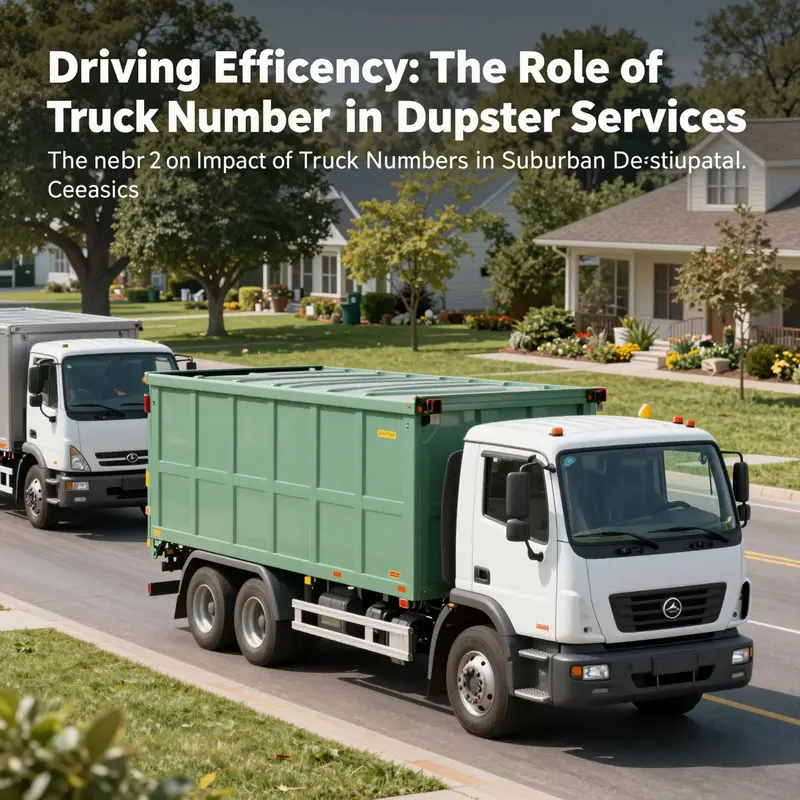
In the quiet grid of a city’s suburban outskirts, where cul-de-sacs thread between school fields and shopping centers, the rhythm of garbage collection is a quiet but essential pulse. The fleet parked along a depot curb, the tailboards lowered in the early dawn, the synchronized sweep of routes through quiet neighborhoods — these are not mere mechanics of waste removal. They are the quiet infrastructure that keeps streets clean, services predictable, and residents confident that their waste will be collected on time. Yet behind this daily rhythm lies a core question that every suburban dumpster service must answer: how many trucks should be out on the road, and what kind of trucks should they be? The answer is not simply “as many as you can afford” or “as few as you can manage.” It is a carefully tuned equation where geographic density, waste generation patterns, road design, and schedule discipline converge to define a fleet that is just large enough to meet demand, while staying efficient enough to control costs and environmental impact.
Suburban environments present a particular set of constraints and opportunities. Roads in planned communities tend to be wide enough for steady speeds and predictable turns, and curbside bins are standardized to simplify collection. Waste volumes tend to follow more predictable daily or weekly patterns than in dense urban cores, with surges usually tied to holidays, school terms, or local events. In such contexts, an optimized fleet size can streamline routes, reduce fuel consumption, and ensure that pickups happen on a reliable timetable. The balance, however, is delicate. Too few trucks lead to missed pickups, longer dwell times at loader sites, and frustrated customers who count on a predictable service. Too many trucks, conversely, create idle time, more maintenance intervals, and higher fuel burn — not to mention the logistical overhead of scheduling, dispatch, and supervision that grows with the fleet.
A central insight from studies that mirror the suburban condition is that efficiency does not scale linearly with the number of vehicles. Instead, there is a “right-size” fleet that matches the geographic density of serviced zones with the waste generation profile. When the fleet is calibrated to demand, routes can be optimized so that every mile traveled carries meaningful payload. In suburban contexts, this often means pairing a mix of truck types that balance capacity with maneuverability. Side-loader and compactor trucks emerge as particularly suitable for these settings because they can work with standardized curbside bins and deliver higher payloads per trip through built-in hydraulic systems and automated arms. But the benefit of such trucks is meaningful only when their deployment aligns with actual need. A well-tuned fleet reduces unnecessary trips to disposal sites, shortens route times, and can cut fuel consumption, which is a dual win for operating costs and the environment.
The practical implications of fleet sizing extend beyond the straight math of payload versus distance. They touch the idling footprint of a service, the wear and tear on equipment, and the human dimension of driver hours. When you run too many vehicles, you intensify maintenance cycles, tire wear, and engine hours, all of which cascade into higher capital and operating expenditures. When you run too few, you create bottlenecks at critical junctures — at transfer stations, near congested intersections, or at the point of disposal. In suburban settings, these bottlenecks can become invisible until a peak day reveals the strain: a holiday week’s waste surge, or a sudden shift in resident behavior. A fleet that is too lean may fail to honor the service promise during those peaks, eroding customer trust and triggering complaints that ripple through municipal channels and neighborhood associations.
To navigate this terrain, progressive suburban services rely on data-driven fleet planning. Historical waste generation data illuminate which routes are high-demand versus those that are steady or variable. Route optimization software translates that data into concrete dispatch plans, sequencing pickups to minimize backtracking and idling. Real-time monitoring further sharpens the picture, enabling supervisors to adjust on the fly if a bin overflows or a vehicle experiences a breakdown. In this approach, the fleet becomes a living parameter of the service design rather than a static asset. The number of trucks, the mix of vehicle types, and the timing of their deployments all respond to live information about how neighborhoods generate waste and how the day unfolds on the ground.
A nuanced point emerges when we consider the potential fuel and efficiency gains from the right mix of trucks. Suburban side-loaders and compactors, when deployed in appropriate numbers, can deliver larger payloads per trip and reduce the total number of trips required. The automation in these vehicles supports consistent, predictable collection cycles and can lower the average cycle time for routes. When this is coupled with smart scheduling and route planning, even modest gains in idle time and idling fuel use accumulate into meaningful savings. A study from recent years showed that fuel consumption varied across vehicle types and load conditions by a range that could be as wide as a few percentage points in typical operating contexts. While the exact figures depend on local factors, the principle holds: the right vehicle type used in the right quantity, deployed at the right moments, produces outsized gains in efficiency. The goal is not simply “more trucks” but “the right trucks, in the right numbers, at the right times.”
This line of thinking has practical resonance in suburban operations where the disposal sites, routing hubs, and curbside interfaces must all operate in harmony. When the fleet is properly scaled, the bottlenecks shift away from waste collection and toward fine-grained coordination. The crews can maintain steady cadences without rushing to clear a backlog, and the depot can absorb fluctuations in daily demand without an abrupt spike in overtime or overtime-protected staffing. The upshot is a service that feels reliable to residents and predictable to municipal partners, with a cost structure that remains sustainable even as waste generation patterns shift with seasons and development. The ecological benefits align naturally with the economics: fewer trips, lower fuel burn, and a lower carbon footprint per cubic yard collected. All of this rests on a disciplined approach to fleet sizing that treats the number of trucks not as a fixed budget line but as a dynamic variable that must respond to real-world conditions.
It is important to acknowledge the limits of public visibility into exact fleet sizes for specific suburban services. In many contexts, authorities and private operators do not disclose the precise count of active trucks due to competitive considerations and operational security. The broader takeaway is not the exact headcount, but the virtues of a transparent, data-driven process to determine the optimum scale. Even without access to one city’s precise fleet, the patterns described here apply: a disciplined assessment of geography, waste generation, and routing complexity leads to a fleet that is neither extravagantly oversized nor perilously undersized. In practice, that means investing in robust data collection, maintaining flexible dispatch capabilities, and supporting a mix of vehicle types that can adapt to changing conditions without sacrificing service quality.
To ground these ideas in a concrete, though generalized, frame, consider how a suburban service might approach planning. A neighborhood cluster with evenly spaced homes and a single main artery can be covered efficiently by a carefully calibrated subset of trucks that operate on a fixed cadence. Conversely, areas with mixed-use patterns — where multifamily blocks share demand with commercial pockets and seasonal events — require a more fluid deployment strategy. In such cases, the fleet might lean toward modularity: a core group of trucks that constantly service the high-demand zones, complemented by a flexible pool that can surge during peak windows. The success of this approach hinges on the ability to predict demand with reasonable confidence, to monitor performance in real time, and to adjust the mix as patterns evolve. The mathematics of the problem is straightforward, yet the execution demands discipline: continuous data collection, iterative forecasting, and a culture of ongoing improvement within the operations team.
As a closing reflection, the broader significance of fleet sizing in suburban dumpster services extends beyond the balance sheet. A well-sized fleet supports safer driving conditions, smoother traffic flow, and more predictable street cleanliness. It reduces the likelihood of overflow and littering near curbside bins, which in turn strengthens community trust in local waste management services. It also aligns with environmental goals by reducing idle time and fuel consumption, thereby cutting greenhouse gas emissions associated with routine collection. In short, the number of trucks parked on a depot curb is an operational proxy for reliability, affordability, and stewardship — a quiet but telling measure of how well a city’s suburban landscape is managed over time. The right count matters because suburbs are not just neighborhoods; they are systems with daily life paced to routine. Getting the fleet size right keeps that rhythm steady, even as communities grow, change, and reconfigure around new housing, retail development, and public spaces.
For readers who want to see this interplay through a broader lens, the underlying principle is that efficiency emerges from thoughtful alignment of capacity with demand. Suburban dumpster services, like other fleet-intensive operations, benefit when the number of vehicles is treated as a dynamic lever rather than a fixed expense. The evidence from related fields and from waste management research points in the same direction: optimize the fleet size, choose the right mixture of vehicle types, and synchronize routes with data-driven insights to unlock tangible gains in reliability, cost control, and environmental performance. In the end, the curb becomes less a boundary between private property and city services and more a space where careful planning translates into cleaner streets, happier residents, and a healthier urban ecosystem. For those curious to explore the broader mechanics of fleet design and its echoes in other public-safety and emergency-service contexts, see the discussion on design efficiency in emergency services. design efficiency in emergency services.
External context can deepen this understanding by connecting these practices to established guidelines on waste-collection efficiency. For a broader look at how fuel economy and route optimization influence urban waste management, consult the EPA’s analysis of food-waste collection trucks and their impact on urban efficiency: https://www.epa.gov/sustainable-management-waste/food-waste-collection-trucks-and-its-impact-on-urban-efficiency. This external resource helps situate the suburban fleet sizing discussion within a wider framework of sustainable waste management and transportation efficiency, reinforcing the idea that better planning, smarter vehicle choices, and disciplined operations can yield meaningful benefits across municipalities and service providers alike.
Chapter 3: Fleet Economics and Optimal Truck Allocation for City Suburban Dumpster Services

In the shifting boundary between dense urban cores and quiet suburban districts, the hum of garbage trucks becomes a measurable heartbeat of municipal life. Every route covered, every bin emptied, and every mile driven shapes the subtle balance between service reliability and financial stewardship. The central question for any city suburban dumpster program is not merely how many trucks exist, but how those trucks work together to minimize wasted time, underutilized capacity, and unnecessary fuel burn. When a service operates near a tight budget, the stake is not only the cost of each trip, but the speed with which crews can respond to changing volumes, the wear borne by vehicles on narrow suburban streets, and the public health and environmental implications of delays. These considerations converge in fleet sizing and the allocation of trucks to disposal sites, a problem that lies at the core of economic efficiency for suburban waste management.
The economic literature on solid waste management consistently highlights a striking fact: a large portion of the total budget goes to collection and disposal. Estimates commonly place this share at around seventy-five to eighty percent. In practical terms, this means that even small improvements in how trucks are deployed can translate into meaningful savings. The challenge is to reduce direct costs—fuel, driver labor, maintenance—without sacrificing service quality or compliance with regulatory requirements. Indirect costs, such as congestion and idling, compound the financial picture and often compound public impact. The more a fleet can be tuned to real demand, the more it can avoid idling at bins awaiting a full load or idling en route to disposal sites due to mismatched trip lengths. The economic objective, therefore, is not simply to minimize the number of trucks, but to maximize the productive output of each vehicle by aligning capacity with actual waste generation patterns and site availability.
To achieve this balance, modern municipalities increasingly turn to simulation and optimization models. A simulation-optimization approach can illuminate how to assign trucks to specific disposal sites in a way that minimizes travel and waiting times. When volumes are forecasted accurately and routes reflect real-world constraints, such models help reveal where a fleet is underutilized and where bottlenecks form. The core insight is straightforward: a fleet that always operates at or near full payload, with short and predictable trips to disposal points, yields lower per-ton costs. Conversely, fleets that experience frequent underloading, excessive backtracking, or long idle periods quickly inflate operating expenses. The practical takeaway is that investment should focus not only on the number of trucks but on the intelligence of their deployment, so that each vehicle contributes maximal marginal value each day.
In suburban contexts, the physical and operational design of the garbage vehicle itself becomes a decisive factor. The trade-offs between compaction and material integrity translate directly into economic calculations about fleet size and routing. Compacting refuse trucks, equipped with hydraulic systems that compress waste substantially, can dramatically increase payload per trip. In dense urban envelopes, this capability reduces the number of trips required to reach disposal sites, lowers total fuel consumption, and reduces the frequency of driver shifts to maintain productivity. Yet the same compression technology raises maintenance demands and noise levels, and it may not suit all waste streams: liquids, fragile items, or separately collected recyclables still benefit from non-compacting designs that preserve material integrity. In a suburban dumpster program, where streets are narrower and curbside bin arrangements are standardized, the choice between compacting and non-compacting approaches must be tuned to local waste streams, neighborhood tolerance for noise, and the management’s willingness to absorb higher maintenance costs in exchange for fewer trips.
Beyond the payload decision, the shape of the fleet matters. Side-loader trucks, which use automated arms to lift and empty standardized bins, have become increasingly common in suburbia. These vehicles reduce labor requirements and improve safety by limiting manual handling in tight streets. They are particularly well suited to residential corridors where access is constrained and curb appeal matters. Side-loaders can expedite bin exchanges, shorten cycle times, and provide more predictable service windows for residents. The economic value they offer arises not only from lower labor costs but also from higher reliability and cleaner, more consistent service performance. The overall effect on fleet economics is a reduction in variable costs per stop and a smoothing of daily workload, which in turn supports a leaner, more agile fleet with better capacity utilization.
This is where the design of routes and assignment to sites becomes a crucial instrument of cost control. A well-designed allocation framework assigns trucks to disposal sites in a way that minimizes total travel time and waiting time. The model factors in constraints such as bin types, road access limits, traffic patterns, disposal site operating hours, and the capacity of each site to accept loads. The dynamic reality—traffic congestion, curbside volume fluctuations, and changing regulatory constraints—requires a system that can adapt. A fleet that can reallocate on the fly, guided by real-time data on waste forecasts and travel conditions, will outperform a static, rigid plan. The vision is a fleet that behaves like a single, responsive organism, distributing workload across its units as if it were one integrated instrument rather than a collection of separate machines. In this sense, the economic analysis of truck allocation transcends simple logistics and becomes a study in orchestrated efficiency.
Of course, suburban design imposes contextual limits that influence how many trucks are truly needed. Narrow streets, driveways that impede easy maneuvering, and the variability of bin availability all shape the required fleet size. In a suburban mesh, a handful of compact or side-loader vehicles might cover a wide territory if routes are optimized for time, distance, and bin fill rates. Conversely, if volumes spike during certain hours or if disposal sites operate with restricted slots, more trucks may be necessary to maintain service levels without overburdening any single vehicle. The optimization challenge is to find a scale of operation where marginal gains from adding an extra truck are minimized by the savings from improved routing and higher load factors. This is why statistical demand models, historical service data, and predictive analytics often accompany the engineering of the fleet. They provide a probabilistic map of when and where additional capacity will be most valuable, enabling a city to respond with precision rather than general overbuild.
A key aspect of the economic analysis is technology-enabled fleet management. Real-time data streams—from waste volume forecasts, bin fullness sensors where applicable, traffic information, and disposal site availability—feed into dynamic scheduling algorithms. These algorithms can reassign trucks and reroute them to avoid idle time and to exploit lower-cost windows at disposal sites. The result is a fleet that resembles a well-tuned logistics network rather than a static collection of vehicles. The long-term implication is that investments in data-driven fleet management pay off not only through immediate cost reductions but also through resilience. In a changing urban environment, a fleet that can adapt to new patterns without expansion can preserve service levels and reduce environmental impact. In a broader context, the move toward smart fleet management aligns with anticipated market trends in the waste transport sector, where digital platforms and analytics are becoming essential to sustaining performance as urban areas expand and evolve.
From a market perspective, the global trajectory of the garbage truck sector provides some macroeconomic guardrails for municipal decision-makers. The sector is positioned to grow as urbanization intensifies and environmental regulation tightens. Projections indicate that the market will expand meaningfully over the next decade, reflecting increasing demand for efficient, compliant, and sustainable waste collection and disposal. This growth underscores two practical lessons for suburban programs. First, fleets should be designed not only for today’s needs but with scalable capacity to absorb future growth without compromising efficiency. Second, investments in intelligent fleet management and standardized bin systems can extend the life of a fleet by enabling more consistent loading patterns and smoother maintenance cycles. When coupled with route optimization and adaptive deployment, these elements create a robust framework for economic sustainability and service reliability in suburban contexts.
Implementation in practice requires a disciplined approach. City planners and waste management leaders should begin with a clear definition of service goals and constraints. This includes the geographic scope, bin infrastructure, collection frequencies, and the disposal sites available for unload. Next, the team should assemble a data-informed forecast of waste generation that accounts for seasonal and socio-economic variations. The model then tests various fleet configurations—counts, vehicle types, and ownership models—against objectives such as minimizing total cost, reducing emissions, and meeting service windows. Sensitivity analyses illuminate how changes in fuel prices, maintenance costs, or disposal site capacity affect the optimum fleet size. The process should also address risk, such as the potential for road restrictions or site closures, and plan contingencies that preserve service continuity even when the system faces perturbations.
In weaving together these threads—the size and composition of the fleet, the design of vehicles, the routing logic, and the intelligence of real-time decision-making—we glimpse the essence of suburban dumpster services as a dynamic logistical system. The number of trucks is not a fixed figure but a moving target shaped by volumes, streets, and the willingness of a city to invest in adaptive, data-driven operations. As suburban areas continue to expand and evolve, the most effective strategies will be those that translate the complexity of urban waste streams into an organized, economical flow. This is where the economics of truck allocation becomes a platform for smarter governance, cleaner streets, and more reliable service that residents notice—not through pomp or slogans, but through fewer missed pickups, steadier schedules, and a tangible reduction in the environmental footprint of daily life.
For readers seeking a deeper methodological anchor, related discussions on optimal truck allocation provide a rigorous framework for translating these concepts into actionable policies and operations. Design efficiency in emergency services offers a cross-domain perspective on how fleets balance capability, cost, and reliability under real-world constraints. This cross-pertilization underscores a central point: the discipline of fleet management is as much about disciplined process and data as it is about hardware and horsepower. Together, these perspectives illuminate a path for suburban dumpster programs to grow more capable, cost-conscious, and adaptable in the years ahead. Design efficiency in emergency services.
As a concluding reflection, the interdependence of fleet size, vehicle design, route optimization, and data-enabled decision-making points toward a holistic practice rather than a piecemeal set of fixes. The decision about how many trucks to deploy in a city’s suburban neighborhoods is a strategic choice that reflects values as well as math: reliability for residents, responsible stewardship of public funds, and a commitment to reducing emissions and congestion. When these elements are integrated, the suburban dumpster service can deliver more predictable, safer, and more sustainable performance, even in the face of uncertain volumes and evolving urban landscapes. The economics of truck allocation, thus, becomes not only a calculator of costs but a blueprint for a future where waste collection is efficient, resilient, and less intrusive to the rhythms of neighborhood life. The chapter thus closes not with a single number or rule, but with a practical, adaptable framework—a framework that recognizes the fleet as a living component of the city’s infrastructure, capable of learning, adjusting, and improving as the urban edge grows and reshapes itself.
External reference for further methodological grounding: https://www.sciencedirect.com/science/article/pii/S095965262200765X
Forecasting the Quiet Revolution: How Suburban Dumpster Fleets Will Learn, Adapt, and Play a Smaller, Smarter Role in City Life
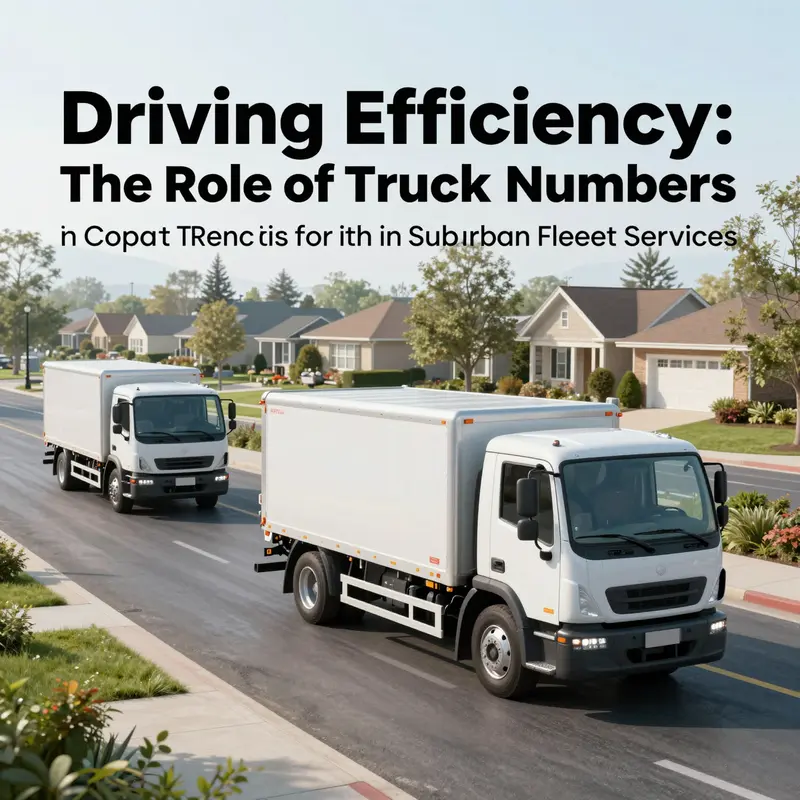
The suburban edge of a city is increasingly where waste becomes a literal test of a community’s efficiency, resilience, and environmental intent. The question of how many trucks a city suburb needs to maintain reliable, timely service is no longer answered by counting today’s vehicles and projecting linear growth. It is answered by understanding how the entire waste system will behave tomorrow: how often containers fill, how far drivers must travel, and how policies push toward cleaner, smarter logistics. In this frame, the number of trucks is not a fixed asset but a dynamic capability—an adaptive fleet that expands, contracts, or even redefines its role as population density shifts, as development patterns change, and as the environmental and civic expectations around waste management become more ambitious. The future lies not in maximizing a static headcount but in building a fleet that can surge or shrink with demand, guided by data, powered by cleaner technologies, and embedded in a digital ecosystem that makes the whole process more transparent to residents and more efficient for operators.
At the heart of this transformation is a shift from schedule-driven routines to demand-responsive, data-informed operations. Modern dumpsters increasingly carry sensors that measure fill levels, weight, temperature, and even odor. Those data streams feed into centralized fleet management platforms, creating a living map of where service is most needed in real time. A high-density residential block as the sun begins to set may reveal a cluster of containers filling rapidly, crossing a threshold that triggers an immediate pickup. Conversely, a zone with steady but low-volume demand can wait for the next optimal window. The impact of this approach is not only improved service levels but also a substantial reduction in unnecessary vehicle miles. When a truck no longer rolls through an area on a fixed schedule but travels only when demand justifies it, fuel is saved, wear and tear on assets is reduced, and emissions decline. In practical terms, this means fewer trips, shorter routes, and a fleet that operates with higher first-pass efficiency. It also means waste collection becomes more predictable and less disruptive to neighborhoods, a crucial benefit as suburban living standards rise and residents come to expect quieter, more reliable services.
The most powerful engine behind these gains is AI-powered route optimization coupled with predictive analytics. By analyzing historical waste generation patterns, weather conditions, traffic flows, and local event calendars, sophisticated models forecast collection needs with surprising accuracy. They can simulate countless routing permutations and highlight the exact sequence that minimizes idle time while maximizing load efficiency. The result is not merely a more elegant routing plan; it is a capability that scales with the community. When a festival or public gathering increases waste generation in a particular corridor, the system can anticipate the surge and reallocate resources preemptively. When a snowstorm slows traffic in one district, the same tool can re-optimize the remaining legs of the day. In organizations that have adopted these methods, reported improvements include significant fuel savings and increased daily productivity per vehicle—metrics that directly influence the practical calculus of fleet size. If you can push fuel use down by a third and raise daily pickups per truck by a quarter, the same total service capacity can be achieved with fewer trucks, or with more flexible capacity during peak periods without piling up idle assets.
Another major current shaping the future is fleet electrification and the broader adoption of alternative fuels for last-mile suburban routes. Electric and hybrid models offer distinct advantages for curbside operations, particularly the near-silent operation and low maintenance demands that reduce neighborhood disturbance and long-term operating costs. The transition is being enabled by charging infrastructure expansion at depots and transfer stations, where rapid or overnight charging can align with work shifts and vehicle availability. Where last-mile routes are predictable and close to origin points, electric vehicles can achieve excellent all-day duty cycles, turning a once-difficult economic calculation into a feasible, long-term strategy. The drive toward zero-emission fleets is also shaped by policy landscapes that increasingly set ambitious targets for new vehicle procurement and by corporate and municipal commitments to reduce emissions. In some cities, the push toward zero-emission waste collection is not merely aspirational but regulatory, guiding every procurement decision and influencing the pace at which suburban fleets must evolve. The practical effect is a gradual but meaningful redefinition of the fleet’s composition: more electric or hybrid units in suburban corridors, paired with optimized routing that keeps charging times and vehicle downtime to a minimum.
Beyond propulsion and routing, sustainability in fleet management is broadening to include circular economy principles and smarter waste auditing. The modern suburban service is learning to do more than remove waste; it is beginning to measure, interpret, and respond to waste streams as data-rich indicators of community behavior. Digital dashboards can show a town or neighborhood its weekly recyclable and organics volumes, enabling targeted education programs and policy adjustments. Containers themselves become part of a larger recycling ecosystem when their life cycles and materials are tracked, enabling reuse and repurposing where feasible. This shift requires a cultural change as well as technological investment: it invites residents to participate as partners in a value chain that recognizes the environmental and economic importance of waste streams. In practice, this means a service that not only sweeps up what is left behind after a festival but also informs people about the patterns of their consumption and the best practices for sorting waste before it leaves a property. When communities see the tangible results of such dashboards—reduced contamination in recyclables, better diversion rates, and clearer material flows—the relationship between residents and the waste system becomes collaborative rather than transactional.
The user experience, long a differentiator in any municipal service, is undergoing its own quiet revolution. A growing portion of suburban waste services is being designed around residents and property managers who want visibility, control, and responsiveness. Digital platforms now empower customers to schedule pickups through smartphones, track the real-time position of collection trucks, and access historical data on waste generation. Some platforms even incorporate gamified elements that incentivize consistent recycling behavior with rewards or recognition. This consumer-facing digitization transforms waste management from a routine chore into a participatory civic process, where feedback loops between residents and operators become shorter and more direct. When residents can see a truck approaching on a live map and receive timely notifications about delays or changes in service, trust in the system grows. The system then becomes less brittle during temporary shocks—such as traffic disruptions or weather events—because customers understand the adjustments being made and the reasons behind them.
Of course, translating these advances into an actual reduction in fleet size requires careful policy, budgeting, and performance measurement. Real-world deployments show that the combination of sensor-enabled dumpsters and AI routing can yield dramatic improvements in asset utilization. As routes become more intelligent and vehicles more capable, the same service level can be delivered with fewer trucks while maintaining, or even improving, on-time performance. That said, the number of trucks a suburban service uses is not a figure to be set once and left alone. It is a moving target, a reflection of how demand, technology, policy, and public expectations intersect over time. Growth in a city’s suburbs often brings new development pockets—mixed-use centers, multi-family housing, and age-diverse neighborhoods—that create uneven waste generation patterns. An adaptive fleet is better suited to ride these waves than a rigid, fixed-size operation. It can scale up quickly for a seasonal surge or downshift when an area’s development stage reaches a plateau. Such flexibility not only reduces operating costs but also enhances service resilience during economic fluctuations or public health events that alter consumption patterns.
An important corollary of this evolution is the need for strategic, cross-functional coordination. Fleet efficiency cannot be achieved in a vacuum. It requires integration with depot management, vehicle maintenance scheduling, and data governance frameworks that ensure sensor data is accurate, secure, and actionable. Maintenance teams must shift from a reactive stance to a proactive one, guided by remote diagnostics and predictive maintenance alerts that preempt breakdowns and minimize downtime. The digital backbone that supports these capabilities must be robust enough to handle real-time streaming data from thousands of endpoints while remaining accessible to operators who must make quick, informed decisions in the field. In this sense, the future suburban dumpster fleet becomes less about a fixed number of trucks and more about a distributed, responsive network of assets, powered by data and governed by clear performance metrics.
To tie these threads together in a coherent vision, consider the phrase “design efficiency in emergency services” as a compass for broader fleet thinking. While a dumpster fleet does not serve the same emergency-response role as a dedicated fire or medical fleet, the underlying principles—optimized resource allocation, reliable performance under pressure, and rapid adaptation to changing conditions—are closely aligned. The goal is not to hoard vehicles but to ensure that every asset serves a clear, high-value function with minimal waste. A suburban service that embodies this mindset uses its trucks, sensors, and software as an integrated system that continually learns from patterns in waste generation and neighborhood behavior. The outcome is a fleet that is leaner when demand is steady, more capable in peak periods, and more environmentally responsible across every mile driven. It is also a fleet that earns the trust of residents, not by promises alone but by demonstrable performance, continuous improvement, and transparent communication about how, when, and why pickups occur.
In this anticipated era, it is not enough to project a larger or smaller fleet based on past growth rates. The critical questions become: How quickly can the fleet reconfigure itself as neighborhoods evolve? What technologies and partnerships will enable more precise forecasting and quicker adaptation? How can communities measure impact not just in cost, but in emissions, noise, cleanliness, and satisfaction? Answering these questions requires a blended approach: governance that supports experimentation, investment in data and hardware that yield tangible returns, and ongoing collaboration with residents to align service outcomes with public values. The trajectory suggested by current research points toward a suburban waste ecosystem that is more intelligent, more reliable, and more sustainable, with fleet sizes that reflect a new calculus of efficiency—one that considers not just how many trucks are needed today, but how few trucks are needed to achieve today’s service goals tomorrow.
As we look toward this future, the practical takeaway for cities and service providers is clear. The number of trucks in a city suburb will be a dynamically managed, context-sensitive variable rather than a fixed quantity. Investments will focus on sensors, data platforms, electric propulsion, and customer interfaces that knit together residents, operators, and policymakers in a shared mission: cleaner neighborhoods, lower emissions, and a waste system that behaves as a companion to urban life rather than a distant, opaque mechanism. This is not a distant dream but a working blueprint that already informs the best practice decisions of forward-looking fleets in many jurisdictions. It requires disciplined planning, disciplined execution, and a willingness to rethink long-standing assumptions about capacity planning. The future of suburban dumpster service fleet management is not about merely enlarging or shrinking a garage full of trucks; it is about building an intelligent, responsive, and accountable operating system that makes every mile cleaner, every route smarter, and every resident a participant in the city’s sustainable future. The path ahead, while technically complex, offers tangible gains in efficiency, resilience, and community well-being, making the inventory of trucks a secondary concern to the quality of service and the health of the urban environment they support. For readers who want to explore broader perspectives on how sensor-enabled fleets and electric vehicles are transforming urban logistics, a converging line of thought is well covered in recent analyses that look beyond the truck to the whole ecosystem of urban waste management. See an external analysis of smart waste fleets for a global context here: https://www.citylab.com/environment/2026/03/smart-trash-cans-and-electric-waste-trucks-the-future-of-city-waste-management/ and, for a more general industry perspective on fleet design principles that emphasize efficiency in critical services, you can also explore related discussions on design efficiency in emergency services.
Internal reference for broader fleet efficiency concepts: design efficiency in emergency services https://5startruckin.com/design-efficiency-in-emergency-services/
External resource: CityLab article on smart trash tech and electric waste trucks: https://www.citylab.com/environment/2026/03/smart-trash-cans-and-electric-waste-trucks-the-future-of-city-waste-management/
Final thoughts
In conclusion, the number of trucks within city suburban dumpster services is more than just a statistic; it is a crucial factor determining the efficiency and effectiveness of waste management operations. By understanding the implications of fleet size, analyzing economic considerations, and keeping an eye on future trends, industry stakeholders can make informed decisions that enhance service delivery while maintaining cost-effectiveness. Knowing how truck allocations impact the overall system is essential for optimizing performance in the competitive trucking landscape.