
For long-haul truck drivers, life on the road can be unpredictable, especially when family emergencies arise. The well-being of drivers extends beyond just their physical health; the emotional and logistical support during critical times is equally vital. This article delves into whether Swift Trucking offers formal family emergency services and highlights the support resources available to their drivers. From emergency assistance programs to employee wellness initiatives, we will explore how Swift Trucking stands by its drivers and their families during challenging times. Each chapter will build on this overarching theme, providing a comprehensive view of Swift’s commitment to its driving community and their loved ones.
On the Road, At Home: Swift Trucking’s Family Emergency Services as a Core Resource for Drivers and Their Families
When a truck leaves the yard and heads toward the next horizon, it carries more than freight. It carries dependents, bills, health concerns, and the fragile threads that tether a driver to home. The question of whether Swift Trucking maintains a formal family emergency services program is not just about policy paperwork; it is about translating life changes into practical, compassionate action. The materials gathered for this chapter converge on a throughline: Swift positions itself as a partner in employee well being, with dedicated pathways to support families during emergencies while preserving safety and service reliability. The family emergency piece is less about a single benefit and more about a woven fabric of resources, communication channels, and a culture that expects managers and dispatchers to respond with care and competence when crisis strikes at home.
Swift’s approach centers on two interlocking ideas. First, formal resources that employees can access when life takes an unexpected turn—resources under the umbrella of well being and employee assistance. These are designed to address emotional strain, logistical hurdles, and the stress that accompanies family crises. Second, practical, on the ground flexibility that keeps a driver safe when a family emergency emerges. Urgent situations require quick, compassionate decisions that balance the driver’s needs with the company’s obligations to customers and the realities of a 24/7 logistics network. Taken together, these elements create a framework that treats family emergencies as a legitimate, addressable part of the driver’s life.
To the person on the highway, the first line of response when a family emergency arises is typically the local dispatch or management team. This is not mere routing; it is a fuel of human judgment. Dispatch teams learn that a family crisis can have immediate consequences for a driver’s availability, attention, and decision making. When a driver calls in with urgent need, the goal is to stabilize the situation with practical steps, such as temporary schedule adjustments, load reassignments, or collaborative planning to ensure the driver can attend to the emergency while maintaining safety. The company’s response emphasizes communication, transparency about coverage, and a willingness to adapt plans when the driver’s capacity is compromised.
Central to this discussion is the broader spectrum of resources Swift publicly frames as part of employee well being. Employee assistance programs, or EAPs, are a cornerstone: counseling services, access to confidential guidance, and connections to community resources. Wellness initiatives reinforce the idea that safety and well being are core, not optional. When drivers are stressed, the road becomes a high stakes work environment, and pairing EAPs with wellness activities signals a commitment to safe driving and service reliability. The inclusion of safety training reinforces a shared understanding: a supported driver is better positioned to make split second decisions that protect both the driver and the public.
The most compelling part of the chapter is how these resources cohere into a practical, accessible experience. The policy logic is straightforward: when emergencies disrupt a driver’s personal life, swift, empathetic action should follow. The practical manifestation may vary by location or role, but the guiding principle is consistent—support the driver so they can navigate the challenge without sacrificing safety or service quality. The literature hints at a continuum of support, from immediate scheduling considerations to longer term planning for temporary coverage. The aim is not to reward a crisis with leniency but to anchor the driver in a network of people who can help manage the crisis while maintaining accountability and safety.
For readers seeking how this translates into everyday practice, consider how dispatchers act as the first line of family support in the operational matrix. They acknowledge the gravity of the situation, collaborate with the driver to adjust the plan, and coordinate with other drivers and loads to minimize disruption. While not every outcome is perfect, the framework shows that family emergencies are real life events that deserve measured, compassionate responses. This approach helps sustain trust between drivers and the company, and researchers note that drivers who feel supported tend to stay engaged and perform with safety and reliability in mind.
An important nuance is that a formal or semi formal Family Emergency Services Program signals what the company values. It shows the organization sees drivers as whole people with responsibilities and loved ones who matter. In the end, this stance is both humane and strategic: when drivers feel supported at home, they are better equipped to meet the demands of long haul itineraries, safety requirements, and customer commitments. The details about eligibility and exact services are typically outlined on the official company site and in HR policies. Prospective or current employees are encouraged to review those sources for precise information.
For readers who want a broader look at workforce support in this sector, the idea of robust family support aligns with a wider move toward family friendly workplaces, transparent policies, and proactive, responsive management. Technology, such as dispatch software and real time communication channels, can facilitate more agile, family aware scheduling without compromising safety. Swift’s model appears to be moving in that direction: keeping lines of communication open, offering practical means to adjust plans quickly, and coupling those actions with a network of resources that address emotional and logistical needs. This synergy helps explain why the program matters in both human and business terms.
Finally, readers can explore related industry discussions for broader context on safety culture, maintenance discipline, and community-driven support. For official information on Swift’s family emergency resources, see the company website listed below.
Care on the Road: How Swift Trucking Approaches Family Emergencies
When people ask whether Swift Trucking has a formal family emergency services program, the straightforward answer is that there isn’t a named, company-wide policy built specifically around family emergencies. What the available information shows is a framework of resources designed to support drivers and their households, without a discrete, official family-emergency package. This distinction matters in practice: drivers can access standard employee assistance programs, wellness initiatives, and safety training, but the way these resources are mobilized during a family crisis often depends on the day-to-day realities of running a fleet and the responsiveness of local leadership. The absence of a formal, codified program does not mean Swift leaves drivers to navigate emergencies alone. It means the company relies on a network of supports that can be activated when needed, within the operational constraints of trucking schedules and regional management structures. In other words, there is support, but not a stand-alone, family-focused service line that is universally labeled or guaranteed in every scenario. This nuance matters for anyone weighing how a carrier balances professional commitments with personal crises, especially in an industry where time on the road and on-time delivery pressures are part of the job description.
Employee assistance programs often sit at the core of how companies handle personal stressors and emergencies. These programs typically provide confidential counseling, guidance on coping with crisis, and access to resources for legal and financial challenges that can arise during a family emergency. While the data doesn’t detail every facet of Swift’s EAP, the existence of such programs is consistent with many large fleets that aim to offer confidential help to employees without requiring them to reveal sensitive information outside a formal channel. The key value of EAPs in this context is not a direct rescue service, but a first line of support that helps a driver manage emotional strain, make informed decisions, and identify practical steps to keep work interruptions minimal while personal issues unfold. The confidential nature of EAPs can be especially important in a field where personal stress can collide with the timing-critical demands of a delivery schedule. If a driver experiences a family medical issue, the EAP can provide a confidential space to process next steps, while also connecting the driver with additional resources that can facilitate communication with supervisors and family members.
Beyond counseling and crisis resources, Swift’s wellness initiatives contribute to a broader resilience culture. Wellness programs—whether focused on mental health, physical well-being, or stress reduction—tend to foster habits that help drivers weather family pressures over the long term. The road is a demanding classroom, and wellness programs acknowledge that good health supports safer driving, better decision-making, and steadier focus when personal situations arise. The connection between wellness and family stability might seem indirect, but it is meaningful: drivers who are physically and mentally steadier are more capable of handling the uncertainties that accompany urgent family matters. When a crisis hits, a driver who has cultivated routines around sleep, nutrition, and stress management is likelier to think clearly about logistical options, communicate more effectively with dispatch, and engage in constructive conversations about schedule adjustments. In this sense, wellness initiatives become an indirect form of family-support mechanism by strengthening a driver’s overall capacity to respond to emergencies without compromising safety or performance.
Safety training, too, plays an important, if indirect, role in this landscape. Robust training emphasizes not only safe operation but also the critical importance of situational awareness and effective communication under pressure. In moments when a family emergency demands quick realignment of a driver’s plans, the discipline learned through safety training can help a driver navigate changes with calm and clarity. The training reinforces a mindset where safety remains paramount even when personal life requires rapid adjustments. It also underpins a culture where open lines of communication are valued: drivers who understand the expectations and the process for requesting support can better coordinate with dispatchers, supervisors, and maintenance teams to minimize risk and disruption.
When an urgent family matter arises, Swift emphasizes direct engagement with the local dispatch or management team. This is where operational realities intersect with personal needs. The company indicates that drivers can seek temporary schedule adjustments or other logistical support, when possible. The practical limit, however, lies in the nature of freight operations: deadlines, routes, and the availability of substitute drivers, loads, or crewing can constrain what can be offered in a given moment. It is not a lack of willingness, but a reality of the business, that shapes how flexible the system can be day to day. The emphasis remains on communication—clear, timely, and solution-focused conversations between driver and dispatch—which can unlock the most feasible accommodations. In some cases, what is possible may involve adjusting routes, rescheduling non-critical stops, or temporarily reassigning loads to relieve pressure on a driver dealing with a crisis at home. Yet even here, the level of flexibility can vary by region, leadership, and the immediacy of other operational needs.
The qualitative portrait that emerges from reviews and commentary is mixed. On one hand, drivers recognize the value of resources like EAPs and wellness programs as a foundation for support during family emergencies. On the other hand, the broader portrait of work-life balance in the company is described as challenging. Phrases like “your work is your life” reflect a culture in which driving responsibilities can overwhelm personal time, making family crises feel more acute. Some reviews suggest the company may not always feel family-friendly, especially for expectant parents or those navigating prenatal or postnatal care. Such anecdotes highlight real concerns about how formal policies translate into daily practice, and they point to potential gaps between the existence of resources and their practical accessibility. In this light, the absence of a formal, explicit family emergency program becomes a meaningful signal: drivers may have access to general supports, but there is no universal, codified guarantee that a family crisis will be met with a predefined, paper-backed set of emergency accommodations.
What does this mean for drivers evaluating a carrier’s compatibility with family realities? It suggests a model that prioritizes confidential assistance and personal resilience through EAPs and wellness, anchored by a collaborative ethos with dispatch for crisis-time flexibility. Yet it also signals to prospective hires that, in the absence of a dedicated family-emergency policy, the system relies heavily on interpersonal communication and regional leadership discretion. For families and caregivers, this distinction matters: it can influence how quickly relief is offered, what forms that relief might take, and how predictable the support landscape feels during a stressful moment. For the company, it underscores an opportunity—formalizing more explicit pathways for family-related disruptions, clarifying the scope and limits of schedule adjustments, and ensuring consistency across regions. A more explicit framework could reduce uncertainty, align expectations, and demonstrate a steady commitment to drivers’ personal lives without compromising the safety and reliability the operation requires.
In the current landscape, drivers can still lean into the resources that do exist. Proactively engaging with the EAP, seeking guidance on available wellness options, and maintaining open channels with dispatch when personal crises arise are prudent steps. The combination of confidential professional support, health-oriented wellness practices, and safety-focused training forms a triad of resilience that helps bridge the gap between family emergencies and entrenched work demands. Yet the gap remains real: without a formal, named program to codify family emergency support, drivers may experience variability in how, when, and to what extent relief is provided. This variability is not inherently negative if balanced by strong communication and a culture that genuinely values driver well-being; but it is a clear signal to both employers and employees that ongoing dialogue and potential policy development could strengthen the alignment between personal crises and professional responsibilities. For now, the framework offers a lifeline—rooted in confidentiality, health, and operational adaptability—but not a guaranteed, all-encompassing family-emergency service. Those seeking a precise answer should consult the company’s official policy disclosures and direct inquiries with the local management team to understand how resources are implemented in their region. For more details, see Swift Transportation’s official site: https://www.swift.com
When Family Calls from the Road: Swift Trucking’s Flexible Support for Emergencies
A driver’s day can start with a steady routine and end with an urgent call from home. A child needs care, a parent faces hospitalization, a spouse must travel for a sudden family commitment. The road offers miles of progress, but personal emergencies pull at the driver’s priorities in ways that tests both resilience and job security. In the broader conversation about whether Swift Trucking has a formal family emergency services program, the honest truth is more nuanced than a single label. The company does not maintain a dedicated, formal “family emergency services” program. Yet it builds a robust, practical framework designed to help drivers navigate crises without sacrificing stability or safety. This framework rests on three pillars: flexible scheduling and compassionate leave, access to employee assistance resources, and a culture that treats family obligations as legitimate, time-bound considerations rather than disruptions to performance.
When a personal emergency arises, flexibility becomes the headline virtue. Swift Trucking recognizes that emergencies do not wait for a lull in a timetable. Rather than demanding perfect attendance at every moment, the company emphasizes human-centered response. Drivers can request adjustments to their work hours or take temporary time off when circumstances demand it. The emphasis is not on punitive measures or buried excuses but on practical arrangements that let a driver attend to family needs and then return to the road with renewed focus. The policy environment is purposefully designed to avoid stigmatizing drivers who step back briefly. By normalizing temporary pauses and re-entry, the organization preserves both the driver’s dignity and the collective safety standard expected on long hauls. The result is a balance where personal responsibility and professional responsibilities coexist rather than compete.
Central to this balance is the relationship between drivers and dispatch or management teams. Swift Trucking encourages open lines of communication so that urgent family matters can be discussed early and transparently. Local dispatch staff and managers are positioned to assess practical options in real time. They can propose temporary schedule tweaks, route adjustments, or coverage arrangements to minimize disruption. Importantly, these accommodations are offered when feasible, with the goal of reducing the pressure on a driver who is managing more than one life at a time. The operational mindset here is pragmatic rather than punitive: the company understands that a driver who is able to address a family emergency calmly and with support is more likely to return to work with steady, attentive performance. In turn, this reduces risk for everyone on the road and helps sustain performance across the fleet over the long haul.
Beyond scheduling flexibility, Swift Trucking provides access to employee assistance programs that extend support well beyond the immediate logistics of a shift change. These programs typically include confidential counseling services, which can help drivers manage the emotional strain of life events and the stress that accompanies them. Counselors can offer guidance on coping strategies, communication with family members, and practical steps for navigating complex situations. In addition to mental health support, these resources often connect employees with broader life-management tools—financial planning, legal resources, and referrals to community services—that can reduce the burden during a crisis. The availability of such assistance sends a clear message: the company wants the driver to feel supported as a whole person, not merely as a payroll line. This kind of holistic care is essential for maintaining mental health on the road, which in turn sustains safe driving, alertness, and decision-making.
Wellness initiatives also play a critical role in shaping how a fleet handles family emergencies. They create a culture that emphasizes preventative care, resilience, and healthy coping mechanisms. Safety training remains a cornerstone, but many programs increasingly incorporate elements that address stress, fatigue management, and work-life balance. When drivers know that their well-being is a strategic priority, they are more likely to seek help early, ask for needed accommodations, and return to the road with confidence. The experience of peer support within a company culture matters, too. Hearing colleagues share stories about navigating personal crises with empathy reinforces a message that family matters and that the workplace will work with you through tough times. This cultural dimension is not mere sentiment; it translates into tangible practices such as supervisor sensitivity, timely responses to requests, and a shared standard that balance between family obligations and professional obligations is a legitimate, respected consideration.
The practical outcomes of this approach extend to retention and safety. When drivers can address emergencies without fear of punitive penalties, the chance of burnout or unnecessary turnover decreases. A driver who is allowed a brief pause, then re-engaged with a plan that suits their situation, is more likely to maintain consistent performance, maintain alertness upon return, and sustain long-term employment. In industries where life on the highway can be physically demanding and mentally taxing, this kind of supportive framework becomes a strategic asset. It reduces unnecessary stress, preserves the reliability of the fleet, and reinforces a shared commitment to safety. The absence of a formal, rigid program does not mean a lack of care; it signals a flexible, case-by-case approach that centers on human needs while upholding operational integrity.
Of course, a one-size-fits-all policy would miss the nuance of individual emergencies. Each driver’s circumstance may require a distinct combination of time off, schedule adjustment, or temporary coverage. That is why the combination of flexible scheduling and EAP resources is so important. It allows the company to tailor responses to the moment. A minor family event might be resolved with a day’s leave, while a more complex situation could demand several days with a phased return. In such cases, the ability to modify routes, defer nonessential duties, or redeploy nearby assets can preserve service levels while honoring the driver’s requirements at home. The goal is not to sidestep responsibility but to honor it in a way that respects the realities of life beyond the cab. By embracing this adaptive approach, the company demonstrates a steady commitment to the well-being of its workforce and to the communities they serve through reliable, safe transportation.
For readers seeking direct information on policies, or who want to understand how this approach translates into everyday practice, the company’s careers page offers a window into the broader framework of employment, benefits, and support services. While this chapter centers on family emergencies, the underlying values—care for people, a commitment to safety, and a durable work-life balance—are woven through the organization’s approach to work and life.
In the larger arc of transportation work, the question of whether a carrier has formal family emergency services may be less important than how it responds when crises arise. Swift Trucking illustrates a model in which flexibility, support, and compassionate leadership meet operational realities. The absence of a rigid, prescriptive program does not equate to a lack of care. Instead, it reflects a responsive system that adapts to individual needs while safeguarding the fleet’s safety and reliability. Drivers can expect that their personal emergencies will be acknowledged, their time to tend to family needs will be respected, and their employment security will be maintained as they navigate the journey back to the open road. That is a quiet, practical form of leadership—one that recognizes the road stretches not only across miles but across the landscapes of family life as well. For anyone evaluating how a trucking company handles family emergencies in real terms, this approach offers a meaningful balance between compassion and accountability, between human needs and the demands of the highway.
External resource for further context on employment policies can be found at the company’s careers page: https://www.swifttruck.com/careers/
Family Emergencies on the Road: How Swift Trucking Supports Drivers
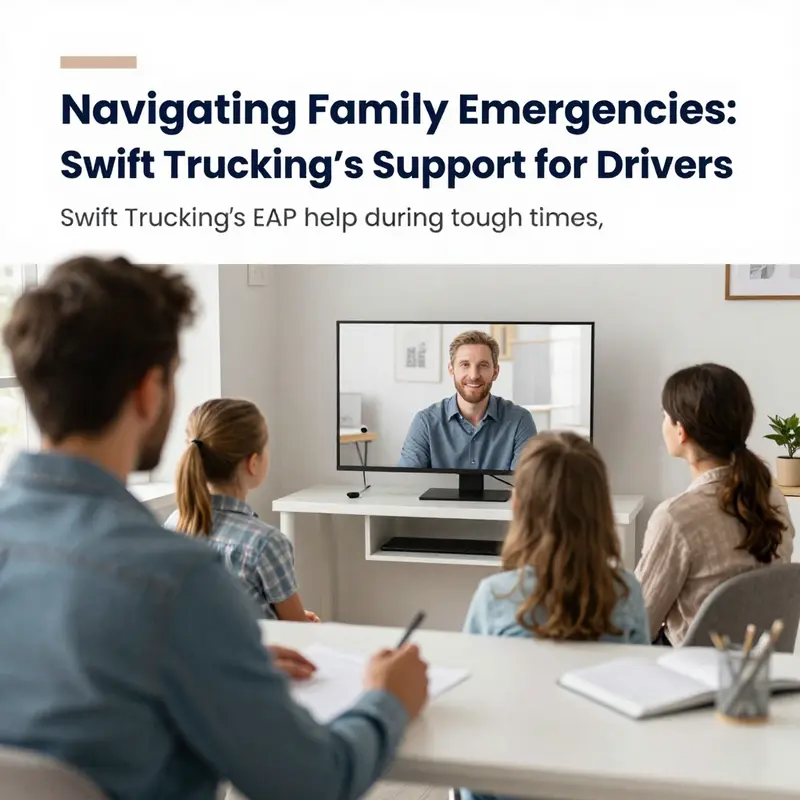
Truck drivers carry more than cargo; they carry family schedules, caregiving duties, and the unpredictable rhythm of life on the road. When a family emergency arises, practical questions arise first: how to keep commitments, who to contact, and what supports are truly available? At Swift Trucking, there isn’t a standalone program explicitly branded as family emergency services. Instead, the company stitches together confidential Employee Assistance Program (EAP) resources, wellness initiatives, and responsive supervisory practices to form a practical safety net for personal crises.
The core of this approach is the EAP: a confidential, employee-centered resource designed to help with a broad range of issues—mental health, caregiving challenges, financial stress, and more. For drivers facing a family health scare, marital strain, or sudden caregiving duty, the EAP offers access to licensed professionals, with an emphasis on privacy and discretion. The goal is pragmatic: preserve health and safety so drivers can support their loved ones without compromising performance on the road.
Availability is a cornerstone. Many EAP services are accessible around the clock by phone or online, enabling confidential consultations at times when emergencies occur late at night after a hospital visit, weekends, or during stressful weeks. A set number of counseling sessions per issue is typical, with extensions possible under program guidelines. This structure provides relief and a clear pathway to additional help if needed, without placing the burden squarely on the driver.
Beyond counseling, the EAP framework often includes guidance on parenting, elder care, and financial planning. While not a substitute for on-call family services, these resources help decouple personal crises from daily operations, reducing disruption and preserving safety and reliability on the road. Swift’s broader wellness efforts—stress management, physical health, and mental well-being—further reinforce resilience and proactive care.
When family demands arise, drivers are encouraged to contact local dispatch or management as the first point of contact. Management can consider temporary schedule adjustments, rerouting, or other accommodations that support safety and service continuity while honoring the driver’s immediate needs. This approach reflects a culture of trust and humane decision-making, with clear points of contact and options that minimize confusion during crisis moments.
The impact is practical. Proactive support tends to reduce off-duty distractions, support steadier focus, and reduce risk on the road. It also supports retention and morale, signaling that the company sees drivers as whole people with families and responsibilities. By combining confidential counseling with flexible scheduling and supervisory support, Swift aims to help drivers balance personal and professional responsibilities without unnecessary stigma or risk to safety.
For more information about EAP offerings and access, employees can consult the official Swift Transportation portal or contact the human resources department. This makes care easy to seek and normal within the flow of work, rather than an exception to routine.
Though there is no separate, branded family emergency services program, the integrated EAP, caregiver resources, and responsive supervision create a coherent support system that helps drivers navigate crises while maintaining safety and reliability on the road.
External resource for further context: https://www.swift.com/careers/employee-benefits
Health, Training, and Practical Support: How Swift’s Wellness and Safety Programs Prepare Drivers for Family Emergencies
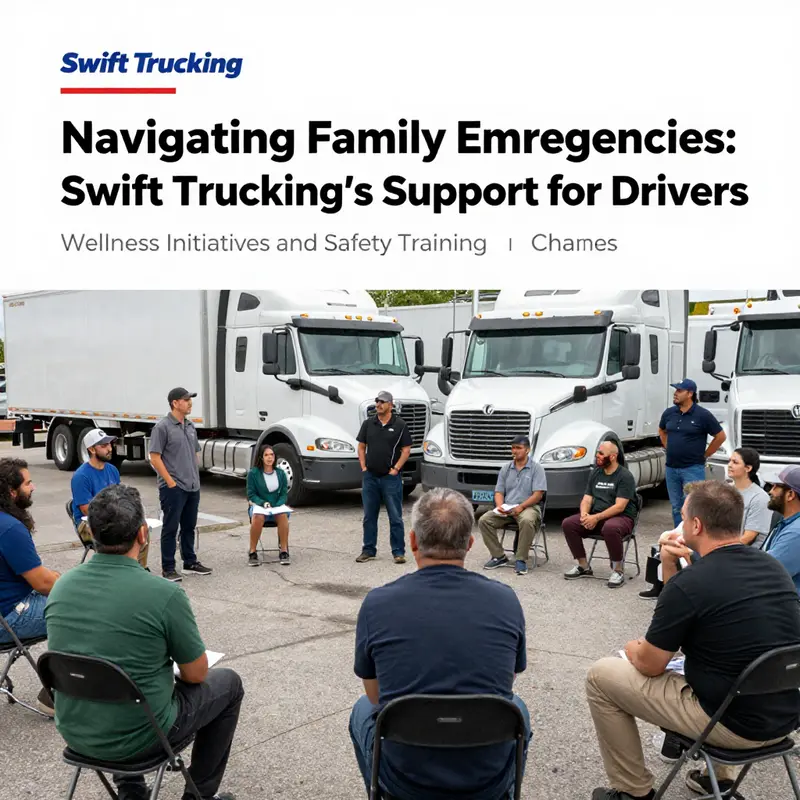
Integrated Wellness and Safety Training — the foundation for emergency-ready drivers
Swift’s wellness initiatives and mandatory safety training operate together as a practical safety net for drivers and their families. These programs do not replace a formal family emergency service, but they form the framework that helps drivers remain healthy, alert, and ready to respond when urgent personal needs arise. By emphasizing preventive care, mental health resources, and targeted driving skills, the carrier reduces the chance that a personal crisis becomes an on-road hazard. At the same time, those same systems make it easier for drivers to coordinate with dispatch and management when an immediate family situation requires attention.
The wellness side focuses on measurable, preventive steps. Regular health screenings identify chronic risks before they escalate. When blood pressure, glucose, or cardiovascular indicators are monitored, drivers can act early. Access to fitness resources and programs encourages physical conditioning tailored to life on the road. Programs that suggest exercises compatible with truck stops and short breaks increase flexibility without demanding long gym sessions. Nutritional counseling accepts the realities of highway eating. It offers practical swaps and meal planning ideas to reduce fatigue and maintain steady energy. These elements combine to keep drivers physically capable of handling both routine duty and emergency detours.
Mental health support is central to how the carrier thinks about family emergencies. Drivers with strong emotional support, crisis counseling access, and confidential help through counseling hotlines are better equipped to respond calmly when a family member falls ill or another urgent event occurs. Employee assistance programs (EAPs) provide short-term counseling and referrals. Those services help resolve immediate stressors and guide drivers toward longer-term solutions when needed. The result is not only better wellbeing on a daily basis, but also an increased ability to coordinate practical next steps from the road—calling relatives, arranging care, or discussing time-off with supervisors.
Safety training ensures that preventive health efforts translate into safer driving habits. Defensive driving modules teach anticipation, lane management, and safe following distances. When a driver receives a call about a family emergency, the training helps ensure that reacting emotionally does not compromise safety. Fatigue management courses reinforce the importance of rest, sleep hygiene, and legal hours-of-service compliance. They teach drivers to recognize early signs of fatigue and to plan appropriately, which reduces the risk of accidents during stressful periods.
Distracted driving prevention training aligns closely with family emergency scenarios. Drivers often face the urge to multitask—replying to messages, scrolling updates, or trying to handle logistics while driving. Training drills teach clear rules and alternatives that allow drivers to manage urgent communications safely. Emergency response protocols drill actions for roadside incidents and system failures. Those same protocols guide drivers through detours and sudden schedule changes that arise when a family emergency requires an unexpected trip or a rapid return home.
The programs are practical and modular. Certifications and refresher courses refresh critical skills without overwhelming schedules. Wellness resources are designed for flexibility: telehealth options, phone-based counseling, and digital guides allow drivers to seek help from anywhere. This matters in family emergencies, which often demand immediate access to information and support. A driver using telehealth to get a quick medical opinion for a dependent, or calling an EAP counselor to plan next steps, can make sound choices while remaining compliant with safety rules.
On the operational side, the carrier expects drivers to notify their local dispatch or management when urgent family needs arise. The training and wellness infrastructure supports that conversation. Dispatchers, guided by company policy, can sometimes make temporary schedule adjustments. Those adjustments include rerouting loads, arranging relief drivers, or redistributing assignments to allow a driver to address an urgent family matter. The wellness training reduces operational risk during these adjustments because managers know the driver has up-to-date safety certifications and a record of responsible health management.
Beyond formal programs, the company cultivates a culture of peer support. Drivers often share tips on time management, safe rest practices, and coping strategies for family stress. That peer knowledge is an informal extension of wellness initiatives. It spreads practical techniques, like quick meal prepping or effective use of short rest periods. When a family emergency appears, experienced peers sometimes offer pragmatic advice on handling dispatch conversations or legal considerations. Those community practices reduce friction and help drivers focus on the task at hand: managing the emergency without jeopardizing safety.
Documentation and clear communication channels are another strength. Wellness and training systems generate records managers can consult when considering schedule changes. A driver who recently completed fatigue management training and participated in a wellness check presents fewer unknowns when requesting time off. Records do not override compassion, but they provide a neutral basis for decisions that balance family needs with customer commitments.
Finally, these programs are not static. Wellness offerings and safety curricula evolve with new research, regulations, and operational feedback. That ongoing improvement benefits drivers facing family emergencies by keeping guidance current and effective. Training that incorporates the latest fatigue science, or wellness resources that add new telehealth options, directly increases drivers’ capacity to handle personal crises safely.
For drivers and families wondering whether these internal resources amount to a formal family emergency service, the answer is nuanced. There is no branded, standalone family emergency program. What exists instead is an integrated system of wellness, mental health support, safety training, and responsive dispatch practices. Together, they create a practical and adaptable support structure. For additional perspective on how a carrier’s operational culture and support systems shape driver experience, see Unveiling 5-Star Truck Inc.: A Beacon of Excellence in Trucking Services.
For specifics on the carrier’s current wellness and training offerings, consult the company’s official information at https://www.swifttruck.com
Final thoughts
Swift Trucking may not offer a formal family emergency services program, but that doesn’t mean support isn’t available. The company prioritizes the welfare of its drivers and their families through a variety of channels, including employee assistance programs, wellness initiatives, and the ever-ready dispatch team dedicated to logistical support. Knowing that help is accessible in times of need allows drivers to focus on their roles on the road, confident that their family matters will be addressed properly. The commitment towards assistance highlights Swift Trucking’s understanding of the challenges faced by long-haul drivers, reinforcing the idea that they aren’t just employees but part of a larger family.