
Truck compressors play a crucial role in the operation and maintenance of both commercial and long-haul freight trucks. Understanding the costs associated with these essential components—ranging from the initial purchase price to the service and installation charges—is vital for all truck drivers, fleet managers, and maintenance specialists. In this guide, we’ll explore the various factors influencing truck compressor prices, break down service costs, compare air brake and AC compressor expenses, analyze labor and installation considerations, and provide insights on total budgeting for truck compressors and their services. By the end, you’ll have a clear understanding of how much you should expect to spend, ensuring your investment is both smart and effective.
Decoding the Price of Truck Compressors and Their Service: A Practical Guide for Fleet Buyers
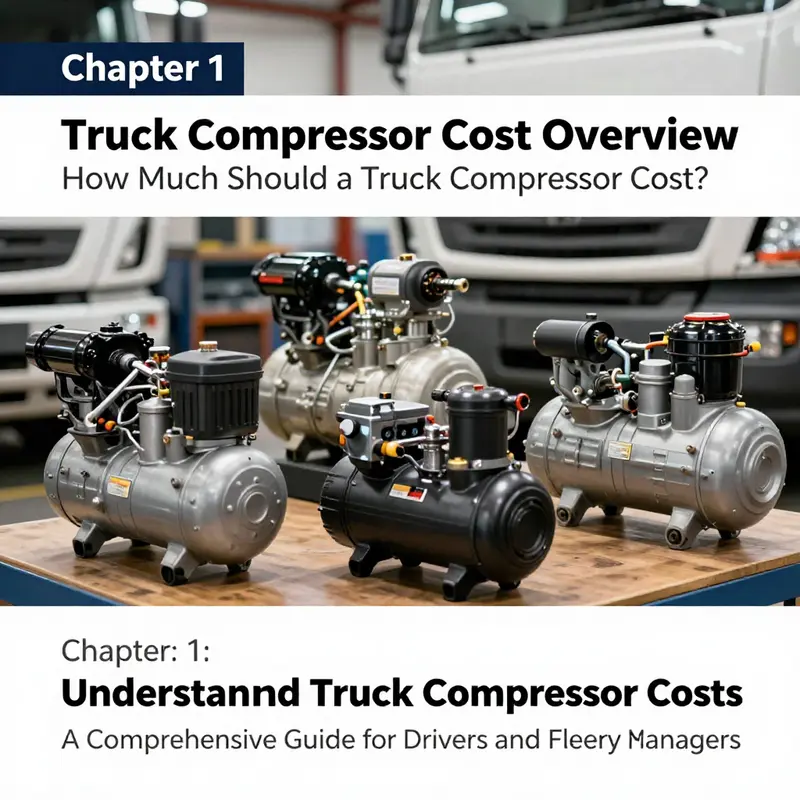
Cost is more than the sticker price when you’re equipping a fleet with a truck compressor and planning its service. A modern commercial truck relies on a compressor for two core systems: air braking and climate control. Each path carries its own pricing pressures, depending on design, compatibility, and the decision between new, remanufactured, or used parts. The spectrum of prices can feel wide, but it follows logical threads. Understanding those threads helps fleets budget accurately, plan maintenance, and avoid surprises on the shop floor. At heart, the calculator isn’t just what you pay for the part, but what you pay for the part over the life of the vehicle: reliability, warranty coverage, downtime, and the cost of rework if a mismatched unit arrives. The first thing to recognize is that the cost landscape is driven by the type of compressor and the nature of the purchase.
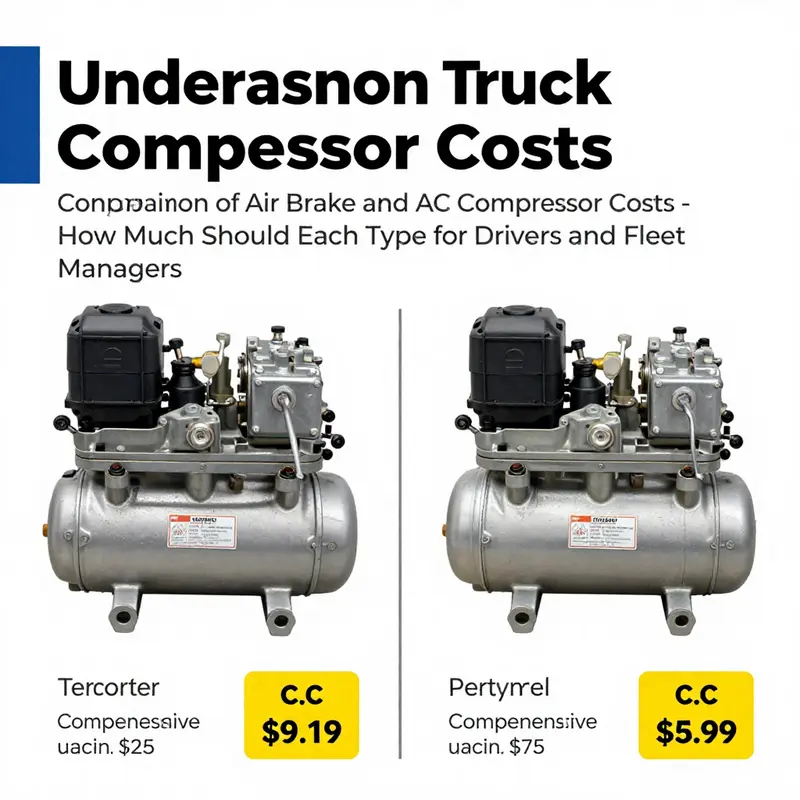
For air brake compressors, which are standard in many heavy-duty applications, the price is highly variable but often manageable for a mid-range budget. New units found on general marketplaces can be under a few hundred dollars, with the majority of listings landing roughly in the $100–$350 range. Premium environments—where the unit is built to handle extreme duty cycles or higher elevation deployments—tend to push prices upward. The variability here reflects the ecosystem of availability, model compatibility, and the supplier’s certification. In practice, most fleets end up weighing compatibility and lead times as much as raw price, because air brake systems must integrate cleanly with existing lines, valves, and reservoir configurations.
When climate control enters the equation, the pricing logic changes again. AC compressors for truck cabins often land in a broader price band. Generic or non-OEM units can run from roughly $237 to $480, with the exact figure hinging on model compatibility and the clutch configuration. OEM or original equipment parts, which carry the expected fit and performance assurances, typically sit higher—often in the $1,000–$2,000 range or more for certain makes or imported designs. There are also smaller or niche units designed for compact fleets or specialized cargo vans that can be surprisingly affordable, sometimes in the $100–$200 range. The takeaway is simple: for AC, the price delta is driven by manufacturer lineage, the unit’s capacity, and the precision of the fit to the truck’s climate system.
The market, across both air brake and AC variants, shows that new parts are not the only option. Remanufactured or rebuilt cores can offer meaningful savings while preserving core functionality. Remanufactured options commonly span from about $500 to $1,000, presenting a credible middle ground for fleets that want reliability without paying top-end OEM premiums. Used or rebuilt cores can be even more attractive for certain budgets, sometimes as low as $300 to $500, depending on condition, core return terms, and the seller’s testing standards. The decision to purchase new versus remanufactured or used should consider expected service life, failure rates, and the cost and risk of a mid-life failure that interrupts service.
Global sourcing adds another layer to the cost equation. When buyers look beyond domestic markets, manufacturers in large production regions offer substantial price advantages. Industry data consistently show that Chinese suppliers can deliver significant savings, typically in the range of 30% to 50% lower than Western counterparts, without necessarily sacrificing core functionality. A wholesale marketplace listing frames an average price around $576.15 for a variety of truck compressors, spanning both AC and air brake variants. That benchmark underscores how scale, manufacturing efficiency, and supply chain breadth translate into lower upfront costs. Yet price is only part of the story. Buyers must scrutinize certifications, production capabilities, and after-sales support. Regions with dense manufacturing ecosystems often offer faster turnaround times and more robust supply chains for bulk purchases, which, on a total-cost basis, can reduce downtime risk and long-term maintenance costs. The pricing dynamic is a reminder that the cheapest unit upfront can become more expensive if it triggers frequent service calls or incompatibilities that require adjustments or replacements later.
Beyond the unit price, service costs for installation and repair shape the total expenditure. Labor is typically the dominant variable here, ranging from about $100 to $250 per hour, depending on location and the shop type. A straightforward replacement usually takes two to four hours, meaning labor charges can run roughly from $200 to $1,000 per service event. The wide spread reflects regional wage norms, the complexity of the truck’s access points, and the shop’s overhead. In addition to labor, there are incremental costs that many owners overlook until the invoice arrives: a refrigerant recharge for AC systems, which can add $100–$200 if the climate control circuit has been discharged or contaminated; hoses, gaskets, or belts that may fail or degrade during a compressor replacement, typically running $50–$150; and diagnostic fees, often $50–$100 if the shop is not including a diagnostic package in the labor. A prudent approach is to obtain multiple quotes and ask about what is included in labor, whether a diagnostic fee is waived with the repair, and what warranties accompany the installed unit. Independent shops frequently present a more flexible price structure than dealerships, where markups and service categorization can push the final bill higher.
Putting these elements together yields a range of plausible total costs that fleets should expect. A basic AC compressor replacement with a non-OEM unit performed in a standard shop tends to fall in the $400–$800 band, reflecting a balance of lower-priced parts and moderate labor. If a premium OEM AC compressor is installed with professional installation, the total can escalate to the $1,200–$2,500+ range, underscoring the premium for original fit and built-in reliability. Air brake compressor replacement typically lands in the $300–$700 territory when factoring in parts and labor, a reflection of the simpler integration in many trucks and the generally lower price points for air systems compared to climate control. For high-end or rare models, particularly those that are imported or require factory-grade components, the bill can skyrocket to $2,000–$5,000 or more, illustrating how scarcity and specialized tooling can drive costs well beyond typical expectations. These figures are not isolated numbers; they are the outcome of how the market prices parts while accounting for the total cost of ownership, including maintenance intervals, potential downtime, and the logistics of sourcing in a global supply chain.
For fleet buyers, the practical challenge is translating these numbers into a sound procurement strategy. Start with a realistic assessment of the truck’s role, climate demands, and operating environment. If the fleet runs in harsh climates or high-altitude routes, a higher-capacity AC system or a rugged air brake unit may be warranted, even if that means a higher upfront price. Conversely, for older fleets or vehicles in steady service with predictable use, a remanufactured unit or a high-quality aftermarket alternative can deliver reliable performance at a reduced cost. When sourcing globally, buyers should push for certifications, traceability of parts, and a clear warranty policy. The decision-making process should also account for the long-term availability of spare parts, the supplier’s response time for returns or service, and the ease with which a shop can perform future maintenance without specialized tooling. For readers seeking practical guidance on maintenance strategy, consider the dedicated resource on fire-truck maintenance service training. It offers insights into aligning maintenance practices with reliability and uptime goals in emergency-service fleets.
In the broader sense, the total cost of ownership for a compressor is a function of the part price, the installation or replacement effort, ongoing maintenance needs, and the risk of unexpected downtime. Fleet managers who approach pricing this way tend to bracket their budgets more accurately and secure the necessary downtime windows for service without disrupting operations. For those who want a structured starter reference, the internal maintenance guide can provide a framework for evaluating compressor options alongside other critical components in the vehicle’s pneumatic and climate systems. fire-truck maintenance service training.
Ultimately, the question isn’t merely, How much should a truck compressor cost? It is, What is the right combination of price, fit, durability, and service support for a given fleet, across the vehicle’s lifecycle? The answer is not one number but a balancing act among upfront price, long-term reliability, and the ability to minimize downtime. A well-informed buyer can navigate the market by prioritizing compatibility, warranty coverage, and the supplier’s after-sales support, while recognizing that for some fleets, the best value comes from a carefully chosen remanufactured option or a trusted aftermarket variant that meets performance requirements without inflating the price. When in doubt, compare quotes, verify compatibility with your specific vehicle model, and ask for a written breakdown of all line items—part, labor, refrigerant, and any diagnostic or core charges. The numbers will align once you consider the bigger picture: uptime, maintenance cadence, and the confidence that the installed compressor will perform when it matters most.
External pricing references can provide additional real-time context as you build your budget. For a direct reference to market pricing, you can explore wholesale compressor listings online to gauge current market bands.
External resource: https://www.alibaba.com/product-detail/Wholesale-Truck-Compressor-11k_1600659945742.html
Beyond the Sticker Price: Understanding the Real Cost of Truck Compressor Service
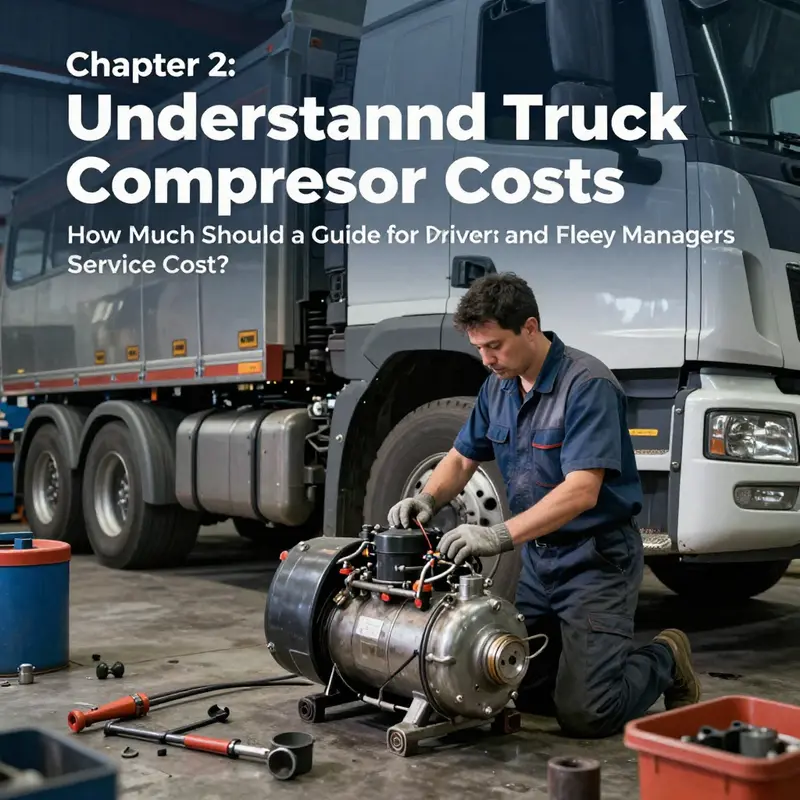
When a fleet manager sits down to budget maintenance for a line of heavy-duty trucks, the first instinct is to tally the price quotes. Yet the true cost of servicing a truck compressor goes beyond the sticker price on a parts catalog or a once-a-year preventive package. It is a dynamic equation that hinges on compressor type, the complexity of the system, the age and condition of the vehicle, regional labor rates, and the intent behind the service—whether it is routine preventive maintenance or a repair prompted by a breakdown. A rational decision rests on both the immediate outlay and the longer runway of downtime, reliability, and the potential cascading costs that follow a neglected or poorly executed service. In that sense, cost becomes a proxy for value, not merely an expense to be minimized. A well-timed service can pay for itself many times over through fewer breakdowns, steadier performance, and lower total downtime for the fleet.
To understand what is typical, you first need to separate the maintenance package from the repair bill. A standard compressor service is usually a bundled set of tasks designed to restore efficiency and prevent premature wear. On average, a routine service includes an oil change, fresh air and oil filters, and a thorough, multi-system inspection. The labor and parts involved are relatively modest when the system is healthy and the work is preventive. Market data from recent maintenance guidance suggests a general range of roughly $150 to $400 for such routine service, with the actual number depending on the vehicle make, the model of the compressor, and regional labor rates. In other words, the price tag reflects not only the service itself but the shop’s overhead, the technician’s expertise, and the efficiency of the workflow. When you factor in the possibility of a diagnostic assessment if symptoms are unclear, a marginal increase in cost is not unusual, but the overall value remains tied to preventing more expensive problems down the line.
What makes the service price rise or fall in meaningful ways is the type of compressor and the system architecture under the hood. Rotary screw compressors, which are common in modern heavy-duty fleets, operate with a different geometry and internal tolerances than reciprocating units. The complexity of rotor assemblies, seals, and valve arrangements in rotary designs often requires specialized tools and a higher skill level. If a technician identifies rotor wear, seal degradation, or a refrigerant leak in the case of an air conditioning-driven system within the cab, the cost can quickly move beyond routine maintenance into substantial repair territory. In practical terms, minor oil or filter changes may stay within the $150–$400 band, but when bearings wear or rotors show start-up chatter or leakage develops in the seals, it is not unusual to see the bill stretching to $800, sometimes into the $2,000 range or more for comprehensive internal work. The key point is that the more intertwined the problem is with critical, precision components, the more the service becomes a demand for specialized expertise and longer downtime. This reality underlines why preventive maintenance is so heavily emphasized in manuals and in the field alike.
The cost picture becomes most transparent when you consider the bifurcation between preventive maintenance and repair-driven service. Preventive maintenance leverages the factory-recommended service intervals, lubricant grades, and filter replacement schedules. The aim is to keep the compressor operating within design tolerances, maintain peak efficiency, and minimize the likelihood of unexpected failures. The benefit of that approach is not purely financial; it also translates into higher uptime and more predictable performance for the fleet. The maintenance kits that crews use and the service schedules they follow are designed to minimize the risk of catastrophic failures that can bring operations to a standstill for days. When the equipment is rage-testing under heavy use, proper lubrication and timely filter changes can prevent internal wear that would otherwise escalate into expensive repairs. In practice, the preventive path costs less than the reactive route, because it guards against the domino effects of compressor failure on the entire compressed-air network, the climate control system in the cab, and even the safety-critical air-brake subsystem.
The reality is that the cost of a service is not a single number but a constellation of line items, each reflecting a real-world concern. Labor charges typically fall in the range of $100 to $250 per hour, dependent on location and the type of shop. A routine service often requires two to four hours, translating to $200 to $1,000 in labor alone if the work is entirely focused on preventive maintenance and there are no surprises. If the work proves more complex, the labor contribution climbs accordingly. Add to that the cost of consumables—filters, oils, gaskets, belts, hoses—and the total for routine service can drift toward the higher end of the range, especially in markets with higher wage scales or where the shop is a noted maintenance center. It is also common for diagnostic fees of $50 to $100 to be charged if the shop conducts a thorough evaluation but does not perform a full repair during the visit. When a major repair is needed, it is not unusual for the labor portion alone to reach or exceed $1,000, sometimes more, depending on the duration required to disassemble, replace, and reassemble critical components.
Another dimension of cost comes from the environmental and system-specific requirements of the compressor. If the truck’s climate control system is integrated with the compressor or if the service involves refrigerant handling, a separate line item for refrigerant recharge may be necessary. Recharges for AC systems can add $100 to $200 to the bill, while components such as hoses, gaskets, or belts can range from $50 to $150. A comprehensive repair, such as replacing major internal components or addressing rotor or seal failures, can escalate quickly if the design is intricate or if the parts are not readily available. In such instances, the repair price might include the cost of long-lead-time parts and additional testing to ensure the system regains full function after reassembly. In short, the more interdependent the compressor is with other subsystems, the more the service cost can reflect both the complexity of the work and the downtime required to complete it.
From a budgeting perspective, it helps to think in terms of scenarios rather than single-point figures. A basic AC compressor replacement, when using non-OEM parts and a standard shop, tends to fall in the $400 to $800 range, capturing parts, labor, and a modest diagnostic step. If a customer elects OEM parts and professional installation, the price can rise dramatically to between $1,200 and $2,500 or more, reflecting higher-cost components, precise tolerances, and a longer warranty cycle. For air-brake compressors, where the failure typically involves the pneumatic system that sustains braking and other essential functions, replacement costs including parts and labor commonly land in the $300 to $700 band. For high-end or rare models, including imported designs that require specialized stock or engineering support, the total can range from $2,000 to $5,000 or more. These figures are not arbitrary; they reflect not only the cost of parts but the value of downtime, the risk of failure under load, and the availability of skilled technicians who understand the system’s particular architecture.
Within this framework, the role of preventive maintenance becomes a strategic lever. A routine service should be part of a larger lifecycle plan that considers the vehicle’s duty cycle, environment, and maintenance history. Regular service—adhering to lubrication specifications, timely filter changes, and thorough inspections—helps preserve compressor efficiency and prolongs component life. Fleet operators who invest in scheduled maintenance typically experience lower long-run costs, less downtime, and fewer emergency repairs. The mathematics of maintenance favor the proactive approach: the upfront cost of routine care is modest compared with the potential expense of a breakdown that interrupts operations and cascades into delays, replacement parts, and overtime charges for urgent repairs. How often to service and what to service should be guided by manufacturer recommendations and the shop’s experience with similar duty cycles, rather than by a one-size-fits-all schedule.
For readers seeking practical guidance beyond general principles, consider how preventive maintenance is documented and implemented in the broader context of heavy-duty fleet management. A well-organized service program aligns with manufacturer guidelines, uses appropriate lubricants and filters, and maintains accurate service histories. It also rewards the operator with a more predictable maintenance budget and improved uptime. If you want to explore a structured approach to maintenance further, see resources dedicated to fire-truck maintenance service training, which emphasizes routine upkeep as a cornerstone of reliability. fire-truck maintenance service training
In sum, the cost of servicing a truck compressor is not a fixed line item but a spectrum shaped by system type, repair scope, and preventive discipline. Routine servicing sits at the lower end of the spectrum and offers the best value when paired with a consistent maintenance program. Major internal repairs, especially in high-complexity designs, can push costs into several thousands of dollars and require careful planning to minimize downtime. The prudent path combines regular maintenance with transparent budgeting, multiple quotes when possible, and a clear understanding of what each service will entail. This approach helps ensure that the wheels keep turning, the air remains clean and effective, and the fleet avoids the expensive downtime and reliability risks that come from deferred maintenance. For additional perspectives on the economics of equipment maintenance and service charges, you can consult external research and industry guidance that discuss the broader principles of maintenance pricing and lifecycle costs. External resource: https://www.scribd.com/document/572938551/Equipment-Maintenance-Service-Charges-PDF
null
null
Chapter 4 Unraveled: Reading the Real Cost of Truck Compressor Labor, Installation, and Service
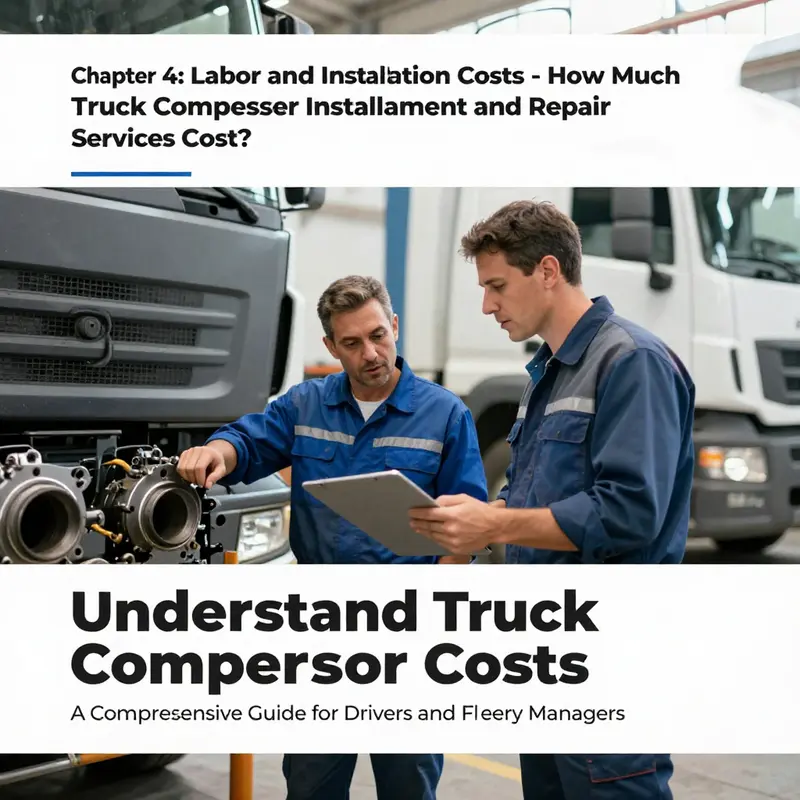
Understanding the true cost of keeping a truck’s air system in peak condition means looking beyond the sticker price on a replacement part. In the trucking world, labor and installation for a compressor job often dwarfs the price of the part itself, especially when the job involves complex systems like air brakes or climate control. The total cost is a blend of regional wages, shop type, job scope, and part quality. While a fresh compressor may have a broad price range, the service bill for removal, installation, and any required ancillary work can be the deciding factor in total downtime. This chapter treats labor and installation as a distinct line item, with careful planning and a clear estimate before any wrench is turned. In practical terms, labor costs and installation time are driven by region, the shop’s expertise, and the job complexity. A 4S center with a wide service menu and diagnostic tools will bill differently from a small independent shop. Replacing an air brake compressor can be straightforward in some setups, while a climate-control compressor for the cab may require flushing lines, recovering refrigerant, vacuum testing, recharging, and ensuring seals. Each additional step adds time and labor charges. When system recovery or refrigerant recharge is involved, the bill moves into a higher labor tier. The numbers in the market reflect this reality. Labor rates commonly fall in a broad band, roughly $100 to $250 per hour, and the total labor for installation and related service often sits in the range of $500 to $1,200. This figure is in addition to the parts cost. A diagnostic fee may apply if the work isn’t pre-arranged with a quote. Parts costs vary widely: non-OEM or generic units are often $237 to $480, while OEM parts can be $1,000 to $2,000 or more. There are smaller, specialized units that can be in the low hundreds. A broader market snapshot shows an average price around $576.15 for a range of compressor types. The main takeaway is that part cost can swing widely and labor scales with the job’s difficulty and the shop’s rate structure. For budgeting, start with a baseline at the higher end of region-driven expectations and layer in parts based on the truck model, compressor type, and reliability goals. For a typical AC compressor replacement, expect roughly $400 to $800 with non-OEM parts in a standard shop, or $1,200 to $2,500+ with OEM parts and refrigerant handling. For an air brake compressor, totals often range from $300 to $700, with higher-end models pushing past $2,000 in some cases. The best approach is to obtain multiple quotes. A second bid provides a reality check and can reveal whether a shop’s higher price is justified by faster turnaround or better warranty terms. Warranty considerations should cover both parts and labor, and operators should ask about transfer of warranties if the vehicle changes hands. Downtime is a critical factor as well; a compressor job keeps the vehicle out of service, which can have operational consequences in emergency response or long-haul fleets. If you want deeper context, consider resources that emphasize training and service excellence in the field. External resources can provide additional perspectives on the repair and replacement process and help operators balance price with performance.
The True Price of Air: Budgeting the Total Cost of Truck Compressors and Their Service
Budgeting for a truck air compressor goes well beyond the sticker price. The moment you start shopping, you enter a realm where the upfront cost is only part of the story. The total cost of ownership (TCO) includes not just the purchase price but also installation, ongoing maintenance, energy use, downtime, and the potential costs of fuel or air leakage if a system isn’t kept in peak condition. This chapter will help you translate a catalog number into a budget that accounts for performance, reliability, and the recurring costs that shape every fleet’s bottom line. When you think in terms of TCO, the goal is clarity about how each choice—air brake versus air conditioning, OEM versus generic, single unit versus modular design—affects uptime and operating expenses over years of service. The initial price tag matters, but it is the long arc of maintenance, efficiency, and downtime that truly determines value.
To ground this discussion, consider the two main compressor types that most fleets encounter: air brake compressors, which power braking systems and auxiliary air tools, and AC compressors, which handle climate control within the cab or specialized compartments. Prices vary widely with type, model, and whether you’re buying new or used. On the open market, you’ll see a broad spectrum: non-OEM AC units can fall in the low hundreds, while OEM or high-end configurations can reach the thousands. Air brake compressors tend toward lower-to-mid ranges, but costs rise when you factor in the need for exact fit, quick availability, and long-term durability under heavy-duty duty cycles. Across multiple marketplaces, the average price for a mix of compressor types hovers in the mid-range territory, but the tale that matters is the lifecycle—not just the tag on the box.
Beyond the unit itself, service costs establish the cadence of how you use a compressor. Labor rates in shops can swing from roughly $100 to $250 per hour depending on location, shop type, and the complexity of the installation. Replacing a compressor is not a single-task job; it typically requires 2 to 4 hours of labor, which translates into a labor bill in the hundreds to the low thousands. Add-ons and contingencies—refrigerant recharge for AC systems, hoses and belt replacements, gasket changes, and diagnostic fees—can push a project into higher ranges. The practical upshot is simple: you should expect more than the sticker price for a replacement. Getting multiple quotes helps you understand regional costs, and independent shops are often more competitive than dealer networks, especially for routine maintenance work.
When you assemble a budget, it helps to map common scenarios against your operating regime. A basic non-OEM AC compressor replacement in a standard shop may land somewhere in the four-hundred to eight-hundred-dollar range, reflecting a balance between the cheaper part and moderate labor. If you insist on OEM quality for the AC system, and you want the assurance that the part matches a specific vehicle’s climate demands, total costs often move into the range of roughly twelve hundred to twenty-five hundred dollars or more when installation is included. For air brake compressors, the combined parts and labor often fall in a more compact window, roughly three hundred to seven hundred dollars, but this can widen with regional labor rates or the need for custom fittings. In premium or rare configurations—think imported or highly specialized units—the sticker can rise to two thousand dollars and up, sometimes reaching five thousand if the hardware demands unique installation or a long lead time. The important point is not a single number but the spectrum that reflects fit, reliability, and uptime expectations across years of use.
A comprehensive view of cost must also weigh maintenance habits and diagnostic discipline. Regular servicing—oil changes when appropriate, filter replacements, and belt inspections—keeps a compressor running efficiently and prevents the cascade of failures that can erode reliability and force expensive emergency repairs. Neglect, by contrast, tends to multiply downtime and drive costs higher through unplanned outages and speedier wear. The frequency and cost of these services vary with model design and usage intensity, but a prudent maintenance schedule reduces the likelihood of dramatic, unplanned expenditures. Understanding the recommended service intervals for a given model and estimating parts costs for routine upkeep becomes a practical budget accelerator rather than a reactive afterthought. The maintenance plan should be designed with the same clarity you apply to choosing a unit: invest in features and components that simplify routine care and minimize downtime.
Energy efficiency also plays a decisive role in long-range costs. A compressor that reduces idle consumption or adapts output to demand will produce tangible savings over time. Look for design elements such as variable speed drives or advanced cooling arrangements that prevent waste during periods of low demand, especially in fleets that cycle compressors on and off frequently. A unit with a higher initial price can still deliver lower operating costs if its efficiency translates into steadier air pressure, lower electrical consumption, and fewer heat-related issues that shorten service intervals. The math is straightforward: a more efficient system may carry a higher upfront cost, but it can reduce utility bills and downtime enough to yield a favorable payback over the machine’s life.
Reliability is another silent driver of total cost. Build quality matters in ways that aren’t always obvious at the point of purchase. Heavier-duty materials, robust cooling systems, durable heads, and trustworthy filtration influence not just a unit’s lifespan but also its resistance to performance dips during peak use. A design that prioritizes reliability can significantly reduce the frequency of service events, which in turn lowers the cumulative labor and parts spend across years of operation. Conversely, a cheaper, lighter construction often saves money upfront but can demand more frequent servicing, more replacements, and more downtime, eroding any short-term savings. The decision, then, comes down to aligning the duty cycle, air demand (CFM), and maximum pressure (PSI) with the expected load. A unit sized with generous headroom—capable of meeting peak demand without overworking—tends to pay off in steadier performance and fewer interruptions to service.
To inform that alignment, you must quantify your needs across several axes: duty cycle, which indicates how long the compressor can run at a given load; output capacity, measured in CFM, which reveals how much air the unit can deliver to support braking systems and tools; and pressure rating, expressed in PSI, which constrains how aggressively the system can operate. The tradeoffs are real. A unit with a high CFM and high PSI might be overkill for light-duty applications, inflating initial cost and running-hot risk. A compact unit with modest output could underperform under heavy use, triggering more frequent servicing and downtime. The sweet spot is a design that matches your typical demand profile, plus a small margin for peak loads and potential seasonal spikes. When you size the system to your operation, you’re not just choosing a compressor—you’re choosing uptime, predictability, and a pace of work that keeps your fleet moving.
Another practical thread in budgeting is the value of a fact-based maintenance plan. The interval and cost for parts like filters, oil (where applicable), belts, hoses, and seals are not abstract numbers; they map directly to how often you’ll need to pause operations for service, how long you’ll wait for parts, and how quickly a technician can complete the work. Part cost ranges and labor times vary by model, but the discipline of routine checks creates a predictable cost curve and minimizes surprise expenditures. The overall strategy should emphasize the parts that wear fastest in your environment, prioritize preventive replacement rather than reactive fixes, and incorporate a contingency for unexpected repairs. In practice, the most successful fleets bake maintenance into the budget with fixed quarterly or semiannual intervals, which stabilizes cash flow and reduces the risk of large, disruptive outages.
Where does that leave your budgeting process? Start with a clear inventory of your needs: the two compressor families you’ll encounter, your typical duty cycle, peak air demand, and climate control requirements where applicable. List the plausible purchase options—new versus used, OEM versus generic—and attach reasonable cost ranges to each scenario, including installation. Then layer in the maintenance plan: the expected annual spend on routine service, part replacements, and any energy-related improvements. Finally, build in a small reserve for downtime and unexpected repairs, because even the best-designed system can falter under the stress of real-world operation. When you view the numbers through this lens, the path from information to a sound budget becomes a straightforward exercise in anticipating reliability and uptime as much as upfront savings.
For readers seeking a framework that dovetails with ongoing training and maintenance best practices, an internal reference that complements this chapter is available here: fire-truck-maintenance-service-training.
External perspectives also help frame the broader market, especially when you want to benchmark against industry standards and performance factors. For a deeper dive into standards, grades, and performance considerations that influence price, see this external resource: https://www.truckequipment.com/truck-air-compressor-price-standards-grades-performance-factors.
Final thoughts
Budgeting for truck compressors and associated services can seem daunting, but by understanding the various costs involved—from parts to labor—you can make informed financial decisions that benefit your operations. Whether you manage a fleet or are an independent driver, grasping these financial aspects aids in keeping your trucks running smoothly and effectively. Always remember to seek multiple quotes and consider both new and used options as you navigate this landscape. This knowledge not only prepares you for necessary expenses but also empowers you to optimize your efficiency and reduce downtime.