
In a world increasingly reliant on timely deliveries and efficient logistics, services that track delivery trucks have become pivotal for ensuring transparency and reliability. This article delves into the various aspects of truck tracking services, which not only facilitate long-haul truck drivers and fleet managers in monitoring shipments but also enhance operational efficiency for trucking companies. Each chapter will explore a different dimension of truck tracking—from the technological innovations propelling these services to the economic, geopolitical, and societal implications of real-time delivery monitoring. By doing so, we will illustrate the profound impact that these systems have on the logistics ecosystem and highlight their growing importance in today’s interconnected marketplace.
From Tracking Numbers to Real-Time Visibility: A Deep Dive into Truck Tracking Services
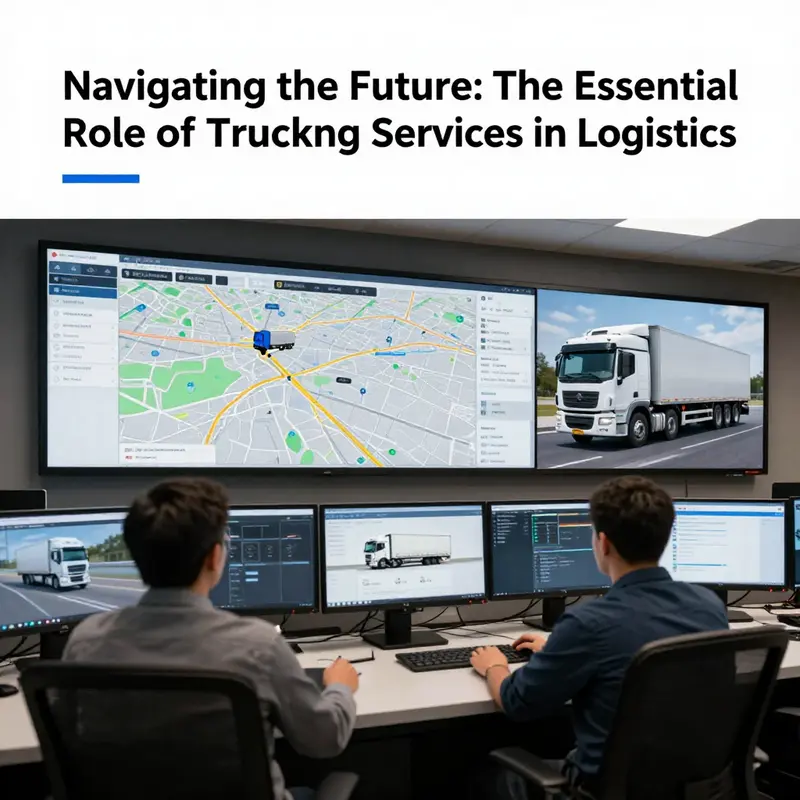
The demand for visibility in delivery ecosystems has shifted from a single status marker to a continuous, data-driven story of movement. Shippers no longer settle for a timestamp that appears on a screen somewhere; they want a living narrative of where a vehicle is, what route it is on, and how external factors—weather, traffic, or road restrictions—might reshape the plan. This chapter surveys the spectrum of services that track delivery trucks, linking practical capabilities to the realities of modern freight and last-mile operations. It begins with a landscape of platforms that specialize in tracking, then threads through the capabilities that make these tools indispensable, and finally links the abstract data to the concrete decisions that businesses must make to keep promises to their customers. In the most expansive terms, these systems stitch together telematics, mobile communications, and cloud-enabled dashboards to provide a transparent, timely, and actionable view of transportation across the network. The shift from mere location pings to intelligent, event-driven updates is what makes real-time tracking not just a convenience, but a competitive necessity for shippers large and small.
Among the most visible manifestations of this shift are platforms that attach GPS-enabled devices to vehicles and present the carriage of goods as a continuously updated stream. A growing number of providers offer real-time shipment tracking that spans provinces, regions, and even borders, enabling shippers to monitor routes, checkpoints, and deviations as they unfold. These systems typically feed data through online portals or mobile apps, accessible via a tracking number or shipment identifier. Updates arrive in intervals that suit the pace of the operation—commonly every 15 to 60 minutes for GPS coordinates—while automated notifications in the form of SMS or social messaging app messages keep stakeholders informed at critical milestones, such as “vehicle loaded,” “in transit,” “arrived at city,” or “out for delivery.” This immediacy transforms how companies coordinate with drivers, negotiate with customers, and respond to disruptions in real time.
A regional example of this capability is the deployment of a platform commonly cited for real-time freight visibility. Such systems connect shippers with a network of carriers, providing route visibility and end-to-end tracking. They work with a broad range of logistics partners and can support large enterprise engagements as well as smaller shipments. The architectural elegance of these services lies in their ability to harmonize multiple data streams: GPS position reports, geofencing alerts, carrier status messages, and warehouse handoff events. The result is a cohesive picture that can be filtered by route, region, or carrier, with an auditable log of events that supports customer service inquiries and dispute resolution. In practice, shippers use these tools not only for passive visibility but also to enable proactive management—adjusting routes in response to traffic incidents, notifying customers of slight ETA changes, or rerouting on the fly to avoid delays.
Beyond the general tracking platforms, there are specialized offerings and integrated IT solutions that bring even deeper capabilities to transport operations. One notable approach is a logistics tracking API that delivers automatic shipment monitoring and webhook integrations. This kind of API lets a business embed real-time status feeds into its own systems, whether an enterprise resource planning (ERP) platform, a transportation management system (TMS), or a customer-facing portal. The promise is not merely to observe but to act on data—triggering automated workflows when a shipment stalls, or when a vehicle nears a delivery window, or when a checkpoint is reached. A dedicated companion app can further democratize access to tracking information, giving field teams and customers alike a familiar, user-friendly view of where things stand at any given moment.
For organizations that manage fleets of vehicles, a fleet-tracking solution built on a robust mapping and routing platform offers more granular control. A well-known fleet-tracking offering lets managers monitor real-time locations for many trucks, visualizing trips with detailed waypoint data, assigned deliveries, and operational performance metrics. The value here is not only the live map but the integration with role-based access controls, so different users—dispatchers, drivers, customer service, and executives—see the appropriate level of detail. This kind of capability is essential for coordinating on-demand delivery services or scheduled operations that span multiple shifts and several regional hubs. When paired with a modern data stack, fleet tracking becomes a cornerstone of performance optimization, enabling smarter decisions about fleet utilization, maintenance planning, and service levels.
Other players in the space bring complementary strengths. A comprehensive IT platform for logistics may emphasize internal collaboration, seamless data exchange between carriers and shippers, and broader visibility across the supply chain network. Such platforms prioritize the alignment of operational processes with real-time data, helping organizations reduce manual check-ins, reconcile variances, and accelerate document flows. And for organizations seeking to optimize the human element of logistics, there are location-management solutions that monitor both vehicles and personnel through cellular networks and GPS. These tools address challenges such as inaccurate attendance records, unverifiable task completion, and inflated travel expenses by providing live location data, task trajectory playback, and expense verification. The overarching theme across these offerings is digital transformation—harnessing location-aware technology to replace ad hoc, error-prone practices with repeatable, auditable workflows that drive efficiency and accountability.
The practical implications of real-time truck tracking extend across the entire delivery lifecycle. For shippers, the benefits materialize as improved reliability and customer trust. When a customer learns that a shipment is on a precise route with a known ETA, communication becomes a dialogue rather than a reaction to a delay. Carriers gain from better asset utilization and more predictable dispatch cycles, which can reduce fuel consumption and idle time. Operations teams benefit from consistent data streams they can analyze to identify bottlenecks, plan maintenance, and optimize driver assignments. Even drivers themselves can leverage the same platforms to navigate routes, confirm deliveries, and communicate exceptions efficiently. In regions where cross-border movement is common, including the dynamic corridor between Hong Kong and mainland China, GPS-based tracking and real-time updates help reconcile the complexities of multicarrier handoffs, customs checks, and regional constraints. Across these contexts, the essence of effective truck tracking is not merely the map on a screen, but the clarity it brings to decision-making under pressure.
The choice of solution, of course, is shaped by scale and context. A small shipper might rely on a streamlined portal with a few essential notifications, while a multinational freight operator may demand a deeply integrated system with API access, webhook-driven automation, and stringent access controls. Regardless of size, the core requirements tend to converge: reliable location data, timely updates, robust event histories, and user experiences that translate complex logistics activity into intuitive, actionable insights. The value proposition also hinges on how well the provider handles data privacy and security, since real-time location data is sensitive. Organizations must weigh data ownership, retention policies, and the potential for data sharing with partners against the benefits of cross-functional visibility and customer-centric service.
For readers seeking a consolidated view of how these platforms connect with day-to-day operations, consider the narrative offered by industry insiders who describe tracking as a spectrum—from simple shipment status checks to comprehensive fleet and workforce management. A single shipment’s journey can be enriched by combined telemetry, from GPS coordinates and speed to checkpoints and dwell times at warehouses. It is this layered visibility that enables proactive exception handling, better delivery estimates, and more transparent customer communications. If you want to explore related perspectives and case studies that illuminate how such systems are deployed in real-world scenarios, you can read more about the broader ecosystem and its transformative potential through a detailed exploration of the unparalleled services of 5 Star Truck Inc, which provides a practical context for understanding how visibility translates into reliable service. unparalleled services of 5 Star Truck Inc.
For practitioners seeking further technical grounding, external documentation on fleet-tracking platforms can provide authoritative guidance on architecture, data models, and security considerations. See Google’s official documentation on fleet tracking for a comprehensive reference to how platform-level features map to real-world operations: https://cloud.google.com/maps-platform/fleet-tracking. This resource complements the practical, provider-centric perspectives above by outlining standardized capabilities such as multi-vehicle location, ETA calculations, and role-based access control, which support scalable, predictable delivery operations across diverse geographies.
In sum, services that track delivery trucks have evolved from basic location checks to sophisticated, real-time visibility ecosystems. They connect devices, networks, and dashboards into a cohesive operational fabric that supports faster decisions, higher service levels, and better customer experiences. As the freight landscape continues to consolidate and digitalize, the ability to translate streams of location data into reliable, customer-facing outcomes will remain a defining differentiator for shippers, carriers, and logistics platforms alike.
Toward Real-Time Visibility: The Science of Delivery Tracking
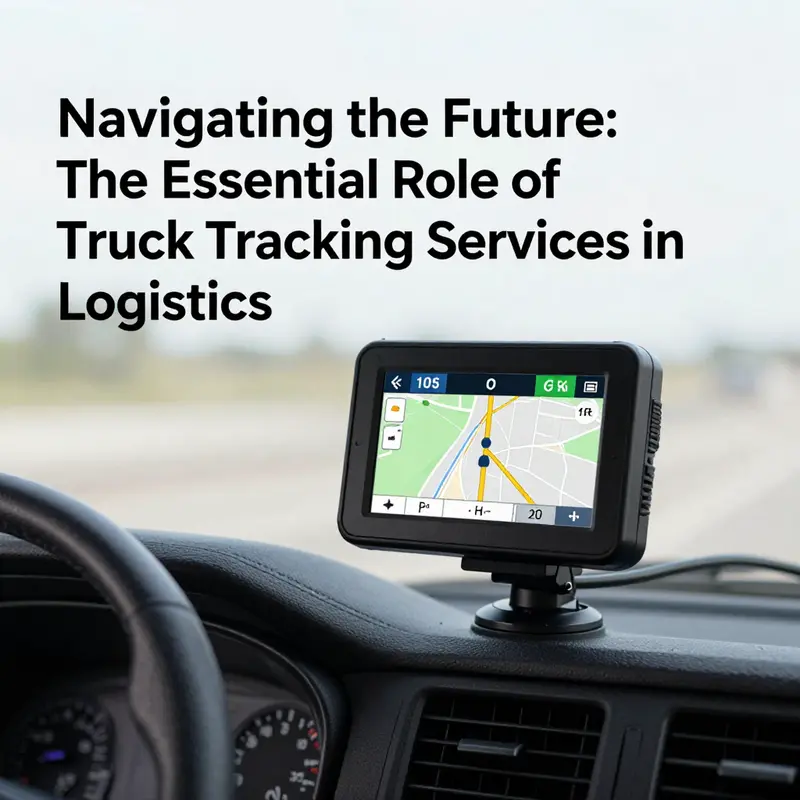
Real-time visibility has become the backbone of modern delivery operations. By combining GPS tracking, telematics, and IoT sensors, fleets can monitor location, speed, and condition from departure to final delivery. This continuous stream of data enables proactive routing, smoother handoffs, and faster responses to exceptions. Cloud-based platforms aggregate these signals into unified dashboards that stakeholders across the supply chain can access, while data governance and security practices ensure privacy and compliance. The result is a more reliable, efficient, and customer-friendly network where decisions are driven by timely insights rather than assumptions.
Economic Ripples: How Real-Time Truck Tracking Reshapes Logistics
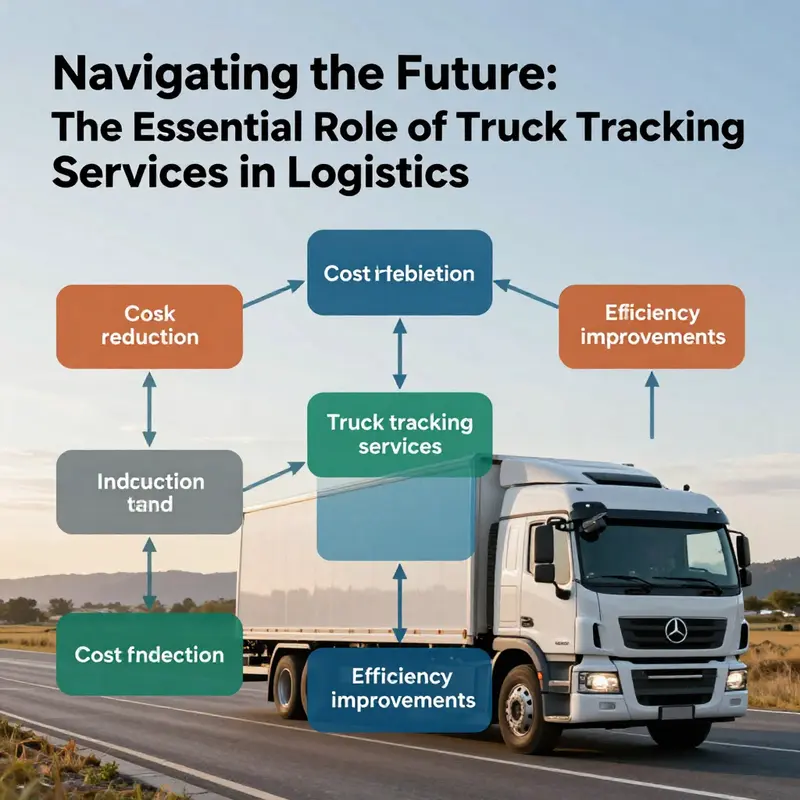
The question of whether a service exists to track delivery trucks is more than a logistical curiosity. It is a doorway to understanding how real-time visibility reshapes the economics of logistics. When a fleet can be watched from origin to destination, every decision—from route choice to driver management, from warehouse handoffs to carrier collaboration—becomes data-driven. The economic impact, though sometimes diffuse, coalesces into tangible benefits that improve service levels, reduce costs, and alter competitive dynamics across the supply chain. Real-time tracking relies on GPS-enabled devices and digital platforms that translate movement into actionable intelligence. Rather than simply telling a shipper that a load is en route, it provides ongoing situational awareness, accurate ETAs, and a continuous feedback loop that informs planning, execution, and post-delivery analysis. In this sense, tracking services act as a nerve center for modern freight operations, coordinating the elements of mobility, capacity, and timing into a coherent throughput that can be measured, managed, and improved.
Operational transparency—the clarity with which a fleet’s movements are visible to dispatchers, customers, and partners—emerges as a primary driver of value. When a platform records every waypoint, speed pattern, and dwell time, planners gain a granular understanding of how long each phase of a trip takes. This transparency reduces the variance that plagues traditional logistics, where delays are frequent and often unanticipated. With real-time data, a company can adjust routes to avoid congestion, reallocate loads to balance capacity, or dispatch alternative equipment before a bottleneck becomes a missed delivery. The immediate payoff is more reliable delivery windows, which translates into improved customer satisfaction and the ability to promise and meet tighter service-level agreements. In a market where reputational damage from late deliveries can erode future business, the value of dependable ETAs compounds over time.
Cost reductions flow from several interlocking mechanisms. Fuel costs, which constitute a substantial portion of operating expenses, are markedly impacted by reduced idle time, tighter adherence to optimal speeds, and smarter routing that minimizes backhaul and empty miles. Real-time tracking enables dynamic re-routing that accounts for real-world conditions—accidents, incidents, and sudden weather-induced slowdowns—so that drivers spend less time idling in traffic and more on productive legs of a journey. Over the course of a year, even modest improvements in km per liter accumulate into meaningful savings, multplied across fleets and geographies. Beyond fuel, maintenance costs benefit from usage-based servicing. Telematics data reveal actual vehicle utilization, mileage, and component wear patterns. Rather than a calendar-based maintenance schedule, fleets can schedule predictive servicing when it is due from usage realities, reducing unscheduled repairs and extending the life of wear-prone parts. The result is lower maintenance expenses and a lower total cost of ownership for each asset.
At the same time, safety improvements—an often undervalued component of the economic equation—play a pivotal role in the bottom line. Real-time tracking, when paired with driver behavior monitoring, supports timely interventions to reduce risky driving patterns. This not only lowers the probability of accidents but can also reduce insurance premiums through demonstrable risk management. The financial implications extend to claims handling, where faster incident responses and traceable event data shorten settlement times and improve recovery outcomes. From a risk perspective, the ability to document and review a trip’s evolution adds a layer of accountability that supports safer operations and a more predictable expense profile. Although safety investments require upfront capital, the downstream effect on reliability and cost-of-risk is often substantial, especially for fleets engaged in high-mileage or time-critical transport.
The aggregated impact—transparent operations, lower fuel and maintenance costs, and heightened safety—transforms the broader economics of logistics. When these elements are combined, service reliability becomes a competitive differentiator. In highly fragmented markets, a carrier or shipper that can consistently meet promised delivery times reduces penalty exposure, improves customer retention, and unlocks capacity from trusted partners. This, in turn, creates a virtuous cycle: reliable performance attracts more business, enabling economies of scale that further enhance efficiency and reduce per-unit costs. The gains are not merely incremental; they propagate through procurement, inventory management, and customer-facing operations. Shippers can plan more precisely, knowing the true lead times and the variability around them. Manufacturers can synchronize production with inbound schedules, reducing working capital tied to buffer stock. Retailers can pace replenishment to match consumer demand, diminishing stockouts and overstocks alike. In short, real-time truck tracking reframes risk into predictability and predictability into profitability.
A practical way to understand this shift is to view the fleet as a living data asset. Each vehicle contributes a stream of signals about location, speed, temperature, vibration, and even driver behavior. When aggregated, these signals illuminate patterns that can be exploited to reimagine workflows. For example, dynamic routing based on live conditions can compress cycle times and improve asset utilization. Load planning can become more granular, with the ability to consolidate shipments that would otherwise travel separately and incur duplicate handling. Inventory decisions at distribution centers can be better tuned to actual arrival estimates, reducing safety stock and increasing turnover. The cumulative effect is a leaner, more responsive supply chain that can absorb shocks—such as a sudden spike in demand or a disruption in a key corridor—without collapsing into delays or excessive costs.
However, realizing these gains requires more than installing tracking hardware. Integration with existing systems—enterprise resource planning, transportation management, warehouse management, and customer communications—must be technically sound and operationally thoughtful. Data quality matters as much as data availability. If location updates arrive irregularly or if sensor data misreads conditions, the promise of precision erodes into skepticism and inefficiency. The most successful adopters invest in data governance: standardized data models, consistent update frequencies, and clear ownership of analytics outcomes. They also design decision rituals around the data. For instance, daily or hourly reviews of route variance, ETA accuracy, and on-time performance create a disciplined cadence that keeps the system aligned with business goals. In recognizing that technology alone does not drive value, these organizations emphasize the human processes that translate telemetry into action.
The competitive landscape is also reshaped by the ability to collaborate more effectively with partners. Real-time visibility makes it easier to coordinate across carriers, shippers, and third-party logistics providers. Shared dashboards and standardized data schemas reduce friction in cross-carrier handoffs and enable more efficient yard management, loading, and unloading. This interoperability becomes especially valuable in complex networks that span multiple regions or countries, where synchronization challenges can otherwise generate delays and increased cost. In cross-border operations, where regulatory checks, border clearance times, and transit policies introduce variability, accurate, timely information becomes a strategic asset. While the fundamental technology remains the same, its strategic utilization—how teams interpret the data and align it with policy and process—determines the magnitude of the economic payoff.
The analysis of benefits also points to the importance of scalable, flexible platforms. Fleet sizes, service areas, and the mix of asset types can change rapidly. A tracking solution that scales with the business armatures the organization to pursue opportunities rather than constrain them. For midsize fleets and smaller shippers, the economics of scale may be less favorable at first glance, but real-time tracking provides the insight needed to restructure operations, pursue route optimization, and negotiate better terms with carriers. The long-run ROI hinges on not only reduced costs but also the increased revenue associated with reliable delivery windows, higher customer satisfaction, and stronger competitive differentiators. The literature on GPS-tracking-equipped fleets in diverse markets corroborates these patterns, underscoring that the economic uplift arises from a combination of efficiency gains and service improvements rather than from a single breakthrough metric. External research highlights fuel and maintenance savings as consistent levers in real-world implementations and emphasizes safety benefits as a lever for insurance and claims outcomes.
From a policy and organizational perspective, the adoption of tracking technologies often interacts with broader ambitions such as sustainability and resilience. Fuel efficiency translates into lower greenhouse gas emissions, which aligns with corporate stewardship goals and regulatory expectations in many regions. The ability to route around congestion reduces idle time, which not only saves fuel but also improves air quality in urban corridors. In crisis scenarios—natural disasters, road closures, or port disruptions—the ability to adapt in near real time preserves service levels and mitigates revenue losses. In this way, truck-tracking services contribute to both the financial and reputational resilience of logisticians who embrace them. Yet the path to this resilience is not automatic. Companies must invest in governance, partner alignment, and change management to convert raw telemetry into disciplined execution and sustained performance.
For readers seeking a practical lens on the economics, it helps to observe how the benefits materialize in real-world numbers. Industry observations and empirical work from global fleets consistently report reductions in fuel consumption and maintenance costs when telematics inform decision-making. The improvements in ETA accuracy and route optimization often translate into measurable reductions in late deliveries and penalties, while safety-related interventions produce lower incidents and, subsequently, lower risk-related costs. Taken together, these factors create a compelling business case for tracking services as a core component of modern logistics strategy. The payoff is not only a leaner cost structure but a more reliable, scalable, and customer-centric operating model that can compete in a market where speed and precision increasingly define value. This is how real-time truck tracking, at scale, becomes an economic driver rather than a mere technology offering.
For further context on practical, field-oriented perspectives on fleet efficiency and uptime strategies, see the industry blog resource linked here: 5startruckin blog. And for those seeking a broader empirical frame on GPS tracking and fuel efficiency in truck fleets, external research points to tangible fuel savings and maintenance scheduling benefits across diverse markets: https://www.trucktrackingaustralia.com.au/gps-trucking/.
Tracking Across Borders: Geopolitics, Compliance, and the Future of Delivery Truck Visibility
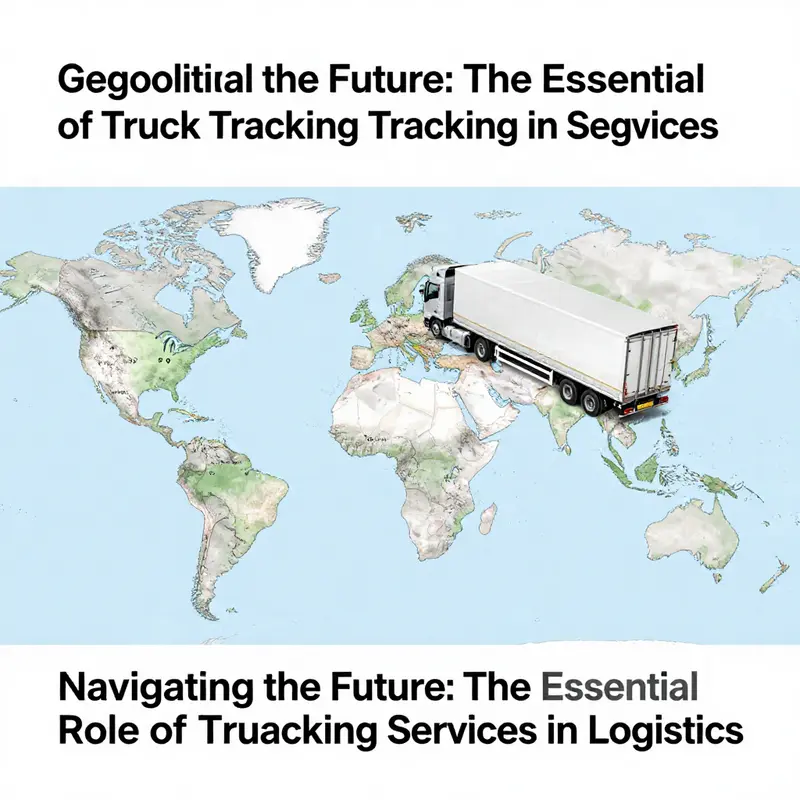
The promise of real-time tracking for delivery trucks has evolved far beyond a simple software feature. It sits at the intersection of logistics technology, regulatory environments, and the shifting tides of global politics. When a shipper presses a tracking button and watches a route unfold on a map, they are not just witnessing a vehicle’s position. They are witnessing a chain of decisions made under rules that can change with the weather of geopolitics: trade talks, sanctions, border policies, and regional stability. In this light, visibility becomes a strategic capability. It is the difference between a delayed shipment and a confident delivery, between a plan that assumes smooth cross-border movement and a plan that can pivot when a corridor falters. As supply chains grow more intricate, the value of a robust tracking service is measured not only by how precisely it pinpoints a truck, but by how intelligently it responds to dynamic conditions across space and policy landscapes.
Geopolitical considerations cast their longest shadows where cross-border movement is essential. Even within continents with well-trodden freight corridors, a change in import duties, a new export restriction, or a temporary border disruption can ripple through the delivery schedule. Real-time tracking systems have to do more than relay a GPS ping; they must integrate border-status feeds, regulatory alerts, and risk indicators so that dispatchers can evaluate routes in the context of current events. This is where the functionality extends from passive location updates to proactive decision support. When a route enters a high-risk area or a region subject to sanctions, the system should flag the deviation, assess the likelihood of delay, and offer safe, compliant alternatives. The aim is not merely to avoid “being late” but to maintain visibility and control even when the map must reroute around uncertainty.
Data sovereignty and regulatory compliance add layers of complexity to how tracking services operate across borders. Different jurisdictions demand different data handling practices, retention policies, and privacy protections. A platform that provides visibility for a shipment moving through multiple countries must harmonize these requirements so that data is collected, stored, and shared in compliant ways. This sometimes means segmenting data by region, applying encryption, or restricting certain analytics to authorized parties. For shippers and carriers, the payoff is trust: customers gain assurance that the tracking information they see is both accurate and legally appropriate for their market. In this sense, geopolitics pushes tracking providers to evolve from multi-country visibility solutions into sophisticated, governance-aware systems that respect local norms while preserving end-to-end transparency.
The role of geofencing and intelligent routing becomes especially poignant when cross-border routes encounter new chokepoints. A geofence around a port, a border crossing, or a sensitive industrial zone can trigger alerts the moment a vehicle crosses a threshold or deviates from a permitted corridor. The value lies not only in a real-time alert, but in the downstream actions it enables. Dispatchers can pause certain processes, switch to alternate lanes or carriers, or adjust delivery windows to minimize disruption. The ability to set these guardrails with confidence relies on data quality, system reliability, and timely updates from the vehicle to the control center. In volatile geopolitical contexts, even small information lags can cascade into schedule slips. Therefore, a resilient tracking platform must offer redundant communications channels, from on-vehicle telemetry to mobile notifications, and ensure that the most critical updates reach the right hands promptly.
Crucially, geopolitical awareness in tracking also supports sustainability goals. Efficient routing that avoids conflict-affected regions reduces the risk of unnecessary detours and the associated fuel burn. This translates into lower emissions and a smaller carbon footprint for the shipment, aligning with broader corporate commitments to environmental stewardship. In a world where consumers increasingly expect responsible practices, the ability to demonstrate responsible routing becomes a competitive differentiator. The tracking system thus serves a dual purpose: safeguarding timeliness and demonstrating accountability for environmental impact. In practical terms, this means what begins as a risk-management feature matures into a strategic tool for sustainability reporting, stakeholder communication, and brand integrity.
Industry discussions that shape these capabilities often emphasize adaptability. The 2026 Supply Chain Outlook, as discussed by major logistics voices, underscored the imperative for rapid responsiveness to geopolitical shifts. The logic is straightforward: if a shipment can be rerouted quickly in response to a new restriction, the overall disruption is smaller. If a system only reacts after a delay, the disruption compounds. Successful tracking platforms, therefore, build adaptability into their core architecture. They employ modular data feeds, flexible routing algorithms, and a governance framework that can be updated in hours rather than weeks. In practice, this means that a platform is not a static map but a living decision-support engine. It should present an integrated picture: where a truck is, where it is likely to be next given current events, and what choices are permissible and optimal under the latest rules. The human operators—logisticians, dispatchers, compliance officers—rely on this integrated view to steer shipments through a complex international landscape.
The practical realities of cross-border movement—including Hong Kong–China trucking as a case in point—highlight the necessity of reliable, digital systems that provide timely, precise, and actionable information. In niche markets with intense cross-border activity, GPS trackers and digital platforms have become indispensable. They convert scattered, noisy signals into clean, meaningful updates: “loaded,” “in transit,” “checkpoint reached,” and “arrived.” When exceptions occur, the system should not only illuminate the reason but also suggest viable alternatives and estimated timelines for the revised plan. In this sense, tracking is less about watching a device and more about orchestrating an entire transport operation under a shifting political reality. That orchestration relies on the quality of data, the speed of communication, and the clarity of the operational playbook that the platform enforces.
For shippers exploring the options, the preference often settles on platforms that combine transparency, security, and resilience. What begins as a simple order-tracking tool becomes a strategic partner that helps companies fulfill commitments in the face of upheaval. Some profiles emphasize the importance of unified visibility across all assets and routes, from long-haul trucks to regional feeders, ensuring that a single source of truth remains intact no matter how a route evolves. In these contexts, the value proposition extends beyond uptime or punctuality. It encompasses risk awareness, regulatory compliance, and the ability to communicate status to customers who have a growing appetite for precise, real-time updates. The resulting confidence is not merely about knowing where a truck is, but about knowing that the system can guide decisions when geopolitics injects uncertainty into the journey.
As practitioners test and refine these capabilities, they also embrace the human element. On-the-ground operators must interpret alerts, assess risk, and make judgment calls when plans diverge from the expected path. The best tracking ecosystems empower these professionals with clear, actionable information. They supply context—weather, border policy notes, and recent incident reports—that helps translate a raw GPS point into a meaningful decision. In this light, geopolitics is not an external constraint but an integrated factor that the technology helps manage. The story behind a tracked shipment thus becomes a narrative of how a network of people, rules, and machines collaborates to maintain visibility and deliver reliability, even when the map is shifting beneath them.
For readers curious about practical exemplars beyond brand names, a good starting point is to explore the broader landscape of services that offer real-time tracking, route optimization, and regulatory-aware governance. Some descriptions highlight how shippers can engage with platforms that provide end-to-end visibility, from the initial pickup to final delivery, including updates at key milestones and proactive notifications that keep customers informed. In this environment, a single link to a service profile can illuminate how the combination of GPS location updates, geofencing, and cross-border routing policies translates into tangible benefits: reduced delays, better compliance, and tighter control over carbon emissions. To those evaluating options, it is worth noting a practical approach: seek platforms that emphasize not only the accuracy of location data but also the robustness of route advisories, the clarity of alerting, and the ease with which teams can implement policy-driven changes in real time. A well-chosen system accelerates decision cycles and strengthens a company’s resilience in an era where political events can rapidly reconfigure global transport routes.
For readers who want to connect this discussion to contemporary perspectives on industry capability and service design, consider exploring a concise profile that captures the essence of how integrated trucking services can be perceived—an approachable entry into the broader topic of cross-border visibility. Discovering the unparalleled services of 5 Star Truck Inc. offers a representative view of how carriers present themselves to clients seeking reliability and transparency, and it provides a window into the expectations customers bring to a modern tracking ecosystem. Discovering the unparalleled services of 5 Star Truck Inc. The trajectory of real-time tracking continues to hinge on this blend of technology, policy, and human judgment, and travelers along this route will increasingly rely on platforms that can not only map a vehicle’s position but also interpret the geopolitical winds shaping the road ahead.
External perspective can also anchor the discussion in established practice. For those who want to connect the dots between geospatial capabilities and regulatory strategy, a practical external resource highlights how global transport discussions frame the deployment of tracking technologies within compliance and risk management. For a broader perspective on how geospatial tools support cross-border routing and the governance of sensitive corridors, see UPS Forwarding Services. UPS Forwarding Services .
Tracking in Transit: How Real-Time Delivery Truck Tracking Shapes Society and Supply Chains
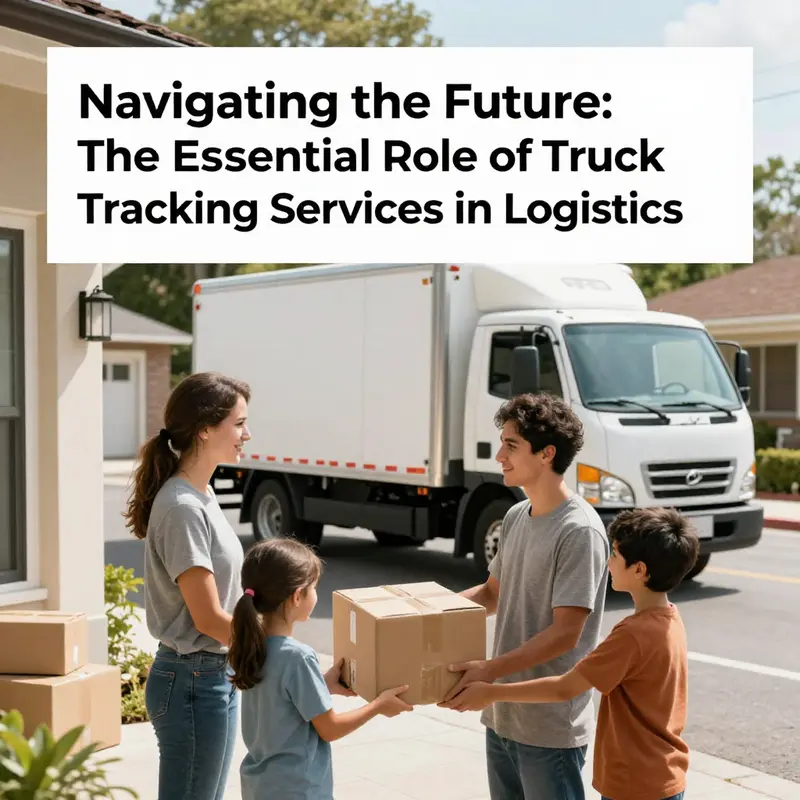
Trucks traveling through crowded city streets and quiet rural lanes are not just moving goods; they carry the rhythms of daily life, the reliability of businesses, and, increasingly, the health of communities. Real-time truck tracking has emerged as a pivotal layer in modern logistics, turning opaque movements into a transparent, continuous narrative. This narrative does not reside only in dashboards and notifications; it becomes a shared public good that informs planning, sustains critical services, and reduces the environmental footprint of a sprawling freight system. The technology rests on a simple premise—attach digital eyes to vehicles and feed those signals into platforms that translate location, speed, and status into actionable updates. When done well, tracking binds together private enterprise and public benefit, helping a hospital, a school, a small business, and a resident breathe a little easier about when and how essential goods will arrive. It is not a luxury; it is a practical instrument for building trust and resilience in a densely interconnected economy.
At the operational level, real-time tracking is a dance of data and dashboards. Most fleets rely on GPS-enabled devices placed in key locations within the vehicle or the cargo area, transmitting a stream of information about position, movement, and vehicle health. The cadence of updates varies, but regular intervals—often between 15 and 60 minutes—paint a moving portrait of a shipment in motion. Shippers access this portrait through online portals or mobile apps using a unique tracking identifier. They can see the current status, the route, check checkpoints, and review estimated arrival times that reflect live conditions rather than static schedules. Automated alerts—delivered via text or app notifications—mark milestones such as loading, departure, en route progress, entry into a hub, and arrival. The ability to confirm a shipment’s status at a glance reduces anxiety on both ends of the chain and empowers proactive communication with recipients. In practice, many providers also weave in weather data, live traffic, and historical patterns to suggest more efficient routes, helping to curb unnecessary detours and idling. The effect is not merely a stream of facts; it is decision support that translates information into lower costs, faster turns, and higher reliability.
The societal upside unfolds across several interconnected dimensions. First, efficiency. When fleets optimize routes and driving schedules, vehicles spend less time idling and covering redundant miles. The environmental impact is tangible: fewer emissions, lower fuel consumption, and a lighter footprint for the freight sector. This is not a theoretical benefit but a measurable outcome supported by research in the field of telematics. A well-documented finding notes that real-time tracking can cut idle time by as much as 20 percent and reduce fuel use by roughly 10 to 15 percent. Those gains accumulate across thousands of vehicles and millions of miles, producing cleaner air in urban corridors and less wear on road infrastructure due to smoother traffic flows. In cities where freight activity compounds congestion, even modest efficiency improvements can yield noticeable improvements in air quality and street safety. The environmental dividend complements the economic benefits, creating a virtuous cycle where cost savings reinforce sustainable practices and public health objectives.
A second dimension is reliability and trust. Real-time visibility helps ensure that time-sensitive deliveries—particularly in health care, education, and emergency services—arrive when needed and with minimal disruption. When a shipment of vaccines, medical supplies, or critical equipment is tracked from origin to destination, stakeholders can anticipate delays, reallocate resources, and execute contingency plans with confidence rather than speculation. This reliability extends beyond institutions to households and local businesses that rely on predictable delivery windows. For instance, a community shop that depends on a defeated-by-delay scenario for restocking can adjust staffing and inventory in advance, reducing stockouts and waste. In urban contexts, predictability also means fewer erratic deliveries that complicate traffic patterns, block driveways, or create last-mile frictions for retailers and service providers. Such improvements accumulate into a more respectful relationship between freight and everyday life, where the movement of goods coexists with the cadence of neighborhoods rather than intruding upon them.
The public-interest benefits compound when we widen the lens to include planning and resilience. Real-time tracking provides rich data about movement patterns, freight flows, and congestion hotspots. Municipal planners can use aggregated insights to design more effective loading zones, optimize curb space, and sequence last-mile operations in a way that minimizes conflicts with pedestrians and public transit. During disasters or extreme weather events, knowing where critical cargo is at any moment accelerates coordination with responders, hospitals, and relief organizations. The result is not a single heroic act but a system that can absorb shocks with less cascading disruption. When communities can anticipate and respond to disruptions quickly, the social costs of emergencies decline, and recovery can proceed with greater speed and coordination. The public good here emerges not from a single technology but from the responsible use of data to improve transparency, collaboration, and agility across diverse stakeholders.
Embracing real-time truck tracking also nudges the logistics ecosystem toward better mutual accountability. Small shippers gain visibility that once required substantial investment; larger manufacturers can synchronize supply with demand more precisely; carriers and brokers gain tools to optimize service levels and reduce detention time; and the broader market experiences a higher standard of reliability. The cultural shift accompanying these capabilities should be grounded in privacy and security: data should be protected, access should be appropriately scoped, and transparency should be balanced with safeguards. Yet the core impulse is clear. When information flows freely to the right people, the potential for waste, miscommunication, and last-minute chaos diminishes. People begin to trust the system because they can see it working in real time, not only in theory.
For readers looking to translate these benefits into practice, the path is not a matter of grandstand announcements but of integrating real-time visibility with everyday workflows. The most successful implementations marry tracking with analytics, turning raw location data into actionable patterns—seasonal demand shifts, recurring bottlenecks, and opportunities to consolidate loads. This deeper understanding supports smarter asset utilization, aligning maintenance cycles with actual wear rather than calendar schedules, and enabling procurement decisions that reflect real-world performance. The cumulative effect is a more predictable, resilient logistics network that supports business continuity while reducing environmental costs and urban disruption. In this sense, the technology is less about watching trucks move and more about orchestrating movements in ways that benefit people, communities, and the planet alike. For readers seeking practical guidance and industry perspectives, the conversation is enriched by industry insights that emphasize safety, efficiency, and community-driven approaches to procurement and maintenance. Explore these ideas and learn from real-world experiences through industry hubs that curate practical guidance for practitioners in trucking operations. For a deeper dive into practical guidance and industry viewpoints, see the linked resource at 5startruckin.com/blog/.
External resource: https://www.transportation.gov/technology/real-time-telematics
Final thoughts
The realm of truck delivery tracking services has evolved into an essential framework within the logistics industry, offering benefits that extend beyond mere shipment visibility. As technology continues to advance, the integration of GPS tracking in delivery trucks provides vital support to long-haul drivers, trucking companies, and fleet managers, fostering operational efficiency and increased accountability throughout the transportation process. Moreover, understanding the economic, geopolitical, and societal impacts of these services enriches our appreciation of their role in enhancing customer satisfaction and promoting trust within the logistics ecosystem. Ultimately, embracing these advancements is a step towards a more connected and efficient future for all stakeholders involved.