
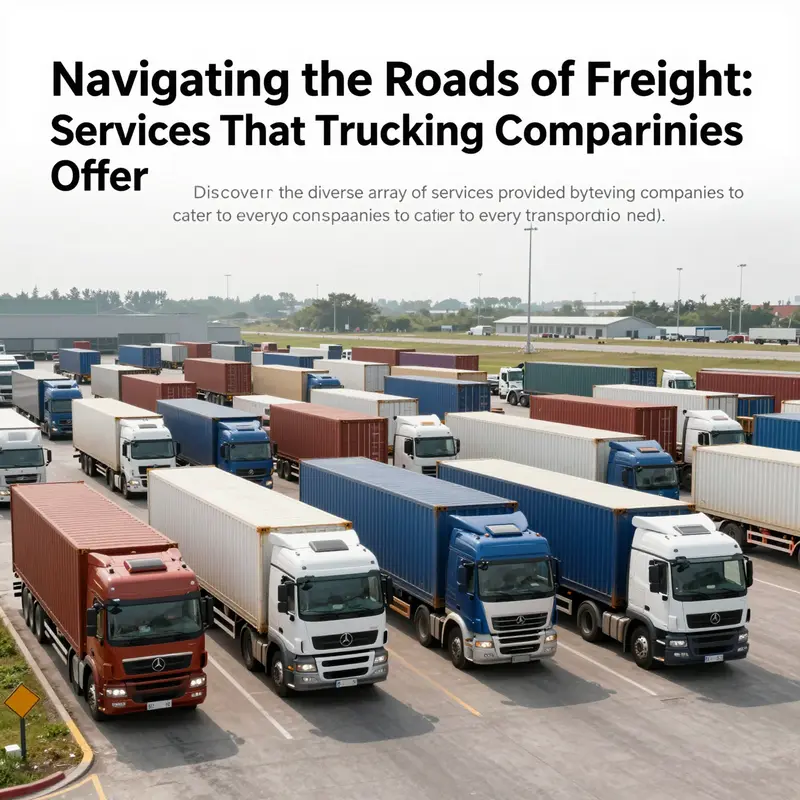
Trucking companies play a pivotal role in the global supply chain, offering a myriad of services tailored to meet diverse transportation requirements across various industries. With the ability to move goods domestically and internationally, these companies ensure that products reach their destinations safely and efficiently. This article explores vital services such as domestic and international freight transport, specialized cargo handling, intermodal transportation, and last-mile delivery. By understanding these services, long-haul truck drivers, trucking company owners, fleet managers, and aspiring drivers can gain insights into the operations that shape modern logistics.
Moving Markets Across Borders: A Cohesive View of Domestic and International Freight Transport Services Offered by Trucking Companies
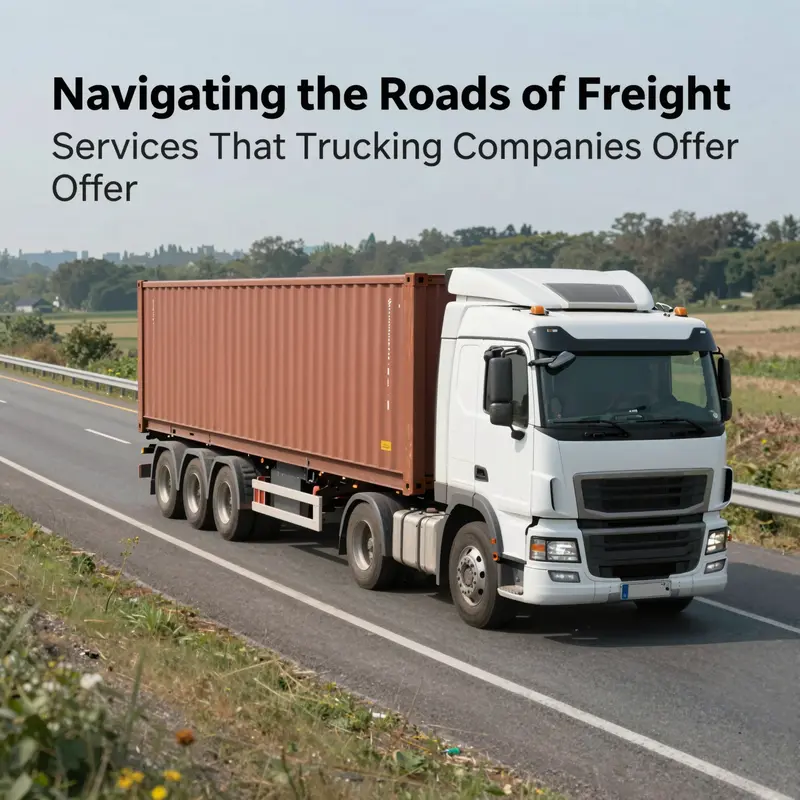
Every shipment tells a story of routes chosen, handoffs managed, and timing choreographed to minimize risk and maximize value. In the modern economy, trucking companies sit at the heart of a vast logistics network, knitting together local lanes and global corridors with a blend of capabilities that go far beyond simply moving a trailer from point A to point B. The most effective trucking partners operate as full-spectrum logistics providers, capable of stitching together multiple modes, managing complex paperwork, and delivering outcomes that meet the precise needs of manufacturers, retailers, and emerging digital marketplaces alike. In this chapter, we trace the core services that define domestic and international freight transport from the trucking perspective, highlighting how carriers tailor their offerings to different loads, distances, and regulatory environments while maintaining the reliability that customers expect in a highly interconnected supply chain.
At the domestic level, a trucking company typically operates a spectrum that spans both efficiency and specialization. For smaller shipments, less-than-truckload, or LTL, strategies allow several customers’ freight to share a single trailer. This approach optimizes capacity and cost, enabling companies with modest volumes to access reliable corridor movement without outsized commitments. In contrast, full-truckload, or FTL, operates with a dedicated asset allocated to a single customer, often translating into shorter transit times, less handling, and more predictable delivery windows for larger shipments. It is the backbone for producers with consistent, high-volume requirements or goods that require strict security and uninterrupted temperature or vibration control. Across both LTL and FTL, specialized cargo handling forms an essential complement. Temperature-sensitive goods demand robust cold-chain protocols, while hazardous materials, heavy equipment, or high-value items require heightened compliance with safety standards, sophisticated load securement, and explicit driver qualifications. The value here lies not only in transportation but in the careful orchestration of packaging, mode-switching when necessary, and meticulous documentation that keeps every leg of the journey compliant and traceable.
Within a domestic framework, flexibility is as critical as reach. Modern trucking firms offer flexible delivery options that include time-specific deliveries, door-to-door service, and last-minute rearrangements when production schedules change or customer deadlines tighten. These capabilities hinge on networks that span metropolitan hubs, regional distribution centers, and cross-state corridors, enabling shipments to move in ways that reflect real-world operational tempo. It is this adaptability that often differentiates a good carrier from a great one: the capacity to re-optimize routes in real time, reroute around traffic disruptions, and compress or expand service footprints to align with clients’ evolving needs.
Crossing borders introduces a set of additional complexities, but it also expands the strategic value a trucking partner can offer. International freight transport typically relies on a seamless integration of trucking with other modes—rail, sea, and air—so cargo moves through a coordinated, containerized ecosystem that maximizes efficiency and minimizes handling risk. In this international context, trucking companies often provide end-to-end freight forwarding services that include not only inland movement but also the critical steps that occur at the boundary between countries. Customs clearance becomes a central service, with experienced teams handling border crossing requirements, documentation management, and the coordination of transit with other carriers to ensure on-time departures and arrivals. The aim is to reduce cargo dwell time at borders and minimize the potential for misrouting or paperwork bottlenecks that can ripple through supply chains.
End-to-end freight forwarding represents a philosophy as much as a capability. It asks the carrier to see the shipment as a single chain rather than a series of isolated legs. In practice, this means orchestrating pickup, inland transport, container handling, port or inland-terminal procedures, customs and compliance checks, cross-border handoffs, and final-mile delivery, all within a framework that preserves visibility for the shipper and reduces liability for everyone involved. The interdependence of these functions becomes especially evident for time-sensitive or high-value cargo. For such loads, trucking firms bring together specialized equipment, trained personnel, and rigorous process controls to ensure that every transfer point preserves climate control, integrity, and security.
A central evolution in the sector is the rise of intermodal transportation. The concept—moving freight across multiple modes with minimal friction, often using containerized cargo that can be transferred between trucks, trains, ships, and planes—offers both strategic resilience and cost efficiency. Trucking companies increasingly serve as the connective tissue that bridges the door and the terminal, enabling goods to ride rails for long-haul segments and then finalize with a precise, customer-facing delivery. This approach reduces legs on congested highways, lowers per-mile fuel consumption, and expands access to markets that are not directly reachable by road alone. It also introduces new performance metrics, such as transfer times at intermodal hubs, carrier handoffs, and the documentation required to maintain a smooth transition from road to rail or sea. In practice, successful intermodal transport is less about the modes themselves and more about the orchestration of handoffs, the reliability of container movements, and the capacity to preserve timing assurances across a multimodal itinerary.
The digital transformation of logistics has sharpened the ability to match capacity with demand in real time. On-demand and spot market booking platforms have become a centerpiece of flexible, real-time freight matching and pricing. Rather than relying solely on fixed-route contracts, shippers can post loads and carriers bid in a competitive marketplace. This model creates a dynamic where capacity can surge to meet immediate needs or tighten during peak seasons, with algorithms that weigh factors such as distance, cargo type, required equipment, and service-level commitments. The commercial reality is more competitive pricing, faster response times, and greater transparency around rates and transit expectations. Yet with this agility comes the need for disciplined governance: standardized carrier vetting, robust insurance coverage, and rigorous compliance monitoring to ensure that savings do not come at the expense of safety or reliability.
Beyond movement, many trucking companies offer full-service logistics support that reframes them as integrated supply chain partners rather than single-function transporters. This broader capability set often includes pickup and delivery coordination, warehousing and inventory management, value-added services such as packaging and labeling, and customs brokerage alongside the customary documentation handling for complex shipments. For businesses engaged in cross-border operations, the ability to outsource customs tasks to a trusted partner can be a game-changer, reducing the risk of misinterpretation of regulatory rules and ensuring smoother clearance at borders. The end-to-end service model becomes particularly compelling for manufacturers with just-in-time production lines or retailers that want tight control over stock levels and replenishment cycles. In such contexts, a carrier’s warehousing footprint and its ability to synchronize inbound docks with outbound shipments can transform a sporadic flow of goods into a predictable, synchronized rhythm that supports lean inventories and more reliable customer service.
A related dimension is the use of scheduled and contract carrier services. Long-term commitments with manufacturers, retailers, and distributors provide a predictable spine for a supply network that often runs on tight production cadences and seasonal demand. Scheduled services help guarantee that essential parts arrive when needed, that replenishments dock on schedule, and that distribution centers can maintain optimal staffing and equipment utilization. In return, shippers gain priority access to capacity, improved service level agreements, and a clearer framework for benchmarking performance. The contrast with on-demand transport is not a tension but a continuum: many organizations rely on a hybrid approach that blends stable, contract-based movements with the flexibility of real-time spot bookings for less predictable spikes in demand.
Last-mile delivery completes the loop, bringing goods from regional hubs to the end customer’s door. This phase has gained new strategic importance with the explosive growth of e-commerce and the rising demand for rapid fulfillment. Last-mile operations require specialized capabilities, including precise time-window adherence, flexible scheduling, and courteous, professional delivery personnel who can handle unpacking and placement within homes or storefronts. The quality of last-mile execution often becomes the most visible touchpoint for customers, shaping perceptions of reliability and overall brand experience. Carriers therefore invest in route optimization software, real-time tracking, and driver training that emphasizes safety, accuracy, and customer communication. The result is a chain where every link—from the earliest pickup to the final doorstep handoff—contributes to an on-time, intact, and well-documented shipment.
Sustainability is no longer a sidebar but a central criterion in service design. Freight transport consumes energy, and emissions have become an operational and reputational concern for shippers and carriers alike. Industry players are responding by upgrading fleets with fuel-efficient engines, adopting alternative fuels where feasible, and deploying advanced route optimization technologies that minimize idle time and detours. The environmental imperative has helped catalyze innovations in vehicle engineering, telematics, and data-driven planning that can yield meaningful reductions in fuel burn and CO2 output while maintaining or improving velocity and reliability. In markets where regulatory regimes increasingly incentivize greener logistics, the most successful trucking partners are those that translate sustainability into measurable performance—lower fuel costs, cleaner operations, and stronger compliance with evolving environmental standards—without sacrificing the service levels that shippers rely on.
Digital accessibility reshapes how shippers source and manage freight transport. Platforms that enable real-time capacity checks, rate comparisons, and ETA transparency make it easier to identify suitable carriers and align their capabilities with specific loads. For shippers seeking dependable partners, digital marketplaces and platforms provide a means to source carriers who can tailor solutions—whether for domestic LTL, cross-border moves, or the coordination of multimodal itineraries. This digital enablement is not merely about price discovery; it is about creating a more resilient, auditable, and responsive logistics ecosystem where visibility, collaboration, and governance are built into the planning and execution workflow. In this evolving landscape, a carrier’s value proposition extends beyond mileages and equipment to include data quality, proactive issue resolution, and the ability to translate operational performance into actionable insights for customers.
A practical understanding of these services can be enriched by looking at real-world arrangements that illustrate how a carrier translates capabilities into reliable outcomes. For readers seeking a concrete perspective on how one provider articulates and delivers these competencies, see the article on the unparalleled services of 5 Star Truck Inc, which demonstrates how a trucking operation translates broad capabilities into dependable, end-to-end delivery. unparalleled services of 5 Star Truck Inc.
Ultimately, what distinguishes trucking companies in this landscape is not merely the range of services but the coherence of the service design—the way inland movement, border clearance, intermodal transfers, warehousing, and last-mile execution are orchestrated into a single, dependable flow. Shippers benefit when a carrier can reduce handoffs, minimize dwell times, and safeguard cargo integrity across diverse geographies and regulatory environments. The most effective partnerships are built on a shared view of the entire journey, with clear accountability, robust risk management, and a commitment to continual improvement. As supply chains continue to evolve, these carriers are increasingly positioned not just as transport providers but as integrated logistics partners who can align operations with a company’s strategic priorities—from cost containment and service level reliability to sustainability and speed-to-market.
For readers who want to extend their understanding beyond the immediate operations, it is helpful to consider the broader ecosystem of freight forwarding and cross-border logistics. A foundational external resource provides a comprehensive view of how freight forwarders coordinate inland trucking with maritime and air movements, including transit coordination, border compliance, and final-mile delivery. This reference can offer a practical complement to the chapter’s focus on trucking services and illuminate how coordinated, cross-border solutions are designed to keep goods moving smoothly in a complex, global market: https://www.ups.com/us/en/solutions/transportation-solutions/freight-forwarding.page
Specialized Cargo, Specialized Care: The Hidden Services Trucking Firms Provide
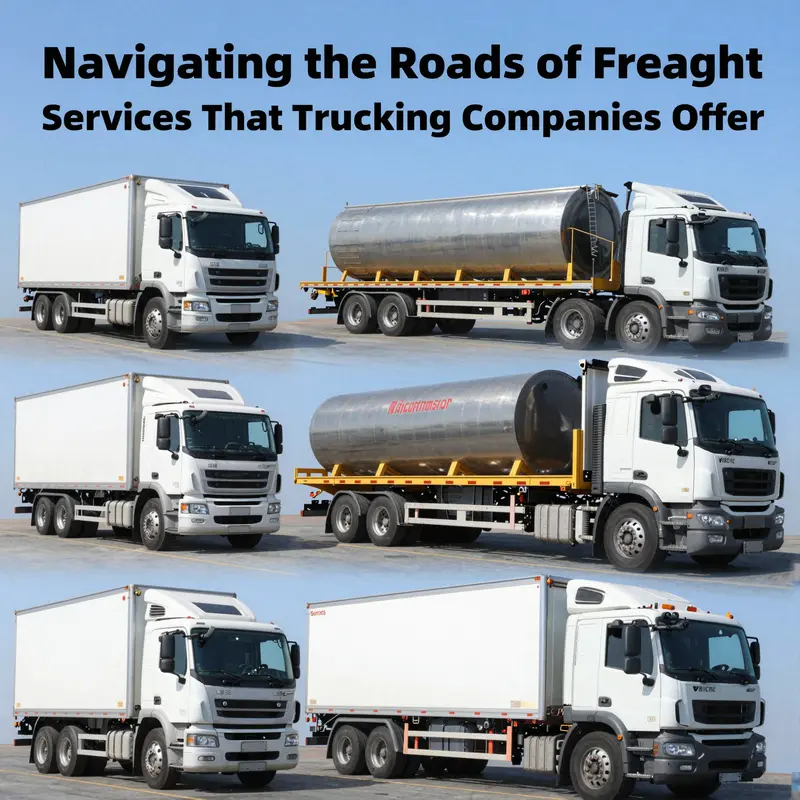
Specialized cargo is more than a niche within trucking. It is a language, a discipline, and a coordinating act that turns complex requirements into reliable delivery. When a shipper faces an atypical load—an oversized structural component, a temperature-sensitive product, hazardous materials, or a high-value asset—the job moves from routing to orchestration. In these moments, the value of specialized cargo services reveals itself not as a single service but as a carefully engineered mix of capabilities, processes, and people who can translate a difficult request into a secure, on-time arrival. The chapter that follows threads together the many threads of specialization, showing how trucking firms transform constraints into competitive advantage while keeping the broader supply chain intact and transparent for the customer.
At the core of specialized trucking is the recognition that one size does not fit all. A standard dry van, while versatile, cannot safeguard a cold chain, accommodate a 12-foot-wide load, or prevent damage to a delicate turbine blade during transit. The first layer of specialization is asset alignment. Fleet composition matters as much as route choice. For frictionless handling of flatbed and step-deck shipments, for example, carriers must deploy trailers that can accommodate irregular shapes, long lengths, and heavy weights. The securing methods—chains, binders, customized dunnage, and chase vehicles when needed—require trained personnel who understand physics as a stewardship practice. This is not merely tying down cargo; it is a disciplined practice that reduces shifting, rattling, and load loss across highway stretches, mountain passes, and urban corridors with mixed traffic. The same care applies to machines and heavy equipment being moved from one job site to another. In these cases, the operator’s skill is as crucial as the trailer’s capability, because precise load distribution can influence axle load limits, fuel efficiency, and the ability to pass through stringent permitting regimes along the route.
Refrigerated transport occupies a special niche where temperature control becomes a governing parameter for success. Reefer trailers do not merely transport goods; they maintain a precise thermal profile that preserves quality, safety, and compliance with customer specifications. The challenge extends beyond pulling a cord and setting a temperature. It includes rapid response to ambient changes, proactive maintenance of refrigeration units, and continuous data logging to prove that products remained within spec from pick-up to delivery. The logistics chain must also manage the handoff from warehouse to truck with minimal exposure to heat, humidity, or frost. That level of control requires not only robust equipment but a culture of discipline among drivers, dispatchers, and shippers. It is a shared assurance that the product is protected by design, not merely by chance.
Hazardous materials transport adds another layer of complexity, where safety is inseparable from compliance. Moving dangerous goods demands a meticulous blend of training, documentation, and routing discipline. Drivers hold hazmat endorsements, the vehicles are equipped with approved placards and emergency response information, and the carrier’s safety program is built to track and verify every shipment’s compatibility with local regulations and international rules where applicable. This is not a simple pick-and-drop operation; it is a regulated workflow that anticipates potential incidents, mitigates risk, and prioritizes the well-being of the public and the environment. The paperwork is a living artifact of this philosophy, with manifests, product descriptions, and regulatory approvals required at each handoff. A trucker who can interpret a safety data sheet, align it with a route’s permitted corridors, and coordinate with receivers who understand the implications of hazmat rules adds measurable value to the customer’s risk profile.
Over-sized loads and heavy haul operations push specialization into the realm of permits, pilots, and route engineering. A beam, turbine gear, or vessel section may require temporary lane closures, escort vehicles, and precise timing to clear bridges and tunnels. The planning conversation becomes almost architectural: how to stage equipment at the origin, how to sequence the move to minimize disruption, and how to forecast weather-related contingencies that could strand a crucial component mid-route. The carrier’s role extends to pre-emptive stakeholder coordination with state agencies, railway authorities, highway patrols, and port authorities when cross-border or multi-region moves are involved. It is a collaborative service, one that demands clear communication, documentation speed, and a readiness to adapt if a truck or a load refuses to cooperate with an original plan. In practice, this means designing a transport envelope that can accommodate unique dimensions while ensuring compliance with every jurisdiction’s axle, height, and weight limits.
Vehicle transport, including the shipment of cars and heavy machinery, adds another specialized thread. The exacting nature of vehicle logistics requires carriers to align equipment with the type of asset being moved—whether it is a standard passenger vehicle or a customized piece of industrial equipment. Protective measures are tailored to minimize paint damage, preserve interior condition, and secure sensitive components such as wheels, tires, and undercarriage elements during transit. The process also calls for coordination with dealers, manufacturers, or fleet managers who rely on time windows and precise delivery sequencing to keep production lines moving. When handled well, vehicle transport firms become more than carriers; they become partners in the logistics chain, coordinating pre-delivery inspections, temporary storage, and final-mile handoffs to ensure the asset is in showroom condition upon arrival.
Expedited shipping introduces urgency into specialized services. Time-sensitive loads demand speed, flexibility, and a readiness to re-optimize on the fly. This is not about rushing ordinary freight; it is about delivering certainty when the clock is a primary constraint. A carrier may allocate dedicated or high-priority capacity, deploy faster equipment, and route around congestion with real-time visibility shared with the customer. The discipline here is a balance between speed and safety, ensuring that acceleration does not erode the integrity of the cargo or the traffic ecosystem. Expedited operations often pair with flexible pickup windows, exclusive-use trailers, and direct-driver handoffs that minimize the touchpoints between origin and destination. In a world where e-commerce has raised customer expectations for delivery speed, the role of expedited specialized services becomes a critical differentiator for shippers seeking reliability for high-stakes orders or critical components that cannot wait.
Intermodal transportation broadens the scope of specialization by optimizing the movement of freight across modes. A single shipment may ride a sequence of trucks, trains, ships, and even air connections, with containers or specialized equipment bridging the gaps. The practice reduces transit time and can improve efficiency for long distances or challenging geographies. But it also introduces complexity in coordinating handoffs: securing containers, managing dwell times at terminals, and maintaining the cargo’s stability across modes. Carriers with intermodal capabilities invest in data connectivity, standardized documentation, and trusted partners who can take the load from one mode to another with minimal risk. The ultimate benefit for the shipper is a more resilient supply chain: multiple pathways to reach a destination, each with its own set of specialized controls and checks.
Intertwined with these physical capabilities is a robust commitment to compliance and safety. Specialized cargo services demand ongoing training and certification, rigorous maintenance schedules, and a culture of proactive risk management. Carriers typically maintain a broad set of permits, insurance coverages, and regulatory acumen to navigate the varied landscapes of domestic and international transport. They invest in security measures to protect cargo from theft or tampering and in telematics to monitor location, temperature, vibration, and other indicators of cargo health. On the human side, the drivers, dispatchers, and facilities teams collaborate to translate a customer’s technical needs into concrete, verifiable actions. A well-coordinated, specialized operation can convert a potentially fragile or risky shipment into a predictable, auditable experience that earns trust from manufacturers, retailers, and project teams alike.
For many shippers, the appeal of specialized cargo services lies in the bundled value offered by integrated logistics solutions. Rather than juggling multiple contractors and coordinating disparate timelines, a shipper can lean on a single provider that stitches together pickup, securement, transport, regulatory compliance, storage, and final delivery. This is what many in the industry mean by full-service logistics support, a capability that often includes customs brokerage and documentation handling for cross-border shipments. In practice, the advantage is not merely convenience but risk reduction: fewer points of failure, clearer accountability, and a unified standard for performance, safety, and traceability. The shipper gains a narrative of control—where is my load, what is its status, what exceptions have occurred, and what steps are being taken to rectify them. In a world where supply chains are exposed to rapid disruption, such confidence can become a decisive competitive asset.
If a reader seeks a practical illustration of the breadth and depth available in specialized trucking services, it is worth examining how some carriers present their service portfolios. They emphasize not only the physical means—trailer types, temperature control, and load securement—but also the operational rigor behind them: route planning, regulatory navigation, and a culture of continuous improvement that reflects in on-time delivery metrics and incident rates. The emphasis is not simply on moving freight; it is on delivering a tailored solution that respects the cargo, the customer’s timelines, and the regulatory landscape in which the shipment travels. This philosophy aligns with the broader picture of what trucking companies offer: a spectrum that extends from routine nationwide freight to the most nuanced, high-stakes transports imaginable. For readers curious about how one company frames its service architecture, a deeper look into industry narratives and case studies—such as the dedicated resources highlighted by industry leaders—can illuminate how specialized capabilities are communicated and delivered in practice. Discovering the unparalleled services of 5 Star Truck Inc offers a case study in presenting a comprehensive service portfolio that covers the spectrum from local to cross-border, from routine to extraordinary, and from standard freight to specialized solutions. The takeaway is clear: specialization is a strategic response to proximity, risk, and efficiency, and it requires disciplined execution across every stakeholder involved in the shipment.
The chapter would be incomplete without acknowledging how specialization interfaces with the broader logistics ecosystem. Shippers benefit when carriers align with digital platforms that enable real-time load matching, bidding, and capacity planning. On-demand and spot market models provide the flexibility to deploy scarce specialized assets quickly in response to sudden demand or urgent project needs. In practice, this means a shipper can access the right combination of trailer type, equipment, and driver expertise at the moment a load is posted, rather than after lengthy negotiations or delays. It also means that specialized services can be scaled in a way that preserves service levels during peak periods. Yet the emphasis remains on reliability, not just speed. The most successful operators are the ones that couple speed with a disciplined, safety-first approach to handling every specialized cargo load.
In sum, specialized cargo services offered by trucking companies are a composite of assets, processes, and people designed to meet extraordinary requirements with ordinary dependability. They reflect a commitment to precision, safety, and regulatory compliance while preserving the capacity for flexibility and responsiveness. The chapter has traced the arc from asset alignment to intermodal possibilities, and from expedition responses to cross-border coordination, underscoring how specialization enhances the entire transport proposition. The result is a more resilient, more predictable, and more trustworthy conduit for goods that demand the highest standards of care. For readers seeking to place specialized trucking in a broader strategic context, the external literature on trucking company practices provides corroborating perspectives on how industry players structure and measure the performance of these demanding services. See the external resource linked at the end of this chapter for a wider conceptual frame. The journey through specialization is, ultimately, about turning complex cargo into simple outcomes: safety, timeliness, and integrity, every mile of the way.
External resource for broader context: https://www.sciencedirect.com/topics/engineering/trucking-company
Bridging Roads and Rails: The Intermodal Edge in Modern Trucking
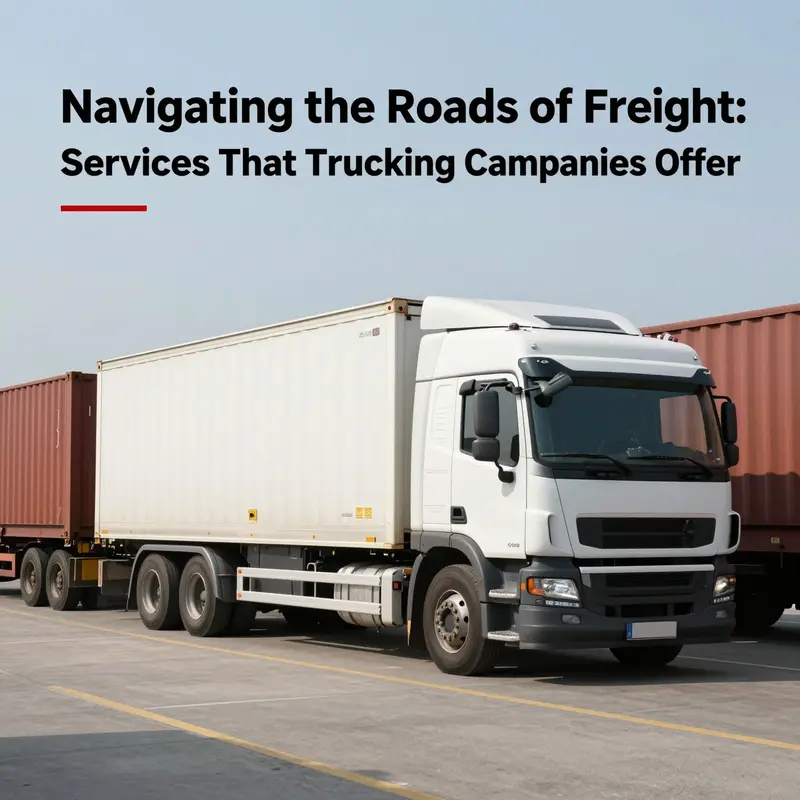
Intermodal transportation sits at the intersection of flexibility and efficiency, a choreography of movement that blends the immediacy of road travel with the capacity and economy of rail. In trucking conversations, it often appears as a strategic alternative rather than a sole replacement for over-the-road service. Yet the truth is more nuanced: intermodal is a growth engine for long-haul logistics, expanding capabilities without forcing a trade-off between speed and sustainability. By weaving trucks and trains into a single rhythm, carriers can deliver the best of both worlds—the agility to pick up and deliver near the customer and the bulk-pulling power of rail when the distance and volume demand it. This approach is not a niche service but a vital component of modern supply chains that seek to optimize cost, reliability, and environmental footprint across diverse geographies and industries.
At its core, intermodal transportation rests on the container. The standardized box becomes a universal unit that can be carried by different modes with minimal handling, reducing the risk of cargo damage and the delays that often accompany multiple handoffs. Shipments are planned so that a container can move by truck to a rail intermodal terminal, transition seamlessly to a locomotive for the long haul, and reemerge at a distant terminal where another truck completes the final mile. This sequence, while complex in execution, is designed to be transparent to shippers who crave predictability and traceability. When executed well, it feels almost like a single integrated journey rather than a patchwork of transfers. The emphasis remains on reliability, which is built through standardized processes, disciplined scheduling, and a well-tuned network of transfer points that minimize dwell times and maximize velocity where it matters most.
The operational logic of intermodal trucking is deeply adaptive. Long-haul freight, especially freight-heavy or volume-driven goods, benefits from rail’s lower per-ton-mile costs. Trucks handle the pickup, last-mile, and the precise handoffs that rail cannot perform as efficiently over long stretches. Rail, in turn, handles the long corridor where roadway constraints—fuel costs, congestion, driver hours, and road wear—become meaningful liabilities. The result is a transportation plan that can compress total transit time and reduce overall cost per shipment, especially for customers who ship in substantial quantities across continental distances. In many networks, a single shipment can begin its life as several smaller loads—LTL—consolidated into a full container for the rail segment, and then split again for delivery. This consolidation is not just a cost play; it is a strategic way to balance capacity with demand, smoothing service levels for multiple customers while preserving the economic advantages of scale.
From the customer’s perspective, intermodal services translate into steadier schedules and more resilient supply chains. The predictability of rail cargo movement, when aligned with the flexibility of trucking for pickup and delivery, can tighten the overall lead times in ways that matter for production lines, retail fulfillment, and seasonal campaigns. It also opens doors for carriers to negotiate long-range contracts that lock in capacity during peak seasons, reducing the exposure to bottlenecks that might arise in a purely truck-based model. Carriers invest in advanced planning tools to orchestrate this balance: route optimization that considers intermodal hubs, real-time visibility that tracks containers across modes, and predictive analytics that anticipate delays and suggest proactive reroutes. The human element remains essential, but the decisions are increasingly data-driven, with the aim of minimizing unexpected stoppages and maximizing on-time delivery while safeguarding cargo quality.
A practical feature of intermodal networks is the way they handle shipments at scale. For many businesses, consolidation plays a central role. By aggregating multiple customers’ loads into a single container at an intermodal terminal, carriers can achieve higher utilization and better space management. This is not merely logistics arithmetic; it is a deliberate strategy to improve asset utilization and reduce unit costs for all participants in the network. In turn, shippers benefit from economies of scale that might not be achievable through trucking alone, especially over long distances where the fixed costs of rail operations can be spread across a larger volume. Yet consolidation must be balanced with service expectations. The cadence of intermodal legs is carefully designed to avoid excessive dwell at terminals, which can erode the time advantages and reduce the reliability that customers depend on for production planning and inventory management.
Technology is often the quiet engine behind successful intermodal operations. Real-time tracking provides continuous visibility, allowing dispatchers to monitor container movements, anticipated handoffs, and any disruption along the way. Advanced scheduling systems coordinate the timing of pickups, rail departures, and last-mile deliveries so that a container’s journey unfolds as a single, coherent timeline. Data analytics bring a deeper layer of insight: shipment-level performance metrics, root-cause analysis of delays, and scenario modeling that helps managers make informed trade-offs between speed, cost, and reliability. The shift toward digitization also supports sustainability goals. By optimizing routes, reducing idle times, and promoting the most efficient use of rail, intermodal networks can cut fuel consumption and emissions relative to non-integrated road transport, aligning with corporate and regulatory pressures to decarbonize logistics.
Intermodal services do not exist in a vacuum; they are embedded in broader logistics ecosystems that include warehousing, cross-docking, and regional distribution networks. A well-designed intermodal strategy integrates with these elements to create seamless flows: goods arriving at a port or terminal can be rapidly sorted, stored if needed, and redirected to the appropriate rail or road legs based on demand. In this sense, intermodal trucking becomes a connective tissue that binds manufacturing, distribution, and retail into a more coherent, responsive network. For manufacturers and retailers, the value lies not only in reduced transport costs but in improved service levels. When product arrives closer to the point of use, from a dependable schedule, the downstream operations—assembly lines, store replenishment, and curbside fulfillment—gain predictability and efficiency. The gains extrapolate beyond the immediate shipment, contributing to lower safety stock requirements, less inventory obsolescence, and better overall supply chain resilience.
Cross-border and cross-regional considerations add another layer of complexity and opportunity. Intermodal transportation can simplify some of the regulatory challenges associated with border crossings by separating the long-haul rail leg, which may benefit from border processing efficiencies, from the local drayage and last-mile segments that face different certifications and permit requirements. The result is a network that can adapt to diverse regulatory environments while maintaining a coherent service standard. It is essential for operators to maintain a robust compliance framework, ensuring that driver qualifications, vehicle standards, and operational permits are aligned with both national and regional rules. This compliance backbone keeps intermodal operations stable even as demand shifts or political climates change. For shippers seeking smoother cross-border throughput, a well-executed intermodal solution can reduce the friction inherent in multi-segment shipments and help protect lead times against external shocks.
Looking ahead, the intermodal landscape is likely to become even more intertwined with digital platforms, predictive maintenance, and sustainability initiatives. Emerging tools enable on-the-ground teams to optimize yard operations, coordinate container movements with greater precision, and anticipate demand surges with improved accuracy. This is not simply about speed; it is about resilience. When disruptions occur—whether due to weather, infrastructure constraints, or labor fluctuations—a responsive intermodal system can reroute, re-timetable, or re-bundle shipments across modes more nimbly than a truck-only plan. For carriers, this means investing in flexible infrastructure at strategic hubs, cultivating reliable rail partners, and ensuring that IT systems can support end-to-end visibility across modes. For shippers, the payoff is a logistics spine that can absorb volatility without collapsing into delayed production lines or stockouts. The net effect is a more adaptable and environmentally conscious form of freight movement that aligns with global priorities while preserving the commercial viability of long-haul routes.
The narrative around intermodal trucking is, in essence, a narrative about balance. It is a disciplined approach to achieving higher throughput without sacrificing service quality, a way to harness the economics of rail to complement the agility of trucking. It invites a reexamination of how fleets are planned, how terminals are staffed, and how partnerships are structured. For a modern logistics team, embracing intermodal services means more than adopting a new mode of transit; it means integrating workflows, data flows, and performance metrics that elevate the entire supply chain. It means recognizing that the cargo is not just goods to be moved; it is a chain of commitments to customers, stores, manufacturers, and end users that depends on timely, transparent, and responsible transportation.
For readers seeking a broader context on how intermodal strategies fit into contemporary trucking operations, a concise overview can be found in industry discussions and practitioner blogs, which emphasize the practicalities of coordinating across modes and the value of containerized cargo in reducing handling and dwell time. You can explore qualitative insights and ongoing case studies at the 5 Star Truck Blog, which offers accessible coverage of trucking operations and logistics planning. This resource can provide a useful starting point for teams evaluating intermodal options and thinking through how to align them with their existing networks. 5 Star Truck Blog.
As with any significant shift in transportation strategy, decisions about embracing intermodal services should be guided by a careful assessment of distance, volume, capacity commitments, and service requirements. A smart approach weighs the long-haul savings and emissions reductions against the operational realities of terminal access, transfer times, and the need for precise coordination across multiple partners. It also considers customer expectations around lead times and order profiles. When these factors align, intermodal trucking becomes a powerful instrument for delivering consistent, cost-effective service in a world where demand patterns are increasingly dynamic and supply chains must be both lean and robust. In that sense, intermodal transportation is not just a mode choice; it is a strategic mindset that foregrounds efficiency, reliability, and sustainability as core commitments of modern trucking companies.
External resource for deeper exploration: Understanding Intermodal Trucking Companies and Their Benefits. https://www.logisticsmanagement.com/intermodal-trucking-companies-benefits/
Closing the Loop: How Last-Mile Delivery Redefines Modern Trucking and the Full Spectrum of Services
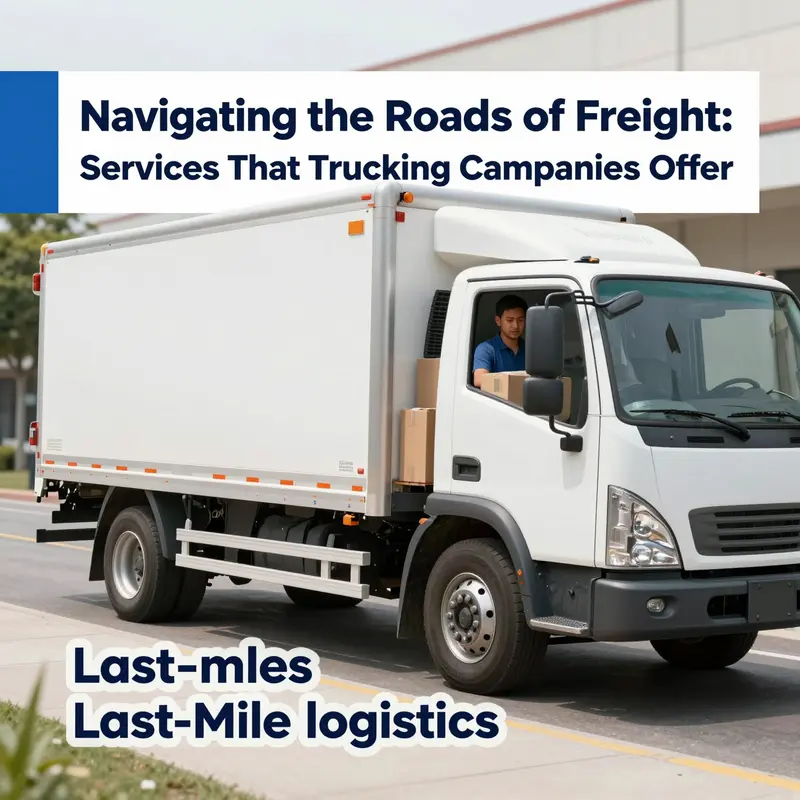
Last-mile delivery is the final test of a trucking company’s value proposition. It extends beyond moving a package to the customer’s door, encompassing warehousing, inventory visibility, and an orchestrated service design that ties together transport and last-mile execution.
In modern trucking, last-mile capabilities are powered by data and automation: AI-based routing, real-time tracking, micro-fulfillment, and flexible labor networks that shorten delivery times and improve reliability. Urban delivery challenges—dense stop patterns, curb access restrictions, and narrow lanes—drive decentralization of inventory and the use of local hubs to keep promises to customers. The result is a resilient value proposition where transportation becomes a platform for omnichannel fulfillment, not a single leg in a chain.
The practical implication for shippers is clear: seek partners who offer integrated services with measurable on-time performance, transparent pricing, and adaptive capabilities that scale with demand. The best last-mile providers blend technology, operations, and regulatory compliance to deliver a seamless customer experience and a predictable total cost of ownership.
Final thoughts
Understanding the various services offered by trucking companies is essential for all stakeholders in the transport industry. From moving freight across long distances, handling specialized cargo, and coordinating intermodal transport to perfecting the last-mile delivery, each service plays a critical role in the supply chain. As the industry continues to evolve, staying informed about these services helps long-haul truck drivers, trucking company owners, fleet managers, and aspiring drivers navigate the complexities of logistics effectively.