
The United States Postal Service (USPS) is a cornerstone of communication and commerce, moving billions of pieces of mail across the nation every year. While air and rail services play vital roles in logistics, trucks remain the primary vehicle for transporting mail. This article delves into the significance of trucks in the USPS mail delivery system, offering deep insights for long-haul truck drivers, trucking company owners, fleet managers, and aspiring truck drivers. Through a four-chapter exploration, we’ll examine how USPS utilizes its extensive truck fleet, compare truck transport with other modalities, analyze operational efficiencies, and address present challenges while spotlighting innovations in USPS truck mail transportation.
On the Ground Backbone: How Trucks Drive the USPS Mail Delivery Network
If you imagine the U.S. mail system as a living organism, the nervous system runs along the roads. The hands that deliver letters and packages to doors across urban canyons and rural stretches are the same hands that pull the system through the day’s peaks and valleys. In that sense, trucks are not merely one part of the USPS machine; they are its backbone. The vast daily flow of letters, flats, and parcels moves from sorting facilities to curbside clusters, post offices to remote outposts, and all along corridors that only ever truly come alive when a wheel turns. The reality is both simple and striking: the U.S. Postal Service relies on a large, diverse, and relentlessly practical fleet of ground vehicles to move the majority of its daily workload. The road is where the mail becomes tactile, where a stream of envelopes and boxes becomes a usable, local reality for every American. Trucks carry the essence of the system—door-to-door delivery, flexible routing, and the ability to reach the furthest corners with a reliability that sometimes seems engineered into the pavement itself.
To grasp why trucks sit at the center, one can start with scale. The USPS operates one of the largest civilian vehicle fleets in the world, a fleet designed not for speed in competition with other transport modes, but for reliability, reach, and durability. On a typical day, hundreds of thousands of vehicles traverse the nation’s arteries, collecting mail from collection points and delivering to mailboxes, curbside bins, and large customer destinations. This is not a fleet built for glamour but for the stubborn, day-in, day-out task of turning volume into service. The last mile—the step where mail leaves a vehicle and enters the hands of a carrier who ultimately places it in a mailbox or delivers a parcel to a doorstep—is where trucks prove their indispensability. It is here that the difference between a good network and a great one is measured in minutes and miles rather than mere hours.
The fleet’s composition reflects a pragmatic blend tuned to daily realities. Standard delivery trucks, vans, 2-ton configurations, and even tractor-trailers play well-defined roles, each chosen to match geography, mail volume, and the specific demands of a route. The variety is not an accident but a design choice. Urban routes demand nimble, maneuverable vehicles that can weave through traffic and park in tight spaces. Rural routes require endurance, cargo capacity, and simple, dependable mechanics that can keep a route secure across long miles between stops. The inclusion of alternative fuel vehicles signals a broader commitment to sustainability without sacrificing reach. In the context of a nationwide system that serves every town and suburb, the flexibility of a mixed fleet matters as much as the reliability of any single vehicle type.
Interfacility movement adds another layer of complexity. For the long-haul leg—from a coastal sorting facility to a central hub inland—the USPS does not rely on a single mode alone. Large freight trucks move freight between major distribution centers, and in some cases, rail and air services are used for high-priority or time-sensitive items. Yet even in these longer corridors, the role of the truck remains central. It is the vehicle that actually touches the last mile, the one that translates a centralized network into local delivery. Rail and air inputs are strategic accelerants, supporting the system when speed is essential, but they cannot substitute for the granular, door-to-door delivery that a truck provides. The law of large numbers is clear here: while rail and air can move mass quickly across distances, trucks knit together urban and rural landscapes with daily, hands-on delivery that keeps the mail moving in and out of every community.
The backbone is being reinforced with deliberate modernization. As of December 2025, the USPS was advancing a sweeping fleet renewal program with a $9.6 billion investment aimed at replacing aging vehicles with 106,000 Next Generation Delivery Vehicles (NGDVs). This is more than a procurement program; it is an acknowledgement that the road network must be backed by a fleet designed for present realities and future needs. The NGDV initiative foregrounds fuel efficiency, safety, and adaptability. The new vehicles are intended to reduce maintenance costs, lower environmental impact, and improve the appeal and ergonomics of the vehicle for carriers who spend hours on the road. In practical terms, the fleet upgrade promises more predictable service windows, better performance in adverse weather, and a reduced likelihood of breakdowns that can ripple through a fragile delivery timetable. The scale of this modernization is itself a statement: trucks are not a passive component but the active engine of reliability in a system that must work for every American.
Behind the numbers and hardware lies a workforce that makes the fleet meaningful. The USPS workforce—mechanics who keep the vehicles in roadworthy condition, mail handlers who ensure smooth loading and unloading, and the marketing and operations professionals who optimize routes and schedules—forms a critical complement to the hardware. Modern delivery vehicles require specialized maintenance regimes, updated diagnostic tools, and ongoing training to extract maximum uptime from the fleet. This is where fleet management ceases to be solely about parts and becomes a people-centric discipline. The hours, the routes, the loads assigned to each vehicle, and the daily decisions about where to send a truck next—all of these depend on skilled professionals who can adapt to changing conditions with calm, data-informed judgment. In that sense, the fleet’s resilience is inseparable from the capacity and culture of the people who operate and maintain it.
What this means for the average resident is a system that prioritizes coverage and predictability over every whim of speed. The truck-based backbone enables door-to-door service in diverse geographies—dense city centers with their labyrinth of streets and short-block grids, sprawling suburban corridors that require precise timing and route optimization, and remote rural stretches where mail volume varies with seasons and community rhythms. The last mile is not a single, uniform step; it is a mosaic of micro-deliveries and curbside collections, all choreographed by a fleet designed to show up where it matters most. The curbside drop box, the retail counter at a small-town post office, the porch in a high-density apartment complex, the rural mailbox along the lone highway—all are touchpoints that rely on a truck’s ability to bring a consistent, traceable, and accountable service to the doorstep. In a country as geographically varied as the United States, the truck is not merely a mode of transport; it is a tool for social and economic cohesion, a mobile conduit that makes mail a practical, everyday utility rather than an abstract promise.
The reliance on trucks does not imply neglect of other modes. The USPS’s broader logistics map includes air and rail as essential complements, used strategically to meet time-sensitive demands or to move large volumes between major hubs with speed and efficiency. But the daily, near-ritual motion of mail through the system—the daily miles logged by millions of curbside pickups, the daily stops at neighborhood clusters, the routine transfer between sorting facilities at the edge of town and the next leg of the journey—occurs largely on four wheels. The fleet’s endurance, the cadence of its maintenance cycles, and the precision of its routing algorithms all converge to ensure that the majority of mail remains a ground-based, middle-mile, and last-mile enterprise. This is why, despite the presence of alternative modes in the logistics mix, the question of “how does the USPS ship most mail?” often resolves to a straightforward answer: by truck.
The modernization push with NGDVs, in particular, is not just about replacing old hardware; it is about resetting expectations for what reliability looks like on a national scale. The new delivery vehicles, engineered to be more fuel-efficient, more comfortable for carriers, and better suited to the demands of urban and rural routes, reflect a philosophy of resilience. A modern fleet contends with peak volumes during holidays, weather disruptions, and evolving consumer behavior, including the increasing complexity of package delivery. It remains clear that the road-based component of the USPS network is what makes the rest of the system work. The trucks’ ability to make efficient, last-mile connections from a central hub to the doorstep translates into timelier mail delivery and a more predictable customer experience. That predictability, in turn, underpins the social compact the Postal Service has with the country: a commitment to universal service, delivered with a practical, vehicle-based approach that meets people where they live.
For readers curious about how fleets stay on the road in broader terms, the rolling reality of the USPS fleet offers a useful frame of reference. The use of a mixed fleet, the emphasis on door-to-door service, and the strategic deployment of NGDVs at scale illustrate how a large, public-facing organization negotiates the tension between modernization and universal coverage. The fleet modernization program signals a recognition that the system must adapt to shifting energy landscapes, evolving customer expectations, and the imperative to keep communities connected. The road, in other words, remains the most reliable connector, and trucks are the vehicle of continuity in a system that must operate, day after day, in every corner of the country.
As a final reflection on the question at hand—the likely instinct that trucks carry most mail across the country—consider how the daily life of a mail carrier intertwines with the road itself. The route is not just a path but a living schedule that absorbs the rhythm of household mailings, holiday surges, business deliveries, and service disruptions. The truck is the instrument that makes that rhythm audible to the entire nation. It answers a fundamental logistical question with a pragmatic, relentless operational logic: if you want to deliver mail where people live, you drive a truck. The rest of the network—sorting hubs, air corridors, rail yards—supports this rhythm, but the last step to a doorstep is almost never accomplished on rails or runways. It happens on tire treads and pavement, under the sun or under clouds, with the curbside flag raised, and with the knowledge that every delivered item is part of a national fabric kept intact by a fleet that, increasingly, looks toward the future while remaining steadfastly grounded in the present.
Internal link for readers seeking a broader sense of fleet and maintenance practices can offer deeper context about how industry practitioners view fleet operations. For a broader look at fleet management and trucking industry insights, see the 5StarTruckIn blog. 5StarTruckIn blog.
The broader takeaway remains clear. The USPS dispatches most of its mail by ground, and the truck serves as the practical, reliable vehicle that makes universal service possible across cities, suburbs, and rural lanes. The system’s backbone is not a glamorous single feature but a durable, adaptable fleet coupled with careful routing, consistent maintenance, and a workforce trained to keep the wheels turning. In that sense, the question is less about which mode dominates and more about how the integrations of vehicle technology, route optimization, and human know-how create a delivery network capable of reaching every American doorstep with dependable regularity. The road is not just a conduit; it is the network’s lifeblood, and trucks are the heart that keeps it beating day after day.
External resource: https://about.usps.com/what-we-do/our-fleet.htm
Why Trucks Still Carry the Bulk of USPS Mail
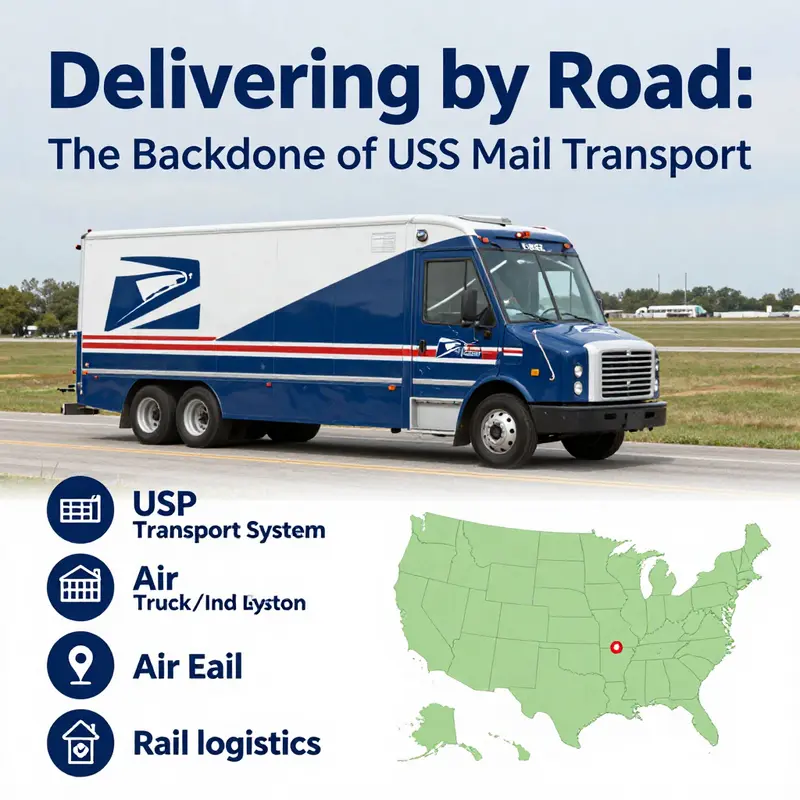
The United States Postal Service relies on a multi-modal logistics system, but on a day-to-day basis trucks move the majority of mail. The reason is simple and practical: trucks provide the door-to-door reach that rail and air cannot. While trains and planes excel at moving large volumes long distances or compressing transit times, they cannot stop at every street, driveway, or rural mailbox. Trucks bridge that gap, performing last-mile delivery and the inter-facility legs that connect local post offices to regional hubs.
From collection boxes and business drop-offs to neighborhood routes, street-level vehicles are optimized for accessibility and flexibility. A single truck can navigate urban blocks, suburban cul-de-sacs, and long rural routes, enabling predictable curbside pickup and handoff. This flexibility matters more than raw speed for everyday mail: reliability and coverage are core service requirements that favor road transport.
That said, the USPS uses rail and air where they make sense. Rail moves bulk flows efficiently between major distribution centers, lowering per-unit cost and emissions per ton-mile. Air handles urgent, time-sensitive shipments at a higher cost. The Transportation Management framework dynamically combines these modes—assigning portions of a shipment to the mode best suited for cost, speed, and environmental trade-offs—so that the network remains resilient and affordable.
Ultimately, trucks dominate because the final mile is where mail becomes a service to people and businesses. The fleet’s ability to stop at a door, adapt routes daily, and reach every address across varied geography is the decisive factor. For a clear view of official program descriptions and service standards, see the USPS site: https://www.usps.com
Wheels of Reliability: The Truck Network Driving USPS Mail Delivery Efficiency
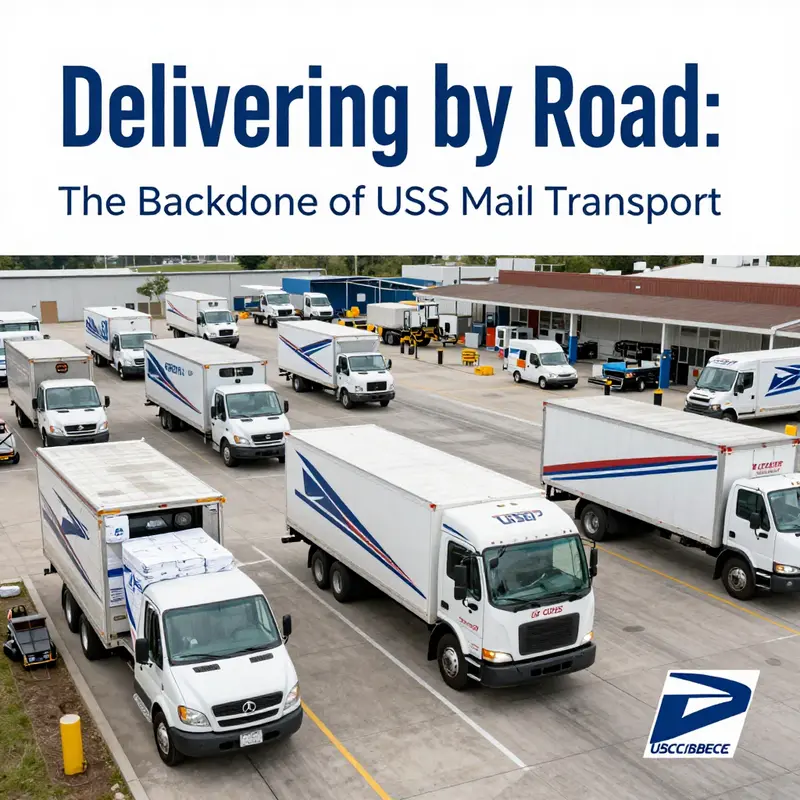
Behind every mailpiece is a vast system of trucks moving letters and parcels across a diverse geography. USPS operates one of the largest civilian vehicle fleets in the world, central to daily reliability. The truck network forms the backbone of the last mile, delivering from sorting facilities to curbside boxes and residential driveways with consistent cadence. The last mile hinges on disciplined routing, standardized handling, and real-time data that coordinate crews, hubs, and on board systems. The strength of the truck-based approach is its capacity to absorb volume fluctuations caused by holidays, weather, and regional events, while preserving predictable delivery windows.
Long-haul legs between major hubs may use larger freight, rail, or air options to match time sensitivity and scale. Even when trucks perform intercity moves, intermodal planning ensures compatibility with hub operations and sorting streams, creating a flexible, resilient network. Technology ties the system together: digital platforms capture shipment data, feed smarter route planning, and provide customers with visibility across the journey. Automated sorting, improved loading plans, and optimized routing collectively reduce dwell time, wasted miles, and mis-sorted loads, resulting in a more reliable day for millions of households.
The Delivering for America framework underpins these improvements by emphasizing standardized handling, data-informed scheduling, and disciplined execution. The goal is not merely speed but predictability and efficiency across a nationwide network. In practice, better equipment and smarter routing translate into tighter handoff windows, fewer backtracks, and steadier on-time performance. The truck fleet, treated as a living system guided by data, continuously learns to safeguard reliability even in the face of disruption.
Ground Fleet at the Core: Safety, Efficiency, and the Push to Modernize USPS Truck Mail Transport
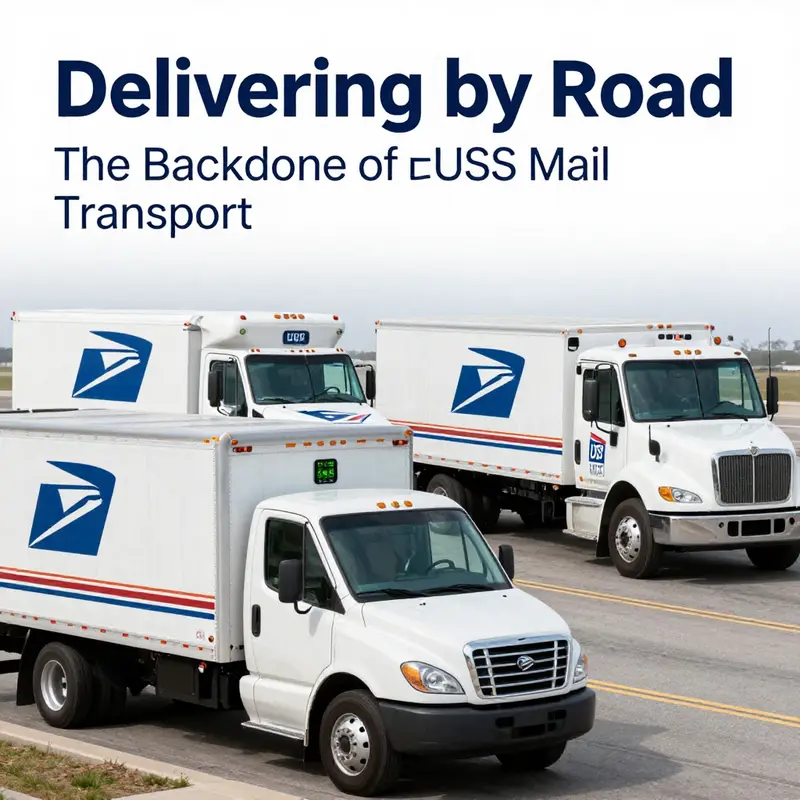
USPS trucks form the backbone of American mail movement. Every morning, thousands of delivery vehicles begin routes that stitch neighborhoods, towns, and cities into a single postal network. While air and rail move high-priority parcels across long distances, the day-to-day reality of mail transport rests on the pavement. This chapter examines how that ground-first strategy encounters operational and safety challenges, and how targeted innovations promise to keep most mail moving by truck while addressing accountability, sustainability, and efficiency.
The scale of the ground fleet is critical to understand the stakes. The agency operates one of the largest civilian vehicle fleets in the country. Those vehicles handle collection, inter-facility transfers, and the final handoff to homes and businesses. Trucks serve densely packed urban routes and the long, sparse lanes of rural delivery. The result is a system that prizes flexibility. Trucks can change routes, bypass disruptions, and provide last-mile service that other modes cannot match.
This flexibility, however, brings complexity. One pressing issue lies in the way long-haul or inter-facility trucking has been managed. To cover specialized routes or seasonal surges, the agency has relied on third-party contracts. Some of those contracts have used non-domiciled commercial driver’s license (CDL) drivers. When drivers are non-domiciled, oversight becomes harder. Accountability for maintenance, hours-of-service compliance, and route-specific safety practices becomes diffuse. In short, the arrangement can create safety and regulatory blind spots.
Tightening the rules around domiciled drivers is thus a priority. Requiring drivers to be domiciled within certain jurisdictions makes it easier to verify credentials and to enforce rest and maintenance standards. It also narrows the chain of responsibility when incidents occur. For a network that moves millions of items daily, a clearer accountability framework reduces risk. This is not merely a paperwork change. It affects contracting practices, hiring norms, and how service partners are selected.
Operational efficiency is the other major pressure point. Mail volumes have shifted over the past decade. Traditional letter delivery has declined while package volumes surged. Delivery frequency expectations have evolved too. Customers expect predictable, sometimes time-sensitive, deliveries. Trucks must therefore do more with similar or fewer resources. Routes must be planned to optimize load, time, and fuel while preserving service standards.
Route density plays a large role in efficiency. Urban areas benefit from clustered deliveries that reduce miles driven per item. Rural routes are the opposite; long stretches of road with low delivery density drive up cost per piece. Finding the balance requires careful network design. Consolidating sorting locations, optimizing feeder routes, and deploying the right-sized vehicle for each route are all levers. The aim is clear: move more pieces with fewer miles and less time while maintaining reliability.
Fleet age compounds operational strain. Older vehicles demand more maintenance, which increases downtime and costs. Unplanned repairs cascade into staffing and routing headaches. Addressing fleet condition requires both immediate maintenance strategies and long-term renewal plans. Predictive maintenance, enabled by telematics, gives a way forward. Sensors and data analytics flag problems before they lead to breakdowns. That keeps vehicles on the road and reduces emergency fixes that disrupt schedules.
The agency’s modernization strategy tackles these issues head on. A planned rollout of more than 100,000 new vehicles by 2028 aims to replace outdated units. A notable portion of that commitment includes tens of thousands of battery-electric delivery vehicles. Shifting to electric vehicles (EVs) promises lower operating costs per mile, reduced tailpipe emissions, and quieter operation in dense neighborhoods. But the transition is not just about changing propulsion systems. It is a systems problem that touches charging infrastructure, route design, facility upgrades, and workforce readiness.
Charging infrastructure is central to the EV strategy. Depots must be equipped to recharge dozens or hundreds of vehicles overnight. That requires upgrades to electrical capacity, installation of sufficient chargers, and often coordination with local utilities. Rural depots pose a particular challenge. Long-distance rural routes mean vehicles must either have extended range or the network must include mid-route charging options. Cold weather performance and peak-load management are further technical challenges. Deploying chargers without aligning route plans and vehicle ranges will leave fleets stranded or underutilized.
The broader infrastructure conversation benefits from lessons learned in related heavy-duty vehicle programs. An overview of charging infrastructure issues highlights the importance of depot planning, scalable electrification, and integration with on-site energy management. These same themes apply for postal depots. Planning must account for the number of chargers, power distribution, redundancy, and future expansion. Smart charging strategies, such as load management and off-peak charging, reduce strain on the grid and lower costs. For those interested in the technical side of depot electrification, an electric vehicle charging infrastructure overview provides helpful context: electric vehicle charging infrastructure overview.
Technology integration goes beyond charging. Telematics, route-optimization software, and predictive analytics combine to improve asset utilization. Telematics provide real-time location, performance, and driver behavior data. Optimization algorithms use that data to reshape routes dynamically, cut idle time, and balance workload across carriers. Predictive analytics anticipate maintenance needs and schedule service during off-peak windows. Together, these technologies reduce operating costs and increase on-time delivery rates.
But innovations must coincide with workforce development. New vehicle systems require updated maintenance skills. Electric drivetrains and battery systems demand specialized training for safe service. Driver training must also evolve. New vehicle interfaces, energy-management procedures, and charging practices all require structured programs. Investing in training programs pays dividends through fewer accidents, better uptime, and longer vehicle life.
Contract oversight and safety culture are also central to modernizing the ground fleet. Better contracting standards, stronger audit provisions, and clearer performance metrics help ensure partners meet safety and service expectations. Domicile requirements for CDL drivers are part of this shift. So are incentivized performance metrics tied to safety, on-time delivery, and vehicle condition. A contractual framework that aligns incentives reduces friction and clarifies expectations.
Lifecycle cost analysis underscores why truck electrification makes sense for many routes. While EVs have higher upfront costs, they often deliver lower fuel and maintenance expenses. Batteries degrade over time, and replacement schedules matter. Yet when fleets are paired with robust maintenance regimes and smart charging, lifecycle costs can be favorable. Environmental benefits, including lower greenhouse gas emissions and reduced local pollution, compound the financial case when public health and community impact are factored in.
Despite the investments, trucks will remain central to postal logistics. Even with increasing electrification and smarter routing, the need for flexible, door-to-door service keeps the ground fleet indispensable. Air and rail transport remain vital for long-haul and expedited shipments, but trucks bridge the gaps those modes leave. The future operation will likely be a blended model where trucks handle collection and final delivery, while air and rail provide inter-hub movement for high-priority items.
Transitioning a large, daily-operating fleet in service to millions is complex. It requires phased deployment, continuous evaluation, and adaptability. Pilot programs for EVs can identify route types best suited to electrification. Early data should guide scale-up decisions. Depot upgrades must be sequenced to avoid service disruption. Training and contracting reforms must align with vehicle rollouts. A coordinated, holistic approach mitigates risk and accelerates benefit realization.
The road ahead combines technical upgrades with cultural and procedural change. Tightening driver domicile rules and improving contract oversight enhance safety and accountability. Fleet renewal and electrification reduce emissions and long-term costs. Telematics and analytics make the system more resilient and efficient. Charging infrastructure planning bridges the gap between vehicle capability and daily route requirements. Workforce training ensures the human side of the network keeps pace with technology.
Ultimately, the USPS ground fleet will likely remain the primary mover of most mail. Trucks deliver flexibility that other modes cannot match. But that dominance brings responsibility. By addressing driver oversight, investing in modern vehicles, building robust charging ecosystems, and integrating advanced operations technology, the postal network can keep trucks at its core while meeting modern expectations for safety, speed, and sustainability. For more on official plans and the new fleet rollout, see the agency’s announcement on the modernization effort: https://about.usps.com/news/press-releases/2025/2025-12-01-usps-delivering-new-fleet.htm
Final thoughts
Through this exploration of the USPS’s reliance on trucking for mail delivery, it’s clear that trucks are not just a mode of transport; they are an integral part of a complex logistics network. With the vast majority of mail handled efficiently on the ground, the relationship between USPS operations and trucking underscores both the necessity and vitality of this method. As challenges persist, innovations promise to propel the efficiency of truck-based mail services forward, ensuring that the USPS continues to meet the evolving demands of its customers. For industry professionals, understanding these dynamics provides valuable insights into the broader logistics landscape shaped by trucks.