
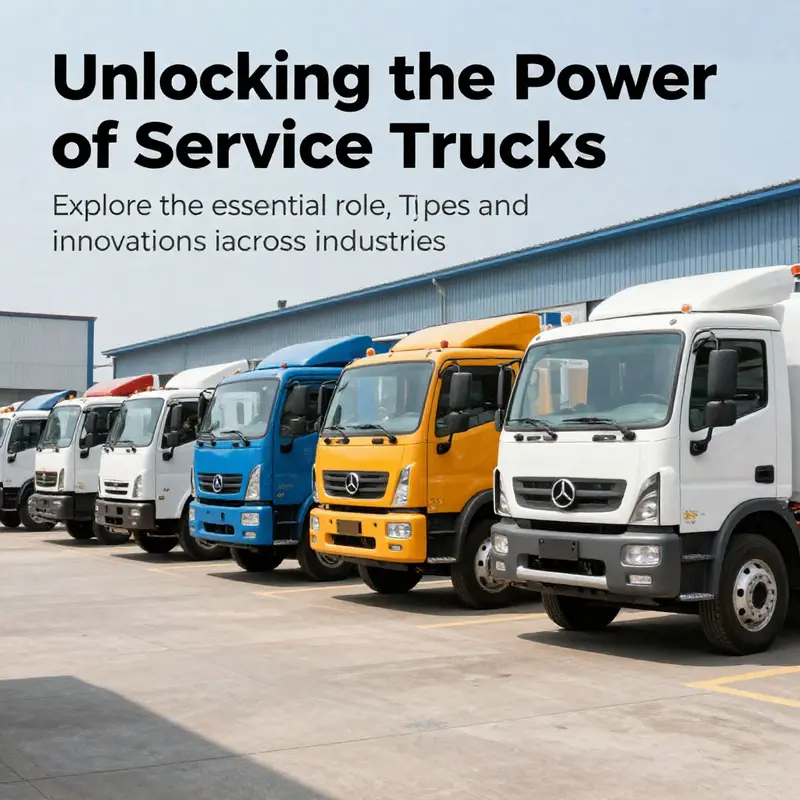
Service trucks are essential vehicles that keep industries running smoothly. From transporting heavy machinery to providing on-site repairs, they are designed to meet a variety of operational needs. This article will break down what a service truck is, highlighting its applications and significance across different sectors. We’ll explore the various types of service trucks available, detailing how they cater to the unique needs of industries such as oil and gas, construction, and emergency services. Finally, technological innovations in service truck designs will be discussed, showcasing how modern advancements enhance efficiency and functionality. By the end, trucking professionals will have a comprehensive understanding of service trucks and their impact on daily operations.
On the Move: How Service Trucks Turn Worksites into Mobile Workshops and Repair Hubs
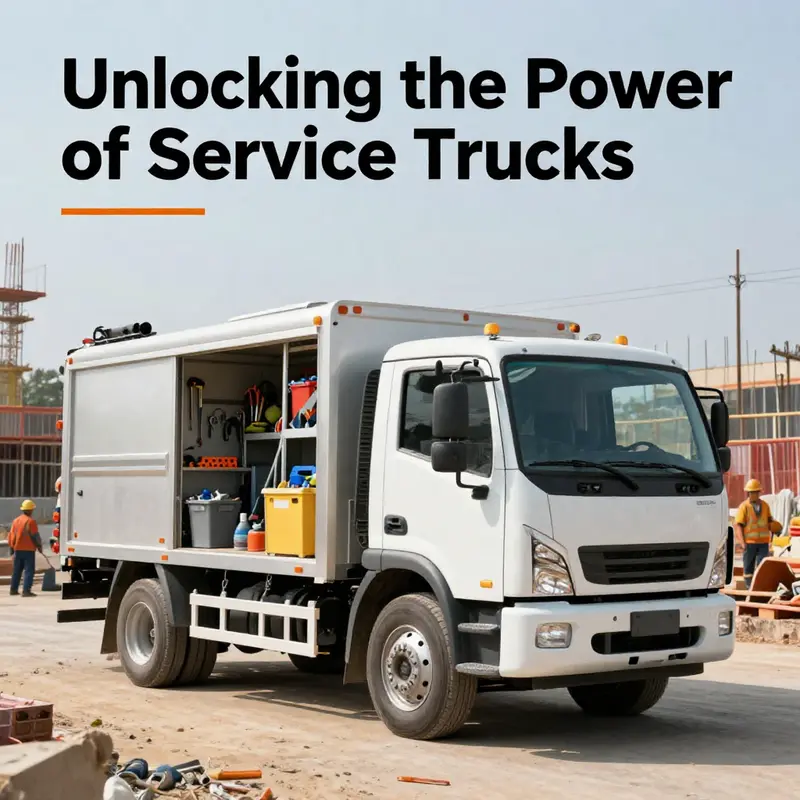
A service truck is more than a vehicle with a toolbox. It is a compact, purpose-built mobile facility designed to bring a workshop to the field. Its mission is to provide a protected space where technicians can perform maintenance, diagnostics, and repairs with essential tools, parts, and testing equipment at hand. The truck body is a modular, weatherproof shell that emphasizes storage efficiency, workflow, and safety. Key design goals include durable mounting, organized zoning for tools and parts, and quick, one-handed access to compartments. A service truck also integrates lifting and positioning capabilities—such as a small crane or hoist—that extend on-site capabilities while keeping the vehicle stable. This combination of protection, organization, and mobility makes the truck a versatile platform across industries like energy, logistics, aviation, and field service. Modern service trucks are evolving toward digital readiness, with on-board diagnostics, portable testing stations, and modular work surfaces that can be reconfigured for different tasks. In short, a service truck is a mobile workshop designed to maximize uptime by delivering a complete, configurable workspace directly to the point of need.
Mobilizing the Jobsite: How Service Trucks Are Tailored to Industry, Task, and On-Site Needs
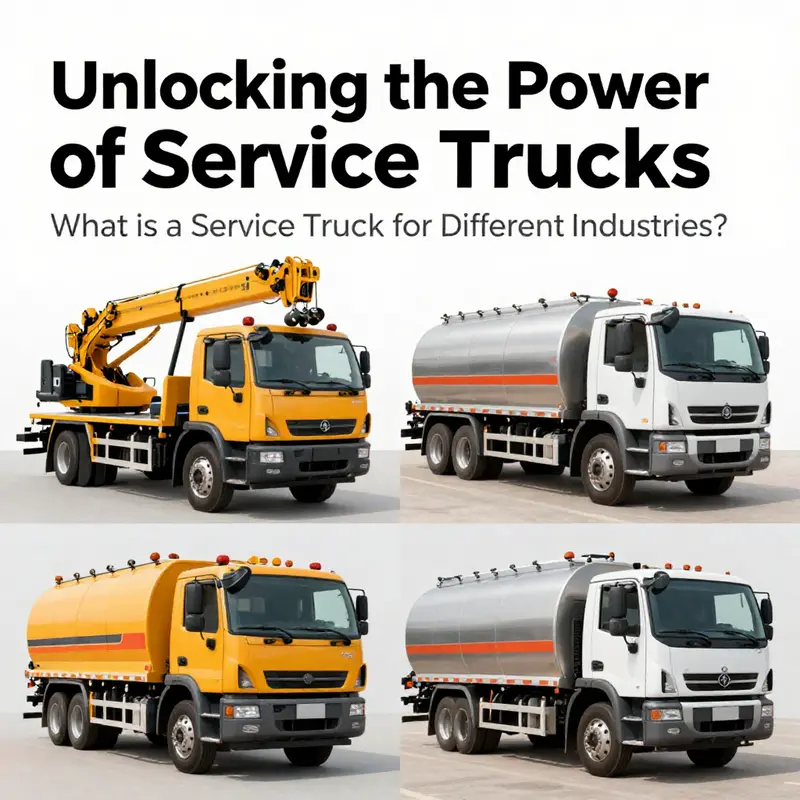
A service truck is not just a vehicle loaded with tools. It is a carefully designed mobile workspace that brings the workshop to the field. Across industries, these trucks embody a simple but powerful idea: meet on-site demands with the right mix of space, power, and storage, so technicians can diagnose, repair, install, and maintain equipment without repeatedly returning to a distant shop or warehouse. This concept drives a lineage of configurations that may look different at first glance, yet share a common logic. The goal is to optimize every inch of the truck’s footprint for the job at hand, from the moment the crew climbs aboard to the moment they shut the last compartment and head toward the next site. To appreciate how service trucks operate, it helps to consider the on-site workflow they are designed to support: planning, access, execution, and wrap-up. Planning begins before the truck leaves the yard. A field technician assesses the site, reviews the task list, and inventories the tools and parts likely to be required. Everything is prepped to reduce guesswork once wheels roll. Access matters when crews arrive at a site. A service truck must navigate tight streets, parking constraints, and uneven ground while delivering a stable surface for a portable workbench, a storage cabinet, or a compact, powered workspace. Execution hinges on durable construction and intelligent layout. The truck carries heavy or awkward loads—transformers, pipes, cable reels, bulk materials, or specialized fabrication parts—and must keep them secure and accessible throughout the day. Finally, wrap-up involves restocking, documenting work completed, and planning for the next call. The best designs make this entire cycle smooth and predictable, letting technicians focus on the task rather than the vehicle itself. In practice, the exact shape of a service truck is dictated by the industry it serves, and while no single configuration fits all, a few core archetypes recur with striking consistency: flatbed bodies reinforced for heavy payloads, service vans that function as mobile workshops, and specialized utility bodies that juggle material transport with precise handling. Each archetype answers a distinct set of needs while maintaining a shared philosophy of efficiency and resilience. For the utility and infrastructure sectors, for example, the flatbed service truck has become a staple. The flatbed is not merely a platform; it is a flexible work surface that accepts large equipment and allows technicians to load, unload, and stage components on-site. A reinforced frame, durable deck, and integrated tie-downs give crews the confidence to move transformers, large conduits, or industrial piping without fear of shifting loads. The platform often accommodates hydraulic lifts or a small crane to assist with heavy lifting, and it usually pairs with built-in toolboxes and weatherproof storage to keep equipment organized and accessible through a long day outdoors. In this mode, the truck doubles as a portable staging area where materials can be opened, measured, assembled, and deployed in sequence, much like a temporary satellite workshop that travels from site to site. The appeal is straightforward: reduce trips back to the warehouse, accelerate the handoff between planning and execution, and keep the work moving even when the site has limited infrastructure to support a traditional shop. In contrast, service vans emphasize mobility and a more intimate, shop-like interior. These vehicles are the workstations on wheels for skilled tradespeople who need ready access to diagnostic tools, measurement devices, and a curated assortment of parts. Inside, the van is organized to maximize a technician’s ability to move from one task to another with minimal rummaging. Counters, drawers, and labeled bins create a familiar workflow that mirrors a bench setup inside a permanent shop. A well-considered van interior often includes a compact power system, capable of running diagnostic devices, portable lights, and climate-control equipment that keeps sensitive instruments within a stable temperature range. On-site diagnostics and rapid repairs become feasible because the crew can bring the full range of tools to the customer’s door. The advantage here is not only speed; it is also the professionalism conveyed to the customer when field service looks and feels like a high-functioning workshop. The third archetype—specialized utility bodies tuned for material transport and precise handling—addresses projects that hinge on bulk materials and careful organization. Landscapers, irrigation specialists, and certain maintenance crews benefit from utility trucks equipped with mulch or soil bins, lockable compartments for solvents or fasteners, and recesses designed to keep heavy items stable while the vehicle moves. The bins serve a practical purpose: they simplify loading and unloading bulk materials at ground level, which saves time and reduces manual handling. Yet they also present ongoing maintenance challenges. Debris, weather exposure, and material buildup require routine cleaning and occasional resealing to prevent corrosion or contamination of tools. The design solution acknowledges these realities by providing accessible cleaning paths, drainage options where appropriate, and durable finishes that resist the rigors of outdoor use. Across all three archetypes, the underlying thread is that a service truck should feel like a controlled workspace rather than a cramped cargo carrier. It should offer a climate-controlled micro-environment for sensitive equipment, a robust electrical or hydraulic power source to run tools on site, and a smart storage strategy that makes every piece of equipment approachable within a few steps. A well-thought-out electrical system—whether it relies on a compact on-board generator, a power take-off system, or a combination of both—enables technicians to power lighting, diagnostic gear, heat or cooling equipment, and small manufacturing tools during field operations. When a truck can sustain a productive work session away from the nearest shop, it not only saves time; it also improves safety and quality. The role of safety cannot be overstated. Service trucks carry the weight of people, tools, and sometimes hazardous materials onto unpredictable sites. The safest designs start with robust load management and secure storage. Tie-down points, cargo nets, and lockable cabinets help ensure that nothing shifts in transit. Slip-resistant floors reduce the risk of trips and falls inside the cab and the body. Proper ventilation and spill containment features protect both personnel and the environment when handling fluids or chemicals. The vehicle’s structure must also be tuned for fatigue resistance, because the road throws a long day at a service crew. Fatigue matters: a truck that vibrates excessively or experiences misalignment after repeated trips jeopardizes precision work and increases the likelihood of minor injuries. This is why technicians and fleet managers often place a premium on chassis reliability, suspension design compatible with heavy loads, and a body built to endure the daily grind. The choices behind a service truck are not purely about capacity; they are about balance. A flatbed with a heavy payload might also demand a heavier drive train and more stringent cornering control. A compact van with abundant interior space could constrain exterior storage, making the organization of tools and spare parts even more critical. A specialized utility body may excel at sorting materials and enabling rapid material exchange, but it might require careful planning around servicing and cleaning. Fleet operators must weigh these trade-offs against the realities of their daily routes, the urban density of their service territories, and the times when a vehicle needs to deliver urgent support in a congested environment. The decision becomes even more nuanced when considering the integration of mobile workspaces inside these vehicles. A mobile workshop is not just an interior arrangement; it is an ergonomic and operational philosophy. A well-equipped mobile workshop offers a bench or work surface, safe power outlets, lighting that reduces eye strain, climate control to stabilize temperatures, and storage that keeps parts grouped by task. This orchestration matters because the technician’s brain works best when it is not forced to search for the right tool in a pile of parts. When tools are readily accessible in clearly labeled compartments, the technician can maintain momentum, stick to diagnostic protocols, and document the job with accuracy. The interface between the technician and the vehicle is, in many ways, a competitive advantage. It reduces the cognitive load required to perform field service work and helps ensure consistency in service quality. The value proposition of service trucks thus extends beyond the immediate job at hand. It touches the reliability and reputation of a company that meets customers where they are, when they need it, with a prepared team and a well-stocked, organized vehicle. The industry’s evolving standards and evolving technologies influence how these vehicles are configured. A growing emphasis on efficiency and uptime is pushing operators toward modular designs, where components can be swapped out or upgraded as needs change. A modular body system might permit a technician to reconfigure compartments for a project or relocate specialized tools to a different vehicle in a fleet with minimal downtime. Similarly, the rise of on-board power options—from compact generators to high-capacity electrical bays—expands the range of services that can be performed with a single vehicle. It makes it easier to run diagnostic tools on the road, perform minor fabrication tasks, and keep the job moving through the day’s itinerary. The transportation of bulk materials, heavy equipment, and delicate instruments is thus grounded in a balanced calculus: weight distribution, cargo securement, accessibility, and the ability to weather changing field conditions. The best service trucks accommodate this calculus with thoughtful features that are not flashy, but functional, robust, and predictable. They support a technician’s workflow whether they are dispatched to a crowded urban street, a remote rural site, or a sprawling industrial facility. The human element remains central. A truck is a tool, but a tool that depends on people to wield it well. Training, routine maintenance, and clear procedures for loading and unloading are as essential as the mechanical design itself. When crews are familiar with the layout, know how to access the most critical components, and understand how to protect themselves and the environment while working, the truck becomes less about the vehicle and more about the service it enables. In this sense, service trucks are a manifestation of a broader philosophy that values on-site capability as a core part of service delivery. They symbolize the industry’s confidence that work can be performed efficiently, safely, and professionally wherever the customer is located. They also reflect a pragmatic approach to equipment logistics: the right vehicle can reduce downtime, lower travel costs, and shorten the cycle from problem identification to resolution. For readers seeking a concise lens on how design choices correlate with field outcomes, consider the idea of design efficiency in emergency services, which speaks to how layout, accessibility, and modularity affect response time and effectiveness in critical moments. As a practical matter, every fleet decision should begin with the user—the technician who will depend on the vehicle every day. The most successful configurations emerge when designers interview field teams, observe real-site tasks, and translate those insights into a layout that minimizes the friction between planning and action. The result is a service truck that feels less like a rigid carrier and more like a compact, purpose-built workspace that travels with the crew. When this is achieved, the vehicle ceases to be a backdrop for work and becomes an active partner in delivering service excellence. From utility installations to emergency readiness to routine maintenance, the service truck embodies a portable, adaptable solution to the perennial challenge of performing complex tasks away from a fixed shop. It is a vehicle that must carry both tools and confidence, enabling crews to bring high standards to every site they touch. In this sense, the term service truck expands beyond a label for a class of vehicles; it captures a mindset about how work gets done in the field. And while the specifics of each truck will vary by industry, the underlying promise remains consistent: to move the job forward by bringing the best of the workshop directly to the worksite. For those who wish to explore further how these design considerations play out in practice, a broader resource on industry applications offers additional context. See the deeper discussion here: design efficiency in emergency services. To connect this chapter to a wider landscape of professional fleet management and on-site service delivery, consult established industry overviews that map out the roles service trucks play across utilities, construction, landscaping, and field IT or telecom work. These sources help illuminate how the vehicle’s form follows its function, shaping not only how work is performed but also how teams collaborate, how safety is managed, and how uptime is maintained across a fleet. In the end, the service truck is a practical synthesis of mobility, durability, and organization. It embodies a commitment to keeping skilled technicians close to the point of need, equipped to solve problems, install systems, and support customers with speed and reliability. It is a vehicle that travels not just with tools, but with a method—an approach to field service that respects the complex choreography of modern work sites. For readers who want to trace the cross-industry logic that ties together these diverse configurations, the broader literature on service truck bodies and their standards provides a useful map of how industry groups have codified expectations for capacity, safety, and interoperability. The discussion remains ongoing as fleets adopt new technologies and as sites demand more precise handling of materials and faster service cycles. In this evolving context, the service truck stands as a practical, durable solution that translates the planning stage into action on the ground, turning complexity into a smoother, more predictable workflow. For a broader industry reference that captures the range of applications and the standard considerations that guide vehicle design and usage, see the MachineryHub overview of service trucks and their industry applications. This resource helps frame how a single vehicle category can support such a wide array of tasks, reinforcing the idea that the right service truck is not a luxury but a necessity for reliable, on-site service delivery.
Rugged Mobility, Smart Systems: How Technological Innovations Redefine What a Service Truck Is
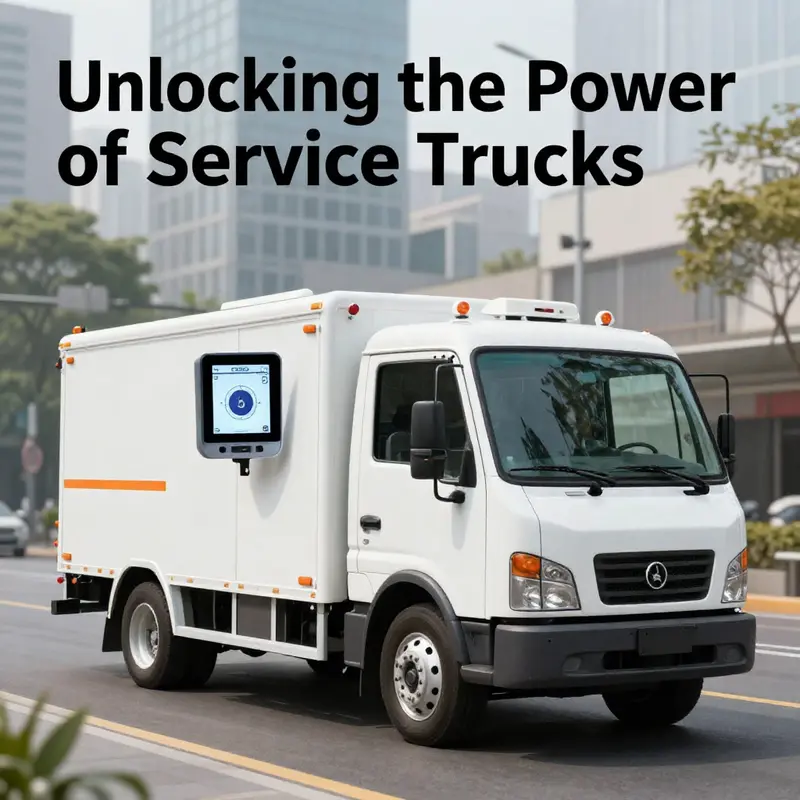
A service truck is more than a conduit for tools; it is a compact, purpose-built ecosystem designed to keep networks, facilities, and machines running in the field. In its simplest form, a service truck is a vehicle that carries equipment, spare parts, and a workspace for technicians who perform maintenance or repairs on site. In practice, it has evolved into a mobile workshop, a maintenance hub on wheels, and a data node in a broader fleet operation. The modern service truck blends rugged feasibility with digital intelligence, enabling technicians to diagnose, repair, and sometimes even retrofit complex systems without returning to a depot. This evolution is not merely about stuffing more gear into a cargo bay; it is a holistic shift toward safer, faster, and smarter service delivery. The result is a vehicle that can adapt to a wide range of contexts—from utility repair in urban corridors to remote fieldwork in industrial settings—without sacrificing reliability or safety on the road or at the worksite.
To understand what a service truck is today, it helps to trace how its core functions have matured. Historically, technicians relied on a portable toolkit and a service van with shelving. The new generation, by contrast, is a carefully designed platform where automation, connectivity, and clean energy converge. The body and chassis are engineered not only to carry tools but to manage workflows. Hydraulic cranes or material handling devices, where present, are integrated with automated or semi-automated systems that ease heavy-lift tasks and reduce physical strain on workers. A well-equipped service truck can be a mobile lab, a portable warehouse, and a remote diagnostics station all at once. The emphasis is on resilience, streamlined operations, and the capacity to deliver service within the constraints of time and geography. In that sense, the service truck becomes a logistical nerve center for on-site operations.
Automated loading and unloading is one of the most visible shifts in this space. Rather than relying solely on manual lifting, technicians increasingly work with automated systems that can position equipment, lift heavy components, or move material to a precise spot inside the cargo area or at the work site. These systems reduce the physical demands of the job, cutting the risk of injuries and enabling technicians to complete more tasks per day. Automation also minimizes human error during the handling of delicate or heavy items, which translates into fewer return trips and quicker first-time fixes. The practical payoff is a lower total cost of operation, because time saved translating into more jobs completed adds up across a fleet over weeks and months. Yet automation is not a vanity feature; it is a pragmatic answer to the realities of demanding field work, where fatigue and tight schedules can compromise outcomes.
The thread of connectivity runs through every aspect of a service truck’s evolution. Telematics and fleet management platforms give operators a real-time pulse on vehicle health, fuel economy, and driver behavior. In this model, the truck is not just a transport unit but a data-generating asset that informs maintenance cycles, parts stocking, and scheduling decisions. Predictive maintenance, enabled by continuous monitoring of engine, hydraulic, and battery systems, helps prevent unexpected downtime. It turns maintenance from a reactive event into a planned activity aligned with usage patterns. Route optimization then becomes a matter of crisscrossing need and opportunity rather than a simple point-to-point itinerary. By pairing route planning with diagnostics data, fleets can cut fuel costs, improve on-site turnaround times, and reduce wear on aging components. The result is a more reliable service network—one that can respond to emergencies and routine maintenance with equal efficiency.
Electric powertrains are another major inflection point for service trucks. In many regions, environmental regulations and total cost of ownership models reward lower emissions and reduced fuel expenditure. Electric powertrains deliver these advantages, presenting not only cleaner operations but simpler mechanical architectures with fewer moving parts. With fewer fuel components and a reduction in transmission complexity, maintenance profiles shift toward battery management, motor health, and thermal control. This does not imply a one-size-fits-all replacement of diesel platforms; rather, it suggests a diversified fleet where electric or hybrid configurations are selected based on duty cycles, range requirements, and charging infrastructure. For some service tasks—especially those that require quiet operation or frequent short trips—electric powertrains can offer a decisive advantage. For longer, heavier deployments, plug-in hybrids or range-extending solutions may bridge the gap between operational needs and energy realities. In every case, the transition invites a rethinking of spare parts, training, and the scheduling logic that keeps technicians moving rather than idling.
Safety remains the backbone of any service operation, and technologies designed to protect workers and the public are now integral to the vehicle itself, not just the operator’s training. Modern service trucks increasingly incorporate collision avoidance systems, digital access control, and a suite of driver-assistance features such as lane-keeping, adaptive cruise control, and more sophisticated sensor arrays. These tools help keep teams out of harm’s way when the vehicle is maneuvering through traffic, loading in tight spaces, or maneuvering around active work zones. The safe operation of a service truck is a product of multiple layers working in concert—the chassis dynamics, the visibility provided by cameras and sensors, the clarity of the on-board software, and the discipline of the crew in following best practices. Advanced safety tech is not a luxury; it is a critical investment in uptime, as incidents can cause downtime, regulatory consequences, or insured losses that ripple through a fleet’s operating model.
A service truck’s on-board digital work platform is perhaps its most transformative feature. Rugged tablets and embedded computing solutions turn the vehicle into a portable laboratory and a command post. Technicians can pull up equipment manuals, service histories, and maintenance checklists in real time. They can access schematics, verify part numbers, and order replacements while still at the job site. Dispatch can push updated work orders, track progress, and reallocate resources on the fly without requiring technicians to return to a base or shop. This seamless connectivity supports a more dynamic way of working, where field service becomes a continuous loop of diagnostics, remediation, and documentation. The advantage is not merely convenience; it is a fundamental shift in how service quality is maintained and demonstrated. When a problem is diagnosed on the spot and a repair is executed in the same visit, customers experience less downtime, and fleets realize higher first-time fix rates, which in turn strengthens reliability and reputation.
Inside this evolving landscape, the concept of a mobile workspace comes to life. A service truck is designed to organize tools and parts in a manner that supports rapid, repeatable workflows. Custom storage solutions, weatherproof enclosures, and modular shelving ensure technicians can locate the right item quickly and minimize time spent searching. Yet the best configurations extend beyond physical organization. They integrate digital workflows that tie into inventory management, service history, and customer data. A technician can scan a barcode, confirm part compatibility, log the service activity, and update the equipment’s history with a few taps. The data then ricochets through the fleet management system, updating asset registers, triggering preventive maintenance, and informing future procurement decisions. In this sense, the service truck becomes an operational hub that sustains not only the current repair but the lifecycle of the equipment it serves.
Looking ahead, several innovations promise to reshape how service trucks operate in practice. The most talked-about frontier is the prospect of autonomous driving capabilities or semi-autonomous operations that could handle repetitive, high-risk transport tasks in the service ecosystem. While full autonomy in the field may still be a horizon rather than an immediate reality, the industry is already exploring AI-driven diagnostics that can interpret sensor data, compare it with documented failure modes, and propose remediation steps. In practice, technicians may interact with AI-guided maintenance assistants that suggest the optimal sequence of checks, or that automatically generate a parts list for a given service window. The combination of AI diagnostics and human expertise can shorten repair times and increase accuracy, particularly for complex systems that involve multiple subsystems or evolving technologies. The overarching trend is toward smarter, more autonomous support for field technicians, not a replacement of their judgment or hands-on skills.
The shifts described here are not isolated features but components of an integrated strategy. They require careful attention to interoperability, standards, and the training of technicians and dispatchers alike. A highly capable vehicle platform is only as effective as the data that informs its decisions and the people who operate it. Fleet managers must consider the total cost of ownership, including upfront capital, maintenance, telematics subscriptions, energy costs, and the training needed to maximize the return on investment. It is essential to align vehicle technology with the actual workloads—whether those workloads involve high-volume routine maintenance, episodic emergency responses, or specialized tasks such as electrical or mechanical retrofits. The goal is not to chase the newest gadget but to create a coherent system where each element—automation, connectivity, powertrain, safety, and digital work platforms—reinforces the others. In that sense, a service truck serves as a microcosm of how industrial mobility is transforming: a rugged, purpose-built tool that also functions as a node in a larger, data-driven service network.
The design philosophy behind these next-generation service trucks is grounded in two practical ideas. The first is adaptability. A truck that can swap between roles—service technician, mobile inventory hub, and data terminal—without a major reconfiguration offers the flexibility that modern fleets require. The second idea is resilience. Field environments are harsh, and technology must withstand vibration, weather, and the rough handling that comes with performing repairs in imperfect conditions. This means robust enclosures, protected wiring, sealed interfaces, and redundancy for critical systems. When these principles are embedded into the vehicle from the outset, the result is a platform that can evolve with the industry’s needs rather than becoming obsolete as soon as a newer model arrives. The patient, ongoing integration of hardware and software becomes the real value proposition: a service truck that stays relevant as tasks, standards, and customer expectations shift over time.
From the perspective of operations, the impact of these innovations is multi-layered. For front-line technicians, the on-site experience is more empowering than ever. They arrive with a comprehensive, searchable knowledge base at their fingertips, a diagnostic toolkit that yields near-instant insights, and the ability to update customer records in real time. For fleet managers, the data becomes a compass for strategy—guiding maintenance budgets, parts stocking, and technician deployment. For customers, the effect is tangible: faster service, fewer follow-up visits, clearer communication about what was done, and greater confidence that repairs will hold. The service truck thus supports a broader shift toward reliability-centric maintenance practices, where uptime is a measurable asset, not merely a hoped-for outcome. This is the essence of what a service truck is becoming: a mobile, intelligent partner in the ongoing work of keeping critical infrastructure resilient.
To connect these themes to practical design choices, consider how a fleet might balance the demands of urban versus rural or remote operation. In cities, compact dimensions, urban charging options, and quiet operation may guide the selection of electric or hybrid powertrains, while telematics emphasize route optimization to minimize congestion and idling. In remote settings, the priority shifts toward range, fast-deploy charging options, rugged software interfaces, and high-visibility safety features that work across diverse weather conditions and lighting scenarios. The common thread is integration: the vehicle, the software, and the human operator all work in concert to produce a service outcome that is greater than the sum of its parts. In this light, the question “what is a service truck?” expands beyond a definition to a function: a field-enabled, data-informed, fluidly adaptable partner that extends a company’s capability to respond, repair, and sustain across landscapes.
This broad view is echoed in how industry professionals discuss efficiency and safety in practice. The phrase design efficiency in emergency services captures the intent of engineers and operators who strive to marry reliability with agility, without compromising safety or cost. It is a reminder that every feature—whether it is a locking mechanism, a sensor array, or a software interface—should contribute to a smoother, safer, and more predictable workflow. The goal is not to load a truck with every possible gadget but to curate a coherent package where hardware and software complement one another, enabling technicians to perform at their best when time and conditions are toughest. For readers exploring these themes, the idea is to look at how the service truck’s components interact and to assess whether a given configuration truly enhances uptime and service quality, rather than simply adding complexity for its own sake. This perspective anchors the chapter in practical realities while pointing toward the innovations that will shape future fleets.
The ongoing evolution of the service truck also invites reflection on skills, training, and culture. As trucks become more capable, technicians increasingly rely on digital tools to access information, collaborate with dispatch, and verify safety procedures. This shift requires ongoing learning, not just initial onboarding. Training programs that emphasize how to interpret diagnostic data, how to use the on-board work platform effectively, and how to manage energy use in electric systems become central to realizing the full value of new technologies. Moreover, because service trucks are embedded in larger operations, their success hinges on how well they integrate with procurement practices, inventory control, and maintenance planning. A cohesive approach ensures that the fleet as a whole benefits from the capabilities embedded in each vehicle, rather than creating silos where tools and data fail to talk to one another.
The chapter ends not with a definitive forecast but with a practical invitation: to imagine a service truck as a living system that can learn, adapt, and scale with the work it is asked to do. The more a fleet can harmonize automation with human judgment, digital workflows with physical reliability, and clean energy with high-demand performance, the more resilient the broader infrastructure becomes. The conversation about what a service truck is should continue, guided by the data from real-world use, the insights of technicians who live in the field, and the strategic aims of fleet operators who must balance cost, risk, and service levels. As technology, policy, and practice converge, service trucks will continue to redefine what it means to be ready, to respond, and to repair—from the road, with precision, and with the confidence that the next job is already in view.
For readers seeking a deeper dive into how automation, connectivity, and smarter design are reshaping service fleets, this chapter aligns with broader industry discussions on efficiency and resilience in emergency and utility services. See the broader treatment of design efficiency in emergency services for additional context on how these principles translate into practical, on-the-ground outcomes. This is not a single technology story but a systems story—one that explains why a service truck, once a simple carrier of tools, has become a strategic asset in the modern warranty of uptime and capability. As the discipline advances, the road ahead will likely reveal more adaptive architectures, more intelligent diagnostics, and even closer collaboration between machine and human—an alliance that will keep critical systems available when they are needed most.
External perspective can further illuminate these trends. A detailed industry overview highlights how automation, telematics, electric propulsion, and digital work platforms collectively shape service truck design and operation, offering a broader lens on the near-term and longer-term implications for fleets. A robust reference on these topics can deepen your understanding of how innovations are implemented in practice and the kinds of outcomes fleets can expect as adoption accelerates. For a deeper look at how these technologies are shaping the future of service trucks, see the Fleet Owner article on Service Truck Innovations 2026: https://www.fleetowner.com/vehicle-technology/service-truck-innovations-2026.
Internal link for further reading: While exploring how these innovations consolidate into practical design decisions, consider the conversation on design efficiency in emergency services, which offers a thoughtful framework for integrating hardware and software in high-stakes environments. This perspective helps explain why certain configurations work better in field operations and how engineers can optimize for reliability, safety, and uptime. Learn more here: design efficiency in emergency services. The aim is not to prescribe a single path but to illustrate how a deliberate, systems-aware approach can yield a service truck that remains relevant as needs evolve.
In sum, the service truck is not a static emblem of field work but a dynamic platform that mirrors the trajectory of industrial mobility itself. It embodies resilience, adaptability, and intelligent design at scale. Through automation that eases labor, connectivity that expedites decisions, powertrains tuned for real-world use, safety features that protect teams, and digital workspaces that streamline every task, today’s service trucks are redefining what it means to serve on the front lines. They are instruments of uptime, ambassadors of efficiency, and, increasingly, partners in a data-driven approach to maintenance and repair that keeps the lights on, the machines humming, and communities moving forward. The trajectory is clear: as technology continues to mature, service trucks will become even more capable, more integrated, and more essential to the continuous operation of critical systems that people rely on every day.
Final thoughts
In conclusion, service trucks play an indispensable role in various industries by providing vital support for repairs, maintenance, and logistics. Understanding their applications, the types suitable for different fields, and the latest technological advancements helps fleet managers and trucking professionals optimize operations. As industry needs evolve, staying informed about service truck innovations can significantly enhance efficiency and service delivery. Keeping these trucks equipped and updated ensures that businesses remain competitive and responsive to challenges in their respective fields.