
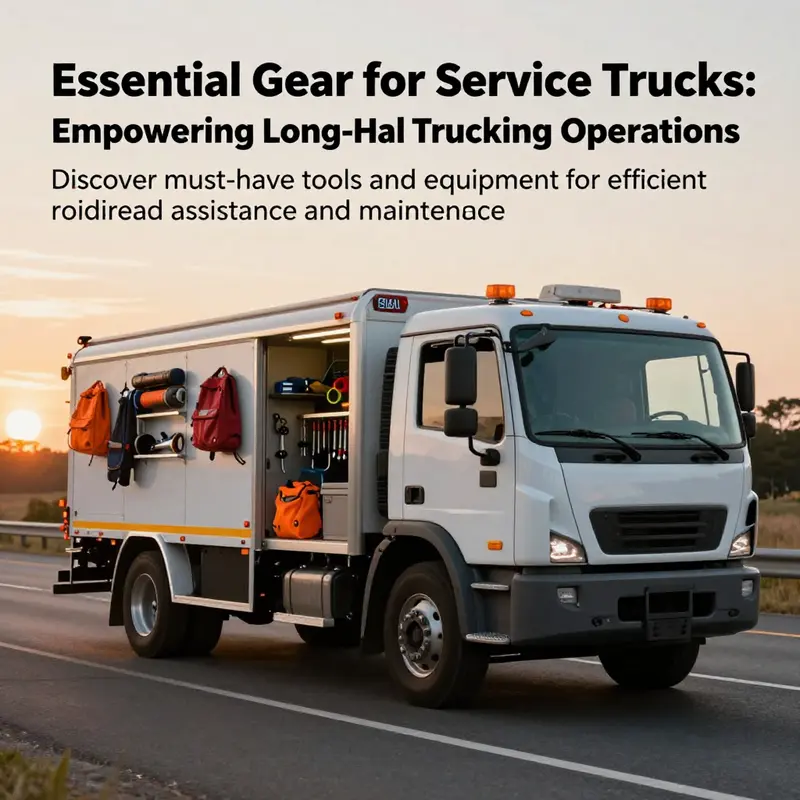
For long-haul truck drivers, trucking company owners, and fleet managers, having a well-equipped service truck is vital for navigating the unpredictable challenges of the road. Whether it’s a flat tire, a dead battery, or the need for immediate repairs, being prepared can mean the difference between a minor inconvenience and a costly delay. This article examines the essential items that should be included in a service truck, addressing core rescue tools, electrical support, safety equipment, medical supplies, and practical items for effective roadside assistance. Each chapter will build on the narrative, equipping you with the knowledge to optimize your service truck setup and ensure you’re ready for any situation.
The Hydraulic Core and the Ready Kit: Building a Service Truck’s Rescue & Repair Arsenal
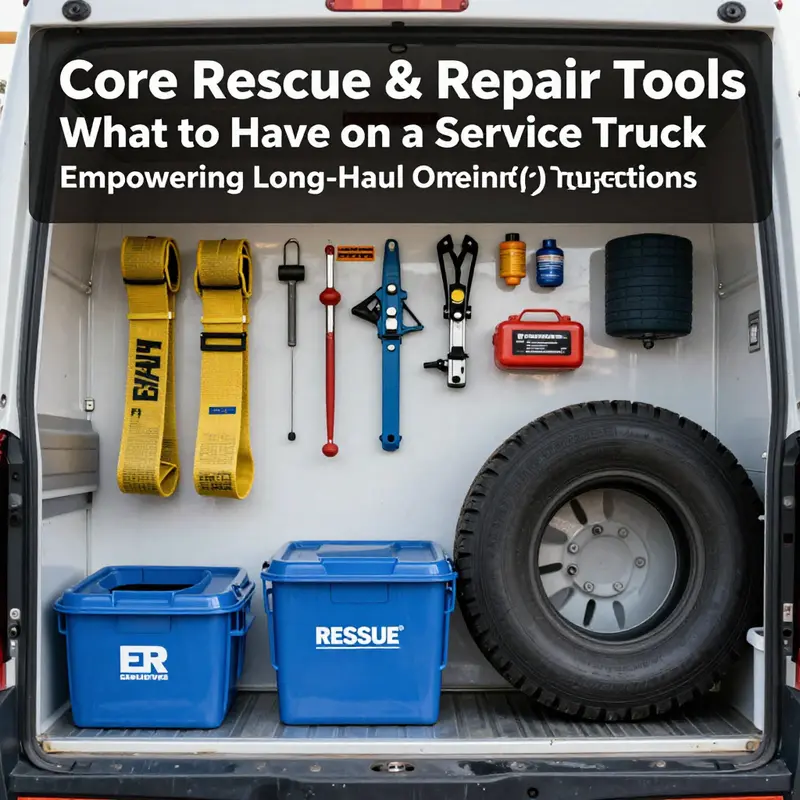
A service truck operates as a moving workshop and a frontline responder, a place where rapid diagnosis, safe stabilization, and decisive action converge. The heart of this capability lies not only in a broad toolbox but in a deliberate, integrative approach to the core rescue and repair tools that make the vehicle a truly mobile rescue station. The most critical element is the hydraulic rescue system, a compact, high-pressure powerhouse that translates force into precise, controlled action. These tools—whether used to breach barriers, spread tightly closed gaps, or cut through structural members—are designed for speed and safety under pressure. In the context of a service truck, they form the backbone of capability, enabling responders to gain access, stabilize a scene, and begin a rescue or repair sequence without waiting for a dedicated response unit. The value of this hydraulic core is amplified when it is paired with modular power units and interchangeable components. A single power unit can drive multiple heads, and a quick swap of adapters or blades can tailor the tool to the moment’s needs. That modularity cuts downtime and reduces the volume of gear that must be carried, which in turn enhances reliability by limiting the points of failure. In practice, this means the truck can respond to a broad spectrum of scenarios—from a vehicle entrapment during a roadside incident to stabilizing fallen debris at a worksite—without changing rigs or improvising improvised solutions on the fly. The emphasis is on predictable, repeatable performance, so that responders can move from assessment to action with confidence rather than rummaging through a crowded toolbox. Within this hydraulic core, three attributes stand out: precision, speed, and safety. Precision comes from calibrated controls that modulate force, angle, and timing so that cutting or spreading actions do not overshoot, nick critical components, or threaten a victim’s stability. Speed matters because time is a critical variable when lives or expensive equipment are at stake; a compact system reduces the path from switch to action. Safety is the through-line; it informs every choice about guard rails, interlocks, and safe operating procedures. Modern hydraulic resuscitation tools are designed with a focus on reliability in harsh field conditions. They feature interchangeable components and modular power units, allowing responders to adapt quickly to new layouts or evolving scene demands. They are engineered for durability, with robust housings, sealed fittings, and components that resist heat, dust, and moisture. This resilience matters because a service truck may be deployed in remote locations, under demanding weather, or in industrial environments where debris and vibration threaten fragile assemblies. At the same time, the trend toward smarter tools—built-in safety mechanisms, thermal monitoring, and diagnostic capabilities—helps operators prevent misuse and quickly identify maintenance needs before a tool fails at a critical moment. The benefit is not just speed or force; it is predictability of outcome. When the operator can trust that a spreader will generate the right amount of opening or that a cutter will slice through metal with controllable resistance, the sequence that follows—stabilization, access, and patient or asset extraction—becomes a coordinated series of actions rather than a stop-and-start struggle. Yet a modern service truck’s hydraulic core does not stand alone. It is supported by a carefully curated array of auxiliary equipment that expands the system’s effectiveness while staying in balance with the truck’s mission profile. Battery jump starters and diagnostic scanners complement the hydraulic tools by ensuring electrical and electronic subsystems are quickly revived or diagnosed on scene. A reliable winch offers controlled, incremental movement when there is a need to reposition a vehicle or stabilize a load without compromising safety. Portable cutting torches—whether electric, gas, or hybrid in design—provide ability to sever obstructions that cannot be removed by less aggressive means. The range of tasks is broad, but the philosophy remains the same: assemble a toolkit that can be deployed in minutes, configured to the current situation, and operated with minimal training overhead while maintaining the highest safety standards. The care that goes into layout and kit design is not merely about packing more tools into a single vehicle; it is about intelligent design for workflow. A well-designed service truck ensures that the hydraulic core and all supporting gear form a seamless system. This means torque and force paths are clean, hoses are protected, and control interfaces are logically arranged so an operator can move from scene survey to action with a few deliberate steps. The mental map is as important as the physical one: responders know where to reach for the spreader’s release mechanism or where to pull the diagnostic scanner if electrical faults are suspected after a long day of service calls. In practice, that translates into training regimes and standard operating procedures that emphasize integration over isolation. Every operator drills through scenarios that require alternating between lifting, spreading, cutting, and stabilizing, ensuring that the hydraulic core remains a flexible, dependable engine behind a broad set of on-scene responses. The non-hydraulic components earn equal respect because they extend the utility of the core while guarding against mission creep. Battery-powered jump starters ensure that a dead battery does not halt a critical repair or rescue sequence. Diagnostic tools locate electrical faults that would otherwise masquerade as mechanical failures, saving time and reducing risk. A compact, rugged winch can reposition vehicles or secure loads during lifting operations, while cutting torches provide an extra degree of freedom when access points or structural members stubbornly resist removal. Even with a strong core, the human factor remains central. Training, practice, and disciplined maintenance ensure that the hydraulic system and the ancillary gear perform when called upon. Regular inspection routines, replacement of worn components, and testing of power units are not chores but safeguards of mission readiness. Energy management also plays a part; knowing when to deploy a portable power pack, how to conserve battery life, and how to troubleshoot a power unit in the field can determine the success of an entire operation. A service truck that combines a resilient hydraulic core with well-chosen auxiliaries becomes a versatile tool for a wide range of emergencies and maintenance tasks. Its performance hinges on thoughtful integration—the craft of mapping real-world needs to a compact, durable, and intuitive toolkit. For teams grappling with complex scenes, the equation is not simply more tools; it is better, smarter tools organized to complement one another. That is why the design of the rescue and repair arsenal centers on modularity, durability, and accessible layout. It is also why operators benefit from a broader perspective on readiness beyond the immediate tools: training in scene safety, knowing when to apply a given tool, and recognizing when a task should be deferred to specialized units. For readers seeking a deeper look at layout and efficiency principles, see the discussion on design efficiency in emergency services. This reference provides practical guidance on optimizing tool arrangement, accessibility, and workflows to maximize uptime and reduce response times in the field. design-efficiency-in-emergency-services. When the truck is loaded with a competent hydraulic core and a lean, capable set of auxiliaries, a service team gains not only speed and capability but also confidence. The confidence comes from knowing that the system can be trusted to perform under diverse conditions, that a range of scenario types is anticipated, and that maintenance practices keep the fleet ready for the next call. In this sense, the rescue and repair arsenal is more than a static inventory; it is a disciplined toolkit designed to keep services moving, protect responders, and safeguard the assets and lives depending on them. To support ongoing learning and reference, practitioners can consult external technical resources and standards councils for best practices in tool handling, safety protocols, and field maintenance. For additional technical specifications and applications of hydraulic rescue equipment, practitioners often refer to official guides published by tool manufacturers. External reference: https://www.holmatro.com/en-us/rescue-tools
Power on the Move: Essential Electrical and Power Equipment for a Mobile Service Truck
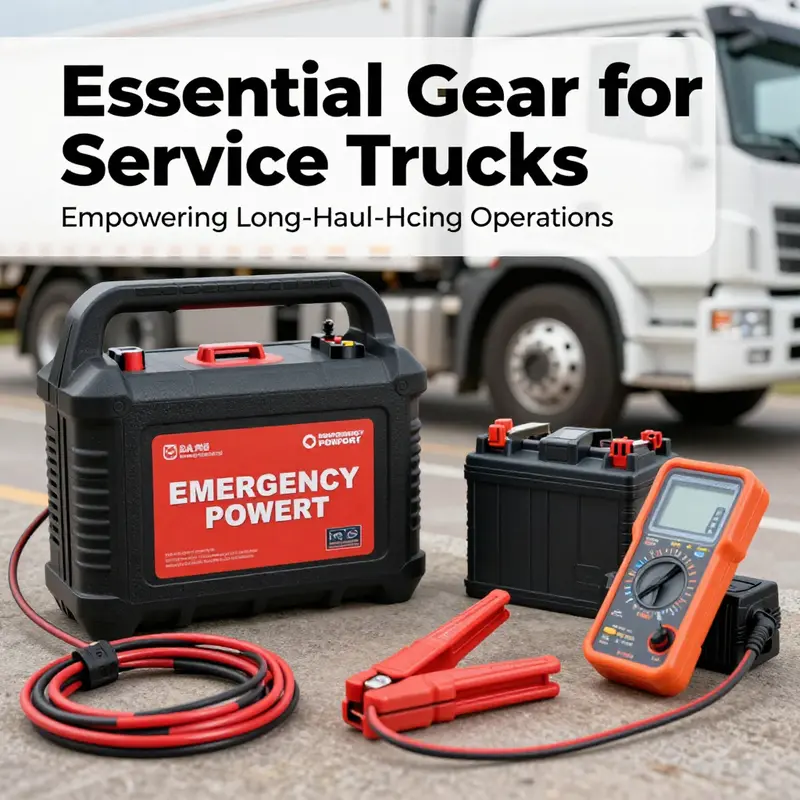
A service truck that can stand in for a small, mobile power plant changes the rhythm of field service. It shifts the work from a static shop to any site, at any time, which means dependable electrical and power support is not a luxury but a core capability. In industries where crews must diagnose, test, repair, and restore infrastructure on the fly, the vehicle itself becomes the first tool. The electrical power system and the supporting hardware inside and around the body of the truck perform more than light duty; they drive productivity, safety, and uptime. When you map out what to have on a service truck, the power-focused equipment is the backbone that keeps every other tool, tester, and light functional through long shifts and remote deployments. The goal is straightforward: generate reliable power, distribute it safely, monitor it continuously, and do all of that with equipment that survives harsh conditions, rough handling, and inclement weather. This is not just about having a generator and some cords. It is about building an integrated, durable ecosystem that technicians can trust in the most demanding moments. The components described below work in concert, so the truck remains a self-contained workshop rather than a tethered contingency plan.
At the heart of any power-enabled service truck is the Power Generation System. The essential feature is a generator, typically diesel or gasoline powered, capable of delivering steady AC power for tools, testing apparatus, lighting, and even temporary infrastructure at sites where grid power is unavailable. The emphasis is on reliability, efficiency, and duty cycle. Generators must be sized to handle peak demand without excessive strain, and they should be paired with fuel storage that permits extended operation between refuels. A well-integrated system will prioritize fuel management, with clear guzzlers like pumps, lighting banks, and diagnostic equipment virtualized under one controlled source. Operators benefit from quiet operation, predictable voltage, and robust protection against overloads. In practice, this means a generator with inverter-style output and solid overload protection that prevents damage to sensitive instruments while preserving the ability to run a soldering iron, a multimeter, or a hydraulic pump without a voltage sag. The generator is not a standalone appendage; it is connected to a distribution network designed to minimize resistance, manage transient loads, and keep cords and plugs organized and out of harm’s way.
That distribution network lives inside the Electrical Control Panels. Modern mobile power setups commonly feature compact, rugged panels that house circuit breakers, contactors, and voltage regulation. The control architecture protects technicians and equipment by providing overcurrent protection, short-circuit isolation, and surge damping. Beyond simple breakers, intelligent panels may incorporate remote monitoring interfaces, display panels that show voltage, current, and run hours, and fault indicators that alert crews to a tripped breaker before a delicate instrument is damaged. The panel layout is deliberate: outlets are categorized by amperage and type, cords are routed through grommets and cord reels, and the enclosure itself is weatherproof and sealed against dust. The aim is to deliver consistent, clean power to each job site device—from a power drill to a diagnostic oscilloscope—without exposing operators to shock hazards or arc-flash risk. In effect, the control panel is the nerve center of on-site energy, coordinating the flow of watts as you move from one task to the next.
To keep the power system running trouble-free, Onboard Diagnostics play a critical role. These systems monitor fuel level, coolant temperature, oil pressure, battery health, and even run-time metrics for the generator and pumps. Real-time indicators alert technicians to low fluid levels or rising temperatures before a failure occurs, enabling preventive maintenance during lunch breaks or between calls. The diagnostic layer also helps with fleet-wide planning, since it provides data about hours of operation, load factors, and maintenance cycles. In some configurations, a digital display or remote telemetry can broadcast critical alerts to dispatch or a foreman’s tablet, ensuring that a broader team can anticipate outages or schedule preventive service. The combination of on-board sensing and user-facing readouts turns the truck into a proactive maintenance hub rather than a reactive reserve. It also simplifies compliance with maintenance regimes that emphasize regular checks of fuel, coolant, and electrical integrity as part of field routines.
Durable Body Construction supports all of this with a rugged exterior and thoughtfully engineered internal spaces. The truck body must withstand exposure to rain, dust, salt, and vibration. For electrical work, that translates into sealed enclosures, corrosion-resistant hardware, and cable runs that are both protected from the weather and easy to audit. Aluminum or high-strength steel chassis and body panels offer a balance of light weight and resilience, while powder-coated surfaces deter wear from repeated outdoor use. Inside, a modular shelving system and dedicated cable-management channels keep cords, test leads, and connectors secured during transit and readily accessible at the job site. Durable build quality reduces the risk of damage to critical power components when the truck traverses rough terrain or endures the jolt of a long day on uneven surfaces. The goal is a vehicle that remains trustworthy after months of exposure to mud, heat, and shifting loads, so technicians can depend on its electrical backbone even when the weather turns unfriendly.
Equally important is Tool Organization tailored to electrical work. A service truck dedicated to power support needs a logical, repeatable storage strategy for cables, connectors, and testing instruments. Customizable shelving allows technicians to pull the right harnesses quickly and eliminates the scramble for the correct adapter. Color-coding and labeled bins speed identification while minimizing the risk of cross-connection mistakes. Secure mounting points and anti-slip mats prevent components from shifting during transit, reducing wear and potential damage. A well-organized power bay also makes routine maintenance easier: it is simple to inspect fuse blocks, check contactors, or replace a failing tester without dismantling the entire setup. The efficiency of the workspace carries into every job, letting crews move from diagnostic to repair with a steady cadence rather than constant reshuffling of tools.
Integrated Work Lights complete the package, turning any site into a workable workspace regardless of time of day. High-lumen LED fixtures, mounted overhead or on portable stands, illuminate panels, test benches, and hazardous areas with clarity. Night work becomes safer and more precise when lighting is evenly distributed, reducing the risk of mistakes during critical tasks such as wiring checks, meter reads, or panel testing. Some configurations extend lighting into the exterior, aiding external operations when technicians must inspect a stuck valve, check a utility pedestal, or connect to a temporary power source. The lighting system should be designed with redundancy so a single failed light does not blind a crew member or create a blind spot near a live component. In addition, many service trucks are compatible with aerial lifts or telescopic booms for elevated electrical work, which broadens the operator’s reach while maintaining the same power and lighting standards on the ground.
The trade-offs of this sophisticated setup are real. A power-centric service truck carries a higher initial cost, a larger maintenance footprint, and a greater need for trained operators who understand both electrical safety and generator maintenance. The complexity can increase fuel consumption if the system is oversized for routine tasks, so planners must balance capacity with typical demand. Yet the payoff is measured not just in uptime but in the ability to perform complex maintenance, diagnostics, and temporary infrastructure work without returning to a shop. This matters most for utilities, telecommunications, construction, and emergency services, where a mobile power capability translates into faster restoration, less downtime, and safer field operations. It also makes the vehicle a safer, more productive workspace, reducing the need for technicians to improvise unsafe solutions in the field.
Target users of these power-enabled service trucks span a wide range of operations. Utility crews rely on reliable on-site power to test lines, power meters, and remote equipment. Facility maintenance teams need portable power for critical building systems during outages or preventive tasks. Road maintenance operations benefit from the ability to power diagnostic gear and temporary lighting at highway sites. Mobile technicians who routinely visit client sites or disaster zones demand a predictable power platform that supports both routine checks and emergency repairs. The common thread is the requirement for dependable, accessible, and safely managed electrical power that travels with the crew, not at the mercy of the nearest generator shed.
To support informed planning, many practitioners refer to industry guidelines and standards for mobile power and electrical support equipment. These resources help ensure that the system design addresses safety, reliability, and interchangeability across fleets. For those drafting specifications or evaluating configurations, reviewing a structured framework—covering power generation, distribution, control, diagnostics, and protection—can lead to a more cohesive, future-proof solution. As you fine‑tune your own vehicle’s power suite, consider how modularity and clear maintenance pathways will reduce downtime and simplify training. And as you explore the broader landscape of mobile power solutions, you may find that adjacent domains—such as charging infrastructure and modular power packs—offer useful insights into scalable, field-ready configurations. For planning power strategies, you can explore electric fire truck charging solutions. This cross-pollination of ideas helps ensure that a service truck remains not just a means to reach a site, but a reliable on-site power plant that keeps the entire operation moving smoothly.
External reference: https://www.neca.org/resources/technical-resources/mobile-power-and-electrical-support-equipment-guidelines/
Visible on the Job: Building a Safety and Visibility Toolkit for Service Trucks
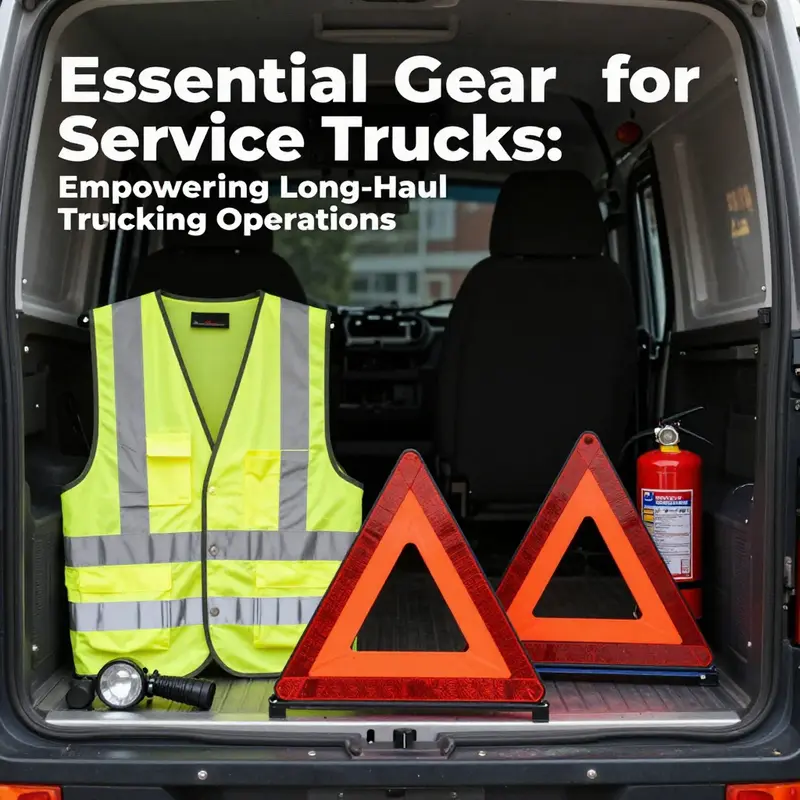
Safety is not an afterthought on a service truck. It is the first line of defense that protects the crew, the public, and the equipment itself. When a vehicle pulls onto a shoulder, into a work zone, or beside a busy roadway, the visibility and clarity of the scene determine how quickly and safely the operation can proceed. The safety and visibility equipment described here is not a collection of add-ons but a cohesive system designed to reduce risk at every phase of a call. The best setups are those that blend clearly legible signals with highly durable hardware, arranged in a way that promotes quick access to essential tools without compromising the flow of the job. Each component reinforces another, so the truck becomes a moving, clearly marked work site rather than a forgotten roadside afterthought.
High-intensity warning lights sit at the heart of this system. They are not decorative; they are signals that cut through glare, weather, and the frantic pace of roadside scenes. Roof-mounted beacons and side-mounted fixtures should be capable of flashing in multiple patterns: steady, alternating, and rotating, to convey precise information about the vehicle status. A steady beacon can indicate a stationary, active work zone, while a rotating or alternating pattern signals a more urgent condition or a need for drivers to yield. The placement of these lights matters as much as their intensity. Lights must be visible from various angles and not obstructed by ladders, shelves, or equipment. In wet or snowy weather, clear illumination becomes a lifeline, helping crews maintain orientation and avoid hazards.
LED technology has transformed safety lighting by offering bright output with lower power draw and longer service life. When integrated with automatic triggers, such as hazard activation when the truck rear lights or hazard lights come on, or when the vehicle engages reverse gear, the system becomes proactive rather than reactive. This means operators do not have to remember to switch lights on in the middle of a tense roadside moment. The redundancy built into the design is crucial: a mix of traditional strobe-style beacons for broad visibility and modern LEDs for piercing, precise signaling ensures that the truck remains conspicuous in sun, rain, or darkness. The philosophy is simple: if a driver cannot clearly see the truck, the risk of a collision or a delay in response escalates dramatically. The lights are both warning and guidance tools, directing approaching motorists away from the work area and toward a safe path around the scene.
Conspicuity markings and reflective signage are the quiet backbone of highway safety. They function in daylight and in the small hours when glare from oncoming traffic dominates attention. Retroreflective chevrons, striping, and color contrasts are designed to reflect light back toward its source, making the vehicle more legible to drivers even when ambient lighting is poor. Conspicuity is not only about bright patterns; it also includes arranging markings to delineate the truck silhouette and operating envelope. When combined with reflective signage that communicates the nature of the work and potential hazards ahead, these elements reduce reaction times and guide vehicles to a safer buffer zone. The goal is a recognizable, predictable profile that tells others exactly where the crew is, what they are doing, and how far they are willing to extend into the lane of traffic.
Alongside conspicuity, high-visibility apparel is a visible reminder of human presence and responsibility. All personnel should don vests, shirts, or outerwear that comply with ANSI/ISEA 107 standards. The fabric, color, and reflective material are chosen to maximize recognition from multiple angles and at varying distances. Layering is often a practical approach, enabling crews to adapt to changing light and weather without sacrificing safety. Proper maintenance, washing, replacing worn reflective strips, and ensuring the vests stay bright, ensures the message of visibility remains intact even after repetitive daily use. The human factor matters as much as the hardware; the simplest clothing choice can significantly influence how quickly a traffic gap is recognized and how confidently motorists respond to the warning signals around the truck.
Storage and organization play a critical, often underappreciated, role in safety. Marked toolboxes and storage units keep tools accessible without creating clutter that might trip someone or obscure critical equipment. Clear labeling reduces the time spent searching for essential items and minimizes the temptation to improvise with unsafe solutions. In practice, this means every box has a defined purpose and a visible outline of its contents. When combined with defined work zones, cones, barriers, and portable signage, the scene becomes a controlled environment rather than a chaotic spill of parts and cords. The operators can work in a stable, predictable area, reducing the likelihood of tools rolling into traffic or cords catching under a wheel.
Technology is not a luxury in modern service trucks; it is a safety multiplier. Dash cameras provide continuous documentation of incidents and near misses, while proximity sensors offer real-time feedback about approaching vehicles and pedestrians in the immediate work zone. This fusion of visuals and awareness tools supports better decision-making under pressure and furnishes a data trail that informs future safety improvements. The emphasis is on proactive protection—systems that help crews anticipate risk rather than react after a mistake has occurred. When paired with robust maintenance routines, these technologies remain reliable over time, guarding against the quiet degradations that come with heavy use.
The heart of this safety framework is not only the devices themselves but the discipline of maintenance and inspection that surrounds them. Regulations and best practices emphasize that all lights function as intended, reflectors remain intact and undamaged, and signage remains clearly visible. Regular checks should be built into the daily routine, with a quick visual sweep at the start and end of each shift, followed by a more thorough inspection on a scheduled basis. Burned-out bulbs are more than an aesthetic flaw; they create gaps in visibility that can transform a safe stop into a near miss. Similarly, signs and reflectors that pick up grime or wear lose their effectiveness, particularly at night or in poor weather. The crew should treat every component as a critical safety asset, not a disposable add-on.
An integrated approach to safety also means acknowledging the guidance available from national standards and regulatory bodies. Adherence to established guidelines is not just about compliance; it is about reducing exposure to risk in real-world scenarios. The National Highway Traffic Safety Administration (NHTSA) offers extensive resources on vehicle safety and visibility equipment regulations, providing a baseline for what works in practice and what authorities expect. Following these guidelines supports both legal compliance and the human imperative to keep roadways safer for everyone.
In practice, the most effective safety setup achieves a balance between visibility, accessibility, and durability. It enables quick, decisive action when a breakdown happens while maintaining a calm, organized work area that does not escalate the hazard. This is where the idea of a toolkit comes to life: the truck becomes a mobile safety center, with every device having a purpose, every space a clear function, and every crew member empowered by confidence in the gear they rely on. The result is a service operation that respects the road as much as the people who share it, delivering timely repairs and safer outcomes for drivers in distress. For those seeking to understand how layout and design can amplify safety, explore the discussion at design-efficiency-in-emergency-services. External resource: https://www.nhtsa.gov/vehicle-safety-and-visibility-equipment-regulations
First Aid in Motion: Building a Ready Medical Arsenal for Your Service Truck
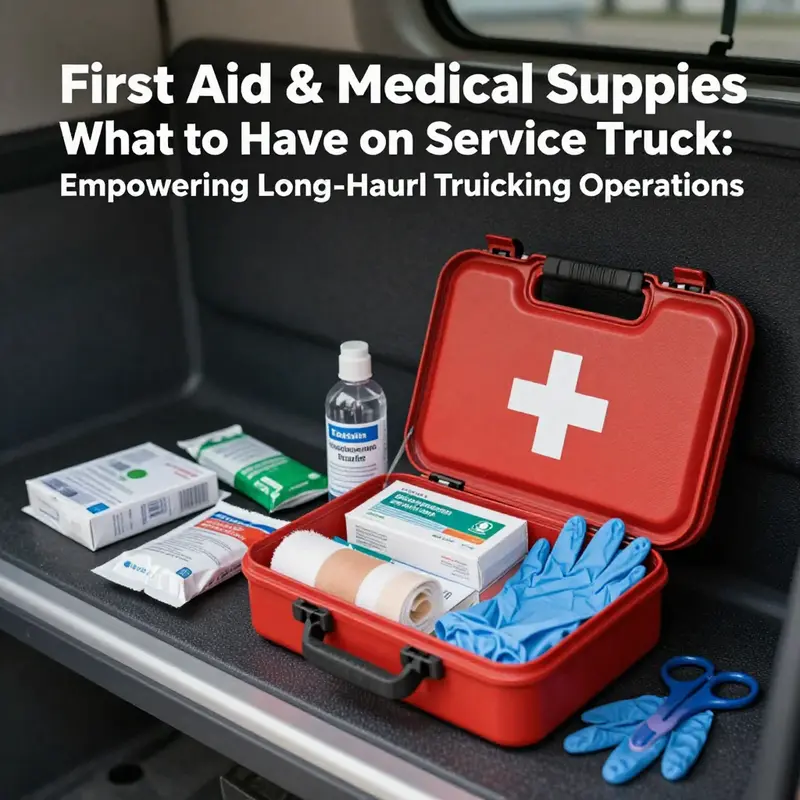
Every service truck travels with more than tools and spare parts. It carries the possibility of injury, delays, and the stress of being miles from a clinic or shop. A well-executed first-aid and medical-supplies program is not a supplement to the work; it is a core component of readiness. When field crews can act quickly, confidently, and safely, minor incidents stop escalating, recovery times shorten, and downtime for the vehicle and the crew is kept to a minimum. This is not a static box of supplies. It is a dynamic system that reflects the risks of the job, the climate and terrain in which the truck operates, and the medical knowledge of the team. The kit sits alongside the other core pieces of equipment, but its purpose is fundamentally different: it preserves life, reduces pain, and stabilizes situations until professional care can take over. A practical first aid program begins with a clearly defined scope. It recognizes that the smallest cut, a sprain, or a heat-related episode can derail a day’s work just as surely as a broken drive shaft. From the outset, it assumes that responders might be alone for a window of time and may need to improvise with what is on board. That mindset shapes every decision about what to include, how it is arranged, and how it is checked and updated over time. The content that follows describes a comprehensive, field-ready approach to equipping a service truck with first aid and medical supplies that are durable, accessible, and compliant with best practices. It is a blueprint for crews who want to act decisively, protect themselves, and keep service calls moving when the clock is ticking. The first consideration is a balanced kit that covers both common minor injuries and more serious but less frequent emergencies. A well-stocked kit begins with the basics: adhesive bandages of various sizes, gauze pads for wound management, antiseptic wipes to clean wounds, adhesive tape for immobilization and dressings, scissors capable of cutting through clothing or tape, disposable gloves to protect both patient and responder, pain relievers appropriate for adult use, and a cold pack to reduce swelling and discomfort. These items form the backbone of rapid, on-site care and are the quickest way to stabilize a situation while awaiting professional medical support. Beyond the basics, the kit should include items specifically designed to address more severe incidents. A CPR face shield can provide a barrier to enable safe chest compressions, a tourniquet can be the difference-maker in a life-threatening bleed, and a trauma dressing offers a superior option for controlling serious bleeding and protecting a wound under field conditions. It is essential to couple these supplies with a simple, written plan of action—checklists or quick-reference guides that reinforce training and help reduce hesitation in a high-stress moment. As crucial as the items themselves is the organization of the kit. The contents should reside in a rugged, waterproof case with clearly labeled compartments so a responder can locate what is needed without fumbling. The case should be mounted or secured so it cannot shift during transit yet remains readily accessible when doors are opened at a roadside or job site. Visibility is a key element: bold color-coding, weatherproof seals, and a durable exterior help ensure the kit remains usable across seasons and in dusty, wet, or muddy conditions. A practical arrangement supports speed: a clean separation between everyday supplies for minor injuries and higher-stakes components for trauma or resuscitation. It is also wise to include a compact, laminated sheet inside the lid that lists contents, expiration dates, and any special handling notes. Keeping these details up to date is not a chore but a core safety practice. Expiry management matters a great deal more than many people realize. Wound care items, bandages, and medical devices degrade over time. A quarterly inventory check with a restocking protocol ensures that nothing is out of date or unusable when an emergency arrives. Restocking should be integrated into routine vehicle checks and after any incident where supplies are used. This approach avoids the all-too-common scenario of discovering a missing or degraded item only when it is too late to replace it. Training and readiness extend beyond the box. Certifications in first aid and CPR, along with bleeding control and shock management basics, empower crews to respond with competence rather than hesitation. Regular drills, refreshers, and scenario-based practice help transform knowledge into instinct, so the appropriate steps—protecting the scene, applying a dressing, controlling bleeding, monitoring vital signs, and calling for professional help—become muscle memory. The mental aspects of readiness cannot be overlooked. Operators should have access to a clearly defined set of emergency contacts and a simple, portable medical information form for crew members. If someone on the truck carries a medical condition or an allergy, a discreet, immediately accessible card or note can expedite care. This practice also informs dispatch and medical responders about potential risks, enabling a faster, more tailored response. Compliance with recognized safety guidelines further anchors this program. Many professional organizations and regulatory bodies provide guidance that helps standardize what a mobile crew should carry. Aligning with those guidelines assures that the kit meets minimum safety expectations and supports a consistent standard across shifts, seasons, and job types. Within this framework, there is room for variation based on climate, geography, and the specific hazards encountered during service calls. Some teams may operate in remote areas, where access to hospitals or urgent care is limited and the emphasis on compatible supplies and durable packaging becomes even more critical. Others work in urban or suburban settings with quick access to medical facilities but higher exposure to cut, abrasion, or burn risks from fuel, metal, or electric systems. Either way, the objective remains the same: to render immediate relief, prevent deterioration, and buy crucial time for professional care. When selecting or assembling a ready-made kit, teams often choose solutions designed for durability and ease of use in outdoor and industrial environments. The best options combine rugged physical protection with intuitive layout and clear, readable labeling. That combination ensures that a responder can locate the needed item in seconds, even when gloves are worn or lighting is poor. The medical kit should be integrated into the broader safety ecosystem of the vehicle, not treated as a standalone. A secure, designated storage area should be part of the vehicle’s safety plan, with regular checks during maintenance cycles. And the kit should be included in vehicle readiness reviews, so nothing is overlooked during pre-trip inspections. For crews seeking practical ways to deepen the impact of their first-aid program, there is value in linking this discussion to broader maintenance and safety training resources. For practical guidance on keeping these kits reliable through routine maintenance, see fire-truck maintenance training. fire-truck maintenance training. This cross-reference reinforces the point that medical readiness and mechanical readiness go hand in hand when you depend on a vehicle to perform in tough conditions. In addition to internal protocols and training, many organizations turn to reputable suppliers for pre-assembled service-truck first-aid kits that are designed to withstand outdoor and industrial environments. These kits bring together the essential items in tested configurations, with attention to durability, accessibility, and regulatory alignment. The advantage of a well-chosen, pre-assembled solution is the confidence that comes with knowing the contents meet established safety standards, are easy to restock, and are organized for rapid response. Finally, the broader story of being prepared on a service truck is about resilience. It is about giving the crew the tools to protect themselves and their colleagues while delivering essential services to customers. It is about balancing the immediacy of field care with the realities of transport, weather, and time, and it is about recognizing that medical readiness is as fundamental as any wrench, jack, or cable that might be found in the back of the truck. When done well, the first-aid arsenal becomes a quiet partner to every repair, every roadside assist, and every on-site evaluation, offering a steady, capable hand when uncertainty is high. External resource: https://www.medline.com
null
null
Final thoughts
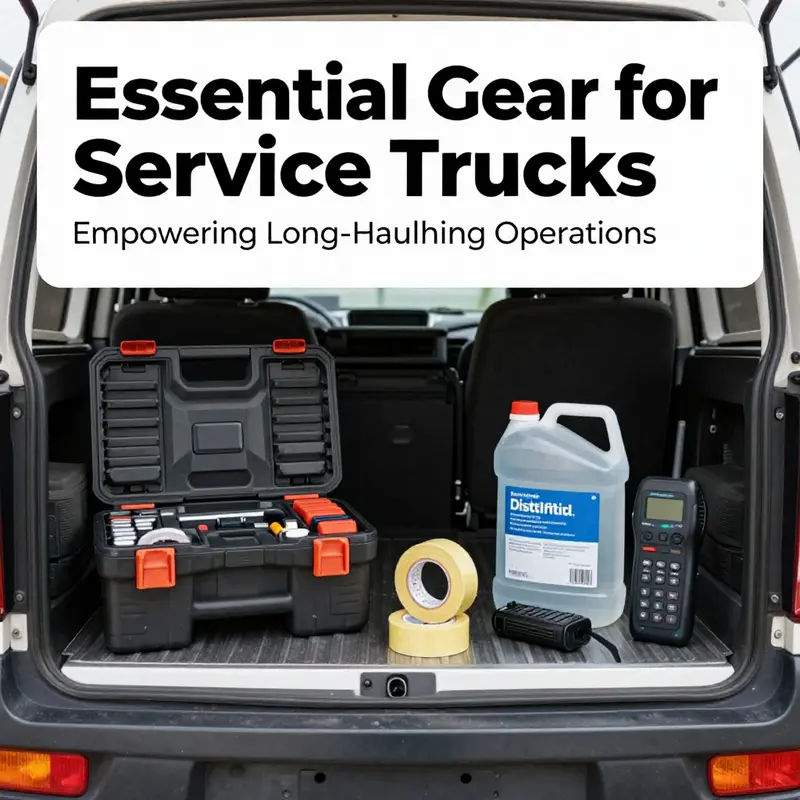
Equipping your service truck with the right tools and supplies ensures that you can handle any roadside emergency efficiently and safely. From rescue tools and electrical support to safety equipment and medical supplies, each component plays a crucial role in maintaining the operational efficiency of trucking fleets. Long-haul drivers and fleet managers should invest thoughtfully in their service trucks to minimize downtime and enhance safety. By being well prepared, you not only protect your investment but also ensure smooth operations on the road ahead.