
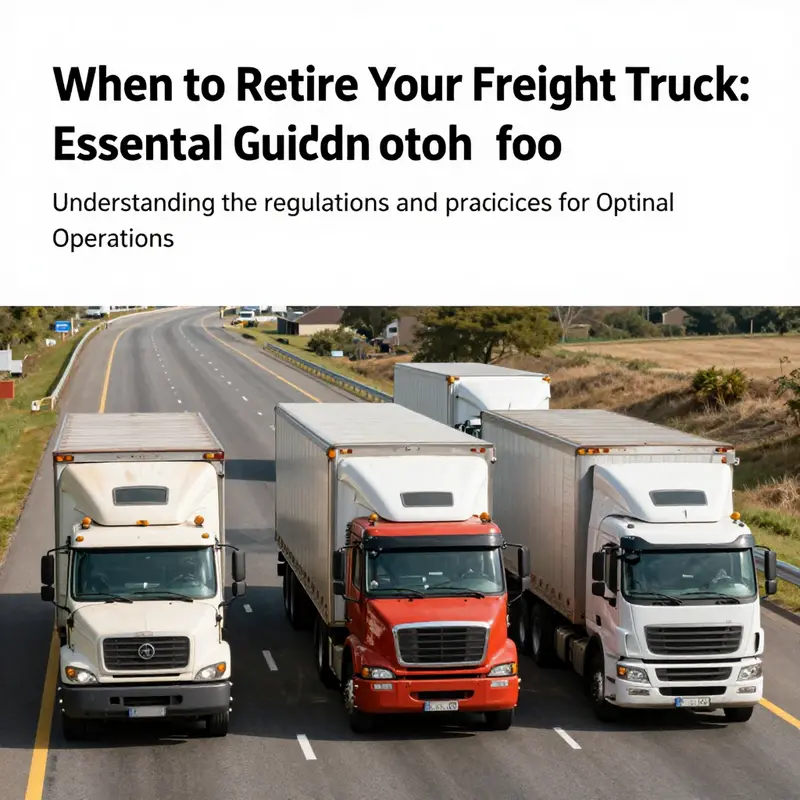
Knowing when to retire a freight truck is crucial for maintaining a safe and efficient operation. Adhering to regulations ensures compliance, while understanding the nuances of truck age, inspection failures, and environmental policies can save you from costly downtimes and fines. This article dives into essential guidelines tailored for long-haul truck drivers, trucking company owners, fleet managers, and aspiring truck drivers. We will explore mandatory scrap ages in detail, identify ways to recognize safety and inspection failures, discuss compliance with environmental policies, and highlight government incentive programs that encourage the early retirement of old trucks.
null
null
When a Freight Truck Must Be Taken Off the Road: Reading the Signs of Critical Safety Failures and Roadside Inspections
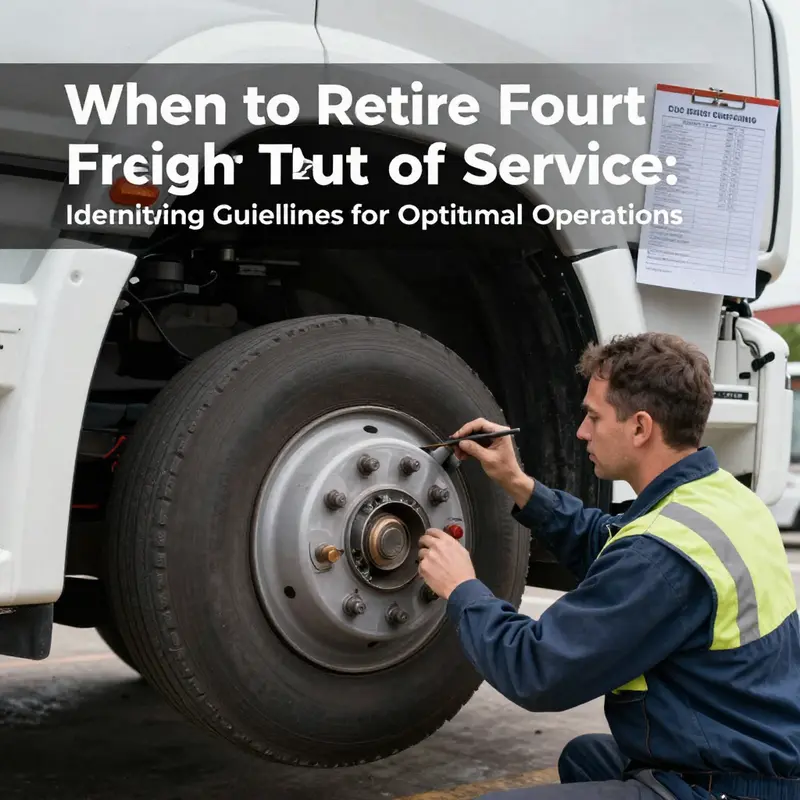
In the world of freight movement, safety is not a single checkpoint but a continuous responsibility that threads through every mile of a carrier’s operations. A truck can carry weight and cargo efficiency far beyond its own chassis, but when the machine begins to threaten the road, the rules are clear and unforgiving. This chapter explores the conditions under which a freight truck must be taken out of service, focusing on the safeguards embedded in safety and inspection standards that regulators, fleet managers, and drivers rely on to prevent accidents, protect drivers and commuters, and maintain a trustworthy transportation network. It begins from the premise that age alone is not a sufficiency. A vehicle can be older than a decade and still be kept in service if it demonstrates ongoing compliance with safety norms and emission controls. Yet the moment it fails to meet those bare minimums, the road becomes an unsafe place, and removal from service becomes not a choice but a regulatory imperative.
Consider the roadside stop, a moment when an inspector’s trained eye assesses the truck’s condition in the context of its load and route. The inspector’s aim is not to penalize but to prevent harm. The criteria for removing a vehicle from operation are designed to catch faults that, if left unaddressed, could lead to catastrophic failure: impaired braking, tire failures, dysfunctional lights, steering that won’t respond when it matters, or structural damage that compromises the integrity of the vehicle and its cargo. These are not abstract concerns. They translate into real world consequences: longer stopping distances, sudden loss of control, or a crash that injures the driver, other road users, or pedestrians. The decision to place a vehicle out of service is a calibrated judgment that weighs the severity of the defect, the immediacy of danger, and the potential for rapid remediation, all within the framework of national and regional regulations.
At the core of this framework is the concept of critical safety defects. The moment a defect is serious enough to create an immediate hazard, the vehicle becomes an immediate candidate for out-of-service status. Braking systems are the most obvious barometer of this threshold. Inadequate stopping power, imbalanced brake performance, or a failure to meet required stopping distances translates into a direct increase in collision risk. The inspector looks for signs that the braking system has deteriorated beyond a safe threshold, including worn components, air or hydraulic leaks, or a failure to generate adequate deceleration under test conditions. Tire and wheel issues present an equally dangerous vector. Bald or severely worn tires, damaged rims, or improper inflation threaten blowouts and loss of traction, particularly in adverse weather or on long grades. The absence of reliable tires changes a routine road into a stage for tire failure, skidding, and loss of control. Lighting and electrical systems, too, play a pivotal role in the safety equation. Headlights, brake lights, turn signals, and hazard lights communicate intent, anticipate hazards, and preserve visibility. When any of these systems are defective, the risk is twofold: the driver’s ability to react and the ability of others to anticipate the truck’s actions are both compromised.
Steering and suspension defects, while sometimes less dramatic at a glance, can erode vehicle handling and stability in critical moments. A steering component that binds, wobbles, or requires excessive effort creates a time-sensitive danger. Worn suspension parts can cause uneven tire wear, reduced load stability, and unpredictable body movement when the truck navigates curves or uneven pavement. Structural damage—cracks in the frame, the chassis, or the cargo area—brings a broader, more existential risk. Structural faults undermine the very framework that bears the weight of the cargo and absorbs the shocks of the road. They can fail under load only after a latent condition has progressed, and when they do, the results can be sudden and catastrophic. These defects are not isolated concerns but indicators of deeper deterioration that may have developed over years of driving and maintenance practices. When inspectors identify such faults, they do not hesitate to remove the vehicle from operation until the issues are corrected and revalidated by safety standards.
The out-of-service decision is not limited to outright defects. National safety policies recognize that a vehicle may be temporarily unable to meet standards even after repairs have been attempted. There are scenarios in which a truck, even if within a stated age limit, must be taken out of service after repairs and adjustments fail to bring it into compliance with applicable safety technical standards or emission and noise requirements. The logic is straightforward: repairs can restore function, but not all repairs restore safety margins to acceptable levels or ensure long-term reliability. The emphasis is on measurable compliance rather than a hopeful return to operation. When a post-repair inspection still yields nonconformity, the vehicle cannot be allowed to resume service on public roads until it meets the standards that protect life and property. This stance reinforces the message that safety cannot be compromised for the sake of schedule, distance, or cost.
Roadside inspections, with the practical enforcement by paramedics of the road—the inspectors—provide a transparent and standardized mechanism to identify and manage safety risk. The FMCSA’s Out-of-Service (OOS) criteria, in particular, outline how and when a vehicle is removed from service. A vehicle that fails three consecutive annual inspections, for example, faces an automatic retirement if it cannot secure a valid certification for continued operation. This is not merely a formality; it is a signal that a truck’s condition has fallen outside the threshold of reliability and safety for continued operation. The criterion aligns with the broader principle that failure to maintain a vehicle to the required standards creates unacceptable risk during normal operation and under the stresses of highway travel. The three-consecutive-inspection rule underscores the need for ongoing maintenance discipline. It is not enough to pass a single inspection; consistent compliance across years is essential for continued operation.
In practice, how do fleets navigate these thresholds while maintaining reliability and efficiency? The answer lies in disciplined maintenance culture, precise record-keeping, and proactive risk management. Preventive maintenance is not a ritual but a strategic asset. It starts with a dependable pre-trip inspection routine, a checklist-driven discipline that drivers routinely apply before every trip. Heeding even small indicators—an unusual tire wear pattern, a creeping brake noise, or a faint electrical fault—can prevent a larger defect from becoming a safety hazard. Modern fleets increasingly leverage data from maintenance management systems to track component lifecycles, monitor performance metrics, and flag impending failures before they become critical. This data-driven approach helps ensure that preventive actions are taken at the right time and that the vehicle remains within the safety envelope required for lawful operation.
When a defect is identified, the path to resolution matters as much as the defect itself. Immediate on-site repairs, where feasible, can avert a minimal disruption and restore a vehicle’s safety profile for continued operation. But there are defects that demand more than short-term fixes. In some cases, the only safe course is to divert the load and retire the vehicle from service, pending proper remediation or replacement. The decision is never taken lightly, and it often involves collaboration among drivers, fleet managers, maintenance technicians, and regulatory compliance personnel. The goal is to minimize exposure to risk while maintaining the reliability of service, commission schedules, and driver hours. This balancing act is at the heart of responsible fleet management and is precisely why safety thresholds exist as permanent fixtures of the transportation system.
The three consecutive inspections rule, in particular, highlights the importance of policy-driven discipline. If a vehicle repeatedly fails to secure a valid inspection certificate for three straight years, this is a signal that the underlying maintenance regime is not sufficient to sustain safe operation. The required remedy may involve major overhaul, retrofitting with upgraded components, or retirement and replacement. In this way, the law codifies the intuitive notion that repeated noncompliance is not a temporary setback but a systemic deficiency that warrants escalation. The guidance embedded in the OOS framework ensures that safety is not negotiable, and it codifies a clear, enforceable standard that all stakeholders can understand.
It is essential to recognize the interplay between age-based retirement and safety-driven removal. Age or mileage thresholds provide a general baseline for replacement strategies, but they cannot substitute for ongoing compliance. A 12-year-old light-duty truck that has benefited from meticulous maintenance and has a clean inspection history may remain in service longer than a 9-year-old vehicle that has accumulated damage and wear without adequate maintenance. The regulatory framework recognizes this nuance: safety and environmental compliance outrank age alone. A fleet that treats inspections, repairs, and maintenance as ongoing commitments can optimize its operation while staying on the right side of the law and maintaining roadworthiness. Conversely, a fleet that views safety standards as a burden or a hindrance to schedules will inevitably face costly closures, legal consequences, and reputational damage when an out-of-service order is issued.
Another layer in this narrative concerns the communication and documentation that accompany the decision to place a vehicle out of service. When inspectors determine that a truck must be removed from operation, it is not simply an abstract punitive action. It becomes a formal, documented determination that triggers a sequence of actions: the driver must halt operation, the vehicle is taken out of service, and corrective steps must be performed before the vehicle can be reintroduced to service. The documentation serves multiple purposes. It preserves an auditable record of compliance, provides clear guidance for maintenance teams, and informs the carrier’s dispatch and operations staff about the status of the vehicle, the required repairs, and the timeline for reentry. In an industry that depends on timely deliveries and efficient utilization of equipment, having this documentation clear and accessible reduces ambiguity and accelerates the path back to service once safety criteria have been restored.
The human element in this process should not be overlooked. Drivers play a crucial role in identifying and communicating safety concerns. A driver who performs a thorough pre-trip and recognizes a developable safety defect is acting as the first line of defense against unsafe operation. The truck’s continued operation, in this sense, hinges on a culture that respects safety reporting and values timely corrective action. Maintenance technicians translate the driver’s observations into practical repairs, spare parts management, and rigorous testing after repairs. Fleet managers, in turn, translate the technical and safety outcomes into operational decisions that maintain service reliability without compromising safety. The result is an ecosystem in which every link—from the driver to the regulator—works in concert to prevent harm and preserve the integrity of the freight network.
The broader policy environment also shapes how these safety and inspection outcomes are perceived and managed. In some regions, environmental and safety priorities intersect with enforcement strategies. While the focus here is the state-level or national framework that governs out-of-service decisions, it is worth recognizing that safety and environmental performance are often pursued in parallel. Fleets that invest in preventative maintenance and robust inspection readiness are better positioned to navigate potential policy shifts, adapt to evolving standards, and sustain operations even as regulatory priorities change. In this sense, the practice of taking a vehicle out of service when it fails safety thresholds is not simply compliance for compliance’s sake. It is a forward-looking investment in resilience and reliability—an investment that pays dividends in reduced risk, fewer roadside incidents, and improved customer confidence.
To readers balancing operational pressures with safety imperatives, the core message is straightforward. Do not treat safety thresholds as optional checkpoints to be bypassed when schedules run tight. Treat them as non-negotiable limits that safeguard lives and sustain long-term performance. The out-of-service criteria serve as essential guardrails that ensure trucks on the road are capable of performing their duties without compromising safety. They provide a transparent, enforceable, and enforceable standard that helps fleets plan maintenance cycles, allocate resources for repairs, and coordinate with regulators with confidence. When a truck is taken out of service, it is not merely a setback but a corrective step toward reentering the road in a condition that honors the responsibility of moving goods safely and reliably.
For readers seeking deeper technical detail or the most current regulatory language, the official guidance remains the FMCSA’s regulatory framework. It is the reference point that translates these safety concepts into actionable requirements for roadside enforcement, operator compliance, and fleet maintenance planning. As with any regulatory system, the details evolve, and staying informed is part of the obligation of operating a safe and compliant freight network. The intrinsic logic—protecting the public by preventing unsafe operation—remains constant, guiding decisions about when to keep a vehicle in service and when to remove it for safety remediation.
External resource: For detailed current rules, see FMCSA regulations at https://www.fmcsa.dot.gov/regulations
When Freight Trucks Must Exit the Road: Navigating Scrap Ages, Safety, and Environmental Policy
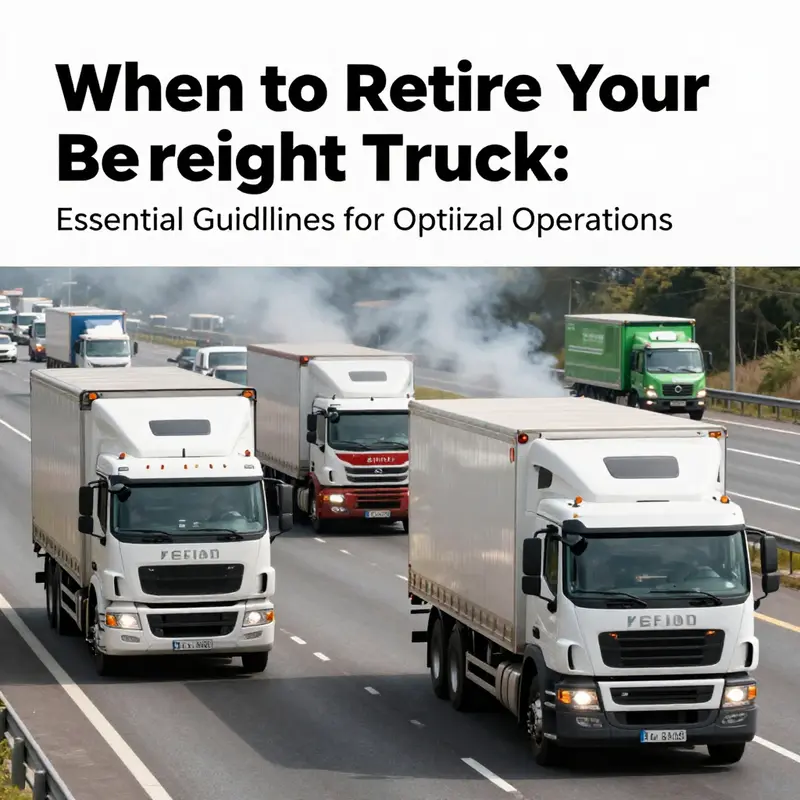
A freight fleet is never static. A truck travels far beyond miles logged in a single quarter, and its value is not only the resale price and remaining service life but the degree to which it continues to meet safety standards, emissions obligations, and the terms of public road use. In many jurisdictions, the decision to retire a vehicle is a structured one, rooted in law, policy, and the hard economics of maintenance. This chapter weaves together the threads of mandatory scrap ages, post-repair safety and emissions checks, inspection histories, and the growing influence of environmental policy. It shows how a fleet manager reads the numbers and regulations not as arbitrary hurdles but as a coherent framework that protects drivers, the public, and the environment while guiding economic decisions. The central question remains the same across contexts: when does a freight truck become more risk and cost than it is worth to keep on the road? The answer is rarely a single line item; it is a synthesis of age, reliability, compliance, and policy imperatives that shift with time and place.
One of the clearest anchors in any retirement decision is the mandatory scrap age. Across categories, the clock starts when a vehicle enters service, and regulation often specifies a hard stop unless certain conditions are met. In many systems, medium and heavy-duty freighters have the longest “clock” at a 15-year limit. Light-duty trucks, including smaller and mini-trucks, face a 12-year mark. There are other specialized vehicle classes—the semi-trailer tractors and container transport vehicles—where the scrap age is set at 10 years, and vehicles that transport hazardous materials also carry a 10-year boundary. These time boundaries are not merely tradition; they reflect a policy judgment about the cumulative wear, structural fatigue, and exposure to chemicals and loads that accompany high-mileage fleets. Yet even within these boundaries, maintenance and testing can extend practical service life, provided the vehicle demonstrates robust safety performance and compliance during inspections and after repairs. A reminder about nuance is essential here: while some sources may have cited a uniform 10-year cap for medium and heavy trucks, more recent regulations emphasize that 15 years is the default for many fleet types, unless a stricter safety and emissions regime applies. The effect is that the scrap-age decision begins with a legal baseline and becomes a live evaluation that considers the vehicle’s condition today, not just its age yesterday.
But age alone does not decide fate. The roadworthiness of a truck after repairs is a pivotal factor. If a truck undergoes repairs to address safety or emission deficiencies and, after those repairs, it still fails to meet national safety technical standards or emission and noise requirements, it must be taken out of service. This is a principle that aligns the fleet with the purpose of these standards: to ensure that every vehicle on public roads is capable of operating within the environmental and safety expectations set by authorities. The repair-and-test threshold acts as a safety valve for aging equipment that has high repair costs or that cannot reasonably be brought back to modern standards. In practice, it means that a maintenance program cannot assume indefinite forgiveness for older hardware. A fleet that continues to operate beyond what a rigorous post-repair assessment deems permissible risks penalties, operational interruptions, and the reputational cost of noncompliance. It is not simply about keeping a vehicle running; it is about keeping it compliant and predictable in performance.
A further checkpoint occurs when a vehicle fails to secure a valid inspection certificate for three consecutive annual inspections. The three-strikes rule is straightforward in its logic: if the vehicle cannot demonstrate continued compliance year after year, the cost of continued operation—risk to drivers, potential road closures, and exposure to penalties—outweighs the benefits of keeping it in service. Three consecutive failures signal persistent vulnerabilities that maintenance alone cannot fix. The practical implication for operators is a disciplined inspection scheduling and a readiness plan for retirement, even if the vehicle still possesses some residual value. This rule emphasizes that long-term reliability is not merely a technical matter; it is a public-traffic, regulatory, and safety obligation.
Beyond these age- and inspection-based triggers, environmental policy is increasingly shaping retirement decisions, sometimes independently of a machine’s physical condition. Nationwide environmental programs aim to reduce emissions by encouraging or mandating retirements of older, higher-emission vehicles. National IV or lower emission standards, particularly for diesel trucks, have become a touchstone for early retirement in many regions. The impact is visible in urban centers and growing low-emission zones, where enforcement is tighter and the health and air-quality benefits are most pronounced. The logic is straightforward: older diesel engines tend to emit more pollutants per kilometer than newer, cleaner technologies, and when fleets concentrate in dense environments, the public health and local air quality consequences become more acute. In a practical sense, this means that a truck that would have been kept in service under a purely age-based rule may be retired earlier because it no longer aligns with environmental targets or city-level restrictions that limit entry for high-emission vehicles.
Examples of aggressive environmental retirements show the scale of policy influence. In some regions, authorities have initiated retirements of National IV and below diesel freight trucks, sometimes progressing to full removal from service within a few short years. The aim is not merely to remove older hardware but to accelerate the transition to cleaner technology, whether by upgrading to higher emission standards or by adopting new energy configurations altogether. In addition, government incentive programs have nudged retirement decisions forward. A recent policy window offered subsidies designed to replace National III/IV diesel trucks with National VI or new energy vehicles. These subsidies create a compelling financial incentive to retire older equipment earlier than the legal scrap age, spreading the capital outlay required for modernization over a shorter time span and decreasing the total cost of ownership through improved reliability, lower fuel and maintenance costs, and potential tax or subsidy advantages. When combined with mandated scrap ages and inspection requirements, these incentives form part of a larger policy architecture designed to modernize the fleet while reducing environmental and public-health burdens.
Given this blend of rules and incentives, the practical act of deciding when to retire a given truck becomes a forward-looking exercise in lifecycle planning. It starts with a robust data backbone: age, maintenance history, repair costs, and diagnostic results. It continues with an honest appraisal of the vehicle’s condition against current standards for safety, emissions, noise, and compliance with environmental classifications. In a fleet that spans multiple vehicle types and service profiles, the challenge is to consolidate this information into a single, operationally meaningful retirement decision. A manager might, for example, map out a retirement curve that reflects scheduled scrappage at 15 years for heavy-duty workhorses, but overlays that curve with annual inspection performance and emission-class transitions. This approach ensures that every vehicle retirement aligns with both the legal framework and the public policy goals that drive environmental improvement programs.
Placing these policies into a daily practice requires a coherent governance approach. Operators must ensure that maintenance teams understand the implications of emission standards and the consequences of failing to meet them. When a vehicle nears the end of its scrap-age window, decision-makers should weigh not only the remaining useful life in miles but also the cost of retrofitting or upgrading versus replacing. The cost of compliance with higher standards—whether in engine technology, exhaust after-treatment, or fuel systems—must be balanced against the incremental benefits of lower emissions, better reliability, and fewer penalties. This cost-benefit calculus becomes more complex in mixed fleets where some assets approach the scrap age while others have not yet done so, creating a hybrid retirement strategy that optimizes asset utilization across the network.
The policy landscape also changes with geography. Environmental policies that encourage early retirement in one region may be less aggressive in another, particularly where enforcement intensity and air quality concerns differ. Urban areas and low-emission zones, by their nature, impose the most stringent constraints on what can operate in day-to-day traffic. From a fleet-management perspective, this means that retirement decisions cannot be uniform across a nationwide operation. They must adapt to local environmental policies, which might tighten up gradually or accelerate in response to urban air-quality challenges. In moving from a national to a regional lens, operators must stay informed about local restrictions and plan for a portfolio of compliant replacements that align with city planning and air-quality goals. This is where the integration of policy-aware retirement planning becomes essential: it reduces the risk of stranded assets and ensures a smoother transition toward cleaner fleets.
The narrative above rests on the principle that keeping a freight truck on the road is not a choice made in isolation. It is the product of a network of regulations, testing regimes, and environmental objectives that require ongoing vigilance. To translate policy into practice, operators rely on a careful blend of data, economics, and strategic foresight. Data on performance and maintenance must be connected to the policy calendar: scrap-age timelines, inspection cycles, and the anticipated timing of emission-class upgrades or replacements. Economics, in turn, must account for the full cost of ownership, including fuel efficiency, repair frequency, downtime, and the price of modern replacements when subsidies and incentives are taken into account. The policy dimension adds a connective tissue: it binds the fleet to environmental goals and public health imperatives and it can alter the economic calculus in ways that favor early retirement when the policy environment deems it prudent.
In navigating this landscape, fleet managers can benefit from looking at the procurement and replacement pipelines not as separate processes from compliance, but as integrated streams. Decisions about when to retire or replace a vehicle should feed into a broader strategy for equipment modernization, retrofitting, and technology adoption. For example, an organization can pair a retirement plan with a structured procurement approach that emphasizes compatibility with forthcoming standards and the availability of funding support. Such alignment helps reduce total lifecycle risk. And as with any complex policy-driven decision, staying current with the latest guidance from transportation authorities and environmental agencies is essential. This is not a static field; it evolves as technology develops and as regions refine their environmental targets. In the same spirit, operators should maintain a watchful eye on policy changes that could alter the retirement threshold or create new opportunities for modernization.
For practitioners looking to integrate procurement and retirement planning with broader fleet governance, a structured approach to knowledge and best practices can be helpful. See the procurement guidance on the industry resource hub, which covers the essentials of aligning fleet upgrades with safety, reliability, and policy compliance: fire-apparatus-procurement. This resource offers perspectives on prioritizing asset reliability, standardizing specifications, and planning for future capability needs within a policy-conscious framework. It emphasizes that the right procurement choices can complement retirement decisions by ensuring that replacements are compatible with evolving environmental standards and with the maintenance ecosystems that support them.
In the end, the question of when a freight truck should be put out of service is answered not by a single metric, but by an integrated view of age, safety, inspections, and policy. The simplest truth is that retirement is often a strategic decision supported by data: the vehicle’s age and its likelihood of meeting current standards; the cost of remediation versus replacement; the existence of incentives that can shorten the path to modernization; and the regional enforcement and environmental priorities that shape the local operating environment. The most responsible approach balances risk management with forward-looking modernization, ensuring that every vehicle still on the road contributes to safety, efficiency, and environmental stewardship while enabling the fleet to meet the needs of a dynamic operating landscape.
External resource: Vehicle Emissions – European Environment Agency: https://www.eea.europa.eu/en/themes/air/vehicle-emissions
Policy-Driven Retirement: How Government Incentives and Lifecycle Rules Determine When a Freight Truck Goes Out of Service
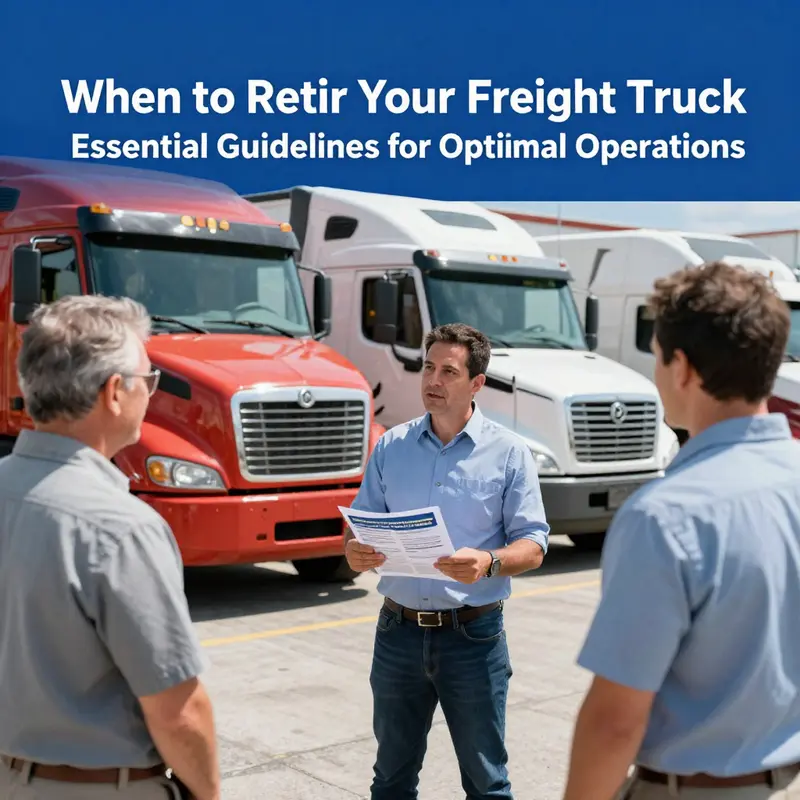
Retirement decisions for freight trucks have grown into crossroads where technology, safety, economics, and public policy meet. A fleet manager no longer asks only whether a vehicle can still haul a load or whether maintenance costs justify keeping it on the road. Today those questions must sit alongside evolving rules about how old a vehicle may be, how well it meets safety and environmental standards after repairs, and how governments intend to shape the emissions profile of the national fleet. In this climate, the decision to retire a truck is less an isolated maintenance call and more a policy-informed choice that aligns operational reliability with long-term fleet modernization goals. The core axis driving that choice remains the vehicle’s lifecycle, yet the levers that determine the exact moment of retirement are increasingly tied to formal scrap ages, compliance performance, and incentives designed to accelerate the shift toward cleaner, safer, and more efficient transport.
To understand when a freight truck should be taken out of service, it helps to start with age, because age is still the most visible signal that a vehicle has traveled far enough to be uneconomical or risky. In many regulatory frameworks, a mandatory scrap age exists for different classes of trucks. The prevailing framework distinguishes between medium and heavy trucks, light-duty vehicles, and specialized units such as semi-trailer tractors and hazardous-material transport vehicles. In China, for instance, the standard has been updated to reflect distinct scrap ages: most medium and heavy-duty freight trucks carry a mandatory scrap age of 15 years; light-duty freight trucks, including mini-trucks, must be scrapped after 12 years; semi-trailer tractors and container transport vehicles face a 10-year scrap age; and vehicles transporting hazardous materials also face a 10-year benchmark. There is an important nuance here: while older sources once suggested a general 10-year limit for heavier trucks, current regulations under the Regulations on the Mandatory Scrapping Standards for Motor Vehicles, effective through 2025 and beyond, clarify that medium and heavy trucks are required to retire after 15 years unless they pass stricter safety and emissions tests. This nuance matters for fleet pacing and for planning substitutions or retrofits that could extend a useful life without sacrificing compliance. Across fleets, the practical implication is that the clock is not reset by simple maintenance; it is driven by a defined age threshold that interacts with ongoing safety and environmental scrutiny.
But age is only one axis. A truck can be perfectly within its calendar window and still be retired early if it fails to meet safety or emission standards after repairs. The rule here is exacting: if a vehicle, after repair and adjustment, still does not meet national safety technical standards or emission/noise requirements, it must be taken out of service. In practice, that means a cycle of diagnostic work, targeted fixes, and reinspection. If the residual risk or the cost of achieving compliance becomes disproportionate to the vehicle’s remaining life, retirement becomes the more prudent choice. This principle also recognizes that some defects recur and that certain repair strategies do not meaningfully extend a truck’s capability to perform within current regulatory norms. Fleet operators who understand this dynamic avoid the trap of “band-aid” fixes, instead shifting resources toward models and configurations that will pass the next round of testing and perform reliably in busy corridors and ports.
A related regulatory trigger is the inspection history itself. When a vehicle fails to obtain a valid inspection certificate for three consecutive annual inspections, retirement is mandated in many jurisdictions. The three-strikes rule serves as a guardrail against a creeping decline in roadworthiness. It reflects a risk calculus: after multiple failures, the probability that essential safety systems will fail again rises in a way that cannot be fully offset by further repairs, given the vehicle’s age and accumulative wear. For fleet managers, this rule underscores the importance of early intervention. Rather than allowing a deteriorating asset to drift toward a three-year failure sequence, it is often more economical and safer to retire or replace the vehicle at the threshold of the first or second failed inspection, when the decision can be made with a clear view of total cost of ownership and future reliability.
Beyond the mechanics of aging and inspections, national environmental policies exert a powerful shaping force. Modern retirement decisions are increasingly dictated by environmental goals that aim to shrink the fleet’s pollution footprint. A nationwide push to retire older, higher-emission trucks has been explicit in policy discussions and regulatory packages, particularly for vehicles meeting National IV or lower emission standards. Diesel freight trucks that lag in emissions performance have been singled out for early retirement as part of broader strategies to reduce urban and regional air pollution. The practical effect of this policy environment is that fleets operating older diesel trucks face accelerated retirement timelines, particularly in regions that implement aggressive phase-out schedules. In some localities, this has already translated into active retirement programs that retire National IV and below diesel freight trucks ahead of their calendar scrap ages. The implication for fleets is straightforward: even if a truck is still technically within its lifespan, environmental compliance can accelerate its retirement decision, especially when coupled with incentives for upgrading to higher standards or to alternative powertrains.
These environmental imperatives have been reinforced by formal incentive programs designed to accelerate fleet modernization. In 2025, a national initiative in China introduced a structured subsidy scheme aimed at retirement and replacement of older freight trucks. The policy targets high-emission vehicles, especially those meeting or exceeding National III emission standards, and offers financial subsidies for owners who retire older diesel trucks early and purchase new vehicles meeting National VI standards or that are equipped with new energy propulsion. The design of such subsidies typically calibrates the amount to the vehicle type, the number of years operated beyond its expected lifespan, and the environmental standard of the replacement vehicle. A concrete example from Changsha County shows how these incentives play out at the regional level: the subsidy amount scales with the aging of the truck and the environmental performance of the new purchase. In some cases, a heavy-duty freight truck retired several years ahead of its planned schedule could qualify for substantial subsidies, with figures in the tens of thousands of RMB for a heavy vehicle, and even higher support levels for newer, more capable NEVs. The point is not merely financial relief; it is a policy signal that aligns fleet modernization with national air-quality ambitions and with the broader goal of creating faster, cleaner, and more reliable transport networks.
This national program sits alongside a suite of global trends that reinforce the logic of retirement through incentives rather than only through mechanical obsolescence. In the United Kingdom, for example, government grants have been designed to accelerate the shift to zero-emission commercial vehicles. Substantial grants are offered for the replacement of older trucks with lower-emission or zero-emission models, with the size of the grant varying by vehicle class. While the exact figures differ by country and program, the underlying principle—public subsidies to speed up the retirement of older, polluting vehicles—has become a common tool in many regulatory arsenals. For fleet operators, such global patterns offer a useful benchmark: modernization often makes financial sense when incentives are considered alongside fuel, maintenance, and downtime costs.
The process of qualifying for these programs is typically formal and time-bound. Fleet owners must apply through regional transportation authorities within the active policy window and provide documentation that demonstrates ownership, the age and condition of the vehicle, the scrapping of the old asset, and the purchase of a compliant replacement. The bureaucratic process is designed to be transparent and auditable, with monitoring mechanisms to prevent fraud and to verify that subsidies translate into actual fleet modernization. In practical terms, this means planners should embed retirement and replacement into budgeting cycles, rather than treating incentives as a last-minute windfall. When the policy window aligns with the natural lifecycle of the fleet, the financial upside from retirement can be substantial, accelerating the return on investment for new vehicles and reducing the total cost of ownership in the medium term.
The broader narrative here is a shift from aging as a purely mechanical concern to aging as a policy-oriented risk management issue. Several forces converge in a retirement decision: the legal scrap age, the cost of maintaining and repairing aging assets, the risk of safety and emissions noncompliance after repairs, and the political will to retire dirty, inefficient diesel trucks in favor of cleaner technologies. When these forces combine, retirement becomes not a choice to discard an asset but a calculated step in a strategic modernization program. It is a step that fleet managers must plan for, because the consequences of failing to retire on time can include regulatory penalties, increased maintenance costs, and a slower pace of capacity expansion or redeployment.
For fleet operators seeking practical guidance, the narrative above maps onto a few actionable takeaways. First, track the scrap-age horizon closely and align procurement with the expected replacement cycle so that replacements arrive as the current assets near the end of their mandated life. Second, design maintenance and repair strategies with an eye toward long-term compliance as well as short-term reliability; when repeated repairs fail to yield a compliant vehicle, retirement becomes a prudent option even if the calendar is not yet up. Third, maintain a robust inspections calendar and address root causes of failures early, to avoid cascading retirements triggered by a series of annual certificate lapses. Fourth, actively monitor environmental policy developments at both the national and regional levels, and consider early retirement or retrofits whenever the regulatory trajectory points toward stricter emissions standards. Fifth, seize incentive opportunities when they align with modernization goals, integrating subsidies into a comprehensive fleet-renewal plan rather than treating them as a one-off bonus. When these rails are in place, retirement becomes a deliberate, strategic event—a normal stage in the life of a modern, compliant, and efficient freight operation.
From a procurement perspective, the modernization journey often hinges on a thoughtful, well-timed replacement strategy. For fleets confronting the pull of policy-driven retirement, a structured approach to acquisition can make the difference between smooth continuity and disruption. The procurement process for newer, compliant vehicles should be viewed not as a stand-alone event but as part of a broader lifecycle management program. This is especially true when incentives are involved, because the financial benefits depend on timely execution and proper documentation. A well-planned modernization program considers not only the upfront cost of a new vehicle but also the lifecycle savings from reduced maintenance, lower fuel consumption, improved reliability, and the potential revenue benefits of increased payload efficiency and reduced downtime. In many cases, the most effective strategy combines upgrades to cleaner diesel technologies with a transition to new energy vehicles where feasible, balancing infrastructure readiness with available subsidies and the fleet’s operational profile.
For fleets that are looking to align their procurement with these policy currents, a practical resource to consult is focused procurement guidance that addresses the broader implications of fleet standardization and asset uptime. See the discussion on fire apparatus procurement for an illustrative, cross-domain perspective on how procurement decisions can support fleet reliability and readiness in high-demand environments, including the alignment of asset lifecycles with policy-driven retirement cycles. This cross-reference emphasizes that whether the fleet is municipal, commercial, or specialized in nature, a disciplined procurement strategy helps ensure a predictable and resilient transition when retirement becomes necessary. fire-apparatus-procurement.
In keeping with these themes, fleet operators should also anchor their retirement decisions in official policy documents and regulatory guidance. The most authoritative current reference is the national policy announcement on old freight truck retirement and replacement subsidies, which outlines eligibility criteria, subsidy scales, and the procedural steps for participating in the program. While the precise numbers and program windows are subject to change, the underlying logic is clear: retirement with purpose, replacement with improvement, and alignment with environmental and safety objectives. For audience members seeking direct policy details, the official channel provides the most accurate and up-to-date information. External sources are periodically updated to reflect changes in standards or funding levels, and operators should verify all details before applying for subsidies or initiating a retirement plan.
External reference: the national policy announcement on old freight truck retirement and replacement subsidies provides the foundational framework for understanding how incentives interact with mandatory scrap ages and safety standards. Official guidance and application procedures can be found at the national regulator’s policy portal. https://www.mot.gov.cn/zhengce/guizhang/202503/t20250318_407982.html
Final thoughts
Understanding when to put a freight truck out of service is multifaceted, covering everything from regulatory compliance to recognizing safety failures and the effects of environmental policies. Adhering to mandatory scrap ages is essential, but being proactive with inspections and emissions standards can lead to a more sustainable and efficient fleet. Keeping abreast of government incentives can accelerate the renewal of your truck fleet, helping you stay competitive while ensuring safety and environmental responsibility. By following these guidelines, you not only comply with regulations but also promote a healthier future for your operations and the environment.