
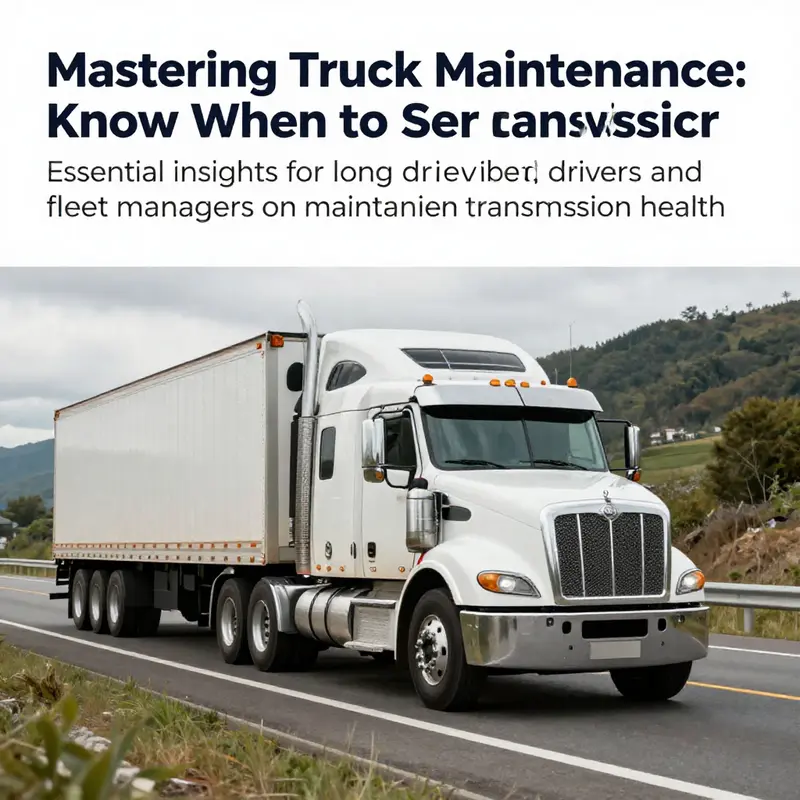
Understanding when to service a truck’s transmission is crucial not only for the longevity of the vehicle but also for the safety of those on the road. With the demands of long-haul driving, it’s easy to overlook this vital component until problems arise. In the following chapters, we’ll explore the standard service intervals for truck transmissions, delve into the factors that can affect these intervals, identify key signs indicating the need for immediate attention, and underscore the importance of regular maintenance. Whether you’re a truck driver, fleet manager, or maintenance specialist, this comprehensive guide aims to equip you with the knowledge to ensure your truck stays in optimal condition.
Reading the Clock on the Gears: When a Truck’s Transmission Needs Servicing
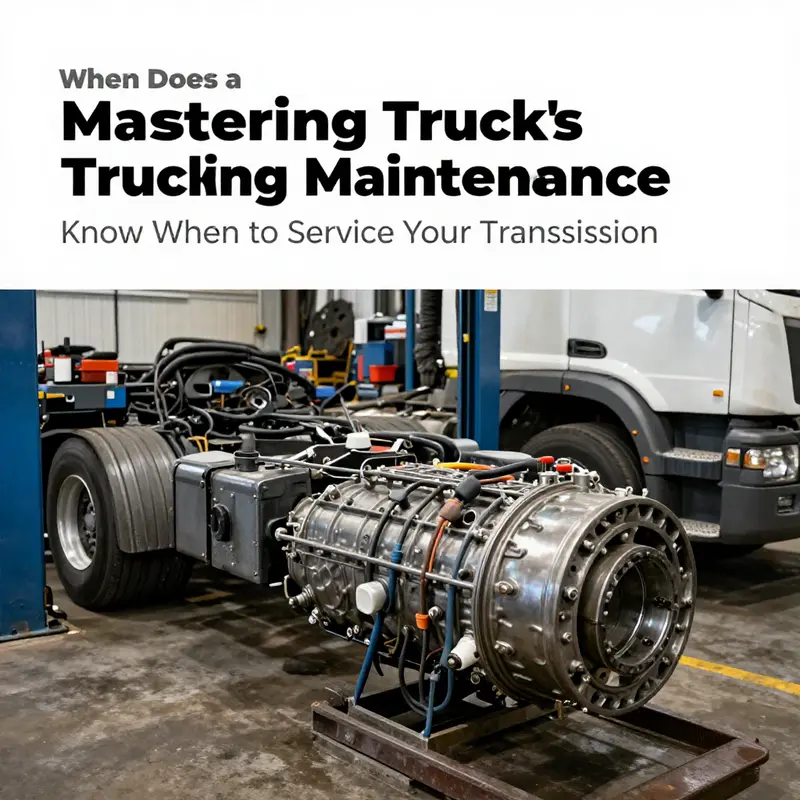
A truck’s transmission is more than a box of gears. It is the interface that translates engine power into motion, heat into efficiency, and load into resilience. Because it sits at the heart of a vehicle’s propulsion and safety, knowing when to service it isn’t a guess. It is a disciplined reading of miles, duty cycles, and the conditions that wear metal and fluid alike. In fleets and on long hauls, the transmission’s service needs hinge on a few core realities: the amount of wear the unit has endured, the environment it has worked in, and the guidelines laid out by the manufacturer. Taken together, these realities form a practical map that helps operators keep uptime high and repair bills low. For most heavy trucks under normal service, a reasonable rule of thumb is to plan maintenance roughly every one hundred thousand to one hundred fifty thousand miles. That range reflects a balance between clean fluid, healthy seals, and steady heat management. But that interval is only a starting point. Freight that spends extended periods in hot climates, or that repeatedly climbs hills with heavy payloads, or that stops and starts in city traffic, asks more of the transmission. In those harsher service regimes, service intervals can tighten to fifty thousand to seventy-five thousand miles. Heat and shear rise when the transmission is pushed hard, and that accelerates the aging process of the fluid and the wear inside the case. The effect is not instantly obvious, but it accumulates with every mile. The same principle applies to the choice between manual and automatic transmissions. Manuals typically require longer intervals between major servicing than automatics. A common practice is to inspect and service a manual transmission every fifty thousand to one hundred thousand miles, depending on the manual’s design and the vehicle’s duty cycle. Automatics, with their more complex hydraulic circuits and control software, demand more frequent attention. Fluid changes for automatics commonly fall in the thirty thousand to sixty thousand mile range. Some newer automatics, designed to hold up to modern performance demands, may stretch out toward one hundred thousand miles before a fluid change is needed. Regardless of type, it is important to refer to the vehicle’s service manual and to follow the maker’s prescribed intervals. Those intervals reflect factory testing, approved fluids, and correct filtration. When a fleet operates under unusual duty, a rule of thumb must give way to reality. For example, frequent stop-and-go driving in urban delivery networks, towing heavy trailers on grades, or driving in mountainous terrain all raise engine and transmission temperatures. Higher temperatures intensify oxidation and breakdown of fluids, which reduces lubrication and hydraulic performance. In practical terms, heat accelerates the aging process and invites wear in bearings, clutches, and valve bodies. A diligent approach is to track operation patterns and compare them with the manufacturer’s guidance. In other words, numbers on a chart become actionable only when the truck’s actual workload mirrors or exceeds them. In addition to mileage and service history, a few pivotal factors continually influence service needs. Climate affects fluid life. Extreme heat thins and oxidizes oil or ATF, shortening its effective life and its cooling capacity. Cold weather can thicken fluids and impair hydraulic flow, though modern formulations have mitigated this issue to a degree. The type of driving matters. Highway cruising with light loads tends to be gentler on the transmission than city runs with frequent shifts and hard accelerations. Heavy payloads add mechanical stress to gears and bearings, and that translates into more frequent checks. The weight of the load itself matters as well. Heavier duties push the transmission to work harder, which produces more heat and faster wear. With these realities in view, many operators adopt a practical maintenance rhythm: they align their service schedule with the maker’s intervals, but they adjust for their actual duty cycle. Fluid condition is a crucial signal to watch. Transmission fluid should be checked regularly for level and for color and smell. Healthy ATF is clear to pink and has a faint sweet odor. Burnt or sour smells, dark or gritty fluid, and foaming are red flags that deserve immediate scrutiny. Leaks are another concern. A small drip may indicate a seal or line problem; a sudden puddle under the transmission is a clear sign that service or repair is needed. Shifting behavior is a telling indicator as well. Difficulty moving gears, delayed engagement, clunks, or grinding noises during shifts all point to evolving wear or insufficient lubrication. A harsh engagement can also signal clutch or valve-body issues in a manual, or hydraulic circuit concerns in an automatic. Even when there are no obvious symptoms, a scheduled service makes sense. The goal is to prevent problems before they disrupt operations. Regular maintenance reduces the risk of overheating, slippage, delayed shifts, or, in the worst case, total transmission failure. The practical approach is to build a maintenance calendar around the manufacturer’s guidance, then populate it with mileage-based checks that reflect actual daily use. Fleet managers often find it helpful to keep a maintenance log that documents fluid levels, leak checks, temperature trends, and any noise or shift irregularities observed by operators. This kind of record-keeping supports proactive decisions about service timing and parts stocking. When planning service, it is wise to distinguish the service options that a shop can perform. In many cases, technicians offer a drain-and-fill service, where old fluid is drained and replaced with fresh fluid, and a filter change is performed if the design calls for it. A more thorough option is a transmission flush, intended to remove sediment and old fluid from passages and the cooler. Flushing can be beneficial in some circumstances but may not be appropriate for every transmission design, particularly older machines with certain valve bodies and friction materials. The choice between drain-and-fill and flush should be guided by the vehicle’s service history, the fluid’s condition, and the technician’s assessment of debris or varnish buildup. Regardless of the chosen method, ensure that the replacement fluid meets the manufacturer’s specifications for viscosity, additive package, and temperature range. Mismatched fluids can create more wear than they prevent and may compromise cooling and hydraulic control. A well-planned maintenance program also includes inspecting related components. The cooler lines, radiator or external cooler, pan gasket, and seals should be checked for leaks. The transmission cooler is especially important in heavy-duty use, where high oil temperatures become a recurring enemy. Inspecting the pan for metal shards or sludge is also part of a prudent check. Debris in the pan can be a clue to friction material wear that warrants further investigation. Maintenance is not only about fluids and lines; it is about the overall health of the transmission ecosystem. For this reason, many fleets integrate technician training and driver awareness into the program. Keeping drivers attuned to shifting behavior and early warning signs helps catch issues earlier. Some fleets formalize this with ongoing maintenance education, such as fire-truck maintenance service training, to align drivers and technicians on best practices and detection cues. If you are exploring practical guidance on keeping transmission health in check across a fleet, that resource offers foundational principles and hands-on routines that translate well from civilian to emergency-service vehicles. fire-truck maintenance service training. Even with the best routine, no engine or transmission runs forever in a vacuum. The consequences of neglect can be severe. Low-level neglect can allow heat to accumulate and fluids to degrade, which speeds wear on gear sets and bearings. Slipping, erratic shifts, and overheating are ominous signs that the damage is escalating. In the worst case, the transmission could fail in service, potentially leaving a vehicle out of action and forcing expensive, time-consuming repairs. Good maintenance, by contrast, preserves performance, reduces downtime, and often lowers total ownership cost. A disciplined approach to service also supports safety. A transmission failure on a highway or during an emergency response can create dangerous, unpredictable situations. Proactive maintenance contributes to consistent performance, reliable uptime, and safer operation for the crew and the public they serve. Because every truck operates with a unique duty profile, the most important advice is to consult the service manual for the exact intervals and fluid specifications. If a manual is unavailable, a qualified technician who understands heavy-duty transmissions can provide a tailored plan based on duty cycle and climate. The manual’s guidance is the foundation; frequent practical checks and record-keeping are the daily application that keeps fleets moving. In summary, knowing when a truck’s transmission needs servicing is about translating mileage into wear risk and mileage into duty reality. It is about balancing standard intervals with real-world use, and it is about catching early warning signs before they become failures. This balanced approach—combining manufacturer recommendations, vigilant observation, and disciplined maintenance—helps fleets maintain high uptime, reduce costly repairs, and keep drivers safe on the road. For additional technical detail and a broader set of guidelines, refer to the official Isuzu service manuals, which outline precise service intervals and fluid requirements based on real-world operational data. https://www.isuzutrucks.com/support/service-manuals
null
null
Listening for the Clues: Understanding When a Truck’s Transmission Needs Service
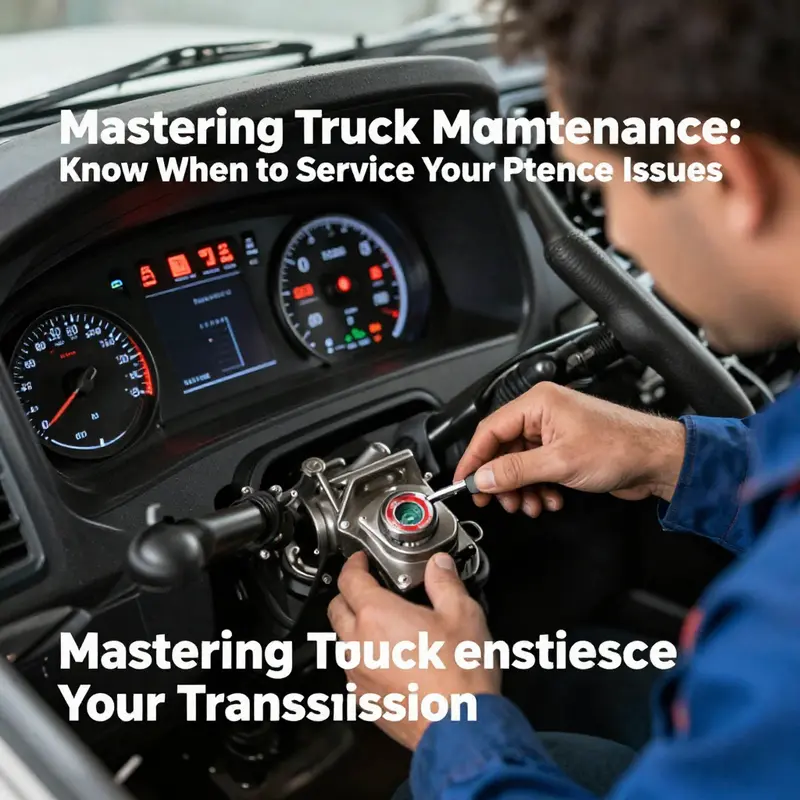
The transmission is the quiet workhorse that translates engine torque into forward motion, a link between power and road that operates largely out of sight until its performance falters. In this sense, servicing a truck’s transmission is less about chasing a fixed clock and more about listening for the subtle signals that indicate wear, contamination, or overheating is creeping into the system. Manufacturers provide baseline service intervals—often expressed in miles—based on typical duty cycles. For many heavy-duty applications under normal operating conditions, the guideline suggests a transmission service every 100,000 to 150,000 miles. When the work is tougher—frequent stop-and-go urban driving, repetitive heavy loading, or operation in hilly or mountainous terrain—the interval can tighten considerably, sometimes to as little as 50,000 to 75,000 miles. These figures are useful starting points, but they are not universal commandments. They reflect a spectrum of real-world wear, temperature exposure, and lubricant quality that can push a transmission toward earlier maintenance needs. The important takeaway is that service timing is a balance between following manufacturer recommendations and responding to how the truck is actually used and how it sounds, feels, and smells as it operates over miles and hours of service life.
To understand when to service, it helps to ground the discussion in how heat, friction, and fluid condition interact inside a transmission. Lubricating oil is the lifeblood of the system, cooling metal surfaces, reducing wear, and carrying away particulates that accumulate from metal-on-metal contact. As duty increases, so does heat, and heat accelerates fluid degradation and seal wear. Contaminants can enter the fluid from imperfect seals, aging gaskets, or worn components, and they compromise lubrication and cooling capacity. Over time, fluid can lose its viscosity, develop varnish or sludge, and accumulate metal shavings. When that happens, the risk of shifting problems, internal wear, or longer-term failures rises. In other words, the clock is not just about miles; it is about the engine of heat and the cleanliness of the oil that keeps those gears, clutches, and valve bodies moving smoothly.
That context helps explain why so much attention is paid to the signs that a transmission may need attention sooner than scheduled. Rather than waiting for a calendar or odometer reading, drivers and maintenance teams can listen for changes in how the truck feels and sounds as it shifts through gears. A well-tuned maintenance program recognizes both scheduled intervals and the early warning signals that indicate a fluid refresh, a filter replacement, or a more thorough inspection is warranted.
Signs are not always dramatic; some are subtle reminders that internal wear is progressing and lubrication is no longer doing its job as efficiently as it should. Consider the following indicators, which collectively point to a need for service or at least a technician’s diagnostic check:
- Difficulty shifting gears: If the transmission hesitates to engage, clunks when selecting a gear, or balks when moving from park to drive or into a new forward gear, this can signal low or contaminated fluid, worn synchronizers, or internal wear in bearings or gear sets. A hesitation or grinding sensation in any mode of engagement is a clear sign that something isn’t right inside the transmission’s control and mechanical pathways.
- Unusual noises: Whining, clunking, or humming noises that accompany acceleration, deceleration, or shifts are often traces of bearing wear, worn gear teeth, or internal component misalignment. Noise is a cue that the system is vibrating outside its intended tolerances, and continued operation can hasten damage.
- Transmission fluid leaks: A visible puddle under the truck, especially with a reddish or brownish hue, indicates a seal or gasket failure, a cracked housing, or a drain plug issue. Fluid loss reduces lubrication and cooling, increases metal-on-metal friction, and accelerates overheating and wear. Even small leaks deserve attention because they can silently escalate.
- Burnt smell: A distinct burnt odor near the transmission area typically signals overheated fluid. Overheating fluid loses viscosity and its lubricating properties, allowing greater wear and the risk of component damage, particularly during heavy use or in hot climates.
- Slipping gears: If the transmission unexpectedly slips out of a gear during acceleration or the engine revs without a corresponding increase in road speed, clutch packs in automatics or a failing torque converter may be implicated. Slippage is alarming because it directly disrupts control and can be dangerous in heavy vehicles, especially when loads are high or driving conditions require precise power delivery.
These warning signs deserve a proactive response. When observed, they justify a stop-and-check by a qualified technician rather than a test-drive to see if the issue “goes away.” In many cases, a diagnostic visit will verify whether the symptoms stem from fluid quality and level, a filter condition, or a deeper mechanical problem that requires more intensive service or repair. For fleets and operators who rely on consistent uptime, catching issues early reduces the likelihood of sudden outages and the cost of major overhauls.
The practical reality is that maintenance decisions should be anchored by the vehicle’s service manual and the manufacturer’s guidance, which account for the exact transmission design, fluid specifications, and the vehicle’s unique operating profile. While general intervals provide a useful framework, the right action is to tailor maintenance to actual use. Some operators keep a simple rule of thumb: if the truck runs in severe service—frequent heavy loads, stop-and-go urban routes, or mountainous routes—schedule more frequent inspections and fluid checks. If the truck experiences any of the warning signs above, even between scheduled services, it is prudent to arrange a diagnostic so the fluid condition, seals, and internal components can be evaluated before a small issue escalates into a costly repair.
To support informed decisions, many professionals reference authoritative service guides and manuals that translate field data into precise maintenance requirements. For instance, there are dedicated guides that outline fluid types, refill quantities, and service intervals based on real-world operation. These resources help technicians determine when a drain-and-fill service is appropriate, whether a fluid and filter change is necessary, or if more extensive internal inspection is warranted. They also reinforce the point that maintenance is not a one-size-fits-all ritual but a dynamic process driven by the truck’s actual workload and operating environment. In practical terms, a maintenance plan grounded in these principles prioritizes clean fluid, correct levels, proper filtration, and temperature control as the core pillars of transmission longevity.
An informed maintenance mindset also emphasizes the value of consistent monitoring. Regular checks of fluid level and color, along with attention to unusual shifts or noises, create feedback loops that help keep the transmission within its designed tolerance bands. For a fleet, that translates to a disciplined routine—pre- and post-trip inspections, periodic fluid analysis when feasible, and a clear protocol for escalation if signs appear. The goal is to maximize uptime by avoiding surprises, not by chasing perfection in a system that undergoes considerable stress every day.
Within this framework, the technician’s role becomes central. A skilled technician can interpret symptoms in the context of operating conditions, fluid history, and recent maintenance work. They can assess whether a symbol of distress is a temporary anomaly—perhaps a transient contamination or a minor fluid temperature spike—or a signal that a component has worn to the point where it should be replaced or rebuilt. The technician’s judgment, bolstered by manuals and diagnostic tools, provides the bridge between a warning sign and a targeted maintenance action. When in doubt, the prudent choice is to err on the side of proactive service, because transmission failures often cascade into more expensive problems that affect drivetrain performance, fuel efficiency, and vehicle safety.
In the spirit of continuous improvement, many fleets incorporate training and knowledge-sharing to reinforce best practices. A culture that prioritizes maintenance literacy helps drivers recognize early signs, communicates observations effectively to maintenance teams, and aligns operational practices with a robust service strategy. It is not merely about compliance with a schedule; it is about building confidence that the transmission will perform reliably under varying loads and routes. The broader implication is clear: a well-maintained transmission underpins the reliability of the entire vehicle system and, by extension, the safety and effectiveness of the service role the truck fulfills on the road.
For readers seeking a broader view on how maintenance training translates into practical uptime, there is value in exploring resources that emphasize structured maintenance programs and hands-on training. These programs can help fleet operators and drivers translate observations into actionable maintenance steps, ensuring that potential issues are addressed early and efficiently. To learn more about the role of training in maintenance practices, you can explore dedicated guidance on fire-truck maintenance training and its relevance to heavy-duty vehicle upkeep, which offers insights that translate well to general fleet practice. fire truck maintenance training importance.
To complement this chapter, it is helpful to anchor the discussion in respected sources that discuss vehicle safety and maintenance standards. In addition to manufacturer manuals and industry best practices, national safety authorities provide guidelines for the prevention of transmission-related failures and the importance of proactive inspection and maintenance. For further reference, see the official standards and guidance provided by a major national safety agency connected to road-vehicle safety and recall information. Such resources reinforce the principle that ongoing maintenance, attentive to the signs described above, is a cornerstone of safe and reliable operation.
In sum, a truck’s transmission does not age uniformly with mileage. It ages through heat, stress, and exposure to contaminants, and its service needs follow the rhythm of its work. The signs of trouble, when they appear early, offer a practical window into the health of the system and the urgency of intervention. A disciplined approach combines scheduled service with vigilant observation, guided by the vehicle’s manual and the technician’s expertise. When these elements come together, operators can preserve performance, avoid costly downtime, and extend the life of one of the truck’s most vital systems. For those who seek broader context on how maintenance discipline supports uptime across emergency and service fleets, continuing education and hands-on training remain invaluable tools to ensure that the transmission, along with the rest of the drivetrain, remains in robust condition for the tasks ahead. For authoritative, externally sourced guidance that frames these practices within safety standards and regulatory expectations, consult the National Highway Traffic Safety Administration’s resources, which provide a comprehensive overview of vehicle safety considerations and recommended maintenance practices: https://www.nhtsa.gov.
The Transmission’s Timetable: Reading the Clues and Keeping Powerable Miles in Check

A truck’s transmission is more than a bridge between engine and wheels; it is an intricate system that translates raw torque into controlled motion while managing heat, pressure, and timing. Over the miles, the fluid that lubricates and cools this heart of the drivetrain deteriorates. Heat, friction, and contamination continuously degrade its quality, which in turn accelerates wear on internal components, degrades shifting performance, and raises the risk of sudden failure. Because every truck lives a different life—from city delivery routes to long-haul hauls under heavy loads, from hilly terrain to stop-and-go traffic—the right service interval is not a one-size-fits-all figure. Instead, it emerges from a practical blend of miles run, operating conditions, and the manufacturer’s own guidance, all interpreted through the lens of real-world usage and the technician’s judgment. This is why the question of when to service a truck’s transmission must be answered with attention to both the clock and the road.
In this framework, a general milestone often cited in the industry is that heavy-duty transmissions benefit from a dedicated service interval somewhere around 100,000 to 150,000 miles under normal operating conditions. That range represents a guideline rather than a prescription. It acknowledges that many trucks, when driven in moderate conditions with clean, properly specified fluids, controlled temperatures, and sound drive cycles, can make the journey well past 100,000 miles before a routine service becomes essential. Yet this interval can shrink markedly when the truck works harder than average. If the vehicle routinely labors in severe service—frequent starts and stops in urban delivery, continuous pulling of heavy loads, or operation in steep, mountainous regions—the thermal and mechanical demands on the transmission rise. In those scenarios, service intervals may compress to roughly 50,000 to 75,000 miles. The rationale is straightforward: heat is the enemy of transmission fluid, and heat is generated more aggressively in these demanding duty cycles. Heat accelerates oxidation, breaks down the lubricating film, and increases the formation of varnish and sludge that can clog passages and sensors. The fleet manager who considers the miles per se must also weigh the actual temperature profile the transmission experiences, the type of fluid used, and the efficiency of the cooling system, since all these factors influence fluid life.
Beyond the mileage metric, there is a language of warning signals that can alert drivers and technicians to the need for servicing sooner than the clock would suggest. The signs are practical and observable, and recognizing them early can prevent costly repairs. Delayed or rough gear shifts are among the most telling indicators. When a shift is hesitant, or the transmission seems to grind or jerk as gears mesh, the fluid may be too low, too degraded, or poorly pressurized to maintain smooth engagement. Unusual noises such as whining, clunking, or humming in the transmission can point to internal wear or insufficient lubrication that allows metal-to-metal contact at the wrong times. Fluid leaks are another clear signal, creating a visual trace of trouble under the truck or a consistently low dipstick reading. A burning smell from the transmission area is a stark warning that overheating or fluid breakdown is occurring and that continued operation risks scalding the seals and accelerating component wear. The appearance of a check engine light, while not always directly tied to the transmission alone, can indicate related issues such as shift solenoid malfunctions, pressure irregularities, or PCM-driven fault codes that deserve a diagnostic check. Taken together, these signs create a practical framework for deciding when to pull the truck into service for a transmission inspection rather than waiting for the next scheduled interval.
Operational context matters as much as the odometer. A fleet that short-hops through urban corridors and routinely experiences stop-and-go cycles faces more rapid transmission fluid aging than a vehicle that spends long hours cruising steadily on highways with modest loads. Conversely, trucks delivering heavy payloads over rough terrain push the system toward higher thermal loads, frequently contacting limit temperatures when ambient heat combines with engine heat and high torque demands. In either case, maintenance planners should balance the interval guidance with real-world data, including cooling system performance, transmission fluid temperature limits reached during last week’s duty cycle, and any recorded transmission-related faults that might not yet have triggered a service alert. This approach ensures that the maintenance program remains responsive to how a given vehicle actually performs, rather than relying solely on the odometer or a static calendar alone.
The practical routine of keeping a transmission healthy involves more than merely applying a schedule. It requires a disciplined approach to fluid health, leak detection, and component integrity, all grounded in the principle that prevention is far cheaper than repair. The mechanics of fluid life are well understood: the fluid’s lubricating properties degrade with oxidation, shear, and contamination, and the filter, if present, becomes progressively less able to trap particulates as it approaches its capacity. The result is increased wear, higher operating temperatures, and diminished shift quality. Therefore, regular inspections should be baked into the maintenance cycle. Fluid condition, color, and aroma can convey a great deal about its state. A healthy transmission fluid is typically red or amber, clean, and free of burnt odors. A dark, syrupy color, a burnt smell, or metal particles on the drain plug are red flags that call for closer inspection and often an early service. The drain and fill procedures, along with pan inspections, give technicians a direct view of wear patterns, clutch debris, and possible contamination sources that may be creeping into the system through seals or gaskets.
An essential piece of the servicing conversation is the role of the maintenance manual and the broader OEM guidance. The service interval is not a ritual; it is a reflection of the manufacturer’s expectations for durability, supported by the vehicle’s design, the chosen fluids, and the cooling strategy. Different transmissions and configurations are tuned for different operating envelopes, so the exact service schedule must be aligned with the model’s specifications. A robust maintenance program keeps meticulous records, notes operating conditions, and tracks fluid changes, filter replacements, and any diagnostic codes that appear between services. When a truck returns from a segment of heavy-duty work, it is prudent to perform a targeted inspection to verify that the transmission is coping well under the latest load profile. This approach helps prevent a minor fluid issue from becoming a major failure when the workload switches from a routine pattern to a more demanding one.
Informed planning also means recognizing where to draw the line between routine maintenance and immediate attention. If a driver notes persistent slipping, a delay in engagement, or a hearing of new metallic sounds that were not present before, it is wise to treat these as urgent signals. The presence of leaks, even small ones, should be treated seriously because they can lead to a loss of lubrication and pressure that compromise gear tooth contact. A burning odor, especially when accompanied by a change in throttle response or acceleration, should prompt immediate diagnostic checks to verify that there is no overheating of clutches or torque-converter assemblies. The check-engine illumination, while not exclusive to the transmission, often correlates with transmission controls or sensors that govern hydraulic pressure and timing. In every case, the decision to service or diagnose should be made in conjunction with a technician who can interpret the signals in the context of the vehicle’s operating history and current duty profile.
For fleets and operators seeking a structured path to continuous improvement, the maintenance ritual becomes part of a broader safety and reliability program. A well-run program treats transmission service as a capital decision—one that reduces downtime, increases uptime, and safeguards a vehicle’s resale value by preserving mechanical integrity and operational predictability. The value proposition is straightforward: consistent maintenance reduces the risk of unexpected breakdowns during critical deliveries or emergency response, minimizes repair expenses by addressing wear before it escalates, and extends the useful life of the powertrain. The discipline also supports safer operation: a transmission that shifts cleanly and predictably reduces driver fatigue and helps maintain control, especially in challenging weather or terrain. In that light, each service visit is not simply a box to check off but a proactive opportunity to confirm that the vehicle remains a reliable tool for the mission at hand.
As you plan a maintenance calendar, integrate the guidance of the manual with awareness of your route structure and vehicle duty. A practical method is to anchor service intervals around mileage milestones while dynamically adjusting those milestones based on route data and observed fluid condition. If the fleet operates a mix of urban and rural routes or toggles between long-haul runs and short trips with heavy loading, you may find value in adopting a tiered approach: more frequent checks on the fluid status, filter condition, and overall transmission health whenever a vehicle crosses a defined duty boundary. This approach does not discard the mileage framework; it refines it by weaving in feedback from the truck’s actual performance. In other words, the clock and the road speak together, and a good maintenance program listens to both.
Finally, learning to read the transmission’s signs is not the sole domain of the shop floor. A culture of proactive maintenance also thrives through training, documentation, and shared best practices. For operators and technicians alike, engaging with structured training on maintenance practices can elevate the quality of service and the consistency of decisions. See https://5startruckin.com/fire-truck-maintenance-training-importance/ for a detailed discussion on why ongoing maintenance education matters for uptime and safety. While the topic here centers on trucks in general rather than a single model, the underlying principle holds across heavy-duty fleets: informed technicians who understand how fluid condition, heat, and wear interact are better able to forecast service needs, schedule preventative actions, and avoid the missteps that emerge from neglect or routine complacency. And while this chapter emphasizes the practical mechanics of service timing, it is the combination of disciplined interval planning, vigilant observation of symptoms, and a commitment to ongoing training that ultimately preserves the drivetrain’s reliability under the most demanding conditions.
In sum, knowing when a truck’s transmission needs service rests on a blend of measured mileage, awareness of operating conditions, and faithful adherence to manufacturer guidance. Normal duty commonly points to a service window around the hundred-thousand-mile mark, but severe-duty work can shorten that window considerably. The signs listed—delayed or rough shifts, unusual noises, fluid leaks, a burning smell, or a check engine light—offer practical signals that the system may be approaching a maintenance threshold. A proactive program uses fluid health indicators, leak checks, and periodical pan inspections to stay ahead of trouble, while also recording duty profile and diagnostic results to tailor intervals to a specific vehicle. This approach not only keeps the truck performing at its best but also supports safe operation, lower uptime risk, and sustained value over the vehicle’s lifecycle. External resources, such as the general maintenance guidance provided by major manufacturers, can supplement this approach by offering broad benchmarks and fluid specifications that align with the specific transmission design. External resource: https://www.ford.com/trucks/maintenance/
Final thoughts
In conclusion, understanding the intricacies of truck transmission maintenance can significantly affect vehicle performance and driver safety. By adhering to recommended service intervals, considering usage conditions, recognizing warning signs, and prioritizing regular maintenance, truck owners and drivers can safeguard their investment. This proactive approach not only extends the lifespan of the transmission but also ensures smoother operational efficiency on the road. For all those involved in the trucking industry, this knowledge is invaluable in fostering a culture of safety and reliability.